Famous Monsters Fan Club

Category
Additional Images
Sub Categories
Text on Button FAMOUS MONSTERS FAN CLUB
Image Description

Illustration of Lon Chaney as Phantom of the Opera on yellow circle. Black text on red border with blue outer rim. 

Curl Text ©1973, Warren Publishing Co.
Back Style
The Shape
The Size
Year / Decade Made
Additional Information

Buttons were produced for the magazine Famous Monsters of Filmland featuring the Phantom of the Opera, as played by Lon Chaney Sr. in 1925. Famous Monsters of Filmland was thought to be a one-off publication in 1958 because monsters were so ubiquitous in film at the time, but it became so popular that it still continues today. The band The Misfits was particularly inspired by this magazine, as is Billy Bob Thorton.

Catalog ID CL0001

Excelsior Debating Society

Category
Additional Images
Sub Categories
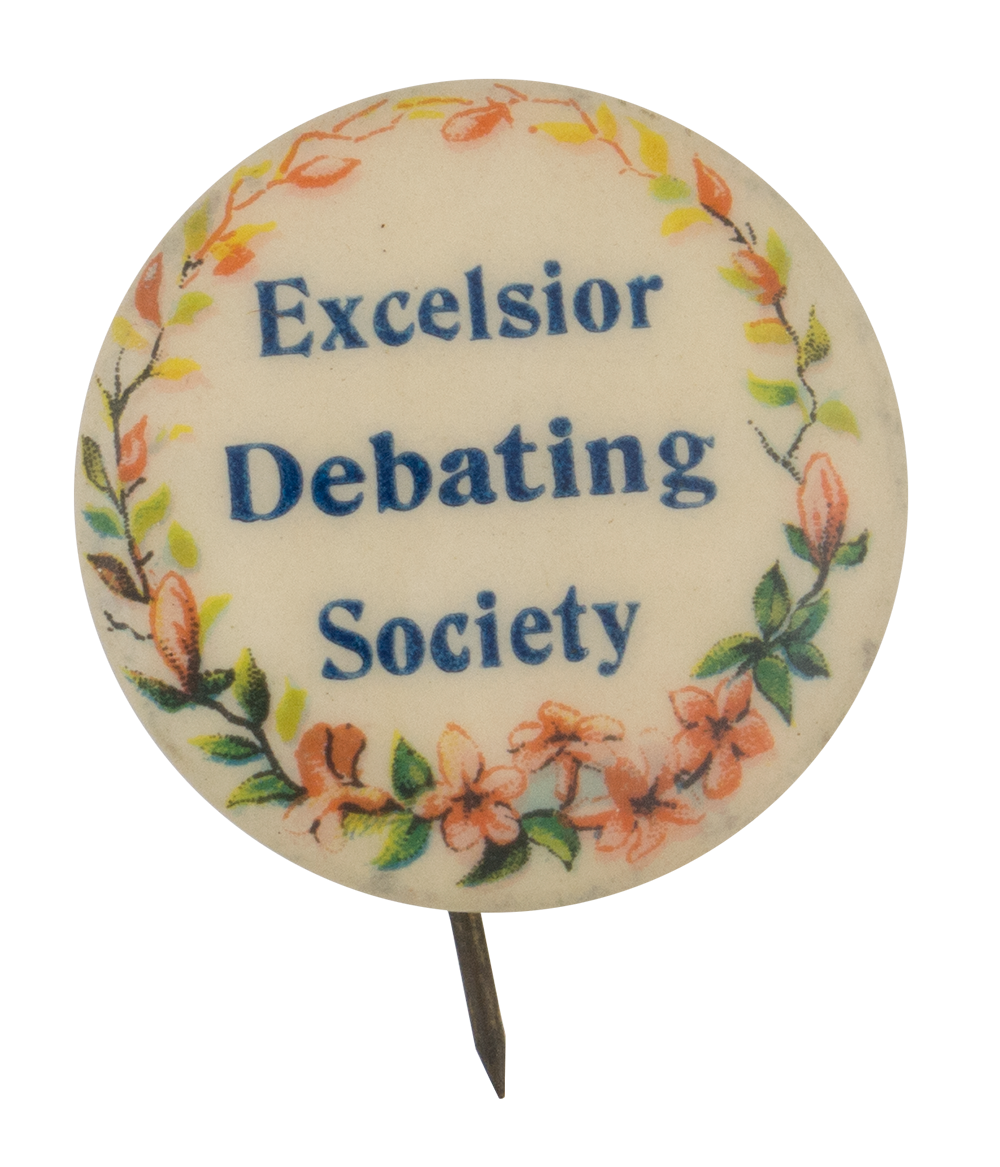
Text on Button Excelsior Debating Society
Image Description

Dark blue text on off-white background. Ornate decorative floral border in shades of pink, green, yellow, and orange. 

Back Paper / Back Info

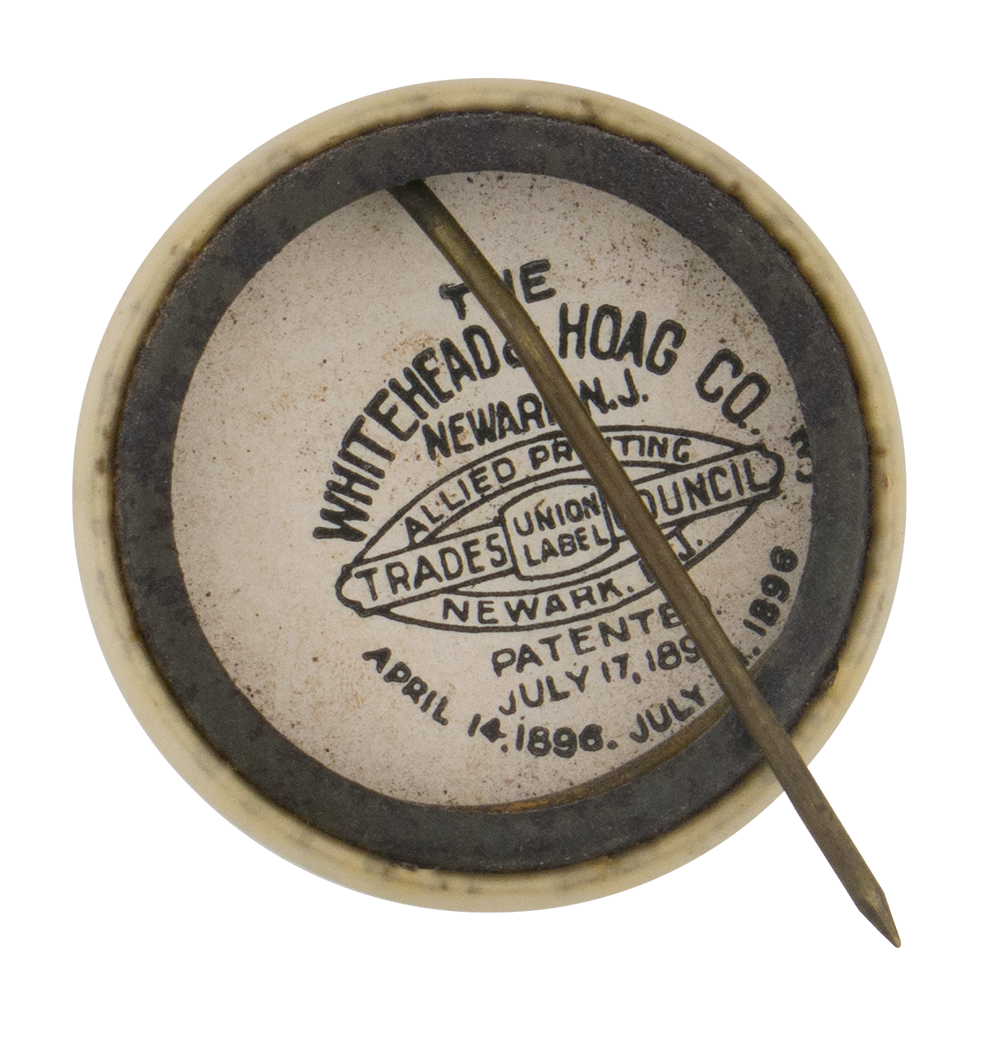
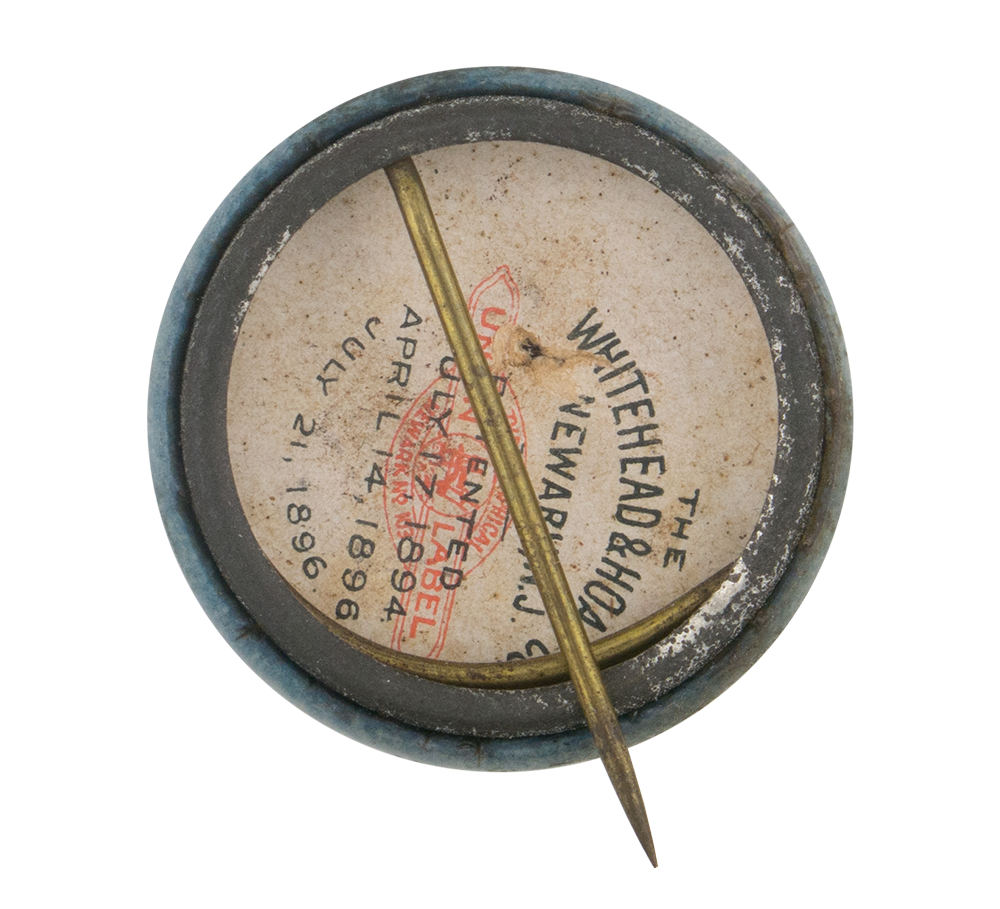
The Whitehead & Hoag Co. Newark N.J. Allied Printing Union Label Trades Council. Newark, N.J. Patented July 17, 1894. April 14, 1896, July 21, 1896. 

Back Style
The Shape
The Size
Year / Decade Made
The Manufacturer
Additional Information

Debating societies were once a common fixture of American universities, and served as social organizations and precursors to today's fraternities. 

Catalog ID CL0026

Don't Worry Club

Category
Additional Images
Sub Categories
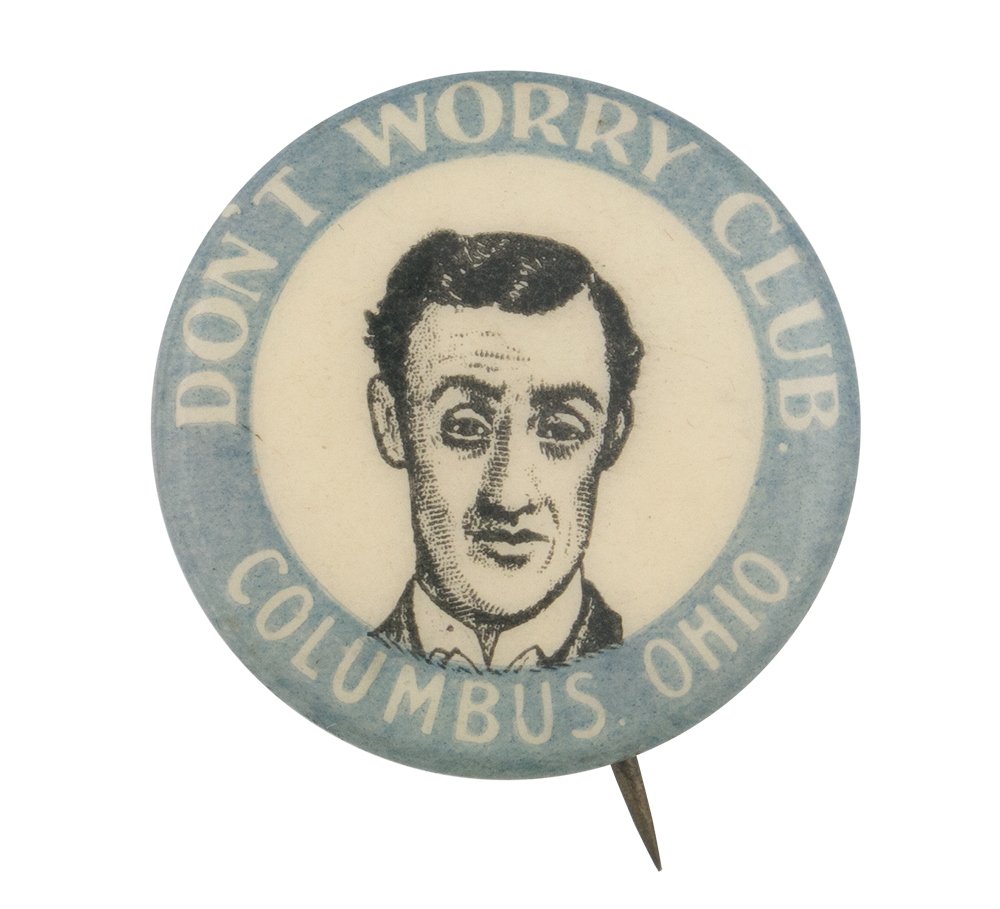
Text on Button DON'T WORRY CLUB COLUMBUS OHIO
Image Description

Black and white illustration of a man on white background. Light blue outer rim with white text. 

Back Paper / Back Info

The Whitehead & Hoag  Co. Newark, N.J. Union bug in red. Patented:  July 17, 1894, April 14, 1896, July 21, 1896. 

Back Style
The Shape
The Size
Year / Decade Made
The Manufacturer
Additional Information

The Don’t Worry Club was a religious and social movement in the late nineteenth century, founded by Theodore Frelinghuysen Seward.  Seward began the movement on the assumption that worry was the greatest threat to happy home life.  Founded on very Victorian principles, the movement focused on female “affections and intuitions” as a means to throw off the dogmas of the Christian faith and reach “spiritual emancipation.”

The idea of positive thought is something that grew exponentially throughout the turn of the 19th/20th century or what is called the 'Progressive Era'. Positive thought was even used in marketing, as seen in C.W Post's The Road to Wellville - A promotional booklet for Grape-Nuts and Postum. As a whole the positive thought movement was popular among Seventh Day Adventists who often advised positive thought to help with illness. Dyspepsia, now known as indigestion, had no true cure during the Progressive Era and many believed that dietary changes coupled with positive thought would cure dyspepsia and many other illnesses.

The Don’t Worry Movement. (1898, February 27). The New York Times, p. 14.

Catalog ID CL0007

Do Without Club

Category
Additional Images
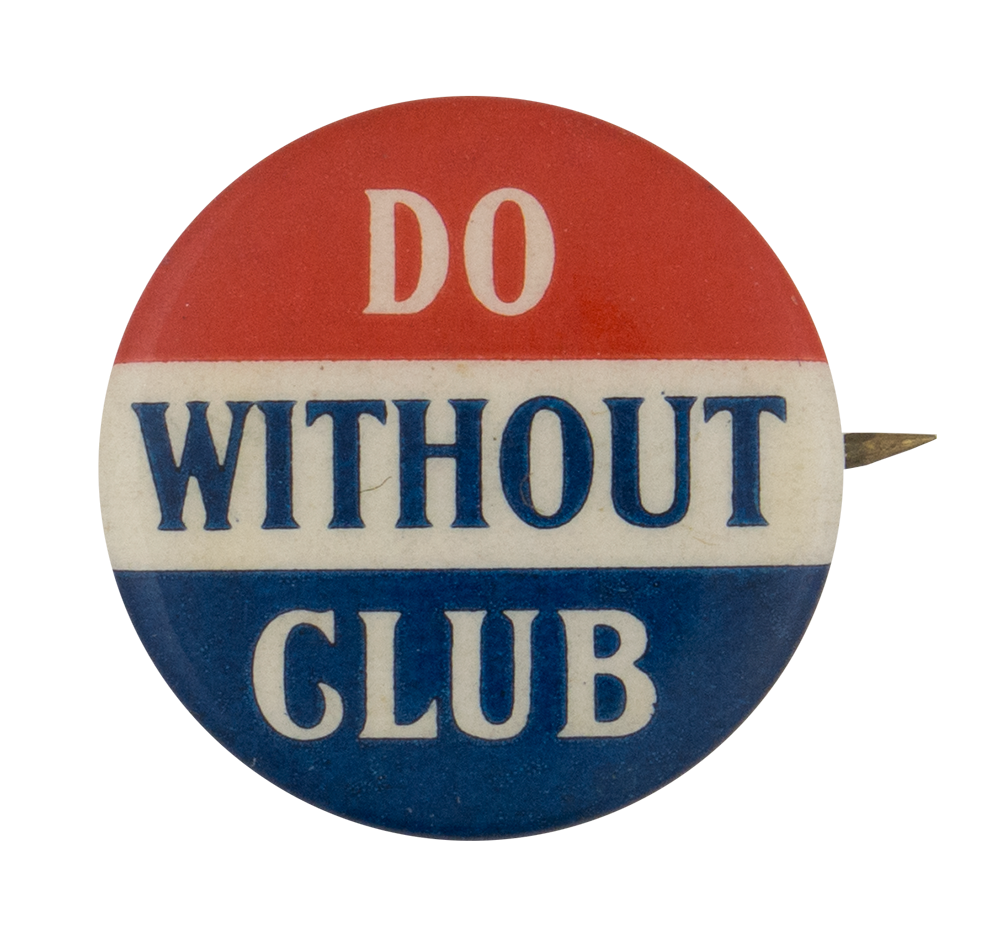
Text on Button DO WITHOUT CLUB
Image Description

Three horizontal bands of color with text. White on red (top), blue on white (middle), white on blue (bottom). 

Back Paper / Back Info

The Whitehead & Hoag Co. Buttons. Badges. Novelties and Signs. Newark, N.J. 

Back Style
The Shape
The Size
Year / Decade Made
The Manufacturer
Additional Information

The National Council of Teachers of English created a “Committee on American Speech” in 1915 for the purpose of getting Americans interested in preserving “proper” speech. They wrote letters to get endorsement for the Speech Movement, created leaflets of information and wrote articles for newspapers and magazines to promote their cause.

American Speech Week was intended to make Americans aware of and to support the need for improving one’s speaking voice and to raise the standard of speech usage in day to day life. It was originally held November 2-8, 1919 and then again in 1921.

Grace Williamson Willett was a member of the Chicago Woman’s Club and was one of many who created a pledge to encourage participation.

Sources

National Council of Teachers of English (1921). Guide to American Speech Week [Google Books version]. Retrieved from https://books.google.com/books?id=W2dBAQAAMAAJ&printsec=frontcover&sour….

Catalog ID CL0003

Dental Clinic Honor Roll

Category
Additional Images
Sub Categories
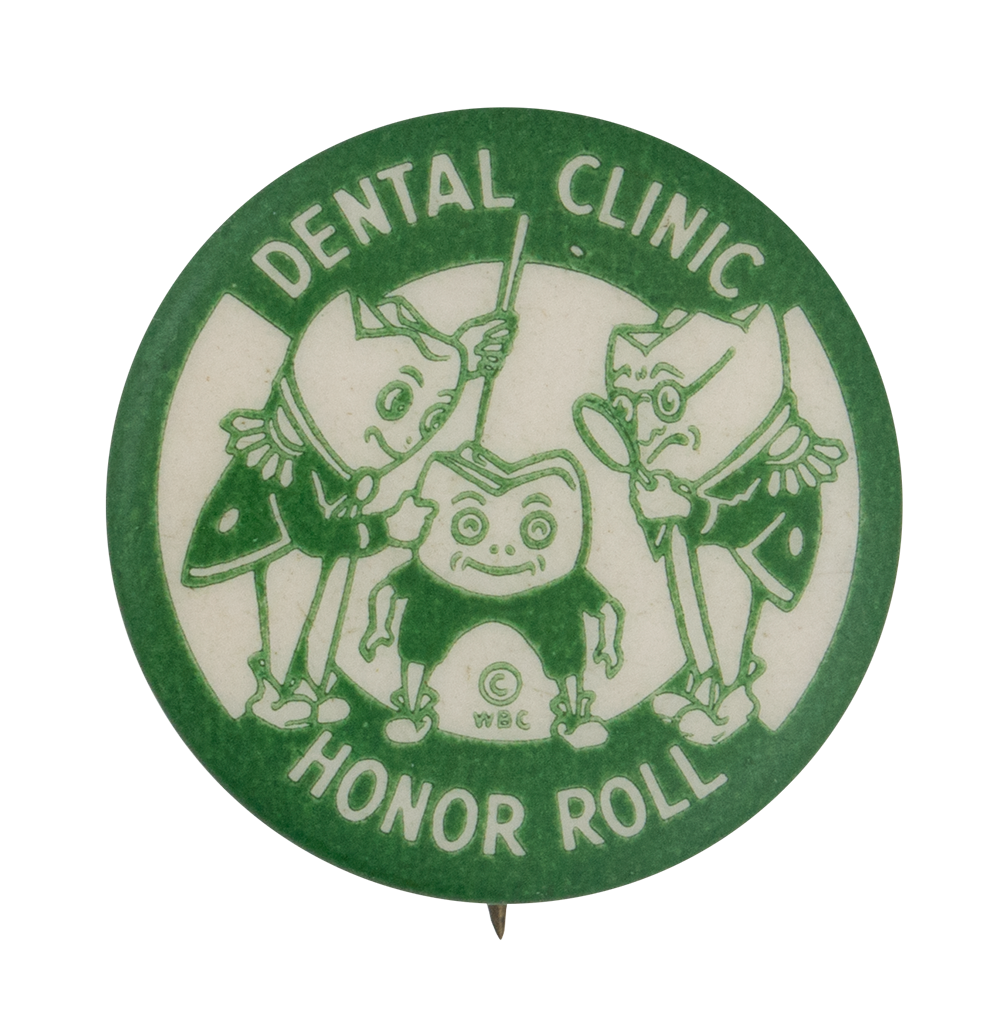
Text on Button Dental Clinic Honor Roll © WBC
Image Description

Illustration of anthropomorphic teeth conducting dental exam in white and green on white background. Text in white on green. 

Back Style
The Shape
The Size
Additional Information

These buttons were often given to children after they visited the dentist and received a clean bill of health.

Catalog ID CL0016

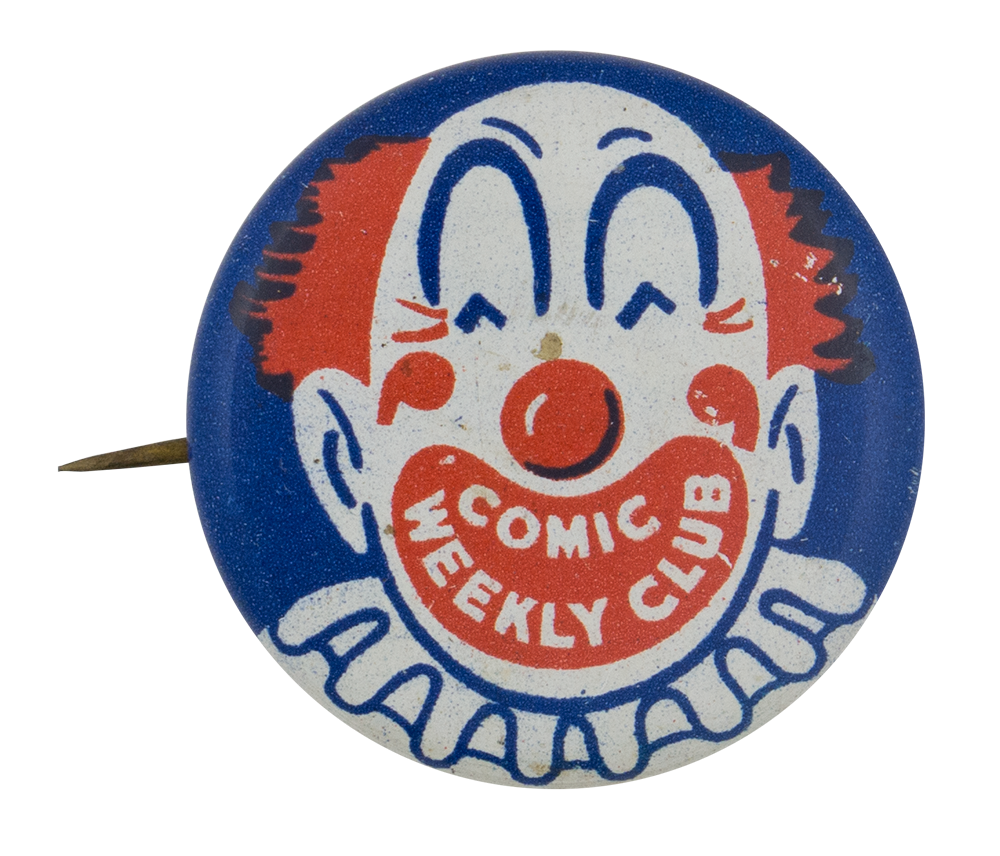
Comic Weekly Club

Category
Additional Images
Sub Categories
Text on Button COMIC WEEKLY CLUB
Image Description

Red, white and blue illustration of a clown appears on blue background. Text in white on red smile of clown. 

Back Paper / Back Info

Litho stamped on back: Imber Co. Chicago, Imber Quality Products. Union bug. 

Back Style
The Shape
The Size
Year / Decade Made
The Manufacturer
Additional Information

This pin was part of a membership kit for the Comic Weekly Club produced by Whitman Publishing. The kit would have included a membership card and 8-page booklet with comics and activities. 

Catalog ID CL0055

Child Hygiene League

Category
Additional Images
Sub Categories
Text on Button CHILD HYGIENE LEAGUE
Image Description

Dark green marbleized text on gold glitter background. Dark green marbleized outer rim. 

Back Style
The Shape
The Size
Additional Information

The American Child Heath Association (ACHA), or the Child Hygiene League, was an important children's welfare organization throughout the 1920s and early 1930s. Established in 1923, the organization attempted to ameliorate the dismal health conditions found in many of the nations' larger cities. ACHA projects included the improvement of infant mortality statistics, attempts to improve the safety of the nation's milk supply, campaigns to bring child healthcare to rural areas, and numerous attempts to end child labor. The organization not only succeeded in bringing renewed national attention to child labor, but it also helped spur the development of public health care systems throughout many states.

Catalog ID CL0037

Chicago Boys' Club Bands

Category
Additional Images
Sub Categories
Text on Button CHICAGO BOYS' CLUB BC BANDS
Image Description

Stylized letter C in dark yellow outlined in dark red. Dark red text on letter C. White background. 

Back Paper / Back Info

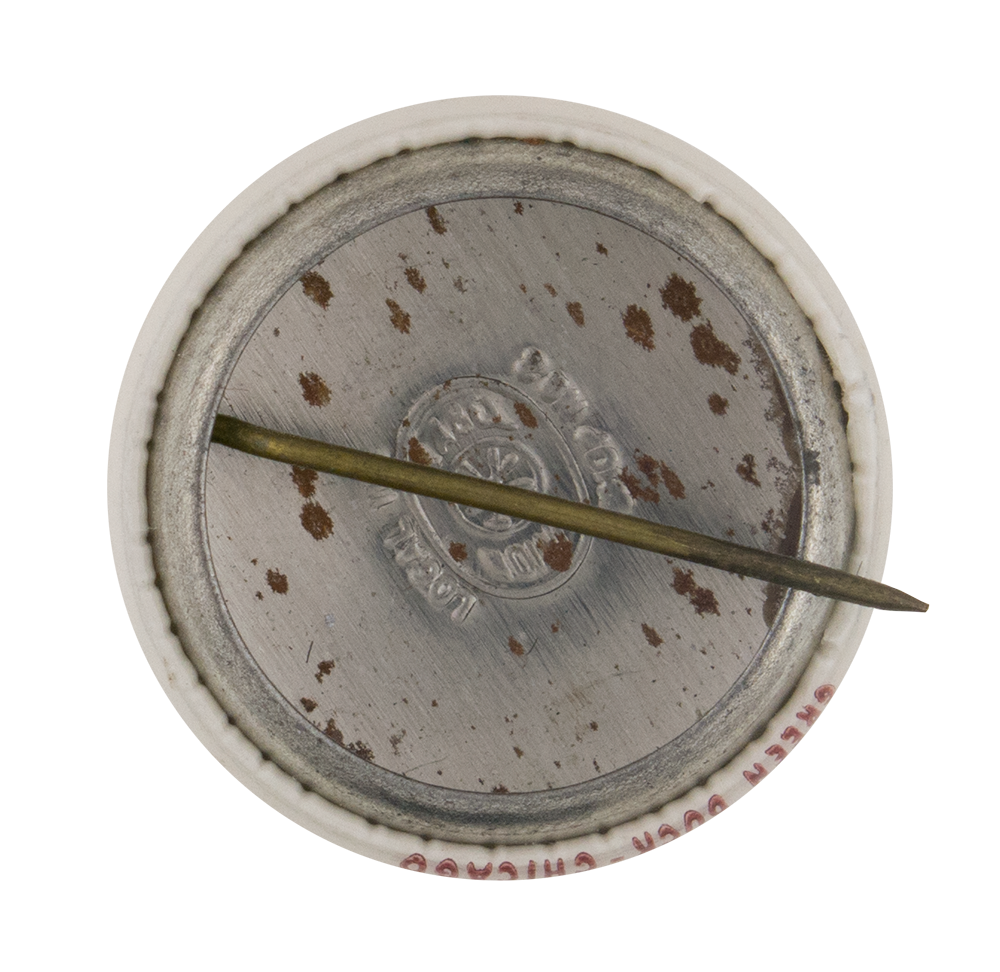
Embossed union bug. 

Curl Text Green Duck - Chicago
Back Style
The Shape
The Size
Additional Information

The Chicago Boys Clubs was founded 1901. It is one of the oldest, non-profit youth recreation organizations in Chicago. The organization changed its name in 1985  to Chicago Boys and Girls Club, and once more in 1989 to Boys and Girls Clubs of Chicago.

Catalog ID CL0053

Brotherhood Railroad Trainmen

Category
Additional Images
Sub Categories
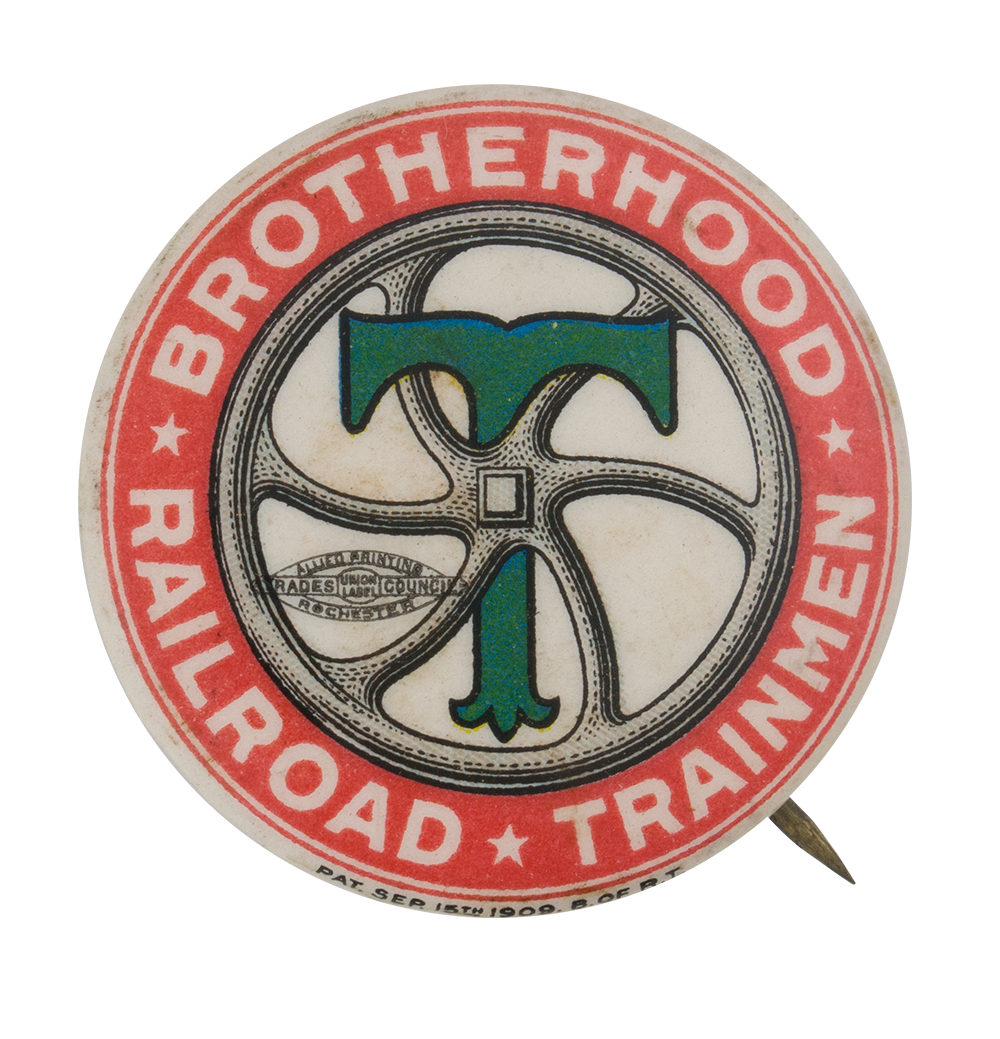
Text on Button BROTHERHOOD RAILROAD TRAINMEN
Image Description

Letter T inside illustration of a train wheel. Union bug on bottom left. Red circle with white text, white outer rim. 

Back Paper / Back Info

Bastian Bros. Co. M'F'R's of ribbon metal and celluloid novelties Rochester, N.Y.

Curl Text Pat. Sep 15th 1909 B of R.T.
Back Style
The Shape
The Size
The Manufacturer
Additional Information

The Brotherhood of Railroad Trainmen was founded in June 1883 in Oneonta, N.Y. The group later merged with three other brotherhoods to create the United Transportation Union on January 1, 1969.

Catalog ID CL0057

Boys' Clubs Of America Sailfish

Category
Additional Images
Sub Categories
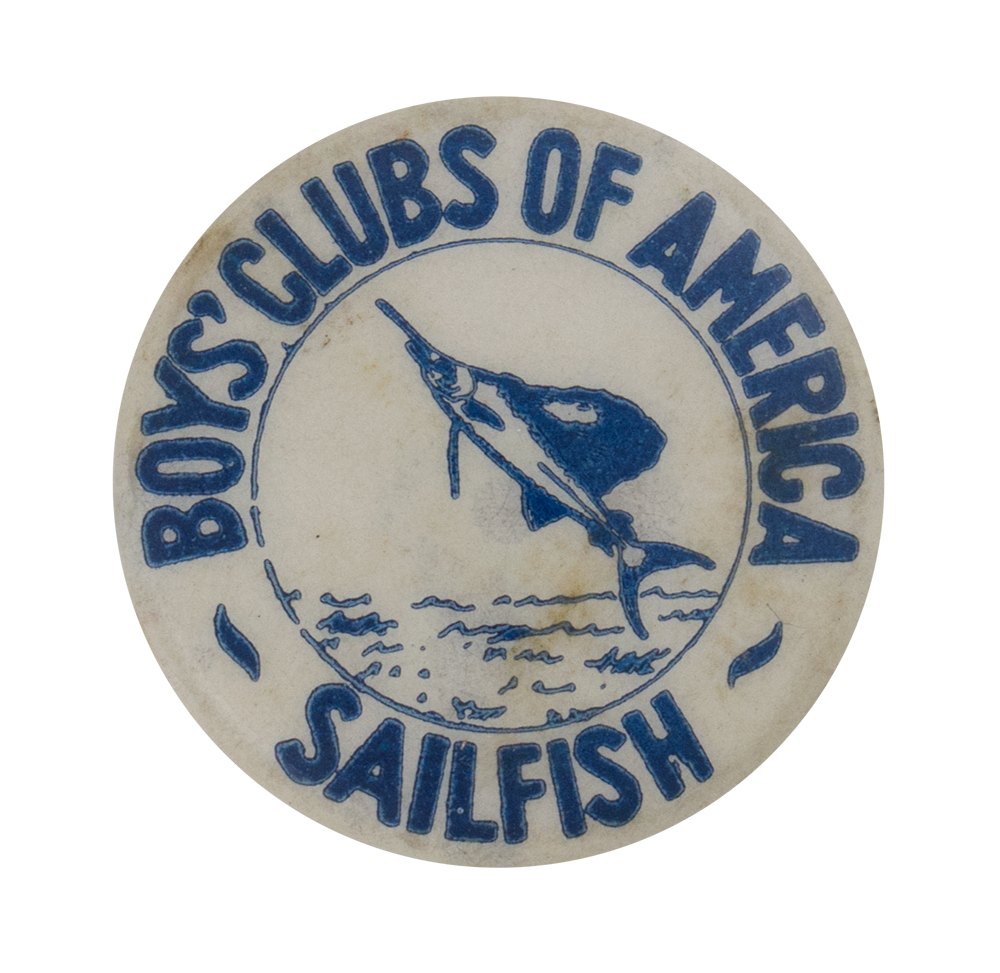
Text on Button BOYS' CLUBS OF AMERICA SAILFISH
Image Description

Blue and white illustration of a leaping fish. Text in dark blue on outer rim, white background. 

Back Style
The Shape
The Size
Additional Information


The first known Boys’ Club was known as “The Dashaway Club,” founded in 1860 in Hartford, Connecticut. Three women took pity on a group of lonely and shabby boys and invited them into their homes for refreshments and recreation. The club became so popular that they rented a meeting hall and offered dramatics, music and books. In 1880, Mary Stuart Hall – another public-spirited woman from Hartford (and the first female lawyer in the state of Connecticut) reorganized the “Dashaway Club” as “The Good Will Boys Club.” Hall wanted to prove that even tough street kids, given opportunity and guidance, could get along in society and abide by the rules. She drew upon her legal training to teach these young “citizens” to live by the rules of law. 

Catalog ID CL0058