NAACP 1948

Category
Additional Images
Sub Categories
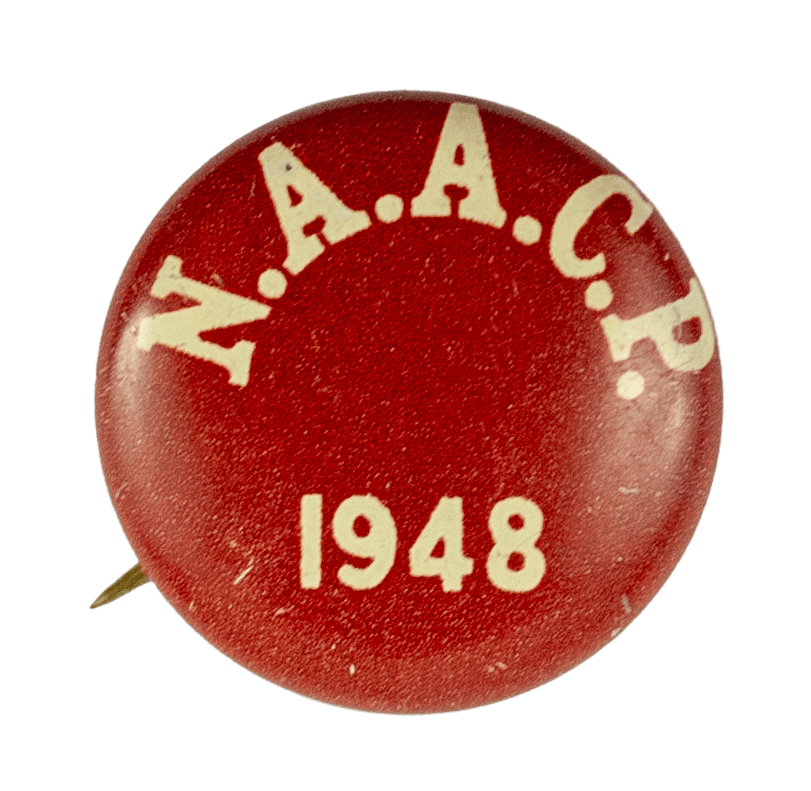
Text on Button N.A.A.C.P. 1948
Image Description

White text on a red background

Back Paper / Back Info

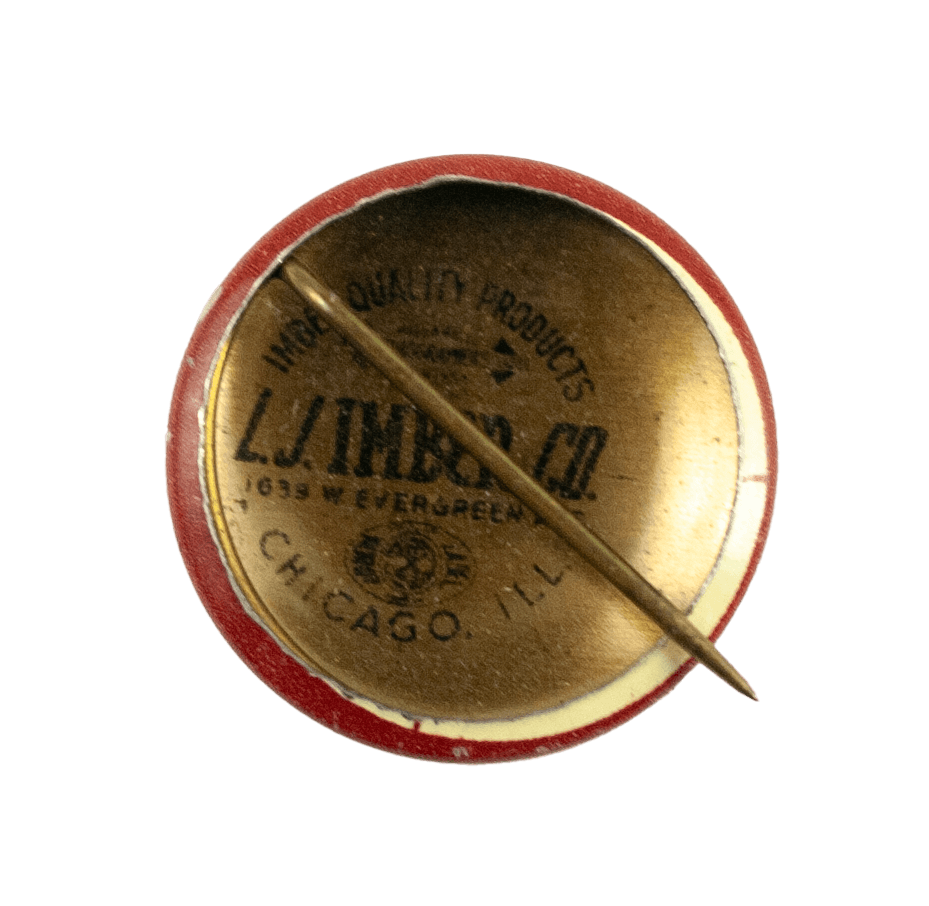
IMBER QUALITY PRODUCTS
[union bug]
L.J. lMBER CO.
1639 W. EVERGREEN AVE. 
[union bug]
CHICAGO, ILL.

Back Style
The Shape
The Size
Year / Decade Made
The Manufacturer
Additional Information

The  National Association for the Advancement of Colored People (NAACP), is a historic civil rights organization that was founded in 1909. Its founders, W.E.B. Du Bois, Mary White Ovington, Moorfield Storey, Ida B. Wells, Henry Moskowitz, and William English Walling, were a group of civil rights activists fighting to eliminate race-based discrimination. The mission of the NAACP was, and continues to be, to ensure the political, educational, social, and economic equality of all US citizens. Throughout its history, the NAACP has been a significant player in civil rights victories, including the landmark Brown v. Board of Education Supreme Court decision, the Civil Rights Act of 1964, and the Voting Rights Act of 1965. 

On July 26, 1948, President Truman issued Executive Order 9981, declaring that there shall be equal treatment and opportunities for anyone in the armed services, regardless of race, religion, or national origin. With this order the President’s Committee on Equality of Treatment and Opportunity in the Armed Services was established to oversee its implementation across all military branches. The NAACP played a crucial role in advocating for this policy through direct lobbying, public campaigns, and partnerships with other civil rights organizations like the National Urban League and CORE. The NAACP emphasized the contributions of African American soldiers during World War II to highlight the injustice of segregation. The organization published supportive stories and editorials, while organizing rallies and speeches to gather public support. By the start of the Korean War, only 2 years later, the U.S. military had made significant efforts towards desegregation, and integrated units were more common.

Sources

The United States Government. (1948, July 26). Executive order 9981: Desegregation of the Armed Forces (1948). National Archives and Records Administration. https://www.archives.gov/milestone-documents/executive-order-9981 

NAACP. (2023, July 26). NAACP commemorates 75th anniversary of the desegregation of US Armed Forces. https://naacp.org/articles/naacp-commemorates-75th-anniversary-desegregation-us-armed-forces

NAACP. (2021, May 11). Our History. https://naacp.org/about/our-history  

Catalog ID CA0949

Carol Bouman Lyle

Category
Additional Images
Sub Categories
Image Description

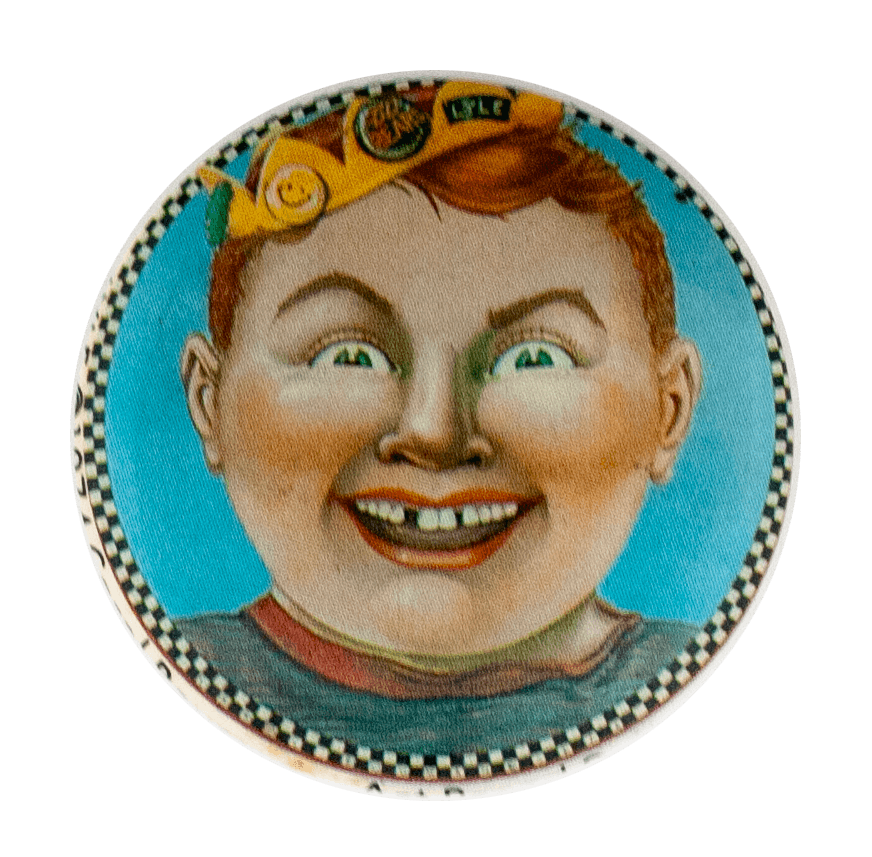
Color illustration on a blue background of a boy with red hair and green eyes wearing a yellow crown with buttons attached; black and white checkerboard design around the rim

Curl Text LYLE © 1974 Carol Bouman Art Brand Buttons TM by Easy Aces
Back Style
The Shape
The Size
Year / Decade Made
The Manufacturer
Additional Information

Carol Bouman was an illustrator popular during the 1970s and 1980s. Her work is best described as having "figurative collage elements" and "whimsical art deco influences." She illustrated several children’s books in the 1980s, including Pick of the Litter by Teddy Slater, The Fisher-Price picture dictionary by Dina Anastasio, RV and the Haunted Garage by Mel Gilden, and Where is Baby Twinkle? by Michael Teitelbaum. Bouman also collaborated with renowned musicians, including Jerry Lee Lewis, on album cover art. Her work has even reached the big screen! She was the artist for The Inheritance (1976) movie poster. While little known about her personal life, she has made a significant impact in various forms of commercial art.

See another Carol Bouman button in the museum's collection

Sources

Carol Bouman. (2024). Goodreads.com. https://www.goodreads.com/author/show/3913938.Carol_Bouman

Discogs. (n.d.). Discogs. Retrieved August 31, 2024, from https://www.discogs.com/artist/4301570-Carol-Bouman

ACADEMY COLLECTIONS | details. (2024). Oscars.org. https://collections.new.oscars.org/Details/People/156908

Catalog ID AR0499

Jazz Showcase Chicago

Category
Additional Images
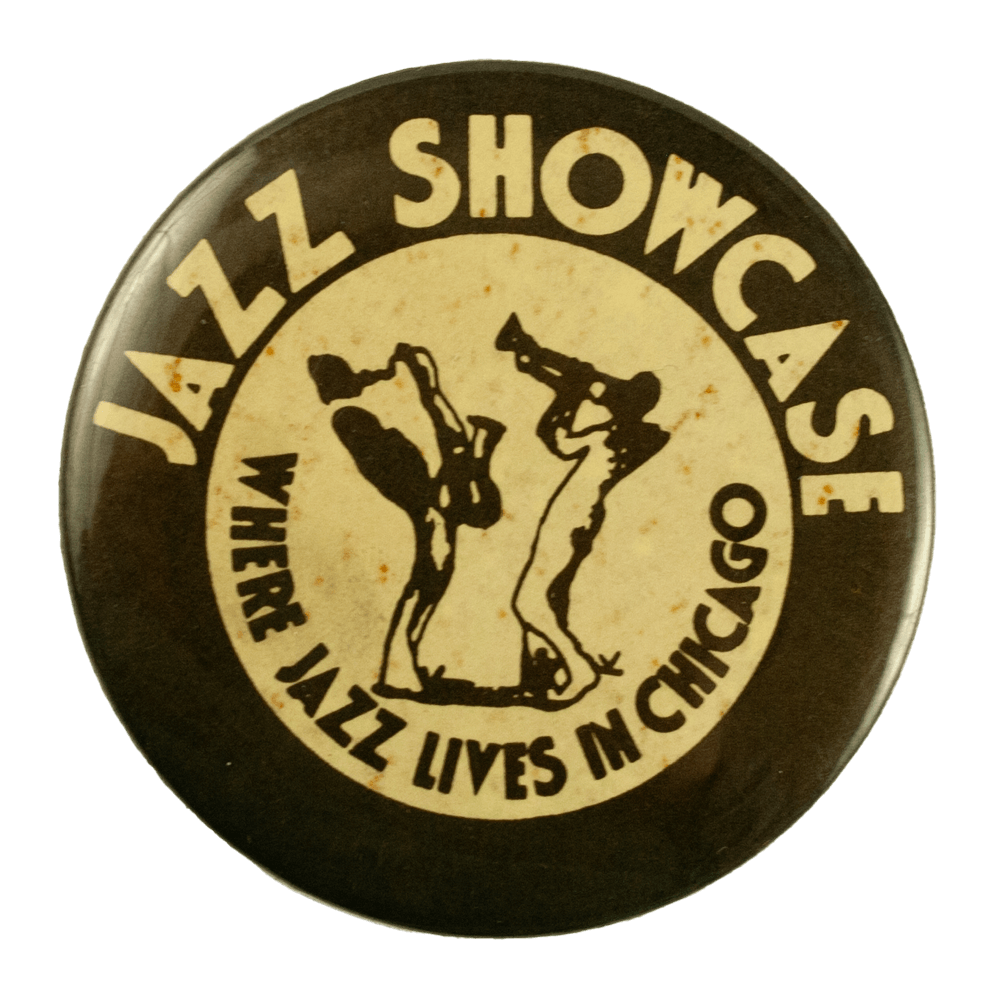
Text on Button JAZZ SHOWCASE WHERE JAZZ LIVES IN CHICAGO
Image Description

Light brown text on a dark brown rim; in the center is an illustration of a man playing saxophone and a man playing trumpet above dark brown text on a light brown background.

Back Style
The Shape
The Size
Additional Information

Jazz Showcase is one of the oldest and continuing jazz clubs in Chicago, founded in 1947 by Joe Segal (April 24, 1926 – August 10, 2020). The club changed locations many times around Chicago, from rundown showrooms to elegant clubs and concert halls. According to Segal, he presented jazz shows at more than 60 locations. As of 2024, it is managed by Wayne Segal, Joe’s son, and it still highlights jazz in its current venue at 806 South Plymouth Court in Chicago. 

Former owner Joe Segal, who ran the club until 2020, was a lovable grump with a passion for jazz, especially bebop, and kept the club running at his own financial risk, despite downturns in the popularity of jazz and the economy overall. He worked with great jazz musicians like Charlie Parker, Dizzy Gillespie, Thelonious Monk, Sonny Rollins, Dexter Gordon, and Sun Ra. For his contribution to jazz, Segal was awarded the National Endowment for the Arts Jazz Masters Fellowship in 2015. On the last day of his life, Wayne reported that Joe was listening to Charlie Parker, his musical hero.  

Sources

Jazz Showcase. Where Jazz Lives in Chicago. (n.d.). About. Retrived September 13, 2024, from https://www.jazzshowcase.com/about 

NEA Jazz Masters Fellowships. (n.d.). Joe Segal. Jazz Presenter and Club Owner (Award for Jazz Advocacy. Bio. National Endowment for the Arts. Retrieved September 13, 2024,  https://www.arts.gov/honors/jazz/joe-segal 

Reich, H. (2020, Aug 10). Jazz Showcase founder Joe Segal dies: Chicago's longest-running jazz impresario presented Charlie Parker and other greats. TCA Regional News http://search.proquest.com.libaccess.sjlibrary.org/wire-feeds/jazz-showcase-founder-joe-segal-dies-chicagos/docview/2432162494/se-2 

Reich, H. (2020, Aug 20). Column: Remembering 50 years of going to Joe Segal’s Jazz Showcase. TCA Regional News. http://search.proquest.com.libaccess.sjlibrary.org/wire-feeds/column-remembering-50-years-going-joe-segal-s/docview/2435504625/se-2


Catalog ID CH0314

Free Speech for High School Students

Category
Additional Images
Sub Categories
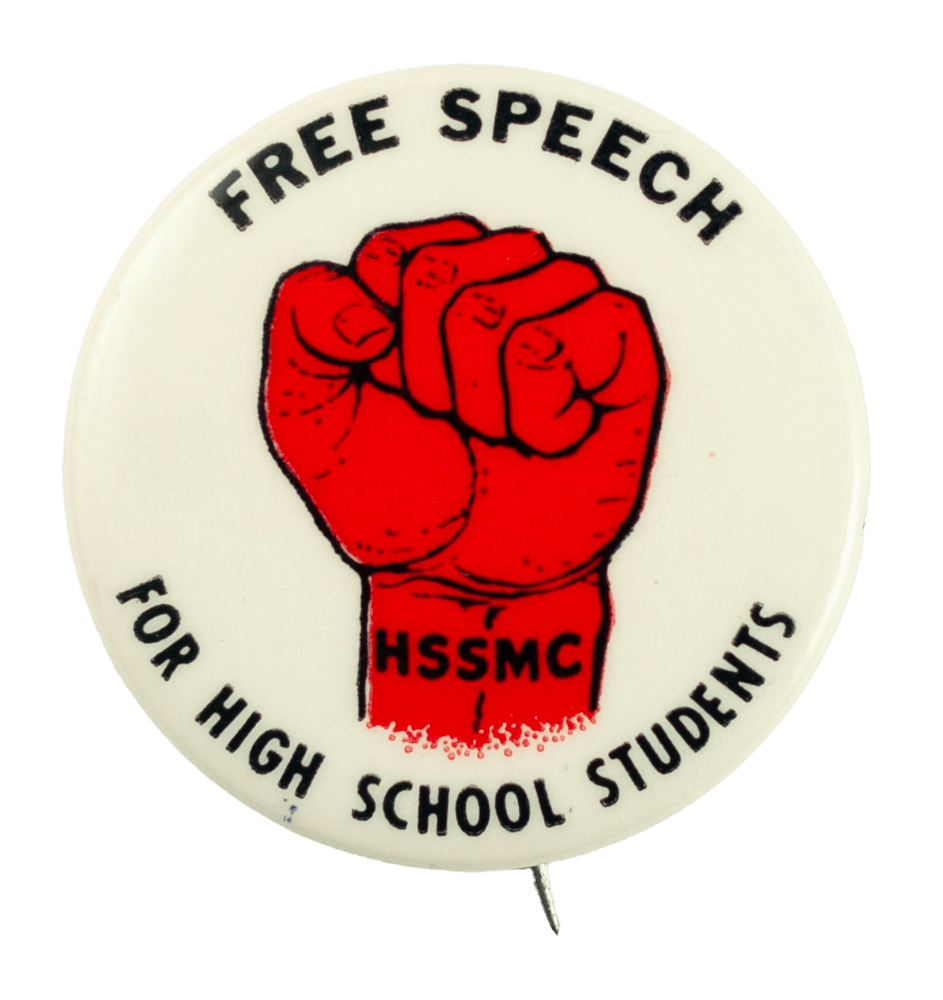
Text on Button FREE SPEECH HSSMC FOR HIGH SCHOOL STUDENTS
Image Description

A raised red illustrated fist and black text on a white background

Back Paper / Back Info

[union stamp]

Curl Text [union bug] 483 [union bug]
Back Style
The Shape
The Size
Additional Information

HSSMC (High School Student Mobilization Committee) was part of a nationwide activist organization, the Student Mobilization Committee to End the War in Vietnam, otherwise known as Student Mobe or SMC. Students organized Vietnam Week, Confront the Warmakers in Washington, Stop the Draft Week, and other events to raise anti-war efforts. They facilitated marches, nonviolent protests, conference attendance, and education spanning many schools and colleges throughout the country. Vietnam Week was one of the earliest demonstrations, and it had over 500,000 protesters in total. 

Sources

As Our Readers See It . . . Groups misrepresented? . U-High Midway. (1968). https://www.ucls.uchicago.edu/uploaded/Midway_44.05_68-1119OCR.pdf 

Aufderheide, I. (2023, March 28). Student Mobilization Committee to end the war in Vietnam: A pivotal moment in student protest. The Nonviolence Project. https://thenonviolenceproject.wisc.edu/2023/03/28/student-mobilization-…;

GALE CENGAGE Learning. (n.d.). America in Protest: Records of Anti-Vietnam War Organizations. https://assets.cengage.com/gale/psm/9151000C.pdf 

Catalog ID CA0948

C & O Route

Category
Additional Images
Sub Categories
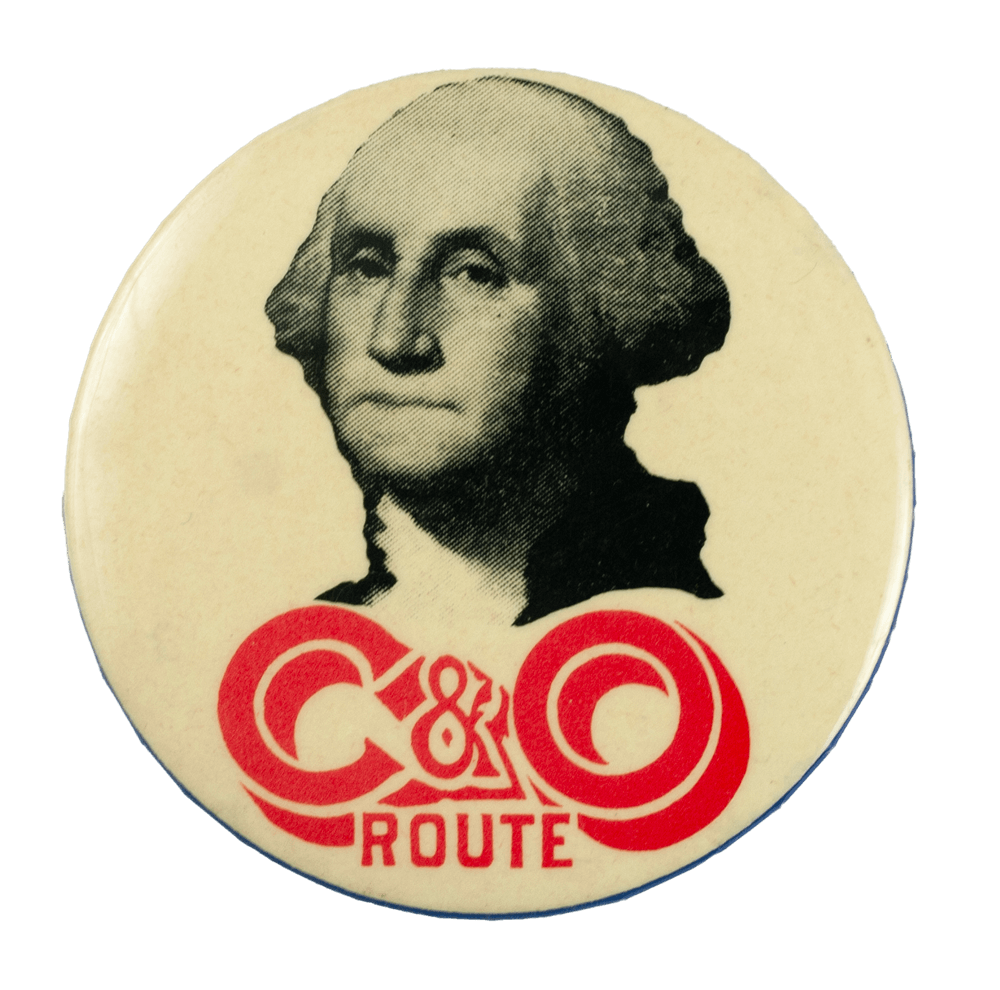
Text on Button C & O ROUTE
Image Description

Off-white background with stylized red text and a black and white photograph of George Washington

Back Paper / Back Info

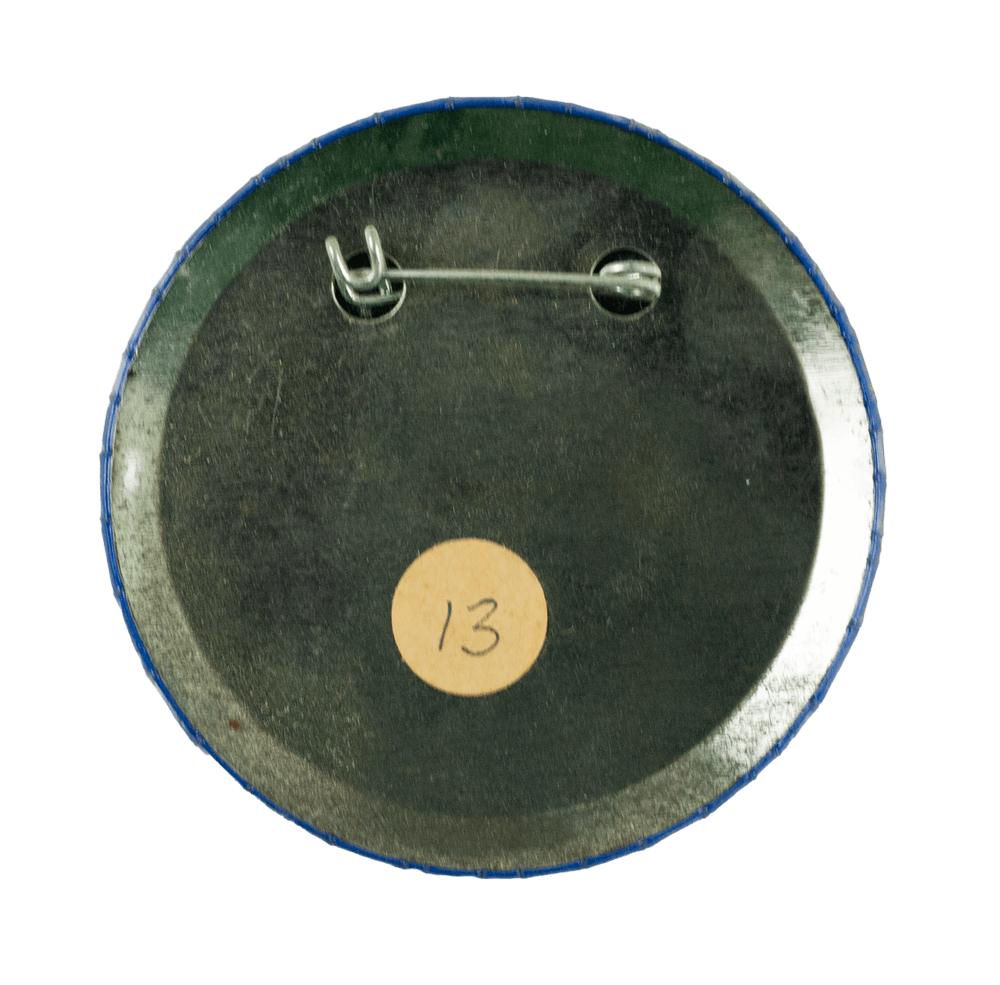
[sticker: 13]

Back Style
The Shape
The Size
Additional Information

Prior to the advent of railways in America, canals were used to transport goods and passengers. The Chesapeake and Ohio Canal, chartered by president James Monroe in 1825, spanned from Georgetown, Washington D.C., to Cumberland, Maryland. Teams of mules worked the towpath along the banks of the river, pulling boats behind them. The canal ceased operations in 1924 and has since been turned into a recreational walking path.

Sources

C&O canal towpath. C&O Canal Trust. (n.d.). https://www.canaltrust.org/plan/co-canal-towpath/

U.S. Department of the Interior. (n.d.). Mules and the canal. National Parks Service. https://www.nps.gov/choh/learn/historyculture/mules.htm

Wikimedia Foundation. (2024, May 21). Chesapeake and Ohio Canal. Wikipedia. https://en.wikipedia.org/wiki/Chesapeake_and_Ohio_Canal

Catalog ID AD1117

Goodwill Fire Engine Company No. 5

Category
Additional Images
Sub Categories
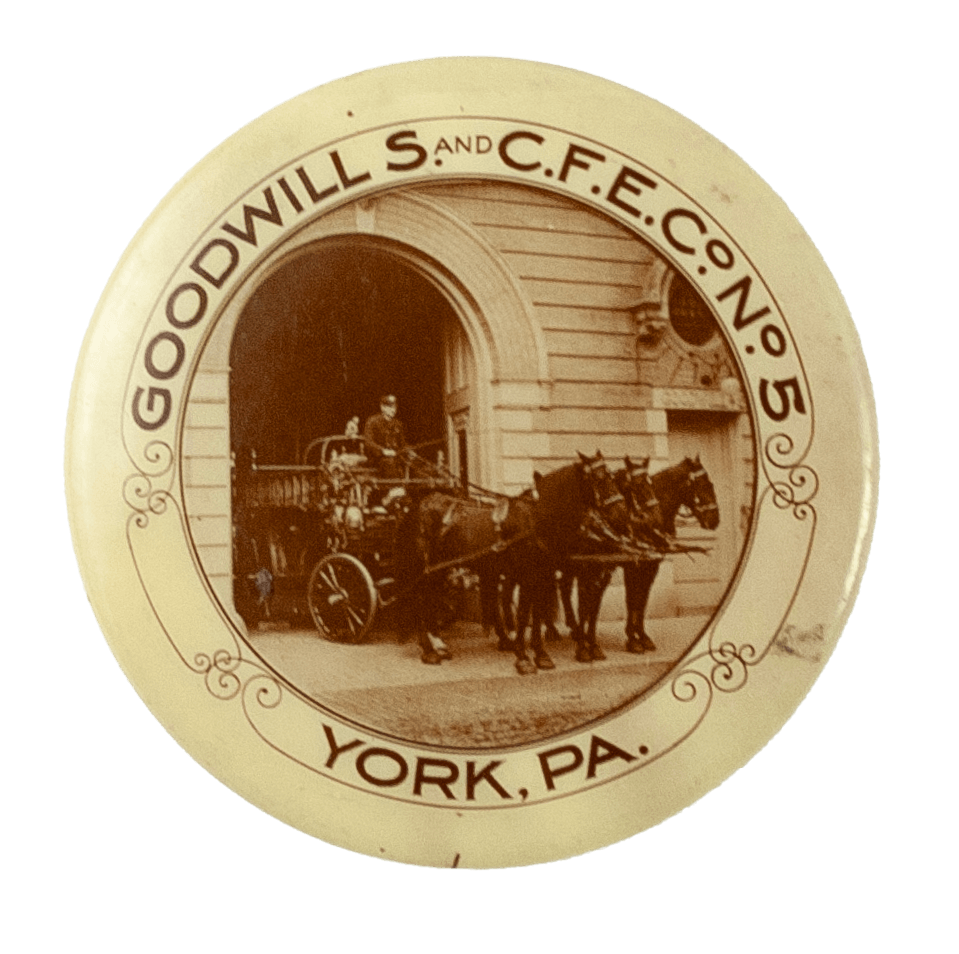
Text on Button GOODWILL S. AND C.F.E. Co. No. 5 YORK, PA.
Image Description

Off-white background and brown text and brown filagree along the rim with a sepia-toned photograph center. The photograph features a man sitting on top of a horse-drawn carriage that is emerging from an arched stone door. 

Back Paper / Back Info

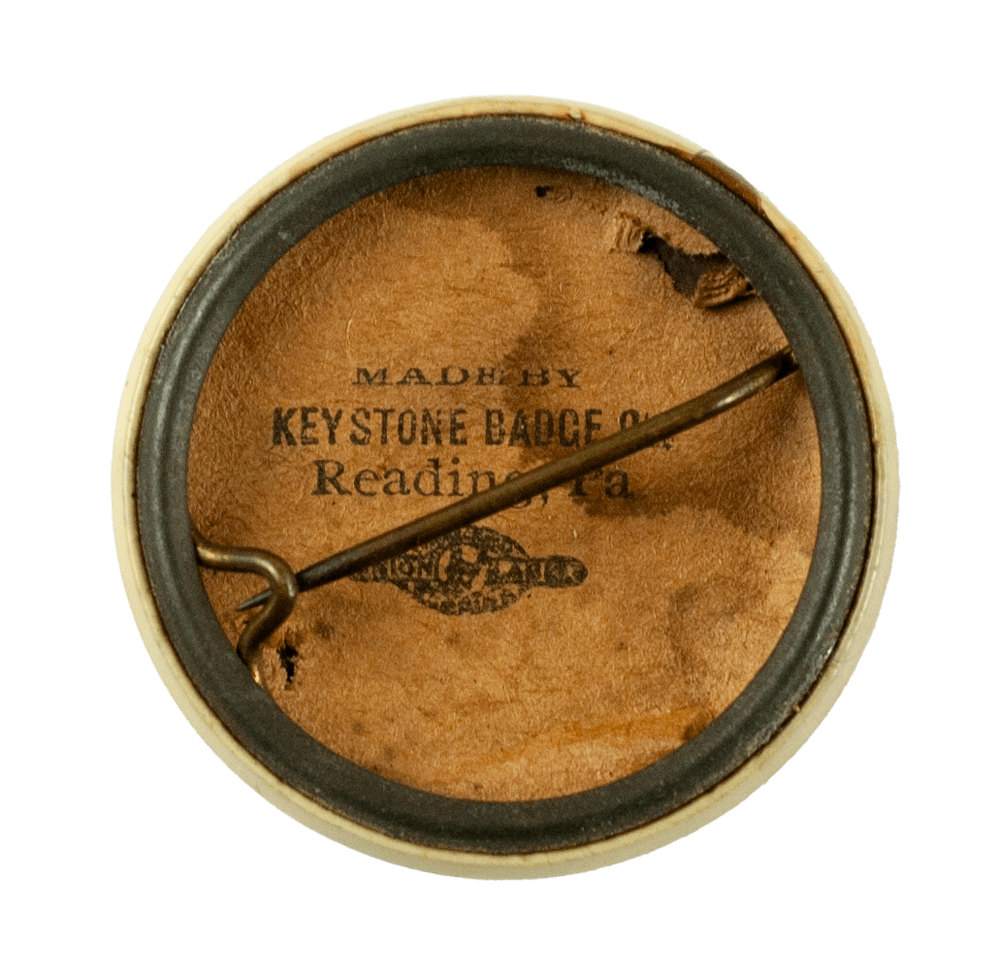
MADE BY
KEYSTONE BADGE CO.
Reading, Pa.
[union bug]

Back Style
The Shape
The Size
Year / Decade Made
The Manufacturer
Additional Information

The Goodwill Steam and Chemical Fire Company No. 5 went through several name changes since its founding in 1839. First founded in Freystown, Pennsylvania, the company was named the Springgarden Active Fire Company. At this time, firefighters used a hand-operated fire engine, which had to be manually supplied with buckets of water. In 1852, the company changed its name to the Good Will Fire Company No. 1 of Freystown. The fire company received its first steam fire engine from the Silsby Manufacturing Company in March of 1888. After Freystown was annexed into the city of York, the fire company changed its name for the final time in 1901 to the Goodwill Steam and Chemical Fire Company No. 5. The company moved into the "motorized era" in 1915 with its addition of a motorized fire engine with a "combination chemical and hose apparatus." The demolition of the company’s second house in Freystown started in October 1902; however, as of 2024, the bigger firehouse built on the same lot in 1903 is still occupied and used by the company.

Sources
Catalog ID CL0701

76 Nobody for President

Category
Additional Images
Sub Categories
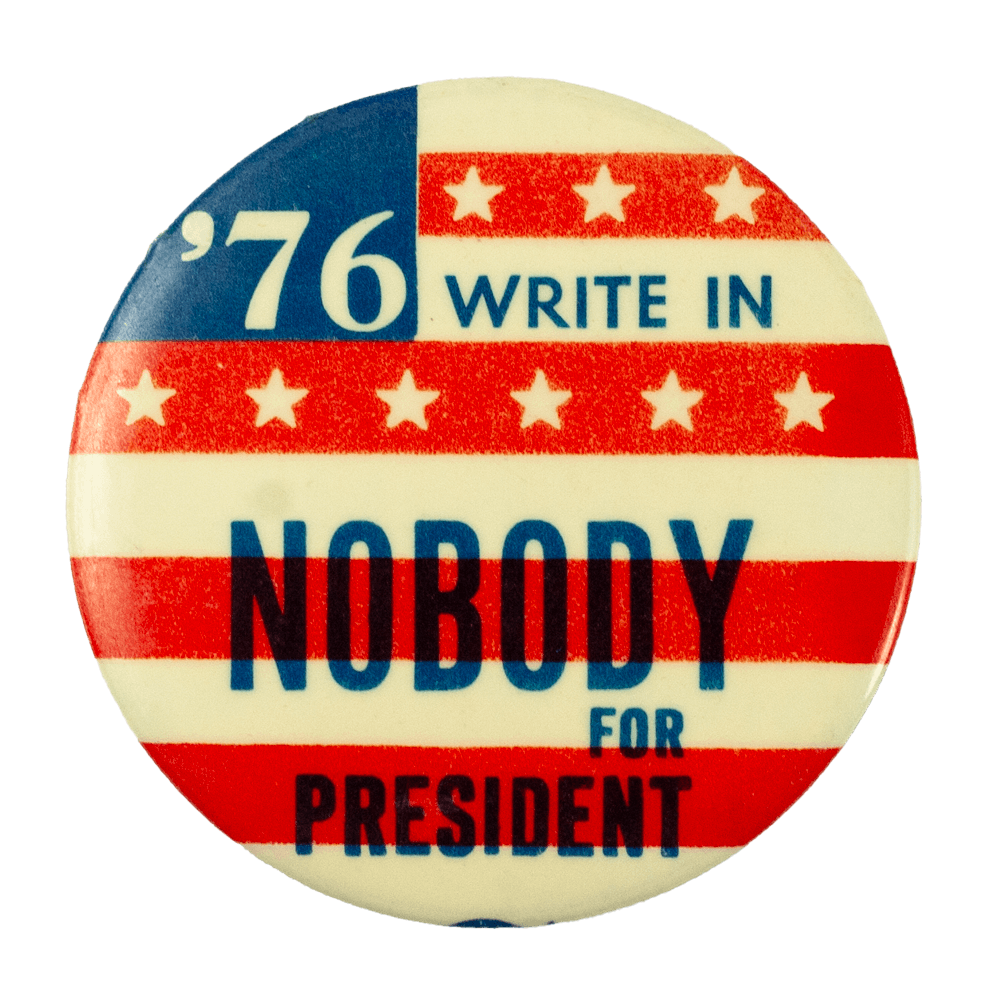
Text on Button '76 WRITE IN NOBODY FOR PRESIDENT
Image Description

Blue and white text on top of a design that implies a United States flag: red and white horizontal stripes, a blue triangle in the top left corner, and nine white stars are evenly distributed on the top two red stripes. 

Curl Text [union bug]
Back Style
The Shape
The Size
Year / Decade Made
Additional Information

Dating back as far as 1940, the satirical Vote for Nobody campaign was popularized in the 1960s by humor columnist Arthur Hoppe. The campaign really hit its stride in 1976 thanks to political activists Wavy Gravy and Curtis Spangler, who declared that "Nobody" belonged to the Birthday Party and that it had a dinner roll as a running mate—gaining the attention of the masses. With Spangler as its campaign manager, Nobody hit the road for a cross-country tour, appearing in a motorcade as an empty chair in an empty car or as a pair of wind-up teeth that would chatter when questioned.

The Vote for Nobody campaign still continues today, and helps to advocate for a “None of the Above” option to be included on ballots.

Sources

“Nobody for President.” n.d. Museum of Hoaxes. Accessed June 28, 2024. https://hoaxes.org/archive/permalink/nobody_for_president.

‌“Nobody for President, 2020 [Official Pages].” n.d. Www.nobodyforpresident.org. http://www.nobodyforpresident.org/forevernobody.html.

Catalog ID PO1281

Collector Spotlight: Marshall Levin

Marshall Levin was known among the collectors in his community for being passionate. He started collecting in 1960 by signing up as a member of the American Political Items Collectors and had amassed a significant button collection before he died in 2000. In addition to buttons, Levin also had large collections of books (many first editions) as well as classical and jazz LPs. 


Submitted by rachelesser on

I Love Lollipops Tootie

Category
Additional Images
Sub Categories
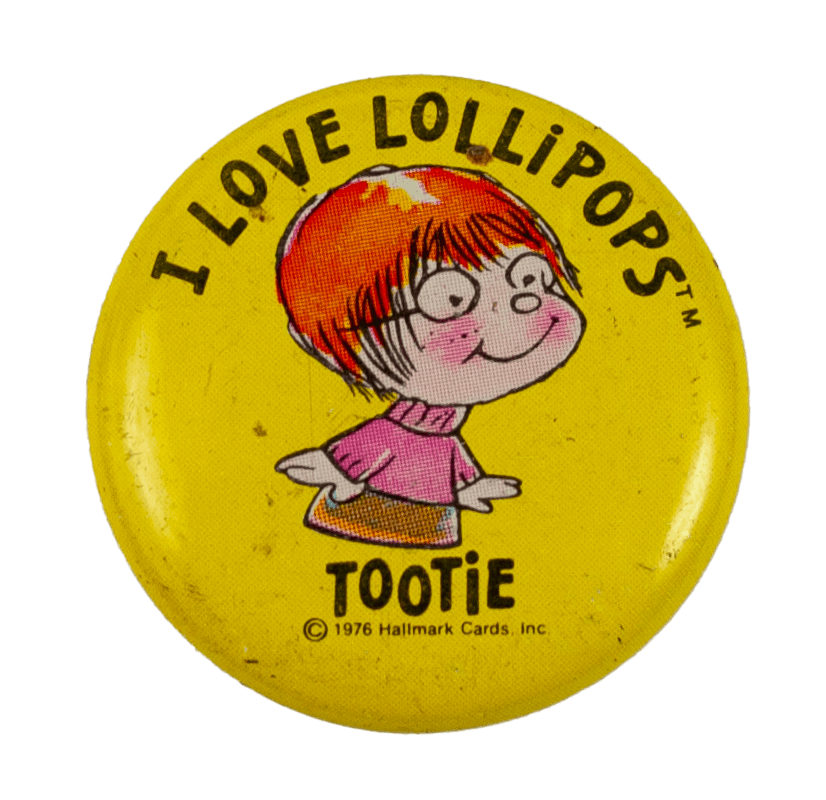
Text on Button I LOVE LOLLIPOPS TOOTIE ©1976 Hallmark Cards Inc.
Image Description

Illustration of a girl with short red hair with glasses wearing a pink sweater and orange skirt on a yellow background with black text

Back Style
The Shape
The Size
Year / Decade Made
Additional Information

Marty Links, born in 1917, was a cartoonist and fashion illustrator best known for the syndicated comic strip Emmy Lou (originally titled Bobby Sox), which ran from 1944 to 1979. She was a pioneer in a field largely dominated by men, chronicling the lives of teenage girls through cartoon. Links also worked for Hallmark as a greeting card illustrator and merchandise designer. She developed a series of characters known as Kidlinks, of which Tootie is one, before retiring in 2000. Links passed away in 2008. 

Sources

Camera-ready comic strip, entitled “Emmy Lou”. National Museum of American History. (n.d.). https://americanhistory.si.edu/collections/nmah_799603

Nolte, C. (2008, January 9). Martha Arguello, “Bobby Sox”, “Emmy Lou” cartoonist, dies in San Rafael. SFGate. https://www.sfgate.com/bayarea/article/Martha-Arguello-Bobby-Sox-Emmy-Lou-cartoonist-3298729.php

Wikimedia Foundation. (2024b, June 20). Marty Links. Wikipedia. https://en.wikipedia.org/wiki/Marty_Links


Catalog ID IL0143