We're for Integration

Category
Additional Images
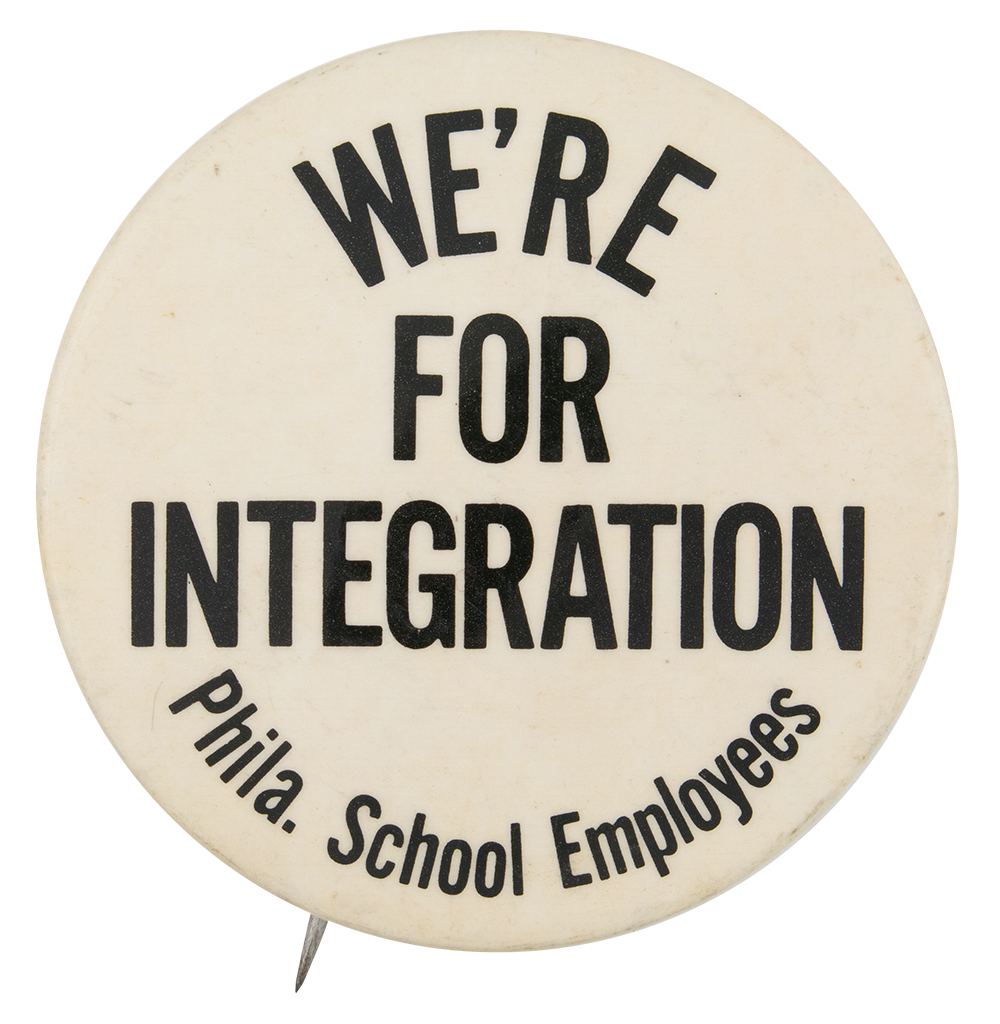
Text on Button WE'RE FOR INTEGRATION Phila. School Employees
Image Description

Black text on a white background.

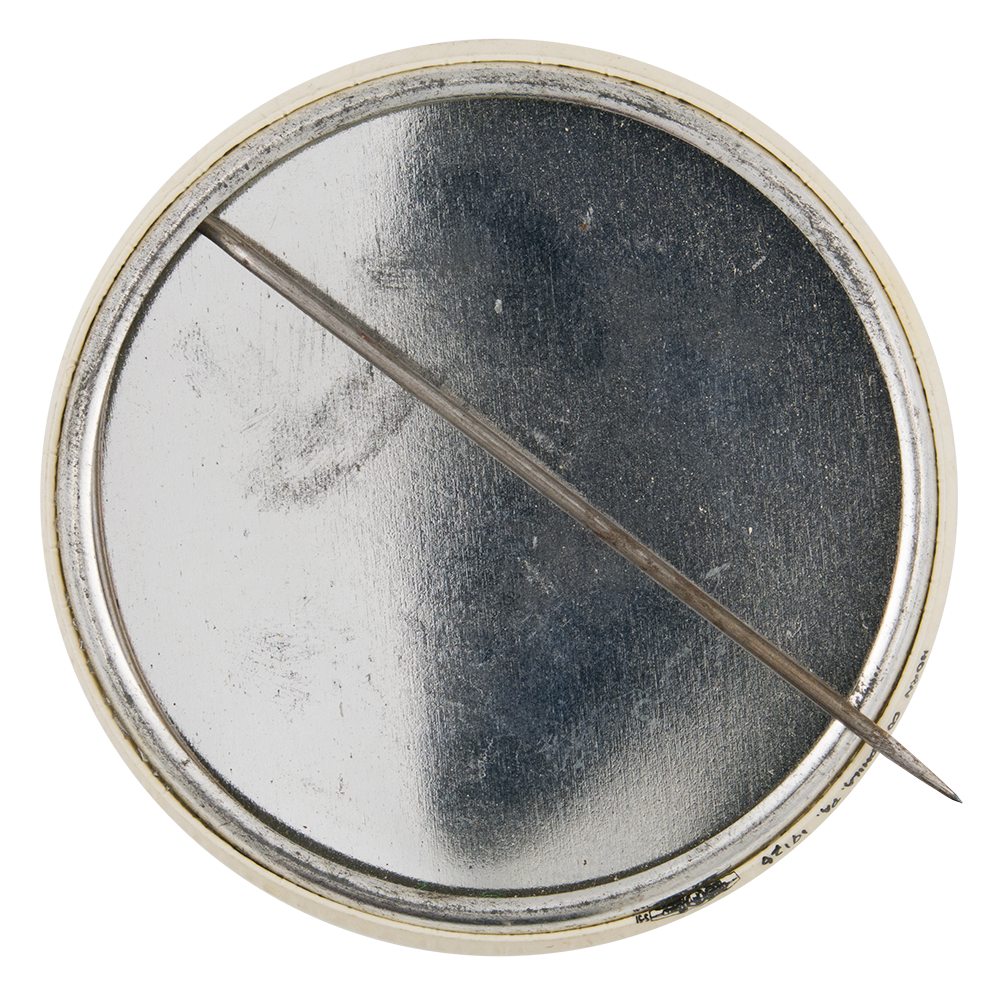
Curl Text HORN CO. PHILA, PA, 19126 (union bug)
Back Style
The Shape
The Size
Additional Information

The struggle for desegregation in schools was a major component of the Civil Rights Movement, and the landmark Supreme Court case, Brown v. Board of Education outlawed school segregation in 1954.  Despite this ruling, actual change was slow to occur, and it took years for many schools to be integrated. 

Despite the fact that desegregation efforts in northern cities received much less attention than those in their southern counterparts, the integration process in Philadelphia was not an easy one. The city had a long history of keeping Black and white students and teachers separated. District policies kept Black teachers from teaching white children and Black administrators from supervising white teachers.  In 1961, the NAACP in Philadelphia started a school desegregation lawsuit in federal court, and in 1963 the court ordered the school board to develop a desegregation plan and file regular progress reports. Although the school board organized committees and ordered studies and reports, led largely by school employees,  change was limited to symbolic victories.

Sources

Mezzacappa, D. (2019, January 02). Philadelphia has a history of grappling with teacher segregation. Retrieved August 29, 2020, from https://thenotebook.org/articles/2018/12/26/philadelphia-has-a-history-…

School Segregation and Integration. (n.d.). Retrieved August 29, 2020, from https://www.loc.gov/collections/civil-rights-history-project/articles-a…

Phillips, A. E. (2000). The struggle for school desegregation in Philadelphia, 1945-1967 (Unpublished doctoral dissertation). University of Pennsylvania.

Catalog ID CA0595

We Will Win

Category
Additional Images
Sub Categories
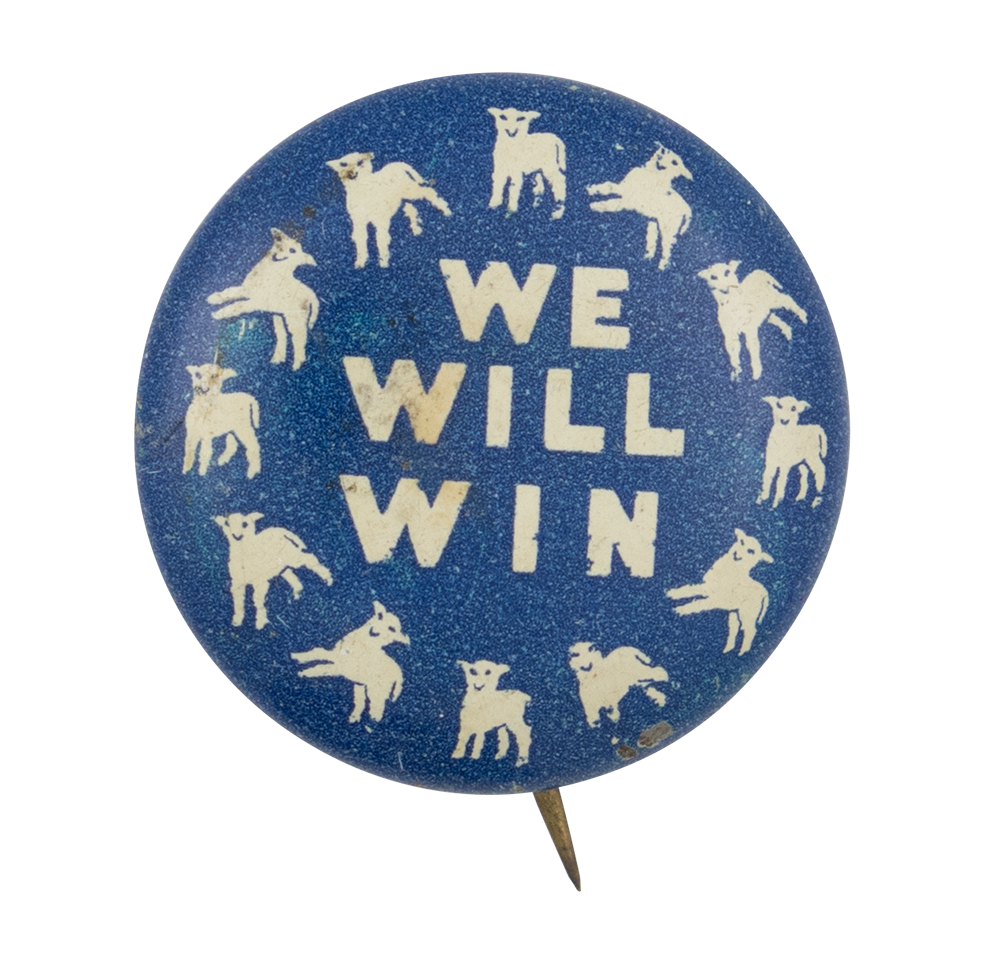
Text on Button WE WILL WIN
Image Description

Illustration of small white animals in a ring around white text on a blue background.

Back Paper / Back Info

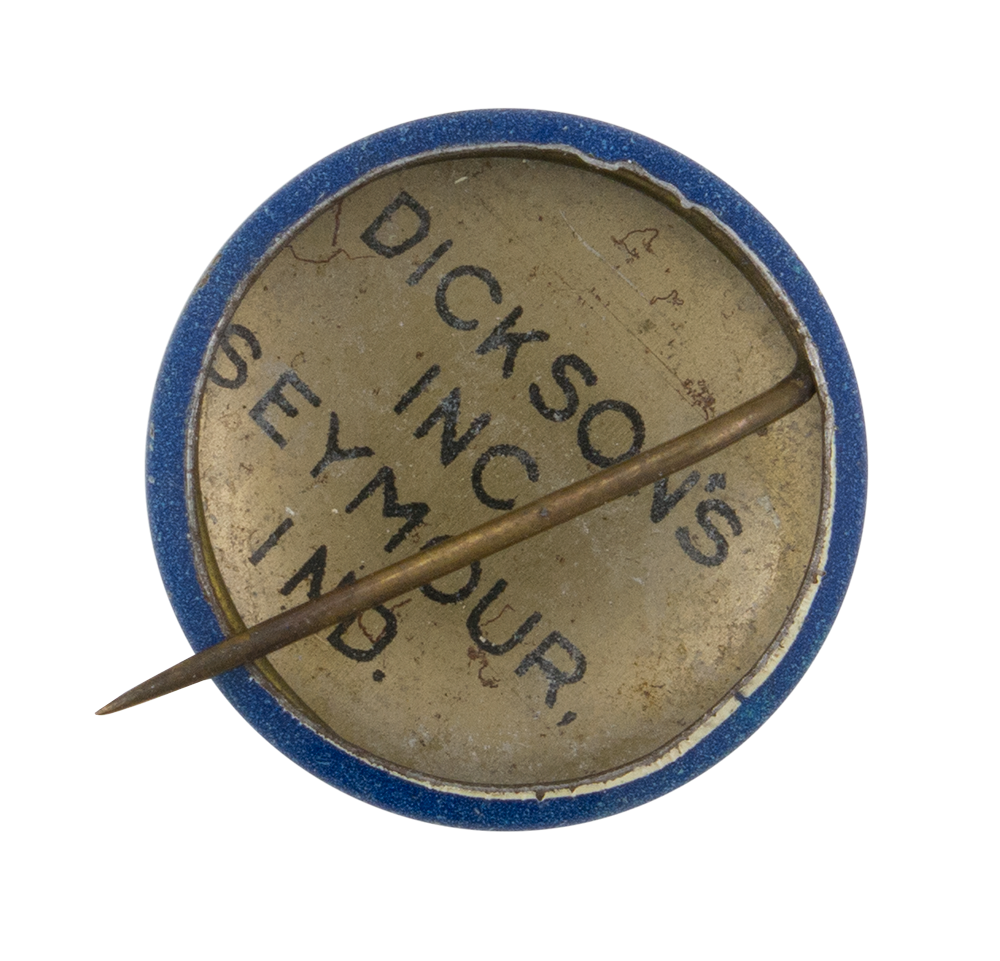
DICKSON'S INC. SEYMOUR, IND.

Back Style
The Shape
The Size
Additional Information

Have info on this button? Contact us here.

Catalog ID CA0596

Student Power

Category
Additional Images
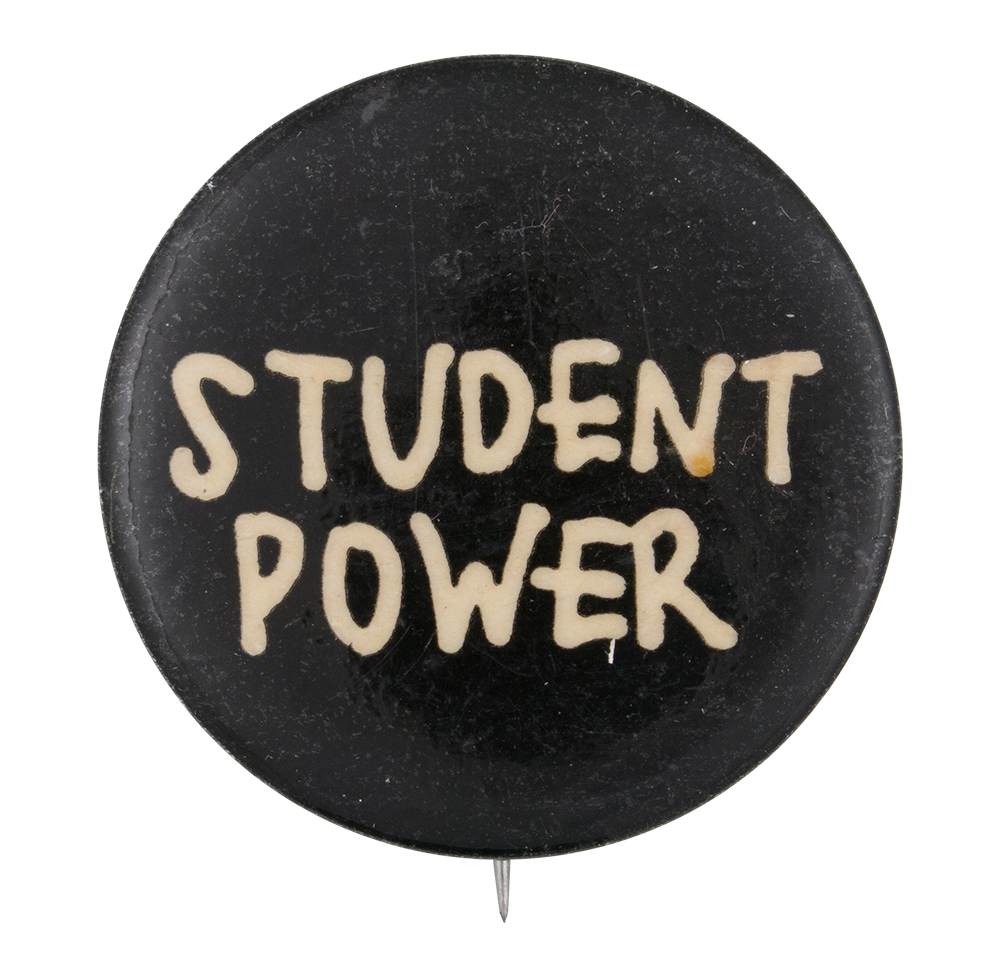
Text on Button STUDENT POWER
Image Description

White text on a black background.

Back Style
The Shape
The Size
Additional Information

In 1960, students began rebelling against the social injustices and authoritarianism of the 1950s. The student movement was labeled as the New Left, referring to the new left-leaning political activists. Student activists participated in the Civil Rights Movement, anti-war protests, women's rights movements, and gay liberation movements.

Catalog ID CA0583

Snob for Peace

Category
Additional Images
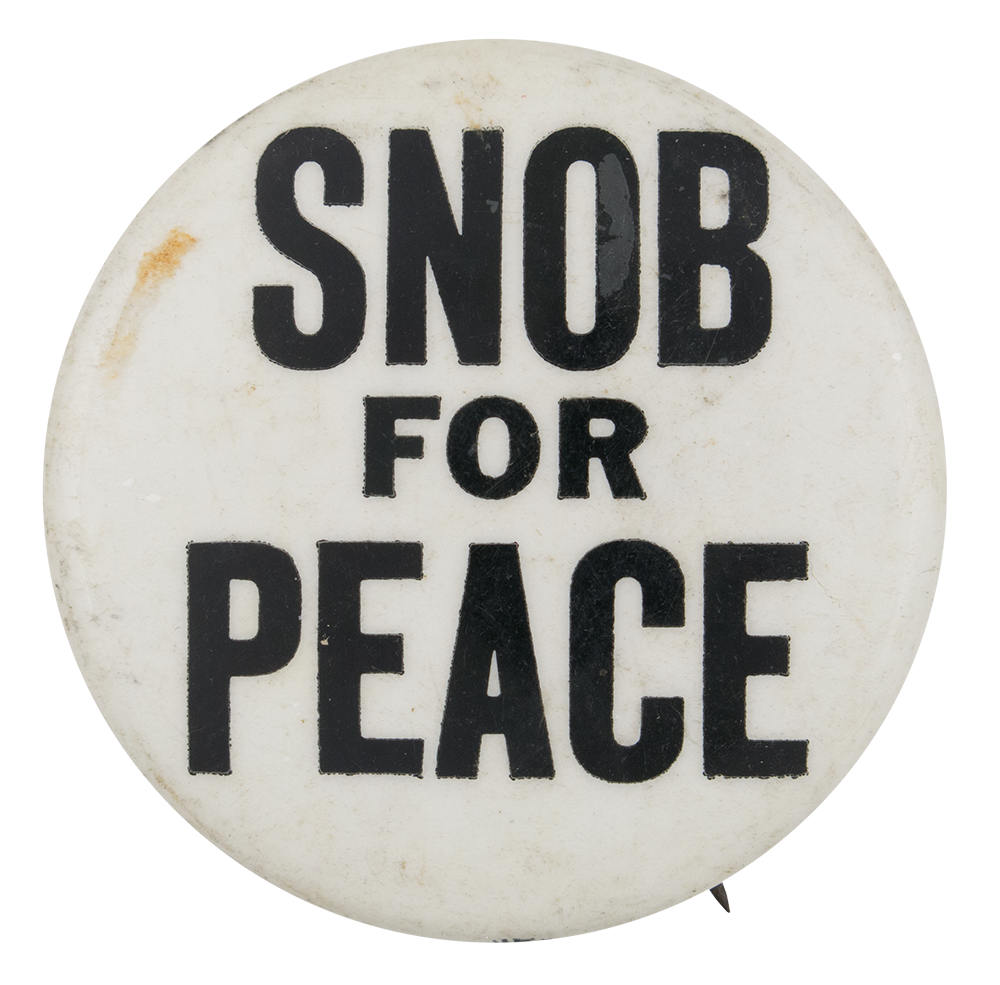
Text on Button SNOB FOR PEACE
Image Description

Black text on a white background

Curl Text (union bug)
Back Style
The Shape
The Size
Year / Decade Made
Additional Information

In 1969, President Nixon's Vice President, Spiro Agnew, made the comment that anti-Vietnam War protestors were "an effete corps of impudent snobs." Following his statement, protestors took his phrase and turned it into their slogan. This button was most likely worn by anti-war activists.

Catalog ID CA0580

Proud to be a Muslim

Category
Additional Images
Sub Categories
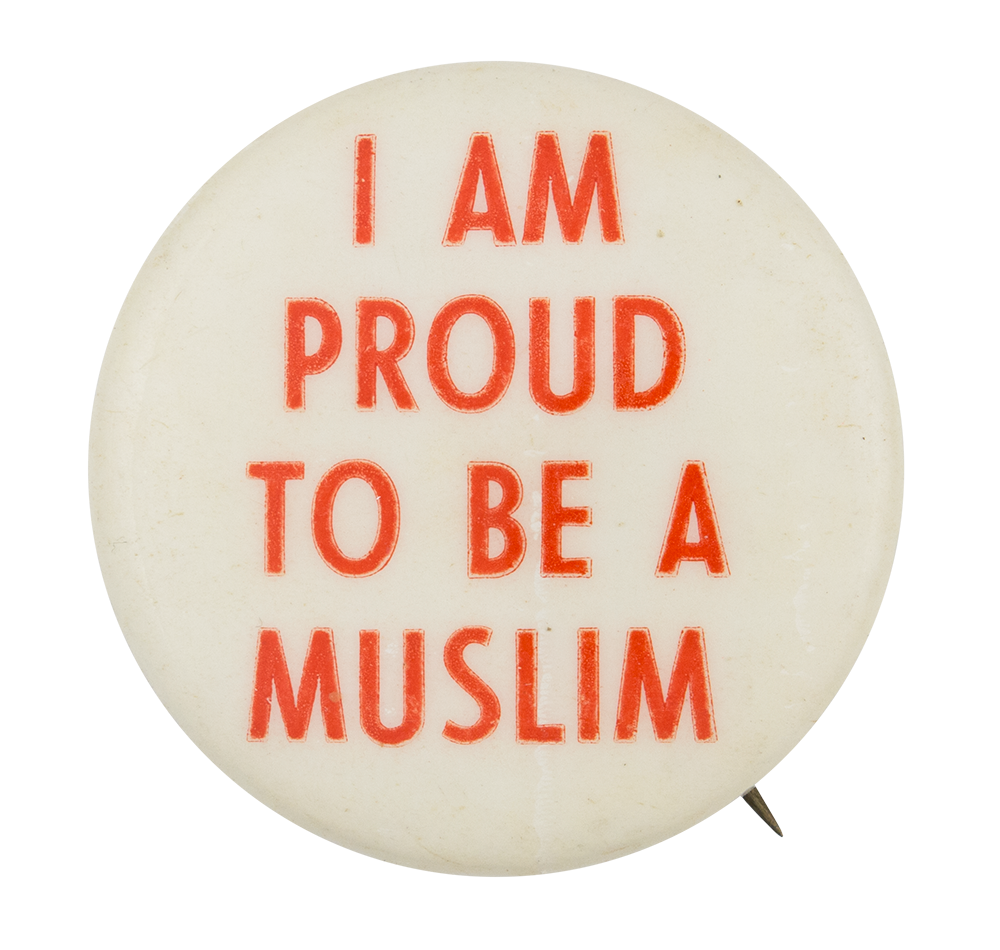
Text on Button I AM PROUD TO BE A MUSLIM
Image Description

Red text on a white background.

Back Style
The Shape
The Size
Additional Information

"I am proud to be a muslim," is a proclamation of those who identify themselves as Muslim and practice the Islam faith. The “I am proud to be Muslim” phrase also appears in t-shirts, mugs, stickers and similar items. In the Islamic faith, Muslims are encouraged to share their faith with others. However, Muslims are told not to attack others' beliefs or engage in conflicts or debates about matters of religion.

Have info on this button? Contact us here.

Sources

Teachers Guide - Muslims | Teacher Center | FRONTLINE | PBS. Retrieved 18 June 2021, from https://www.pbs.org/wgbh/pages/frontline/teach/muslims/beliefs.html#:~:….

Catalog ID CA0590

Protect Your Local Abortionist

Category
Additional Images
Sub Categories
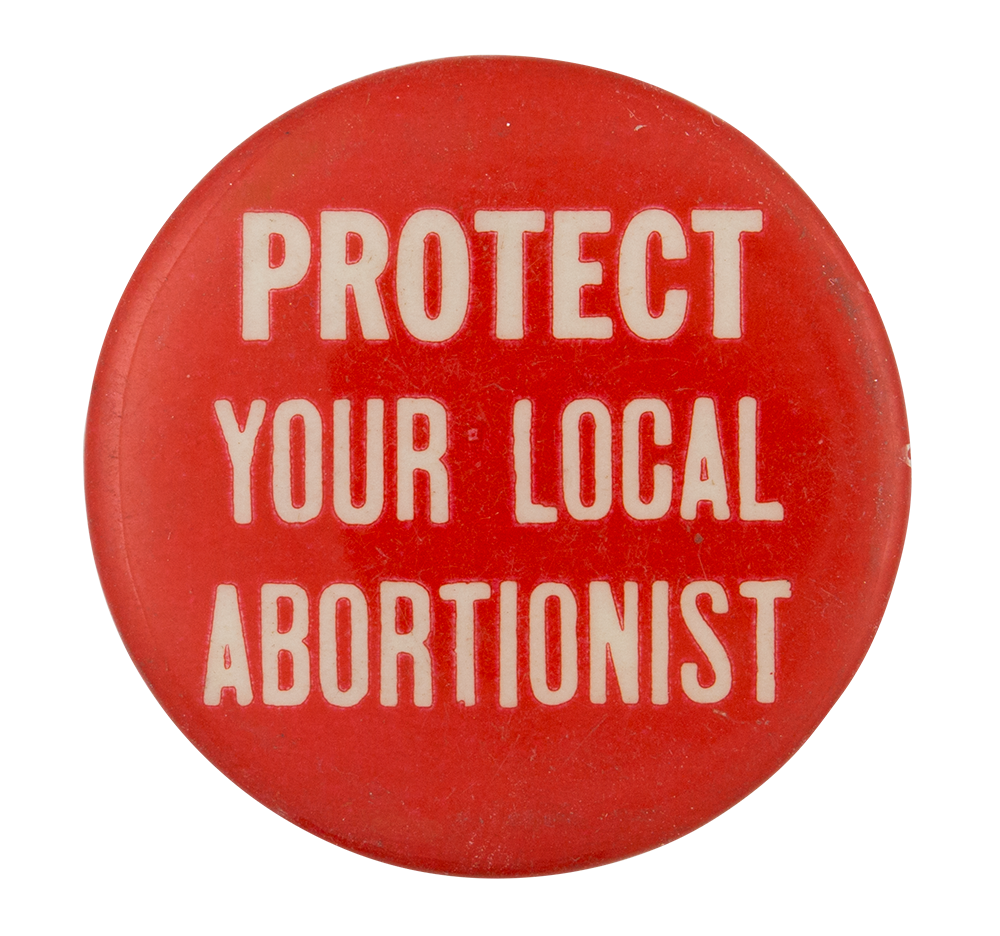
Text on Button PROTECT YOUR LOCAL ABORTIONIST
Image Description

White text on a red background.

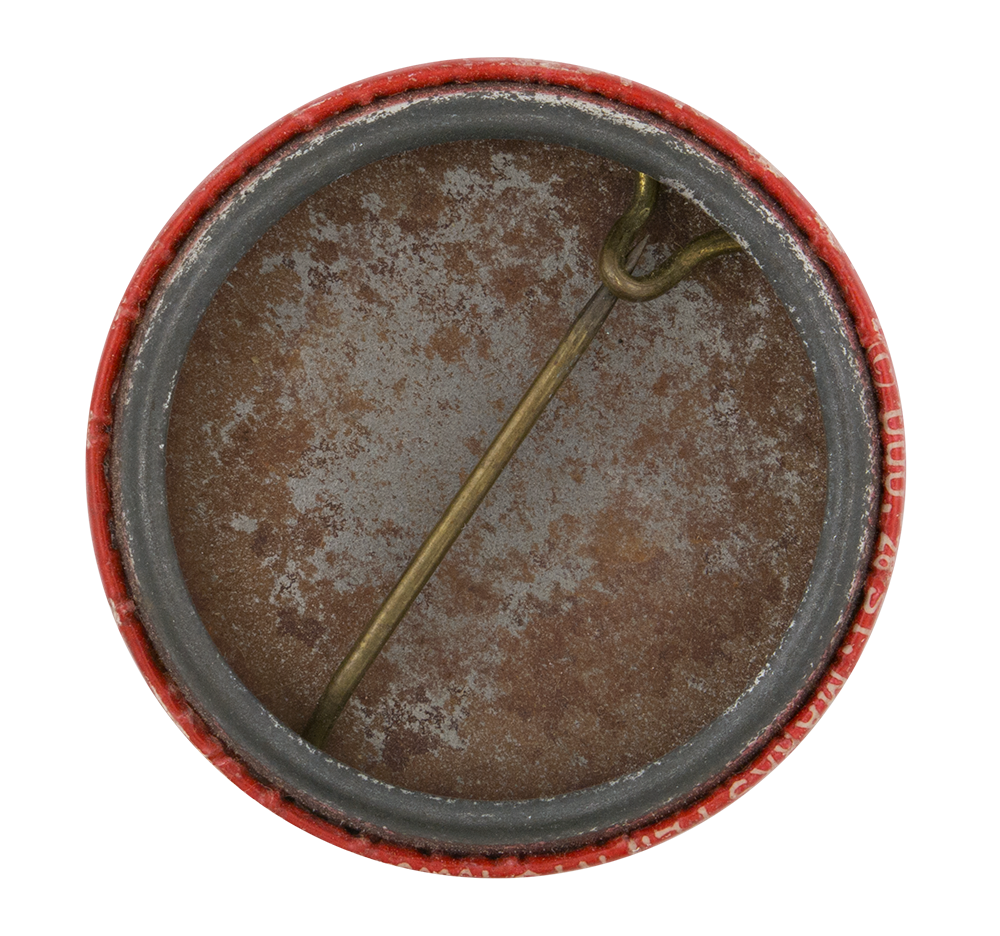
Curl Text © UUU. 28 ST. MARK'S PL., NYC 10003
Back Style
The Shape
The Size
The Manufacturer
Additional Information

In the 1960s, Underground Uplift Unlimited, based in Manhattan, produced buttons with countercultural slogans.

Sources

Keehnen, O. (1992). Interviews: Jack Nichols. Queer Cultural Center. Retrieved from http://www.queerculturalcenter.org/Pages/Keehnen/Nichols.html

Catalog ID CA0591

No More

Category
Additional Images
Sub Categories
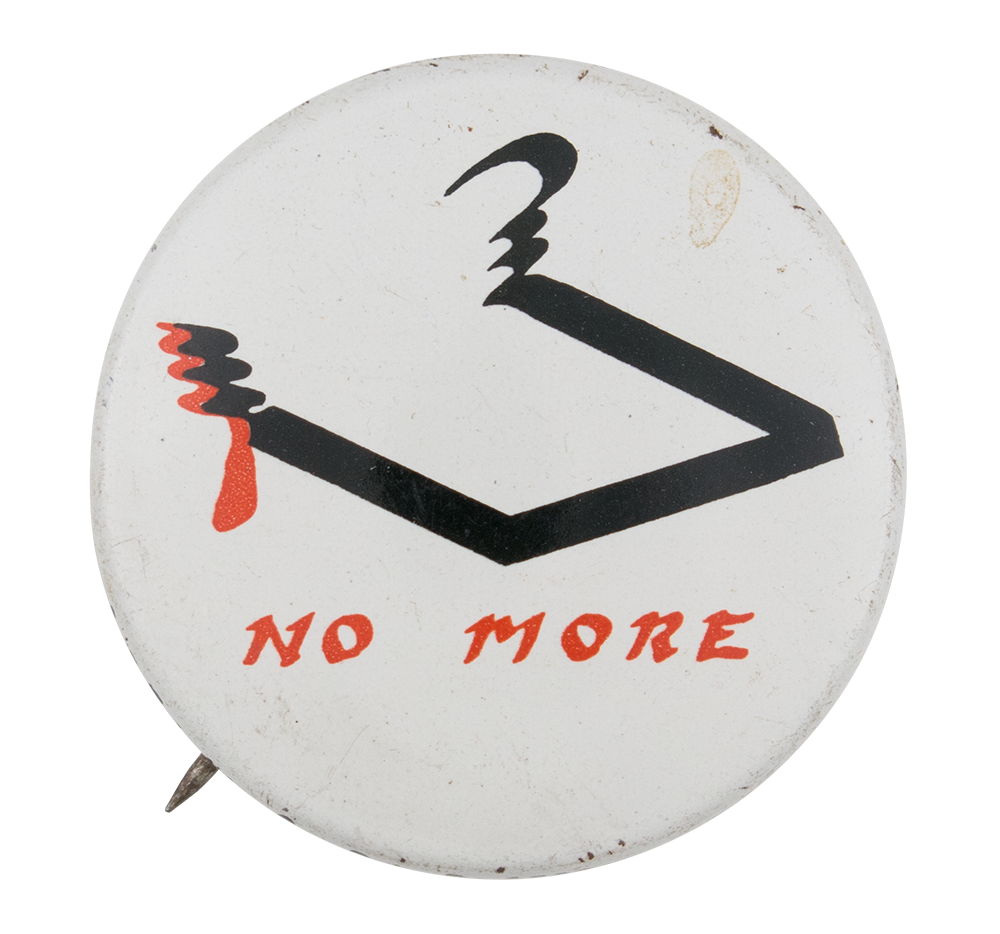
Text on Button NO MORE
Image Description

Illustration of unfolded wire coat hanger with a red and dripping end on a white background.  Red text below illustration.

Curl Text (union bug) A. G. Trimble Co., Pgh., Pa, 15222
Back Style
The Shape
The Size
The Manufacturer
Additional Information

The wire coat hanger is infamously associated with unsafe or illegal abortion, in which a straightened wire hanger is inserted into a pregnant woman's uterus in the attempt to abort a fetus. The image has been often used by pro-choice groups to protest anti-abortion legislation. 

Catalog ID CA0594

Let's Get it Back America

Category
Additional Images
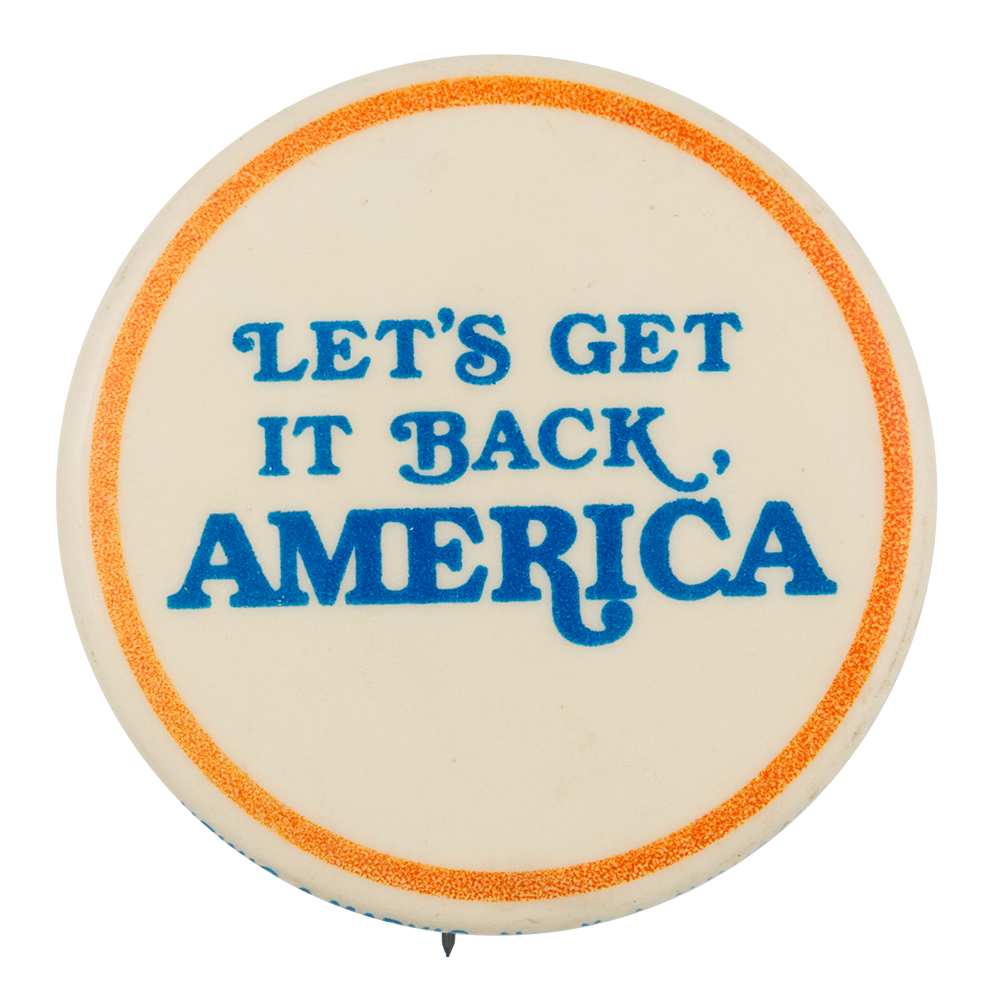
Text on Button LET'S GET IT BACK, AMERICA
Image Description

Blue text on a white background, orange circle around edge of button.

Curl Text HEWIG & MARVIC New York NY 10022
Back Style
The Shape
The Size
The Manufacturer
Additional Information

Let's Get It Back, America was a musical filmed on location in Washington, D.C. tells the history of the 20th century U.S. Government's budget. Created in 1980, the musical features actors who portray Benjamin Franklin, George Washington, James Madison, and Alexander Hamilton. It's producer, Lowry Coe, and directors Gene Bayliss and Paul Raimondi had the support of corporate sponsors such as the Chamber of Commerce of the United States of America.

Sources

Let’s Get It Back America. (n.d.). Hagley Digital Archives. https://digital.hagley.org/VID_1993230_B219_ID02

Catalog ID CA0588

If I Can't Dance

Category
Additional Images
Sub Categories
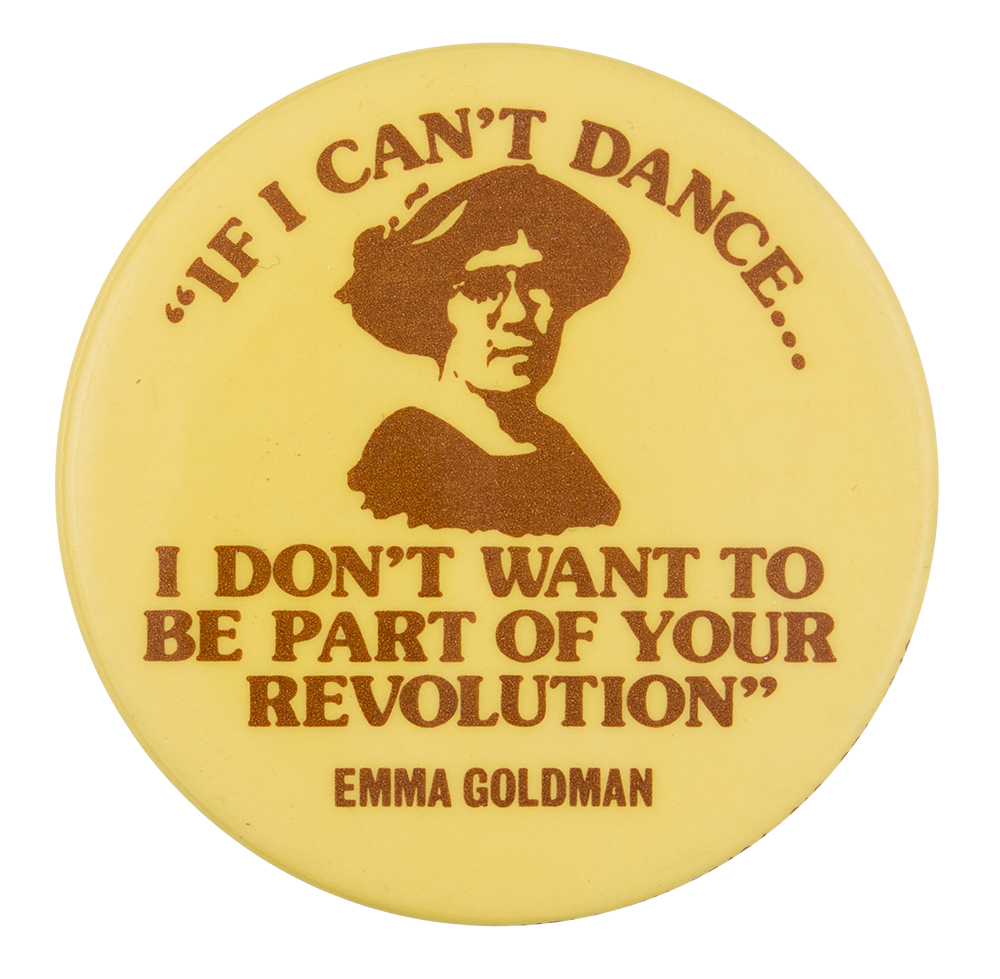
Text on Button "IF I CAN'T DANCE... I DON'T WANT TO BE PART OF YOUR REVOLUTION" EMMA GOLDMAN
Image Description

Text above and below an illustration of Emma Goldman on a yellow background.

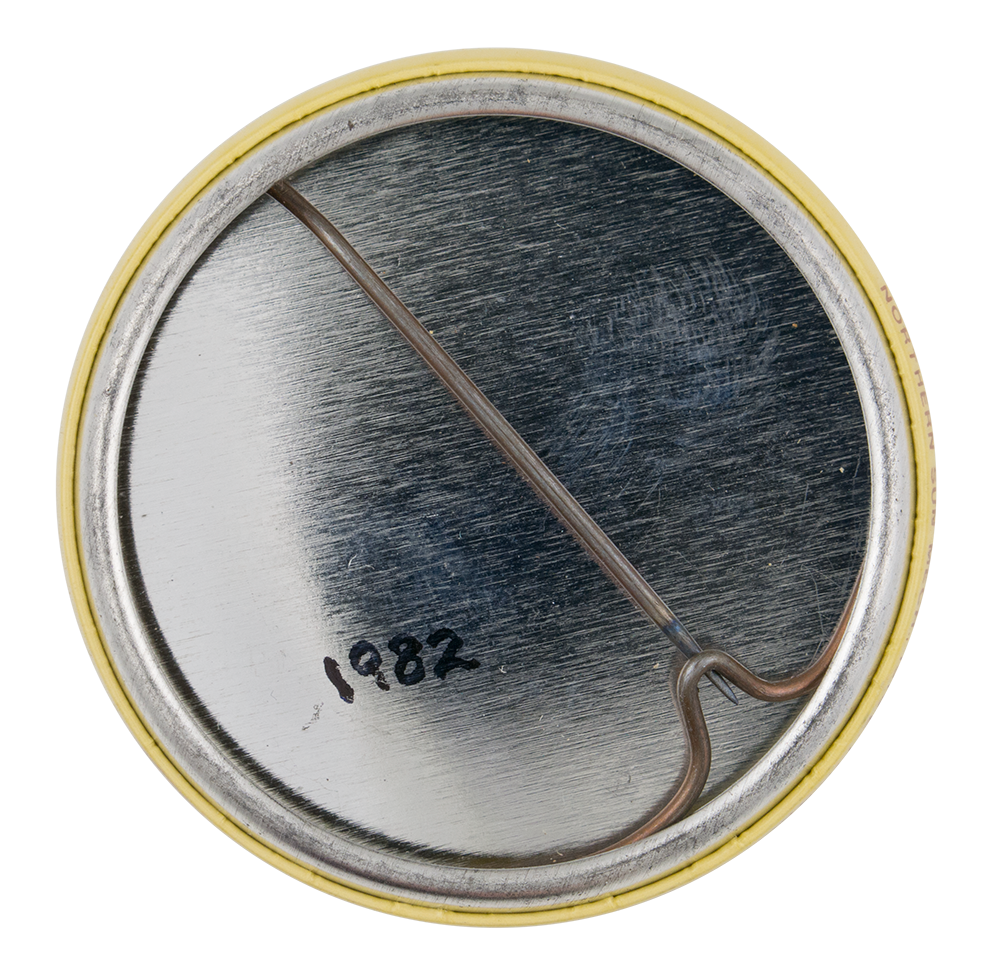
Curl Text NORTHERN SUN MECH., 1519 E. FRANKLIN, MPLS, MN 55404 612-874-1540 (union bug)
Back Style
The Shape
The Size
Year / Decade Made
The Manufacturer
Additional Information

This quote comes from a 1931 writing by Emma Goldman titled "Living My Life" in which she described an encounter with a young boy who referred to her dancing as unbefitting and dishonorable for someone promoting the anarchist Cause. Goldman stated, "I did not believe that a Cause which stood for a beautiful ideal, for anarchism, for release and freedom from convention and prejudice, should demand the denial of life and joy." She then went on to say, "If I can't dance, I don't want to be part of your revolution."

Emma Goldman was a political activist and writer during the beginning of the 20th century. She is known for her free-thinking and rebellious anarchist and communist beliefs. Her writings include discussions on free love, marriage, free speech, atheism, prisons, homosexuality, and capitalism, among other topics. In the 1970s, Goldman's activism and writings were rediscovered by those involved with the feminist and anarchist movements, reviving an interest in her.

Emma, Goldman. "Living My Life." 1931. Online: https://theanarchistlibrary.org/library/emma-goldman-living-my-life. Accessed 30 June, 2017.

Catalog ID CA0586