Akers for Mayor

Category
Additional Images
Sub Categories
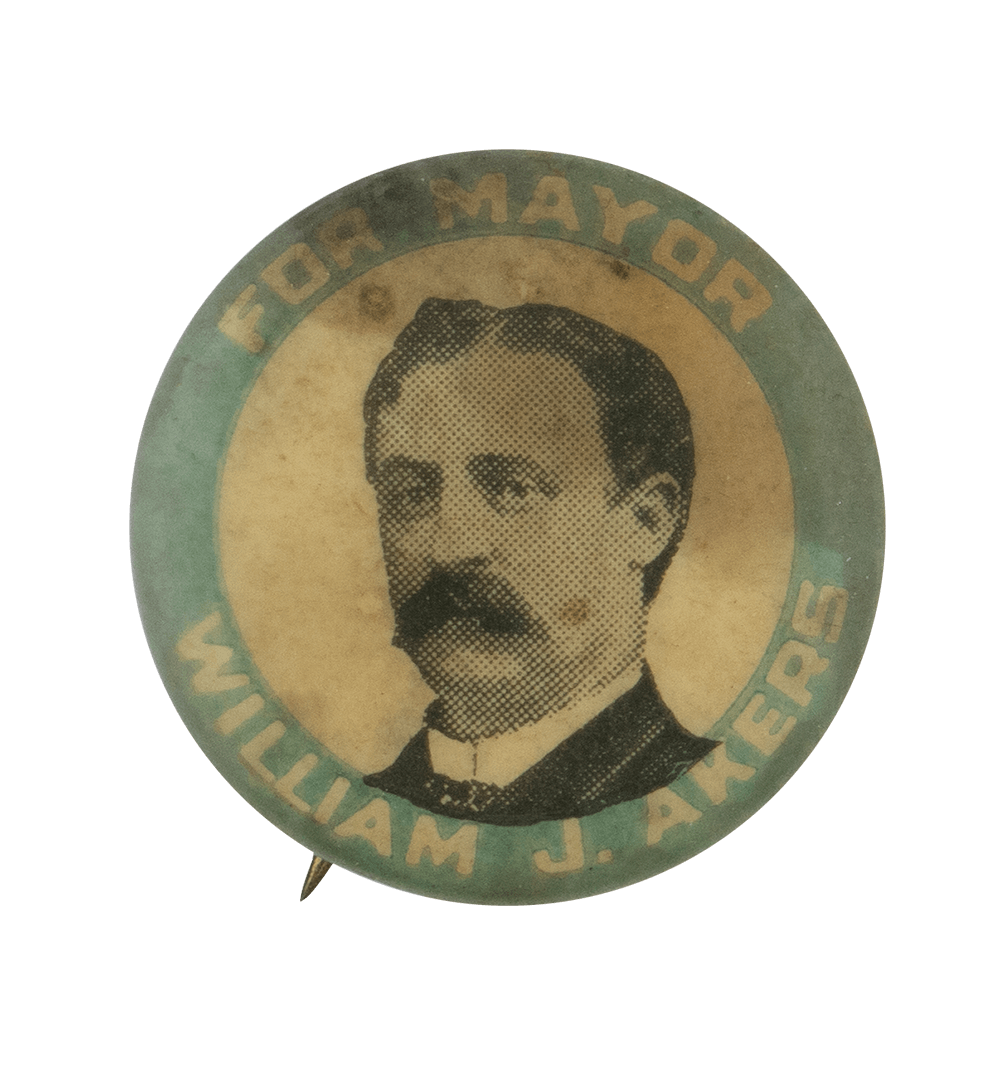
Text on Button FOR MAYOR WILLIAM J. AKERS
Image Description

Photograph of William J. Akers in center on white with white text over light blue background surrounding.

Back Paper / Back Info

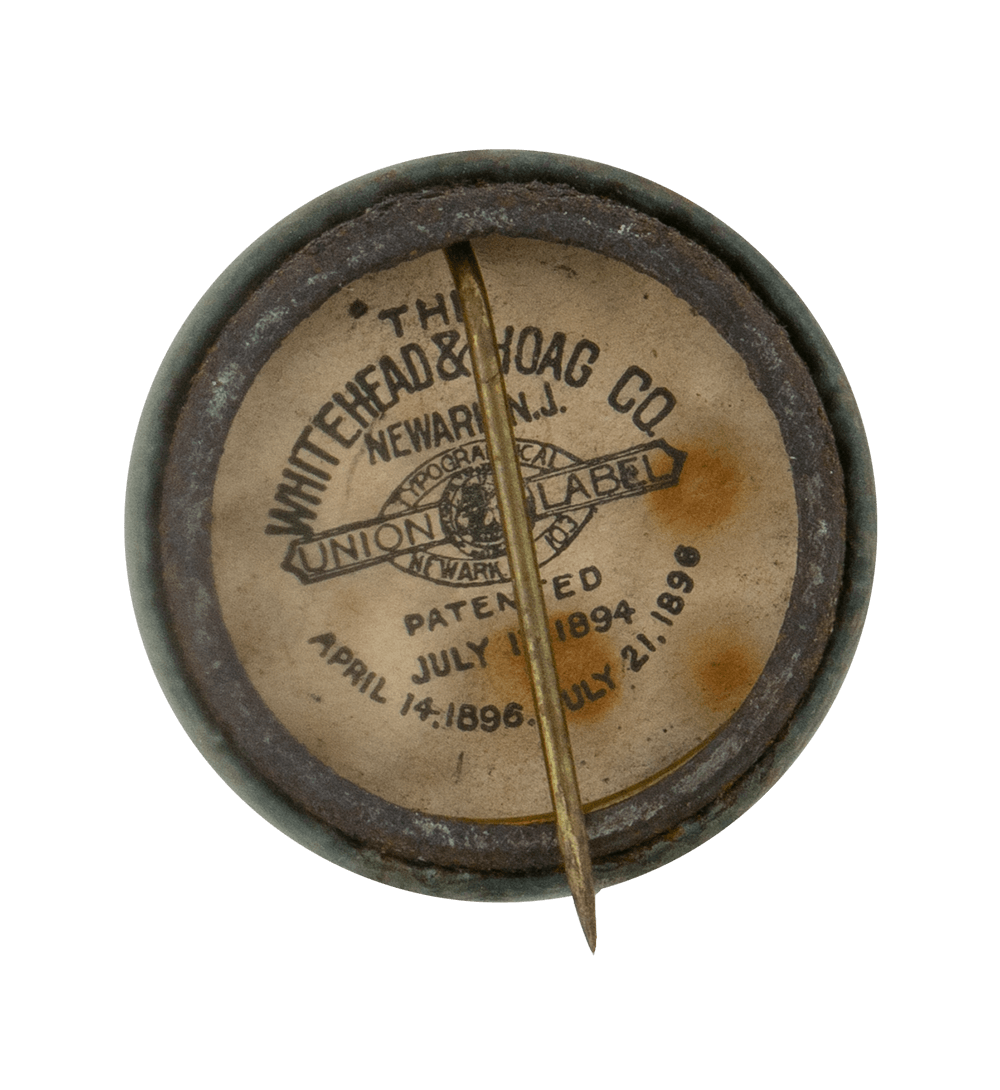
THE WHITEHEAD & HOAG CO NEWARK N.J. UNION LABEL PATENTED JULY 17, 1894 APRIL 14, 1896 JULY 21, 1896

Back Style
The Shape
The Size
The Manufacturer
Additional Information

William Joseph Akers (b. 1845) of Cleveland, Cuyahoga County, Ohio, was a Republican candidate for mayor of Cleveland, Ohio in 1892 and 1901. Akers was born in England, August 2, 1845 and was proprietor of restaurants, hotels and flour mills. During his mayorial races against Tom L. Johnson, he was able to claim between 40 and 52 percent of the split Republican vote, whereas the estimate of Johnson’s Republican support is from 19 to 48. Akers was defeated in both races against Johnson, likely because 86 percent of the Democratic vote went to Johnson.

In 1890, Johnson was elected as a Democratic for the U.S. House of Representatives from Cleveland's 21st district, and was reelected in 1892. In 1901, Johnson was elected Cleveland's mayor, campaigning on "home rule, 3-cent fare, and just taxation"; he was reelected for 3 terms. 

Sources

Finegold, K. (1995). Experts and politicians: reform challenges to machine politics in New York, Cleveland, and Chicago. Princeton, NJ: Princeton University Press.

JOHNSON, TOM L.: Encyclopedia of Cleveland History: Case Western Reserve University. (2019, February 1). Retrieved November 11, 2019, from https://case.edu/ech/articles/j/johnson-tom-l.

Kestenbaum, L. (2019). The Political Graveyard: Index to Politicians: Aikens to Albree. Retrieved 13 November 2019, from http://politicalgraveyard.com/bio/aikens-albree.html#659.95.53

Catalog ID PO1076

Smith for President

Category
Additional Images
Sub Categories
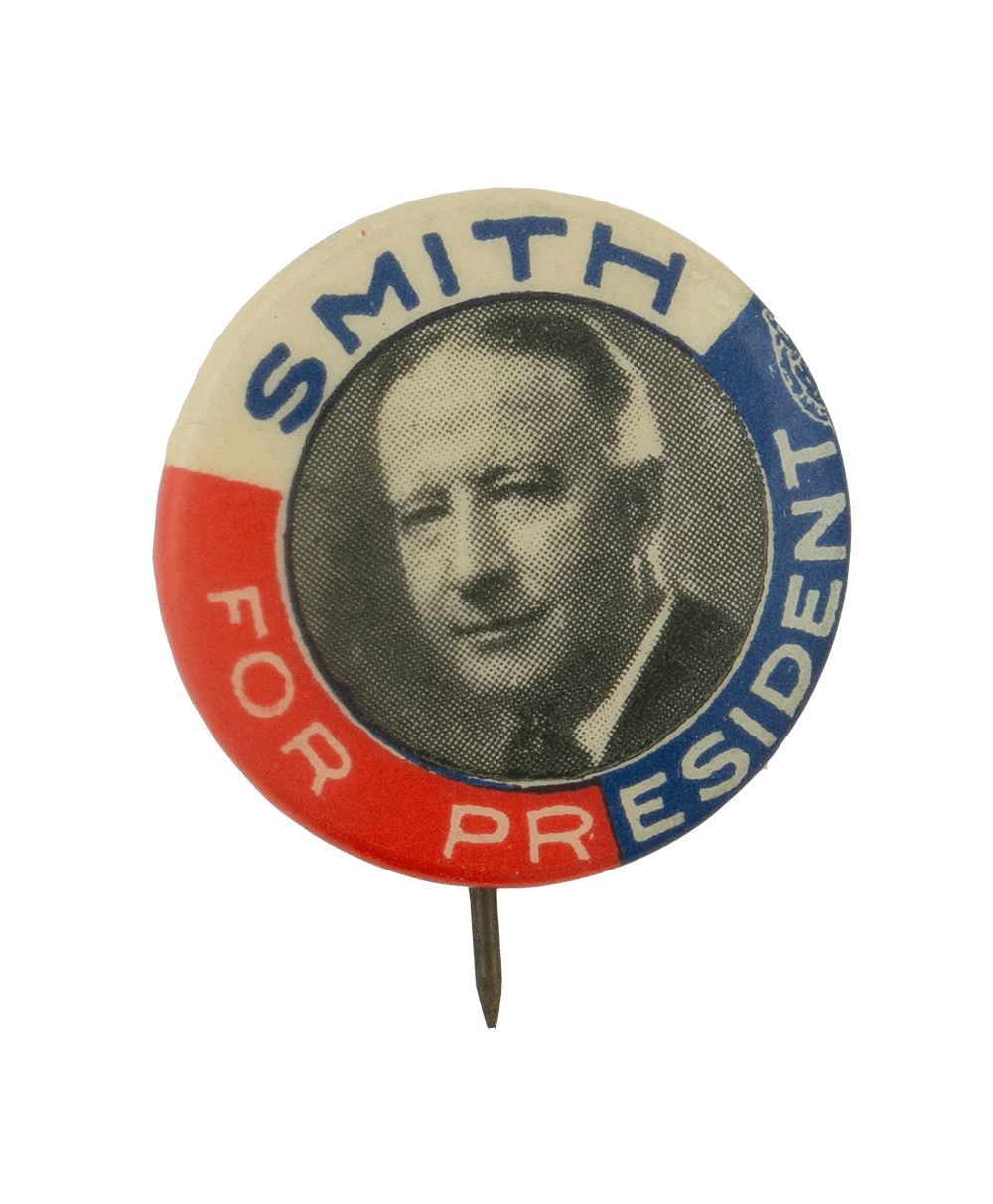
Text on Button SMITH FOR PRESIDENT Union bug
Image Description

Photograph of smith, circled by blue and white text on red, white, and blue tri-color background.

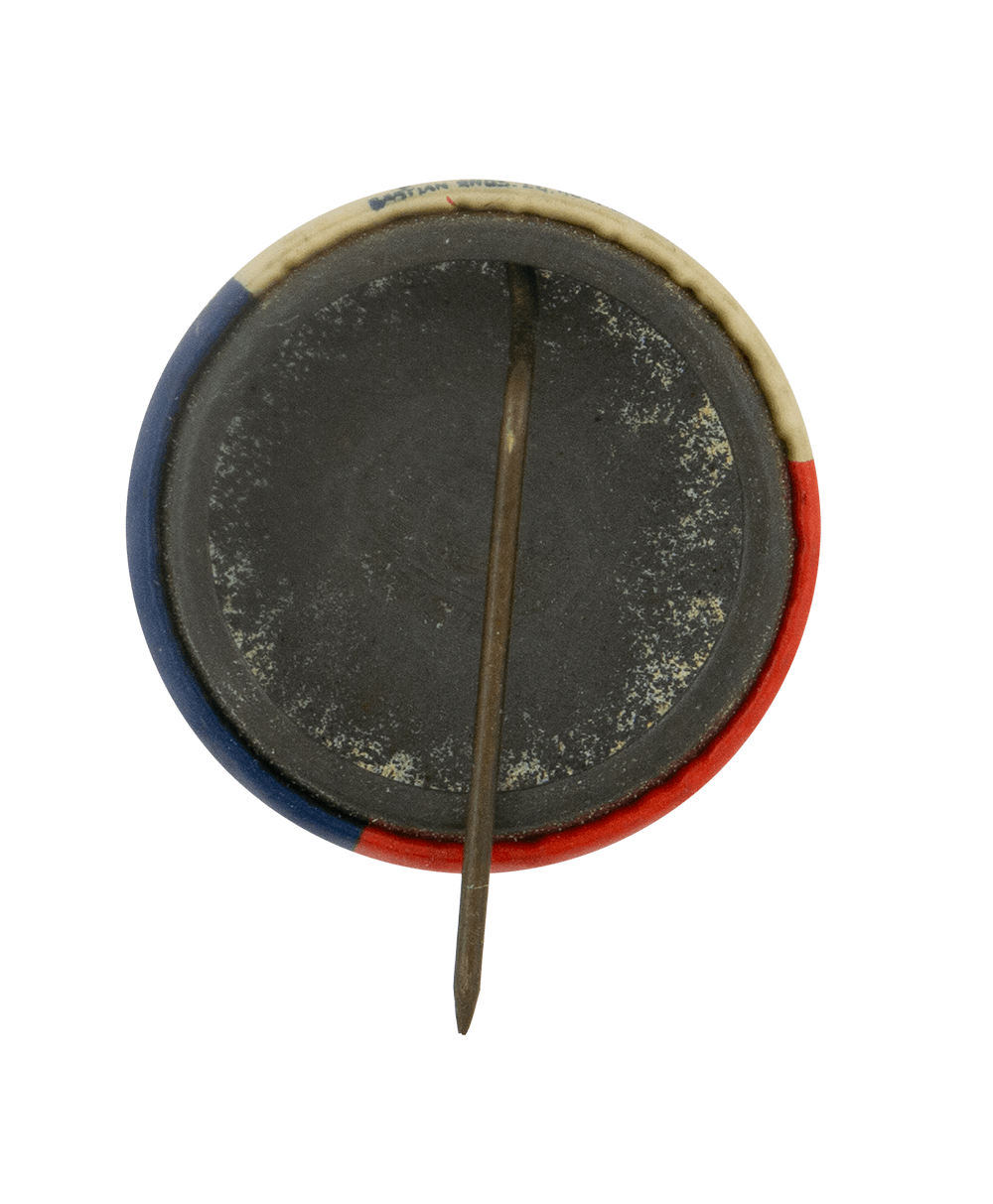
Curl Text BASTIAN BROS. CO, ROCHESTER, N.Y.
Back Style
The Shape
The Size
The Manufacturer
Additional Information

Alfred Emanuel Smith spent his life serving the state of New York and New York City in the political arena. Smith was born in New York in 1873 and died there in 1944. Smith was a four-time governor of the state. He got his first taste of politics in 1895, being assigned by political organization, "Tammany Hall," as an investigator of jurors. He would eventually gain the governorship, before briefly losing it in 1920 and gaining it back in 1923. He fought to expand housing, improve labor relations, improve child welfare, and create state parks.

Smith became the Democratic nominee and ran for President against Herbert Hoover in the 1928 election. He was the first Catholic nominee, paving the way for John F. Kennedy in the future. Smith would ultimately lose, with anti-Catholic sentiment playing a large role in his defeat. His stance against prohibition and association with the corruption of Tammany Hall did not do him any favors. He lost in a massive landslide, only securing 87 electoral votes.

Sources

270toWin. (n.d.). Presidential election of 1928. https://www.270towin.com/1928_Election/

Pallardy, R. (1998, July 20). Al Smith. Encyclopedia Britannica. https://www.britannica.com/biography/Al-Smith


Catalog ID PO1075

McDonalds Inspector Gadget

Category
Additional Images
Sub Categories
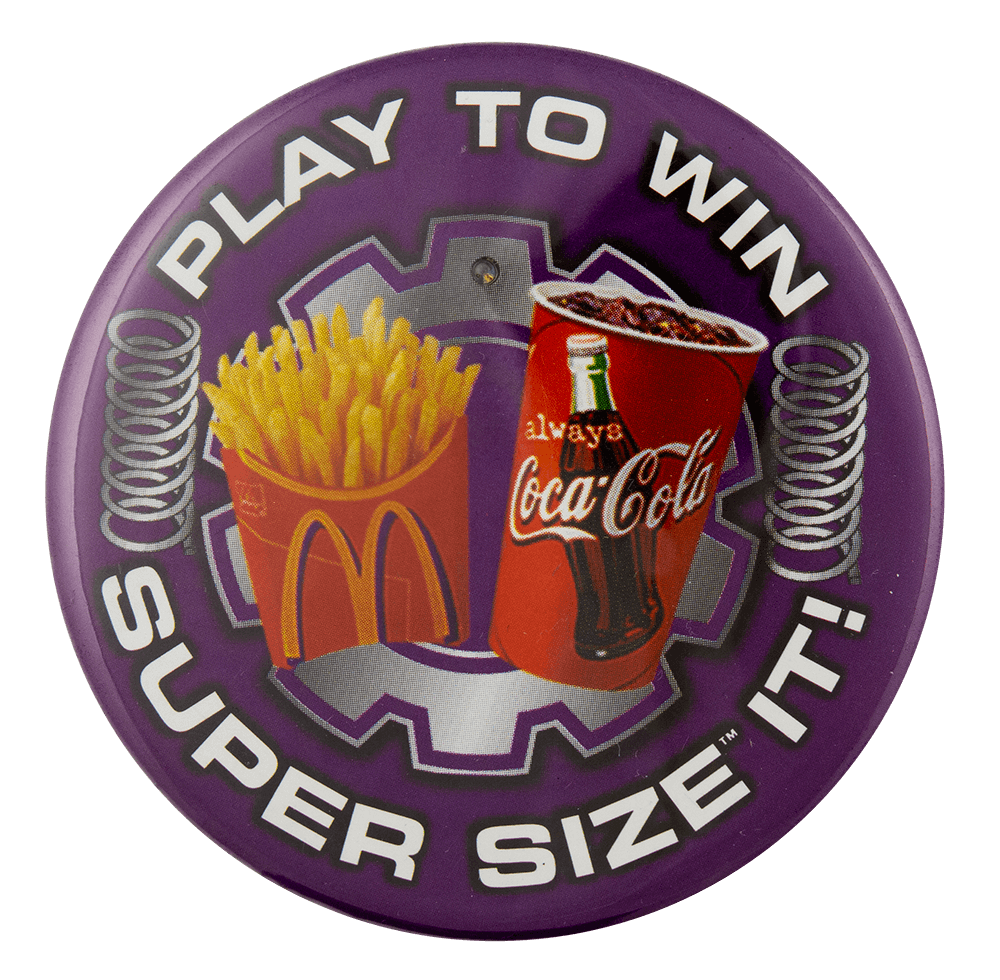
Text on Button PLAY TO WIN SUPER SIZE IT!
Image Description

McDonalds fries and Coca-cola over Inspector Gadget gears and springs with white text on purple background with red flashing light.

Back Paper / Back Info

MADE IN CHINA

Curl Text ©1999 McDonald's Corp.·©1999 The Coca-Cola Co.
Back Style
The Shape
The Size
Year / Decade Made
Additional Information

Released in 1999, Inspector Gadget was a film starring Matthew Broderick based on the popular 1980s cartoon program of the same name. The film told the origin story of Inspector Gadget and adversary, The Claw. This was the last film produced by Caravan Pictures before merging into Spyglass Entertainment.

In promotion of the movie, fast food giant McDonalds tied in a peel and win game where participants were able to purchase various food items and could win future free food or select grand prizes. Employees would wear promotional badges to entice people to play the games and purchase more food items. This Gadget badge has a flashing red light that is activated when the metal pin connects with the metal closure grabbing more attention for the promotion and the robotic components of the titular character of the film, Inspector Gadget.

Catalog ID IN0126

Go F Your Self Disguised

Category
Additional Images
Sub Categories
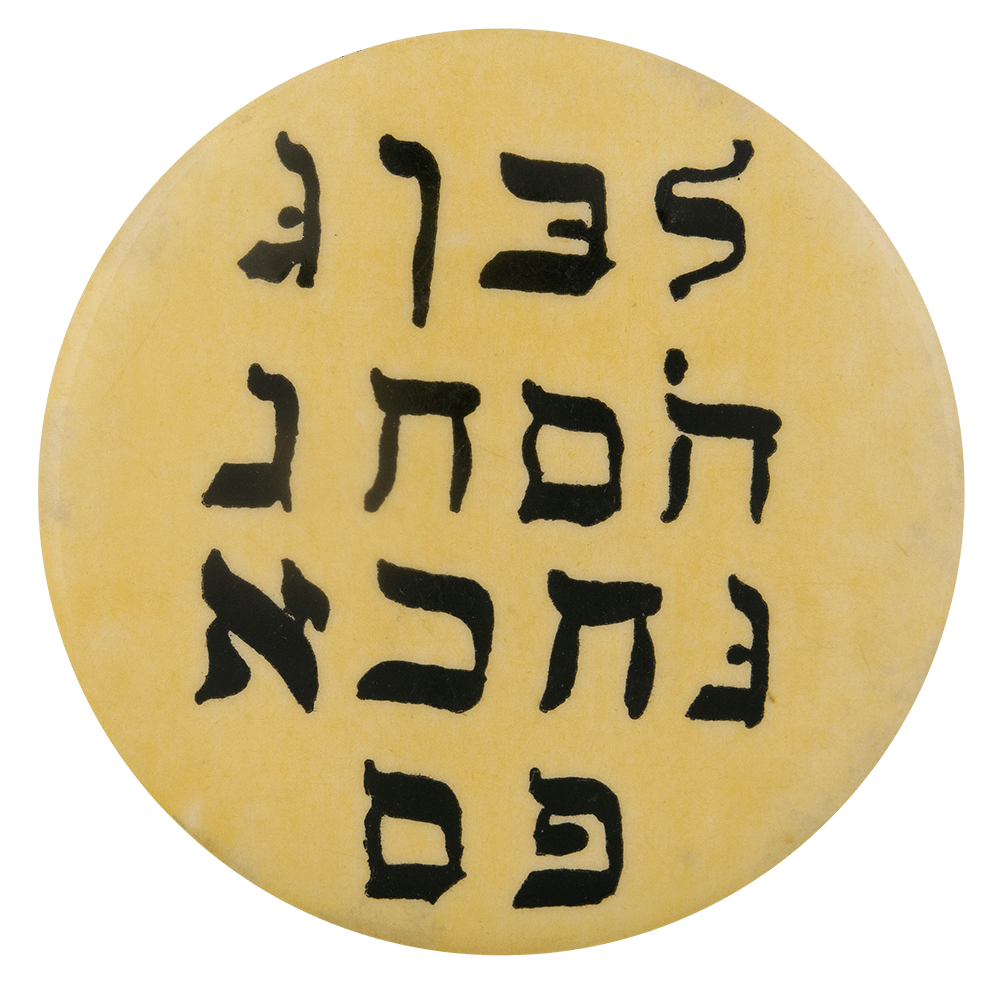
Text on Button GO FUCK YOUR SELF
Image Description

Black text that looks like Hebrew is actually script upside down on a tan background.

Curl Text The Molehole, 230 W. North, Chicago
Back Style
The Shape
The Size
Additional Information

As noted on the back of the button, The Mole Hole was a Chicago head shop in the 1960s owned by Earl Segal, who went on to start an underground radical newspaper called the Chicago Seed. As a head shop, the Mole Hole likely sold cannabis-related paraphernalia, tobacco, and products related to cannabis culture. At first glance, the text on the button looks like its written in Hebrew, but turn it around and the real message is revealed!

Sources

“Cover of Chicago Seed, 1968.” Www.encyclopedia.chicagohistory.org, www.encyclopedia.chicagohistory.org/pages/6355.html. Accessed 26 June 2023.

Catalog ID HU0204

Glad You Belong Rally Day Planes

Category
Additional Images
Sub Categories
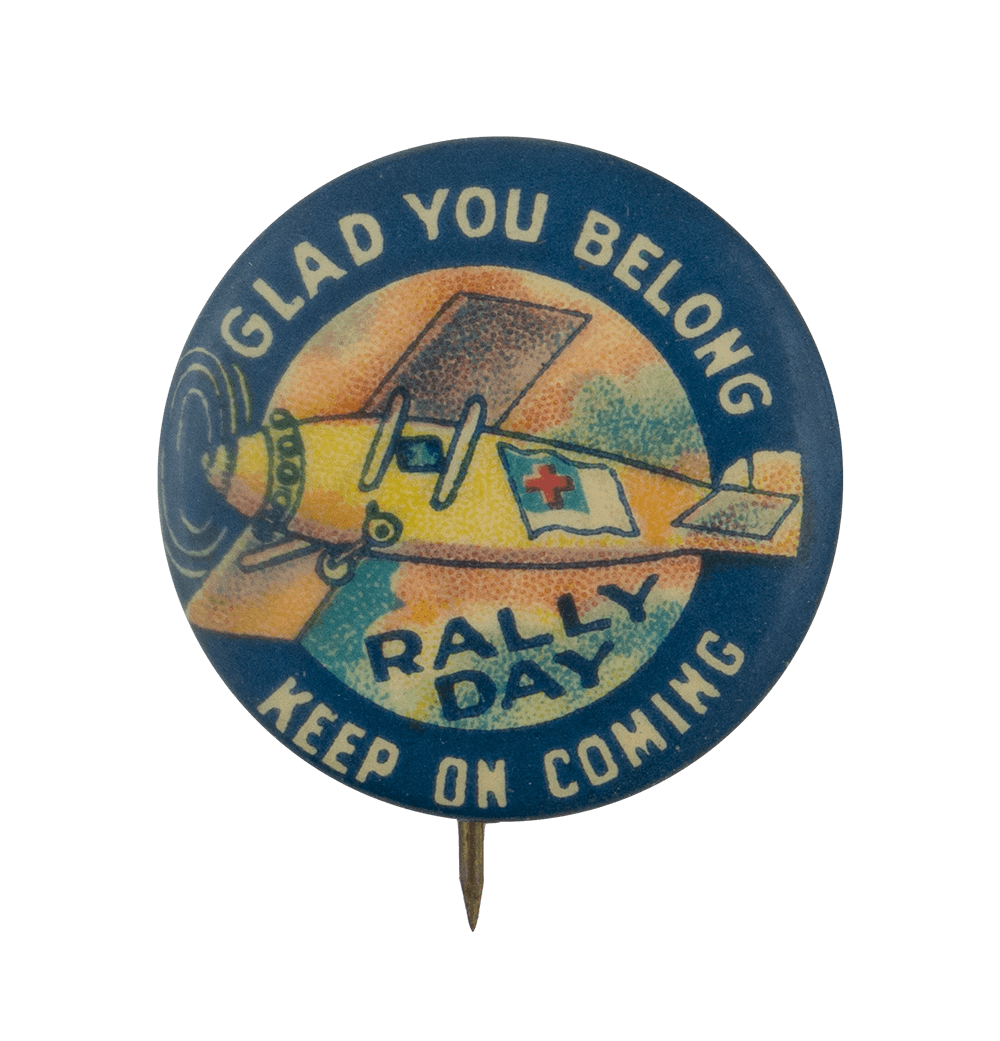
Text on Button GLAD YOU BELONG RALLY DAY KEEP ON COMING
Image Description

Illustration of plane with blue text over rainbow surrounded by blue background with white text.

Back Paper / Back Info

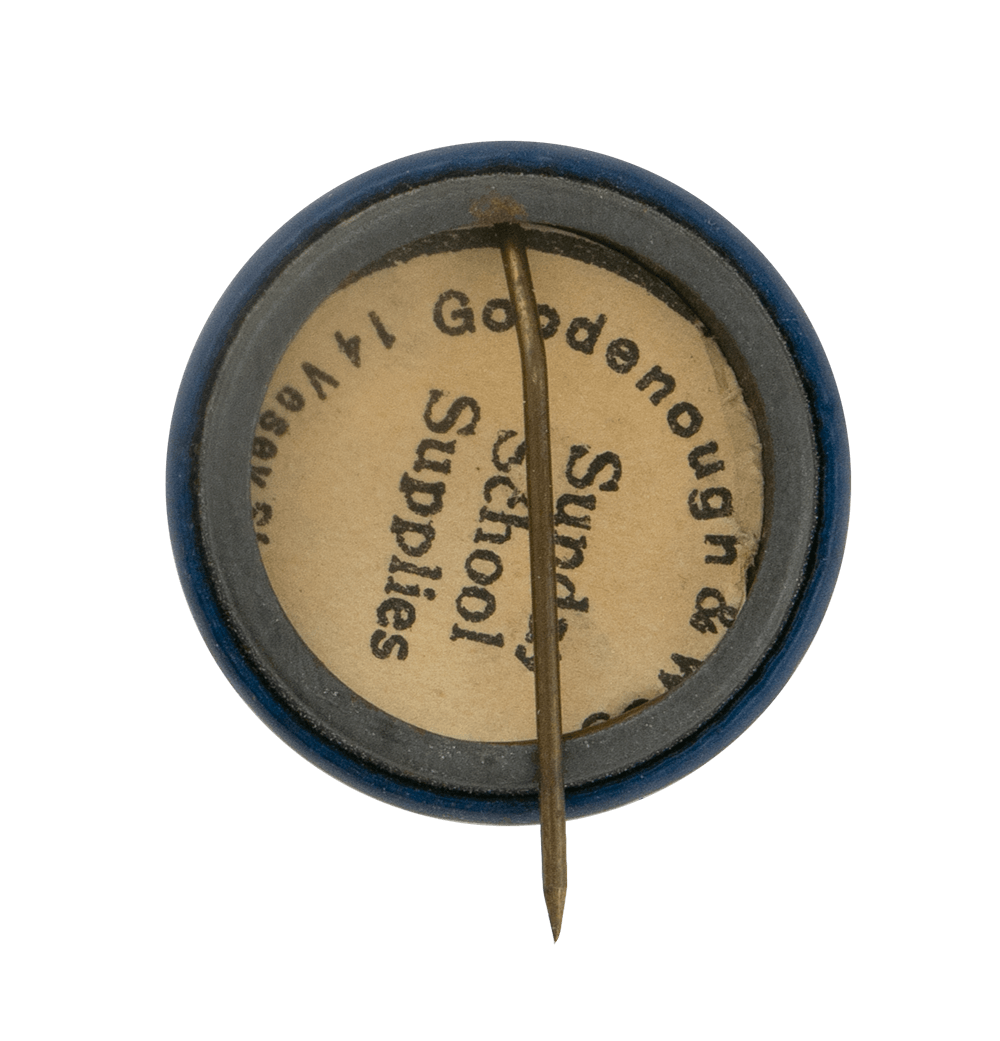
Goodenough & Wegman Sunday School Supplies 14 Vesey St. N.Y. 

Back Style
The Shape
The Size
The Manufacturer
Additional Information

Church celebration for Sunday School, starting in the early 20th century.  Historically it would come at the end of the summer break and is used as a means of rallying the forces for the work of fall and winter. 

Sources

First English Lutheran Oshkosh (n.d.) So what is Rally Day? Retrieved from http://www.firstenglish.org/felc/index.php/blog/168-so-what-is-rally-day

Catalog ID EV0864

Rally Day Horses

Category
Additional Images
Sub Categories
Text on Button RALLY DAY
Image Description

Herald on horse blowing horn with yellow flag and red text on flag. White background for all.

Back Paper / Back Info

Griffith and Rowland Press Philadelphis, Boston, Chicago, St. Louis, New York

Back Style
The Shape
The Size
The Manufacturer
Additional Information

Rally Day is a celebration that marks the beginning of the church calendar for Protestant practitioners. It happens in late September or early October. The church welcomes newcomers, recommends annual church goals, and presents new bibles to children.

Sources

Rally Day. (n.d.) Holidays, Festivals, and Celebrations of the World Dictionary, Fourth Edition. (2010). Retrieved June 2 2021 from https://encyclopedia2.thefreedictionary.com/Rally+Day

Catalog ID EV0863

Rainbow Fire Company Outing

Category
Additional Images
Sub Categories
Text on Button RAINBOW FIRE COMPANY OUTING 1928
Image Description

Image of fireman in red, gold, and peach with black text on white background.

Back Style
The Shape
The Size
Year / Decade Made
Additional Information

Rainbow Fire Company is the oldest fire company in Reading, Pennsylvania. The Rainbow Fire Company was founded on March 17,1773 as a volunteer fire department, later organized in 1793. They moved to the present location at Eighth and Court streets in 1840 to serve the uptown area and this is now known as the Rainbow Historic District. Although the building has undergone several renovations over the years, the fire department remains in the same brick structure.

Sources

Rainbow Fire Company - Berks History Center. Retrieved 20 February 2021, from https://www.berkshistory.org/gallery/rainbow-fire-company/

Webb, J. (2020). Rainbow Historic District, Reading, PA - GoReadingBerks / Reading Berks History. Retrieved 20 February 2021, from https://goreadingberks.com/rainbow-historic-district-reading-pa/

Catalog ID EV0862

Stampede Sheepshead Bay Speedway

Category
Additional Images
Sub Categories
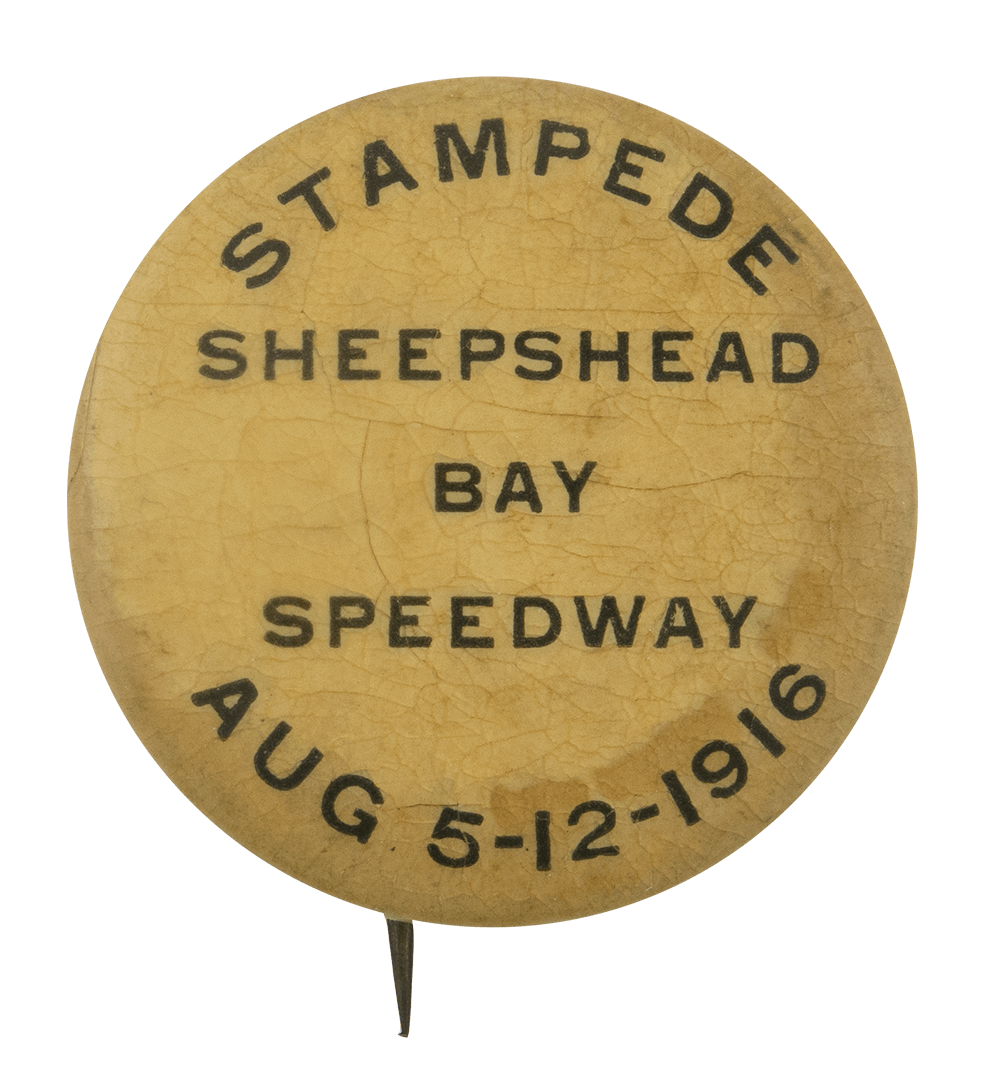
Text on Button STAMPEDE SHEEPSHEAD BAY SPEEDWAY AUG 5-12-1916
Image Description

Black text on white background

Back Paper / Back Info

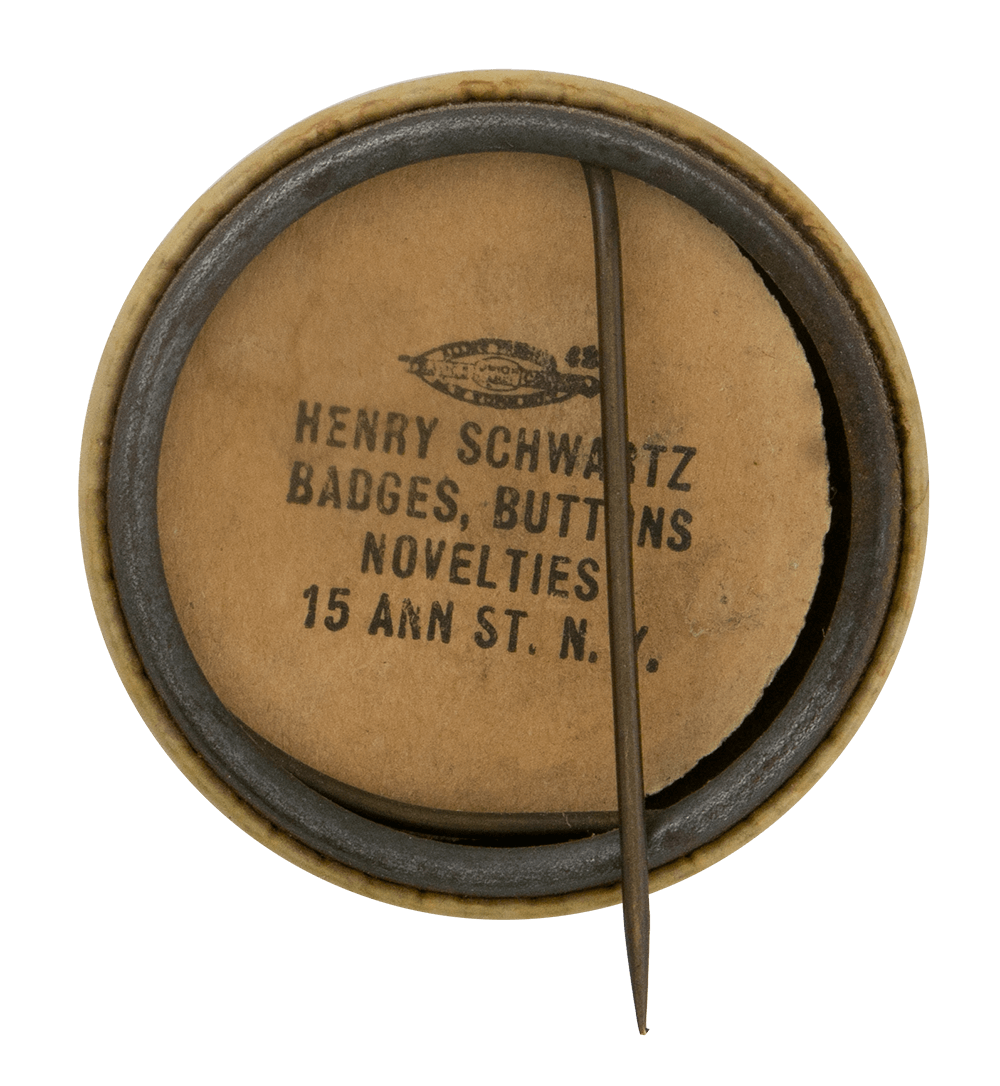
Union bug HENRY SCHWARTZ BADGES, BUTTONS NOVELTIES 15 ANN ST. N.Y.

Back Style
The Shape
The Size
Year / Decade Made
Additional Information

The Stampede at Sheepshead Bay Speedway ran from August 5th-12th in 1916 near Coney Island in New York and was the first and largest rodeo event east of the Mississippi at the time. Cowboys, cowgirls, Native Americans, and livestock such as cattle, horses, and bulls traveled from out west to New York City to compete in this event which was referred to as “the world series of cowboy events.” Men and women participated in events such as riding saddle and barebacking broncos, cowboy tricks and fancy roping, relay races, steer roping, trick riding, and wild horse races, to name some of the events. Teddy Roosevelt also attended the event and helped broker peace from two feuding cowboys from an event the day before.

Catalog ID EV0861

Erin Go Bragh Flags

Category
Additional Images
Sub Categories
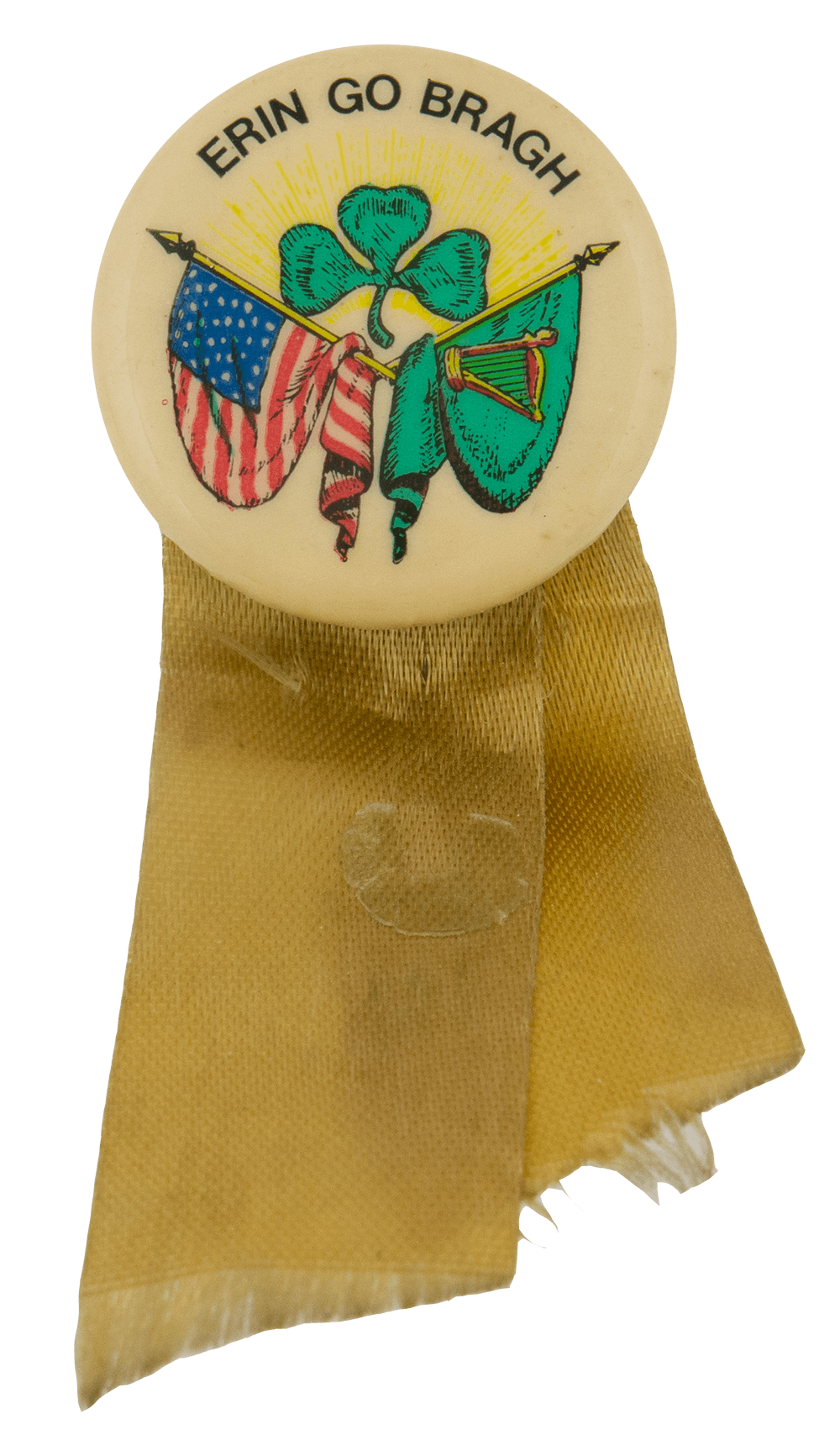
Text on Button ERIN GO BRAGH
Image Description

Illustration of crossed American and Irish flags with shamrock above them and yellow ribbons hanging below.

Back Style
The Shape
The Size
Additional Information

“Erin Go Bragh” is an anglicisation of an Irish language phrase, “Éirinn go Brách” meaning “Ireland Forever.” The phrase was long said in Ireland but came to prominent use in the United States when Irish volunteers joined the Mexicans in the Mexican-American war. The phrase was later picked up by the Irish Unionist Party in the late 1800s.

Catalog ID EV0859