I Did Did You

Category
Additional Images
Sub Categories
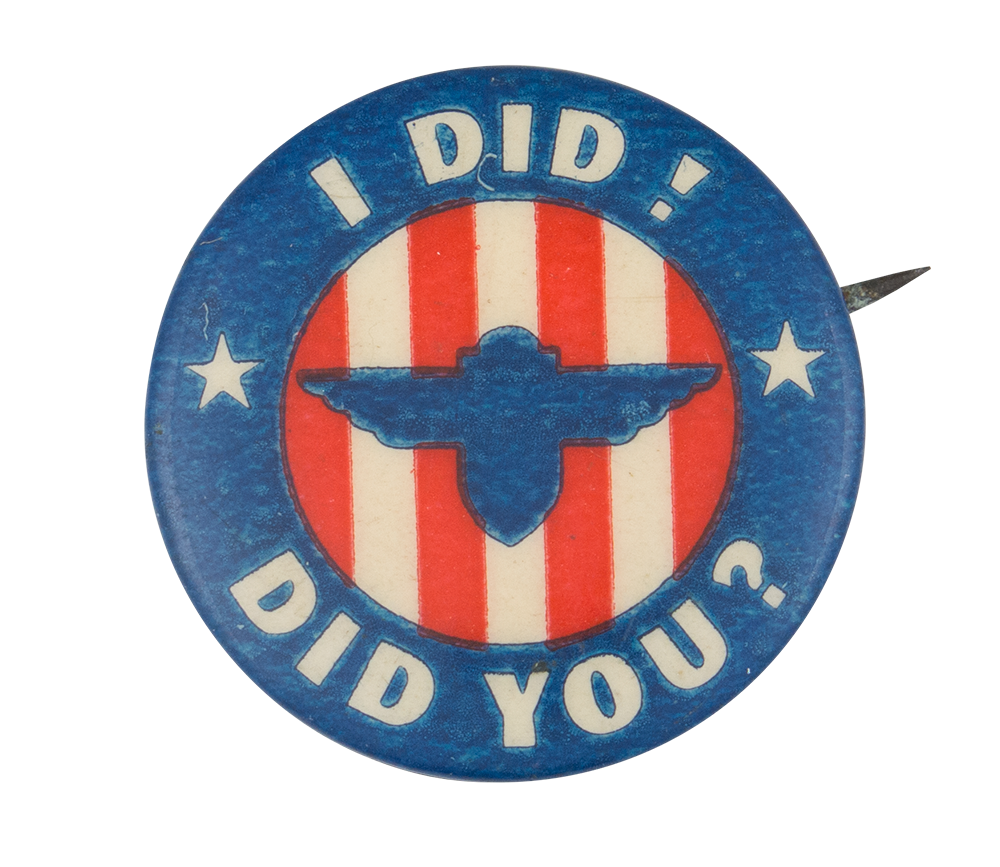
Text on Button I DID! DID YOU?
Image Description

Illustration of a blue winged shape on top of red and white stripes with an outer blue ring with white text

Back Style
The Shape
The Size
Year / Decade Made
Additional Information

This pin is believed to be a Stewart-Warner promotion for selling war bonds in WWII. The central “wingled shield” design is consistent with Stewart-Warner advertising in the late 1930s and early 1940s. The red, white, and blue color scheme and stars and stripe design strongly suggest US patriotism. Stewart-Warner converted their plants to the war effort and took out aggressive advertising for war bonds, so it seems likely that this was promotion button recognizing war bond buyers and inducing others to buy war bonds.

Stewart-Warner started in Chicago as Stewart & Clark in 1905. They made automotive speedometers and horns and bought their rival, Warner Instrument Company, in 1912. They diversified into phonographs, Alenite and Zerk brand grease fittings, radios, and refrigerators by the late 1930s. During World War II, they exhorted Americans to buy war bonds with advertising verging on scare tactics. Postwar products included printed circuit boards and stadium scoreboards. Stewart-Warner was sold to British Tire and Rubber in 1987, and operations moved to Mexico two years later. The speedometer business was sold off and survives. In fact, they still used the “winged shield” logo on their website, and you can buy new Stewart-warner “Wings” gauges today.

Sources

Extant Stewart-Warner advertising on Google Images

Jones, J. (2009). All-out for victory! Magazine advertising and the World War II home front. Waltham, MA : Brandeis University Press.

www.stewart-warner.com

Stewart-Warner. En.wikipedia.org. (2020). Retrieved from https://en.wikipedia.org/wiki/Stewart-Warner.

Catalog ID CL0100

Friend of Fred

Category
Additional Images
Sub Categories
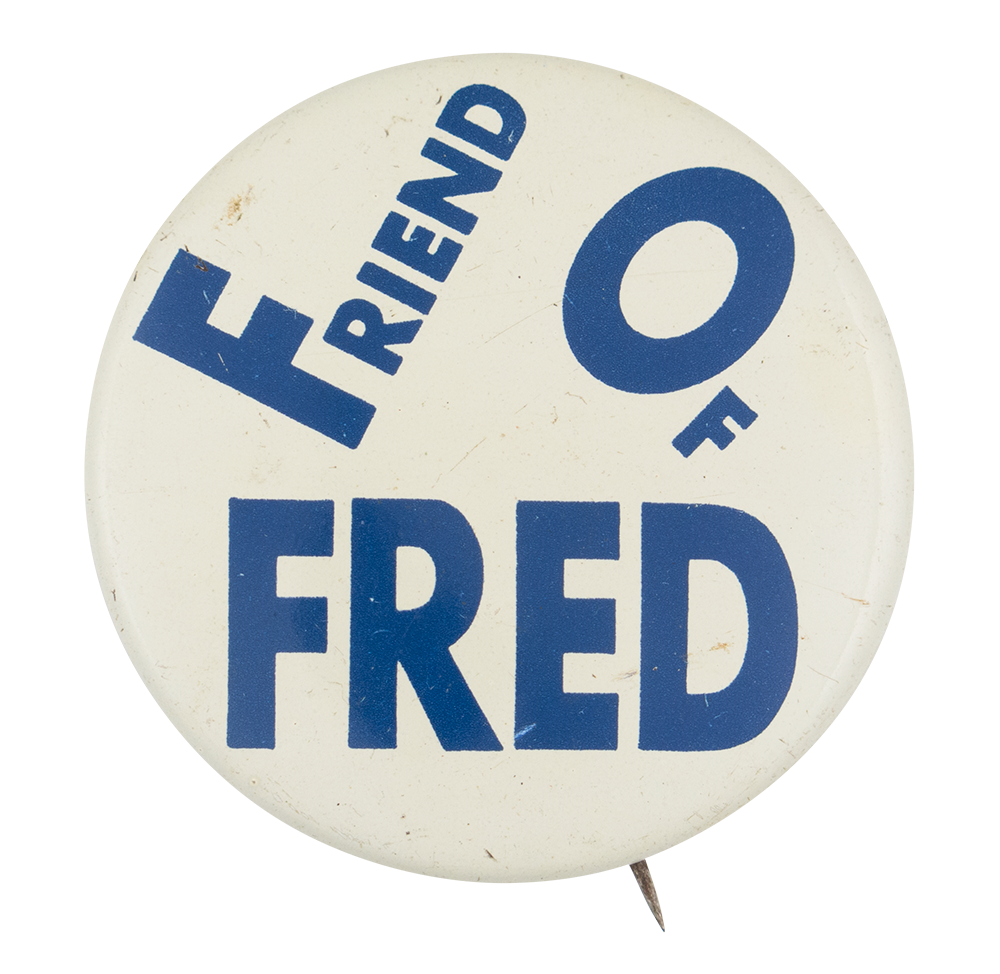
Text on Button FRIEND OF FRED
Image Description

Blue text on a white background

Back Style
The Shape
The Size
Year / Decade Made
Additional Information

Fred A. Seaton served as a U.S. Senator for the state of Nebraska from 1951 to 1952. He went on to be the Secretary of the Interior under President Dwight D. Eisenhower before vying for Nebraska governorship in 1962. To promote his candidacy, Seaton distributed buttons reading “Friend of Fred” to the Nebraska electorate. However, he was ultimately unsuccessful in the race and lost to the incumbent Democrat Frank B. Morrison.

Sources

Rudin, K. (2010, June 29). This week's Scuttlebug winner. NPR. https://www.npr.org/sections/politicaljunkie/2010/06/29/128196985/this-…

Catalog ID PO0875

Wallace and Chisholm for all U.S.

Category
Additional Images
Sub Categories
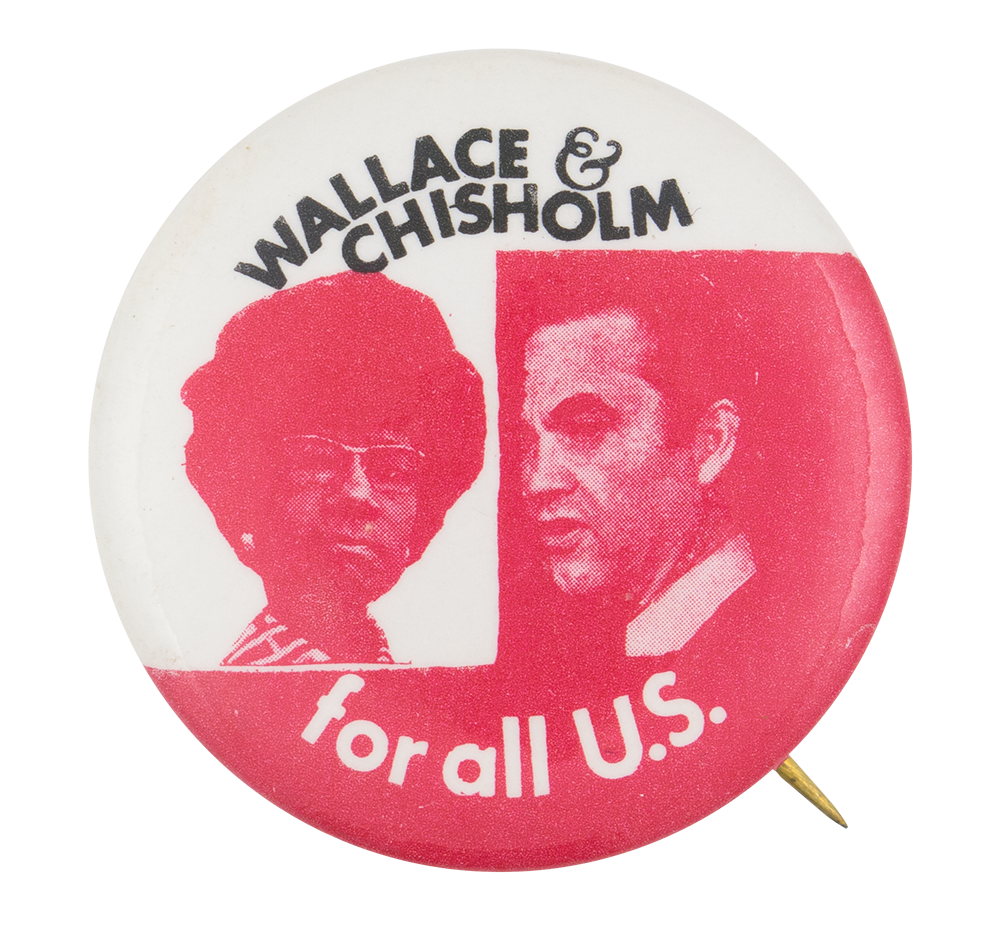
Text on Button WALLACE 7 CHISHOLM for all U.S.
Image Description

Red illustration of two people with black and white text on a red and white background

Back Style
The Shape
The Size
Additional Information

George Wallace and Shirley Chisholm never ran on the same ticket, but a tragic event brought them together and forged an unlikely alliance.

Wallace was, at the time of the 1972 Democratic primary, a staunch supporter of segregation, though he would later recant this stance. Chisholm was also a candidate in the primary, though she had little hope that she would win. When Wallace was shot and paralyzed, cutting his campaign short, Chisholm visited him in the hospital. Chisholm later said that Wallace was surprised to see her. He was so touched by the political risk she took in visiting a vocal segregationist that he cried.

To characterize their connection as a friendship might be a stretch, but Chisholm’s gesture of compassion made an impression on Wallace. He later helped Chisholm bring Southern congressmen around on the issue of extending minimum wage protections to domestic workers.

Sources

Associated Press (2005, January 4). Shirley Chisholm, Pioneer in Congress, Dies at 80. NBC News. Retrieved from http://www.nbcnews.com/id/6779424/ns/politics/t/shirley-chisholm-pionee…

Catalog ID PO0876

Wallace 48

Category
Additional Images
Sub Categories
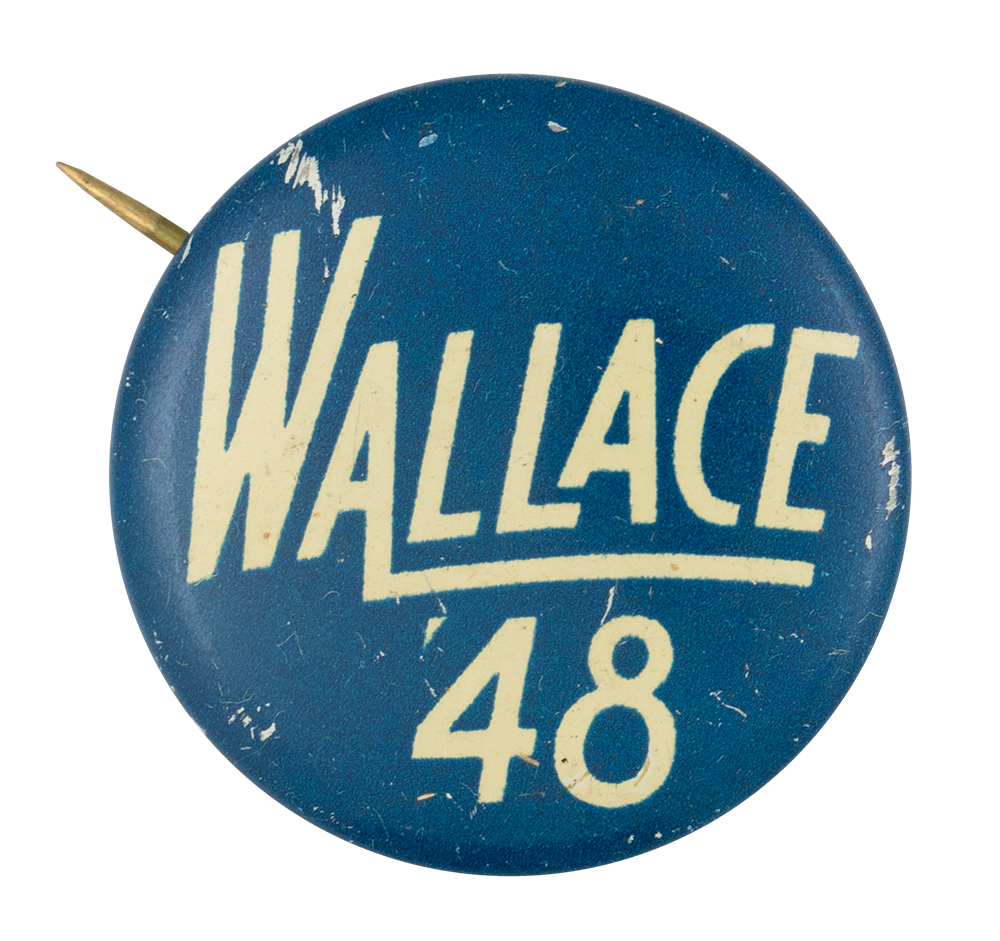
Text on Button WALLACE '48
Image Description

White text on a blue background

Back Style
The Shape
The Size
Additional Information

Henry Wallace (1888-1965) was the 33rd Vice President of the United States, founder of the Progressive Party, and the party’s first nominee in the 1948 Presidential election. Appointed as Secretary of Agriculture by President Franklin D. Roosevelt in 1933, Wallace was later selected to be his running mate in the 1940 election. After World War II, Wallace was increasingly critical of President Truman and his policies regarding the Cold War and used the Progressive Party to further an agenda which included national health insurance and rectifying relations with the Soviet Union.

Catalog ID PO0877

Vote for Thomas Nelson Socialism

Category
Additional Images
Sub Categories
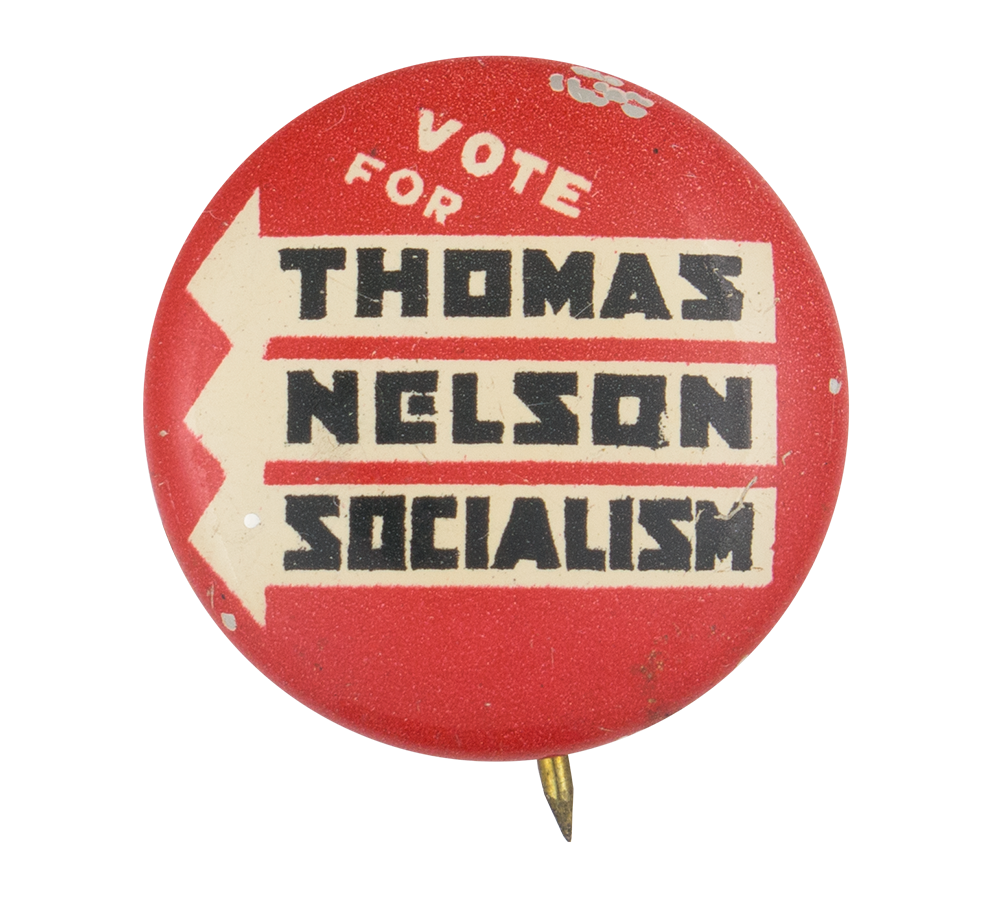
Text on Button VOTE FOR THOMAS NELSON SOCIALISM
Image Description

Illustration of three white arrows pointing to the left with black text on them on a red background

Back Paper / Back Info

union bugs

Back Style
The Shape
The Size
Year / Decade Made
Additional Information

In 1936, under the banner of the Socialist Party of America, Norman Thomas ran for President of the United States with running mate George A. Nelson. Thomas had already run for President twice, 1928 & 1932 respectively, before attempting his third run with running mate Nelson. Despite being from a minority party, they received over 160,000 votes across 18 states in the 1936 election. 

Sources

Popular Votes For Norman Thomas > 1936 statistics - states compared - StateMaster. (n.d.). Retrieved February 07, 2018, from http://www.statemaster.com/graph/pre_1936_pop_vot_for_nor_tho-1936-popu…​.

Catalog ID PO0884

Milwaukee Braves

Category
Additional Images
Sub Categories
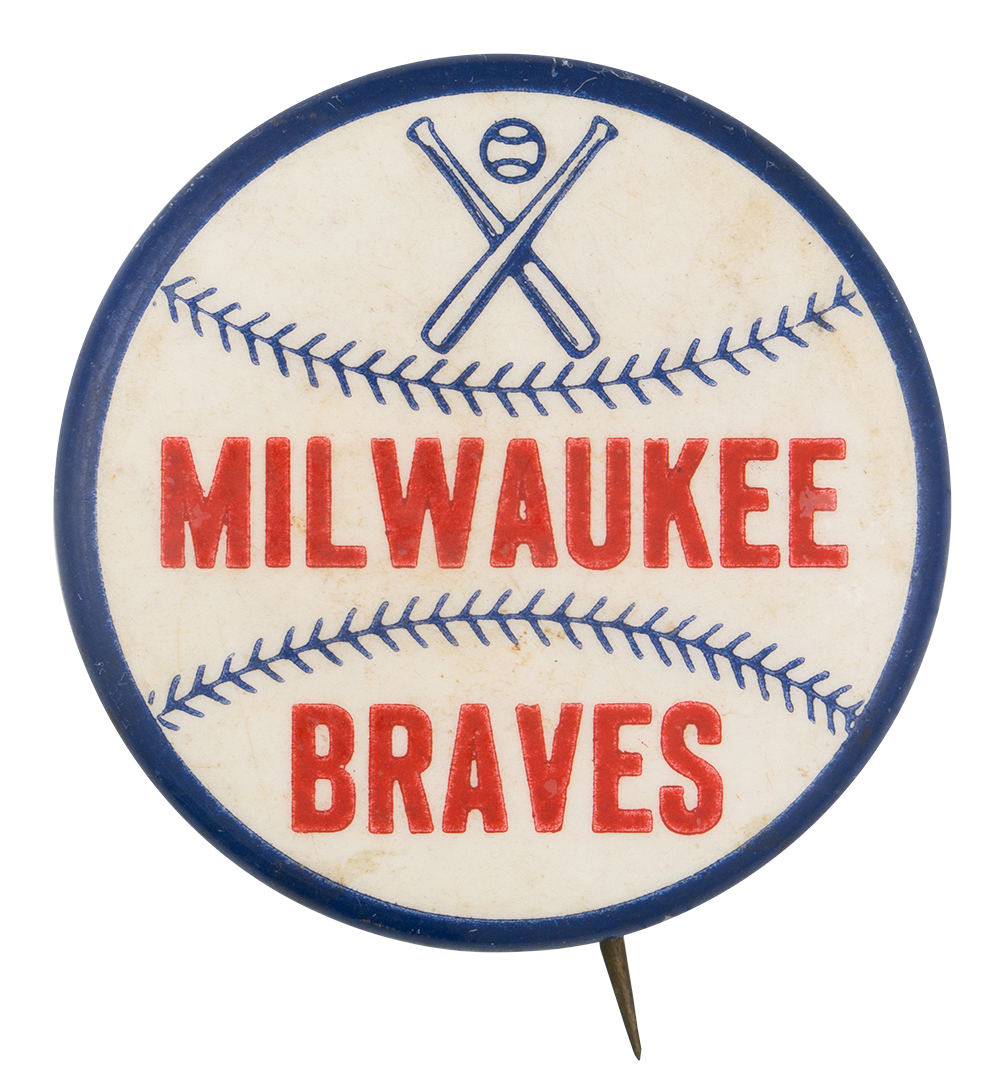
Text on Button MILWAUKEE BRAVES
Image Description

Image of a baseball with red text and two interlocking bats above​

Back Style
The Shape
The Size
Year / Decade Made
Additional Information

This button was originally given out at the Milwaukee Braves stadium as a souvenir item during the 1950s. Beginning in 1953, the city of Milwaukee officially welcomed the Braves as their official baseball team. The Braves were the first major league franchise to move cities, an act that paved the way for more teams in the process. The Braves' time in Milwaukee lasted for thirteen years until the team moved to Atlanta following the 1965 season. While in Milwaukee, the Braves enjoyed two pennants in 1957 and 1958 as well as a World Series title, defeating the New York Yankees in game 7 of the 1957 series.

Sources

"Milwaukee Braves Baseball 1950s Stadium Souvenir Button. TedHake.com. Retrieved from http://www.tedhake.com/MILWAUKEE_BRAVES_BASEBALL_1950s_STADIUM_SOUVENIR…​.

Catalog ID SP0171

Vogel for Senator

Category
Additional Images
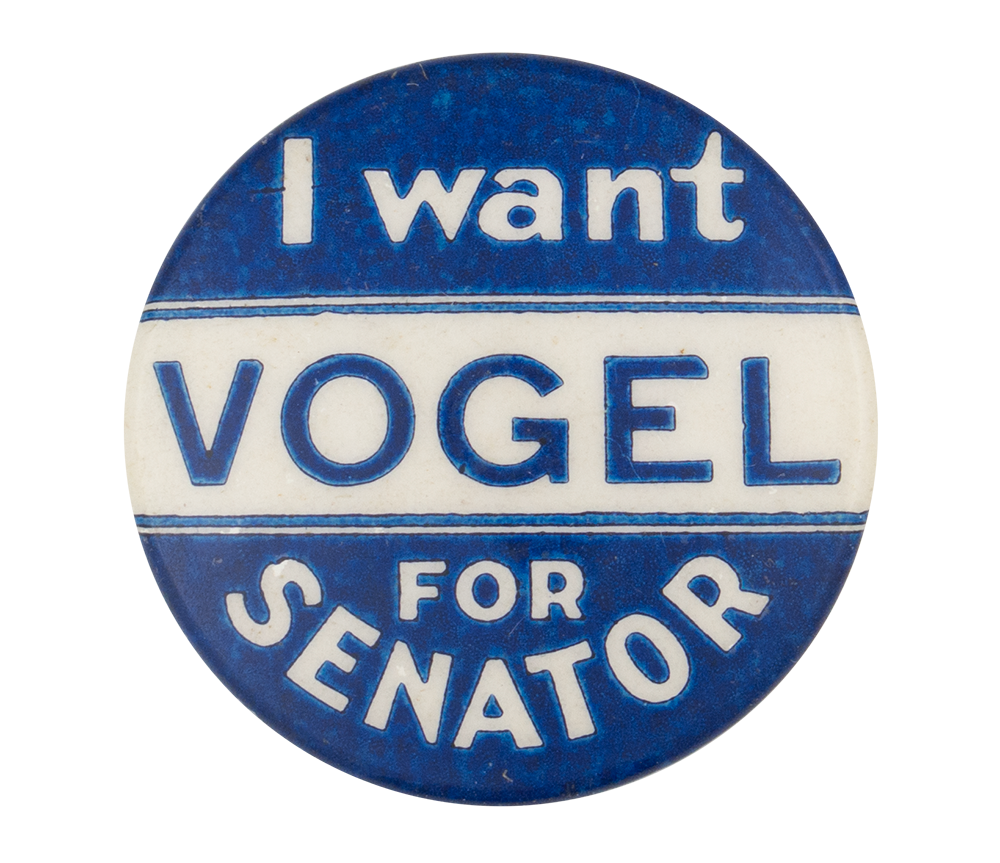
Text on Button I want VOGEL FOR SENATOR
Image Description

White and blue text on a blue and white background

Back Paper / Back Info

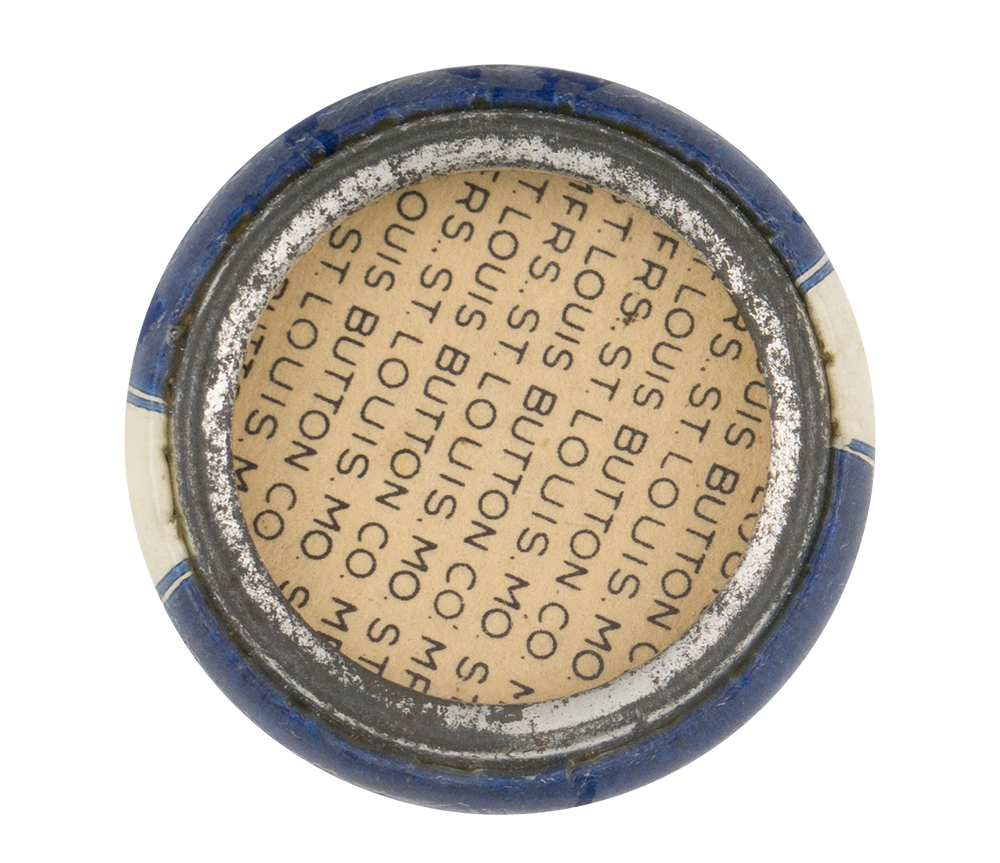
ST. LOUIS BUTTON CO

Back Style
The Shape
The Size
Year / Decade Made
The Manufacturer
Additional Information

Charles Joseph Vogel began his career during World War I as a Sergeant in the American Expeditionary Force. After the war Vogel earned his law degree from the University of Minnesota Law School and in 1925 opened a practice in North Dakota. By 1940, Vogel attempted to run for Senator of North Dakota but failed to win the election. He returned to his practice until mid-1941 when he was appointed to the United States District Court for the District of North Dakota by President Franklin D. Roosevelt. Vogel, while unsuccessful in his bid for Senate, established a lengthy career in the Judicial branch of the U.S. political system. 

Catalog ID PO0878

Tony Galento for Pres

Category
Additional Images
Sub Categories
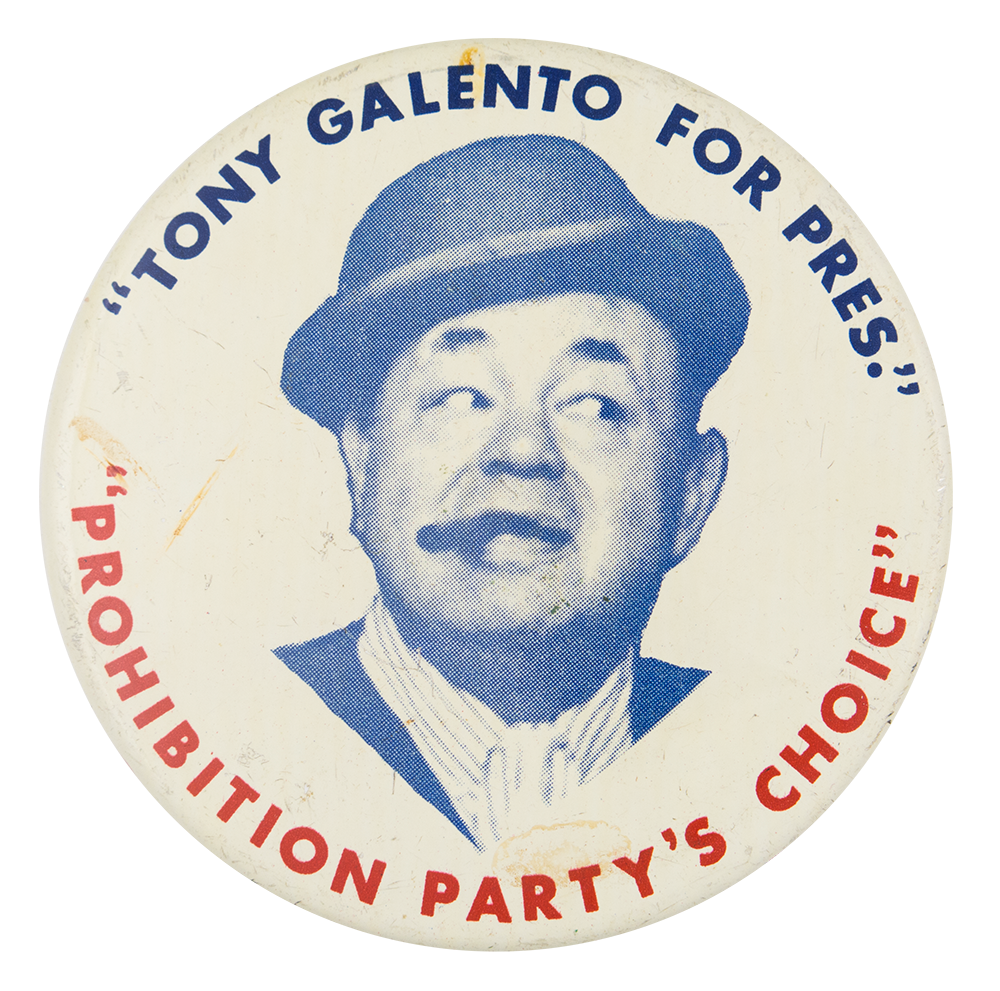
Text on Button "TONY GALENTO FOR PRES." "PROHIBITION PARTY'S CHOICE."
Image Description

Image of Tony Galento with red and blue text​​

Curl Text union bug
Back Style
The Shape
The Size
Additional Information

Tony "Two Ton" Galento was an American heavyweight boxer who is well known for his colorful antics both in and outside the arena. Born Dominic Anthony Galento, Tony earned the nickname "Two Ton" for a famous incident in which he was nearly late to one of his matches. Upon being asked why he nearly missed the fight, Tony responded with "I had two tons of ice to deliver on my way here." A natural showman, Galento engaged in a series of publicity stunts throughout his career. Galento once campaigned as a representative of the Prohibition Party in a fake run for president. In addition, Galento also famously wrestled an octopus and boxed a kangaroo as well as a bear.​​

Catalog ID EN0358

Shilts for Governor

Category
Additional Images
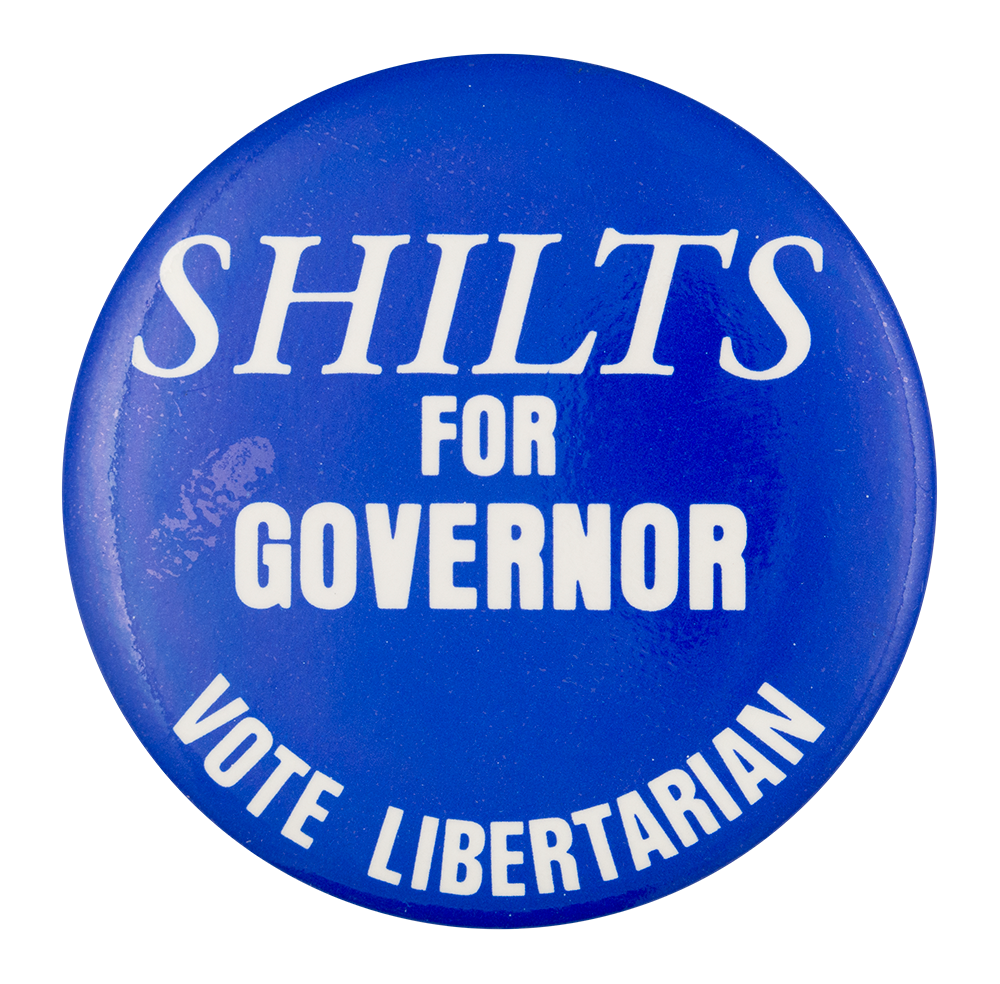
Text on Button SHILTS FOR GOVERNOR VOTE LIBERTARIAN
Image Description

White text on a blue background

Back Style
The Shape
The Size
Year / Decade Made
Additional Information

In the 1986 Illinois Gubernatorial election, Libertarian Party candidate Gary L. Shilts competed for the executive office of Illinois. Shilts managed to pull in about 15,000 votes giving him the support of .5% of the electorate. Largely beholden to the Democratic Party, few Illinois residents subscribe to Libertarian Party ideology, as evidenced with all Illinois Libertarian elected officials finding support at only the local level. In 2002, Shilts competed again for elected office but instead ran for Attorney General. He garnered almost 88,000 votes, much higher than his previous bid for office but it was not enough, instead only accounting for 2.5% of the general electorate.  

Catalog ID PO0874

Rural Americans Johnson Humphrey

Category
Additional Images
Sub Categories
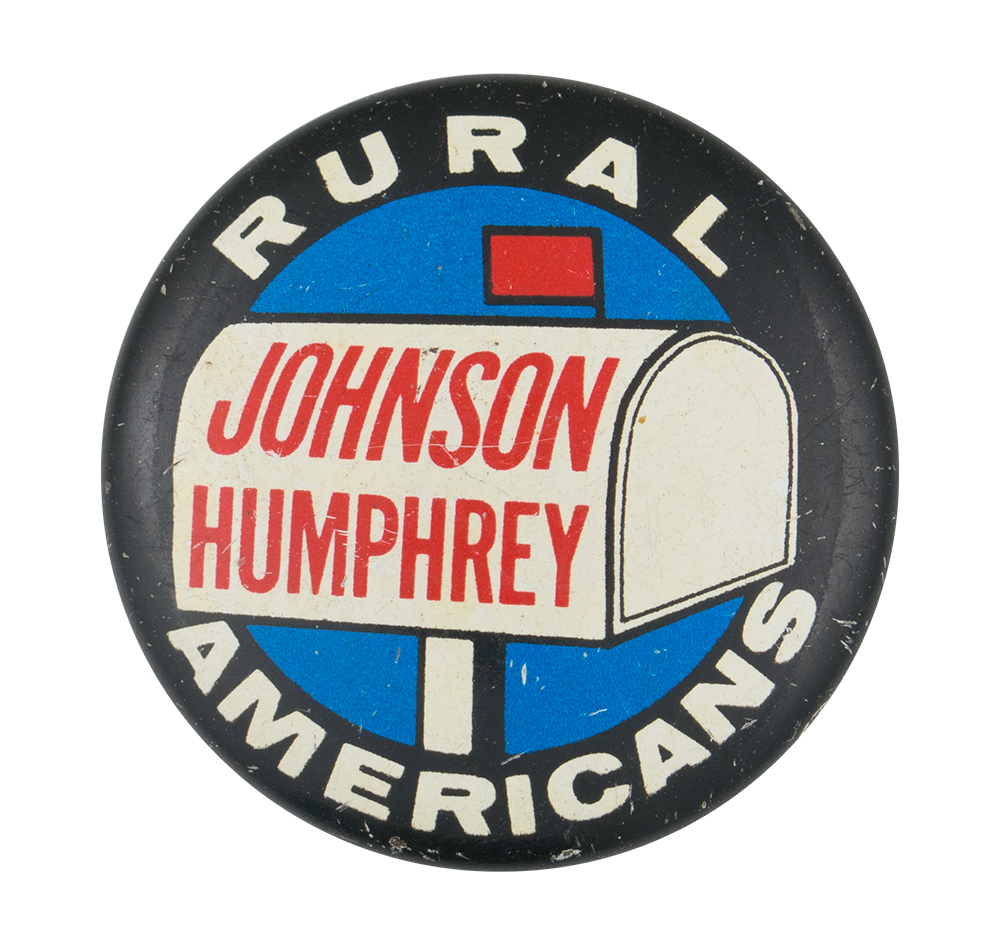
Text on Button RURAL JOHNSON HUMPHREY AMERICANS
Image Description

Illustration of a mailbox with red text on it on a blue background with an outer black ring with white text.

Back Style
The Shape
The Size
Year / Decade Made
Additional Information

Lyndon B. Johnson (D-TX) rose from a Junior House Representative to the President of the United States in an accomplished 30 year career in politics. His platform included expanding civil rights for African-Americans, combating poverty and urban blight, and supporting the social safety net established by the New Deal. During his time as a Congressional Representative, Johnson regularly advocated for rural development and assisted with increasing the standard of living throughout Texas and was even instrumental in securing the building of a hydro-electric dam on the lower part of the Colorado River. This grew his popularity among rural voters immensely, and Johnson hoped to capitalize on this in the 1964 Presidential Election. However, his support for expanding civil rights caused many Southern politicians and voters to balk at his policies. Johnson’s successful passage of the bill led many Southern states to switch their allegiance from the Democratic Party to the Republicans, in support of candidate Barry Goldwater (R-AZ). 

Catalog ID PO0880