I'm For Free Silver

Category
Additional Images
Sub Categories
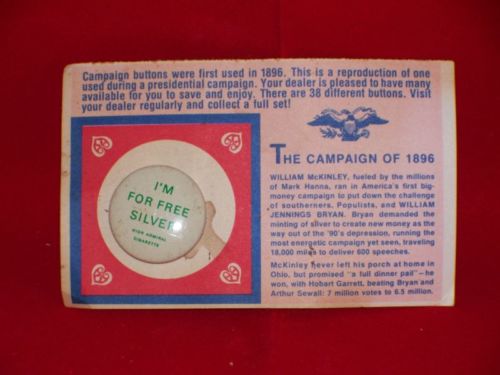
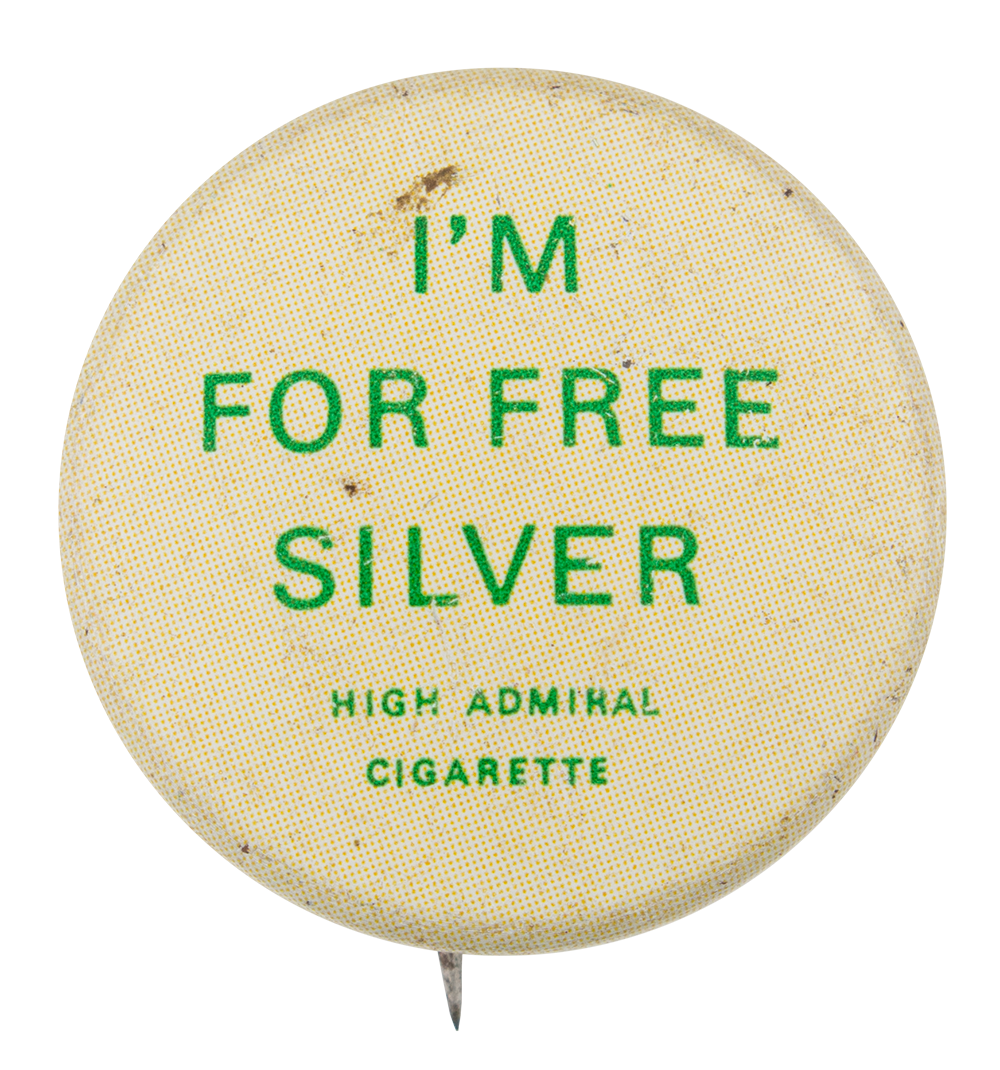
Text on Button I'M FOR FREE SILVER HIGH ADMIRAL CIGARETTE
Image Description

Green text on a white background

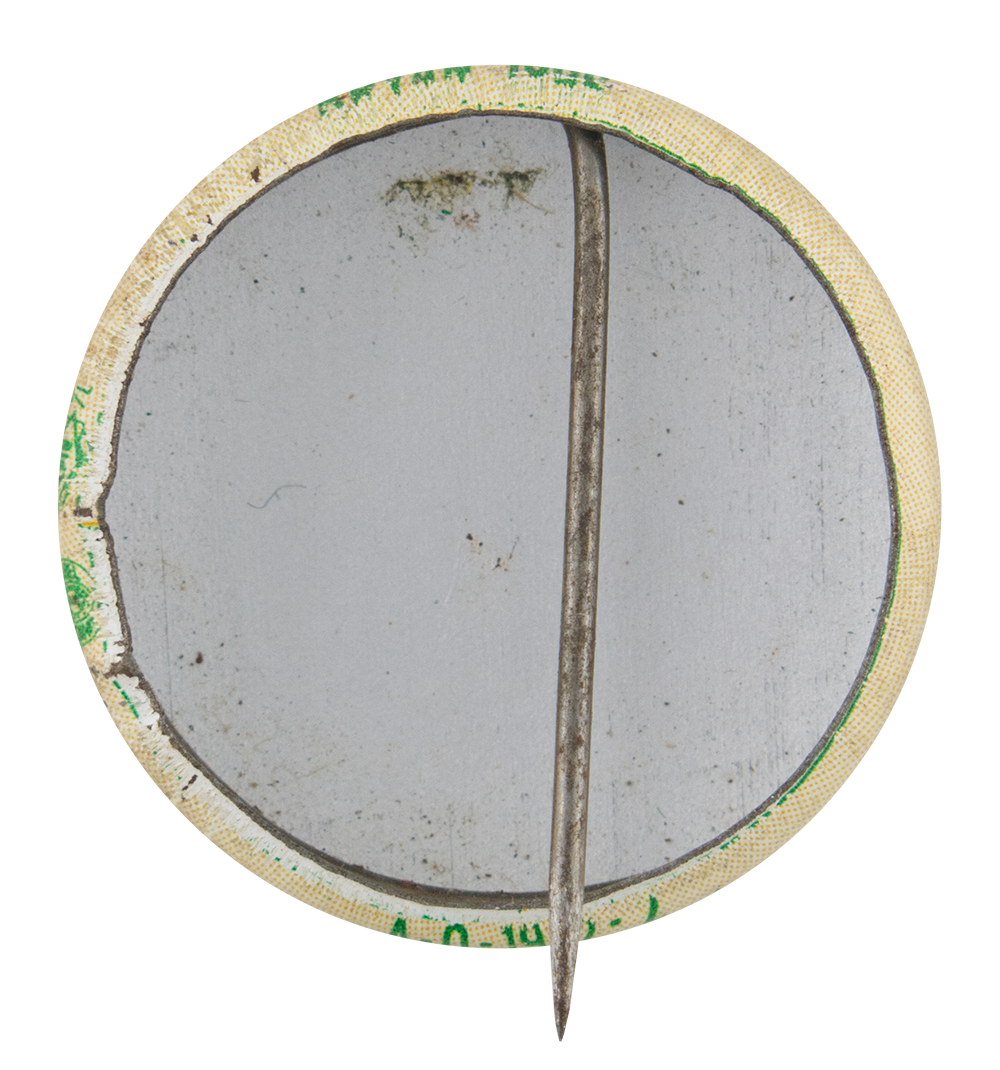
Curl Text BRYAN 1896 (?) A-0-1972-2
Back Style
The Shape
The Size
Year / Decade Made
Additional Information

During the 1896 presidential campaign, William Jennings Bryan was running against William McKinley in support of the “Free Silver” movement, a central issue in the election. The Coinage Act of 1873, which was intended to move the U.S. toward adopting the god standard, reduced the money supply and raised interest rates, leading to a panic that started a five year depression. Leading up to the election of 1896, Grover Cleveland’s monetary policy had been in support of the gold standard. Rural, populist democrats favored “free silver”, or the unlimited coinage of silver at a ration of 16 to 1 against gold.  

Bryan demanded the minting of silver to create new money as the way out of the depression. He traveled a total of 18,000 miles to deliver 600 speeches. McKinley did not travel or make campaign trail appearances, but promised “a full dinner pail”. He won, along with Hobart Garret, and beat Bryan and Arthur Sewall by 7 million votes to 6.5 million. After William Jennings Bryan lost the election, the United States government adopted the gold standard.

Catalog ID AD0496

I Can't See You

Category
Additional Images
Sub Categories
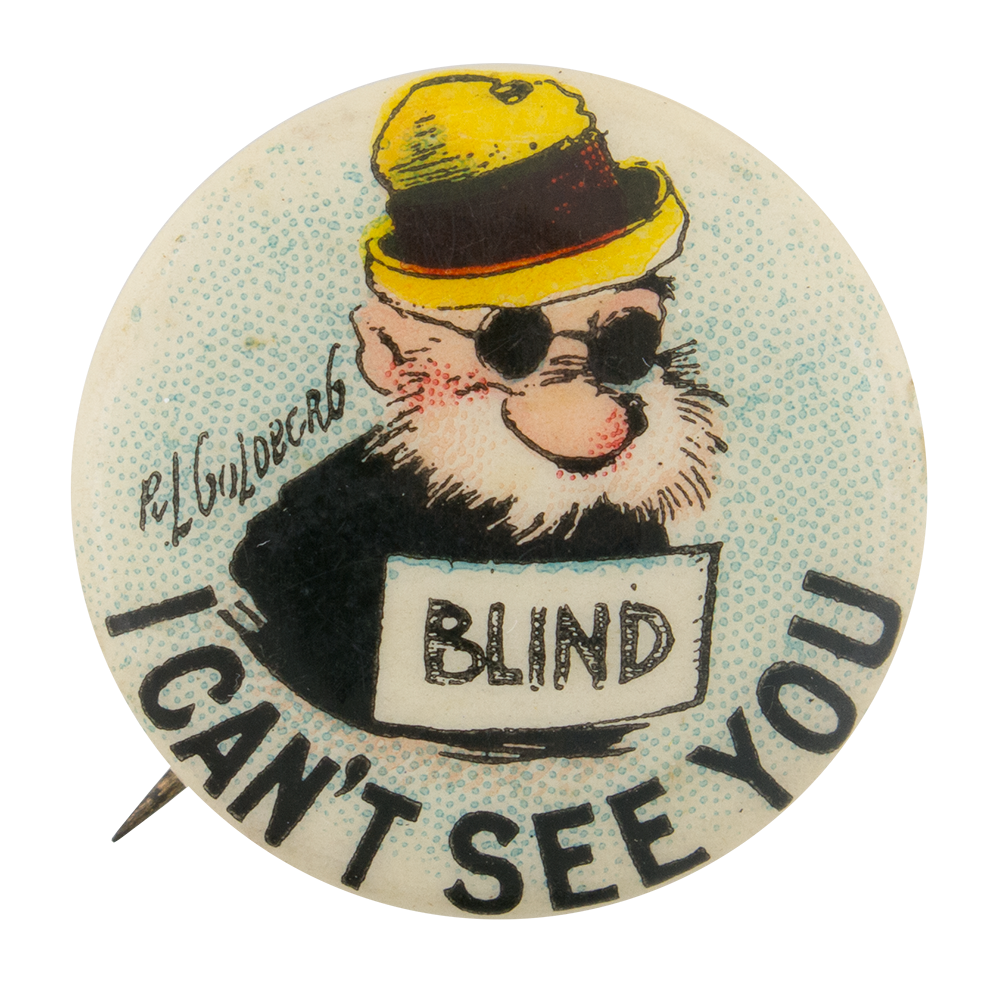
Text on Button BLIND I CAN'T SEE YOU
Image Description

Illustration of a sign-wearing man with a white beard, dark glasses and a yellow hat with black band, with black text and black signature over a blue and white background.

Back Paper / Back Info

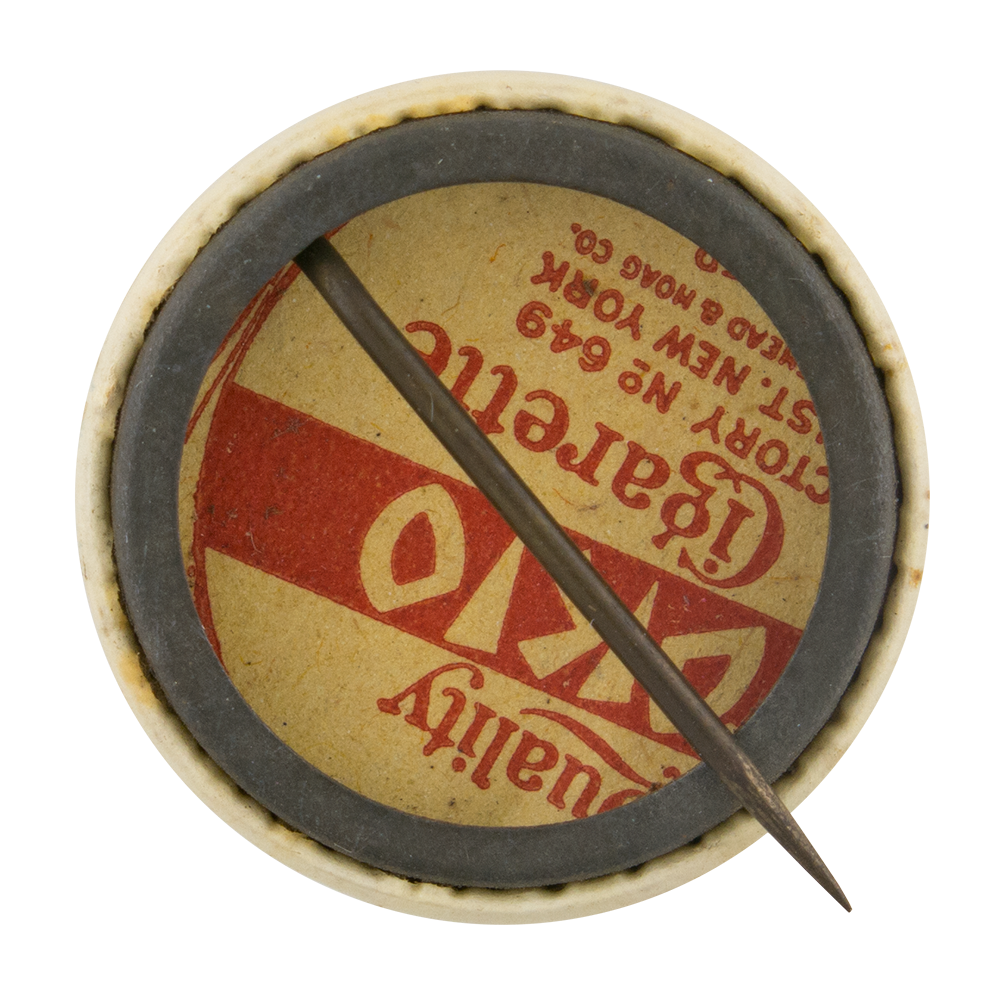
Quality Tokio Cigarette
Factory No 649
1st Dist. NEW YORK
THE WHITEHEAD & HOAG CO.
PATENTED

Back Style
The Shape
The Size
Year / Decade Made
The Manufacturer
Additional Information

Illustrator Rube Goldberg is most known for illustrations of complicated inventions that perform simple tasks. An engineer and inventor, Goldberg also drew several comic series, including Mike and Ike (They Look Alike), Boob McNutt, and The Weekly Meeting of the Tuesday Women's Club. 

Goldberg was a founding member and first president of the National Cartoonists Society, whose Reuben Award for cartoonist of the year is named after him. He received a Pulitzer Prize for his political cartooning in 1948, and in 1995 was honored with a commemorative stamp as part of the "Comic Strip Classics" series from the U.S. Postal Service.

Hassan and Tokio cigarettes distributed a set of 376 known buttons as premiums with their products. They featured cartoons by artists such as as Rube Goldberg, George McManus, Bud Fisher, Hal Hoffman, and others.

Sources

Comic Strip Classics [US Postage Stamp Series]. (2007, February 9). Retrieved July 21, 2020, from https://web.archive.org/web/20070209102357/http://www.usps.com/images/s…

Hake's Auctions. (2014, March 20). American Card Catalog "P3" Huge Collection of Cartoon Cigarette Give-away buttons c.1912. Retrieved July 21, 2020, from https://www.hakes.com/Auction/ItemDetail/90182/AMERICAN-CARD-CATALOG-P3…

Wilson, E. (2018, May 01). The Story Behind Rube Goldberg's Complicated Contraptions. Retrieved July 21, 2020, from https://www.smithsonianmag.com/history/story-behind-rube-goldbergs-comp…

Catalog ID AD0500

Don't Pull My Leg

Category
Additional Images
Sub Categories
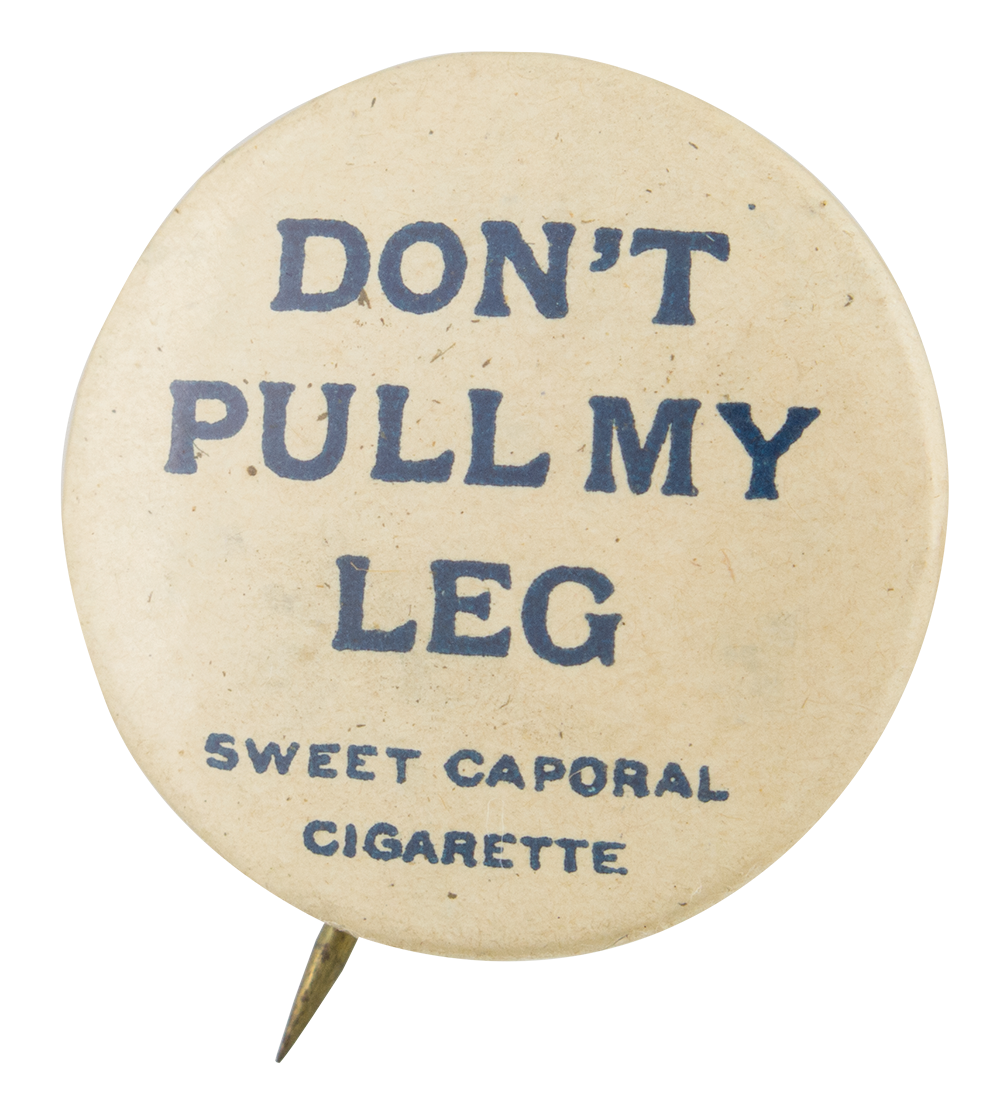
Text on Button DON'T PULL MY LEG SWEET CAPORAL CIGARETTE
Image Description

Blue text on a white background

Back Paper / Back Info

SWEET COPORAL CIGARETTE

Back Style
The Shape
The Size
Additional Information

Sweet Caporal was a brand of cigarettes created by the Kinney Brothers Tobacco Company in 1878.  Sweet Caporal was a very popular brand, especially in Canada during the early part of the 20th Century.  In 1908, 50% of cigarette sales in Canada were comprised of the Sweet Caporal brand.  Kinney Brothers Tobacco Company was sold to the American Tobacco Company in 1911.  One of the brand's notable distinguishing features was the inclusion of a collectible and tradable cigarette card in each pack, some of which showcased famous athletes of that time period.

Catalog ID AD0507

Danger Powder

Category
Additional Images
Sub Categories
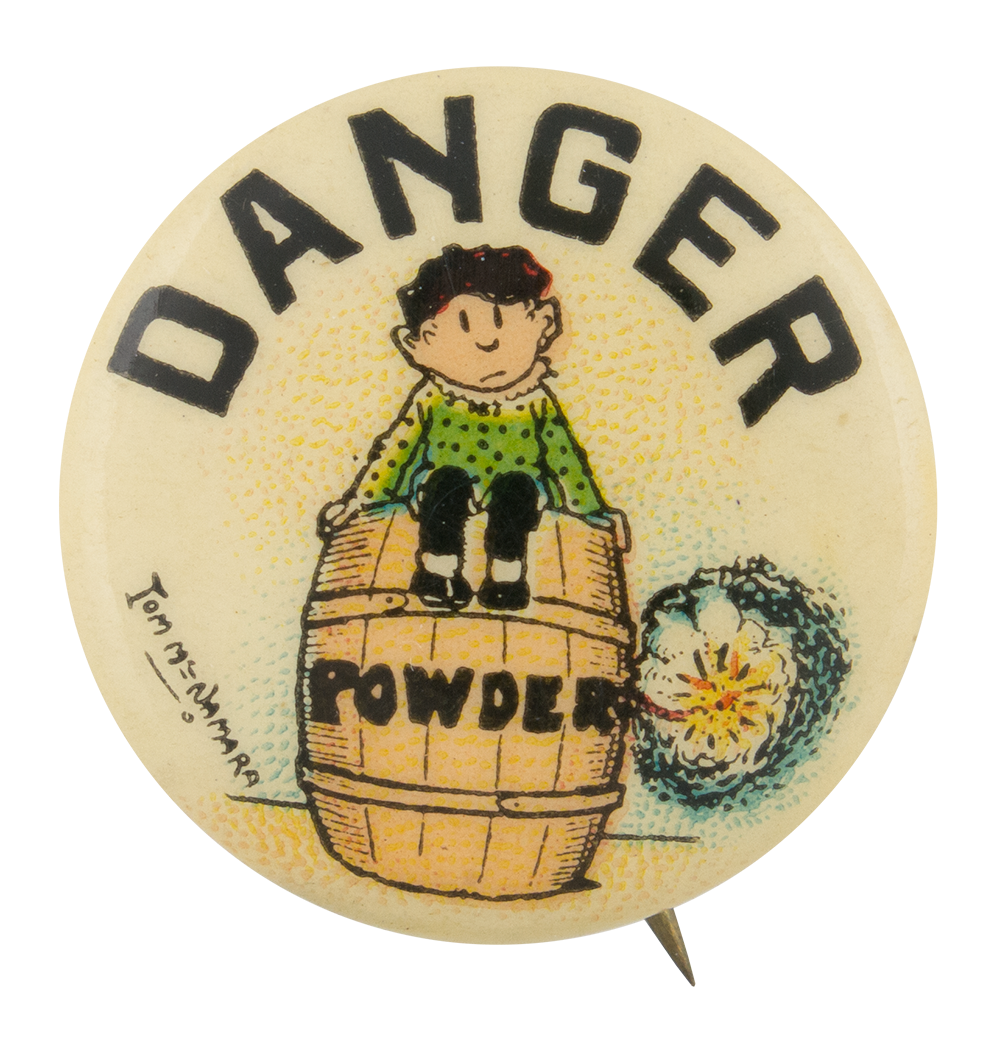
Text on Button DANGER POWDER
Image Description

Button shows a child in a green shirt with black dots sitting on a barrel with a lit fuse, over a white, yellow, and blue background.

Back Paper / Back Info

HASSAN CIGARETTES 
FACTORY No 649
1st DIST. N.Y.
W & H CO
PATENTED

Back Style
The Shape
The Size
Year / Decade Made
The Manufacturer
Additional Information

Hassan and Tokio cigarettes ran promotions from 1910s-1930s which included buttons and cards with witty cartoons. There is a set of 376 known buttons. They featured cartoons by artists such as as Rube Goldberg, George McManus, Tom McNamara, Bud Fisher, Hal Hoffman, and others. Tom McNamara, was an artist and director born in San Francisco in 1886. He was an illustrator for the San Francisco Chronicle at the turn of the century. McNamara created the Us Boys comic strip in the 1910s, and In the 1920s began directing Our Gang (Little Rascals) short films. McNamara also created titles and wrote for several silent films, including Little Annie Rooney, which starred "America's Sweetheart," Mary Pickford.

Sources

AskART.com. (n.d.) Biography:Thomas McNamara.

Catalog ID AD0489

Clean From N.Y.

Category
Additional Images
Sub Categories
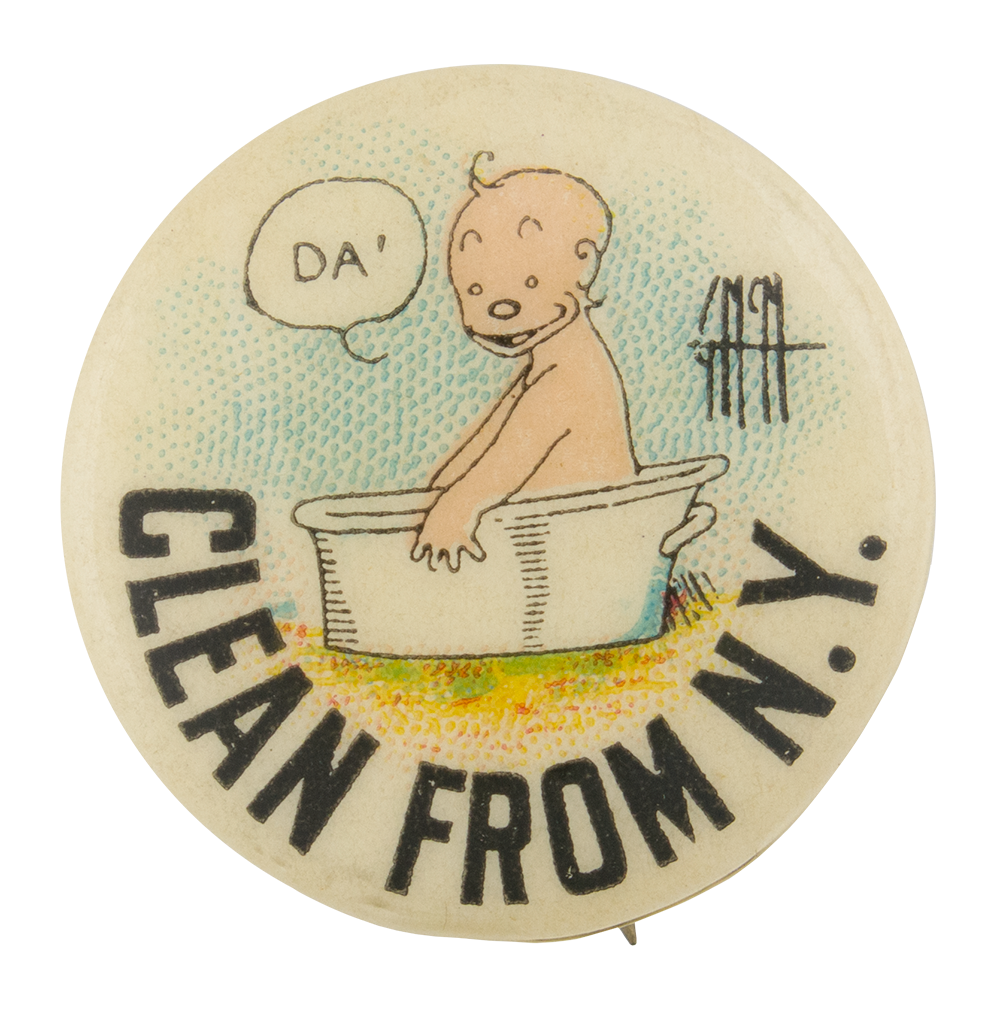
Text on Button CLEAN FROM N.Y. DA!
Image Description

Button shows illustration of a baby in a tub over yellow and blue shading, with black lettering over a white background.

Back Paper / Back Info

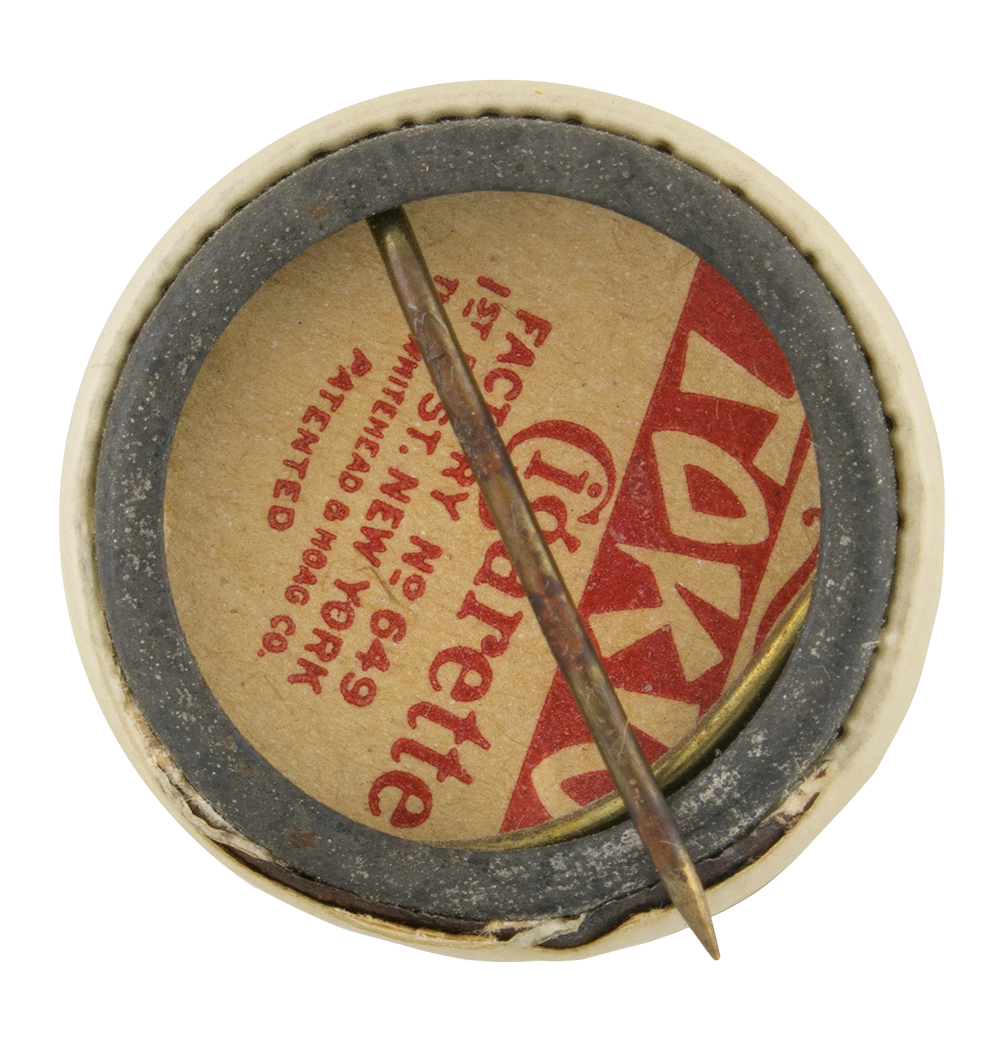
TOKIO Cigarettes FACTORY No 649 1st DIST. NEW YORK THE WHITEHEAD & HOAG CO PATENTED

Back Style
The Shape
The Size
Year / Decade Made
The Manufacturer
Additional Information

George McManus was an artist known for several early 20th-century comic strips, including Rosie's Beau, Love Affairs of a Mutton Head, and Spareribs And Gravy. One of his most famous strips was Bringing Up Father, which featured Jiggs and his wife Maggie. In 1995, Bringing Up Father was included as part of the "Comic Strip Classics" series of commemorative U.S. postage stamps. The character Jiggs is also on the insignia of the U.S. Air Force's 11th Bomb Squadron, in which McManus served during World War I.

Catalog ID AD0471

All To The Mustard

Category
Additional Images
Sub Categories
Text on Button ALL TO THE MUSTARD MUSTARD
Image Description

Button shows illustration of five hands reaching for a yellow jar and black text over a shaded blue, yellow, and white background.

Back Style
The Shape
The Size
Year / Decade Made
Additional Information

"All to the Mustard" is a phrase meaning "excellent" or "all one could ask for." The illustrator of this button, Rube Goldberg, is synonymous with complicated inventions that perform simple tasks. An engineer and inventor, Goldberg also drew several comic series, including Mike and Ike (They Look Alike), Boob McNutt, and The Weekly Meeting of the Tuesday Women's Club. In the series featuring Professor Lucifer Gorgonzola Butts, Goldberg drew schematics of the comical gadgets by which he came to be known.

Goldberg was a founding member and first president of the National Cartoonists Society, whose Reuben Award for cartoonist of the year is named after him. He received a Pulitzer Prize for his political cartooning in 1948, and in 1995 was honored with a commemorative stamp as part of the "Comic Strip Classics" series from the U.S. Postal Service.

Catalog ID AD0488

Reddy Kilowatt Mighty Atom

Category
Additional Images
Sub Categories
Text on Button REDDY KILOWATT The Mighty Atom
Image Description

White text on a blue background surrounding an illustration of a face with a lightbulb for a nose

Back Style
The Shape
The Size
Additional Information

Reddy Kilowatt was a character developed to be the official spokesman for generating electricity.  Reddy Kilowatt served as the branding character for 70 years, first appearing in 1923.  The mascot had an international presence, from South America to Africa.  As a result of the character's popularity, it was seen on television, and items from jewelry to playing cards.  Due to the changing landscape of energy production and consumption, Reddy Kilowatt declined in popularity.  Currently a few licenses to use Reddy Kilowatt are still owned by electrical companies.  

Catalog ID AD0437

Reddy Kilowatt Electric Servant

Category
Additional Images
Sub Categories
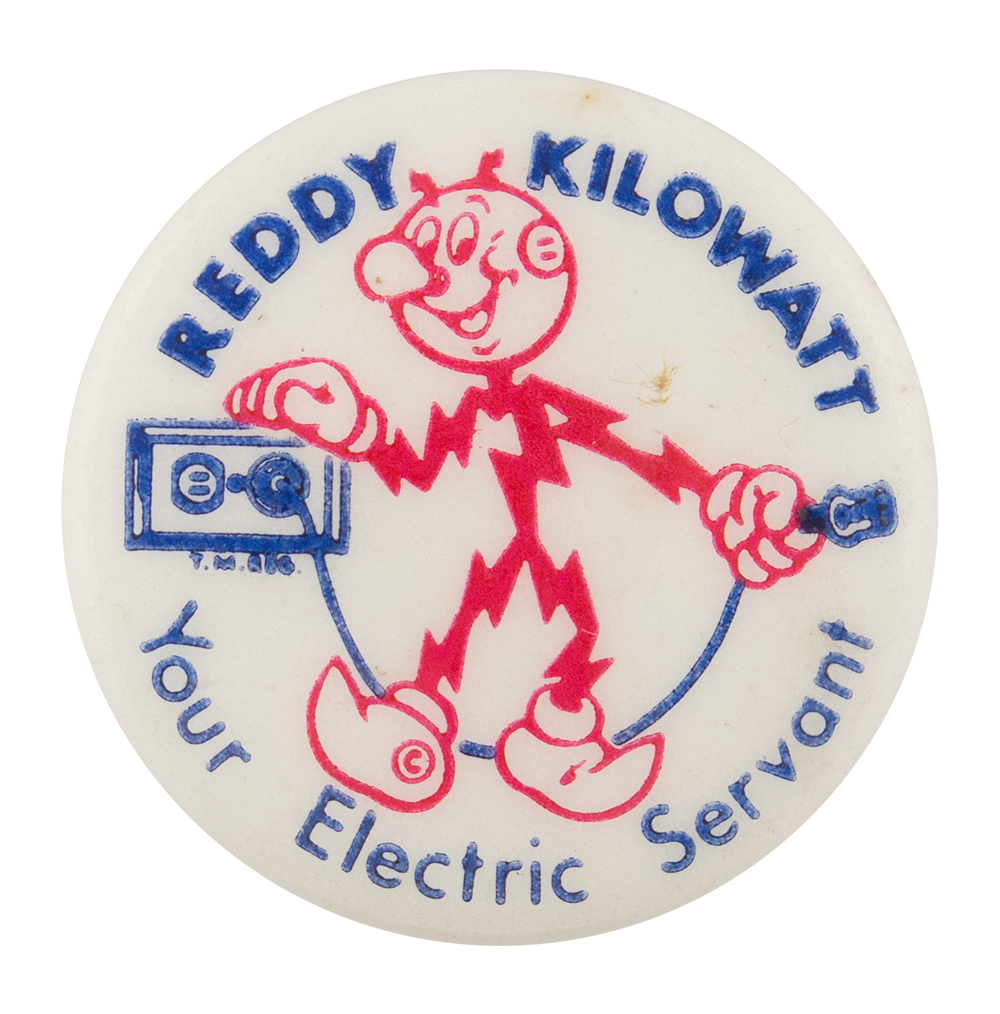
Text on Button REDDY KILOWATT Your Electric Servant
Image Description

Blue text along the top and bottom outer edge and an illustration of a character made of lightning bolt like arms and legs and holding tools.

Back Style
The Shape
The Size
Additional Information

Reddy Kilowatt was the mascot developed as the official spokesman for generating electricity.  Reddy Kilowatt was the branding character starting in 1923 and served as such for the next 70 years.  The character was seen internationally, from Africa to South America.  The mascot was commercialized upon and seen on items ranging from jewelry to playing cards.  Reddy Kilowatt declined in popularity as a result of the changing landscape of energy production and consumption.  Currently, there are a few licenses owned by electrical companies to use the Reddy Kilowatt character.

Catalog ID AD0060

Kellogg's Pep Navy Observation Squadron 3

Category
Additional Images
Sub Categories
Image Description

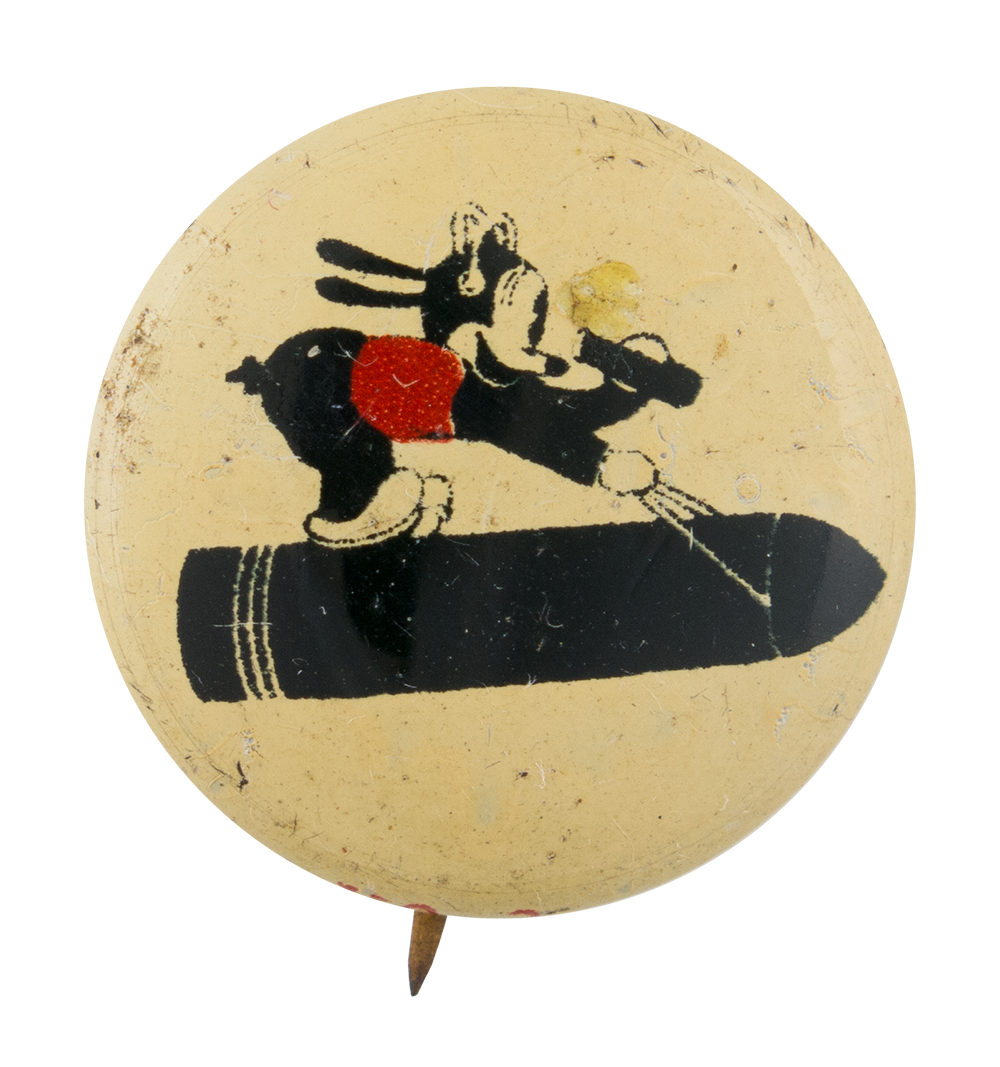
Illustration of a black and white character standing on a black missle like shape holding on to it by a reign and holding binoculars on a white background

Back Paper / Back Info

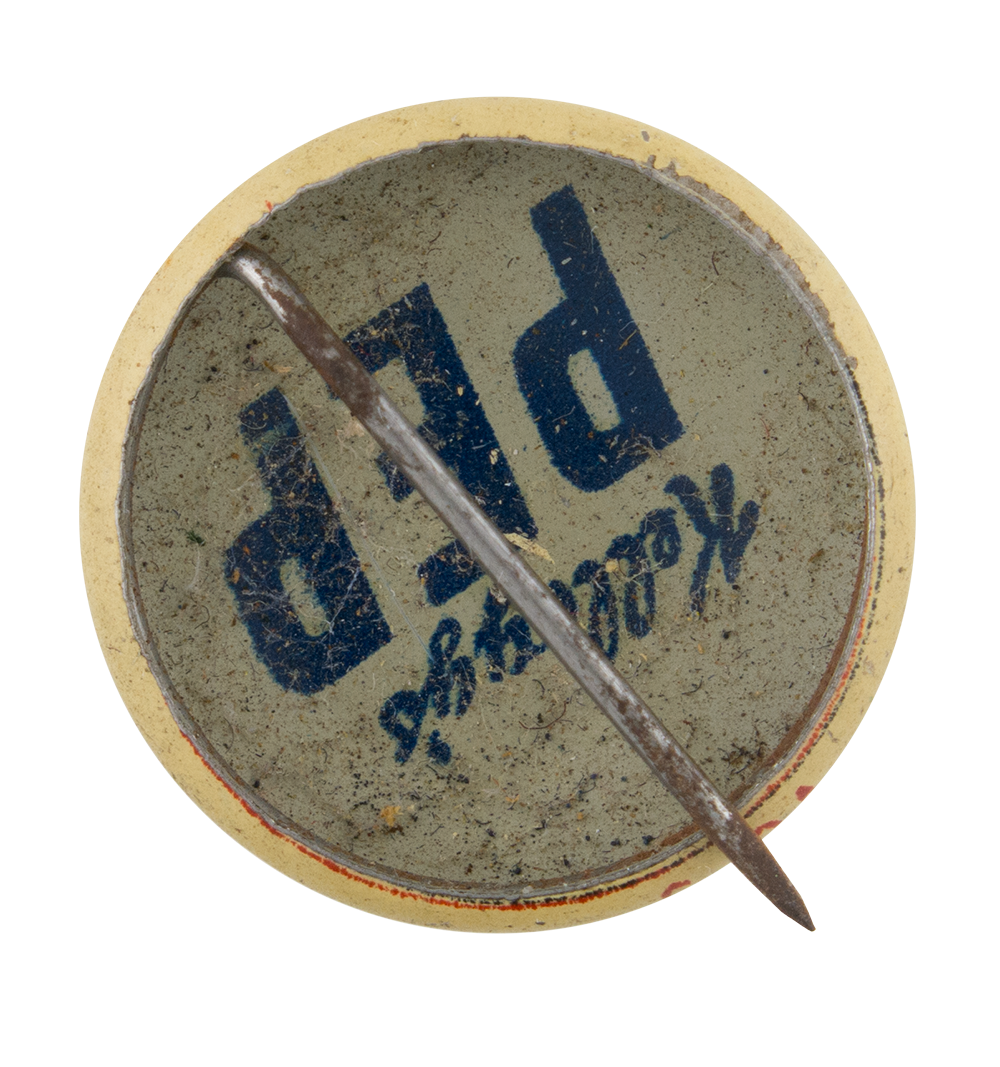
Kellogg's PEP

Back Style
The Shape
The Size
Year / Decade Made
Additional Information

Kellogg's issued a set of military insignia pins with their PEP cereal in 1943. The set is known as the “Pep War Insignia Pins” and features 36 WWII military squadron emblems. It was created for Kellogg's by the legendary "Premium King" Sam Gold. The Kellogg's Pep cereal brand sponsored radio programs and was known for giving away premium items such as trading cards, badges, and pinback buttons.

The mascot of the Navy Observation Squadron 3 was Disney's Oswald the Lucky Rabbit.

Catalog ID AD0382

Kellogg's Pep Don Winslow

Category
Additional Images
Sub Categories
Image Description

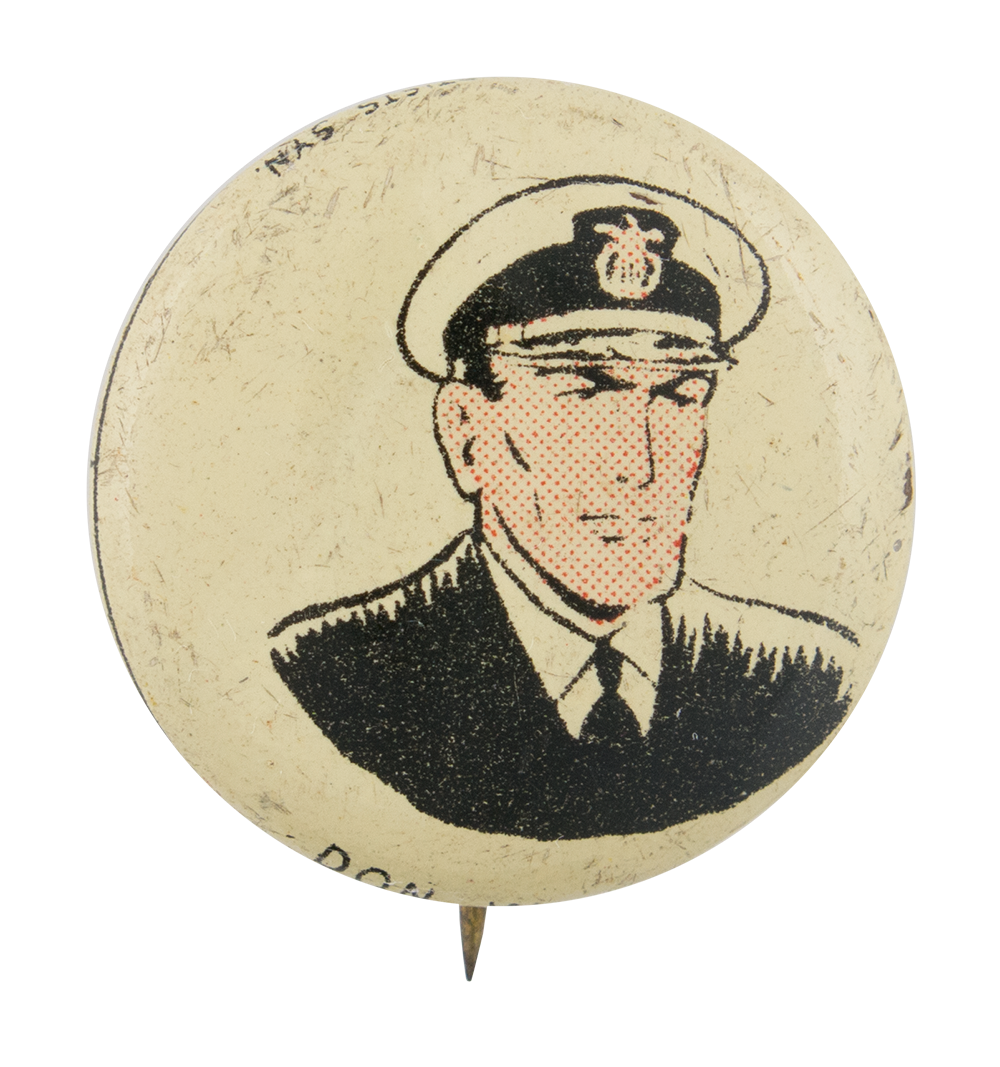
Illustration of a caucasian man in a black naval uniform on a white background.

Back Paper / Back Info

Kellogg's PEP

Curl Text Don Winslow
Back Style
The Shape
The Size
Year / Decade Made
Additional Information

One of a series of 86 different comic character buttons issued by Kellogg's and given away with PEP cereal between 1945-1947. Other characters in the series included Orphan Annie, Dick Tracy, Popeye and Felix the Cat.

Don Winslow was the lead character in the comic strip Don Winslow of the Navy that was distributed from 1934 to 1955. He was a  Lieutenant Commander in Naval Intellegence and chased after spys. The comic strip was also made into radio and film serial versions.

Catalog ID AD0408