Night Owl

Category
Additional Images
Sub Categories
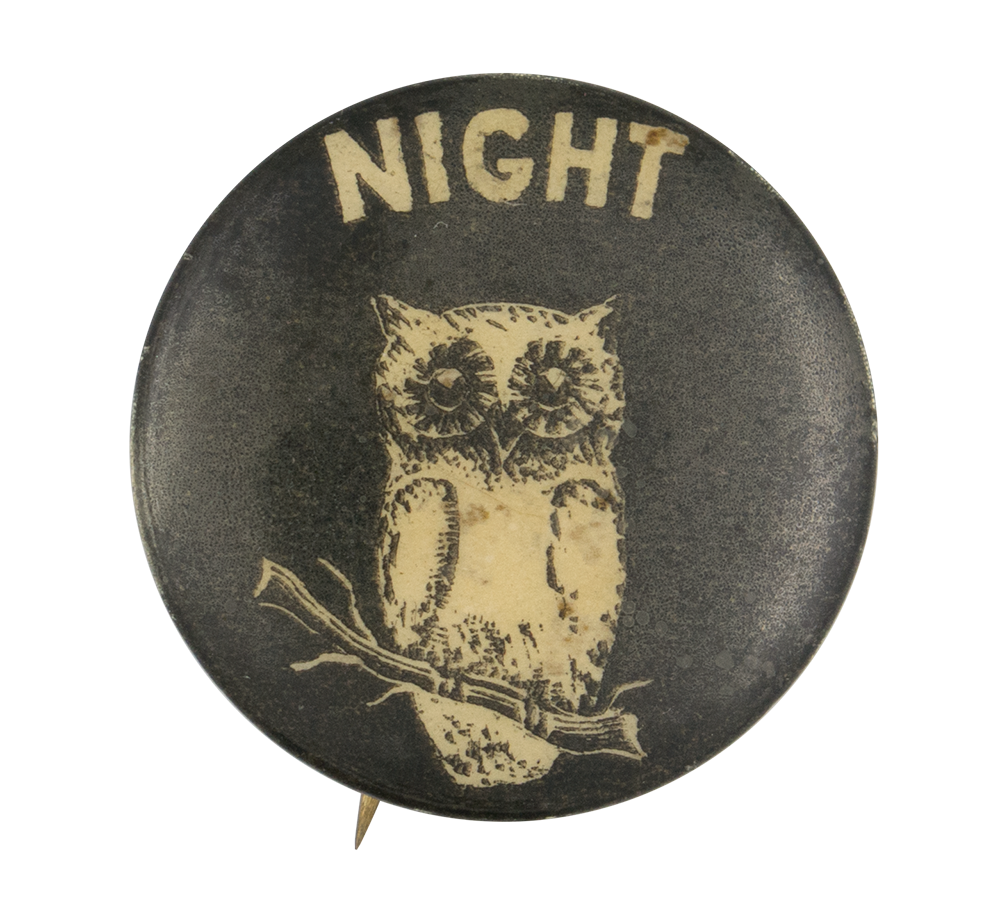
Text on Button NIGHT
Image Description

Spooky night owl below yellowed text over black background. 

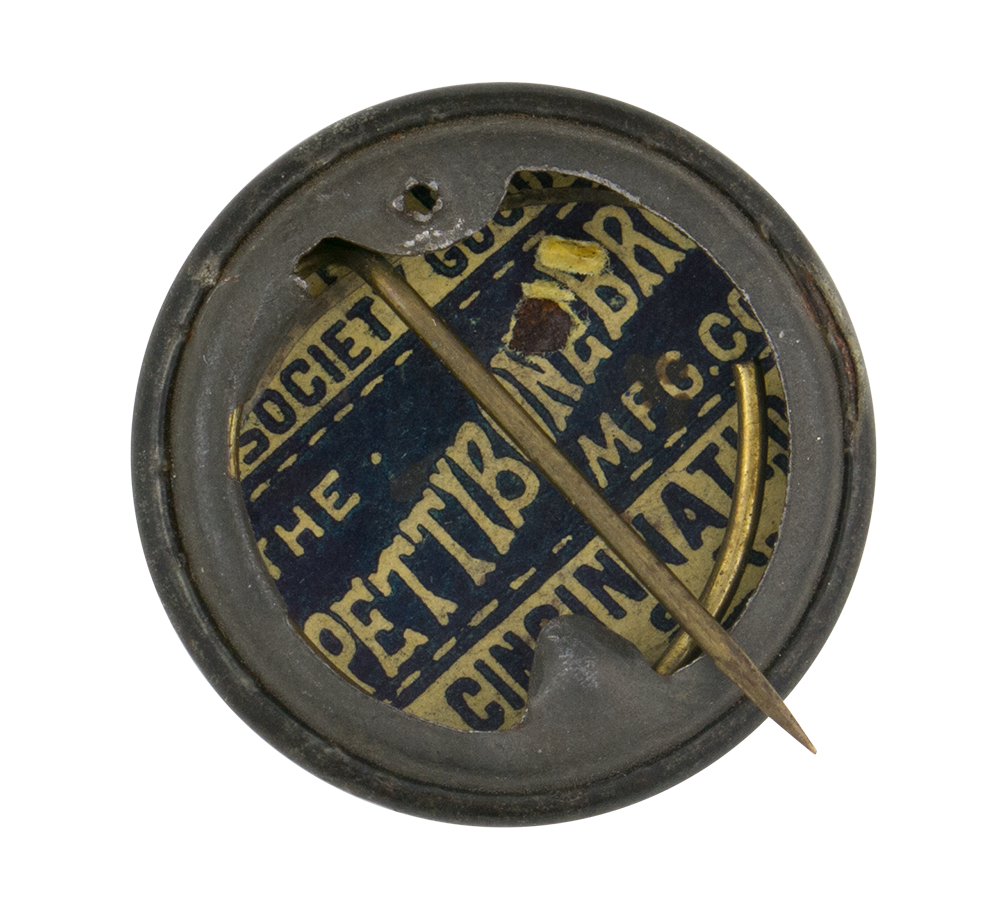
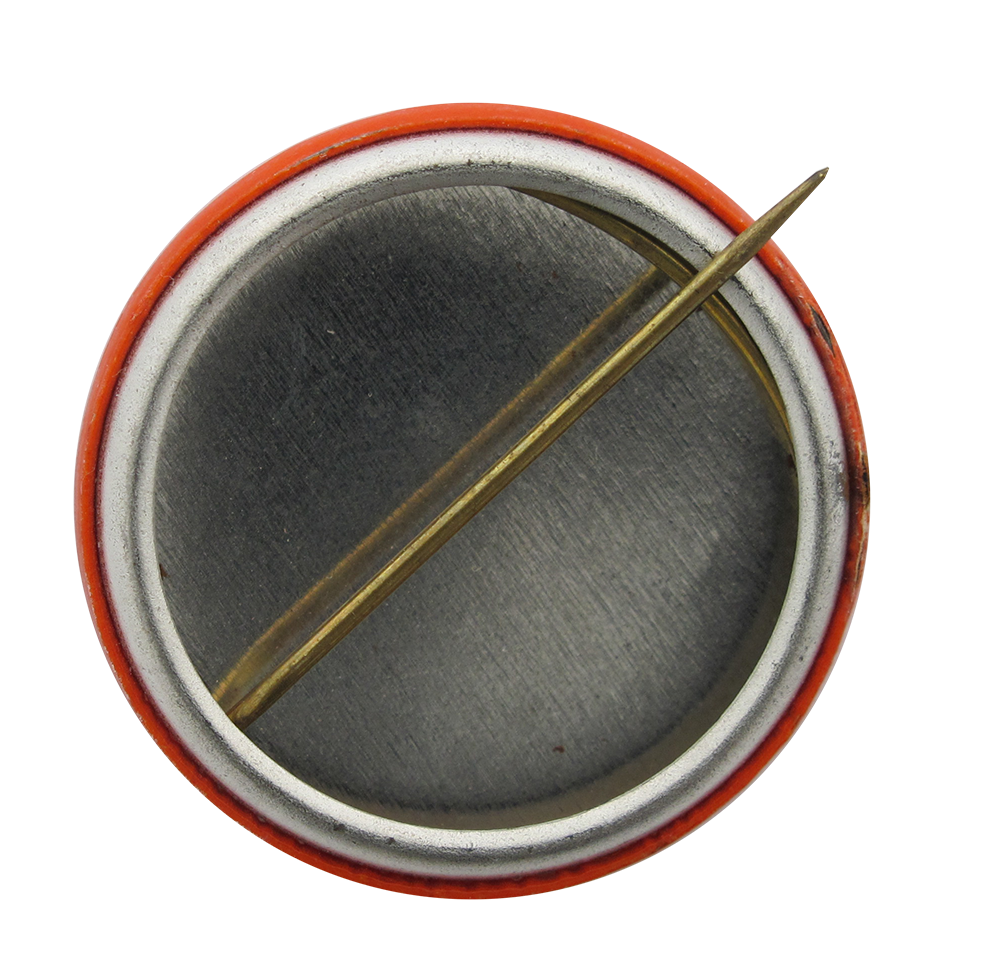
Back Paper / Back Info

MILITARY & SOCIETY GOODS

THE PETTIBONE BROS MFG.CO

CINCINNATI,OH U.S.A.

Back Style
The Shape
The Size
The Manufacturer
Additional Information

The phrase "night owl" typically refers to any individual who prefers to be awake late at night. The first known use of the term being used figuratively is in William Shakespeare's 1594 work "The Rape of Lucrece."

Catalog ID IB0435

Nice and Juicy

Category
Additional Images
Sub Categories
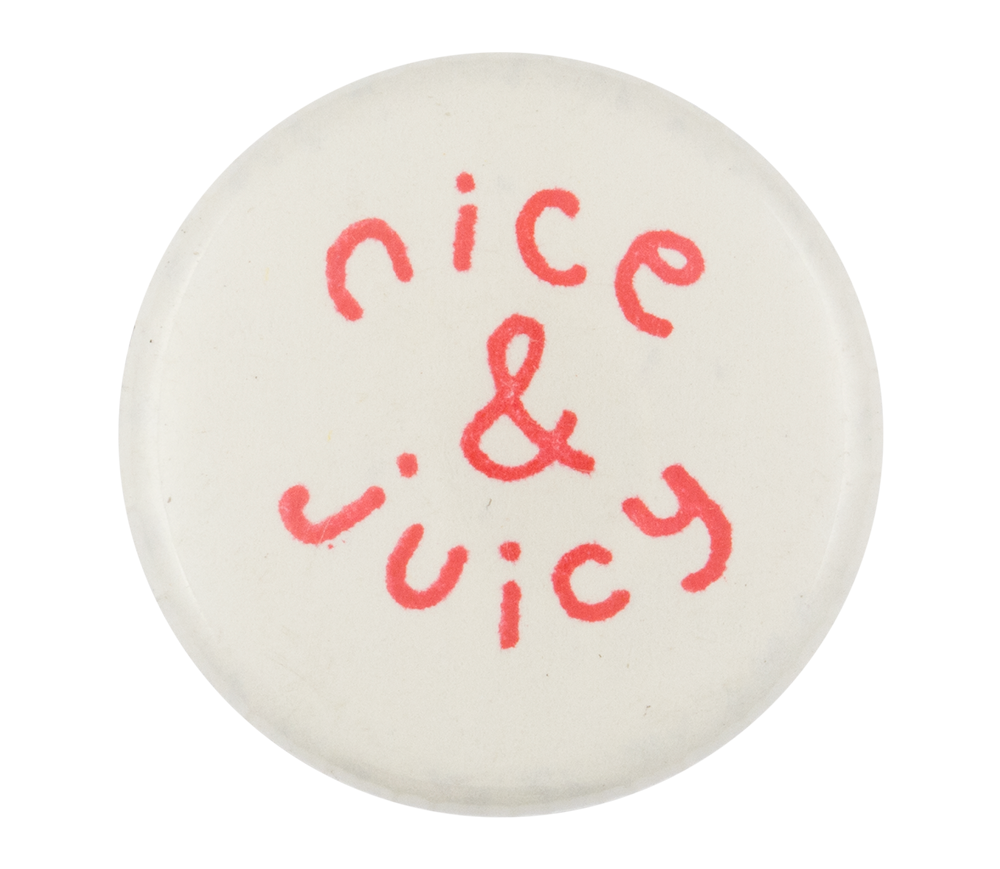
Text on Button nice & juicy
Image Description

Red text over white background. 

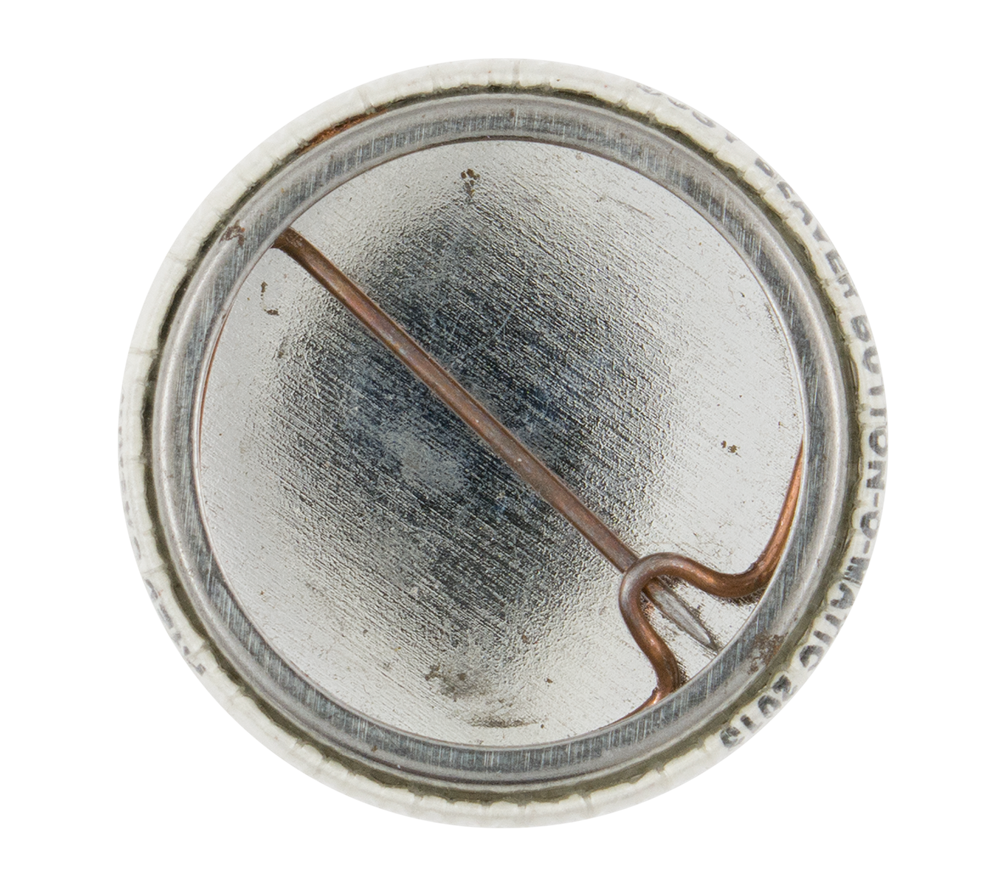
Curl Text BUSY BEAVER BUTTON-O-MATIC 2013 FRED SASAKI
Back Style
The Shape
The Size
Year / Decade Made
The Manufacturer
Additional Information

This button was created as part of the Busy Beaver Button Co.'s Button-O-Matic 2013 series "conversation". The series included this button by Fred Sasaki along with 7 others.

Fred Sasaki is the art director for Poetry magazine and gallery curator for the Poetry Foundation.

Catalog ID AR0041

He's My Uncle John

Category
Additional Images
Sub Categories
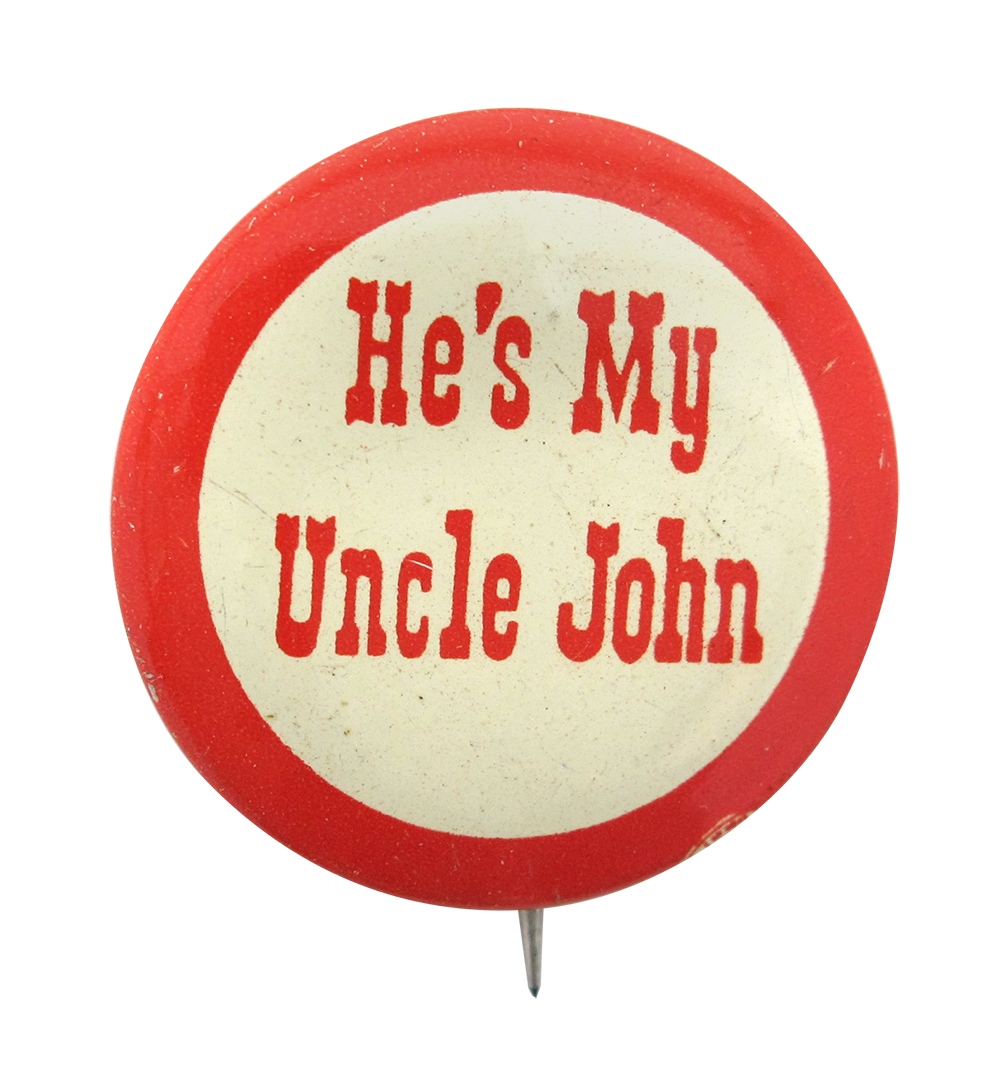
Text on Button He's My Uncle John
Image Description

Red text encircled by red border over white background. 

Curl Text Union Bug
Back Style
The Shape
The Size
Additional Information

It was used to advertise Uncle John’s Pancake Houses. Uncle John’s Pancake House was a restaurant chain that had once existed in multiple states and dozens of locations in the 60s and early 70s.  It was known for it’s lengthy menu and especially it’s breakfast foods. However, the chain shut down in the 70s and the sole remaining location is in Toledo, Ohio. 

Catalog ID AD0534

My Teeth Are Okay Toothbrush

Category
Additional Images
Sub Categories
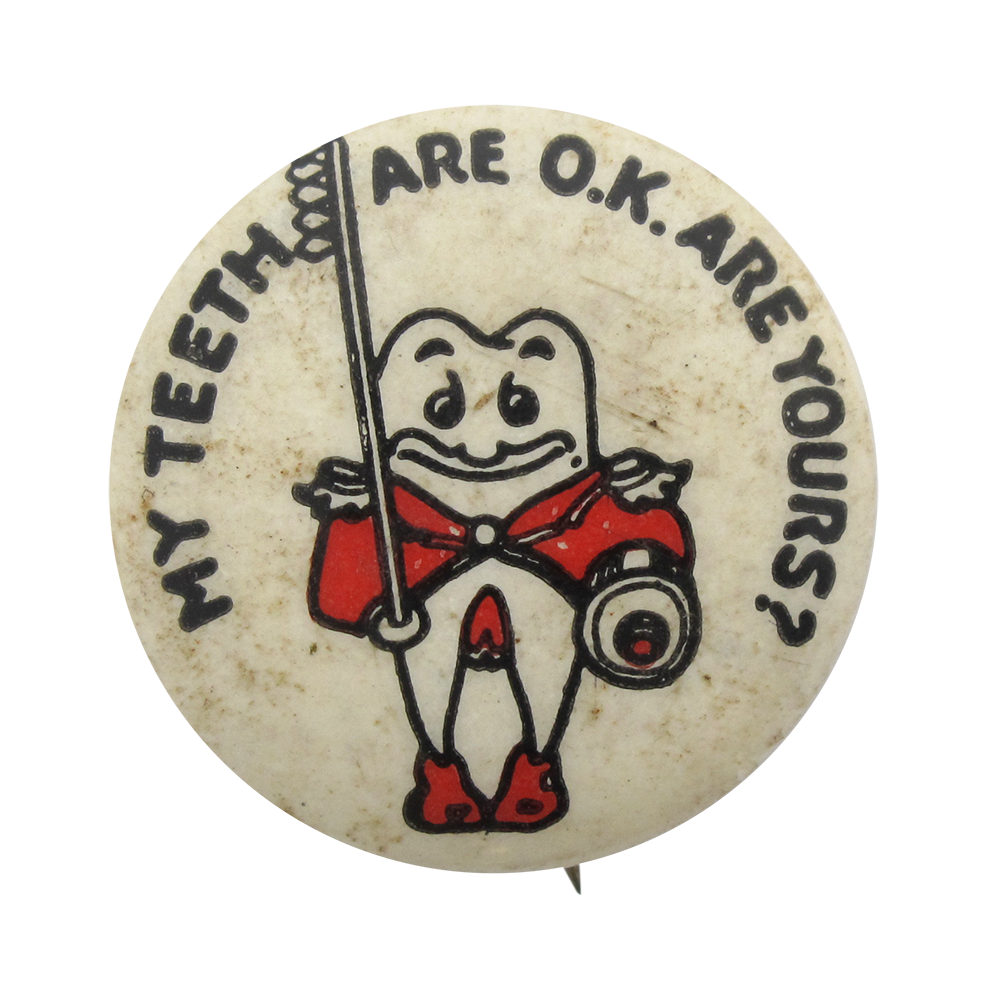
Text on Button MY TEETH ARE O.K. ARE YOURS?
Image Description

Tooth soldier over white background. 

Back Paper / Back Info

ST. LOUIS BUTTON CO.
MFRS
LOCAL No 5
AMALGAMATED LITHOGRAPHERS of AMERICA
ST. LOUIS
ST. LOUIS, MO.

Back Style
The Shape
The Size
The Manufacturer
Additional Information

Americans didn’t begin brushing their teeth until the 1900s with only a 7% compliance of the population. During World War I, oral hygiene became a national crisis. By the 1930s, 65% of Americans adopted the habit of brushing their teeth. During World War II, soldiers were required to brush their teeth. The trend has continued with an average 69% of Americans brushing their teeth twice a day.

Have info on this button? Contact us here.

Sources

History Lesson – How America Started Brushing Teeth | 209 NYC Dental. (2021). Retrieved 6 February 2021, from https://www.209nycdental.com/history-lesson-america-started-brush-teeth/

Survey finds shortcomings in Americans’ dental health habits. (2021). Retrieved 6 February 2021, from https://www.dentistryiq.com/dental-hygiene/patient-education/article/16…

Catalog ID CA0047

I Found My Ideal Me

Category
Additional Images
Sub Categories
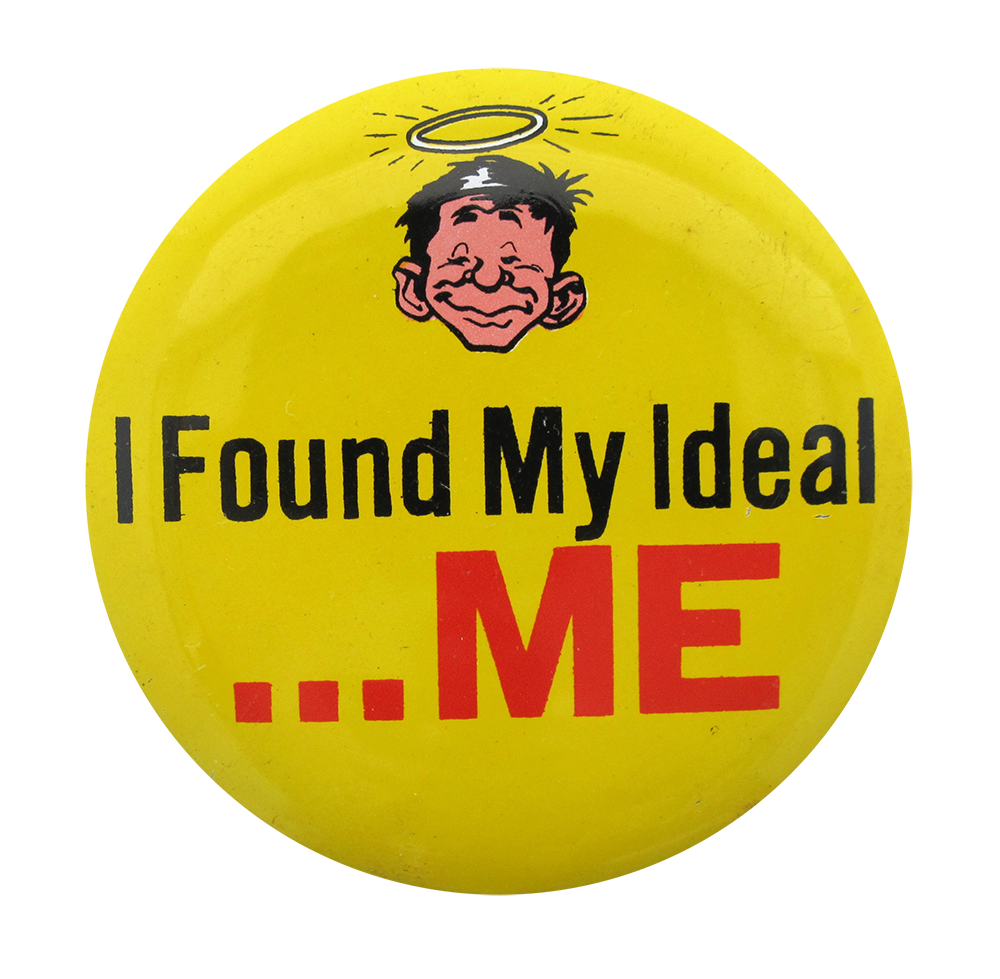
Text on Button I Found My Ideal...ME
Image Description

Smug boy with halo above black and red text over yellow background. 

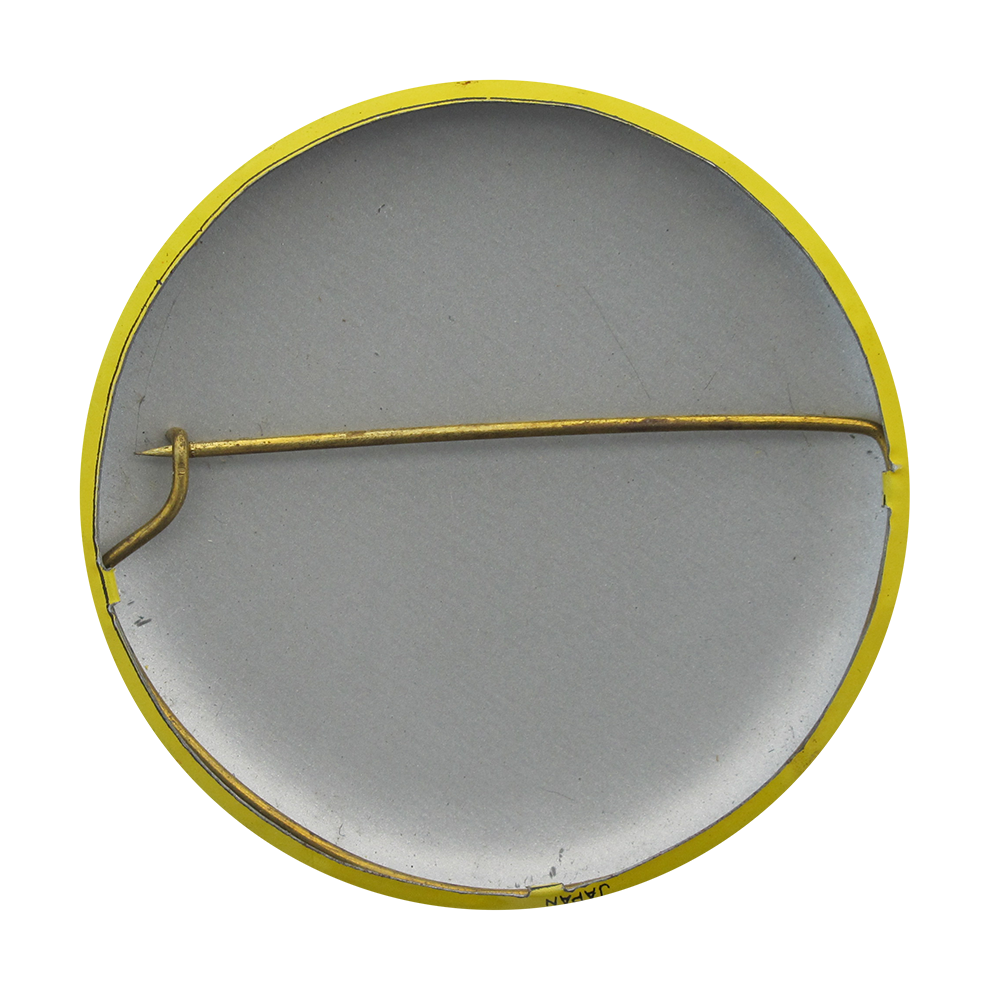
Curl Text JAPAN
Back Style
The Shape
The Size
Year / Decade Made
The Manufacturer
Additional Information

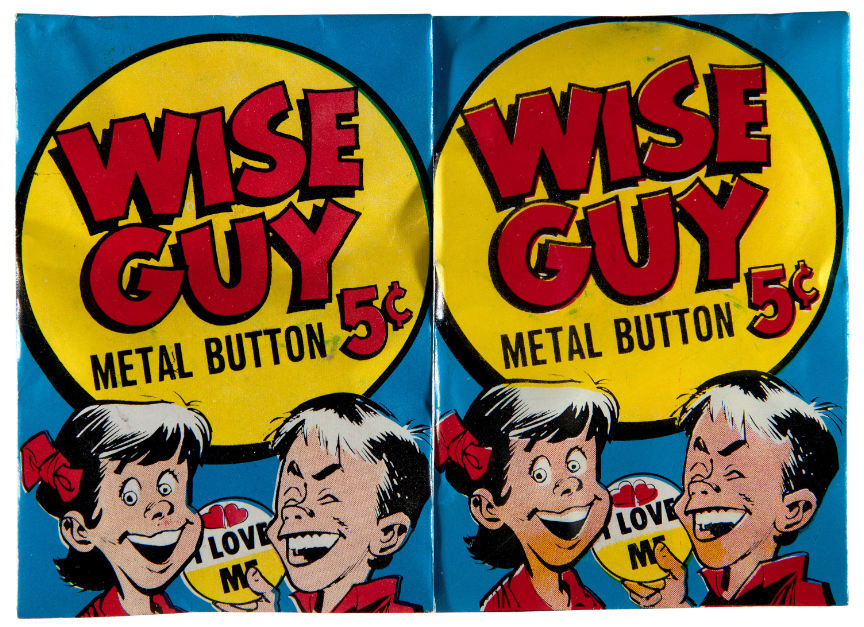
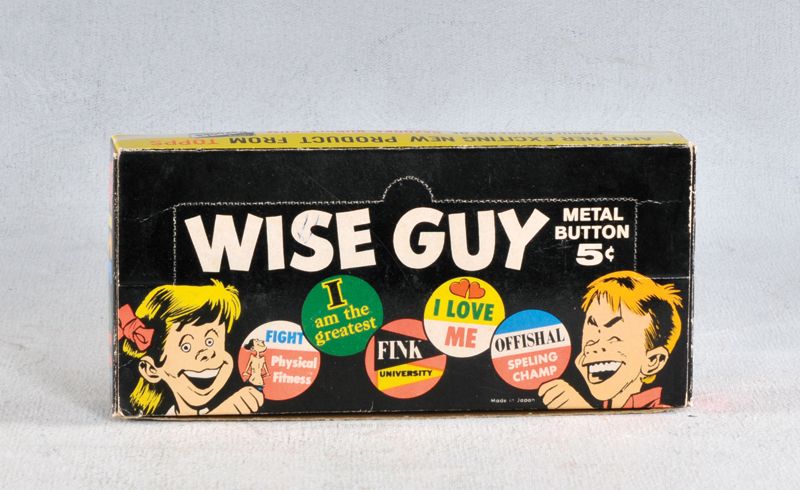
Topps, a company that is best known for sports memorabilia, produced "Wise Guy" pins during the 1960s that featured  satire/parody for novelty and humor.

Catalog ID IB0416

Love Is All

Category
Additional Images
Sub Categories
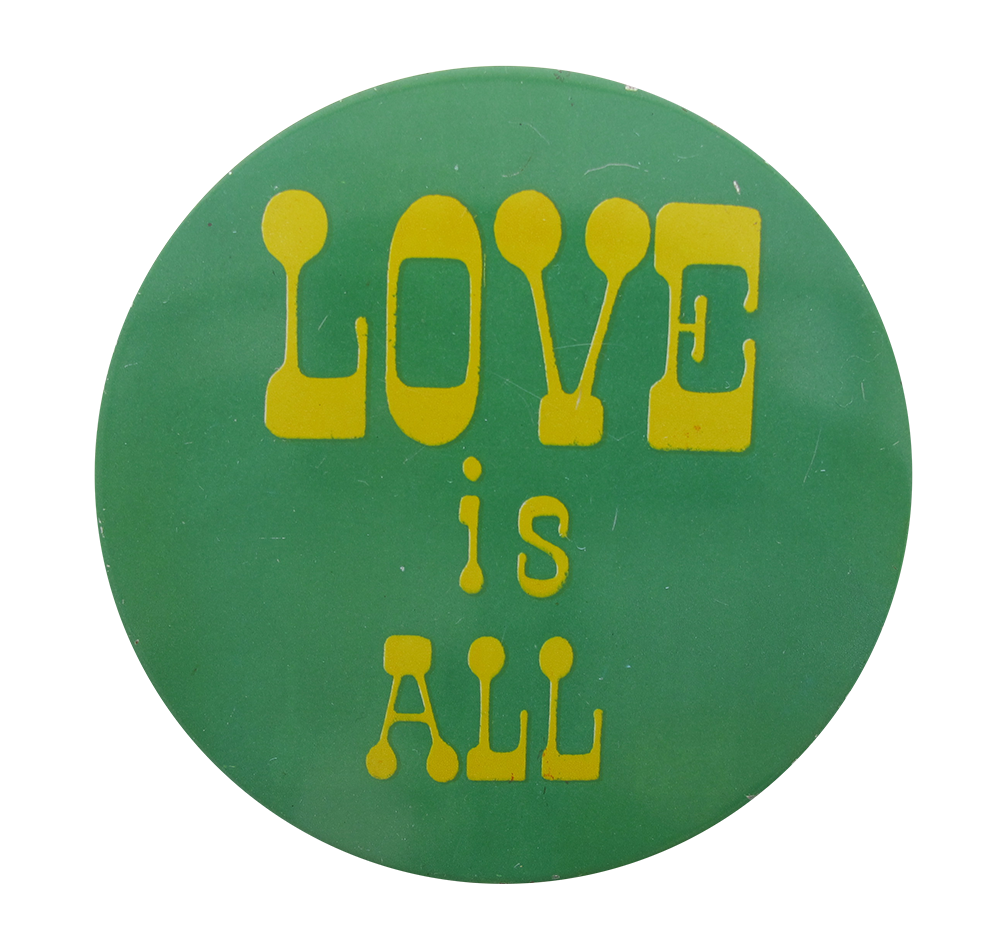
Text on Button LOVE is ALL
Image Description

Yellow text on green background. 

Curl Text JAPAN
Back Style
The Shape
The Size
Year / Decade Made
Additional Information

The phrase "Love is All" was a fundamental belief of the hippie movement, symbolizing an ideology of peace, freedom, and nonviolence. The movement's main message was to live freely and connect with others through love and understanding. It became an icon closely linked with the 1960s and 1970s hippie movement. Many buttons were made in Japan during this time, featuring bright colors and vintage fonts. People wore it during major protests, especially those against the Vietnam War, to show support for love, unity, and nonviolence. Instead of backing a specific political group, the button represented a broad belief in the values of the peace and love movement. The phrase itself echoes the message of the Beatles’ song “All You Need Is Love,” and the "Summer of Love" phenomenon, which celebrated communal living and personal expression through music, art, and alternative lifestyles. 

Sources

All You Need Is Love. (2025, October 28). In Wikipedia. Retrieved November 7, 2025, from https://en.wikipedia.org/wiki/All_You_Need_Is_Love 

Hippie. (2025, October 14). In Wikipedia. Retrieved November 7, 2025, from https://en.wikipedia.org/wiki/Hippie 

Lofgren, J. (2018, October 21). What does ‘Made in Japan’ mean? The Rite Stuff. Retrieved November 7, 2025, from https://the-rite-stuff.com/blogs/news/what-does-made-in-japan-mean

Packerpatch2. (2023, October 12). *VTG 3.5″ XL pin‑back 1960s “LOVE IS ALL” Japan button hippie [eBay listing]. eBay. https://www.ebay.com/itm/256161841193

Powell, J. (2022). Summer of Love. Research Starters. EBSCO. https://www.ebsco.com/research-starters/history/summer-love

Catalog ID IB0399