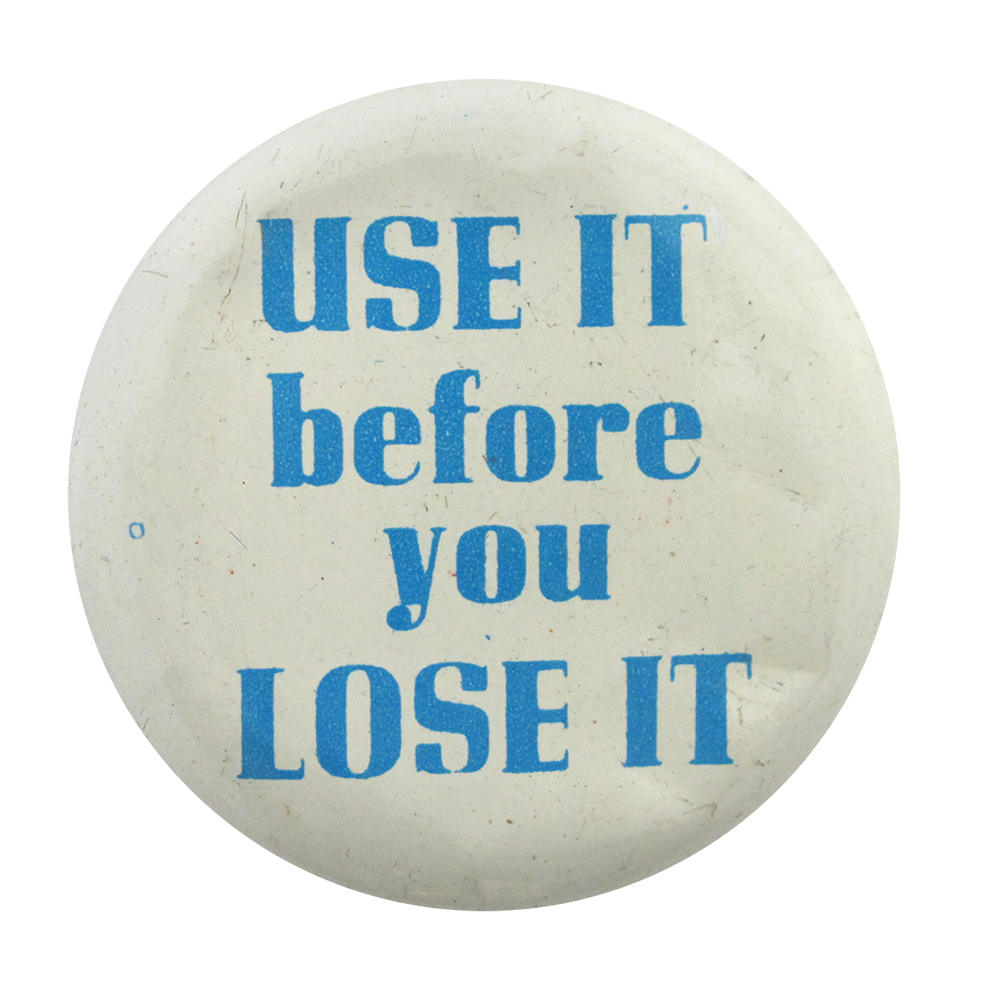
Use It Before You Lose It

Category
Additional Images
Sub Categories
Text on Button USE IT before you LOSE IT
Image Description

Blue text over white background. 

Curl Text JAPAN
Back Style
The Shape
The Size
Additional Information

“Use it or lose it” is an idiom that means if someone does not use something, they might lose the opportunity to use it in the future. It is most often used to encourage people to keep using their skills or abilities, so they do not become rusty or forget them. It can be applied to many different areas of life such as physical fitness, cognitive ability, and even finance. For example, if someone does not use their muscles regularly, they will weaken over time. Similarly, if they do not practice mental fitness, their cognitive abilities may decline. In terms of finances, some companies have a “use it or lose it” policy for flexible spending accounts (FSAs), which means that any money left in the account at the end of the year is forfeited.

Sources

Bartels, F. (2021, June 23). Changing current “use it or lose it” policy would result in more effective use of defense dollars. The Heritage Foundation. https://www.heritage.org/defense/report/changing-current-use-it-or-lose-it-policy-would-result-more-effective-use-defense

Murphy, K.J. (2014, November 25). Use it or lose it. Psychology Today. https://www.psychologytoday.com/us/blog/living-mild-cognitive-impairment/201411/use-it-or-lose-it

Use it or lose it. (n.d.) Farlex Dictionary of Idioms. https://idioms.thefreedictionary.com/use+it+or+lose+it

Whitbourne, S.K. (2023, February 4). When it comes to use it or lose it, what should you use? Psychology Today. https://www.psychologytoday.com/us/blog/fulfillment-at-any-age/202302/when-it-comes-to-use-it-or-lose-it-what-should-you-use

Catalog ID IB0478

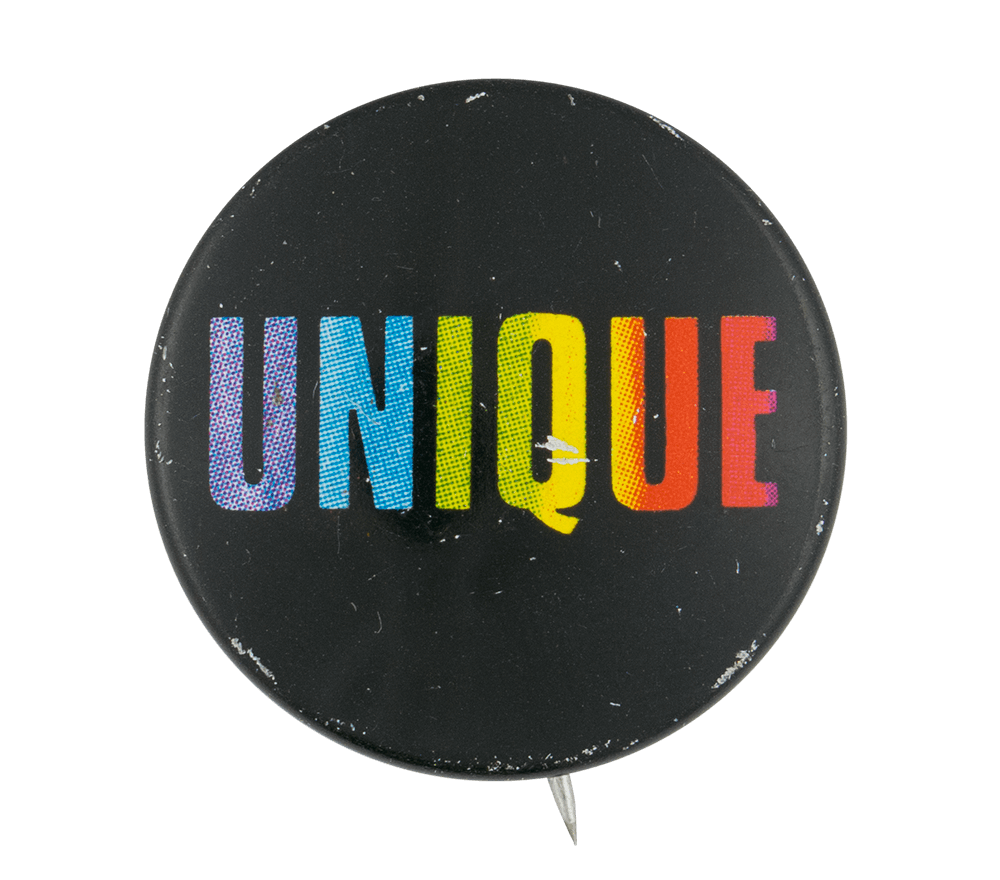
Unique

Category
Additional Images
Sub Categories
Text on Button UNIQUE
Image Description

Rainbow text over black background.

Back Style
The Shape
The Size
Additional Information

During the 1980s, retail stores gave away promotional items with purchase including many pinback buttons. Unique, also known as Unique-Boutique, was a the large retail store in New York City that had multiple departments selling graffiti spray-painted clothing, vintage duds, and fashionable bright neon attire. Although Unique was effectively advertising during the 1980s, it went out of business in the early 1990s.

Sources

Witchipoo, M. (2012). The original swag – 1980s retail and promotional pins. WitchesBrewPress’s Blog. https://witchesbrewpress.org/2012/07/08/the-original-swag-1980s-retail-and-promotional-pins/

Catalog ID IB0470

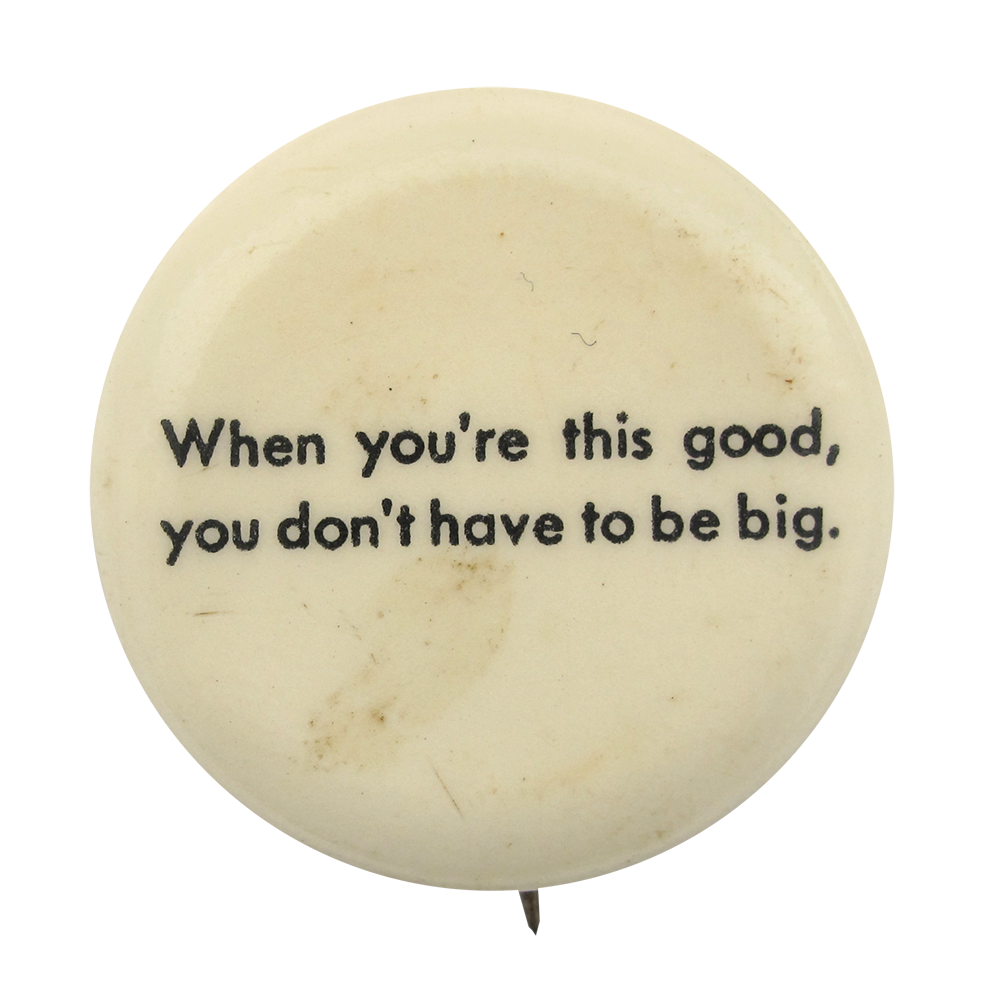
When You're This Good

Category
Additional Images
Text on Button When you're this good, you don't have to be big.
Image Description

Black text over white background.

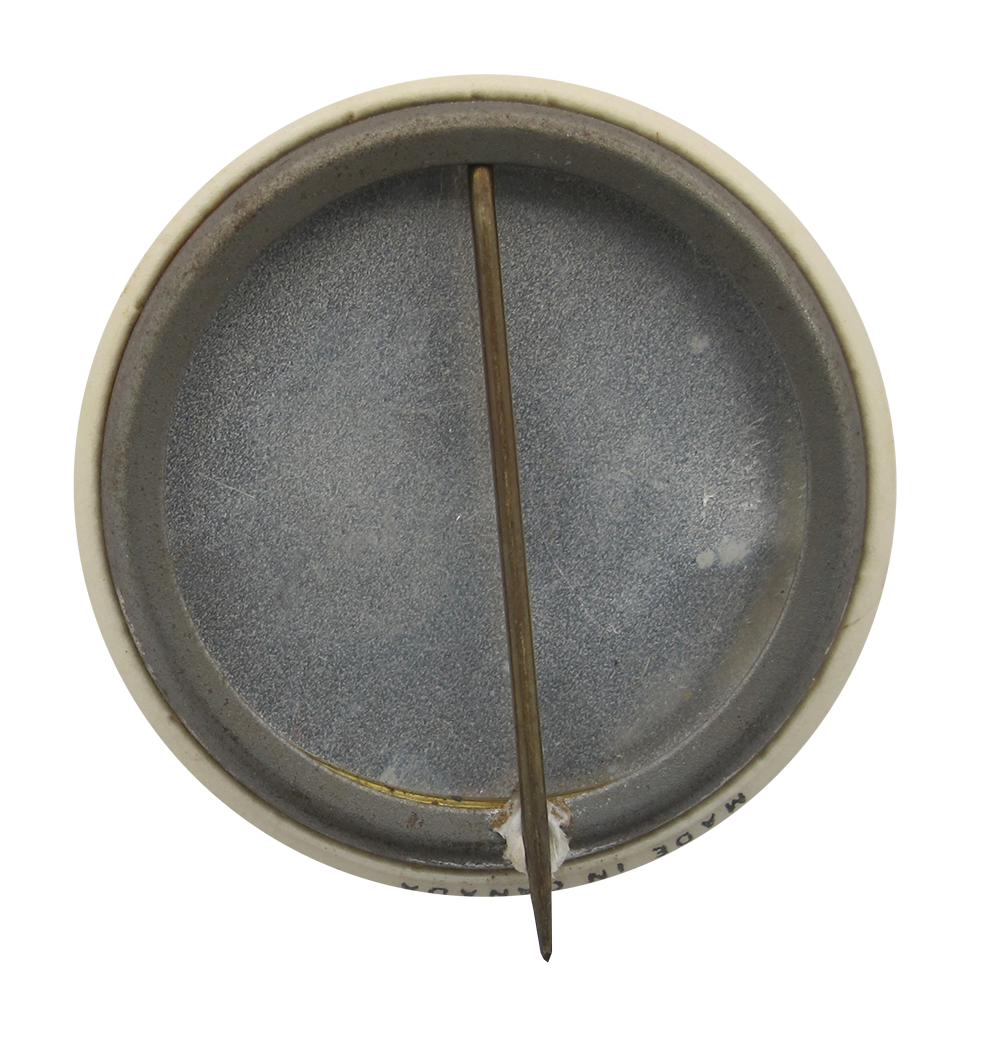
Curl Text MADE IN CANADA
Back Style
The Shape
The Size
Additional Information

Have info on this button? Contact us here.

Catalog ID IB0434

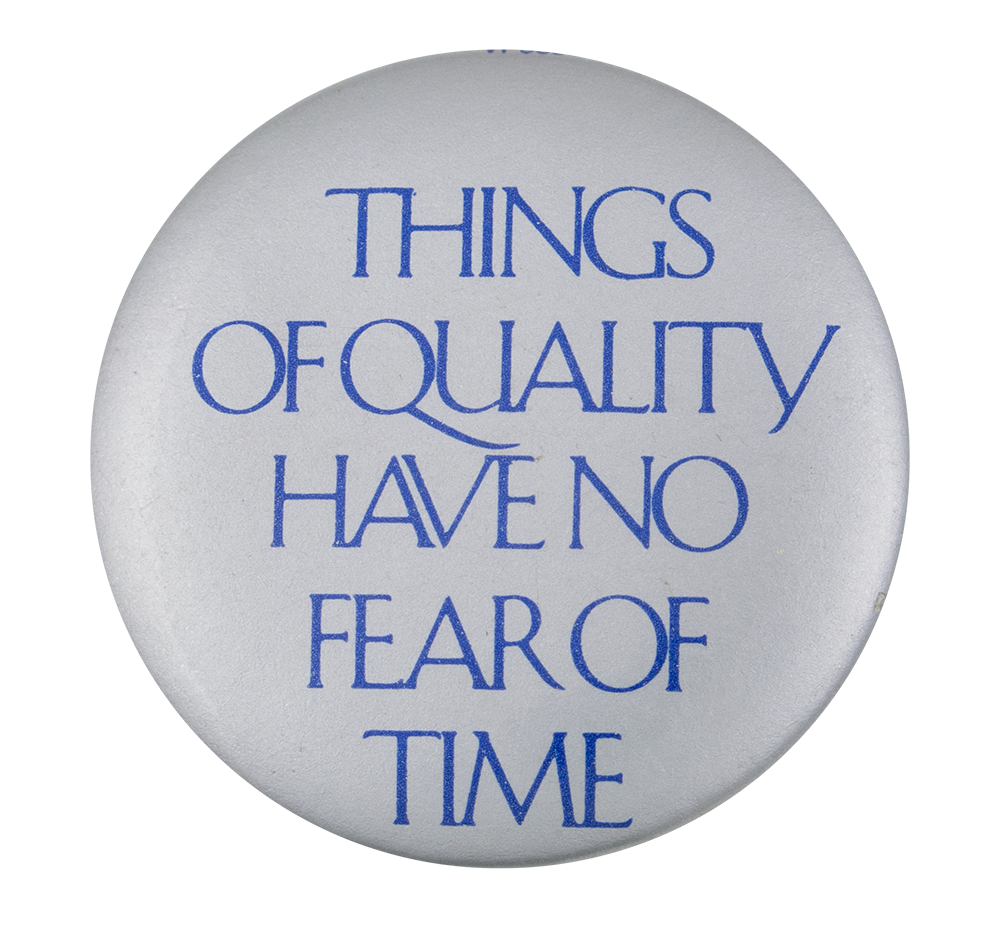
Things Of Quality

Category
Additional Images
Text on Button THINGS OF QUALITY HAVE NO FEAR OF TIME
Image Description

Blue text over silver background. 

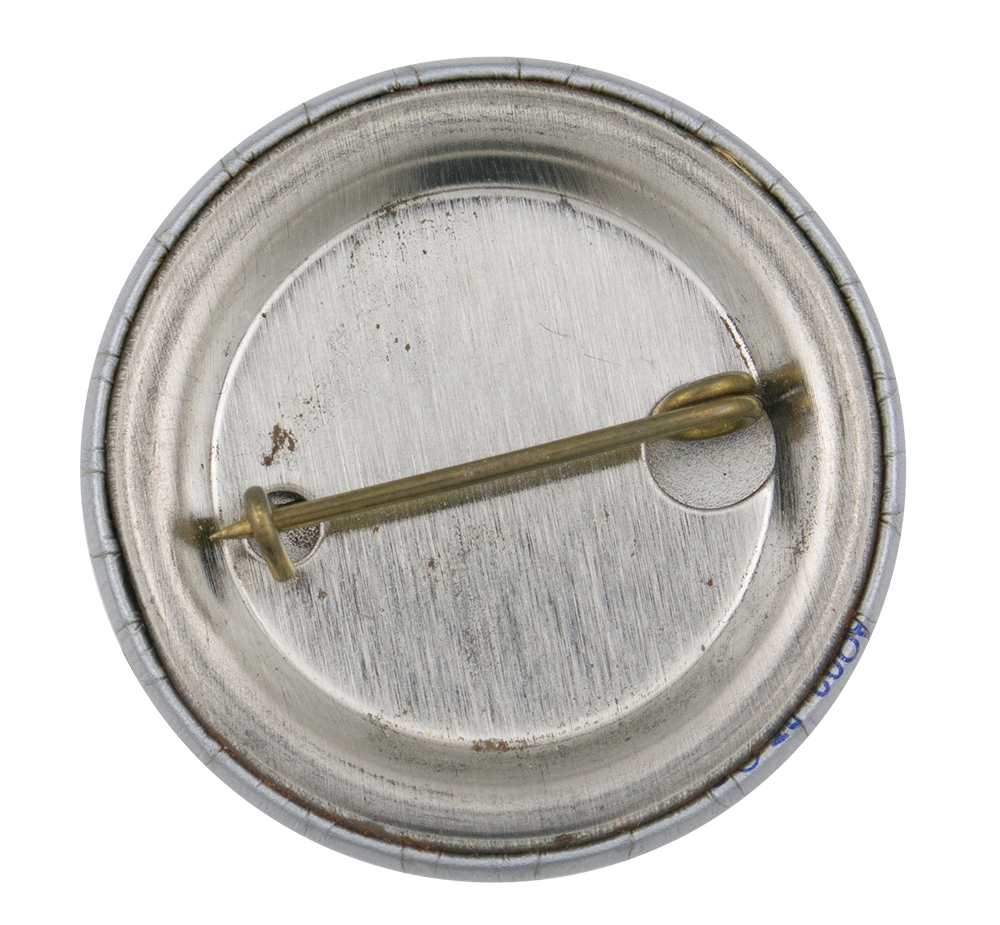
Curl Text Illegible
Back Style
The Shape
The Size
Additional Information

This well-known quote means to be patient with time. For things of quality we have to step back and not fear what it will take to achieve them. 

Catalog ID IB0487

Taste It All

Category
Additional Images
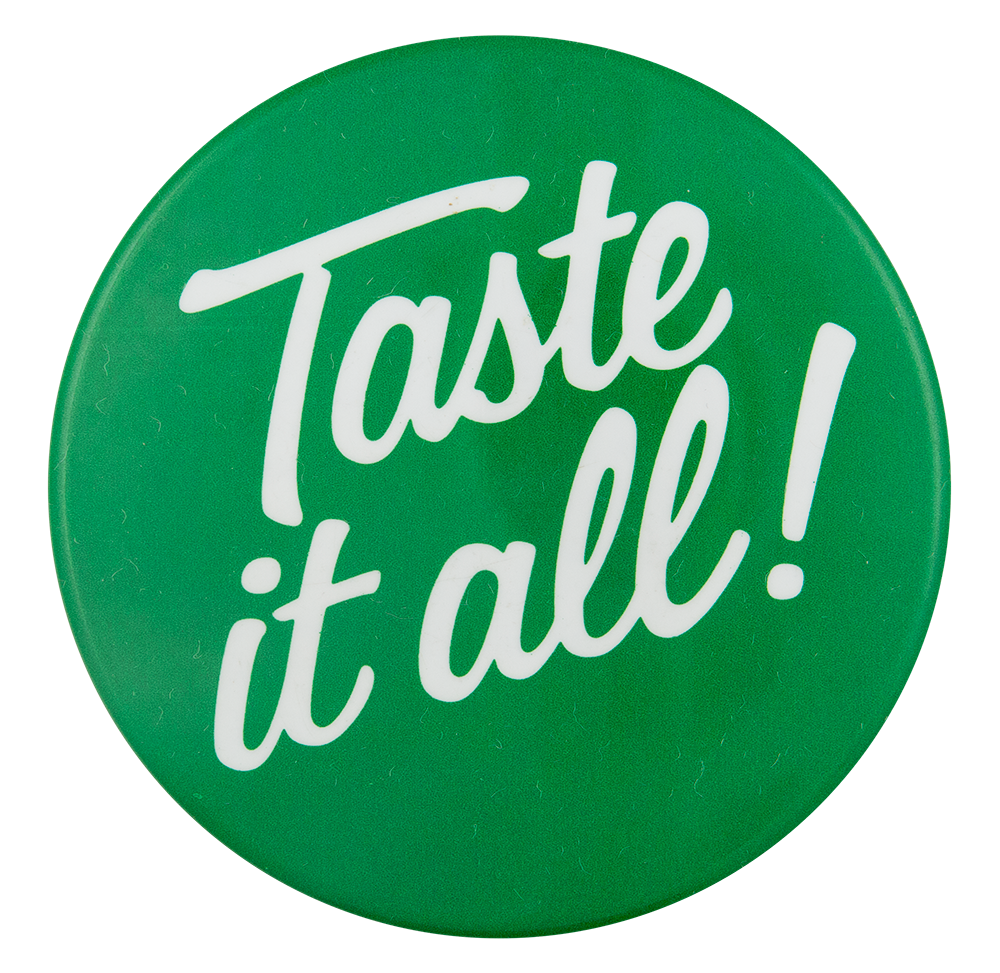
Text on Button Taste it all!
Image Description

White text over green background. 

Curl Text THE SEAGRAM WINE COMPANY, NEW YORK, NY
Back Style
The Shape
The Size
Additional Information

Seagram Company Ltd. was a Canadian producer and distributor of alcoholic drinks. It was founded in 1928 by Samuel Bronfman, and its influence soared during the Prohibition era. By the 1940s Seagram’s was the largest distiller in North America. When Edgar M. Bronfman succeeded as head in 1971, the company expanded worldwide, producing and marketing a wide variety of drinks. However, when Edgar M. Bronfman, Jr. took over in 1989, he began selling the company to competitors, and by 2002 it had been fully acquired by other companies. 

In the 1980s Seagram’s began advertising its Cooler wine product, a citrusy white wine sold in cans or glass bottles. In one of these television advertisements in 1985, the catchy slogan “Taste it all!” was repeated over a scene of beachgoers enjoying the refreshing beverage. 

Sources

Britannica Editors. (2023, January 30). Seagram Company Ltd. Britannica. https://www.britannica.com/topic/Seagram-Company-Ltd

The TV Madman. (2016, May 21). Seagrams - Cooler - Taste It All (1985) [Video]. YouTube. https://www.youtube.com/watch?v=bW1adSCjGuY

Catalog ID IB0475

Support Sloppiness

Category
Additional Images
Sub Categories
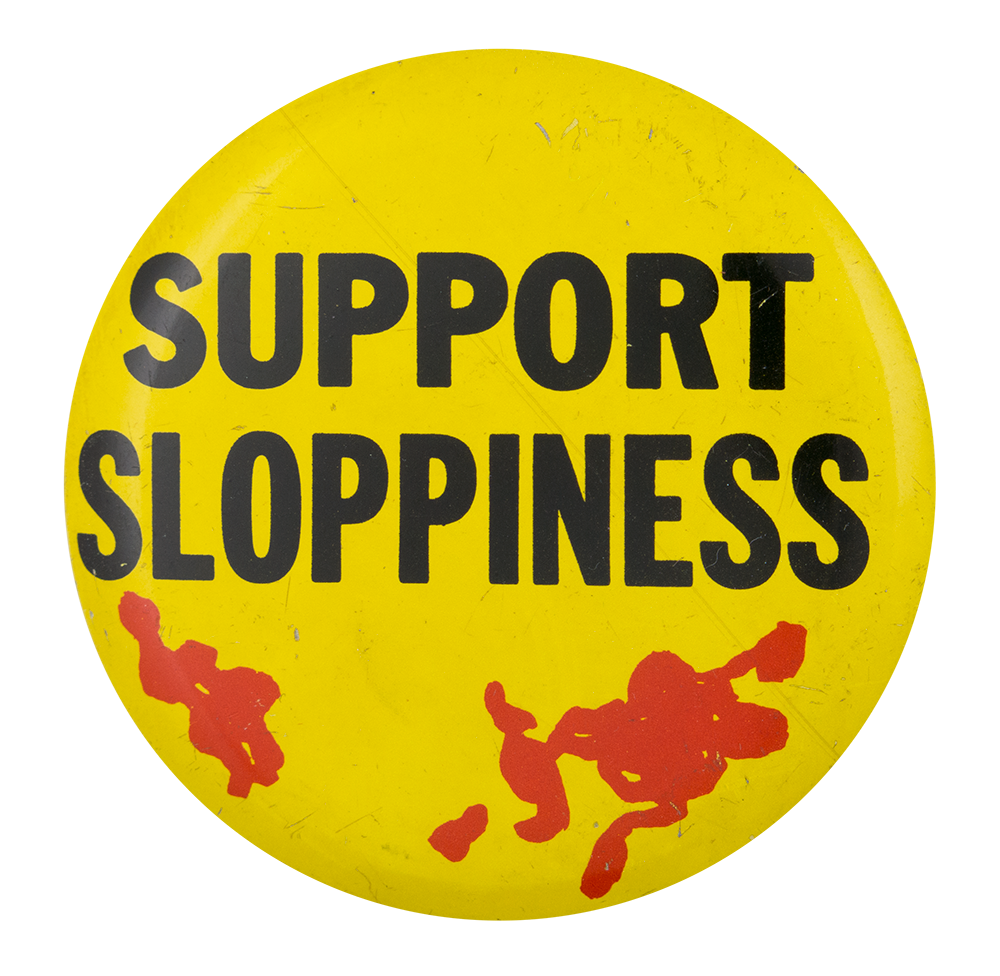
Text on Button SUPPORT SLOPPINESS
Image Description

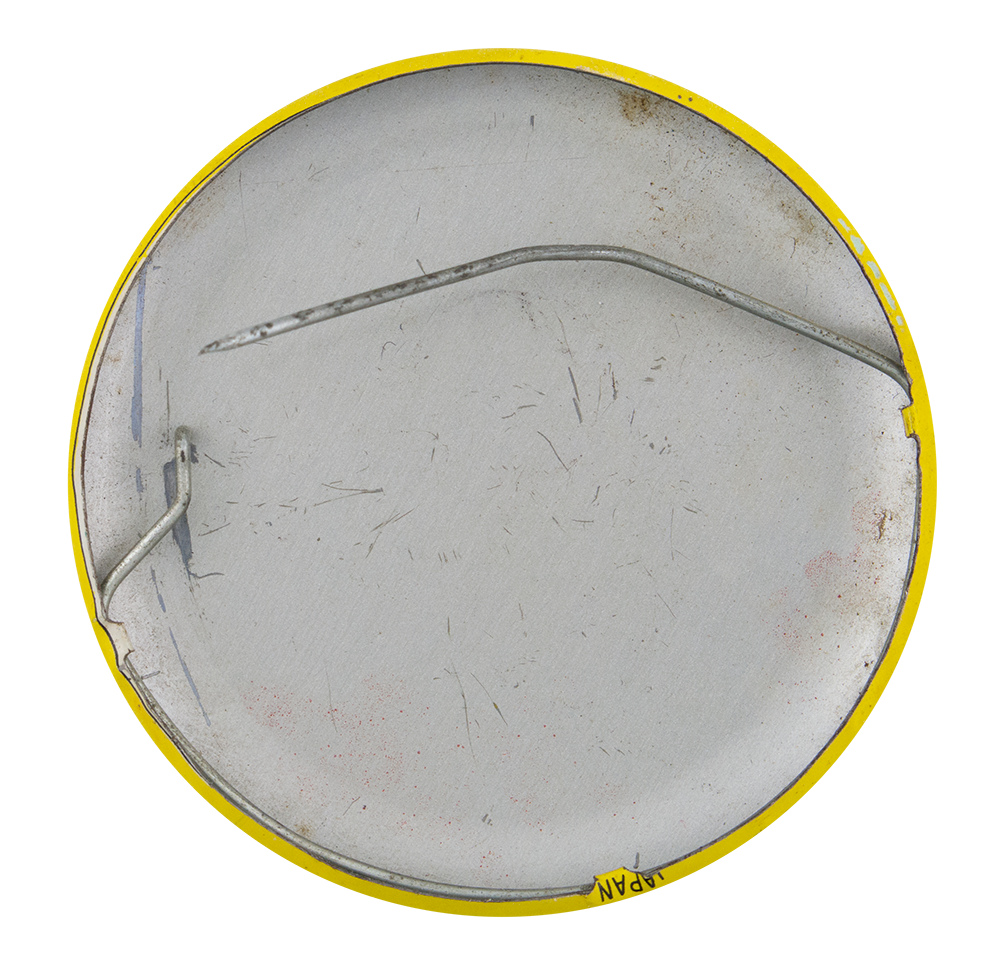
Red slop below black text over yellow background. 

Curl Text JAPAN
Back Style
The Shape
The Size
Year / Decade Made
The Manufacturer
Additional Information

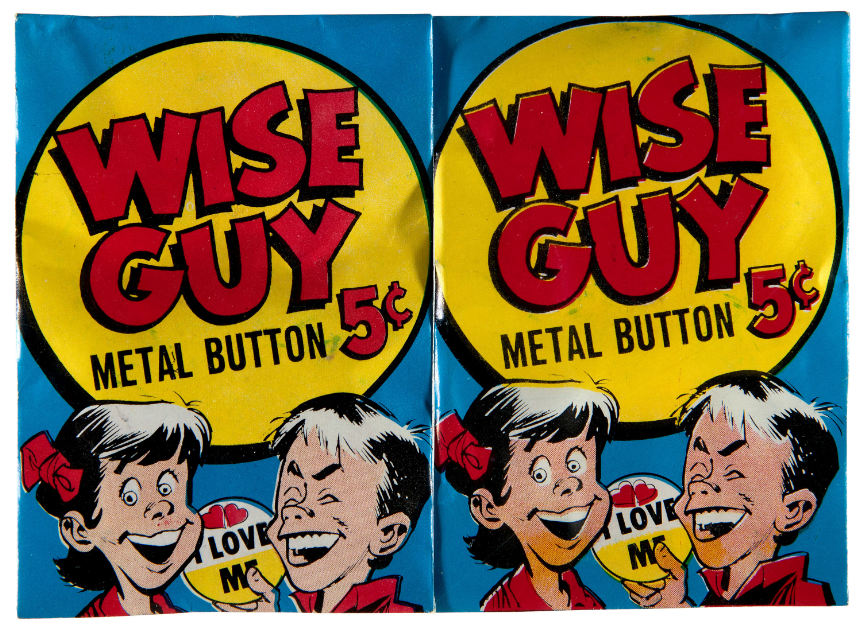
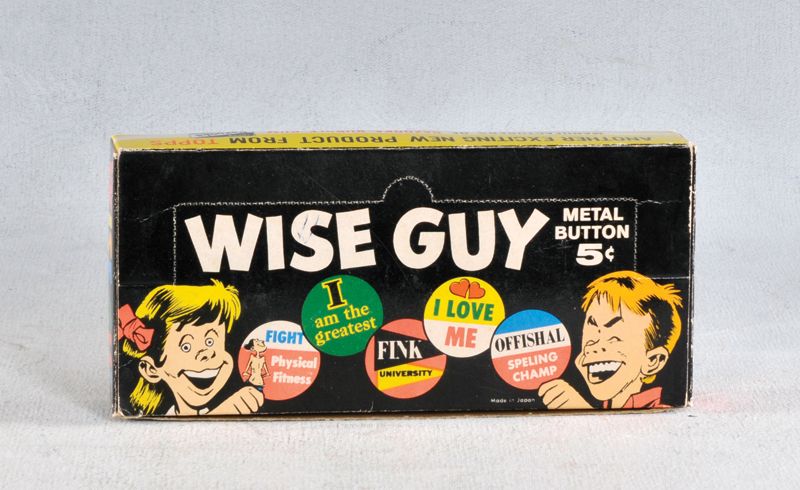
Topps, a company that is best known for sports memorabilia, produced "Wise Guy" pins during the 1960s that featured  satire/parody for novelty and humor.

Catalog ID HU0058

Superpimp

Category
Additional Images
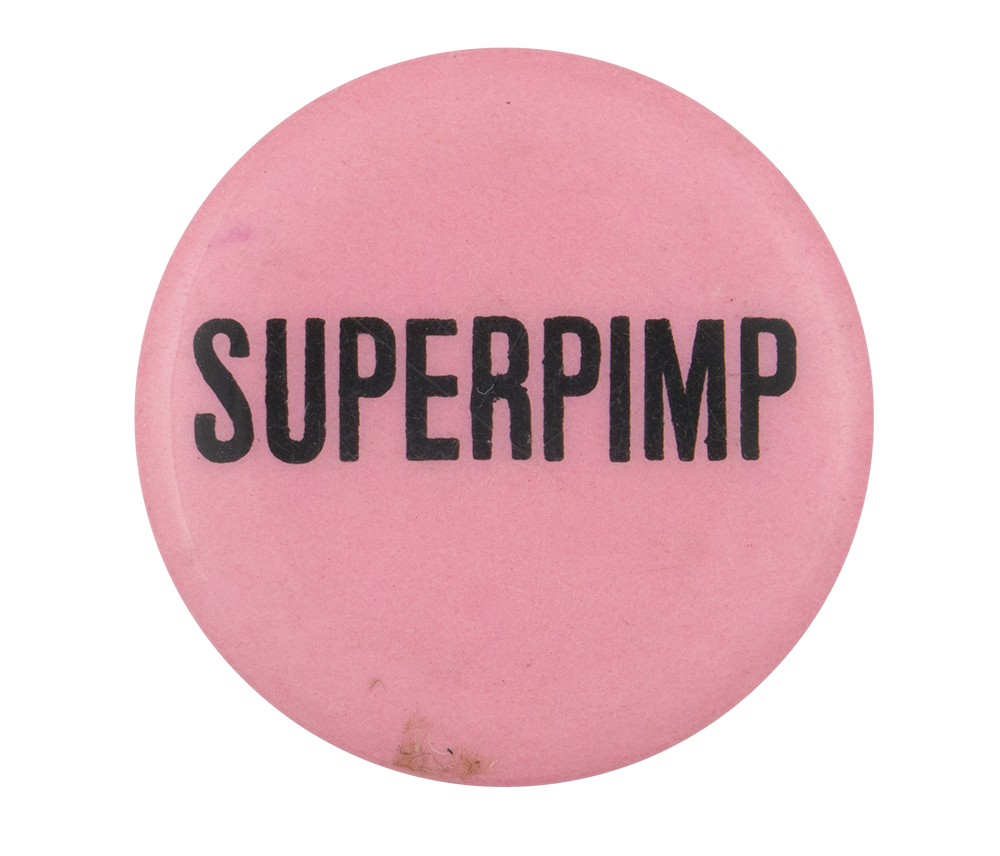
Text on Button SUPERPIMP
Image Description

Black text over pink background. 

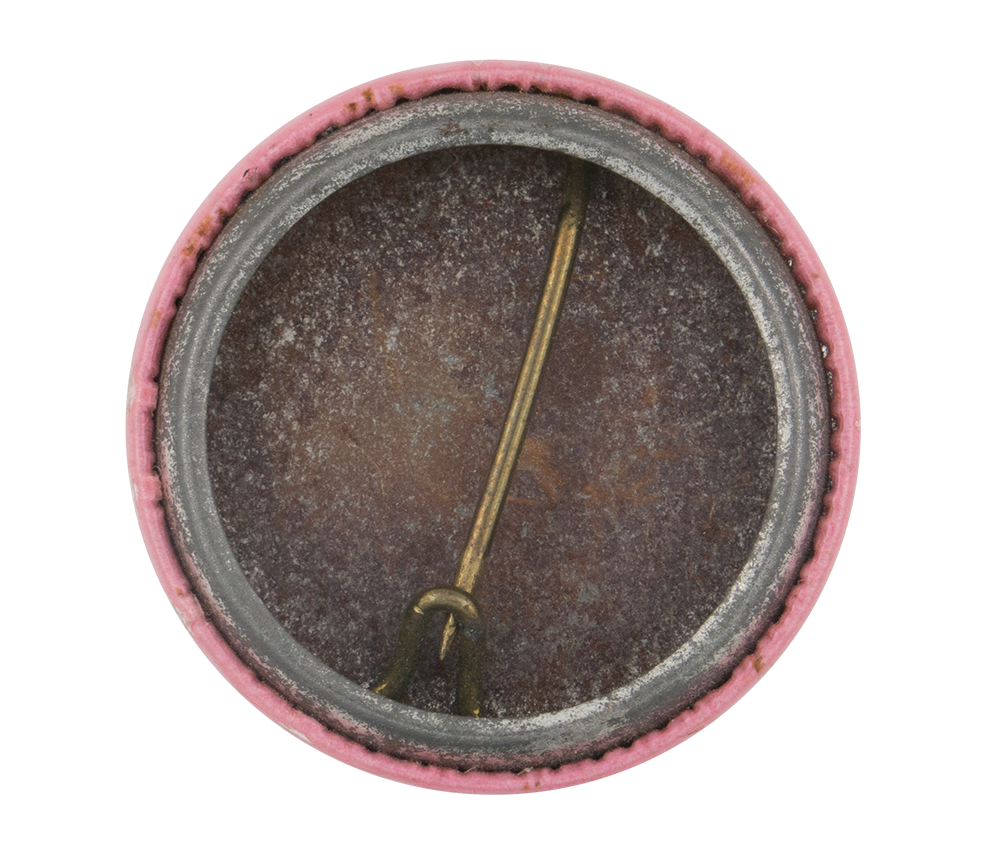
Back Style
The Shape
The Size
Additional Information

Have info on this button? Contact us here.

Catalog ID IB0431

Stop Your Kicking

Category
Additional Images
Sub Categories
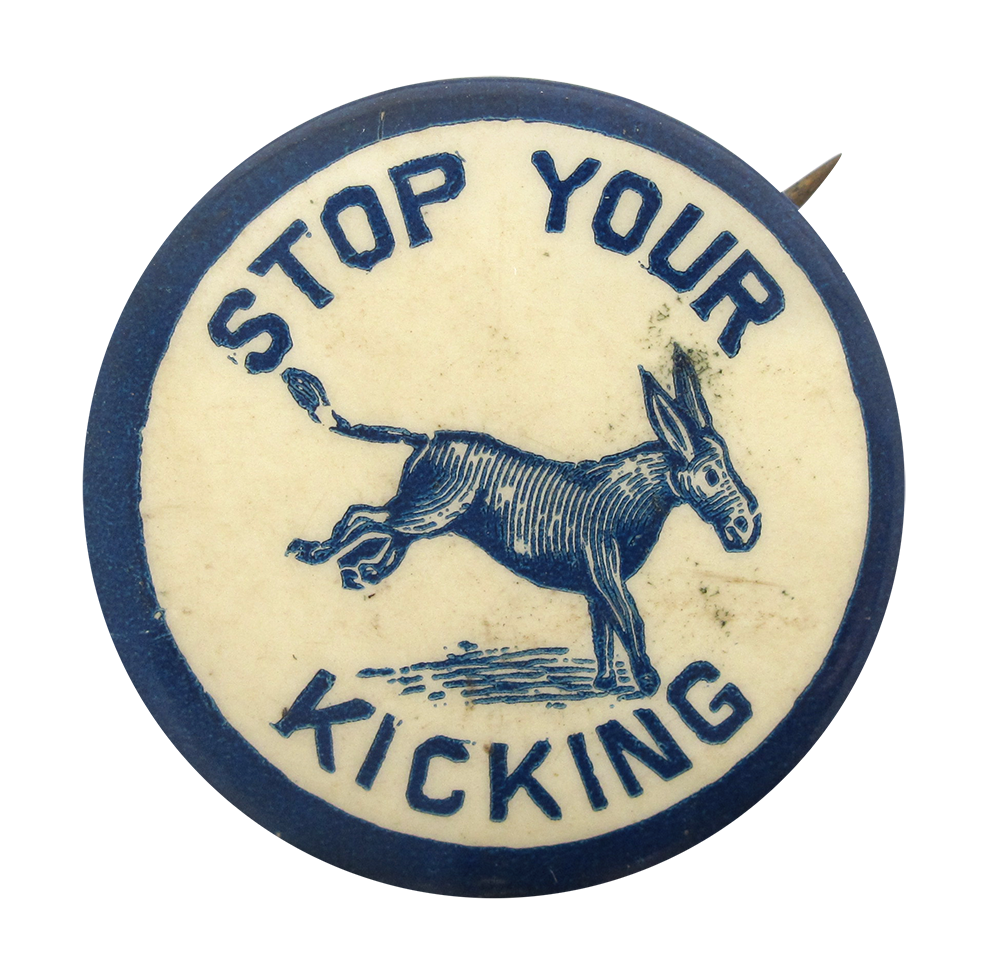
Text on Button STOP YOUR KICKING
Image Description

Kicking blue donkey between blue text encircled by blue outline over white background.

The Shape
The Size
The Manufacturer
Additional Information

The image of a donkey coupled with the written words implies the phrase, “Stop Your Ass Kicking.” Nathan Shure’s toy company, Cosmo Manufacturing Company, was founded in 1892 and was known for creating the trinkets found in Cracker Jack Boxes. In 1926, Cosmo Manufacturing Company bought the Dowst Brothers Company, which was famous for its tiny works created using metal (including buttons, cufflinks, and other metal accessories that were intended for promotional purposes). When Cosmo Manufacturing Company absorbed the Dowst Brothers Company, the name for the new combined business was Dowst Manufacturing Company. Although the Dowst Brothers Company was known for their metal items, any buttons that are labeled "Cosmo Manufacturing" were presumably made prior to 1926 when the companies merged and the name changed. In 1937, the repackaged board game “Monopoly” (which had first been released two years prior) included new metal tokens made by Dowst Manufacturing Company. Those token designs are still used in the classic edition of Monopoly today.

Sources

Strom, Stephanie. (1994). It's high noon for a big maker of toy guns. (Financial Desk). The New York Times, Oct 23, 1994.
Clayman, A. (2019). TootsieToy & the Dowst MFG Co., est. 1876. Retrieved June 10, 2020, from https://www.madeinchicagomuseum.com/single-post/dowst-mfg-co-tootsietoy/


Catalog ID IB0440