Out Of The Closets

Category
Additional Images
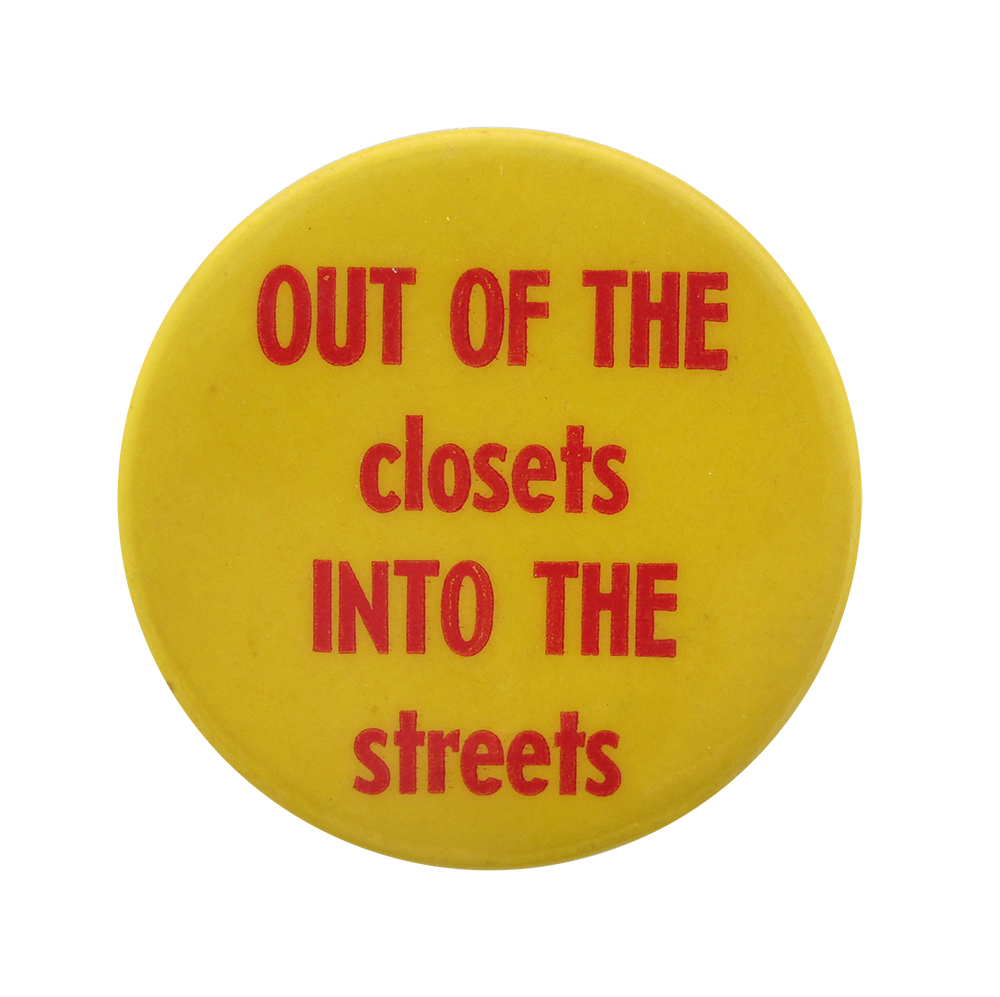
Text on Button OUT OF THE closets INTO THE STREETS
Image Description

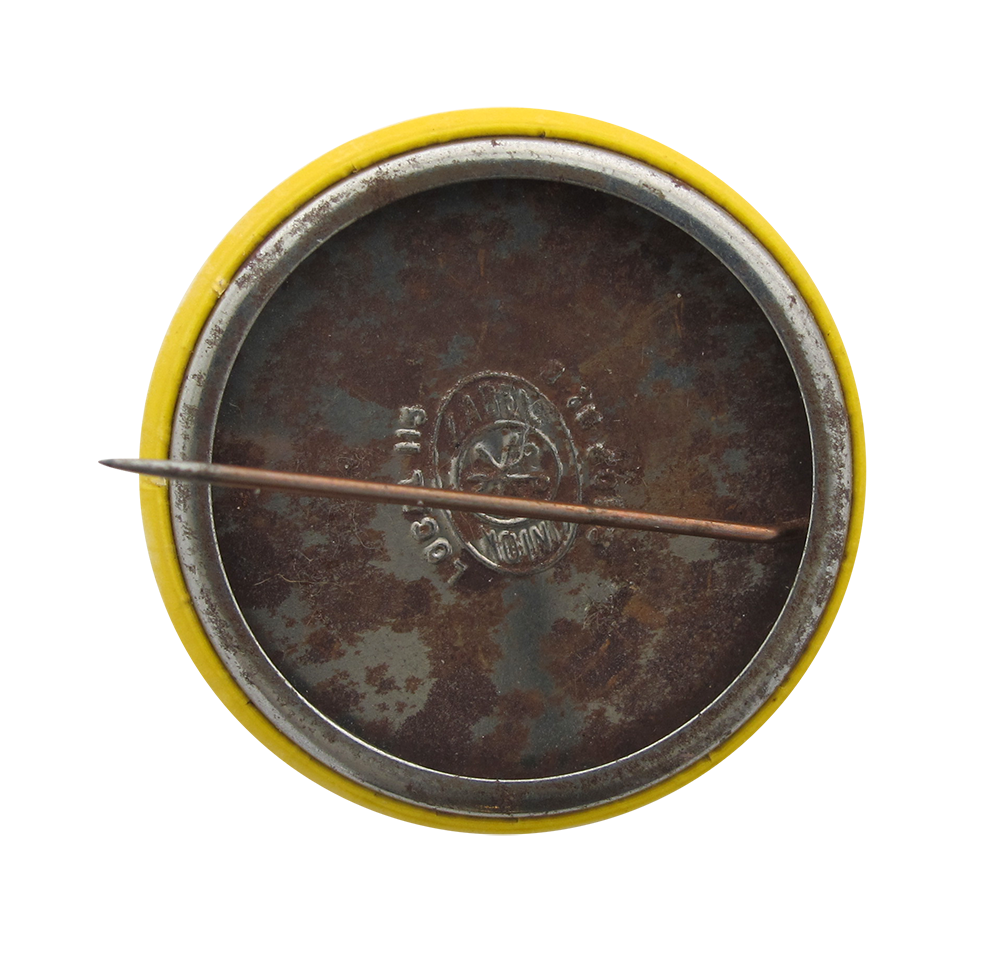
Red text of various sizes on a yellow background.

Back Paper / Back Info

Local No.
Union Label

Back Style
The Shape
The Size
Year / Decade Made
Additional Information

"Out of the closets and into the streets" was a slogan used by Queer Nation, an LGBTQ activist organization. Queer Nation was founded in March 1990 in New York City, by HIV/AIDS activists from ACT UP. The four founders were outraged at the escalation of anti-gay and lesbian violence on the streets and prejudice in the arts and media. The group is known for its confrontational tactics, its slogans, and for the practice of outing - the act of disclosing a gay, lesbian, bisexual or transgender person's sexual orientation or gender identity without that person's consent.

Catalog ID CA0109

No To Monsanto

Category
Additional Images
Sub Categories
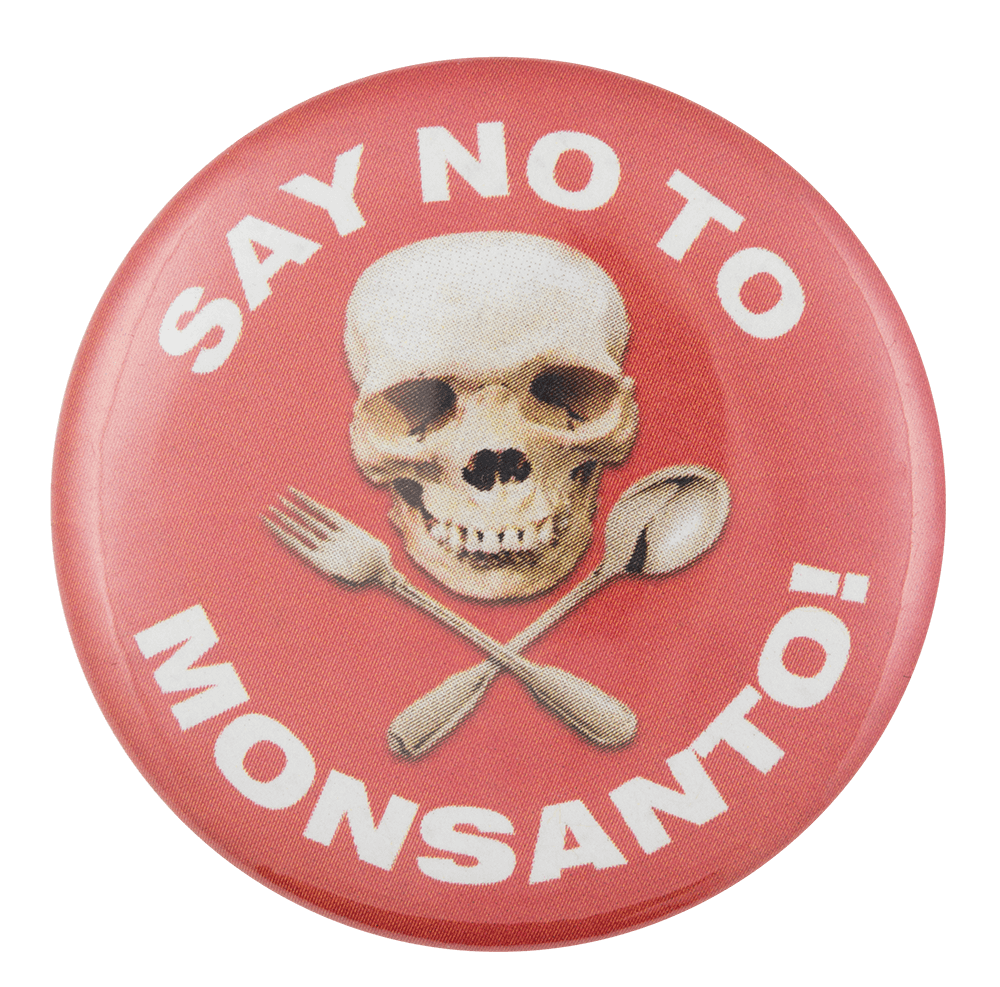
Text on Button SAY NO TO MONSANTO!
Image Description

An illustration of a skull and cross bones with the cross bones being a fork and a spoon. White text sit above and below the illustration and everything is set against a red background. 

Back Style
The Shape
The Size
Additional Information

Monsanto is a large corporation that had once produced chemicals such as Agent Orange and PCBS. Monsanto was referred to as a “corporate scoundrel” in a 2002 article on the Greenpeace website. Now Monsanto is producing herbicides and GMOs. The herbicides and GMOs that are used on corn, wheat, soybeans, and pigs are dangerous to the environment and to the health of human beings. Monsanto also has GM patents, which make it illegal for farmers to replant seeds from the former year’s crops. Greenpeace is staunchly against Monsanto and has expressed that genetically engineered crops produced by Monsanto has been perceived as a “diabolical plan of global food take over.”

However Monsanto has maintained their position as an advocate for sustainable agriculture, and their goal is to protect and preserve the environment while meeting the needs of a growing population. They seek to produce more crops through bioengineering, advanced plant breeding, and using less resources such as water and energy in the process. 

Catalog ID CA0096

New Mobilization Committee

Category
Additional Images
Sub Categories
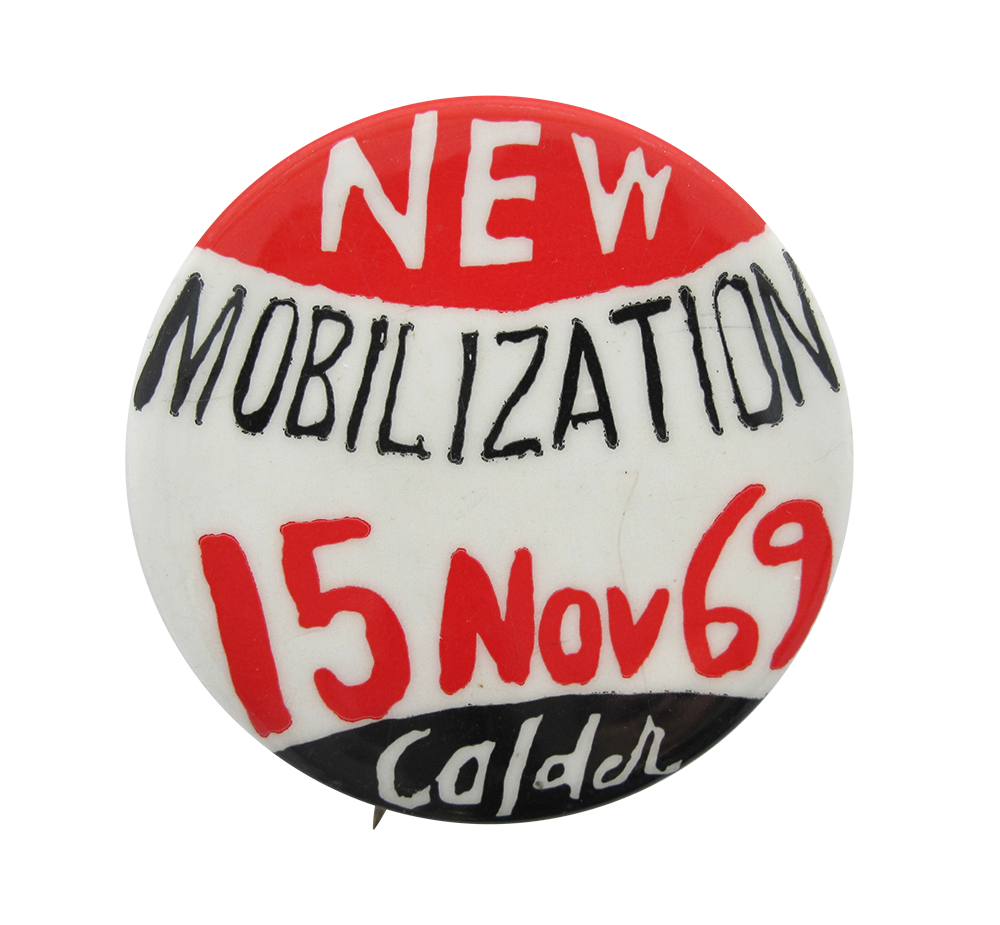
Text on Button NEW MOBILIZATION 15 NOV 69 Calder
Image Description

Composed of three sections: The top section is white text on a red background, the middle section is black and red text on a white background, and the bottom section is white text on a black background. 

Curl Text NEW MOBILIZATION COMM 1969
Back Style
The Shape
The Size
Year / Decade Made
Additional Information

New Mobilization Committee to End the War in Vietnam (New Mobe) was inspired by the similarly named National Mobilization Committee to End the War in Vietnam. New Mobe was founded at a conference at Case Western Reserve University in July 1969, and, together with the Vietnam Moratorium Committee and the Student Mobilization Committee, organized the October 15, 1969 Moratorium to End the War in Vietnam which resulted in large demonstrations against the Vietnam War held nationwide. The groups then organized another large demonstration in Washington, D.C. to occur a month later, on November 15, 1969.

Catalog ID CA0111

Mickey Rat

Category
Additional Images
Sub Categories
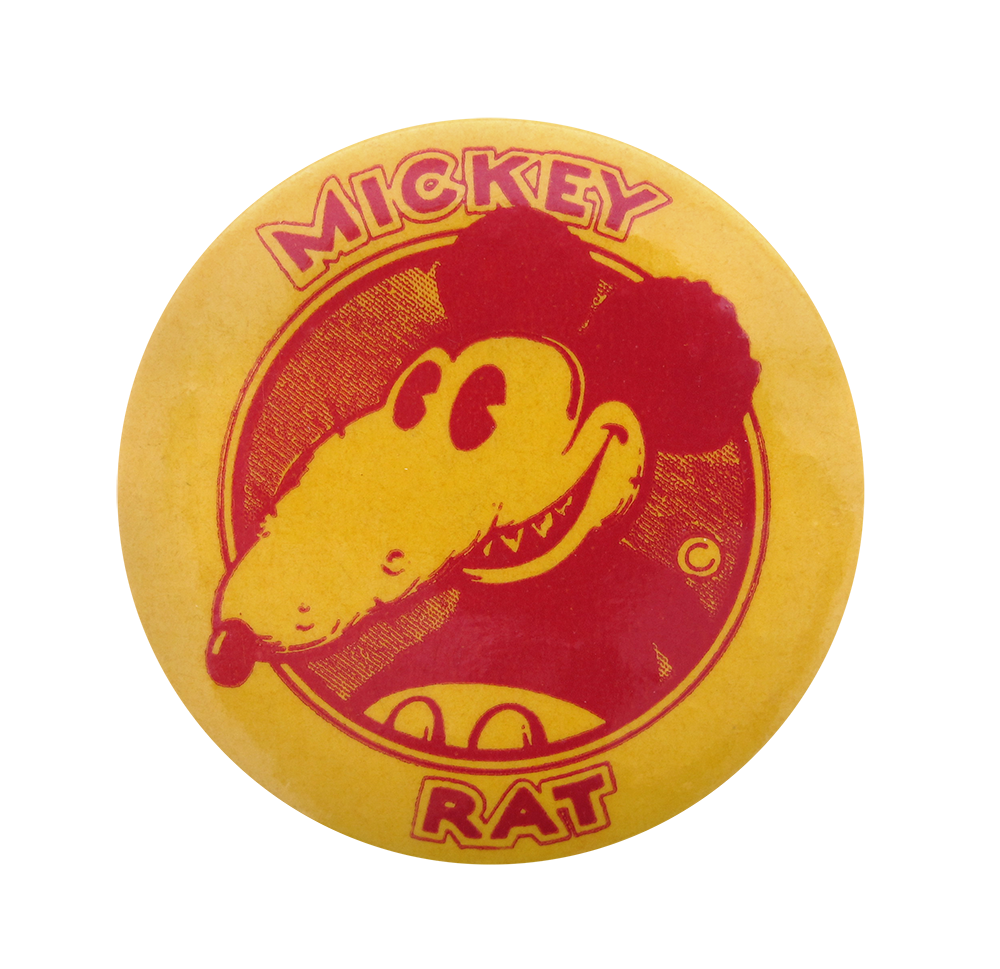
Text on Button MICKEY RAT
Image Description

A illustration of Mickey Rat, a parody of Mickey Mouse inside a circle with a red background. The circle sits on a yellow background. 

Back Style
The Shape
The Size
Additional Information

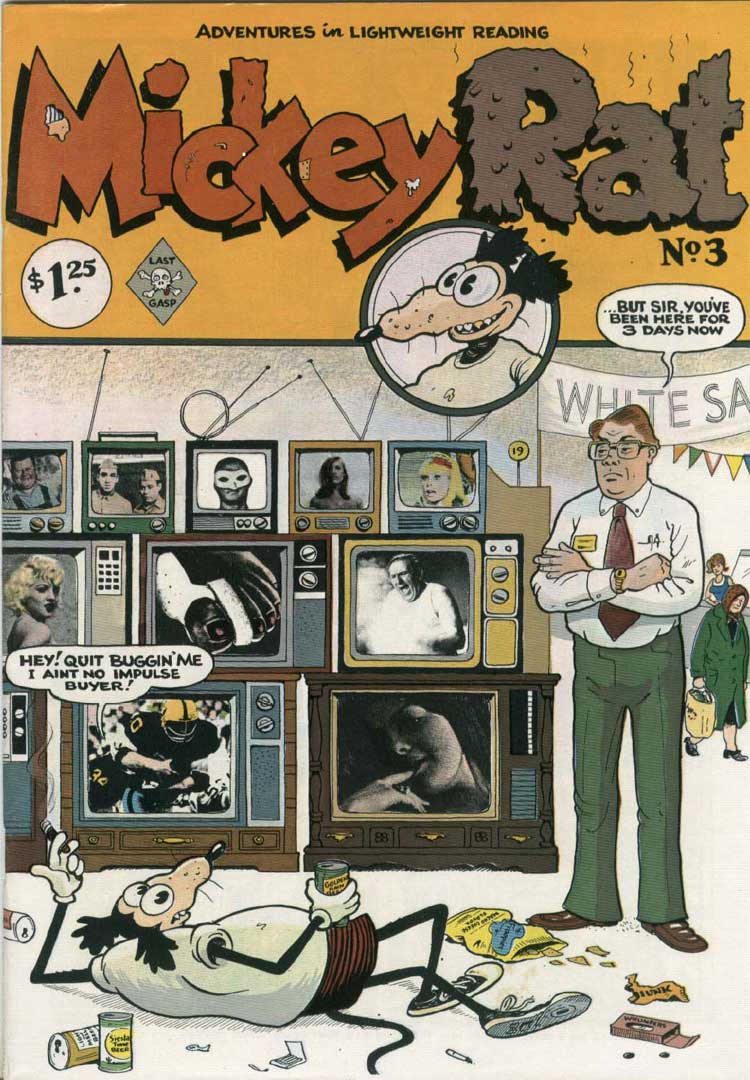
Cartoonist Robert Armstrong created Mickey Rat initially as an image to use on T-Shirts. The image was so popular that Armstrong eventually branched out from T-Shirts to comics. Mickey Rat appeared in L.A. Comics #1 in December 1971. The comics were drawn by Armstrong but were scripted by Chester C. Crill. Mickey Rat was not only drawn crudely, he was also portrayed as sleazy, opportunistic, shallow, and incapable of subtlety. Kitchen Sink Press put out the second issue of the comic in which Armstrong drew and scripted the cartoon. The third and fourth issues of the comic were put out in 1980 and 1982 by Last Gasp Eco-Funnies.

Catalog ID AR0153

Health and Welfare Canada

Category
Additional Images
Sub Categories
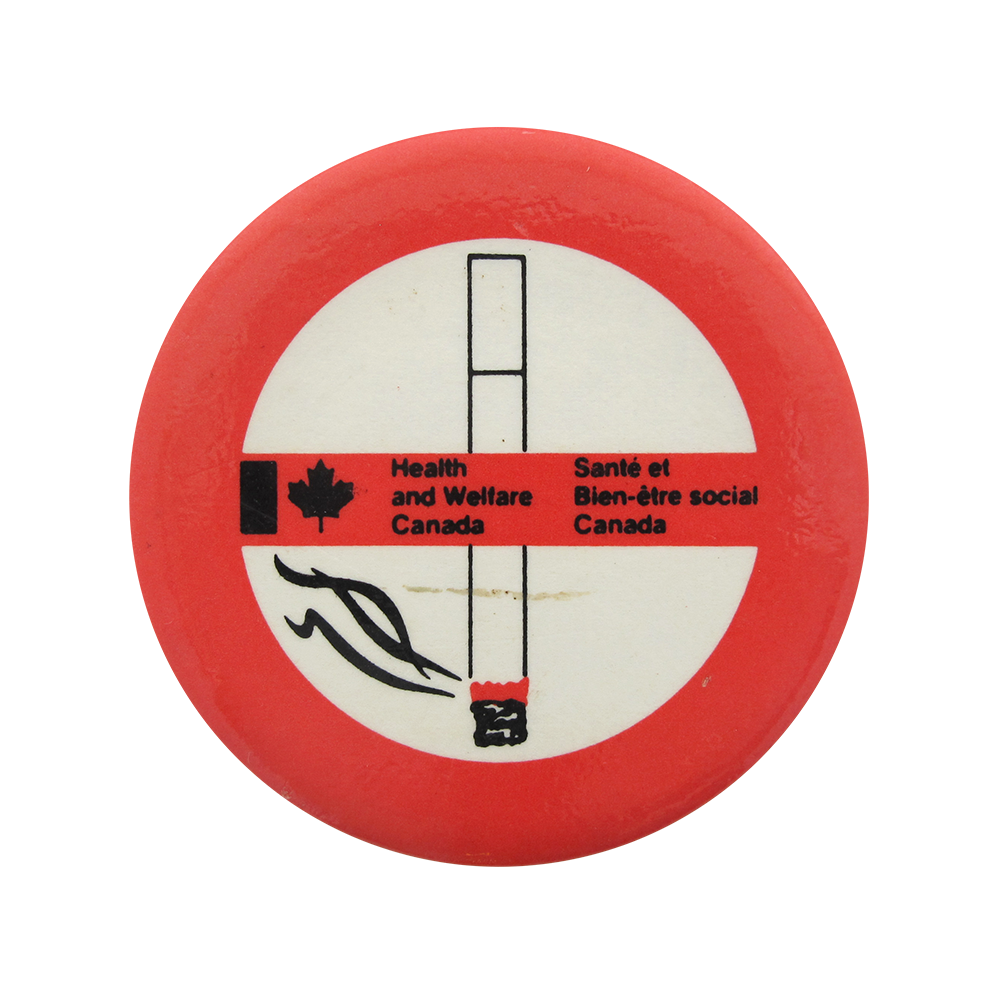
Text on Button Health and Welfare Canada Sante' et Bien-etre Social Canada
Image Description

An illustration of a lit cigarette pointing downwards with large red line going through it. The line has black text inside it and it and the cigarette sit inside a white circle. The white circle is surrounded by a red ring. 

Curl Text Has Novelties-Toronto. Canada-863-1190
Back Style
The Shape
The Size
Year / Decade Made
The Manufacturer
Additional Information

In 1954, the tobacco companies gave the Canadian Department of Health and Welfare money to conduct a study between the links of cancer and tobacco use. The results of the study were not made public until 1963, when the Canadian government began to restrict tobacco sales. The reticence was a deliberate decision made between the Canadian government and the food and drug industries. The findings linked cancer with tobacco use but were deemed controversial and said to not provide enough scientific evidence. The controversy continued until the early 1980s, when other scientific studies began to find a link as well. By the mid-1980s, there was enough support in Parliament for the Non-Smokers’ Health Act, which went into effect in 1988. The act banned tobacco advertising and tobacco use at government facilities. It is likely that this button depicts the emerging anti-tobacco campaign of the 1980s.

Sources

Collishaw, N. (2009). History of tobacco control in Canada. Ottawa: Physicians for a Smoke-Free Canada. Retrieved October 25, 2014, from http://www.smoke-free.ca/pdf_1/2009/History%20of%20tobacco%20control%20….

Catalog ID CA0125

Employment For Labor Brown

Category
Additional Images
Sub Categories
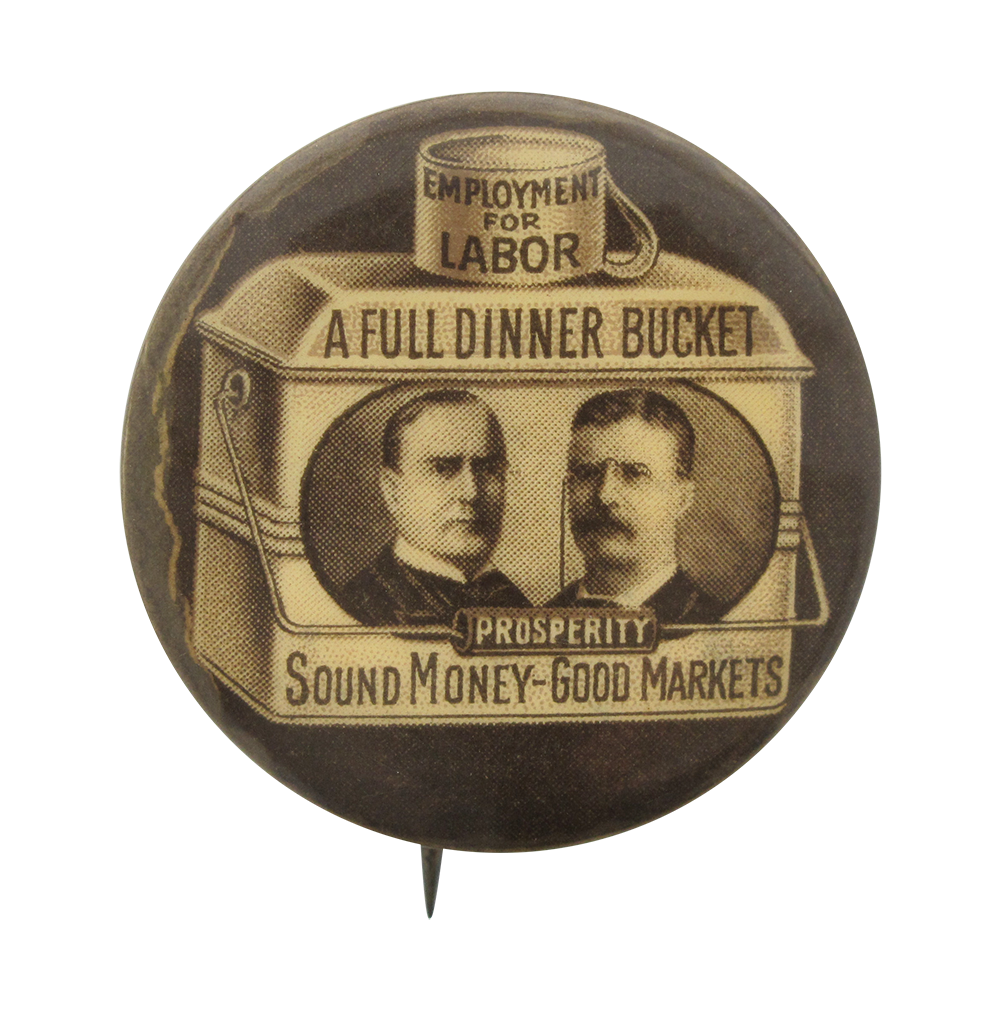
Text on Button EMPLOYMENT FOR LABOR A FULL DINNER BUCKET PROSPERITY SOUND MONEY - GOOD MARKETS
Image Description

A lunch pail featuring the faces of William McKinley and Theodore Roosevelt. The entire button is sepia-tone.

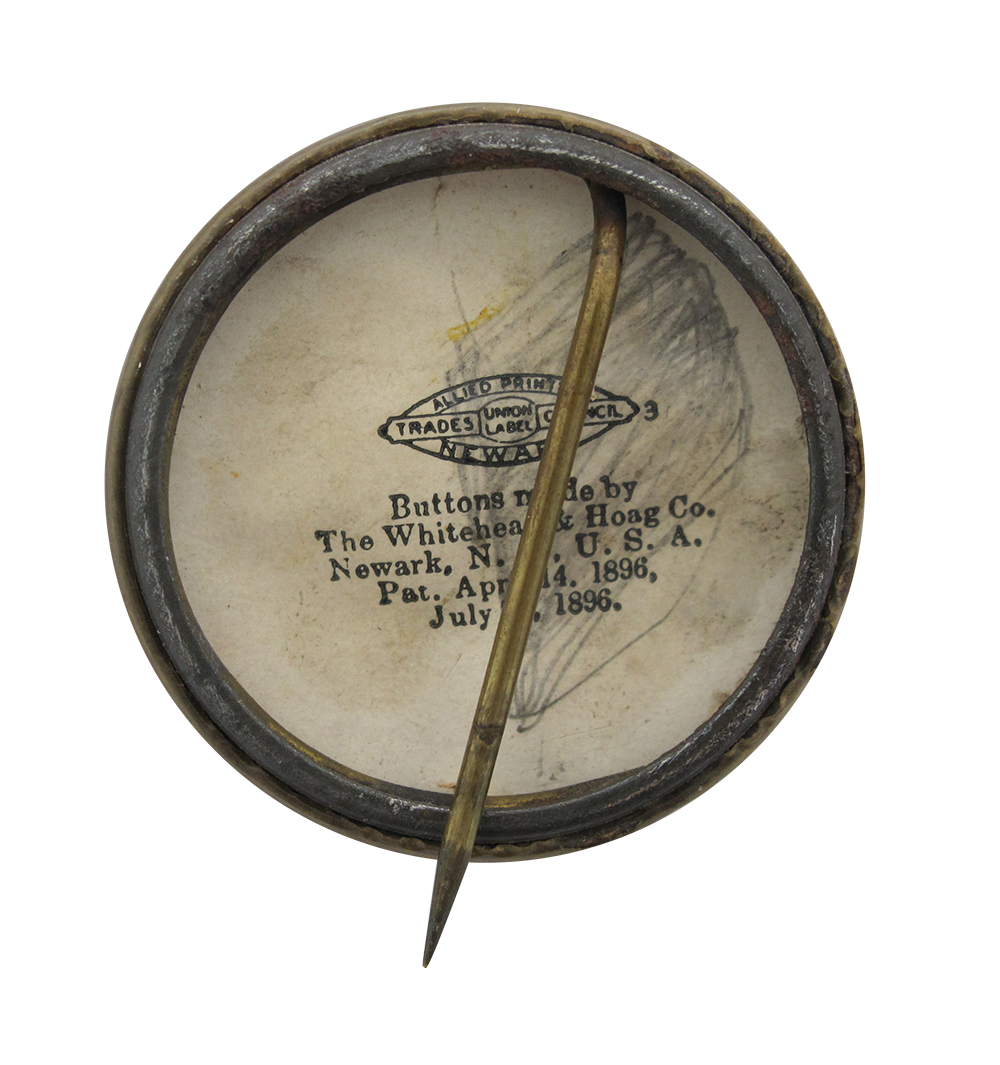
Back Paper / Back Info


BUTTONS MADE BY THE WHITEHEAD & HOAG CO.
NEWARK, N.J., U.S.A.
PAT. APRIL 14, 1896
July 21, 1896


Back Style
The Shape
The Size
Year / Decade Made
The Manufacturer
Additional Information

This button is a political campaign button from the 1900 United States presidential election. The two men featured are Republican Presidential candidate William McKinley and his vice-presidental running mate and future president, Theodore Roosevelt. In the 1900 election, Republicans strongly appealed to industrial workers as they represented the North. Other candidates such as the Populist Democrat William Jennings Bryan and the Socialist candidate Eugene V. Debbs also made industrial workers a pillar of their campaigns.

Sound money, labor employment, and food were all key components of McKinley's re-election campaign. McKinley had a strong following having led the nation out of a economic depression and to victory in the Spanish-American war. While he would defeat Bryan, his second term would be short. In 1901 he was assassinated by Leon Czolgosz and succeed by his vice-president, Roosevelt. The dominance of the Republican party would continue for years until a divide between Roosevelt and William Howard Taft would allowed Woodrow Wilson to win the presidency.

Catalog ID CA0099

Equality For Women

Category
Additional Images
Sub Categories
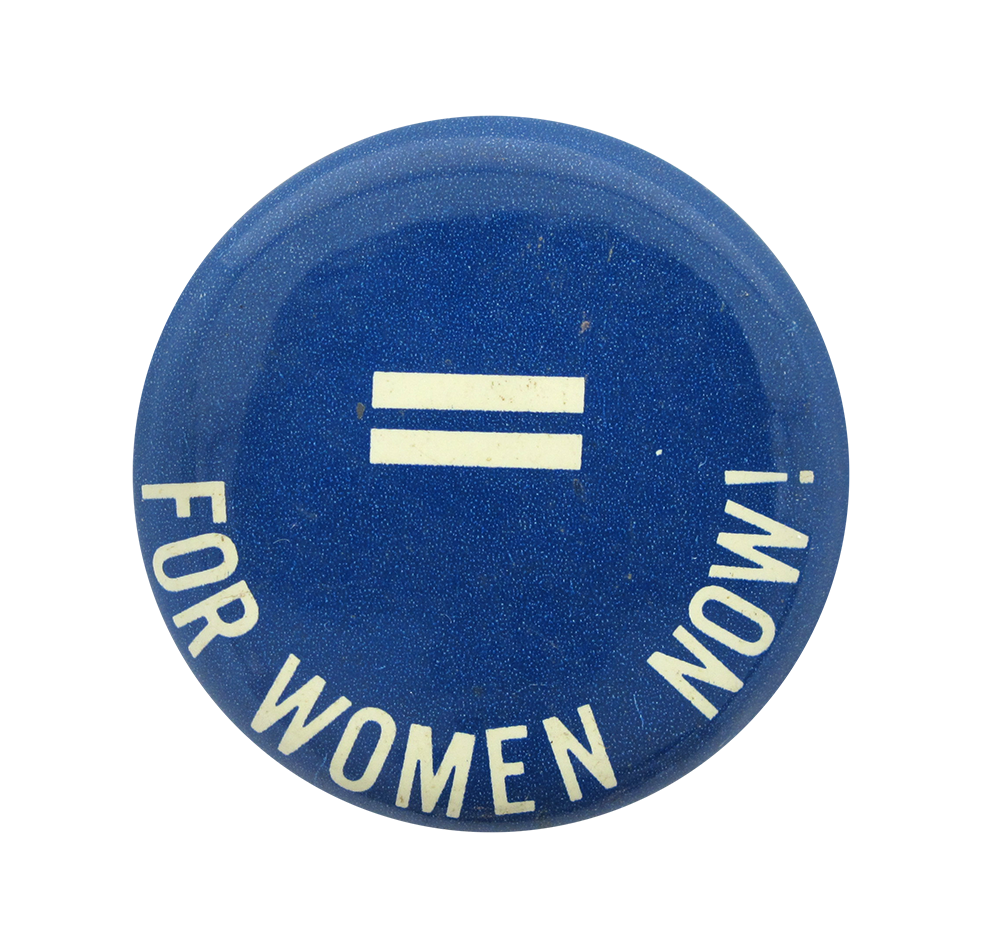
Text on Button = FOR WOMEN NOW
Image Description

A white equal sign with curved white text below it on a blue background. 

Back Style
The Shape
The Size
Year / Decade Made
Additional Information

It is likely that this button dates from the Equal Rights Amendment (ERA) debates in the 1970s. The ERA was an attempt to constitutionally ensure equal rights to women. The 1970s effort for an ERA was not new; it was first brought to Congress in the 1920s. However, it was the first time the amendment had passed both the House and the Senate. The passing vote occurred in 1972, and the states were given seven years to ratify the amendment. The amendment fell short of ratification by three states in 1977 and five states rescinded their ratification by the 1979 deadline.

Catalog ID CA0113

Effete Snob For Peace

Category
Additional Images
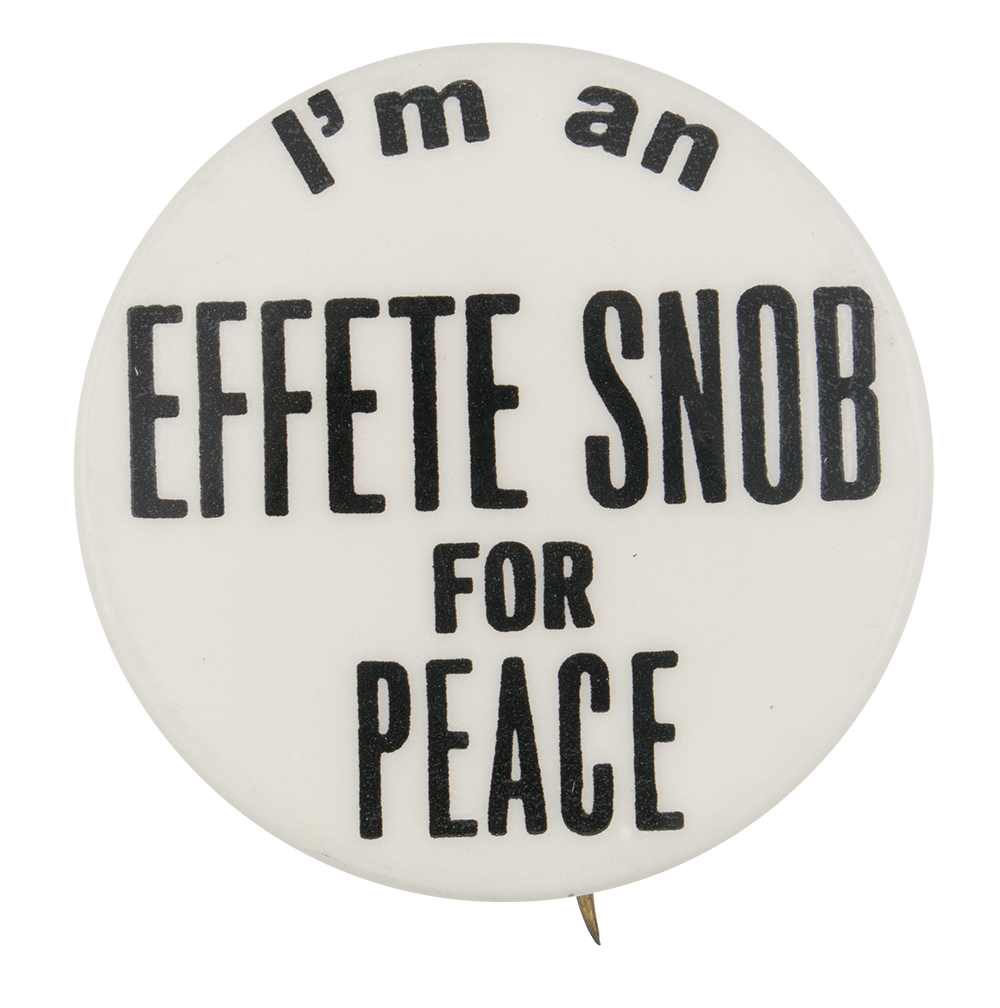
Text on Button I'm an EFFETE SNOB FOR PEACE
Image Description

Black text of various sizes on a white background. 

Back Style
The Shape
The Size
Additional Information

This button refers to a statement made by Spiro Agnew, Richard Nixon’s Vice President. The statement was about anti-war protestors he called “an effete corps of impudent snobs who characterize themselves as intellectuals”.  The button was most likely worn by anti-Vietnam War activists. 

Catalog ID CA0116

Buyer's Rights

Category
Additional Images
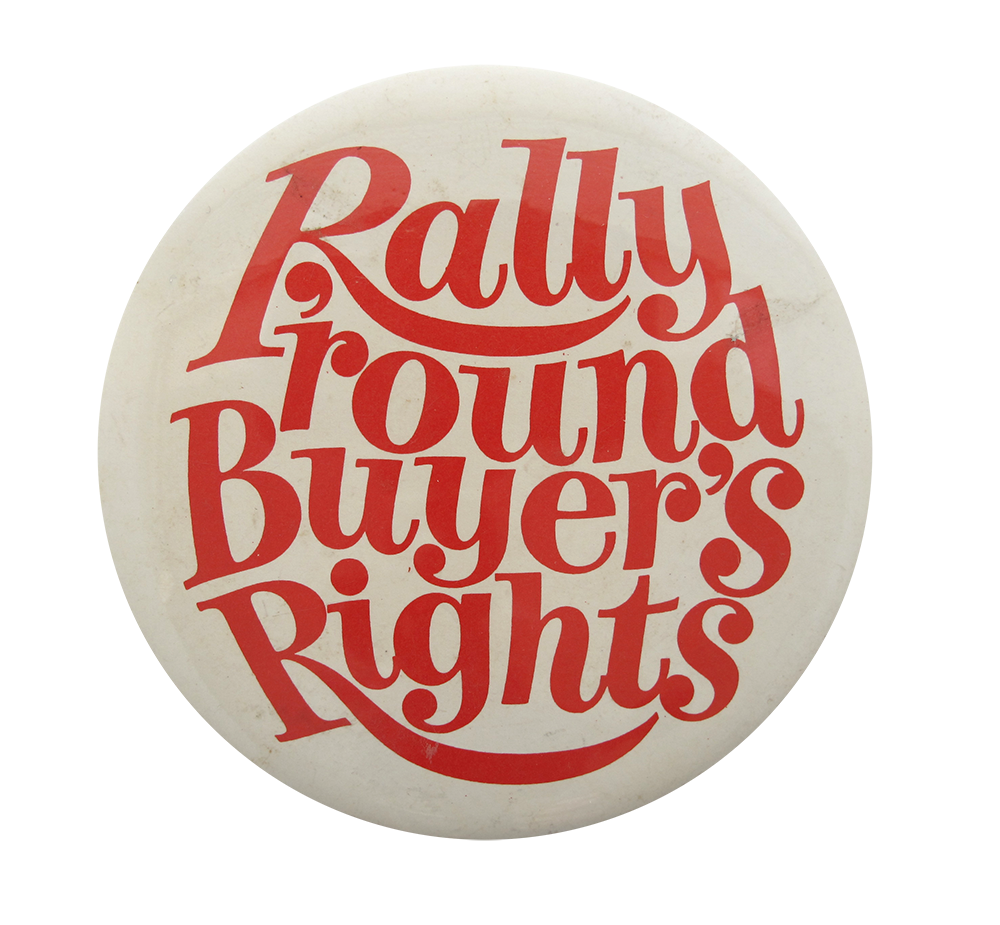
Text on Button Rally round Buyer's Rights
Image Description

Large curved ted text on a white background. 

Back Style
The Shape
The Size
Additional Information

The origin of this button is unknown, however the term “buyer’s rights” is often associated with real estate transactions. When buying a new home, purchasers have certain rights including full disclosure of all property information, review of all documentation, choice in financial lenders and inspection services, and the right to purchase without discrimination.

Catalog ID CA0107

Employment For Labor Blue

Category
Additional Images
Sub Categories
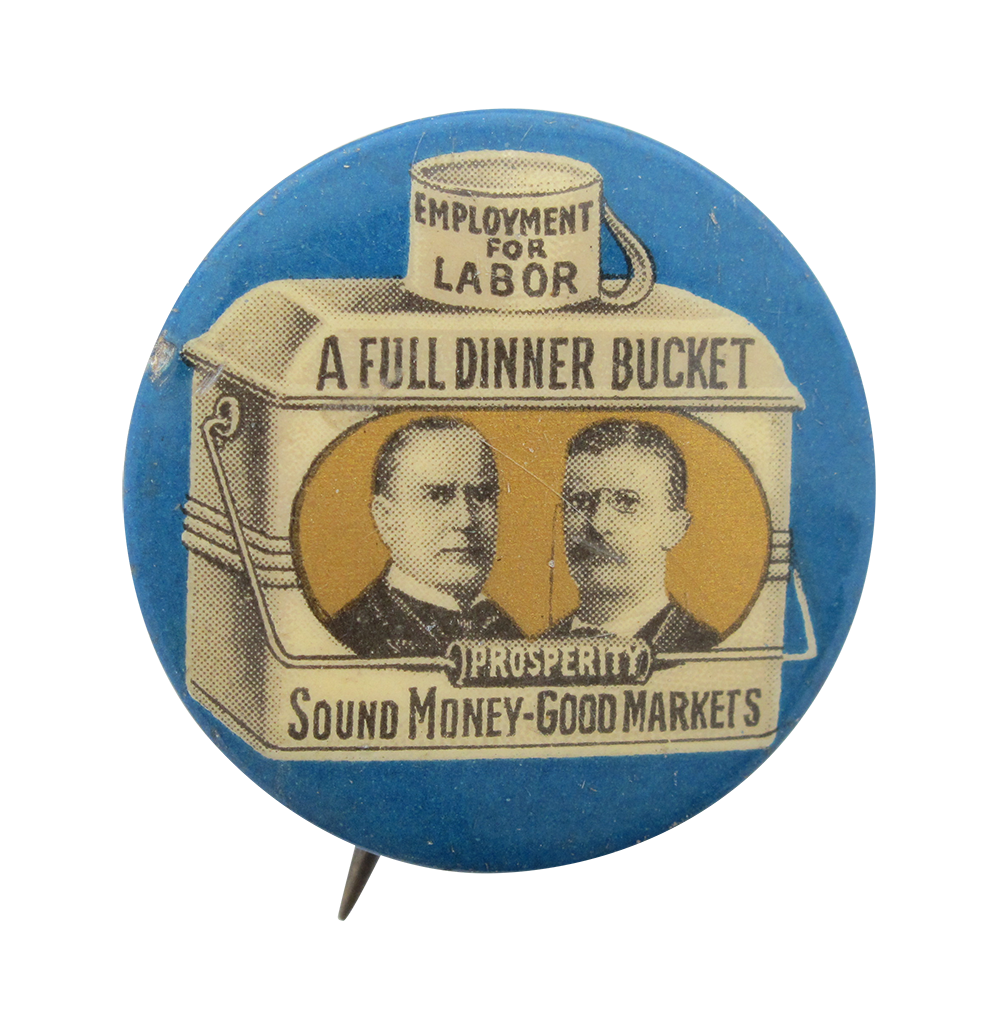
Text on Button EMPLOYMENT FOR LABOR A FULL DINNER BUCKET PROSPERITY SOUND MONEY - GOOD MARKETS
Image Description

A lunch pail featuring slogans and the face of William McKinley and Theodore Roosevelt. The background of the button is blue.

Back Paper / Back Info

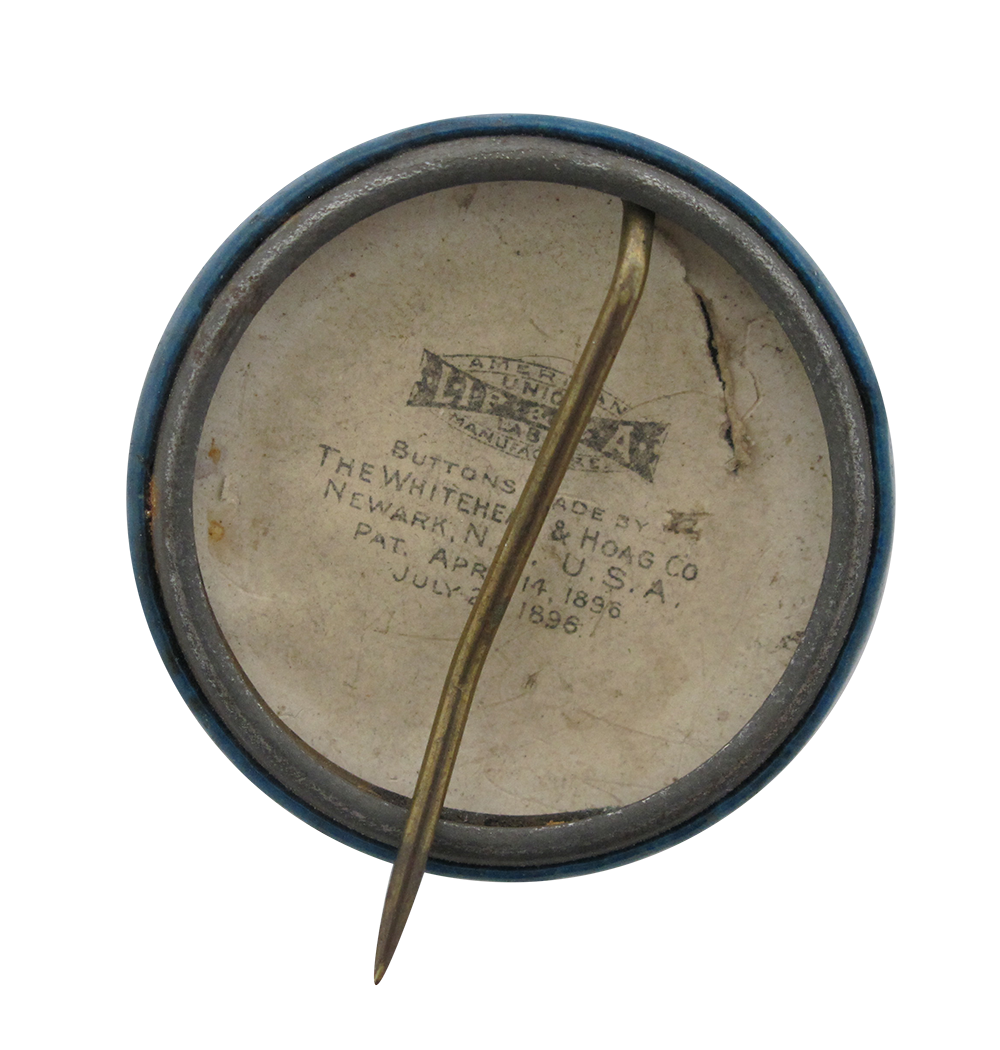
BUTTONS MADE BY THE WHITEHEAD & HOAG CO.
NEWARK, N.J., U.S.A.
PAT. APRIL 14, 1896
July 21, 1896

Back Style
The Shape
The Size
Year / Decade Made
The Manufacturer
Additional Information

This button is a political campaign button from the 1900 United States presidential election. The two men featured are Republican Presidential candidate William McKinley and his vice-presidental running mate and future president, Theodore Roosevelt. In the 1900 election, Republicans strongly appealed to industrial workers as they represented the North. Other candidates such as the Populist Democrat William Jennings Bryan and the Socialist candidate Eugene V. Debbs also made industrial workers a pillar of their campaigns.

Sound money, labor employment, and food were all key components of McKinley's re-election campaign. McKinley had a strong following having led the nation out of a economic depression and to victory in the Spanish-American war. While he would defeat Bryan, his second term would be short. In 1901 he was assassinated by Leon Czolgosz and succeed by his vice-president, Roosevelt. The dominance of the Republican party would continue for years until a divide between Roosevelt and William Howard Taft would allowed Woodrow Wilson to win the presidency.

Catalog ID CA0100