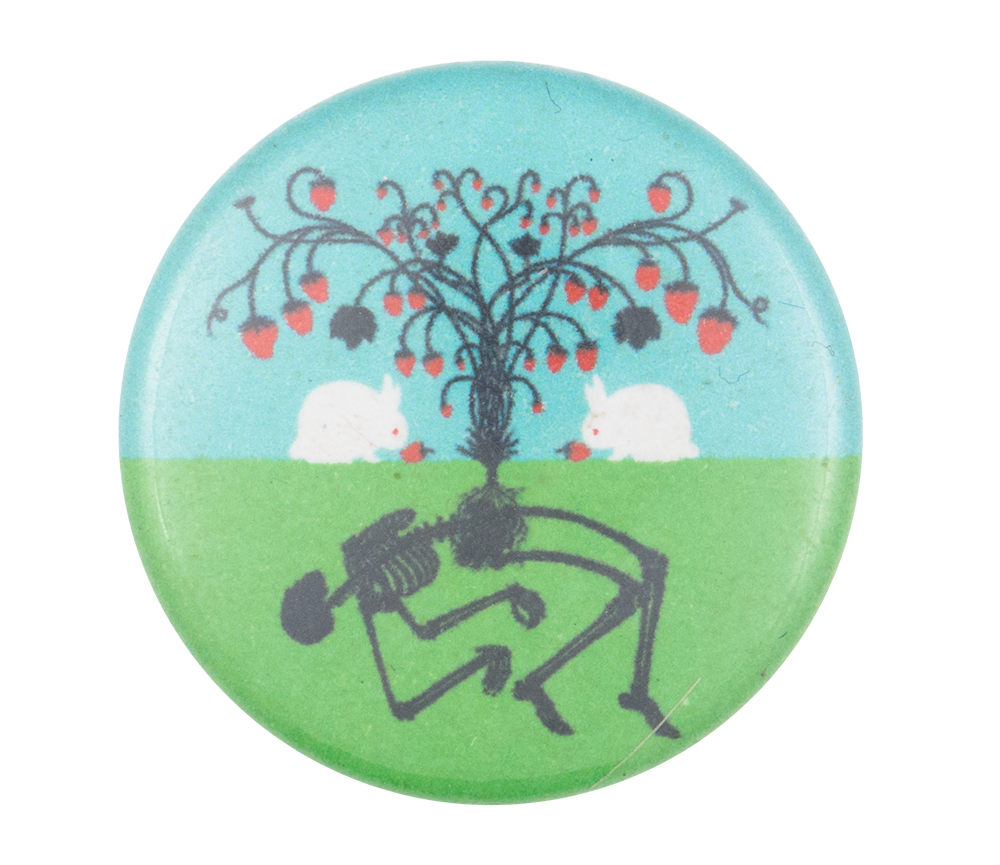
Dan McCarthy Taking

Category
Additional Images
Sub Categories
Image Description

Illustration of a black tree with spiraling branches, black leaves, and red berries. There is a black skeleton forming the roots of the tree and two white rabbits eating from the green grass below the tree. The background is a blue sky.

Back Style
The Shape
The Size
Year / Decade Made
Additional Information

The image on this button, which explores the cyclical nature of life and death, began its life in 2004 as an oil painting named Taking. The artist, Dan McCarthy of Pocassett, Massachusetts, created a five color screen print of Taking the following year, which eventually lead to the creation of this button. In addition to themes of life, death, and rebirth, McCarthy’s work also explores the relationship between nature and technology. A man of multiple talents, McCarthy is both a visual artist (working in design, screen printing, drawing, and painting) and a musician.

Catalog ID AR0133

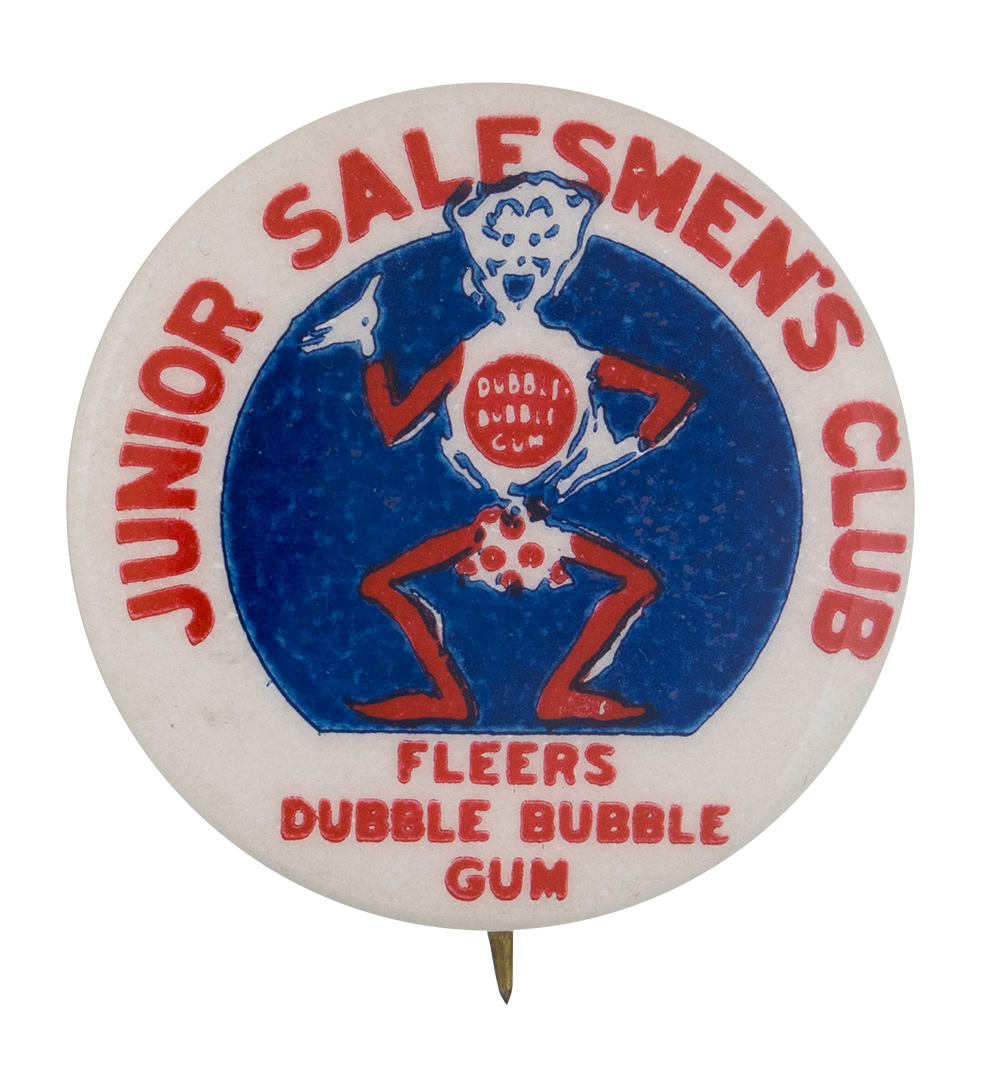
Fleers Dubble Bubble Gum Junior Salesmen's Club

Category
Additional Images
Sub Categories
Text on Button JUNIOR SALESMEN'S CLUB FLEERS DUBBLE BUBBLE GUM
Image Description

The middle of the button contains an illustration of a red, white, and blue wrapped piece of bubble gum with arms, legs, and a face on a blue background. Around this is red text on a white background.

Curl Text PHILADELPHIA BADGE CO. PHILA. PA
Back Style
The Shape
The Size
Year / Decade Made
The Manufacturer
Additional Information

Dubble Bubble is a brand of pink-colored bubble gum invented in 1928 by Walter Diemer, who worked at Fleer Chewing Gum Company. Fleer Chewing Gum Company, based in Philadelphia, had been searching for years to produce a formula that allowed bubbles to be blown that did not stick. In 1928, Walter Diemer was testing new gum recipes, he noticed that his product was less sticky than regular chewing gum, and after testing it he found that he could create bubbles easily. After a year of attempts he made the first successful batch of bubble gum. But the next morning when trying to recreate his successful concoction, he failed to reproduce the same results. After four months of trying to mimic his first success he finally made a 300 pound batch of what would become Dubble Bubble. The only food coloring available at the factory was pink, so Diemer had no choice but to use it, and the color would go on to become the standard for gum.

Catalog ID CL0216

Jockey Underwear

Category
Additional Images
Sub Categories
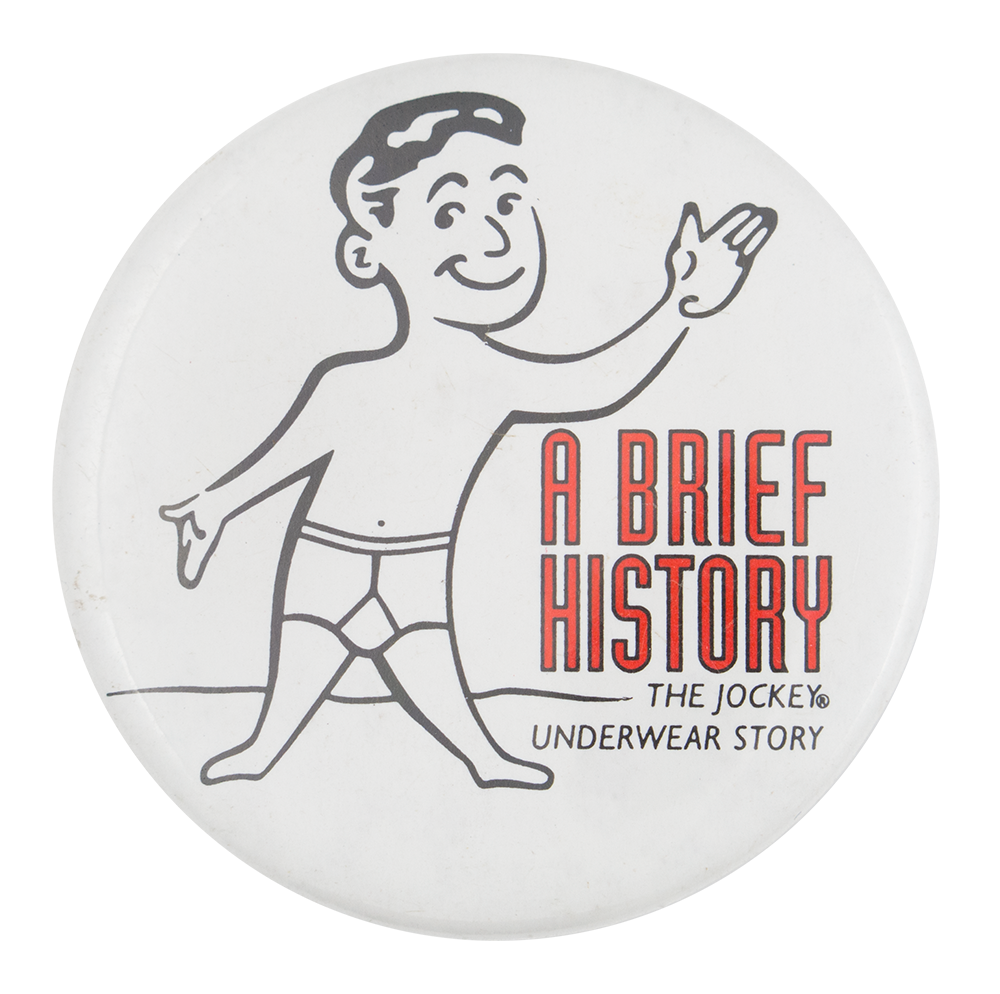
Text on Button A BRIEF HISTORY THE JOCKEY UNDERWEAR STORY
Image Description

An illustration of a man wearing jockey brief underwear is standing, smiling, and waving his left hand. The "A BRIEF HISTORY" text is red with a black border. The other text is black and the background is white.

Back Style
The Shape
The Size
Year / Decade Made
Additional Information

“A Brief History: The Jockey Underwear Story” was an exhibit on display at the Chicago Historical Society between October 1993 and January 1994.  The exhibit included undergarments and promotional materials spanning over 100 years.  Among the subjects covered in the exhibit was the development of the elastic waistband.  Jockey’s elastic-band brief debuted at Marshall Fields on January 19, 1935. 

Sources

A brief history. (1993, October 02). The Journal Times. Retrieved May 20, 2018, from http://journaltimes.com/news/a-brief-history/article_f3b89fea-1a20-550c…

Catalog ID AD0320

Nick Cave Sequin Mask

Category
Sub Categories
Image Description

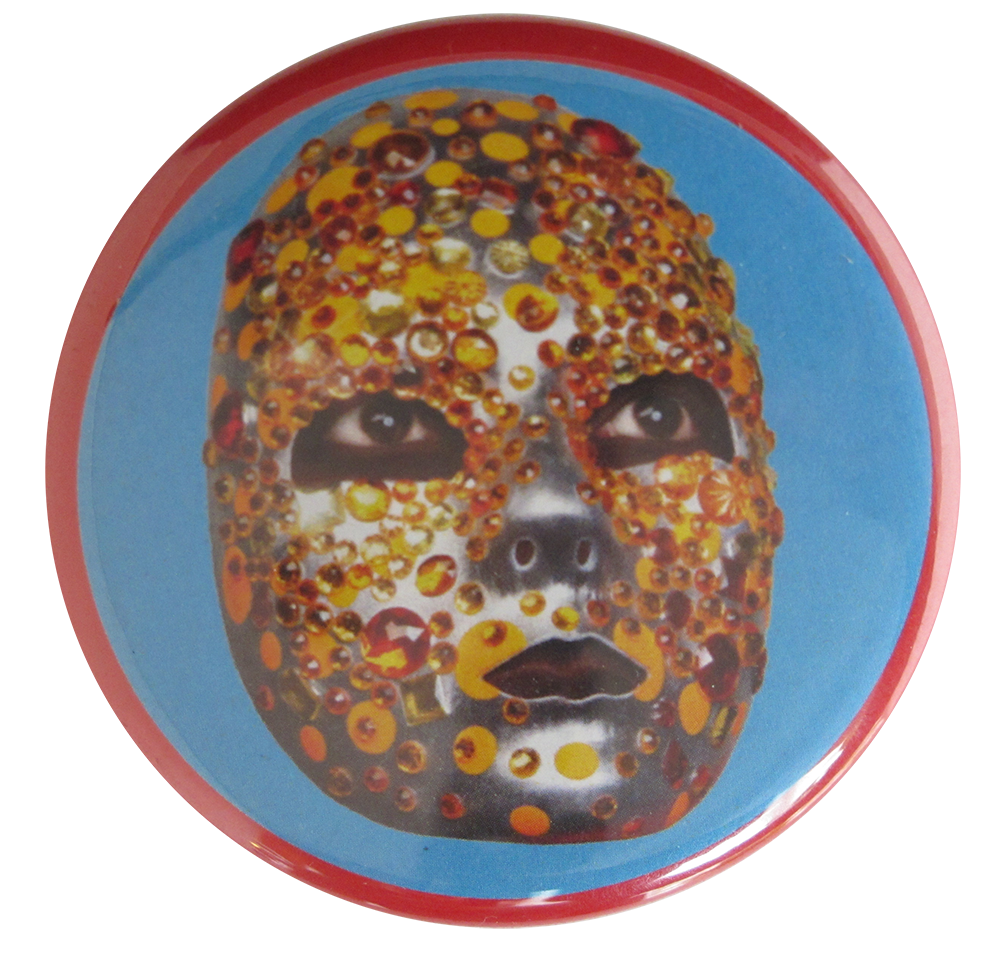
An image of a red, yellow, orange, and silver jeweled mask on a person's face. The lips and eyes are the only visible areas of the person. The background is a sky blue and the border around the button is red.

Curl Text SOUNDSUITSHOP.COM 2011 MASK BUTTON
Back Style
The Shape
The Size
Year / Decade Made
Additional Information

This is a button featuring a sequin mask from Nick Cave's art exhibit, "Nick Cave: Meet me at the Center of the Earth." This was the first museum tour for the Chicago based artist; it started at the Seattle Art Museum March 10th, 2011. The exhibit included 50 soundsuits (wearable sculptures) made out of recycled materials, mixing the imaginary with reality and high fashion with African ceremony. The suits were put on display through dance and sound; dance performance artists wore them during the exhibit. 

Catalog ID AR0107

Jesse Ledoux Stinky

Category
Additional Images
Sub Categories
Image Description

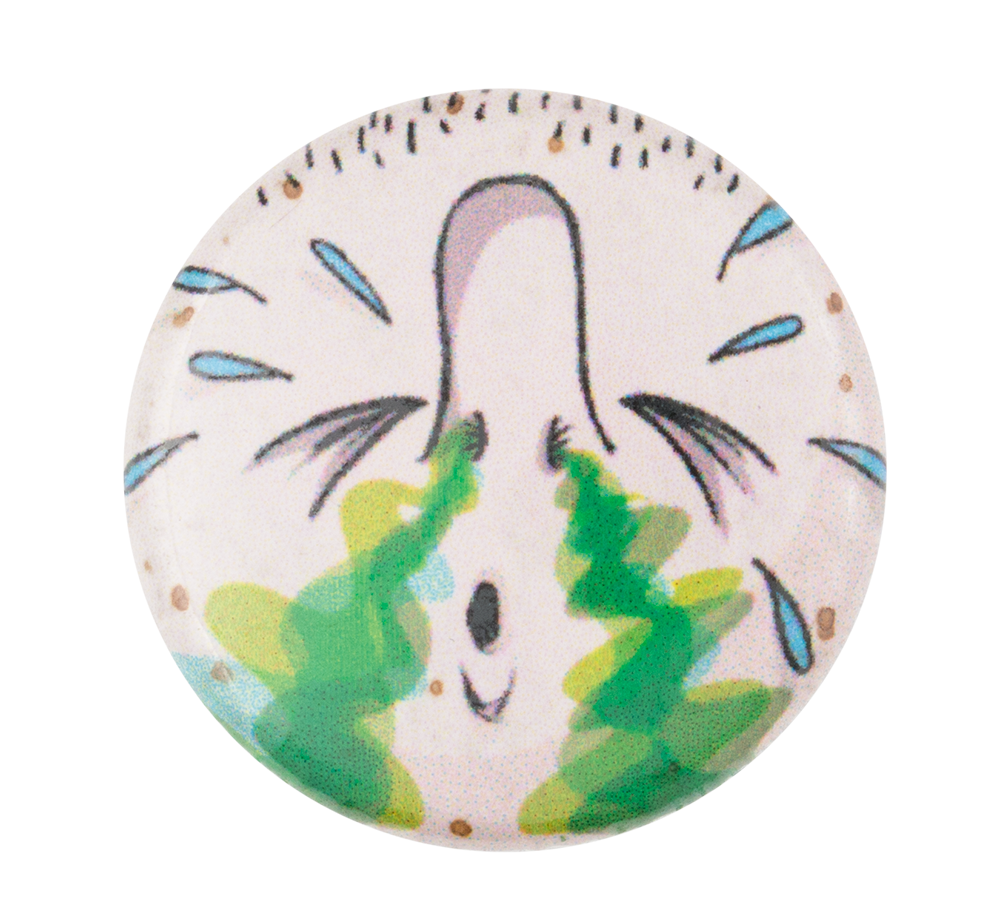
Illustration of a person's white nose and black open mouth with a small mustache. The large nose is inhaling a green vapor or smell. There are blue tears coming from the eyes and the background is peach.

Back Style
The Shape
The Size
Year / Decade Made
The Manufacturer
Additional Information

This button was created as part of the Busy Beaver Button Co.'s Button-O-Matic 2004 series "stinky, scary or hairy". It included three buttons by Jesse Ledoux including this one for "stinky".

Jesse Ledoux is an art director who does album cover and posters and is the owner of the LeDouxville, a company that sells designs. He originally worked for Sub Pop Records and has won several awards for his artwork. 

Catalog ID AR0131

Basil Wolverton Jay Walker

Category
Additional Images
Sub Categories
Text on Button JAY WALKER
Image Description

Illustration of the back of a nude person with their neck and head coming out of their back, with white text above and below on a redish-purple background.

Curl Text Made in Japan
Back Style
The Shape
The Size
Year / Decade Made
Additional Information

This button is from the 1965 series of LEAF "Fink Buttons" illustrated by popular Mid-Century artist Basil Wolverton. Perhaps best known for his work at MAD Magazine, Basil Wolverton (July 9, 1909 – December 31, 1978) was an American cartoonist and illustrator famous for his humorously grotesque drawings. Wolverton worked in the "Golden Age" of comic books doing features like "Powerhouse Pepper" and "Spacehawk" in the 1940s. A 2009 New York Times article states that Wolverton’s drawings embodied the “sick-and-proud humor” of MAD magazine and were considered a “virtuoso exercise in bad taste, made all the weirder for being so meticulously executed."

Catalog ID AR0185

Jagermeister

Category
Additional Images
Sub Categories
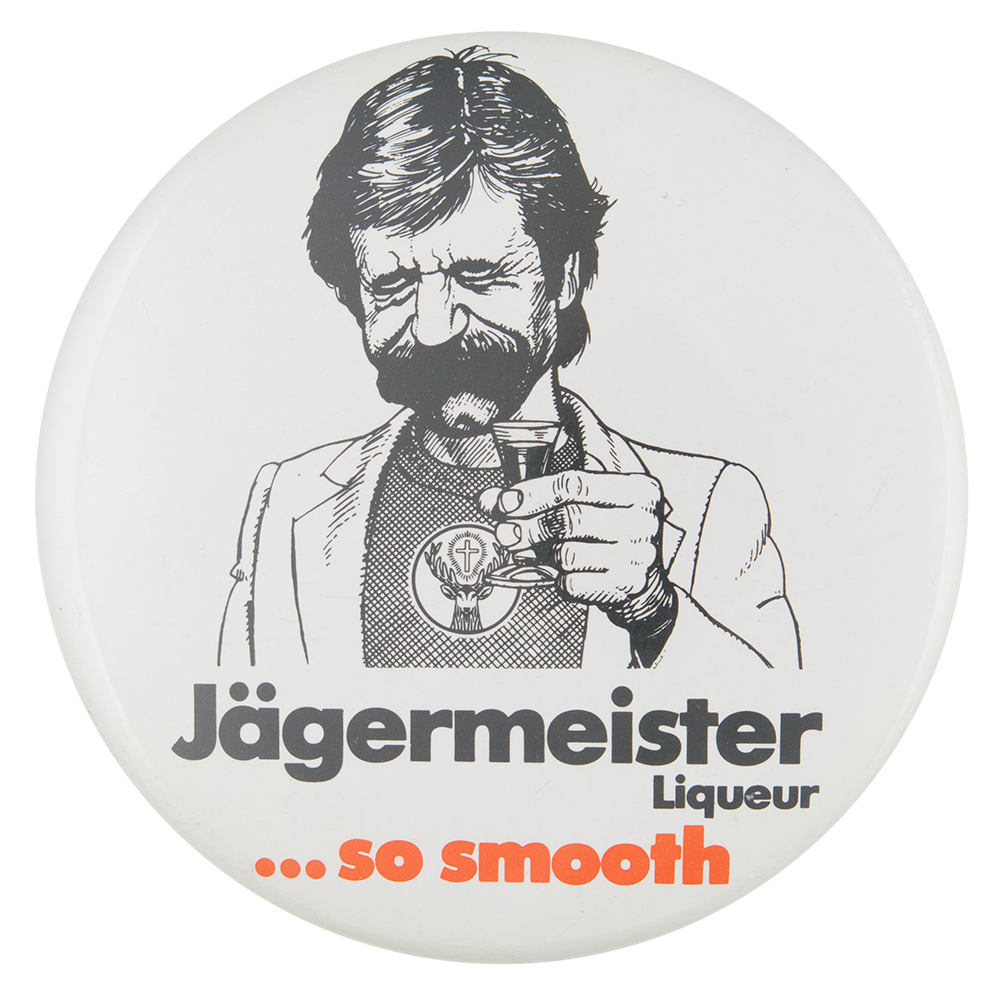
Text on Button Jagermeister Liqueur ... so smooth
Image Description

An illustration of a man wearing a white blazer and a shirt with the Jagermeister symbol on it holding a shot in his left hand. The "Jagermeister Liqueur" text is black and the "... so smooth" text is orange. The background is white.

Back Style
The Shape
The Size
Year / Decade Made
Additional Information

Jägermeister is a German alcohol made with 56 herbs and spices. It is the flagship product of Mast-Jägermeister SE, headquartered in Wolfenbüttel, Germany. Sidney Frank, known for his creation of Grey Goose vodka, spotted German immigrants in New York drinking Jagermeister in the 1970s, and purchased the U.S. import rights. Sales were poor until some students were quoted in a Baton Rouge Atlantic article suggesting the drink was an aphrodisiac. Frank jumped on the story, and assembled a team to hand out copies of the article and ran some memorable billboard ads that played on its strong flavor. Frank’s promotional tactics worked. A drink that was once used as a field anesthetic by doctors in World War II, had become popular among party goers and bar hoppers alike.

Catalog ID AD0325

Independent Order St. Luke

Category
Additional Images
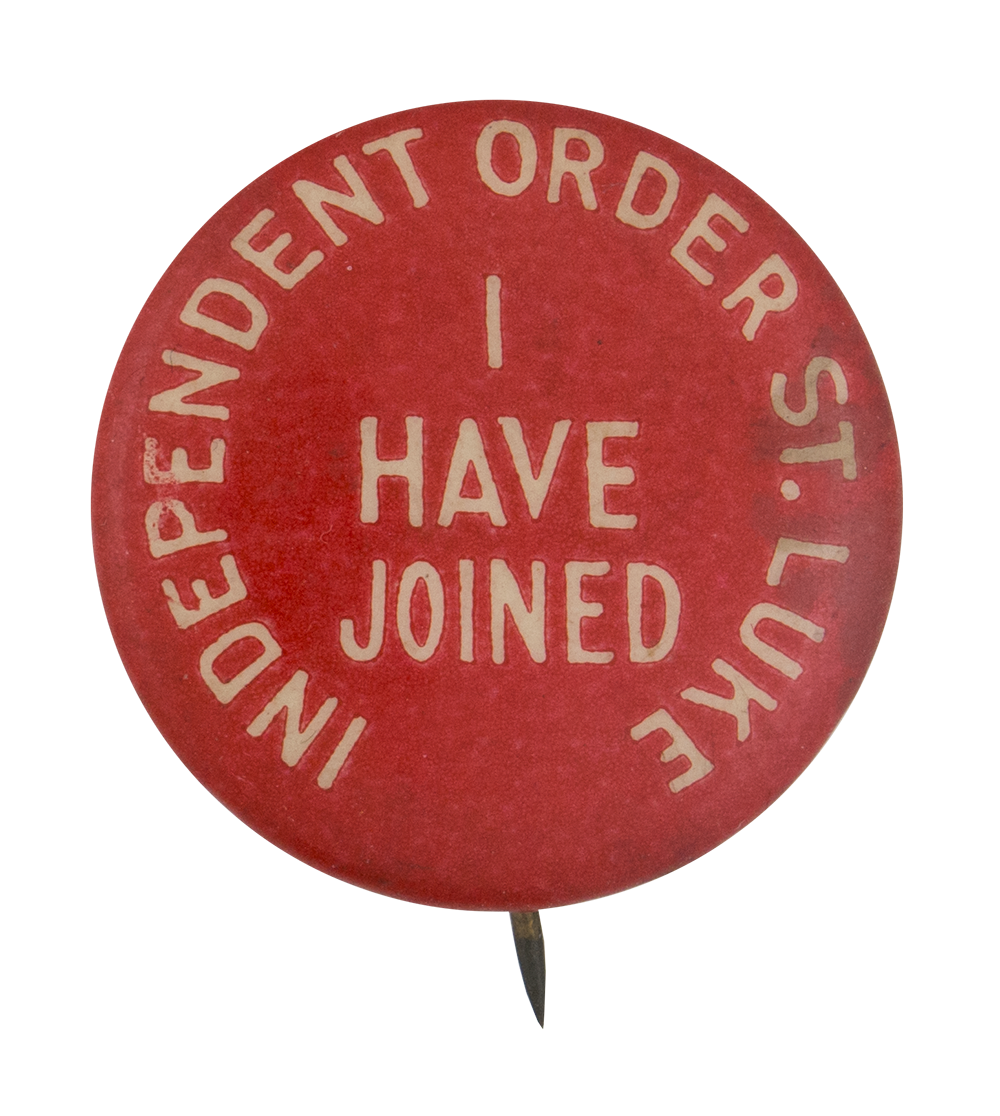
Text on Button INDEPENDENT ORDER ST. LUKES I HAVE JOINED
Image Description

White text on a red background. 

Back Style
The Shape
The Size
Additional Information

The Independent Order of St. Luke (IOSL) was a mutual benefit society founded in 1867. This organization played a prominent role in the history of African-American women. For 35 years it was led by Maggie Lena Walker (c. 1867-1934), a teacher and activist who eventually became the first female bank president in the United States. The IOSL’s original purpose was to provide for the care of the sick and burial of the dead, although its activities expanded over the decades to include youth programs, economic assistance such as insurance and mortgages, and political activism. When Walker took over the organization in 1899 it was in decline, but under her leadership it grew from 1,085 members to over 100,000.

The IOSL was focused on improving the financial independence of the African-American community during the Jim Crow era. In 1903 Walker founded the St. Luke Penny Savings Bank in Richmond, VA, which served African-American clients, many of whom were women. Under her direction the IOSL also began publishing the St. Luke Herald, a newspaper that reported on the injustices faced by African-Americans, including segregation and lynching. The IOSL disbanded in the 1980s.

Ewing, A. (2005). Independent Order of St. Luke. In Black Women in America. Oxford: Oxford University Press.

Catalog ID CL0275

Degas

Category
Additional Images
Sub Categories
Image Description

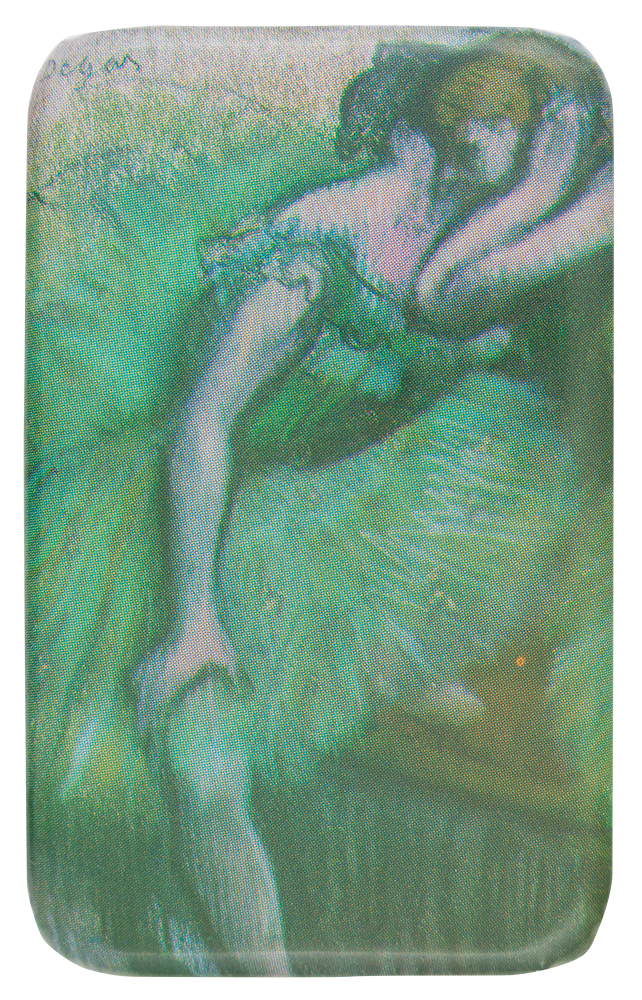
Image of two ballerinas. The ballerina on the left is wearing a green tutu and whispering into the ear of another ballerina to the right who is holding her hand over the opposite ear. 

Curl Text Made in CANADA by H.A.S Novelties LTD Ottawa (613) 238-2223
Back Style
The Shape
The Size
Additional Information

The painting on this button is visually similar to the painting "Two Dancers 2" by Edgar Degas. The button image has his signature in the upper right.

Catalog ID AR0117

Immunized Against Diphtheria

Category
Additional Images
Sub Categories
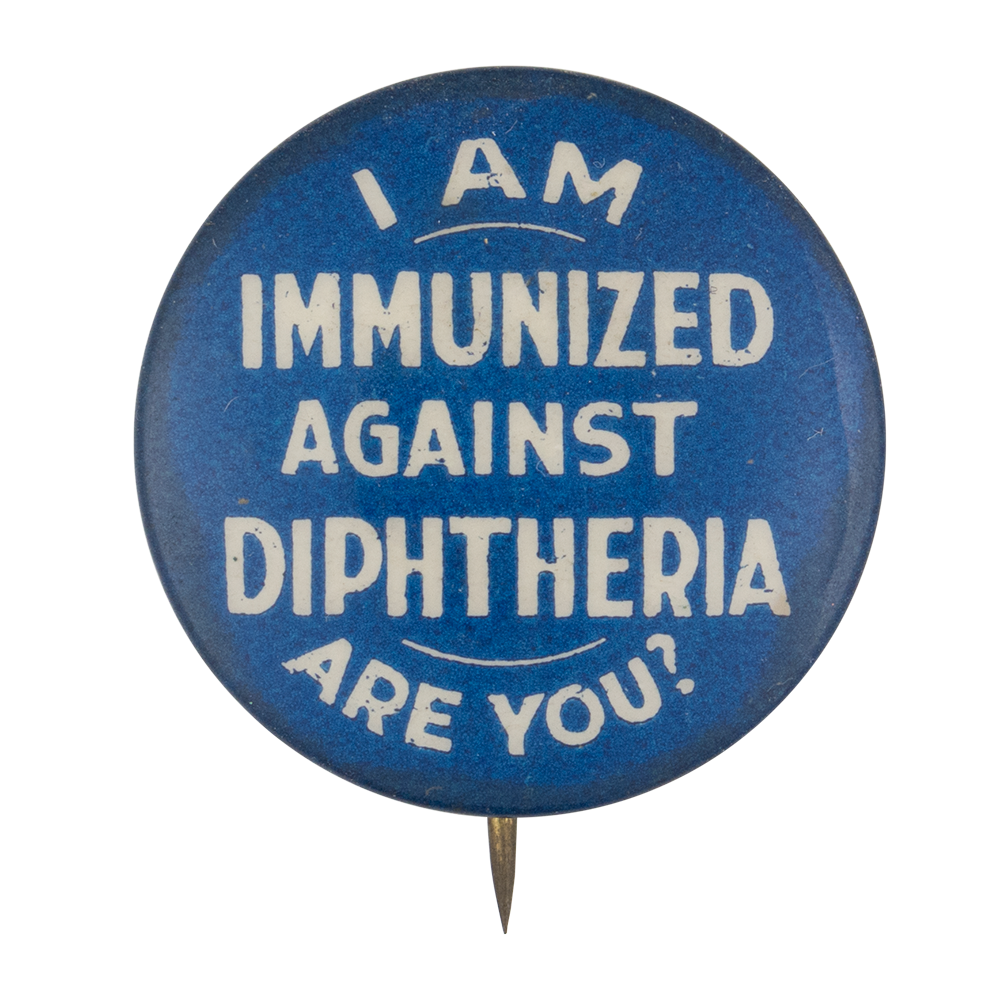
Text on Button I AM IMMUNIZED AGAINST DIPTHERIA ARE YOU?
Image Description

White text on a blue background.

Back Paper / Back Info

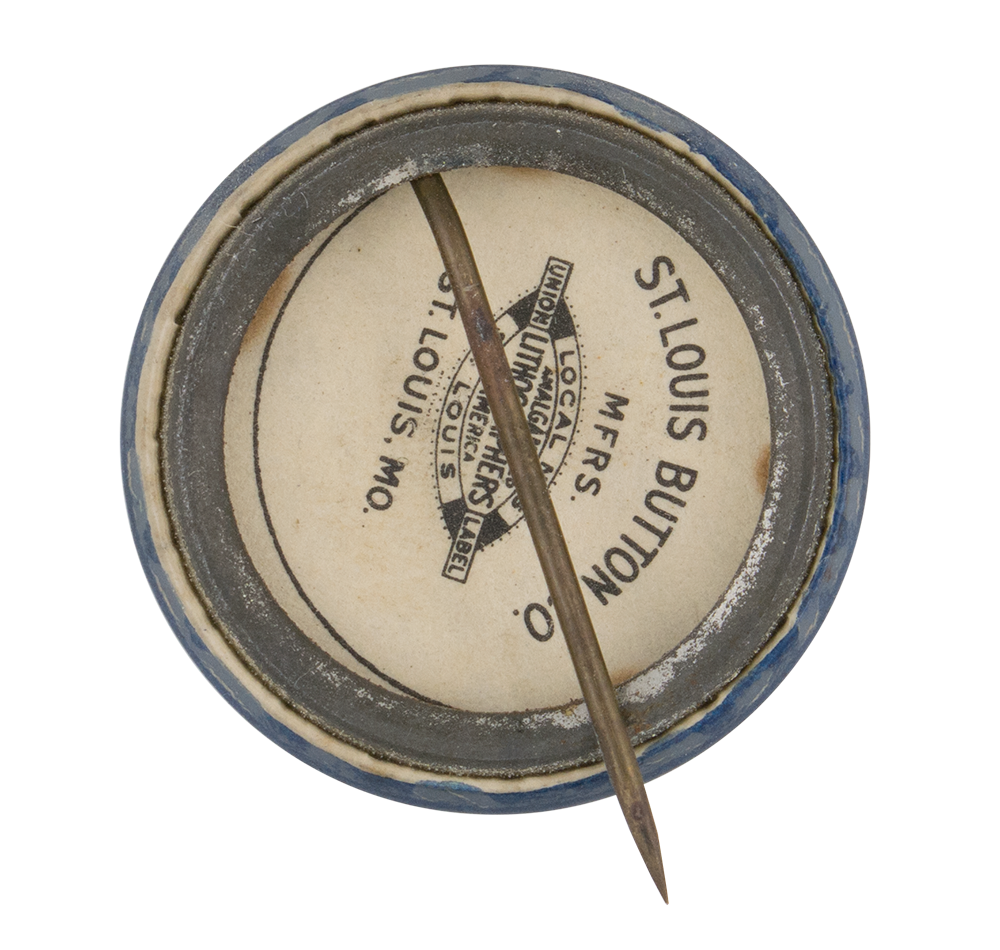
St. Louis Button Co. 
MFRS. 
Union Bug
St. Louis, MO.

Back Style
The Shape
The Size
Year / Decade Made
The Manufacturer
Additional Information

Diphtheria is an upper respiratory tract illness characterized by sore throat, low fever, and an adherent membrane on the tonsils, pharynx, and/or nasal cavity. Between 1910 and 1911 Béla Schick developed the Schick test to detect preexistent immunity to diphtheria in an exposed person. Only those who were not exposed to diphtheria were preferably vaccinated. A massive five-year campaign was coordinated by Dr. Schick. As a part of the campaign, 85 million pieces of literature were distributed by the Metropolitan Life Insurance Company with an appeal to parents to "Save your child from diphtheria." A vaccine was developed in the next decade, and deaths began declining significantly in 1924.

Catalog ID CA0126