MRP

Category
Additional Images
Sub Categories
Text on Button MRP PICO OSMA
Image Description

A pattern of maroon squares with few green, pink, and yellow squares scattered around create the background. Large light-tan colored text in the center with small light-tan colored text below it.

Back Style
The Shape
Additional Information

Have info on this button? Contact us here.

Catalog ID AR0467

I Support The Housestaff

Category
Additional Images
Sub Categories
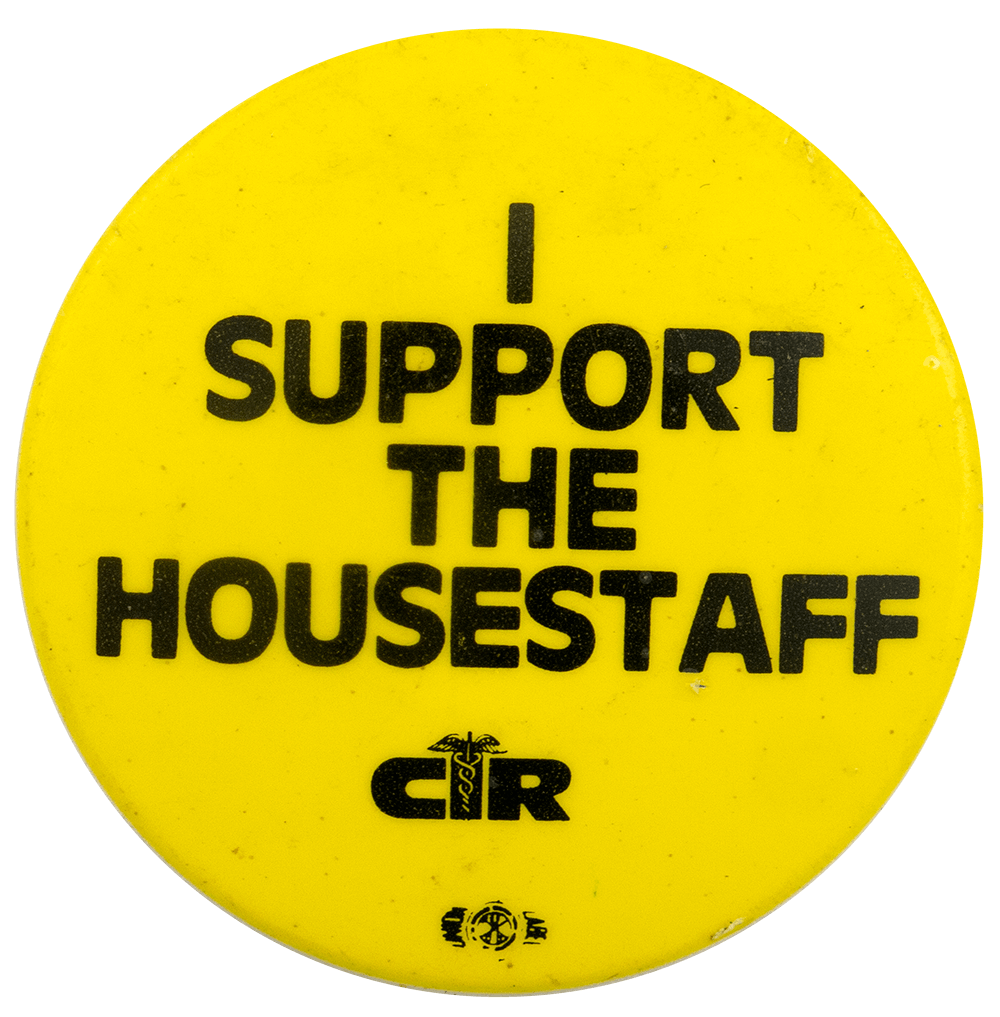
Text on Button I SUPPORT THE HOUSESTAFF CIR
Image Description

Yellow background with black text in the center. Small logo in black under the black text with small union bug logo on the bottom.

Back Style
The Shape
Additional Information

The Committee of Interns and Residents (CIR) is an organization that empowers interns, residents, and fellows from all member hospitals to strive for healthcare excellence through organizing, collective bargaining, and advocacy. It is the United State’s largest housestaff union with over 18,000 housestaff. In 1957, interns and residents in New York City’s public hospitals founded CIR. By 1969-70, members in the private sectors began to organize and join CIR. CIR has successfully advocated through the 1990s, including winning pay for housestaff covering for absent colleagues and helping set maximum work hour limits for New York housestaff. CIR also collaborates with teaching hospitals to improve projects that increase the value of care provided to patients.

Sources

Committee of Interns and Residents. (n.d.). Retrieved July 7, 2021, from https://www.cirseiu.org/

Committee of Interns and Residents. (n.d.). Our history. Retrieved July 7, 2021, from https://www.cirseiu.org/our-history-2/

Committee of Interns and Residents. (n.d.). Who we are. Retrieved July 7, 2021, from https://www.cirseiu.org/who-we-are/

Catalog ID CL0631

Clinton '92

Category
Additional Images
Sub Categories
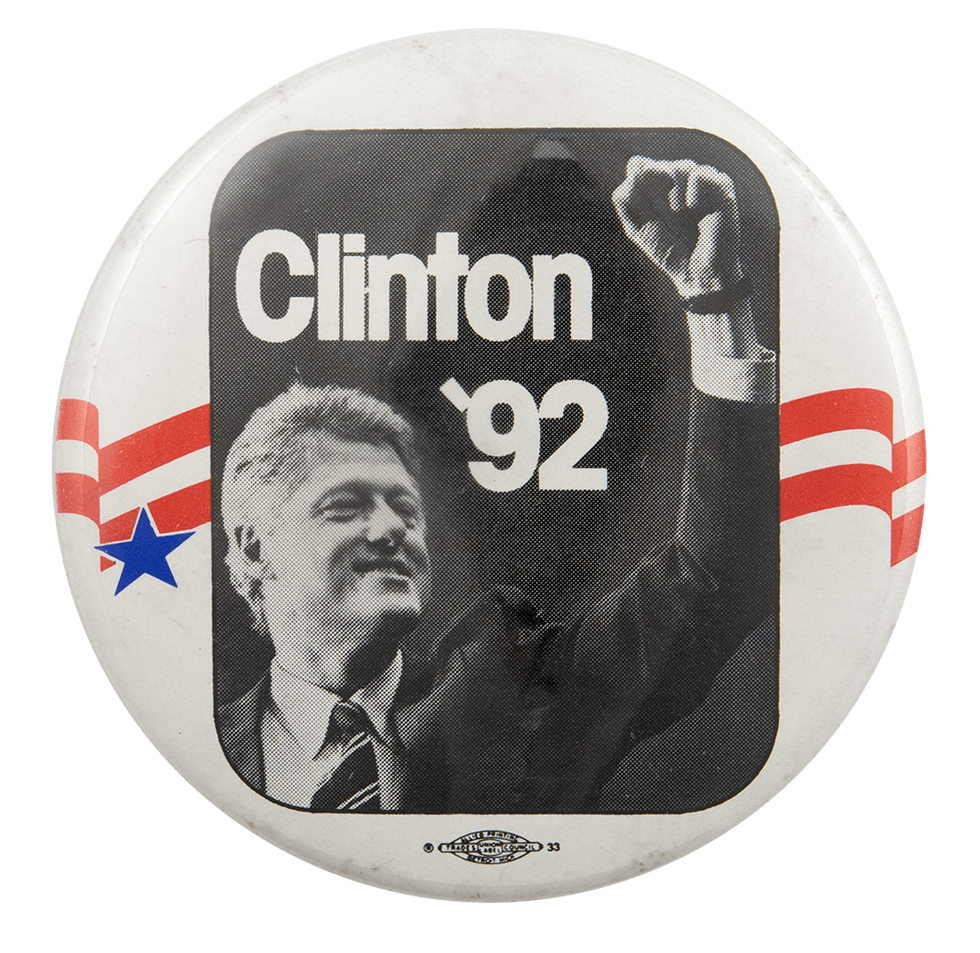
Text on Button Clinton '92
Image Description

Black and white photograph of Clinton raising his left fist with white text above. Red wavy lines and a blue star across the center, and a union bug at the bottom on white background.

Back Style
The Shape
Year / Decade Made
Additional Information

In 1992, Bill Clinton ran for president against incumbent president George Bush. President Bush faced opposition from within the Republican party due to breaking his pledge to not raise taxes during his first term. Democratic candidate Bill Clinton gained popularity until his campaign was threatened by evidence of a twelve-year marital affair. With both candidates facing problems during their campaigns, the opportunity arose for a third-party candidate to gain momentum. Ross Perot secured almost nineteen percent of the vote, while Bush received about thirty-seven percent of the vote. Bill Clinton won with forty-three percent of the vote, and his presidency ended a twelve-year stint of Republican presidents.

Sources

Levy, M. (2020, October 27). United States presidential election of 1992. Encyclopedia Britannica. https://www.britannica.com/event/United-States-presidential-election-of-1992

Catalog ID PO1154

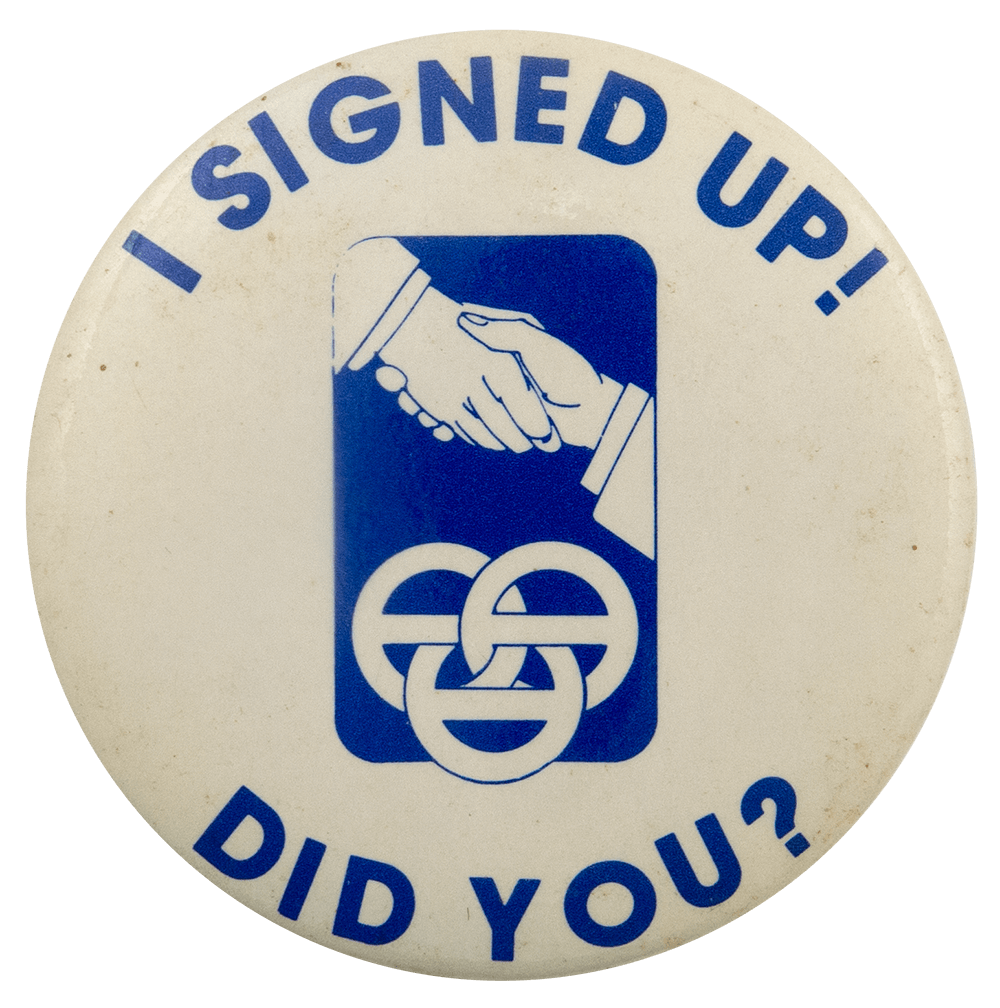
I Signed Up! Did You?

Category
Additional Images
Sub Categories
Text on Button I SIGNED UP! DID YOU?
Image Description

White button with a blue rectangle in the center. Two shaking hands in white and three white rings each with a line horizontally across are in the blue rectangle. Blue text curves around the top and bottom of the button.

Back Style
The Shape
Additional Information

Have info on this button? Contact us here.

Catalog ID CL0630

AMA-MSS Eller Governing Council

Category
Additional Images
Sub Categories
Text on Button AMA-MSS ELLER GOVERNING COUNCIL
Image Description

Red background with brown-yellow text in the center and a thin brown-yellow ring outside the red circle. Smaller brown-yellow text curved on the top and bottom of the red circle.

Back Style
The Shape
Additional Information

The Medical Student Section (MSS) is the largest organization of medical students in the US, and advocates for issues pertaining to education as well as providing resources, guidance, and services for the members. The governing council has 8 members who serve one-year terms, and oversees the activities and programs of the MSS at the national level. The MSS is a specialized member group of the American Medical Association (AMA). The Chicago-based AMA was founded in 1847 and is a professional association with over 240,000 members representing the United States medical community.

Sources

Medical Students. American Medical Association. (2021). Retrieved 6 July 2021, from https://www.ama-assn.org/member-groups-sections/medical-students.

Catalog ID PO1153

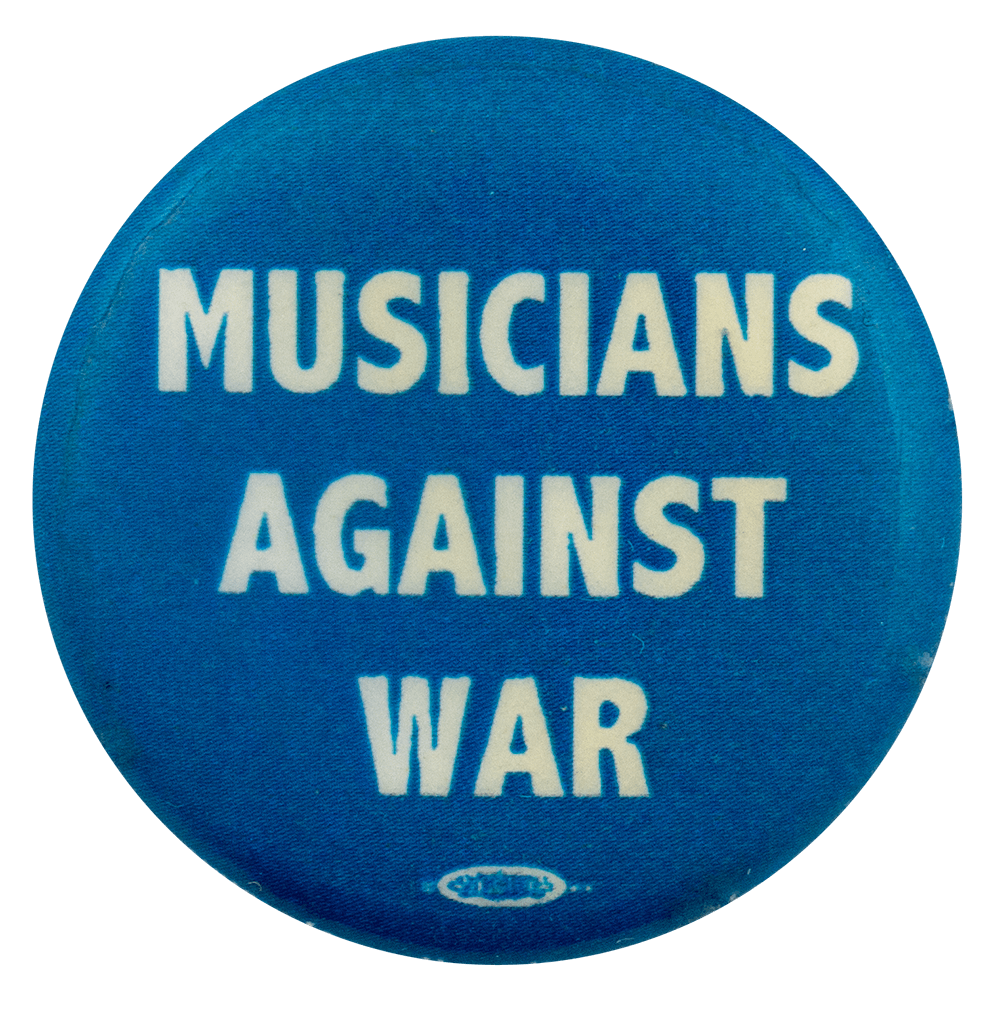
Musicians Against War

Category
Additional Images
Text on Button MUSICIANS AGAINST WAR (Union bug)
Image Description

White text on blue background. Union bug.

Back Style
The Shape
Additional Information

"Musicians against war" likely references the protests held by musicians during the Vietnam War. In the early 1960s, various folk singers used music to spread antiwar messages. Through antiwar rallies and concerts, musicians entertained the audiences in hopes of encouraging support against war. Some of the notable musicians participating in the protests include Phil Ochs, who performed at multiple rallies and concerts throughout the country, including a sold-out performance at Carnegie Hall. Although most of the songs are about antiwar, some songs express grief over the death of soldiers, and other songs express pain for those staying at home. The music protests against war helped pave the way for living in a better world and have peace.

Sources

Meisenzahl, A., & Peace, R. (2020). Protest music of the Vietnam War. United States Foreign Policy. http://peacehistory-usfp.org/protest-music-vietnam-war/

Catalog ID CA0845

Ureka

Category
Additional Images
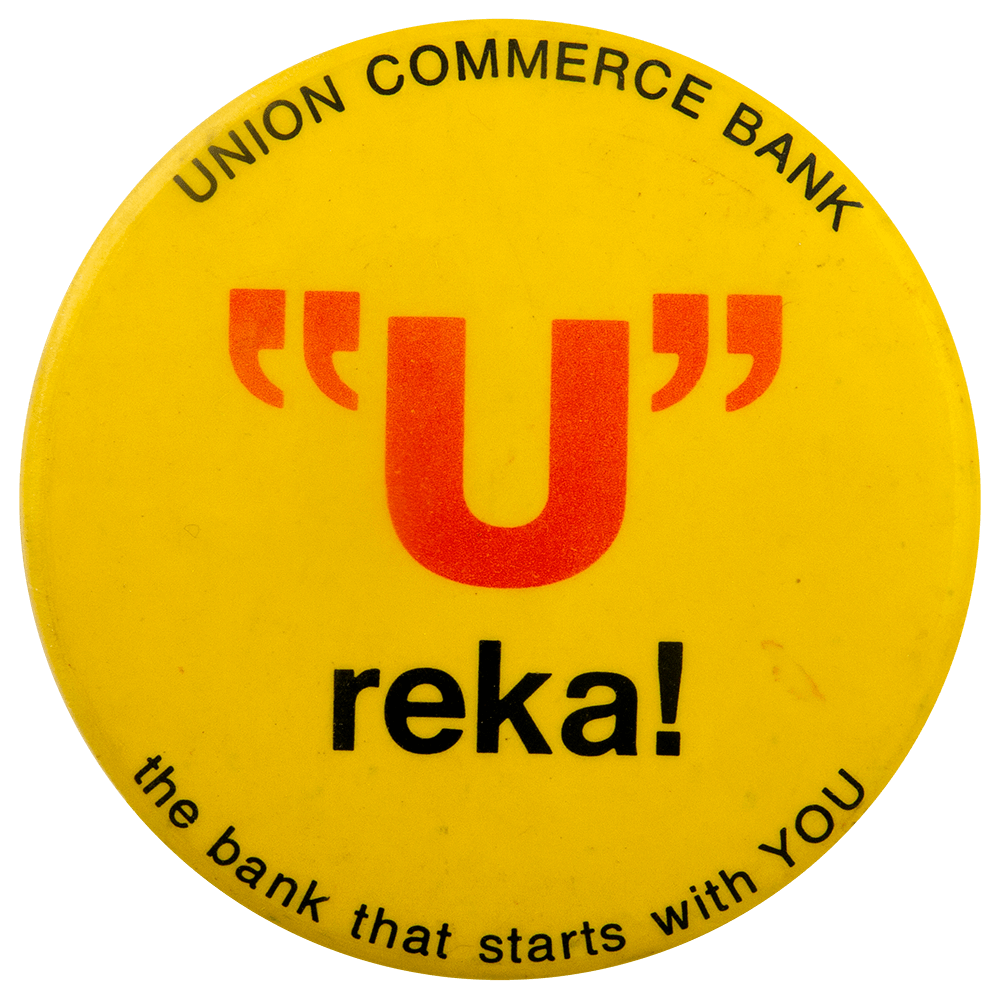
Text on Button UNION COMMERCE BANK “U” reka! The bank that starts with YOU
Image Description

Yellow background with red large letter U in quotes in the center. Black medium text below the U. Small black text curves around top and bottom of the button.

Back Style
The Shape
Year / Decade Made
Additional Information

In 1938, The Union Commerce Bank, originally known as the Union Bank of Commerce, was founded in Cleveland, Ohio. Post-World War II, the bank changed its name, added more services, and expanded its reach to serve the newly created suburbs, eventually numbering over 40 branches. In 1949, the bank moved into the Union Trust Building located in downtown Cleveland. The bank endured financial troubles in the 1960s-1970s and ultimately was acquired by a larger Columbus-based company, Huntington Bancshares, in 1983.

Sources

Case Western Reserve University. (n.d.). Huntington National Bank of Northeast Ohio. https://case.edu/ech/articles/h/huntington-national-bank-northeast-ohio
Western Reserve Historical Society. (n.d.). History of the Union Commerce Building. http://catalog.wrhs.org/collections/view?docId=ead/MS5223.xml;chunk.id=…

Catalog ID AD1031

The Salvation Army Home Service Fund

Category
Additional Images
Sub Categories
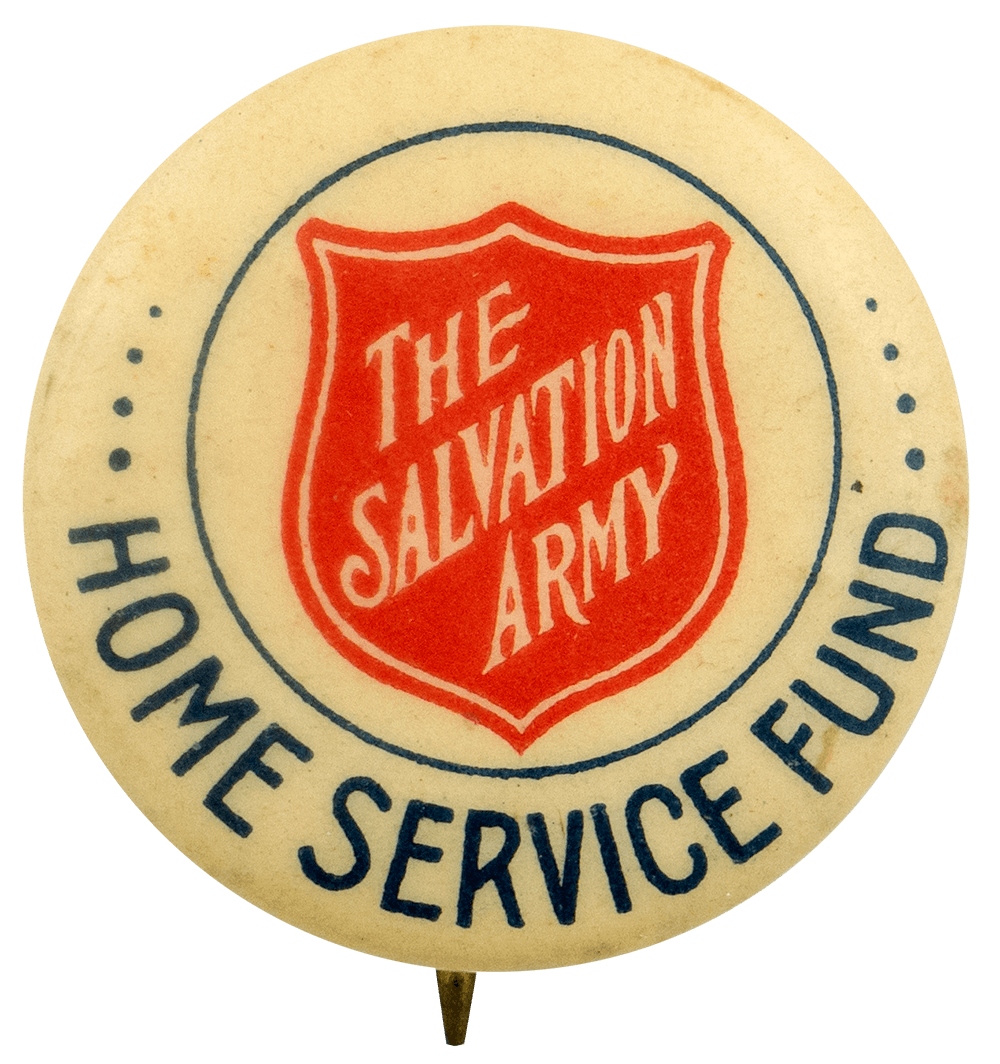
Text on Button THE SALVATION ARMY HOME SERVICE FUND
Image Description

An illustration of a red shield sits inside an outline of a blue circle that is surrounded by blue text with four small dots on each side of the text

Back Paper / Back Info

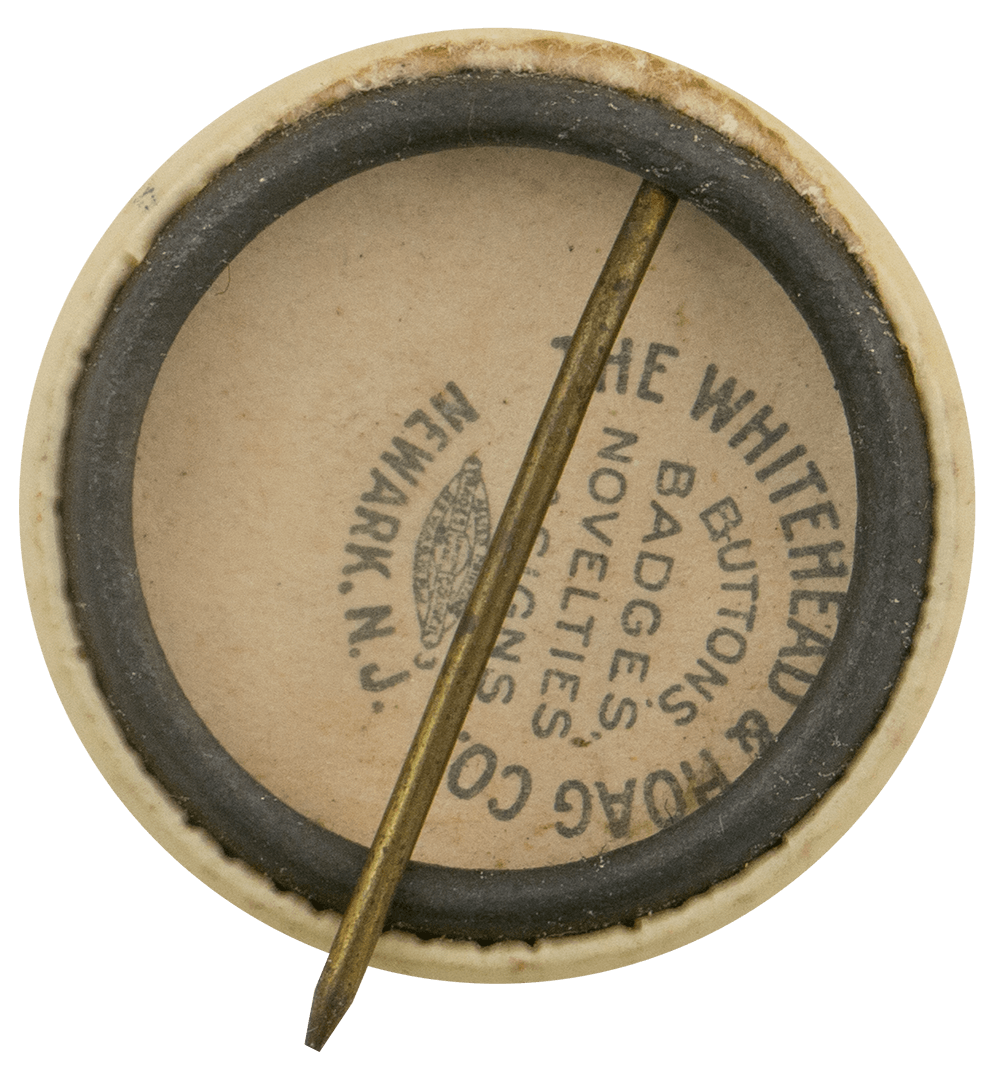
THE WHITEHEAD & HOAG CO.
BUTTONS,
BADGES,
NOVELTIES
AND SIGNS

NEWARK, N.J.

Back Style
The Shape
Additional Information

The Salvation Army is a well-known Christian church charitable organization established on July 02, 1865. Their primary purpose is to preach the Gospel and help the poor, the helpless, and the homeless. The organization offers food, shelter, night lodging, nurseries, rescue homes and maternity hospitals, and many more charitable services. In present day, they are most recognizable for thrift stores and Santa Claus bell ringers with red buckets.

The Salvation Army Home Service Fund was launched in the United States in 1919 to raise thirteen million dollars to continue its work. The Fund's purpose was to change the way of raising money on the streets to making personal requests in every city and town.

Sources

New York Times; May 19, 1919. 

Catalog ID CA0844