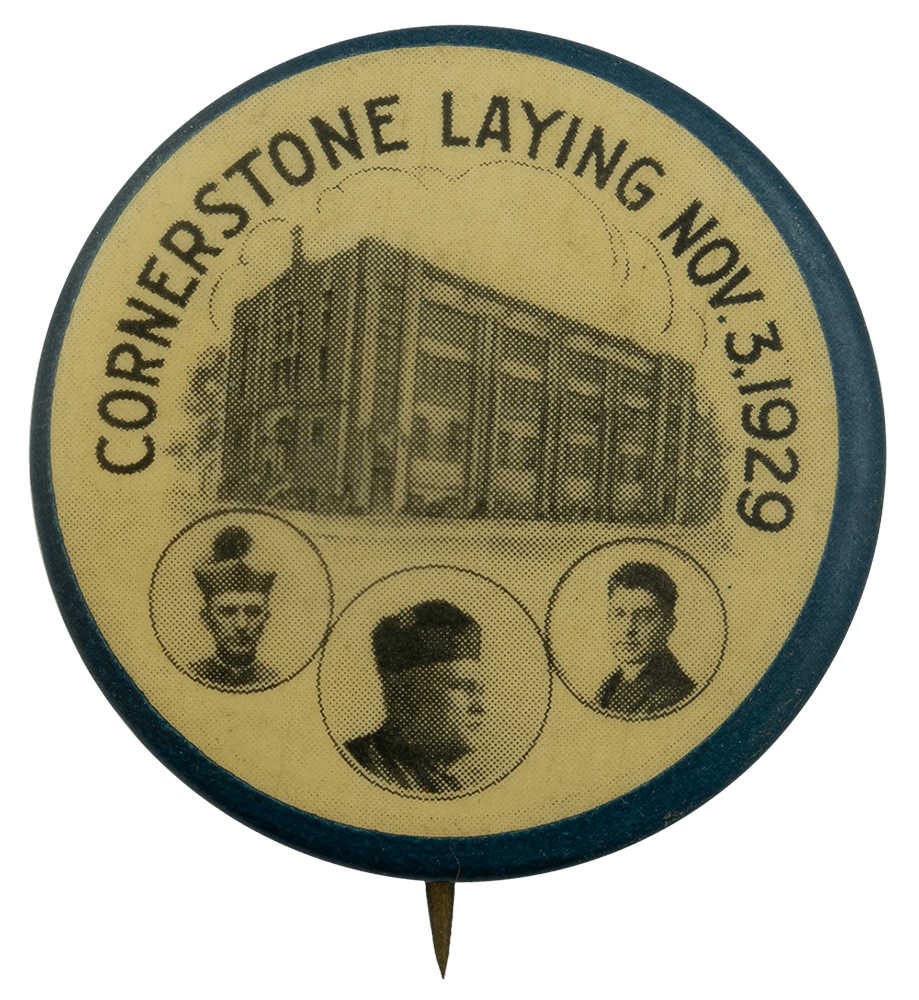
Cornerstone Laying

Category
Additional Images
Sub Categories
Text on Button CORNERSTONE LAYING NOV. 3, 1929
Image Description

Tan background with dark blue border. An image of a building is in the center with three circular portraits of men below it. Black text curls around top edge of button above the building.

Back Paper / Back Info

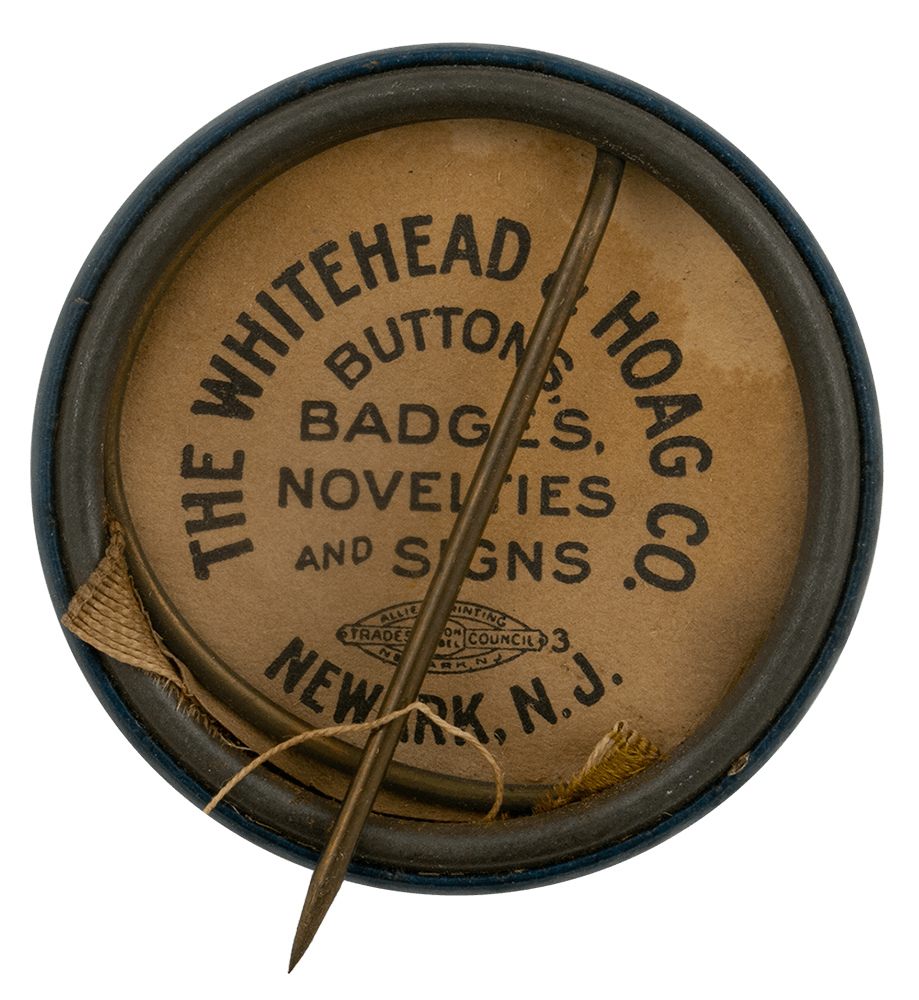
THE WHITEHEAD & HOAG CO.
BUTTONS,
BADGES,
NOVELTIES
AND SIGNS

NEWARK, N.J.

Back Style
The Shape
Additional Information

A cornerstone is traditionally the first stone laid for the building’s structure, and it reminds people of the geographical location of the building. Cornerstones became a symbol of a new era by indicating prosperity and opportunity. Their pieces became collected from the historical interest of marking previously standing buildings. The cornerstone laying is often known as a ceremonial event rather than the first step of the construction process. During the ceremony, the cornerstone is laid with a ceremonial trowel by a well-known member of the institution or a local celebrity.

This building appears to be the early architectural design of the Pontifical College Josephinum, with its cornerstone laid in Worthington, Ohio 1929, a week before stock markets crashed bringing the sign of the Great Depression. The Josephinum was originally a German school for priests focusing on serving Catholic immigrant families. But as the demand for German-speaking priests declined, the Josephinum shifted its attention to prepare men for Church services within the United States and around the world. The portrait in the middle appears to be a photo of Monsignor Joseph Jessing, who is the founder of the Josephinum. The other two portraits are unknown at this time.

Have info on this button? Contact us here.

Sources

NewStudio. (2019). Architectural cornerstones: The meaning, history, and intent. https://www.newstudioarchitecture.com/newstudio-blog/architectural-cornerstones

Ohio Memory. (2016). Cornerstone laying ceremonies and the buildings that shape us. https://ohiomemory.ohiohistory.org/archives/2819

Pontifical College Josephinum. (n.d.). Mission and history. Retrieved June 3, 2021, from https://www.pcj.edu/mission

Catalog ID EV0931

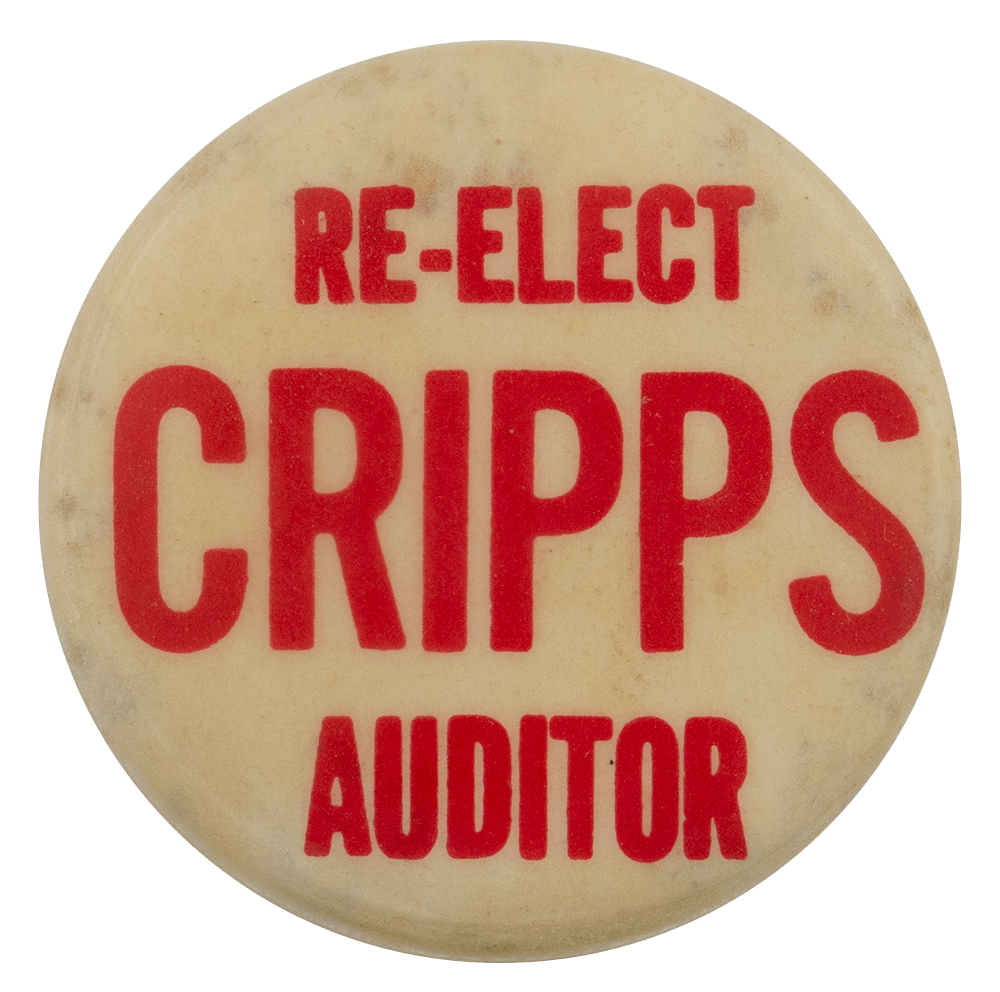
Re-elect Cripps Auditor

Category
Additional Images
Text on Button RE-ELECT CRIPPS AUDITOR
Image Description

Cream colored background with three lines of red text. The first and last line of text are medium sized, while the second central line of text is large.

Back Style
The Shape
Additional Information

Dover native George Warren Cripps (1916-1983) served three terms as Delaware’s State Auditor from 1966-1973 but lost his re-election campaign of 1972. Cripps, a Republican, also unsuccessfully ran for the Delaware State Senate in 1974, and for Delaware Governor in 1976. Prior to serving as auditor, Cripps was a successful businessman, running Capitol Glass & Mirror Inc and was President of the Greater Dover Chamber of Commerce from 1961-1963.

Sources

Horgan, D. (1983). Dover Politician G.W. Cripps Dies. The Morning News, pp. 1, 4. Retrieved 6 July 2021, from https://www.newspapers.com/image/155053455/?terms=Cripps&match=1.

Catalog ID PO1150

Flower Make Love Not War

Category
Additional Images
Sub Categories
Text on Button Make Love Not War
Image Description

Green background with flower in the center with six white petals with yellow center. Yellow text curls around top and bottom, with smaller white flowers on left and right between the two lines of text on the center edge of the button.

Back Style
The Shape
Additional Information

The phrase “Make Love, Not War” was a popular protest chant in the 1960s as thousands of Americans marched against United States involvement in the Vietnam War. Origins of the phrase cannot be certain, but research has shown two possibilities: Penelope Rosemont or Diane Newell Meyer. Penelope Rosemont believes the origin lies with her and the buttons her bookshop made for the Chicago Mother’s Day Peace March in May 1965. But a full month earlier, Diane Newell Meyer was a student at the University of Oregon and remembers writing the phrase on an envelope and pinning it to her shirt before going to an anti-Vietnam War demonstration in April 1965. Her picture was taken and posted in a May 9th (1965) article written by Mitchell Levitas for the New York Times Magazine.

Sources

Creative Review. 2021. History of the Make Love Not War slogan - Creative Review. [online] Available at: <https://www.creativereview.co.uk/make-love-not-war-slogan/&gt; [Accessed 11 May 2021].

Fattig, P., 2010. The SIXTIES: Make Love, Not War! coined in Ashland. [online] Web.archive.org. Available at: <https://web.archive.org/web/20140226162426/http://sixties-l.blogspot.co…; [Accessed 11 May 2021].

Rosemont, P., 2015. Make Love; Not War! - Issue 394, Summer 2015 - Fifth Estate Magazine. [online] Fifthestate.org. Available at: <https://www.fifthestate.org/archive/394-summer-2015/make-love-not-war/&…; [Accessed 11 May 2021].

Catalog ID CA0843

McKinley Roosevelt Portraits

Category
Additional Images
Sub Categories
Image Description

Yellow background with a red white and blue ribbon tied in a bow at the top. In the center is two circular black and white photograph portraits of men. The circles of the portraits are joined in the center. The man on the right has a mustache.

Back Style
The Shape
Additional Information

William McKinley was the 25th president of the United States, and served two consecutive terms from 1897 until his assassination in 1901. McKinley was a popular president. He had led the country to victory in the Spanish-American war, which played a part in his decisive reelection in 1900, with Teddy Roosevelt as his vice president. Roosevelt, ever the outdoorsman, was traveling in the Adirondacks when McKinley was shot and killed. 13 hours later, he took the presidential oath, meaning that the United States technically had no president for those 13 hours.

Sources

On this day, McKinley is shot while Roosevelt is traveling - National Constitution Center. (n.d.). National Constitution Center – Constitutioncenter.org. https://constitutioncenter.org/blog/on-this-day-mckinley-is-shot-while-…

Catalog ID PO1148

Bookhammer for Lieutenant Governor

Category
Additional Images
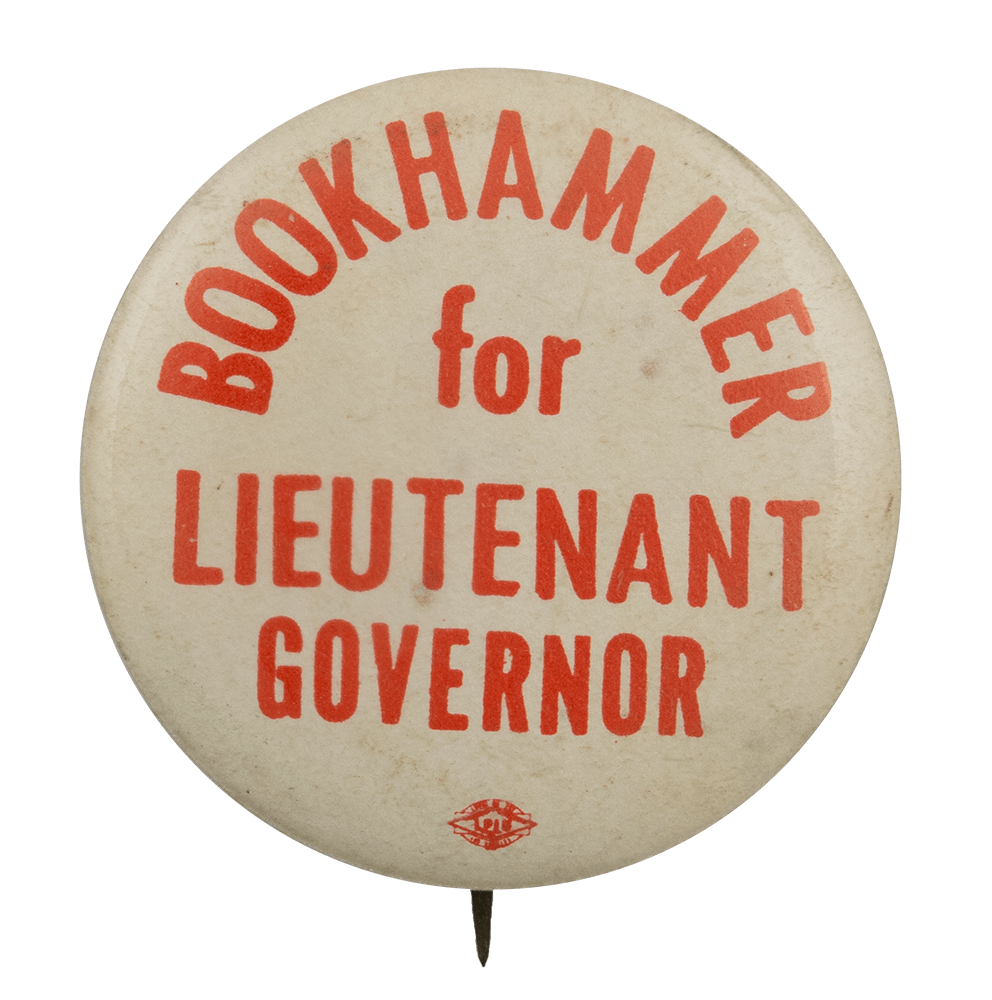
Text on Button BOOKHAMMER for LIEUTENANT GOVERNOR
Image Description

White background with red text. The first line of text curves along the top of the button, while the other three lines are straight across.

Back Style
The Shape
Year / Decade Made
Additional Information

Eugene D. Bookhammer (June 14, 1918 – February 23, 2013) was the 18th Lieutenant Governor of Delaware. He was a dedicated Republican politician who served two terms: first under Republican Russell W. Peterson in 1969, then under Democrat Sherman W. Tribbitt until 1977. Prior to becoming Lieutenant Governor, from 1962 to 1968 Bookhammer served in the Delaware State Senate. Before entering politics, Bookhammer served as an infantrymen in the US Army. He became a decorated veteran of World War II: his heroic actions and injuries earned him a Bronze Star and a Purple Heart. 

Bookhammer was a  lifelong philanthropist and beloved by his community. He generously donated his time and money to the Boy Scouts, Wesley College, and Beebe Medical Center.

Sources

Forney, D. (2013, Feb. 26) Former Lt. Gov. Gene Bookhammer dies at age 94. Cape Gazette. https://www.capegazette.com/article/former-lt-gov-gene-bookhammer-dies-…

Catalog ID PO1147

San Diego Padres

Category
Additional Images
Sub Categories
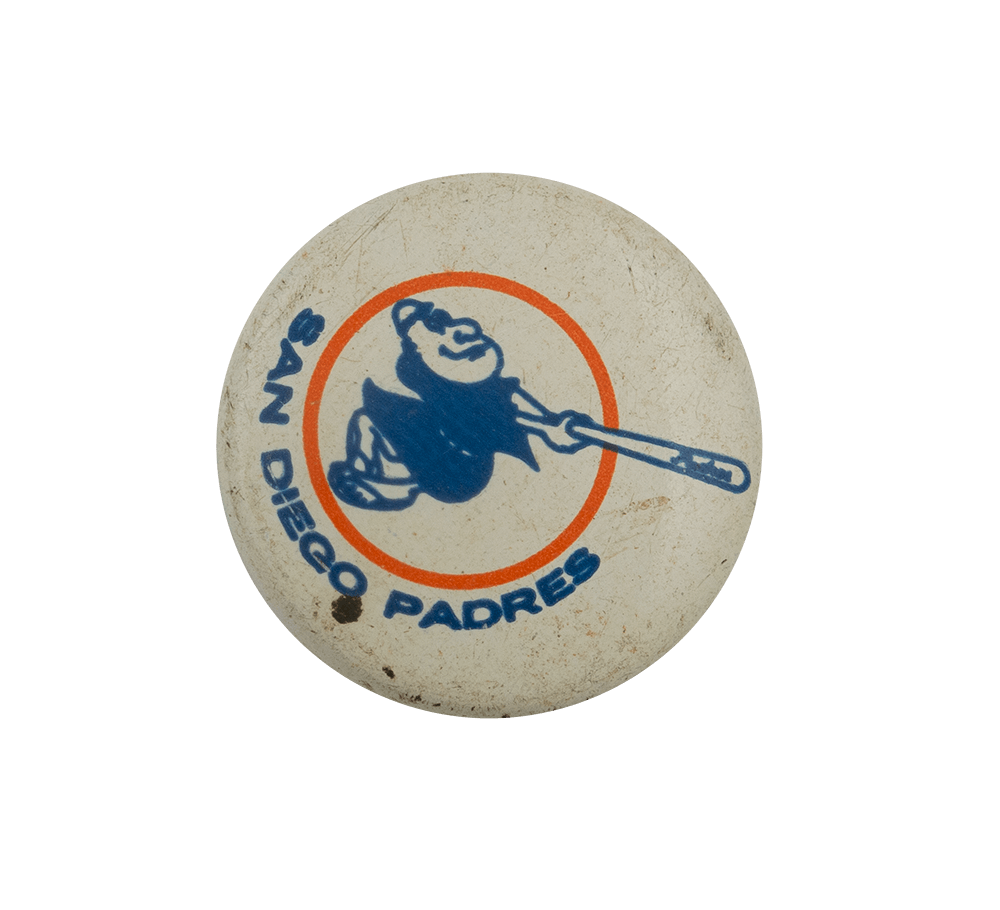
Text on Button SAN DIEGO PADRES
Image Description

White button with a blue illustration of a cartoon monk swinging a baseball bat in the center. The monk has a red circular border around him, and dark blue text curls around the red border on the bottom left.

Back Style
The Shape
Additional Information

The Swinging Friar is the mascot of the San Diego Padres Major League Baseball team. The mascot first appeared in 1958 when the team was still a minor league organization. He was named after the Spanish Franciscan friars who founded the Mission San Diego de Alcala in the 18th century. In 1968, the Padres joined Major League Baseball and kept the Swinging Friar as the team emblem until 1984. The logo returned as a sleeve patch on alternate jerseys in 1996. The Swinging Friar mascot wears a hooded cloak, rope belt, and sandals on the field. During home games on Sundays, he wears a camouflage cloak to honor the military and its history in San Diego.

Sources
Catalog ID SP0182

The Owl

Category
Additional Images
Sub Categories
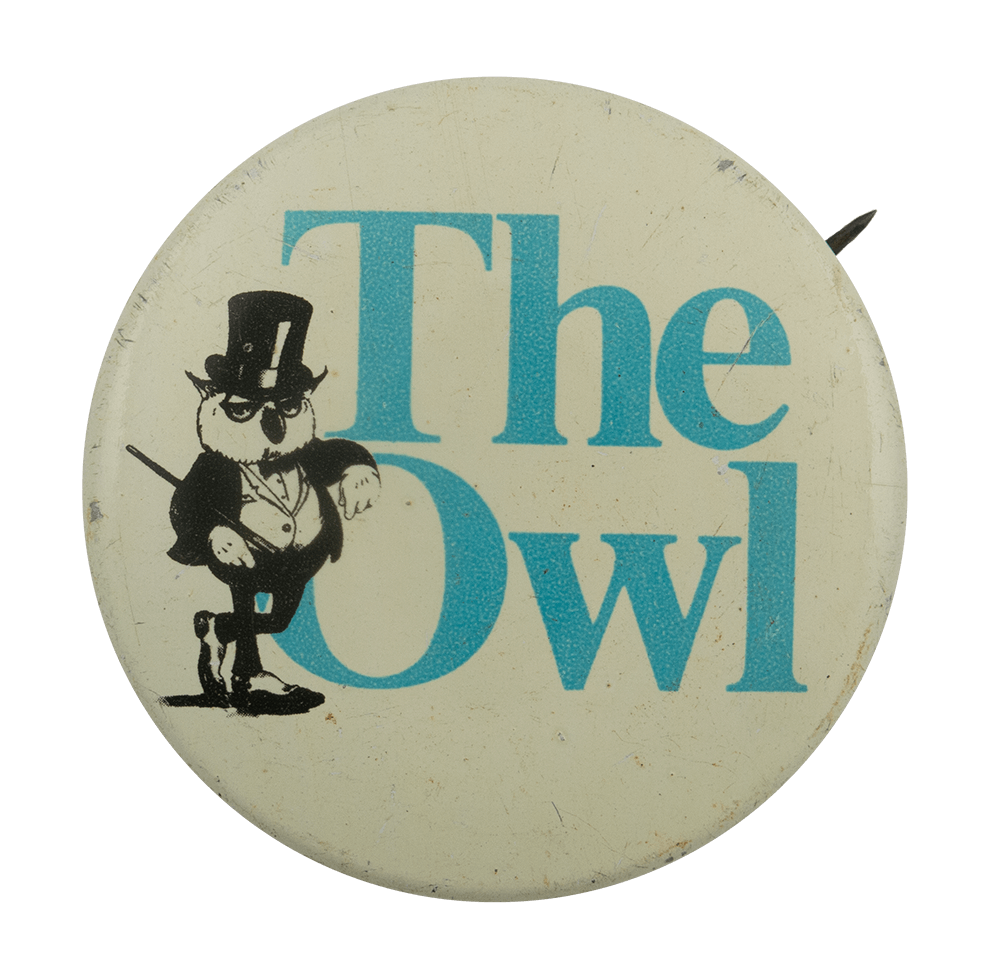
Text on Button The Owl
Image Description

White background with large light blue text. An illustration of an owl wearing a tuxedo and carrying a cane is on the left side of the text. The owl leans against the light blue text.

Back Style
The Shape
Additional Information

Have info on this button? Contact us here.

Catalog ID AD1027

Royal Order of Buttinsky

Category
Additional Images
Sub Categories
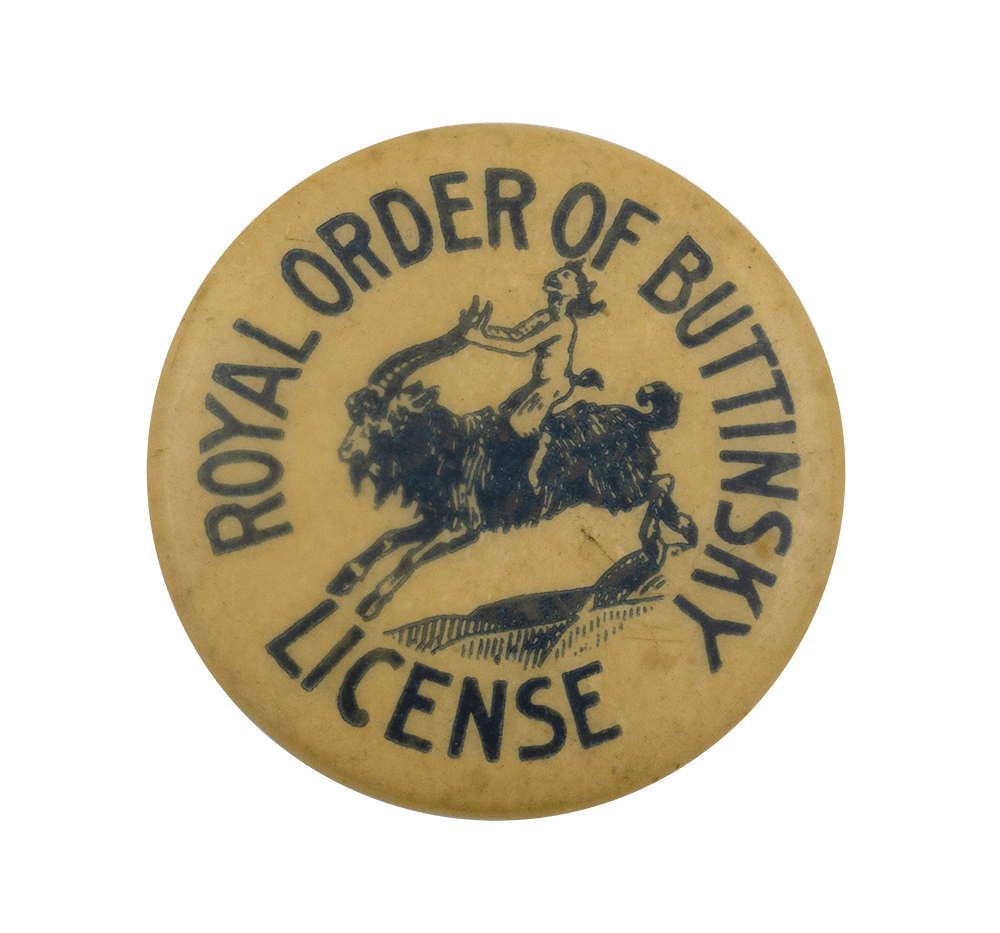
Text on Button ROYAL ORDER OF BUTTINSKY LICENSE
Image Description

Tan background. An illustration of a satyr riding a goat over hills is in the center. Black text curls around the image on all sides.

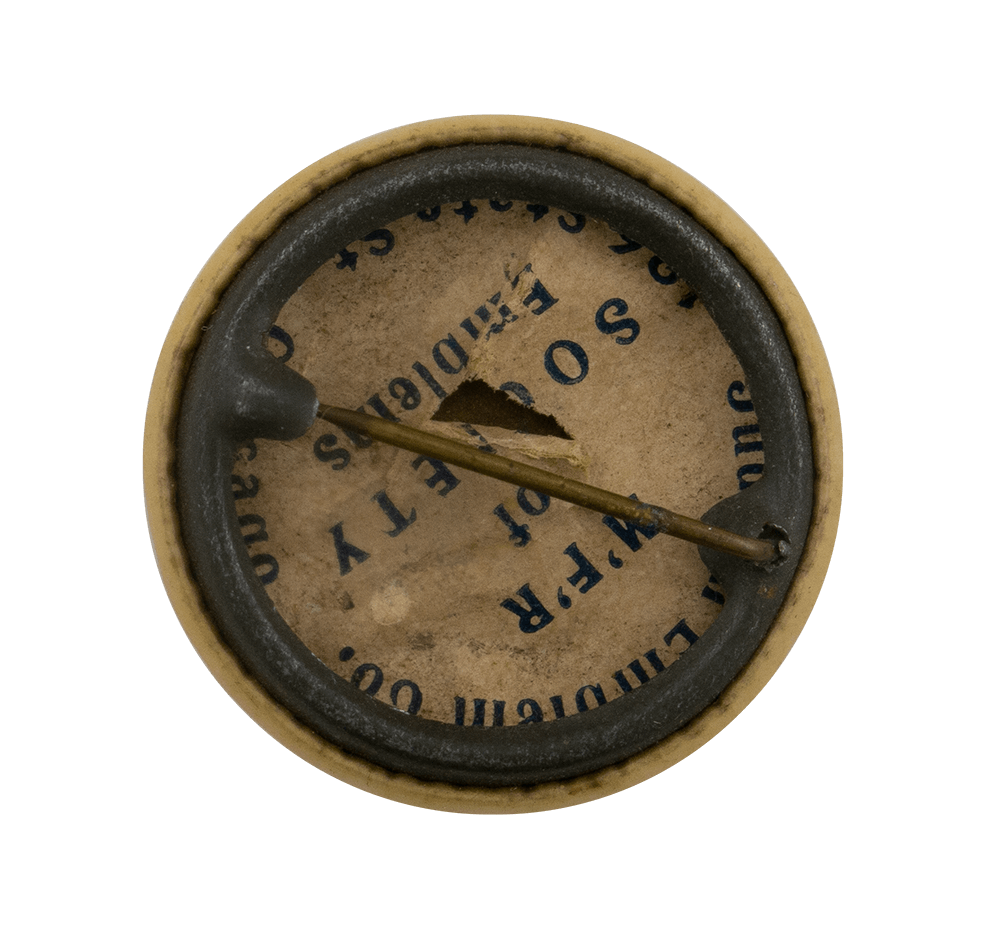
Back Paper / Back Info

M'F'R

of

SOCIETY

Emblems

Back Style
The Shape
Additional Information

Have info on this button? Contact us here.

Catalog ID CL0629

French River Trading Post

Category
Additional Images
Sub Categories
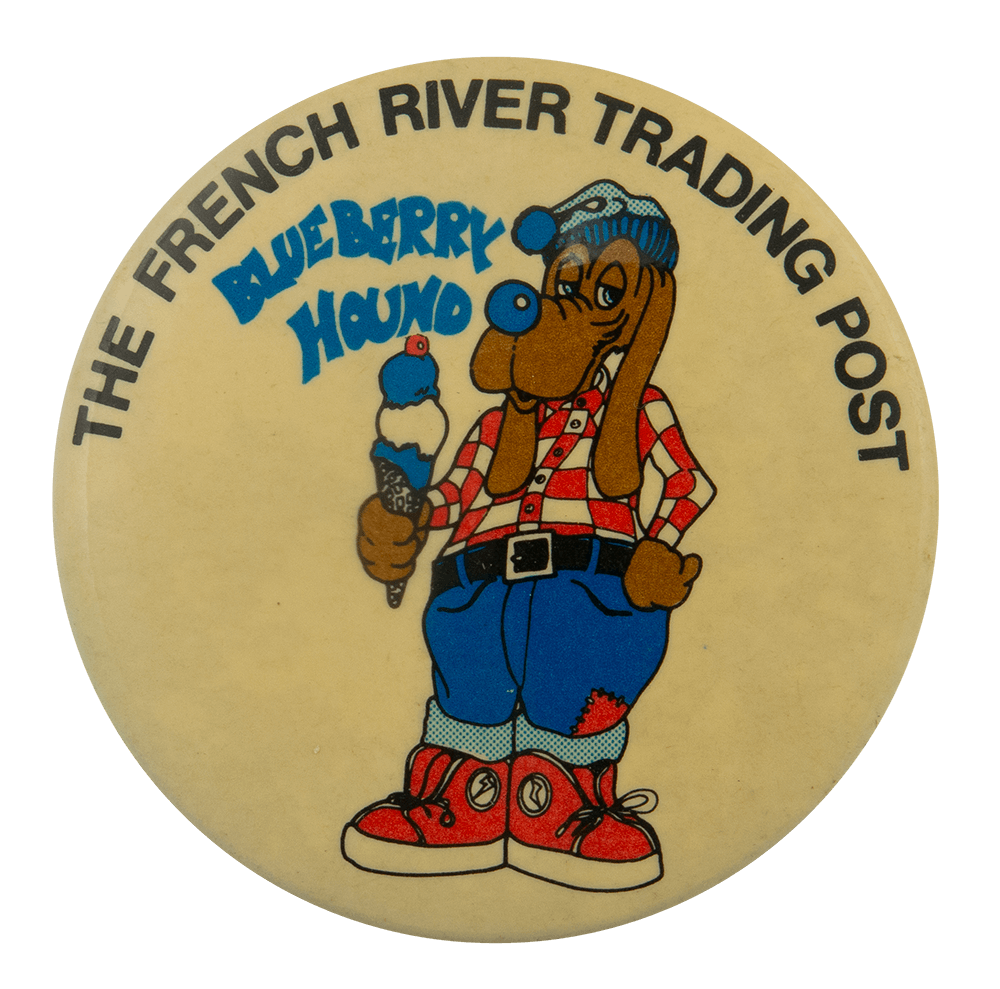
Text on Button THE FRENCH RIVER TRADING POST BLUEBERRY HOUND
Image Description

Cream background with an image of brown hound dog standing on two legs and wearing clothes in the center. The dog wears a red and blue outfit and holds an ice cream cone with three scoops of white and blue ice cream. Black text curls around the top edge of the button, while blue text is to the left of the dog's head above the ice cream.

Back Style
The Shape
Additional Information

Blueberry Hound is a mascot for the French River Trading Post, located in Alban, French River, Ontario, Canada. Established in 1956, the Trading Post is a family-run roadside stop for travelers along scenic Highway 69. What began as a small gift shop has expanded into a complete hospitality experience with a restaurant and a motel. The French River Trading Post sells Canadian products, souvenirs, and local First Nations crafts. They are known for their specialty fudges and ice creams. The Hungry Bear is also a mascot; he and Blueberry Hound visit hourly to take photos with guests.

Sources

French River Trading Post. (2018). Store information. http://www.frenchrivertrading.com/store-information/

Catalog ID AD1026