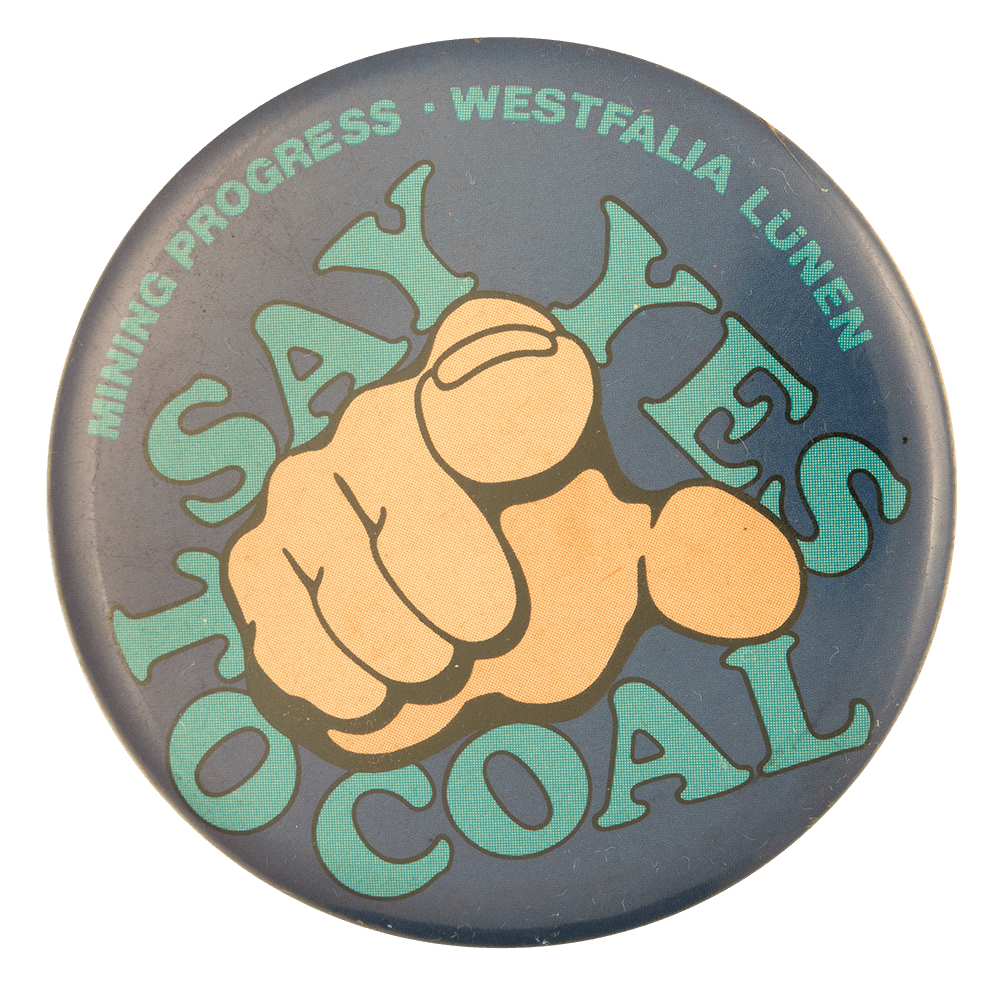
Say Yes to Coal

Category
Additional Images
Sub Categories
Text on Button MINING PROGRESS WESTFALIA LUNEN SAY YES TO COAL
Image Description

Illustration of a hand with a pointing finger with blue text on a dark blue background

Back Style
The Shape
The Size
Additional Information

Westfalia-Lunen is a German-based hard coal mining equipment manufacturing company. The products are marketed by Mining Progress Inc. Westfalia-Lunen is the predecessor of Caterpillar which is an American heavy equipment manufacturing company. In 1993, Westfalia-Lunen introduced the first and only mine-worthy plow control system. Westfalia-Lunen and Mining Progress Inc. distributed wearable memorabilia, such as stickers and pinback buttons, in the 1970s supporting coal mining efforts.

Sources

Caterpillar Inc. (n.d.). The Story of the Caterpillar Name. Retrieved July 11, 2020, from https://www.caterpillar.com/en/company/history/archive/caterpillar-name…

Paschedag, U. (2014). Plow Technology — History and the State of the Industry [PDF]. Caterpillar Inc.

Redscoalminingstickers. (n.d.). Nice set of 11 Australia Westfalia-Lunen coal mining stickers # 410. Retrieved July 11, 2020, from https://www.ebay.com/itm/NICE-SET-OF-11-AUSTRALIA-WESTFALIA-LUNEN-COAL-…

Star Chaser's Realm. (2020, May 21). Vintage 1970s Mining Progress Westfalia Lunen Coal Miner Sticker Mining Hard Hat. Retrieved July 11, 2020, from https://www.ebay.com/itm/Vintage-1970s-Mining-Progress-Westfalia-Lunen-…

Trackemas, J. D. (2013). Factors considered for increasing longwall panel width [Dissertation]. Graduate Theses, Dissertations, and Problem Reports. 175. https://researchrepository.wvu.edu/etd/175

Catalog ID AD0899

Reddy Kilowatt Badge

Category
Additional Images
Sub Categories
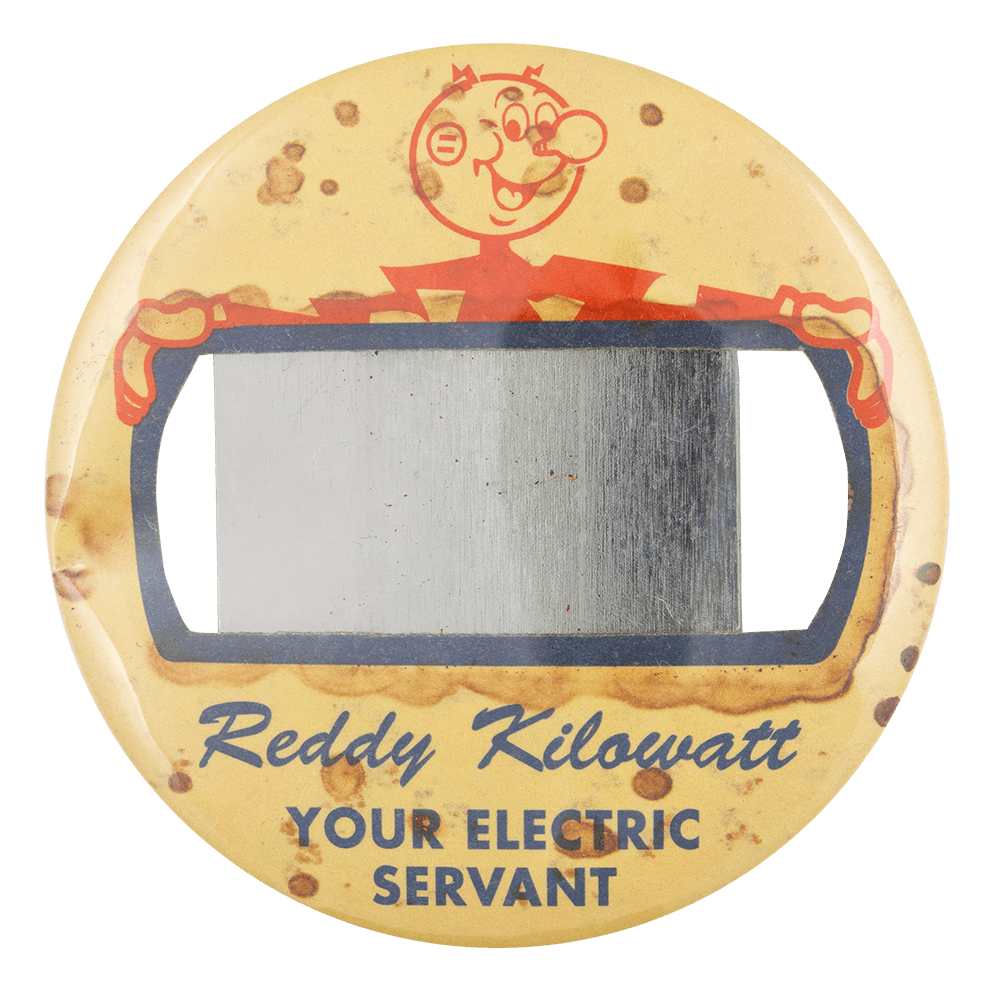
Text on Button Reddy Kilowatt YOUR ELECTRIC SERVANT
Image Description

Red illustration of Reddy Kilowatt over blue text on a white background

Back Style
The Shape
The Size
Additional Information

Reddy Kilowatt was the spokesman for the electric utility industry. He had a torso and limbs made of lighting bolts, a light bulb for a nose, and wall outlets for ears. The character was created by Ashton B. Collins Sr., the marketing manager for the Alabama Power Co. in 1926 and was used to promote consumption and safety. Inspiration from the character drew upon how lightning danced during a storm. Children’s book artist Dorothea Warren refined Reddy’s image in 1933 while Ashton was granted the patent to the character, leading to the development of the Reddy Kilowatt Service (RKS). RKS marketed Reddy’s image to additional electric companies with as many 222 electric companies licensed to use the image by 1957. The character featured prominently in advertising, comic books, giveaway items. Many companies discontinued the use of Reddy Kilowatt in the 1980s with electric companies developing their own brands and marketing strategies to market their companies. Reddy’s image was again updated in 1998, but RKS was sold to Xcel Energy in 2000 and merged.

ID Badges offered a place for wearers to put their personal name in the window. The badges could be mass produced without individual names and as employees were hired, the badges could be given out to each employee for them to add their name.

Sources

Infanzon, V. (2017, March 30). Whatever happened to Reddy Kilowatt? Duke Energy Illumination. Retrieved from https://illumination.duke-energy.com/articles/whatever-happened-to-redd… Partain, D. (2019, November 5). Remember this: Reddy Kilowatt. Northeast News. Retrieved from http://northeastnews.net/pages/remember-reddy-kilowatt/ Virgin, B. (2006, July 12). Why Reddy Kilowatt is no longer current. SeattlePi. Retrieved from https://www.seattlepi.com/news/article/Why-Reddy-Kilowatt-is-no-longer-…

Catalog ID AD0908

Panasonic Bicycles

Category
Additional Images
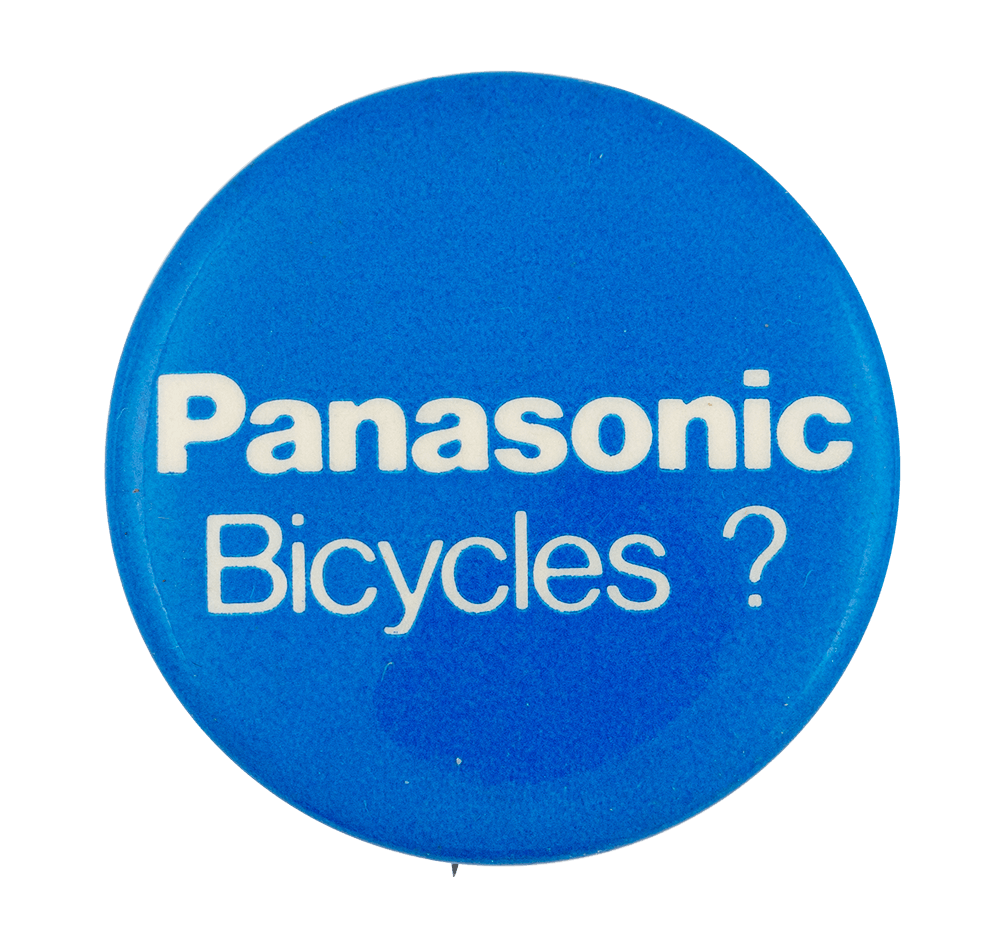
Text on Button Panasonic Bicycles ?
Image Description

White text on a blue background

Back Style
The Shape
The Size
Additional Information

Konosuke Matsushita, the founder of Panasonic, spent many years as an apprentice in bicycle shops in Japan. While known for electric products, the first successful product marketed by Panasonic was a bullet-shaped battery-powered bicycle lamp which boasted a battery life more than ten times that of other products on the market. Panasonic began to put top-of-the-line bicycles on the market after World War II. By 1971, Panasonic was a household name in bicycles and even became the supplier for the National team of Japan in the Olympics and major racing teams in the Tour de France. With the death of the company founder in 1989, Panasonic discontinued its bicycle manufacturing efforts in foreign markets. In 2019, Panasonic joined US bicycle manufacturer Kent International Inc., in announcing new electric-assist bicycles to the US eBike market.

Sources

Nederhoff, D. (2020). History of Panasonic Bicycles. Retrieved July 08, 2020, from https://www.panasonicbikemuseum.info/history/

Panasonic. (n.d.). Panasonic Museum - Panasonic. Retrieved July 08, 2020, from https://www.panasonic.com/global/corporate/history/panasonic-museum.html

Rohrer, M., & Kopcyzk, A. (2019, January 7). Electric-Assist Bicycles. Retrieved July 08, 2020, from https://na.panasonic.com/us/automotive-solutions/electric-assist-bicycl…

The Panasonic Story. (2020). Retrieved July 08, 2020, from https://www.nipponcycles.com/panasonic-cycle-tech-matsushita-history-os…

Catalog ID AD0898

New York Central System

Category
Additional Images
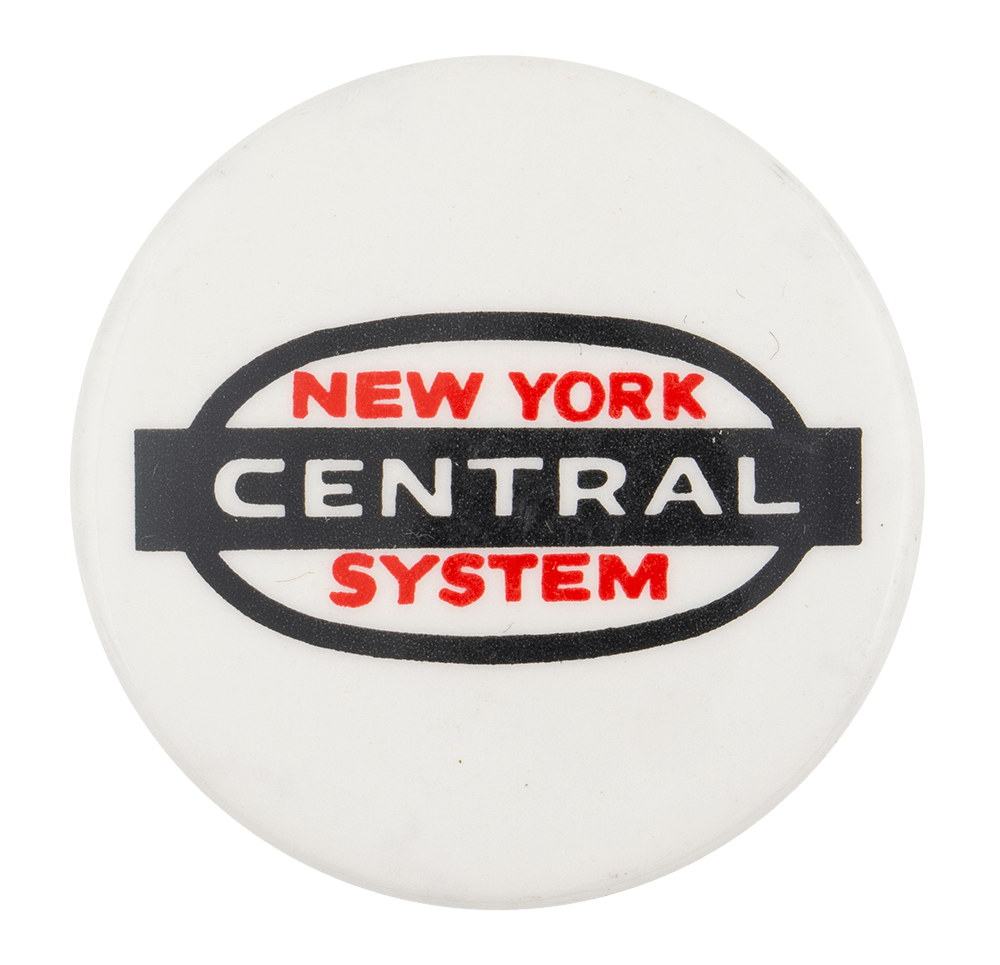
Text on Button NEW YORK CENTRAL SYSTEM
Image Description

Red text inside a black oval with a black stripe with white text on a white background

Curl Text CHARLES PROD CO ROCKVILLE MD 20852
Back Style
The Shape
The Size
The Manufacturer
Additional Information

The New York Central System (NYCS) railroad originated as early as 1826. At its height of popularity, the NYCS was one of the largest American railroads operating. From 1902-1967, NYCS ran a first-class passenger train service from Grand Central Station in New York City, New York, to La Salle St. in Chicago, Illinois. In 1967, the company updated their logo from the monochromatic image previously to a tri-tone black/red/white image. Although not as grand as it used to be, the New York Central System is still in operation under the company Conrail, and is used to transport goods from the Eastern states to the Midwest.

Sources

New York Central Railroad: Map, Photos, History & More. (n.d.). Retrieved July 08, 2020, from https://www.american-rails.com/york.html

New York Central System Historical Society. (2013, July 11). NYC Railroad History. Retrieved July 08, 2020, from https://nycshs.org/1988/01/03/nyc-railroad-history/

Catalog ID AD0897

My First Sony

Category
Additional Images
Sub Categories
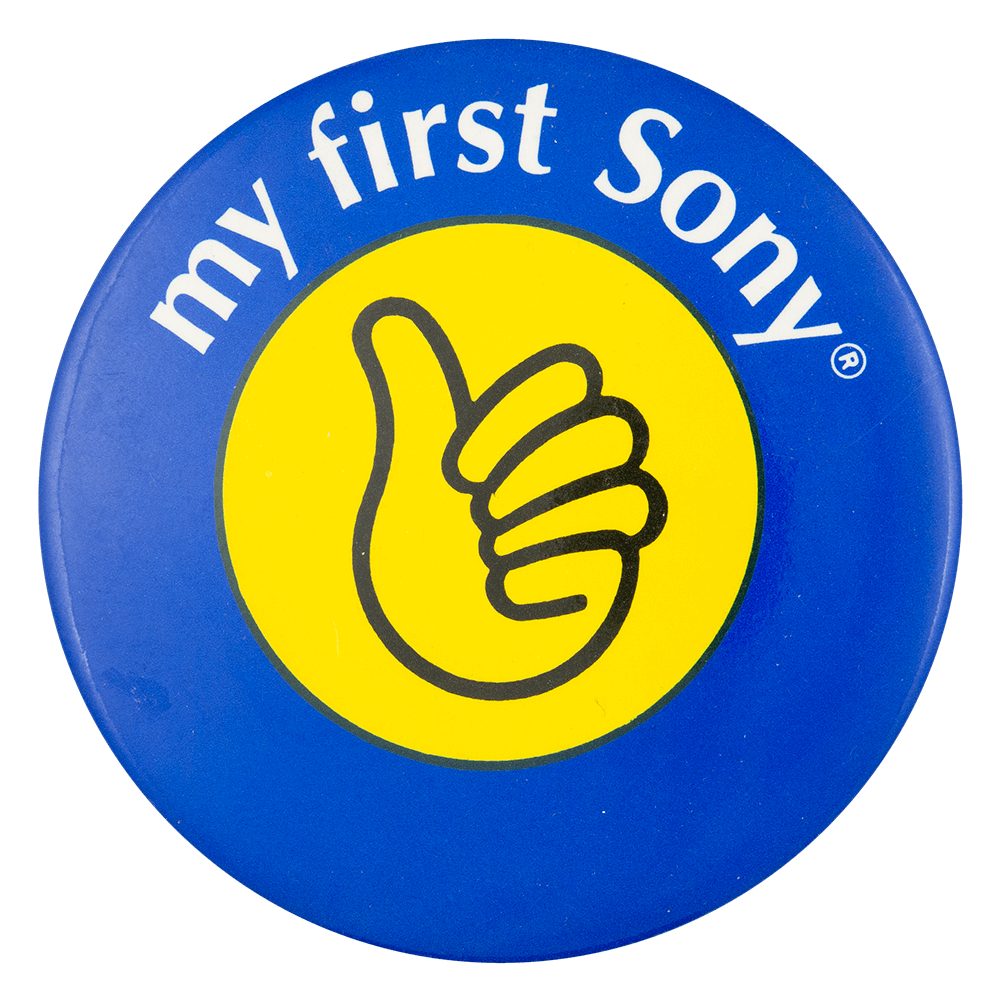
Text on Button my first Sony ®
Image Description

White text on a blue outer edge with a yellow circle in the middle with an illustration of a hand

Back Style
The Shape
The Size
Additional Information

My First Sony was a children’s series of small electronics made in bright plastics—usually red, yellow, and blue. Some of the most notable items were, “Walkmans, amplified microphone with tape deck, recording tape deck, Boom box, alarm clock, electronic sketch pad, and headset walkie talkies,” that were designed with simplified controls to be kid-friendly and appealing.

Sources

My First Sony (2019, July 19). In Wikipedia. Retrieved June 27, 2020, from https://en.wikipedia.org/wiki/My_First_Sony

My First Sony Series / Gallery / Sony Design / Sony. (n.d.). Sony Design. https://www.sony.com/en/SonyInfo/design/gallery/MyFirstSonySeries/

Catalog ID AD0903

Model Cities

Category
Additional Images
Sub Categories
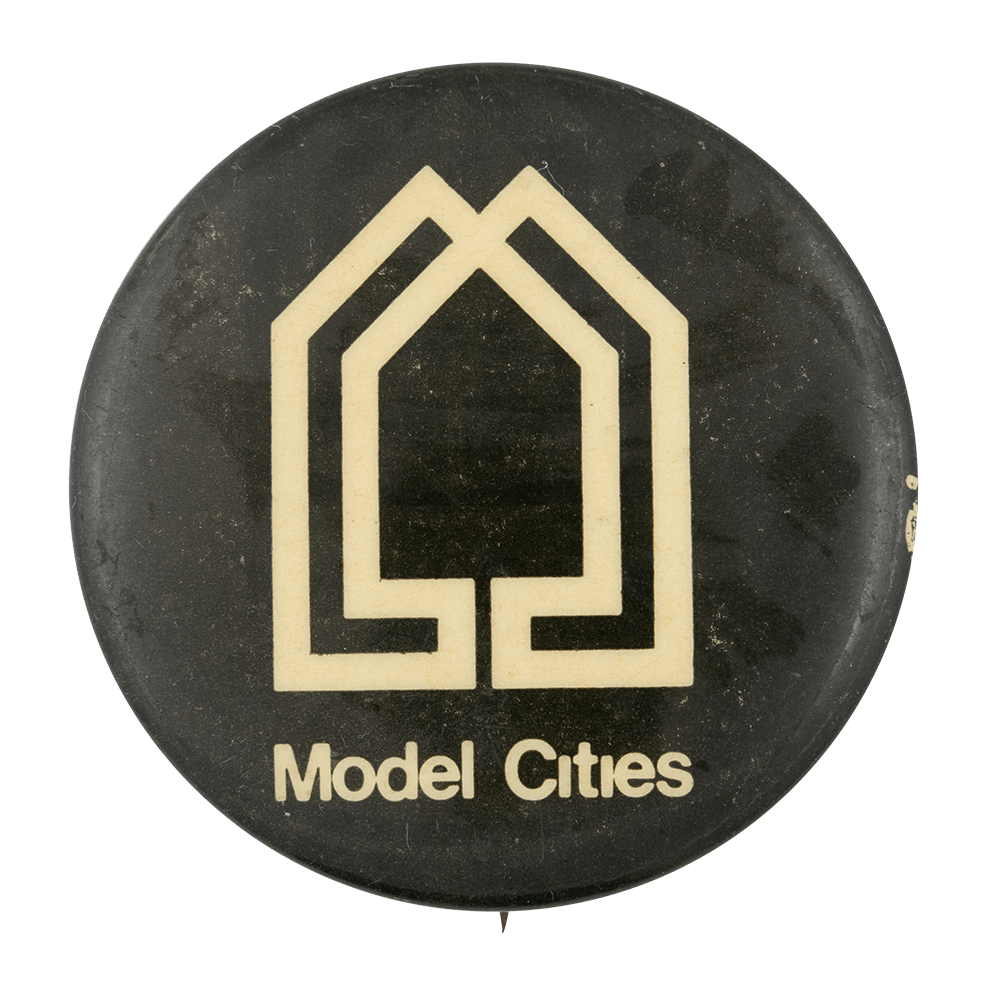
Text on Button Model Cities
Image Description

White illustration of buildings over white text on a black background

Curl Text EMRESS SPECIALTY CO NEW YORK, N.Y. 10010
Back Style
The Shape
The Size
The Manufacturer
Additional Information

In 1966, the United States Congress passed the Demonstration Cities and Metropolitan Development Act, which began the federal Model Cities Program, which was administered by the Department of Housing and Urban Development. Intended to address the growing problems of poverty and physical and economic blight in many of the nations’ cities, the program awarded funding to cities to make plans to improve life in designated “Model Neighborhoods.” Although it was a federal program, local participation was emphasized. In fact, the program got its name because it was meant to create a “model” relationship between federal, local, and community actors. When Richard Nixon became president in 1969 and advocated for “new federalism”, the program transformed to align with Nixon’s formulaic revenue-sharing model. After his 1972 reelection, Nixon reevaluated the federal aid flowing to cities. He ended funding for the Model Cities program in 1973.

Sources

Landis, J. (2012). Model Cities Program. In A.T. Carswell (Ed). The Encyclopedia of Housing, Second Edition (Vol. 2, pp. 458-461) SAGE Publications, Inc. 

Klemek, C. (2007). Model Cities. In D. Goldfield (Ed.), Encyclopedia of American Urban History (Vol. 2, pp. 484-486). Thousand Oaks, CA: SAGE Reference. 

Hetzel, O. & Pinsky, D. E. (1969, May). The Model Cities Program. Vanderbilt Law Program. 22(4). 

Catalog ID AD0911

Kodak Batteries

Category
Additional Images
Sub Categories
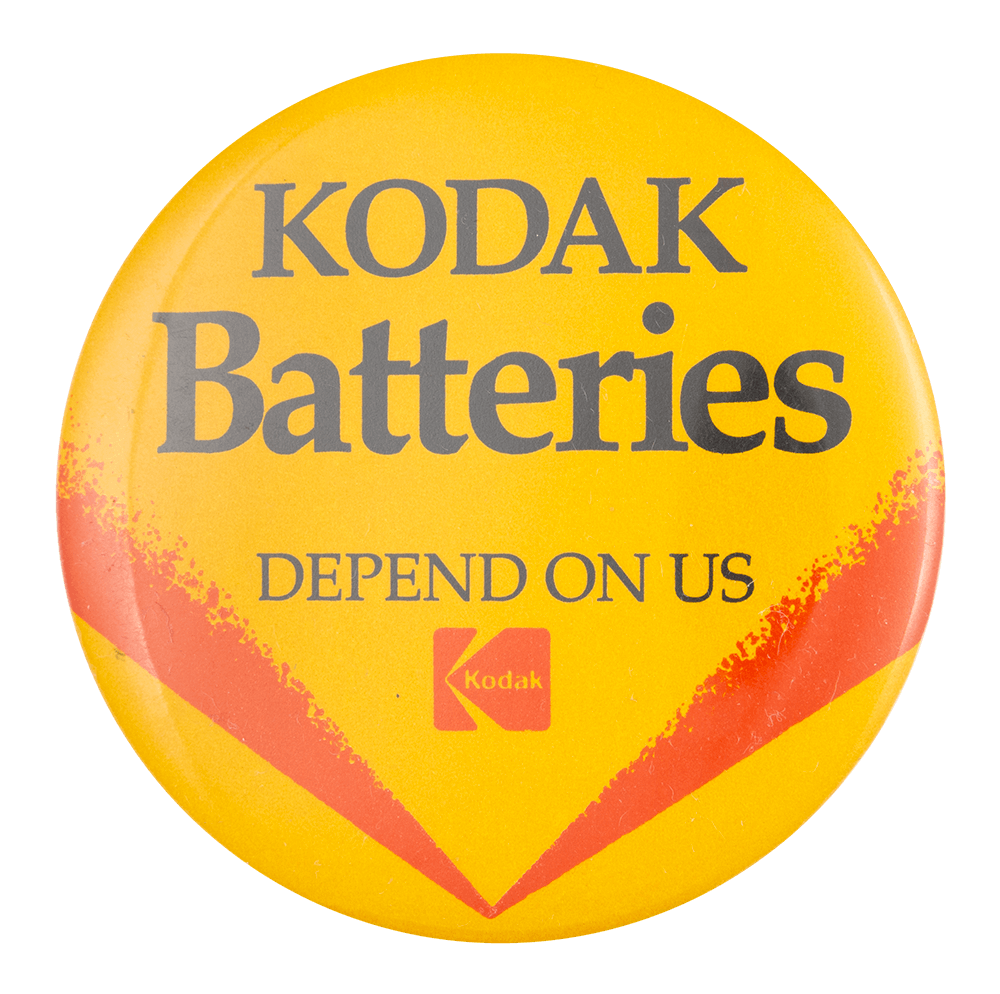
Text on Button KODAK Batteries DEPEND ON US
Image Description

Black text on a gold background with a red logo

Back Style
The Shape
The Size
Additional Information

Kodak batteries is an offshoot of the parent company Kodak. The company was founded by George Eastman and Henry Strong in 1888. The company initially started off selling inexpensive cameras and as technology advancements were made, they produced new products to match the market. Batteries were one such product they began producing in 1986, with the tagline Depend on Us.

Sources

Heritage. (n.d.). Retrieved from https://www.kodak.com/US/en/corp/aboutus/heritage/default.htm

Sims, C. (1986). Kodak Introduces New Battery Lines. Retrieved from https://www.nytimes.com/1986/05/23/business/kodak-introduces-new-batter…

Catalog ID AD0888

I am Loved Pumpkins Helzberg Diamonds

Category
Additional Images
Sub Categories
Text on Button I AM LOVED
Image Description

Black text over a gold background and illustration of jack-o-laterns

Back Paper / Back Info

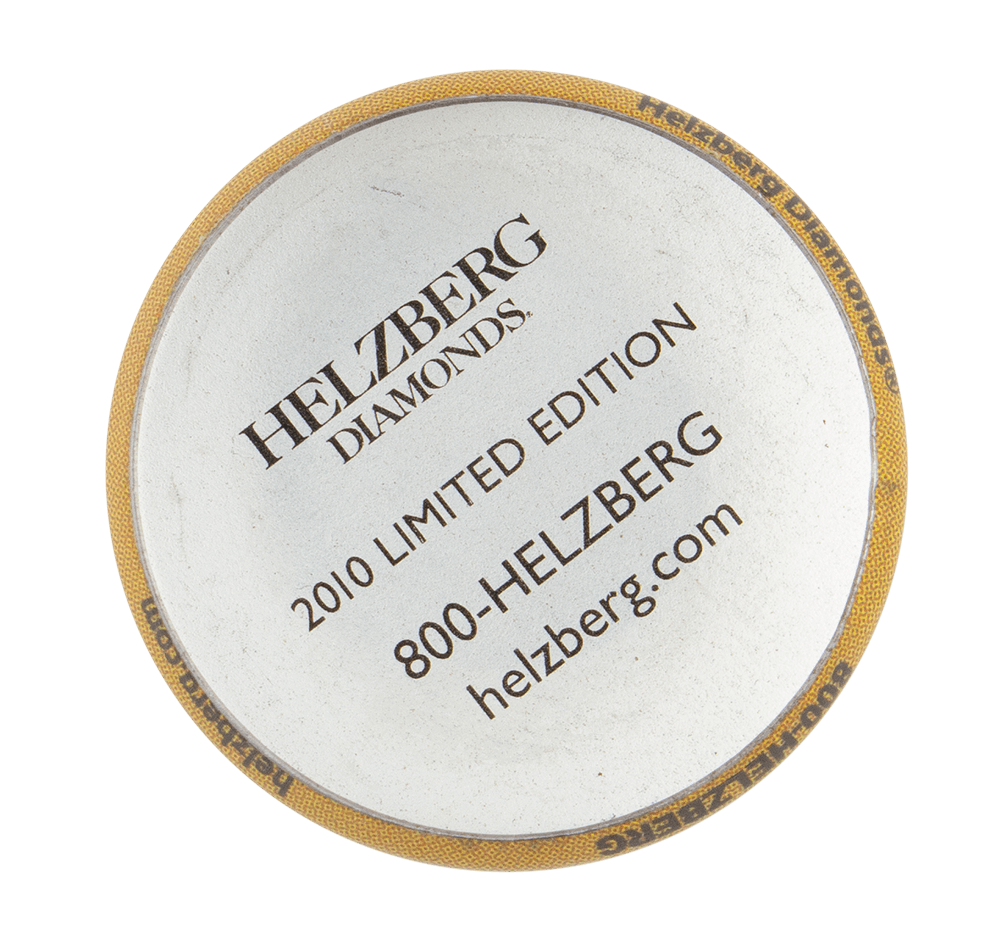
HELZBERG DIAMONDS 2010 LIMITED EDITION 800-HELZBERG helzberg.com

Curl Text HELZBERG DIAMONDS 2010 LIMITED EDITION 800-HELZBERG helzberg.com
Back Style
The Shape
The Size
Year / Decade Made
The Manufacturer
Additional Information

The Helzberg Diamonds Foundation started a campaign in 1967 when Barnett Helzberg Jr. proposed to his girlfriend Shirley Bush. He wanted her to know that she was loved, and decided to give away buttons reading “I am loved” in all of his stores. The buttons became popular across the country immediately. They were used by schools and religious groups and were sent to servicemen overseas. Foreign language and limited edition versions of the button were introduced, such as this 2010 Halloween version of the button. Since 1967 buttons were given away in Helzberg stores with the tagline “buy her a diamond or give her a button, but in any case, tell her she’s loved”.

Sources

AGHCollect. (2014). Helzberg “I Am Loved” Pinback. Retrieved from https://www.collectorsweekly.com/stories/115220-helzberg-i-am-loved-pin…;

About Helzberg Diamonds. (n.d.). Retrieved from https://www.helzberg.com/category/about+helzberg.do 

History of Helzberg Diamonds - Our Story. (n.d.). Helzberg. https://www.helzberg.com/the-helzberg-story.html

Catalog ID AD0889

Get it in Glass

Category
Additional Images
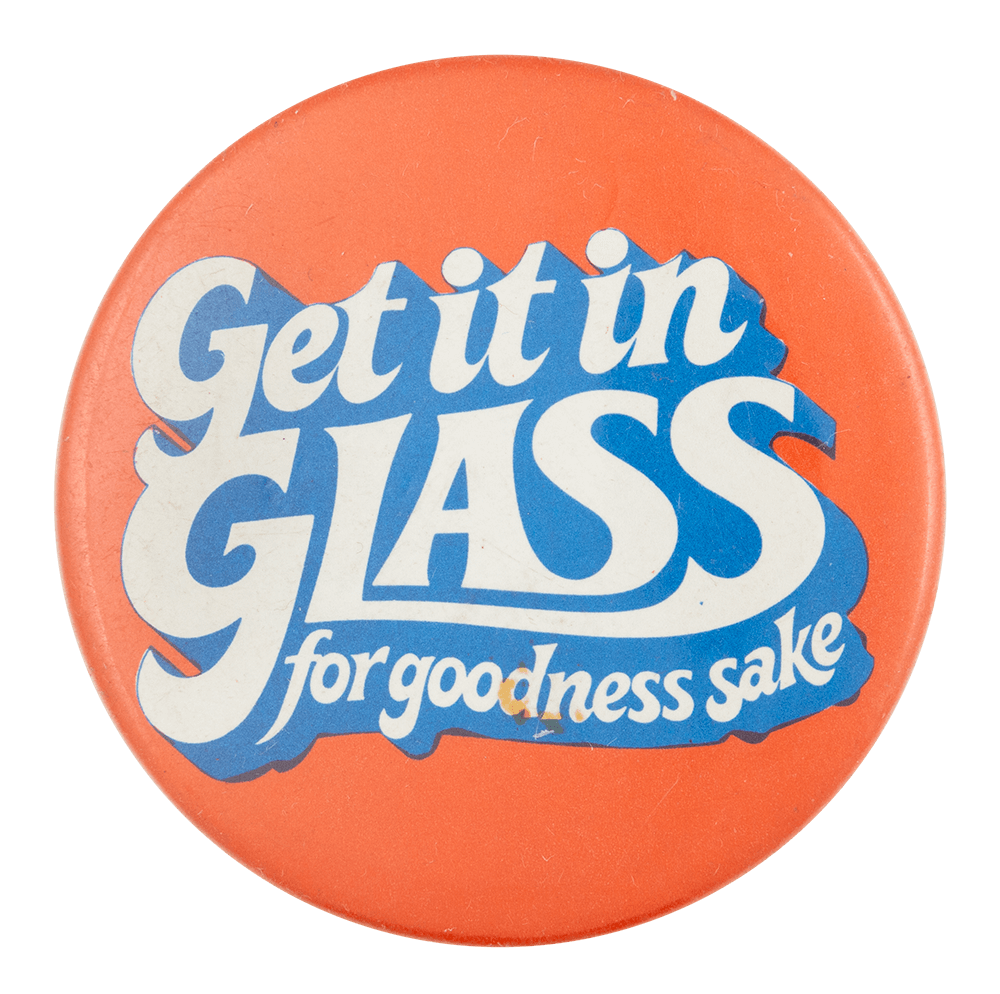
Text on Button Get it in GLASS for goodness sake
Image Description

White text outlined in blue on an orange background

Back Style
The Shape
The Size
Year / Decade Made
Additional Information

"Get it in Glass" was part of a campaign by Owens-Illinois to spread awareness about the importance of glass containers. This year-long program used the slogan 'Get It In Glass, For Goodness Sake' as the theme, printing it on banners, posters, bumper stickers, billboards, in newspaper ads and appearing in radio ads. 

Sources

Object Record. (n.d.). West Virginia Museum of Glass. Retrieved June 22, 2019, from https://magwv.pastperfectonline.com/webobject/CBEB55BB-86F8-456B-B8DA-063295938978


Catalog ID AD0776