I Am for Buffalo Red

Additional Images
Sub Categories
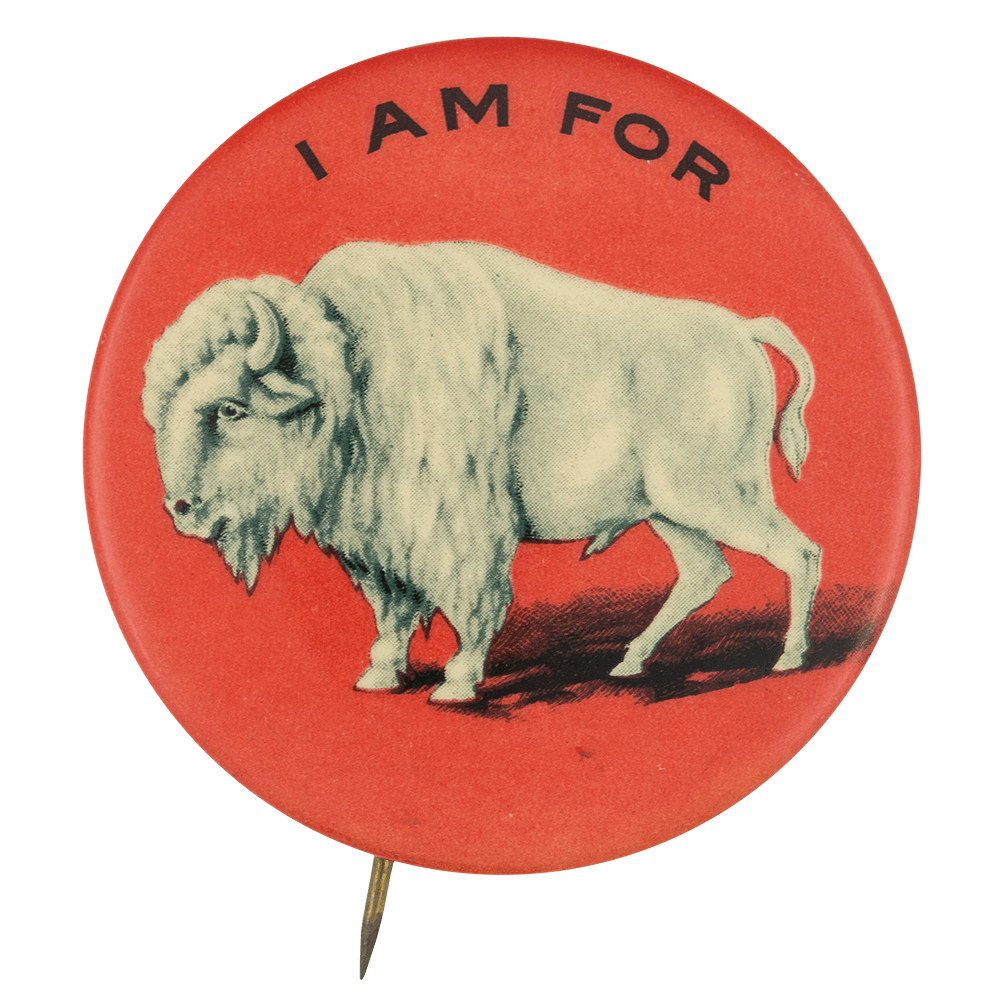
Text on Button I AM FOR
Image Description

Black text over a white illustration of a buffalo on a red background

Back Paper / Back Info

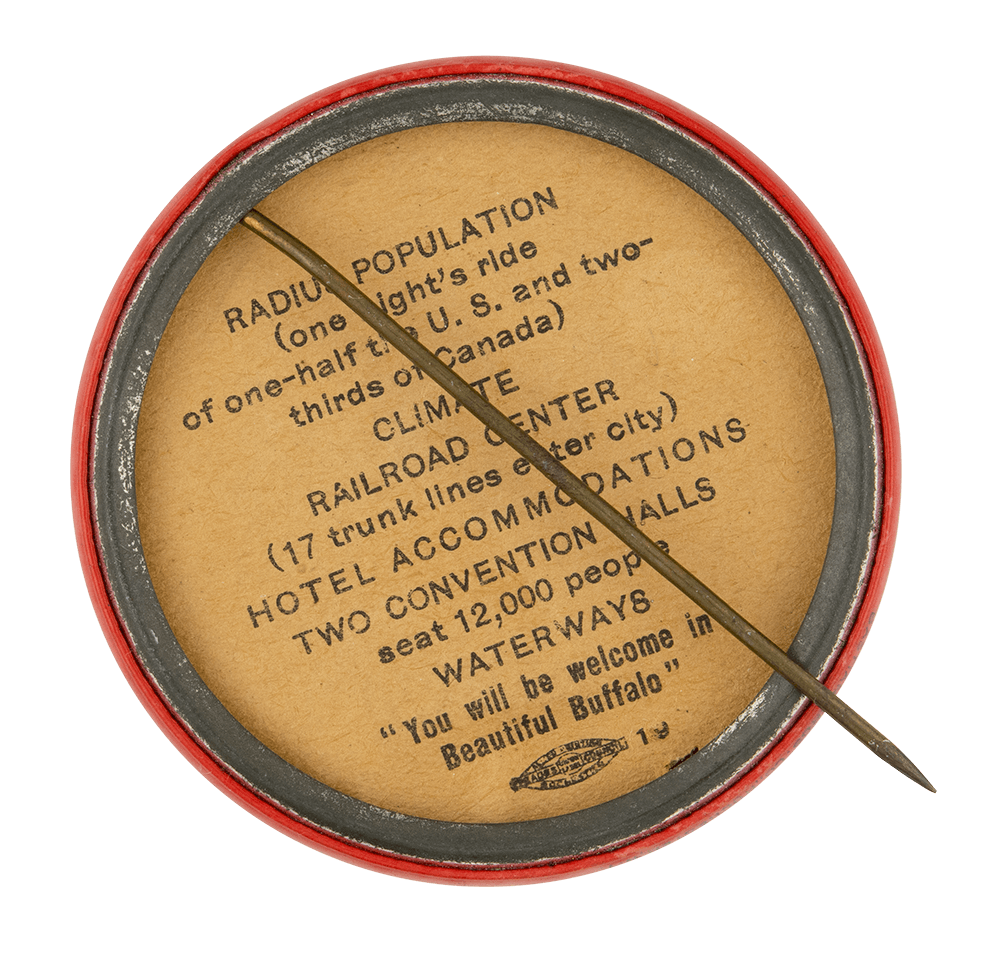
RADIUS POPULATION (one night's ride of one-half the U.S. and two-thirds of Canada) CLIMATE RAILROAD CENTER (17 trunk lines enter city) HOTEL ACCOMMODATIONS TWO CONVENTION HALLS seat 12,000 people WATERWAYS "You will be welcome in Beautiful Buffalo"

Back Style
The Shape
The Size
Additional Information

Between May and November 1901, a World’s Fair entitled the Pan-American Exposition was held in Buffalo, New York. Posters, buttons, and other forms of advertisement for the event often depicted a buffalo. Buffalos were fitting, not only because they served as a symbol for the American West, but also, directly related to the city in which the exposition was hosted. Though Niagara Falls also vied for hosting privileges, Buffalo ultimately won out because of its larger population and extensive railroad connections. For six months, the Pan-American Exposition showed off the latest cultural and technological innovations from the Western Hemisphere. President William McKinley attended and delivered a speech at the event, though he was later assassinated inside one of the buildings at the exposition.

Sources

Andrews, E. (2016, September 6). The assassination of President William McKinley. History. https://www.history.com/news/the-assassination-of-president-william-mck…

TR. (n.d.). The Pan-American Exposition. https://www.trsite.org/learn/the-pan-american-expo

WorthPoint. (n.d.). I am for buffalo bison pin back circa 1900-1905 panam. https://www.worthpoint.com/worthopedia/am-buffalo-bison-pin-circa-1900-…

Catalog ID CL0557

I Am for Buffalo Blue

Category
Additional Images
Sub Categories
Text on Button I AM FOR
Image Description

White text over an illustration of a buffalo on a blue background

Back Style
The Shape
The Size
Year / Decade Made
Additional Information

Between May and November 1901, a World’s Fair entitled the Pan-American Exposition was held in Buffalo, New York. Posters, buttons, and other forms of advertisement for the event often depicted a buffalo. Buffalos were fitting, not only because they served as a symbol for the American Wes,t but also, directly related to the city in which the exposition was hosted. Though Niagara Falls also vied for hosting privileges, Buffalo ultimately won out because of its larger population and extensive railroad connections. For six months, the Pan-American Exposition showed off the latest cultural and technological innovations from the Western Hemisphere. President William McKinley attended and delivered a speech at the event, though he was later assassinated inside one of the buildings at the exposition.

Sources

Andrews, E. (2016, September 6). The assassination of President William McKinley. History. https://www.history.com/news/the-assassination-of-president-william-mck…

TR. (n.d.). The Pan-American Exposition. https://www.trsite.org/learn/the-pan-american-expo

WorthPoint. (n.d.). I am for buffalo bison pin back circa 1900-1905 panam. https://www.worthpoint.com/worthopedia/am-buffalo-bison-pin-circa-1900-…

Catalog ID CL0556

Historic Rittenhouse Town

Category
Additional Images
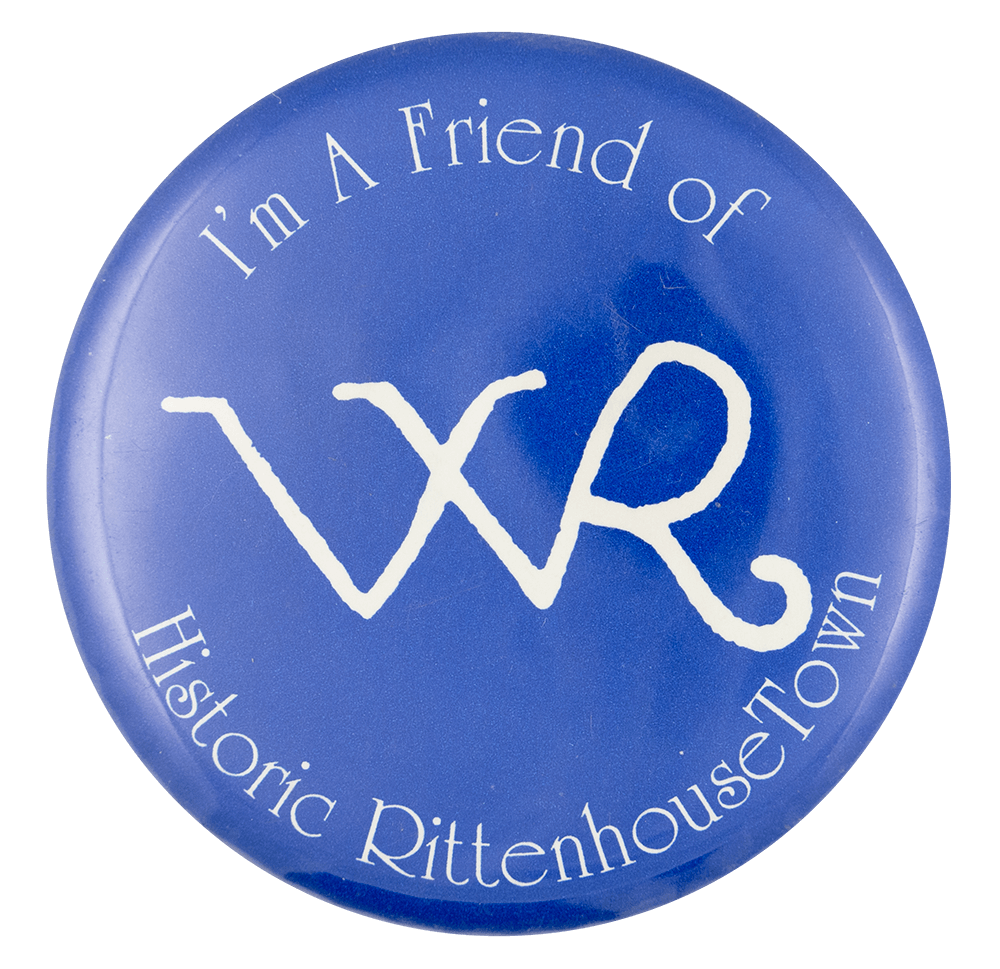
Text on Button I'm A Friend of WR Historic RittenhouseTown
Image Description

White text on a blue background

Back Style
The Shape
The Size
Additional Information

Located in Philadelphia, Historic Rittenhouse Town is an industrial community that was erected in the late seventeenth century. The site is home to America’s first paper mill, which was built by William Rittenhouse and his son Nicholas in 1690. Six original buildings including the Rittenhouse family’s homestead, barn, and bake house are open to the public for viewing. Four Rittenhouse paper mills remained operable through the 1800s and continue to sit on the edge of Monoshone Creek. Interestingly, these mills were responsible for producing paper that was purchased and used by Benjamin Franklin, one of the Founding Fathers of the nation. Rittenhouse paper was also used to create hats for the Pennsylvania militia during the Revolutionary War. The Rittenhouse family used scraps from a rag supplier in nearby Germantown to manufacture their paper. Prior to the establishment of paper mills in British North America, colonists secretly imported paper from France.

Friends of Historic Rittenhouse Town was established in 1984 by Hugh Hanson in order to spearhead preservation efforts for the industrial village. Some of the organization’s first accomplishments include the restoration of the Abraham Rittenhouse home and its conversion into the Visitor’s Center in 1992.

Sources

Historic Rittenhouse Town. (n.d.). About. https://rittenhousetown.org/about/

Independence Hall Association. (n.d.). Historic Rittenhouse Town. https://www.ushistory.org/germantown/upper/rittenhouse.htm

Whitten, H. (2009). The Rittenhouse paper mill circa 1690...the beginning in America. PaperAge. http://www.paperage.com/issues/nov_dec2009/11_2009of_interest_rittenhou…

Catalog ID CL0555

Button Museum Souvenir

Category
Additional Images
Sub Categories
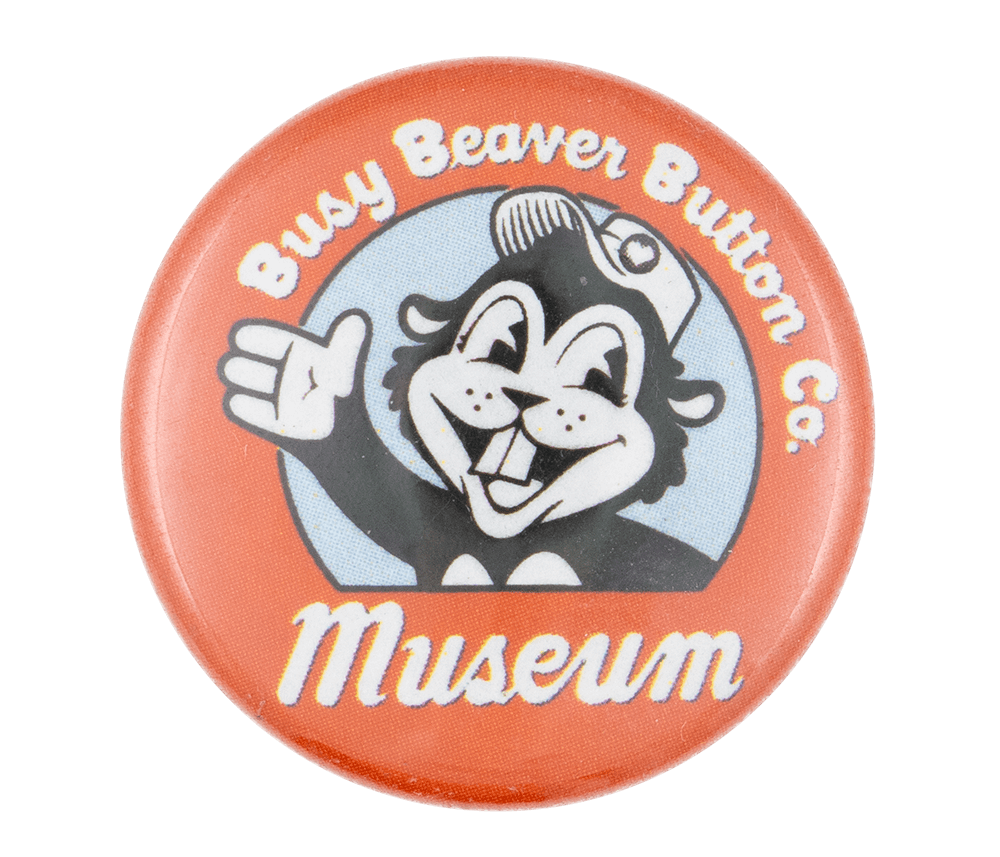
Text on Button Busy Beaver Button Co. Museum
Image Description

White text around an illustration of a beaver character on a red background

Curl Text www.busybeaver.net
Back Style
The Shape
The Size
Year / Decade Made
The Manufacturer
Additional Information

Christen Carter founded the Busy Beaver Button Company in 1995, working out of her college apartment. The company has grown and has produced over 85,000 designs and tens of millions of buttons. The company hopes to help people express their creativity and values industriousness, working collaboratively, and social responsibility. They are committed to green manufacturing and purchased an abandoned Chicago building to transform it into a green factory. Christen Carter and her brother, Joel Carter, also founded the Busy Beaver Button Museum in 2010, which is the world’s only pinback button museum. A button from every Busy Beaver Button Co. order is also added to the museum.

Sources

About. (n.d.) Busy Beaver Button Co. Retrieved from https://www.busybeaver.net/about-us/

Button Museum. (n.d.) Busy Beaver Button Co. Retrieved from https://www.busybeaver.net/button-museum/

Catalog ID BV0027

Button Museum Souvenir Square

Category
Additional Images
Sub Categories
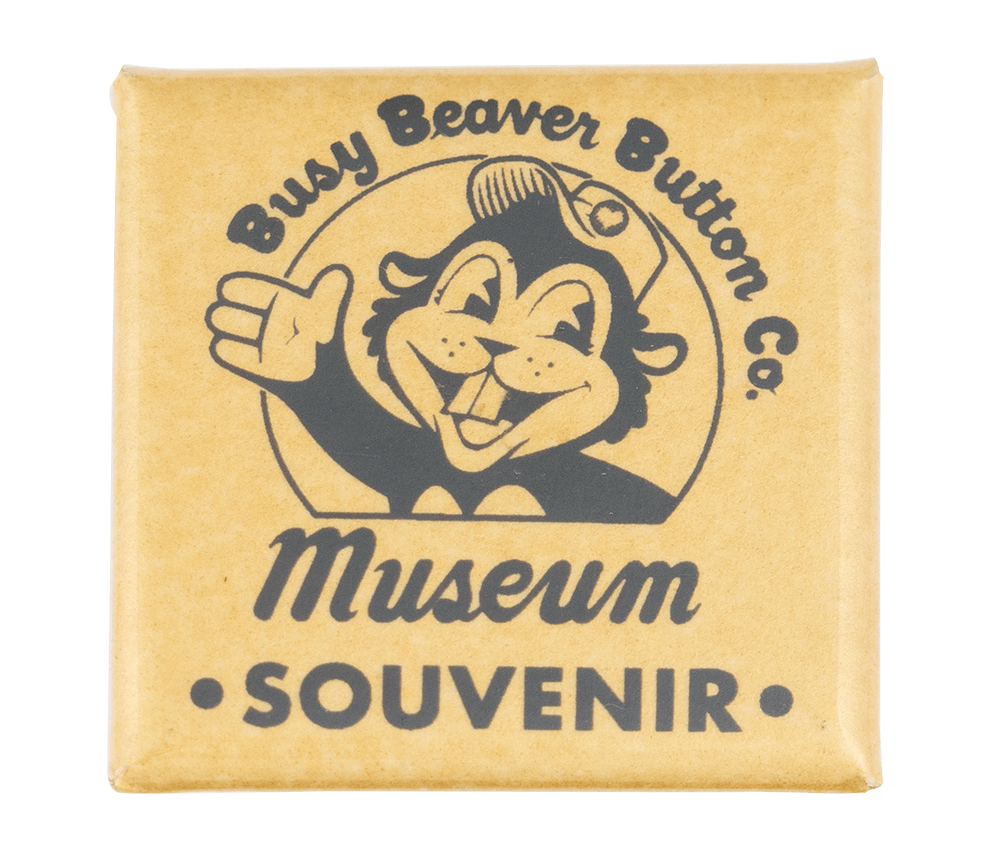
Text on Button Busy Beaver Button Co. Museum
Image Description

Black text around an illustration of a beaver character on a gold background

Curl Text www.busybeaver.net
Back Style
The Shape
The Size
Year / Decade Made
The Manufacturer
Additional Information

Christen Carter founded the Busy Beaver Button Company in 1995, working out of her college apartment. The company has grown and has produced over 85,000 designs and tens of millions of buttons. The company hopes to help people express their creativity and values industriousness, working collaboratively, and social responsibility. They are committed to green manufacturing and purchased an abandoned Chicago building to transform it into a green factory. Christen Carter and her brother, Joel Carter, also founded the Busy Beaver Button Museum in 2010, which is the world’s only pinback button museum. A button from every Busy Beaver Button Co. order is also added to the museum.

Sources

About. (n.d.) Busy Beaver Button Co. Retrieved from https://www.busybeaver.net/about-us/

Button Museum. (n.d.) Busy Beaver Button Co. Retrieved from https://www.busybeaver.net/button-museum/

Catalog ID BV0026

Beaver Falls 1930

Category
Additional Images
Text on Button BEAVER FALLS 1930
Image Description

Black text on a white background

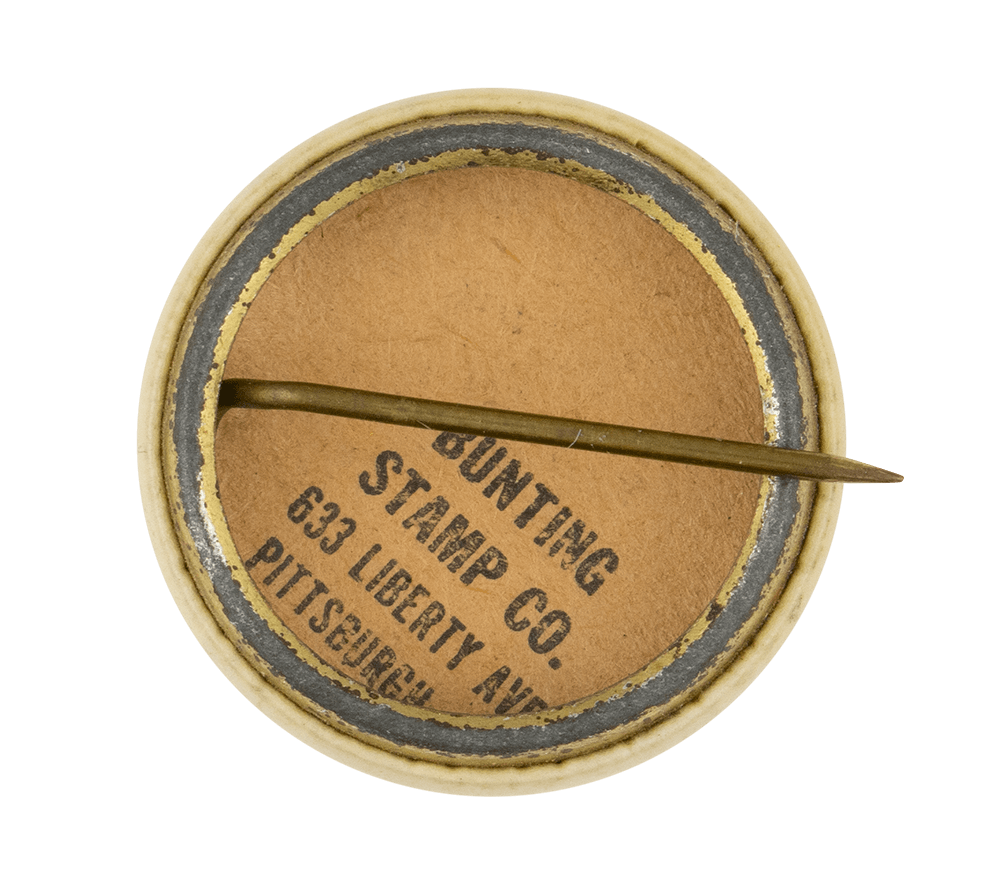
Back Paper / Back Info

BUNTING STAMP CO. 633 LIBERTY AVE PITTSBURGH, PA

Back Style
The Shape
The Size
The Manufacturer
Additional Information

Beaver Falls began as a borough located in western Pennsylvania, founded in 1868. The borough was named Middle Falls after the division of the Beaver River it borders, but was renamed Beaver Falls. The river was a key element of the borough’s early success as a source for manufacturing that included a mill and a forge. The forge was a great success due to the kidney ore found in the ground while the mill produced thousands of pounds of yarn each week. In 1930, the boroughs of Beaver Falls and College Hill consolidated into one city named Beaver Falls, which had a population of 17,147 people.

Sources

Beaver Falls Pennsylvania. (2020). History. Retrieved from http://www.beaverfallspa.org/history

U.S Department of Commerce Bureau of the Census. (1930). Fifteenth census of the United States: 1930. Retrieved from https://books.google.com/books?id=oe76l66yWQ0C&pg=PA958&lpg=PA958&dq=be…

Catalog ID BV0025

Porto Rico

Category
Additional Images
Sub Categories
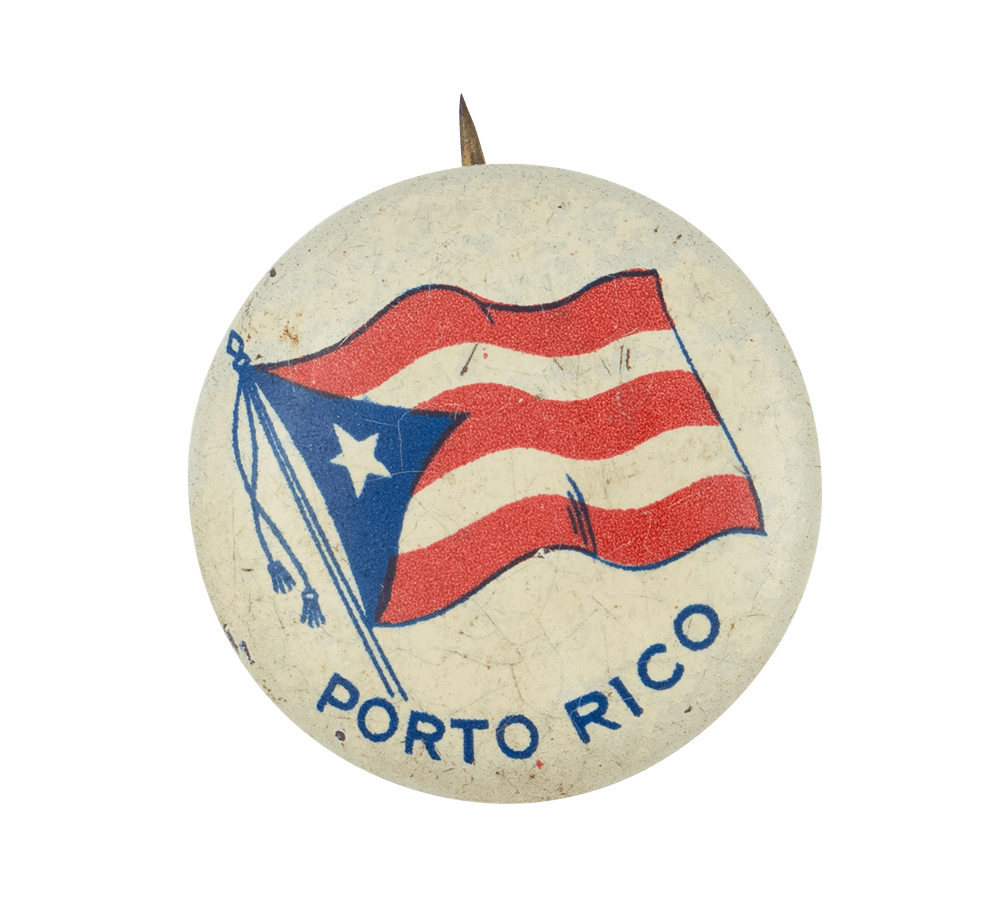
Text on Button PORTO RICO
Image Description

Illustration of a flag with red and white stripes and a blue triangle with a white star on a white background with blue text

Back Style
The Shape
The Size
Additional Information

Puerto Rico (formerly Porto Rico) is an unincorporated United States territory located in the northeast Caribbean. It is an archipelago, consisting of one main island and several smaller ones. The islands were colonized by Spain in 1508 and named for their rich natural resources, particularly gold. Nearly four hundred years later, in 1898, Spain ceded Puerto Rico to the United States, and in 1917, it became the first unincorporated U.S. territory.

One May 17, 1932, the United States Congress approved a law that changed the spelling from the Anglicanized version, Porto Rico, to the original spelling, Puerto Rico.

Sources

1900-1949. (n.d.) Puerto Rico’s History. Welcome to Puerto Rico! Retrieved from http://welcome.topuertorico.org/history5.shtml

1851-1899. (n.d.) Puerto Rico’s History. Welcome to Puerto Rico. Retrieved from http://welcome.topuertorico.org/history4.shtml

XV Century-1599. (n.d.) Puerto Rico’s History. Welcome to Puerto Rico! Retrieved from http://welcome.topuertorico.org/history.shtml

Malavet, P. (2004)  America's colony: the political and cultural conflict between the United States and Puerto Rico. NYU Press. pp. 43. Retrieved from https://books.google.com/books?id=SBVNabQqPbAC&q=porto#v=snippet&q=43&f…

Catalog ID AR0426

Madagascar

Category
Additional Images
Sub Categories
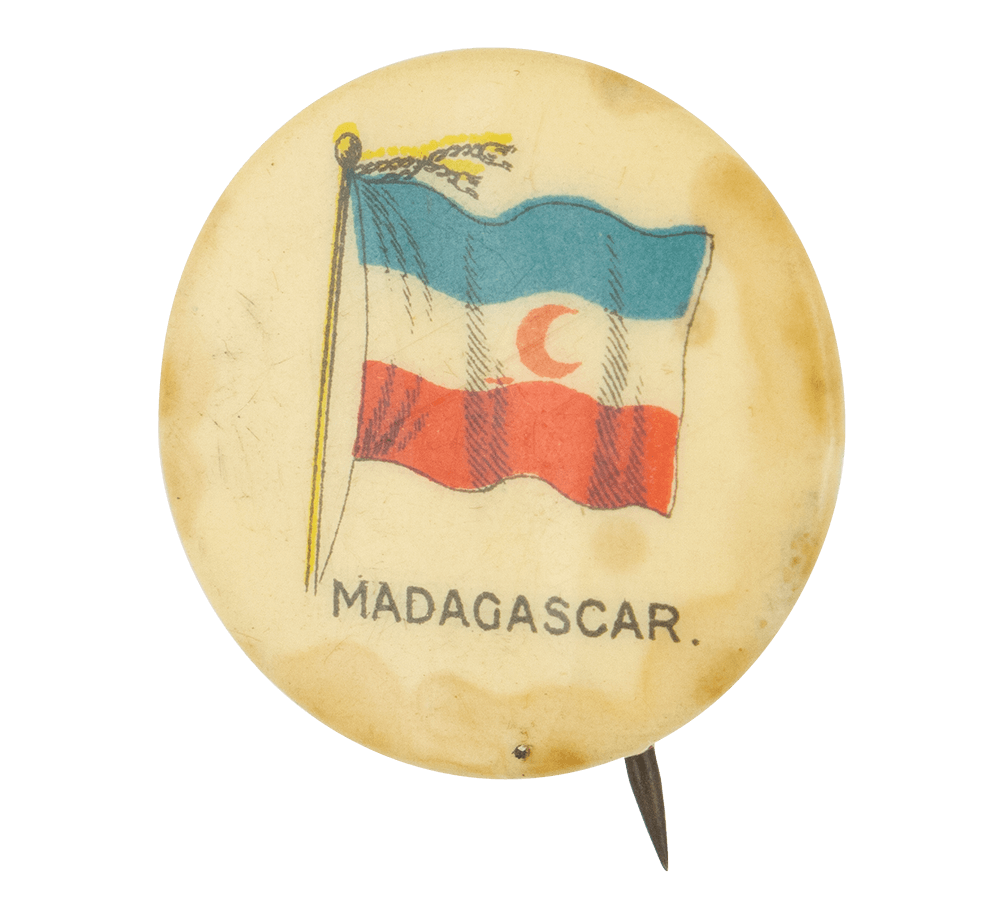
Text on Button MADAGASCAR.
Image Description

A blue, white and red striped flag with a red moon on the white stripe on a white background with black text

Back Style
The Shape
The Size
Additional Information The Malagasy Protectorate is present day Madagascar. Before becoming Madagascar, the territory was dependent to France, with local autonomy and some independence. Britain had been the first colonizing nation on the island, arriving in 1820. France originally gained the territory in 1882 after agreeing to recognize Britain's claim to nearby Zanzibar. In 1897, France made Malagasy Protectorate a French colony, changing the territory name to French Madagascar. Madagascar, officially the Republic of Madagascar, did not gain complete independence from France until June 26, 1960. The current flag of Madagascar is white, red, and green.
Catalog ID AR0424