60 and Going Strong Girl Scouts

Category
Additional Images
Sub Categories
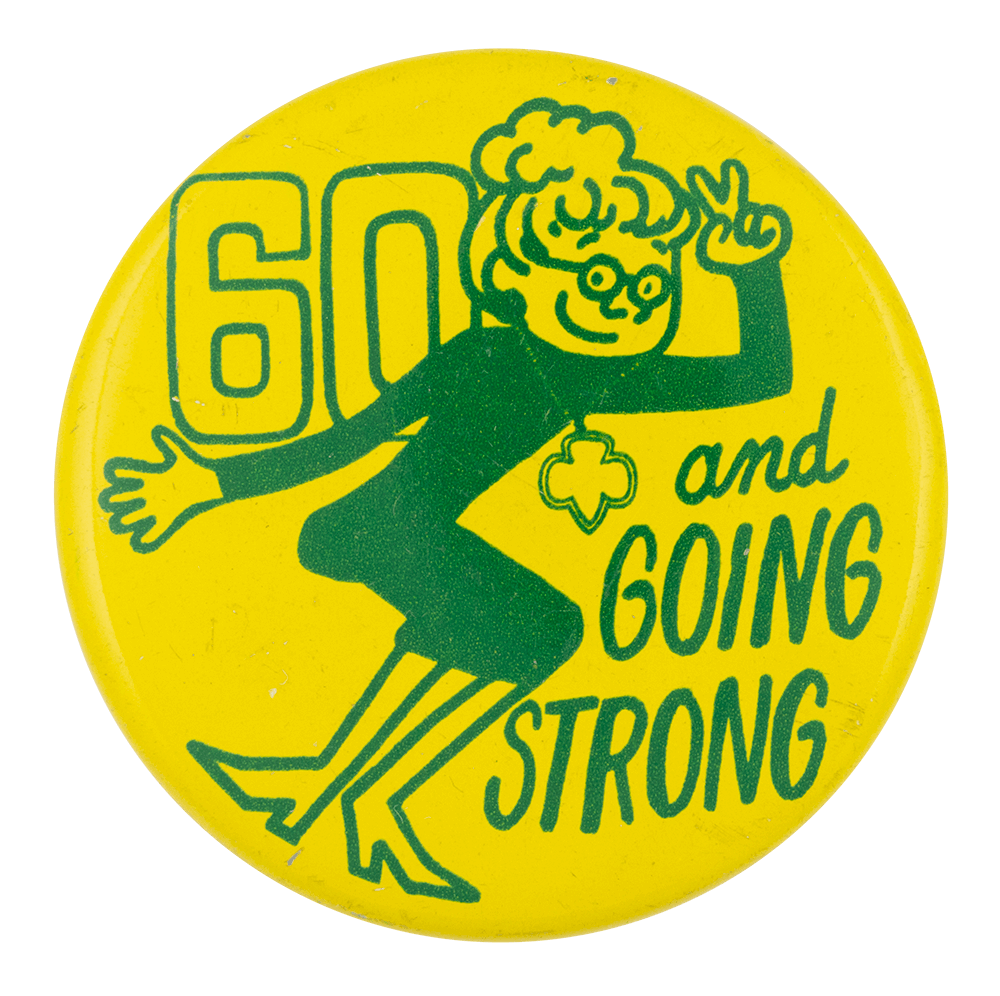
Text on Button 60 and GOING STRONG
Image Description

Green text and an illustration of a woman in a green dress wearing a necklace

Back Style
The Shape
The Size
Additional Information

The Girl Scouts of the USA (GSUSA), founded in 1912 by Juliette Gordon Low, is a nonprofit organization that helps girls build courage, confidence, and character through programs in STEM, outdoor adventures, entrepreneurship, and life skills, while also maintaining beloved traditions like earning badges and selling Girl Scout Cookies. With millions of members nationwide and ties to the World Association of Girl Guides and Girl Scouts, GSUSA is part of an international movement dedicated to promoting girls’ leadership. 

In 1972, the organization marked its 60th anniversary with commemorative items including tins, pins, collectible tokens, and buttons featuring playful designs such as “Peace Out Girl Scout.” One standout example is seen here—a design that reflected the bold style of the 1970s while celebrating pride, unity, and the enduring spirit of Girl Scouting. The button’s yellow color may symbolize volunteers serving as Leaders, Co-Leaders, or Troop Volunteers. 

Sources

Girl Scouts of Greater Chicago and Northwest Indiana. (n.d.). Yellow Adult Position Pin. Girl Scouts of Greater Chicago and Northwest Indiana. https://shop.girlscoutsgcnwi.org/product/position-pin-yellow/#:~:text=The%20Yellow%20Adult%20Position%20Pin,the%20Girl%20Scout%20Membership%20Pin

Girl Scouts of the USA. (n.d.). Juliette Gordon Low. Girl Scouts. https://www.girlscouts.org/en/discover/about-us/history/juliette-gordon-low.html

WorthPoint. (n.d.). Vintage Girl Scout 1972 60th Anniversary Pin. WorthPoint. Retrieved September 15, 2025, from https://www.worthpoint.com/worthopedia/vintage-girl-scout-1972-60th-1826102705

Catalog ID CL0533

Chicagoland Skyline

Category
Additional Images
Sub Categories
Text on Button ChICAGOLAND ChICAGOLAND ChICAGOLAND ChICAGOLAND
Image Description

Black text over blue, green and purple stripes under a colorful skyline illustration on a white background

Curl Text ©Best Seal Corp. New York 10013 1978
Back Style
The Shape
The Size
Year / Decade Made
The Manufacturer
Additional Information

The area known as Chicagoland consists of the city of Chicago and its surrounding area. The term was coined by Col. Robert McCormick, who was the editor and publisher of the Chicago Tribune in the early twentieth century. It initially referred to the city and the areas around it where its grain, timber, and livestock grew. It now references the six northeast counties of Illinois, a piece of land that stretches from Indiana to Wisconsin.

Sources

About Chicagoland. (2011 January). Chicagoland Chamber of Commerce. Retrieved from https://web.archive.org/web/20131029205946/http://chicagolandchamber.or…

Fuller, J. (n.d.) Chicagoland. Encyclopedia of Chicago. Retrieved from http://www.encyclopedia.chicagohistory.org/pages/2.html

Catalog ID CH0281

Chicagoland Lincoln

Category
Additional Images
Sub Categories
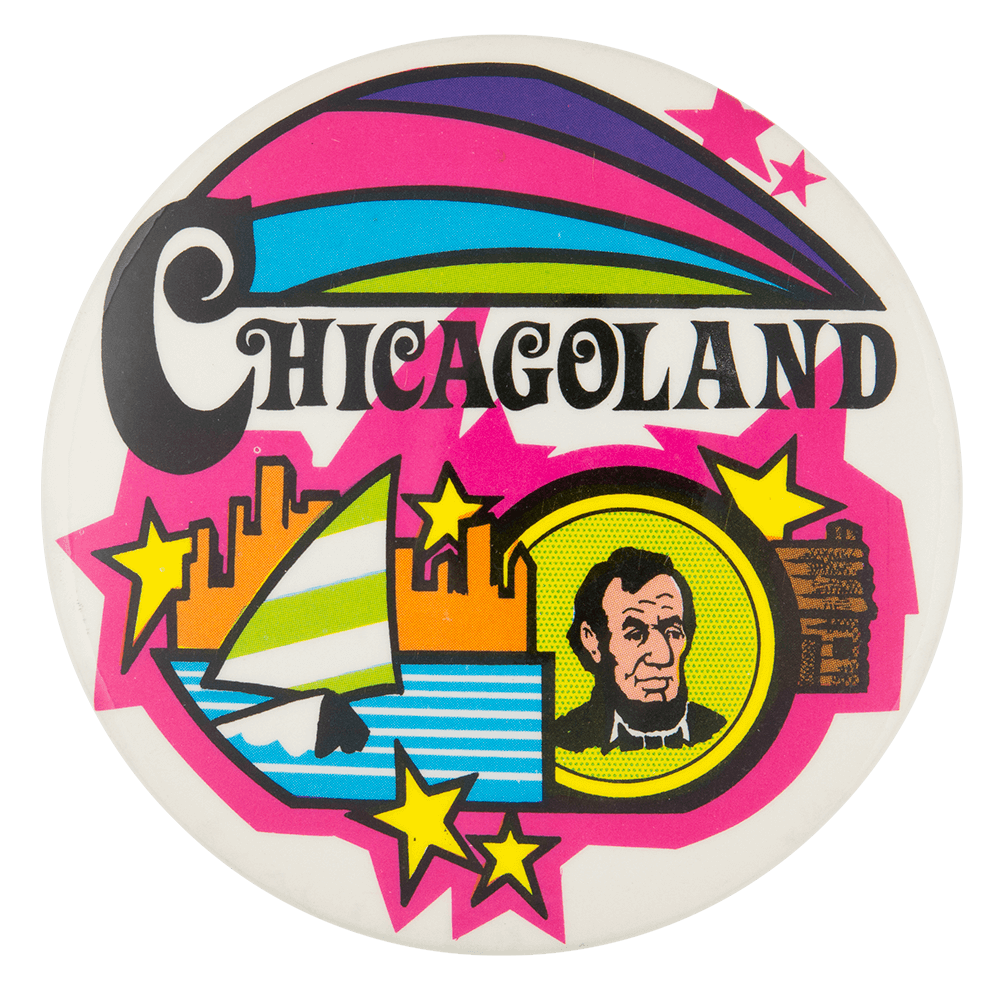
Text on Button CHICAGOLAND
Image Description

Black text and a colorful illustration with pink, purple, blue, green, yellow, orange and white, a sailboat and an image of Lincoln

Curl Text ©Best Seal Corp. New York 10013 1978
Back Style
The Shape
The Size
Year / Decade Made
The Manufacturer
Additional Information

The area known as Chicagoland consists of the city of Chicago and its surrounding area. The term was coined by Col. Robert McCormick, who was the editor and publisher of the Chicago Tribune in the early twentieth century. It initially referred to the city and the areas around it where its grain, timber, and livestock grew. It now references the six northeast counties of Illinois, a piece of land that stretches from Indiana to Wisconsin.

Sources

About Chicagoland. (2011 January). Chicagoland Chamber of Commerce. Retrieved from https://web.archive.org/web/20131029205946/http://chicagolandchamber.org...

Fuller, J. (n.d.) Chicagoland. Encyclopedia of Chicago. Retrieved from http://www.encyclopedia.chicagohistory.org/pages/2.html

Catalog ID CH0280

You've Got to Know When

Category
Additional Images
Sub Categories
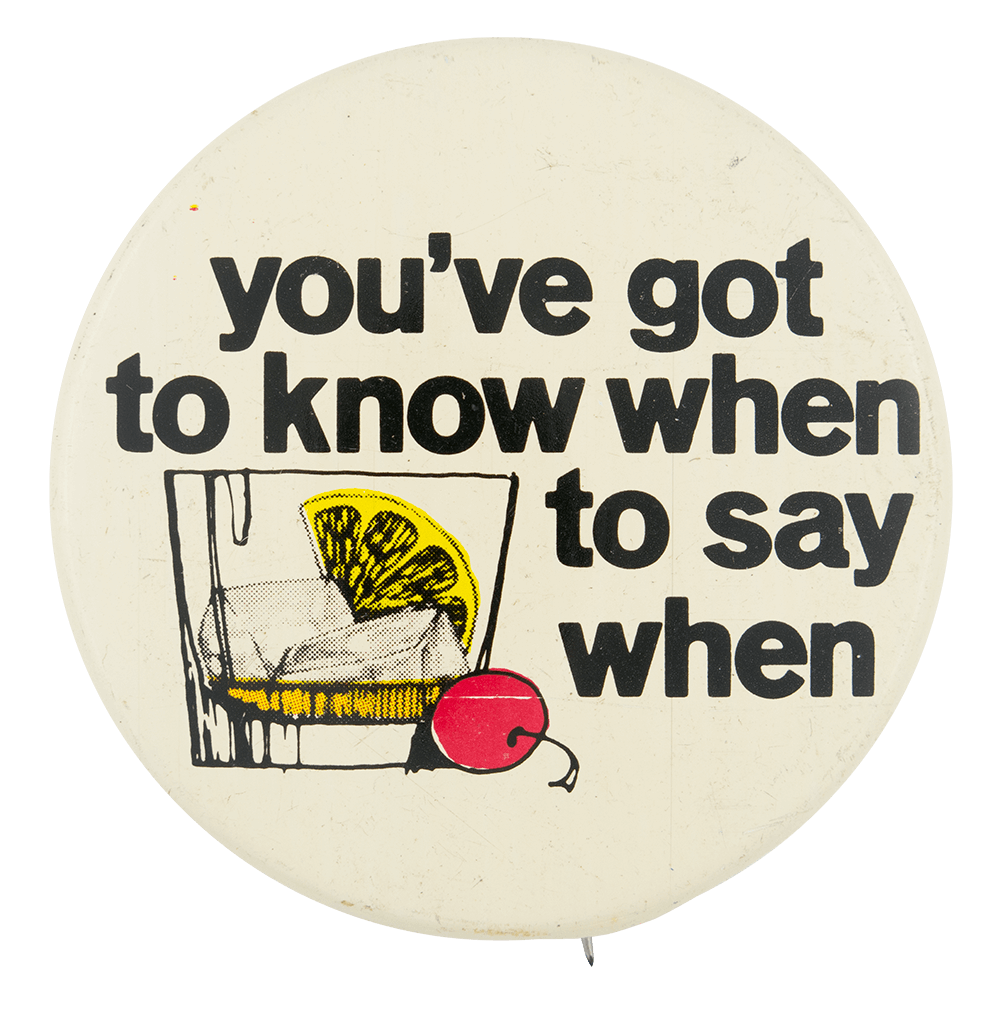
Text on Button you've got to know when to say when
Image Description

Black text and an illustration of a glass with ice, a lemon and a cherry on a white background

Back Style
The Shape
The Size
Year / Decade Made
Additional Information

Depicting a half-finished hard liquor beverage, this button is most likely the result of the “responsible drinking” mindset that spread after Anheuser-Busch initially launched its famous “Know When to Say When” campaign in the early 1980s. Amidst pressure from anti-drinking organizations, the well-known brewer launched the advertisement campaign to promote the idea of responsible drinking among its consumers. As the first of its kind to have campaign-oriented commercials on network television, the spots included sports celebrities, as well as the now-iconic bull-terrier, "Spud McKenzie" -- further propelling the popular slogan's use on t-shirts, buttons, and posters and eventually making the phrase a general attitude regarding responsible choices and social binge drinking. The following link is a commercial for the "Know When to Say When" campaign which originally aired in 1985 and starred famous football quarterback, Dan Marino: https://www.youtube.com/watch?v=5ouUXFlxpi8

Sources

(2003, September 15). Anheuser-Busch. Retrieved from https://adage.com/article/adage-encyclopedia/anheuser-busch/98319/

Catalog ID CA0730

Smoking is Stupid

Category
Additional Images
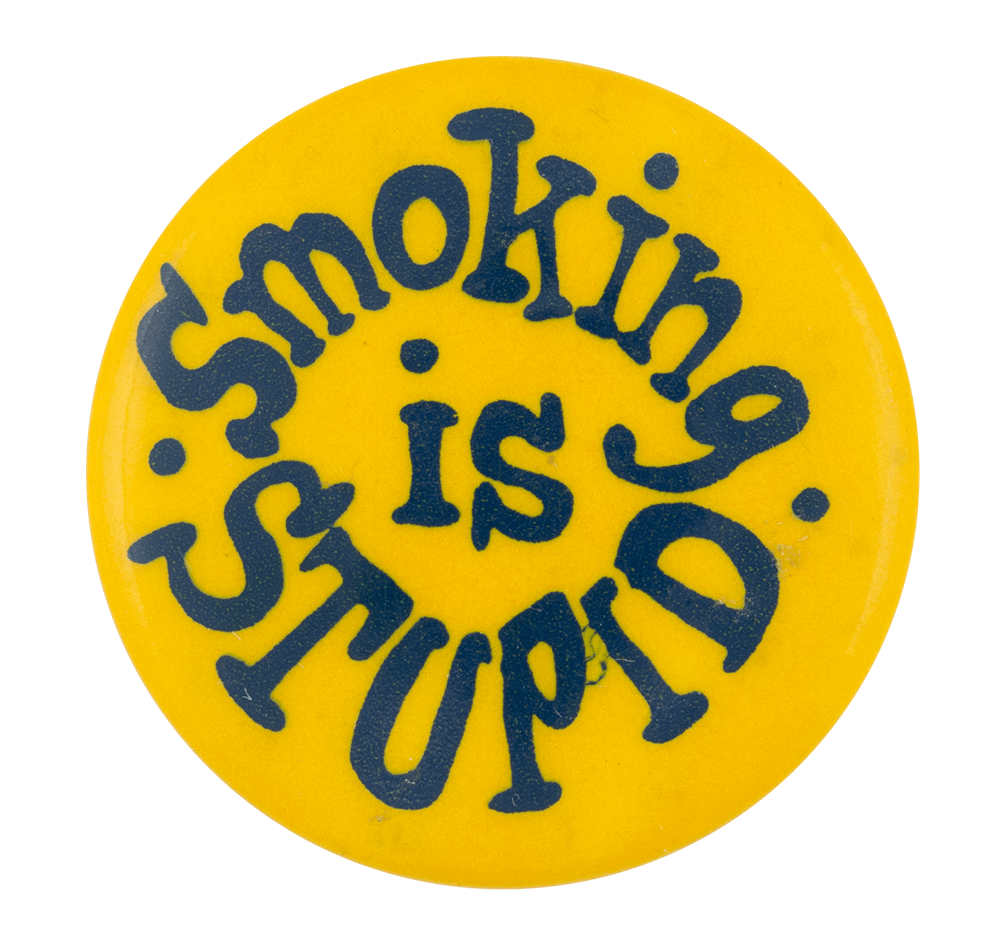
Text on Button Smoking is STUPID
Image Description

Blue text on a yellow background

Back Style
The Shape
The Size
Additional Information

Starting in the 1940s and 1950s, medical studies began to reveal a connection between smoking and lung cancer. Under pressure to investigate the health risks of smoking, the United States government released multiple reports corroborating these findings in the 1960s. In 1965, the Federal Trade Commission required that all cigarette packages be marked with health warnings. Early anti-smoking campaigns were led by nonprofit organizations such as the American Cancer Society and the American Lung Association. 

By the 1970s, anti-smoking groups and campaigns proliferated, but there was still significant pushback from tobacco companies touting a lack of evidence that smoking was a health hazard. It was not until the 1990s that anti-smoking groups began to take center stage, reaching millions of people through powerful advertisements which both mocked big tobacco marketing schemes and highlighted the dangers of smoking. 

Sources

Yale University Library. (n.d.). Selling smoke: Tobacco advertising and anti-smoking campaigns. Online Exhibitions. https://onlineexhibits.library.yale.edu/s/sellingsmoke/page/government

Catalog ID CA0726

Only Dopes Do Drugs

Category
Additional Images
Sub Categories
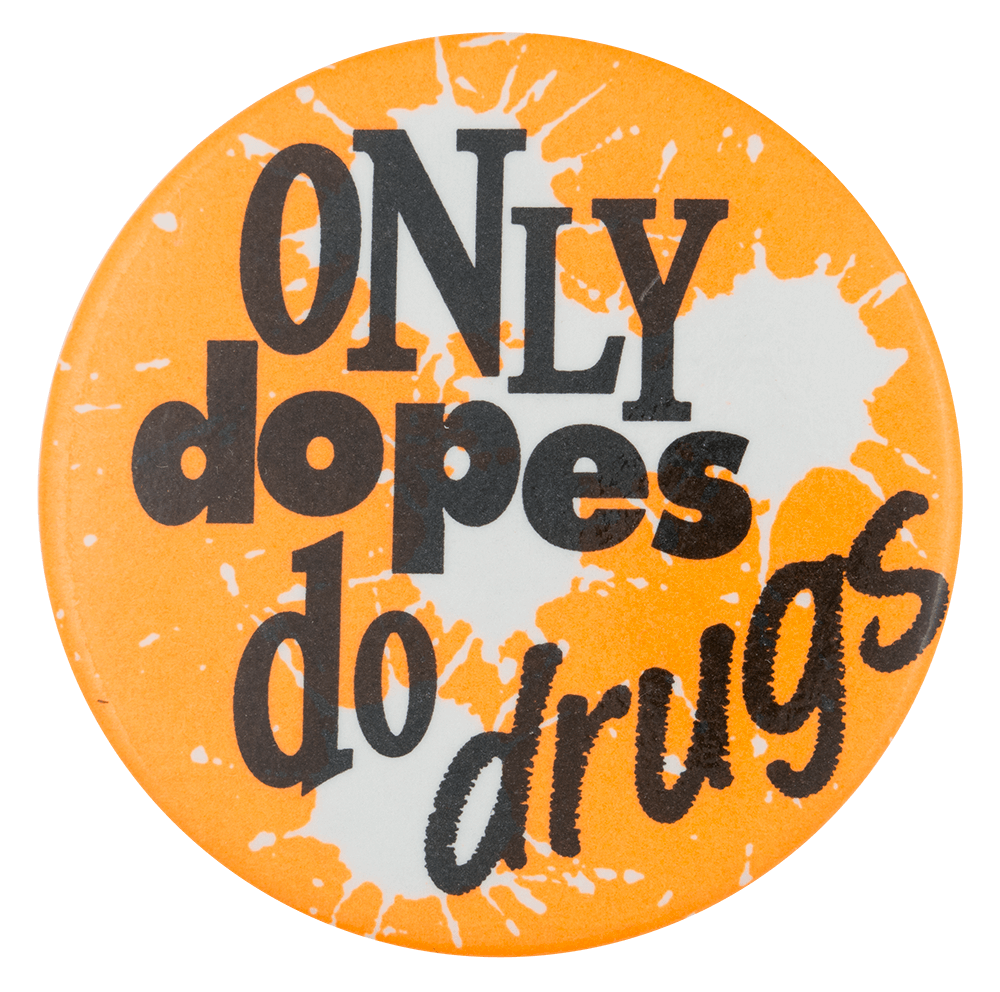
Text on Button ONLY dopes do drugs
Image Description

Black text on a bright orange background with white splotches

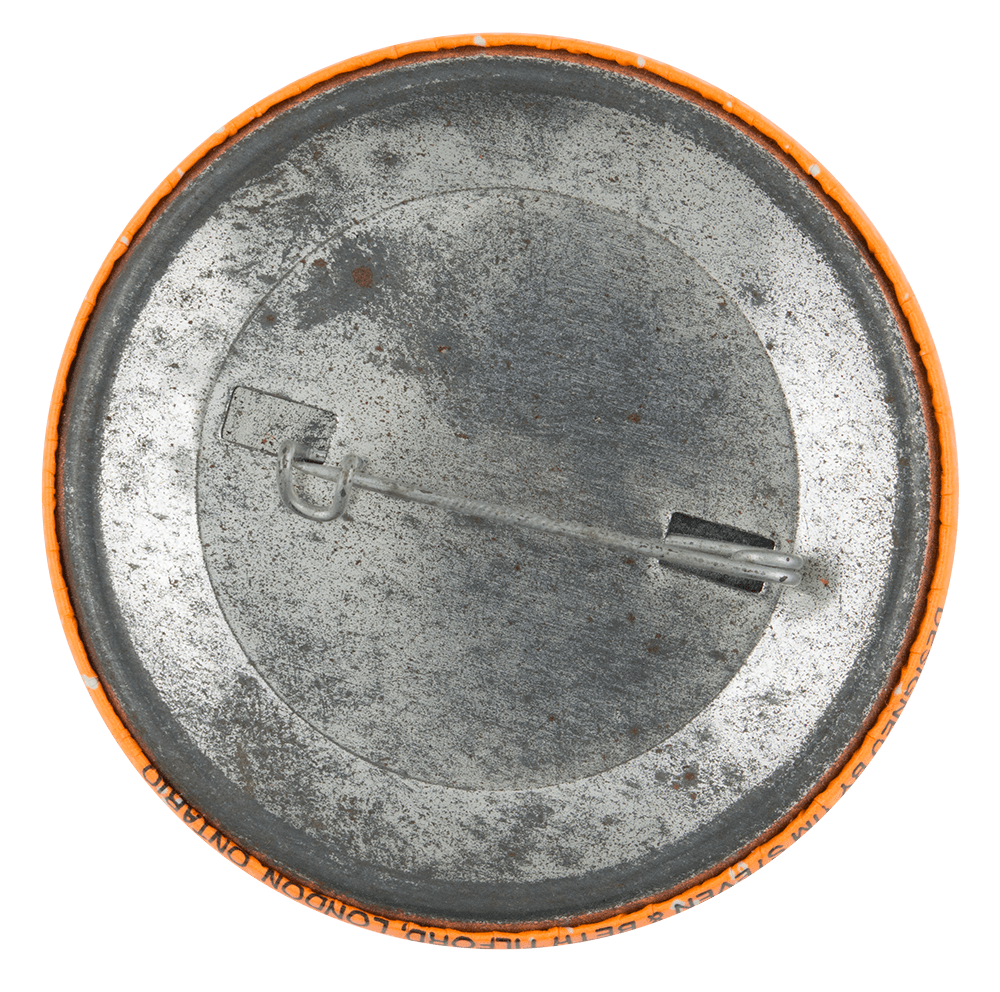
Curl Text DESIGNED BY TIM STEVEN & BETH TILFORD, LONDON ONTARIO
Back Style
The Shape
The Size
Additional Information

“Dope” is slang for drugs, and it also means that someone who is not intelligent. In this context, "only dopes do drugs" means that only people who are not smart do drugs. This stems from the 1980s “Just Say No” campaign. Cocaine, or in variant form “crack”, coming to the market led to an increase in addiction in America. The Reagan Administration began the campaign against drugs to help solve this problem. Nancy Reagan was the face of the campaign. She traveled all over the country to raise awareness and to reject drug use.

“Only Dopes Do Drugs” was one of the many slogans were created during this time. Other slogans and commercials included “drug users are losers,” “drug dealers are dorks,” and the well-known “this is your brain on drugs”.

Sources

Balonon-Rosen, P. (2019, March 26). From cringeworthy to scary: a history of anti-drug PSAs. Marketplace. https://www.marketplace.org/2019/03/26/advertisings-war-drugs-also-fail…;

History.com Editors. (2017, May 31). Just Say No. History.com. https://www.history.com/topics/1980s/just-say-no. 

Catalog ID CA0731

Make Love Not War

Category
Additional Images
Sub Categories
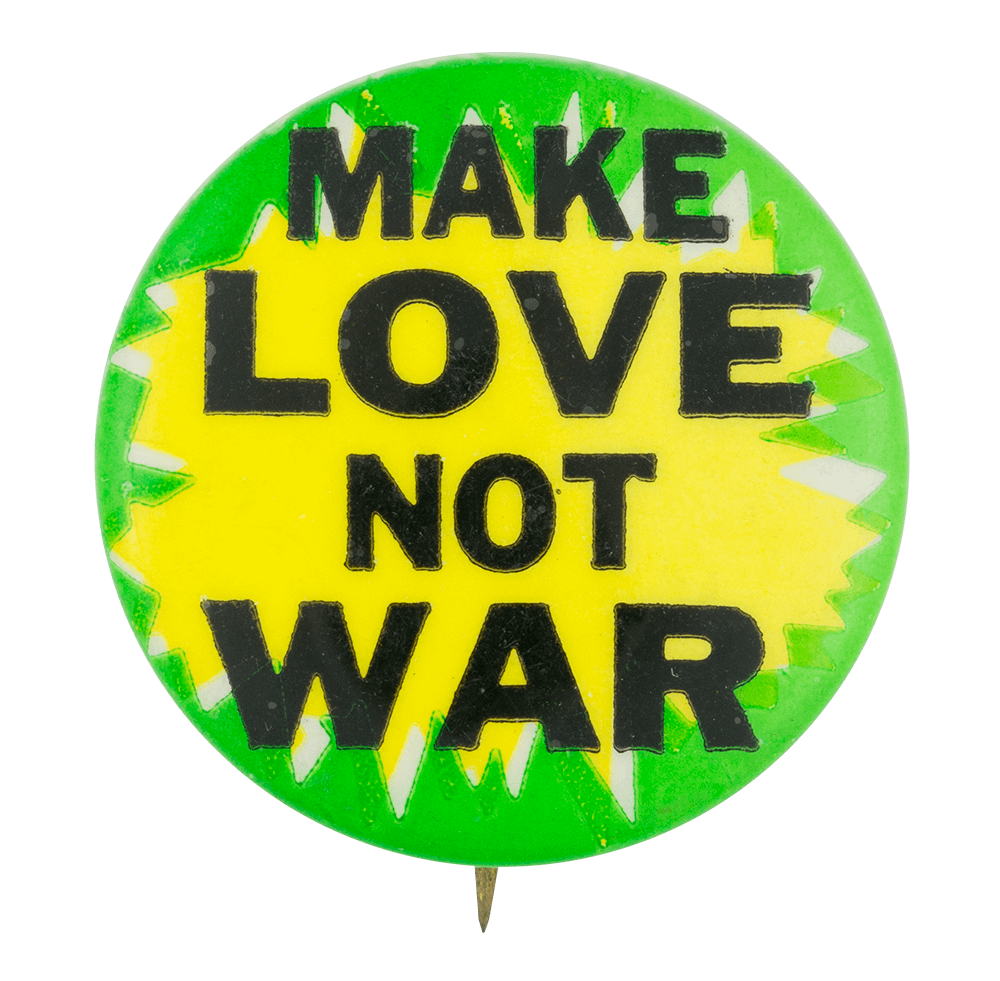
Text on Button MAKE LOVE NOT WAR
Image Description

Black text on a bright yellow star burst shape on a bright green background

Back Style
The Shape
The Size
Additional Information

"Make love, not war," was a common phrase used in the early 1960s. The origin is unknown, but it was popularized by Diane Newell Meyer, Penelope Rosemont, and Franklin Rosemont. Meyer pinned the motto to her sweatshirt during a student protest at the University of Oregon. This protest was one of the many counterculture movements that opposed the Vietnam War. Penelope, Franklin, and Tor Faegre designed and created buttons with the same motto to sell at their bookshop in Chicago in the early 60s. 

“Make love” usually was connected to the social movement of free love. That the state should not interfere with things like marriage and birth control.

Sources

By MITCHEL LEVITASEUGENE, O. (1965, May 09). Article 9 -- no title: Vietnam comes to Oregon U. Vietnam comes to Oregon U. New York Times (1923-Current File) Retrieved from http://search.proquest.com.libaccess.sjlibrary.org/docview/116840588?ac…

Rosemont, P. (2015, Summer). Make Love; Not War! [Web log post]. Retrieved June 27, 2020, from https://www.fifthestate.org/archive/394-summer-2015/make-love-not-war/

Catalog ID CA0725

Light Up Plant Up

Category
Additional Images
Sub Categories
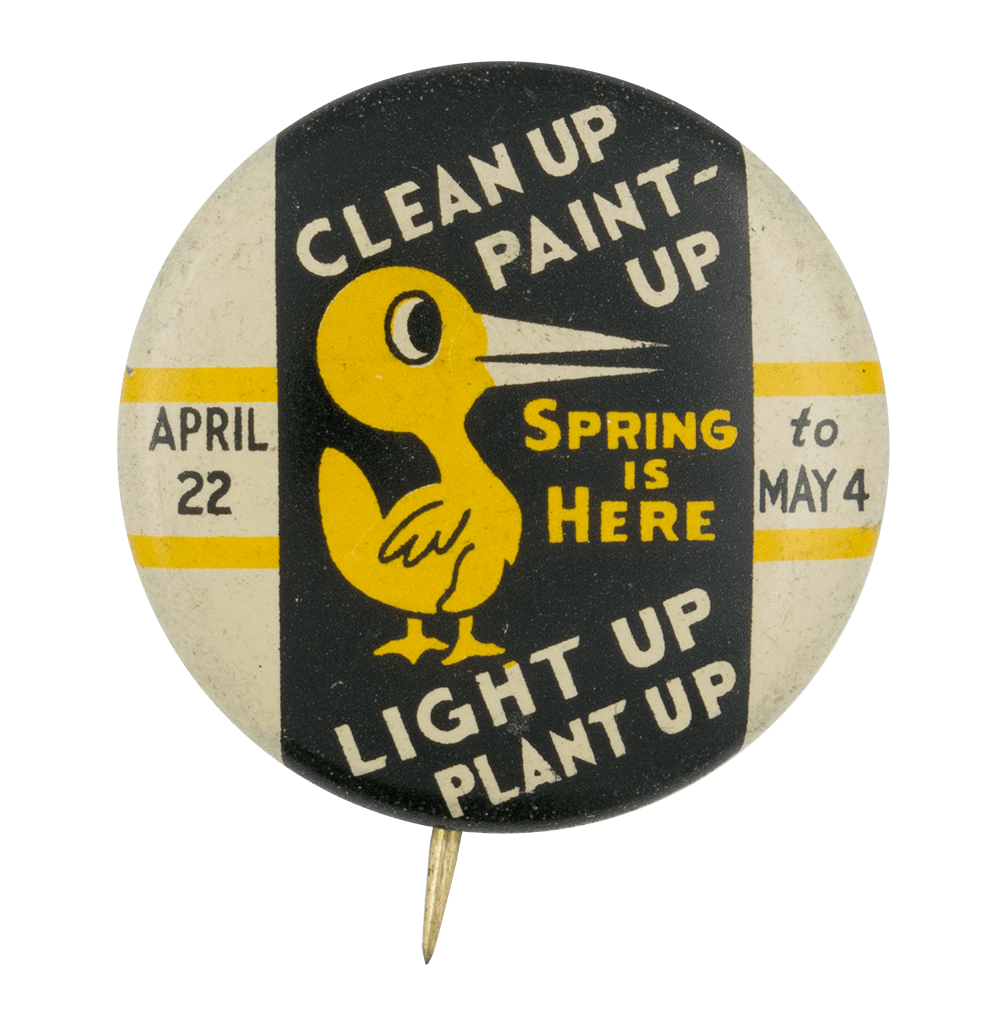
Text on Button CLEAN UP PAINT- UP APRIL 22 to MAY 4 SPRING IS HERE LIGHT UP PLANT UP
Image Description

white and yellow text on a black rectangle with an illustration of a yellow bird with white on eitehr side and black text between yellow lines

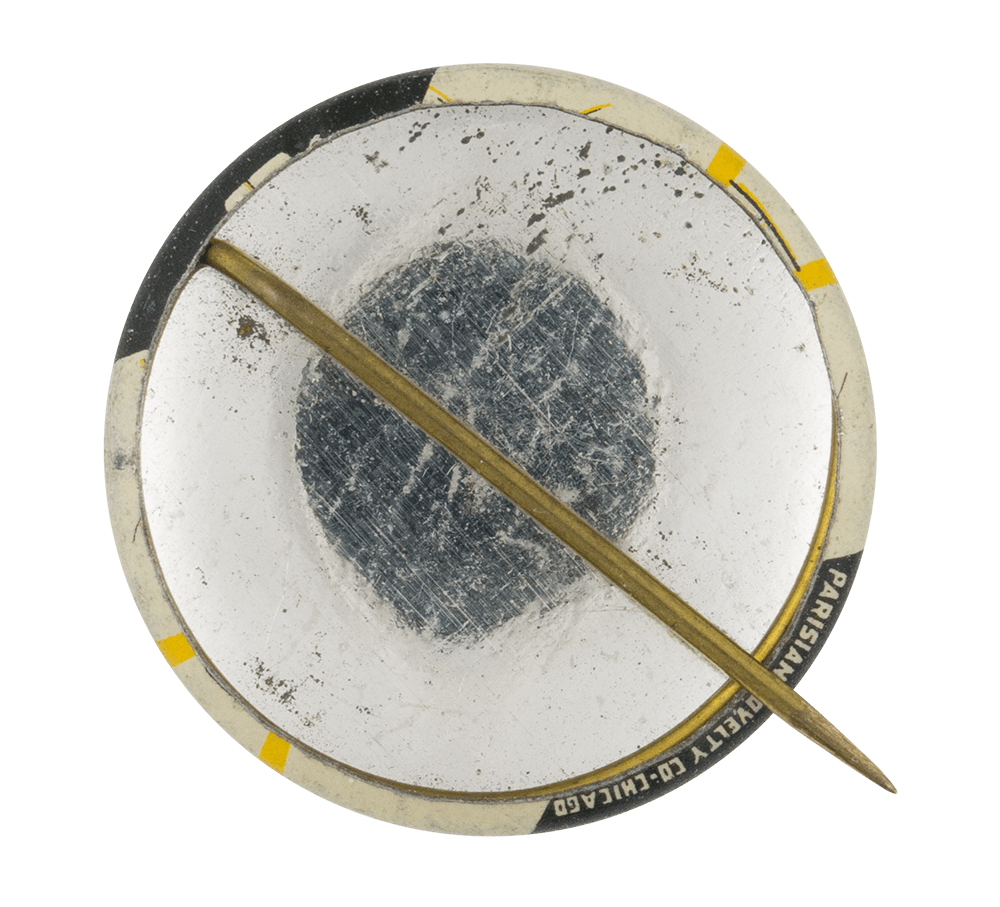
Curl Text PARISIAN NOVELTY CO-CHICAGO
Back Style
The Shape
The Size
The Manufacturer
Additional Information

The “Clean-up, Paint-up, Plant-up, Light-up” campaign was a week-long city-wide community improvement drive in Chicago that took place during the 1940s, 1950s, and 1960s. Community efforts focused on painting buildings, cleaning up vacant lots and allies, and educating citizens on ways to improve the appearance of their property. Many of Chicago’s schools encouraged students to participate in the “Clean-up, Paint-up, Plant-up, Light-up” campaign throughout the school year to keep their schools clean.

Sources

Parker High. (1954 April 28) Suburbanite Economist p 97. Retrieved from https://www.newspapers.com/newspage/54313150/.

Pupils Help Spark Drive to Clean-up. (1958 April 20). Southtown Economist  p 30. Retrieved from https://www.newspapers.com/newspage/53305796/

Catalog ID EV0549

ERA Yes Small

Category
Additional Images
Sub Categories
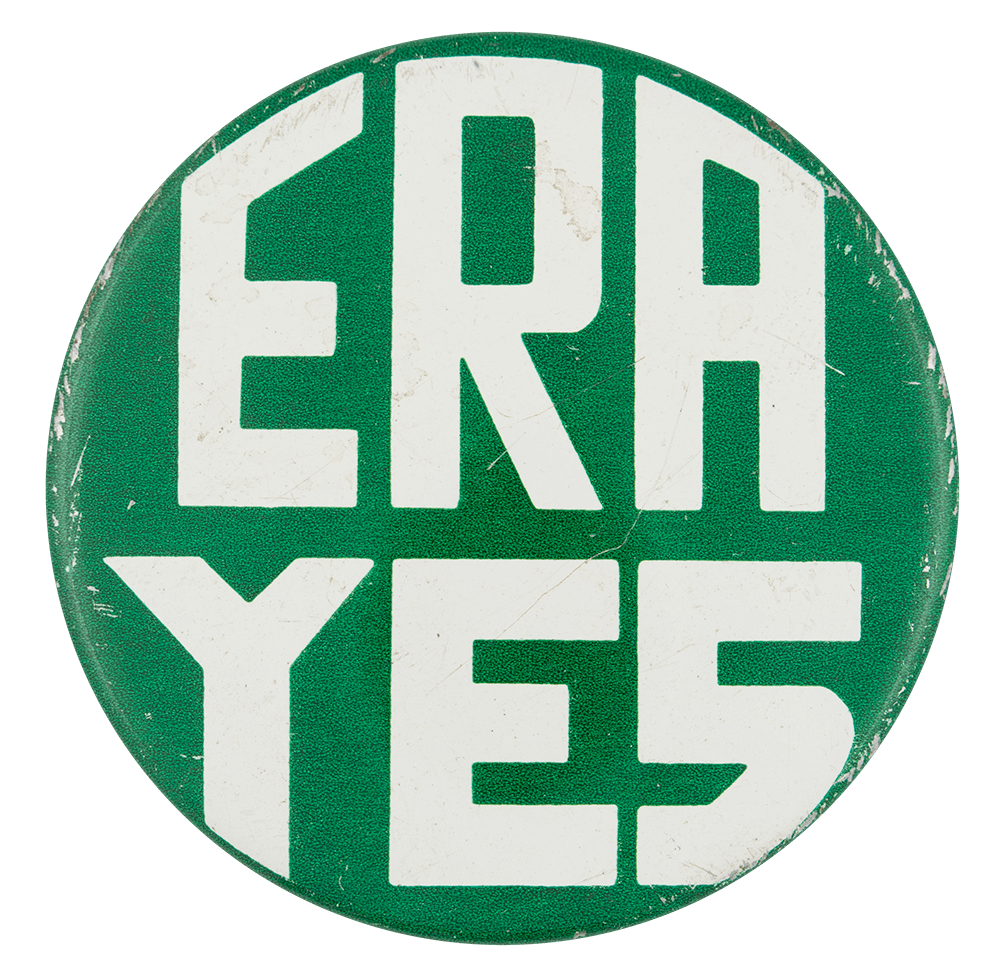
Text on Button ERA YES
Image Description

White text on a green background

Back Style
The Shape
The Size
Additional Information

The Equal Rights Amendment, or ERA, was proposed in 1923 as the “Lucretia Mott Amendment” and its purpose was to make sex equality a Constitutional right. It would ensure equality for women in a number of areas, including job opportunities, health care, and education.

During the frequent protests that surrounded this movement, the individuals who were in favor of the amendment often wore green and white to show support. Those who opposed it typically wore red and carried red octagonal signs that represented their desire to “stop” the amendment’s forward progression through Congress.

Despite being passed by Congress in 1972, the majority of states failed to ratify it before the seven year deadline. It was reintroduced in 1982 and has been put before Congress in every session since. On May 30, 2018, Illinois became the 37th state to ratify the ERA, which means only one more state is required in order to meet the Constitutional requirements for ratification.  

Sources

Francis, R. (n.d.) The History Behind the Equal Rights Amendment. Equal Rights Amendment. Retrieved from http://www.equalrightsamendment.org/history.htm

Haag, M. (2018 May). The Equal Rights Amendment Was Just Ratified by Illinois. What Does That Mean?

The New York TImes. Retrieved from https://www.nytimes.com/2018/05/31/us/equal-rights-amendment-illinois.h…

Neuwirth, J. (2015 April). ERA? Yes! A New Push for Sex Equality. Women’s Media Center. Retrieved from http://www.womensmediacenter.com/news-features/era-yes-a-new-push-for-s…

O’Neill, T. (2017 March). ERA Yes! A Statement by NOW President Terry O’Neill. NOW. Retrieved from https://now.org/media-center/press-release/era-yes/

Sheppard Jr., N. (198 June). Press for Rights Amendment Intensifies in Illinois. The New York Times. Retrieved from https://www.nytimes.com/1982/06/20/us/press-for-rights-amendment-intens…

Catalog ID CA0640

End the Violence

Category
Additional Images
Sub Categories
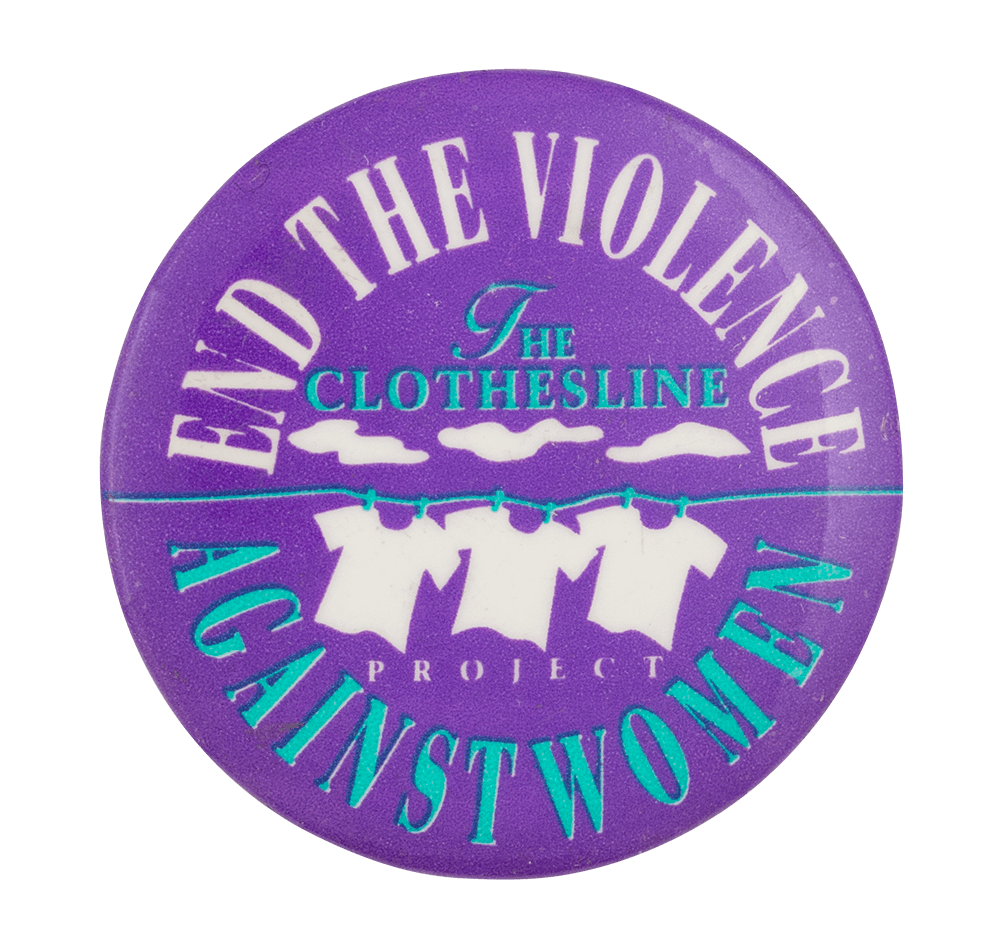
Text on Button END THE VIOLENCE AGAINST WOMEN The CLOTHESLINE PROJECT
Image Description

Illustration of white shirts on a blue clothesline with white and blue text on a purple background

Curl Text illegible
Back Style
The Shape
The Size
Additional Information

The Clothesline Project was started in 1990 in Hyannis, Massachusetts. Its purpose was to educate students, communities, and the public at large about domestic violence against women. The project began when members of Cape Cod’s Women’s Defense Agenda learned that during the same time 58,000 soldiers were killed in the Vietnam War, 51,000 U.S. women were killed as a result of domestic violence. The clothesline in the title of the project refers to a clothesline made up of 31 T-Shirts created by survivors of violence or created by others in their honor. The project is meant to represent a visual evidence that domestic and sexual violence exists in communities everywhere and seeks to provide a venue for survivors to use their voice and bring awareness to the problem.

Sources

About. (n.d.). The Clothesline Project. http://www.clotheslineproject.info/about.html

Catalog ID CA0729