Win with Wallace in 1968

Category
Additional Images
Sub Categories
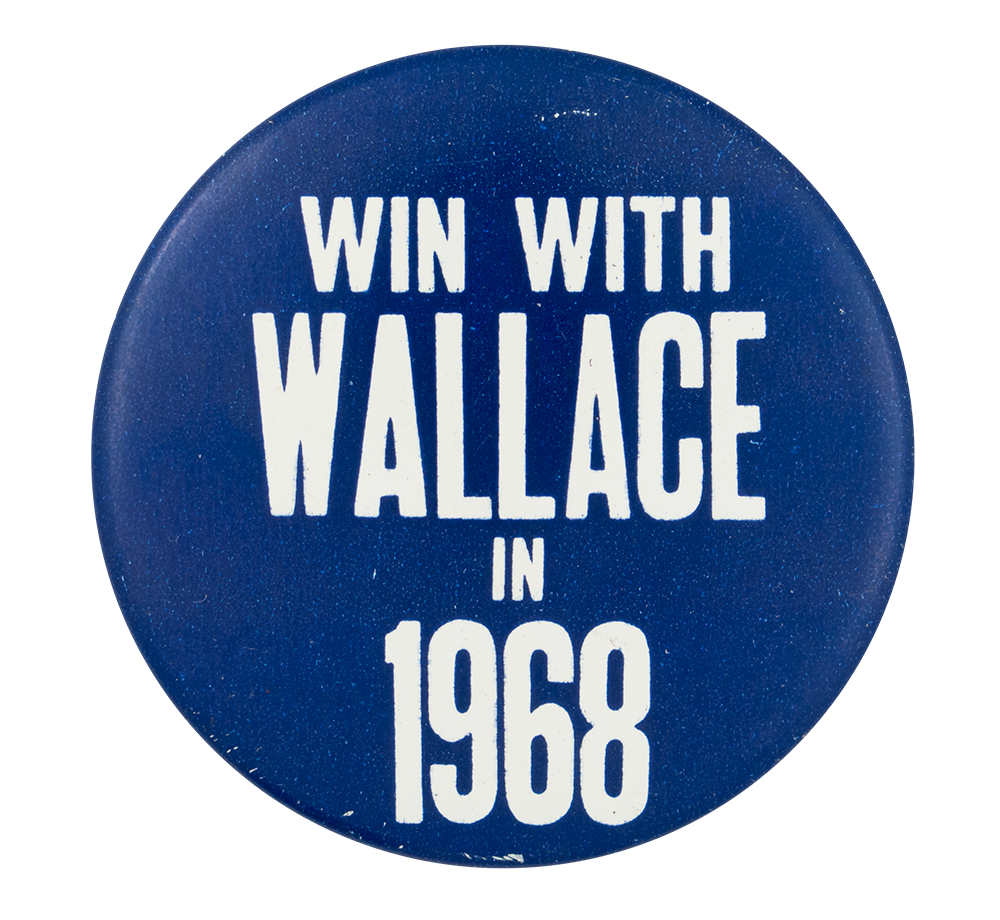
Text on Button WIN WITH WALLACE IN 1968
Image Description

White text on a dark blue background

Curl Text union bug
Back Style
The Shape
The Size
Year / Decade Made
Additional Information

George Wallace, then governor of Alabama, was an independent candidate for the presidency in 1968. Wallace, running on a pro-segregation platform, won several deep south states in the election, but ultimately lost to Richard Nixon. 

Wallace's strategy in the campaign had been to throw the election to the U.S. House of Representatives - the result when no presidential candidate wins a majority of electoral college votes - and then use his clout to negotiate his way to a win. Wallace's campaign embraced the idea that neither of the major parties successfully represented most Americans. The slogan "Win with Wallace" reflects that notion of discontent.

Catalog ID PO0622

Vote Taft

Category
Additional Images
Sub Categories
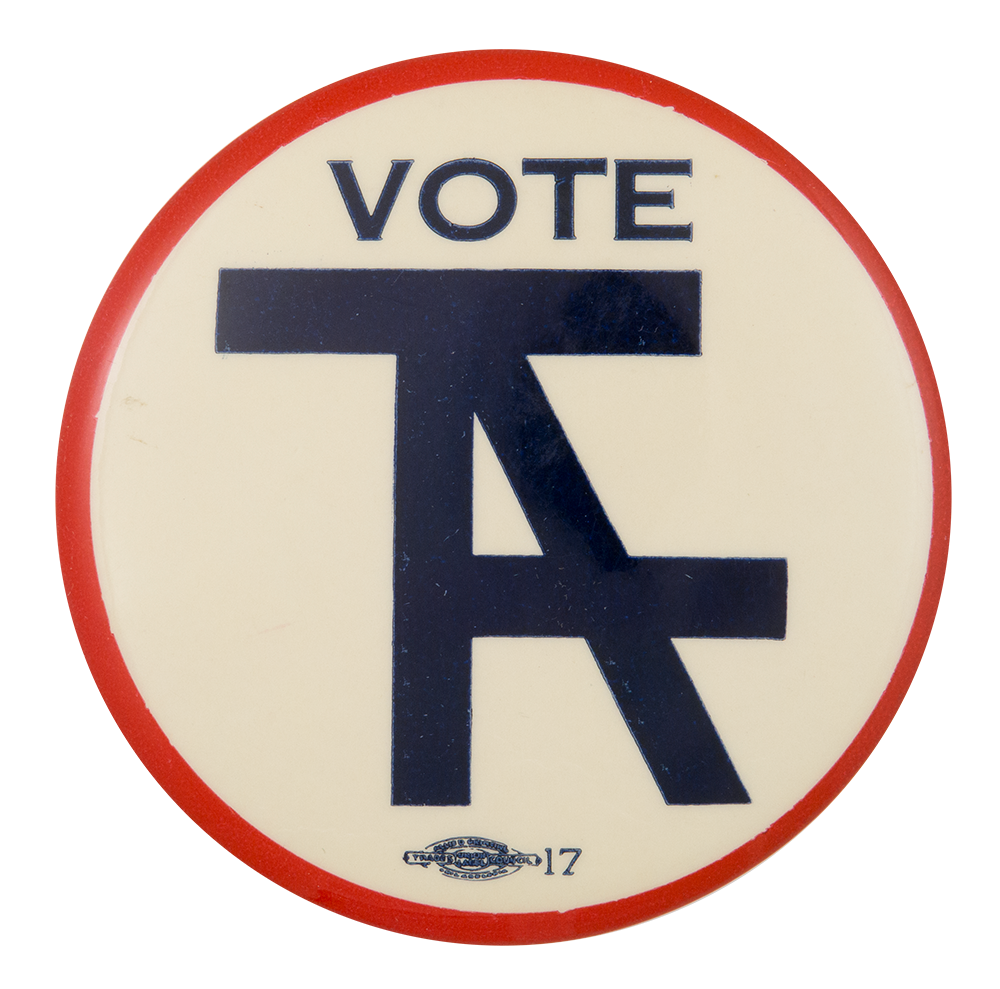
Text on Button VOTE TAFT
Image Description

Blue text on a white background with an outer red edge

Back Style
The Shape
The Size
Additional Information

William Howard Taft was the only person to serve both as President of the United States (27th) and as a Supreme Court Justice. Taft graduated from Yale Law School and was appointed a Federal Circuit Judge at the age of 34. He then held posts as Chief Civil Administrator of the Philippines and Secretary of War. President Theodore Roosevelt encouraged Taft to run as his successor and in 1908, he was nominated by the Republican Convention. Taft won the election but almost immediately ran into conflict with the new Progressive wing of the party. 

Taft’s administration saw the establishment of a Postal Savings System, an Interstate Commerce Commission and the initiation of 80 antitrust suits.  In the 1912 election, Roosevelt chose to support the Progressive candidate, Woodrow Wilson, which assured his election. Taft was later appointed to the Supreme Court by President Harding and served in that capacity until shortly before his death in 1930. Taft, who never felt comfortable in political life wrote, "I don't remember that I ever was President."

Catalog ID PO0611

Uncle Ted Says

Category
Additional Images
Sub Categories
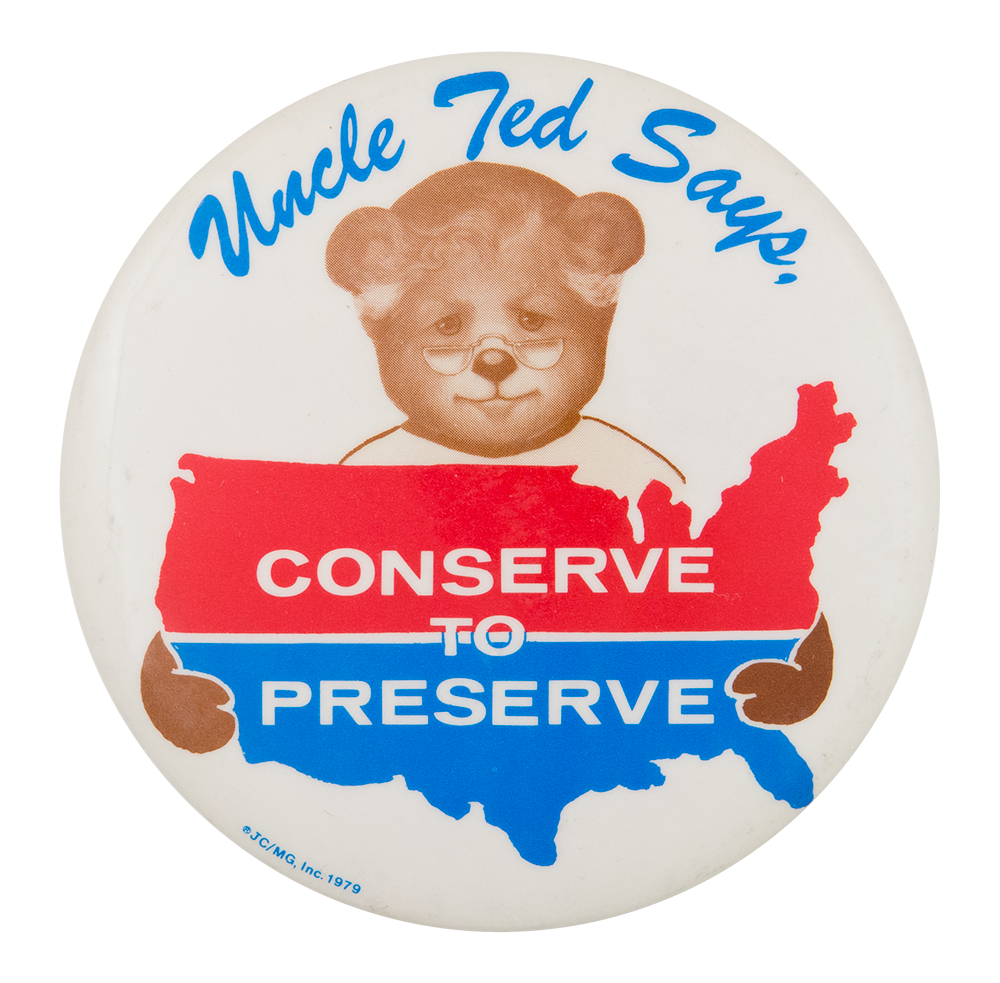
Text on Button Uncle Ted Says, CONSERVE TO PRESERVE
Image Description

Illustration of a brown bear wearing glasses and holding an illustration of a map of the United States with white text and blue text above on a white background

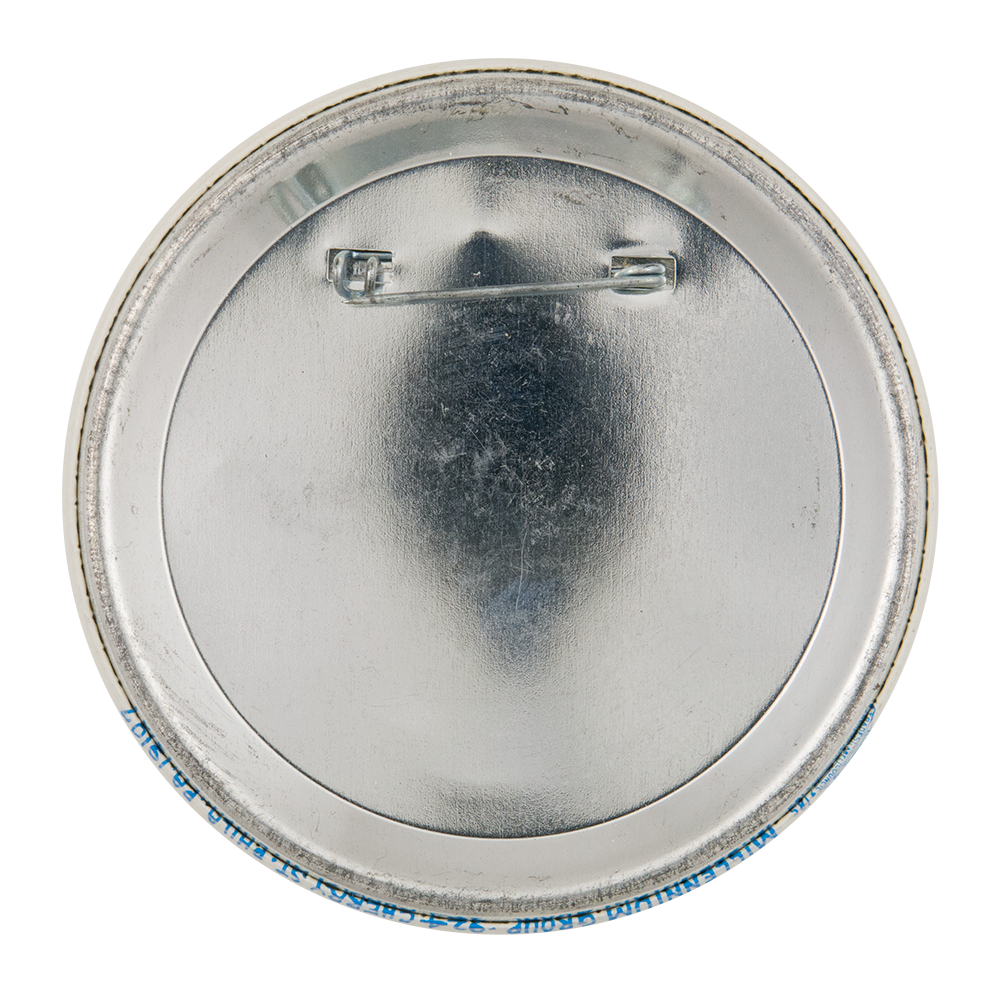
Curl Text MILLENNIUM GROUP 924 CHERRY ST. PHILA..PA 19107 union bug
Back Style
The Shape
The Size
The Manufacturer
Additional Information

"Uncle Ted" refers to Edward "Ted" Kennedy, who was a lawyer and senator from Massachusetts. Ted Kennedy ran on the Democratic ticket for President of the United States in 1980, but lost the primary to Jimmy Carter. His beliefs were highly progressive. He was pro-choice, a supporter of gun control, and he favored alternative energy to preserve the environment.

Catalog ID PO0619

Uncle Sam's White Elephant

Category
Additional Images
Sub Categories
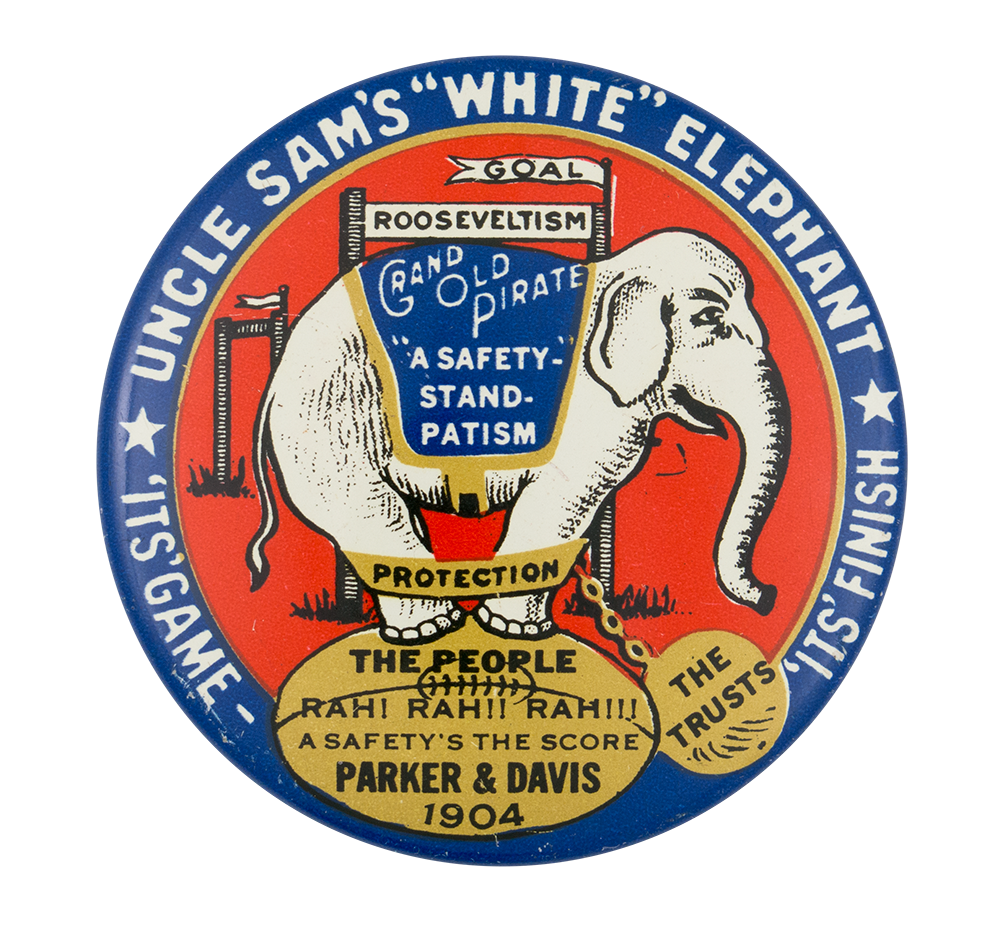
Text on Button UNCLE SAM'S "WHITE ELEPHANT" 'IT'S GAME - 'IT'S FINISH GOAL ROOSEVELTISM GRAND OLD PIRATE '"A SAFETY-" STAND - PATISM PROTECTION THE TRUSTS THE PEOPLE RAH! RAH!! RAH!!! A SAFETY'S THE SCORE PARKER & DAVIS 1904
Image Description

A red button with a blue rim and white text. In the center is an image of a white elephant with its feet tied up with a ball and chain standing atop a football. 

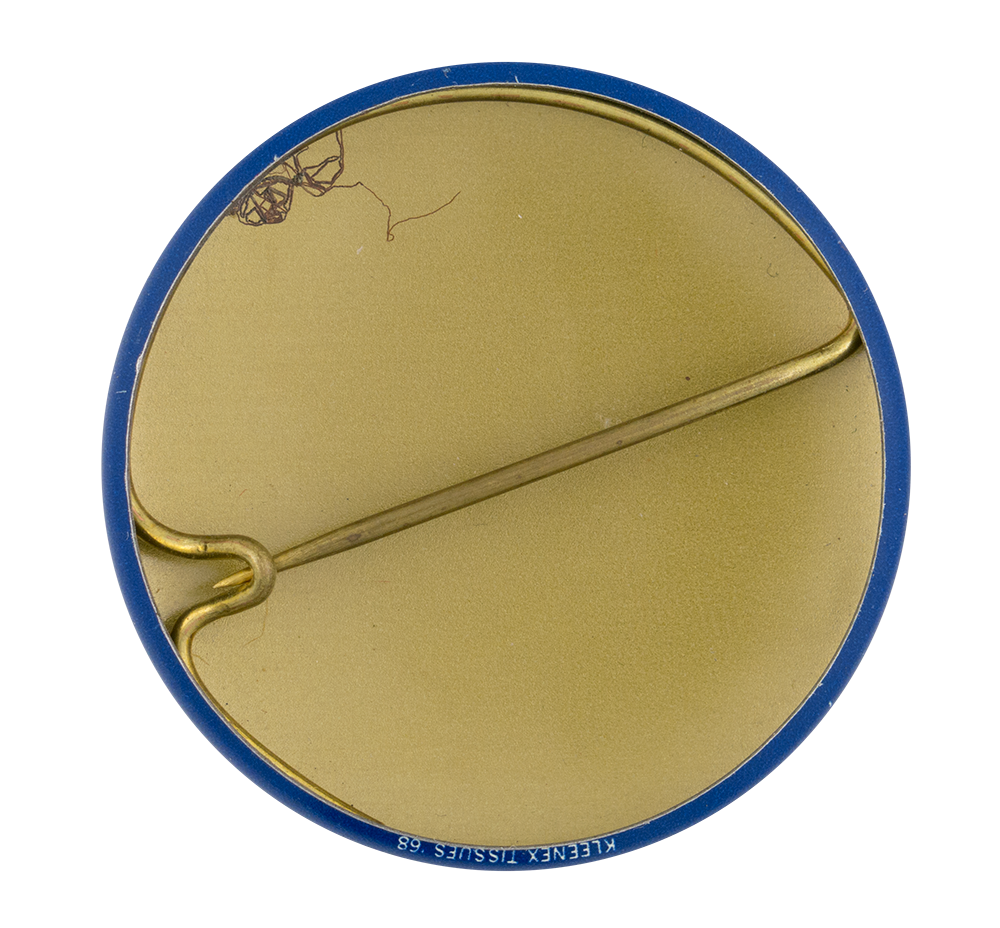
Curl Text KLEENEX TISSUES '68
Back Style
The Shape
The Size
Additional Information

During the 1968 Presidential Election, Kleenex tissues issued numerous reproductions of popular political buttons from past elections as promotional items in their tissue boxes. The 1904 Presidential election pitted Republican incumbent Theodore Roosevelt against Democratic nominees Judge Alton B. Parker and his running mate, former West Virginia Senator Henry Davis, who at 80 was the oldest candidate ever nominated for national office.  Roosevelt defeated Parker in a landslide victory with two-thirds of the electoral votes.

An elephant has been the symbol of the Republican Party since 1874 when political cartoonist Thomas Nast depicted an elephant to represent the Republican vote in Harper's Weekly.  A white elephant symbolizes something that is more of a burden to its owner than it is worth.  The elephant appears shackled by “protection” and a ball and chain of “trusts” representing the GOP claim that their protectionist policies were prosperous for the country.  Parker and Davis’ platform pushed to end Roosevelt’s contracts with companies violating antitrust laws. 

Catalog ID PO0552

They're for You

Category
Additional Images
Sub Categories
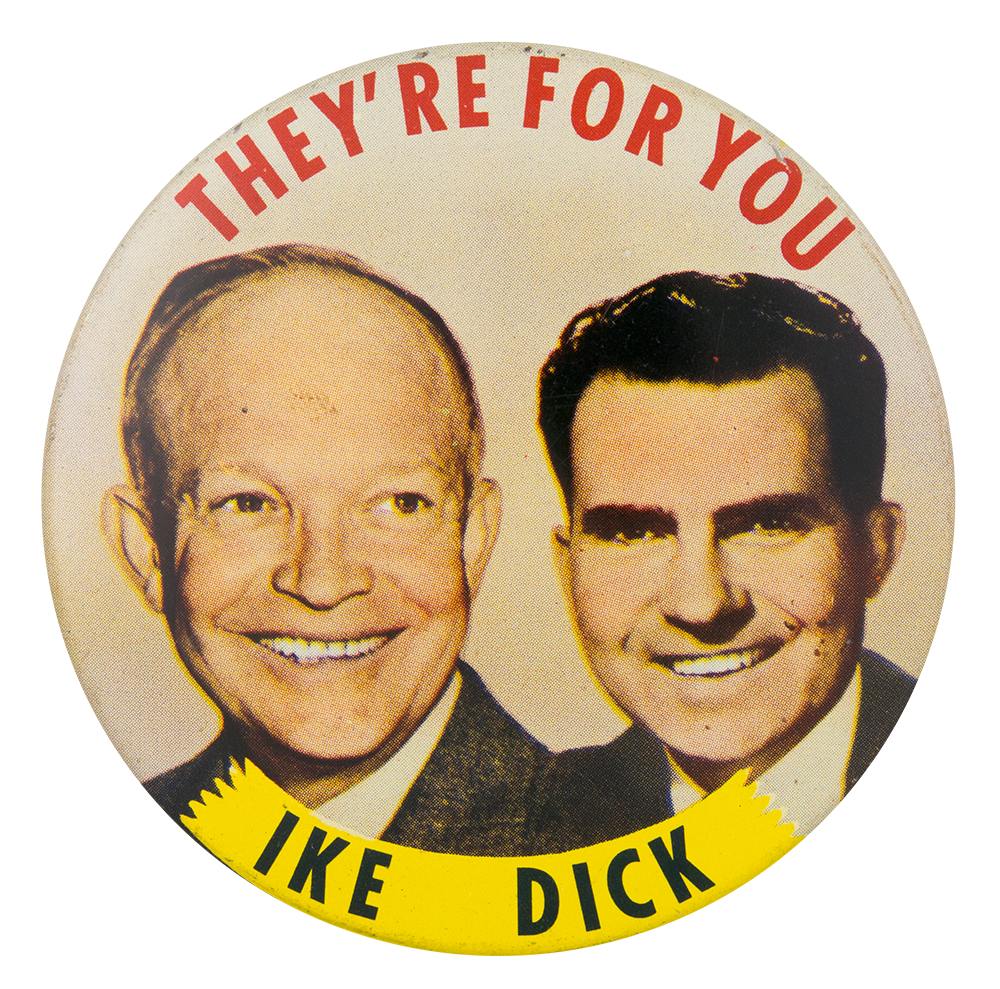
Text on Button THEY'RE FOR YOU IKE DICK
Image Description

Colored photographs of two men's head and shoulders with red text above and black text on a yellow banner along the bottom edge

Back Paper / Back Info

union bug

Back Style
The Shape
The Size
Year / Decade Made
The Manufacturer
Additional Information

During the presidential election of 1952, Republican Dwight D. Eisenhower, also known as "Ike," ran against Democrat Adlai Stevenson. Stevenson suffered a crushing defeat by Eisenhower, who went on to become the 34th President of the United States after having served as a five star general for the United States Army during World War II. California Senator Richard Nixon served as his Vice President.

During his two terms in office from 1953-1961, Eisenhower signed the Civil Rights Act of 1957, brought down the communist paranoia spread by Joseph McCarthy, created the Interstate Highway System, and brought America into the great Space Race against the Soviets. His presidency is often times characterized as a time of economic prosperity for the United States.

Catalog ID PO0617

Apollo 11 First Men on the Moon

Category
Additional Images
Sub Categories
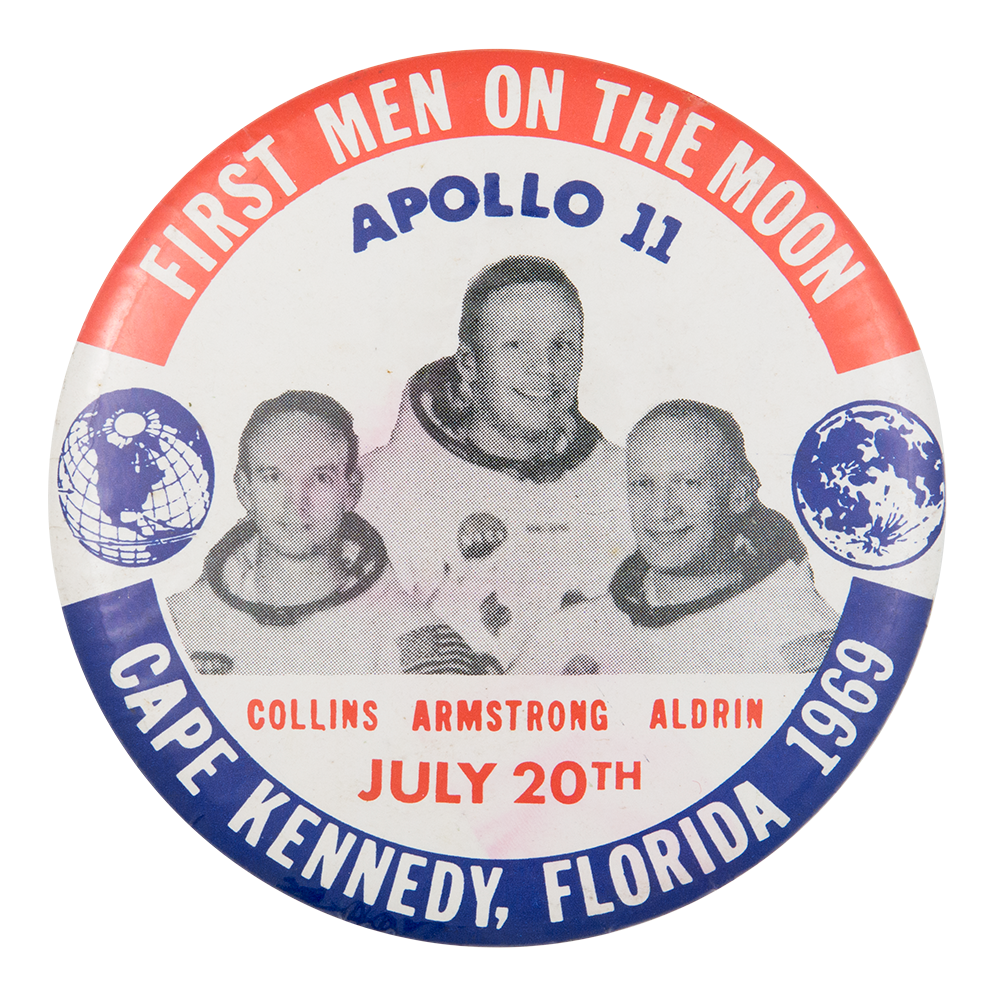
Text on Button First Men on the Moon Apollo 11 Collins Armstrong Aldrin July 20th Cape Kennedy, Florida 1969
Image Description

Black and white photograph of three astronauts in spacesuits without helmets on white background between a blue and white image of Earth on the left, and a blue and white image of the moon on the right.  White text on a red top edge and blue bottom edge, with the name of the mission in blue above the astronauts, and their names and the date in red below.

Back Style
The Shape
The Size
Year / Decade Made
Additional Information

On July 16, 1969, Apollo 11 was launched from Kennedy Space Center.  During the course of the ship’s flight, the crew transmitted three televised broadcasts showing the ship’s interior and the surface of the moon.  Neil Armstrong and Buzz Aldrin boarded the lunar module (Eagle) and disengaged from the spacecraft (Columbia) on July 20th.  Michael Collins remained on the Columbia.  The Eagle landed on the Sea of Tranquility at 4:18 p.m. EDT.  After Aldrin and Armstrong prepared the module and systems,  Armstrong left the Eagle at 10:56 p.m., uttering the phrase, “That’s one small step for man, one giant leap for mankind.”  Aldrin and Armstrong  collected samples from the moon and walked approximately 3.300 feet during their 2.5 hours of exploration.  After spending 21.5 hours on the moon, the Eagle rejoined the Columbia, and the craft and crew began the journey home.

Catalog ID EV0241

1976 Republican National Convention Kansas City

Category
Additional Images
Sub Categories
Text on Button IOWA 76 KANSAS CITY Republican National Convention
Image Description

Blue and red text on a white background with blue stars and an illustration of a flag

Curl Text union bug
Back Style
The Shape
The Size
Year / Decade Made
Additional Information

The 1976 Republican National Convention was held in Kansas City, Missouri. On Monday morning at the start of the convention, a 55-foot tall inflatable elephant meant to welcome the delegates sprung loose and made its way into downtown Kansas City where it was ripped apart by nearby nylon wiring.

The main opponents of the convention were Ronald Reagan and incumbent President Gerald Ford. The Iowa delegation consisted of 36 participants, and cast their vote for Ford. After much debate and wooing of delegates by both parties, the final vote was 1,187 for Ford, 1,070 for Reagan, one vote from the New York delegation for Commerce Secretary Elliot L. Richardson and one abstention.

Catalog ID EV0277

1964 Rublican National Convention San Francisco

Category
Additional Images
Sub Categories
Text on Button REPUBLICAN NATIONAL CONVENTION 1964 IOWA SAN FRANCISCO
Image Description

White and green text on a black background with an illustration of yellow corn

Curl Text DES MOINES RUBBER STAMP CO.
Back Style
The Shape
The Size
Year / Decade Made
Additional Information

The 1964 Republican National Convention was held from July 13-16 at the Cow Palace in San Francisco, California. The main nominees were Barry Goldwater, William Scranton and Nelson Rockefeller. The Iowa delegation consisted of 24 members and hosted a barbecue in the parking lot of the Cow Palace featuring “Top of Iowa” steaks. Around 200 steaks were donated by the Iowa Beef Producers Association and flown in for the event. Some of the nominees made an appearance at the barbecue and also in attendance was a prized Iowa steer named “Sir Percy.”  After a much contested convention, Goldwater sealed the nomination with 883 votes to Scranton’s 214 and Rockefeller’s 114.

Catalog ID EV0278

Wonder Woman Symbol

Category
Additional Images
Sub Categories
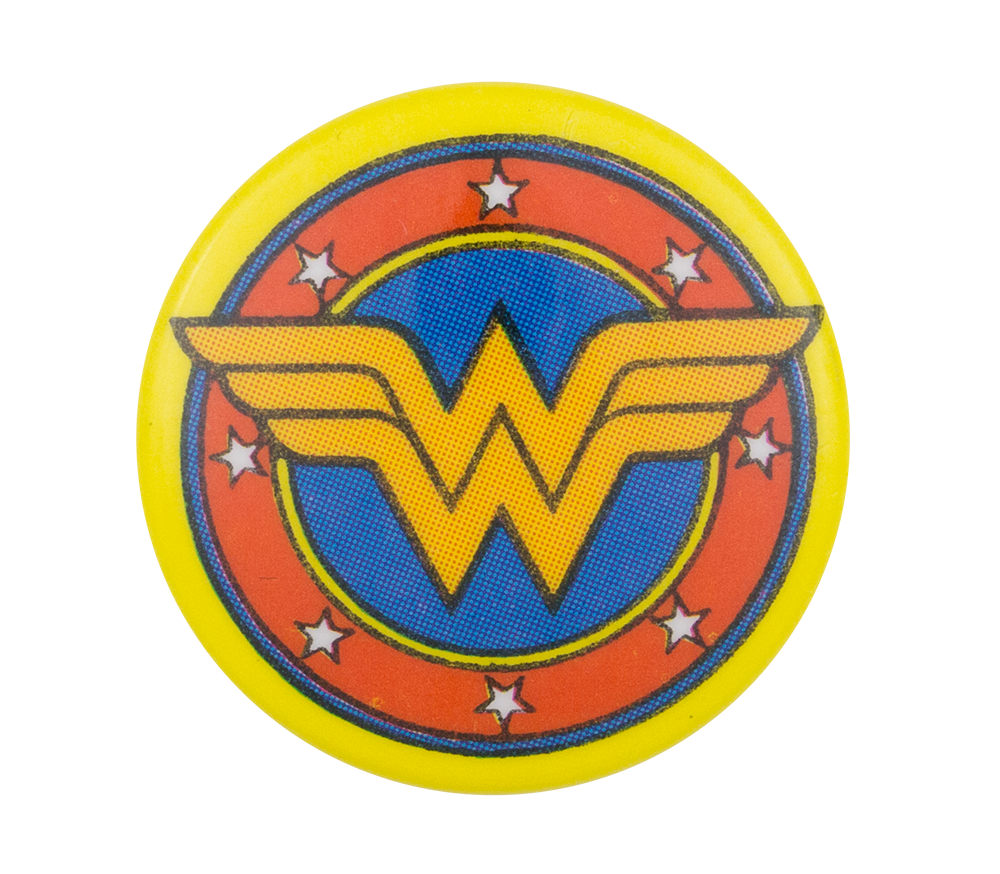
Text on Button W
Image Description

Wonder Woman symbol with a blue circle behind it and a red blue and yellow ring with white stars

Curl Text TM DC COMICS copyright 1995
Back Style
The Shape
The Size
Year / Decade Made
Additional Information

Wonder Woman was created by American psychologist and writer, William Moulton Marston, and became a part of the DC comic series. In the series, she is a founding member of the Justice League, a demigoddess, United Nations Executive Ambassador and Warrior Princess of the Amazon people. Her warrior name is Princess Diana of Themyscira, but her secret identity is Diana Prince. The character first appeared in All Star Comics #8 in December, 1941.

Catalog ID EN0238

Walt Disney's Dumbo

Category
Additional Images
Sub Categories
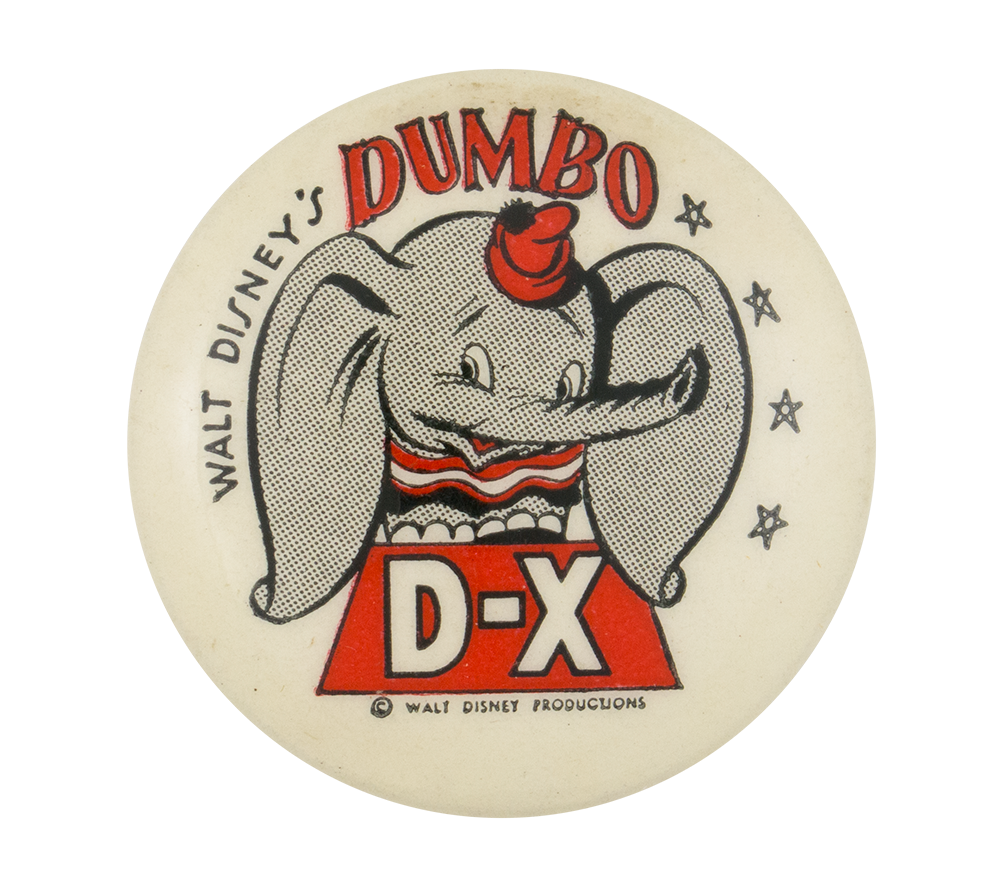
Text on Button WALT DISNEY'S DUMBO D-X copyright WALT DISNEY PRODUCTIONS
Image Description

Grey and red illustration of Dumbo the elephant on a white background with stars on the sides and red text above

Back Style
The Shape
The Size
Year / Decade Made
Additional Information

Dumbo is a 1941 animated film created by Walt Disney Productions. The film was the fourth animated feature film by Disney and was based on a story written by Helen Aberson. The story centers around Jumbo Jr., a baby elephant given the nickname “Dumbo” because of his large ears. The character of Dumbo has appeared in books, video games, and is the subject of Disneyland and Disney World rides and attractions.This button and other similar promotional Dumbo merchandise was distributed by Diamond D-X service stations, likely as a free gift with each gasoline purchase. 

Catalog ID EN0331