Save Energy

Category
Additional Images
Sub Categories
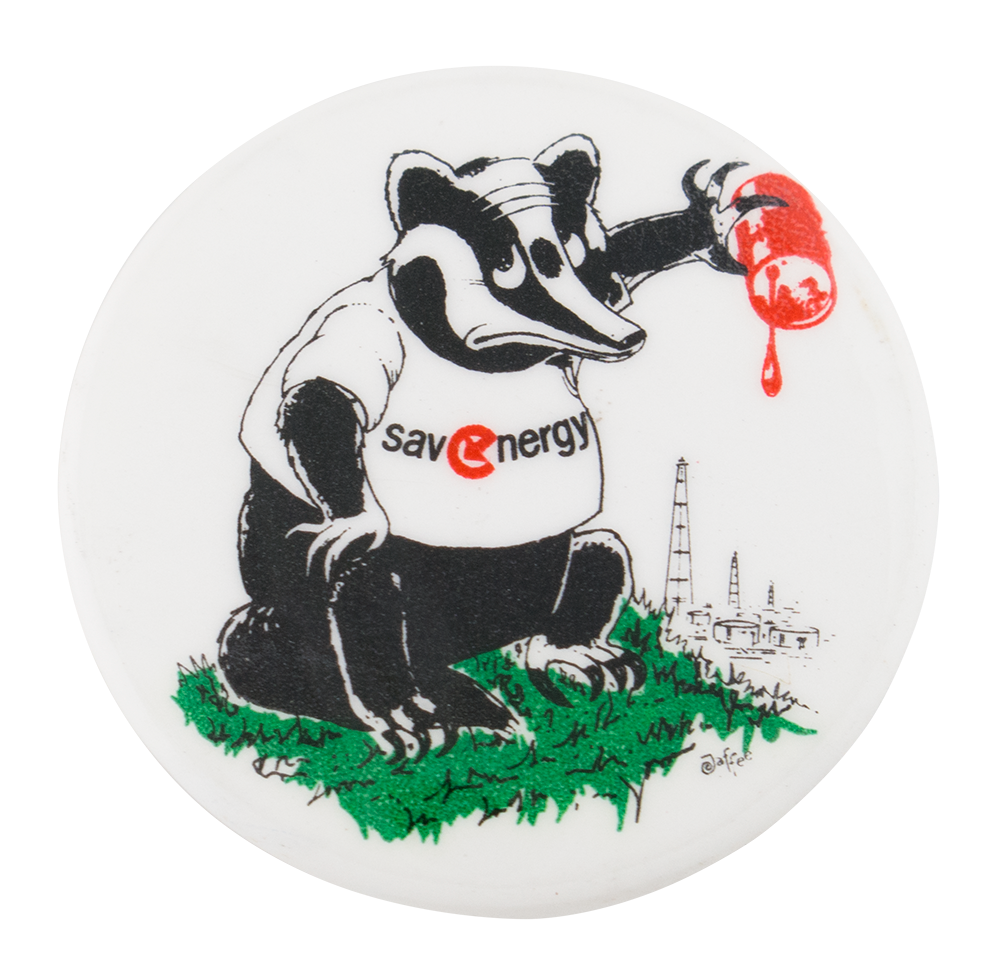
Text on Button save energy
Image Description

Illustration of a black and white badger wearing a white t-shirt with black and red text on it, sitting on green grass and tipping a red oil can upside down

Back Style
The Shape
The Size
Year / Decade Made
Additional Information

In 1973, an embargo on oil by the OAPEC caused prices to skyrocket to nearly 400% of their previous value. This caused massive shortages across the country, leading to a widespread push to conserve energy that lasted for several years after the official end of the crisis. Americans were asked not to use Christmas lights and there was a federal speed limit of 55 MPH on any road across the country. An aggressive advertising campaign run by the Advertising Council entitled, "Don't Be Fuelish," urged Americans to conserve their oil use. The crisis boosted interest in renewable energy, most notably solar power which had not been widely discussed before the shortages, and more generally pushed the U.S. to lessen their dependency on oil.

Sources

Richardson, Julia & Nordhaus, R. (1995). "The National Energy Act of 1978". Natural Resources & Environment. 10(#1): 62–88.

Frum, David (2000). How We Got Here: The '70s. New York: Basic Books. p. 318.


Catalog ID CA0392

Reproductive Freedom

Category
Additional Images
Sub Categories
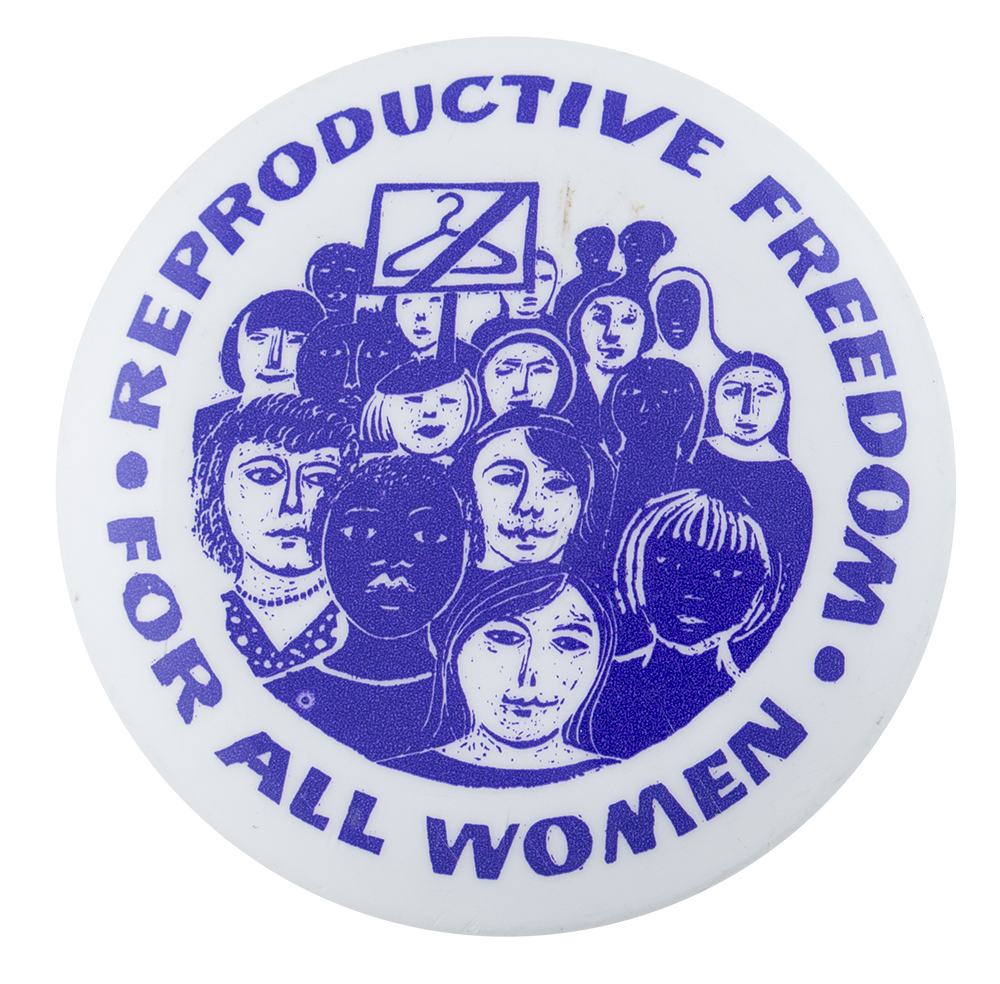
Text on Button REPRODUCTIVE FREEDOM FOR ALL WOMEN
Image Description

Purple illustration of a crowd of people with one holding a sign with a hanger and a crossed out symbol over it with purple text on the outer edge on a white background

Curl Text DONNELY/COLT PROGRESSIVE RESOURCES 860-455-9621; FAX 203-455-9597
Back Style
The Shape
The Size
The Manufacturer
Additional Information

This button represents the protection of legal rights and freedoms relating to reproduction and reproductive health. The World Health Organization defines reproductive rights as: “…recognition of the basic right of all couples and individuals to decide freely and responsible the number, spacing and timing of their children and to have the information and means to do so, and the right to attain the highest standard of sexual and reproductive health. They also include the right of all to make decisions concerning reproduction free of discrimination, coercion and violence.” The main statement being made by the illustration on this button is a woman’s right to legal and safe abortion, as symbolized by the image of the hanger with a line through it. Many women who did not have access to safe abortions resorted to using clothes hangers. In 1973, the United States Supreme Court ruled that a right to privacy extended to a woman’s legal right to have an abortion.

Catalog ID CA0325

Recycle

Category
Additional Images
Sub Categories
Image Description

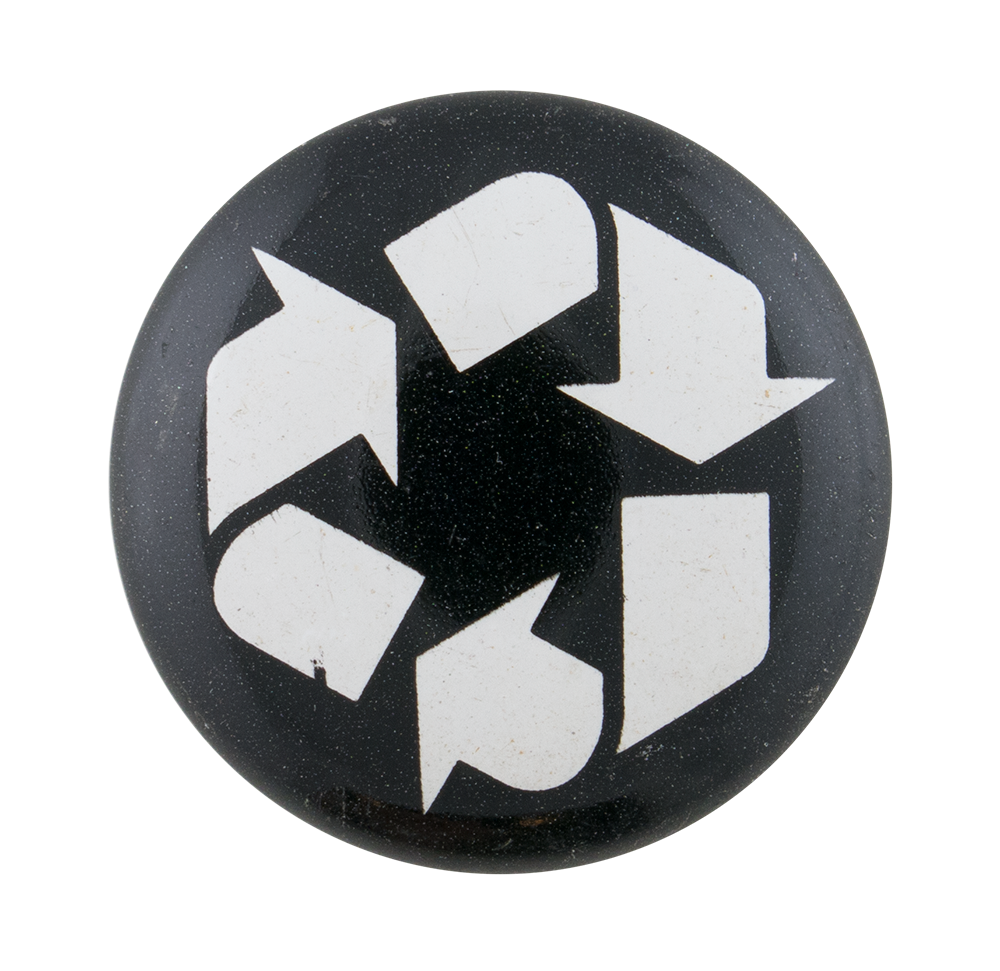
White arrows creating a triangle on a black background

Back Style
The Shape
The Size
Year / Decade Made
Additional Information

The symbol on this button is the internationally recognized symbol for recycling. In the late 1960s and early 1970s worldwide attention to environmental issues culminated in the first Earth Day. Container Corporation of American sponsored a contest for art and design students to raise awareness for environmental issues and the winning entry is now a universal symbol used to designate recyclable materials. The symbol is not trademarked and is in the public domain.

Catalog ID CA0350

Read

Category
Additional Images
Sub Categories
Text on Button READ
Image Description

Illustration of eyes over the edge of a blue book with a red and black ladybug on the faces nose and green text at the top

Back Style
The Shape
The Size
Additional Information

Have info on this button? Contact us here.

Catalog ID CA0331

Read Butterfly

Category
Additional Images
Sub Categories
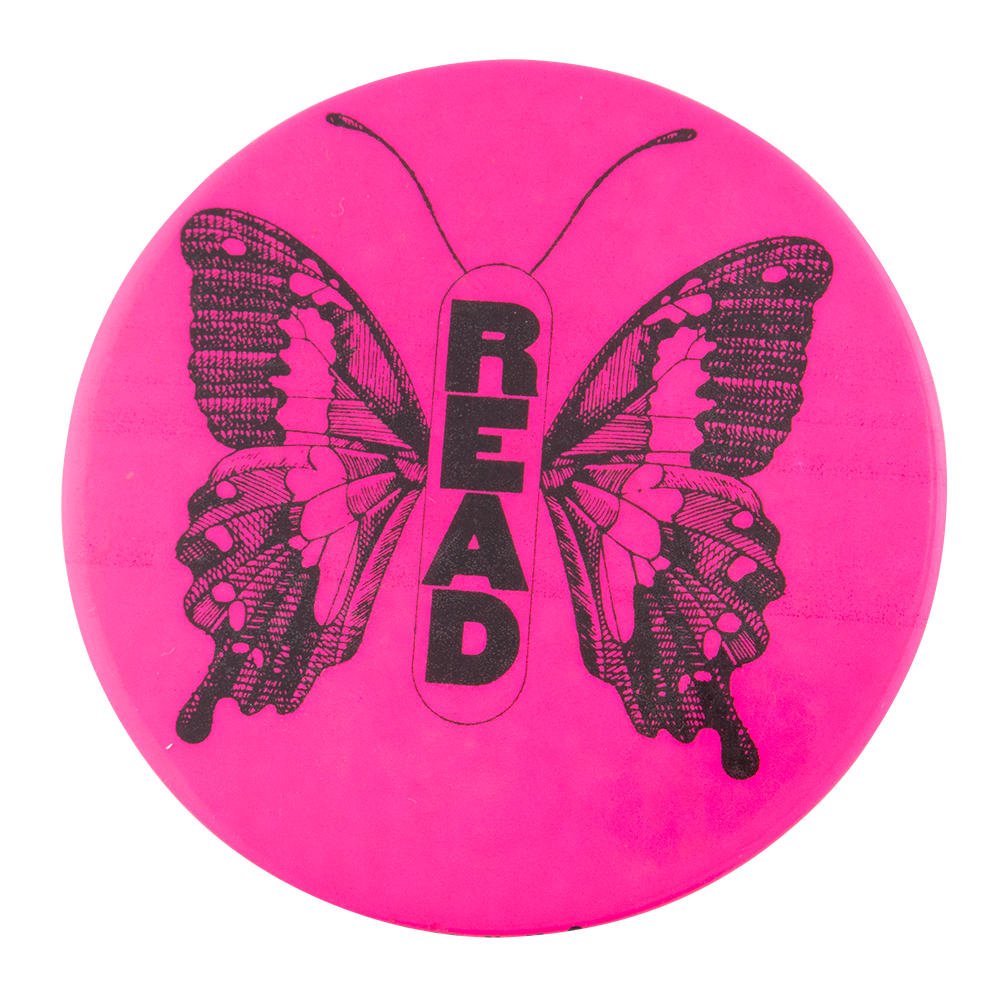
Text on Button READ
Image Description

Black illustration of a butterfly with black text on the body on a bright pink background

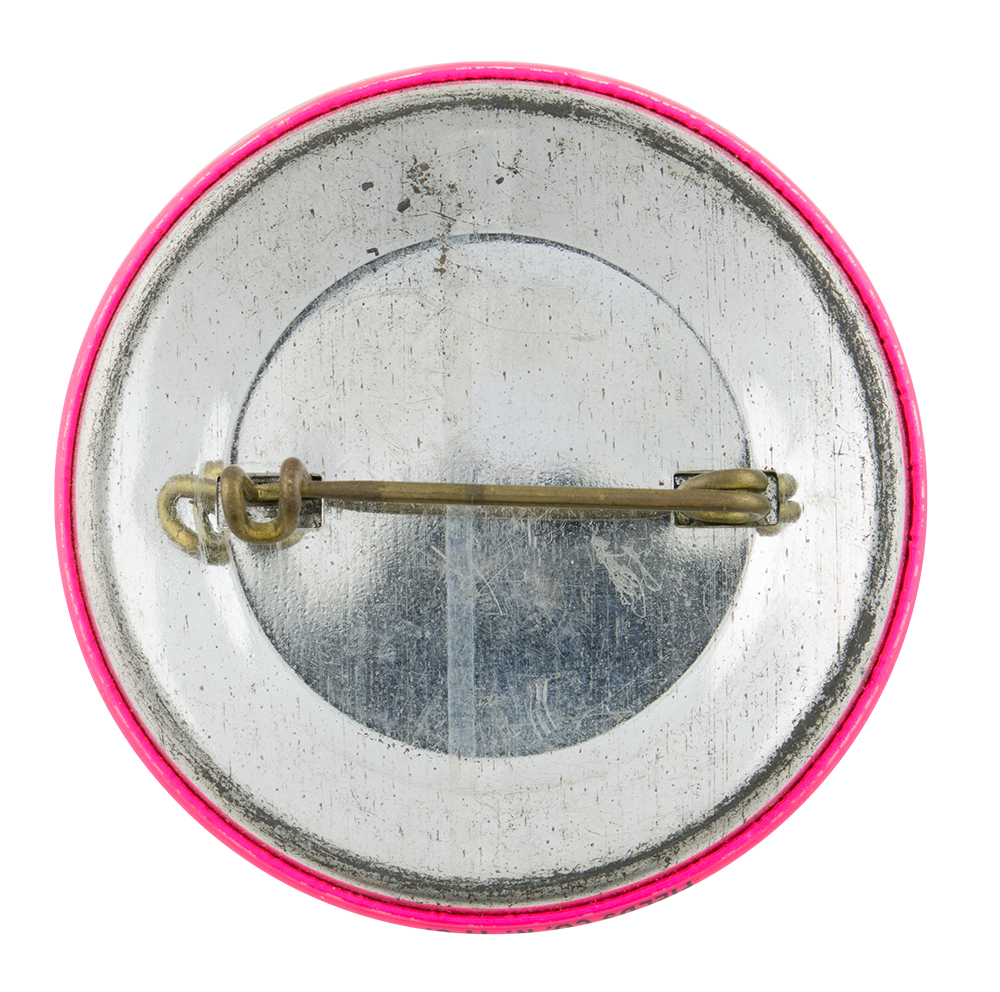
Curl Text FIELDS CO. N.Y.C.
Back Style
The Shape
The Size
Year / Decade Made
Additional Information

The READ butterfly button was distributed at book fairs and sales that were held in the New York City area in 1969 and 1970.

Catalog ID CA0349

Question Gender

Category
Additional Images
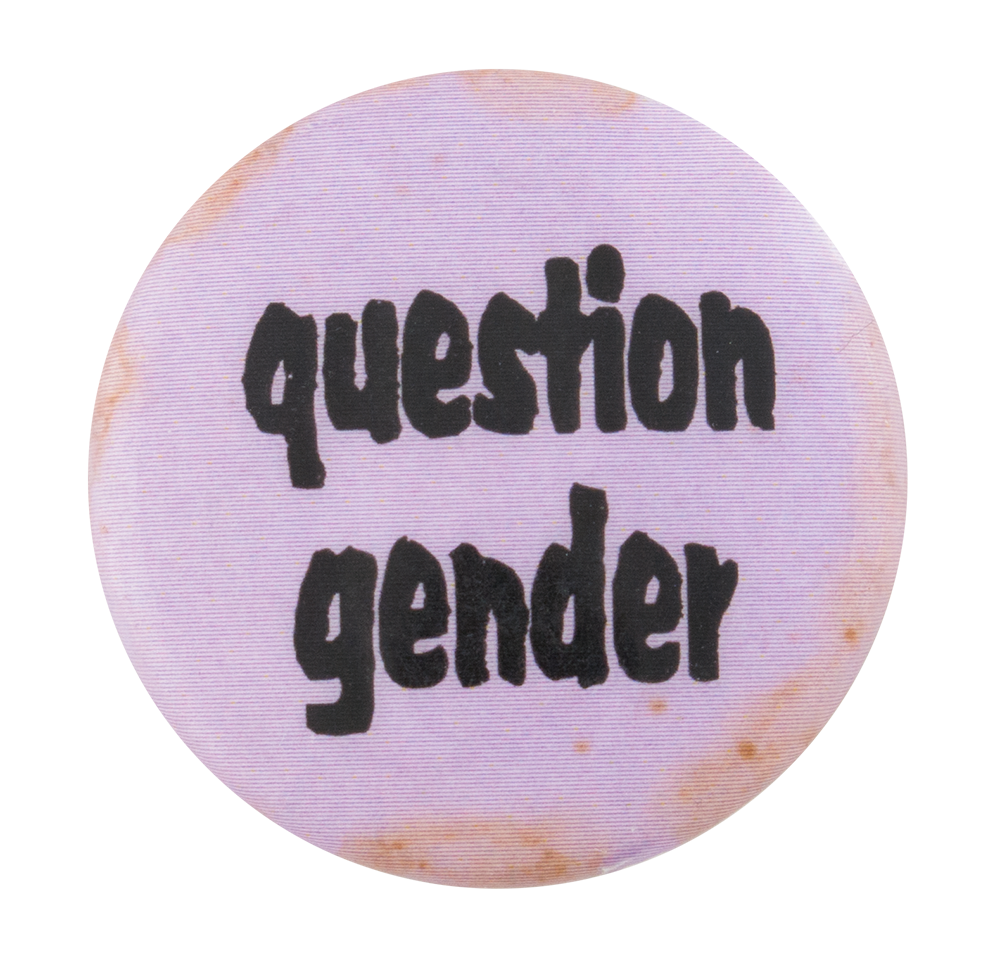
Text on Button question gender
Image Description

Black text on a purple background

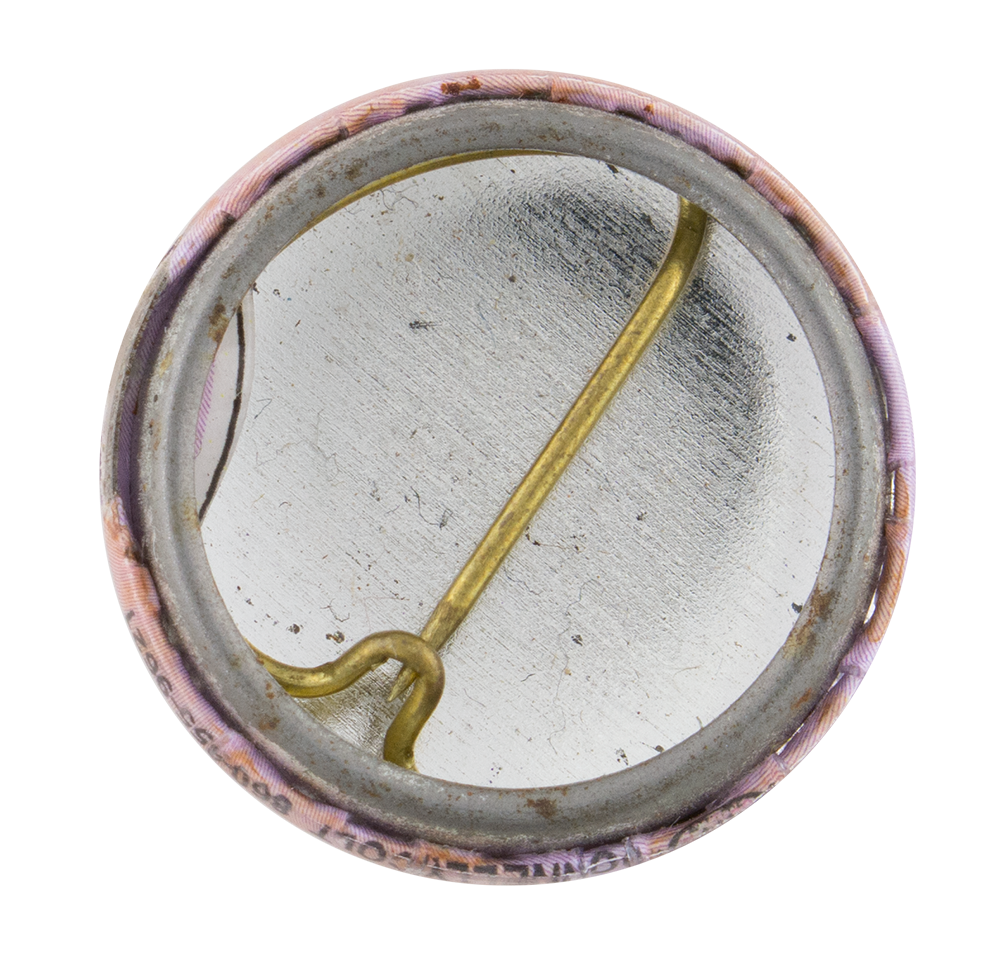
Curl Text DONNELY/COLT 860-455-9621
Back Style
The Shape
The Size
The Manufacturer
Additional Information

In 1955, Sexologist John Money applied the term "gender" to humans for the first time when he distinguished between biological sex and gender role. Ever since, the concept of “gender” has been challenged, particularly by feminists and the LGBT+ movement. Today, psychologists and medical doctors have established that genitalia at birth does not determine gender roles; gender roles are socially learned, gender is not just an act of performing as male or female but a choice to be everything between the two gender opposites.

Catalog ID CA0393

Question Authority

Category
Additional Images
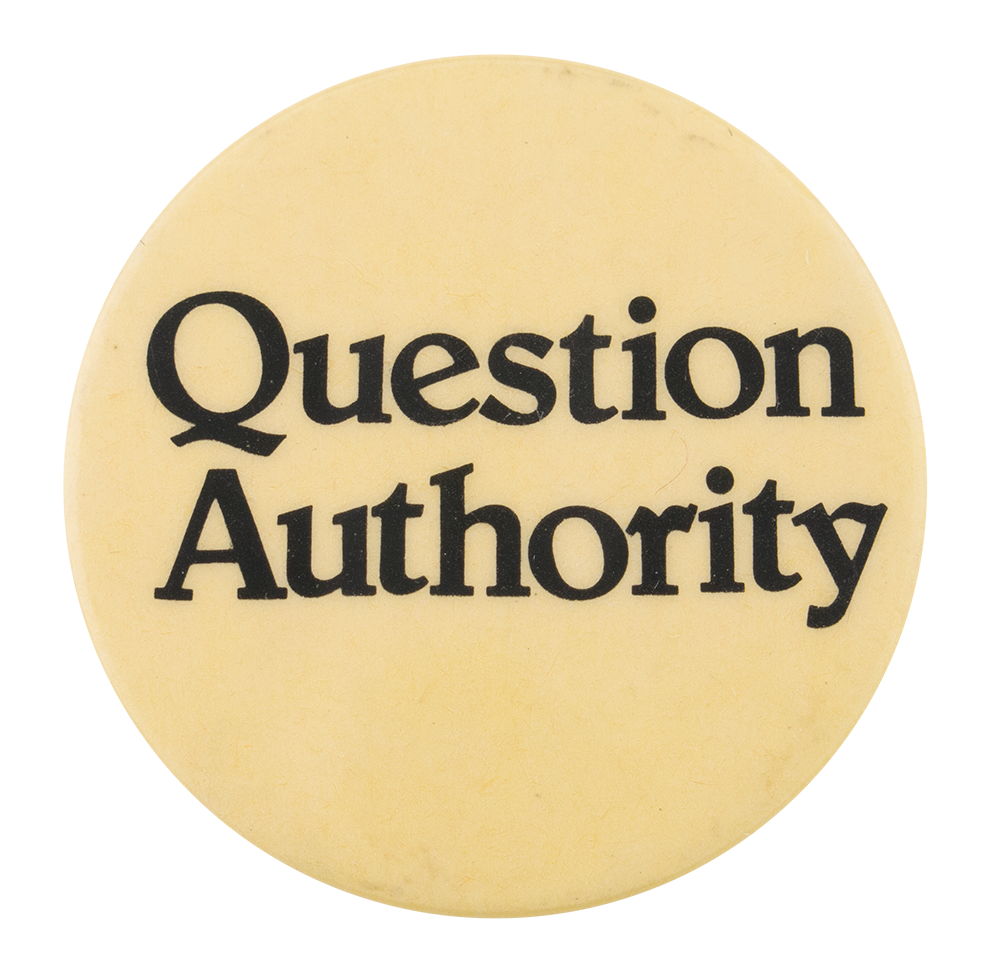
Text on Button Question Authority
Image Description

Black text on an off tan background

Back Paper / Back Info

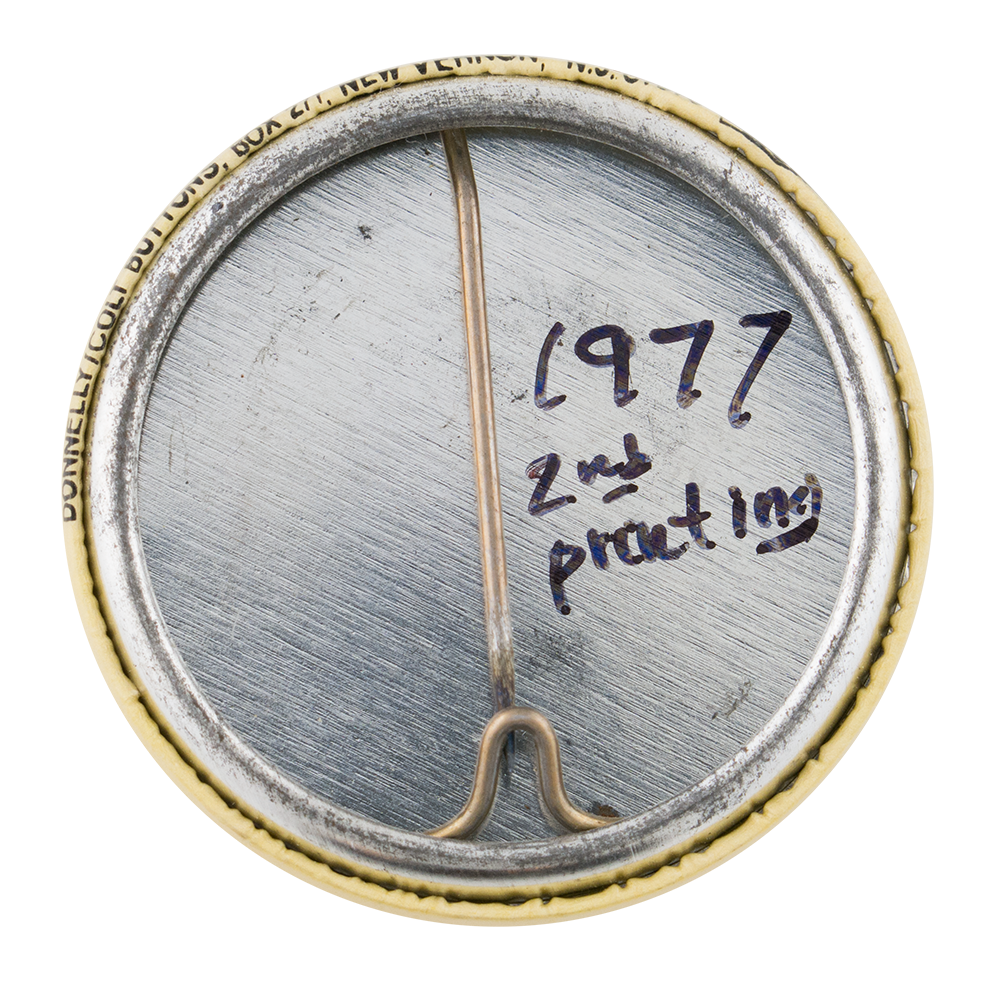
Hand written" 1977 2nd printing

Curl Text DONNELLY/COLT BUTTONS BOX 271 NEW VERNON, N.J. 07976
Back Style
The Shape
The Size
Year / Decade Made
The Manufacturer
Additional Information

Attempt has been made to attribute this phrase to notable figures in history such as Socrates, Adam Smith, and Benjamin Franklin. However, in the modern age, the slogan became popular due to controversial psychologist, Timothy Leary, who coined it in his lecture series entitled How to Think for Yourself, where he stated “To think for yourself you must question authority and learn how to put yourself in a state of vulnerable open-mindedness, chaotic, confused vulnerability to inform yourself.”  Leary was an influential icon in the counterculture movement of the 1960s, and advocated the use of LSD as a way to escape the burdens of life.

Catalog ID CA0391

Peace and Brotherhood

Category
Additional Images
Sub Categories
Text on Button copyright LAWRENCE P. BLOOM - 1973
Image Description

Illustration of a peace sign made of a red outer circle and center line and two human arms. 

Back Style
The Shape
The Size
Year / Decade Made
The Manufacturer
Additional Information

This button was designed by Lawrence P. Bloom in late 1972 while he was in junior high school. The button was handed out at the Watergate Hearing in May of 1973. The design has since been made into stickers and postage stamps.

Catalog ID CA0323

Organize Fish

Category
Additional Images
Sub Categories
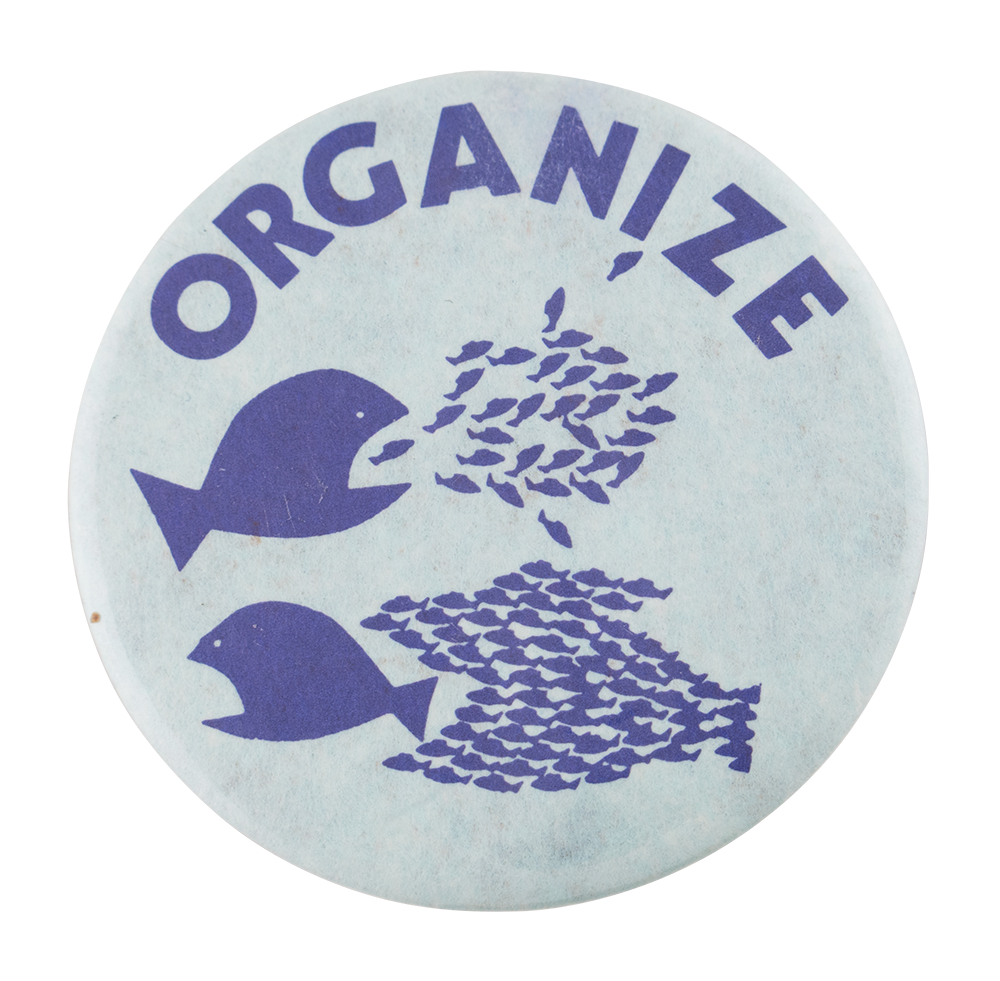
Text on Button ORGANIZE
Image Description

Purple illustration of a fish eating a group of smaller fish over an illustration of the smaller fish in the form of a larger fish eating the larger fish with purple text above on a light blue background

Curl Text DONNELLY/COLT BUTTONS BOX 188 HAMPTON CT 06247
Back Style
The Shape
The Size
The Manufacturer
Additional Information

The image on this button represents that through organization one can create results and overcome obstacles. It presents the idea that you don’t let ‘them’ eat you, but you organize to resist. This image also expresses the idea of solidarity, or fellowship arising from common responsibilities and interests. 

Catalog ID CA0324

Nuclear Power is Centralised Power

Category
Additional Images
Sub Categories
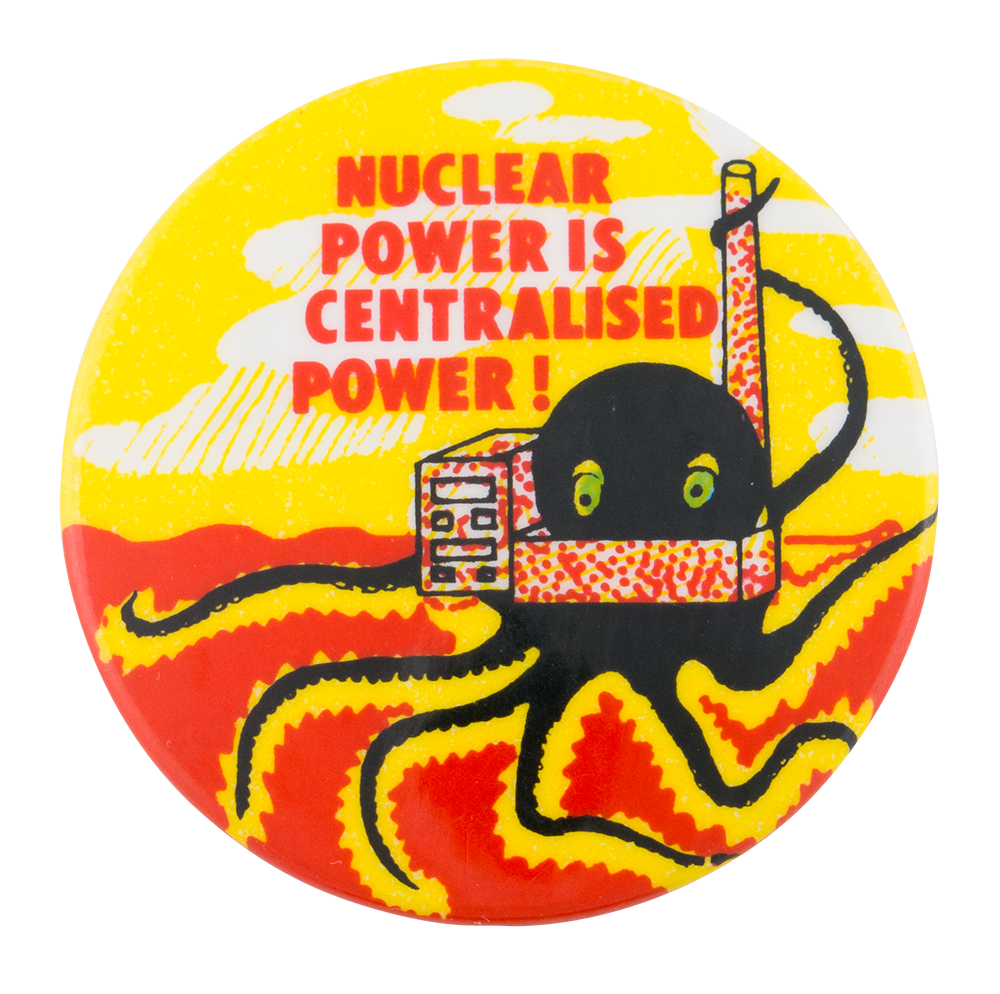
Text on Button NUCLEAR POWER IS CENTRALISED POWER!
Image Description

Illustration of a black octopus with its head inside of a building on a red ground with yellow and white sky

Back Style
The Shape
The Size
Year / Decade Made
Additional Information

This button criticizes nuclear power as being centralized. The argument is that it allows a small number of “elites” (scientific, political and/or economic) to make important decisions about energy for large area. Most often nuclear programs have been run or operated directly by governments or through support of large government subsidies. The symbolism on the button of the octopus is often associated with caricatures of government or political over reaching or “big brother” type activity that interferes with local autonomy. It is argued that a centralized model of power distribution would hurt efforts to shift to more sustainable model.


Sources

The NSA and the Octopus (2014, January 20). Retrieved from https://defacingcurrency.wordpress.com/2014/01/20/the-nsa-and-the-octop…

Martin, Brian. (2007). Opposing nuclear power: past and present. Retrieved from http://www.bmartin.cc/pubs/07sa.html

Catalog ID CA0347