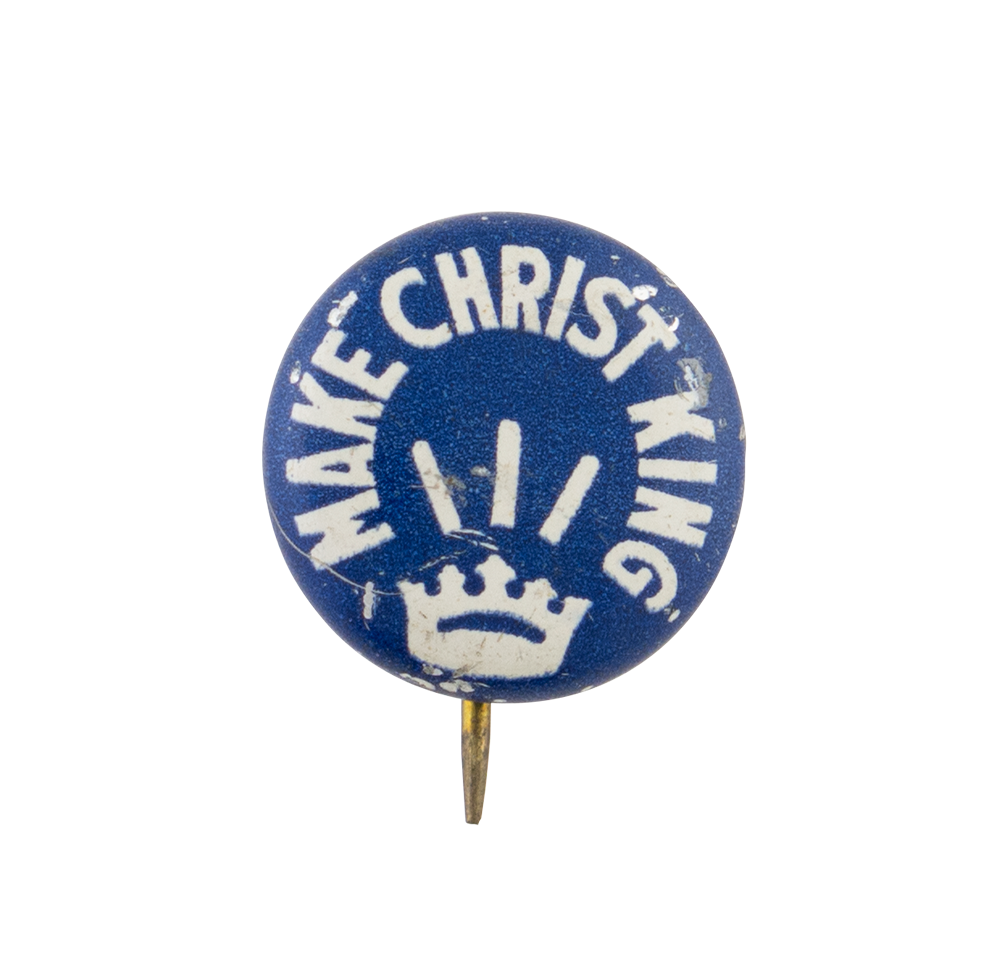
Make Christ King

Category
Additional Images
Sub Categories
Text on Button MAKE CHRIST KING
Image Description

White text over an illustration of a crown with rays coming out of the top on a blue background

Curl Text COOK ELGIN
Back Style
The Shape
The Size
Year / Decade Made
Additional Information

The crown has long been used in Christian symbolism to show the reward of Heaven. The phrase, “Make Christ King,” was used for a Gospel hymn book in 1912, published by Glad Tidings Publishing of Chicago. One its editors was Dr. H. W. Stough, minister to Ernest Hemingway’s parents. Make Christ King seems to have been very popular around 1915 for Protestent revival services. The prolific use of it led to the “New Make Christ King” and “Make Christ King Combined” hymnals, or songbooks. The phrase is still used in religious services and marketing today.

Sources

Cross and Crown. En.wikipedia.org. (2020). Retrieved from https://en.wikipedia.org/wiki/Cross_and_Crown.

Fillmore Music House (1916, March). Make Christ King Combined [Advertisement]. The Choir, 17(3), 73. Retrieved from Google Books.

Nagel, J. (Ed.). (1996). Ernest Hemingway: The Oak Park legacy. Tuscaloosa : University of Alabama Press

Catalog ID CA0302

Kansas State Board of Health

Category
Additional Images
Sub Categories
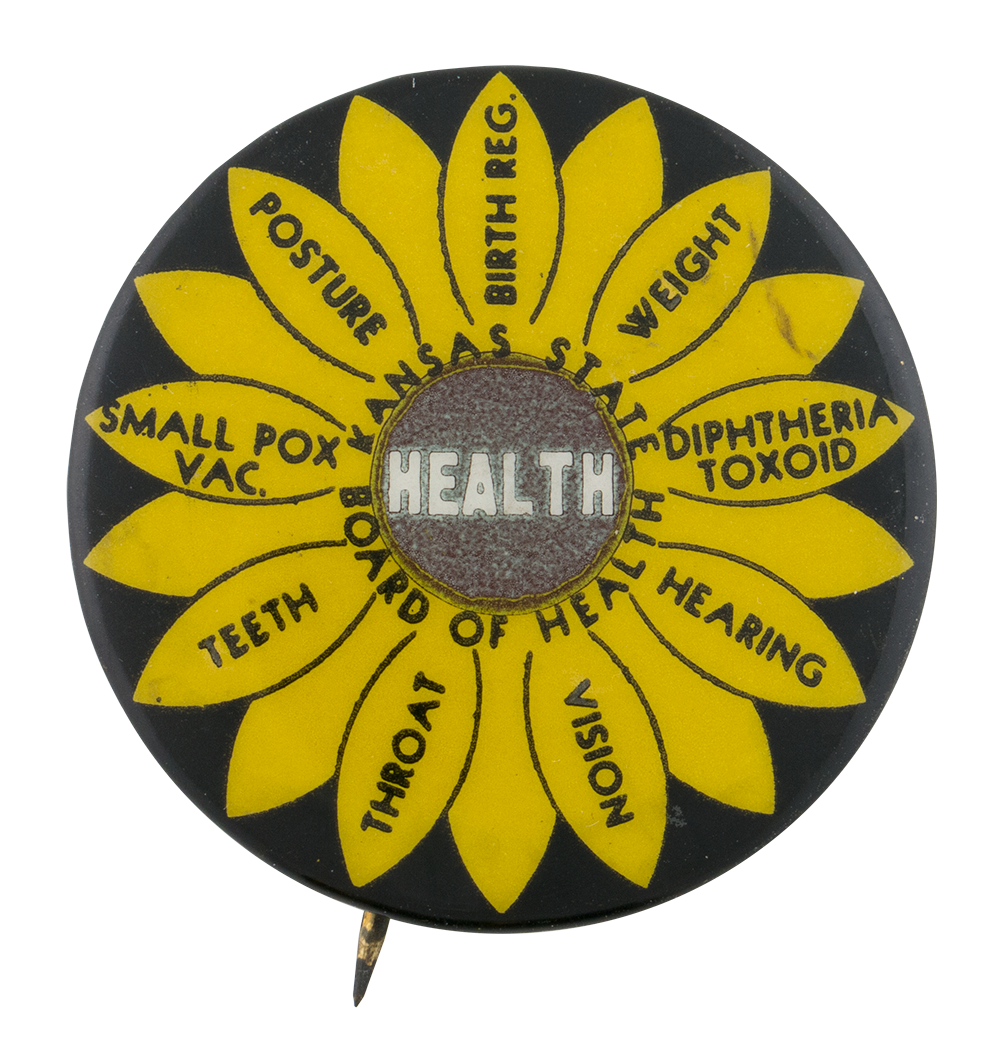
Text on Button HEALTH KANSAS STATE BOARD OF HEALTH WEIGHT DIPHTHERIA TOXOID HEARING VISION THROAT TEETH SMALL POX VAC POSTURE BIRTH REG.
Image Description

Illustration of a yellow flower with a brown center that has white text on it and black text around its outer edge. The flower petals have black text on them. All on a black background

Back Style
The Shape
The Size
Additional Information

The image of the sunflower on this button directly correlates with Kansas being known as the “Sunflower State”. The Kansas State Board of Health was created in 1885 and was the predecessor agency to the Kansas State Department of Health. When the Board was first established it consisted of nine physicians, each a graduate of a medical college who had at least seven years of continuous practice in their profession. The physicians were appointed by the governor from all parts of the state for three-year terms and in 1908, a non-medical member was added. The use of the name Board of Health was abolished in 1974 when the Department of Health was renamed to the current Department of Health and Environment. The text on the petals of the sunflower represents the different areas of health for which the Board provided care and advice.

Catalog ID CA0286

Impeach!

Category
Additional Images
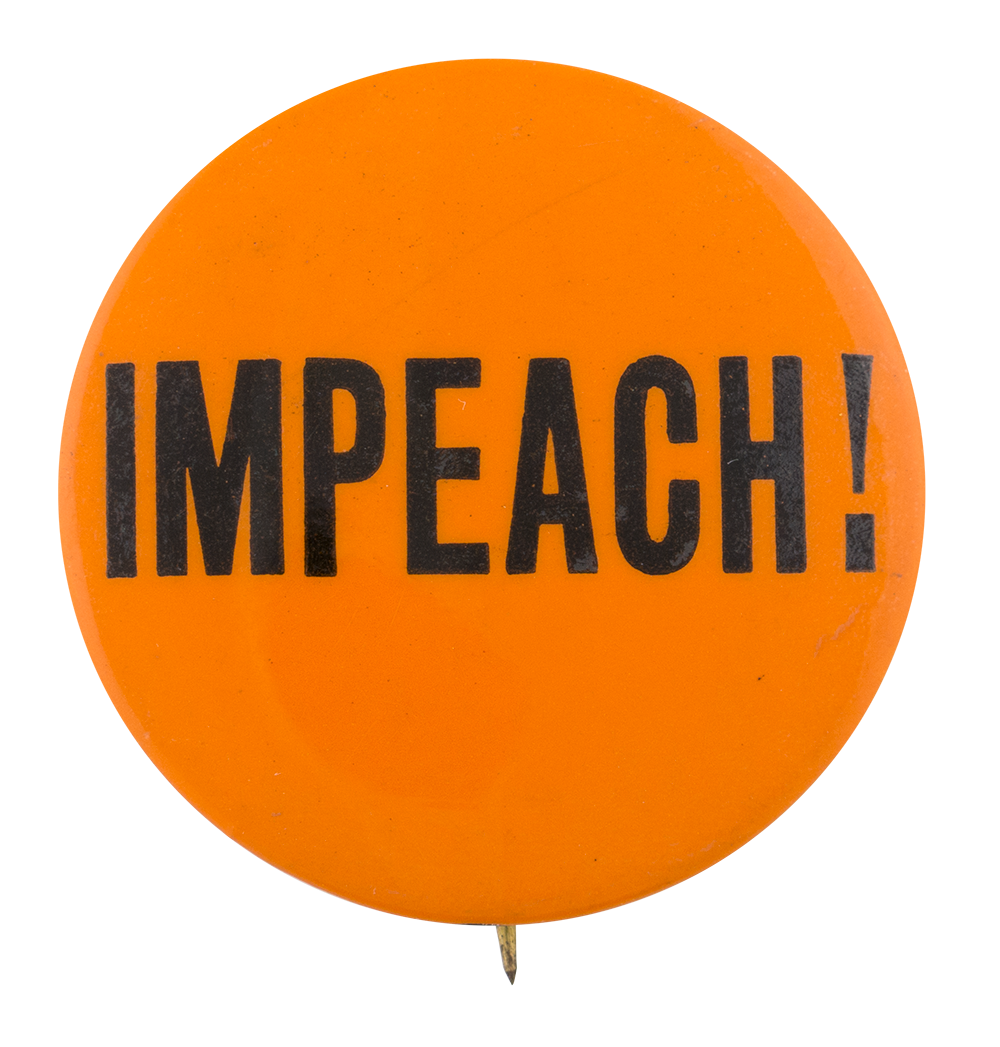
Text on Button IMPEACH!
Image Description

Black text on an orange background

Curl Text union bug
Back Style
The Shape
The Size
Additional Information

Impeachment is a process in which a public official is accused of unlawful activity and may be removed from office if he is found guilty. In the U.S. federal government, the House of Representatives have to sole power to impeach while the Senate will try any impeachment hearing. Two U.S. presidents have been impeached: Andrew Johnson for violating the Tenure of Office Act and Bill Clinton for perjury and obstruction of justice. Both were acquitted by the Senate.

Catalog ID CA0298

I Wear My Seat Belt

Category
Additional Images
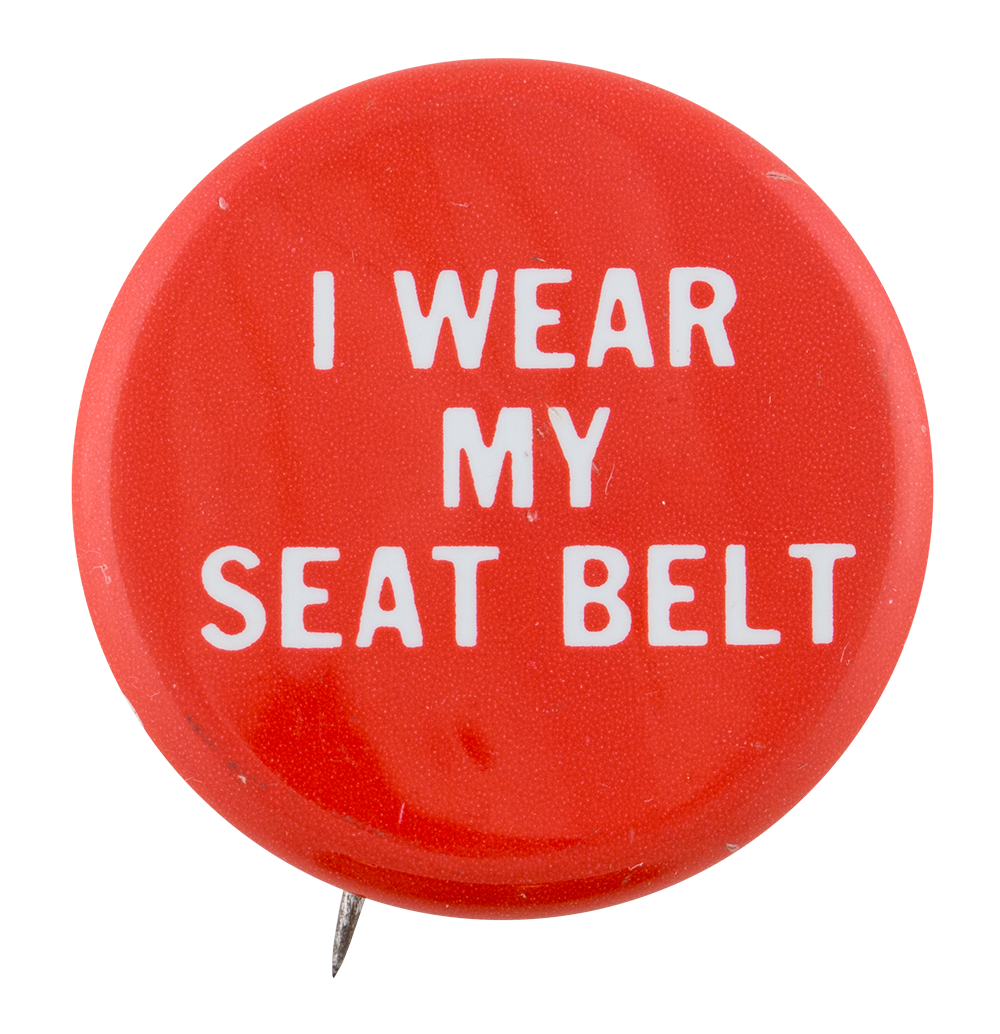
Text on Button I WEAR MY SEAT BELT
Image Description

White text on a red background

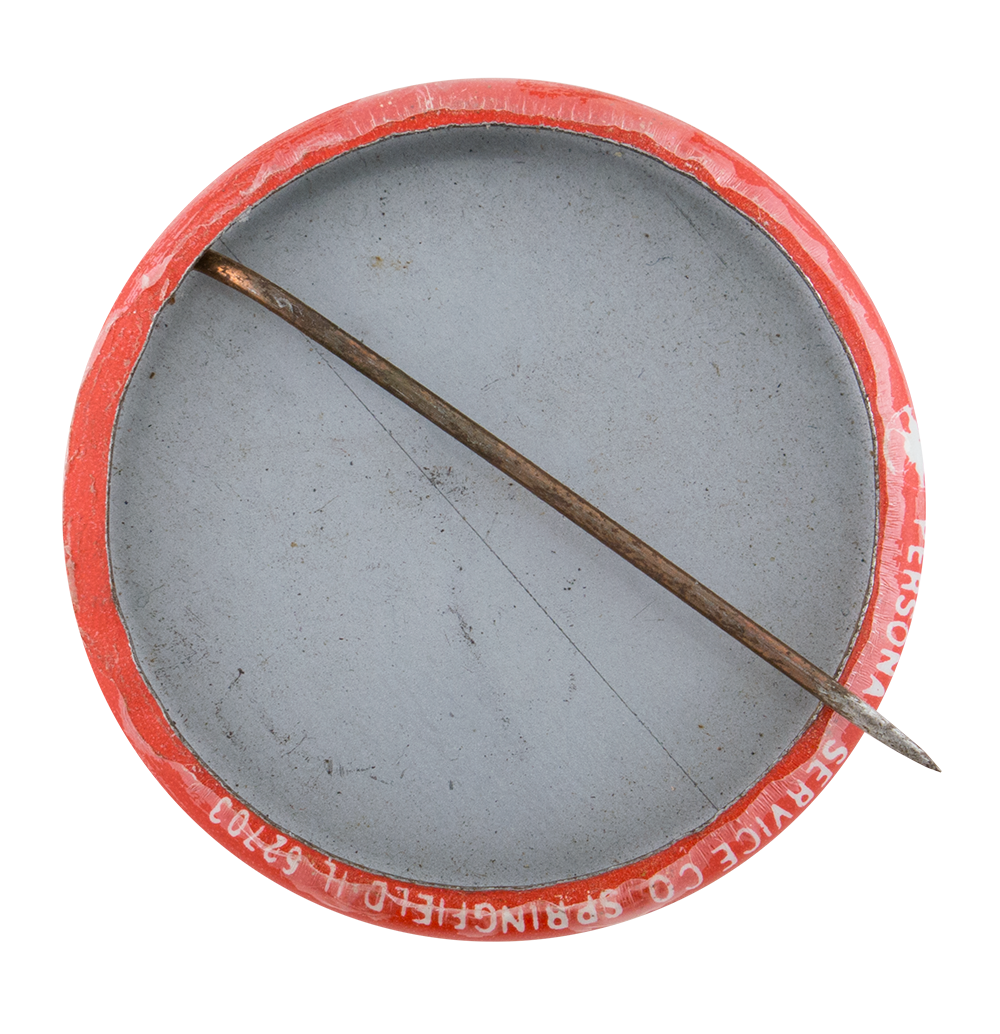
Curl Text PERSONAL SERVICE CO. SPRINGFIELD, ILL52703
Back Style
The Shape
The Size
Additional Information

The first automotive seat belts were patented in the late 19th century for use in New York City taxi cabs. Originally meant to keep the driver and passengers from sliding around in their seats, seat belts for safety from accidents weren't a concern until the 1930s. Physicians across the country began to urge auto manufacturers to provide lap seat belts in all cars. The three-point seat belt was invented in 1958; Swedish carmaker Volvo was the first to implement a simple and effective design. By the late 1960s, all American vehicles were required to provide seat belts; however, getting people to wear them was difficult. 

Despite scientific research in the 1940s and 1950s, the use of seat belts aroused heated debate. Many felt it should be up to the individual to decide to use a seat belt. The National Ad Council ran advertisements for decades encouraging divers to "Buckle Up." It took over thirty years for seat belt laws to be enacted across all fifty states. Slogans like "I wear my seat belt," showed support for safety and promoted the use of seat belts.

Click here to see another version of this button held by the museum

Sources

Defensive Driving. (2021). A history of seat belts. https://www.defensivedriving.com/blog/a-history-of-seat-belts/

Catalog ID CA0283

I Own a Liberty Bond

Category
Additional Images
Sub Categories
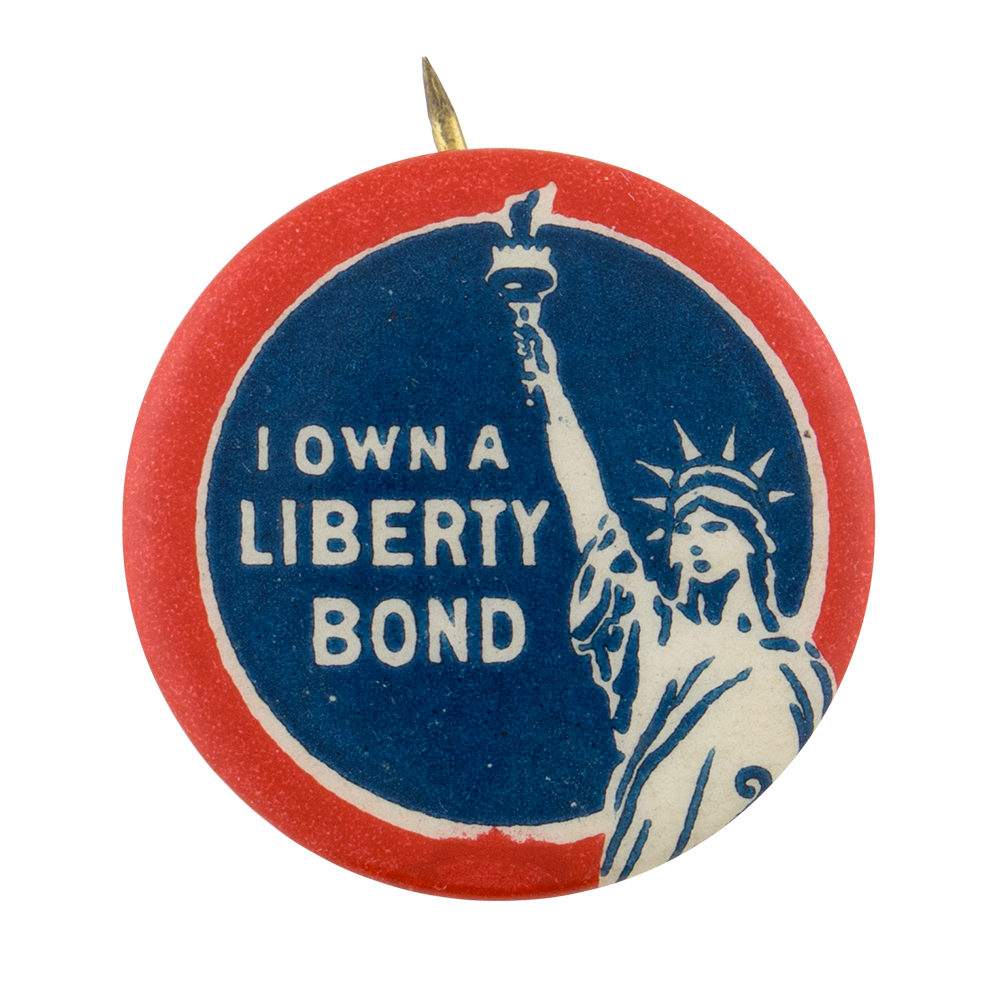
Text on Button I OWN A LIBERTY BOND
Image Description

White text and an illustration of the Statue of Liberty on a blue inner circle surrounded by a red outer ring

Back Paper / Back Info

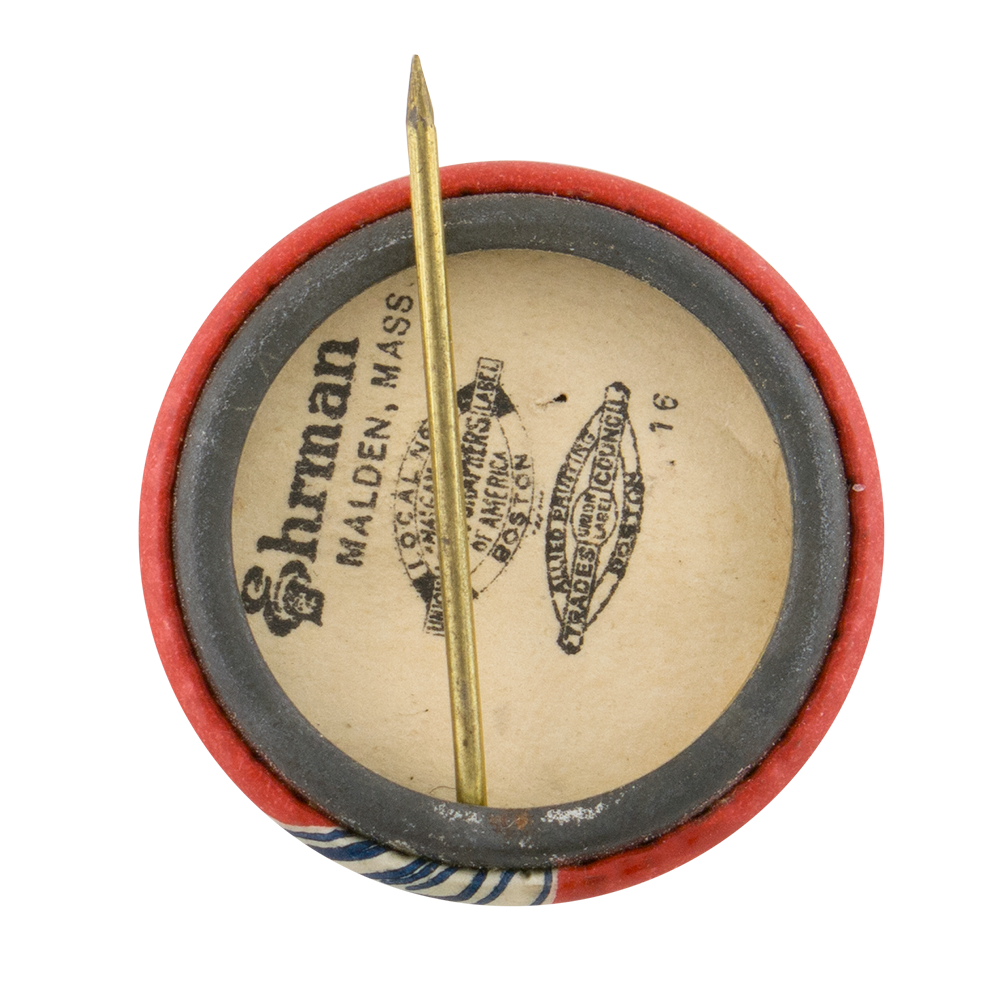
Ehram
MALDEN, MASS
union bug

Back Style
The Shape
The Size
Year / Decade Made
Additional Information

Liberty bonds were issued by the United States Treasury during the First World War to help finance the war effort. The first Liberty Bond Act was passed in 1917. When Americans on the home front bought a liberty bond, they were encouraged to wear a button to show their contribution to the war effort.

Catalog ID CA0284

I For One

Category
Additional Images
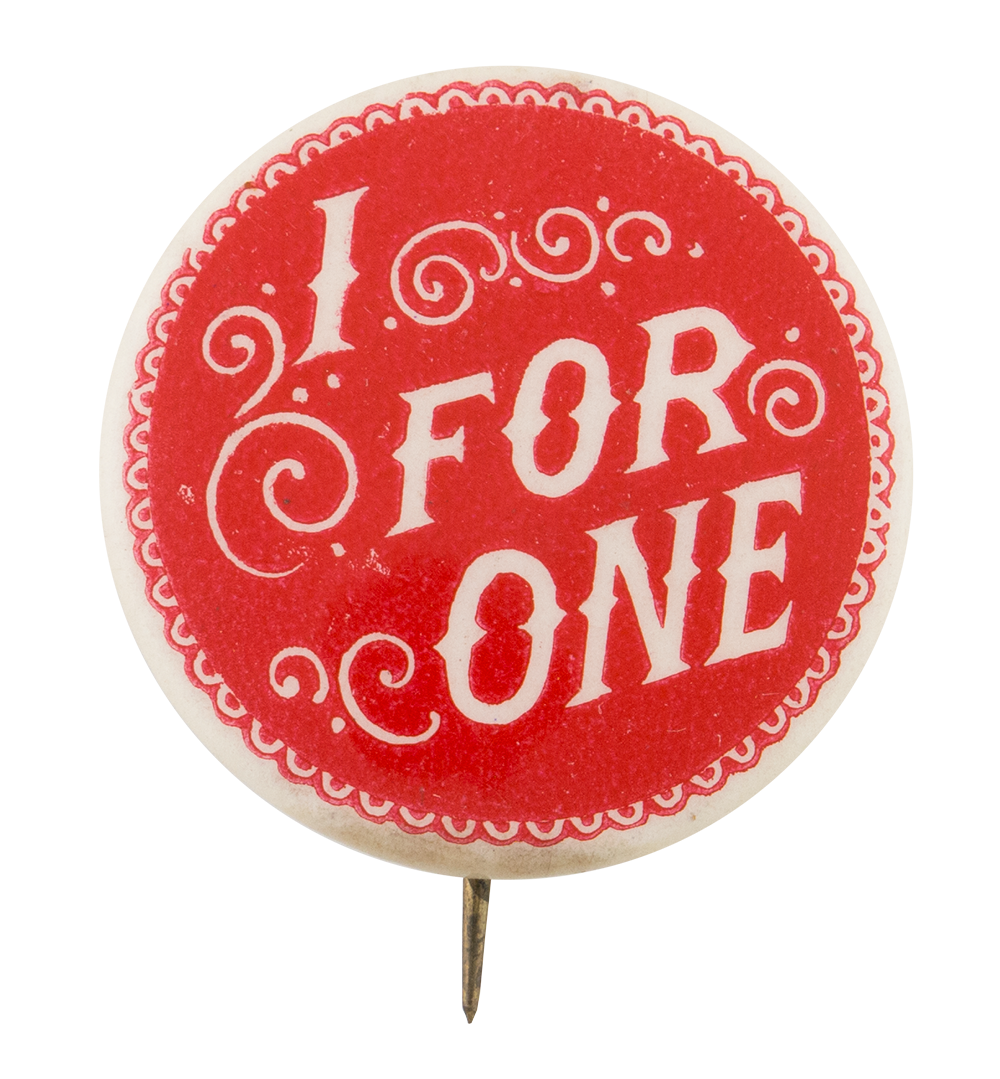
Text on Button I FOR ONE
Image Description

White text on a red background with a decorative edge with an outer white edge of the button

Back Paper / Back Info

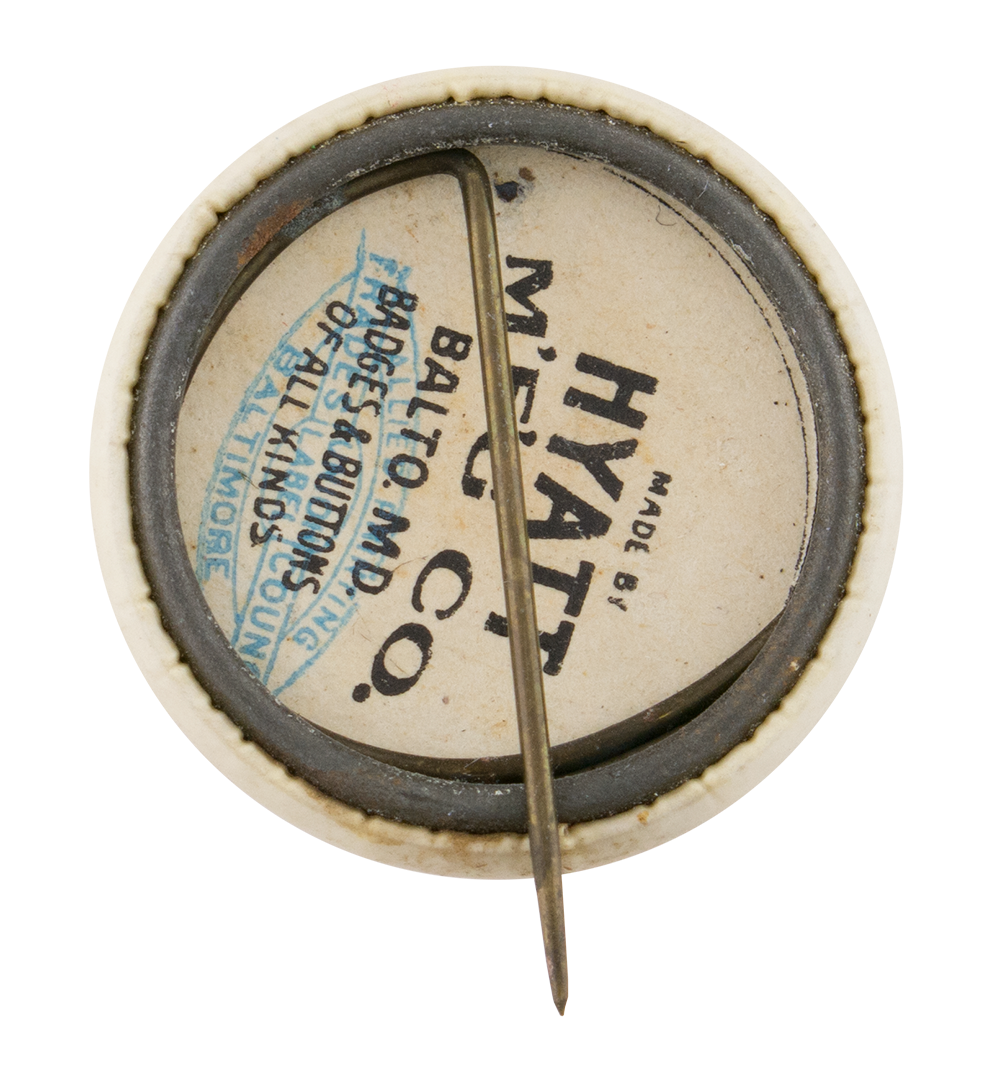
MADE BY HYATT MFG CO. BALTO. MD BADGES & BUTTONS OF ALL KINDS

Back Style
The Shape
The Size
The Manufacturer
Additional Information

Have info on this button? Contact us here.

Catalog ID CA0287

Homosexual Not Homocidal

Category
Additional Images
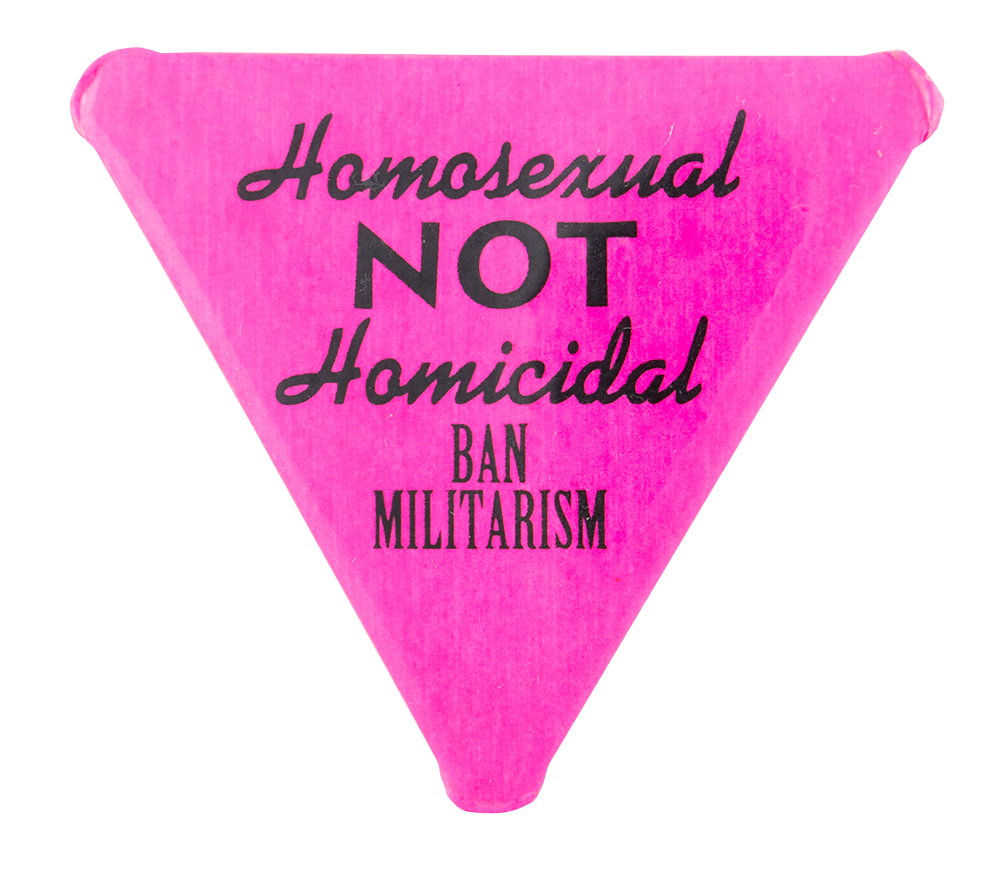
Text on Button Homosexual NOT Homicidal BAN MILITARISM
Image Description

Black text on a bright pink background

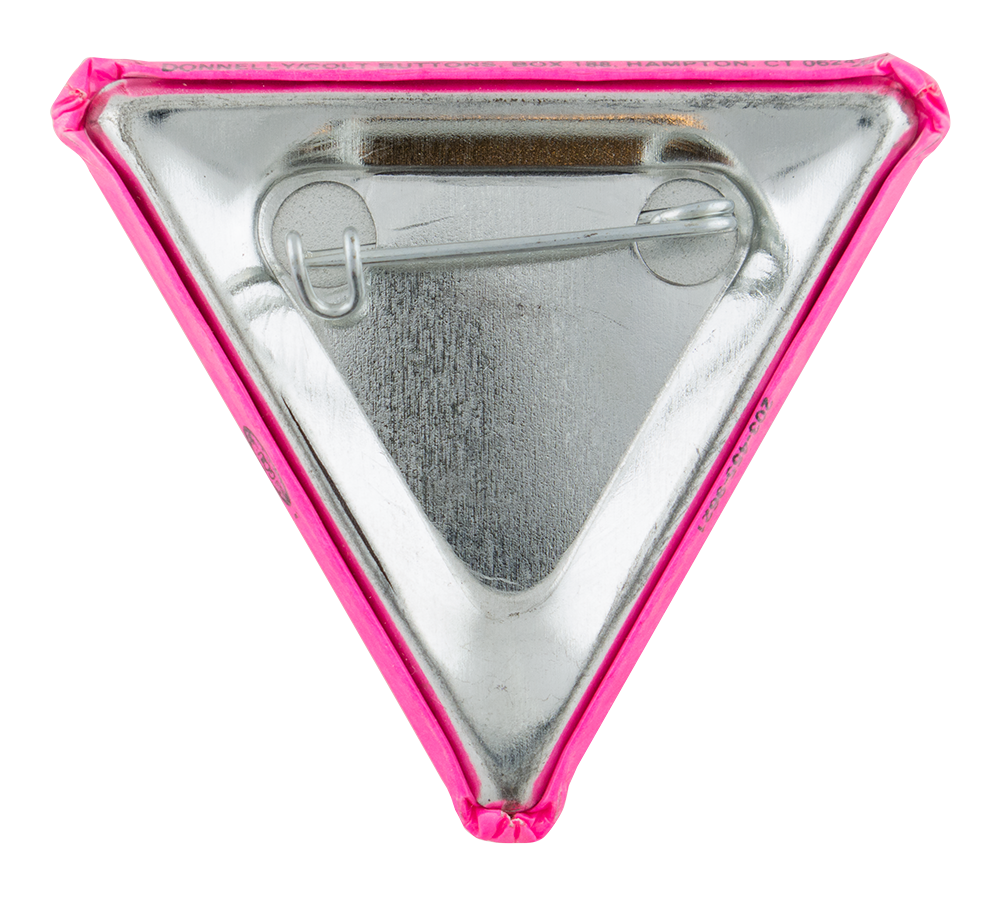
Curl Text DONNELLY/COLT BUTTONS, BOX 188, HAMPTON, CT 06427 203-455-9621
Back Style
The Shape
The Size
The Manufacturer
Additional Information

The slogan on this button is a variation on a slogan that appeared on buttons and posters that were distributed during the famous March on Washington for Lesbian, Gay, and Bi Equal Rights and Liberation that took place in D.C. on April 25, 1993. It is estimated that 1 million people attended the March. Between the 1987 March on Washington and the early 1990s, LGBT people achieved much more mainstream visibility than they had in the past. The LGBT community still faced widespread discrimination, through such policies as Don’t Ask Don’t Tell and rising instances of targeted hate crimes.

Sources
Catalog ID CA0273

Heroin is Hell

Category
Additional Images
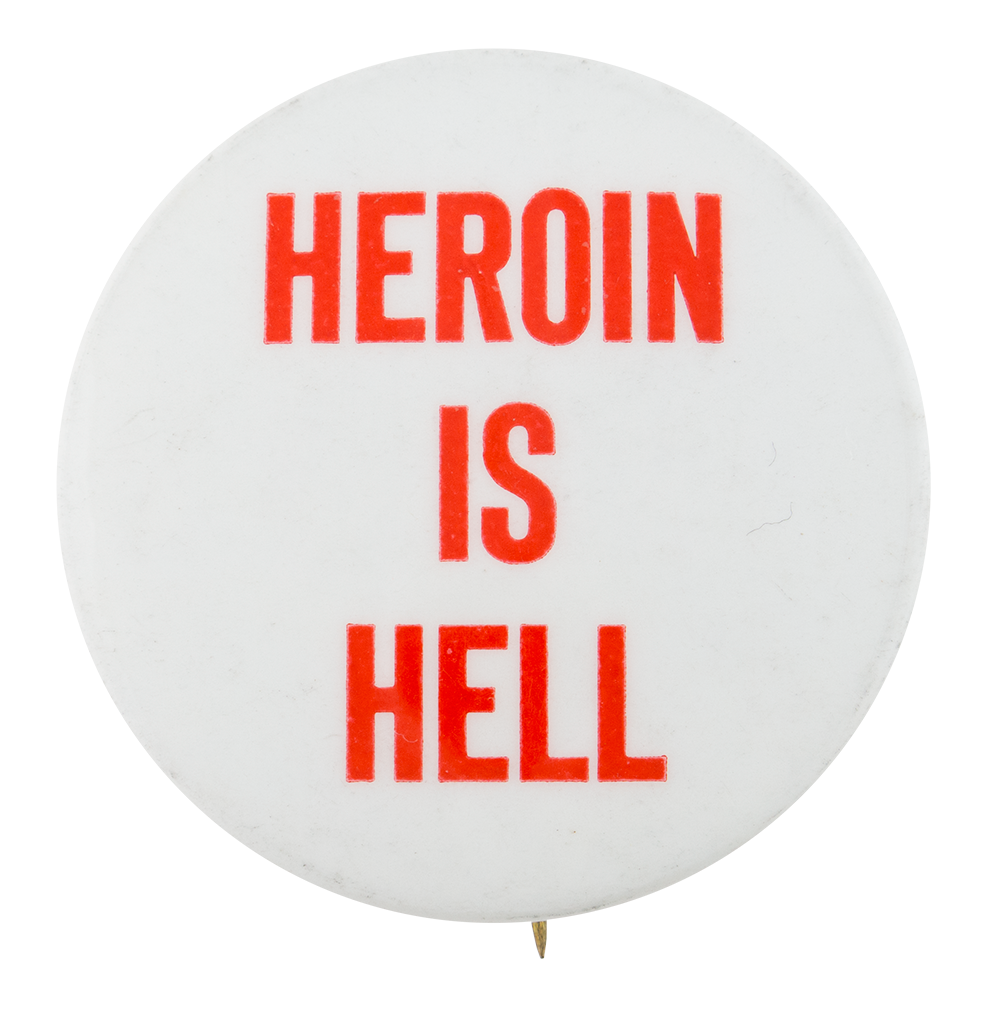
Text on Button HEROIN IS HELL
Image Description

Red text on a white background

Back Style
The Shape
The Size
Year / Decade Made
Additional Information

This button refers to the way that heroin use can severely damage one’s physical and mental wellbeing as well as the negative effect its use can have on overall quality of life. In the early 1970s many soldiers came home from fighting in Vietnam having developed an addiction to heroin and the drug’s pervasiveness continued to grow throughout the 70s. In 1971, President Nixon named drug abuse as “public enemy number one in the United States” and announced the creation of the Special Action Office for Drug Abuse Prevention, to be headed by a leading methadone treatment specialist.  Previously, the primary emphasis was on trying to arrest the problem of heroin out of existence. Law enforcement went after the whole chain of possession and trafficking and drug charges soon accounted for half to three-quarters of the population of some federal prisons. But as lives began to be lost in great numbers and as heroin abuse provided a vector for new and old diseases, the emphasis began to shift more towards treatment and recovery for the addict.

Catalog ID CA0282

Hairpower

Category
Additional Images
Sub Categories
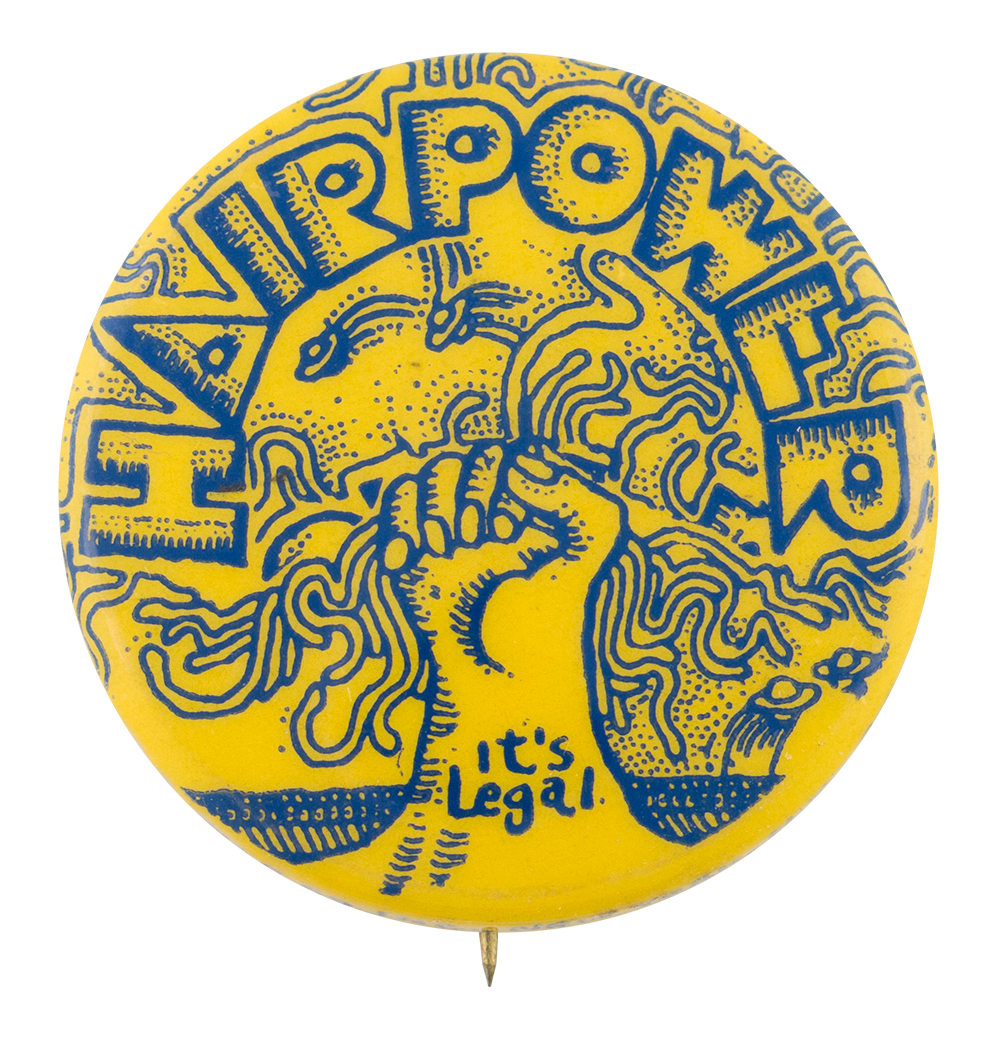
Text on Button HAIRPOWER It's Legal
Image Description

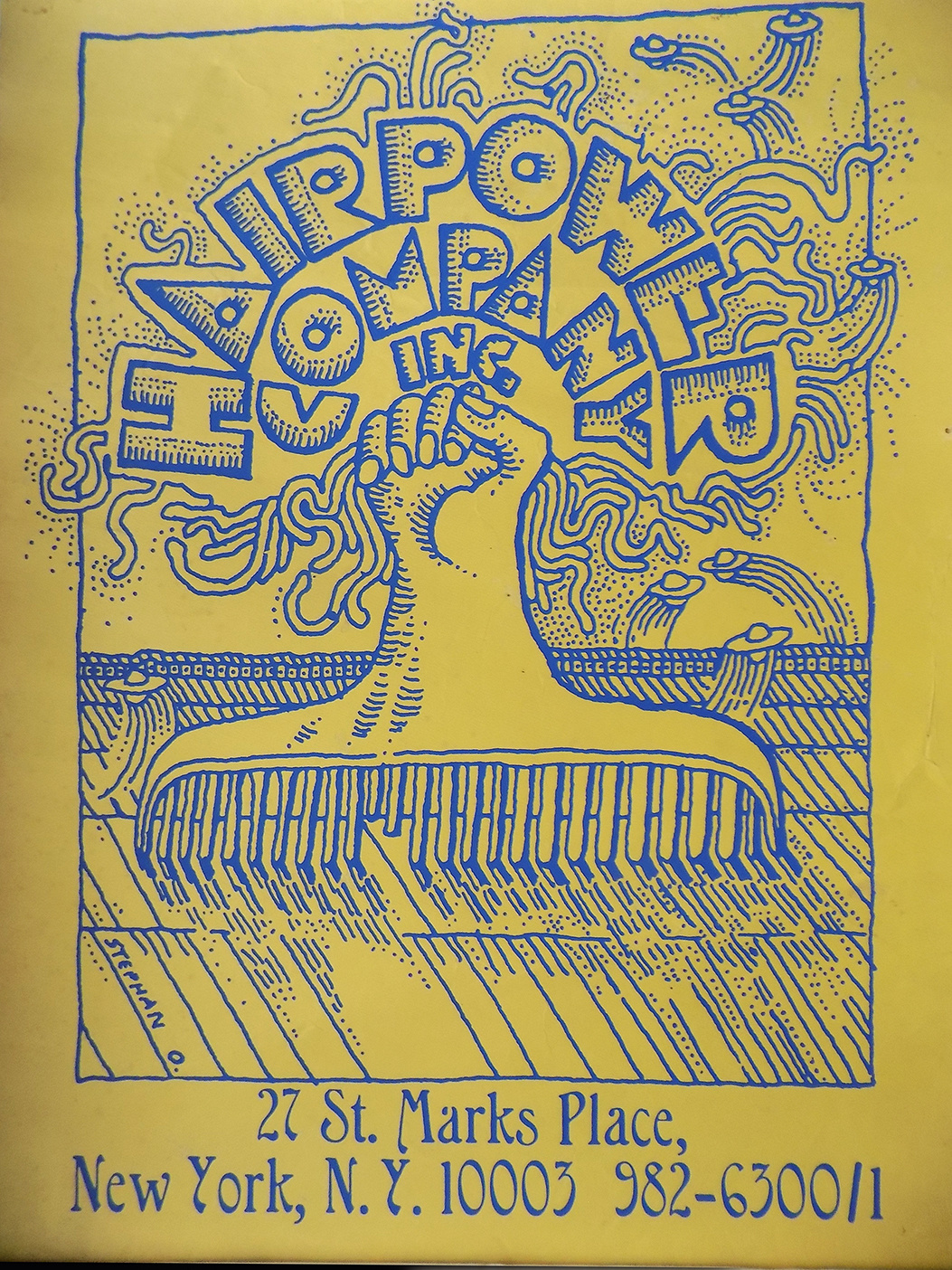
Illustration of a fist holding strands of hair with blue outlined text across the top and blue text on the forearm on a yellow background

Curl Text HAIRPOWER CO, INC NEW YORK, N.Y. REGISTERED
Back Style
The Shape
The Size
Year / Decade Made
Additional Information

Hairpower was a hair salon in Greenwich Village, New York, owned by Carlo Manfredi. In operation from 1970 until 1994, it was famous for its cutting-edge styles.

Sources

Hairpower Company Ltd. (n.d.). Retrieved from https://bestbusinessny.com/company/231294/hairpower-company-ltd.html

Grieve, E.V. (2011). [EVG Flashback] The Lower East Side: There Goes the Neighborhood. Retrieved from https://evgrieve.com/2011/08/evg-flashback-lower-east-side-there.html

Catalog ID AD0890

H Block P.O.W. Long Kesh

Category
Additional Images
Sub Categories
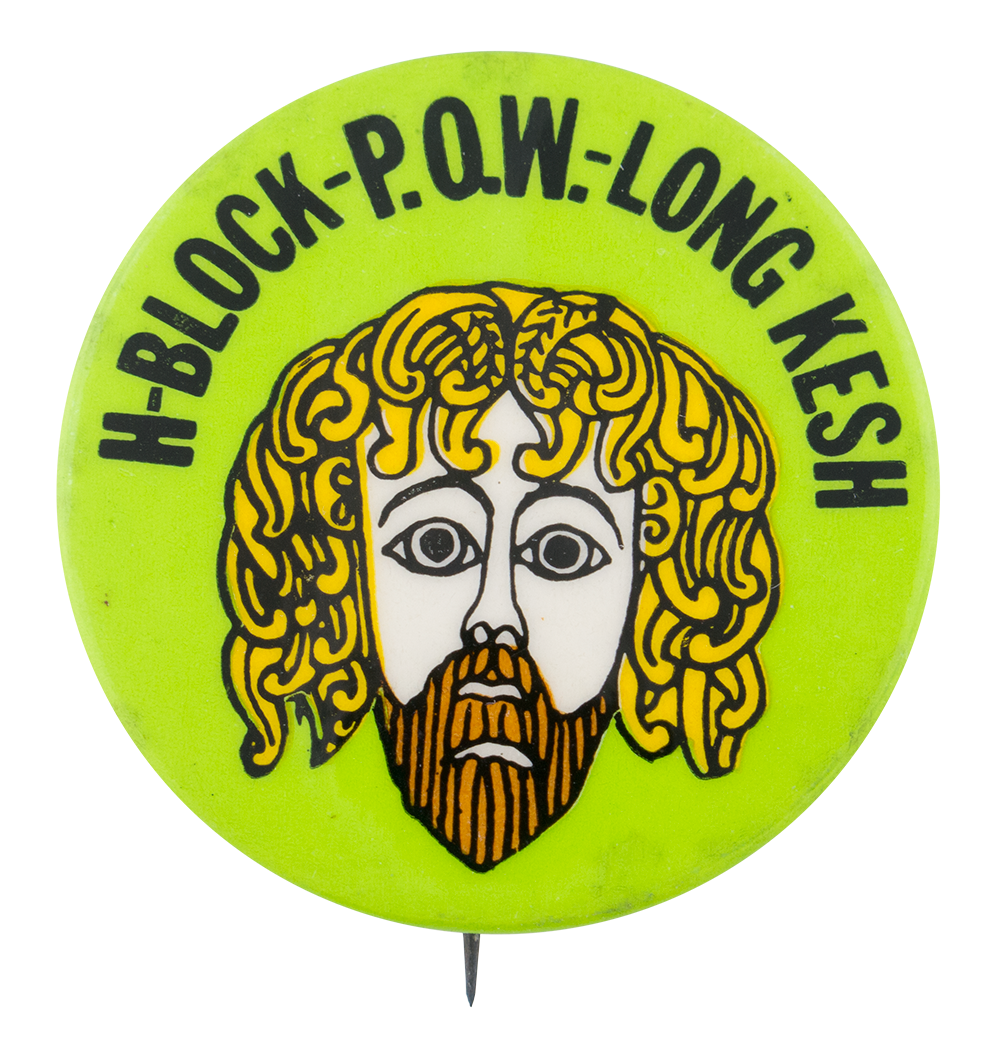
Text on Button H-BLOCK-P.O.W.-LONG KESH
Image Description

Illustration of a person's head with yellow hair and a light brown beard and mustache on a green background with black text along the top edge

Back Style
The Shape
The Size
Additional Information

This button refers to the 1981 Irish hunger strike that was the culmination of a five-year protest during The Troubles by Irish republican prisoners in Northern Ireland.  Long Kesh Detention Centre, now known as Her Majesty’s Prison Maze, was a prison that was used to house paramilitary prisoners (mostly members of the IRA). One of the local names for the prison was the H Blocks and it was reportedly run like a prisoner of war camp. In the late 1970s, prisoners stages protests against their treatment and aimed to re-establish their political status by demanding certain rights, including the right to not wear a prison uniform. Their protests did not initially garner much attention, but in 1980, several prisoners volunteered to be part of a hunger strike. The second hunger strike began in 1981 when the IRA’s former commanding officer, Bobby Sands, refused food.  It was a showdown between the prisoners and Prime Minister Margaret Thatcher. Bobby Sands was actually elected as a Member of Parliament during the strike, prompting media interest from around the world. Sands’ death on the 66th day of his hunger strike prompted rioting in nationalist areas of Northern Ireland. The strike radicalized Irish nationalist politics and was the driving form that enabled Sinn Féin to become a mainstream political party.

Catalog ID CA0276