If I Were Twenty One

Category
Additional Images
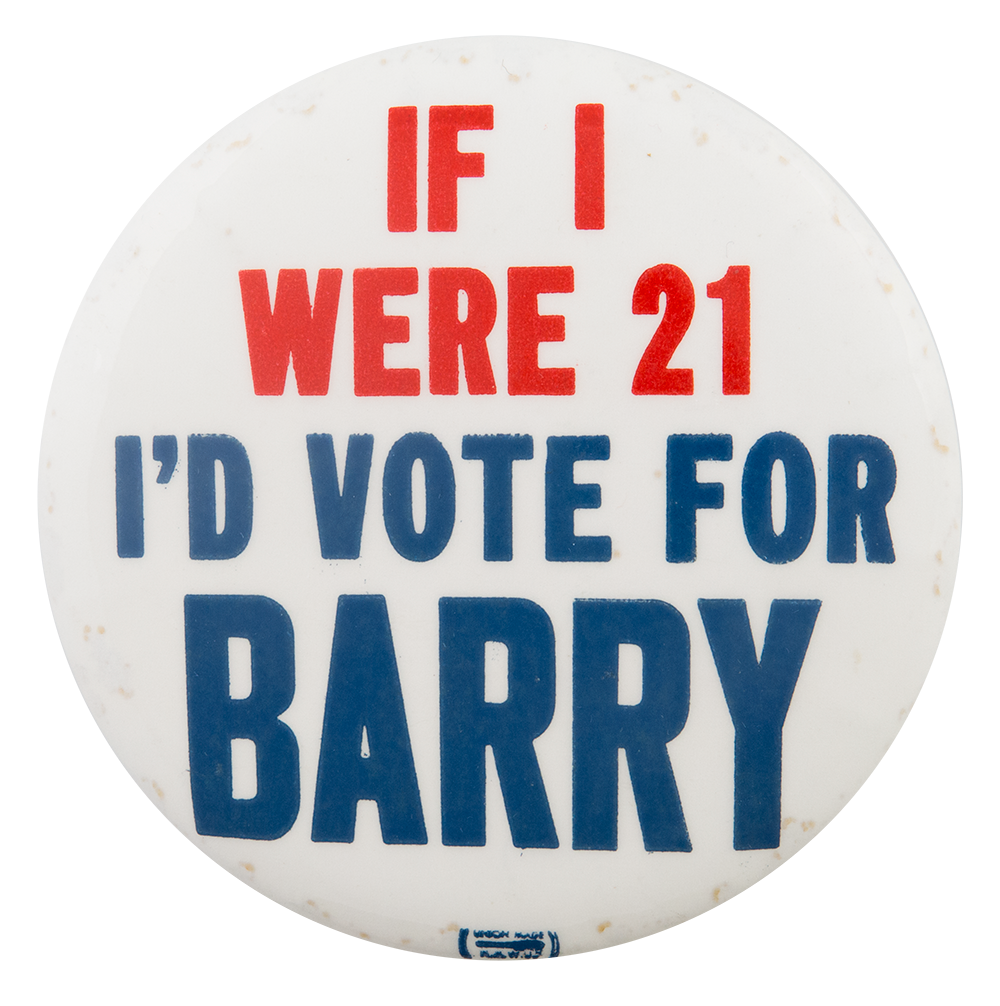
Text on Button IF I WERE 21 I'D VOTE FOR BARRY
Image Description

Red and blue text on a white background

Back Style
The Shape
The Size
Year / Decade Made
Additional Information

In 1964 Barry Goldwater campaigned against Lyndon B. Johnson in the presidential election. Goldwater, a Republican from Arizona, who was known for his aggressive campaigning technique, tried to attract voters by warning against the evils of communism and advocating a stepping up of the Vietnam War. However, Johnson won the election with 61% of the votes by launching a successful campaign labelling Goldwater as a political extremist. Goldwater returned to politics afterwards, and was elected to the Senate again.

The issue of the voting age was increasingly in the spotlight as the Vietnam War continued. Many opposed the policy of drafting men at 18 years of age who were not yet old enough to vote, since the voting age was 21. Protesters argued that men should not have to protect and die for their country if they had no say in the direction of the war. In 1971 the 26th Amendment was ratified by President Nixon, lowering the voting age to 18.

United States Presidential Election, 1964. (n.d.). Retrieved November 10, 2015 from: https://en.wikipedia.org/wiki/United_States_presidential_election,_1964.

Voting Age. (n.d.). Retrieved November 10, 2015 from: https://en.m.wikipedia.org/wiki/Voting_age.

Catalog ID PO0324

Kids for Bob Dole

Category
Additional Images
Sub Categories
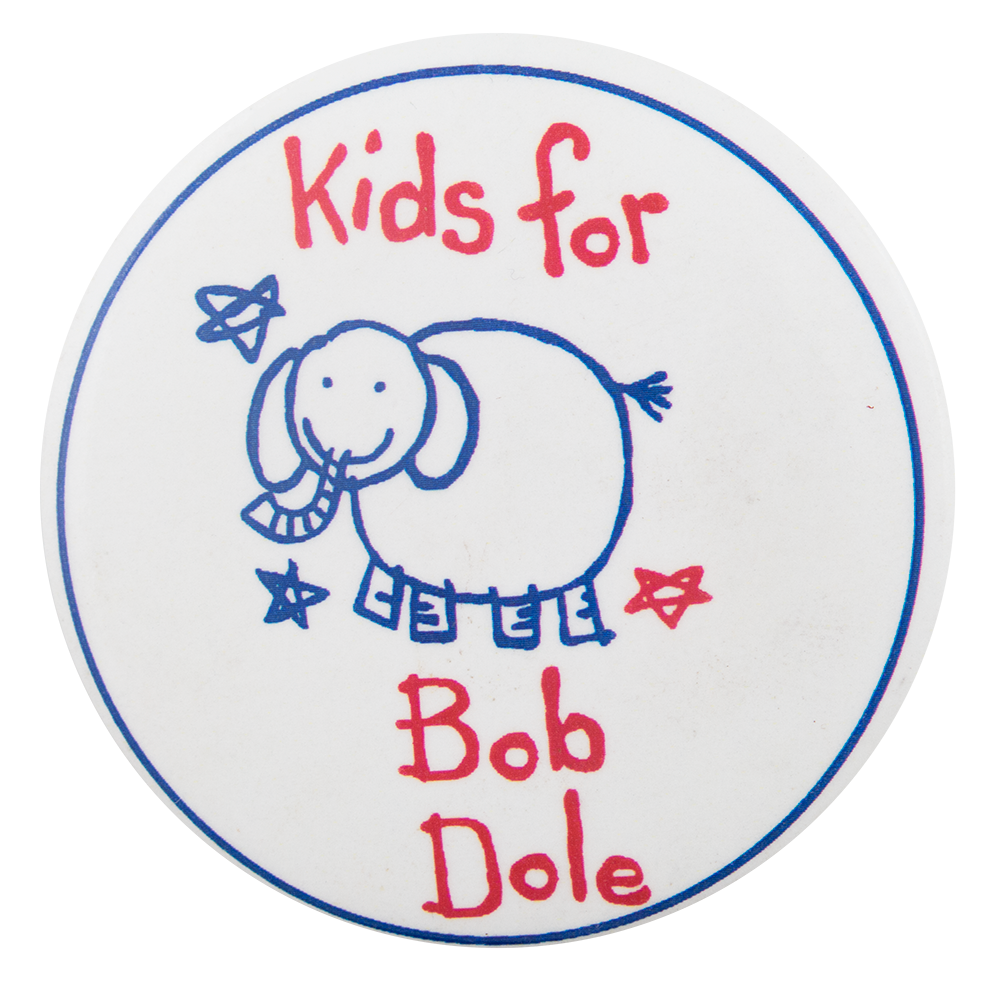
Text on Button Kids for Bob Dole
Image Description

Red text and blue illustration of an animal, with two blue and one red star on a white background within a thin blue circle

Curl Text CAMPAIGN CONNECTION 214 4460904
Back Style
The Shape
The Size
Year / Decade Made
Additional Information

This button was for U.S. Senator Bob Dole's campaign for president in 1996. The illustration of an elephant represents the symbol of the Republican party. Dole and his running mate, Jack Kemp, lost that election to incumbent president Bill Clinton and vice president Al Gore, 379 electoral votes to 159.

In fall 1941, Dole enrolled at the University of Kansas, but joined the U.S. Army in 1942. He was assigned to the 10th mountain divistion as a second lieutenant. With the injuries he suffered in combat in 1945, he lost use of most of his right arm. He was later awarded two Purple Hearts and the Bronze Star. In 1976, Dole was Gerald Ford's vice presidential running mate, but they lost the election to Jimmy Carter and Walter Mondale. Dole also unsuccessfully ran for the Republican nomination for president in 1980 and 1988. In 1997, President Clinton awarded Dole the Presidential Medal of Freedom. In 2007, Preisdent Bush appointed him co-chair of a committee to investigate problems at Walter Reed Army Medical Center, which closed in 2011. Dole turned 92 on July 22, 2015.

Catalog ID PO0317

Lyndon B. Johnson for President

Category
Additional Images
Sub Categories
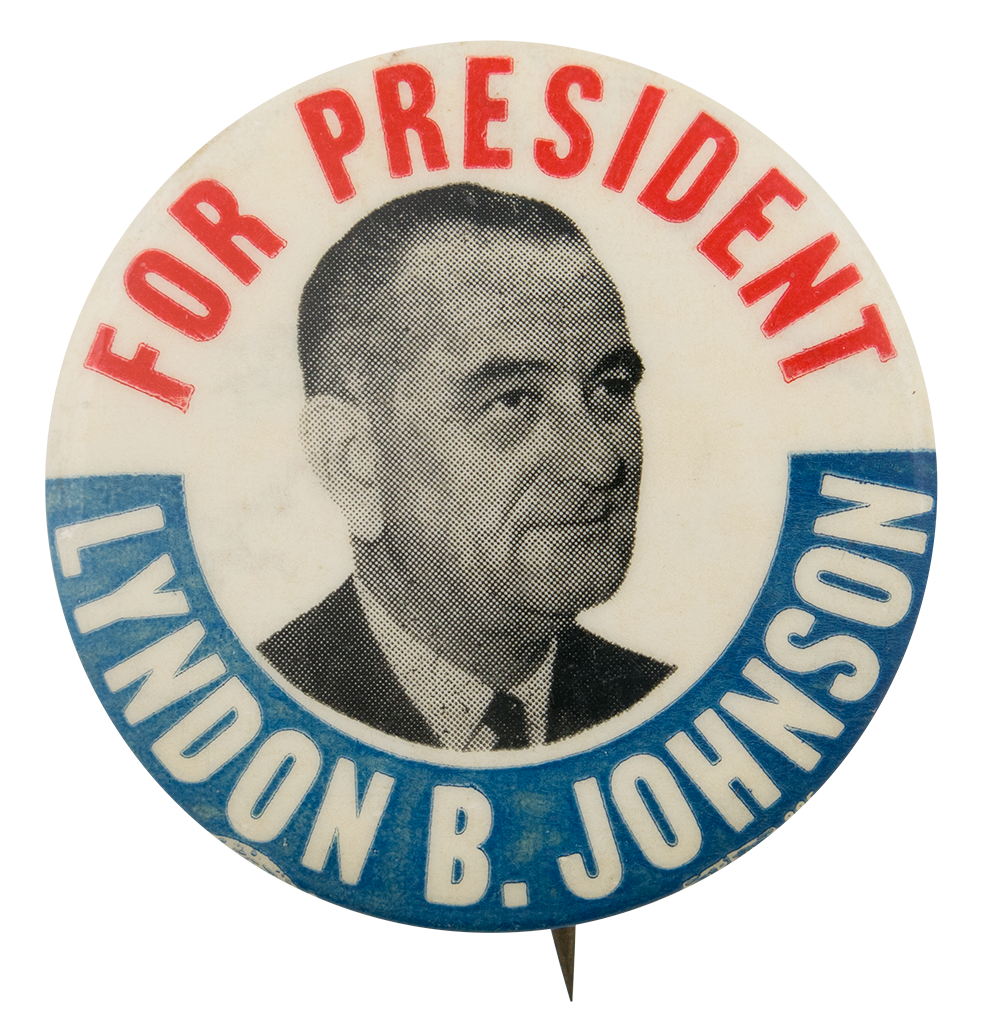
Text on Button FOR PRESIDENT LYNDON B. JOHNSON
Image Description

Red text along the top edge and white text on blue background along the bottom edge withe a black and white photograph of a man's head and shoulders in the center

Back Style
The Shape
The Size
Additional Information

This button is for Lyndon Johnson's campaign for president in 1964. Johnson had succeeded to the presidency after John F. Kennedy's assassination in 1963. Johnson ran with Hubert H. Humphrey as his running mate against Republicans Barry Goldwater and William E. Miller. On September 7, 1964, Johnson's campaign broadcast the "Daisy ad," which portrayed a little girl picking petals from a daisy, counting to 10 until a nuclear bomb exploded, suggesting that Goldwater's election might lead to nuclear war. Johnson won the election with a 61% majority. Although he was able to run again in 1968, he did not pursue a reelection campaign, citing ailing health as his reason.  

Lyndon Baines Johnson served in the House of Representatives from 1937-1949 and as U.S. Senator from Texas from 1949-1961. During his presidency, he was known for his "War on Poverty" and support of healthcare and civil rights in his overall commitment to creating a "Great Society." Johnson supported passage of the Civil Rights Act in 1964 and the Voting Rights Act in 1965. Yet he presided at a time of civil unrest and escalated American involvement in the Vietnam War. Due to this and concerns about his health, Johnson declined to run for a second term in 1968.

Catalog ID PO0320

Never Nixon

Category
Additional Images
Sub Categories
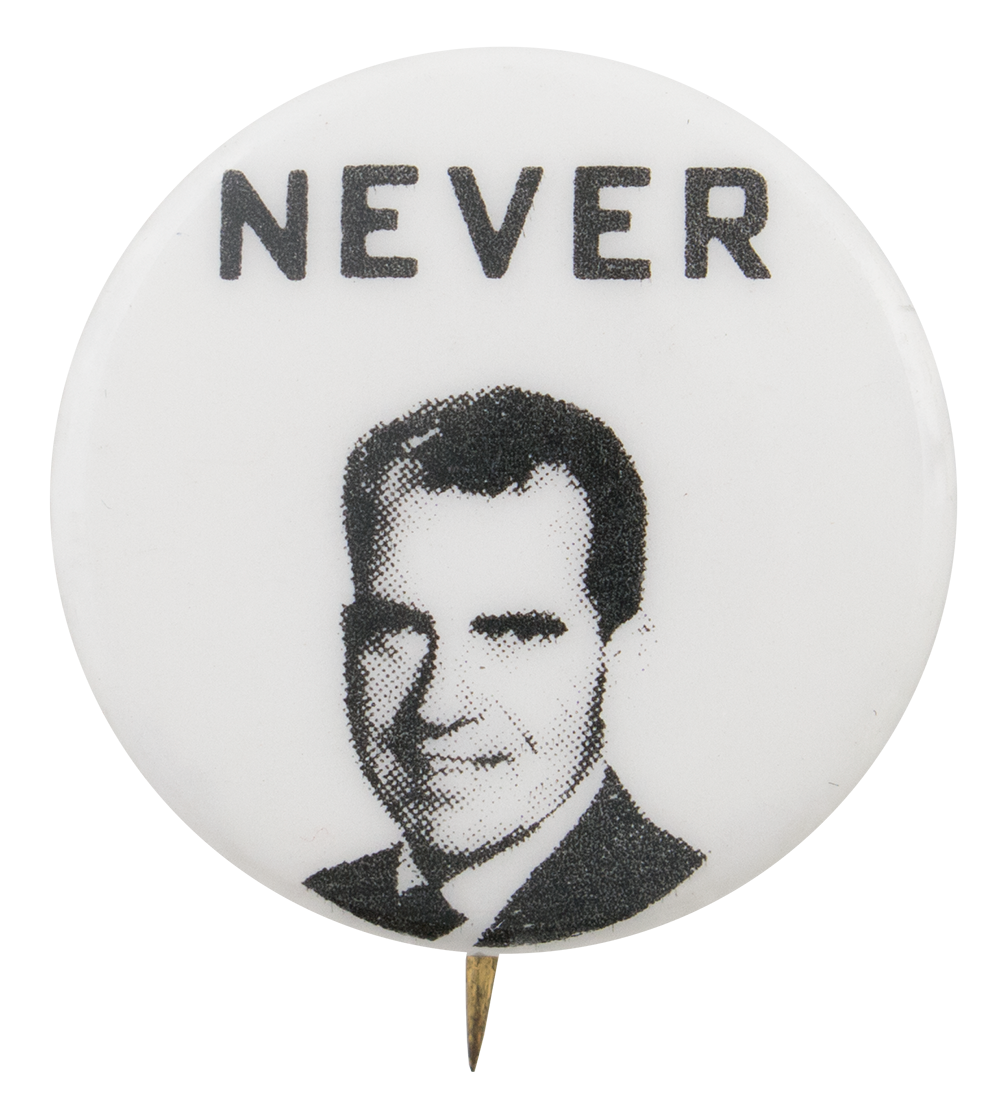
Text on Button NEVER
Image Description

Black and white photograph of a man's head and shoulders wearing a suit

Back Style
The Shape
The Size
Additional Information

Anti-Nixon buttons began to surface when Richard Nixon ran for President of the United States in 1960 election against Democratic nominee, John F. Kennedy, which Nixon lost by a narrow 0.2% of the popular vote.  By the 1968 election, Nixon had decided to run again as the Republican candidate against Democratic nominee, Hubert Humphrey, President Johnson's Vice President.  Nixon went on to win the election, becoming the 37th President of the United States.  In 1972, he ran for a second term as President, winning the election by a 60% margin of the popular vote, defeating Democratic candidate, George McGovern.  Due to the Watergate scandal that ensued during the following years, Nixon became the first President to resign from office, doing so in 1974.  

Catalog ID PO0326

Nobody for President

Category
Additional Images
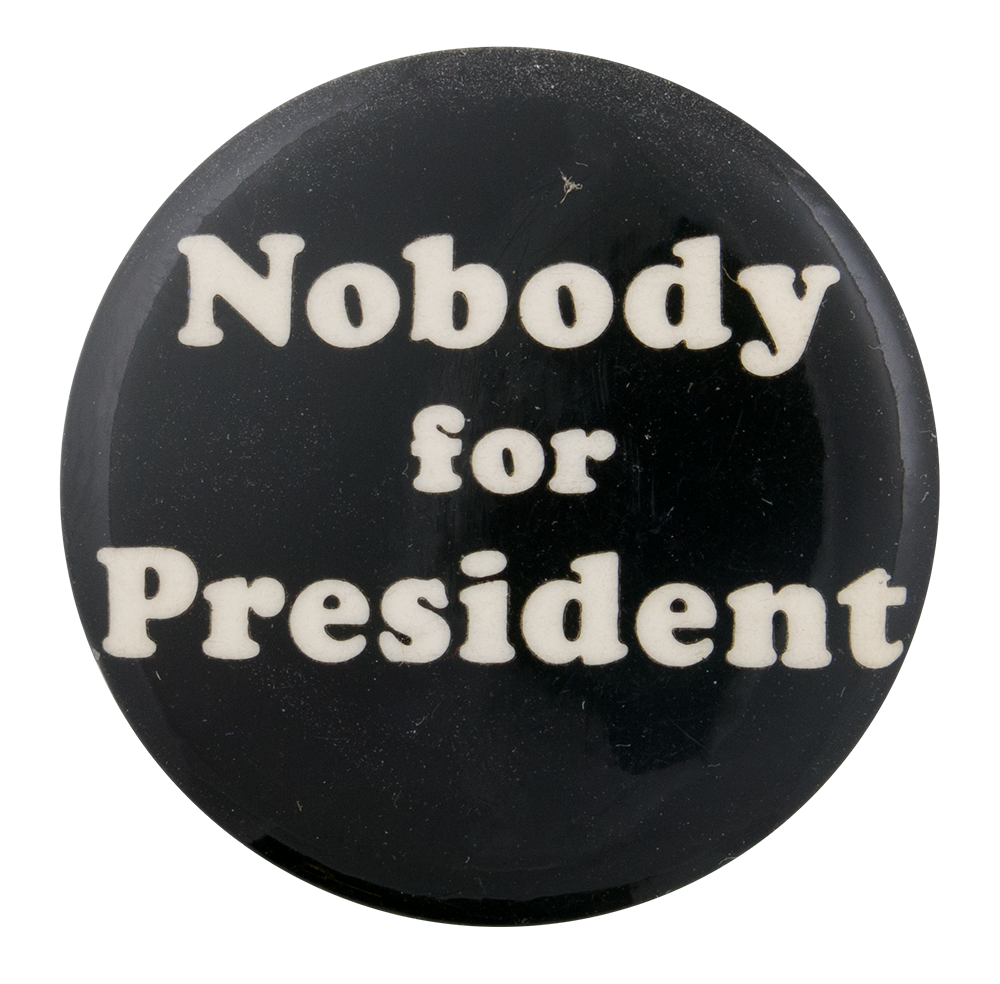
Text on Button Nobody for President
Image Description

White text on a black background

Back Style
The Shape
The Size
Year / Decade Made
Additional Information

Nobody for President was a satirical campaign that emerged during the 1976 United States Presidential election season. The purpose of the campaign was to highlight voter apathy, and to encourage people to register to vote, even if they didn’t necessarily support either major party candidate. It is believed that Wavy Gravy, a peace activist best known as the emcee of Woodstock and as the Grateful Dead’s resident “clown”, initially nominated Nobody for President at a Youth International Party (Yippie) rally which occurred outside of the 1976 Republican National Convention in Kansas City. The Nobody for President movement offered suggestions to counter voter apathy, including providing a None of the Above option on ballots, declaring Election Day a national holiday, and tying election participation to jury duty.

Read more about the history of voting and political buttons on the Busy Beaver blog.

Catalog ID PO0327

Re-Elect Mc Donald Abel Hague

Category
Additional Images
Sub Categories
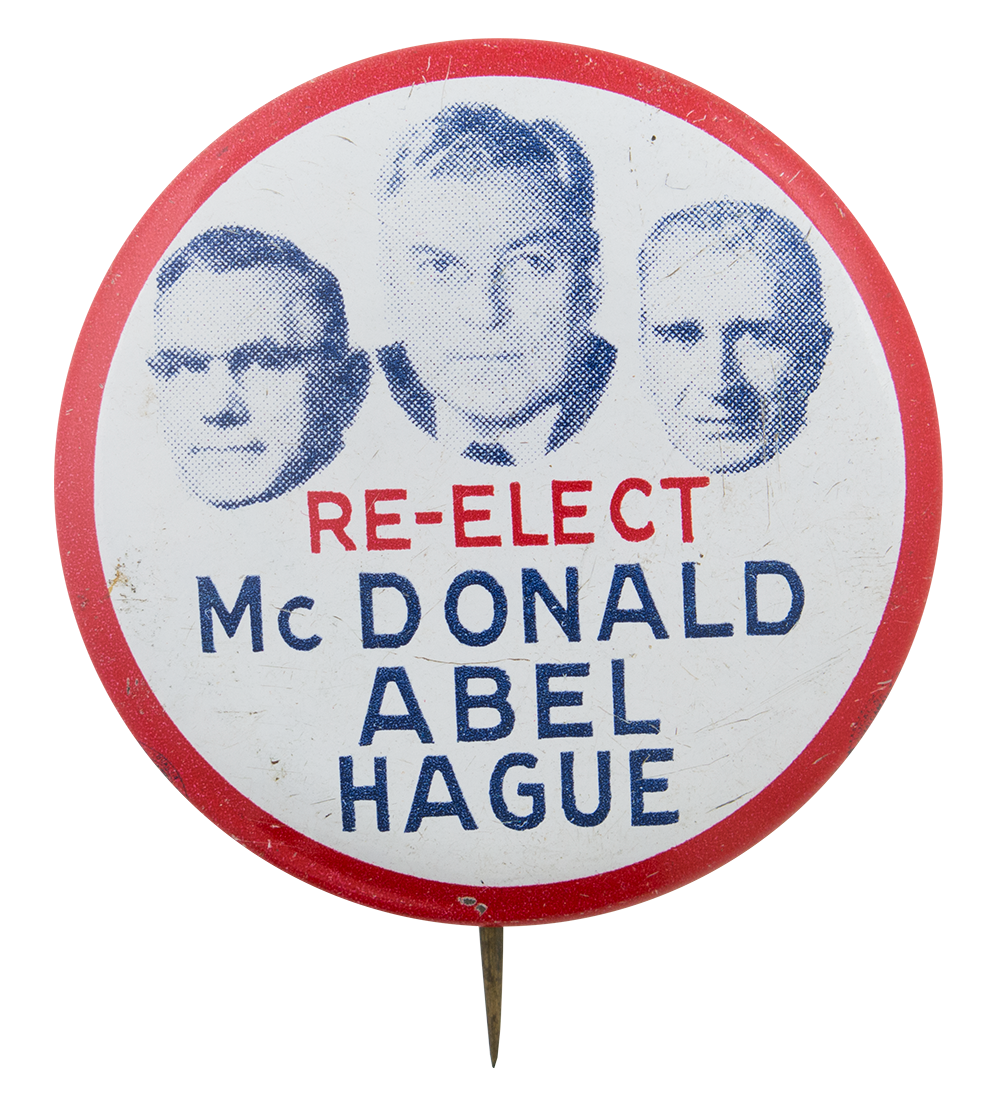
Text on Button RE-ELECT Mc DONALD ABEL HAGUE
Image Description

White background with a red outer edge and blue and white photographs of three men's heads over red and blue text

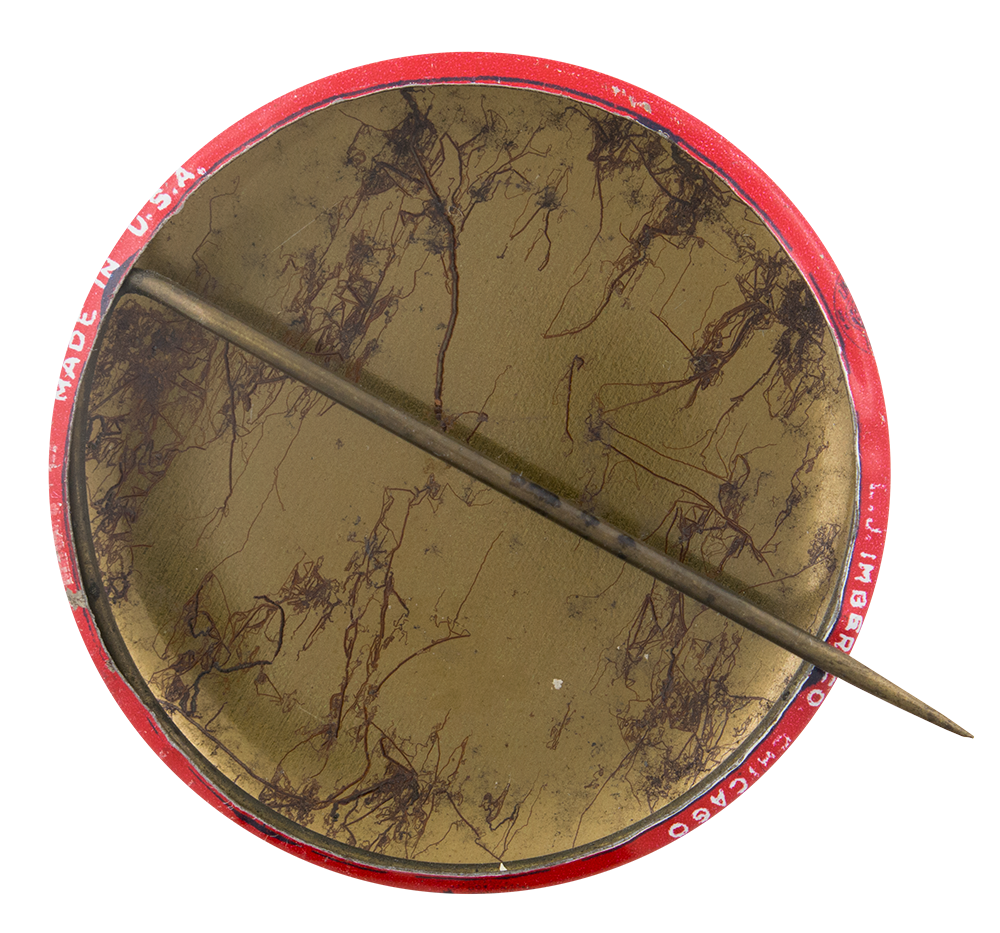
Curl Text MADE IN U.S.A. L.J. IMBER CO CHICAGO
Back Style
The Shape
The Size
Year / Decade Made
The Manufacturer
Additional Information

This button represents the 1965 United Steelworkers Union presidential and vice presidential elections.  In 1965 incumbent president, David McDonald was seeking his fourth term in office as president of the third largest union in America.  United Steelworkers Secretary, I.W. Abel was running against McDonald.  Howard Hague was seeking re election as Union vice president.

Catalog ID PO0321

Taft Blue and White

Category
Additional Images
Sub Categories
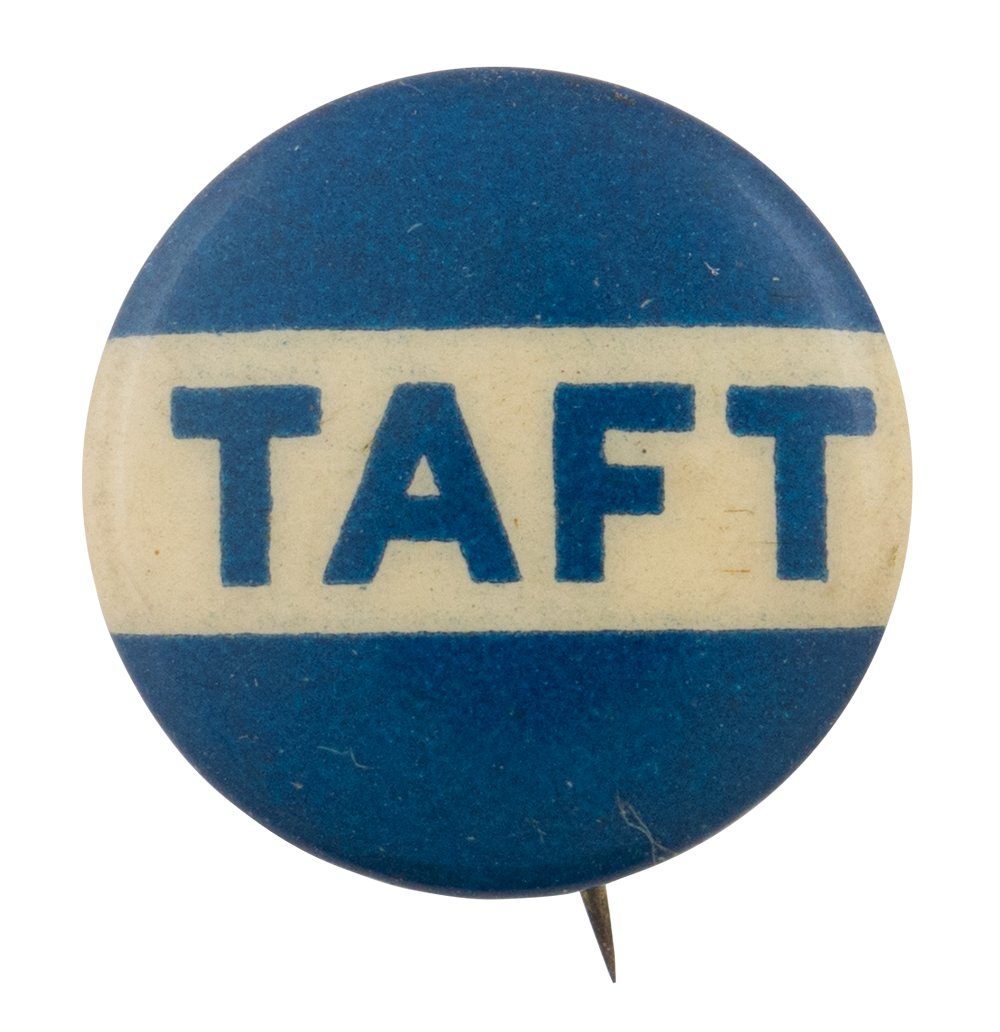
Text on Button TAFT
Image Description

Blue text on white horizontal stripe between two blue half-circles

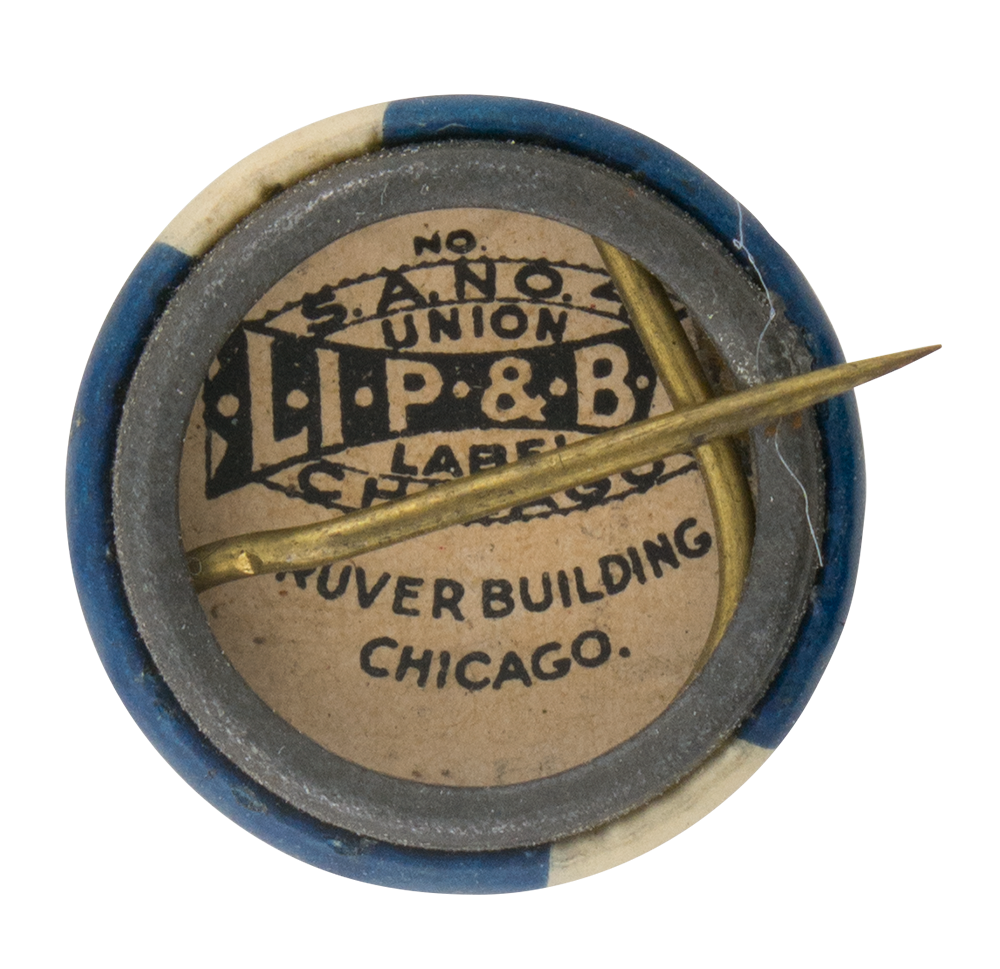
Back Paper / Back Info

UNION
LIP & BA
LABEL
CHICAGO
CRUVER BUILDING CHICAGO

Back Style
The Shape
The Size
Additional Information

This button was for William Howard Taft's campaign for U.S. president in 1908 or 1912. Taft served as President Theodore Roosevelt's secretary of war from 1904-1908. Having pledged not to run for a third term, Roosevelt groomed Taft as his successor. Taft and his running mate, James S. Sherman, won with 321 electoral votes to 162 for William Jennings Bryan and John Kern. Taft ran for re-election in 1912, but lost to Woodrow Wilson.

Taft was born in Ohio in 1857 and attended Yale University and Cincinnati Law School. He was Solicitor General of the United States under President Benjamin Harrison, Governor-General of the Philippines under President William McKinley and Provisional Governor of Cuba under President Theodore Roosevelt. In 1921, President Warren G. Harding appointed Taft to the Supreme Court as Chief Justice of the United States, a position he held until 1930. Taft remains the only person to have held the office of both U.S. president and chief justice of the Supreme Court. On April 14, 1910, Taft became the first president to throw out the ceremonial first pitch at a major league baseball game, a tradition that continues to this day.

Catalog ID PO0303

Mondale Ferraro for America

Category
Additional Images
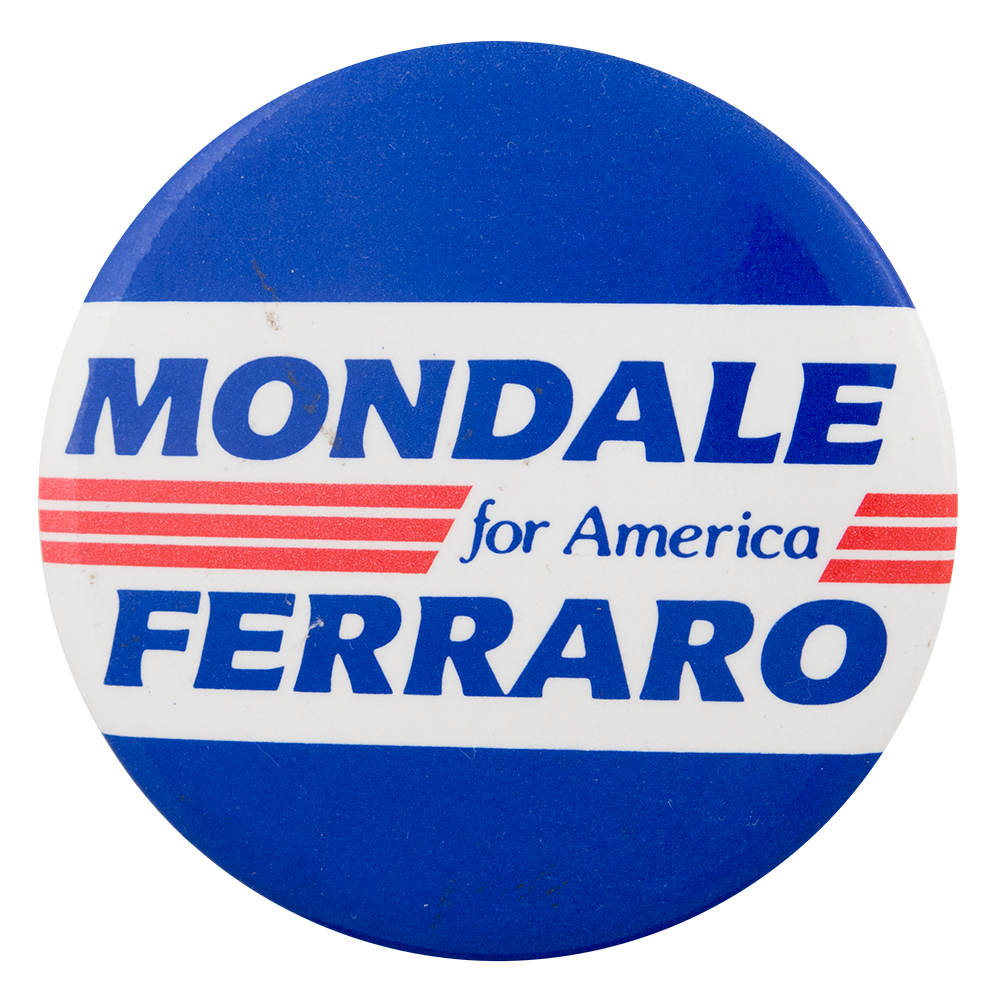
Text on Button MONDALE FERRARO for America
Image Description

Blue text and thin red stripes on white horizontal stripe between blue half-circles

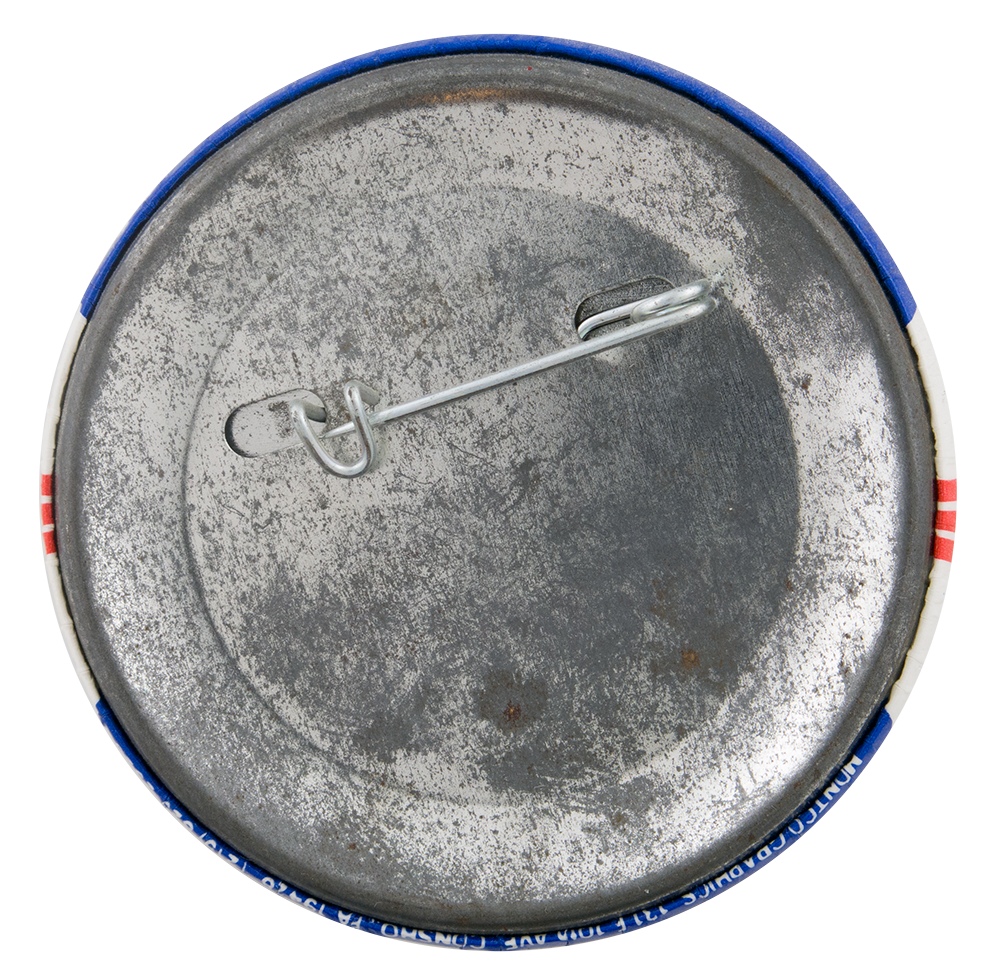
Curl Text .. GRAPHICS 131 E 10th Ave CONSHO PA 19428 (215) 825-2525
Back Style
The Shape
The Size
Year / Decade Made
Additional Information

This button was for the 1984 U.S. presidential campaign of Walter Mondale and Geraldine Ferraro. Mondale had served as vice president under Jimmy Carter from 1977-1981. He chose Ferraro, a member of the U.S. House of Representatives from New York's 9th district, as his running mate. This marked the first time a woman had been a nominee on a major party's presidential ticket. Mondale and Ferraro lost to President Ronald Reagan and Vice President George H.W. Bush, who won re-election by carrying 49 of the 50 U.S. states. Mondale and Ferraro carried only his home state of Minnesota and the District of Columbia. Their 13 electoral college votes was the lowest total of any major presidential ticket since Alf Landon and Frank Knox earned 8 electoral votes in 1936 against Franklin D. Roosevelt and John Nance Garner.

Mondale attended Macalester College and the University of Minnesota, and served in the U.S. Army during the Korean War. He was Minnesota Attorney General in the early 1980s and U.S. Ambassador to Japan from 1990-1993. Ferraro attended Marymount Manhattan College and earned her J.D. from Fordham University in New York. She served as U.S. Ambassador to the UN Commission on Human Rights from 1993-1996 during the Clinton administration.

Catalog ID PO0316

McGovern Rainbow

Category
Additional Images
Sub Categories
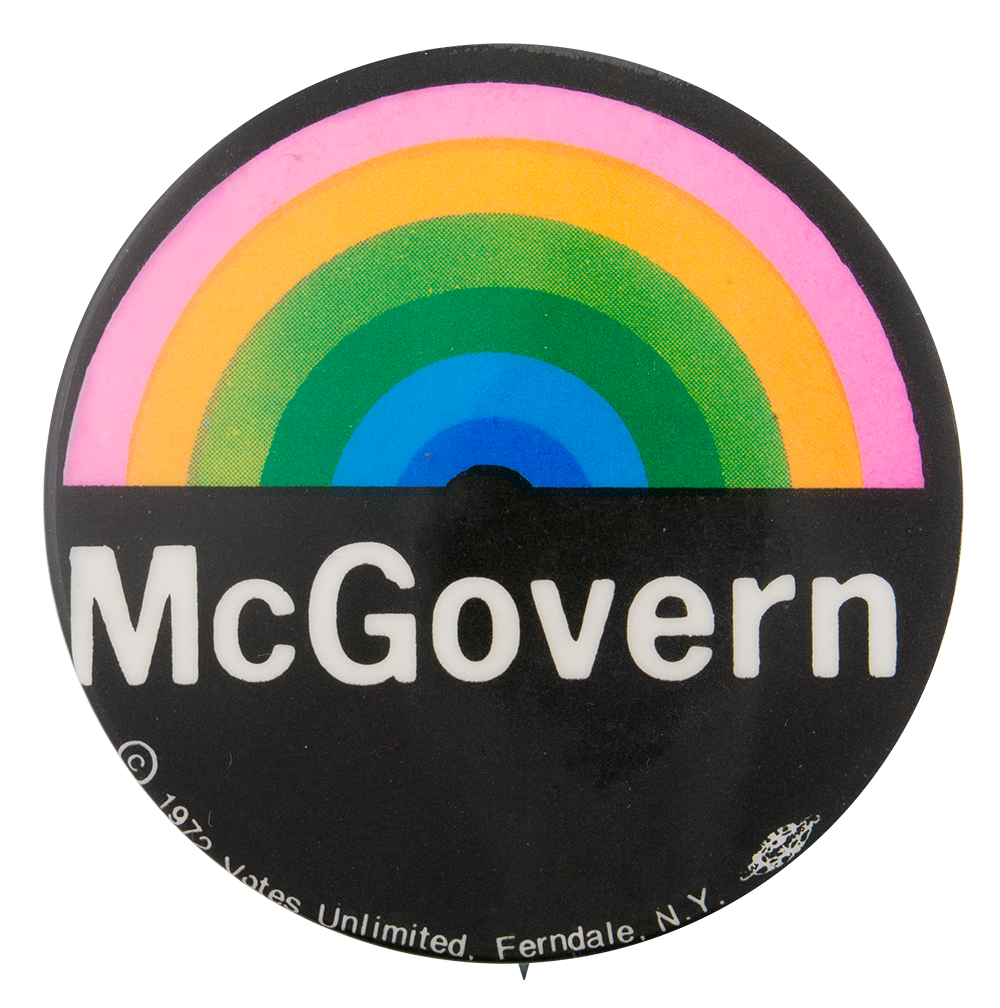
Text on Button McGovern
Image Description

Illustration of a rainbow over white text on a black background

Curl Text copyright 1972 Votes Unlimited, Ferndale N.Y.
Back Style
The Shape
The Size
Year / Decade Made
Additional Information

In 1972 George McGovern launched his presidential campaign. The Democratic Senator from South Dakota promised voters that he would end the Vietnam War and decrease the military budget in order to fix the economy. McGovern, whose campaign assistants included future president Bill Clinton, was also in favor of equal rights for women and the LGBT community, inspiring this button. Against McGovern was Richard Nixon, whose aides were later discovered to have stolen information from McGovern's campaign during the Watergate Scandal. Nixon ended up winning the election with 60% of the votes, and Mcgovern returned to politics to advocate for those in need.

George McGovern Presidential Campaign 1972. (n.d.). Retrieved November 10, 2015 from: https://en.wikipedia.org/wiki/George_McGovern_presidential_campaign,_1972.

Catalog ID PO0323

I'm Your Peanut Pal

Category
Additional Images
Sub Categories
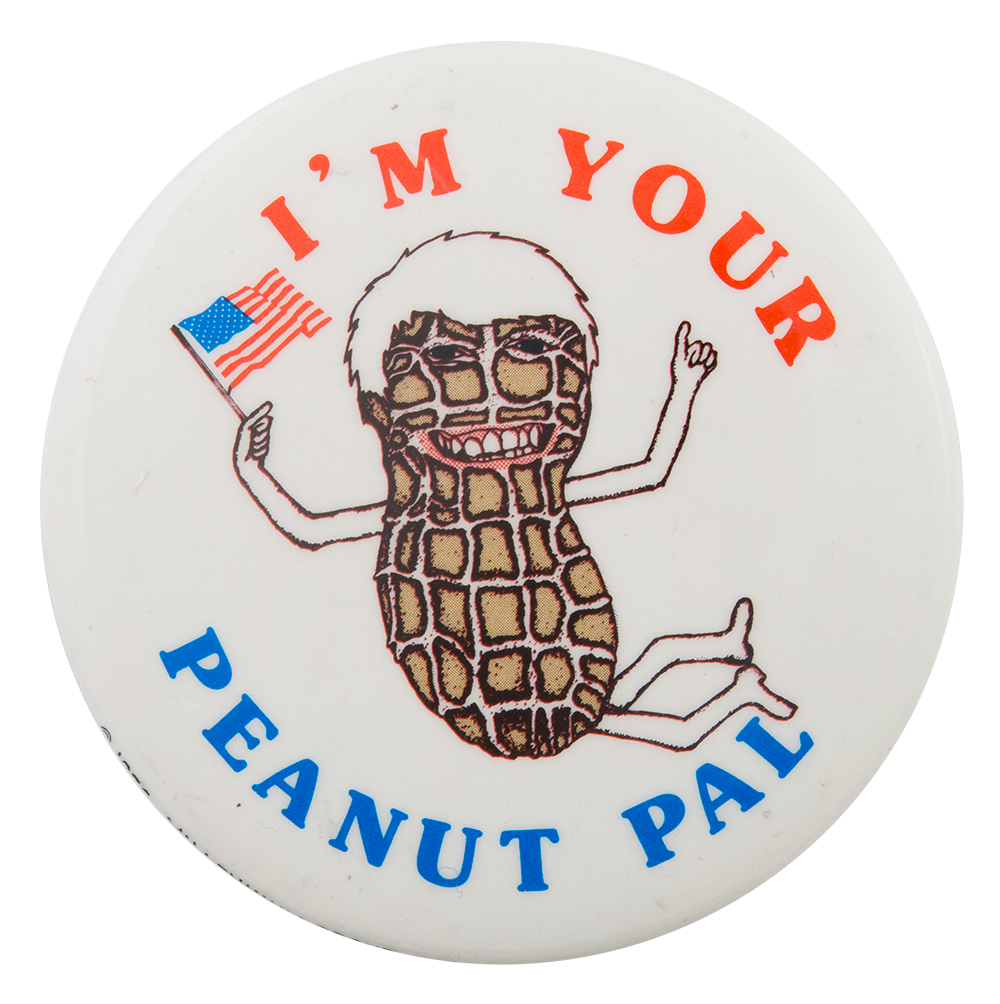
Text on Button I'M YOUR PEANUT PAL
Image Description

Illustration of a brown peanut with arms and legs and hair, holding an American flag in the center of the button with red text on the top edge and blue on the bottom

Back Style
The Shape
The Size
Year / Decade Made
Additional Information

This button comes from Jimmy Carter’s 1976 campaign for the presidency. Carter was originally a peanut farmer from Georgia, and served as the state’s senator and later as governor during the 1960s and 1970s. When he campaigned for the presidency against standing president Gerald Ford, Carter was unknown to voters, which turned out to be an asset since he was distanced from the Watergate scandal that ended Nixon’s term. Carter appealed to average voters by advertising his former job as a peanut farmer and being interviewed by popular magazines like Playboy. Carter won the election with 50.1% of the votes, and as president escalated the Cold War, pardoned Vietnam War draft evaders, and signed the Camp David Accords. After his presidency, he set up the Carter Center in 1982, a human rights advocacy organization, for which he was awarded the Nobel Peace Prize in 2002.

Jimmy Carter. (n.d.). Retrieved November 8, 2015 from: https://en.wikipedia.org/wiki/Jimmy_Carter.

Catalog ID PO0318