Irish Americans for Ford

Category
Additional Images
Sub Categories
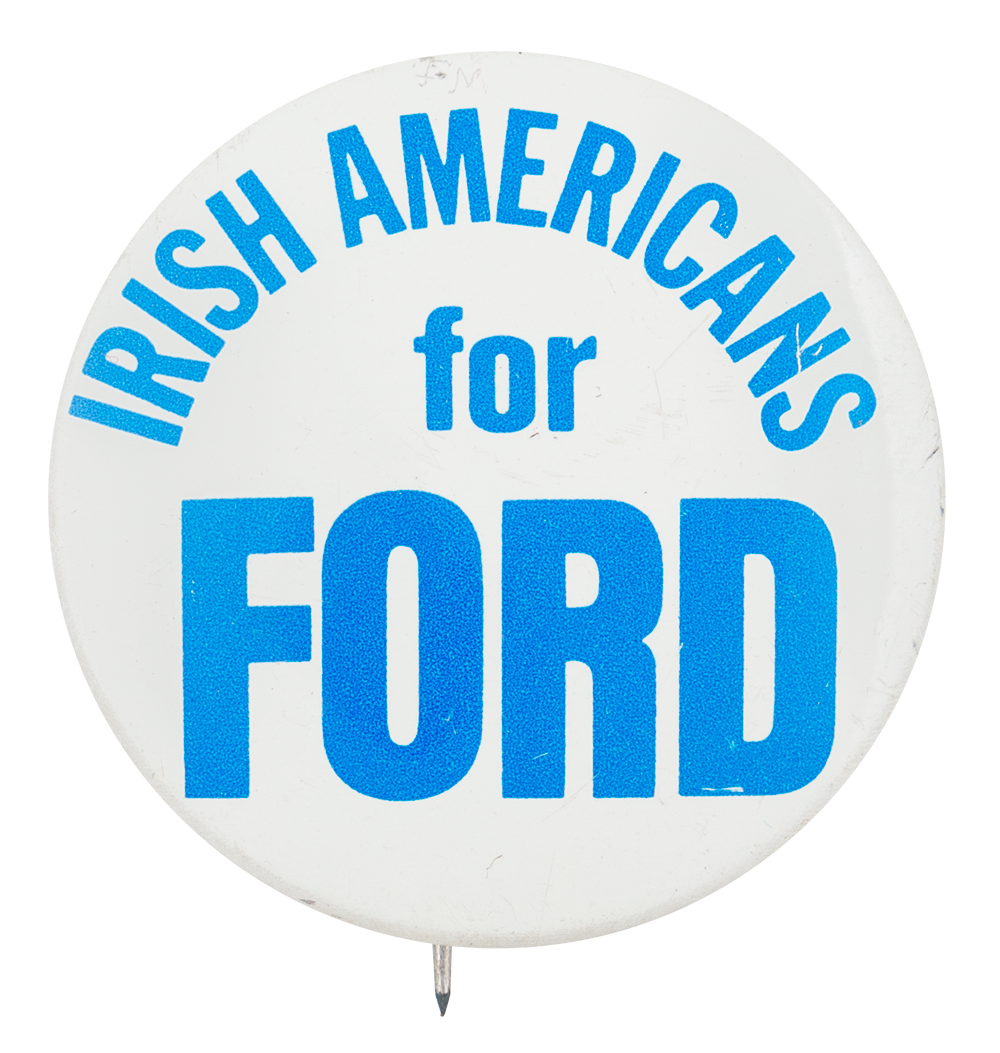
Text on Button IRISH AMERICANS for FORD
Image Description

Blue text on a white background

Curl Text JOY PRODUCTS 24 W 45TH ST N.Y. 10036 Pres FORD Comm James A. Baker III Chairman Royston C Hughes Trea
Back Style
The Shape
The Size
Year / Decade Made
The Manufacturer
Additional Information

The People for Ford (PFF) was a volunteer initiative for the President Ford Committee developed to target special voter groups where similar For Ford slogans were also created for Hungarian, Ukrainian, Serbian, and others for direct efforts in gaining support from these groups. The PFF also targeted women, farmers, senior citizens and professional groups.

Gerald Rudolph Ford, Jr. entered into politics as a member of the House of Representatives which led him to become Minority Leader and House Speaker. Upon the resignation of U. S. President Spiro Agnew, Ford was appointed by President Nixon to assume the vice-presidency. Ford would go on to become the 38th President of the United States after the resignation of Richard Nixon. Ford is the only U.S. president who had never been elected to national office. Ford died December 26, 2006.

Sources

Gerald R. Ford Presidential Library and Museum. (n.d.). Retrieved from https://www.fordlibrarymuseum.gov/library/guides/findingaid/pfcpeople.a…

Catalog ID PO0264

Viva Kennedy

Category
Additional Images
Sub Categories
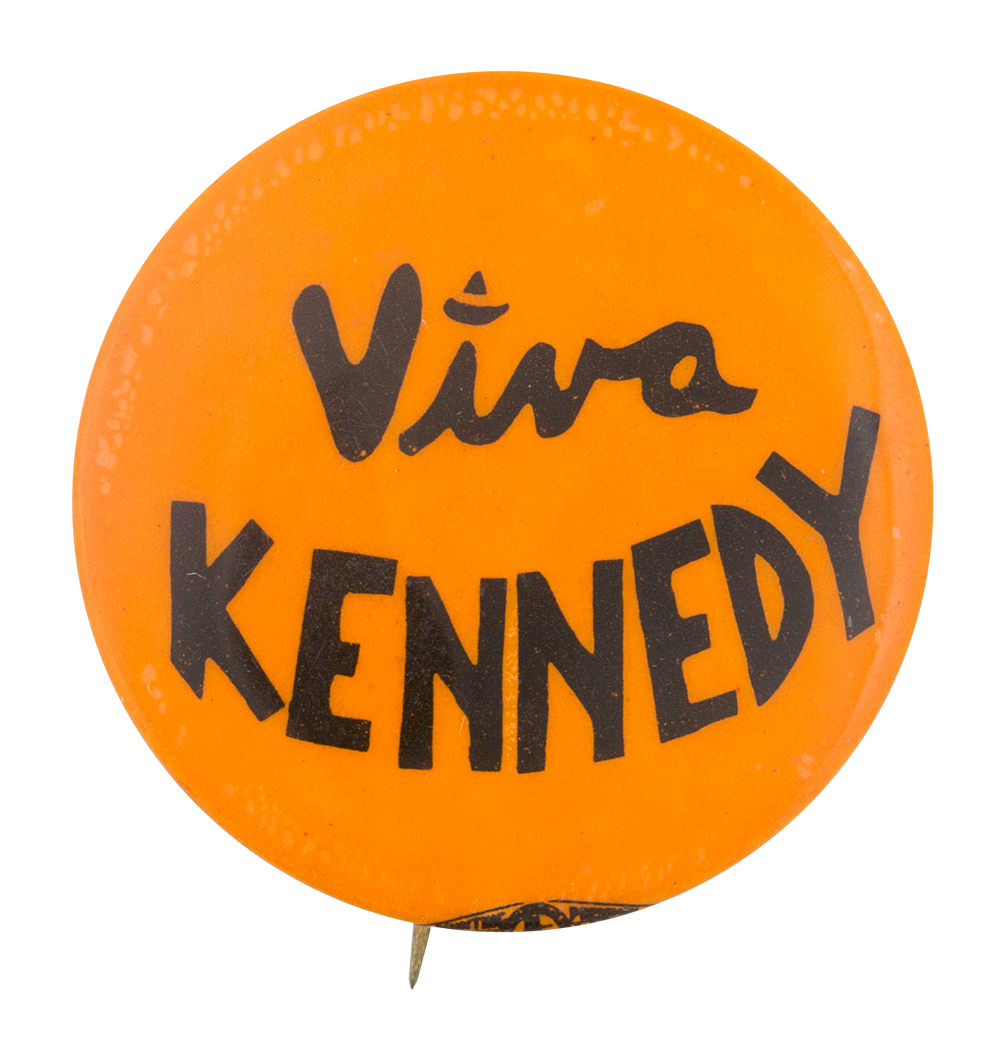
Text on Button Viva KENNEDY
Image Description

Black text on an orange background

Curl Text union bug
Back Style
The Shape
The Size
Year / Decade Made
Additional Information

Viva Kennedy clubs were formed during the 1960 United States Presidential election campaign by Latino supporters of John F. Kennedy and his running mate Lyndon B. Johnson. The Viva Kennedy clubs began in Texas as civil-rights forums for Mexican-American veterans to rally support for equal rights, and eventually spread to swing states with large Latino populations like Arizona, California, and Illinois. While one of the primary goals of the clubs was the election of Kennedy and Johnson, they also promoted increased overall voter registration and political organization for Latinos in the United States. The clubs were technically nonpartisan, and received no financial support from the Kennedy campaign. The grassroots work of the Viva Kennedy clubs proved successful, as Kennedy received 85% of the Latino vote in the 1960 election.

Catalog ID PO0268

Kennedy

Category
Additional Images
Sub Categories
Image Description

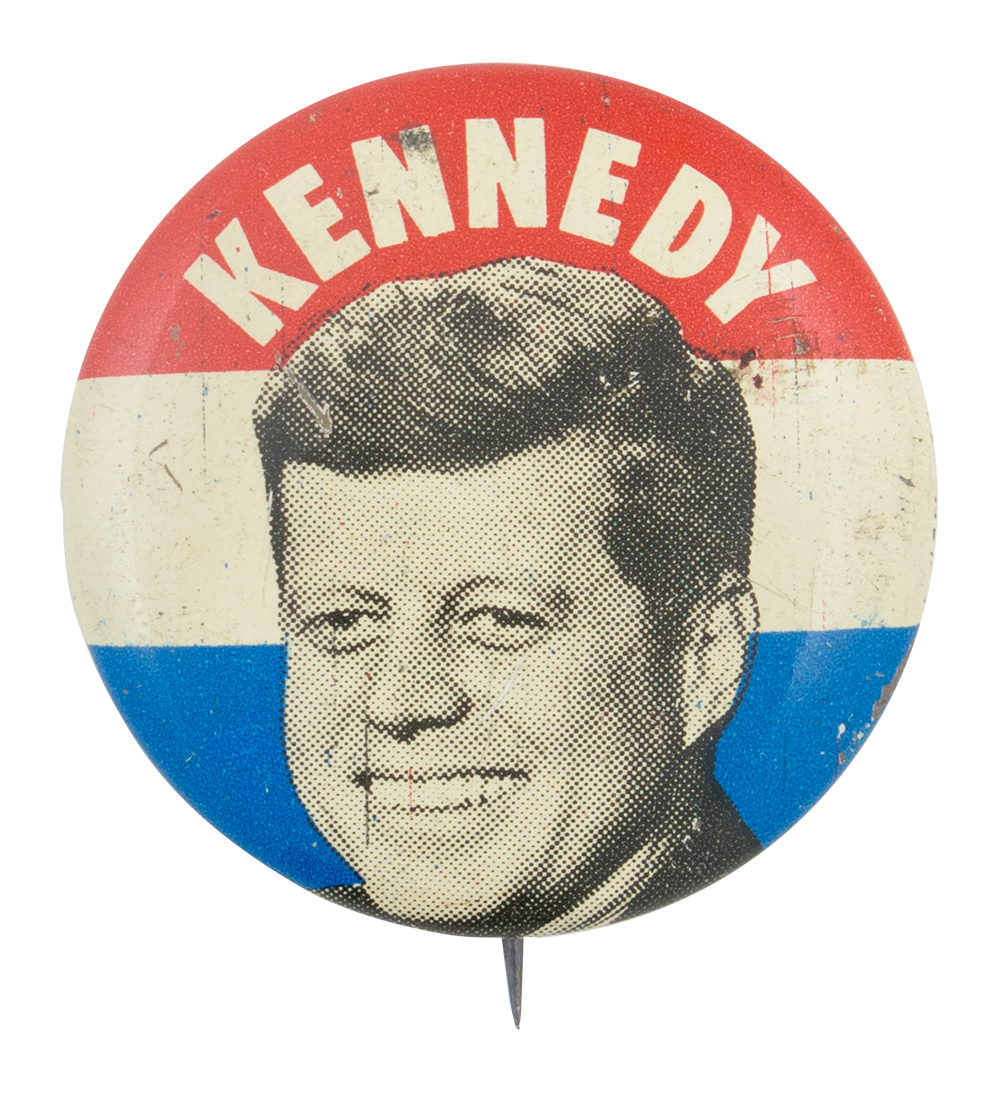
Black and white photograph over red white and blue striped with white text along the top edge.

Curl Text union bug
Back Style
The Shape
The Size
Additional Information

John F. Kennedy first emerged in politics in 1946, when he won the U.S. Representative race for his district for the state of Massachusetts.  In 1952, he ran for the U.S. Senate, also for Massachusetts, beating the Republican candidate, Henry Cabot Lodge II.  In 1958, he won the reelection bid for his Senate seat.  The United States Presidential election of 1960 saw Kennedy as the Democratic nominee, facing Republican candidate Richard Nixon.  This was the first time the candidates' debate was aired on national television.  Kennedy appeared charismatic to many, while Nixon, just recovering from surgery, appeared pale and harsh.  Kennedy would go on to beat Nixon in one of the closest Presidential elections of the century.  By doing so, he became the youngest man to be elected President.

Catalog ID PO0260

Kennedy For President 1980

Category
Additional Images
Sub Categories
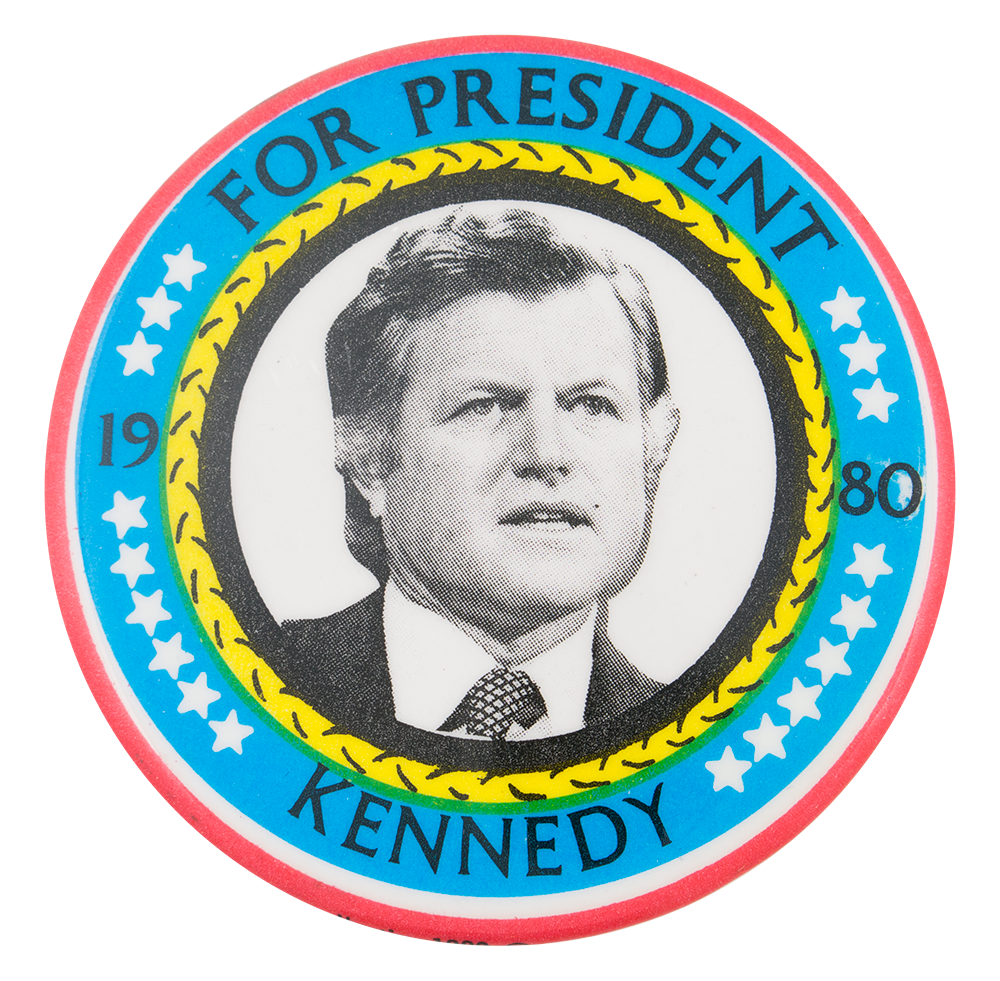
Text on Button FOR PRESIDENT 1980 KENNEDY
Image Description

Black and white photograph of a man's head and shoulders surrounding by a gold rope like wring, then a blue ring with white stars and black text and an outer thin white ring and thicker red edge.

Curl Text Hantico 1980
Back Style
The Shape
The Size
Year / Decade Made
The Manufacturer
Additional Information

Edward Moore Kennedy, also known as Ted, ran for the Democratic nominee for the 1980 United States presidential election. Kennedy ran against the Presidential incumbent, Jimmy Carter, for the party's nomination.  By the time of the Democratic Convention Carter had won more votes in the primary elections, resulting in Kennedy withdrawing his nomination. Kennedy would go on to continue to serve as the United States Senator from Massachusetts till 2009, making his Senate term the fourth longest in US history.

Catalog ID PO0236

Kennedy 1980

Category
Additional Images
Sub Categories
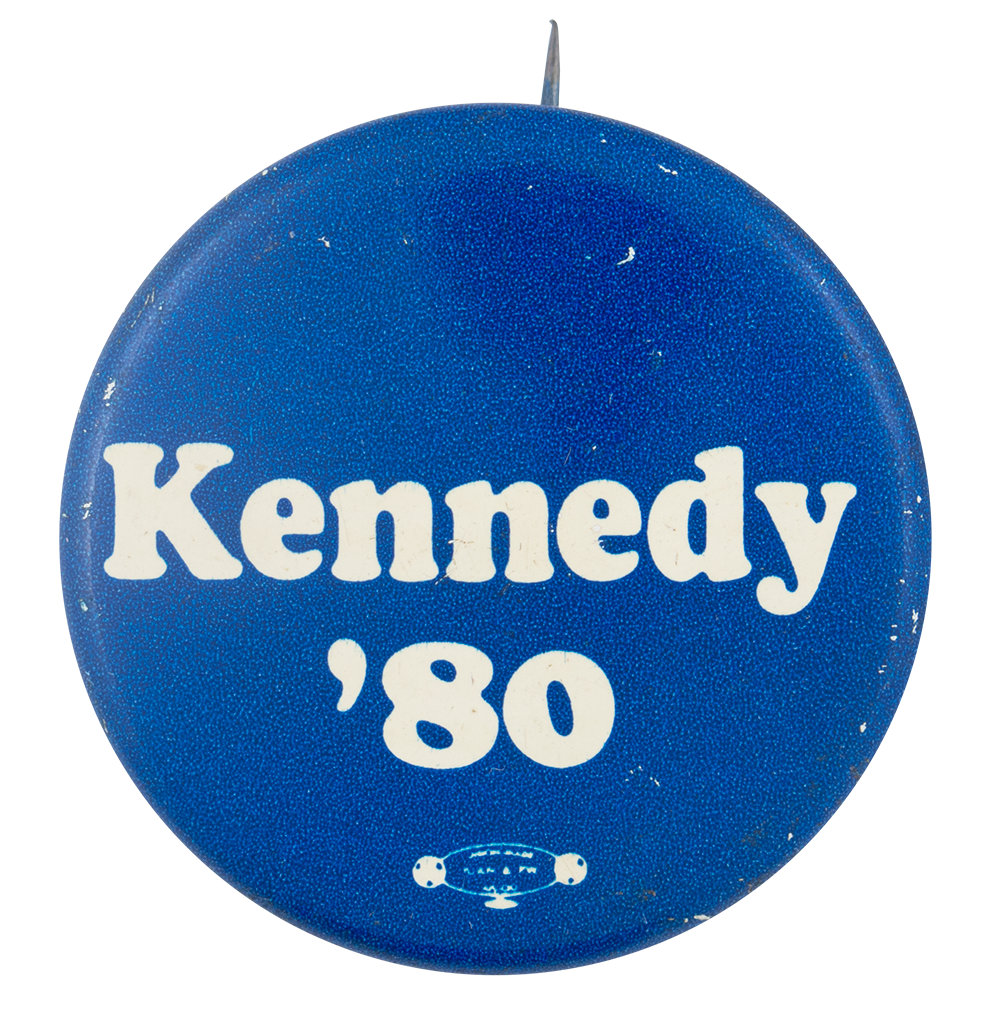
Text on Button Kennedy '80
Image Description

White text on a blue background

Back Style
The Shape
The Size
Year / Decade Made
Additional Information

Edward Moore Kennedy, also known as Ted, ran for the Democratic nominee for the 1980 United States presidential election. Kennedy ran against the Presidential incumbent, Jimmy Carter, for the party's nomination.  By the time of the Democratic Convention Carter had won more votes in the primary elections, resulting in Kennedy withdrawing his nomination. Kennedy would go on to continue to serve as the United States Senator from Massachusetts till 2009, making his Senate term the fourth longest in US history.

Catalog ID PO0235

Nixon Our Next President

Category
Additional Images
Sub Categories
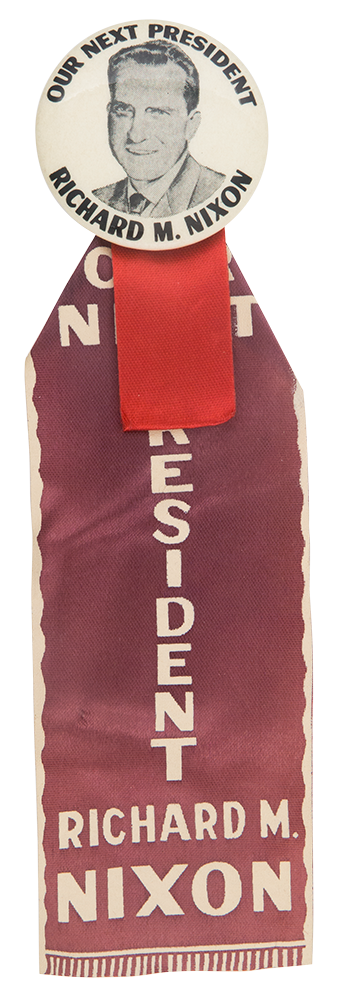
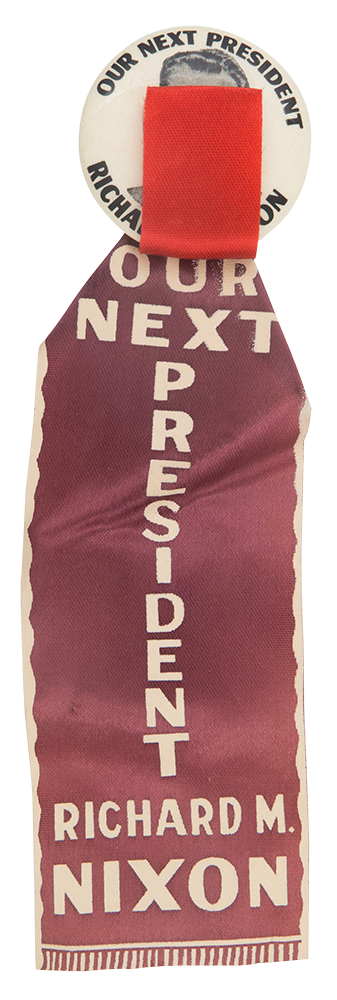
Text on Button OUR NEXT PRESIDENT RICHARD M. NIXON
Image Description

Black and white photograph of a man's head and shoulders with black text along the top and bottom edges on a white background.

Back Style
The Shape
The Size
Additional Information

Richard Nixon ran for President of the United States in 1960 election against Democratic nominee, John F. Kennedy, which Nixon lost by a narrow 0.2% of the popular vote.  By the 1968 election, Nixon had decided to run again as the Republican candidate against Democratic nominee, Hubert Humphrey, President Johnson's Vice President.  Nixon went on to win the election, becoming the 37th President of the United States.  In 1972, he ran for a second term as President, winning the election by a 60% margin of the popular vote, defeating Democratic candidate, George McGovern.  Due to the Watergate scandal that ensued during the following years, Nixon became the first President to resign from office, doing so in 1974.

Catalog ID PO0275

Humphrey Muskie

Category
Additional Images
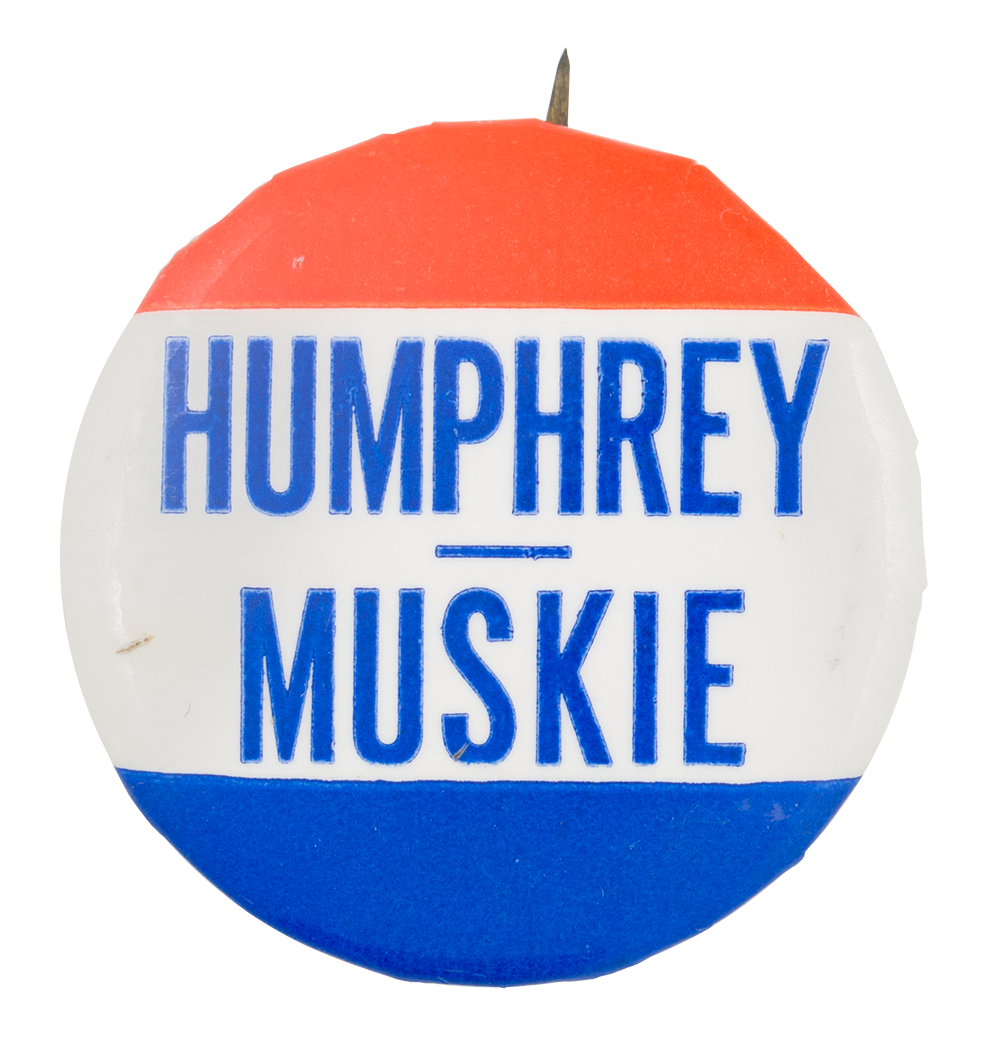
Text on Button HUMPHREY MUSKIE
Image Description

Red white and blue striped with blue text on the middle white stripe.

Back Style
The Shape
The Size
Year / Decade Made
Additional Information

Hubert Humphrey and Edmund Muskie were the Democratic Party nominees for the 1968 United States Presidential election.  They ran against Republican nominees Richard Nixon and Spiro Agnew.  Humphrey had previously served as Vice President during the Johnson Administration.  Muskie had served as the governor of Maine and in the U.S. Senate.  The pair would loose the election to Nixon and Agnew.

Catalog ID PO0261

Humphrey

Category
Additional Images
Sub Categories
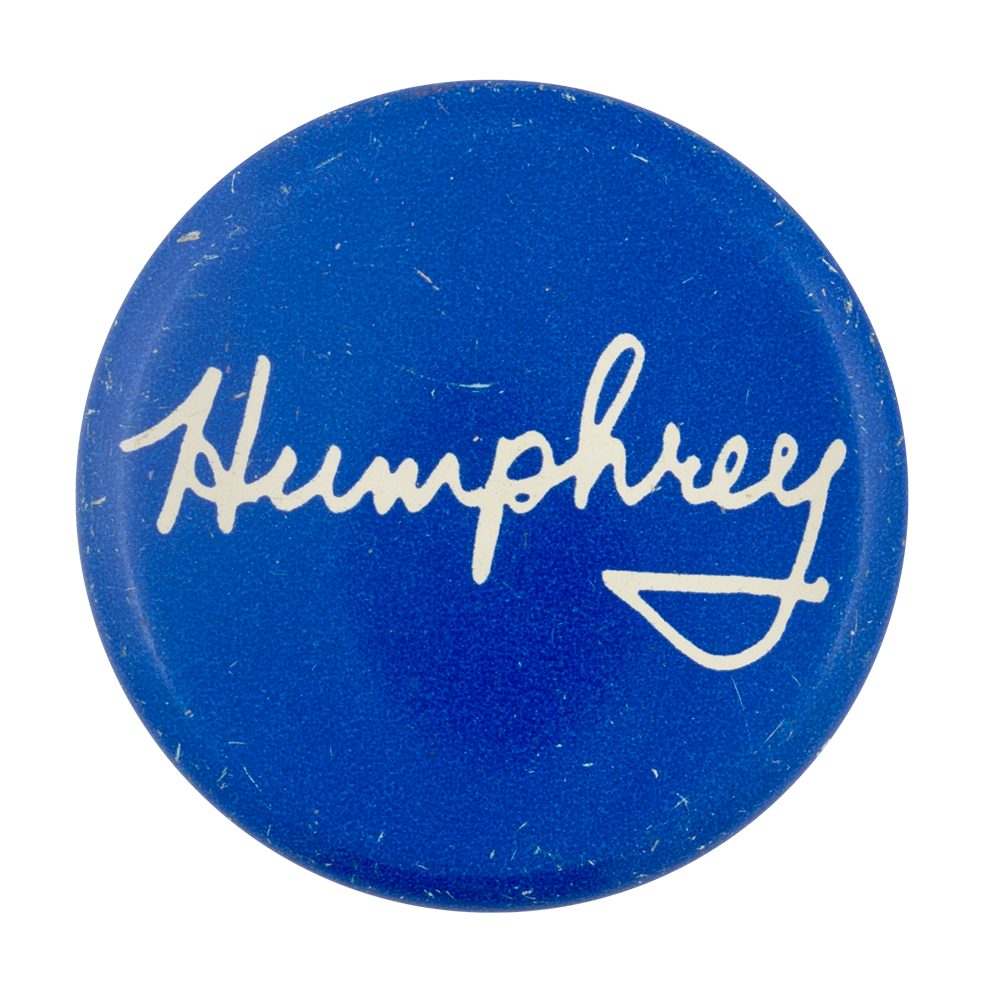
Text on Button Humphrey
Image Description

White text on a blue background

Curl Text union bug ADCRAFT MFG CO CHICAGO
Back Style
The Shape
The Size
The Manufacturer
Additional Information

Hubert Humphrey served as the 35th mayor of Minneapolis from 1945-1948.  In 1948, he was elected to the United States Senate, representing Minnesota.  Humphrey was the first Democratic senator from the state since before the Civil War.  In 1952 and 1960, he ran for the Democratic presidential nomination, loosing both attempts.  Humphrey filled the vacancy of Vice President of the United States after the assassination of President Kennedy, when former Vice President Johnson became President.  Humphrey ran as the Democratic nominee for the 1968 Presidential election against Republican nominee, Richard Nixon.  Nixon would go on to win the election.

Catalog ID PO0246

Winning Team

Category
Additional Images
Sub Categories
Text on Button THE WINNING TEAM NIXON AND LODGE
Image Description

Black and white photographs of two men's heads on top of a red white and blue striped background with white text across the top and bottom of the button and a blue star on the right and left.

Curl Text GREEN DUCK CHICAGO union bug
Back Style
The Shape
The Size
The Manufacturer
Additional Information

Richard Nixon (from CA) and Henry Cabot Lodge Jr. (from MA) ran as the Republican presidential ticket for the 1960 presidential election against John F. Kennedy. This was Nixon’s first attempt at the presidency after serving as Vice President under Dwight D. Eisenhower. The 22nd Amendment had been passed, making Eisenhower ineligible to run for a third term in office. Also, this election was the first time residents of Hawaii and Alaska were allowed to vote being both states became an official part of the United States in 1959.

The 1960 election was also televised for the first time and the American people could judge a candidate for not only what they had to say but also for how they appeared.  Nixon was said to have looked sickly compared to the youthful Kennedy, but those listening to the debate favored Nixon for his speaking abilities. Nixon and Lodge lost the election in a very close race. Kennedy won the Electoral College by a vote of 303-219 and won the popular vote by a slim 0.17% of (112,827 actual votes). 

Catalog ID PO0257

Richard M. Nixon for President

Category
Additional Images
Sub Categories
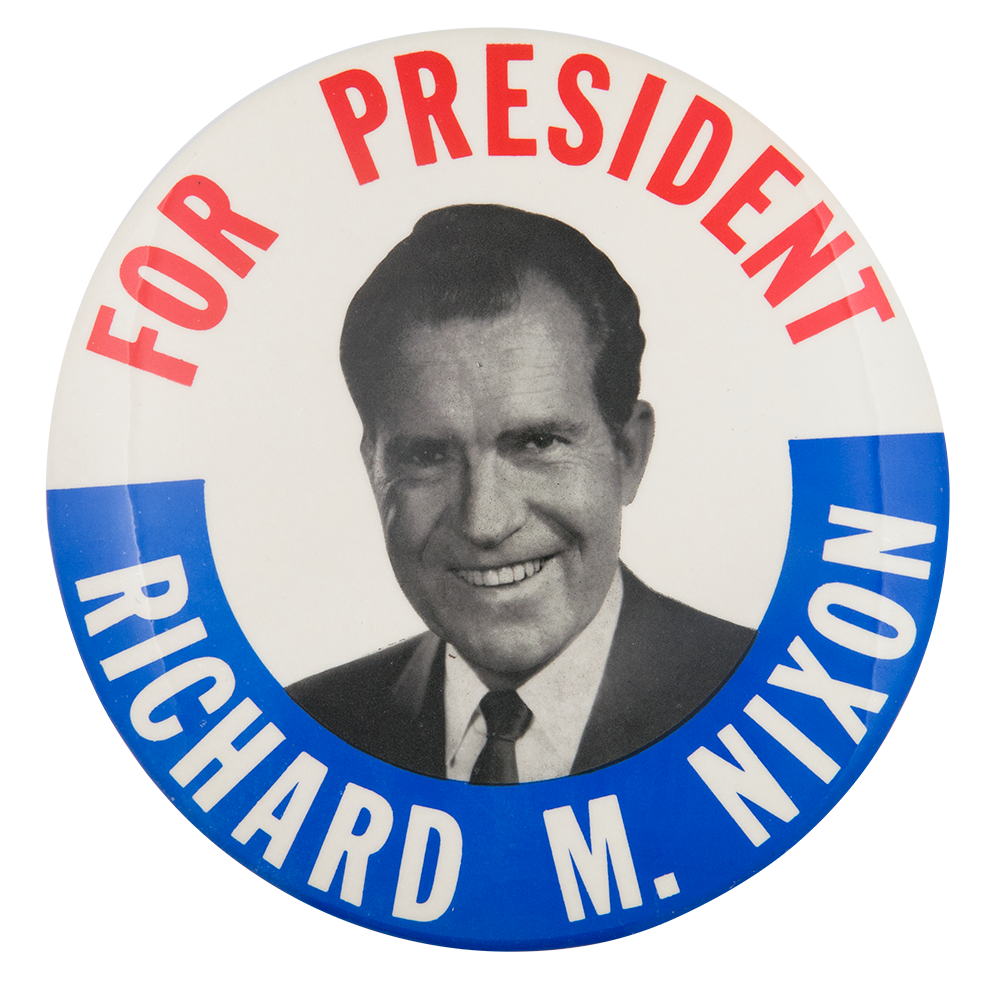
Text on Button FOR PRESIDENT RICHARD M. NIXON
Image Description

Red text along the top outer edge above a black and white photograph of a man in a suit on a white background wtih white text on a blue background a long the bottom edge of the button.

Curl Text union bug
Back Style
The Shape
The Size
Year / Decade Made
Additional Information

This button was for Richard M. Nixon's campaign for U.S. president in 1960. Nixon had served as U.S. senator from California (1950-53) and as vice president under Dwight D. Eisenhower (1953-61). Nixon lost the 1960 election to John F. Kennedy. Though the popular vote tally was close, Kennedy won with 303 electoral votes to 219 for Nixon.

The 1960 U.S. presidential election was noted for being the first with live televised debates. To some listening on radio, Nixon seemed to have won the debate. Yet many watching it on television had a different impression, since Kennedy appeared cool and collected while Nixon, who had been ill and did not wear television make-up, looked uncomfortable.

Catalog ID PO0247