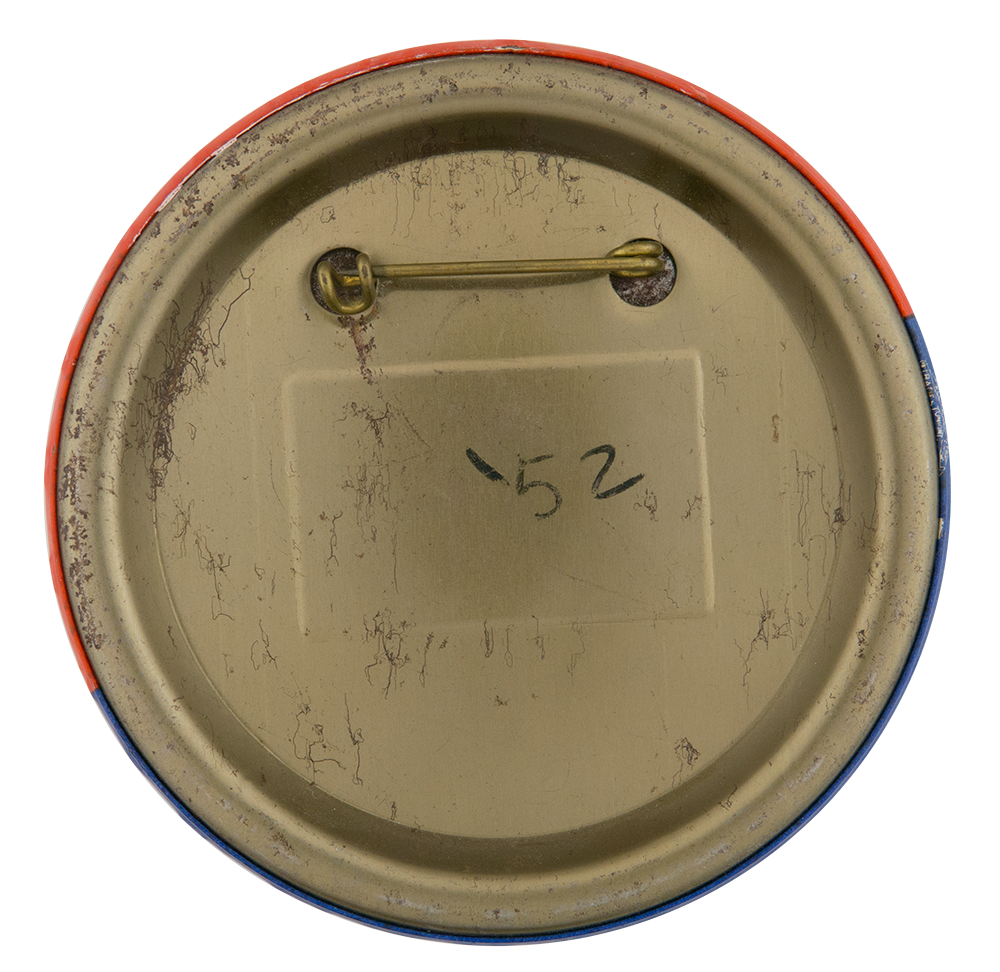
J'aime Ike

Category
Additional Images
Sub Categories
Text on Button J'aime Ike
Image Description

Capitalized white text on a red (top) and blue (bottom) background.

Back Style
The Shape
The Size
Year / Decade Made
Additional Information

This is a French translation of the campaign slogan "I Like Ike" (literally, "I Love Ike"), promoting Dwight D. Eisenhower during his first campaign for president on the Republican ticket in 1952. Richard Nixon was his running mate as vice-president. Eisenhower soundly defeated Adlai Stevenson, a Democrat from Illinois, in the 1952 election to become the 34th President of the USA. He was reelected in 1956 and began his second term the following year.

Catalog ID PO0179

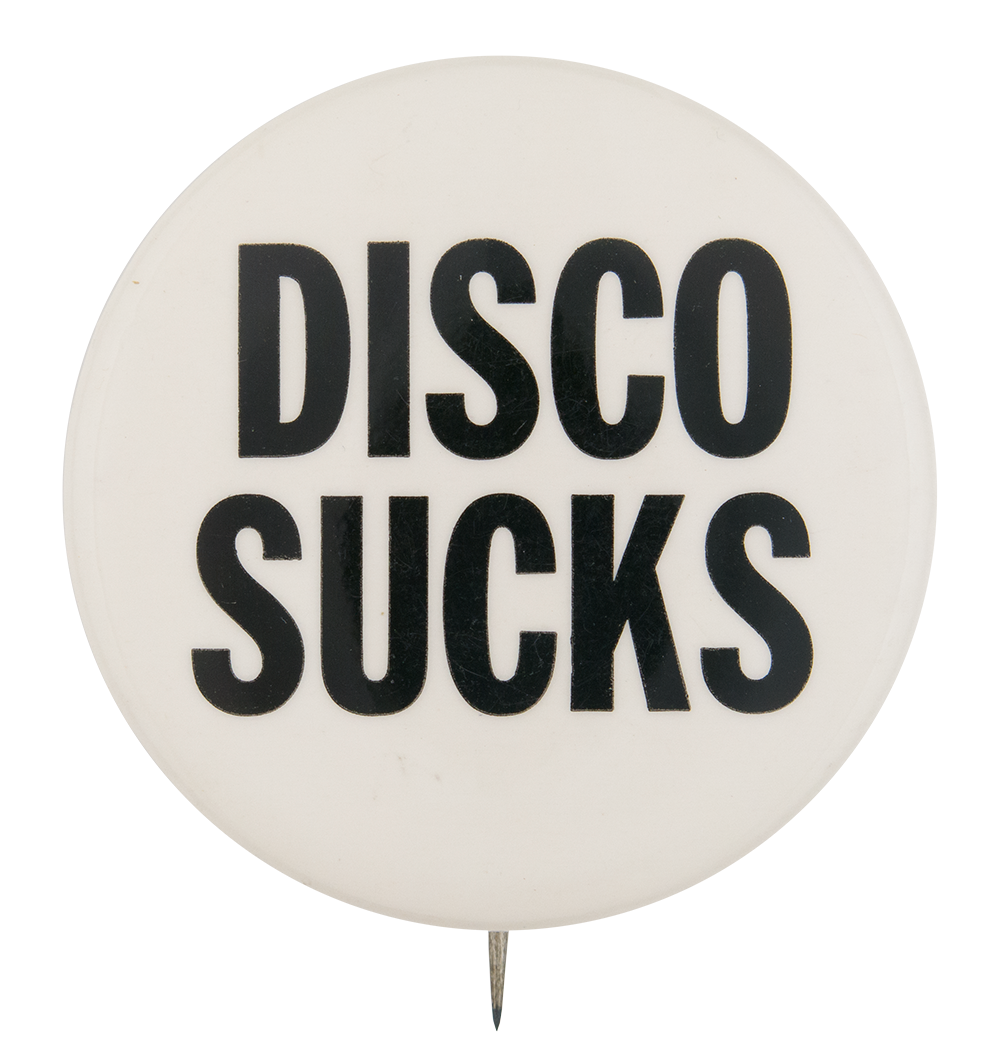
Disco Sucks

Category
Additional Images
Text on Button Disco Sucks
Image Description

Black text on a white background.

Back Style
The Shape
The Size
Year / Decade Made
Additional Information

In 1979, at the height of disco music's popularity, Chicago radio DJ Steve Dahl (then at WLUP 97.9 FM) led a tongue-in-cheek but nevertheless intense campaign against the genre. He was also highly critical of the lifestyle that disco had popularized in American culture. Under the banner of "Disco Sucks," the campaign/gimmick was often discussed by Dahl and his guests on air and eventually led up to a promotional tie-in with the Chicago White Sox. The proposed event was dubbed "Disco Demolition Night." Dahl told his listeners to bring all of their disco records to the second game of a double-header against the Detroit Tigers on July 12, 1979 for the express purpose of destroying them. Before the second game began, Dahl led the explosion of the records on the field of Comiskey Park (now U.S. Cellular Field). Tens of thousands of teenagers and young adults swelled the crowd to overcapacity, leading to multiple arrests and general disorder. What's more, as a result of the chaos the White Sox were forced to forfeit the game to the Tigers.

Catalog ID MU0235

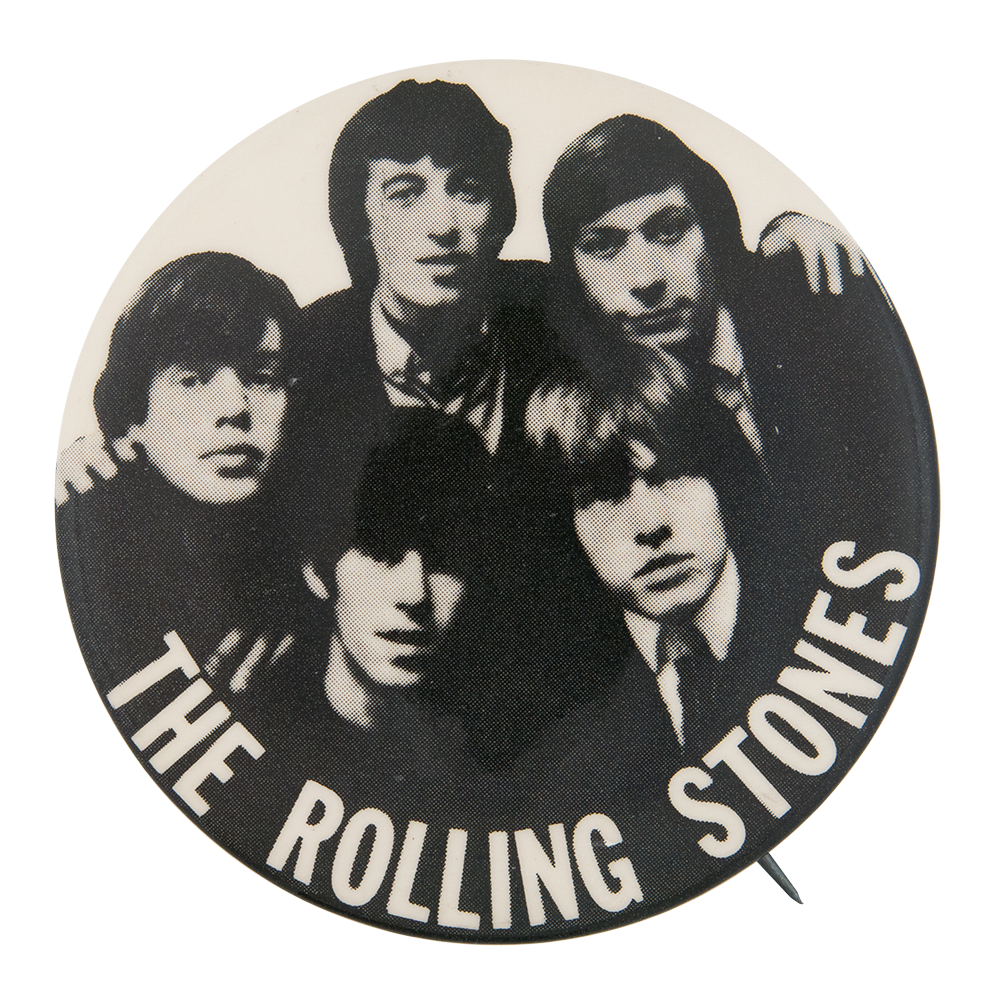
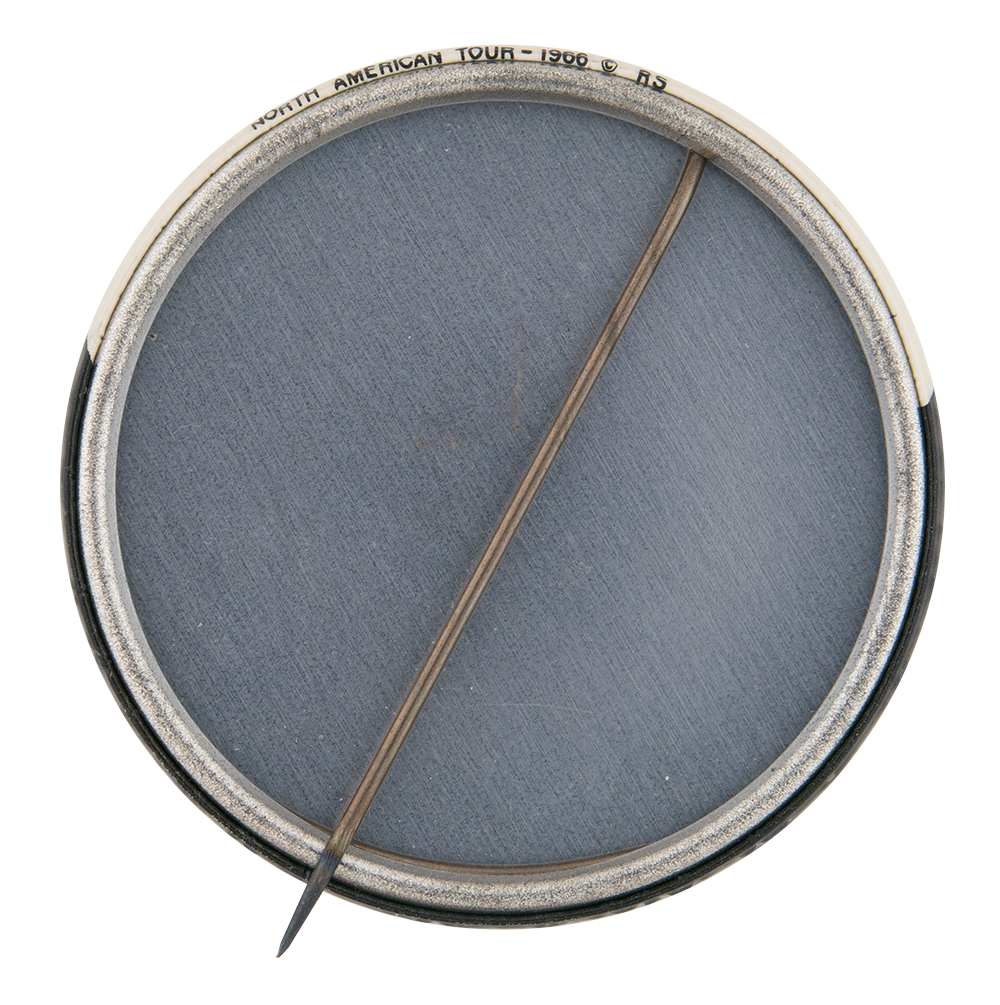
The Rolling Stones North American Tour 1966

Category
Additional Images
Sub Categories
Text on Button The Rolling Stones
Image Description

Black and white photograph of the five members of the Rolling Stones above white text.

Curl Text NORTH AMERICAN TOUR - 1966 copyright RS
Back Style
The Shape
The Size
Year / Decade Made
Additional Information

From June 24 to July 28, 1966 the Rolling Stones toured the United States and Canada for their fifth time. The tour consisted of a total of 32 shows in 30 cities and promoted the band's album Aftermath, of the same year. Concert stops included most major US and Canadian cities and the last show of the tour, in Honolulu, was broadcast on the Hawaiian radio station KPOI.

Catalog ID MU0149

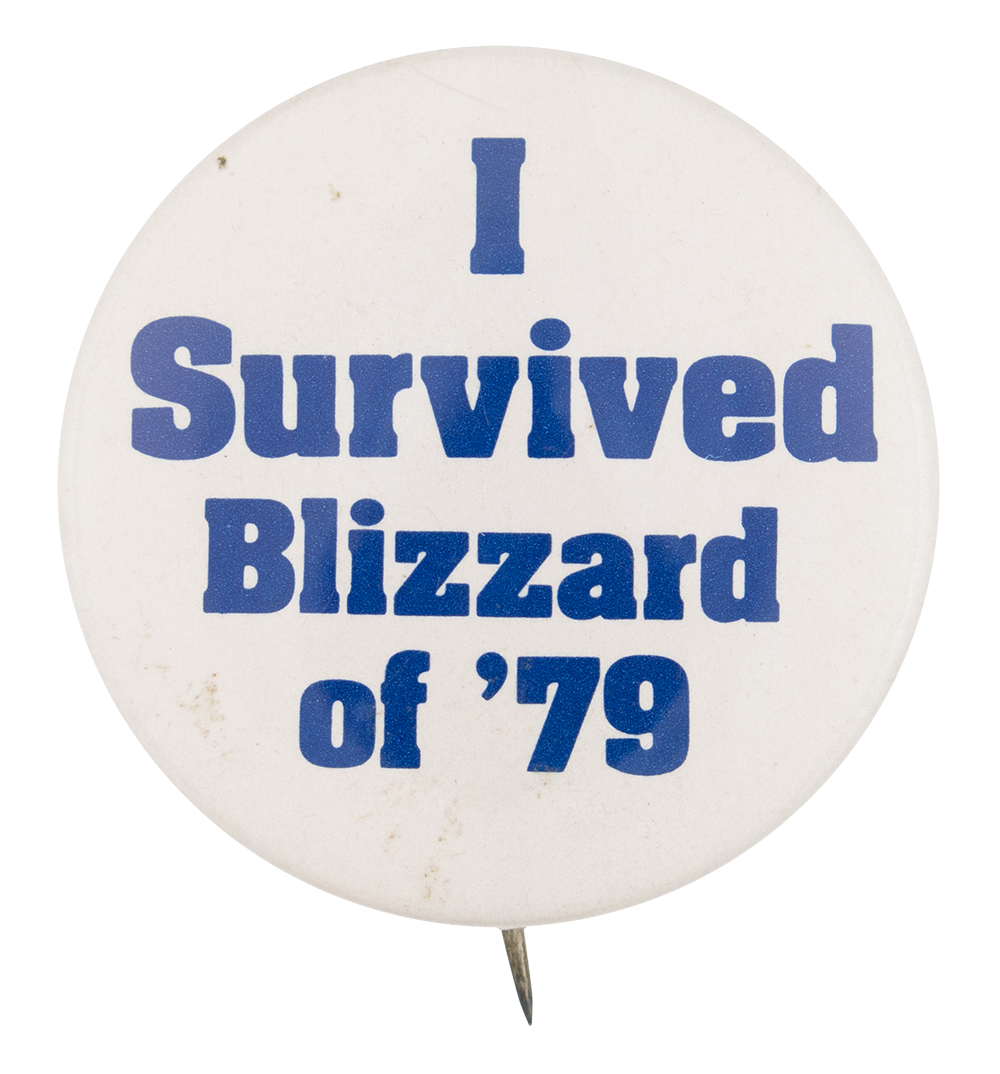
I Survived Blizzard of '79

Category
Additional Images
Text on Button I Survived Blizzard of '79
Image Description

Blue text on a white background.

Back Style
The Shape
The Size
Year / Decade Made
Additional Information

The Chicago Blizzard of 1979 was exceptionally severe and took place on January 13 and 14, 1979. By its end, 18.8 inches (47.8 cm) of snow had fallen on the metro Chicago area. The snowfall on January 13 alone set a new record for amount of snow in one day in Chicago - 16.5 inches (41.9 cm). The mayor at that time, Michael Bilandic, was blamed for the city's inadequate response to the storm and was soon later ousted at the polls by Jane Byrne, Chicago's first and only female mayor.

Catalog ID EV0113

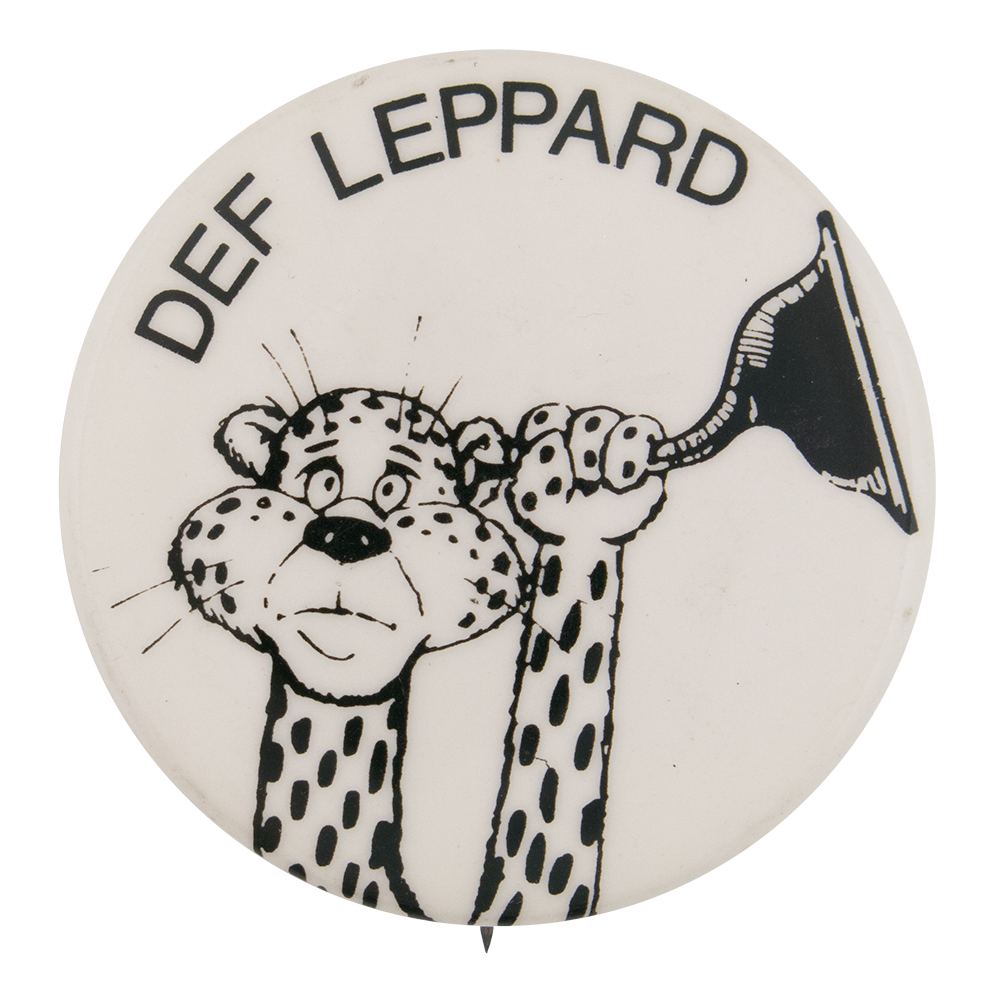
Def Leppard Rock Brigade

Category
Additional Images
Sub Categories
Text on Button DEF LEPPARD
Image Description

A line drawing in black of a spotted leopard holding up an ear trumpet below black text, all on a white background.

Back Style
The Shape
The Size
Year / Decade Made
Additional Information

Def Leppard is an English rock band formed in 1977. They are associated with the "glam" metal style that they popularized along with other bands such as Mötley Crüe, Poison, Quiet Riot, and Bon Jovi during the 1980s. In 1980 the band released their debut LP On Through the Night. The first track of the album was "Rock Brigade" and as a single it was released with "When the Walls Come Crumbling Down" as the B-side. The artwork of this button appeared on the single's cover.

Catalog ID MU0234

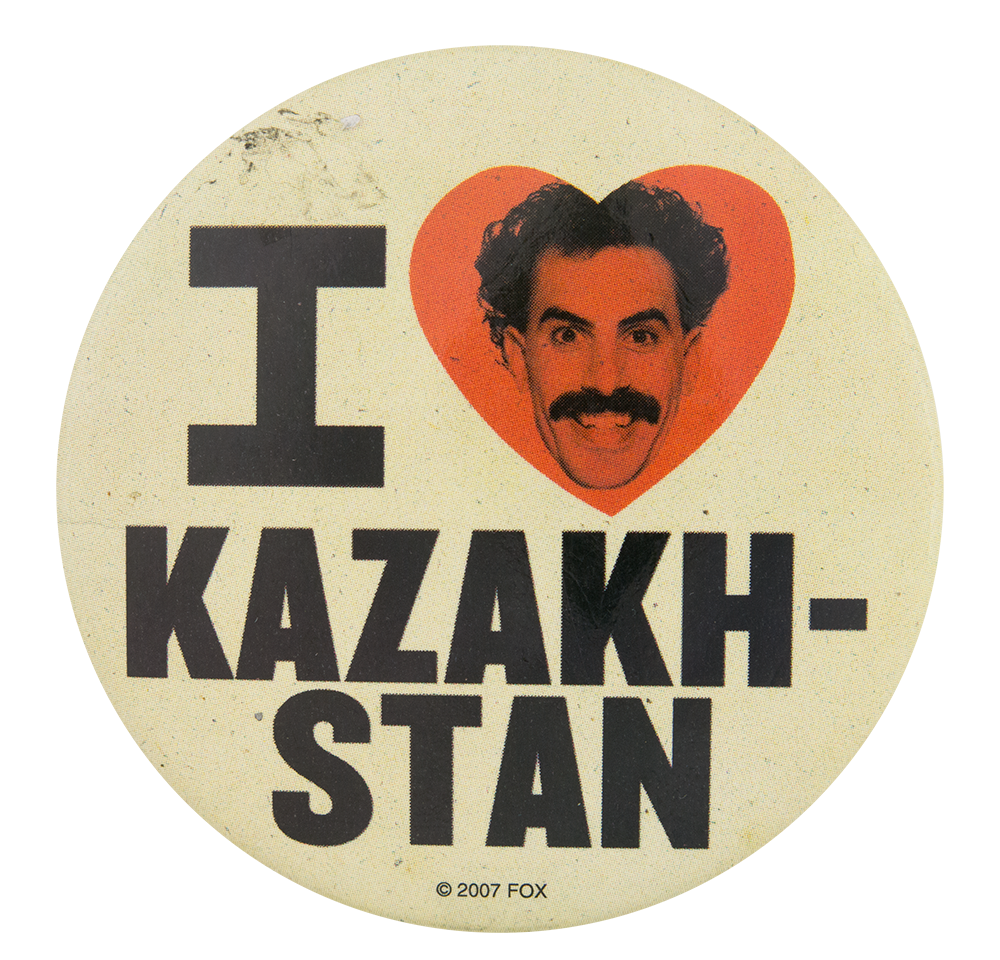
Borat I Heart Kazakhstan

Category
Additional Images
Sub Categories
Text on Button I (heart) Kazakhstan; 2007 Fox
Image Description

Black text on a white background with a red heart with a man's face in the middle.

The Shape
Year / Decade Made
Additional Information

Borat: Cultural Learnings of America for Make Benefit Glorious Nation of Kazakhstan, commonly known as Borat, is 2006 British-American mockumentary comedy filmThe 20th Century Fox production was written by Sacha Baron Cohen and directed by Larry Charles. 

In the movie, Borat Sagdiyev (played by Sacha Baron Cohen), a fictitious Kazakh journalist was traveling through the United States to report on Americans. As the film progresses, Borat becomes more interested in locating and marrying the actress he saw on the television show Baywatch, who was played by Pamela Anderson.

Catalog ID IL0007

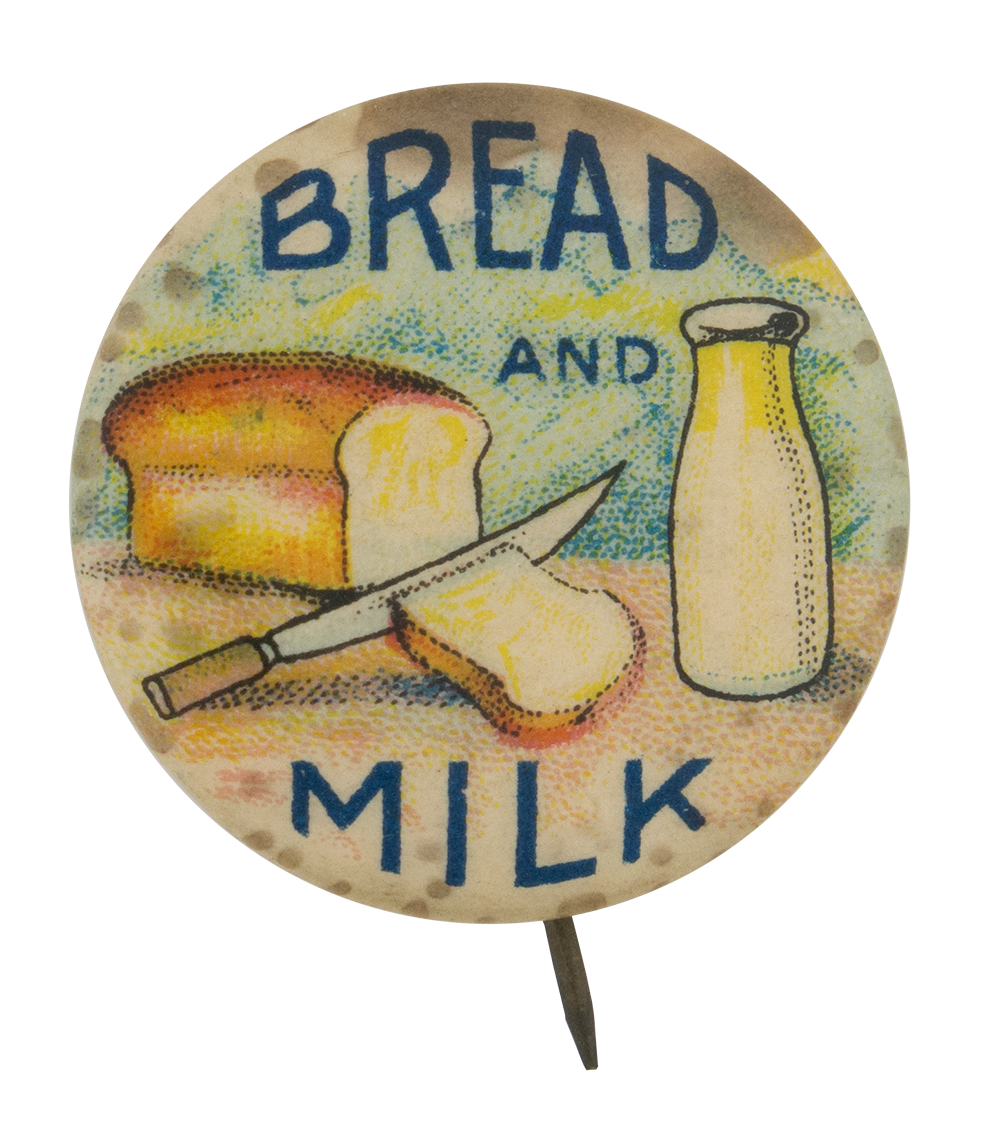
Bread and Milk

Category
Additional Images
Sub Categories
Text on Button Bread and Milk
Image Description

Blue text on light blue and white background appearing as a counter and there is a knife slicing the bread.

Back Style
The Shape
The Size
Additional Information

Have info on this button? Contact us here.

Catalog ID CA0560

Halt Hitler

Category
Additional Images
Sub Categories
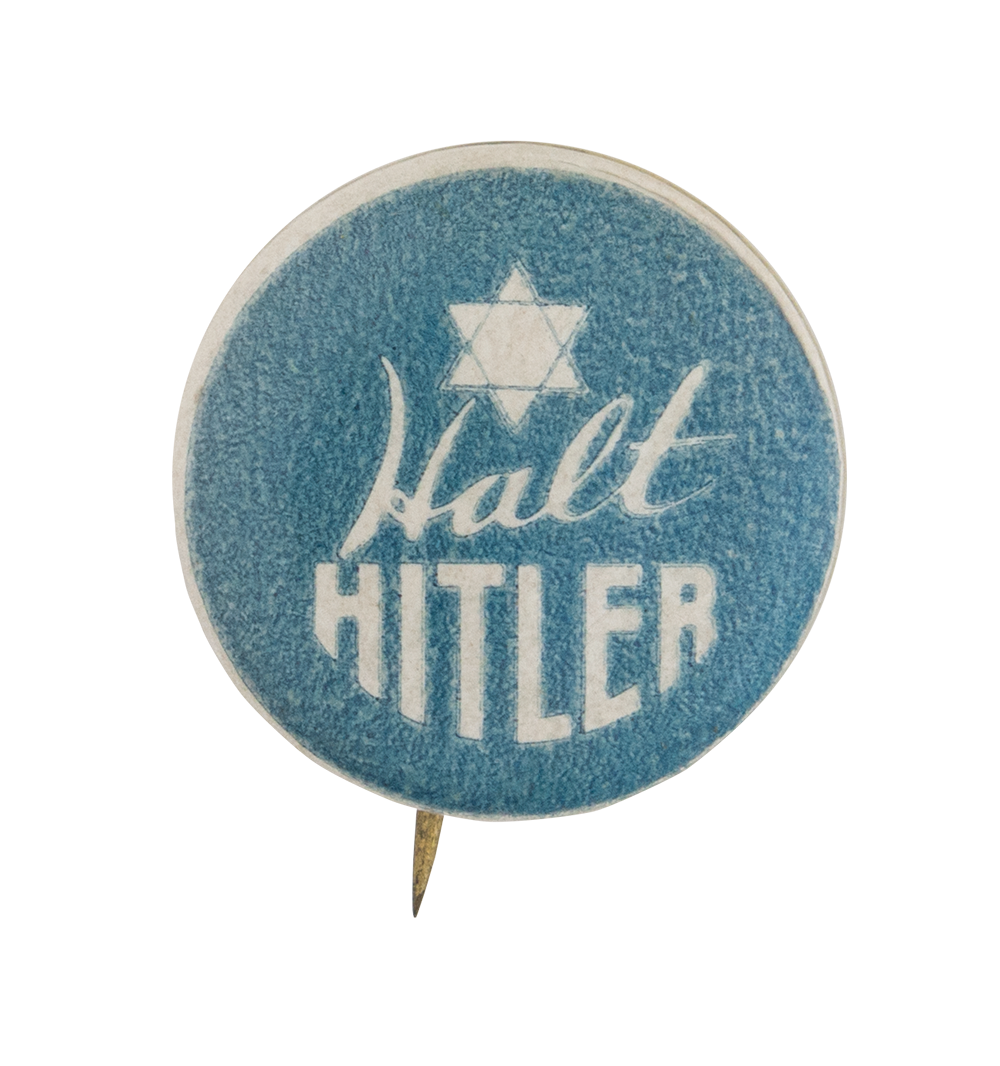
Text on Button Halt HITLER
Image Description

White text and a white star of david on a light blue background with an outer white edge

Back Style
The Shape
The Size
Additional Information

Halt Hitler is in reference to the anti-Nazi movement against Adolf Hitler before World War II.

Catalog ID CA0138

Purple Equals Sign

Category
Additional Images
Sub Categories
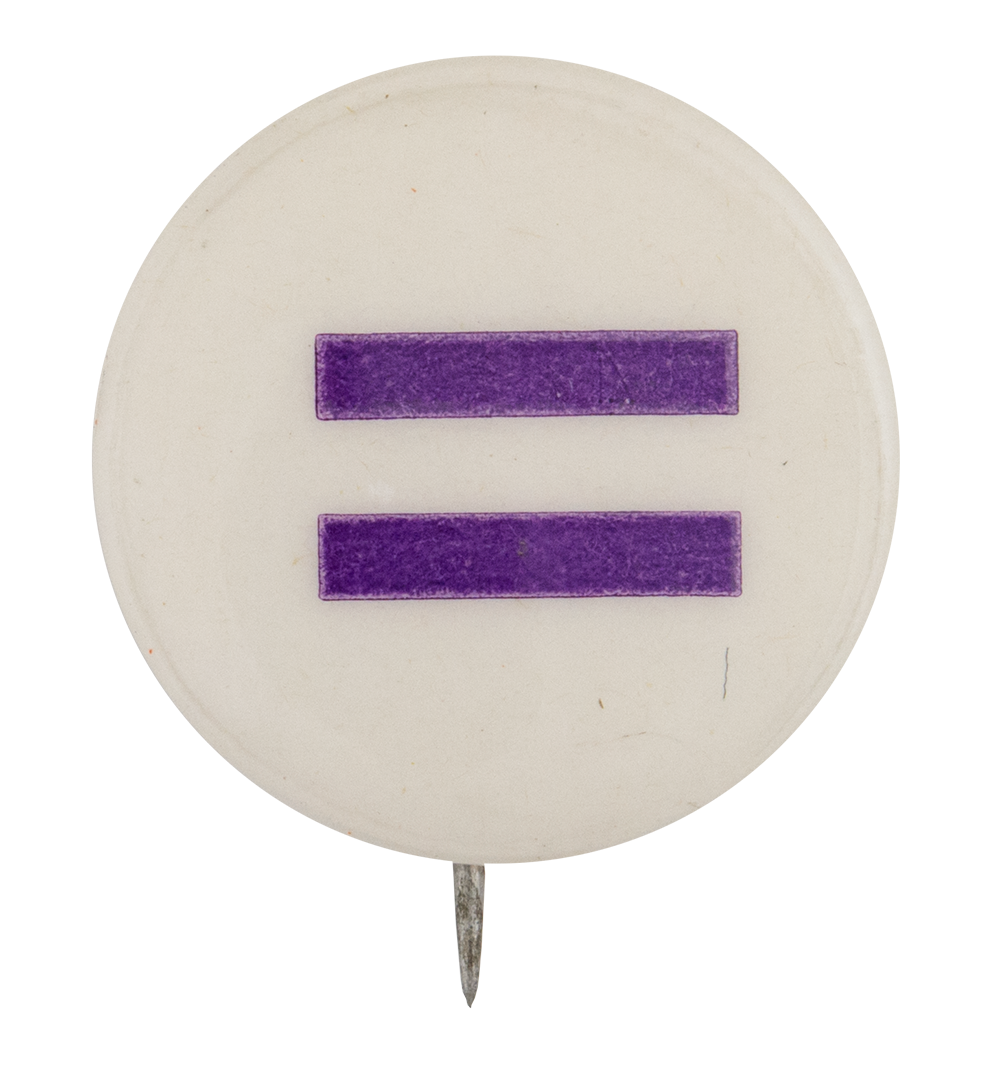
Text on Button =
Image Description

Two purple horizontal lines on a white background

Back Style
The Shape
The Size
Additional Information

This button is most likely supporting a feminist or LGBT cause. 

Purple was one of a trifecta of colors used by the Women’s Suffrage and Political Union in England at the turn of 20th century. The colors were brought to the United States suffrage movement by women who had worked for British suffrage. The three colors—purple, white, and gold—originally symbolized loyalty, purity, and hope, and have remained symbolic to the modern-day feminist movement. The equals sign with regard to feminism is a statement indicating that women should be equal to men.

Since the mid-1990s, the equals sign has become primarily associated with the LGBT rights movement. This is in large part due to the Human Rights Campaign—an LGBT advocacy group—who adopted the symbol as its logo in 1995. Lavender, similar to the color of the equals sign on this button, has also been historically associated with lesbian rights. 

Catalog ID CA0133

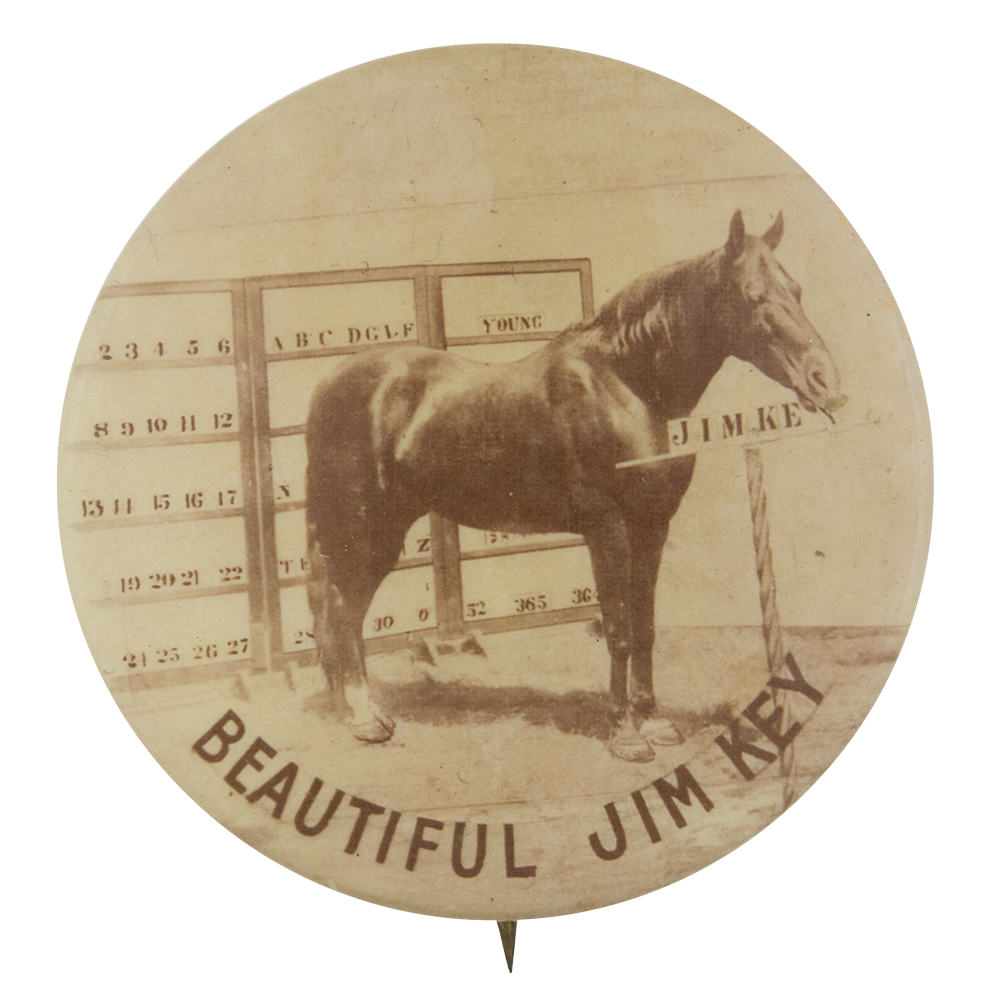
Counting Beautiful Jim Key

Category
Additional Images
Sub Categories
Text on Button Beautiful Jim Key
Image Description

Black text on a black and white photo of a horse with black numbers and letters in the background.

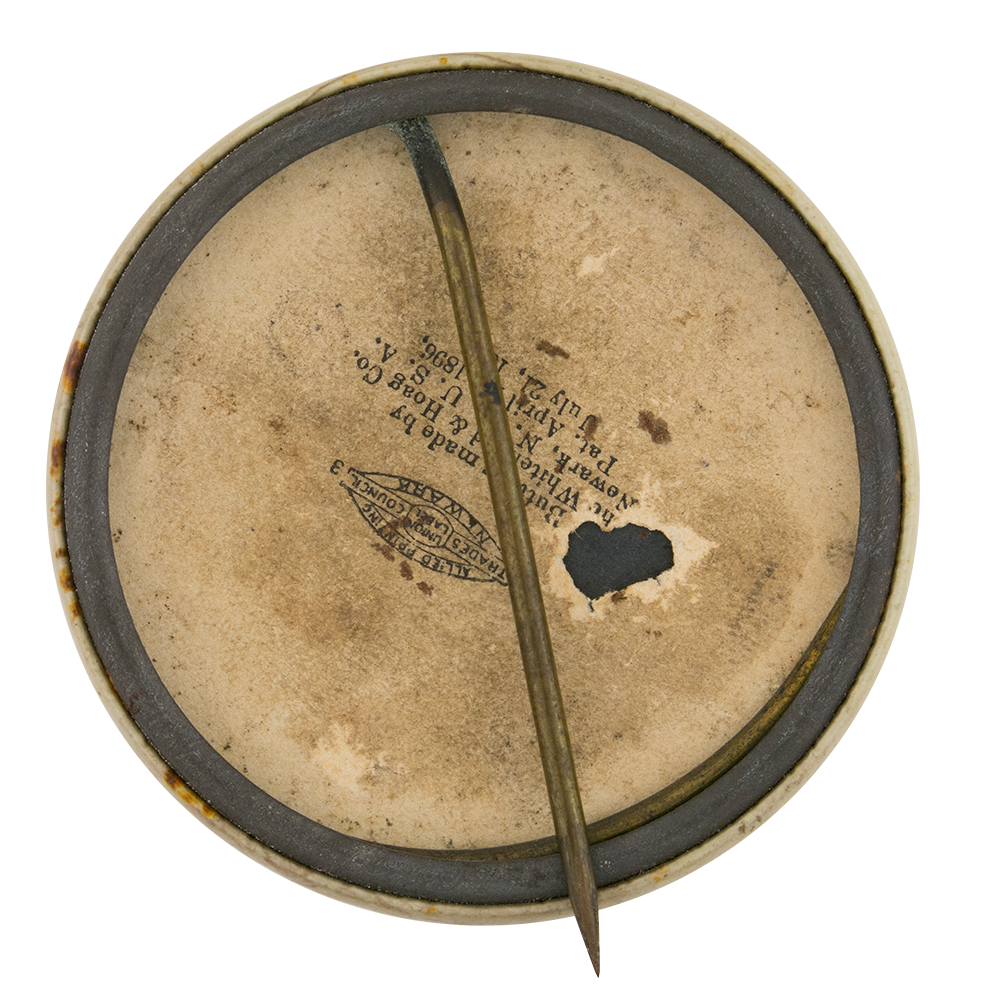
Back Paper / Back Info

Buttons made by The Whitehead & Hoag Co. Newark, N. J. U.S.A. Pat April 14, 1896, July 21, 1896

Back Style
The Shape
The Size
The Manufacturer
Additional Information

William “Doc” Key was a former slave educated by his master and his master’s sons. Key was a self-trained veterinarian and was always known to have extraordinary skills of animal communication and healing. After adopting a weak foal that was not expected to live, Key treated the horse with his own medicines. He named the horse Jim Key, giving it his own last name. Through kindness and patience, Key taught Jim how to read, write, spell, do math, tell time, sort mail, use a cash register and telephone, and engage in political debate. From 1897 to 1906, Key and Jim performed all over the nation, always with the message of the “power of kindness”. Over ten million Americans saw the duo perform, making Key one of the most famous African Americans of his time and bringing together many races of people. A quote attributed to Time Magazine declared, “This wonderful horse has upset all theories that animals have only instinct, and do not think and reason.” Though there was, and still is, debate as to how Jim performed his tasks, the important message of treating animals humanely has lived on.

The image here depicts "Beautiful" Jim Key spelling his own name, and the numbers in the background were most likely used to count and do math.

Catalog ID EN0158