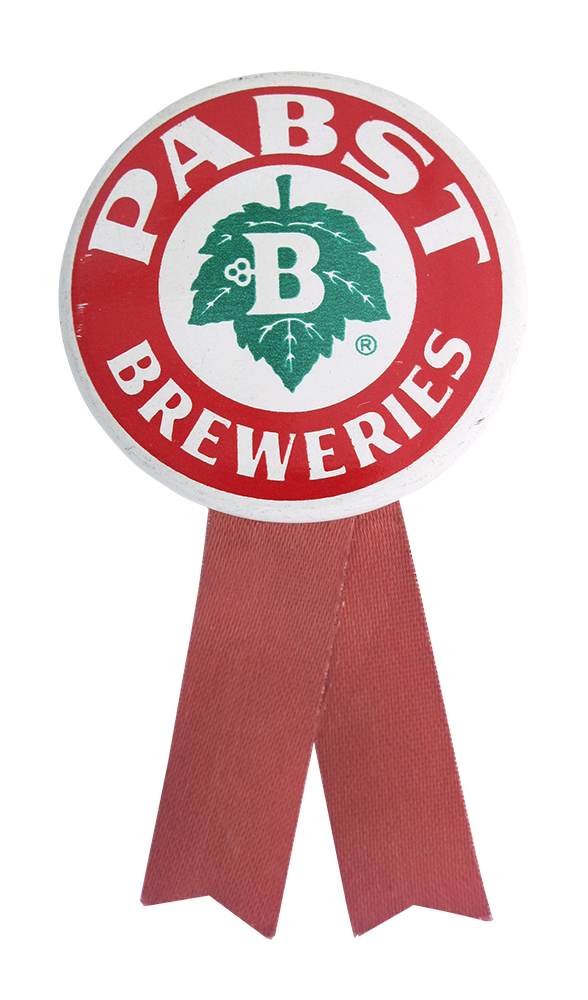
Pabst Breweries

Category
Additional Images
Sub Categories
Text on Button PABST BREWERIES B
Image Description

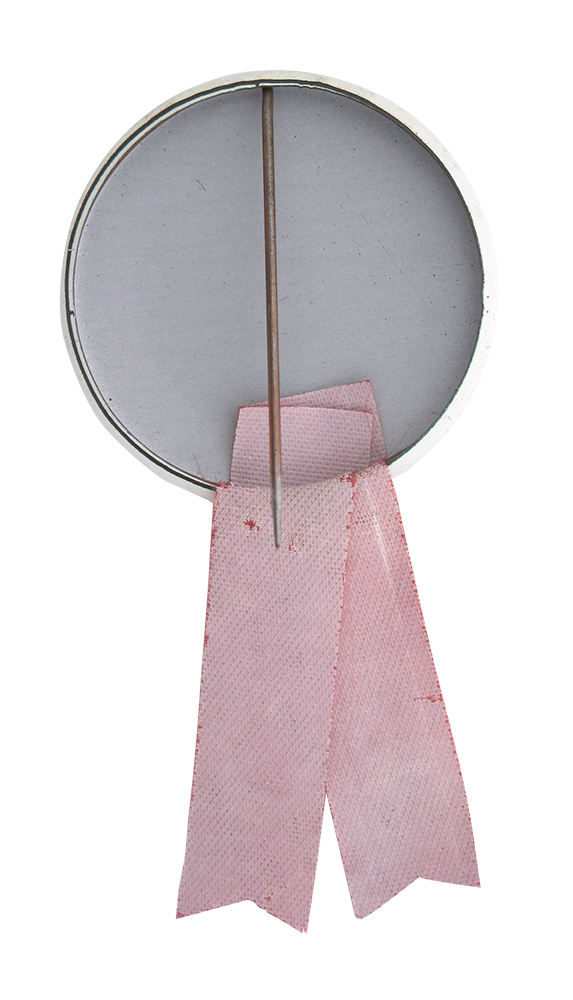
A white background with a red ring and an inner white circle. An upside down leaf is in the center with a white letter B on it. There is a red ribbon hanging from the bottom edge of the button.

Back Style
The Shape
The Size
Additional Information
When Jacob Best began his brewery his production was 18 barrels per batch and a little over 300 barrels per year. In 1859 Captain Pabst married into the family and became a major force in the company. By 1872 Pabst served a president and output was over 100,000 barrels making then Best and Company, the second largest brewery in the United States
 
A flagship brand, Best Select, won numerous awards worldwide through the 1880s and the blue ribbon was placed on every Best Select Beer. In 1889 the company officially became Pabst Brewing Company and by 1892 nearly a million feet of silk was being used yearly to tie ribbons on Best Select Beers. The label of the Select Beer was reintroduced in 1895 as the Pabst Blue Ribbon (PRB) known today. By the early 1900s over 30 million feet of silk ribbon was being used yearly.
 
 
Catalog ID BE0081

Old Style Friendship Howdy

Category
Additional Images
Sub Categories
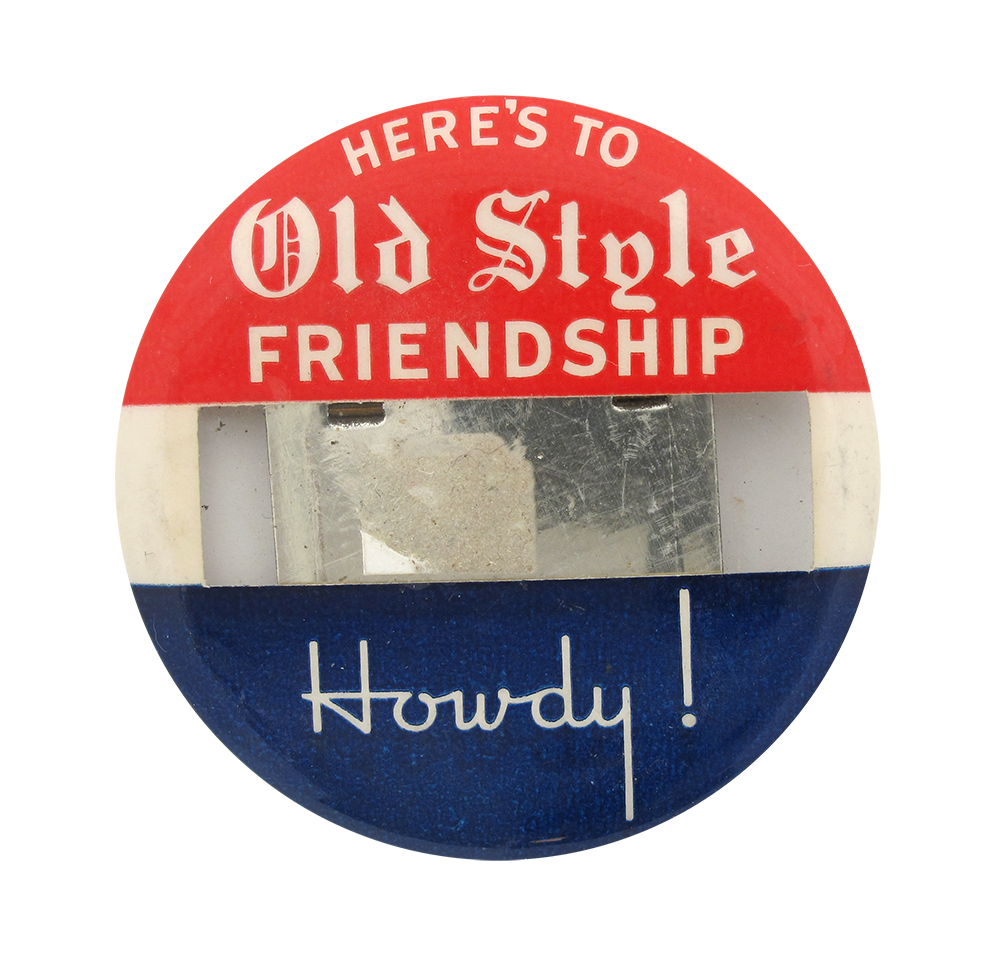
Text on Button HERE'S TO Old Style FRIENDSHIP Howdy!
Image Description

The button is composed of three sections: on the top is white text on a red background, the middle is clear plastic with white edges, and the bottom is white text on a blue background. 

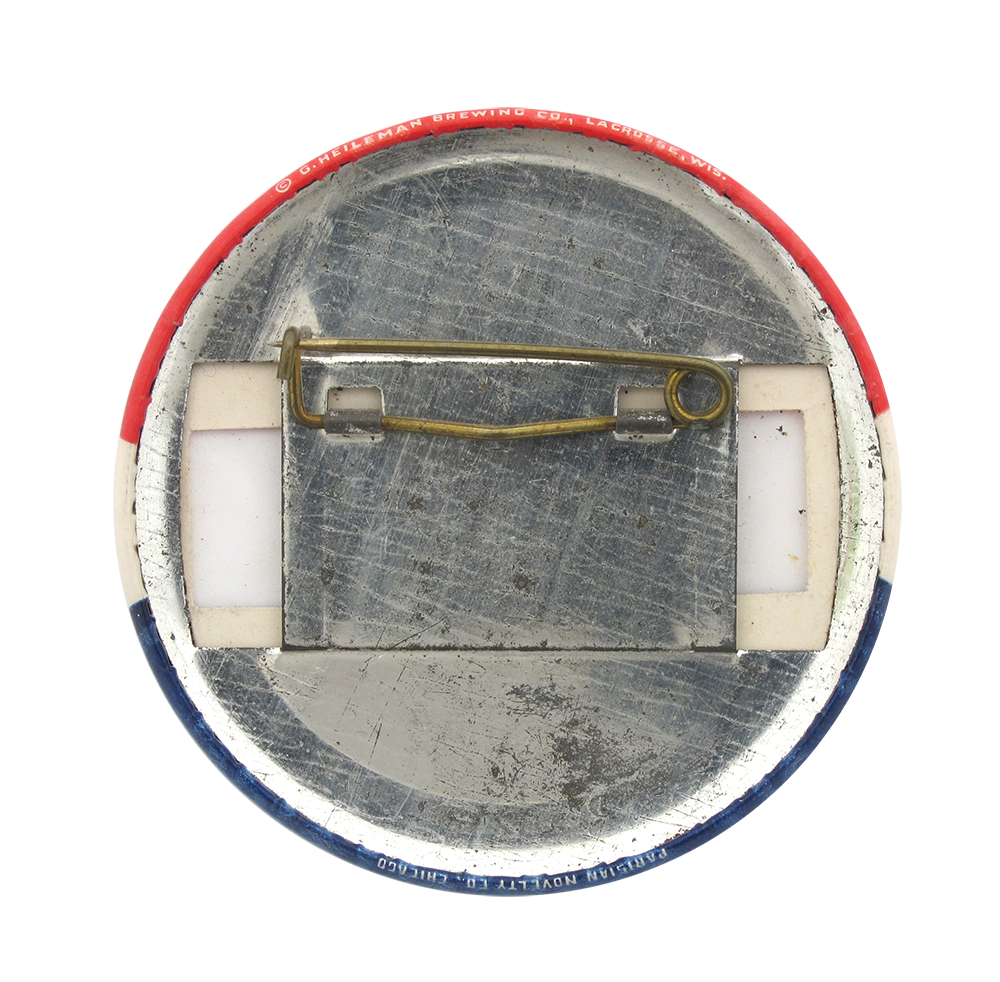
Curl Text PARISIAN NOVELTY CO., CHICAGO
Back Style
The Shape
The Size
Year / Decade Made
The Manufacturer
Additional Information

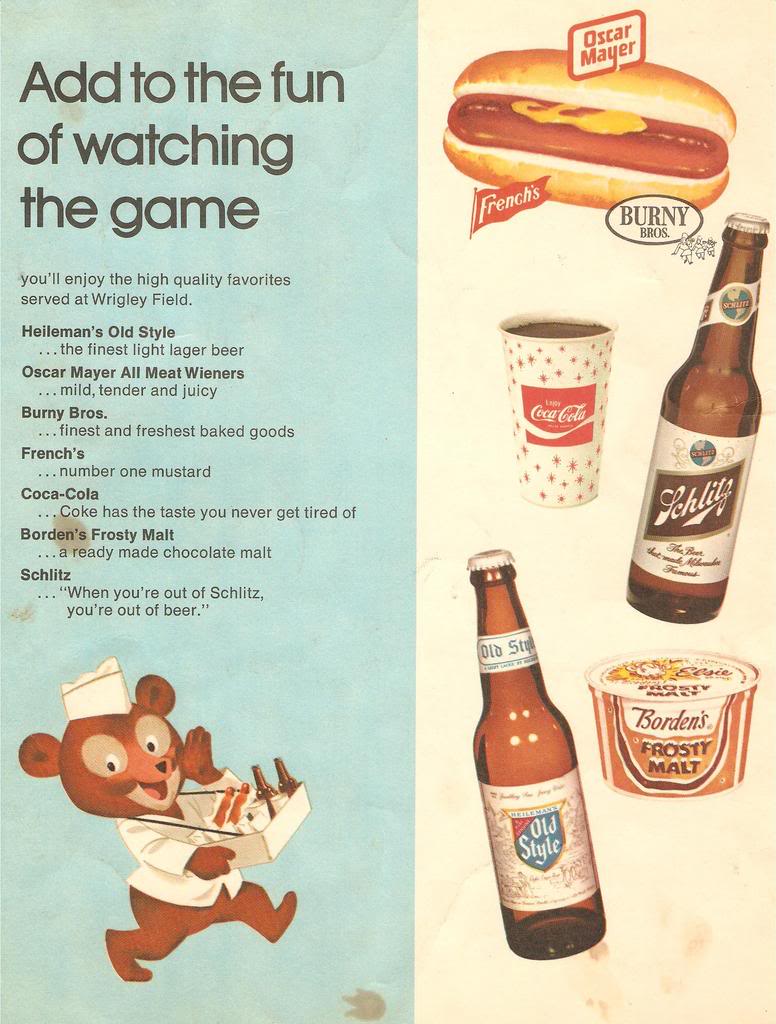
Old Style beer was first called Golden Leaf Lager and was manufactured by Gottlieb Heileman at the G. Heileman Brewing Company in La Crosse, Wisconsin. The beer was known for being made with the finest ingredients. The beer’s name changed to Old Style in 1902. Old Style permanently moved across the state line into Illinois in 1935 in correlation with a nationwide bottlers strike and product rationing. The beer soon became known as “Chicago’s Beer” and was sold throughout the city. In 1950, the Chicago Cubs began sponsoring Old Style, and it has been enjoyed at Wrigley Field ever since.

Catalog ID BE0009

Miller High Life Beer

Category
Additional Images
Sub Categories
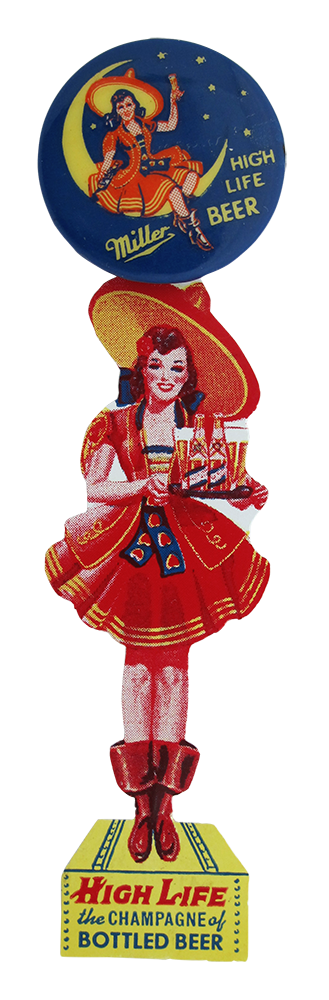
Text on Button Miller HIGH LIFE BEER High Life the CHAMPAGNE of BOTTLED BEER
Image Description

Illustration of a woman in a red blue and yellow dress wearing a large red and yellow hat and holding a drink while sitting on a yellow moon with yellow stars and text on a dark blue background

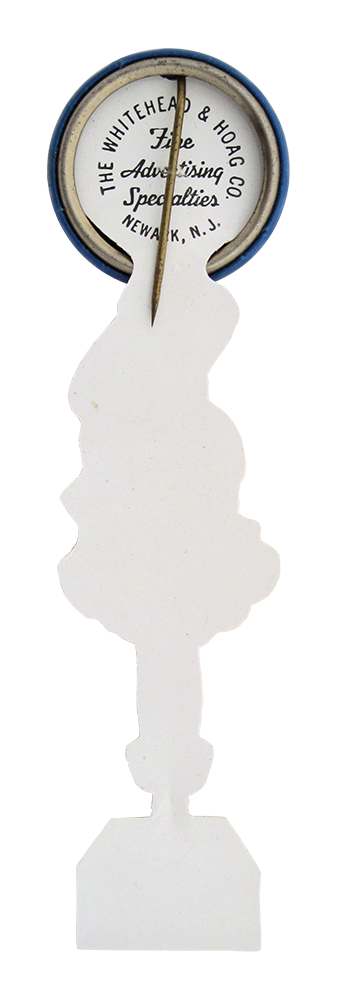
Back Paper / Back Info

THE WHITEHEAD & HOAG CO.
The Advertising Specialties
NEWARK, N. J.

Back Style
The Shape
The Size
Year / Decade Made
The Manufacturer
Additional Information

Miller High Life Beer is a creation of Frederick Miller. Miller had been a brewer in Germany and brought that passion to Milwaukee in the late nineteenth century. Miller High Life was created by combining local hops and barley with yeast from the “old country.” The beer was distributed starting in 1903 and quickly earned the nickname “The Champagne of Bottle Beer.” The nickname for the beer most likely comes from its high level of carbonation, the unique shape of the bottle (tapered neck like a champagne bottle), and the fact that the bottle was clear with a gold label.

The Miller High Life Girl on the Moon came out very shortly after the beer was introduced. The original depiction was of a girl in a circus-like costume, complete with whip and tall hat, standing on a High Life crate. In 1907, the girl was removed from the crate and was sat, instead, on a crescent moon. Supposedly, the girl came about because of a vision that one of the advertising managers had while he was lost in the Wisconsin Northwood. The Girl in the Moon was removed in 1944 to cut back advertising expenses. However, she returned in 1998 and has remained on the product ever since.

Sources

Herrewig, D. (2013, November 6). The Miller High Life Girl in the Moon. MillerCoors Behind the Beer. Retrieved from http://www.millercoorsblog.com/miller-high-life-girl-in-the-moon/?age-v….

Catalog ID BE0010

Lone Star Beer of Texas

Category
Additional Images
Sub Categories
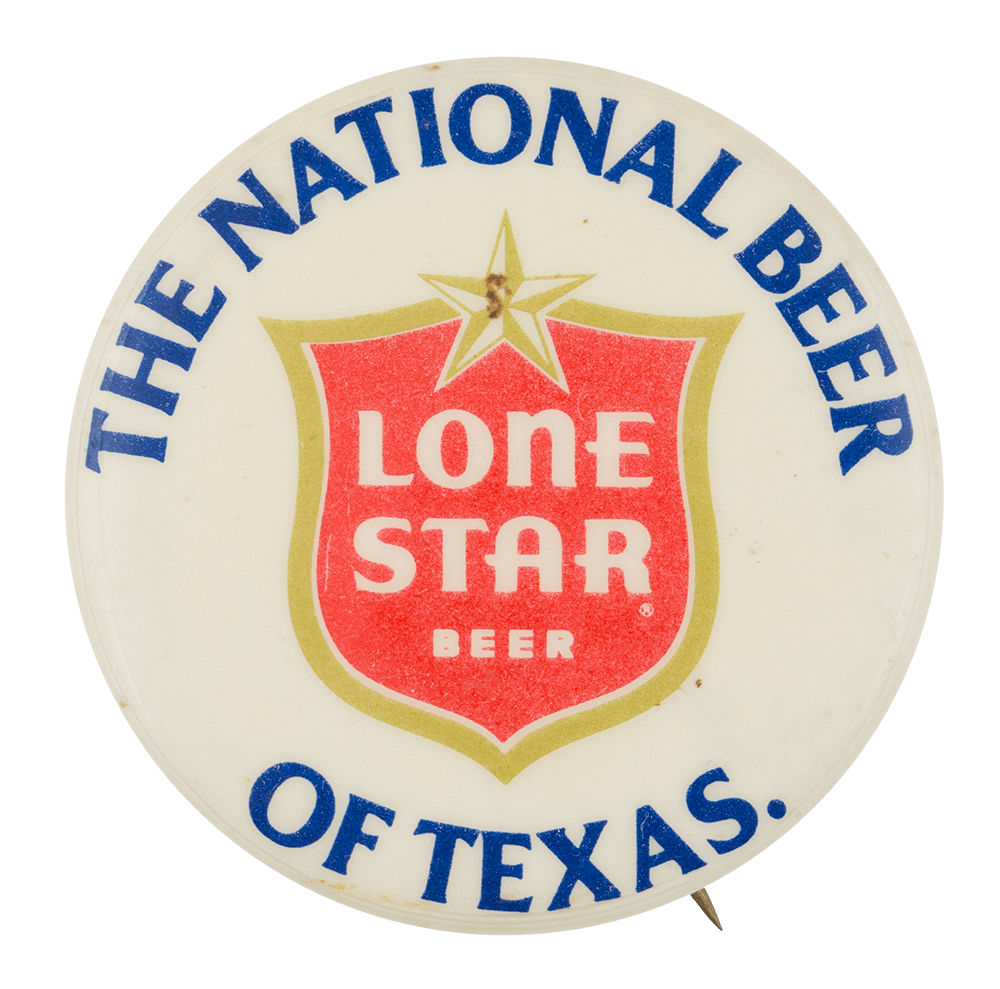
Text on Button THE NATIONAL BEER OF TEXAS. LONE STAR BEER
Image Description

A white background featuring a gold-lined shied with a golden star atop it. The inside of the shield is red.

Back Style
The Shape
The Size
Year / Decade Made
Additional Information

This is a promotional button for Lone Star Beer. In 1883, Adolphus Busch built the Lone Star Brewery in San Antonio, Texas. This brewery served as the first large mechanized brewery in Texas. The company grew larger and larger until it closed in 1919 due to Prohibition only to restart in 1933. In 1940, the actual Lone Star Beer was brewed and thus the "National Beer of Texas" was born.

In 1949, the company went public.  In 1957, it introduced the Lone Star Beer logo featured on this button. In 1976, Lone Star Brewery was acquired by Olympia Brewing Company, by G. Heileman Brewing Company in 1983, by the Stroh Brewery Company in 1996, and by the Pabst Brewing Company in 1999.

Lone Star celebrated 65 years of production as the "National Beer of Texas" and it reverted back to the 1957 packaging in 2012. Today, Lone Star sells millions of barrels per year. The beer itself is a little under 5% ABV and is a standard American Lager.

When the capitol is Austin was constructed in 1888, the Goddess of Liberty atop the building was designed holding a Lone Star beer.

Catalog ID BE0075

Goose Island

Category
Additional Images
Sub Categories
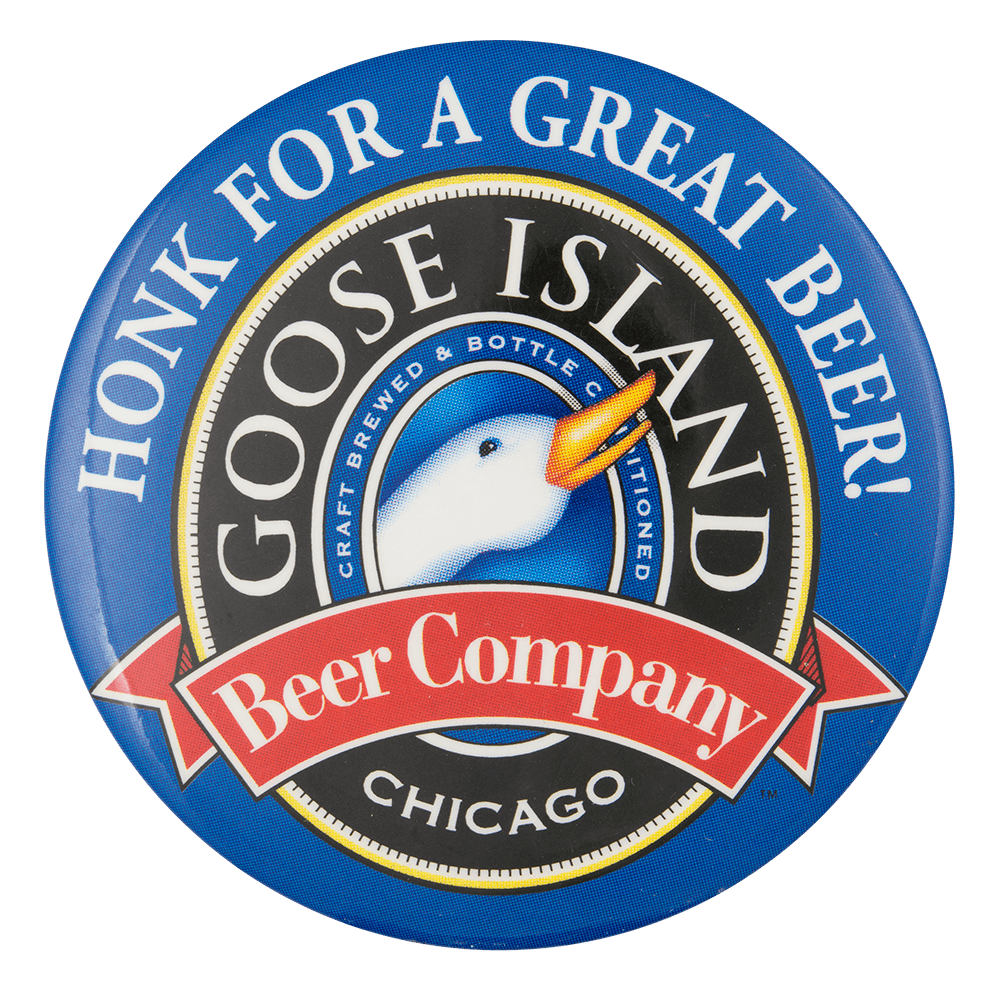
Text on Button HONK FOR A GREAT BEER! GOOSE ISLAND CRAFT BREWED & BOTTLE CONDITIONED Beer Company CHICAGO
Image Description

There is an outer blue circle with white text followed by an inner black circle with a gold border and gold text followed by a blue oval which has the head of a white goose. Underneath the goose is a red banner with white text.

Back Style
The Shape
The Size
Additional Information

Goose Island is a young brewery compared to most. It began as a part of the Goose Island Brewpub, started by John Hall. Hall, a beer-lover, traveled throughout Europe and after experiencing so many distinct local beers, he decided that Chicago could do the same. Hall's Goose Island craft brews (and pub) began in 1988. It was very popular throughout Chicago and in 1995 Hall opened a larger brewery and bottling plant followed by a second brewpub in 1999. In 2006 the company was sold to Widmer Brothers Brewery and in 2011 is was announced that the company will be sold in parts to Anheuser-Busch.

Today Goose Island has  over 50 craft beers including Matilda (Belgian Ale, Bourbon County Stout (Imperial Stout), Nut Brown Ale (Brown Ale) and many others.

Catalog ID BE0078

Foster's Lager Australia

Category
Additional Images
Sub Categories
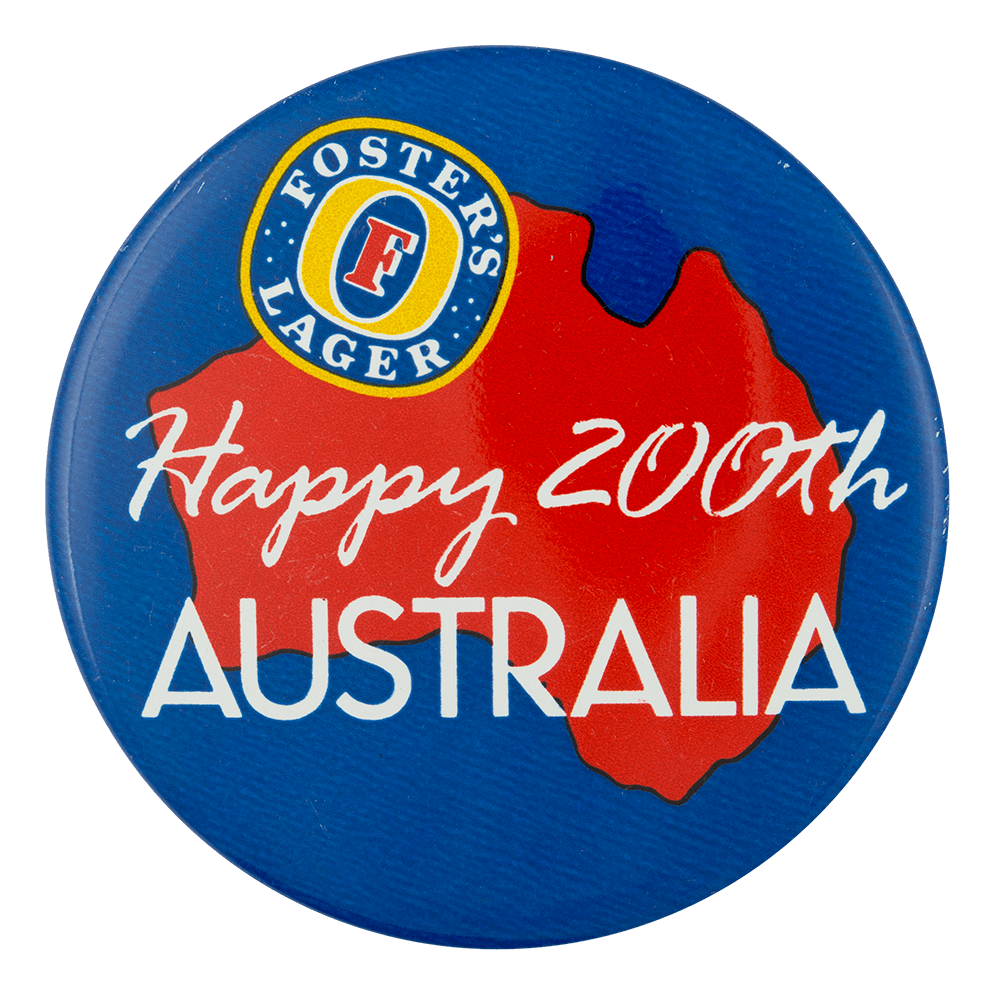
Text on Button FOSTER'S LAGER F Happy 200th AUSTRALIA
Image Description

White text over a red outline of Australia in the center. Foster's Lager logo at the top of the button on a blue background. 

Back Style
The Shape
The Size
Additional Information

Foster's Lager is a standard American Lager created by William and Ralph Foster in 1887. Despite it being an American style it was created in Australia, and today is sold internationally to over 150 countries making it the the #1 selling Australian beer. In 1972 Foster's signature 25.4 Oz cans were imported into the United States. Looking very similar to motor oil cans the beer quickly became known as "Foster's Oil Cans". 

Today Foster's produces two beers - Foster's Lager (5% ABV) and Foster's Premium Ale (5.5% ABV). The "Oil Can" size is still available, as are 12 oz bottles and 12 oz cans. In the United States there is a production facility in Fort Worth, Texas owned by Oil Can Breweries.

Catalog ID BE0080

Dixie Beer

Category
Additional Images
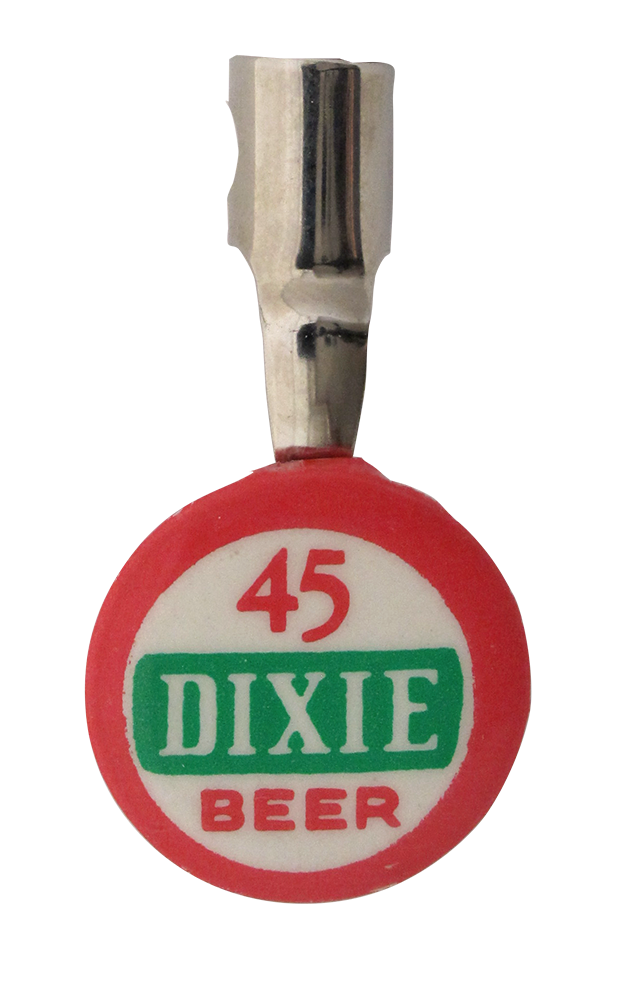
Text on Button 45 DIXIE BEER
Image Description

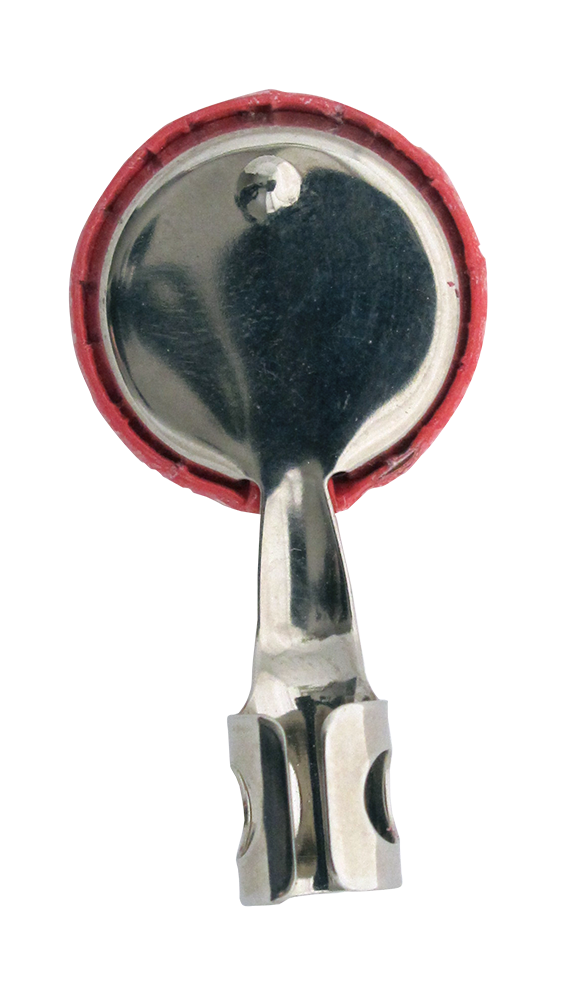
A white background with red text  and a green rectangle with white text. The outer edge has a red border. The top of the button has a pencil clip.

Back Style
The Shape
The Size
Additional Information

Dixie Brewing was founded by Valentine Merz in 1907 in the city of New Orleans, Louisiana. While most companies shut down through Prohibition, Dixie became the "Dixie Beverage Company" and kept sales of "alternative" drinks high. In the 1980s when many beer companies began to struggle and get absorbed into larger companies, Dixie filled for bankruptcy  but then reorganized in 1992. With the reorganization came new lines of beer like Blackened Voodoo (dark ale) and Crimson Voodoo (red ale).

The company was forced to stop New Orleans production in 2005 when the levees failed as a result of Hurricane Katrina. After the area was de-watered the brewery sustained heavy looting damage and was no longer functional. For years the owners of Dixie have been attempting to return from Wisconsin (current headquarters) to their New Orleans home. Like many international beers such as Guinness, Dixie is currently contract-brewed and commands a strong regional following.

Dixie Beer for some time marketed as Dixie "45" beer. The name supposedly comes from a bar next to the brewery that would serve Dixie. A few guys joked about how Nick's Bar never gets robbed to which the bartender pulled out a 45 and claimed "this is why!" "nobody messes with a 45!" The regulars began calling the bartender "45", and would ask him to "pour another Dixie 45". The name stuck and became apart of the company, but once Colt 45 released their product the "45" was pulled from Dixie.

Catalog ID BE0079

Budweiser

Category
Additional Images
Sub Categories
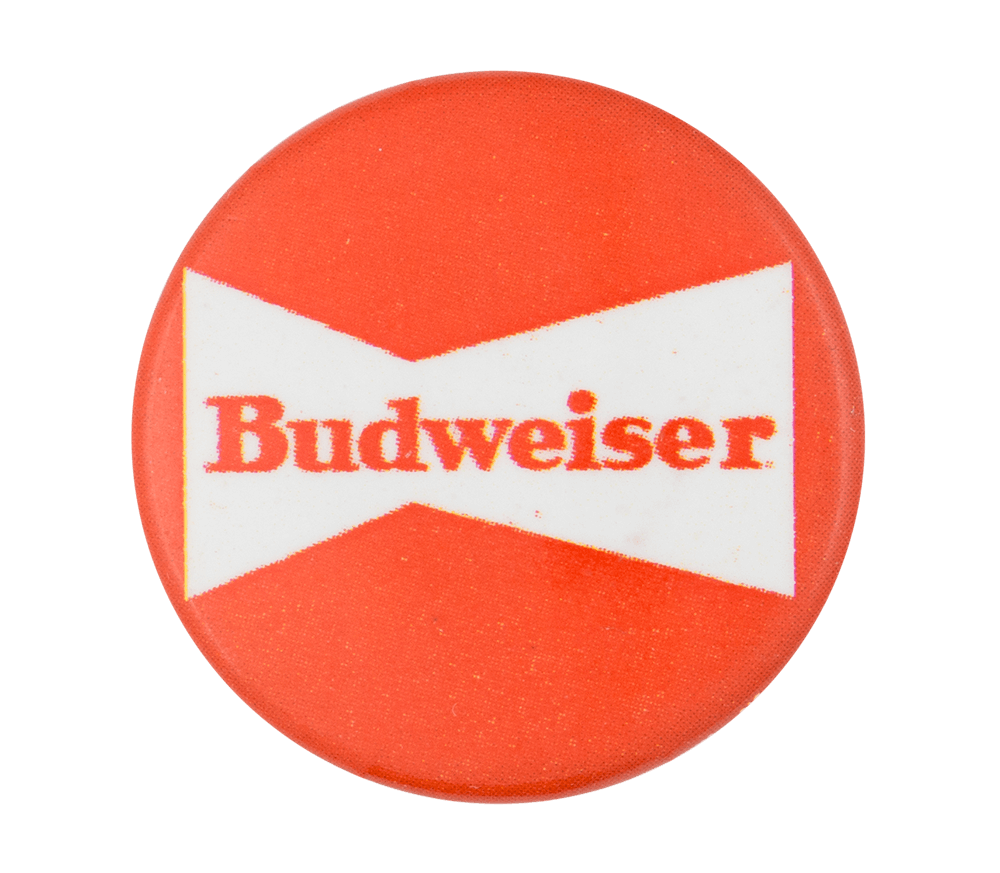
Text on Button Budweiser
Image Description

Red text in  a white box with sharp angles. The white box sits on a red background. 

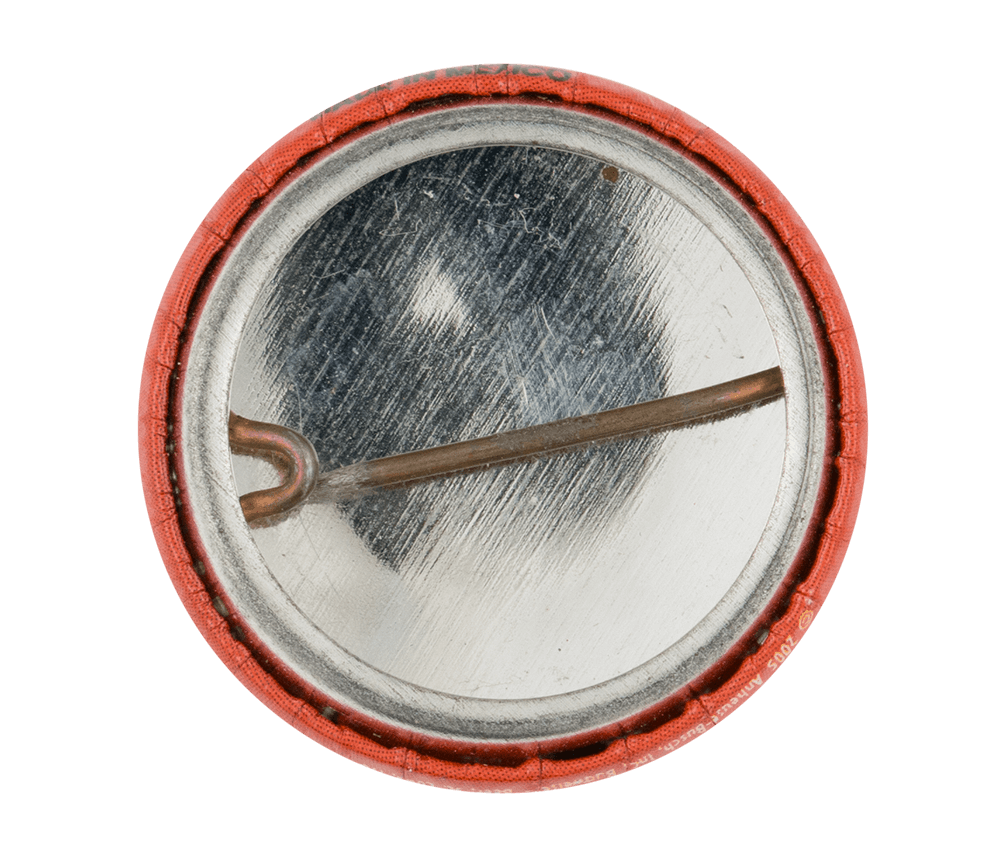
Curl Text ©2005 Anheuser-Busch, Inc. Budweiser® Beer, St. Louis,MO.Rio MADE IN MEXICO
Back Style
The Shape
The Size
Year / Decade Made
Additional Information

The Anheuser-Busch Brewing Company created Budweiser beer in 1876 in St. Louis, Missouri. The company was founded by Adolphus Busch and his father-in-law Eberhard Anheuser. Adolphus had traveled throughout Europe in the late nineteenth century to observe and study the latest in brewing techniques prior to the Budweiser creation. Although many Americans preferred darker beers, Anheuser-Busch decided to make a light lager beer with the new technique of pasteurization, which improved shelf life. The beer was a “Bohemian-Style” beer. In other words, the brewing technique came from the area of the Czech Republic. The company had difficulties throughout the Depression and World War II, but quickly entered into an era of growth and prosperity in the 1950s. 

Catalog ID BE0085

Archie Bunker Beer Candidate

Category
Additional Images
Sub Categories
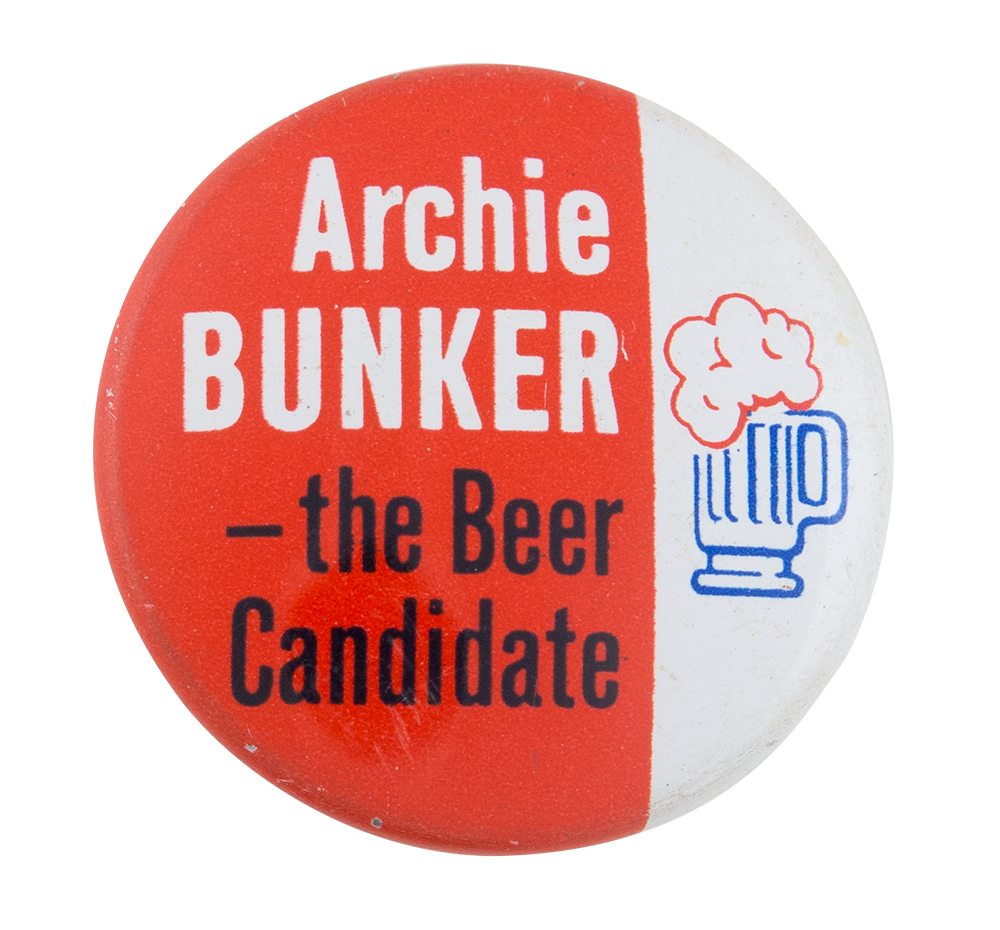
Text on Button Archie BUNKER - the Beer Candidate
Image Description

White and black text on a red background on the left and a blue and red illustration of a filled beer mug on a white background on the right. 

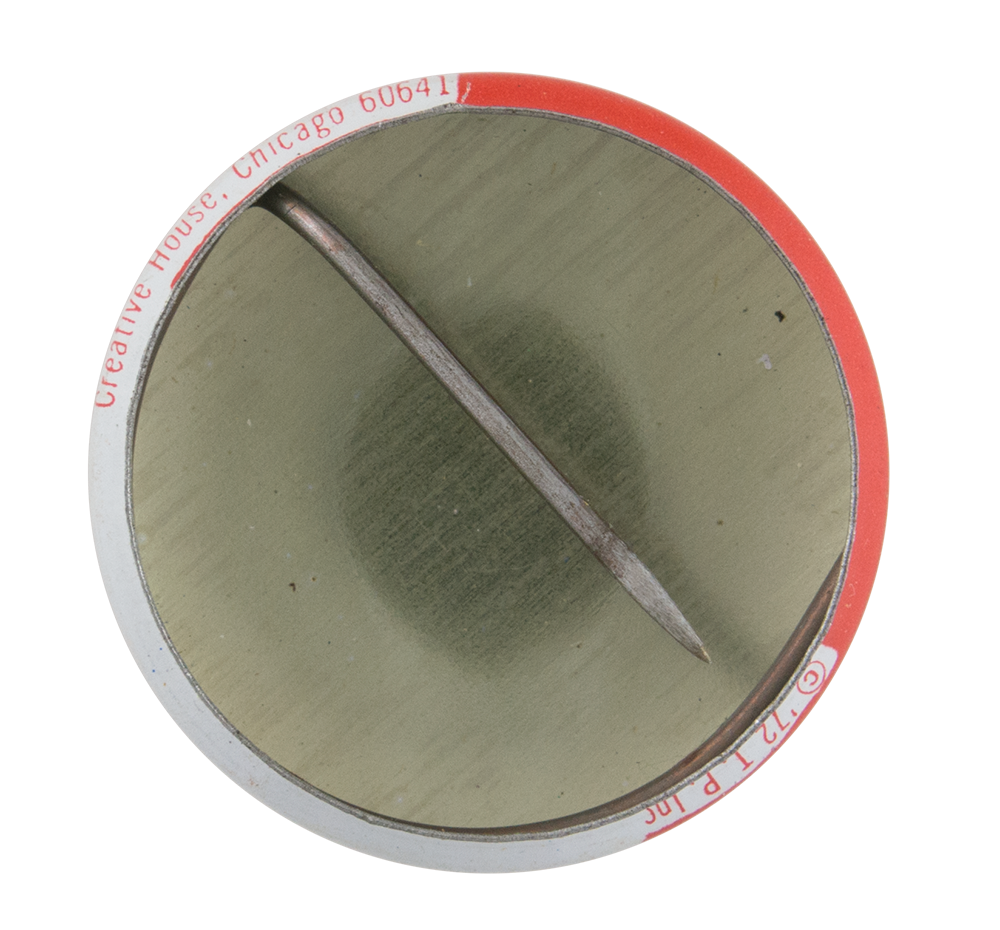
Curl Text copyright 1972 T. P. Inc. Creative House , Chicago 60641
Back Style
The Shape
The Size
Year / Decade Made
The Manufacturer
Additional Information

Archie Bunker was a fictional character in the American sitcom All in the Family, which aired from 1971 to 1979. Archie Bunker was an iconic character who was famous for his gruffness, conservative point-of-view, being a blue-collar worker, World War II veteran, and have a reactionary attitude.  Archie Bunker was such a well-known character that society started referring to the “Archie Bunker vote” as the voters that fell into the categories of urban, white, working-class men. In the 1972 presidential election there was a parody campaign that occurred producing campaign buttons, bumper stickers, and T-shirts, all in support of “Archie Bunker for President.” 

Catalog ID EN0063

Multivision Products

Category
Additional Images
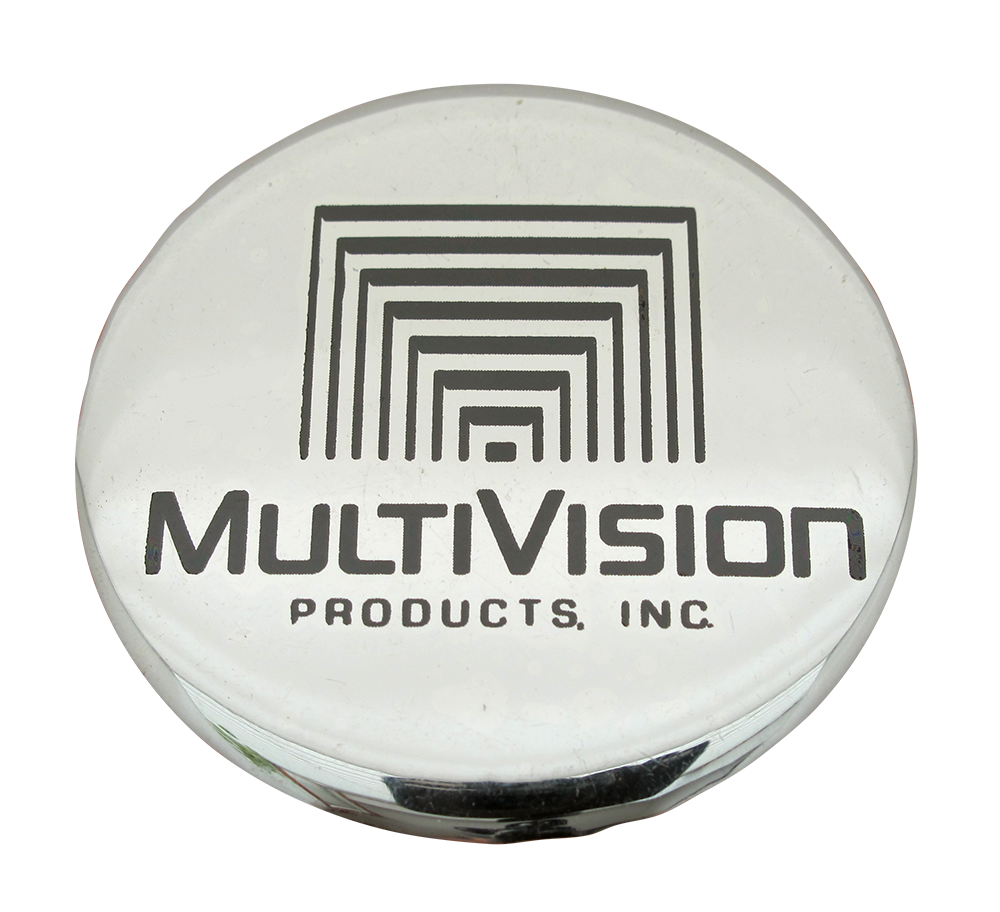
Text on Button MULTIVISION PRODUCTS INC.
Image Description

Black squares within squares logo with black text on a white background.

Back Style
The Shape
The Size
Year / Decade Made
Additional Information

MultiVision was one of the earliest implementations of picture-in-picture television available for purchase in the 1980s, developed by engineer George Schnurle III and sold by Multivision Products Inc. in California. The original MultiVision model was a box that required a VCR to operate and used its own tuner and the VCR to display two television channels; the television antenna was plugged into the MultiVision unit, which was then plugged into the television receiver's antenna input. The program selected on the MultiVision tuner was displayed in a small window inserted into the main TV picture at a position selected by the user.

Catalog ID AD0403