Roller Skate Shake

Category
Additional Images
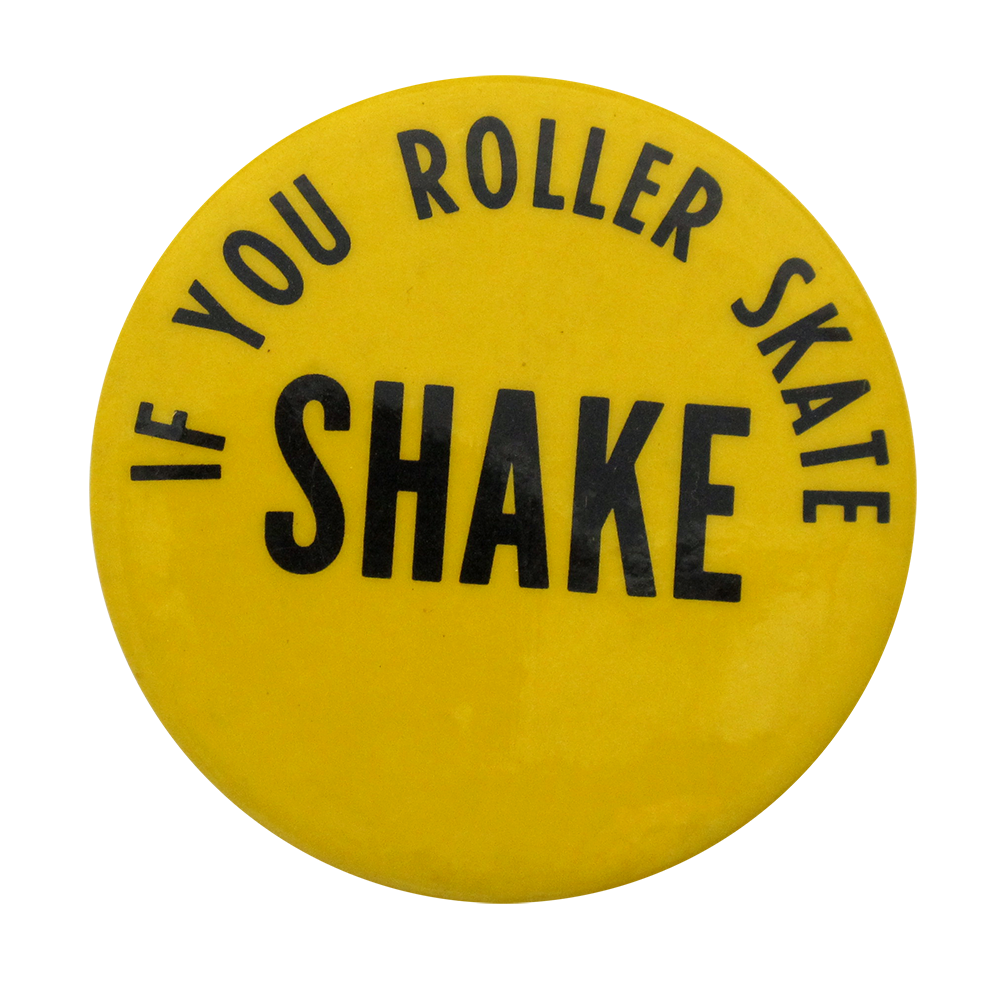
Text on Button IF YOU ROLLER SKATE SHAKE
Image Description

Black text in a circular formation above a larger piece of black text on a yellow background. 

Back Style
The Shape
The Size
Additional Information

Have info on this button? Contact us here.

Catalog ID IB0341

I Ride The Bus

Category
Additional Images
Sub Categories
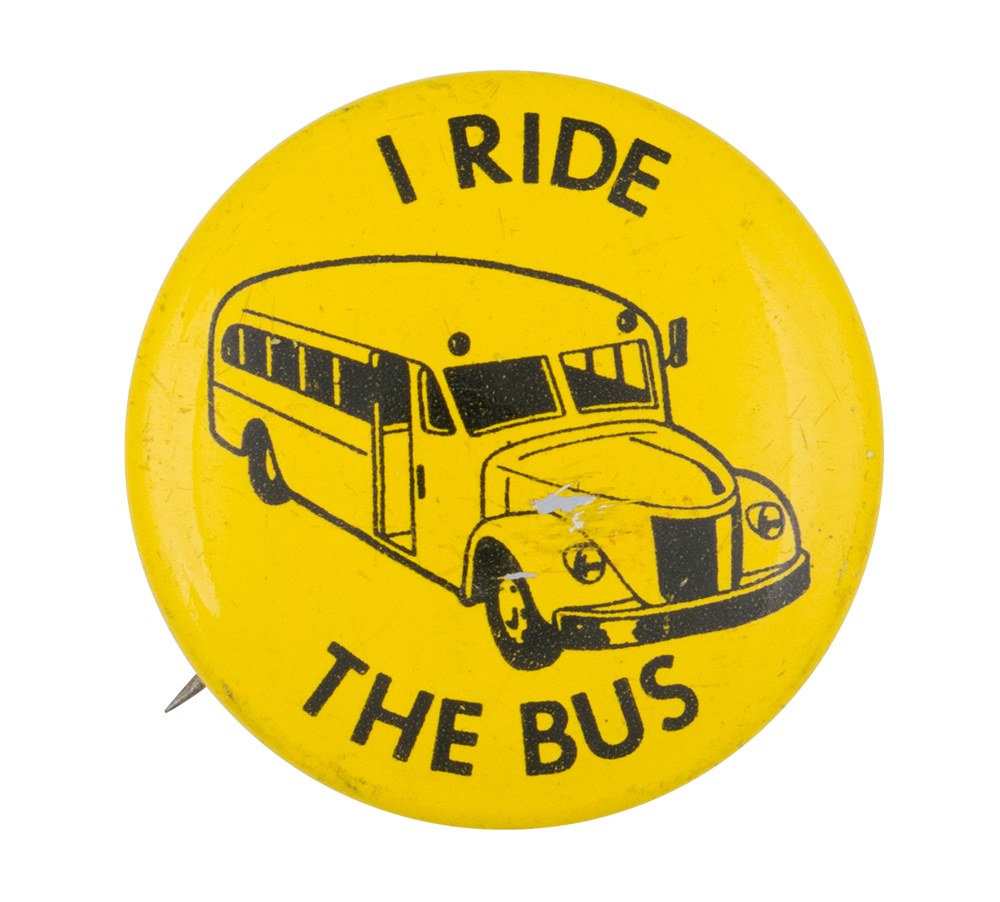
Text on Button I RIDE THE BUS
Image Description

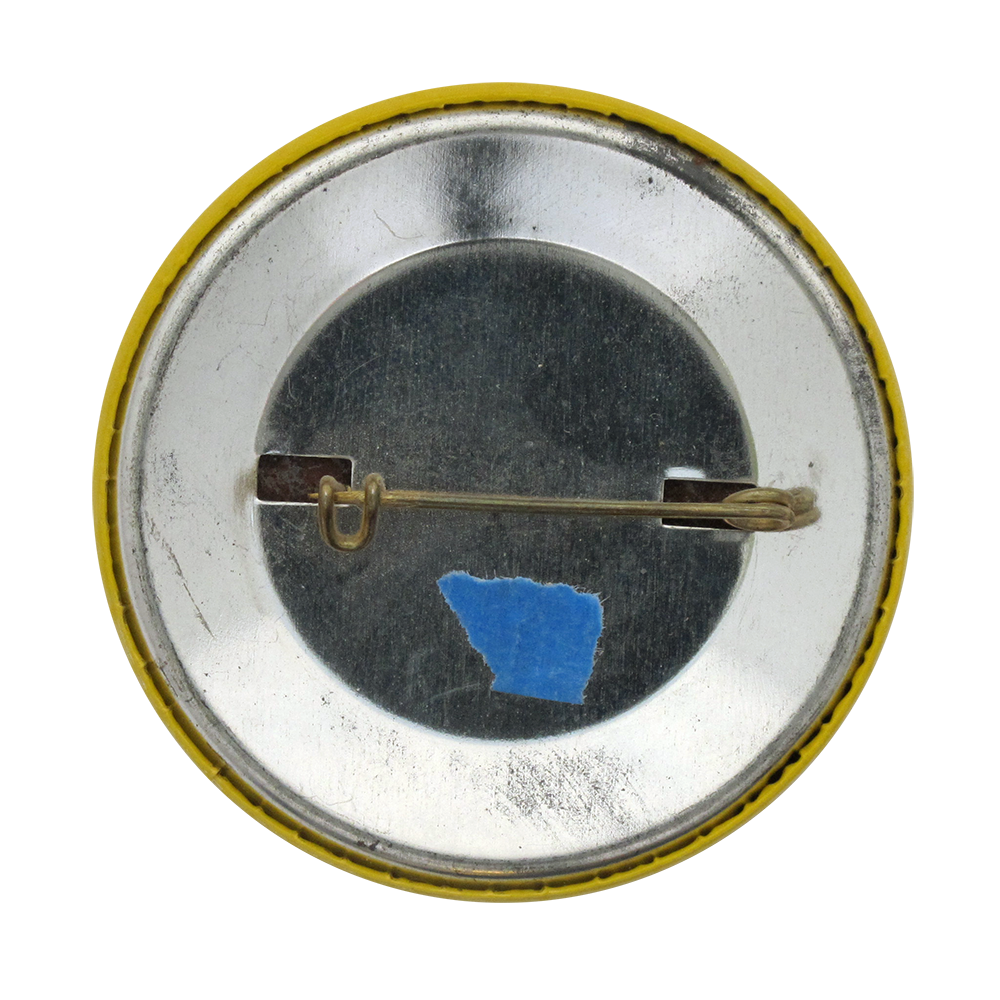
An illustration of a yellow school bus with black text above and below it on a yellow background. 

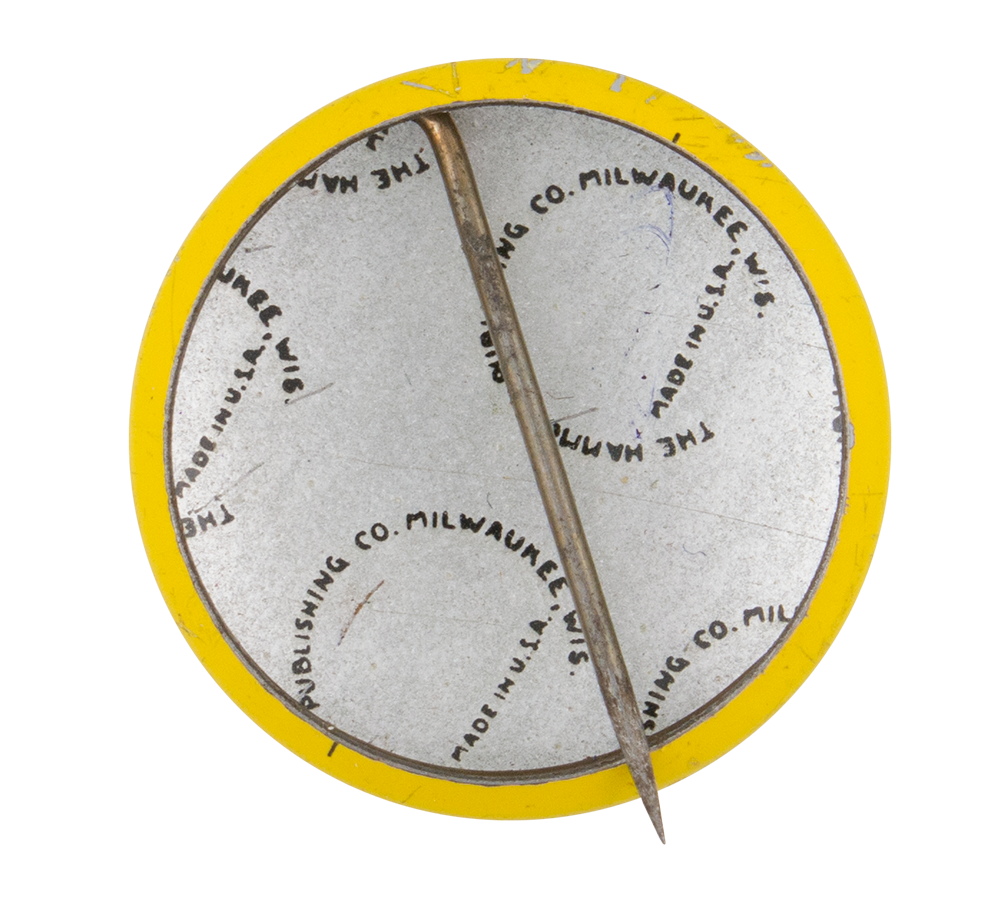
Back Paper / Back Info

THE HAMMOND PUBLISHING CO. MILWAUKEE, WIS. 

Back Style
The Shape
The Size
The Manufacturer
Additional Information

The traditional school bus was invented in the early twentieth century. Previously, children were transported to school in repurposed farm equipment and horse-drawn wagons.  By 1919, buses were being used in all 48 states, but there was no standard design. In 1939, transportation officials met with Dupont and Pittsburgh paints to formulate the classic yellow specifically used on school buses. Yellow buses were easier to see and the black text was legible in low lighting.  The bus design shown here was the style during the 1940s. In addition to the bright color, the current safety standard requires exterior warning lights and signs.

Sources

Greene, B. (2019, Sept. 4).  The History of how school buses became yellow. Smithsonian Magazine. Retrieved from https://www.smithsonianmag.com/history/history-how-school-buses-became-…

Catalog ID CL0417

Quit Your Kiddin

Category
Additional Images
Sub Categories
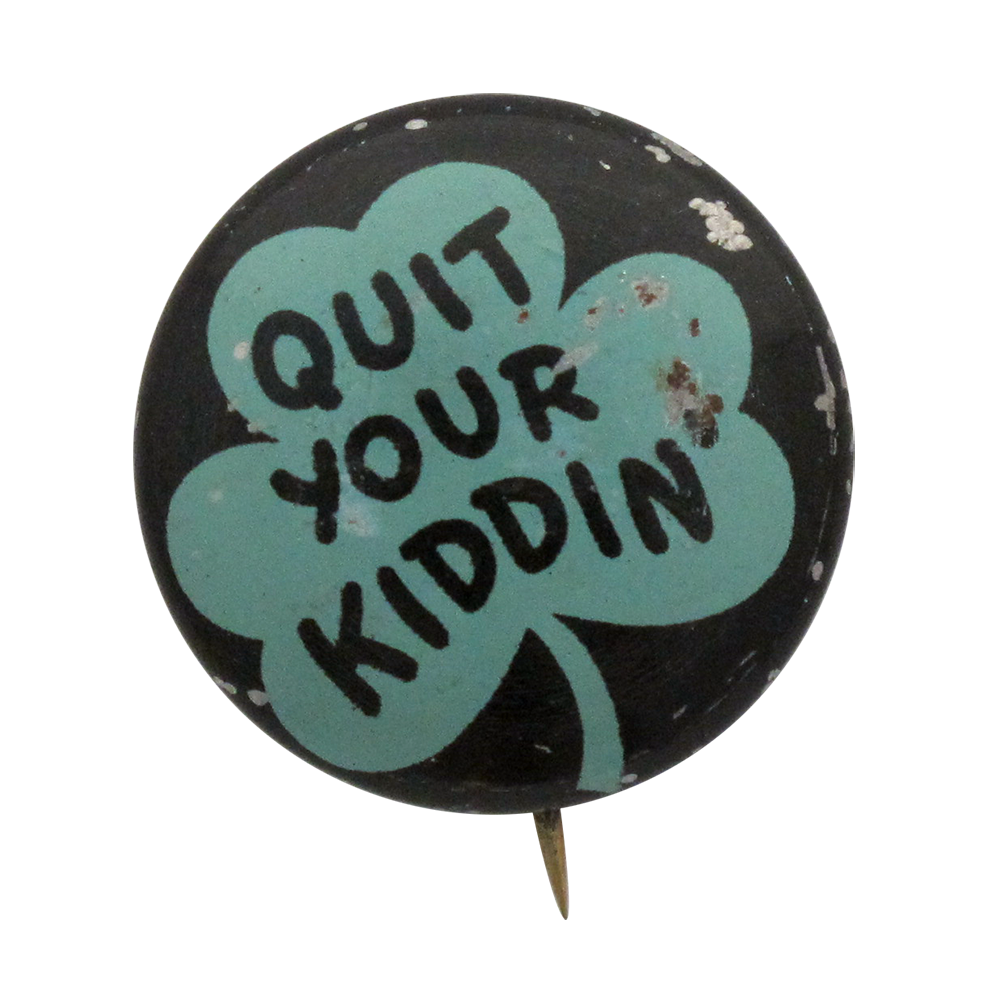
Text on Button QUIT YOUR KIDDIN'
Image Description

Black text inside a four leaf clover on a black background. 

Back Style
The Shape
The Size
Year / Decade Made
Additional Information

Penny King gumball machines are antiques that were small and designed to sit on a countertop. They typically had a body made from cast aluminum and a globe made from glass. For just one cent, they dispensed pin-back buttons as prizes during the mid-twentieth century. Buttons that read “Quit Your Kiddin’,” “Hot Dogs,” and “Let’s Get Acquainted” were just some that could be collected from these machines.

Sources

Poshmark. (2020, July). 50s gumball prize pinbacks. https://poshmark.com/listing/50s-Gumball-Prize-Pinbacks-59148eec36d594a…

Small Vintage Vending. (n.d.). Penny King. http://www.smallvintagevending.com/third/penny_king.html

Catalog ID IB0351

Open the Door Richard

Category
Additional Images
Sub Categories
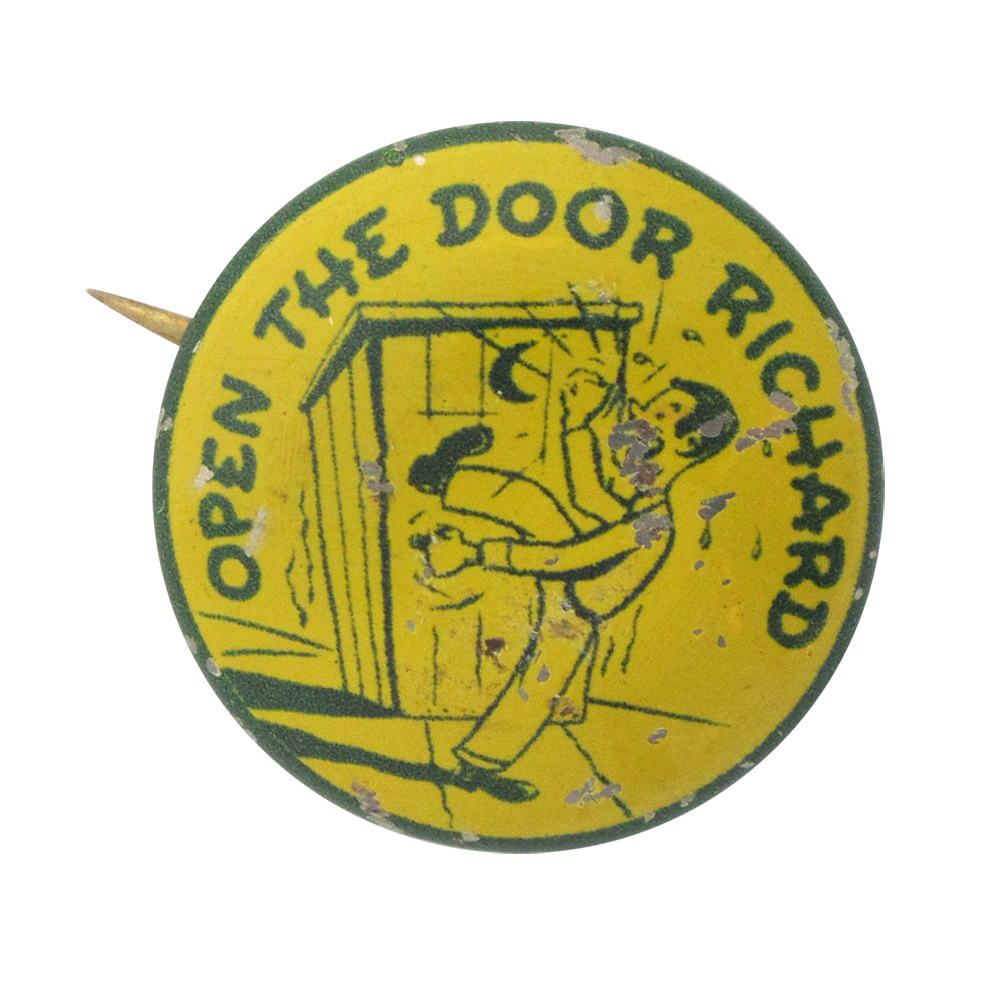
Text on Button OPEN THE DOOR RICHARD
Image Description

A man knocking on the door to an outhouse begging the person inside to open up. The text is green colored with a yellow background and a green outer edge. 

Back Style
The Shape
The Size
Year / Decade Made
Additional Information

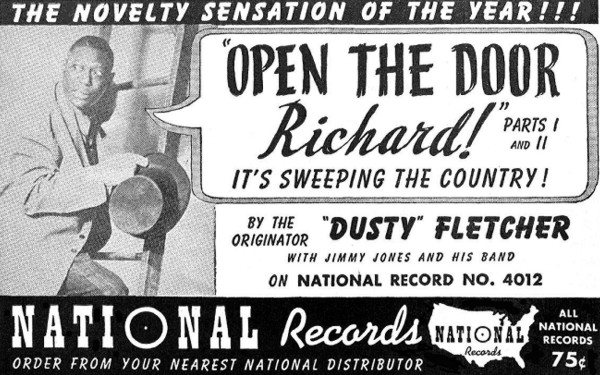
Dusty Fletcher first performed “Open the Door Richard” as a vaudeville act at theaters like the Apollo in New York. The skit involved Fletcher “drunk,” dressed in rags and attempting to climb a ladder. He would continually fall off the ladder and perform comic monologues in between his attempts. The musical version of this skit was created by Jack McVea and his “honking” saxophone. McVea and his band stumble home “drunk” and try to get Richard the “sober” band mate with the key, to let them in. This song was recorded in 1946 and reached the Billboard bestseller chart in early 1947.

Many artists covered the song after McVea, including Count Basie, The Three Flames, and Louis Jordan. The phrase “Open the Door Richard” was also adopted by the Civil Rights Movement and appeared in routines by Jack Benny, among others. Jimmy Durante and Burl Ives also both recorded versions of the song. The phrase also appeared in a couple of Looney Tunes cartoons in the late 1940s. 

Catalog ID EN0233

An Offer You Can't Refuse

Category
Additional Images
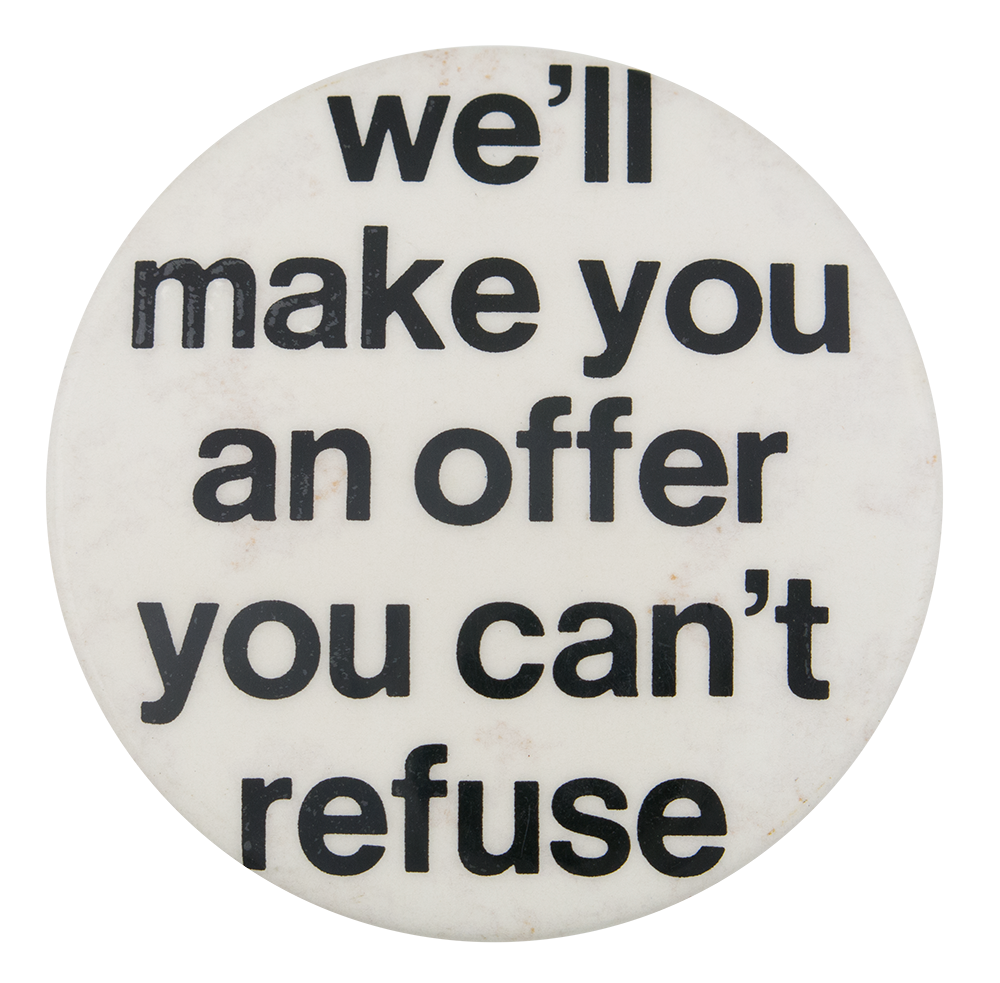
Text on Button We'll make you an offer you can't refuse
Image Description

Black text on a white background. 

Back Style
The Shape
The Size
Additional Information

The text on the button "We Will Make You An Offer You Can't Refuse" is a reference to the much-repeated line in the classic The Godfather trilogy, written by Mario Puzo.

The first occurrence of the line "I'll make him an offer he can't refuse" was in the scene when Johnny Fontane, a famous singer passing his prime, asked Don Vito Corleone, the Godfather, for help to secure him a role to boost his fading career. Don told Johnny not to worry about the head of the film studio and said: 

"I'll make him an offer he can't refuse."

Then in the most memorable scene of the movie, the studio head wakes up to find the bloody head of his racehorse in his bed, and Fontane is subsequently given the part. 

Catalog ID IB0370

Pink No

Category
Additional Images
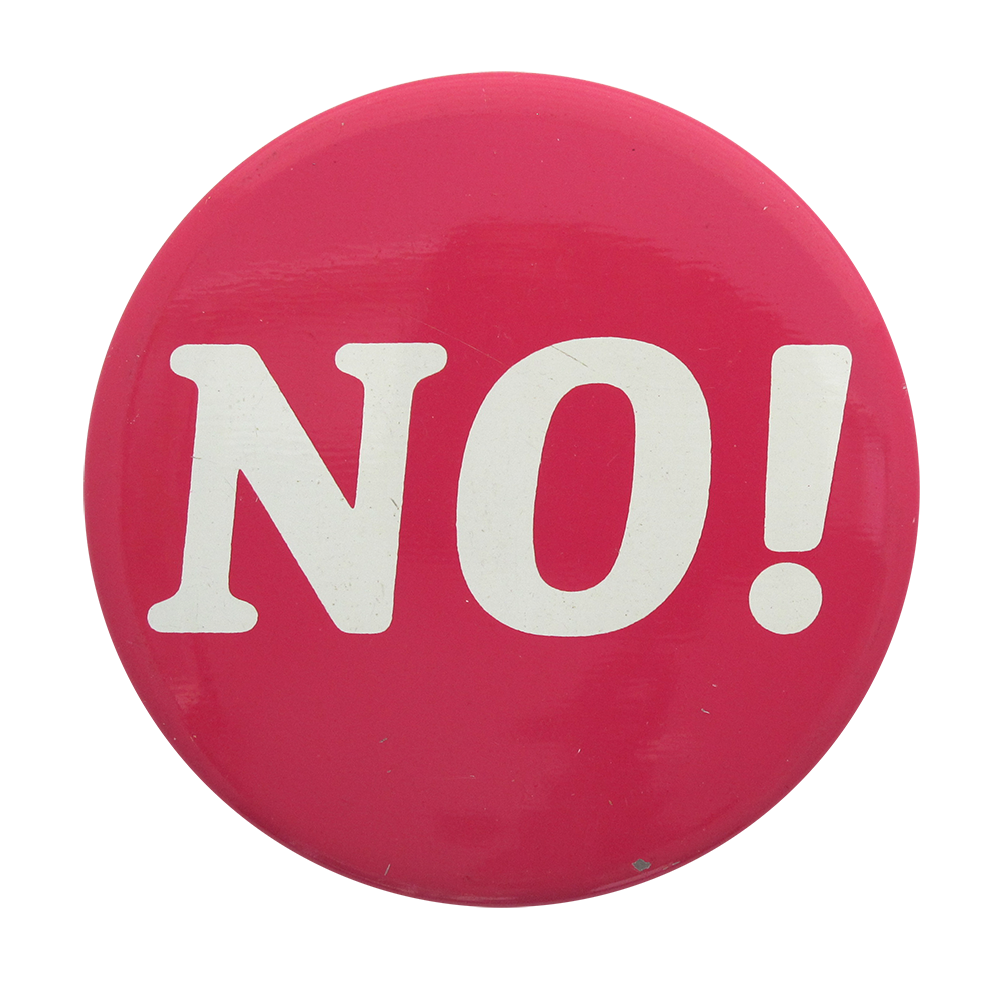
Text on Button NO!
Image Description

Large white text on a pink background. 

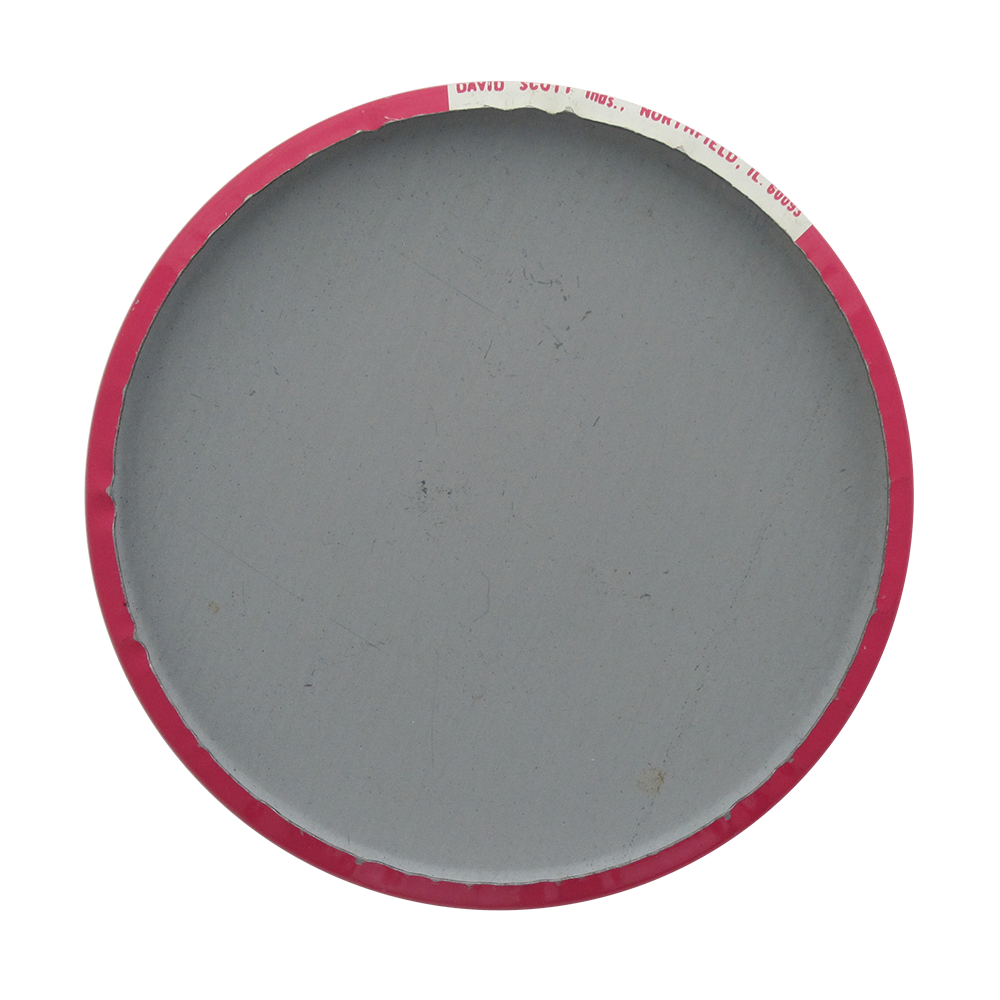
Curl Text DAVID SCOTT Inds. NORTHFIELD, IL. 60093
Back Style
The Shape
The Size
Additional Information

Have info on this button? Contact us here.

Catalog ID IB0385

Moon Goon

Category
Additional Images
Sub Categories
Text on Button I'M A MOON GOON
Image Description

Large red text on a white background. 

Back Style
The Shape
The Size
Year / Decade Made
Additional Information

Chuck Daugherty's biggest promotion for his Detroit-based nighttime radio show, All Night Satellite, came in the form of “Moon Goon” buttons distributed at Daugherty's DJ dances, which were collected by local teens who listened to the show and could be seen all around the city. The show was known for its outer space sounds and wacky jokes, and quickly became popular among younger listeners in the late 1950s. 

Sources

Chuck Daugherty's Adventures On the Airwaves. (2011). Retrieved August 26, 2015.

Catalog ID EN0209

Like Cool

Category
Additional Images
Sub Categories
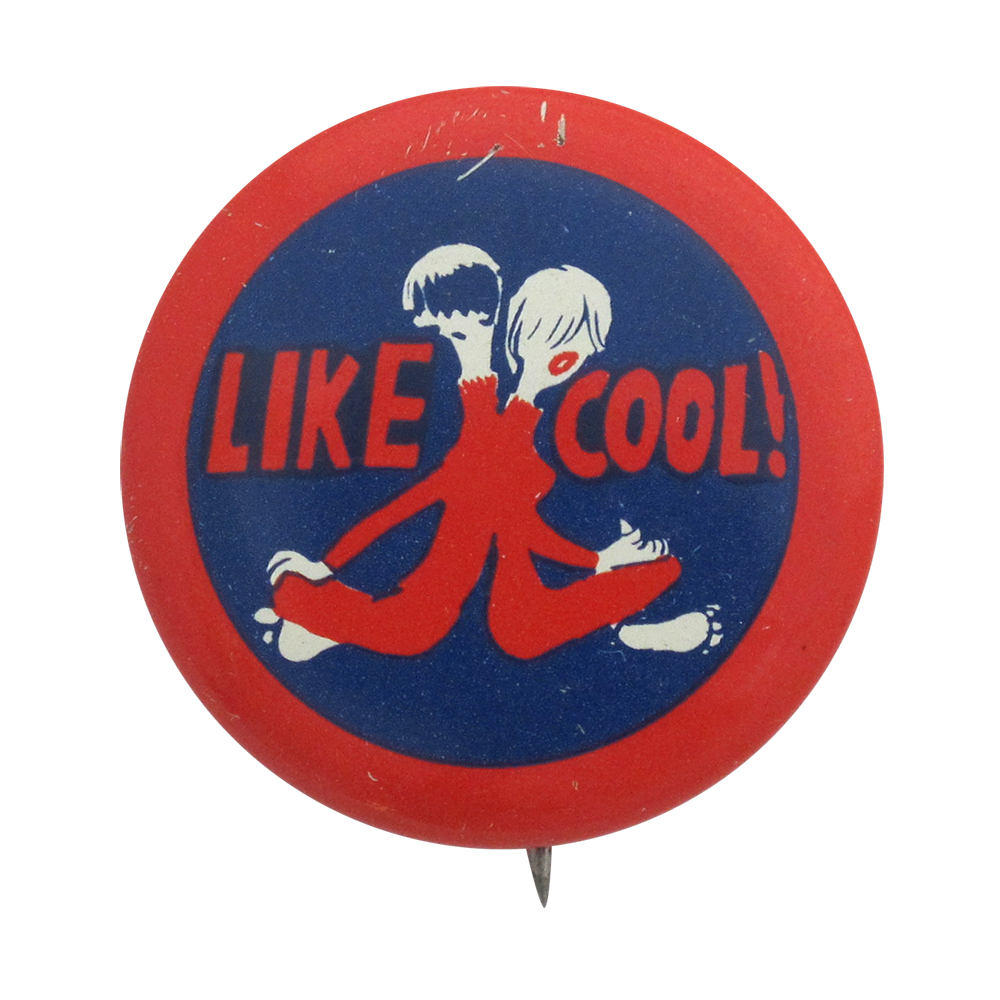
Text on Button LIKE COOL!
Image Description

A man and woman sitting back-to-back with red text on a blue and red background. 

Back Style
The Shape
The Size
Additional Information

The use of the word "cool" as we've come to know it came to be thanks to the jazz scene of the 1940s. This use is often credited to jazz saxophonist, Lester Young. It became a part of the mainstream around the 1950s as it gained popularity with American teenagers. 

Sources

Zimmer, B. (2010, May 28). Cool. The New York Times. https://www.nytimes.com/2010/05/30/magazine/30FOB-onlanguage-t.html

Catalog ID HU0153

Leftover Lover

Category
Additional Images
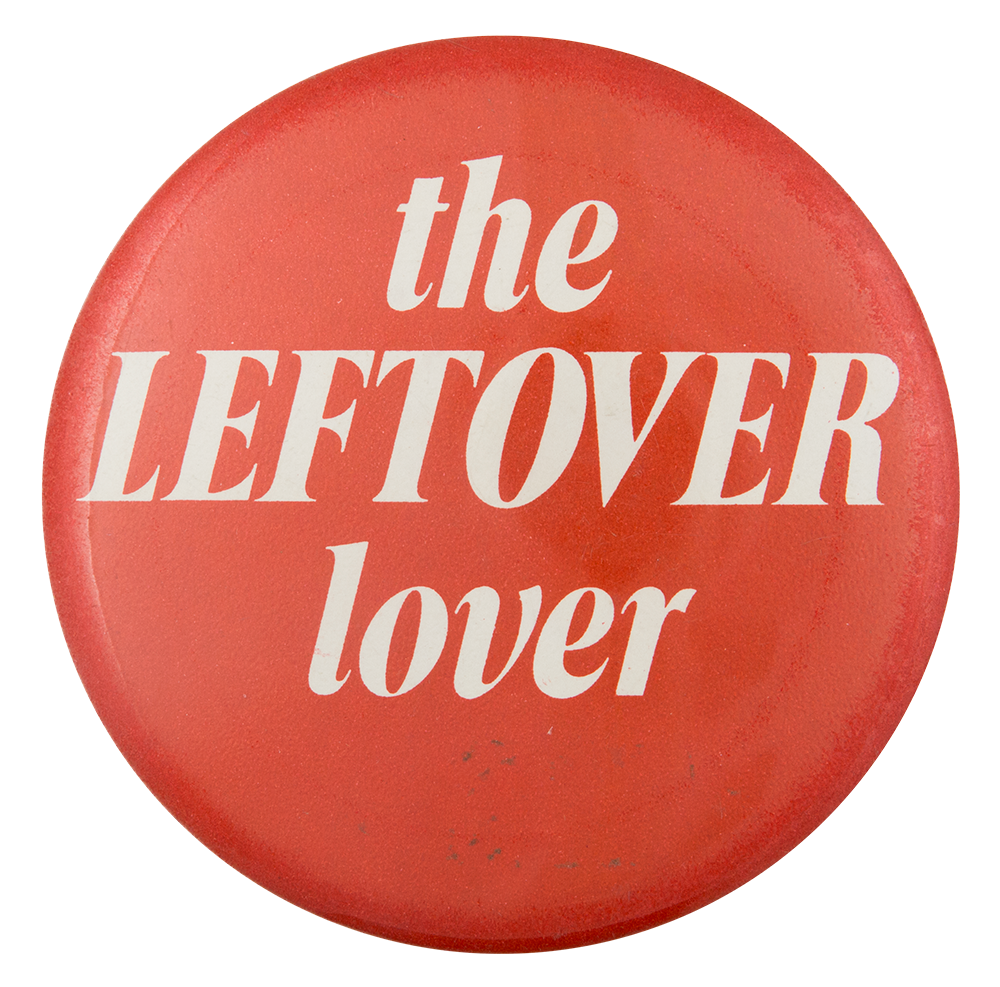
Text on Button the LEFTOVER lover
Image Description

Large white text on a red background. 

Back Style
The Shape
The Size
Additional Information

“Leftover lover” can mean different things depending on the context. In the context of food culture, the term “leftover” was first used in the early 20th century when refrigeration became more common in households, and referred to food that could be kept and consumed at a later time or date. One might enjoy leftover food because of how the flavors can be enhanced overnight due to chemical reactions that take place after cooking and may identify as a “leftover lover.”

In the context of dating culture, a “leftover lover” might be a single “older” person getting reacquainted with the dating landscape, if they even left it to begin with, and might also be referred to as a hopeless romantic. According to a study published by AARP, 50% of adults over 50 are single and actively dating. This can sometimes be regarded with a negative connotation, as in China when the term “leftover women” is used to describe unmarried women who are over 25 years old and therefore considered undesirable by society. Dating can be challenging for older people due to these judgments that people have about aging, as well as insecurities and additional responsibilities such as children. A lot of people find online dating to be an easier way to meet new people, and apps aimed specifically at singles over 50, such as OurTime and SilverSingles, are available as digital dating options.

Sources

Grimm, M. (2020, February 7). A woman’s guide to dating leftover lovers. Mimosas & Fries. https://mimosasandfries.com/a-womans-guide-to-dating-leftover-lovers/

Hood, A. L., & Bacher, R. (2023, February 08). 16 dating apps and websites for over-50 singles. AARP. https://www.aarp.org/home-family/personal-technology/info-2021/online-dating-apps.html

Lanquist, L. (2016, April 8). What it means to be a ‘leftover woman’ in China, shown in a moving video. SELF. https://www.self.com/story/what-it-means-to-be-a-leftover-woman-in-china-shown-in-a-moving-video

Petrzela, N. M. (2018, November 20). The curious history of leftovers. History. https://www.history.com/news/the-curious-history-of-leftovers

Catalog ID IB0366