Keep on Streaking

Category
Additional Images
Sub Categories
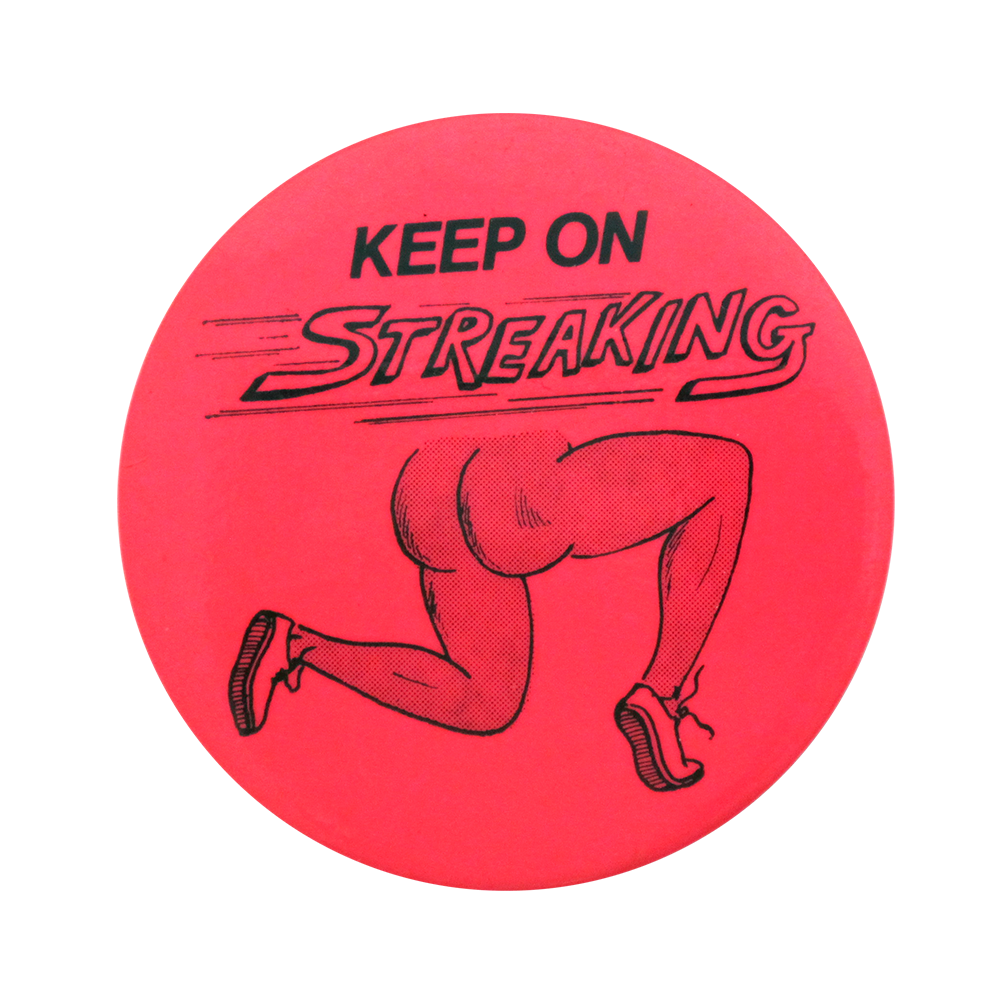
Text on Button KEEP ON STREAKING
Image Description

An illustration of a naked person's backside with black text on a hot pink background

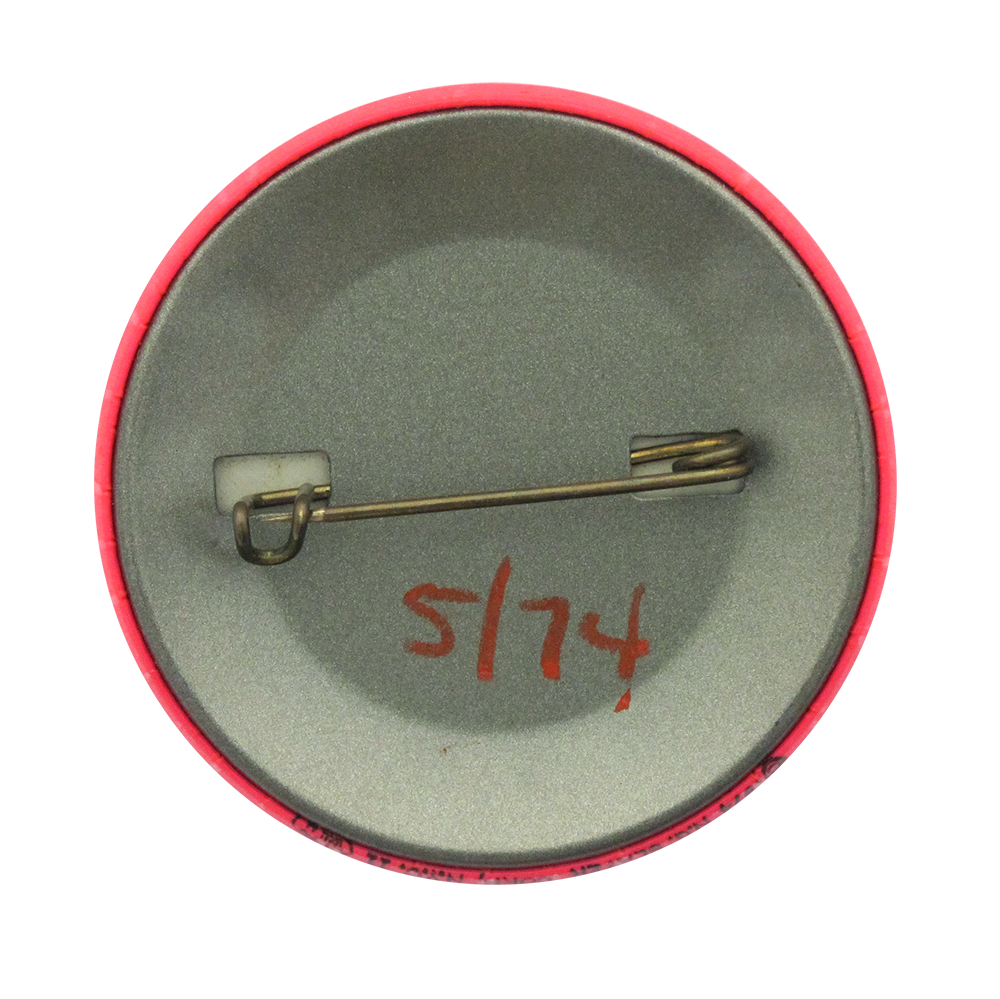
Curl Text ©1974 N.G. SLATER CORP., N.Y.C. 11
Back Style
The Shape
The Size
Year / Decade Made
The Manufacturer
Additional Information

Although the act of streaking has been popular since the mid-1960s, the term "streaking" was first used in 1973. The term was coined during a mass nude run at the University of Maryland. Streaking is different from nudism, because the streaker intends to be noticed by an audience. It is also different from "flashing" in that it is not intended to shock the victim. Perhaps the most widely seen streaker in history was 34-year-old Robert Opel, who streaked across the stage flashing the peace sign on national television during the 46th Academy Awards in 1974. The high point of streaking's pop culture significance was in 1974, when thousands of streaks took place around the world. A wide range of novelty products were produced to cash in on the fad, from buttons, patches, t-shirts, etc. Ray Stevens had a novelty hit called "The Streak" and Randy Newman even had a song about streaking called "The Naked Man."

Read more about the History of Streaking Buttons on the Busy Beaver blog.​

Catalog ID IB0262

I am a Loser

Category
Additional Images
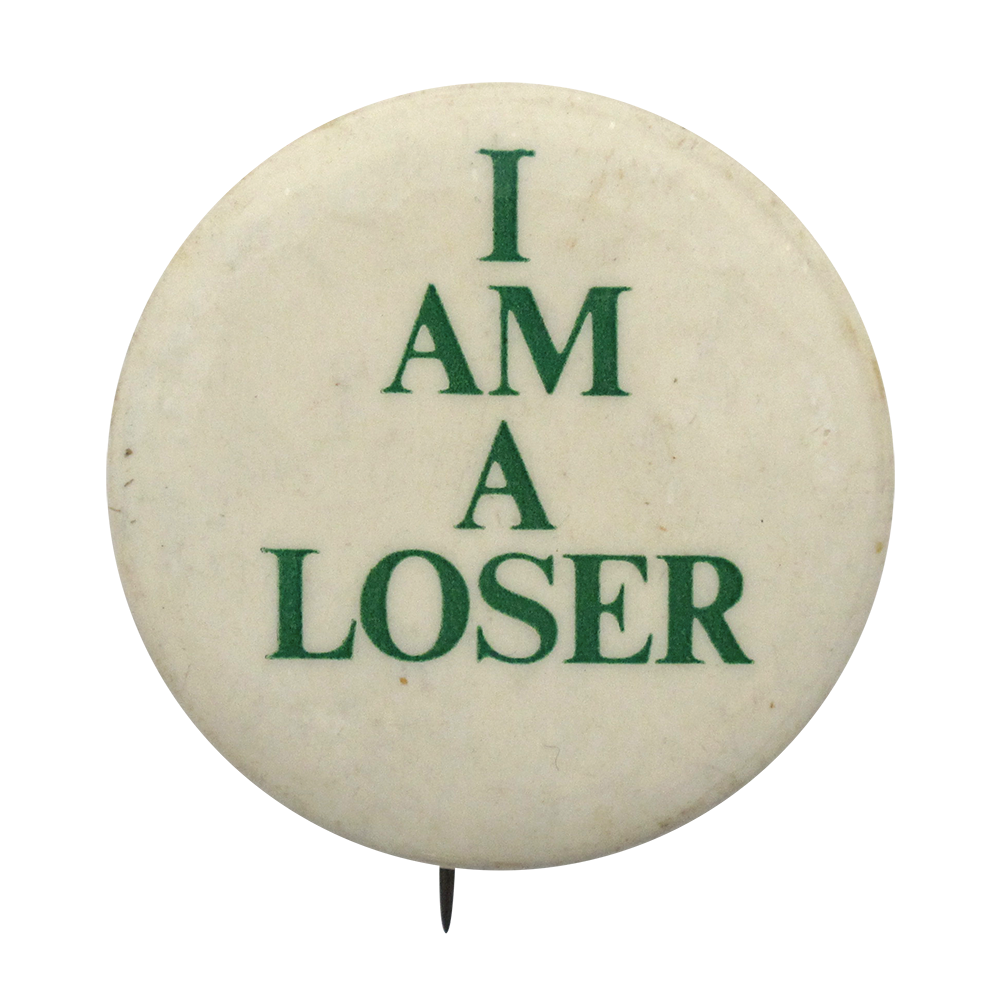
Text on Button I AM A LOSER
Image Description

Green Text on a white background.

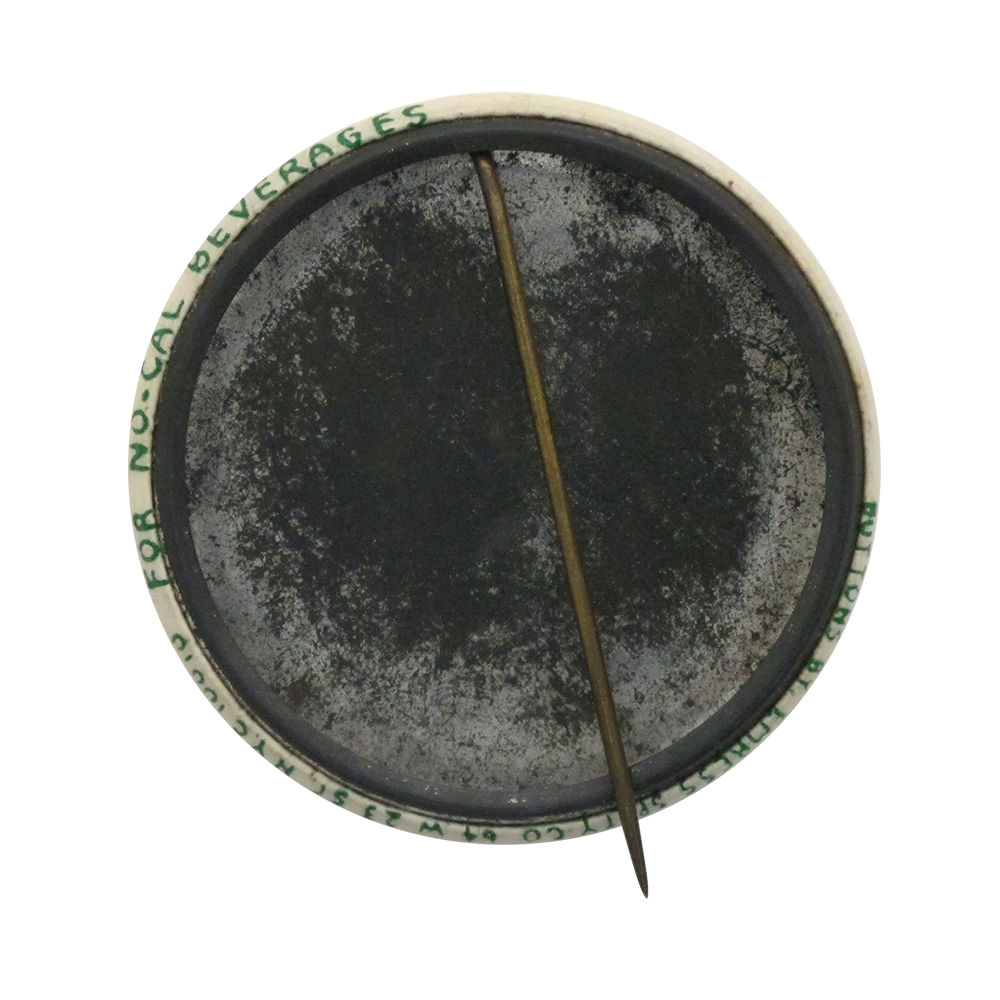
Curl Text BUTTONS BY EMRESS SPITY CO 64 W 23 SR NYC 10010 FOR NO-CAL BEVERAGES
Back Style
The Shape
The Size
Additional Information

Have info on this button? Contact us here.

Catalog ID IB0213

Tie the Bull

Category
Additional Images
Sub Categories
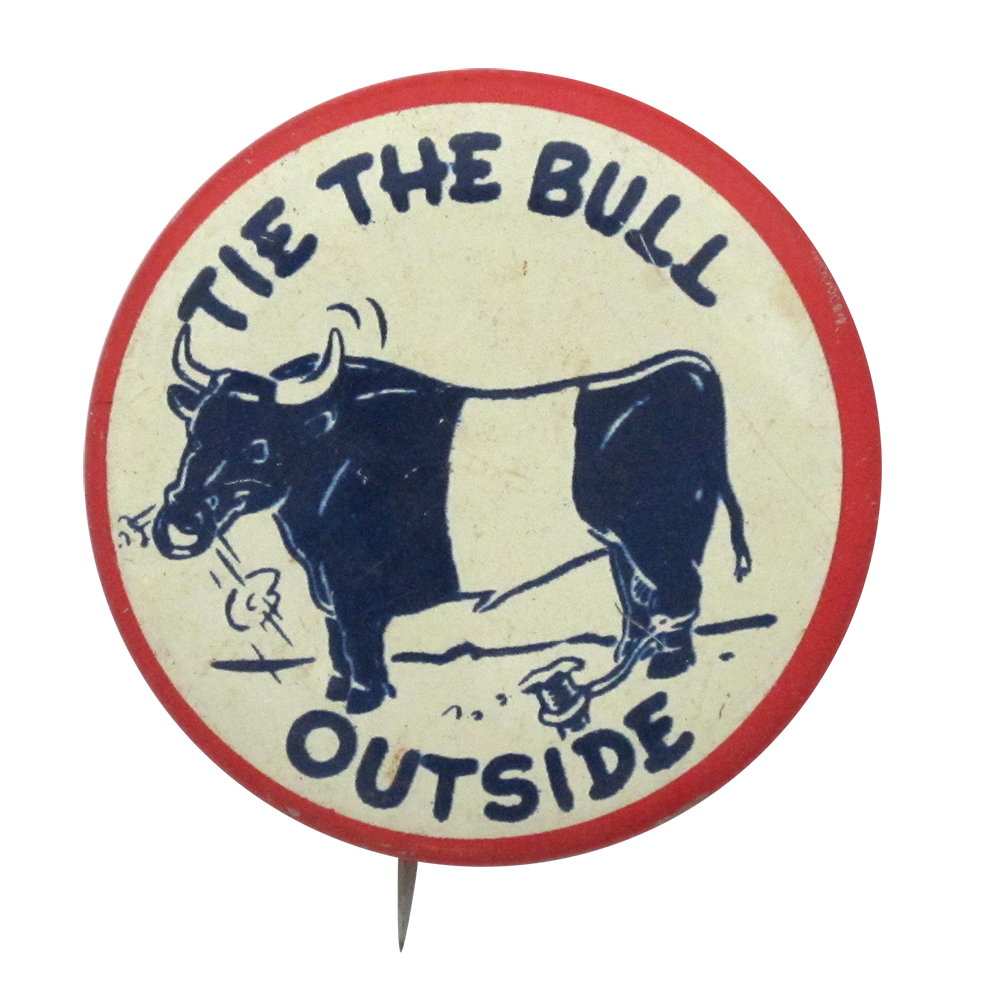
Text on Button TIE THE BULL OUTSIDE
Image Description

An illustration of a bull tied to a stake in the ground with blue text and a red border on a white background.

Back Style
The Shape
The Size
Year / Decade Made
Additional Information

The phrase "tie the bull outside" is a slang phrase usually meaning "I do not believe you". This button is likely a parody referencing a cartoonish bull paired with Teddy Roosevelt's Bull Moose political party of the early twentieth century. The button was created by cartoonist Bud Fisher within the years following the 1912 presidential election. These buttons were likely not worn during the presidential campaign by the opponents of Roosevelt, but instead were worn in a more joking manner afterward. Fisher created multiple buttons using this phrase along with some of the "I'm the guy" buttons found in Hassan Cigarette packages.

Catalog ID IB0216

Warning Soft Shoulders

Category
Additional Images
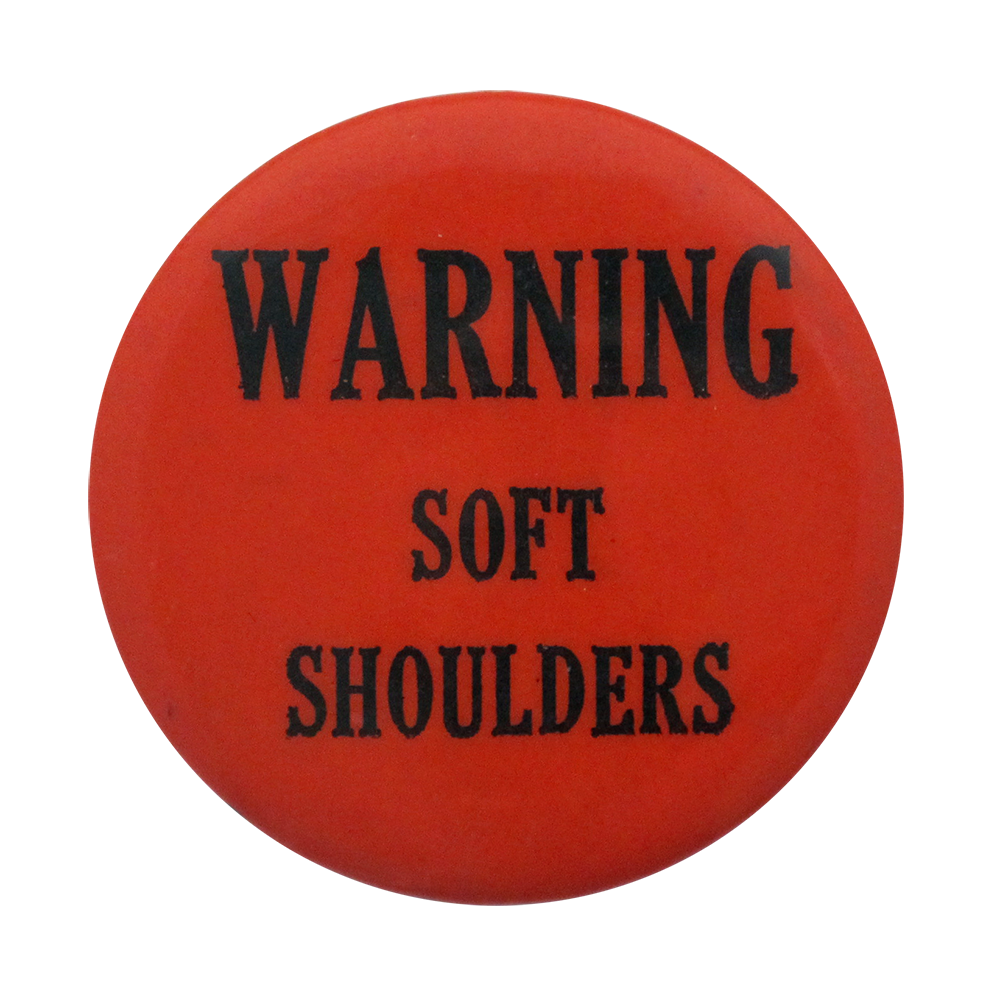
Text on Button WARNING SOFT SHOULDERS
Image Description

Large black text in a stacked formation on a red background. 

Curl Text © Vagabond 2180 West' Carrollton. Ohio USA
Back Style
The Shape
The Size
Additional Information

Have info on this button? Contact us here.

Catalog ID IB0350

Maid in Germany

Category
Additional Images
Text on Button MAID IN GERMANY
Image Description

Large white text in a stacked formation on a black background. 

Back Style
The Shape
The Size
Additional Information

Have info on this button? Contact us here.

Catalog ID IB0354

I Tried It

Category
Additional Images
Sub Categories
Text on Button i tried it i luv it!
Image Description

An illustration of a girl with white text on a red and white background.

Curl Text N.G. Slater Corp. N.Y.C. 11
Back Style
The Shape
The Size
The Manufacturer
Additional Information

The phrase "I tried it I luv it" is possibly a cultural response or a take off of the "Try it, you'll like it" tagline in a 1971 Alka-Seltzer Neutralizer commercial. The ad was created by the Wells, Rich, Greene advertising agency and was elected to the Clio Awards Classic Hall of Fame.

Sources

Kovalchik, Kara. (N.A.). 11 Advertising Slogans That Became Catch-Phrases. Mental Floss. Retrieved from http://mentalfloss.com/article/56711/11-advertising-slogans-became-catc…

Catalog ID IB0340

When the Going Gets Weird

Category
Additional Images
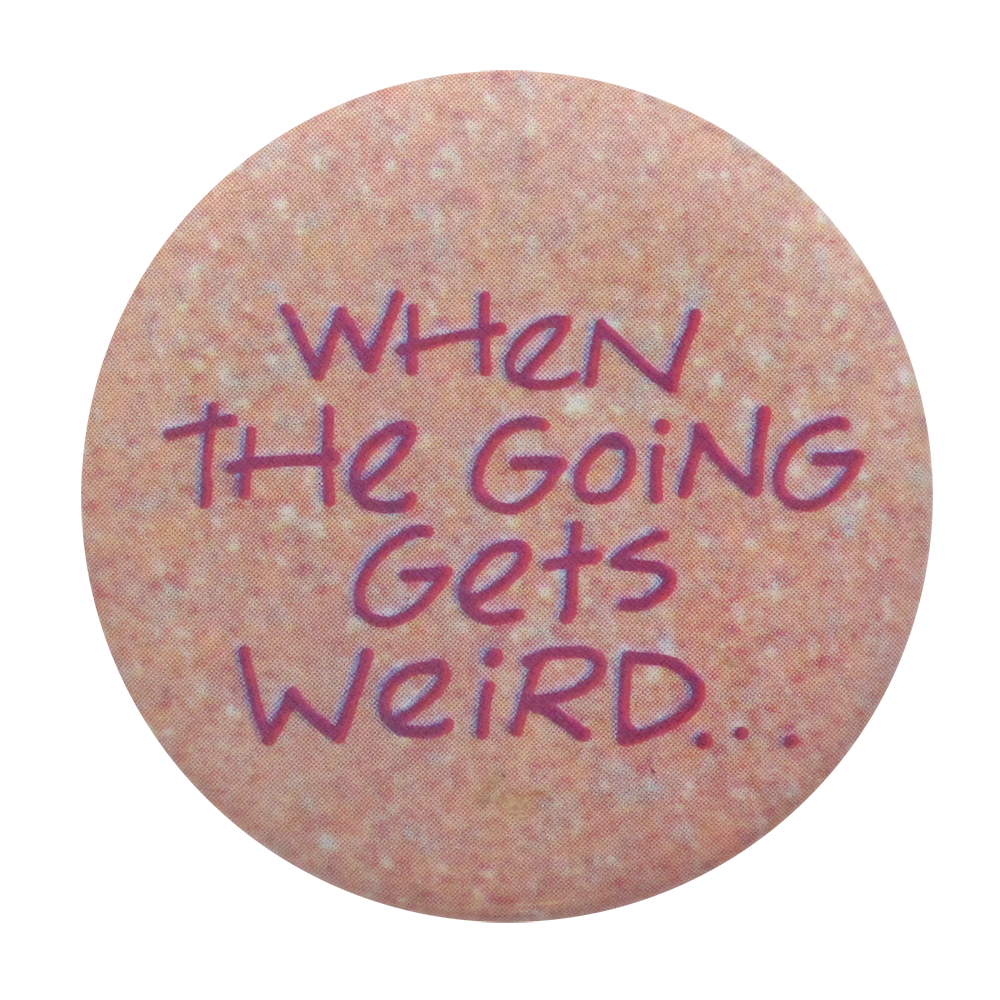
Text on Button WHeN THe GoiNG Gets Weird...
Image Description

Large violet text on a pink background. 

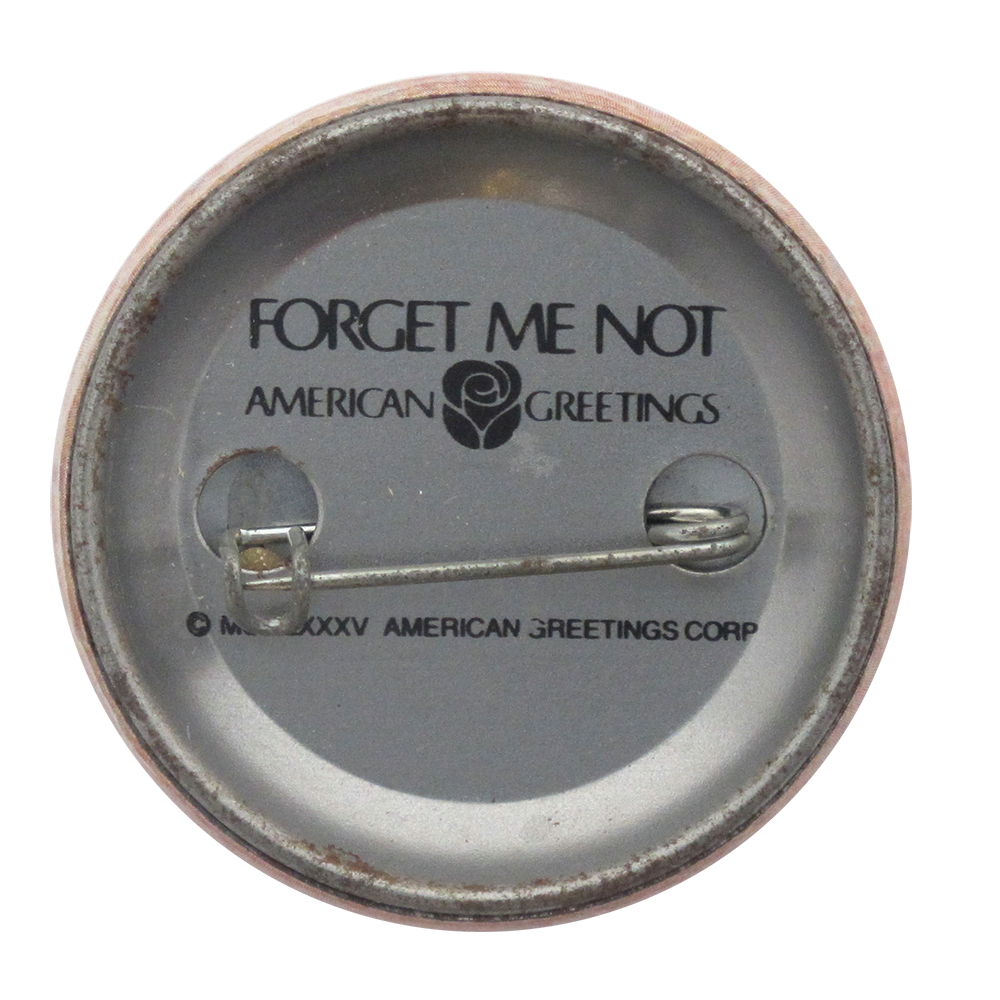
Back Paper / Back Info

FORGET ME NOT
AMERICAN GREETINGS
© MCMLXXV AMERICAN GREETING CORP

Back Style
The Shape
The Size
Year / Decade Made
The Manufacturer
Additional Information

"When the going gets weird, the weird turn pro" was made famous by author Hunter S. Thompson in his book Fear and Loathing in Las Vegas. The book follows a fictionalized retelling of Thompson's journey from Los Angeles to Vegas with his attorney to cover several races and conventions that Thompson has been assigned to. It is written in Thompson's famous gonzo style of journalism where the writer participates in the event and writes about it subjectively instead of objectively. 

Sources

McEntee, J. (2017, February 12). Guide to the classics: Fear and Loathing in Las Vegas. Retrieved from https://theconversation.com/guide-to-the-classics-fear-and-loathing-in-…

Thompson, H. S. (1998). Fear and loathing in Las Vegas: A savage journey to the heart of the American dream. New York, NY: Vintage.

Catalog ID IB0358