Calabar Creations Pigasus

Category
Additional Images
Sub Categories
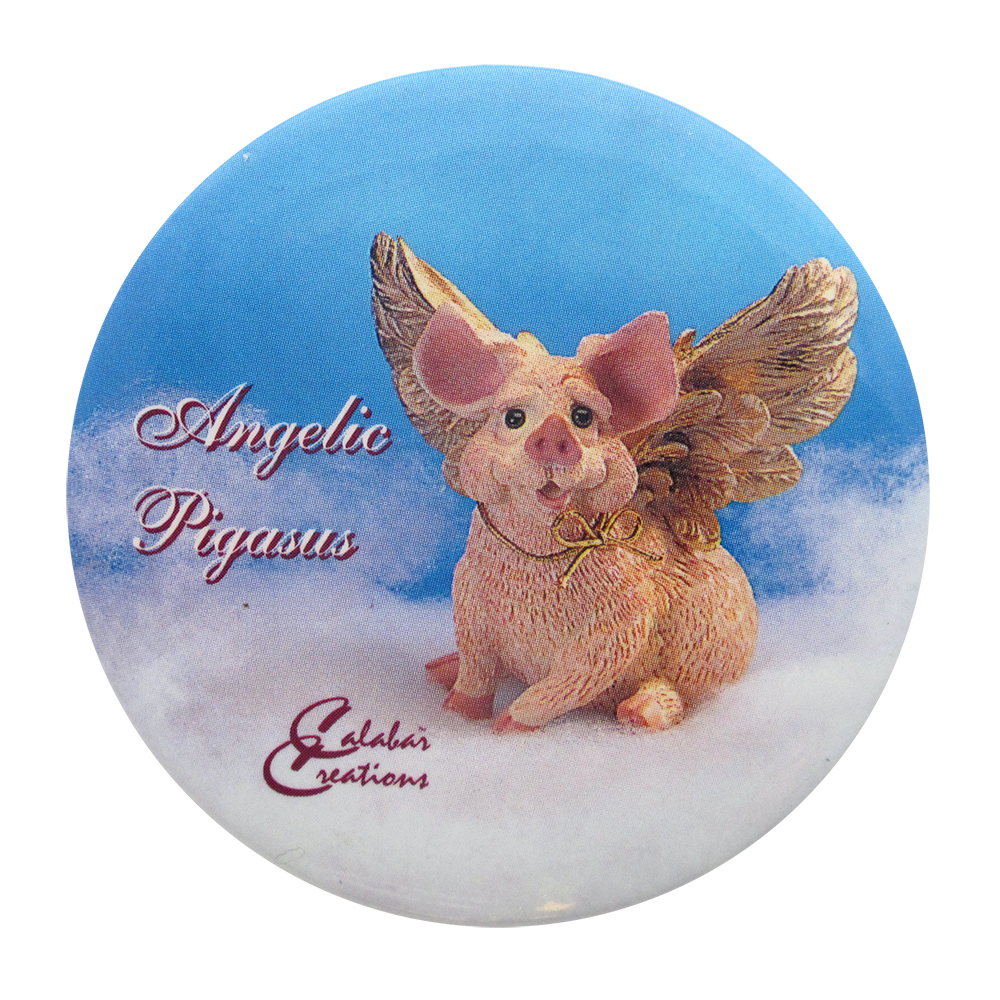
Text on Button Angelic Pigasus
Image Description

Red-trimmed white text on the center left portion of button and red text on the bottom portion of the button. A color image of a pig with golden wings and bow on the right portion of the button. The image and text lie on a cloud background. 

Back Style
The Shape
The Size
Additional Information

The “Angelic Pigasus” was created by the American artist Peter Apsit (1937-1999). After attending the University of Southern California for a degree in fine art in the early 1960s, he had a 25-year career as an artist. Apsit’s early career consisted of sculpting fountains and other free-lance projects. Eventually Apsit’s works was picked up by giftware companies and were sold in the form of collectible trinkets. Apsit was known not only for his sense of humor and cheerful personality, but his work was also known for being extremely detailed and intricate. Most of the collectible figurines that Apsit created were animals and various people. Some of the most popular figurines were his pigs with wings. Calabar Creations was a company based in Ontario, California that would sell collections of figurines including a lot of Apsit’s creations.

Catalog ID AD0120

Brought One Blue

Category
Additional Images
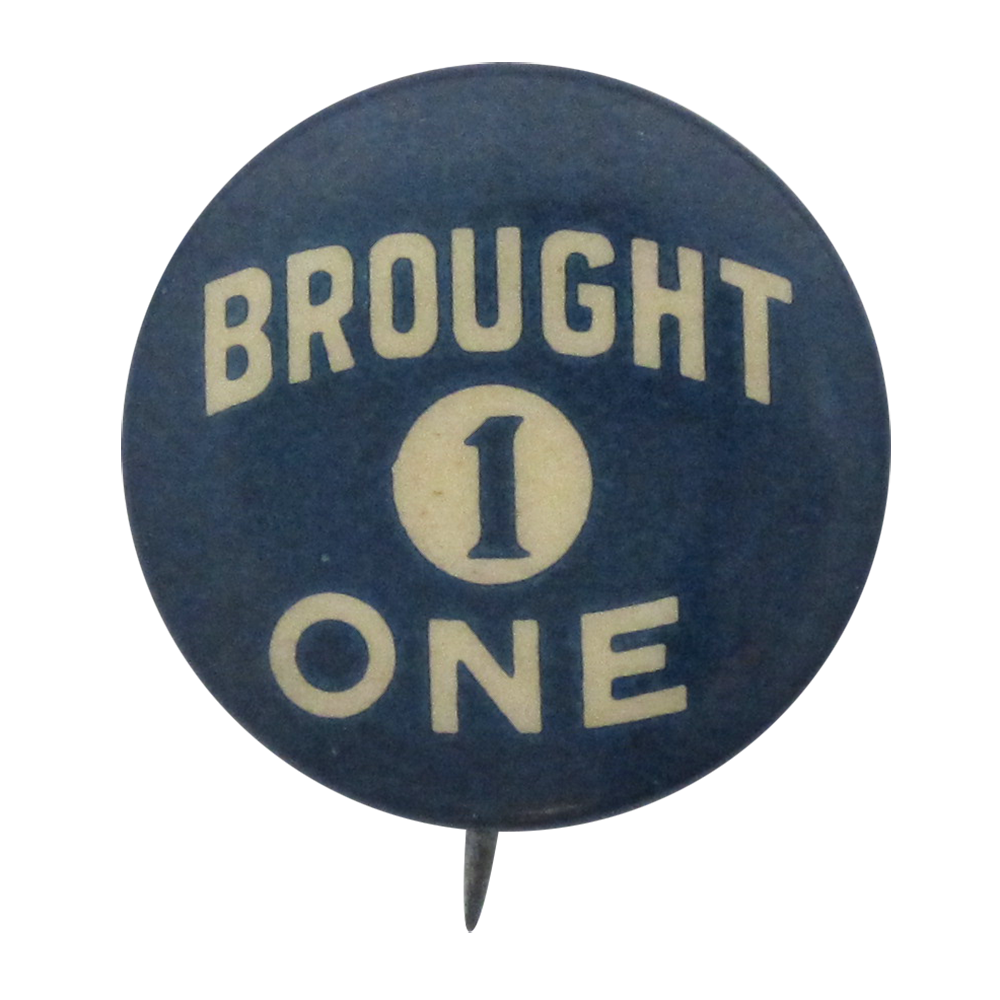
Text on Button BROUGHT 1 ONE
Image Description

White words on a blue background and a blue number inside of a white circle.

Back Paper / Back Info

THE METHODIST BOOK CONCERN New York and Cincinnati Church and Sunday School Supplies.

Back Style
The Shape
The Size
Additional Information

This is most likely a button indicating the wearer brought someone with them to Sunday School.

Catalog ID CL0268

We Welcome You

Category
Additional Images
Sub Categories
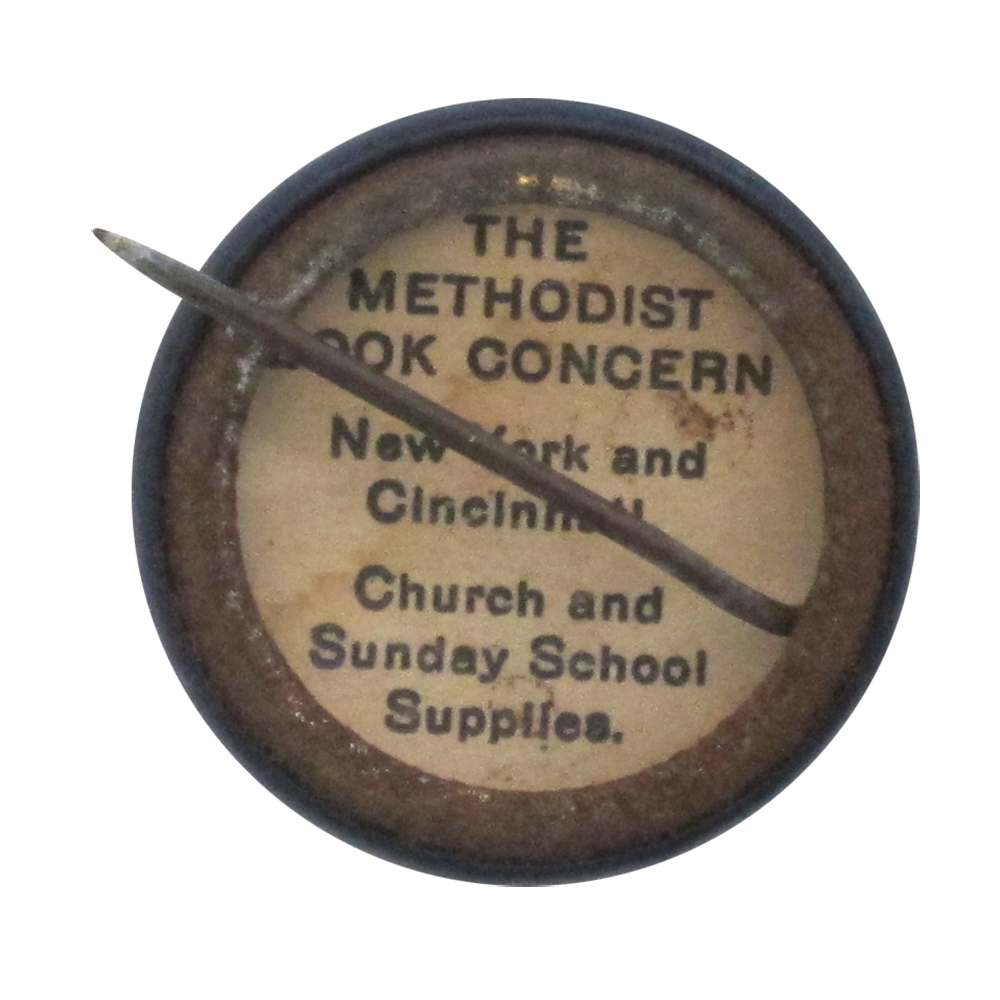
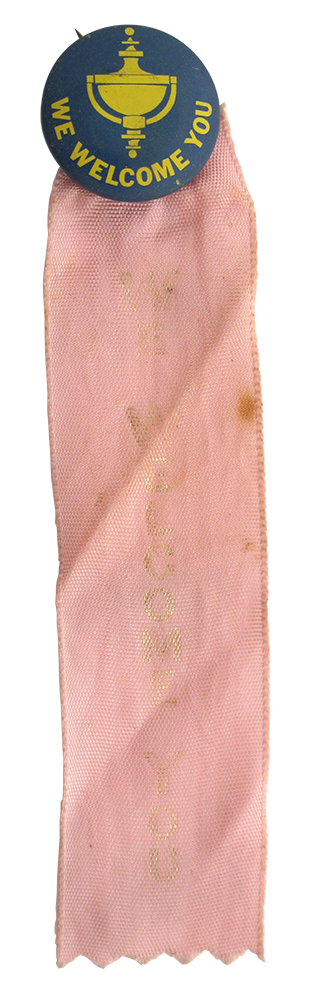
Text on Button WE WELCOME YOU
Image Description

An illustration of a yellow urn with yellow text on a blue background. 

Back Paper / Back Info

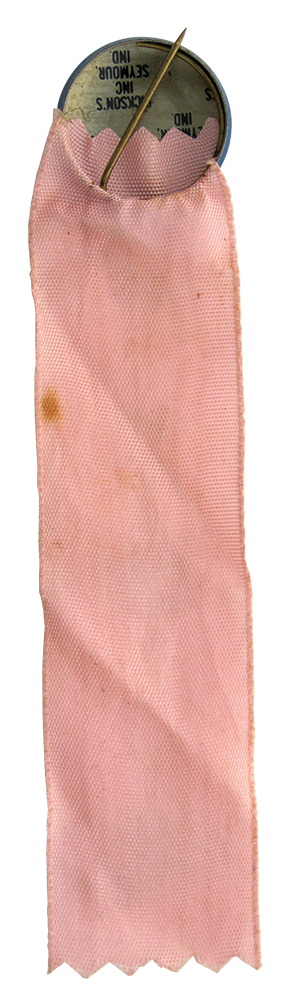
DICKSON'S 
INC. 
SEYMOUR.
IND.

(repeated several times) 

Back Style
The Shape
The Size
Additional Information

Have info on this button? Contact us here.

Catalog ID CL0218

United Steelworkers Dues Paid 1952

Category
Additional Images
Sub Categories
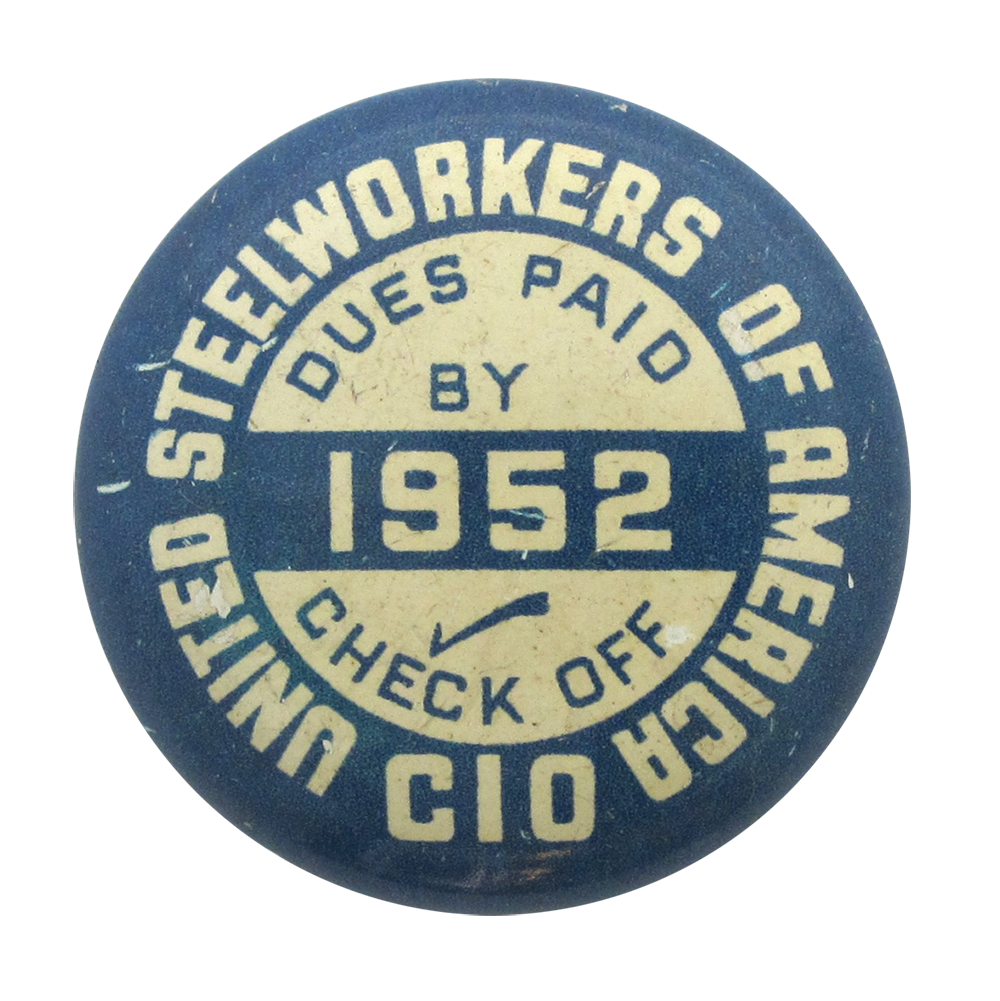
Text on Button UNITED STEELWORKERS OF AMERICA CIO. DUES PAID BY 1952 CHECK OFF
Image Description

The button has an outer dark blue circle with white text and an inner white circle with blue text. A horizontal dark blue line runs through the center of the white circle.

Back Paper / Back Info

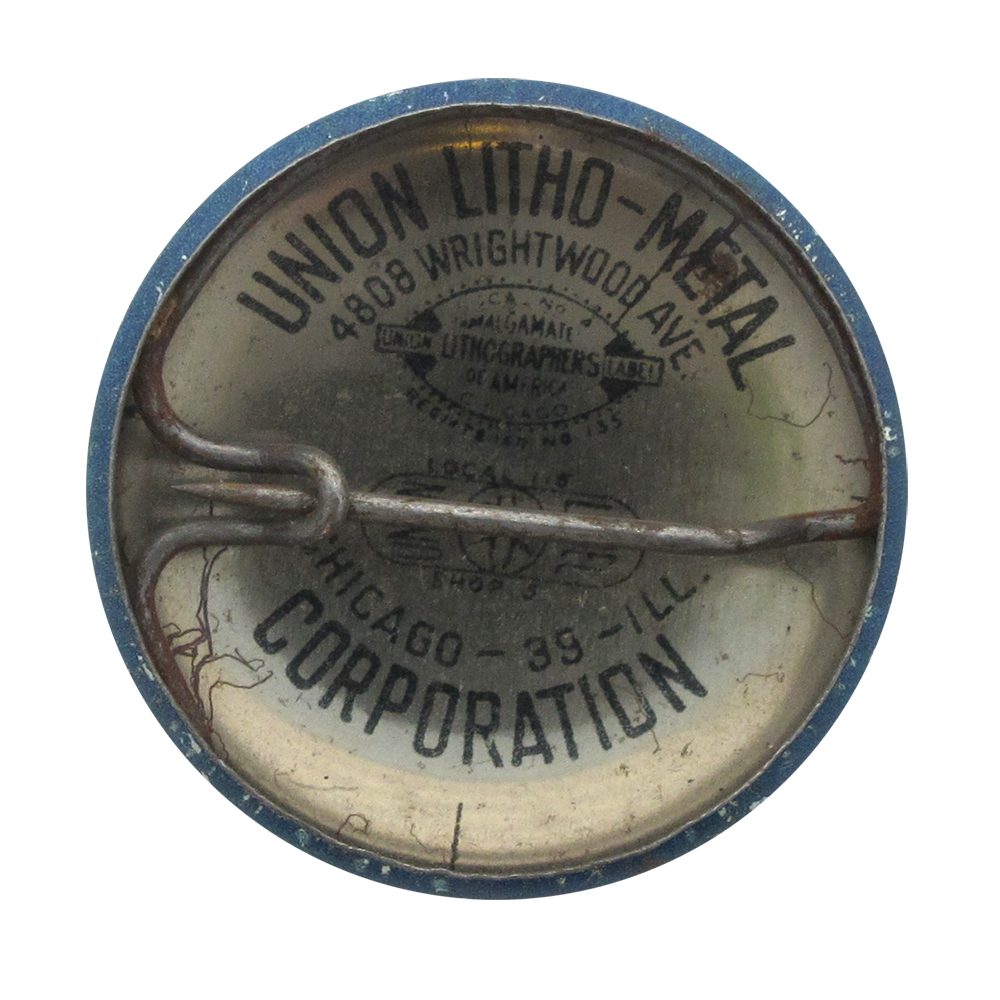
Union-Litho Metal
4808 WRIGHTWOOD AVE
CA-N05
AMALGAMATE 
Union Lithographers Label
OF AMERICA
CHICAGO
No 135
Local 115
UNION LABEL
SHOP 5
CHICAGO-39-ILL.
CORPORATION

Back Style
The Shape
The Size
Year / Decade Made
Additional Information

The United Steelworker of America (USW) is one of the most famous, and largest, unions in United States History. The union began in 1942 when the Amalgamated Association of Iron, Steel, and Tin Workers met with the Steel Workers Organization Committee to form a new unified union of steelworkers. The organization grew over time as more metal-related workers joined including the Aluminium Workers of America in 1944. One of the early major victories for the USW was gaining pensions for workers at Bethlehem Steel in Maryland. In 1952, the first president of the USW, Phillip Murray, passed away. The USW, recently, merged with a British labor organization making it the first Trans-Atlantic trade union since the mid-1930s. Today, the union has nearly a million members, is very active politically, has dramatically expanded the base that it represents and shows no signs of slowing down.

This button refers to dues being paid by 'check off'. This means that the dues paid by unions members are simply taken directly from their pay check.

Catalog ID CL0169

United Fund Volunteer

Category
Additional Images
Sub Categories
Text on Button UNITED FUND UNITED FUND VOLUNTEER
Image Description

Illustration of a black torch with white text on the torch and a red flame in the center of the button with black text above it and red text below it on a white background.

Curl Text Union Bug
Back Style
The Shape
The Size
Additional Information

The United Way was founded in the late nineteenth century by a Denver woman, a priest, a rabbi, and two ministers. The charity was established to raise funds to help community members. The money was given to local organizations, relief funds, and emergency assistance grants. The first campaign that Denver United Way conducted raised $21,700. By 1948 there were more than 1,000 United Way community organizations across the United States. They became an international organization in the 1970s. The United Way in more recent years has held influential fundraising campaigns for events such as September 11th. The local drives for funds are all organized by volunteers. The vision of the organization is to help create “a world where all individuals and families achieve their human potential through education, income stability and healthy lives.”

Catalog ID CL0173

The Home Department

Category
Additional Images
Sub Categories
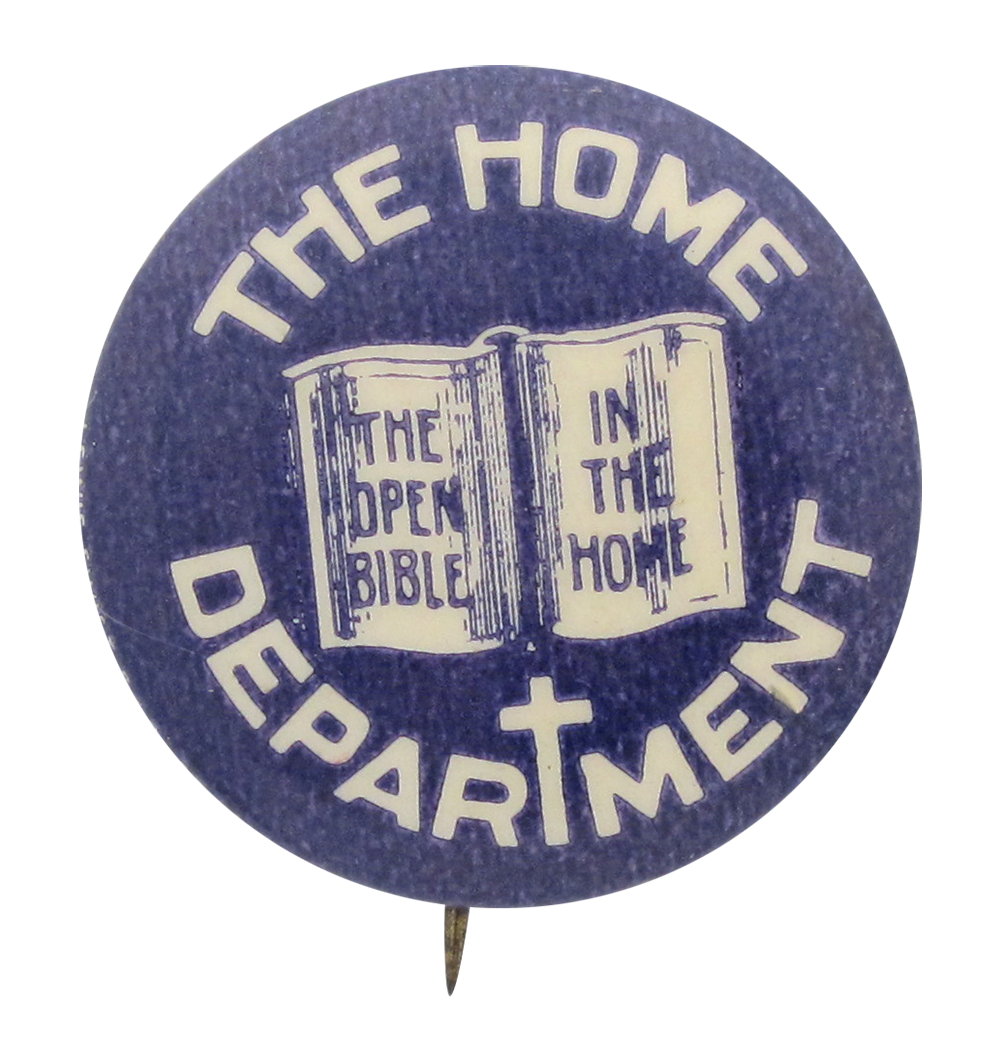
Text on Button THE HOME DEPARTMENT
Image Description

An illustration of bible with white text above and below it on a purple background.

Back Style
The Shape
The Size
Additional Information

The Home Department was conceived in 1881 by W. A. Duncan of New York State. The movement grew to encompass members of various denominations including Congregational, Baptist, Presbyterian and Methodist churches. The Home Department was formed to provide Bible study and instruction for people that were unable to attend Sunday-school. An article in the Saint Louis Christian Evangelist, from September 20, 1894, explains that some of the people that may not be able to attend Sunday-school include “hotel clerks, domestics, railroad men, mothers with small children, the incurably sick, and the aged.” (pg. 99). This article also explains that the department works by obtaining a list of absentees and then canvassing to gather information about all of the reasons for why those people were absent. Those that joined the Home Department had to agree to the following pledge:


“I agree to join the Home Department of the ______ Sunday-school, and to spend at least one half hour each Sunday, or during the week, in the study of the lesson for that day, unless prevented by sickness, or other cause. I will continue my membership until I notify the superintendent of my withdrawal.” (ibid).


Broadhurst, WM. S. (1894, September 20). The Home Department of the Sunday-School. Saint Louis Christian Evangelist. 99.

Catalog ID CL0196

Teamsters 429 1982

Category
Additional Images
Sub Categories
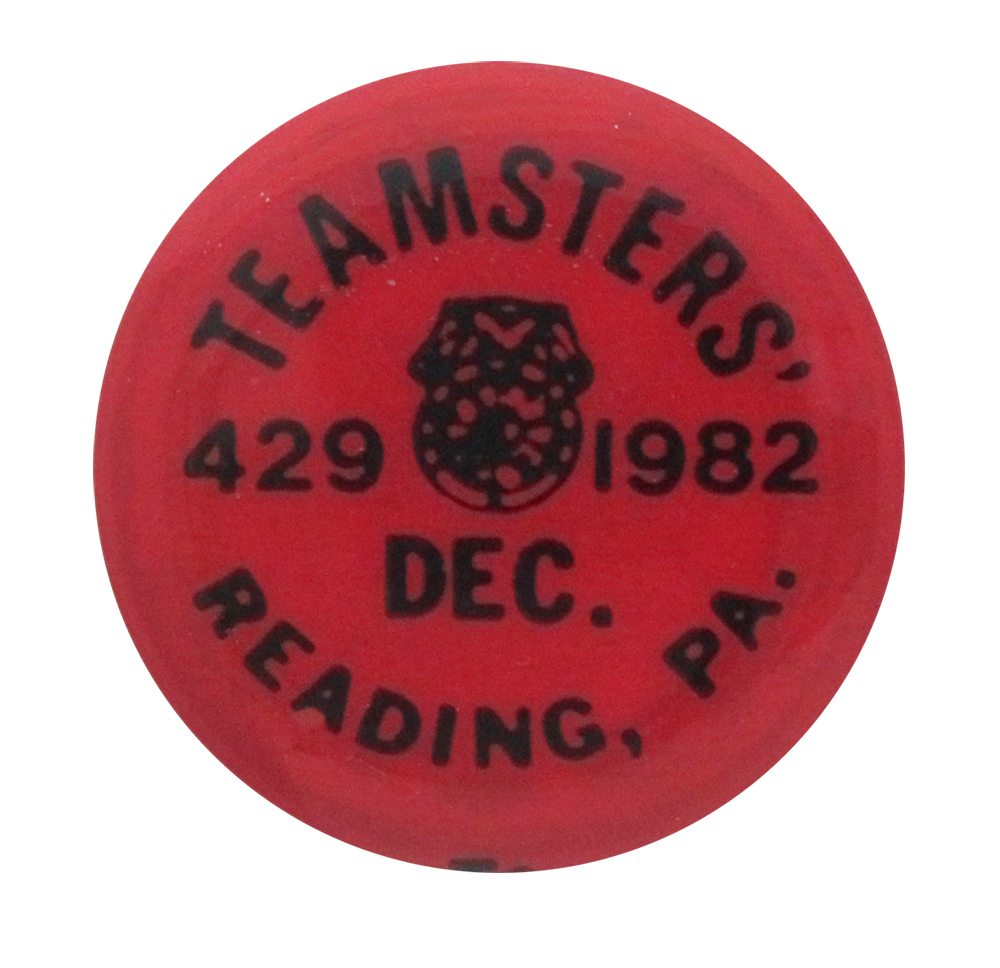
Text on Button TEAMSTERS' 429 1982 DEC. READING, PA.
Image Description

A black union symbol and text on a red background.

Curl Text 840
Back Style
The Shape
The Size
Year / Decade Made
Additional Information

The Local 429 Teamster organization of Reading, Pennsylvania have a mission to unite all workers that are eligible for membership regardless of race, sex, color, religious affiliation, etc. This local group has been around for over 70 years and has worked hard to provide support for workers in various professions; in industries such as dairy, freight, transit drivers, construction, etc. Support for these employees came in the form of education, improved wages, and other resources. The teamsters help by their ability to engage in collective bargaining and other union activities. The overarching International Brotherhood of Teamsters was founded in 1903 in Chicago. The union was very aggressive concerning higher wages and shorter hours. The teamster unions were also known for being corrupted bribe takers that participated in organized crime. 

Catalog ID CL0181

Swift Safety Team

Category
Additional Images
Sub Categories
Text on Button SWIFT MFG. CO SAFTEY TEAM
Image Description

Logo of a large letter S and an illustration of bird at top with black text below on an orange background.

Back Style
The Shape
The Size
Additional Information

Swift is a manufactoring company known for building farming and construction equipment through the useage of its conveytor belts. The compay is located in Clara City, Minnesota. 

Catalog ID CL0174

Rusty Rooster Booster

Category
Additional Images
Sub Categories
Text on Button RUSTY ROOSTER BOOSTER
Image Description

Illustration of a cartoon white rooster's head and hand with black text along the top and bottom edge on a light blue background.

Back Style
The Shape
The Size
Additional Information

The Rusty Rooster Booster Club was a young savers’ club sponsored by Northwest Federal Savings & Loan of Chicago, IL.  The club at least existed between the years 1971-1975.  Such young savers’ clubs promote the idea of teaching children the value of saving money at an early age.  By creating these clubs, banks often benefit from the addition of lifelong customers.  

Catalog ID CL0170

Railroad Clerks Union 1939

Category
Additional Images
Sub Categories
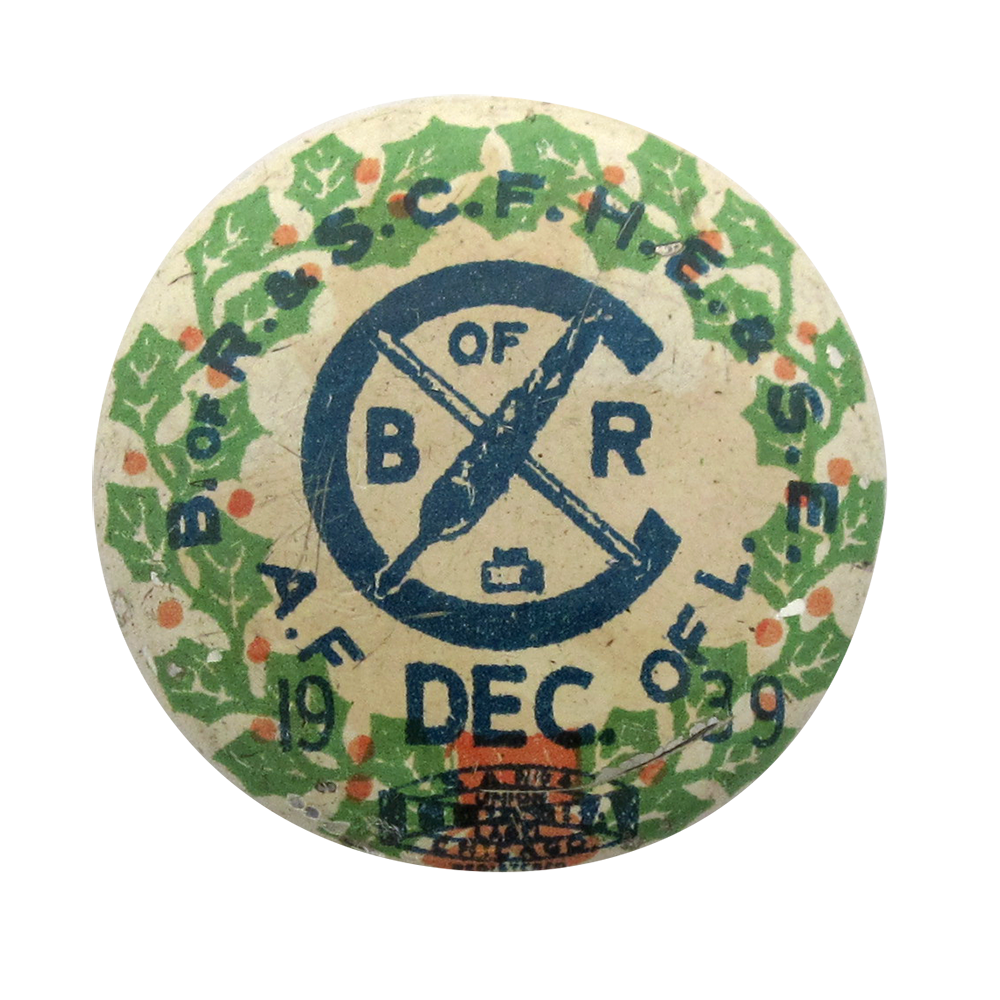
Text on Button B. of R. & S. C. F. H. E. & S. E. C OF BR A.F OF L. A DEC 1939 SA 94 UNION LABEL CHICAGO
Image Description

A large blue C sits right in the center on a white background. In the center of the C is a blue X symbol made of railroad spikes and smaller letters in blue colored text.  Around the C, in a circular formation, are blue letters and an illustration of Christmas holly. 

Back Paper / Back Info

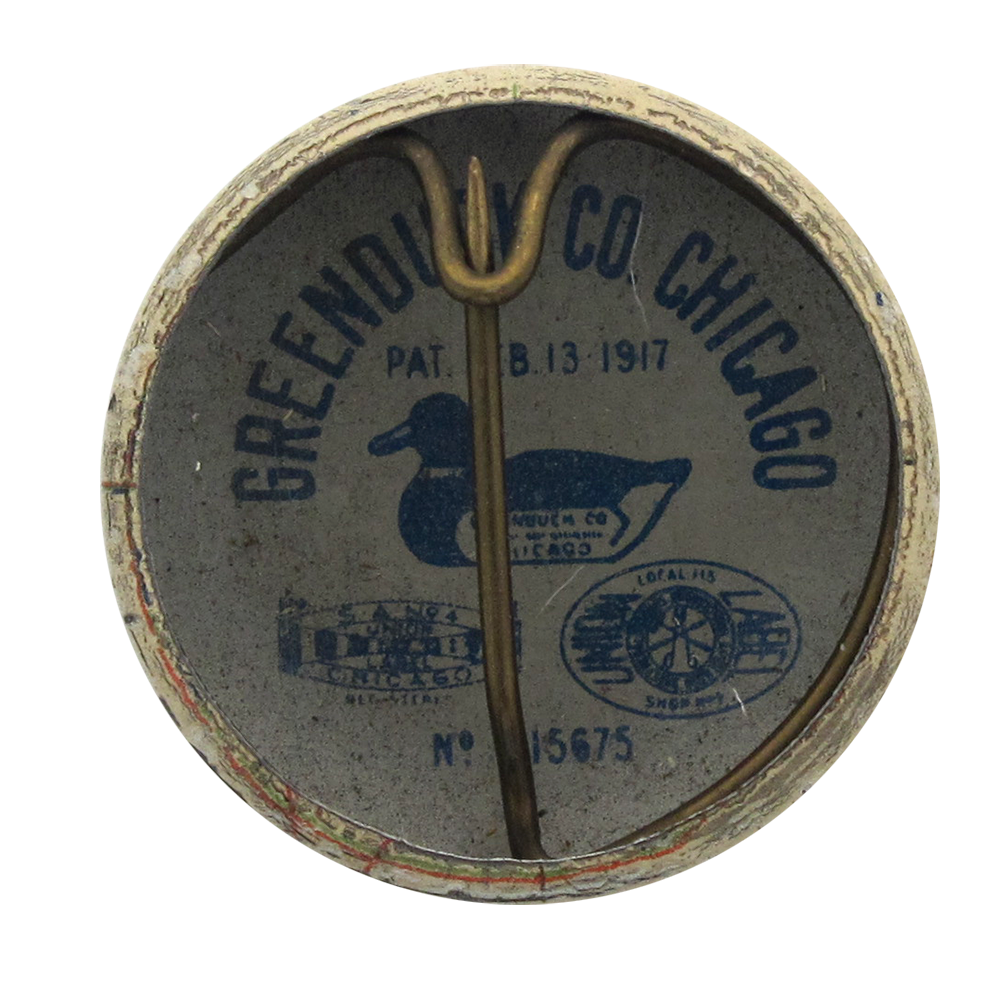
GREENDUCK CO. CHICAGO
PAT. FEB 13 1817
(Illustration of duck)
(Two pieces of indecipherable text/image)
NO 15676


Back Style
The Shape
The Size
Year / Decade Made
The Manufacturer
Additional Information

The Brotherhood of Railway and Steamship Clerks, Freight Handlers, Express, and Station Employees (BRSCFHESE) was organized in 1899 as the Order of Railroad Clerks of America in central Missouri.The union name on this button was adopted in 1919 and since 1987 has been called the Transportation Communications International Union. Also in 1919, the Grand Lodge, the union's overarching authority, determined that each BRSCFHESE lodge could have no more than one hundred members and lodge meetings were to occur on a monthly basis. This button, decorated with seasonal holly leaves and berries, dates from the December 1939 meeting.  

Catalog ID CL0204