White House Circus Club

Category
Additional Images
Sub Categories
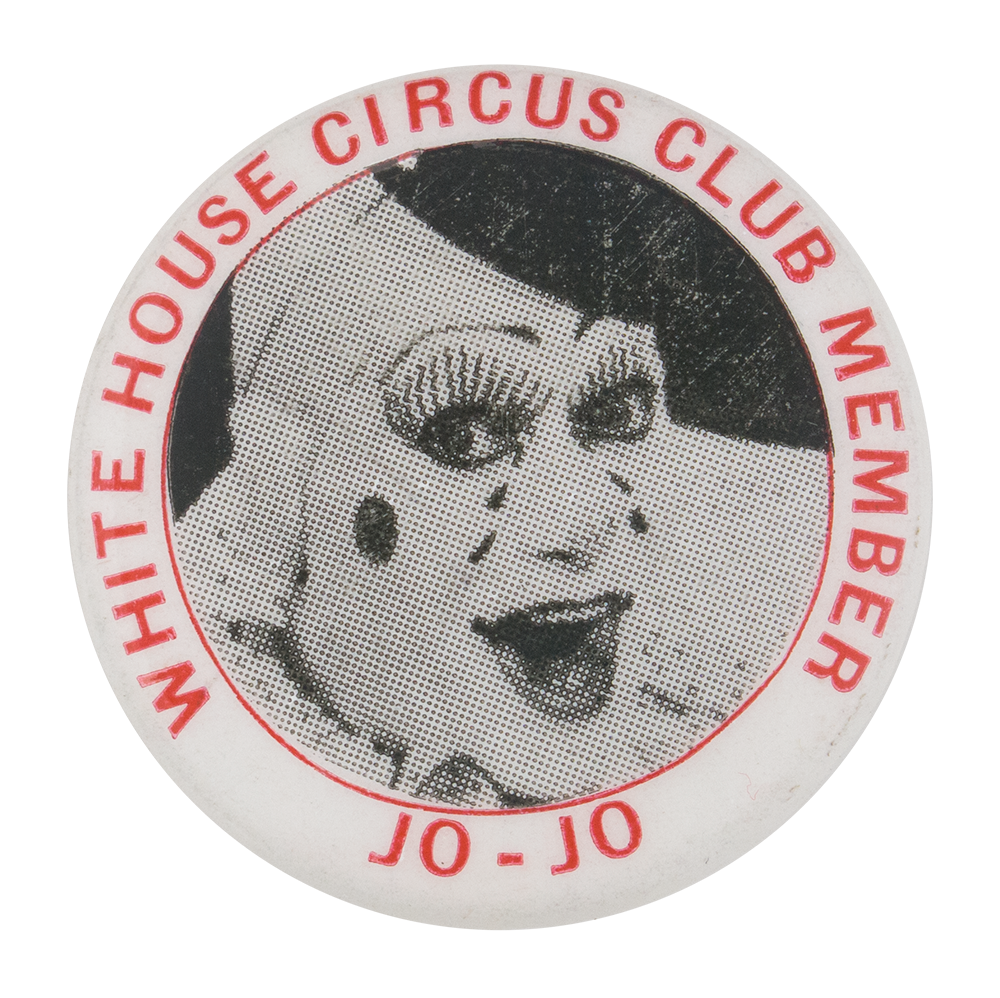
Text on Button WHITE HOUSE CIRCUS CLUB MEMBER JO-JO
Image Description

A black and white photograph of an open-mouthed, wide-eyed clown with a painted face; a white outer circle contains red text.

Back Style
The Shape
The Size
Additional Information

Have info on this button? Contact us here.

Catalog ID CL0099

Eerie Magazine Fan Club

Category
Additional Images
Sub Categories
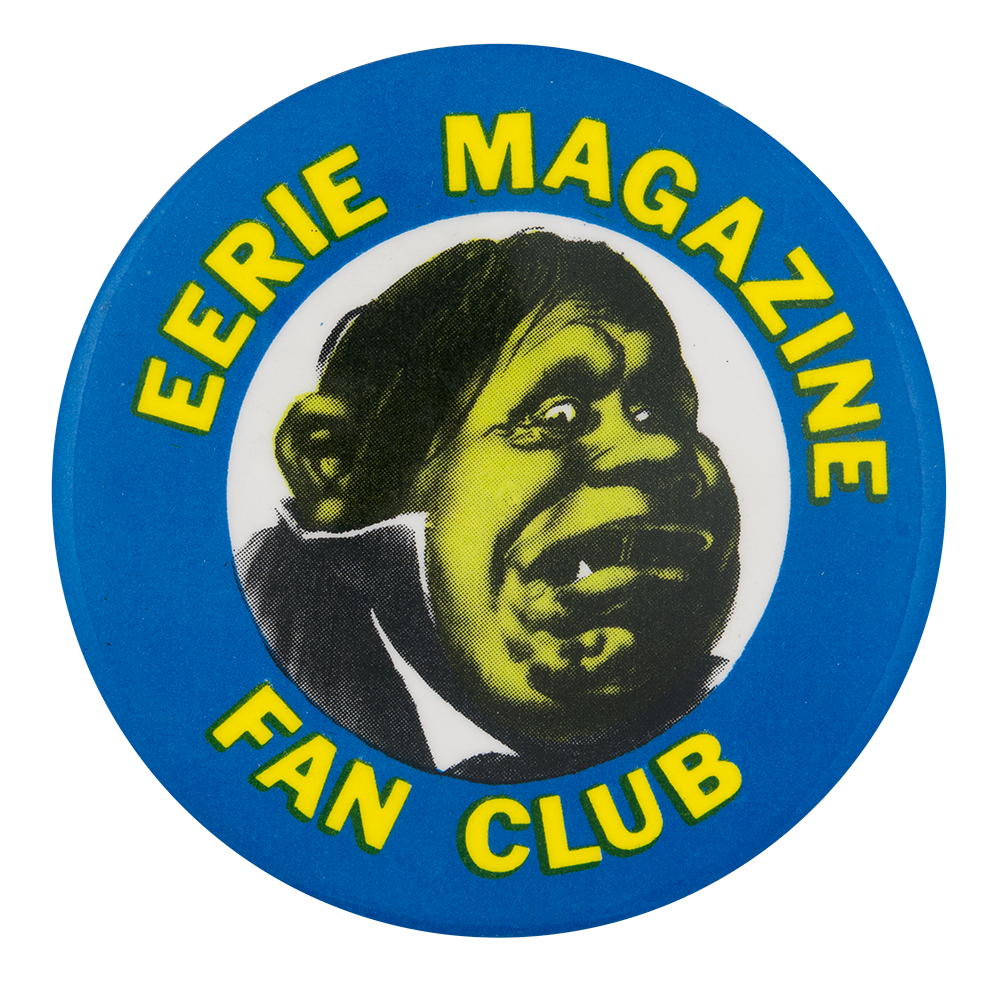
Text on Button EERIE MAGAZINE FAN CLUB
Image Description

A green and drooling ogre in fancy dress on a white circle within a blue outer circle with yellow text.

Curl Text 1972 WARREN PUBLISHING CO.
Back Style
The Shape
The Size
Additional Information

EERIE magazine was a black and white horror comics magazine created in 1966 by Warren Publishing. This button was part of a "Cousin Eerie Fan Club" package available from Warren Publishing's "Captain Company" mail order division (it also came with a fan club card). An example of the magazine advertisement for the fan club can be seen here: http://necronomicondelostemplarios.blogspot.com/2011/06/los-clubes-de-fans-de-warren-publishing.html and here is another example in the pages of an issue of EERIE magazine on Google Books: http://books.google.com/books?id=eoSkbuWxnCgC&lpg=PP1&pg=PA19#v=onepage&q&f=false


The character on the button is called Cousin Eerie and was created by Jack Davis an american illustrator known for advertising art, magazine covers, film posters and comic book stories. He was one of the founding cartoonists for Mad Magazine.


Catalog ID CL0116

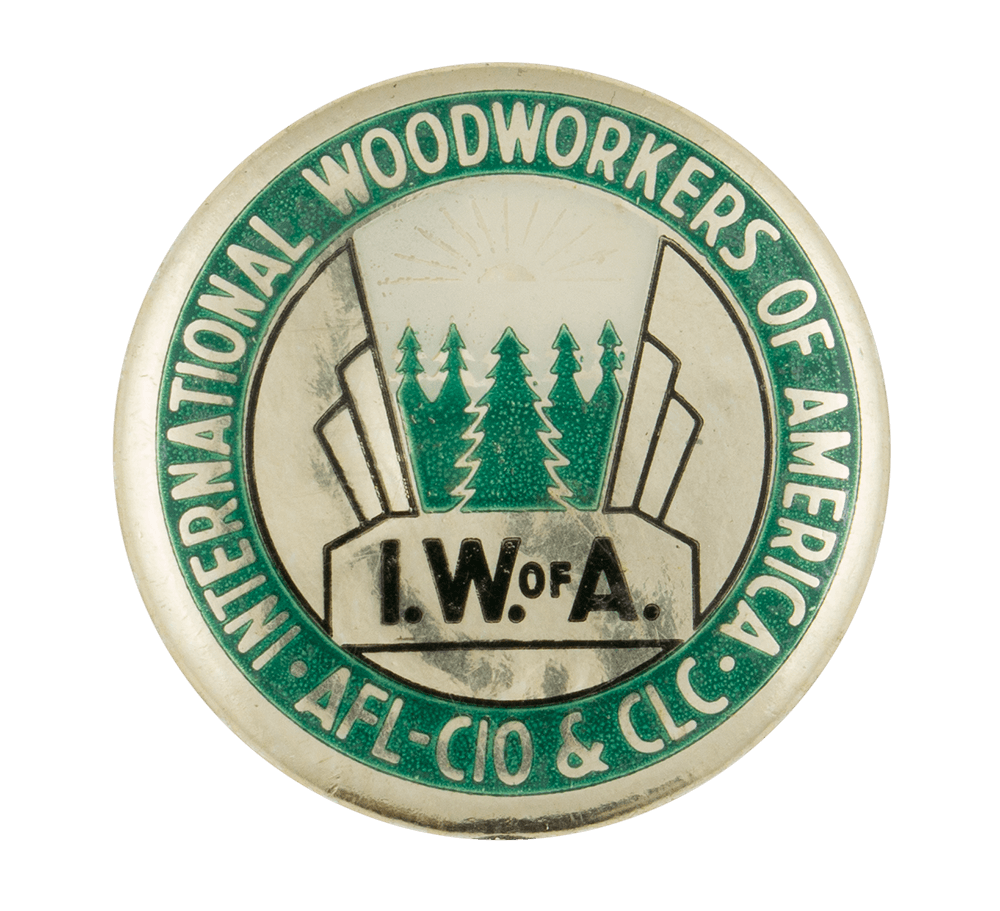
International Woodworkers Of America

Category
Additional Images
Sub Categories
Text on Button INTERNATIONAL WOODWORKERS OF AMERICA ・ AFL-CIO & CLC ・
Image Description

At center, an art deco, keystone shape with a forested sunrise image in the center above union acronym, a green circle surrounds, all on a silver background.

Back Style
The Shape
The Size
Additional Information

The International Woodworkers of America is an industrial workers union for lumbermen, sawmill workers, timber transportation and others that was founded in 1937. The union spread into Canada, and by 1946 it was the largest union in Canada. During its peak in the 1970's the IWA had 115,000 members. Membership began to decline in the 1980's due to environmental concerns, which limited the lumber industry, as well as anti-union employment policies. In 1987 the Canadian branch separated from the American branch and took on a new name, the Industrial, Wood and Allied Workers of Canada until 2004 when it merged with the United Steelworkers. In 1994 the American branch of the IWA was down to just 20,000 members. Knowing it was no longer viable, the IWA merged with the International Association of Machinists.

Catalog ID CL0119

Brotherhood Of Locomotive Firemen And Enginemen

Category
Additional Images
Sub Categories
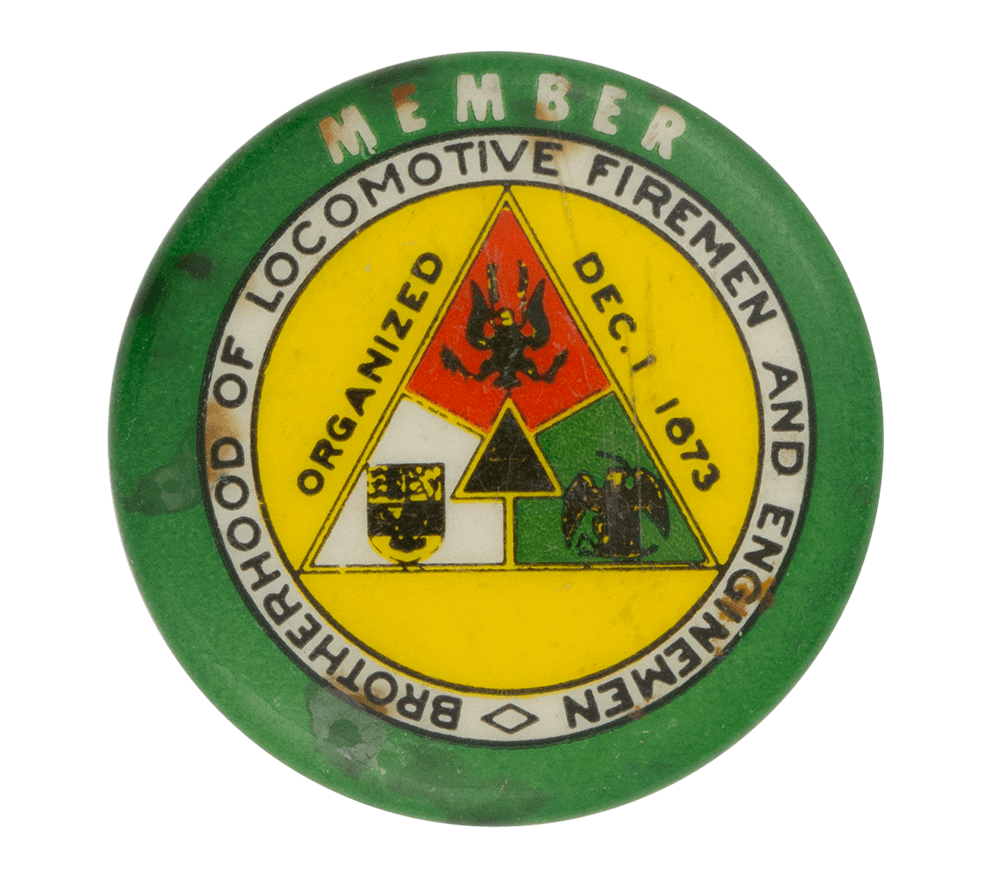
Text on Button MEMBER ◇ BROTHERHOOD OF LOCOMOTIVE FIREMEN AND ENGINEMEN ORGANIZED DEC. 1 1873
Image Description

At center, a trisected triangle in green, red, and white, two with eagle-like symbols and one with a shield shape inside on a yellow circle surrounded by a white then green outer circles with black and white text, respectively.

Back Style
The Shape
The Size
Additional Information

Founded in 1873 as the Brotherhood of Locomotive Firemen, the named changed in 1907 to include railroad engineers. Though it started as a society, it gradually became a trade union, and in 1969 they merged with three other rail labor organizations to become the United Transportation Union. The BLF was at its largest in 1919, with over 116,0000 members.

Catalog ID CL0117

Junior Civic League

Category
Additional Images
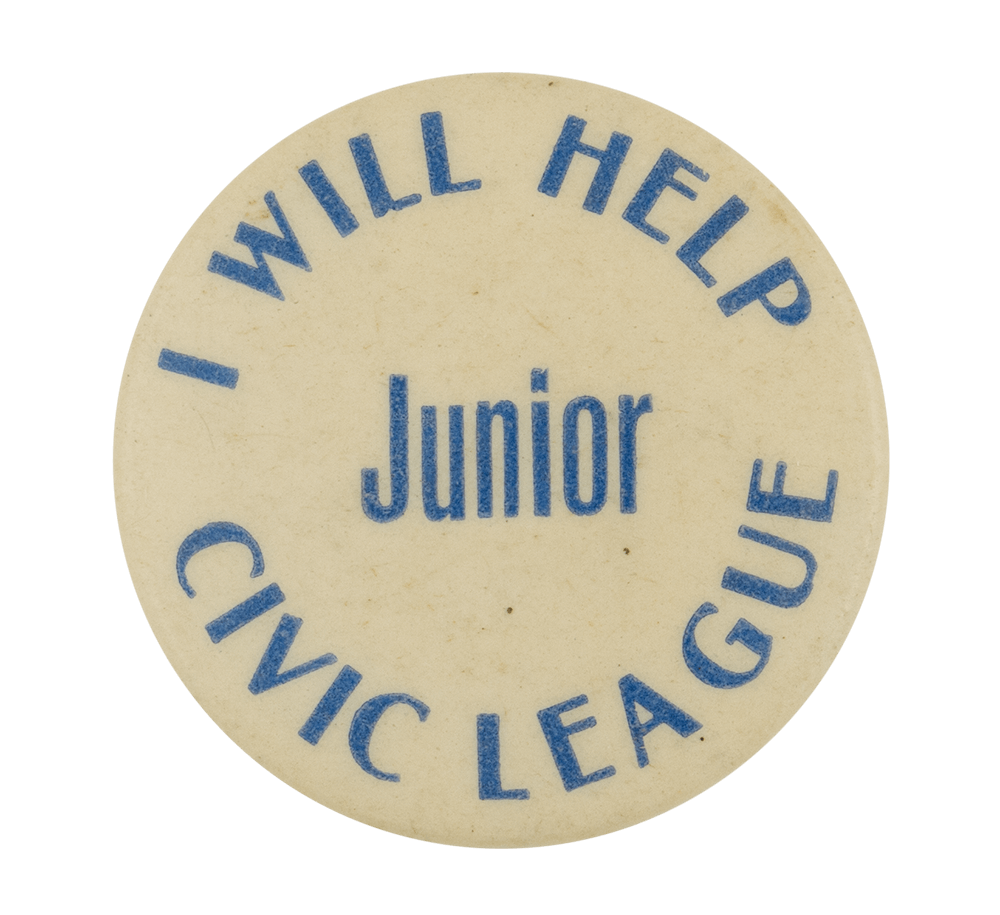
Text on Button I WILL HELP Junior CIVIC LEAGUE
Image Description

Blue text on ivory background.

Back Paper / Back Info

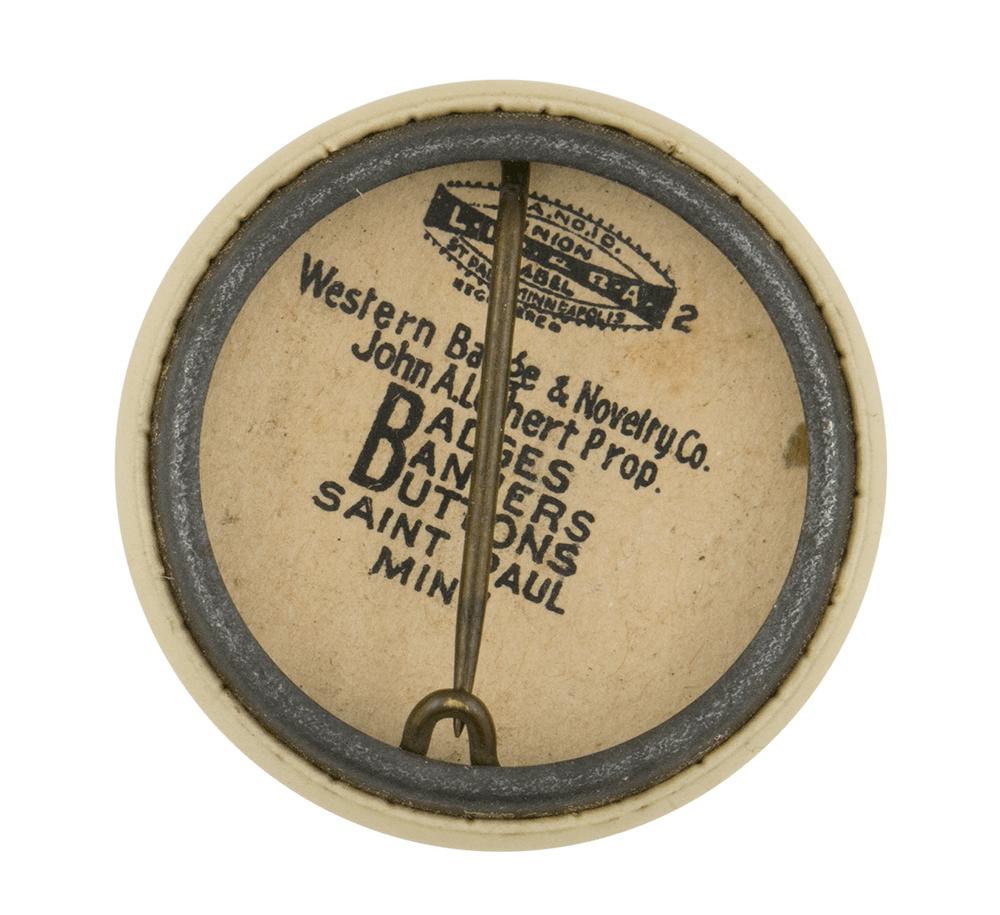
Western Badge & Novelty Co. John A. Lethert Prop. Badges Banners Buttons Saint Paul Minn

Back Style
The Shape
The Size
The Manufacturer
Additional Information

The Mankato Junior Civic League was the name of a youth organization in Mankato, Minnesota. The Mankato Junior Civic League was associated with the Junior Civic League division of the American Civic Association. The work of the league included planting gardens in occupied and occupied lots. The members of the local civic league got buttons with the slogan "I will help". The children who planted the best gardens would then get a prize from the mayor.

Catalog ID CL0120

Husband Hunting Club

Category
Additional Images
Sub Categories
Text on Button HUSBAND HUNTING CLUB
Image Description

On a lonely, tropical plain at sunset, a blonde haired, primitive young woman tiptoes, crouched with a magnifying glass and holding large club behind her back, tracking the footprints of her future husband.

Back Paper / Back Info

Label Union seal at center

Back Style
The Shape
The Size
Year / Decade Made
Additional Information

Have info on this button? Contact us here.

Catalog ID ClL0093

United Weldors Cutters and Helpers of America

Category
Additional Images
Sub Categories
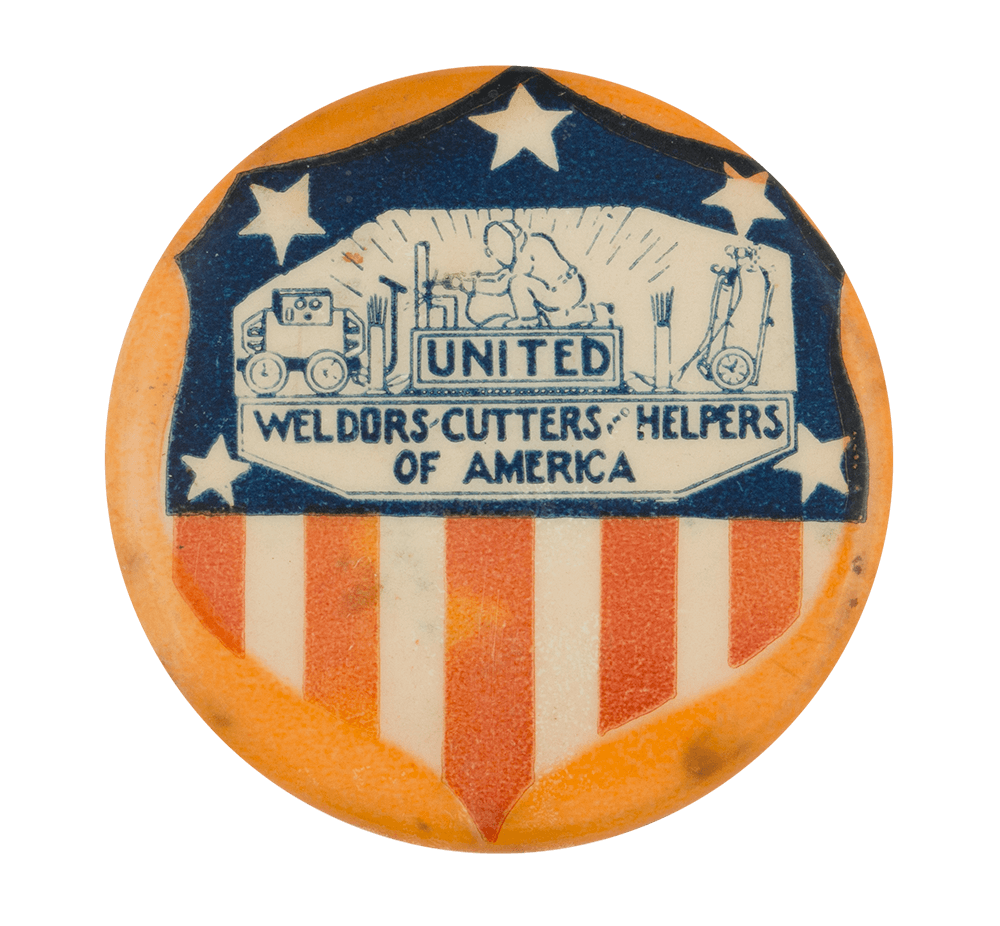
Text on Button United Weldors, Cutters and Helpers of America
Image Description

A patriotic shield, red and white stripes at bottom, at top, blue and white stars around a welding scene within a long, ivory, octagonal shape. A man crouched before, presumably, a piece of metal with a soldering iron, welding mask and sparks flying, on an orange background.

Back Paper / Back Info

Pressed seal on center back.

Curl Text A seal at bottom
Back Style
The Shape
The Size
Additional Information

The United Weldors, Cutters, and Helpers of America (UWCH) was officially organized in 1939 to protect the rights of workers within those industries and professions. In 1941, the UWCH merged with the Weldors International Association (WIA) and in 1942 with the National Brotherhood of Weldors and Burners of America, Weldors and Burners Councils of Seattle and Tacoma, and the Chicago Weldors' Union. The UWCH, after these mergers, officially became the United Brotherhood of Weldors, Cutters, and Helpers of America (UBWCH).

The WIA had a long history leading up to the UWCH merger, having gone through a series of mergers itself. It began as the Associated Weldors and Helpers in 1924. Three names changes and many reorganizations later, it merged as the UWCH.

The UBWCH, with three other labor groups, formed the Confederated Unions of America (CUA) in 1942. The point of this confederation was to offer unionization to those who wished to remain apart of the AFL or CIO. A split and subsequent rejoining within the CUA created the National Federation of Independent Unions (NFIU). The NFIU affiliated with the Laborers' International Union of North America (LIUNA) and the AFL-CIO. In this affiliation, the organizations share benefits but largely act autonomously of one another. 

Catalog ID CL0097

National Youth Sales Club

Category
Additional Images
Sub Categories
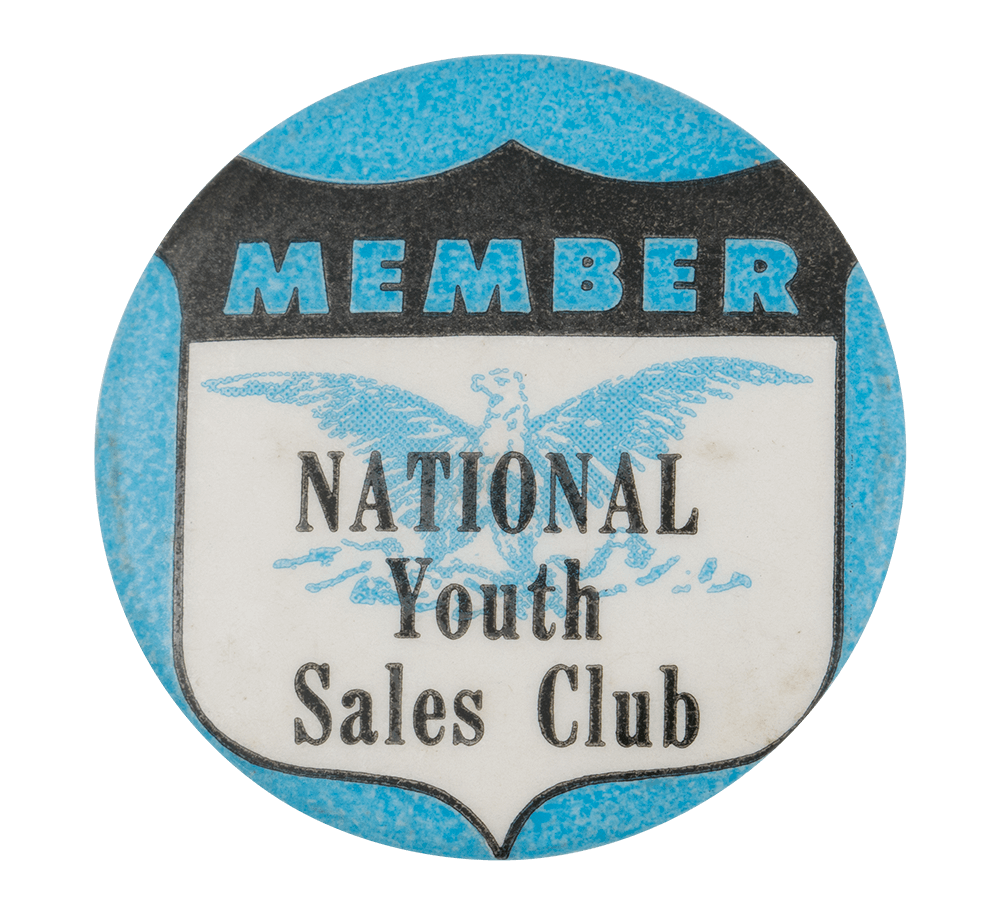
Text on Button MEMBER NATIONAL Youth Sales Club
Image Description

A classic shield shape, black at top with light blue text and white at bottom with light blue winged eagle behind black text on a light blue background.

Back Style
The Shape
The Size
Additional Information

The National Youth Sales Club was a mail-order sales program for children in the 1960s, advertised in Boy’s Life magazine and promoted by baseball star Mickey Mantle.  Children would sell boxes of greeting cards in exchange for cash or prizes.  Ads for the program included colorful illustrations of prizes, including accordions, tape recorders, telescopes, and bicycles.  Children would receive an "official membership badge" after selling 12 boxes of greeting cards.  

Catalog ID CL0088

National Big Boy Club Member Blue

Category
Additional Images
Sub Categories
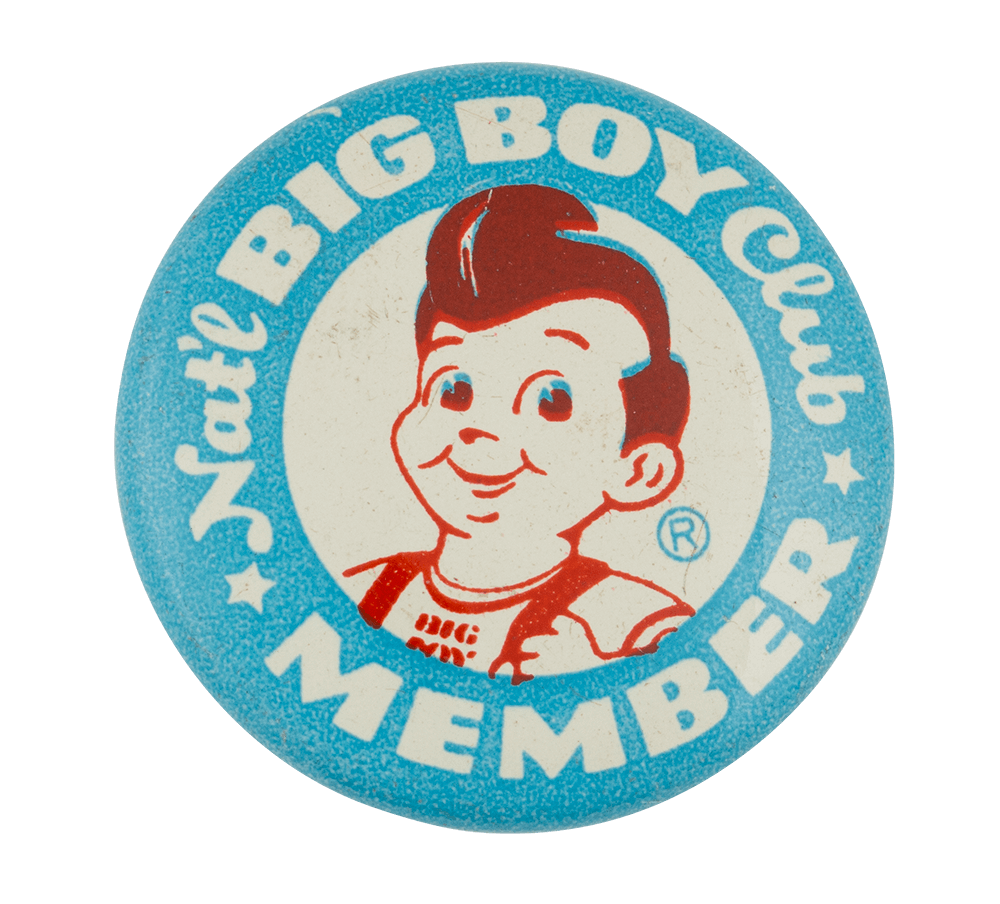
Text on Button Nat'l BIG BOY Club MEMBER
Image Description

Big Boy himself ® in red and white with baby blue highlighting and text in a baby blue outer circle.

Curl Text [EMRESS?] SPECIALITY CO. 64 W. 23RD ST., N.Y. 10, N.Y.
Back Style
The Shape
The Size
Additional Information

Big Boy is a national chain of restaurants started in 1936 as Bob’s Pantry in Glendale, California.  The iconic “Big Boy” caricature, seen as a statue outside most Big Boy restaurants, is modeled on a young boy, Richard Woodruff, who happened to walk into the original Big Boy restaurant in 1938 as the owner, Bob Wian, was trying to name his signature burger.  The Big Boy Club was a long-running advertising campaign. Children could sign up for the club at the restaurant and receive special items and coupons in the mail. 

Catalog ID CL0087