Tea Rose

Category
Additional Images
Sub Categories
Text on Button TEA ROSE ALWAYS LOVELY
Image Description

A yellow tea rose flower on a stem with green leaves surrounded by small green dots is on a white background.  Small green text is below the tea rose.

Back Paper / Back Info

KING BEE TOBACCO AND CIGARETTES L.C.W. TE CO BUTTON MFRS WATERONRY CO. 

Back Style
The Shape
The Size
Additional Information

The King Bee Tobacco Company was a subsidiary of the American Tobacco Company. It was a common practice for tobacco companies to produce series of floral pinback buttons, cigarette cards, etc. at the turn of the 19th century. The use of roses in tobacco-related collectibles is just one example of this phenomena.

Catalog ID AD0252

Furniture & Piano Movers

Category
Additional Images
Sub Categories
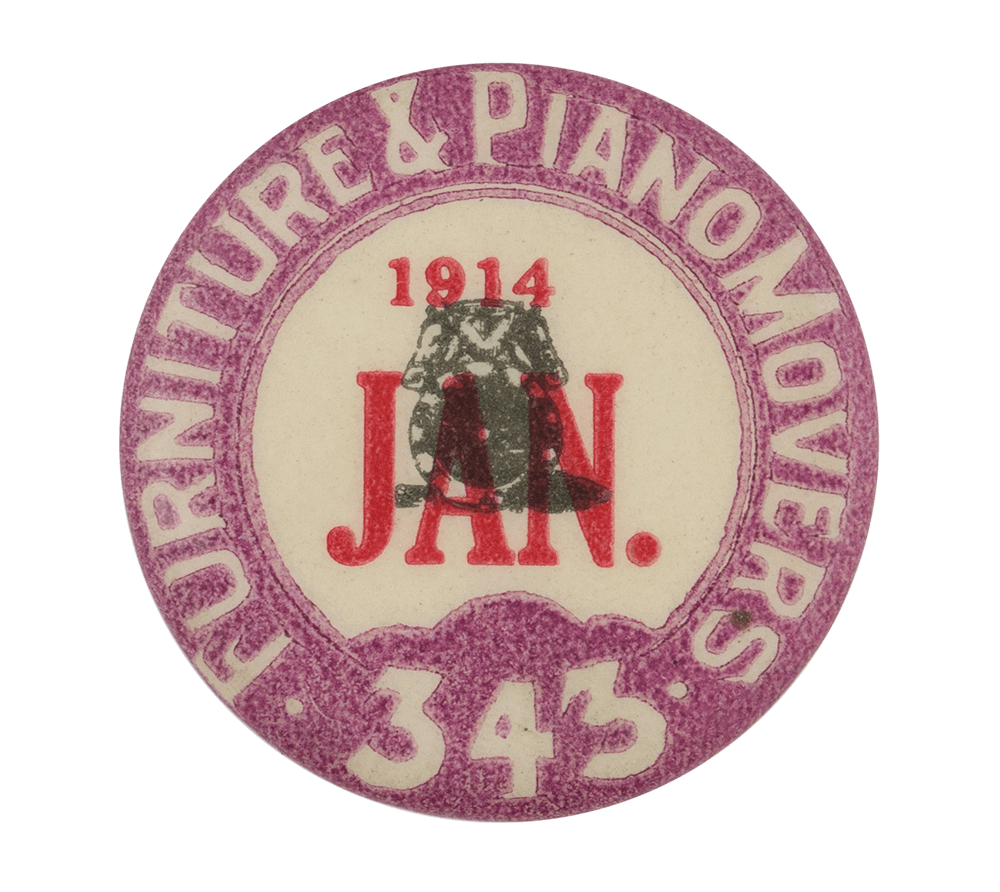
Text on Button FURNITURE & PIANO MOVERS 343 JAN. 1914
Image Description

Red text over a black logo (with two horse heads) on a white background surrounded by a purple border with white text.  

Back Style
The Shape
The Size
Year / Decade Made
Additional Information

Recognize the logo behind the year 1914?  The Furniture and Piano movers whom this button belonged to were also known as "Teamsters No. 343" and were based out of Massachusetts.  The Local’s behavior was immortalized in a case heard by the Massachusetts Superior Court.  After failing to increase wages at the request of the union, No. 343 declared a strike on May 2, 1910 against M. Steinert and Sons Company, a prominent Bostonian Steinway Pianos Piano Dealer.  11 of the protesting members disbanded thereafter, 8 finding new employment and 3 relocating away from the city.  On October 14, 1910, the members involved in the strike drove around town displaying the protesting placards on their vehicle, long after the strike ended.  The court ruled that “a decree must be entered giving to the plaintiff the relief prayed for”.  The details of the case were published and available on page 134 of Labor Bulletin, Volumes 113-118, published in 1916 by Wright & Potter.

Catalog ID CL0384

NetWare

Category
Additional Images
Sub Categories
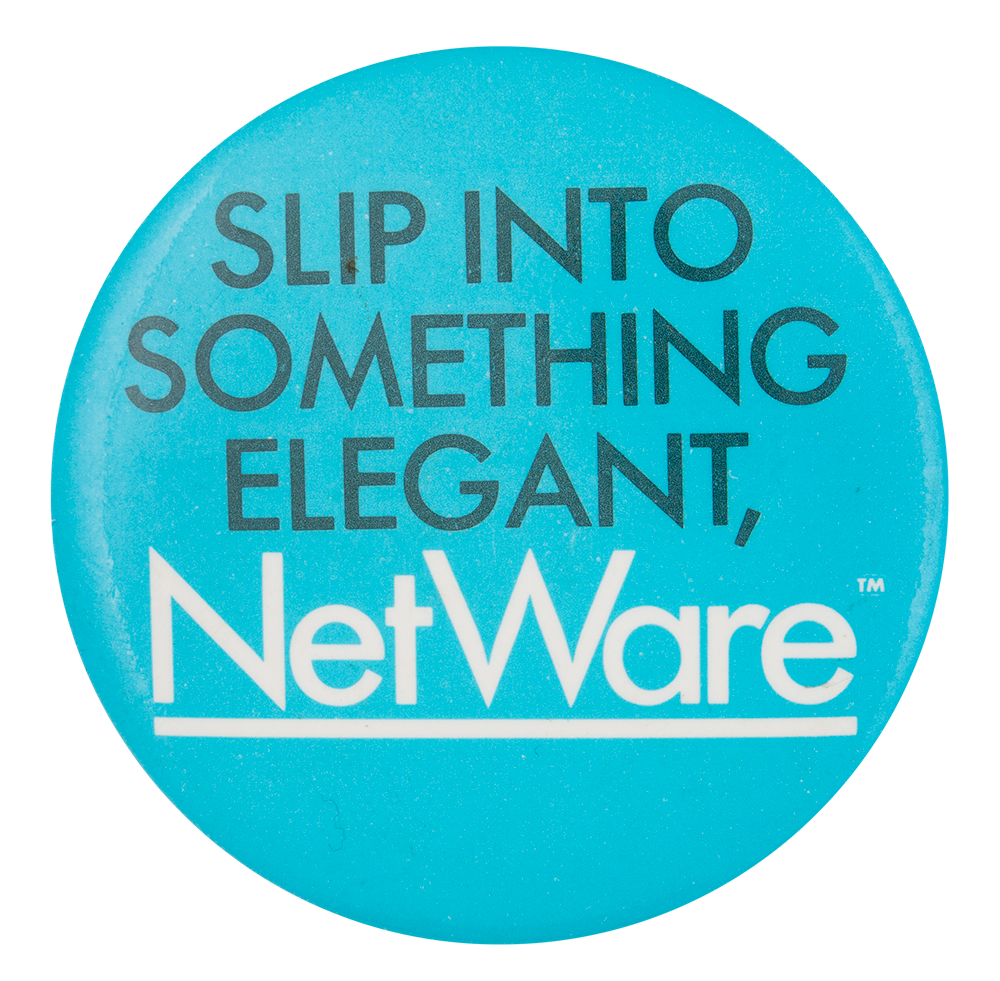
Text on Button SLIP INTO SOMETHING ELEGANT, NetWare ^TM
Image Description

Sky blue button with dark grey centered lettering. Larger white, underlined text is located in the center bottom half of the button accompanied by a small white trademark logo. 

Back Style
The Shape
The Size
Additional Information

NetWare was a computer network operating system developed by Novell, Inc. originally released in 1983. Netware was used in multitasking and programming on personal computers and later became something that could be added to any suitable computer build, making their mainframe both independent and accessible. Novell released a series of products for CP/M, MS-DOS, and Windows that facilitated peer to peer networking and workplace networking systems that seemed to overshadow Netware as technology was advancing in the 1990s and early 2000s. As other products became more popular and competition from big names like Microsoft drew away business, Novell discontinued Netware in 2009 and stopped supporting it entirely in 2017.

Catalog ID AD0161

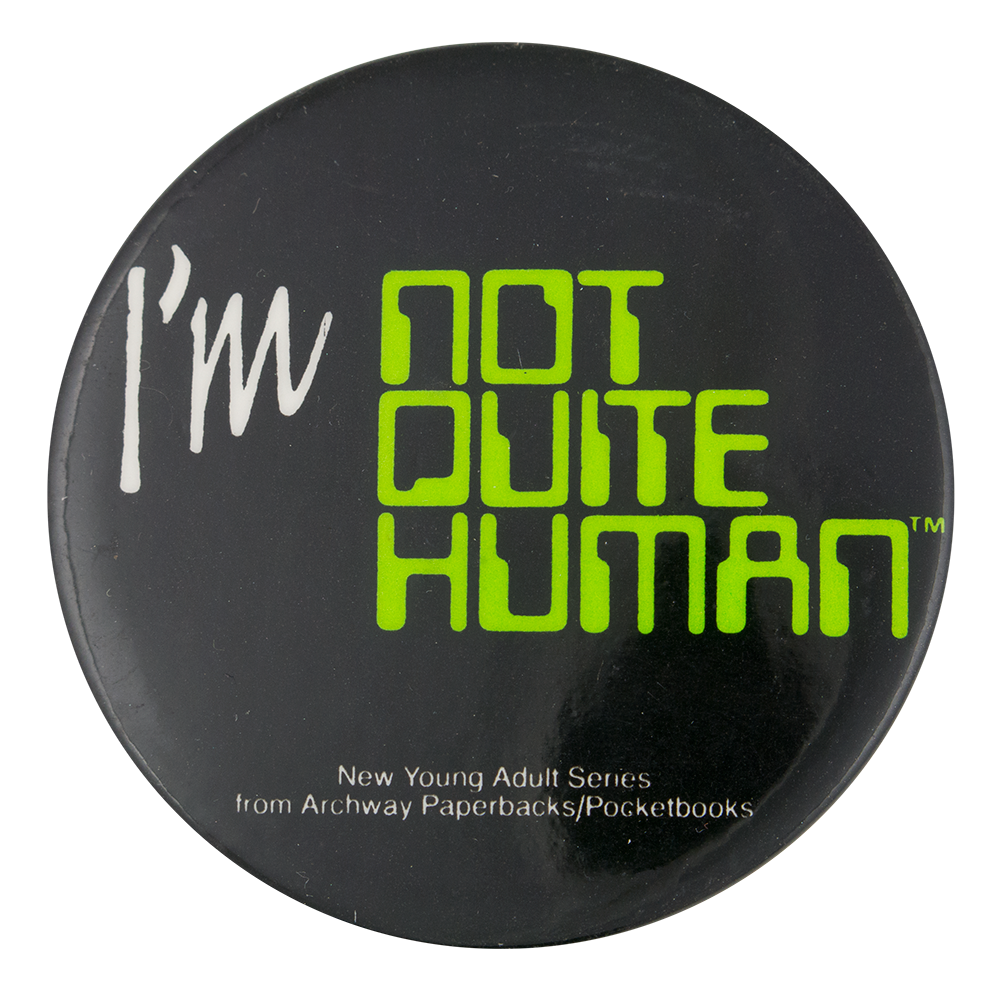
I'm Not Quite Human

Category
Additional Images
Text on Button I'm NOT QUITE HUMAN New Young Adult Series from Archway Paperbacks/Pocketbooks
Image Description

White handwriting text to the left of neon green text on a black background, very small company information in white at bottom.

Back Style
The Shape
The Size
Additional Information

Not Quite Human is a young adult series written by Seth Mcevoy and published by Archway Paperbacks.  The first book in the series, Batteries Not Included, was published in 1985.  Five additional novels, the last of which was published in 1986, are also part of the Not Quite Human series.  The series’ main characters include Dr. Jonas Carson, his daughter Becky, and Chip, an android created by Dr. Carson.  In the late 80s and early 90s, the Disney Channel adapted the series into three made-for-tv-movies.

Catalog ID AD0255

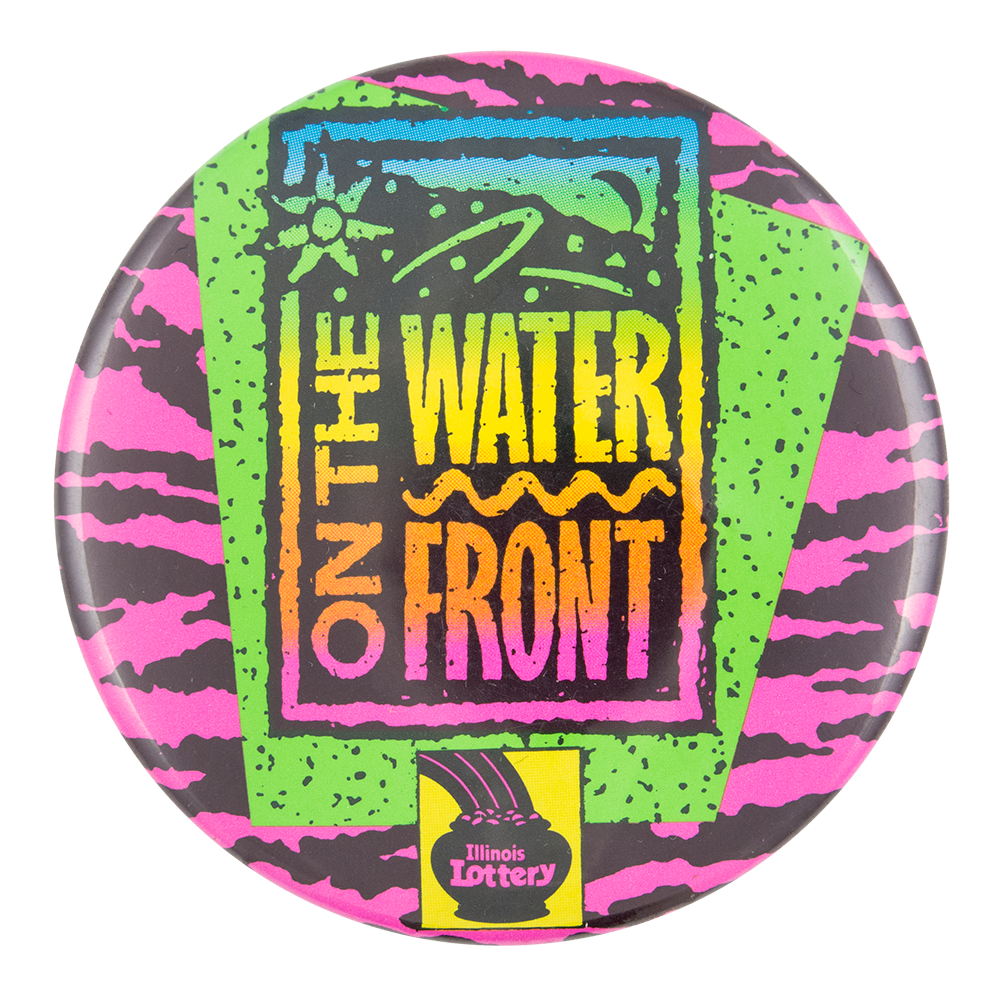
On The Water Front Illinois Lottery

Category
Additional Images
Sub Categories
Text on Button ON THE WATER FRONT Illinois Lottery
Image Description

A rectangle transitions through the neon rainbow from bottom to top with text below an abstract, beach scene, on top of a speckled, neon green trapezoid on a neon pink tiger stripe background. The Illinois lottery pottery of gold in pink and yellow beneath.

Back Style
The Shape
The Size
Additional Information

On the Waterfront was Rockford, Illinois’ annual music festival which featured multiple genres of music. After 29 years, the festival ended in 2012. The Illinois Lottery, whose usual logo is a rainbow coming from a pot of gold, was a sponsor of the event. The colors were altered since the theme of the festival for this particular year was a colorful, tribal interpretation of a sun and beach.

Catalog ID AD0254

Mack

Category
Additional Images
Sub Categories
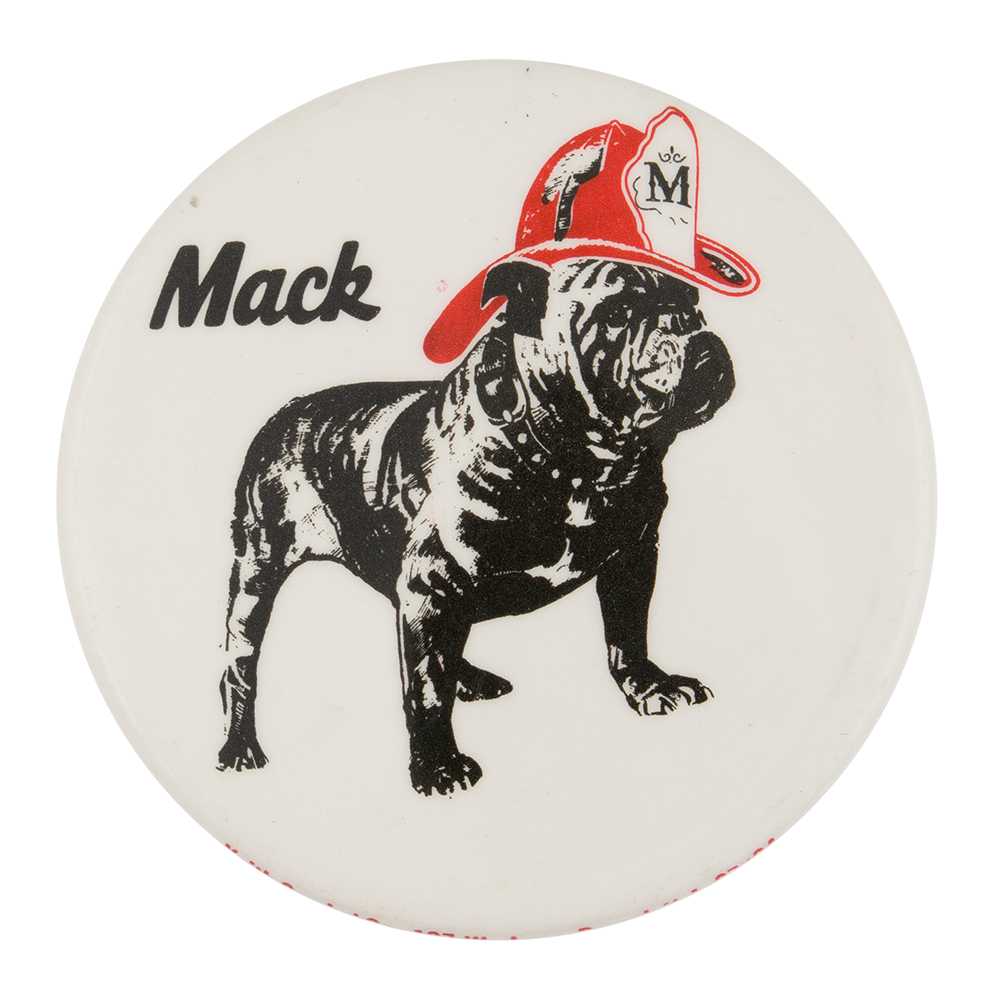
Text on Button Mack
Image Description

A black and white English bulldog with a studded collar and red fireman's helmet named Mack on a white background.

Curl Text Keith Smykal, 197 W. Long Beach N.J 07/64
Back Style
The Shape
The Size
Additional Information

Mack Trucks is an American vehicle manufacturing company that was founded in 1900 in Brooklyn, NY, originally as the Mack Brothers Company. They produced fire trucks from 1911 until 1990. Although they no longer produce trolleys, they still produce semi-trucks and utility vehicles to this day with production plants on the East Coast.

Catalog ID AD0258

Try Bellevue First

Category
Additional Images
Sub Categories
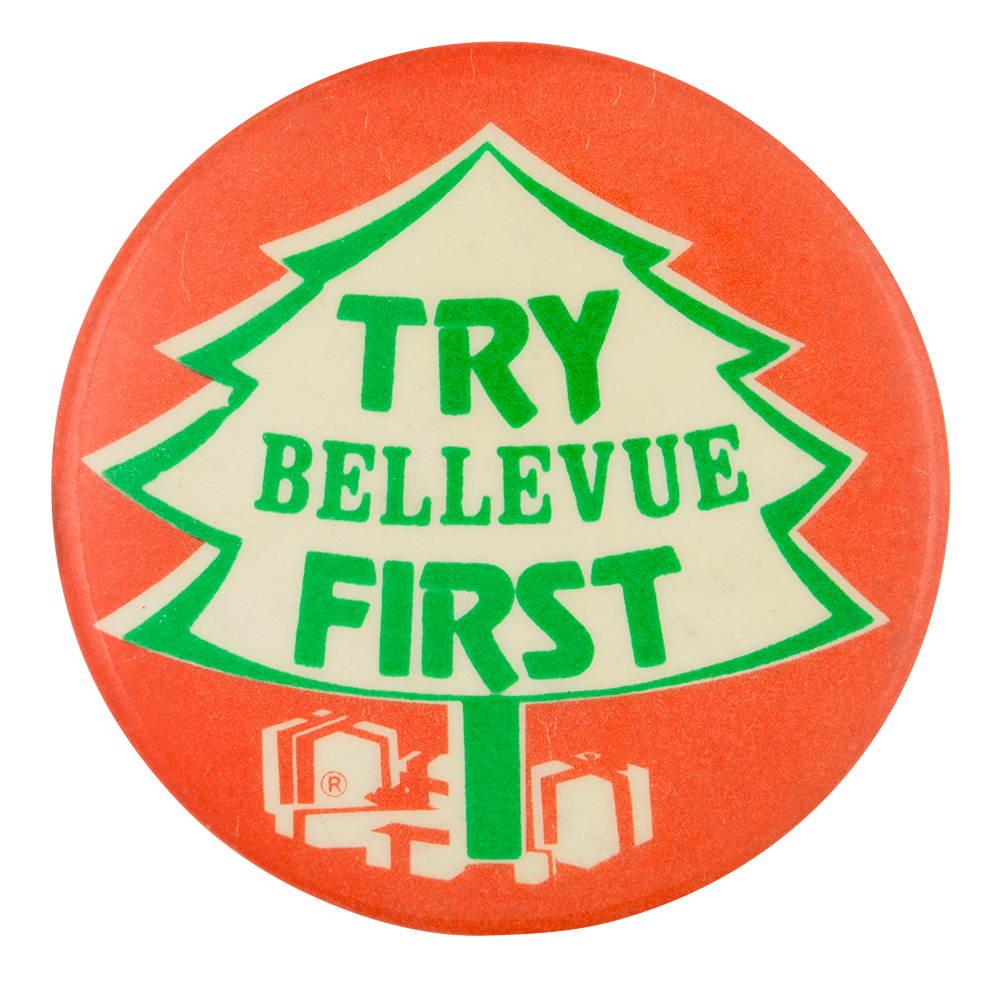
Text on Button TRY BELLEVUE FIRST
Image Description

Green text within a green and white Christmas tree above presents on a vermilion background.

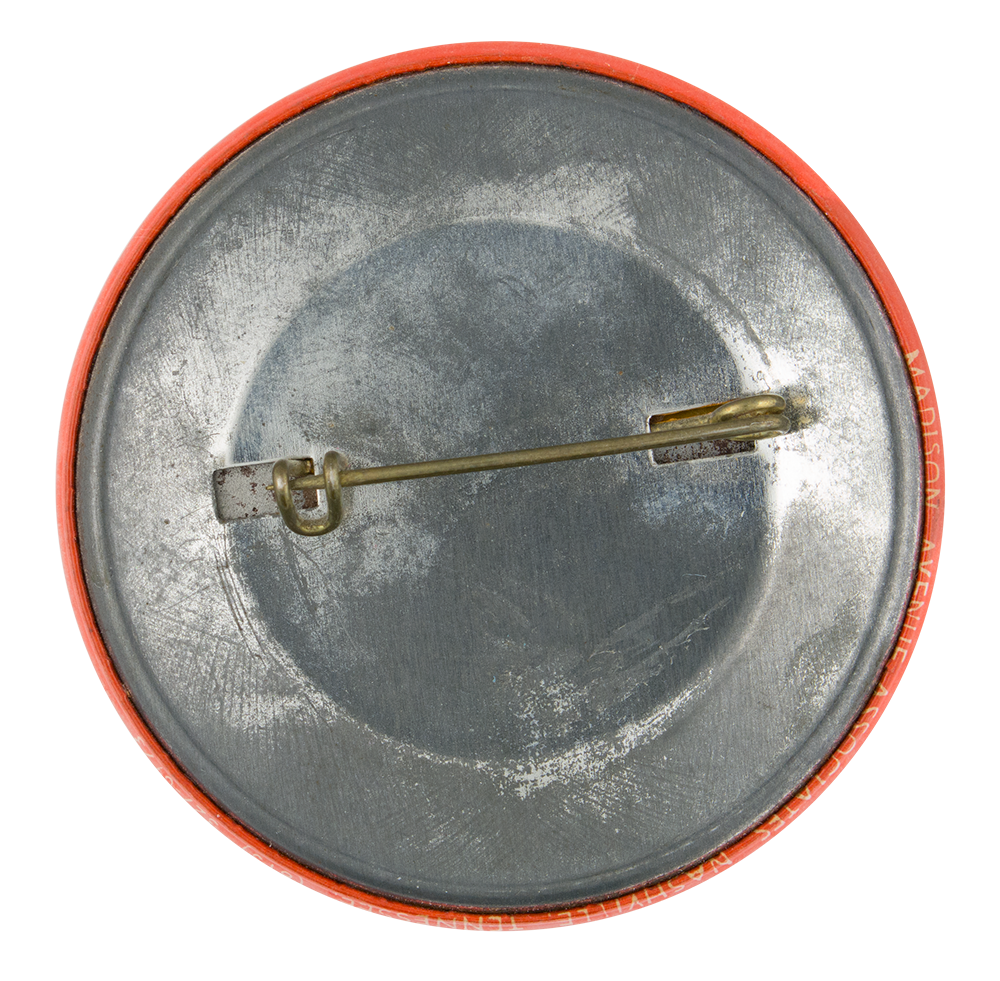
Curl Text MADISON AVENUE ASSOCIATES NASHVILLE, TENNESSEE (615) 327 -C173
Back Style
The Shape
The Size
Additional Information

Have info on this button? Contact us here.

Catalog ID AD0256

Dobis IBM

Category
Additional Images
Sub Categories
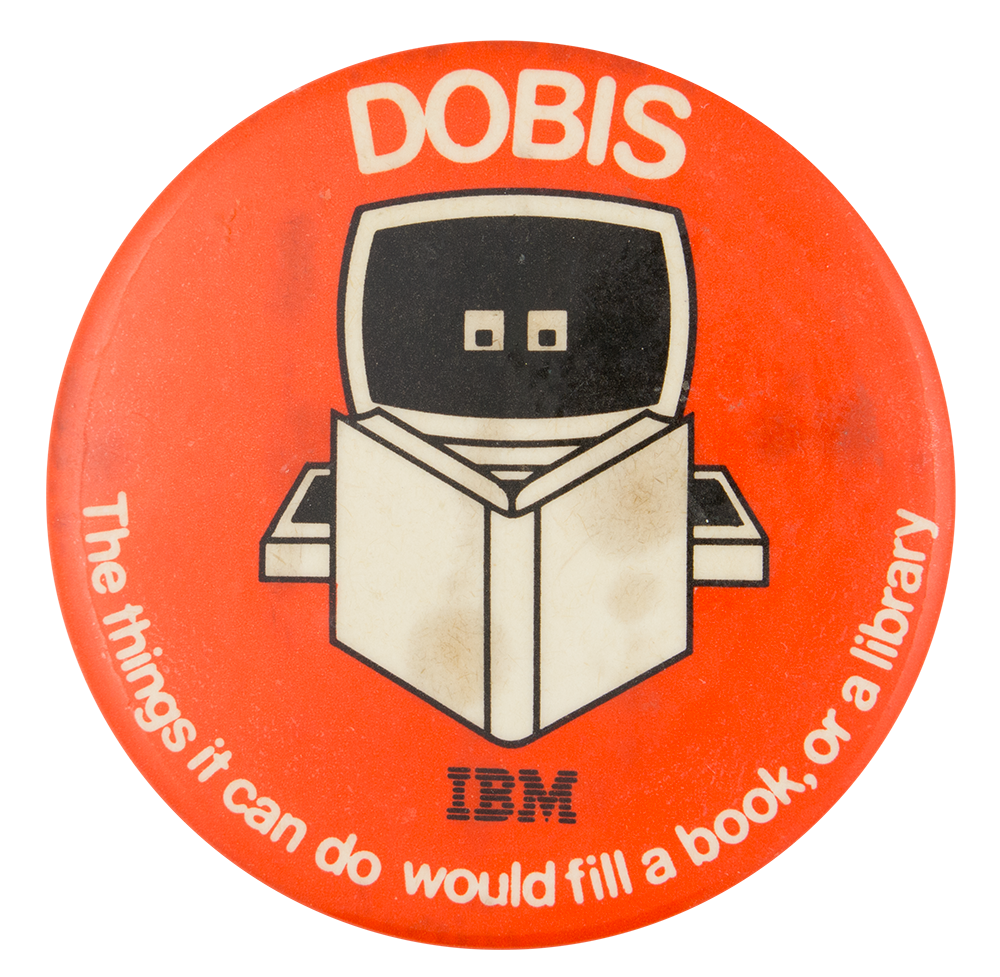
Text on Button DOBIS IBM The things it can do would fill a book, or a library
Image Description

A black and white computer reading a book above a black IBM logo and a semi-circle of white text beneath on a bright orange background.

Back Style
The Shape
The Size
Year / Decade Made
Additional Information

DOBIS (Dortmunder Bibliotheks Informations System) was an online catalog system used in libraries. Marketed worldwide by IBM in 1985, the DOBIS system was promoted to run as a smaller, more accessible program that shared the resources of larger computer installations and not as a stand alone program. It was designed to facilitate librarians without data processing skills to create and maintain the catalog system.

Sources

DOBIS in a medium sized academic library. (1988). VINE, 18(2), 12-17. doi: 10.1108/eb060019

Catalog ID AD0257

Taito

Category
Additional Images
Sub Categories
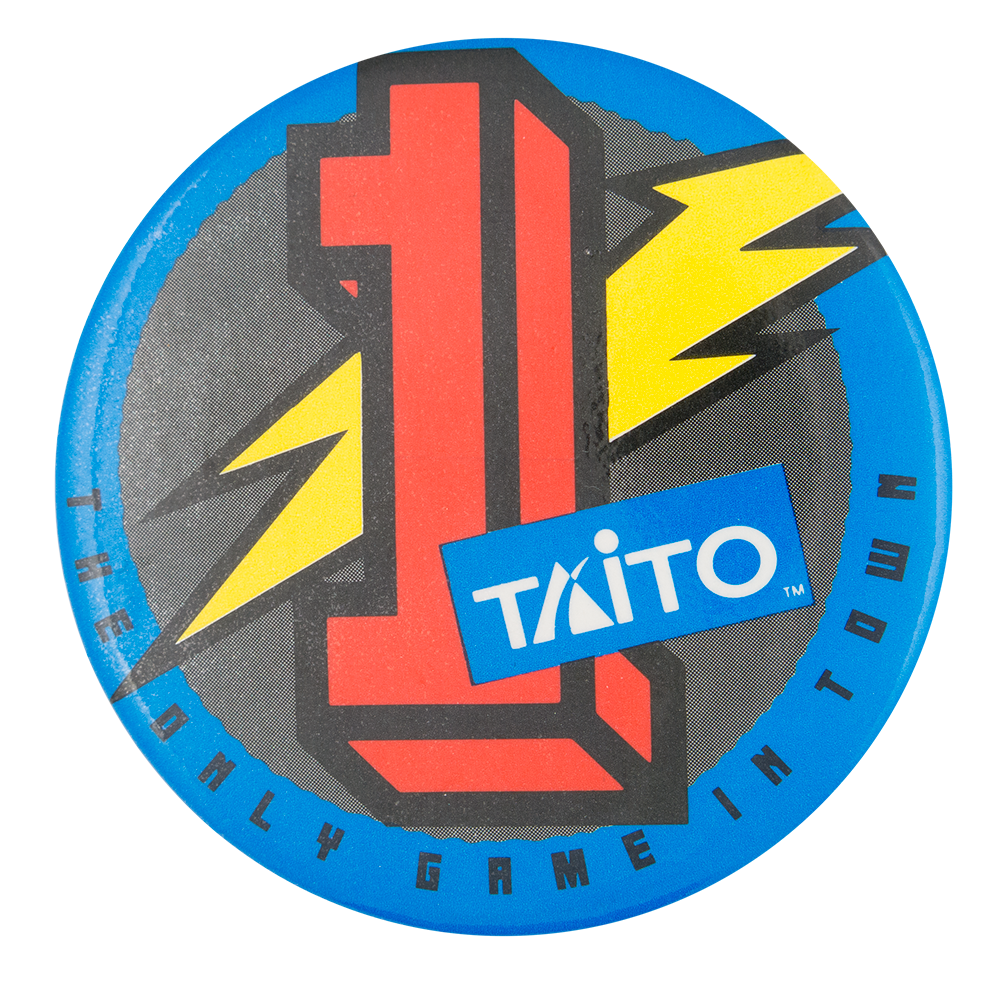
Text on Button TAiTO THE ONLY GAME IN TOWN
Image Description

A lightening bolt shoots across the button beneath a giant number one with sticker of the company name on an off-center gray circle and blue background, semi-circular black text at bottom.

Back Style
The Shape
The Size
Additional Information

The Taito Corporation was a Japanese publisher of video games that began operation in 1953. Some of Taito’s most well known productions were the arcade games Space Invaders and Bubble Bobble. The Taito Trading Company was founded by Michael Kogan, a Russian Jewish businessman, who initially distributed vending machines and jukeboxes. In 1973, Taito introduced their first video arcade game and renamed the company the Taito Corporation. It wasn't until 1978 that an arcade game called Space Invaders was introduced and the company became extremely successful. The company continued to produce through the 1990s, eventually creating a CD-ROM based console in 1992, which allowed users to play some of the arcade games and download games from a satellite transmission. The console, named WOWOW, was never released. In 2005, the Taito Corporation was purchased by Square Equinox who, in October of 2008, liquidated the company. 

Catalog ID AD0263

Yugo

Category
Additional Images
Sub Categories
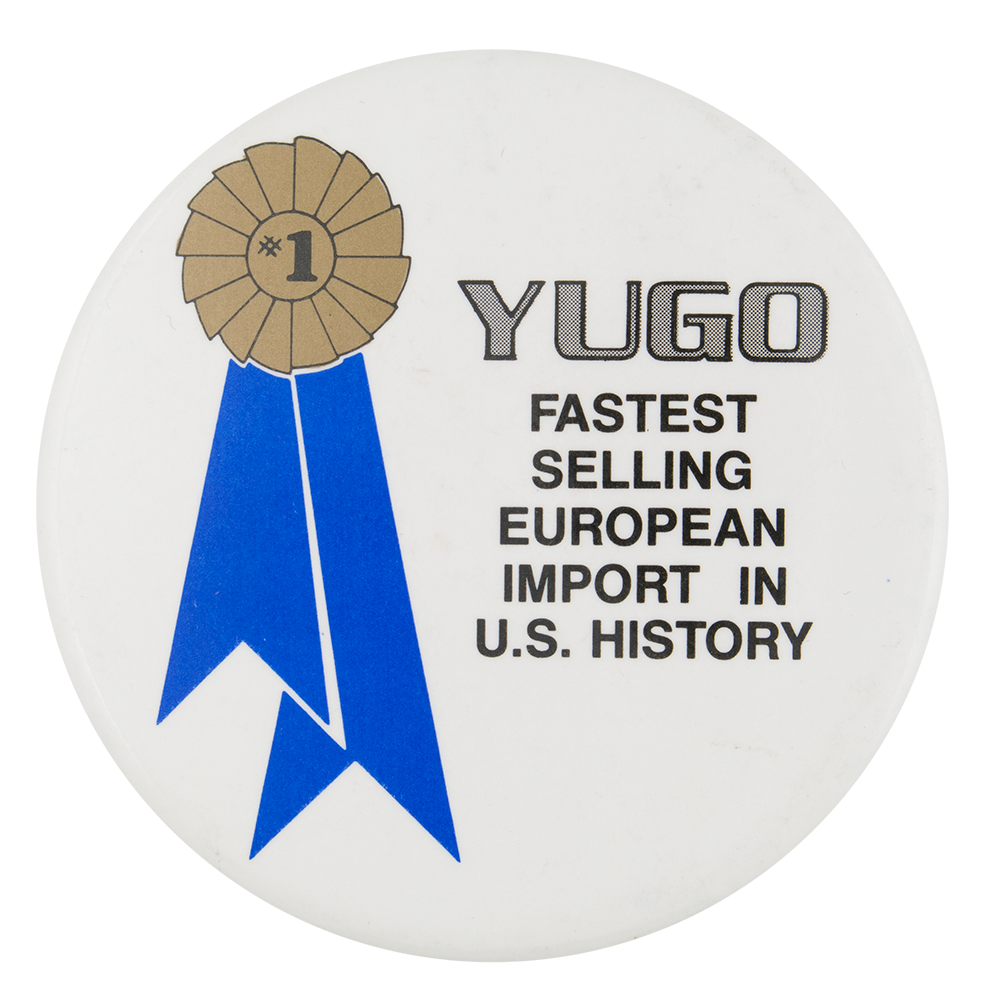
Text on Button YUGO FASTEST SELLING EUROPEAN IMPORT IN U.S. HISTORY
Image Description

A blue and gold number one ribbon down the left side and gray-filled black text above and black text beneath down the right side on a white background.

Back Style
The Shape
The Size
Additional Information

On August 26th, 1985, the Yugo was available to purchase for the first time to the American public. On its first day, 1,050 units were sold, quickly putting the Yugoslavian-made car on track to becoming the fastest-selling first-year European import in history. Named one of the "Outstanding Products of 1985" by Fortune and nominated by Motor Trend for its "Import Car of the Year" award, the Yugo claimed success in America. Things turned quickly sour, however, once people actually began to drive the car.

A series of scathing reviews, one by Consumer Reviews, in particular, lambasted the Yugo it tested as a "sorry sample" that had nearly a dozen defects, "attributable to sloppy assembly or incomplete dealer preparation." Plenty of other reviews echoed the same sentiment and sales responded by spiraling downward. Even the senior vice-president of the Yugo's production and engineering in the US, Toney Ciminera, nearly died twice while test driving several of the proto-types in New Jersey. 

To this day the Yugo remains one of the most notorious consumer product failures of the 1980s. The last Yugo in production didn't come off the Yugoslavian assembly line until late 2008.

Sources

Vuic, J. (2018, June 6). A Quick Look at the Yugo, the Worst Car in History. Retrieved August 04, 2020, from https://www.caranddriver.com/features/a21082360/a-quick-history-of-the-…

Catalog ID AD0260