Peoples A Unique Place for Everyone

Category
Additional Images
Sub Categories
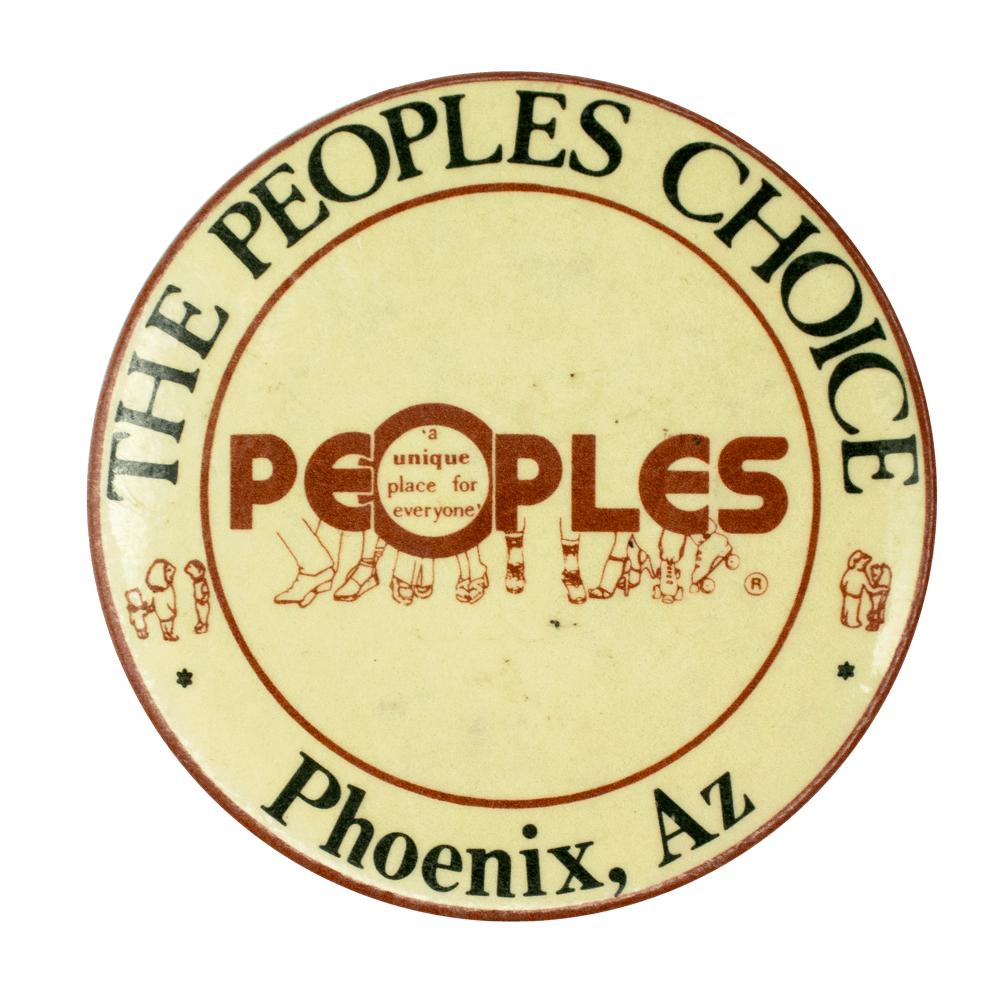
Text on Button THE PEOPLES CHOICE PEOPLES 'a unique place for everyone' Phoenix, Az
Image Description

Around the rim are two brown lines with black text and five small, brown illustrations of people between the lines; in the center is large, stylized text with illustrations of a wide variety of human feet emerging from the bottom of the word "PEOPLES" and small text inside the letter "O" of the large text; all on an off-white background. 

Back Style
The Shape
The Size
Additional Information

Peoples was a restaurant in Phoenix, Arizona that was open in 1980. They served sandwiches, burgers, quiche, steak, and other items, as well as original cocktails—a diverse menu aligned with their slogan "a unique place for everyone." As of 2025, Peoples no longer exists, and its former location is occupied by another restaurant. 

Sources

Vintage Menu Mania. (2023). 1980 Large Menu & Fold-Out Map PEOPLES RESTAURANT Phoenix Arizona. Ebay. https://www.ebay.com/itm/385118666056

Catalog ID AD1133

Rolling Stones Some Girls

Category
Additional Images
Sub Categories
Text on Button THE ROLLING STONES
Image Description

Off-white background integrated into an illustration of a woman's breast in a bra with a hint of the nipple visible above the bra; red text is in the center above

Back Paper / Back Info

[inventory/price sticker]

Back Style
The Shape
The Size
Year / Decade Made
Additional Information

The Rolling Stones are a British rock band that began performing in 1962. They are estimated to have sold over 250 million records over the years. The band was inducted into both the Rock and Roll Hall of Fame and the UK Music Hall of Fame; and has been ranked number four and number ten of artists worldwide by Rolling Stone magazine and Billboard magazine, respectively.

Released on June 9, 1978, Some Girls is the 14th studio album by the Rolling Stones and is the single best-selling Rolling Stones record. The original album art featured a parody of a vintage wig advertisement, depicting the band members in drag as well as many iconic celebrities such as Farrah Fawcett and Lucille Ball. The band, however, did not obtain permission from the women and/or their estates and thus the original album pressings became collectors’ items as the band was legally prevented from printing more albums with the original art. 

Sources

Parker, L. (2011, November 18). “Some Girls,” Some 33 Years Later: Jagger & Richards talk punk, disco, and confiscated cover art. Yahoo! https://www.yahoo.com/entertainment/bp/girls-33-years-later-jagger-rich…

Catalog ID MU0592

NAACP 1966

Category
Additional Images
Sub Categories
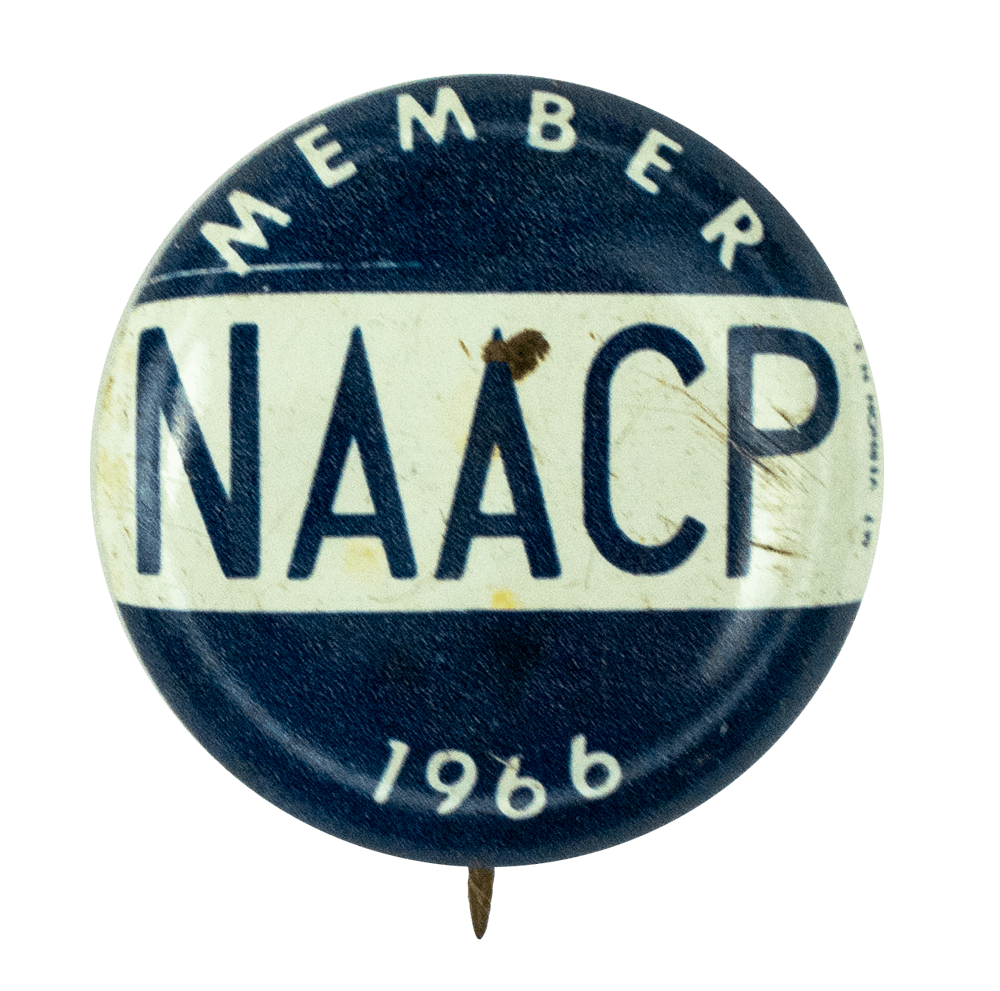
Text on Button MEMBER NAACP 1966
Image Description

White text on a dark blue background on the top and bottom; dark blue text on a white background in the center

Back Style
The Shape
The Size
Year / Decade Made
Additional Information

The NAACP, or National Association for the Advancement of Colored People, is the oldest and largest civil rights organization in the United States. Founded in 1909, the NAACP advocated for the rights and wellbeing of Black Americans with regards to legal protections, health, and economic opportunities. Buttons such as these were meant to be worn by NAACP members.  

Sources


Bond, J. (2009). NAACP Turns 100: The History and Future of the Nation’s Oldest and Largest Civil Rights Organization. Democracy Now!. https://www.democracynow.org/2009/7/20/naacp_turns_100_the_history_and


NAACP. (n.d.). Our Work. NAACP. https://naacp.org/our-work

Catalog ID CA0959

McCormick Line

Category
Additional Images
Sub Categories
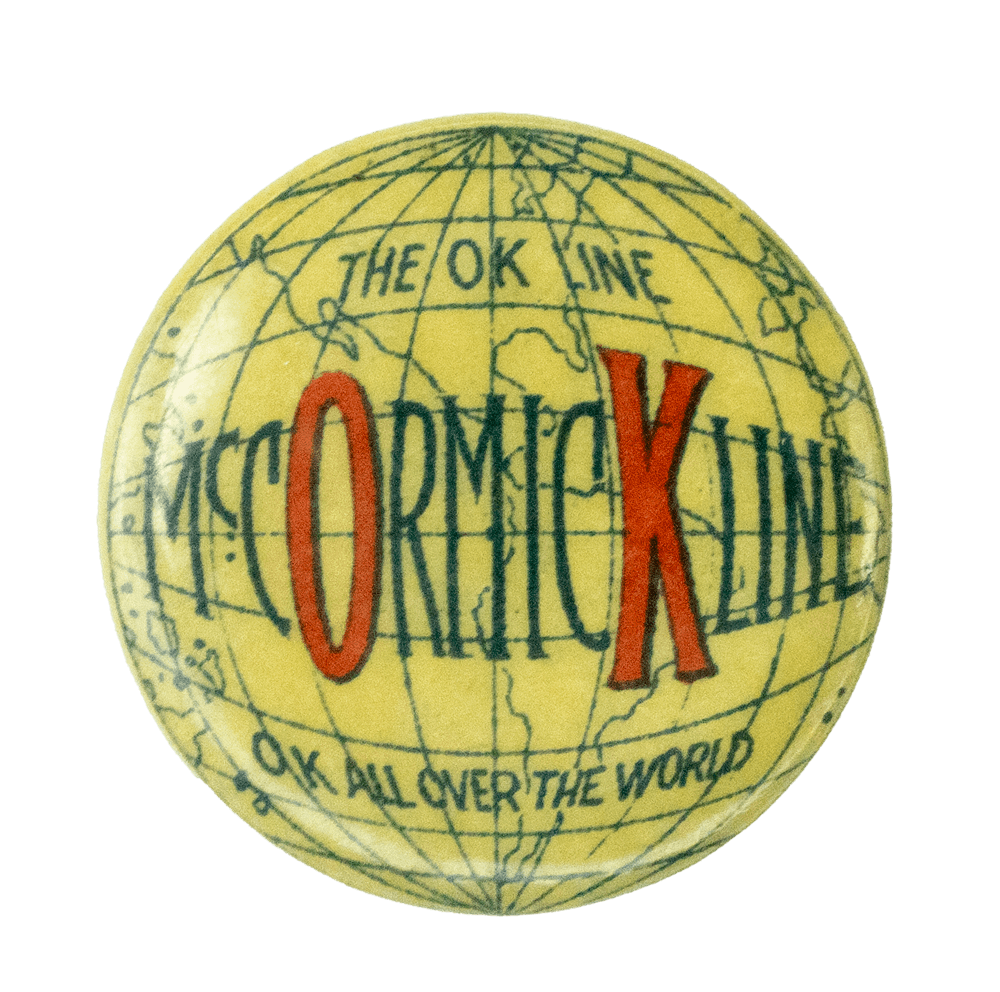
Text on Button THE OK LINE MCCORMICK LINE OK ALL OVER THE WORLD
Image Description

The overall design has a three-dimensional round effect, with an illustration of a globe black text on top. The "O" and "K" in the word "McCormick" are red for emphasis. 

Back Paper / Back Info

...BADGE CO.
[illegible]
CHICAGO, IL

Back Style
The Shape
The Size
Additional Information

Cyrus McCormick (1809-1884) was a manufacturing visionary. McCormick utilized the financial means of then-mayor of Chicago William Ogden to set up a small manufacturing factory in 1848. During this time, an important canal opened—the Illinois & Michigan Canal—which linked Lake Michigan with the Illinois and Mississippi Rivers. In essence, McCormick saw then-small Chicago (population ~20,000) transform into a city rich with infrastructure and trade. Over the next few years, McCormick expanded the McCormick Reaper Works into “the world’s largest farm machine factory” (ASSEMBLY). By 1850, the factory had 200 employees working 100,000 square feet of factory space. 

By the late 1800s, the company had sent out farming equipment “all over the world” via its McCormick Shipping Line. Much of the company's advertising reads: "The OK Line, the McCormick Line, OK All Over the World and an All 'Round Success."

Sources

McCormick Catalog Cover | Book or Pamphlet | Wisconsin Historical Society. (2025). Wisconsin Historical Society. https://www.wisconsinhistory.org/Records/Image/IM107579

Weber, Austin (2023, December 1). The McCormick Works: A 19th Century Marvel | ASSEMBLY. (n.d.). Www.assemblymag.com. https://www.assemblymag.com/articles/98174-the-mccormick-works-a-19th-century-marvel

Catalog ID AD1132

Southold Celebration

Category
Additional Images
Sub Categories
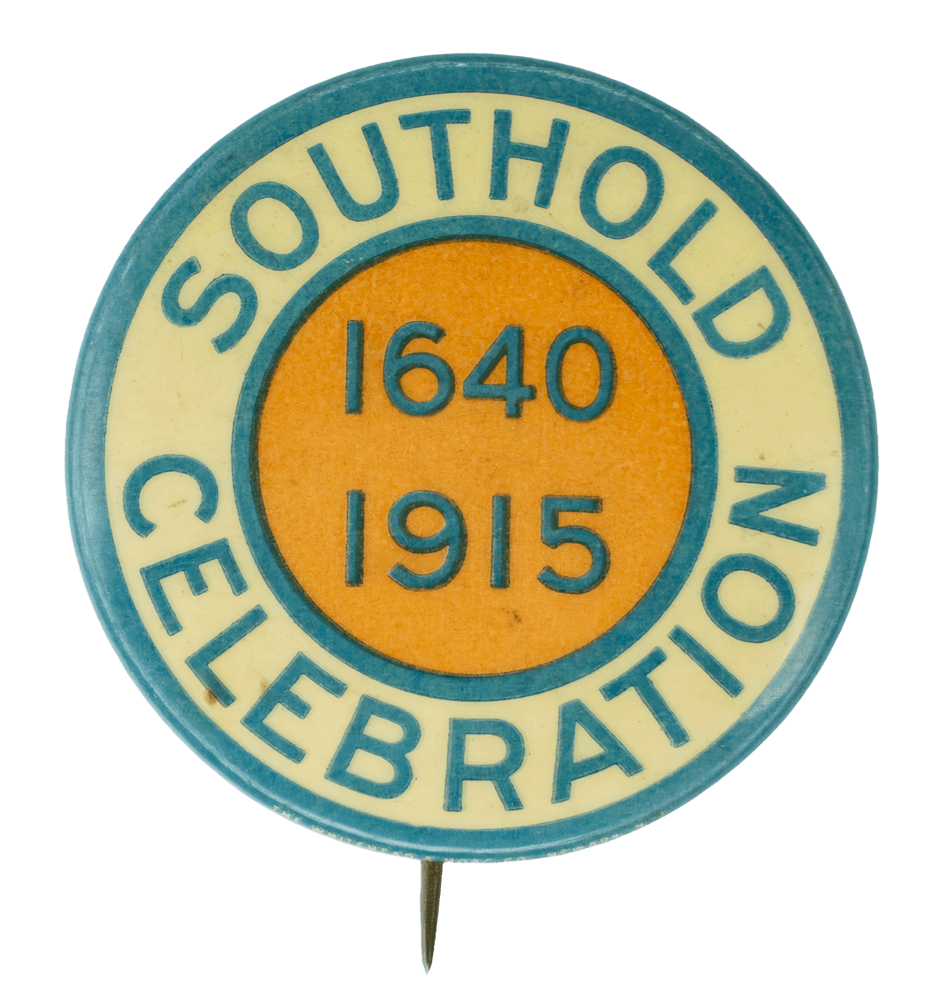
Text on Button SOUTHOLD CELEBRATION 1640 1915
Image Description

Teal text and outline on an off-white background around the rim; teal text in a teal-outlined circle with an orange background in the center

Back Paper / Back Info

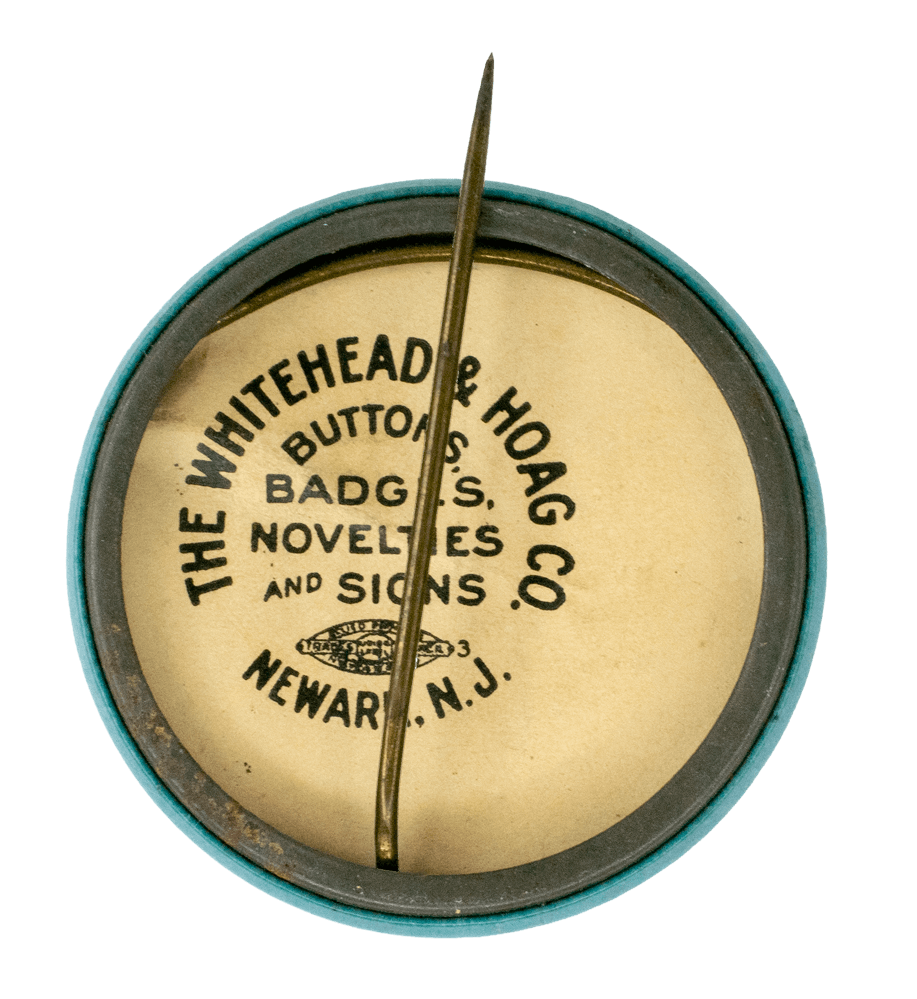
THE WHITEHEAD & HOAG CO.
BUTTONS
BADGES
NOVELTIES
AND SIGNS
[union bug]
NEWARK, N.J.

Back Style
The Shape
The Size
Year / Decade Made
The Manufacturer
Additional Information

Southold, New York is a town founded in 1640 by Puritans relocating from the New Haven colony. In 1915, the town celebrated its 275th anniversary with a week of activities to commemorate the community and its founding. Events of the week included a carnival, a parade, a baseball game, many speeches, and a historical pageant.  

Sources

Hallock, E. B. (1970, January 1). The story of the 275th Anniversary Celebration of the founding of Southold Town, July 21-25, 1915 : Hallock, Ella B. (Ella Boldry), 1861-1934 : Free Download, borrow, and streaming. Internet Archive. https://archive.org/details/storyof275thanni02hall/page/n129/mode/2up


Catalog ID EV0991

Center for Cuban Studies

Category
Additional Images
Sub Categories
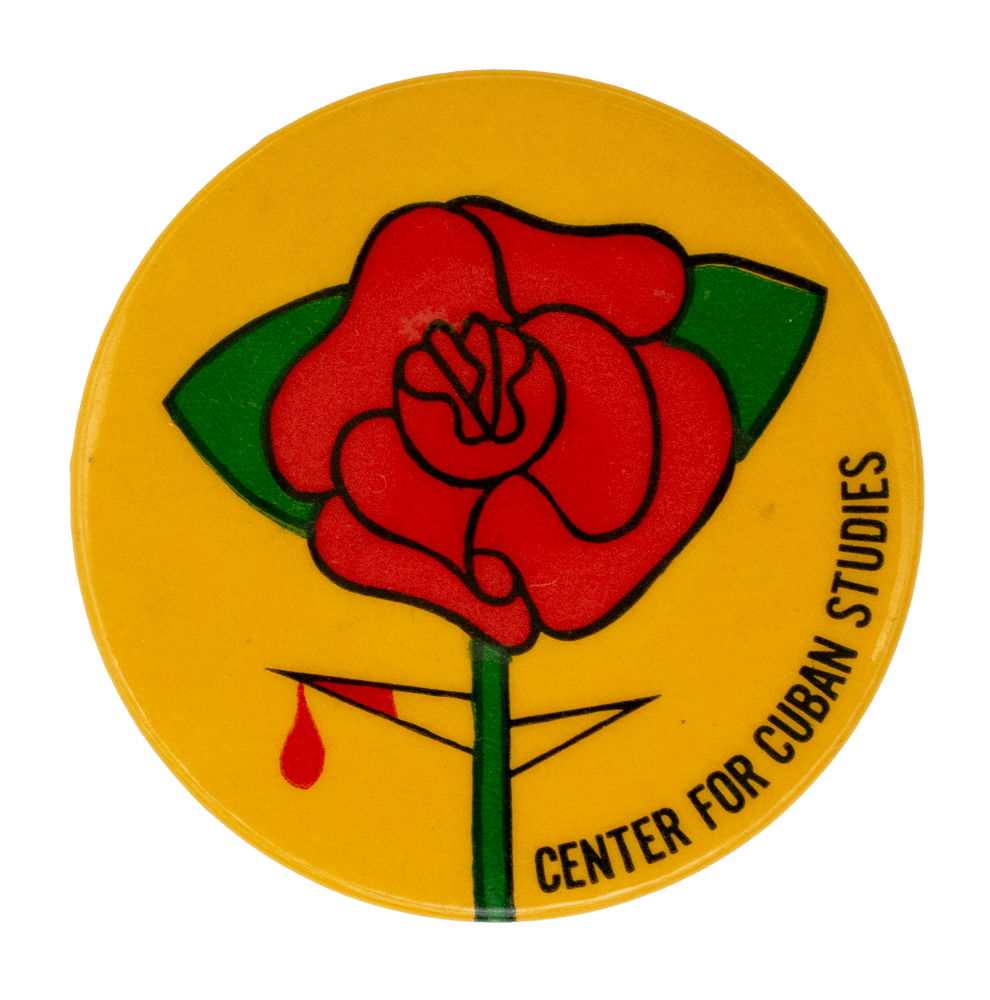
Text on Button CENTER FOR CUBAN STUDIES
Image Description

Yellow backgound with a large illustration of a red rose with two green leaves and thorn on its stem releasing a droplet of blood; small black text on the bottom right-hand corner

Curl Text N.G. SLATER CORP. N.Y.C. 11 [union bug]
Back Style
The Shape
The Size
Year / Decade Made
The Manufacturer
Additional Information

The Center for Cuban Studies is a nonprofit founded in 1972 in New York City. The Center is dedicated to providing information about historic and contemporary Cuba, as well as contributing to the normalization of relations between Cuba and the United States. The Center houses a collection of more than 12,000 posters, photographs, prints, drawings, paintings, ceramics, and other examples of visual arts in Cuba; plus thousands of slides, catalogs, books, and other information about Cuban artists, providing a unique look into the country’s evolution both culturally and artistically. 

Sources

About Us. Center for Cuban Studies. (n.d.). https://centerforcubanstudies.org/about/

Catalog ID SC0073

Blue and Yellow Choice

Category
Additional Images
Sub Categories
Text on Button CHOICE
Image Description

Bold blue letters on a yellow background with a small blue union bug at the bottom

Back Style
The Shape
The Size
Additional Information

“CHOICE” is a short way of saying “pro-choice”—support for the idea that people should be able to decide for themselves whether to have an abortion. It’s essentially a one-word stand for bodily autonomy and legal access to abortion. The button itself is a pin-back protest badge, part of a long tradition of using buttons to share political views. Simple “CHOICE” designs like this were especially common from the 1970s through the 1990s, alongside clearer slogans such as “A Woman’s Right to Choose” and rally buttons like “Keep Abortion Safe & Legal.”

Sources

Abortion rights movement. (2025, September 14). In Wikipedia. Retrieved October 22, 2025, from https://en.wikipedia.org/wiki/Abortion-rights_movement 

Fiveable. (2024, July 31). pro-choice movement – Intro to Gender Studieshttps://fiveable.me/key-terms/introduction-gender-studies/pro-choice-movement 

Warnes, K. (2024). United States pro-choice movement. EBSCO Research Starters. https://www.ebsco.com/research-starters/political-science/united-states-pro-choice-movement 

Catalog ID CA0958

Butter Pan Cookies Koo-Ki-Kid

Category
Additional Images
Sub Categories
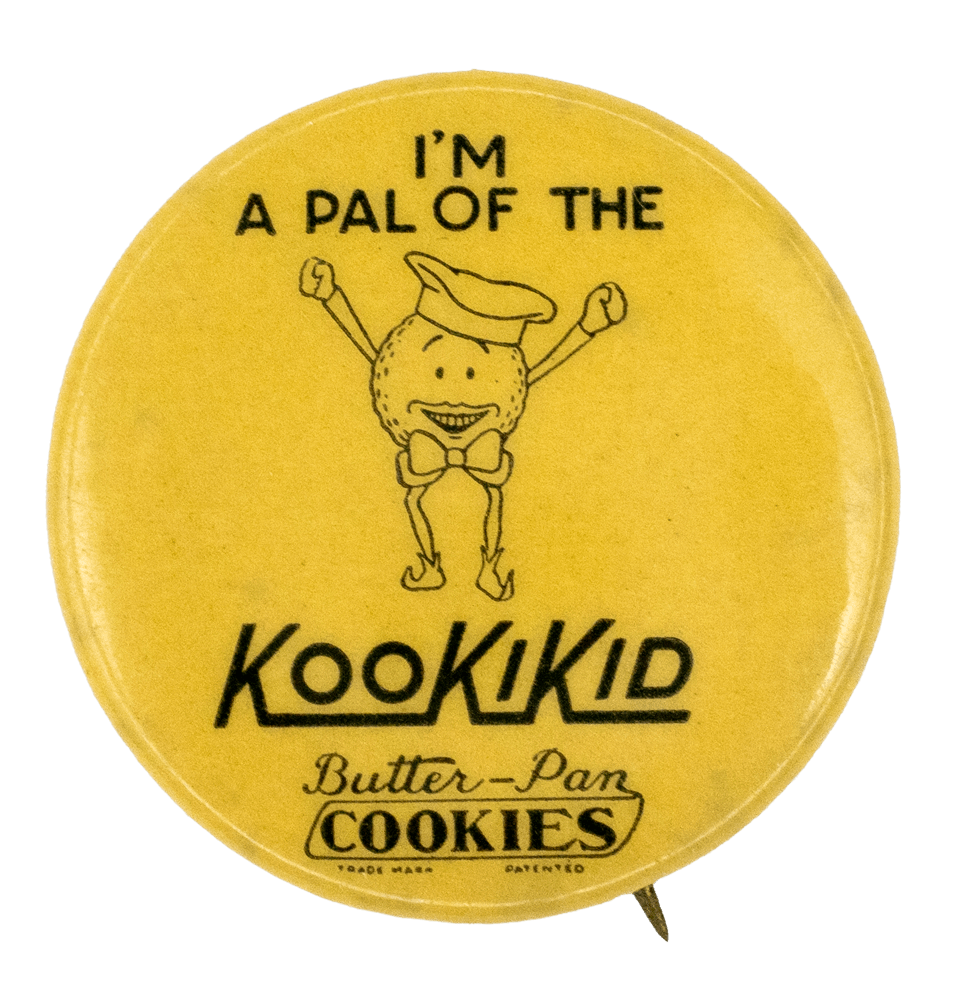
Text on Button I'M A PAL OF THE KOO_KI_KID Butter-Pan COOKIES TRADE MARK PATENTED
Image Description

Yellow background with an illustration of an anthropomorphic cookie with it's arm raised wearing a hat, bow tie, and pointy shoes in the center; black text is above and below the illustration

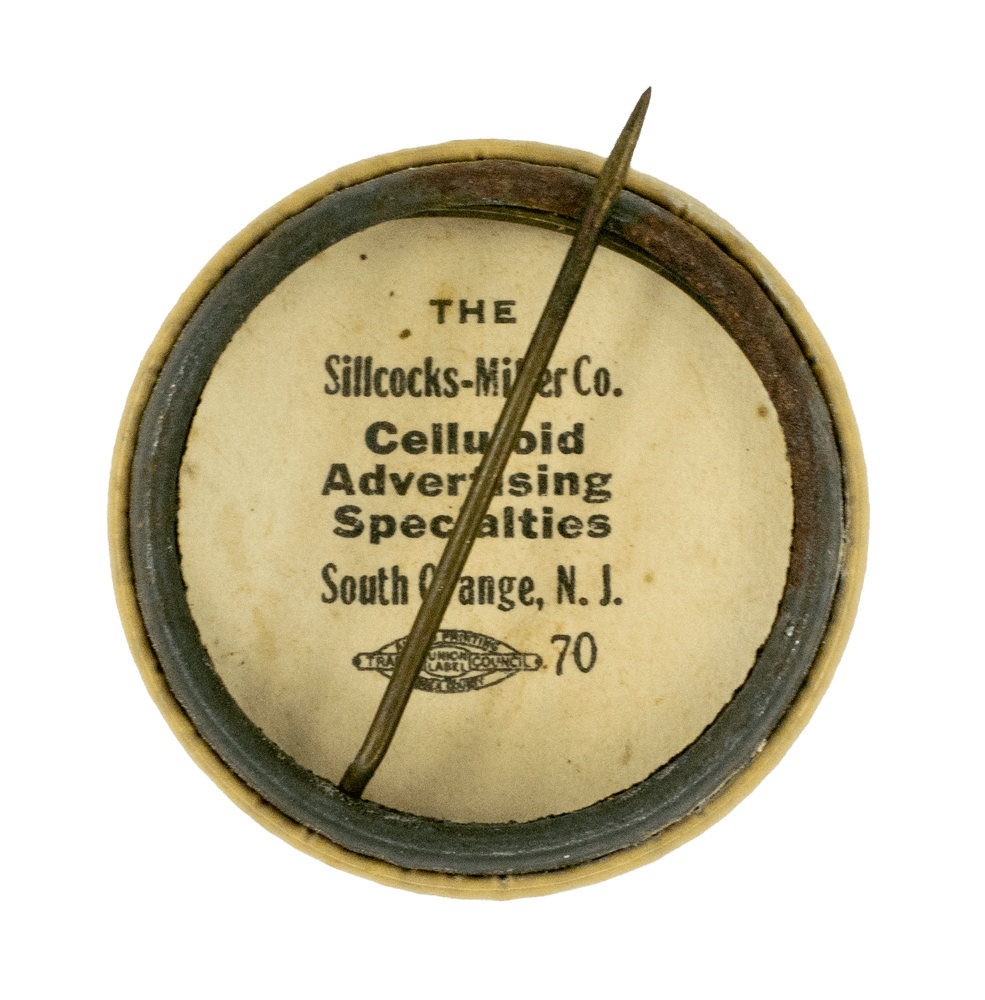
Back Paper / Back Info

THE Sillcocks-Miller Co.
Celluloid
Advertising
Specialities
South Orange, N.J.
[union bug] 70

Back Style
The Shape
The Size
The Manufacturer
Additional Information

Please contact us if you have more information.

Catalog ID AD1131

Why Haven't We Seen a Photograph of the Whole Earth Yet?

Category
Additional Images
Sub Categories
Text on Button Why haven't we seen a photograph of the whole Earth yet?
Image Description

Black text on a white background

Curl Text STAR ENGRAVING CO. 177 MINNA ST S.F.
Back Style
The Shape
The Size
Year / Decade Made
The Manufacturer
Additional Information

In 1966, American author and editor of counterculture magazine The Whole Earth Catalogue, Stewart Brand, waged a campaign to have NASA release a satellite photo of earth from space that they were rumored to possess. Brand believed that the image of planet earth could be a powerful symbol for “evoking a sense of shared destiny and adaptive strategies from people.” Brand decided on the slogan “Why haven’t we seen a photograph of the whole earth yet?” to represent his campaign and subsequently had several hundred buttons and posters made with the slogan printed on them. Brand then spent time mailing the buttons out to NASA officials, members of congress and their secretaries, Soviet scientists, UN officials, and various diplomats. It was reported that the buttons made their way onto the lapels of many a NASA employee and, the following year in 1967, an image of earth as viewed from space was released to the public. 

Sources

Dyment, D. (2017, November 8). Stewart Brand: Why haven’t we seen a photograph of the Whole Earth yet? Artists’ Books and Multiples. https://artistsbooksandmultiples.blogspot.com/2017/11/stewart-brand-why…


Catalog ID AR0502

Bring Justice to America's Fields

Category
Additional Images
Sub Categories
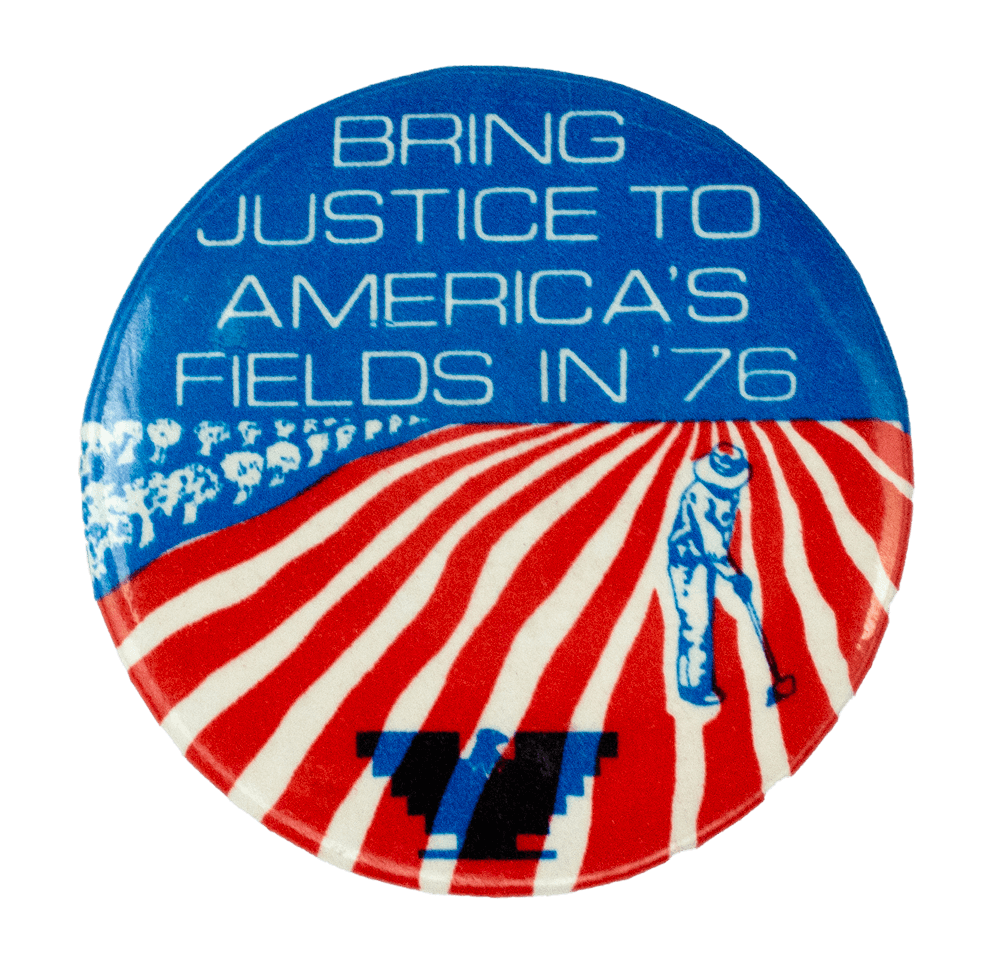
Text on Button BRING JUSTICE TO AMERICA'S FIELDS IN '76
Image Description

White text on a blue background on the top half; red and white diagonal stripes with small superimposed illustrations of an aztec eagle and farm workers 

Back Style
The Shape
The Size
Year / Decade Made
Additional Information

The summer of 1977 saw a large agricultural movement in Oklahoma, Colorado, New Mexico, Texas, and Kansas, driven by low farm prices amongst farmers. Farmers were left to foot the bill for fuel, seed, and pesticide costs while struggling with “sour” prices and unwilling lenders. A farm strike was staged; the farmers wanted Congress to pass legislation raising farm prices, as low prices persisted alongside heavy debts, even after the then-recently-passed Food and Agriculture Act of 1977. By late summer, the movement had gained momentum, and twenty states had joined the cause.

Thus, farmers wanted to “bring justice to America’s fields.”

Huge tractorcades followed into 1978. By January of ’78, Oklahoma finally passed a resolution favoring “a guaranteed price for agricultural products… at 100% of parity.” The American Agricultural Movement (AAM) held a national convention in Oklahoma City on April 24th and 25th of 1978. Neighboring businesses in several communities closed shop for the two days in solidarity. While Congress did pass some helpful measures to farmers, the organization did not succeed with many of their demands and eventually faded away. According to the April 2020 census, there are only 415 remaining members.

Sources

American Agricultural Movement | The Encyclopedia of Oklahoma History and Culture (2020). Oklahoma Historical Society | OHS. https://www.okhistory.org/publications/enc/entry?entry=AM003

McDaniel, Matthew (2019, November 13). Farm Strike of the late 1970s put agriculture on the front page. Standard-Times. https://www.gosanangelo.com/story/news/2019/11/13/late-1970-s-farm-strike-brought-attention-dire-situation/2569975001/

Catalog ID CA0957