Woodstock Top Notch

Category
Additional Images
Sub Categories
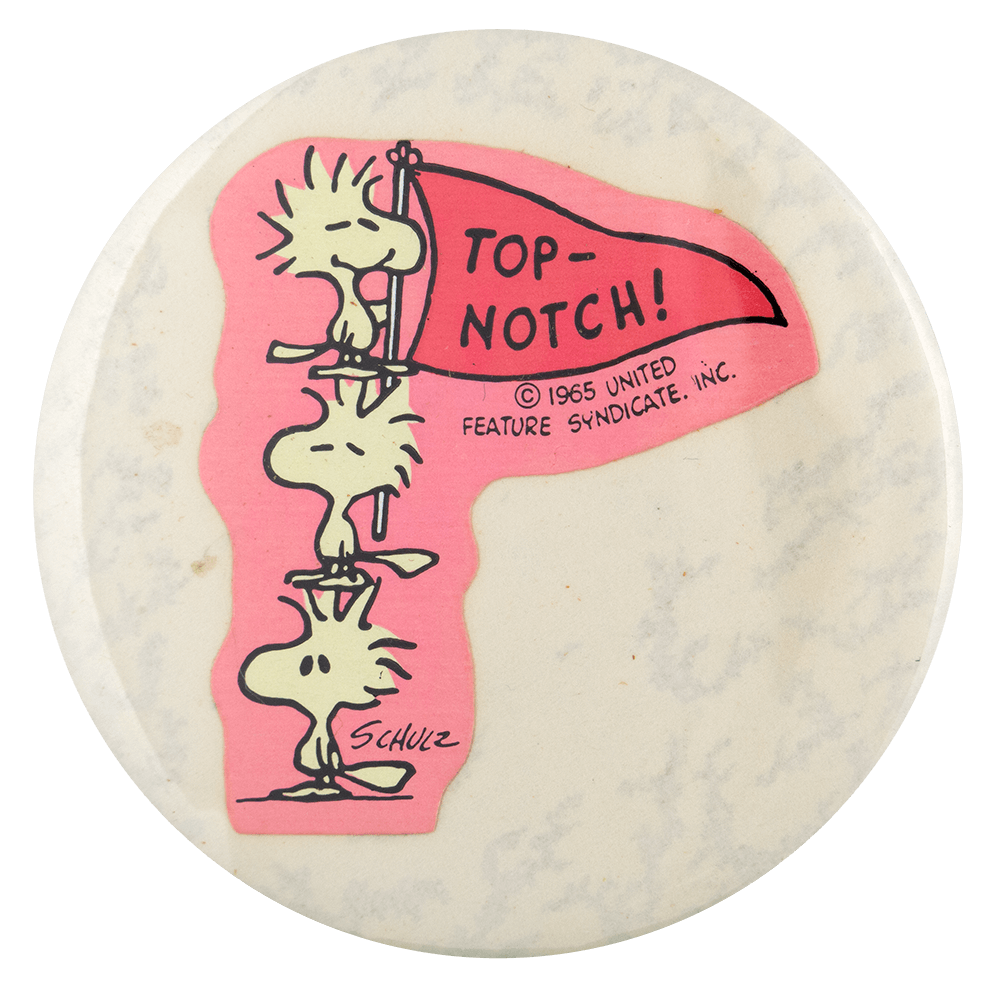
Text on Button TOP-NOTCH! ©1965 UNITED FEATURE SYNDICATE. INC. SCHULZ
Image Description

Three Woodstock characters standing in a column with the top holding a red flag with black text. Image has pink background in outline around it with white background.

Back Style
The Shape
Year / Decade Made
Additional Information

The yellow birds in Peanuts comic strip by Charles M. Schulz first appeared in 1960. Eventually, the yellow birds inspired the character Woodstock, Snoopy's sidekick, who was introduced in 1968 as a consistent character. The birds chirp a language that only Snoopy can understand and are often seen with the onomatopoeia "sniff."

Sources

Woodstock. (nd.). Peanuts by Schulz. Retrieved from https://www.peanuts.com/characters/woodstock/#

Catalog ID EN0553

Don't Buy Unfair Chicago Tribune

Category
Additional Images
Sub Categories
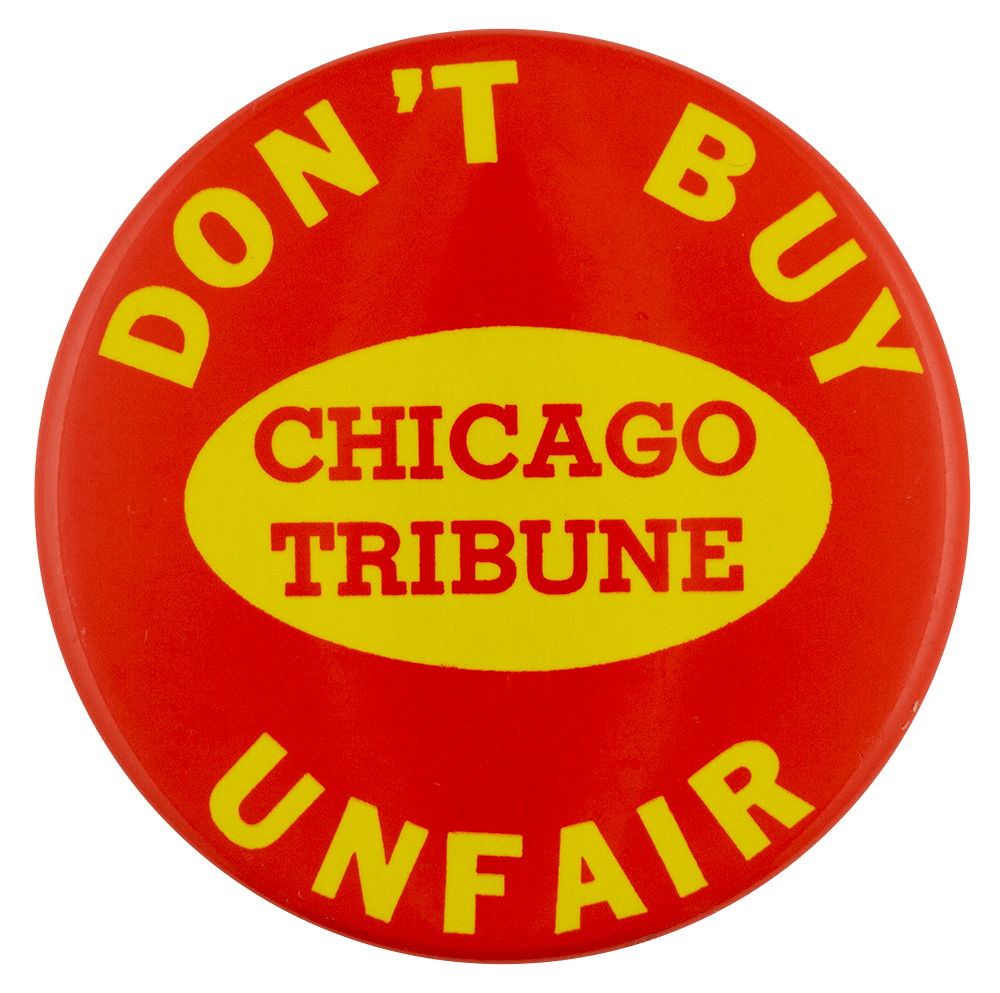
Text on Button DON'T BUY CHICAGO TRIBUNE UNFAIR
Image Description

Yellow text on curve with red background. Center is yellow oval with red text.

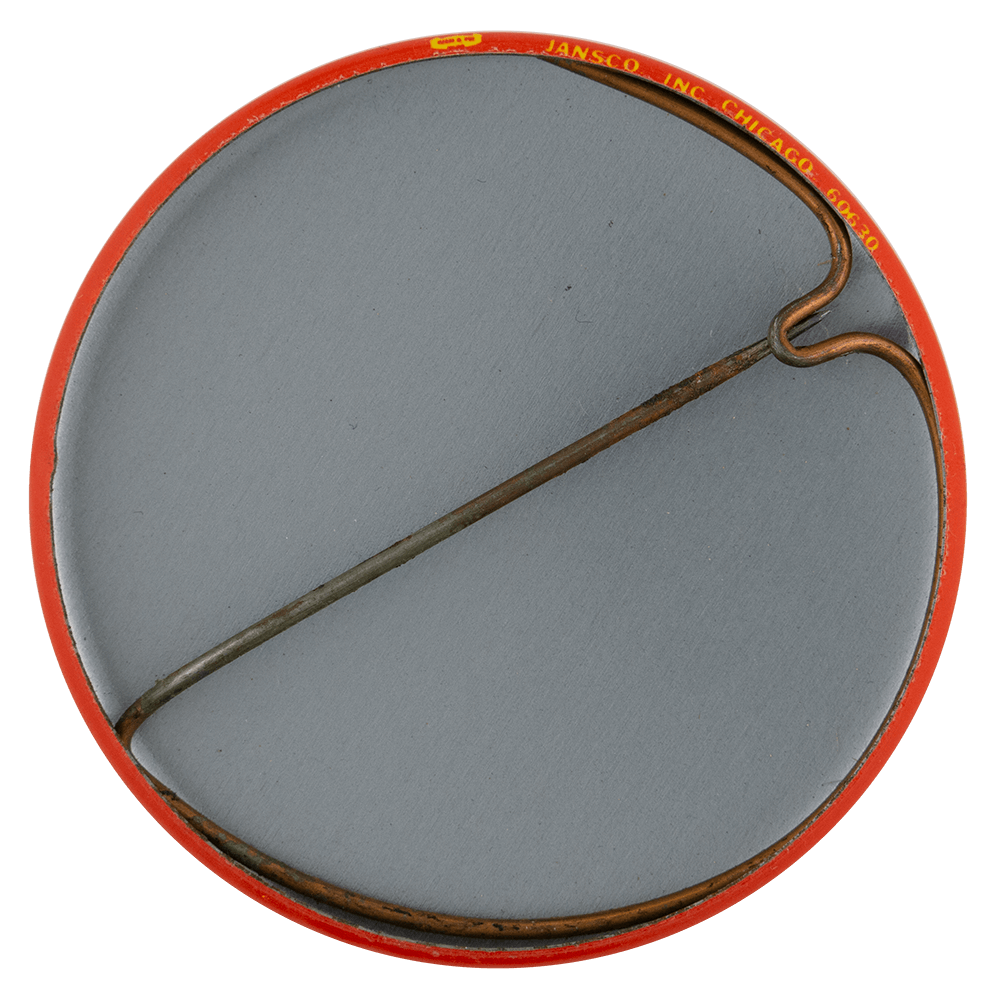
Curl Text Union bug JANSCO INC CHICAGO 60630
Back Style
The Shape
The Size
Year / Decade Made
Additional Information

The Chicago Tribune is a daily newspaper published in Chicago, Illinois. It was founded in 1847 and is one of the foremost American newspapers, particularly in the Midwest. 

On July 18, 1985, over 1000 union production workers walked out after the failure of contract negotiations. The crux of the issue was the Tribune’s desire for complete control of the hiring, assignment, and direction of production workers. Thus began a years-long strike and many stalled negotiations. Within the first year, 68 bargaining sessions were held, and the unions and the Tribune both filed charges alleging unfair labor practices by the opposing side before the National Labor Relations Board. Many of the workers who had gone on strike were replaced, and even when unions offered to return unconditionally in 1986, few workers were rehired. The printers’ union sued the paper, alleging that their actions violated a 1975 agreement in which they were guaranteed lifetime employment. 

The printers’ union and the paper settled in 1989 with an $8.56 million settlement fund, a new three-year contract, and the withdrawal of a union lawsuit. However, even after the printers settled, the pressmen and the mailers remained out on strike, and hearings regarding labor relations between the pressmen, mailers, and paper continued into the 1990s. In 1992, a federal appeals court decreed that the Chicago Tribune did not violate federal labor laws

Sources

Warren, J. (1989, May 17). Judge OKs Tribune Strike Pact. Chicago Tribune

Warren, J. (1992, May 30). Court Backs Tribune in Case Involving '85 Mailers Strike. Chicago Tribune

Warren, J. (1991, Aug 27). Hearing Ordered on Tribune Strike. Chicago Tribune

TRIBUNE STRIKE TALKS CALLED 'POSITIVE STEP': [SPORTS FINAL, C EDITION]. (1987, Jun 16). Chicago Tribune (Pre-1997 Fulltext)

Strong, J. (1985, Jun 03). MAILERS CALL FOR TRIBUNE STRIKE: [SPORTS FINAL, C EDITION]. Chicago Tribune (Pre-1997 Fulltext)

2D ANNIVERSARY OF TRIBUNE STRIKE: [SPORTS FINAL, C EDITION]. (1987, Jul 18). Chicago Tribune (Pre-1997 Fulltext)

The Editors of Encyclopaedia Britannica. (2017, September 22). Chicago Tribune. https://www.britannica.com/topic/Chicago-Tribune. 

Warren, J. NO PROGRESS IN YEAR-OLD TRIBUNE STRIKE. chicagotribune.com. https://www.chicagotribune.com/news/ct-xpm-1986-07-18-8602200945-story….

Catalog ID CH0298

TCC Makes a Difference

Category
Additional Images
Sub Categories
Text on Button TCC MAKES A DIFFERENCE SAY YES
Image Description

Black and blue text on white background. Rust spots on face.

Back Style
The Shape
Additional Information

Thornton Junior College was founded in 1927 as an extension of  Thornton Township High School in Harvey, Illinois. The 1965 Illinois Community College Act enlarged the service area to include additional high school districts, and in 1969 the school’s name was changed to Thornton Community College to better reflect the mission and goals of the college.

The school relied on tax dollars to support its mission, and throughout its history urged residents to vote yes at tax referendums. 1986 was a particularly fraught year for the school, when the need for a tax increase coincided with a six-week long teachers’ strike that led to the temporary closure of the school. 

In 1987, the two referendum proposals meant to address the college’s projected $1 million deficit failed. At the time, it was the eighth time in 21 years that voters had turned down a tax increase, and the school had both the lowest tax rates and the highest tuition of any of Illinois’ community colleges.   

In 1988, the name was changed again and the school became known as South Suburban College, which better reflects its geographic location and the fact a majority of its students hailed from outside of Thornton Township. The name change was also part of an advertising strategy to show a break with the college’s past and the many changes that were made following the tumult of the 1986 teacher’s strike. By 1989, a school that many had feared would go bankrupt was back in the pink.

Sources

Fegelman, A. (1986, Oct 15). STRIKE SENTIMENT MAY CURB COLLEGE'S TAX HOPES: [SPORTS FINAL, C EDITION]. Chicago Tribune (Pre-1997 Fulltext)

Fegelman, A. (1986, Sep 09). FACULTY AT THORNTON ANGERED BY PROPOSAL: [SPORTS FINAL, C EDITION]. Chicago Tribune (Pre-1997 Fulltext)

History of the College . https://www.ssc.edu/news-events-information/about-ssc/ssc-history/. 

Karwath, R. (1987, Mar 05). New crises for embattled suburb school: President quits, budget in jeopardy at Thornton Community College. Chicago Tribune (1963-1996) 

Karwath, R. (1986, Oct 03). S. HOLLAND CAMPUS TO REOPEN: [CHICAGOLAND EDITION]. Chicago Tribune (Pre-1997 Fulltext)

Kuroski, N. (1986, March 13). Says tax hike brings return. Southtown Star, pp. 9–9. 

Pearlman-Debelak., J. (1989, Mar 06). South Suburban College bounces back: [SOUTH SPORTS FINAL, C Edition]. Chicago Tribune (Pre-1997 Fulltext)

THORNTON COLLEGE TAKES A NEW NAME. chicagotribune.com. https://www.chicagotribune.com/news/ct-xpm-1988-07-02-8801120257-story.h...

TCC tries again. (1986, October 19). Southtown Star. Tinley Park, Illinois. 

Catalog ID CA0752

Shop Tinley Park

Category
Additional Images
Sub Categories
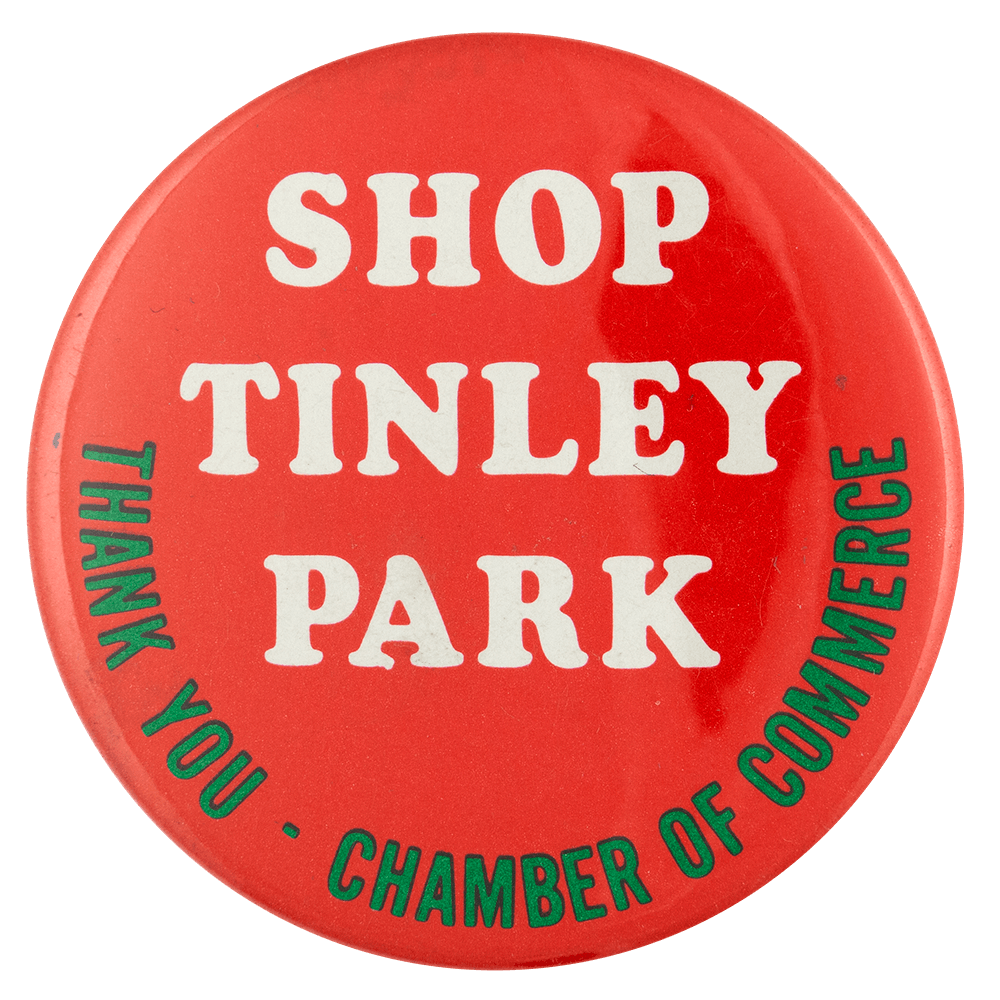
Text on Button SHOP TINLEY PARK THANK YOU-CHAMBER OF COMMERCE
Image Description

White text in center with green text along bottom curve on red background.

Back Style
The Shape
Additional Information

The Village of Tinley Park, formerly named Bremen, was settled in the 1830s, but finally incorporated as a village in 1892. Bremen was located on the Chicago, Rock Island, and Pacific Railroad lines as the railroad industry was rapidly expanding in the second half of the nineteenth century influencing the growth of the area. In 1890, the name Bremen was changed to Tinley Park, in honor of the Village’s first railroad station agent, Samuel Tinley Sr.

Tinley Park is best known throughout the Chicago area for its world-renowned Hollywood Casino Amphitheatre entertainment venue that seats 28,000. After its centennial (1992), Tinley Park has been working on preserving the appearance of the downtown historical district. Store owners are encouraged to maintain the historic storefronts or to mimic that architectural style in newer buildings from the past 30 years.

Sources

"History of Tinley Park". The Village of Tinley Park. Retrieved July 22, 2020 from https://www.tinleypark.org/government/departments/clerk_s_office/a_hist….

Catalog ID CA0751

Say Yes to Thornton Community College

Category
Additional Images
Sub Categories
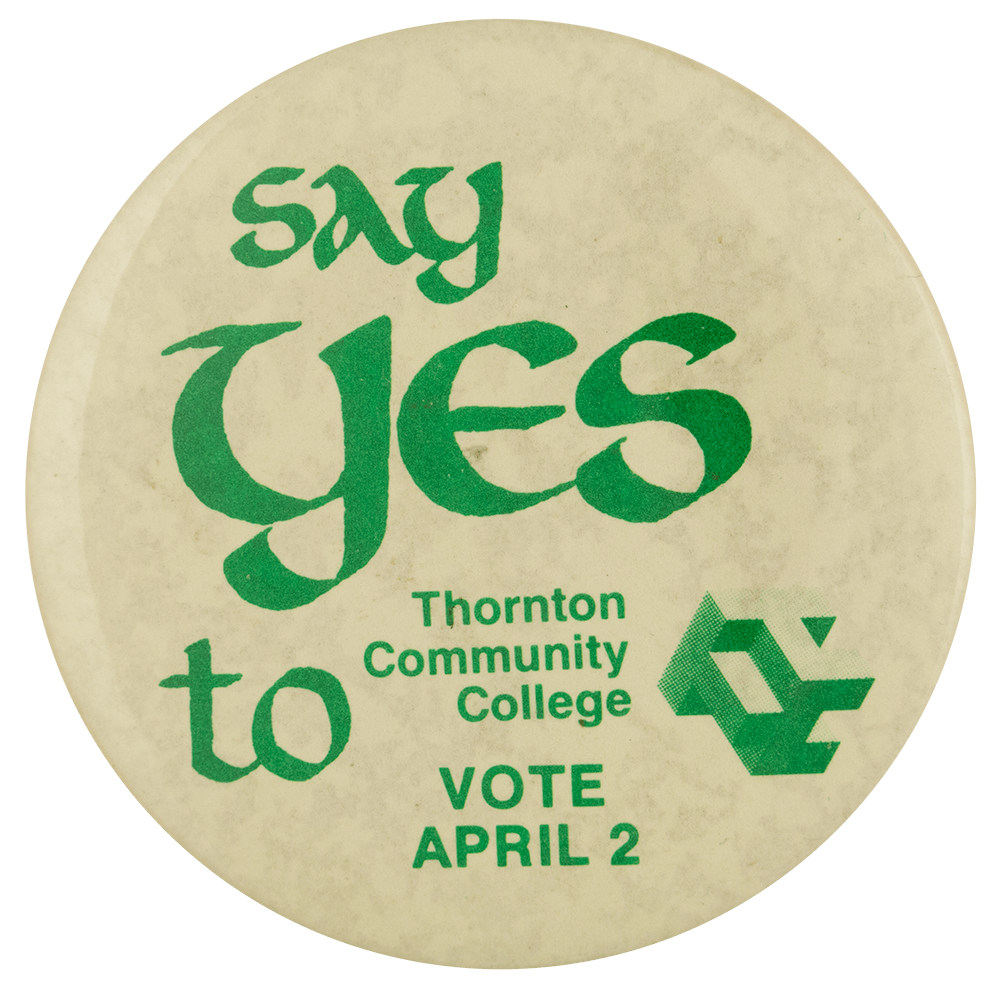
Text on Button say yes to Thornton Community College VOTE APRIL 2
Image Description

Green text and image on off white background.

Back Style
The Shape
Additional Information

Thornton Junior College was founded in 1927 as an extension of  Thornton Township High School in Harvey, Illinois. The 1965 Illinois Community College Act enlarged the service area to include additional high school districts, and in 1969 the school’s name was changed to Thornton Community College to better reflect the mission and goals of the college.

The school relied on tax dollars to support its mission, and throughout its history urged residents to vote yes at tax referendums. 1986 was a particularly fraught year for the school, when the need for a tax increase coincided with a six-week long teachers’ strike that led to the temporary closure of the school. 

In 1987, the two referendum proposals meant to address the college’s projected $1 million deficit failed. At the time, it was the eighth time in 21 years that voters had turned down a tax increase, and the school had both the lowest tax rates and the highest tuition of any of Illinois’ community colleges.   

In 1988, the name was changed again and the school became known as South Suburban College, which better reflects its geographic location and the fact a majority of its students hailed from outside of Thornton Township. The name change was also part of an advertising strategy to show a break with the college’s past and the many changes that were made following the tumult of the 1986 teacher’s strike. By 1989, a school that many had feared would go bankrupt was back in the pink.

Sources

Fegelman, A. (1986, Oct 15). STRIKE SENTIMENT MAY CURB COLLEGE'S TAX HOPES: [SPORTS FINAL, C EDITION]. Chicago Tribune (Pre-1997 Fulltext)

Fegelman, A. (1986, Sep 09). FACULTY AT THORNTON ANGERED BY PROPOSAL: [SPORTS FINAL, C EDITION]. Chicago Tribune (Pre-1997 Fulltext)

History of the College . https://www.ssc.edu/news-events-information/about-ssc/ssc-history/. 

Karwath, R. (1987, Mar 05). New crises for embattled suburb school: President quits, budget in jeopardy at Thornton Community College. Chicago Tribune (1963-1996) 

Karwath, R. (1986, Oct 03). S. HOLLAND CAMPUS TO REOPEN: [CHICAGOLAND EDITION]. Chicago Tribune (Pre-1997 Fulltext)

Kuroski, N. (1986, March 13). Says tax hike brings return. Southtown Star, pp. 9–9. 

Pearlman-Debelak., J. (1989, Mar 06). South Suburban College bounces back: [SOUTH SPORTS FINAL, C Edition]. Chicago Tribune (Pre-1997 Fulltext)

THORNTON COLLEGE TAKES A NEW NAME. chicagotribune.com. https://www.chicagotribune.com/news/ct-xpm-1988-07-02-8801120257-story…;

TCC tries again. (1986, October 19). Southtown Star. Tinley Park, Illinois. 

Catalog ID CA0750

Learn Not to Burn

Category
Additional Images
Sub Categories
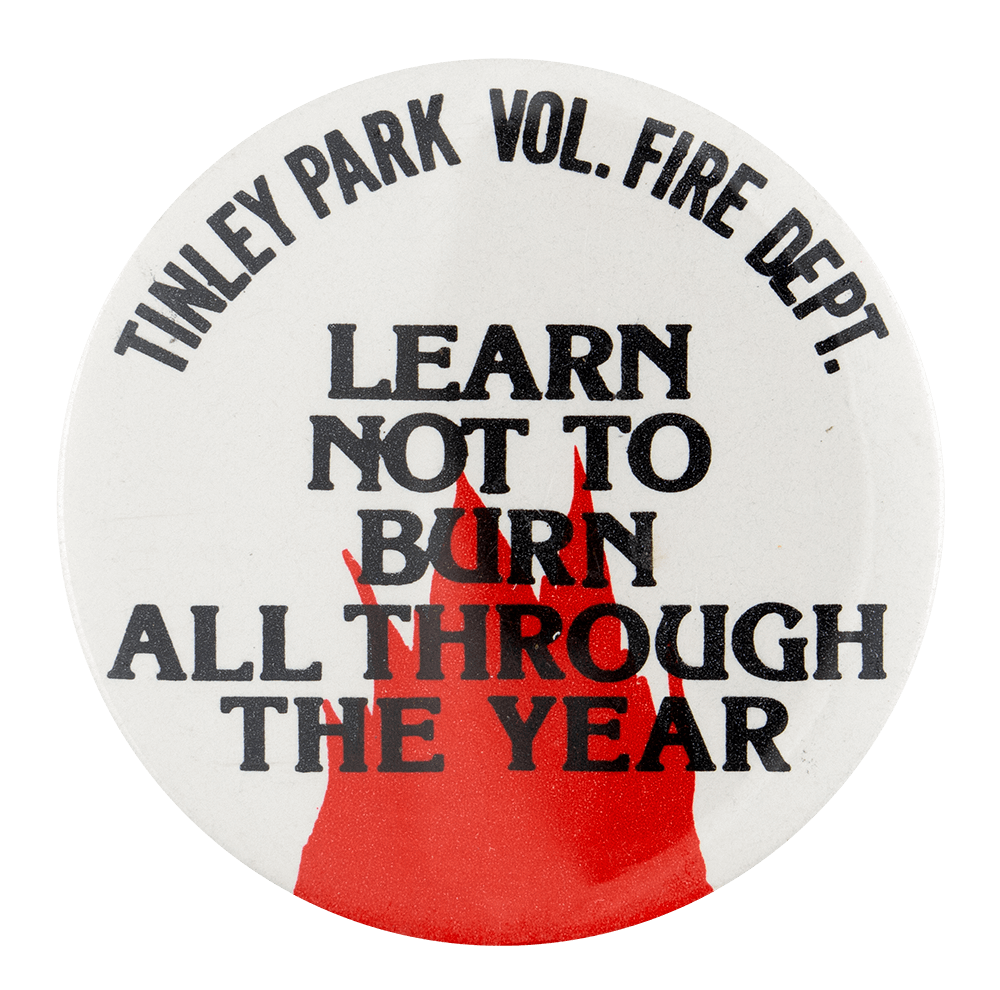
Text on Button TINLEY PARK VOL. FIRE DEPT. LEARN NOT TO BURN ALL THROUGH THE YEAR
Image Description

Black text and red image of fire on white background.

Back Style
The Shape
The Size
Additional Information

Tinley Park’s Fire Department was founded in 1901. They have been providing the area with fire services and information through community outreach and programs focusing on fire prevention, investigation, and education to advance public safety, making them very active in the community. The Tinley Park Fire Dept. was once volunteer based, but as the town of Tinley Park has expanded, the fire department has had to expand as well to better serve the community. There are now 4 strategically placed fire houses in the area. To ensure they are all fully staffed, firefighters are scheduled and paid per call, this change happening in 1976. The over 125 firefighters are scheduled part-time at one of the 4 fire-houses with a few key positions, such as fire chief, being full time.

Catalog ID CA0749

I Do Shop Tinley Park

Category
Additional Images
Sub Categories
Text on Button I DO SHOP TINLEY PARK
Image Description

Red and orange text on white background.

Back Style
The Shape
The Size
Additional Information

The Village of Tinley Park was incorporated in 1892, but the area was already being settled as the 1830s. As the country’s railroad empire was growing, the Village of Bremen was located on the Chicago, Rock Island and Pacific Railroad lines in 1853. This influenced the Village’s rapid expansion, and in 1890 the name Bremen was changed to Tinley Park, in honor of the Village’s first railroad station agent, Samuel Tinley Sr.

Today, Tinley Park is best known throughout the Chicago area for its world-renowned Hollywood Casino Amphitheatre entertainment venue that seats 28,000. After its centennial (1992), Tinley Park from the late 20th century to the present has been focused on renovation of its downtown historic district. Landowners are encouraged to maintain the historic edifices or to create new, historically friendly facades for otherwise non-historic buildings built in the last 30 years.

Sources

Mayor's Corner. (n.d.). Retrieved November 17, 2019, from https://www.tinleypark.org/test11/mayor_s_corner.php.

Tinley Park, Illinois. (2019, October 16). Retrieved November 17, 2019, from https://en.wikipedia.org/wiki/Tinley_Park,_Illinois.

Catalog ID CA0748

Service Electric Alsip

Category
Additional Images
Sub Categories
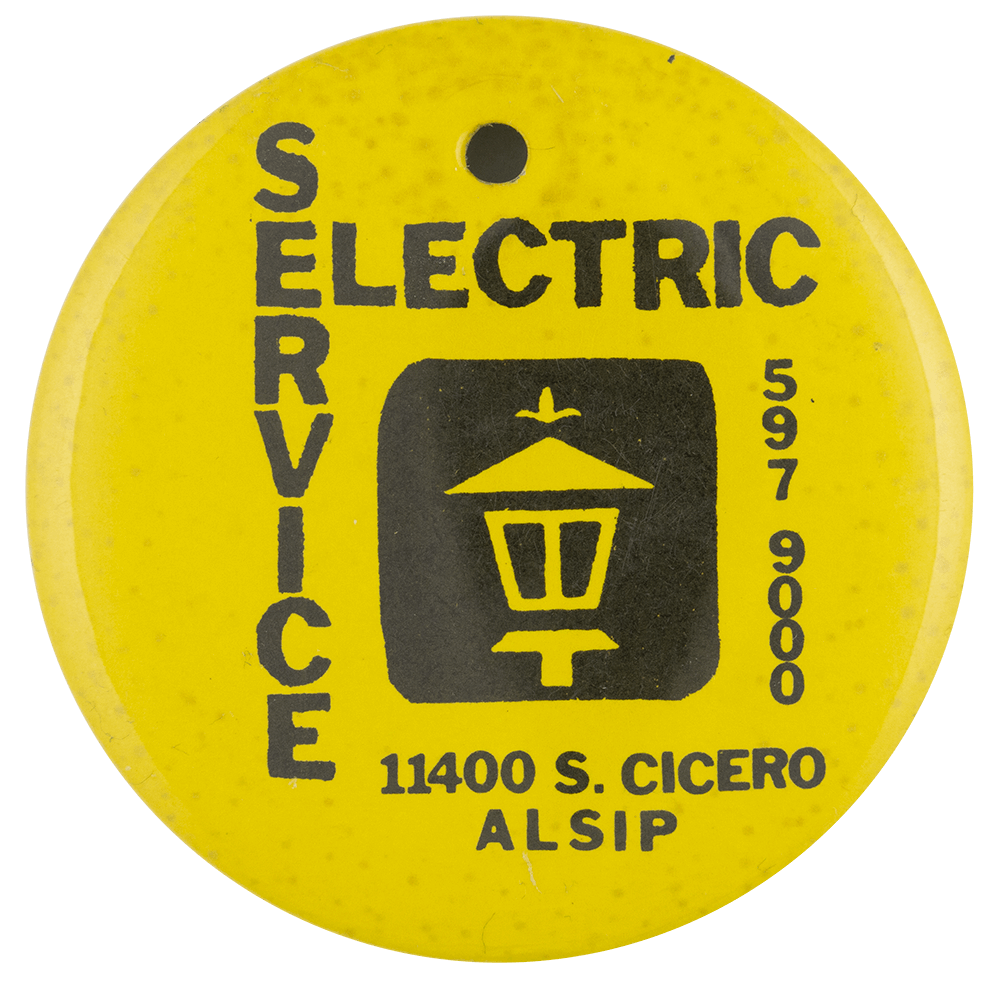
Text on Button SERVICE ELECTRIC 597 9000 11400 S. CICERO ALSIP
Image Description

Black text and an image of an old street lamp on yellow background. Hole in top of button.

Back Style
The Shape
Additional Information

GEM Electric Supply Inc., located in Illinois, is a wholesale distributor of "electrical supplies, lighting fixtures, hardware, and home furnishings”. The company was founded in 1970 by Bill Conrad and John Manning. There are four different store locations; the Alsip location was opened in August of 1994. The Alsip building was the largest acquired by GEM, and the extra space allowed the business to expand to more goods than just electrical supplies. The company is family owned and run with three generations having managed the stores.

Sources

History (n.d.). Gem Electric Supply. Retrieved November 29, 2024, from http://www.gemelectricsupply.com/gemhistory.html 


Catalog ID AD0915

Say Hello to Illinois Bell

Category
Additional Images
Text on Button SAY HELLO to the NEW ILLINOIS BELL
Image Description

Blue text on yellow background

Back Paper / Back Info

1984 - C&B Johnson

Back Style
The Shape
The Size
Year / Decade Made
Additional Information

Illinois Bell was a local operator of the Bell Corporation starting in 1877. In 1984, the Bell Corporation was determined to be in violation of antitrust laws, and was ordered to break up into seven, "Baby Bells," including Ameritech, which inherited the Illinois Bell Company. Illinois Bell kept its name until the 1990s when Ameritech changed it for marketing purposes. Several of the baby bell companies have gone on to become major phone providers in the US, such as AT&T and Verizon.

Sources

Tunstall, Brooke (1985). Disconnecting Parties: Managing the Bell System Break-Up, an Inside View. New York: McGraw-Hill.

Catalog ID AD0914