Steamboatin' New Orleans

Category
Additional Images
Sub Categories
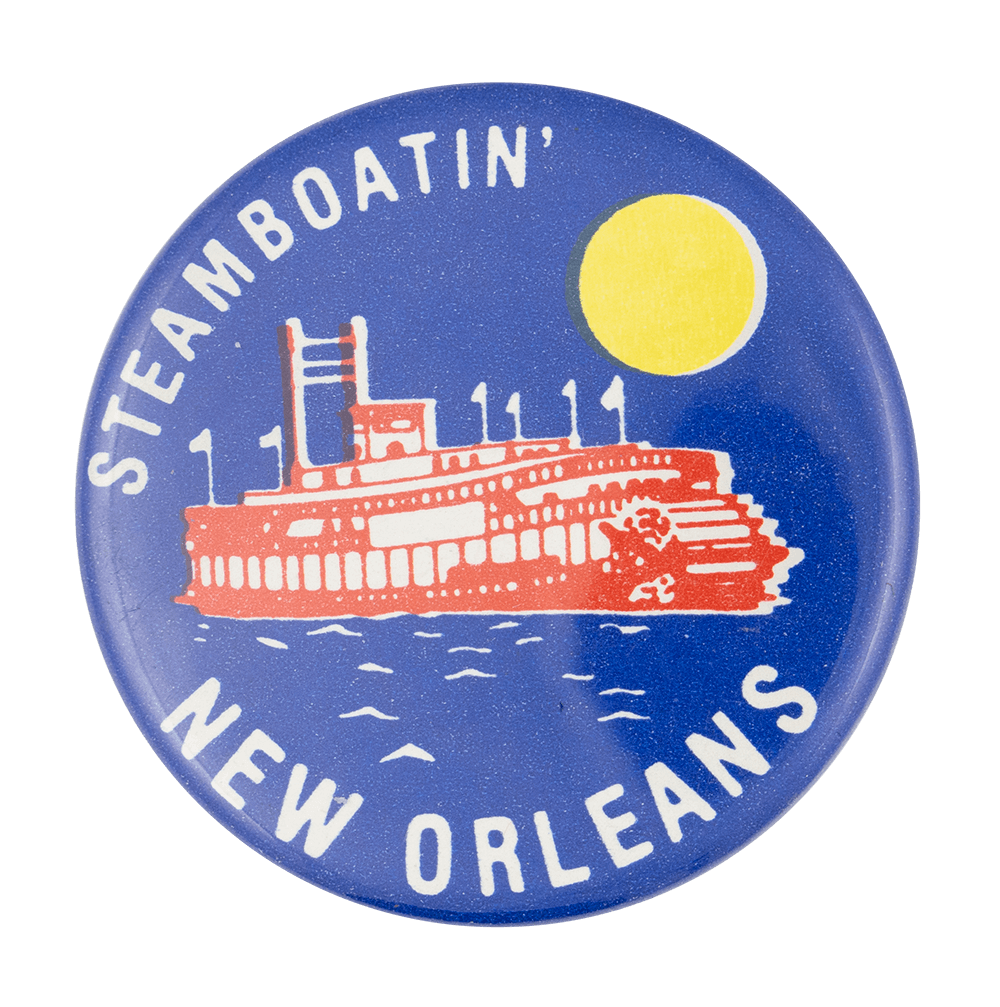
Text on Button STEAMBOATIN' NEW ORLEANS
Image Description

White text above and below a red and white illustration of a steamboat and a yellow sun on a blue background

Back Style
The Shape
The Size
Additional Information

The Natchez is New Orleans' only steamboat and is one of only two completely steam-powered sternwheelers on the Mississippi River today. The ninth steamboat to bear the name, the Natchez leaves the French Quarter for a daily two-hour jazz cruise with live music, food, and drinks. The Natchez has an authentic steam calliope onboard, a 32-note steam pipe organ. But this calliope has a modern performance twist, its plumes of steam, given off when one of its whistles is played, coincides with colored lights creating an audiovisual show.

Sources

Steamboat NATCHEZ. (n.d.). Retrieved April 9, 2019, from https://www.steamboatnatchez.com/

Catalog ID EV0765

Souvenir of the Circus Yellow

Additional Images
Sub Categories
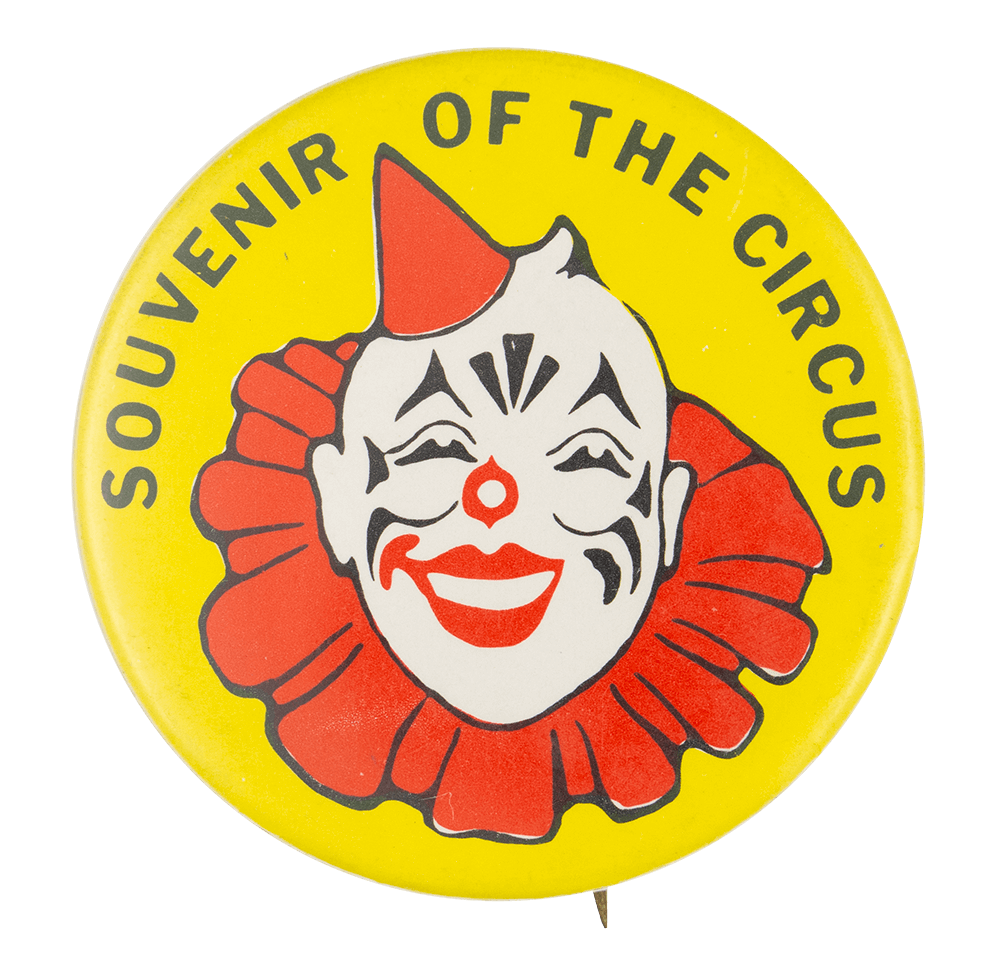
Text on Button SOUVENIR OF THE CIRCUS
Image Description

Black text over a red, black and white illustration of a clown's head on a yellow background

Back Style
The Shape
The Size
Additional Information

The circus was once the most popular form of entertainment in the world.  While the idea of being entertained by horses and other animals dates back to Roman times, the “modern” circus is attributed to Philip Astley. Astley was the first to set up an amphitheater where both horse riding tricks and acrobats could be conducted in the same space. The first circus building in the United States opened in Philadelphia in 1793. Joshua Purdy Brown was the first circus owner to utilize a large canvas tent as a performance arena in 1825. P.T. Barnum changed the way the circus would entertain by introducing a multi-ring center stage with various visual peculiarities and menageries.

Sources

Davis, M. J. (2017, Mar. 22). America’s big circus spectacular has a long and cherished history. Smithsonian Magazine. https://www.smithsonianmag.com/history/americas-big-circus-spectacular-…

Catalog ID EV0764

San Francisco Trolley

Category
Additional Images
Sub Categories
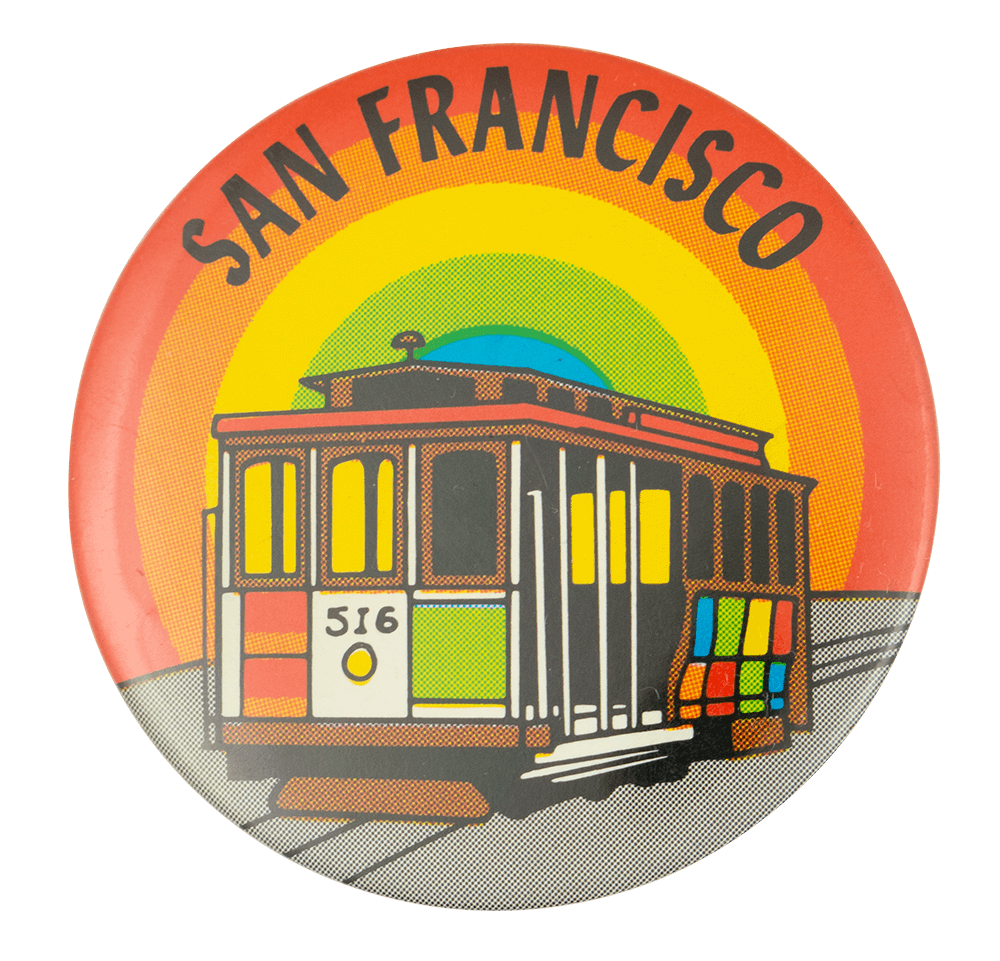
Text on Button San Francisco
Image Description

Black text over an illustration of a trolley with a rainbow striped sky and grey ground

Curl Text ©S.N.C.O.
Back Style
The Shape
The Size
Additional Information

San Francisco has both cable cars and trolleys, which are also known as streetcars, and they both date back to the 19th century. The trolleys run along Market Street and they get their power from an electric motor that is attached to an overhead wire. Cable cars have a route along Powell, Hyde, and California Streets and they are pulled uphill via a cable wire that is underneath the car within the track. The cable cars are the more famous of the two since they have been featured in Hollywood movies such as "The Birds" and "The Rock".

Sources

San Francisco Frequently Asked Questions: What's the Difference Between a Cable Car and a Trolley? (n.d.). Retrieved from https://www.sftravel.com/article/san-francisco-frequently-asked-questio…

Catalog ID EV0763

Reinberg

Category
Additional Images
Sub Categories
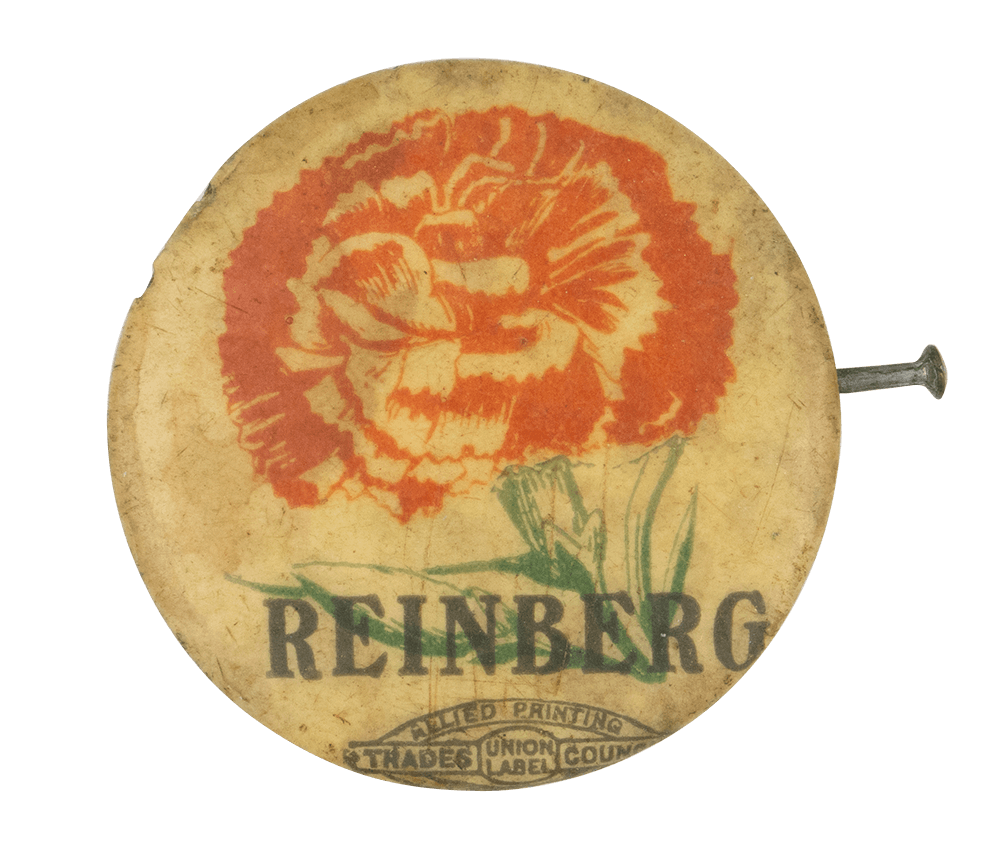
Text on Button REINBERG
Image Description

Illustration of a red flower over black text and a union bug on an off white background

Back Style
The Shape
The Size
Additional Information

Immigrants from Luxembourg settled across the Midwest with large numbers in Chicago settling in the North and West sides of the city. Many were farmers, and Luxembourgers became known as the “glass house” people as they adopted greenhouses for their market gardens.

Peter Reinberg, “the rose and carnation king,” was the most famous of Luxembourger gardeners. He was born in Chicago in 1858. He excelled at growing roses and carnations, started a flower business at age 20, and became the largest rose grower in the world. Reinberg served as President of the Board of Education, President of the Cook County Board of Commissioners, and was the first President of the Cook County Forest Preserve Commission. His legacy lives on in the Peter A. Reinberg Elementary School named after him.

Sources

History. Reinberg.cps.edu. (2020). Retrieved from https://reinberg.cps.edu/apps/pages/index.jsp?uREC_ID=357713&type=d.

Luxembourg in Portage Park: Peter Reinberg’s progeny and prodigies - CSO Sounds & Stories. Csosoundsandstories.org. (2020). Retrieved from https://csosoundsandstories.org/luxembourg-in-portage-park-peter-reinbe….

Luxembourg's history: Luxembourgish immigration to Chicago. Rtl.lu. (2020). Retrieved from https://www.rtl.lu/culture/exhibitions/a/1402165.html.

Luxembourgers. Encyclopedia.chicagohistory.org. (2020). Retrieved 25 July 2020, from http://www.encyclopedia.chicagohistory.org/pages/768.html.

Catalog ID EV0762

Plymouth Rock Camping Resort

Category
Additional Images
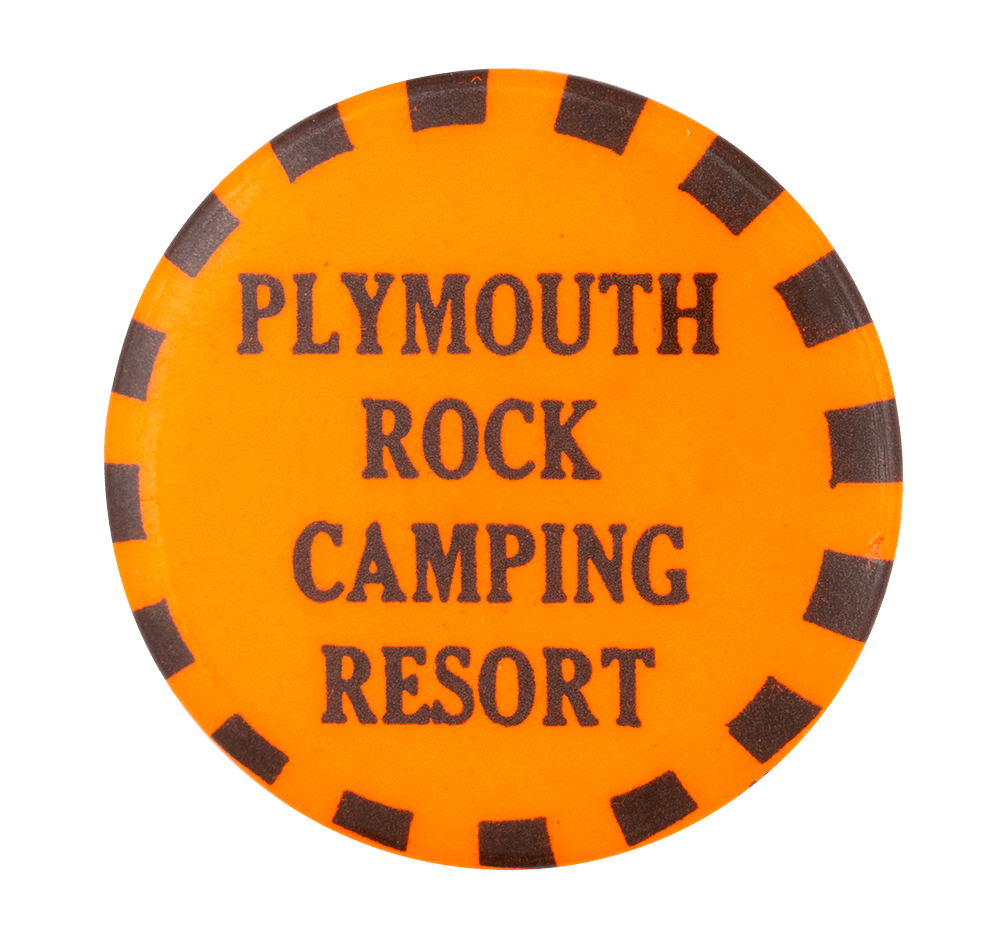
Text on Button PLYMOUTH ROCK CAMPING RESORT
Image Description

Black text on a bright orange background

Curl Text Eder Mfg. Co. Milwaukee, Wis.
Back Style
The Shape
The Size
Additional Information The Plymouth Rock Camping Resort was established in the 1960s and has always been based in Plymouth, Wisconsin. The 180-acre resort provides cabins as well as sites for tents and RVs. Guests can hike, fish, swim in Elkhart Lake or in one of the three pools, and enjoy the playground, baseball field, sand volleyball court, putt putt golf course, and outdoor amphitheater onsite. The campground is open from mid April to mid October every year.
Sources
Plymouth Rock Camping Resort. (n.d.). Retrieved April 2, 2019, from https://www.rvonthego.com/wisconsin/plymouth-rock-camping-resort/ Plymouth Rock Wisconsin RV Resort and Campground [video]. (2013, August 16). Retrieved April 2, 2019, from https://www.youtube.com/watch?v=pO2qpQ7cCeQ Wisconsin camping | cabins | vacation | rv sites - Plymouth Rock Campground Wisconsin. (n.d.). Retrieved April 2, 2019, from http://plymouthrock-resort.com/
Catalog ID EV0761

Philadelphia Love It

Category
Additional Images
Sub Categories
Text on Button Philadelphia ...LOVE IT!
Image Description

Blue and yellow text on a blue background

Back Style
The Shape
The Size
Additional Information

The city of Philadelphia is considered the birthplace of the United States. During the American Revolution, the First and Second Continental Congresses met, and the founding fathers discussed and debated. After the American Revolution, it became the temporary capital of the new country. The name "Philadelphia" is derived from Ancient Greek; its literal translation is "brotherly love" and has since been nicknamed "The City of Brotherly Love." In 1976, as part of the United States Bicentennial, artist Robert Indiana contributed a massive aluminum sculpture of the word "LOVE." The iconic image has become synonymous with the city and can be found on everything from postage stamps to jewelry and city souvenirs.

Sources

Visit Philadelphia. (2021). History. https://www.visitphilly.com/history-in-philadelphia/

Catalog ID EV0760

Our Lady of Lourdes Church

Category
Additional Images
Sub Categories
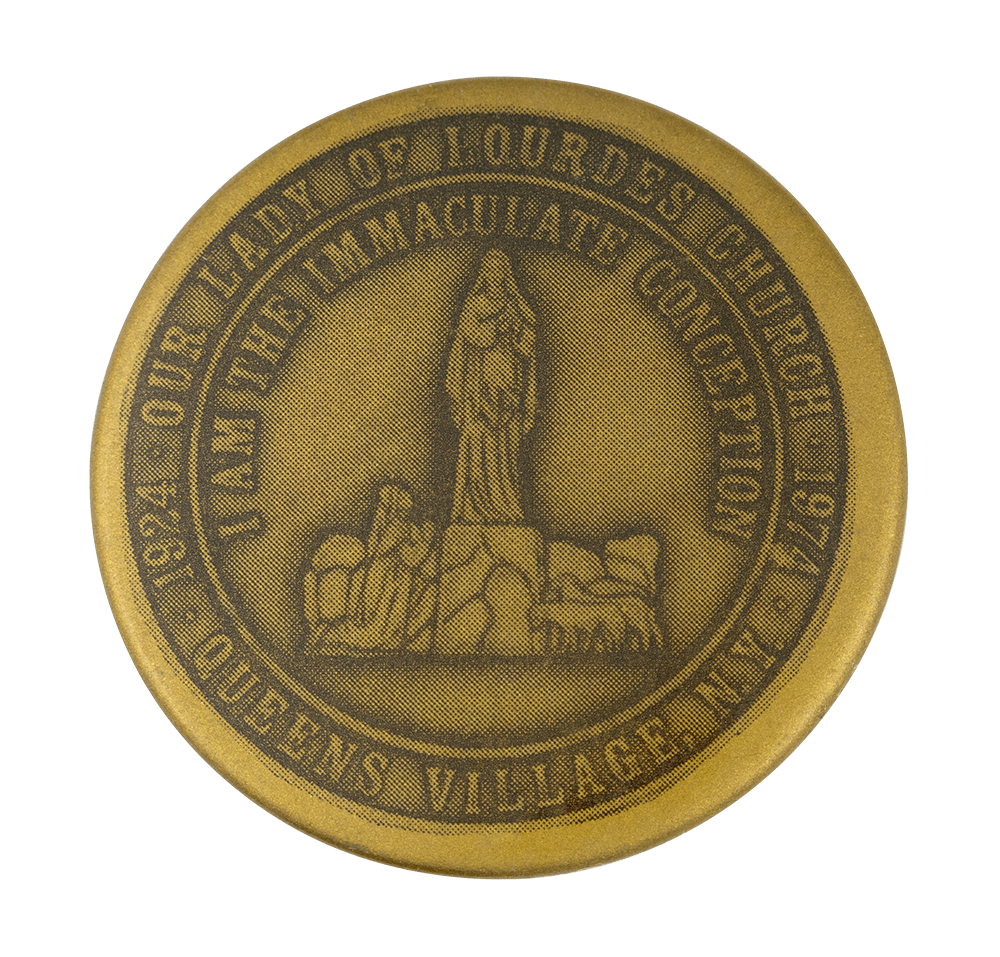
Text on Button 1924 OUR LADY OF LOURDES CHURCH 1974 I AM THE IMMACULATE CONCEPTION QUEENS VILLAGE, N.Y.
Image Description

Gold and dark brown illustration of a statue with text around it

Back Style
The Shape
The Size
Year / Decade Made
Additional Information

In 1854, Pope Pius IX issued the doctrine of the Virgin Mary’s birth by Immaculate Conception, in an apostolic constitution titled Ineffabilis Deus. In 1858, a girl named Bernadette Soubirous had a serious of visions of a young lady, who identified herself as “the Immaculate Conception.” The Catholic Church recognized the visions as legitimate in 1862, and Bernadette Soubirous’s experience have since drawn millions of people to Lourdes.

Father Bernard J. Reilly, who would later preside over the Queens Village parish in New York City, served in France during World War I. There, he visited the shrine of Our Lady of Lourdes in the south of France. Evidently, the visit made an impression on him, and the parish was named for the Virgin of Lourdes when it first opened in 1924. The original building is still in use today for services, though the multi-ethnic parish has outgrown the older chapel and more buildings have been added.

Sources

Our Lady of Lourdes Parish (2019). About the parish. http://www.ourladyoflourdesqvny.org/about-the-parish/

Our Lady of Lourdes Parish (2019). Who is Our Lady of Lourdes? http://www.ourladyoflourdesqvny.org/who-is-our-lady-of-lourdes/

Catalog ID EV0759

Ottawa Moose on a Bicycle

Category
Additional Images
Sub Categories
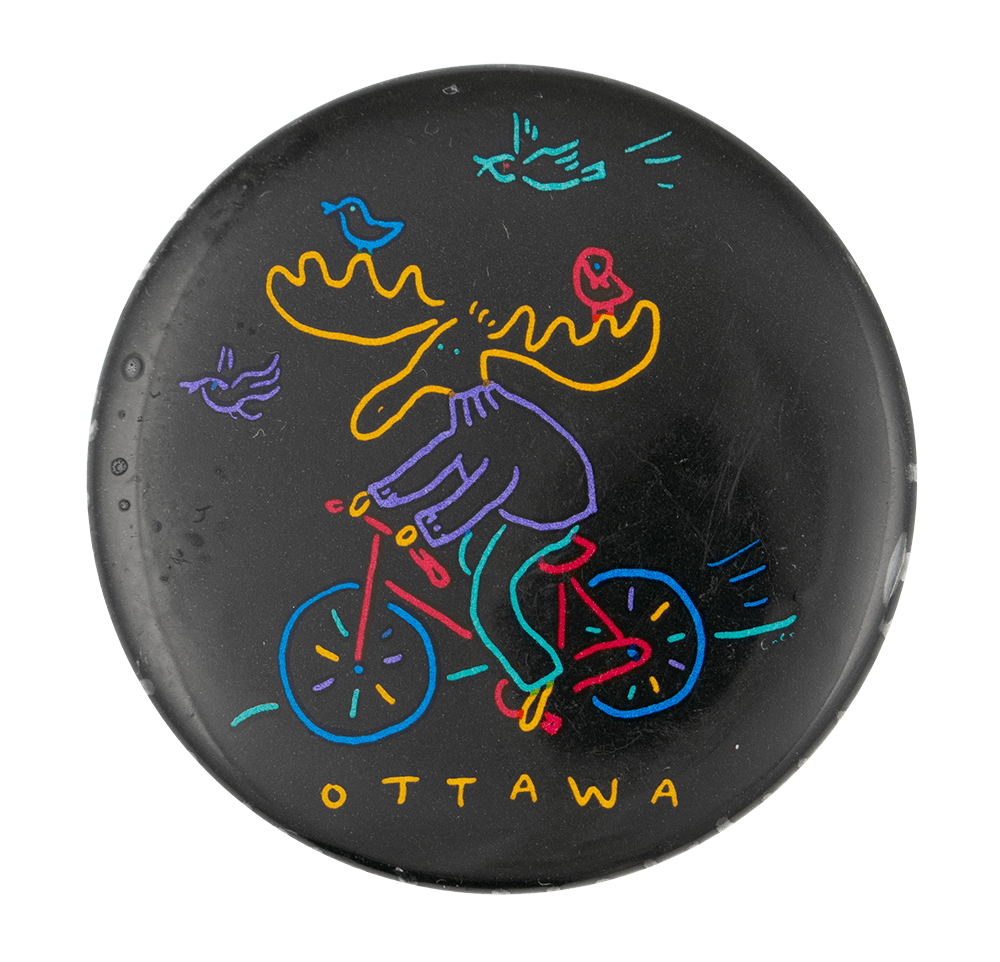
Text on Button OTTAWA
Image Description

Multicolor illustration of a moose riding a bicycle on a black background over yellow text.

Curl Text © OH YES OTTAWA
Back Style
The Shape
The Size
Additional Information

The illustration of the moose riding a bicycle is a fun way to promote the city of Ottawa. Located in southeastern Ontario, Ottawa is the capital city of Canada. The word Ottawa is derived from the Algonquin word Odawa, which means to trade. The town was settled on the south bank of the Ottawa River and was a location well known to local fur traders. Ottawa is located on the border of English-speaking Ontario and French-speaking Quebec across the river. 

Bicycling has been a popular pastime in Ottawa since the late 19th century. The Ottawa Bicycle Club was established in 1882; more than 250 people owned bicycles at the time. The club’s goal is to encourage and promote cycling, assist the cycling community, and defend and pursue the rights of cyclists under the Canadian Cycling Association. 

The moose represents Canadian wildlife. The moose population in Canada is almost 1,000,000, and they can be found in every province.

Sources

OBC. (2021). About. https://www.ottawabicycleclub.ca/about

Ottawa. (2021, Mar 17,). Britannica. https://www.britannica.com/place/Ottawa

Catalog ID EV0758

Nevada City

Category
Additional Images
Sub Categories
Text on Button NEVADA CITY CALIFORNIA
Image Description

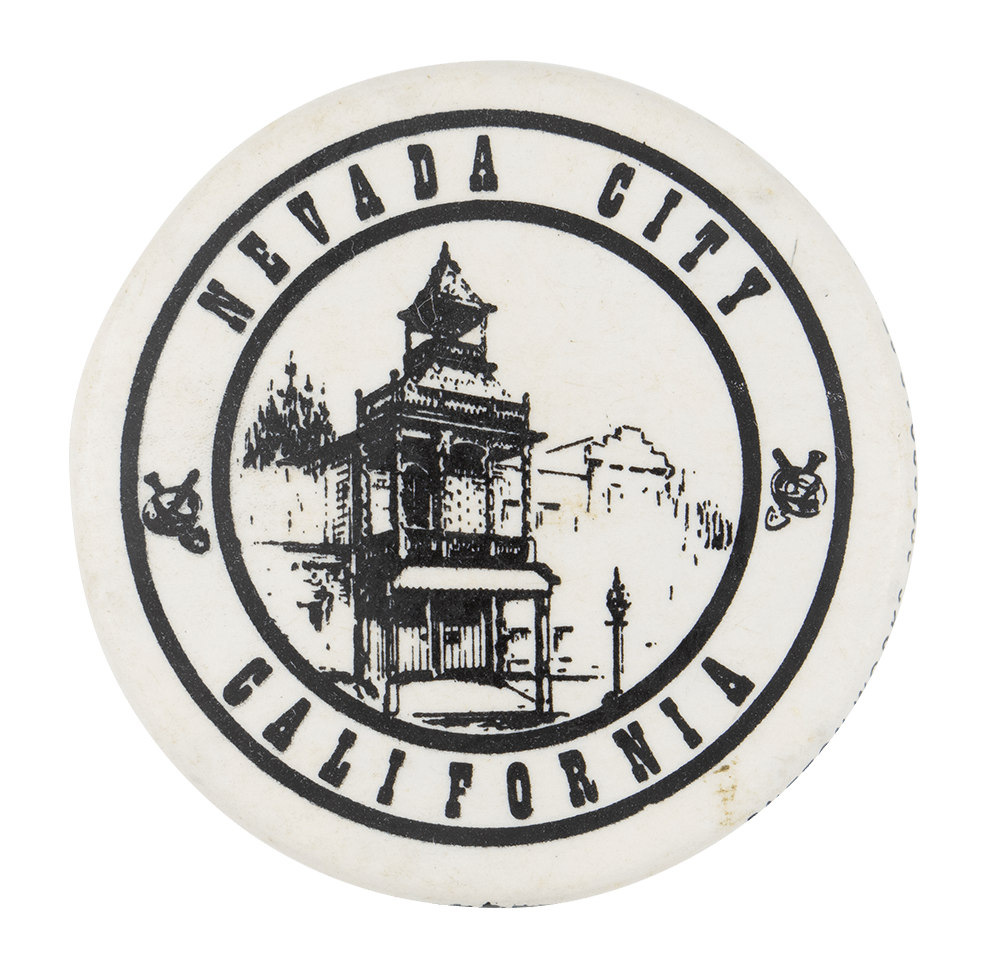
Black and white illustration of a building with an outer ring with black text on a white background

Curl Text BUTTON WORKS 300 BROAD ST. NEVADA CITY, CA 95959
Back Style
The Shape
The Size
The Manufacturer
Additional Information

Nevada City, California, started as Deer Creek Dry Diggings, named after a deposit of placer gold. Miners were attracted by the area’s considerable gold deposits, and the population grew throughout the 1850s. In 1851, the City of Nevada was incorporated, before Nevada became a state. When the State of Nevada was so named in 1861, residents of Nevada City cried foul, but the name stuck.

In the late 1850s, Nevada City was the third-largest city in California, but its decline was swift. Miners began to leave California to exploit the more profitable Comstock Lode in Nevada (the state). In the present day, the city’s downtown area is a National Historic District, featuring preserved buildings from the heydays of mining. Mark Twain and Jack London performed at the Nevada Theatre, and the National Hotel claims to be the oldest hotel still operating in California. The building pictured on the button is either one of the city’s two very similar historical firehouses, one of which is a museum.

Sources

Varney, P. (2012). Ghost towns of California: Your guide to the hidden history and old west haunts of California. Minneapolis, MN: Voyageur Press.

Catalog ID EV0757

Museu do Carro Electrico Yellow

Category
Additional Images
Sub Categories
Text on Button Museu carro electrico
Image Description

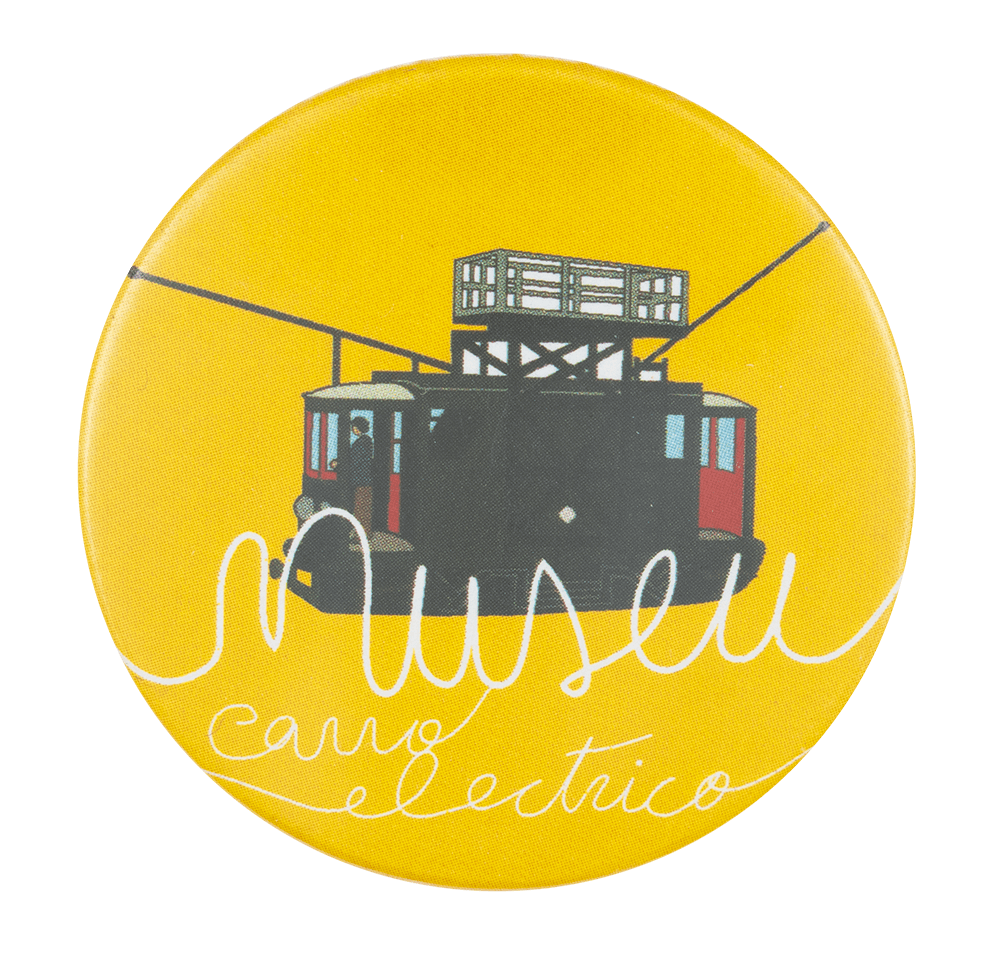
Illustration of an electric car over white text on a yellow background

Back Style
The Shape
The Size
Additional Information

The Museu do Carro Eléctrico (Museum of the Electric Car) in Porto, Portugal, opened in 1992, showcases the history of electric trams and urban transportation. The museum occupies a former power plant and features multiple replicas of vehicles from the late 19th century and early to mid-20th century, in addition to photographs and other exhibits. The museum also conducts an annual parade of trams through the city streets.

Sources

(2018). Museu do Carro Eléctrico. Património Cultural: Direçâo-Geral do Património Cultural. Retrieved from http://www.patrimoniocultural.gov.pt/pt/museus-e-monumentos/rede-portug…

Catalog ID EV0756