Upper Canada Village

Category
Additional Images
Sub Categories
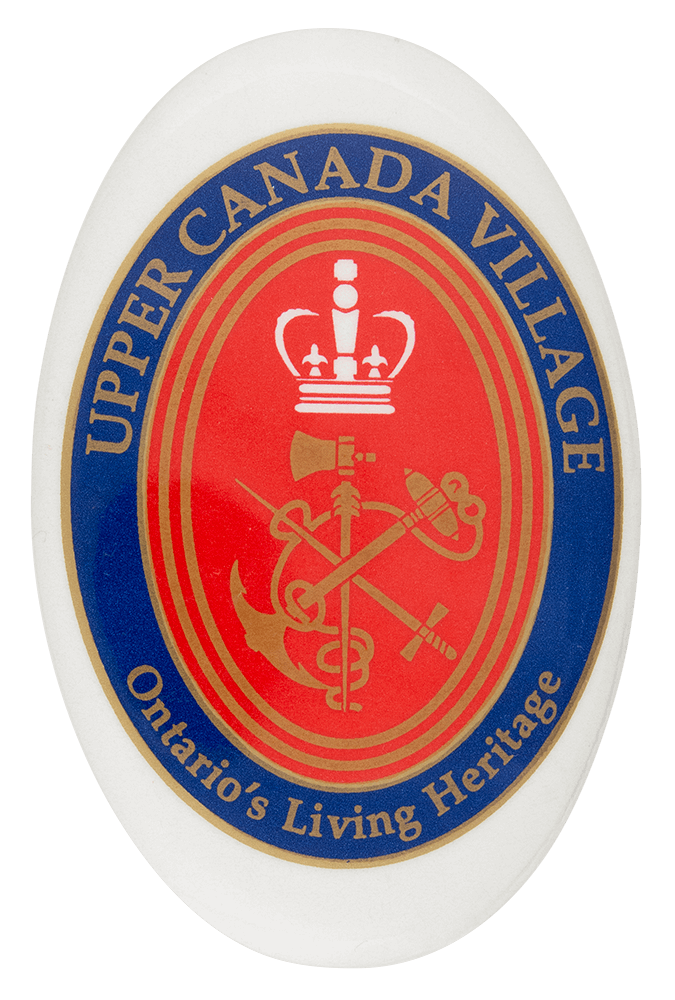
Text on Button UPPER CANADA VILLAGE Ontario's Living Heritage
Image Description

Illustration of a white crown over an emblem on a red oval with outer gold, then blue edges on a white background with gold text

Back Style
The Shape
The Size
Additional Information

From 1791 to 1841, “Upper Canada” referred to the region that would become modern-day Ontario, Canada. Under British rule, the province was created in 1791 by splitting Quebec into Lower Canada and Upper Canada. However, the two Canadas were eventually reunited as the Province of Canada. Upper Canada Village is a reconstruction of an 1860s English Canadian village, created in 1961. Over forty historical buildings were moved to the location from historical sites before the St. Lawrence Seaway project flooded the so-called “lost villages.” The site has mills, workshops, farms, and homes where reenactors practice period crafts, grow vegetables, and raise livestock. The village is near the site of the War of 1812’s Battle of Crysler’s Farm, where Canadian and British forces turned back an attempted American invasion of Montreal.
Sources

Hall, R. & Foot, R. (2015). Upper Canada. The Canadian Encyclopedia. Retrieved from https://www.thecanadianencyclopedia.ca/en/article/upper-canada

The Editors of Encyclopaedia Brittanica (2018). Battle of Crysler’s Farm. Encyclopedia Brittanica. Retrieved from https://www.britannica.com/event/Battle-of-Cryslers-Farm

(2019). About the village. Upper Canada Village. Retrieved from http://www.uppercanadavillage.com/about-the-village/

Catalog ID EV0725

Museum of Ceramics

Category
Additional Images
Sub Categories
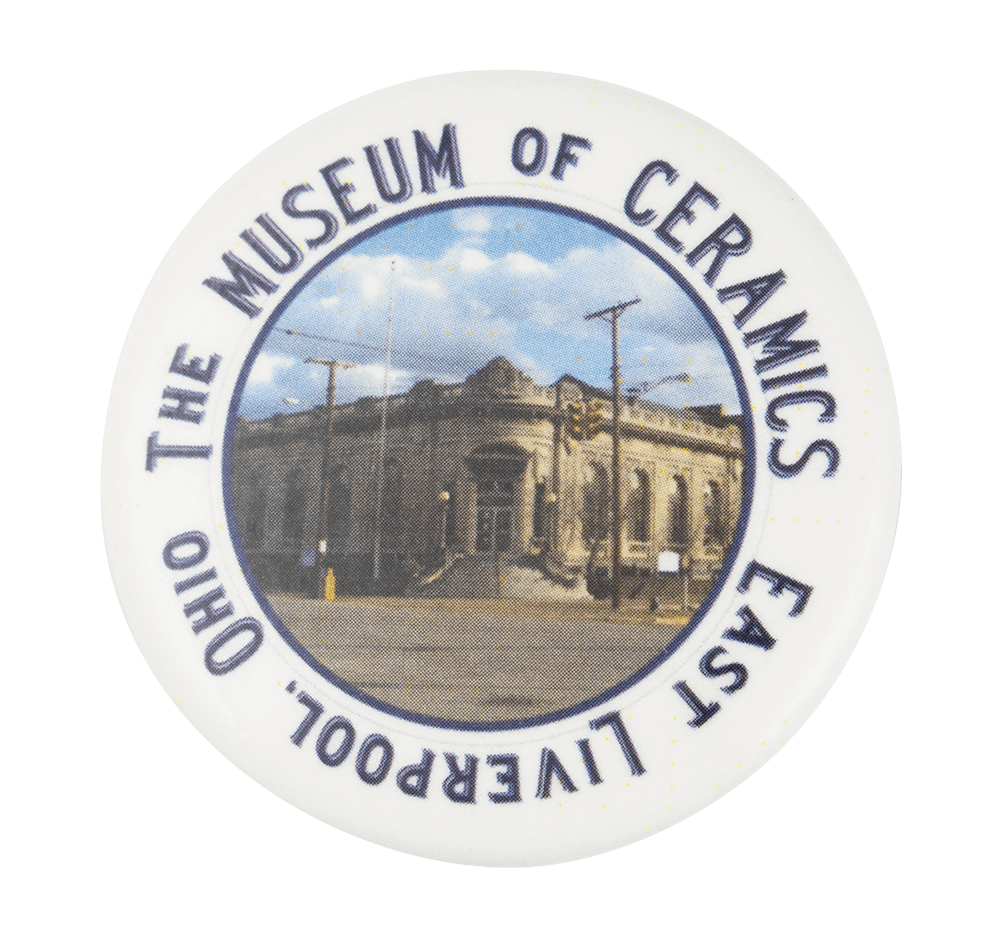
Text on Button THE MUSEUM OF CERAMICS EAST LIVERPOOL, OHIO
Image Description

Black text on an outer white edge with a color photograph of a building in the center

Back Style
The Shape
The Size
Additional Information

Once producing over half the dinnerware sold in the United States, East Liverpool, Ohio is also referred to by such nicknames as "Crockery City" and "The Pottery Capital of the World". The amount of ceramics manufacturers has since dwindled down to a few in this historic town but accordingly, the city is now home to The Museum of Ceramics which was established in 1980 by the Ohio History Connection. The museum's collection is housed within the city's former U.S. Post Office -- the 1906 Beaux Arts style building whose intricate facade is featured on this button. It boasts a large assemblage of pottery and dinnerware, manufacturer histories, life-size dioramas, as well as an extensive archive of documents and photographs on the subject of ceramics. It is also known as the home of the women's pottery group, "The Lady Slippers" -- named for the "slip", or watered-down clay, utilized in pottery-making.

Sources

The Museum of Ceramics. (2018). About. Retrieved from https://www.themuseumofceramics.com/

Catalog ID EV0724

City of Trenton

Category
Additional Images
Sub Categories
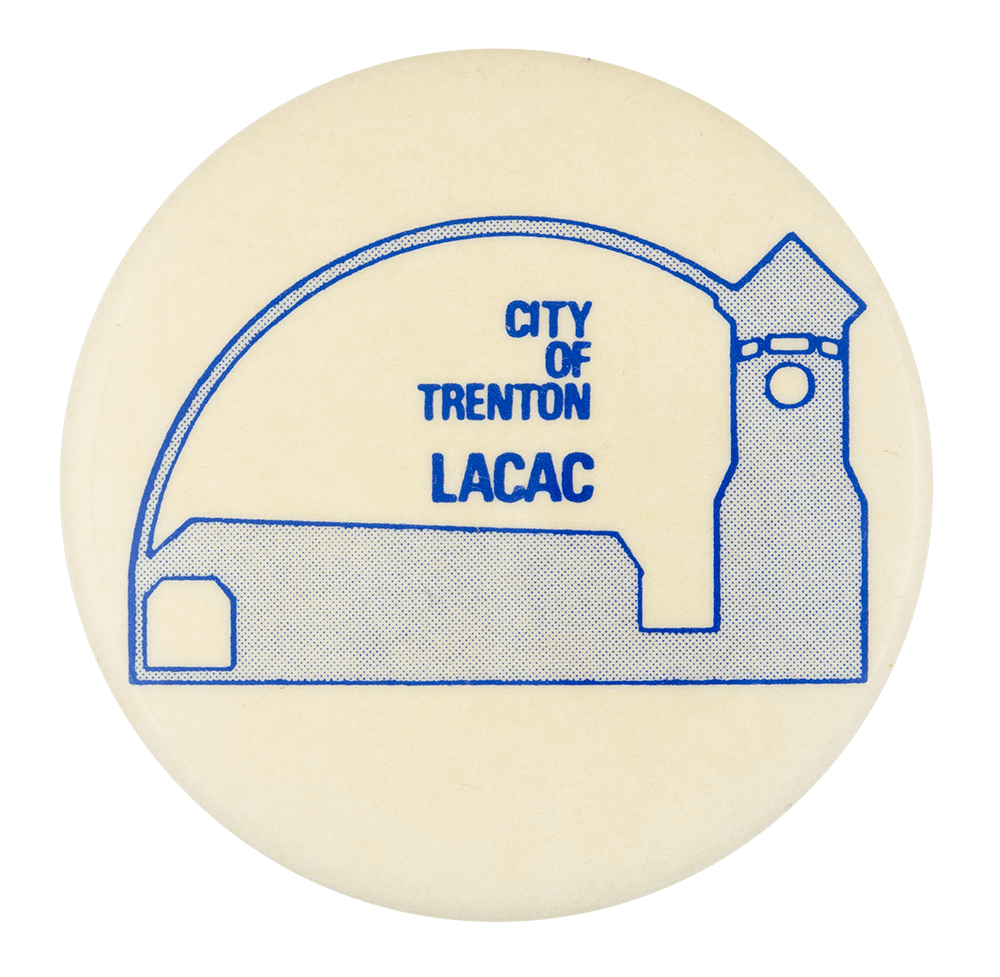
Text on Button CITY OF TRENTON LACAC
Image Description

Blue text and an illustration of a building on a white background

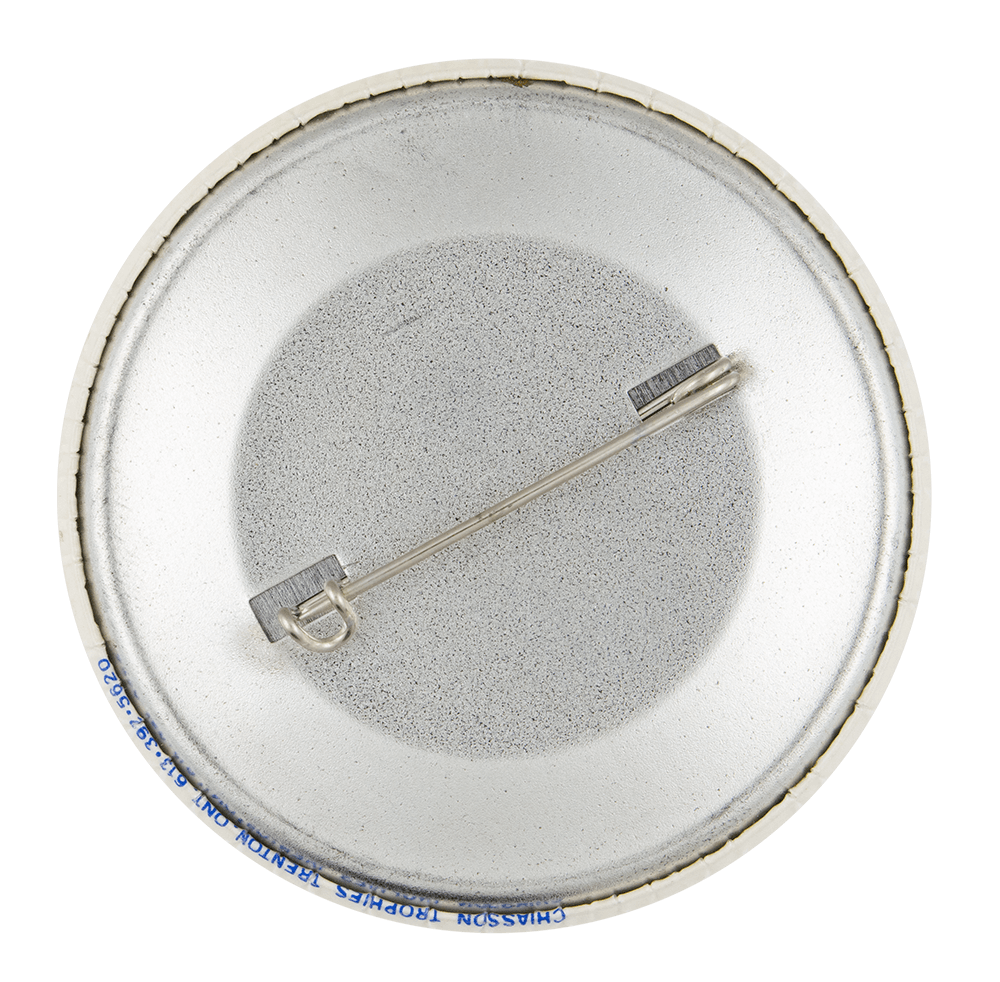
Curl Text CHIASSON TROPHIES TRENTON, ONT 613-392-5620
Back Style
The Shape
The Size
Additional Information

With less than 20,000 residents, Trenton is a small community located in Ontario, Canada. It was originally settled in 1784 by French colonists and named after the nearby Trent River, which took its name from the River Trent in England. The name “Trent” is suspected to be a Romano-British word meaning “severely flooded.” From early on, Trenton was populated by workers from the lumber industry and was well liked for its convenient port location. The town was home to a large munitions plant during the First World War, but the factory was leveled by a massive explosion three weeks before the Armistice. Notable people from the town include Henry Comstock, the owner of the Nevada mine where the Comstock Lode was discovered, and Marc Tessier-Lavigne, the current president of Stanford University.

LACAC, an acronym for the Local Architectural Conservation Advisory Committee, is a government-created entity that is responsible for recommending heritage property in Canada. The committee was established with the 1974 passage of the Ontario Heritage Act, and its members are devoted to preserving historical sites throughout the province. Examples of conserved landmarks that are protected by LACAC are the Clock Tower, Trent Port Historical Museum, and Fraser Park Gates—all of which are situated in downtown Trenton. Interestingly, the Fraser Park Gates were built after World War I using funds raised by a Canadian women’s organization. Names of Trenton soldiers lost in both World Wars are etched in the monument.

Sources

Bell, B. (2018, October 14). Remembering Trenton Explosion. The Intelligencer. https://www.intelligencer.ca/news/local-news/remembering-trenton-explos…

Downtown Trenton. (n.d.). Heritage sites. https://www.downtowntrenton.ca/en/entertainment-and-shopping/heritagesi…

Ontario Ministry of Heritage, Sport, Tourism, and Culture Industries. (2017, February 27). Ontario Heritage Act. http://www.mtc.gov.on.ca/en/heritage/heritage_act.shtml

Catalog ID EV0723

You've Got a Friend in Pennsylvania

Category
Additional Images
Sub Categories
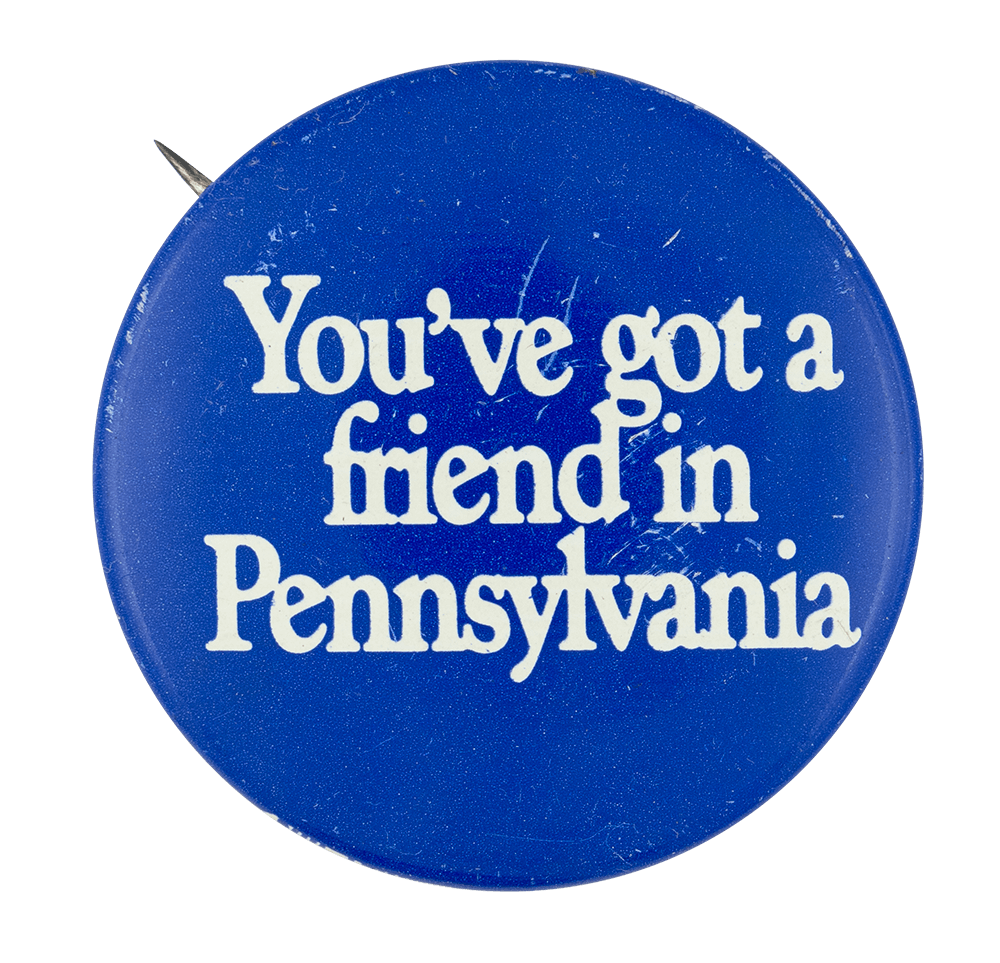
Text on Button You've got a friend in Pennsylvania.
Image Description

White text on a blue background

Curl Text PHIL LEVIN CO. HARRISBURG, PA
Back Style
The Shape
The Size
Additional Information

In 1980, Ketchum Advertising introduced the tagline “You’ve Got a Friend in Pennsylvania” on television, radio, print, and billboard ads throughout the state of Pennsylvania. From 1980-1988, the phrase also appeared on the state’s license plates.

A grammatical controversy surrounded the phrase during its use, most notably between columnist James Kilpatrick and then-Governor Richard Thornburgh. The issue focused on the use of “you have” alongside “got.” Some felt placing  “you have” next to “got” was grammatically incorrect, therefore the phrase should have read “You have a friend in Pennsylvania.”

Sources

White, B. (2017 September). You’ve Got a Friend. The Morning Call. Retrieved from https://www.mcall.com/opinion/white/blog/mc-opi-youve-got-a-friend-whit…

Catalog ID EV0722

St. Louis Blue

Category
Additional Images
Sub Categories
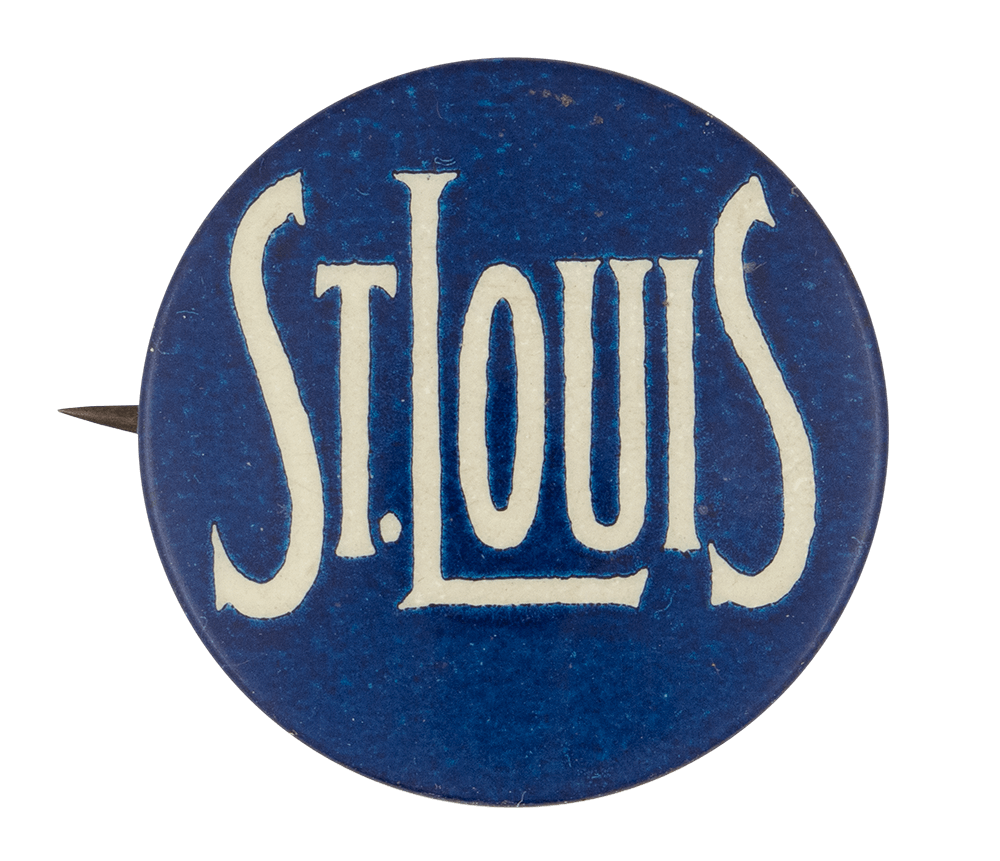
Text on Button ST. LOUIS
Image Description

White text on a blue background

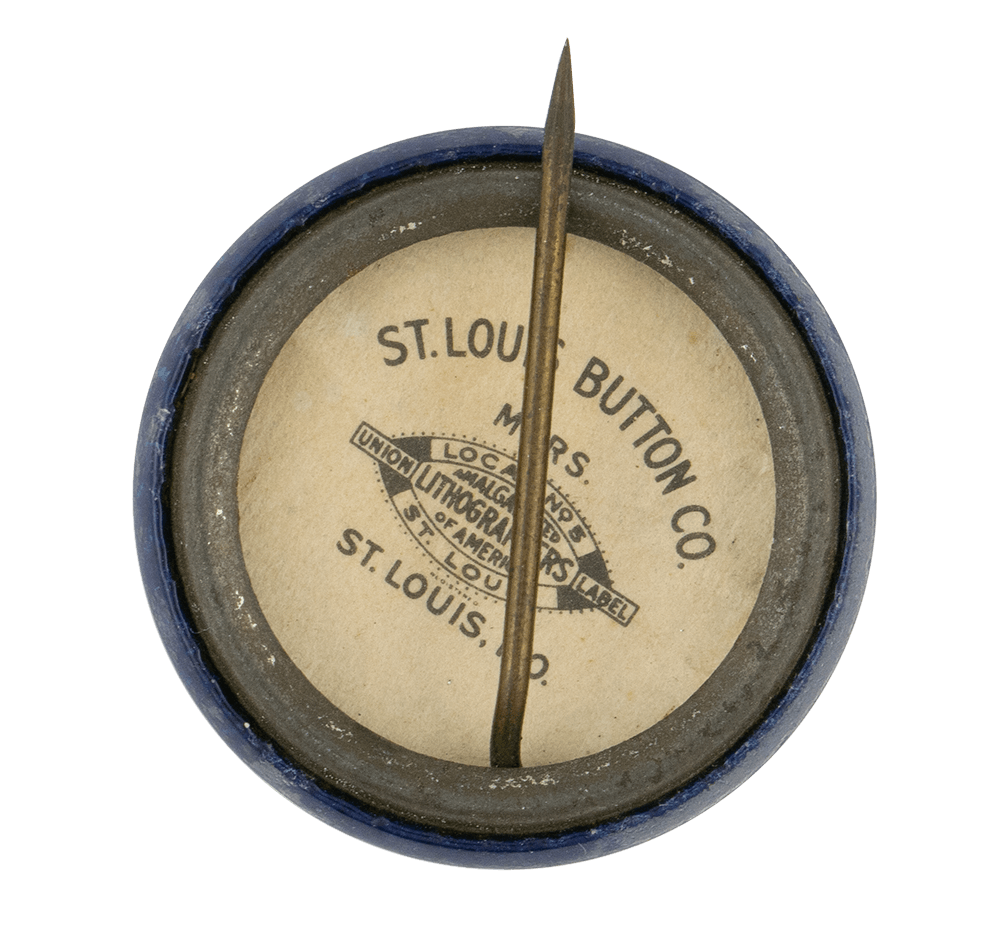
Back Paper / Back Info

ST. LOUIS BUTTON CO. MFGS. ST. LOUIS MO

Back Style
The Shape
The Size
The Manufacturer
Additional Information

The city of St. Louis is located in the state of Missouri on the western bank of the Mississippi River, close to where it meets the Missouri River. The city's population peaked in the years following World War II, at 856,000. As of the last census count in 2017, the population was at 308,626. St. Louis was founded in 1764 by French fur traders and became part of the United States in 1803, as part of the Louisiana Purchase. The city is home to two professional sports teams, the St. Louis Cardinals baseball team and the St. Louis Blues hockey team as well as the headquarters for Anheuser-Busch. A well known and popular landmark, the Gateway Arch, is located downtown. It is the world's tallest arch at 630 feet.

Sources

A Brief History of St. Louis. (n.d.). Retrieved April 5, 2019, from https://www.stlouis-mo.gov/visit-play/stlouis-history.cfm

Catalog ID EV0721

Visit Indianapolis

Category
Additional Images
Sub Categories
Text on Button VISIT INDIANAPOLIS CHAMBER OF COMMERCE BUILDING THE CROSS ROADS of AMERICA
Image Description

Blue and white illustration of the Chamber of Commerce Building in Indianapolis over a gold illustration of the United States on a white background with an outer gold edge and a white and gold line across the center with blue text.

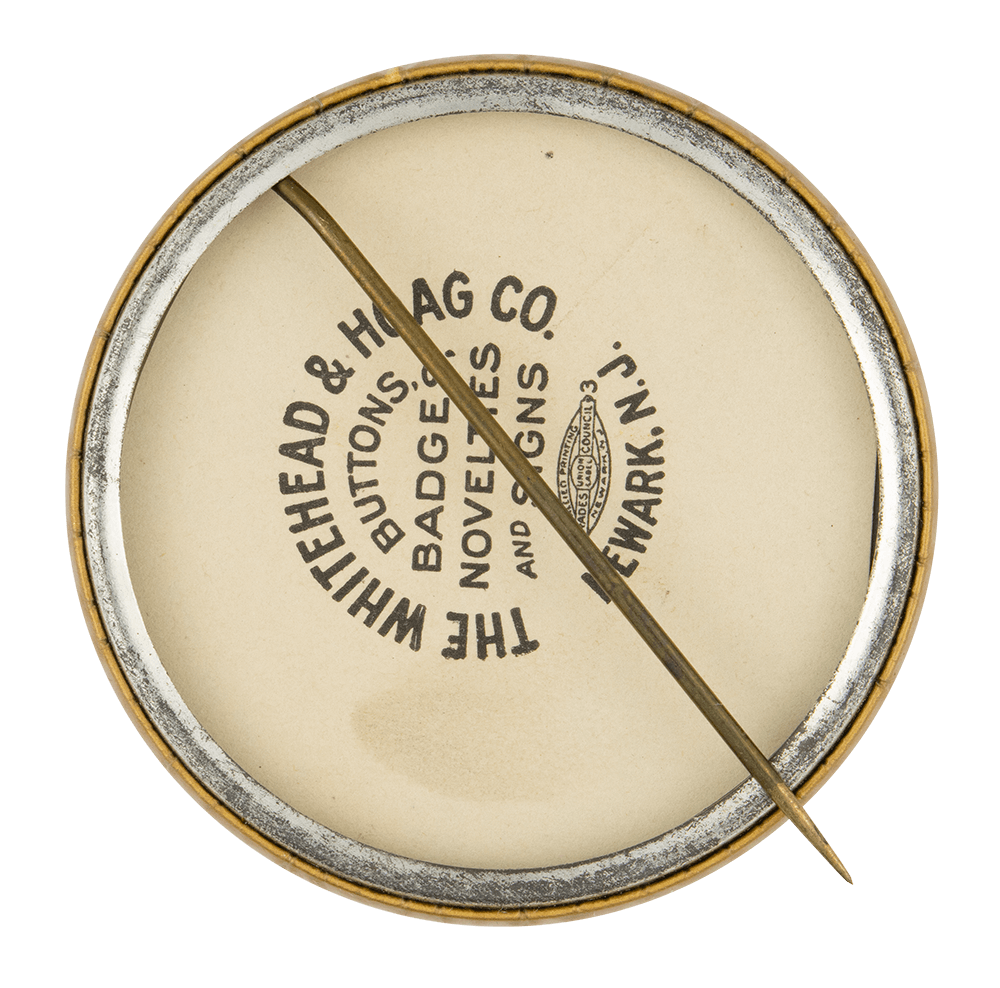
Back Paper / Back Info

THE WHITEHEAD & HOAG CO. 
BUTTONS BADGES NOVELTIES AND SIGNS 
NEWARK, N.J.

Back Style
The Shape
The Size
The Manufacturer
Additional Information

Indianapolis is the state capital of Indiana and the largest city in the state with a population of 863,002.  It is home to the world-famous Indianapolis 500, the Indianapolis Colts football team, and Indiana Pacers basketball team.  The name Indianapolis is a combination of Indiana meaning “Indian Land” and polis, which is the Greek word for city.  Indiana gained statehood in 1816 and adopted “The Crossroads of America” as the official state motto in 1937 since 4 major interstate highways connect in the state.  The Chamber of Commerce Building was built in 1926 and stands to this day.

Catalog ID EV0720

Roton Point

Category
Additional Images
Sub Categories
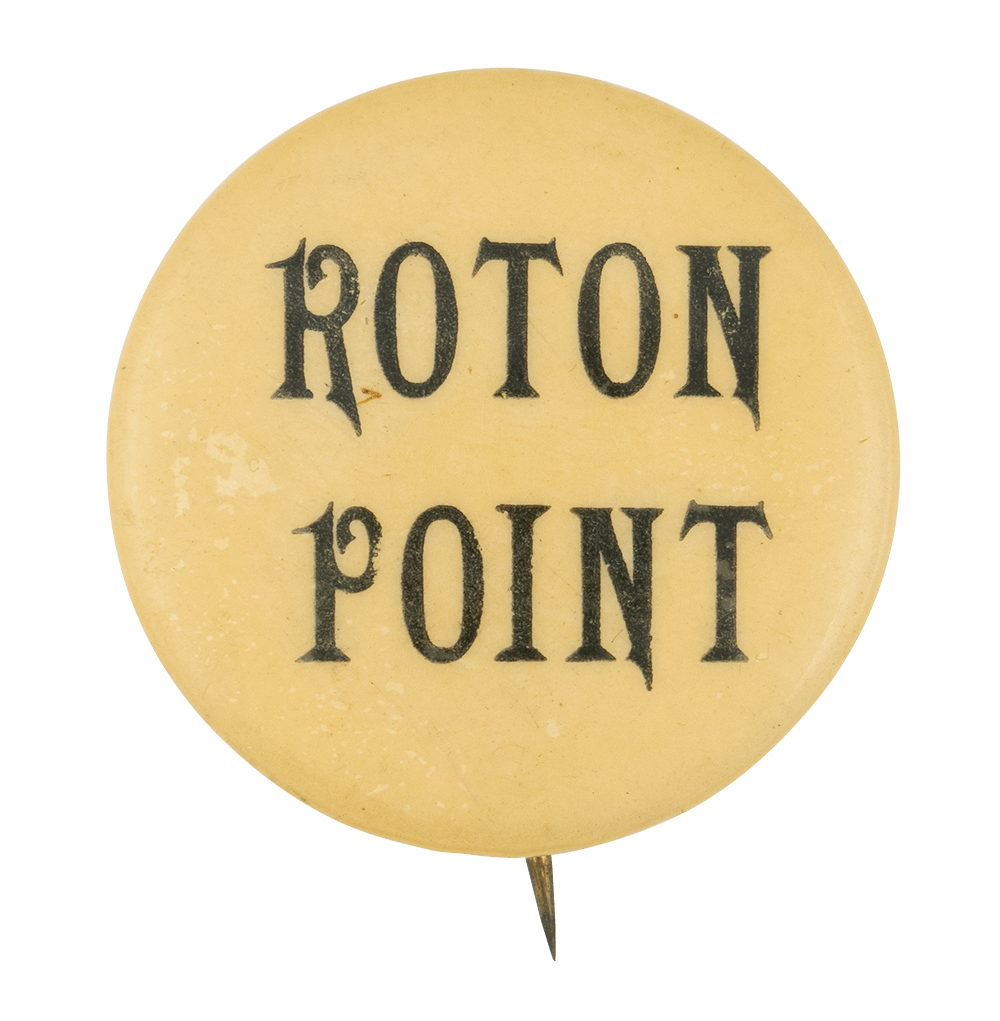
Text on Button ROTON POINT
Image Description

Black text on an off white background

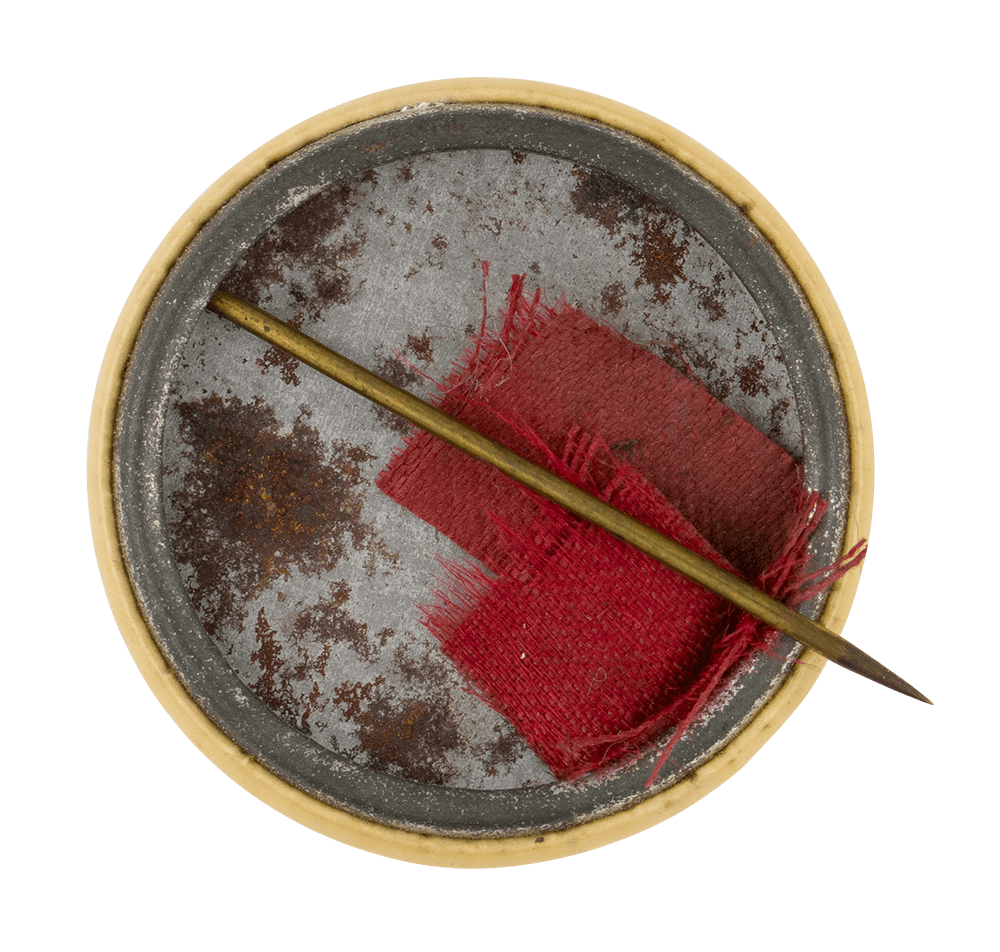
Back Style
The Shape
The Size
Additional Information

Roton Point is an area of Norfolk, Connecticut that has been a place to go for relaxation for almost 150 years. In 1880, the area became popular for its amusement park and the big bands of the era that performed there. After the amusement park was torn down in 1941, Roton Point became a family beach club that marketed a “casually elegant” location for summer activities.

Sources

(n.d.). A Fabled History. Retrieved from https://rotonpoint.org/history

Catalog ID EV0719

It's Happening in New York

Category
Additional Images
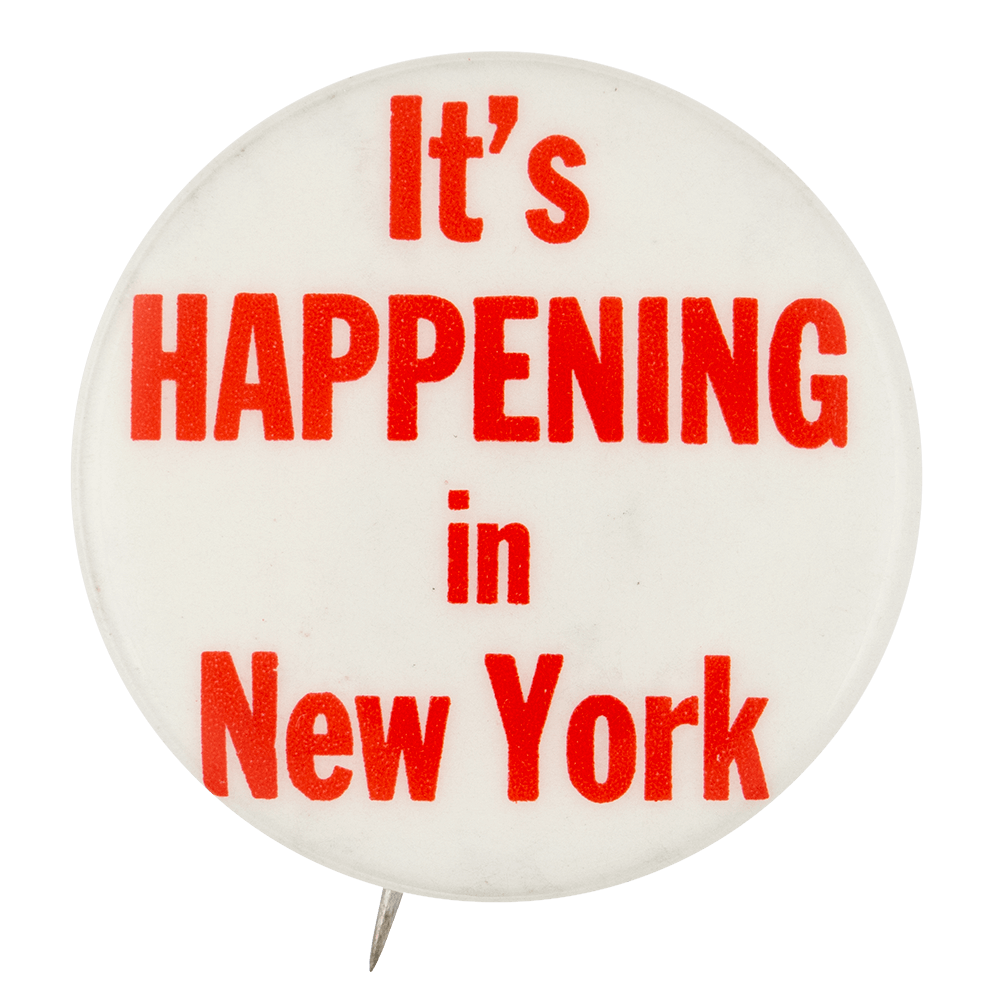
Text on Button It's HAPPENING in New York
Image Description

Red text on a white background

Back Style
The Shape
The Size
Additional Information

New York is one of the most populous and influential US states, home to over 20 million people. Despite having been surpassed in the 21st century by California and Texas in population and economic metrics, New York nevertheless has a higher GDP than most countries in the world. 

The heart of its preeminence is New York City, which is the largest United States metropolis with a population of around 8.5 million as of 2023. The city is considered a cultural icon, and is among the most ethnically and religiously diverse urban centers in the US. More than half of all people and goods that have entered the country came in through its port, emphasizing the city’s cosmopolitan and commercial significance. 

Sources

Lankevich, G. (2023, February 8). New York City. Britannica. https://www.britannica.com/place/New-York-City

Campbell, A., & Scudiere, P. (2023, February 7). New York. Britannica. https://www.britannica.com/place/New-York-state

Catalog ID EV0718

Mountain Home Arkansas

Category
Additional Images
Sub Categories
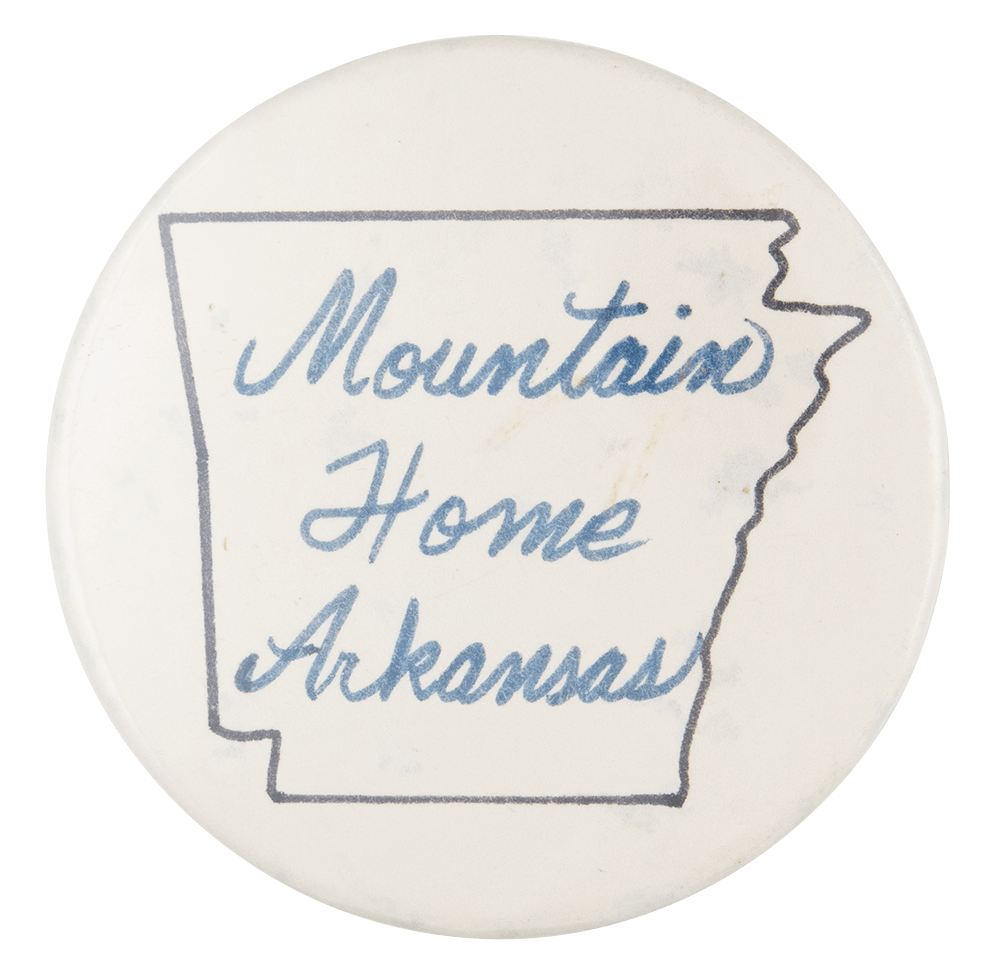
Text on Button Mountain Home Arkansas
Image Description

Blue text on an outline of the state of Arkansas on a white background

Back Paper / Back Info

BADGE-A-MINIT LASALLE ILL. 61801

Back Style
The Shape
The Size
Additional Information

Mountain Home is situated in the southern Ozark mountains of northern Arkansas, between two lakes. The area was settled by Anglo-Americans in the early eighteenth century, and originally known as Rapp’s Barren, after the first permanent Anglo-American settler. The origins of the name “Mountain Home” are unclear, though legend claims that slaves named the area for the cooling breezes coming down off the mountains. During the Civil War, the area was embroiled in guerilla warfare, which resulted in Union-aligned forces burning the school in Mountain Home. The town became the seat of Baxter County in 1873, though it was not incorporated as a city until 1888.

In the 1930s, the area suffered from a drought and the Great Depression. Locals lost their farms and left the area in search of work. The Works Progress Administration (WPA) and other New Deal programs provided work for those who remained. Workers constructed key construction projects including bridges and a new courthouse. The construction of two dams in the 1940s and 1950s created jobs and reduced the risk of flooding, which revitalized farming in the region. The establishment of a large fish hatchery near the Norfork dam helped attract fishermen. Today, the city is known for freshwater fishing, hiking, and other outdoor activities. It is popular with retirees and vacationers.

Sources

Mulloy, C. (2018, July 12). Mountain Home (Baxter County). The Encyclopedia of Arkansas History and Culture. Retrieved from http://www.encyclopediaofarkansas.net/encyclopedia/entry-detail.aspx?en…

Catalog ID EV0716