I'm 4 Beatles Black

Category
Additional Images
Sub Categories
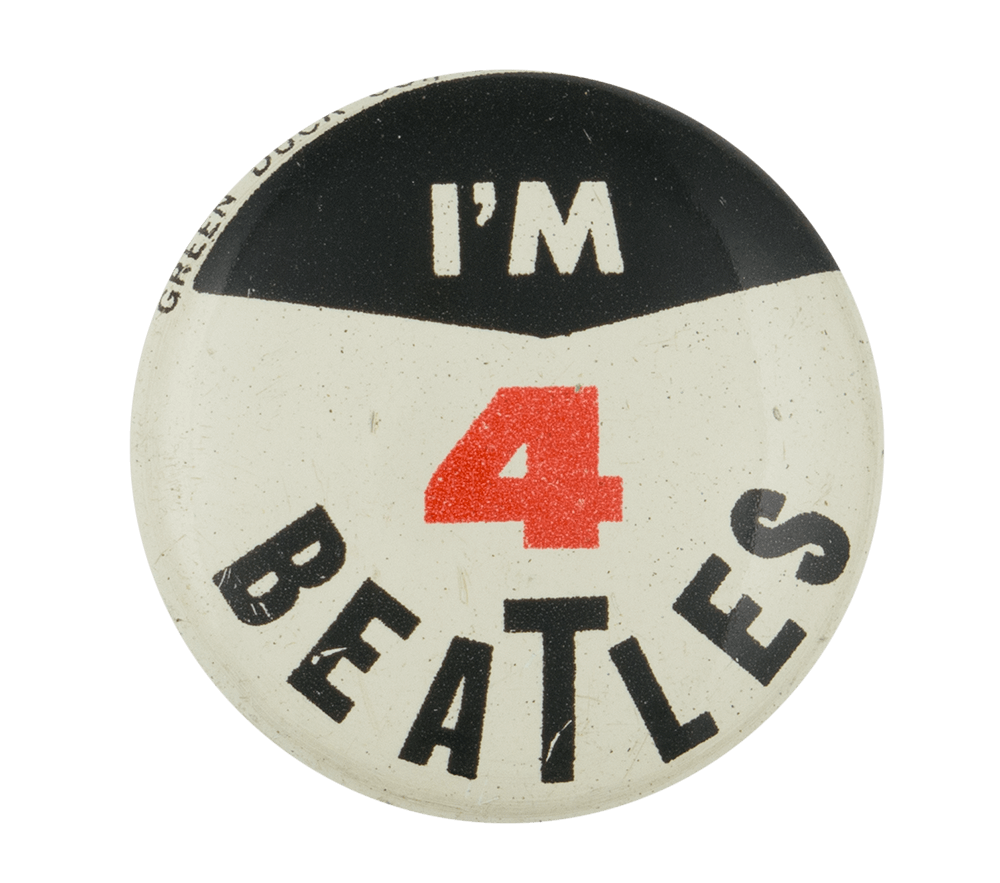
Text on Button I'M 4 BEATLES
Image Description

White, red and black text on a black and white background

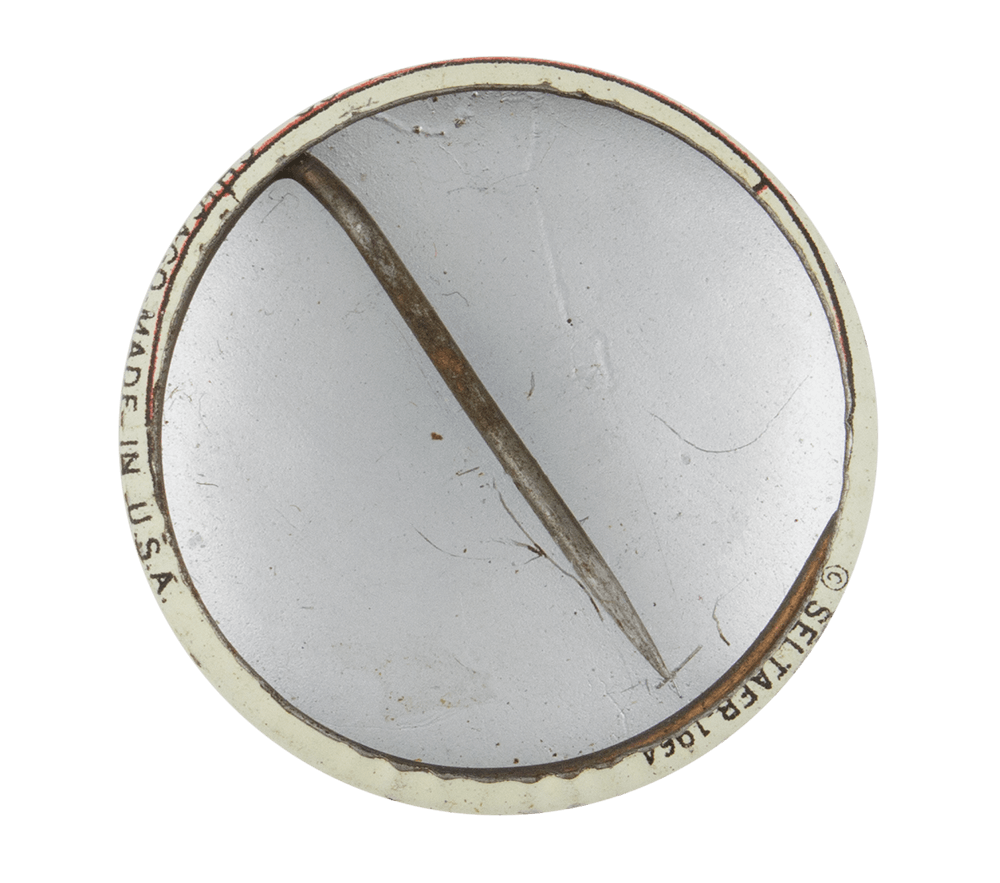
Curl Text SELTAER, 1964 GREEN DUCK CO., CHICAGO MADE IN U.S.A.
Back Style
The Shape
The Size
Year / Decade Made
The Manufacturer
Additional Information

The Beatles were a popular British rock-and-roll band from the 1960s that started out as a group called The Quarrymen in Liverpool, England. Band members John Lennon, Paul McCartney, George Harrison, and Ringo Starr recorded over a dozen albums together before breaking up in 1970. Each member went on to have a successful solo career in music.

This button is part of a set of 9. The buttons were circulated via vending machines in the US as prizes during the 1960s.

Sources

Memorabilia. (n.d.). Retrieved from http://www.popculturetoday.com/memorabilia/v-index.html

Catalog ID MU0460

La Follette Park

Category
Additional Images
Sub Categories
Text on Button LA FOLLETTE PARK Dedicated April 1928
Image Description

Picture of a statue over an American flag background with a black bottom with white text

Back Paper / Back Info

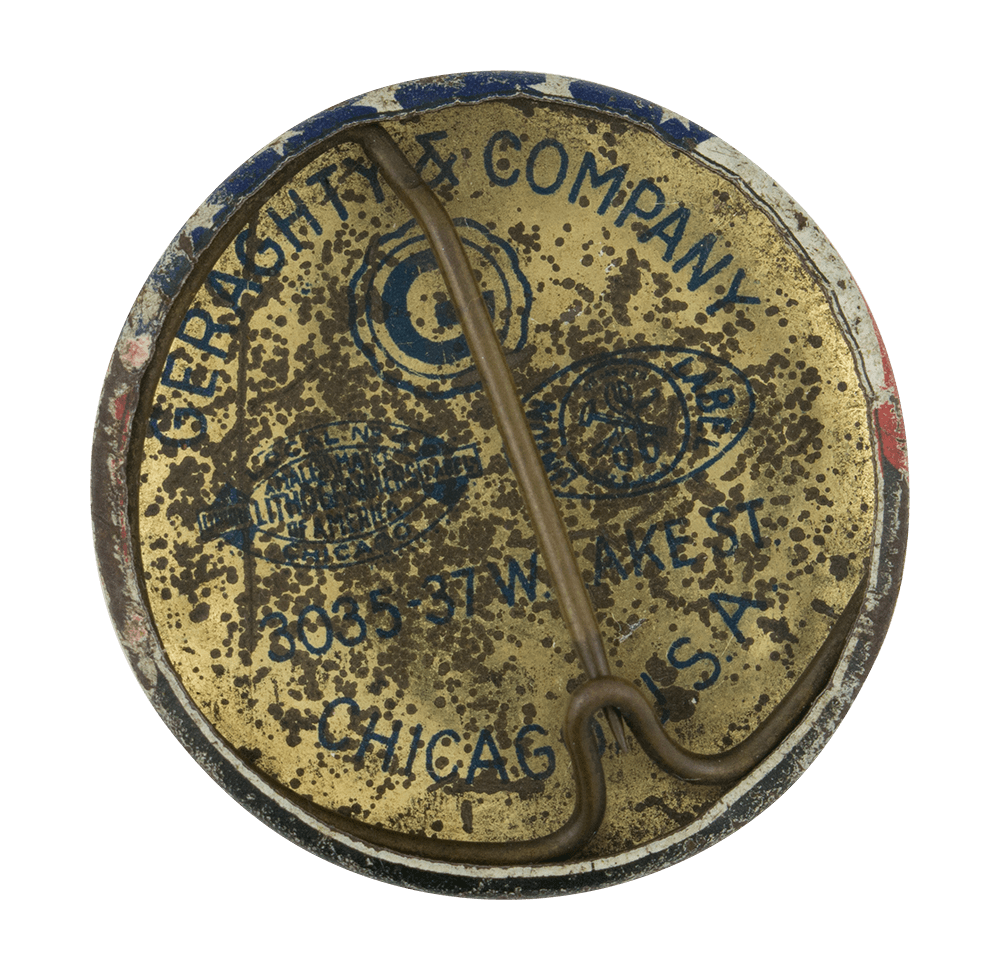
GERAGHTY & COMPANY 3035-37 W. LAKE ST. CHICAGO, U.S.A.

Back Style
The Shape
The Size
The Manufacturer
Additional Information

La Follette Park located in the Austin neighborhood on the west side of Chicago was named after U.S. Representative, Senator, and three term Wisconsin governor, Robert M. La Follette. A petition signed by more than 100,000 citizens requested the tribute. Known as "Fighting Bob" among members of the community, La Follette was committed to reform efforts to better the lives of children, women, farmers, and workers.

The site of the park was originally acquired in 1918 by the West Park Commission, but failed negotiations between landscape architect Jens Jensen and the committee caused the park commission to remain dormant until 1925, coinciding with La Follette's death. In 1927, architects Michaelsen and Rognstad were commissioned to design the fieldhouse building, the Italian Renaissance Revival-style building that still stands in La Follette Park. Upon completion of the fieldhouse building, La Follette Park was dedicated in April 1928. 

Catalog ID EV0526

I Saw Fields Santa White and Red

Category
Additional Images
Sub Categories
Text on Button I SAW FIELD'S SANTA!
Image Description

Illustration of a Santa head on a red circle with an outer white edge with red text on it

Curl Text ILL. BADGE & BUTTON-CHGO, 312-725-6767
Back Style
The Shape
The Size
The Manufacturer
Additional Information

Marshall Field's was a Chicago department store chain established in the 1850s. During the Christmas holiday season, Marshall Field's created intricate window displays at their store front on State Street in Chicago while also decorating the store interior with handmade ornaments and a big Christmas tree in the Walnut Room. Children could come to Field's to visit Santa Claus in the "Cozy Cloud Cottage" followed by a slice of Frango mint pie in the Walnut Room.

Sources

For Generations of Chicagoans, Marshall Field's Meant Business, and Christmas. (2016). Retrieved from https://www.smithsonianmag.com/history/generations-chicagoans-marshall-…

Marshall Field's Reigns Over Yule Season. (1986). Retrieved from http://articles.latimes.com/1986-12-14/local/me-3086_1_walnut-room

Catalog ID CL0508

I am Kamonohashi

Category
Additional Images
Sub Categories
Text on Button I AM KAMONOHASHI! OSAKA AQUA-BUS
Image Description

Illustration of a yellow platypus above a blue and white boat on an orange background with black text

Back Style
The Shape
The Size
Additional Information

Kamonohashi is a Japanese word that translates to platypus in English. Osaka Aqua Bus is a boat tour agency located in Osaka, Japan. The company offers tours and cruises along the Okawa River. Their ships include the Aqua-Liner water bus, Aqua mini boats, the Himawari restaurant ship, and the Santa Maria for excursion cruises. 

Sources

Aqua Resort Osaka Suijyo Bus. (n.d.). Retrieved from http://suijo-bus.osaka/english/

Catalog ID EV0530

Golden Jubilee

Category
Additional Images
Sub Categories
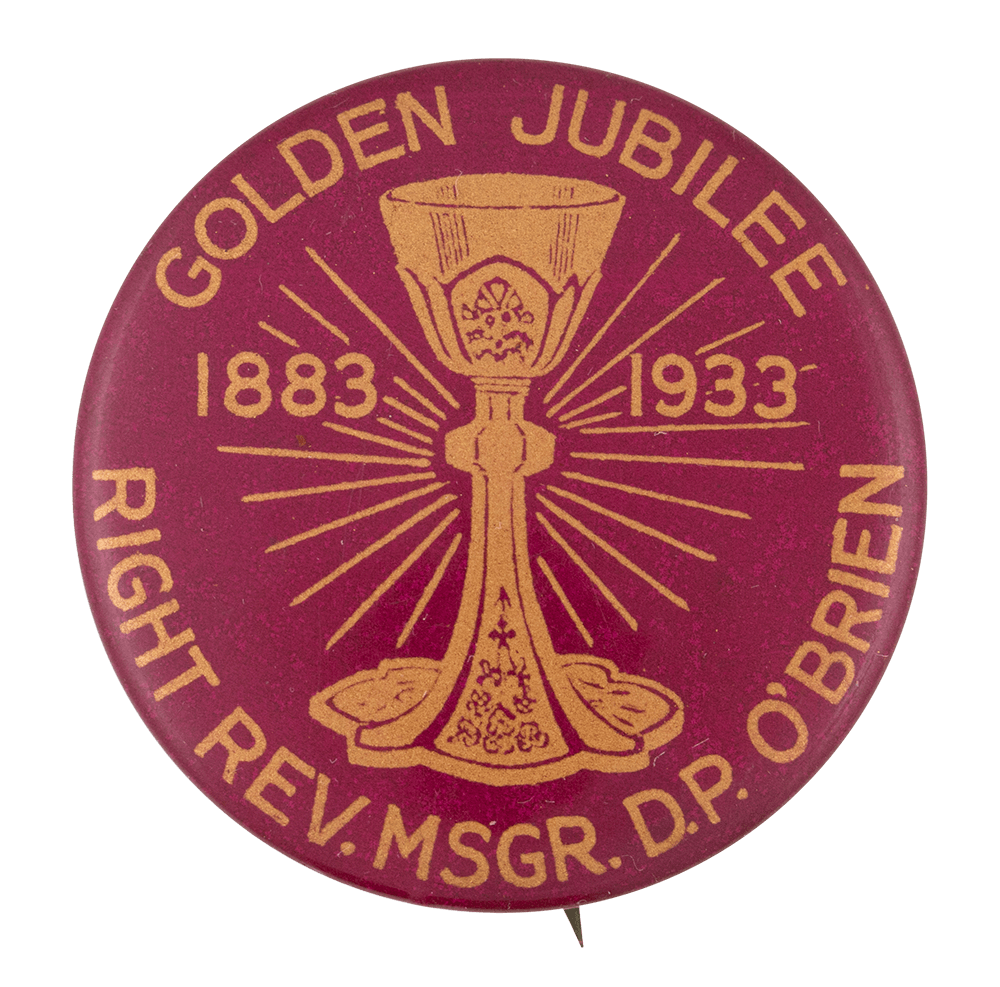
Text on Button GOLDEN JUBILEE 1883 1933 RIGHT REV.MSGR.D.P. O'BRIEN
Image Description

Gold illustration of a cup with gold text on a red background

Back Style
The Shape
The Size
Additional Information

A jubilee in the Catholic tradition is a special year of confessing sins and being pardoned, and is generally celebrated every 25 or 50 years. In 1933, there was a special jubilee called the Holy Year of the Redemption to commemorate the 1900th anniversary of Jesus’ death and resurrection. In addition to the church’s celebration, Right Reverend Monsignor O’Brien was also celebrated for his 50 years of service from 1883-1933. His title Right Reverend Monsignor suggests that this member was a higher class diocesan priest who was particularly honored or held a special office.

Sources

"Jubilee in the Catholic Church." Wikipedia, 2 June 2020, https://en.wikipedia.org/wiki/Jubilee_in_the_Catholic_Church. Accessed 13 June 2020.

“Monsignor.” Wikipedia, 5 May 2020, https://en.wikipedia.org/wiki/Monsignor. Accessed 13 June 2020.

Catalog ID EV0527

Get the Lead Out Week

Category
Additional Images
Sub Categories
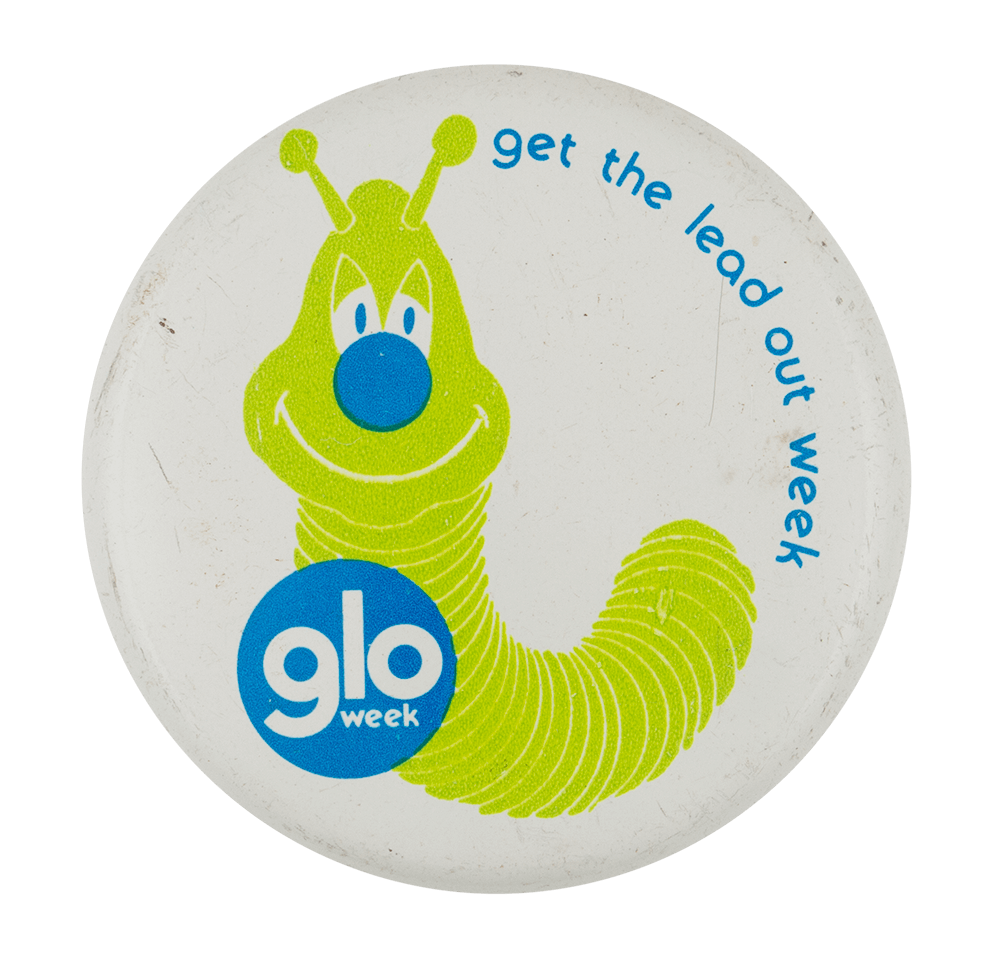
Text on Button get the lead out week global week
Image Description

Green and blue illustration of a worm with a blue circle with white text in it and blue text on a white background

Back Style
The Shape
The Size
Additional Information

Get the Lead Out is a campaign to convince state and local leaders to ensure safe drinking water for children.  This involves proactively removing lead-bearing parts from schools’ drinking water systems and installing filters certified to remove lead at every tap used for drinking or cooking.

Sources

Environment America (n.d.) Get the Lead Out. Retrieved from https://environmentamerica.org/feature/ame/get-lead-out

Catalog ID EV0525

Fullerton Buffet

Category
Additional Images
Sub Categories
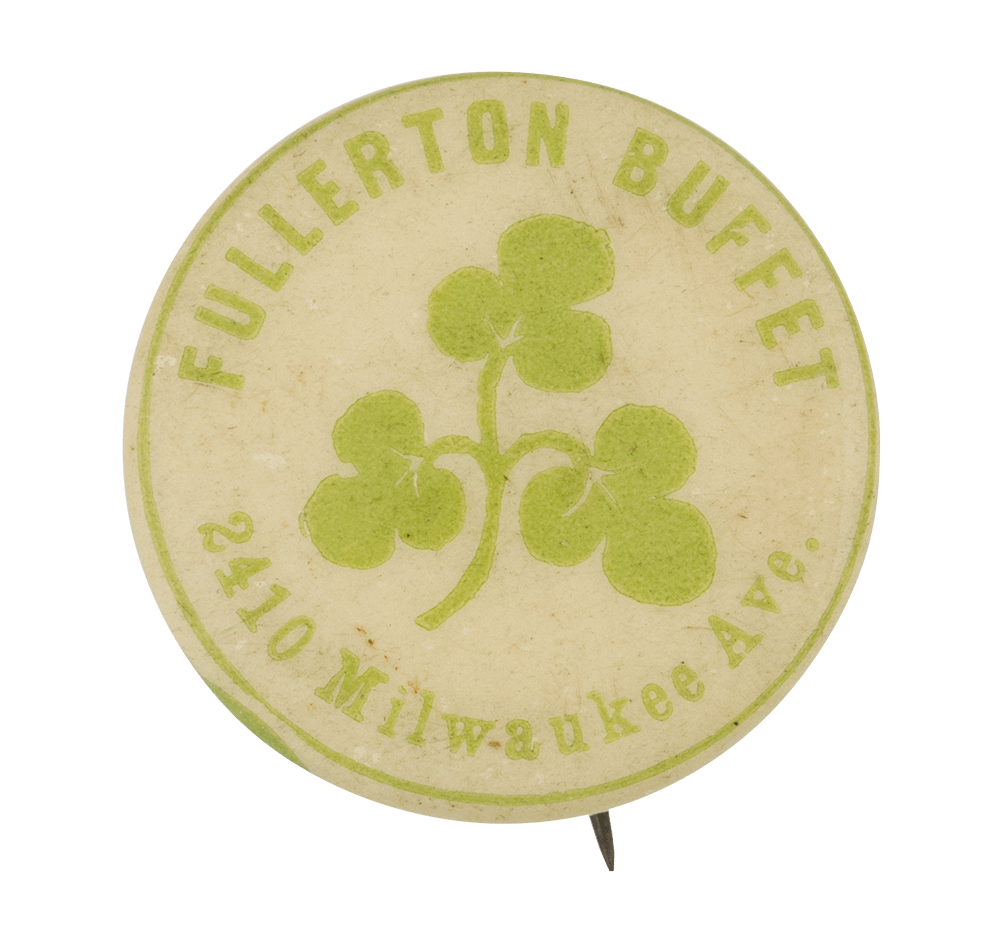
Text on Button FULLERTON BUFFET 2410 Milwaukee Ave.
Image Description

Green illustration of 3 clovers with green text around the outer edge on a white background

Curl Text illegible (union bug)
Back Style
The Shape
The Size
Additional Information

The Fullerton Buffett was located at 2410 Milwaukee Avenue on the Fullerton avenue corner in Chicago. The business was purchased in 1911 by Jack O'Keefe, a lightweight boxer born in Braidwood, Illinois. His career as a boxer lasted from 1893-1913; he was 5′ 8″ and fought 75 bouts throughout his career. He was a boxing idol in Chicago and decided to spend his retirement as a restaurant owner.  O'Keefe had previous experience in the buffet business with a place on the Pacific Coast. The Fullerton Buffet was located on the North Side of Chicago and became a headquarters for local boxers. In 1924, he had become the owner of a pocket billiard hall.

Sources

“Chicago Examiner from Chicago, Illinois on June 8, 1911 · 1.” Newspapers.com, Chicago Examiner. Retrieved from www.newspapers.com/newspage/668115475/.

Catalog ID CH0277

Clean-Up Week Chases Dirt

Category
Additional Images
Sub Categories
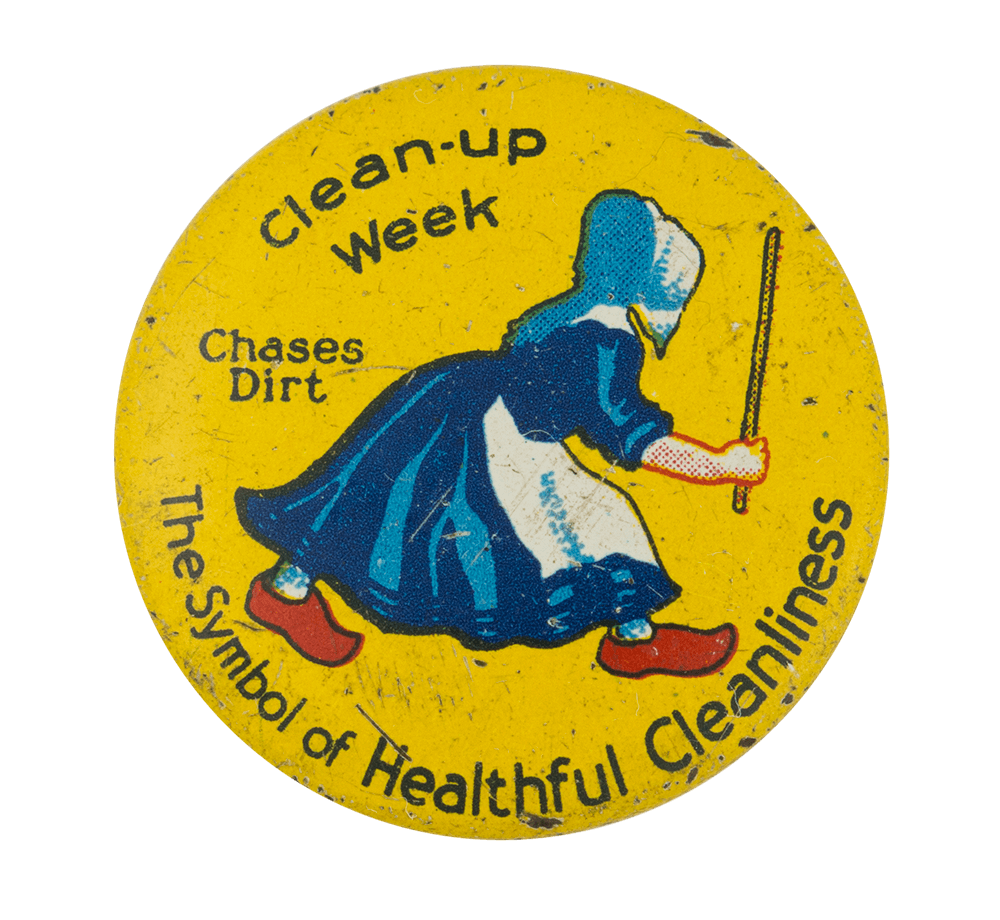
Text on Button Clean-up Week Chases Dirt The Symbol of Healthful Cleanliness
Image Description

Blue, white and red illustration of the Dutch Girl character holding a stick with blue text on a yellow background

Back Paper / Back Info

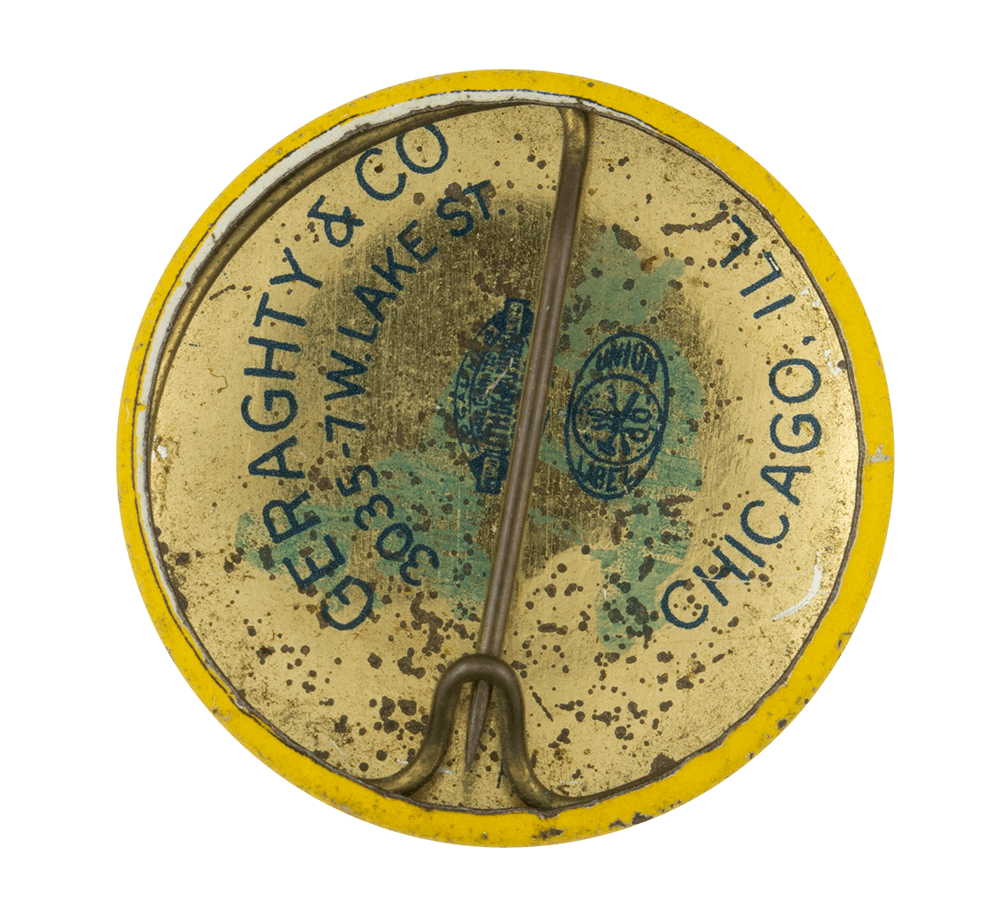
GERAGHTY & COMPANY 3035-37 W. LAKE ST. CHICAGO, U.S.A.

Back Style
The Shape
The Size
Year / Decade Made
The Manufacturer
Additional Information

Old Dutch Cleanser was developed by the Cudahy Packing Company of Chicago in 1905. Being meatpackers, they were looking for a soap product to use excess animal fat and created a scouring cleanser by combining soap with pumice. Their trademark was a little Dutch woman in a blue dress chasing away dirt with a stick. Around 1926, their advertising started using the tagline, “The symbol of healthful cleanliness.” At the same time, “Clean-Up Week” became a fairly popular trend to promote civic engagement and business development. People pitched in to do civic improvement projects and individual businesses did spring cleaning. Many found that this actually improved business. Clean UP Weeks partnered with Old Dutch Cleanser between 1927-1934. Cudahy sold Old Dutch to Purex bleach in 1955. The name is currently owned by Lavo in Montreal.


See an alternative version of this button in the museum's collection here. 

Sources

History - Old Dutch. Old Dutch. (2020). Retrieved from https://www.olddutch.ca/en/history/.

Pollard, G. (2020). Chasing the Old Dutch Cleanser Girl - BrandlandUSA. BrandlandUSA. Retrieved from https://www.brandlandusa.com/2008/12/22/chasing-the-old-dutch-cleanser-….

Catalog ID EV0528

Chinese Day

Category
Additional Images
Sub Categories
Text on Button CHINESE DAY OCT FIRST 1933 A CENTURY OF PROGRESS
Image Description

An illustration of a white sun on a blue circle over a blue rectangle with white text on it with yellow and red stripes and red and white text

Back Style
The Shape
The Size
Year / Decade Made
Additional Information

From May 27 through November 1, 1933, Chicago put on the famous World’s Fair, which was titled “A Century of Progress,” to celebrate its centennial. The city collaborated with a number of foreign nations to put on the exhibition, and for the month of October, the focus was on a number of artifacts and exhibits from China. The most prominent exhibit was a replica of the Buddhist Lama Temple of Jehol that was located at 16th street. There was also an exhibit featuring the Peking man, whose body had been preserved in a bog for nearly 500,000 years. Other items on display included rugs, embroideries, furs, a replica of a Chinese walled village, and objects made of porcelain, lacquer, silk, and ivory. The city also provided entertainment in the form of interpretive dance and acrobatics.

Sources:
The Chinese Village. (1933). Official Guide Book of the Fair, p. 93.  Retrieved from  https://archive.org/stream/officialguideboo00centrich#page/92/search/chinese

The Chinese Exhibits at Chicago's Century of Progress Exposition, 1933-34. (n.d.) Chinese-American Museum of Chicago. Retrieved from http://www.ccamuseum.org/index.php/zh/research/objects/63-objects-from-the-1933-4-chicago-world-fai

Catalog ID CH0278

Chicago's Worlds Fair A Century of Progress

Category
Additional Images
Sub Categories
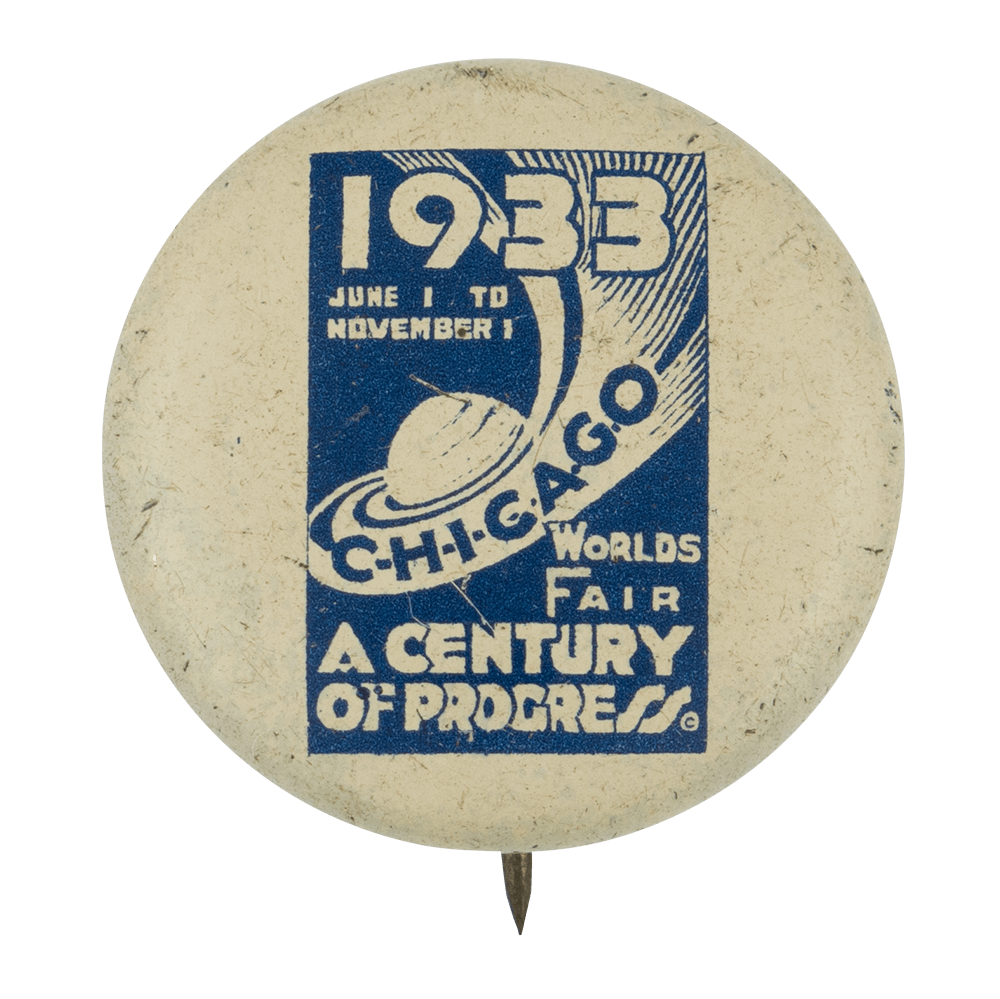
Text on Button 1933 JUN 1 TO NOVEMBER 1 C-H-I-C-A-G-O WORLDS FAIR A CENTURY OF PROGRESS
Image Description

Blue rectangle with blue and white text on it on a white background

Back Paper / Back Info

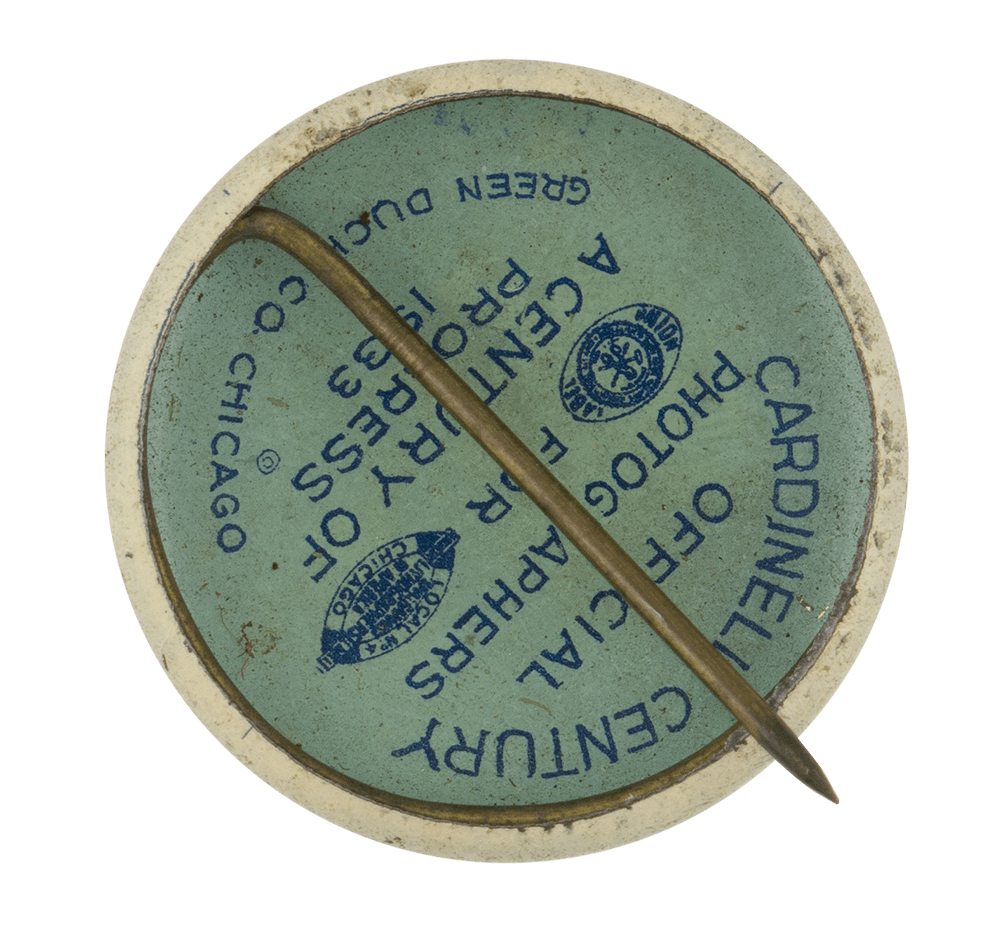
CARDINELL CENTURY OFFICIAL PHOTOGRAPHERS FOR A CENTURY OF PROGRESS 1933 GREEN DUCK CO CHICAGO

Back Style
The Shape
The Size
Year / Decade Made
The Manufacturer
Additional Information

Cardinell Century, the official photographers of the 1933 Chicago World's Fair, put out postcards and souvenirs during the fair, including this button. This button features the official emblem of a Century of Progress. Its depiction of a planet and its rings moving through space was used in fair posters and memorabilia to represent futurism. Additionally, the emblem mimics the streamlined designs of the fair's many buildings.

The 1933 Chicago World's Fair, known officially as a Century of Progress International Exposition, opened on June 1, 1933 and closed on November 1 the following year. In addition to exhibits showcasing technological innovations, such as the latest advancements in rail travel, automobiles, and architecture, the 1933 Chicago World's Fair celebrated the city's centennial. The fairgrounds of a Century of Progress bordered 37th Street on the South and Roosevelt Road on the North, and occupied much of Northerly Island. Some of the exhibits that were featured at the fair included performances by fan dancer Sally Rand, the German airship Graf Zeppelin, new American luxury cars, and the Homes of Tomorrow Exhibition.

Sources

1933 World's Fair 'A Century of Progress.' (n.d.). Retrieved from https://1933centuryofprogress.myportfolio.com

Catalog ID CH0279