I Don't Want Eleanor Either

Category
Additional Images
Text on Button I don't want ELEANOR either
Image Description

Blue text over a white background

Back Style
The Shape
The Size
Year / Decade Made
Additional Information

First Lady Eleanor Roosevelt has been considered by many historians as having dramatically changed the role of the first lady. Rather than stay in the background, Eleanor Roosevelt was an active participant in her husbands administration.  When her husband suffered a polio attack in 1921, Eleanor stepped up to help her husband by taking a more active role in his political career. In addition, she gave numerous press conferences, speaking out on a number of issues, including human rights, racial discrimination, and women's rights. The First Lady's high profile attracted public ridicule by her families political opponents. In his campaign for President, Wendell Willkie personally attacked the first lady, criticizing the fact that both the President and his wife were seeking a third term in office.

Catalog ID PO0720

Dictators Don't Debate

Category
Additional Images
Text on Button DICTATORS DON'T DEBATE
Image Description

Orange text on a white background.

Back Style
The Shape
The Size
Year / Decade Made
Additional Information

Typically, dictators avoid genuine political debate with the opposition, as dictatorship, by definition, concentrates power and suppresses dissent. The phrase "Dictators Don’t Debate" originated during the 1940 U.S. presidential election between incumbent Franklin Delano Roosevelt and Republican challenger Wendell Willkie. At that time, Roosevelt was seeking an unprecedented third term, raising concerns among Republicans who feared he was gaining excessive power. This break from tradition sparked accusations of authoritarianism, as critics called Roosevelt’s extended tenure undemocratic. His refusal to accept Willkie’s invitation for a live radio debate intensified these criticisms and inspired slogans like this one.

The button with this slogan was made by independent manufacturers not officially linked to the Willkie campaign, yet it quickly became popular among Willkie’s supporters. Its direct message criticized Roosevelt for refusing to debate his opponent publicly, effectively labeling him as dictatorial. Throughout the 1940 campaign, many buttons mocked both Franklin and Eleanor Roosevelt, highlighting the tense and confrontational political environment of the time. Today, this button remains a powerful reminder of a pivotal election, demonstrating the power of rhetoric and the changing media strategies in American presidential history.

Sources

CAMPAIGN SLOGANS & CANDIDATE'S NICKNAMES. Tedhake.com. (2020). Retrieved November 12, 2025, from https://www.tedhake.com/viewuserdefinedpage.aspx?pn=nicknames 

Heard, C. S., Jr. (n.d.). When reason trumped politics: The remarkable political partnership of Franklin Delano Roosevelt and Wendell L. Willkie. The Franklin Delano Roosevelt Foundation. https://fdrfoundation.org/publications/willkie/ 

Kets de Vries, M. F. R. (2018, January 18). Fighting against dictatorship. INSEAD Knowledge. https://knowledge.insead.edu/leadership-organisations/fighting-against-dictatorship 

Lot Detail - Willkie Slogan Lt Red on W: "Dictators Don't Debate". Oldpoliticals.com. (2020). Retrieved November 12, 2025, from http://www.oldpoliticals.com/lot-8007.aspx

Presidential Debates in History - Bill of Rights Institute. Bill of Rights Institute. Retrieved from November 12, 2025, from https://billofrightsinstitute.org/elessons/presidential-debates-in-history/ 

Willkie Campaign Buttons and Stamp, ca. 1940 - Cornell University Library Digital Collections. Digital.library.cornell.edu. Retrieved from https://digital.library.cornell.edu/catalog/ss:10637417 

Catalog ID PO0808

Greater Prosperity Builder

Category
Additional Images
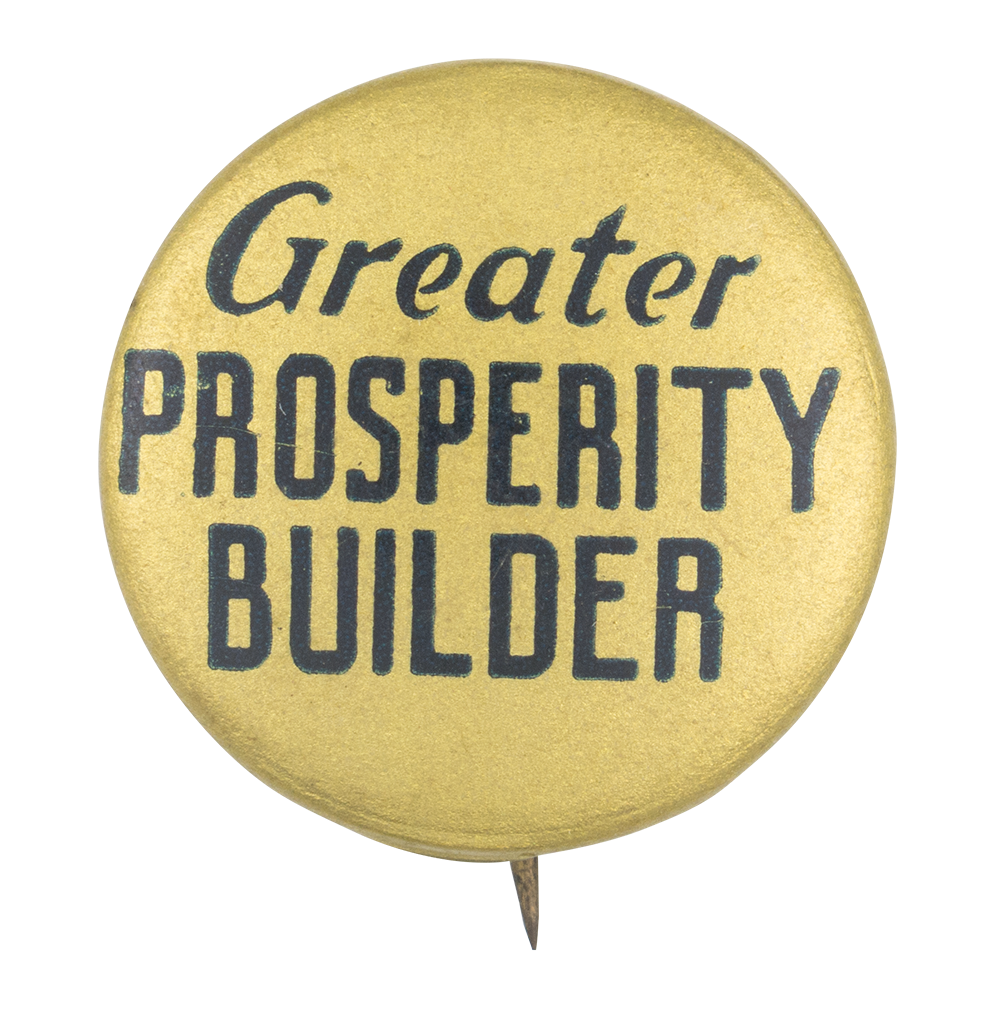
Text on Button Greater PROSPERITY BUILDER
Image Description

Black text on a gold background.

Back Style
The Shape
The Size
Year / Decade Made
Additional Information

In 1940, democrat Franklin Delano Roosevelt (January 30, 1882 – April 12, 1945) campaigned for an unprecedented third term as U.S. President. His Republican opponent was Wendell Lewis Wilkie (February 18, 1892 – October 8, 1944). Wilkie was not a typical republican choice: Unlike Roosevelt’s Hyde Park upbringing, and Harvard education, Wilkie was born to a modest family in a small town in Indiana. Moreover, Wilkie used to be a democrat and actually voted for Roosevelt in 1932 while supporting the New Deal. But by 1936, Wilkie had distanced himself from Roosevelt because the federal government created Tennessee Valley Authority (TVA) to compete with Commonwealth & Southern Corporation (C&S); Wilkie was the president of this private company that provided electricity to 11 states. 

The presidential race was boisterous and contentious. One of the focuses of Wilkie’s campaign was the third term issue and he accused Roosevelt of wanting to become a dictator. Wilkie made the argument that voting for him was a vote for democracy. His campaign was vigorous and at times aggressively personal. Campaign buttons were printed with catching phrases like No Franklin the First, No Man Is Good Three Times, Financial Debauchery Run-riot, and Prosperity Builder. Roosevelt’s campaign countered with their own buttons, like the one seen here. 

On November 5, 1940, Roosevelt won the presidency with 38 states and 55 percent of the popular vote. Despite the contentious campaign, Roosevelt and Wilkie developed a strong working relationship: Wilkie served as Personal Envoy of Roosevelt, meeting with world leaders like Joseph Stalin, Charles de Gaulle, Marshall Montgomery and Chang Kai-Shek. It's rumored that Roosevelt even asked Wilkie to be his vice presidential candidate for a possible fourth term in 1944. Wilkie died in October, 1944 and Roosevelt passed away less than six months later in April, 1945. 

Sources

Heard, S. (n.d.). When Reason Trumped Politics: The Remarkable Political Partnership of Franklin Delano Roosevelt and Wendell L. Wilkie. The Franklin Delano Roosevelt Foundation. Adams House, Harvard College. Retrieved October 19, 2024, from https://fdrfoundation.org/publications/willkie/ 

1940 Wendell Wilkie Campaign Buttons. (n.d.). Franklin D. Roosevelt Presidential Library and Museum. National Archives. RetrievedOctober 19, 2024,  from https://fdr.blogs.archives.gov/2012/10/24/from-the-museum-43/ 

Sobelman, R. (2008). Influence of the Third-Term Issue: The Roosevelt and Wilkie Presidential Campaigns of 1940. Arnold & Porter. https://www.arnoldporter.com/-/media/files/perspectives/publications/2008/04/influence-of-the-thirdterm-issue-the-roosevelt-a__/files/publication/fileattachment/influence-of-the-third-term-issue_the-roosevelt-__.pdf?rev=19fbf34e01dd474ba6d3725613b9c6bc&sc_lang=en&hash=72298A123ADCA8F3C81D27B5D3B3D751 

Willkie vs Roosevelt "Prosperity Builder" Campaign Button. (n.d.) Lori Ferber Presidential Collectibles. Retrieved October 19, 2024, from https://www.loriferber.com/willkie-fdr-prosperity-builder.htmlsrsltid=AfmBOooILZwZCvBuDuBH3sXOkIUzWjwEEcTVnCDWBRpKTYfGPpUG_zAx   


Catalog ID PO0828

I'd Vote for Willkie

Category
Additional Images
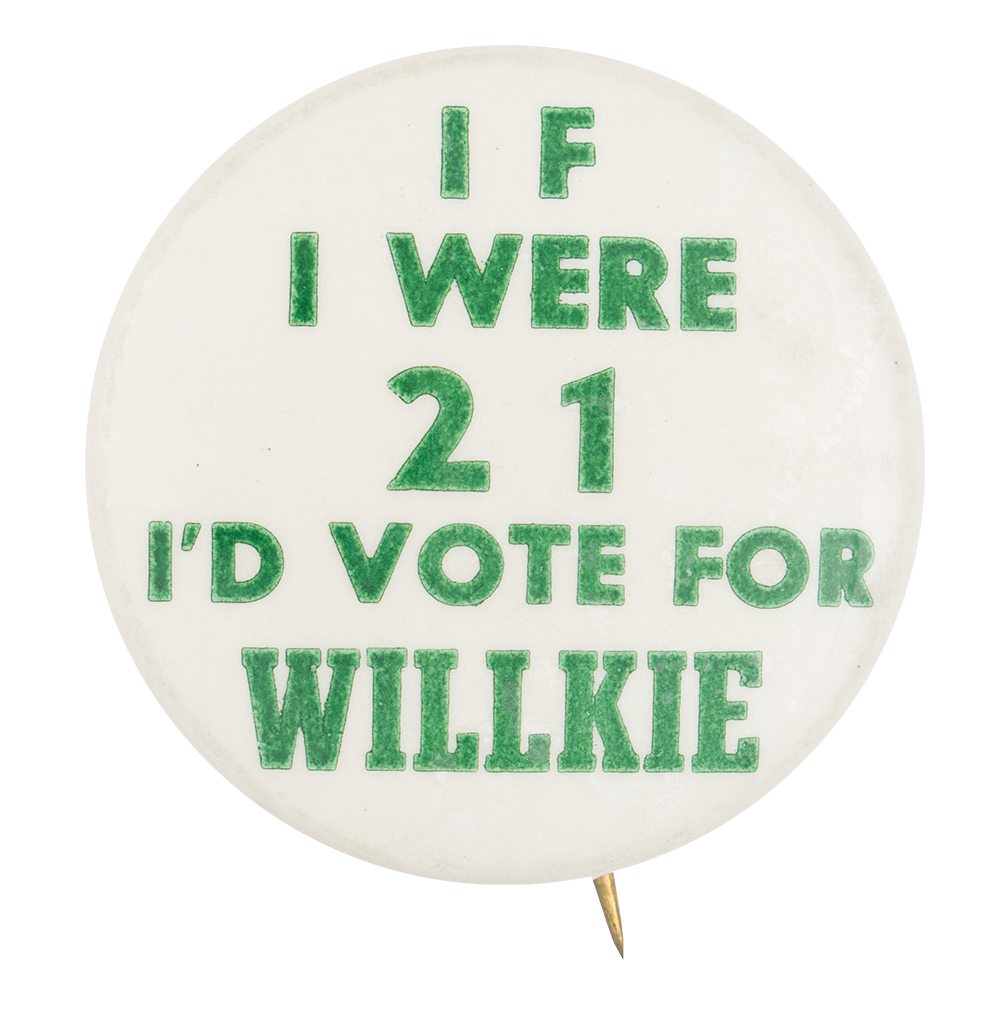
Text on Button IF I WERE 21 I'D VOTE FOR WILLKIE
Image Description

Green text with a white background

Back Style
The Shape
The Size
Year / Decade Made
Additional Information

For Wendell Willkie's 1940 campaign for President, an unprecedented amount of merchandise was created to support his cause. Willkie, who had never held political office prior to the election was seen as an unlikely candidate. This may be why Willkie's campaign was particularly aggressive with merchandise. As described in an August 1940 issue of the New Yorker, the  campaign had plans of promoting itself on things such as neckties, chewing gum, and cowbells. But the most active way of promoting Willkie was through buttons. For the campaign, Willkie made an estimated thirty million buttons in total. These buttons were made with numerous messages that appealed to a large spectrum of voters. For example, this button was created for Willkie's younger supporters who weren't yet at the age to officially vote in the election.

Sources

Hamburger, P., & Maloney, R. (1940, August 31). The Talk of the Town: Willkie Buttons. The New Yorker.​ Retrieved from https://www.newyorker.com/magazine/1940/08/31/willkie-buttons

Willkie is way ahead in Battle of Buttons. (1940, September 30). Life Magazine. Retrieved from https://books.google.com/books?id=C0oEAAAAMBAJ&lpg=PA82&dq=willkie%20bu…

Catalog ID PO0705

Life and Prosperity in a Democracy with WIllkie

Category
Additional Images
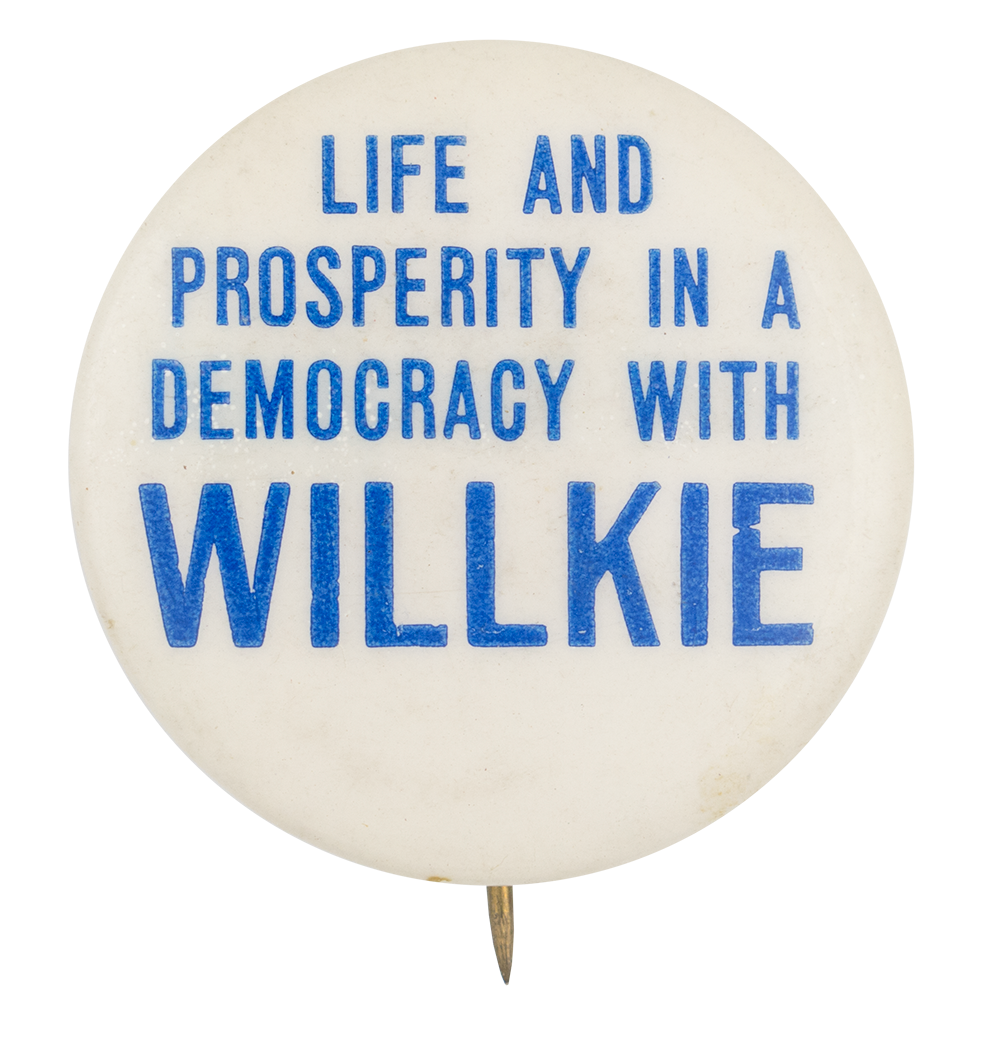
Text on Button LIFE AND PROSPERITY IN A DEMOCRACY WITH WILLKIE
Image Description

Blue text on a white background.

Back Style
The Shape
The Size
Year / Decade Made
Additional Information

Wendell Willkie ran as the Republican candidate in the 1940 presidential election. He seemingly came out of nowhere, having switched political parties in 1939. Willkie was against isolationism, an issue dividing the party. He was too progressive for conservative Republicans, but he gathered the support of many disaffected Republicans who wanted someone with a chance of defeating Franklin Delano Roosevelt. He also modeled his image as an “everyman” with a Midwestern accent, rumpled suit, and “country” haircut. He also pledged to not reduce New Deal welfare programs and expand Social Security. Although this attracted middle class voters, Willkie had difficulty attracting the working class. Roosevelt was able to keep his popularity with working class, minority, and Southern voters, winning the 1940 election by 5 million votes and an electoral landslide.

Sources

Wendell Willkie. En.wikipedia.org. (2020). Retrieved from https://en.wikipedia.org/wiki/Wendell_Willkie.

Catalog ID PO0707

Joe Must Go Yellow

Category
Additional Images
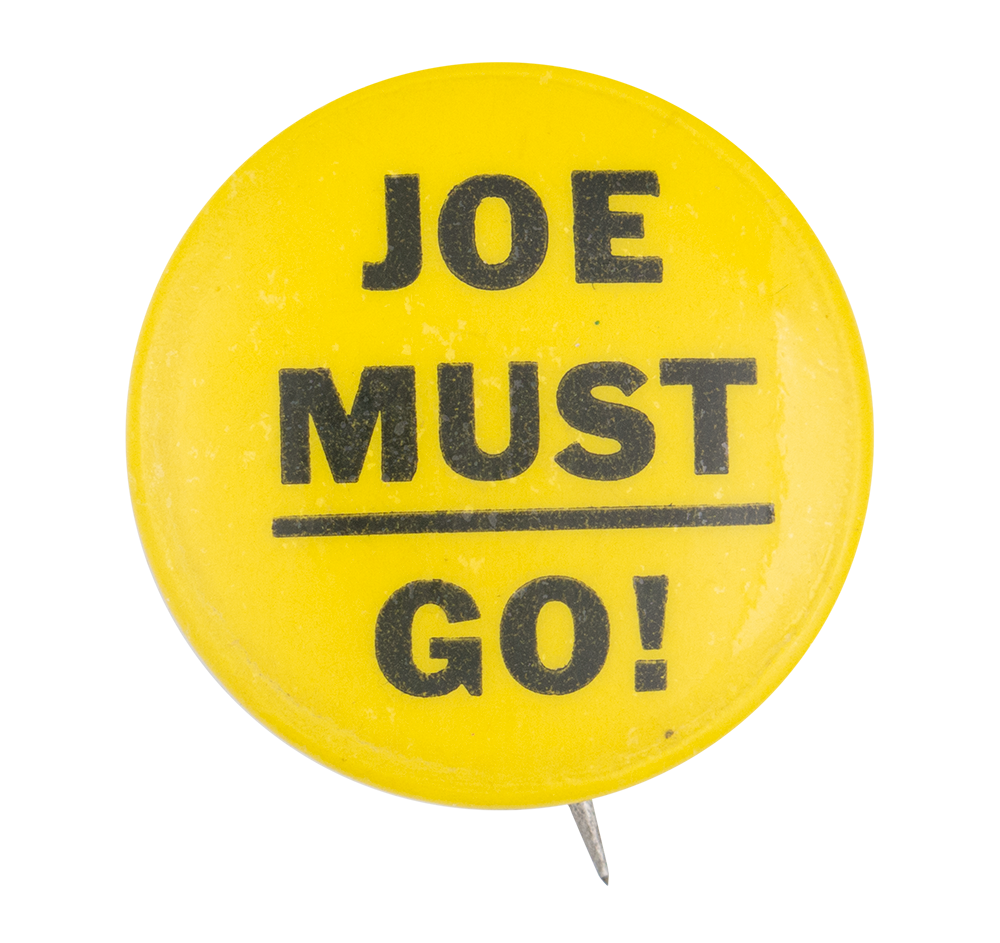
Text on Button JOE MUST GO
Image Description

Black text on a yellow background.

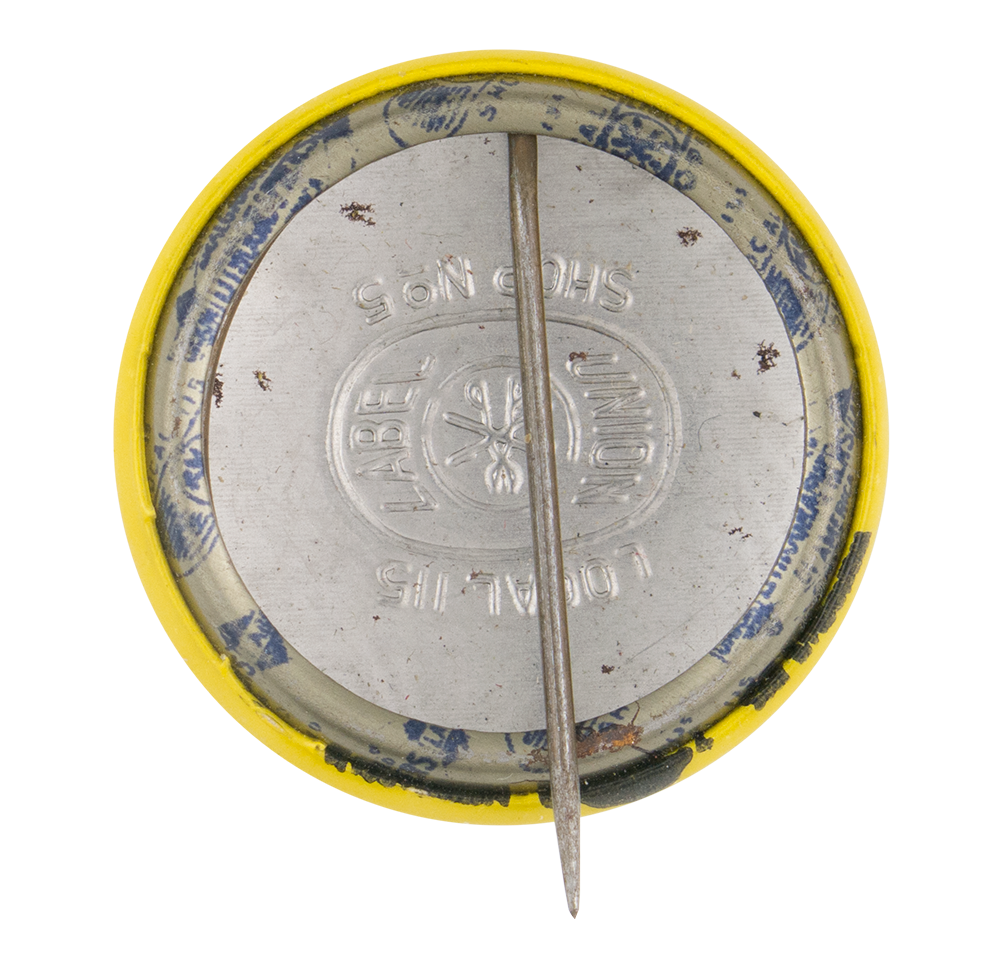
Back Paper / Back Info

(union bug)

Back Style
The Shape
The Size
Additional Information

Joseph McCarthy was a Republican Senator from Wisconsin from 1947 to 1957. During the Cold War with the Soviet Union when the U.S. feared the spread of communism, McCarthy became known for his smear tactics against Americans who were under suspicion of communist ties. His practice of making allegations against people without evidence has become known as "McCarthyism".

"Joe Must Go" was a movement to recall Senator McCarthy in the early 1950s. It was financed by a book of the same title by Leroy Gore. The movement was initiated because McCarthy was seen as disrespectful of Wisconsin's General Ralph Wise Zwicker whom he was investigating, undermining President Eisenhower's authority, and ignoring the dilemma that dairy farmers were facing with price-slashing surpluses.

Sources

Joseph McCarthy. (2018). Retrieved from https://en.wikipedia.org/wiki/Joseph_McCarthy

The Harvard Crimson. (n.d.). Retrieved from https://www.thecrimson.com/article/1954/10/20/wisconsin-voters-here-ren…

Catalog ID PO0820

Joe Must Go Red White Blue

Category
Additional Images
Sub Categories
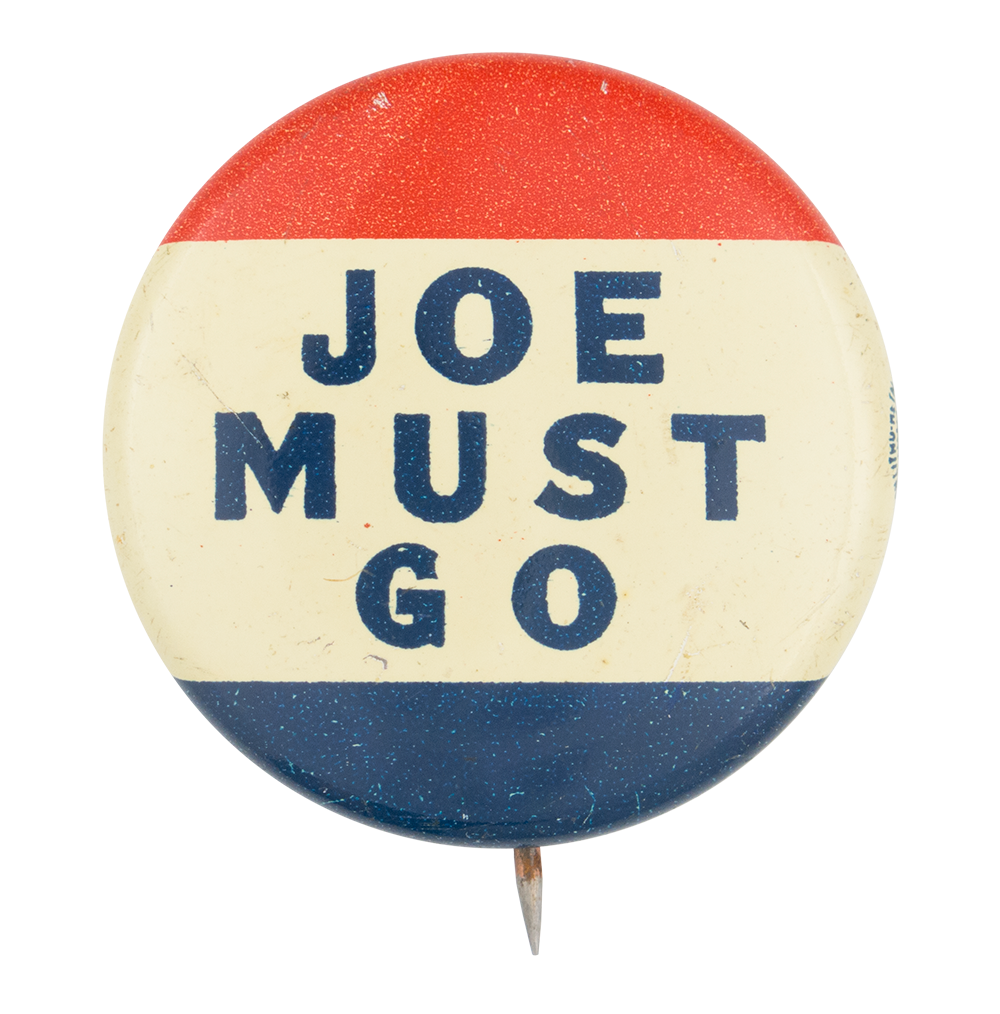
Text on Button JOE MUST GO
Image Description

Red, white and blue horizontal stripes.  Blue text inside white stripe.

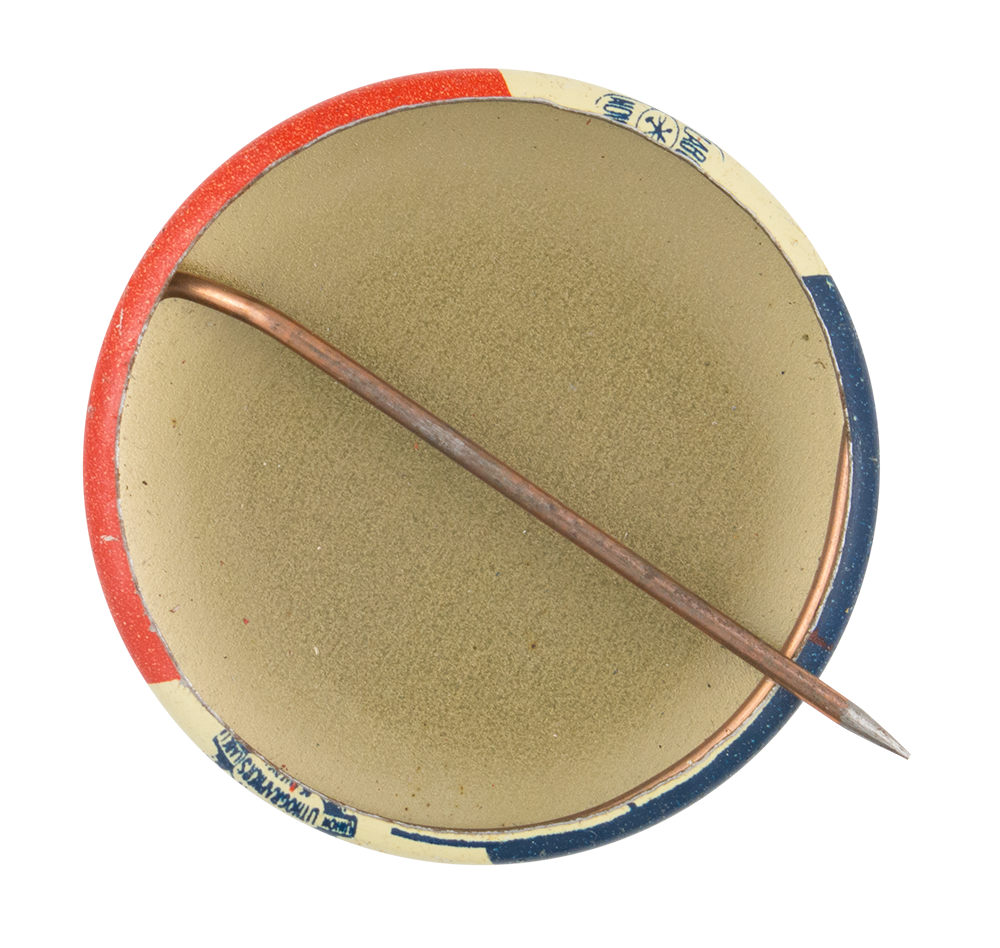
Curl Text (union bug) (union bug)
Back Style
The Shape
The Size
Additional Information

Joseph McCarthy was a Republican Senator from Wisconsin from 1947 to 1957. During the Cold War with the Soviet Union when the U.S. feared the spread of communism, McCarthy became known for his smear tactics against Americans who were under suspicion of communist ties. His practice of making allegations against people without evidence has become known as "McCarthyism".

"Joe Must Go" was a movement to recall Senator McCarthy in the early 1950s. It was financed by a book of the same title by Leroy Gore. The movement was initiated because McCarthy was seen as disrespectful of Wisconsin's General Ralph Wise Zwicker whom he was investigating, undermining President Eisenhower's authority, and ignoring the dilemma that dairy farmers were facing with price-slashing surpluses.

Sources

Joseph McCarthy. (2018). Retrieved from https://en.wikipedia.org/wiki/Joseph_McCarthy

The Harvard Crimson. (n.d.). Retrieved from https://www.thecrimson.com/article/1954/10/20/wisconsin-voters-here-ren…

Catalog ID PO0819

Joe Must Go!

Category
Additional Images
Sub Categories
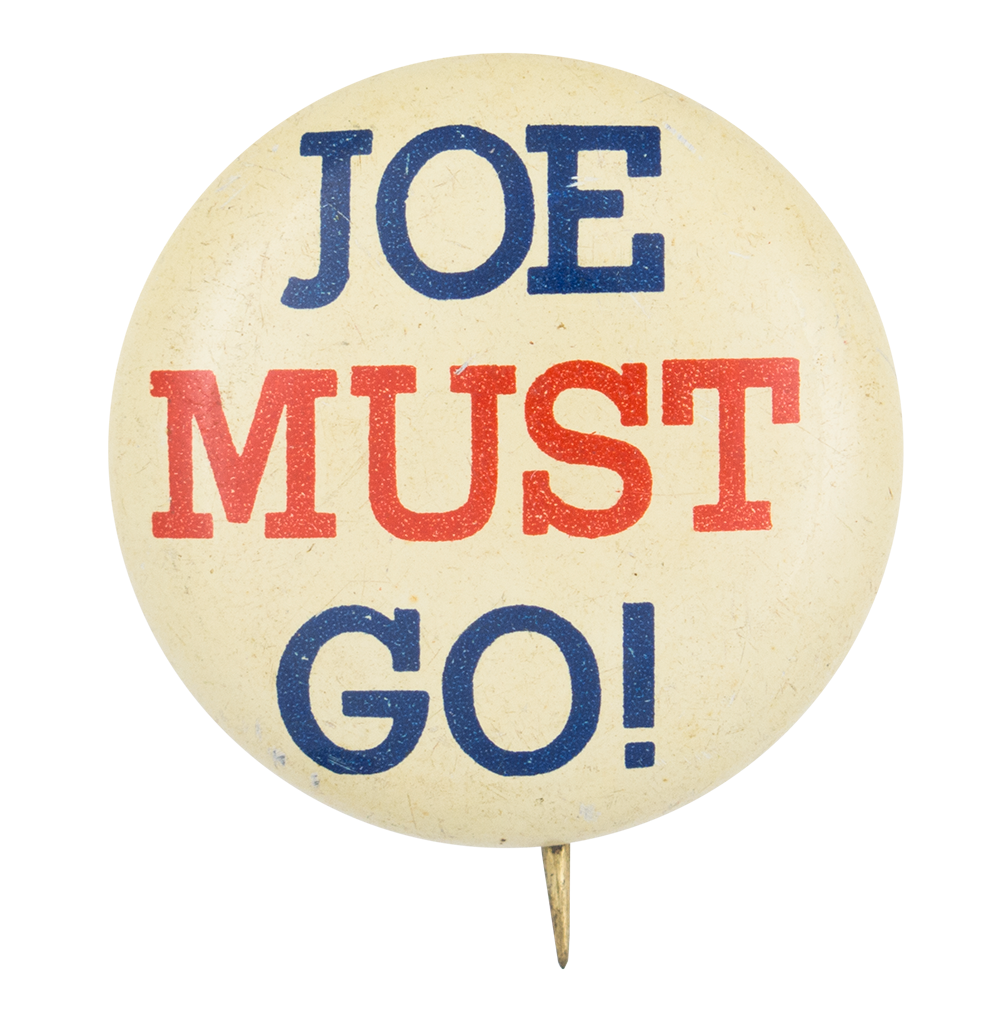
Text on Button JOE MUST GO!
Image Description

Blue and red text on a white background.

Back Style
The Shape
The Size
Additional Information

Joseph McCarthy was a Republican Senator from Wisconsin from 1947 to 1957. During the Cold War with the Soviet Union when the U.S. feared the spread of communism, McCarthy became known for his smear tactics against Americans who were under suspicion of communist ties. His practice of making allegations against people without evidence has become known as "McCarthyism".

"Joe Must Go" was a movement to recall Senator McCarthy in the early 1950s. It was financed by a book of the same title by Leroy Gore. The movement was initiated because McCarthy was seen as disrespectful of Wisconsin's General Ralph Wise Zwicker whom he was investigating, undermining President Eisenhower's authority, and ignoring the dilemma that dairy farmers were facing with price-slashing surpluses.

Sources

Joseph McCarthy. (2018). Retrieved from https://en.wikipedia.org/wiki/Joseph_McCarthy

The Harvard Crimson. (n.d.). Retrieved from https://www.thecrimson.com/article/1954/10/20/wisconsin-voters-here-ren…

Catalog ID PO0818

Jobs Peace McGovern '72

Category
Additional Images
Sub Categories
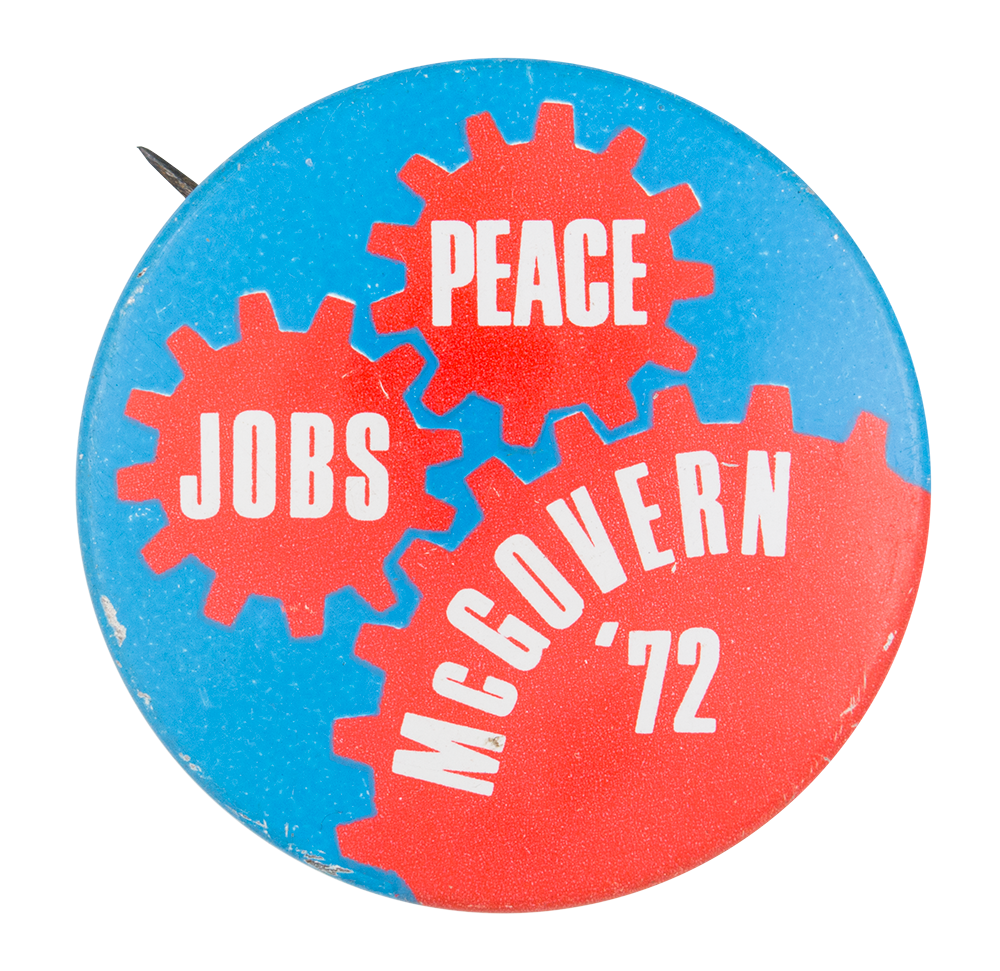
Text on Button JOBS PEACE McGOVERN '72
Image Description

White text on illustration of three red-colored cogs with interlocking teeth on a blue background.

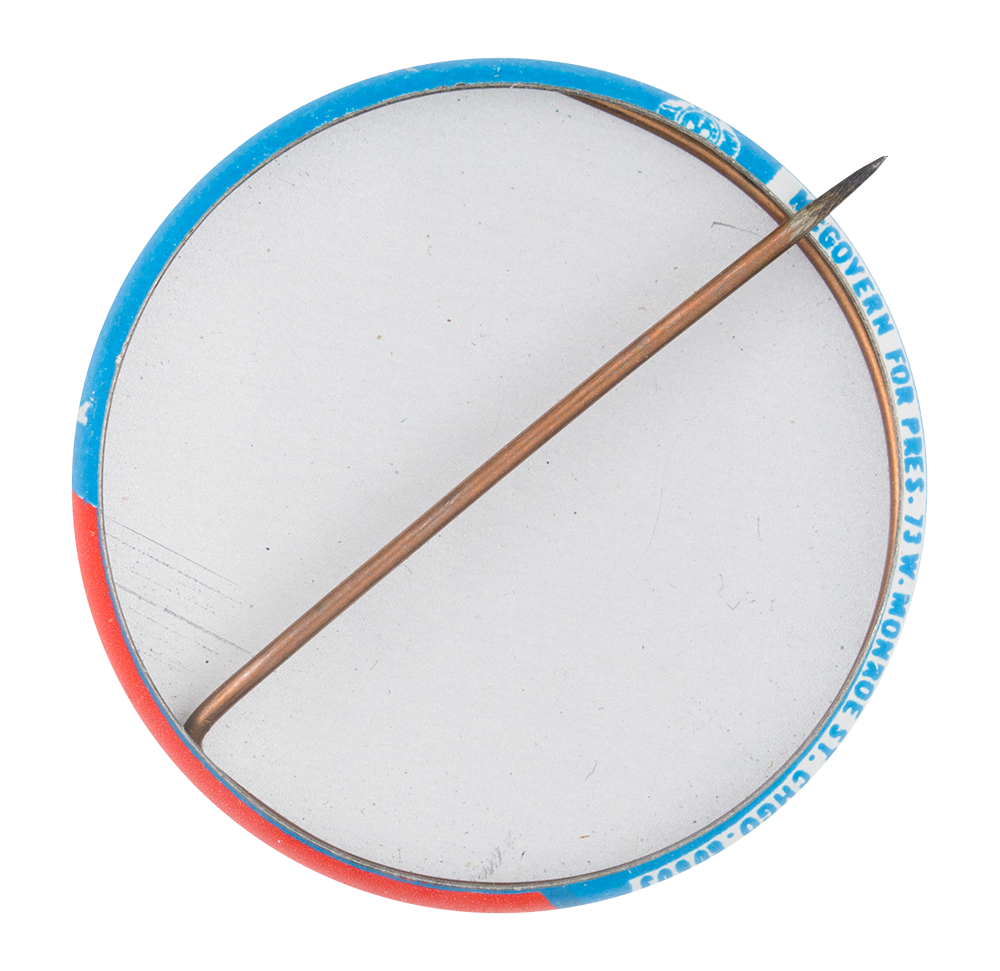
Curl Text (union bug) McGovern for pres. 73 W. Monroe St. Chgo. 60603
Back Style
The Shape
The Size
Year / Decade Made
Additional Information

George McGovern ran in the 1972 presidential election against incumbent candidate Richard Nixon. During his campaign, he pledged to withdraw American troops from Vietnam, end the United States' involvement in the war, and bring about a time of peace to the country. With a lower military budget, McGovern promised to redistribute the money into education, health care, housing, and the creation of thousands of public service jobs. McGovern ultimately did not win the election, gaining only 17 electoral votes to Nixon's 520.

Catalog ID PO0726

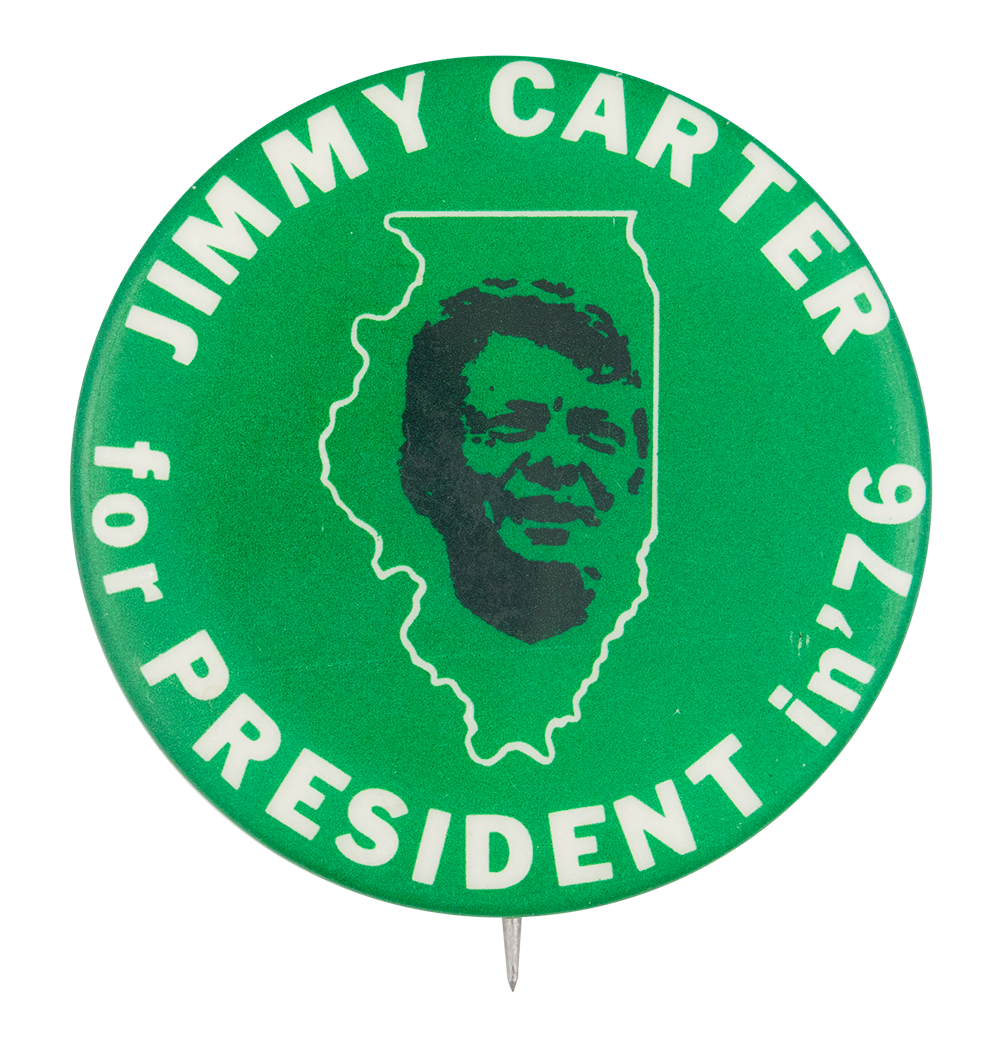
Jimmy Carter for President in '76 Illinois

Category
Additional Images
Sub Categories
Text on Button JIMMY CARTER for PRESIDENT in '76
Image Description

Jimmy Carter's face in black ink in the center of a thin white outline of the state of Illinois. White text surrounding the outer edge of the button on a green background. 

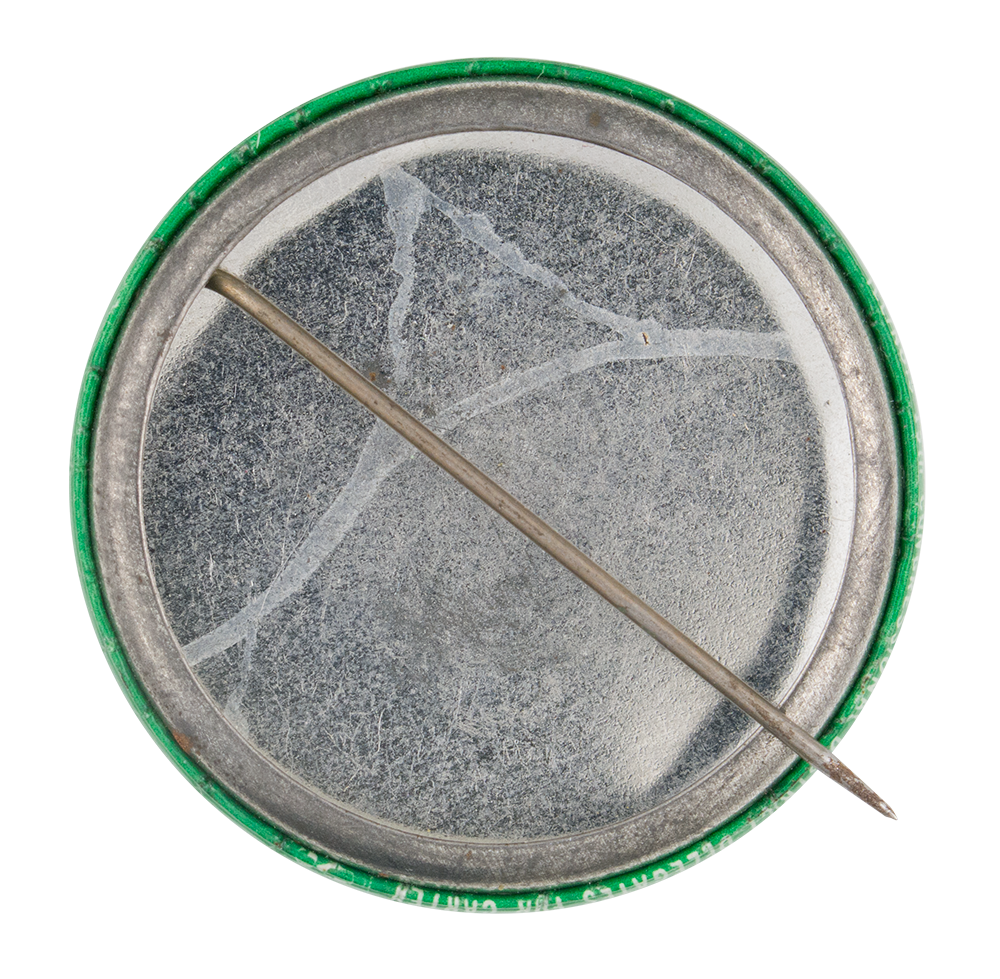
Curl Text ILLINOIS 15th CONGRESSIONAL DISTRICT DELEGATES FOR CARTER (union bug)
Back Style
The Shape
The Size
Year / Decade Made
Additional Information

Jimmy Carter was the Democratic nominee for the United States Presidency in 1976. He won the popular vote at 50.1 percent and took 297 electoral votes over Republican Gerald Ford. In Illinois, Ford won the popular vote with 50.1 percent, taking 26 electoral votes. Carter served as the 39th president from 1977 to 1981. He lost the 1980 race to President Ronald Reagan. Prior to his first run for president, Carter grew up in Plains, Georgia. He served in the U.S. Navy from 1943 to 1953. He was a Georgia State Senator from 1963 to 1967 and the Governor of Georgia from 1971 to 1975. Following their time in the White House, Carter and his wife, Rosalynn, returned to Plains.

Catalog ID PO0716