Johnson Humphrey 1964

Category
Additional Images
Sub Categories
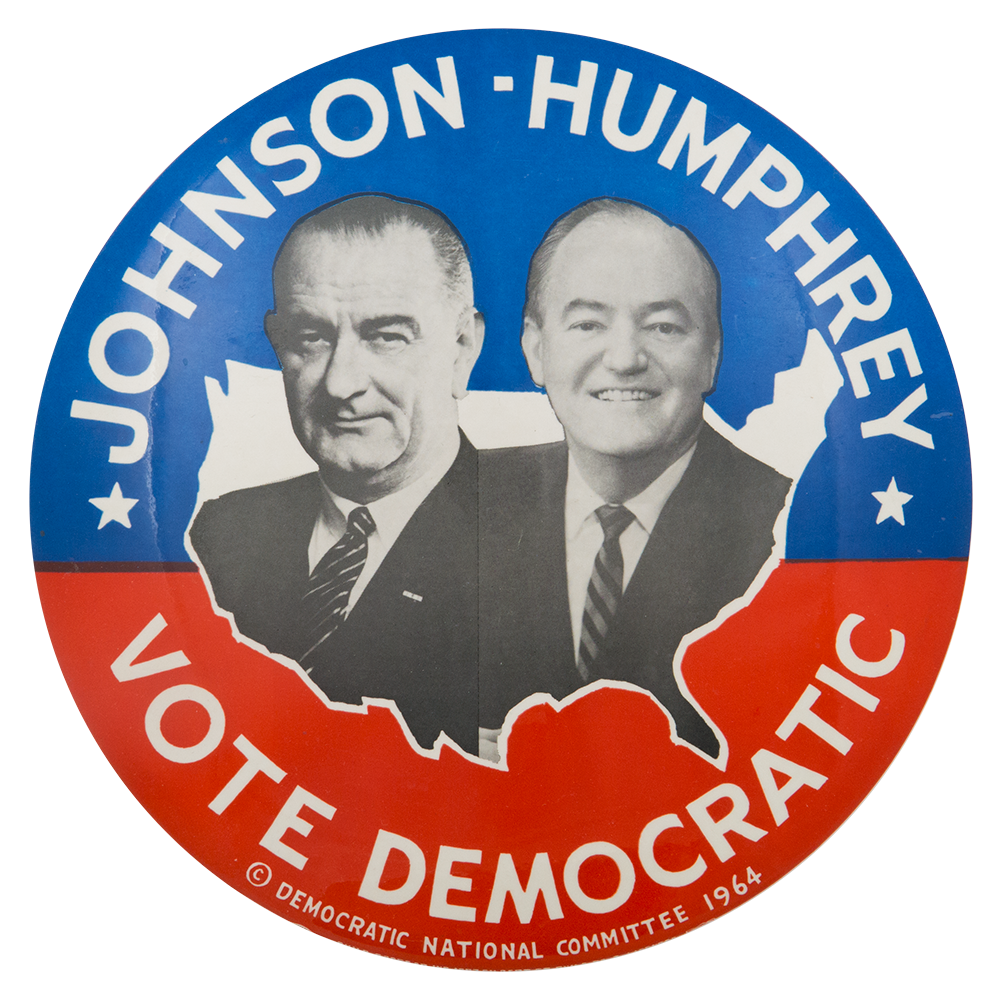
Text on Button JOHNSON - HUMPHREY VOTE DEMOCRATIC © DEMOCRATIC NATIONAL COMMITTEE 1964
Image Description

Photographs of Lyndon B. Johnson and Hubert Humphrey inside a white silhouette of the United States.  White text on half blue, half red background divided horizontally.

Curl Text (union bug) PHILA. BADGE CO. INC. 1007 FILBERT ST. PHILA, PA. 7 LICENSEE (union bug)
Back Style
The Shape
The Size
Year / Decade Made
The Manufacturer
Additional Information

Lyndon B. Johnson was the 37th President of the United States and Hubert Humphrey was his Vice President. In 1964, Democrat Lyndon B. Johnson ran for president against Republican Barry Goldwater. Johnson was already the incumbent president following the assassination of John F. Kennedy and ended up winning both the electoral college vote and popular vote in landslide. His popular vote percentage was. 61% - the highest since James Monroe's 1820 re-election. 

Johnson's presidency is mainly known for the "War on Poverty," civil rights movement and increased involvement in the Vietnam War, for which he garnered much criticism.

Catalog ID PO0661

Black and White Portrait of a Man 9

Category
Additional Images
Sub Categories
Image Description

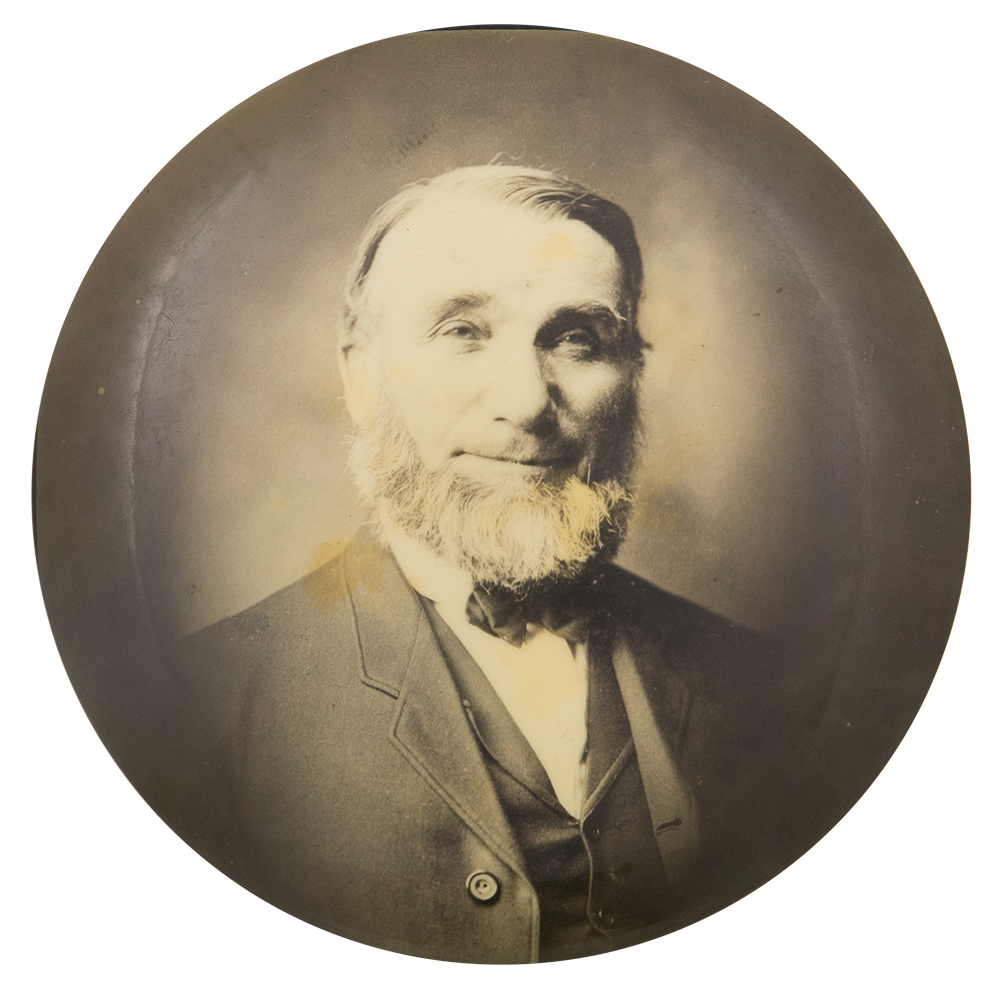
Photograph of bearded man wearing suit and bow tie.

Back Paper / Back Info

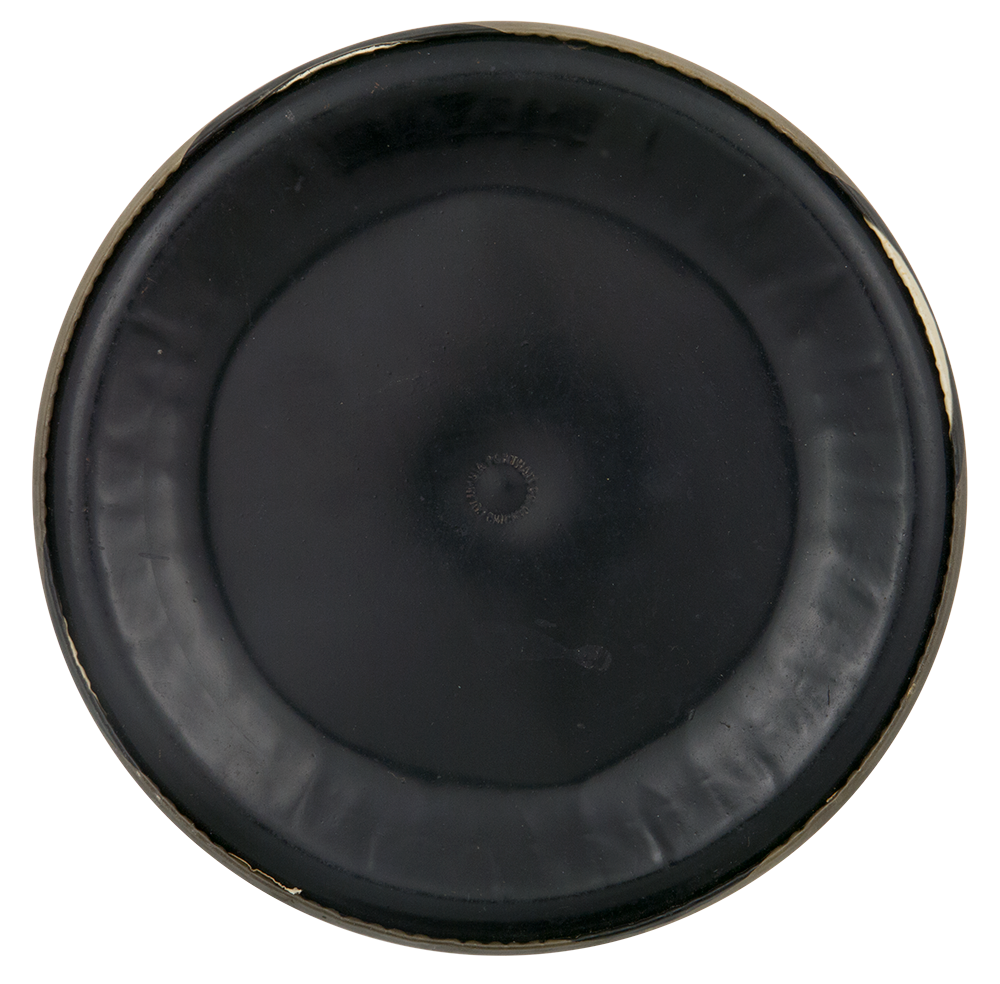
COLUMBIA PORTRAIT CO. CHICAGO

Back Style
The Shape
The Size
Additional Information

Photographic pinback buttons made with celluloid material were extremely popular from the late 1800s to the 1930s.  It was during the 1860s that photography became more available on the commercial market. Humphrey E. Copley of Connecticut sought a patent in 1861 to incorporate photographs onto buttons by utilizing a metal rim to hold the photograph in place. This technology coincided with the Civil War and mourners embraced the option of being able to wear visual representations of their loved ones. John Wesley Hyatt was an American inventor who received a patent for a product named celluloid in 1870. After refinement of the initial product, Hyatt’s celluloid became the first commercially profitable synthetic material. United States patent records reflect the usage of celluloid in making buttons with photographs in the late 1880s. In 1893 Benjamin S. Whitehead acquired a patent for using celluloid over the photo to protect the image. The increased availability of photography coupled with the ability of manufacturers to produce buttons inexpensively allowed the public to create a fashion fad out of the desire to have portable keepsakes.

Have info on this button? Become a Button Museum fan and let us know.

Sources

McInturff, Jennifer Ann, "Celluloid buttons : cataloging unusual photographic objects" (2009). Theses and dissertations. Paper 627.

Catalog ID AR0294

Columbus Ohio

Category
Additional Images
Sub Categories
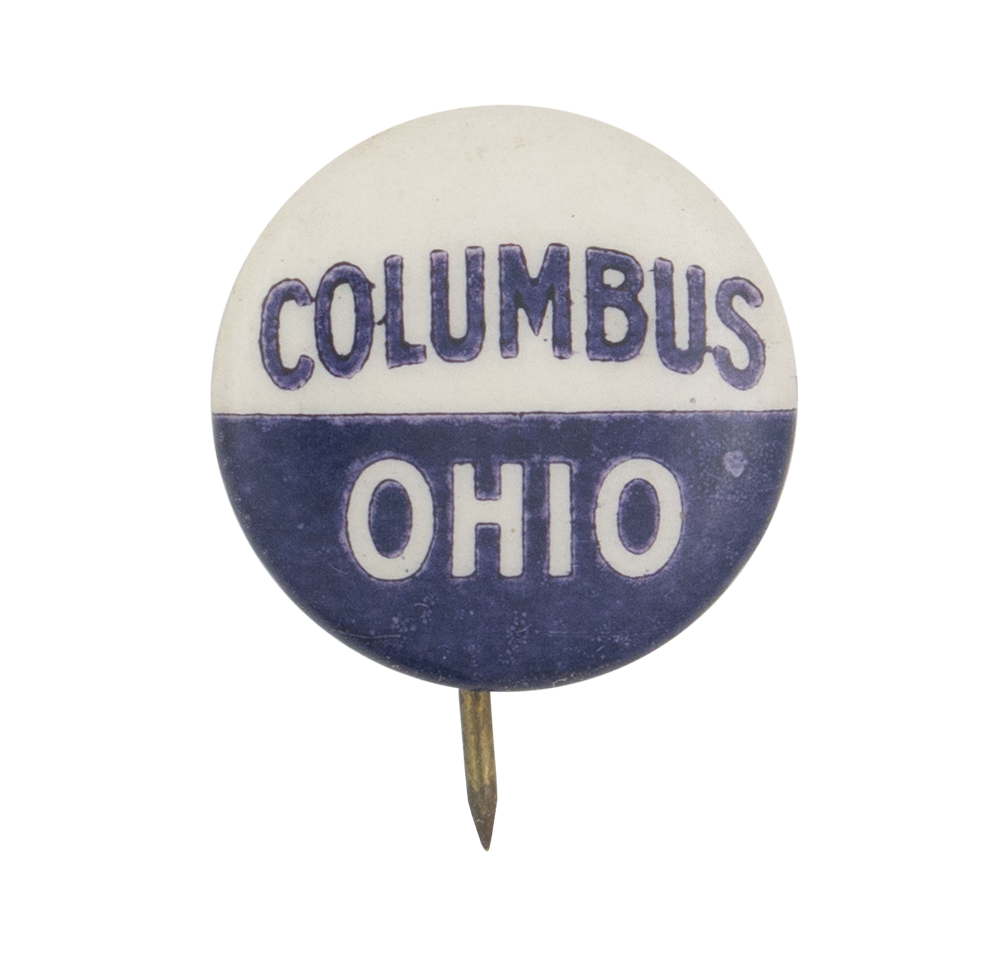
Text on Button COLUMBUS OHIO
Image Description

Blue text on a white upper half of the button and white text on a blue lower half of the button

Back Style
The Shape
The Size
Additional Information

Columbus was named for Christopher Columbus and is the capital of Ohio. The city was established as the state's central place of politics in 1812, less than a decade after Ohio became a state in 1803. The city boasts an art museum, symphony orchestra, conservatory, botanical garden, and the Columbus Zoo and Aquarium, known as one of the country’s most renowned zoos and aquariums. Fast food giants, Wendy's and White Castle, are both headquartered in the city. Columbus is also home to the professional hockey team, the Columbus Blue Jackets.

Sources

Columbus. (2019, March 08). Retrieved April 5, 2019, from https://www.britannica.com/place/Columbus-Ohio

Catalog ID EV0396

Canada Good Clean Fun

Category
Additional Images
Sub Categories
Text on Button CANADA GOOD CLEAN FUN
Image Description

Cartoon-style illustration of seven Royal Canadian Mounted Police seated in front of a stage watching three beavers wearing blue lingerie and red maple leaves.  Red text on a white background.

Back Style
The Shape
The Size
Additional Information

The Royal Canadian Mounted Police (RCMP, or the Mounties) is the federal and national police service of Canada. The RCMP’s main responsibility is the enforcement of federal law throughout the Canadian provinces and territories. In addition, the RCMP oversees border integrity and security, issues firearms licenses to civilians, and provides police training both to Canadian and international police services. Since its establishment in 1920, the RCMP has become an iconic symbol of Canada, with the officers in their distinct red uniforms being depicted across a wide variety of media.

Another iconic symbol of Canada is the beaver, which was chosen as a national symbol in 1975. However, its historical significance dates back long before that. Early European explorers since the 1600s capitalized on the demand for fur hats, and soon both English and French traders would gain a high profit off of selling beaver pelts in Europe. Although overexploitation nearly wiped out the beaver population in the mid-19th century, conservation efforts have allowed for beavers to be once again ubiquitous throughout the country.

Sources

Royal Canadian Mounted Police. (2023, January 24). In Wikipedia. https://en.wikipedia.org/wiki/Royal_Canadian_Mounted_Police

Government of Canada. (2020, June 5). Official symbols of Canada. https://www.canada.ca/en/canadian-heritage/services/official-symbols-can...

Catalog ID BV0022

National Air and Space Museum

Category
Additional Images
Sub Categories
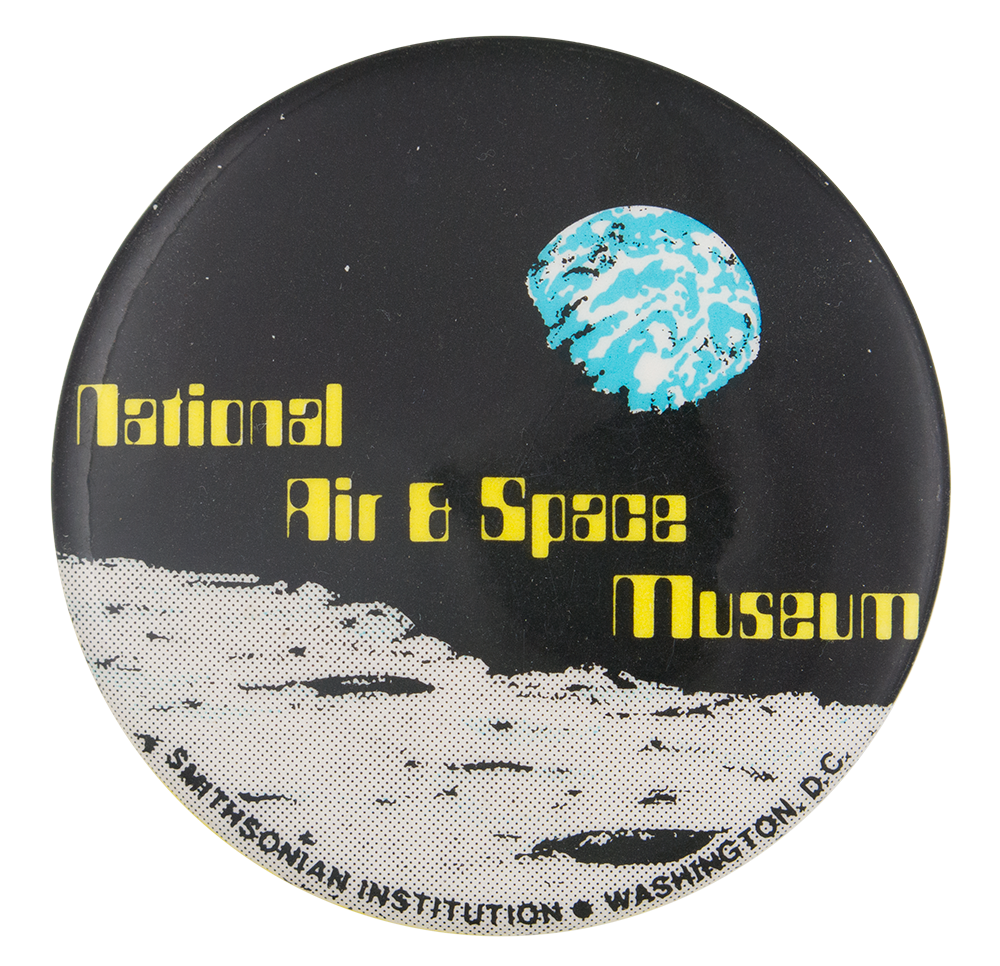
Text on Button National Air & Space Museum SMITHSONIAN INSTITUTION - WASHINGTON, D.C.
Image Description

Illustration of the Earth viewed from a grey, cratered landscape on a black background.  Yellow and black text.

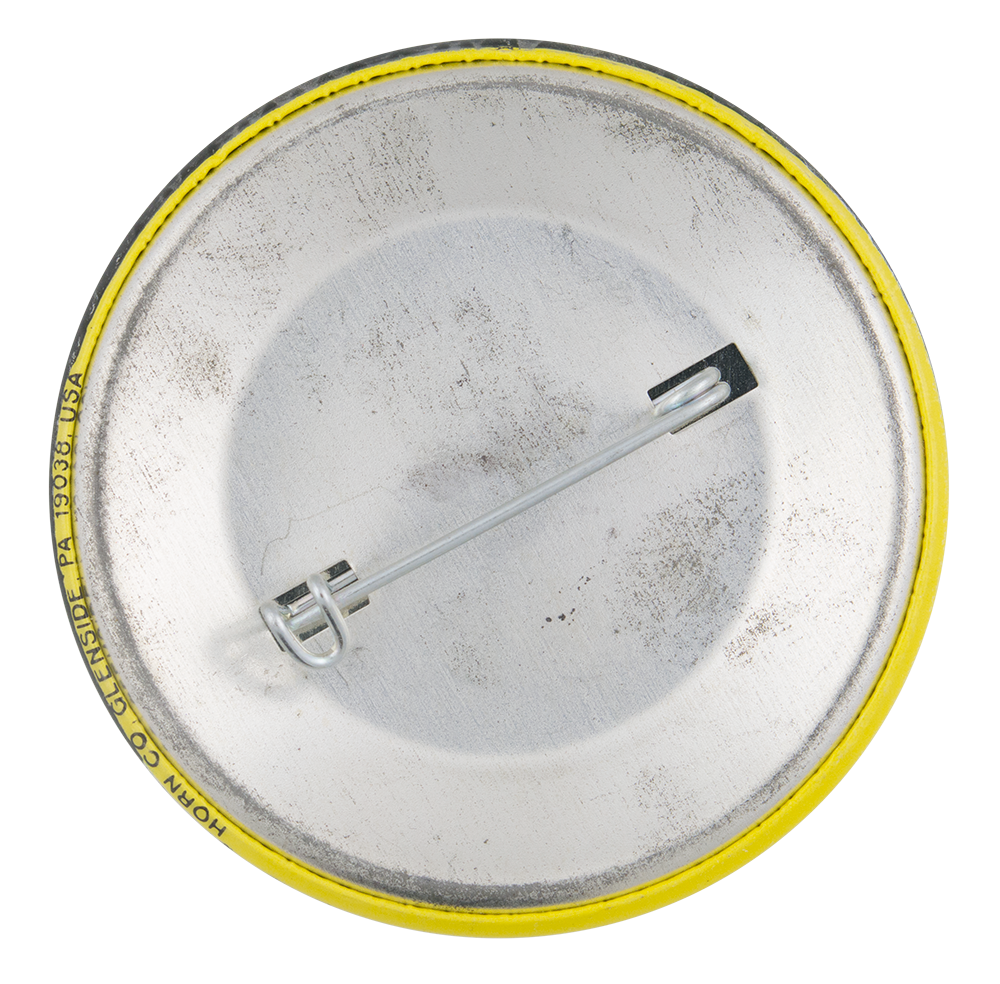
Curl Text HORN CO. GLENSIDE, PA, 19038. USA
Back Style
The Shape
The Size
The Manufacturer
Additional Information

The National Air and Space Museum currently has two locations, the Smithsonian complex on the National Mall in Washington D.C., and the Steven F. Udvar-Hazy Center in Chantilly, VA. The location on the National Mall was built after the collection had outgrown several other buildings. It was opened in time for the nation’s centennial in 1976. The Chantilly location was built in 2003. Not only is the museum the largest of the Smithsonian Institutions, but its Center for Earth and Planetary Studies is one of only nine of the Institution’s research centers. The collection currently is the home of over 60,000 objects but, it all began with a collection of 20 kites acquired from the Chinese Imperial Commission in 1876. Over eight million guests a year visit the two locations.

Catalog ID EV0391

Niagara Falls 1938

Category
Additional Images
Sub Categories
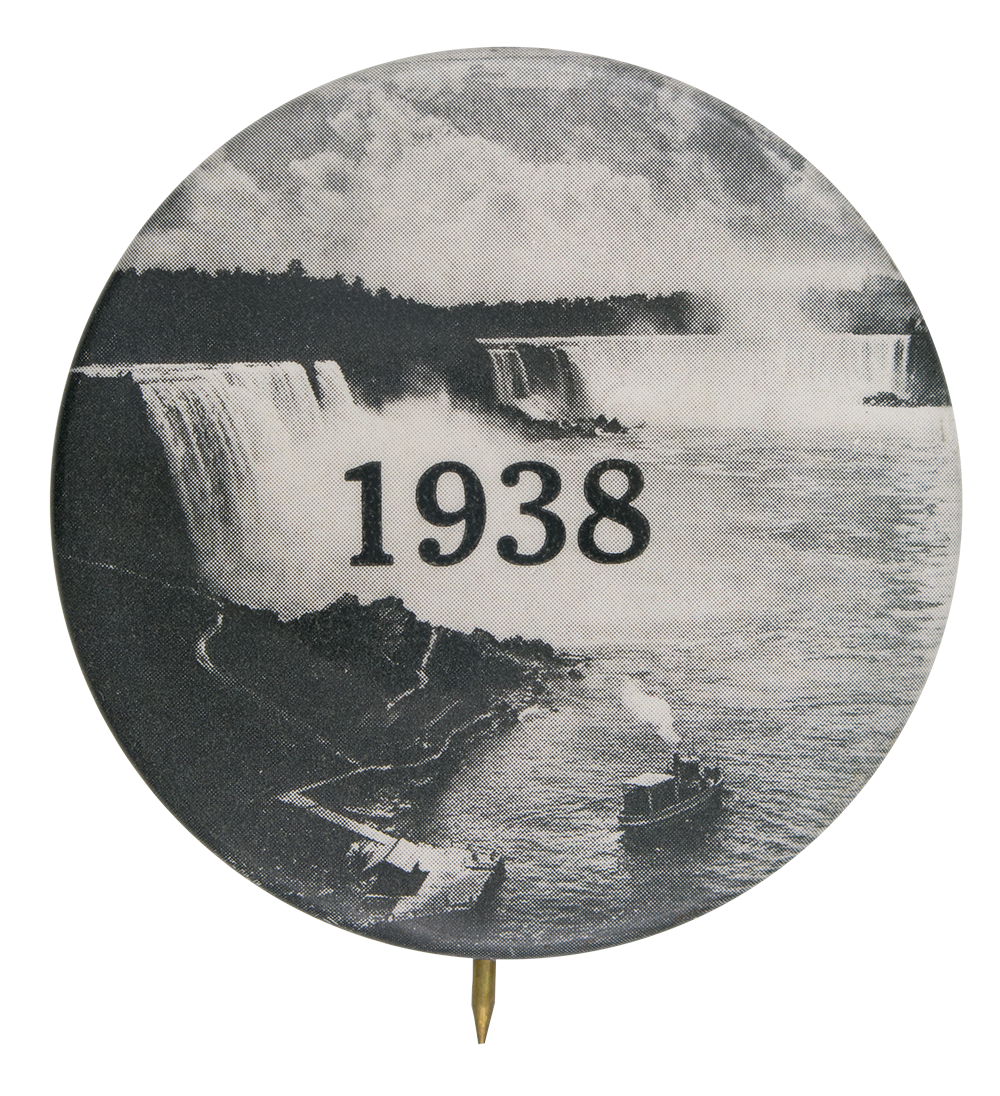
Text on Button 1938
Image Description

Black and white photograph of Niagara Falls.  Boat in foreground and black text in middle of button.

Back Paper / Back Info

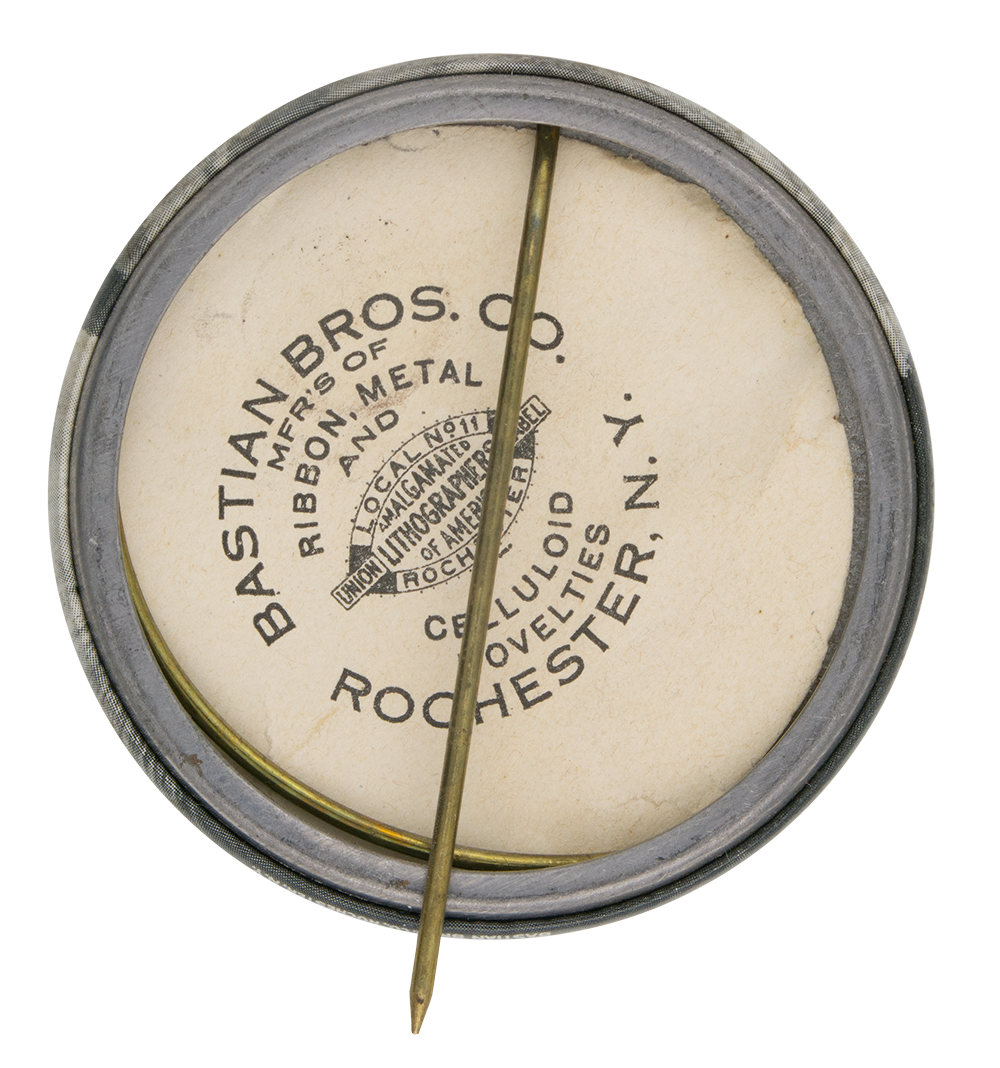
BASTIAN BROS. CO. ROCHESTER, N.Y.
MFR'S OF RIBBON, METAL AND CELLULOID NOVELTIES
(union bug)

Curl Text BASTIAN BROS CO. ROCHESTER, N.Y.
Back Style
The Shape
The Size
Year / Decade Made
The Manufacturer
Additional Information

In the year 1938 the bridge connecting Niagara Falls, Ontario with Niagara Falls, New York collapsed. The bridge was know as the Upper Steel Arch Bridge or the Honeymoon Bridge and had been built between 1897-1898. It was, at the time, the largest steel arch bridge in the world. The collapse was caused by a massive amount of ice pushing against the bridge’s abutments.

Catalog ID EV0386

Ohio Centennials

Category
Additional Images
Sub Categories
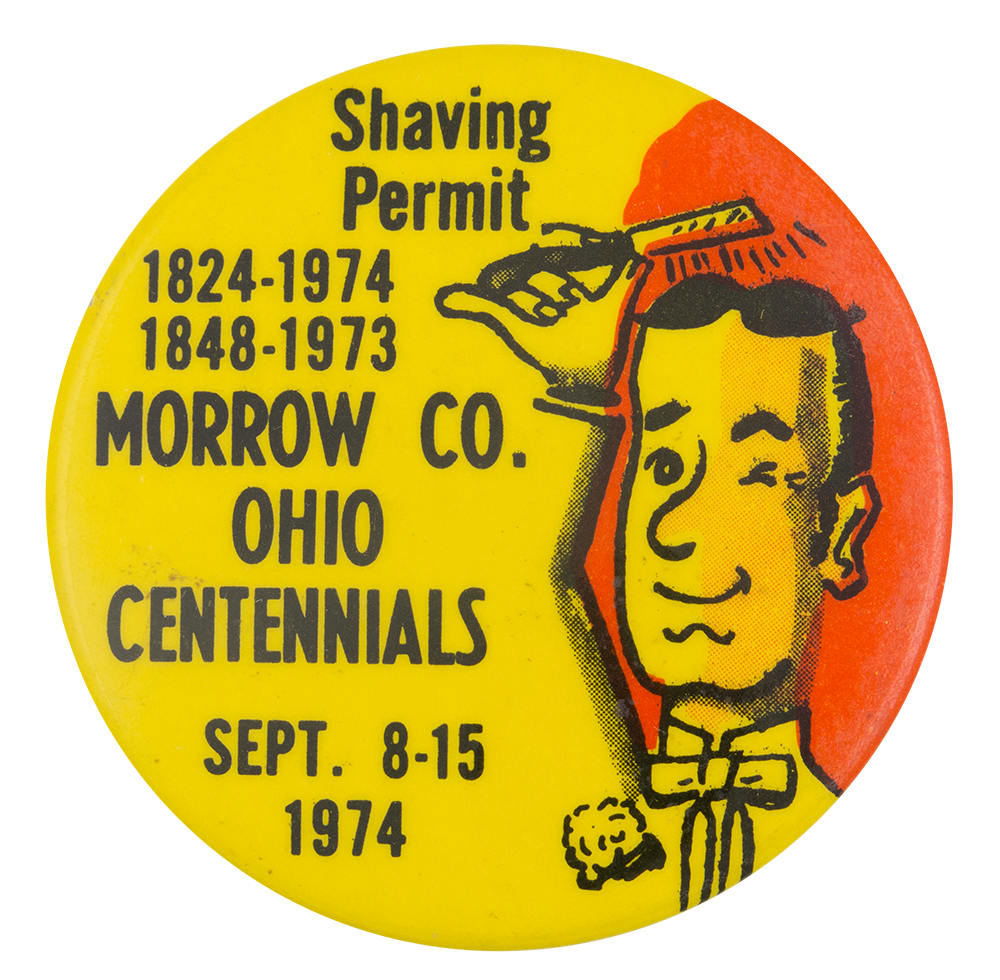
Text on Button Shaving Permit 1824-1974 1848-1973 MORROW CO. OHIO CENTENNIALS SEPT. 8-15 1974
Image Description

Illustration of a winking man wearing a bowtie and carnation holding a straight razor above his head with black text on an orange and yellow background. 

Curl Text OHM INC. FOSTORIA, O.
Back Style
The Shape
The Size
Year / Decade Made
The Manufacturer
Additional Information

Morrow County Ohio was established in 1848 and was named for Jeremiah Morrow who was governor of Ohio from 1822-1826. A centennial celebration for the county took place from Sept. 8-15, 1974. Shaving permits were sold as a means to raise money for centennial celebrations in towns across the United States. Most of the time the fundraising effort was conducted by an organization called the Brothers of the Bush. The organization got their name because they sought to embody the men who founded the town, most of which would have had beards. The Brothers of the Bush would convene anytime a town would be preparing to celebrate an anniversary of the town’s founding. At the beginning of the anniversary year, men could enter a beard and mustache growing contest. The men had to be entirely clean shaven when they registered. Anyone who didn’t wish to participate was supposed to purchase a shaving permit. These permits ranged in price from a couple of cents to a couple of dollars depending on the year the celebration was being held. All of the proceeds from the sale of the shaving permits and the registration fees were given to the town’s centennial celebration fund.

Catalog ID EV0388

Rochester Chamber of Commerce

Category
Additional Images
Sub Categories
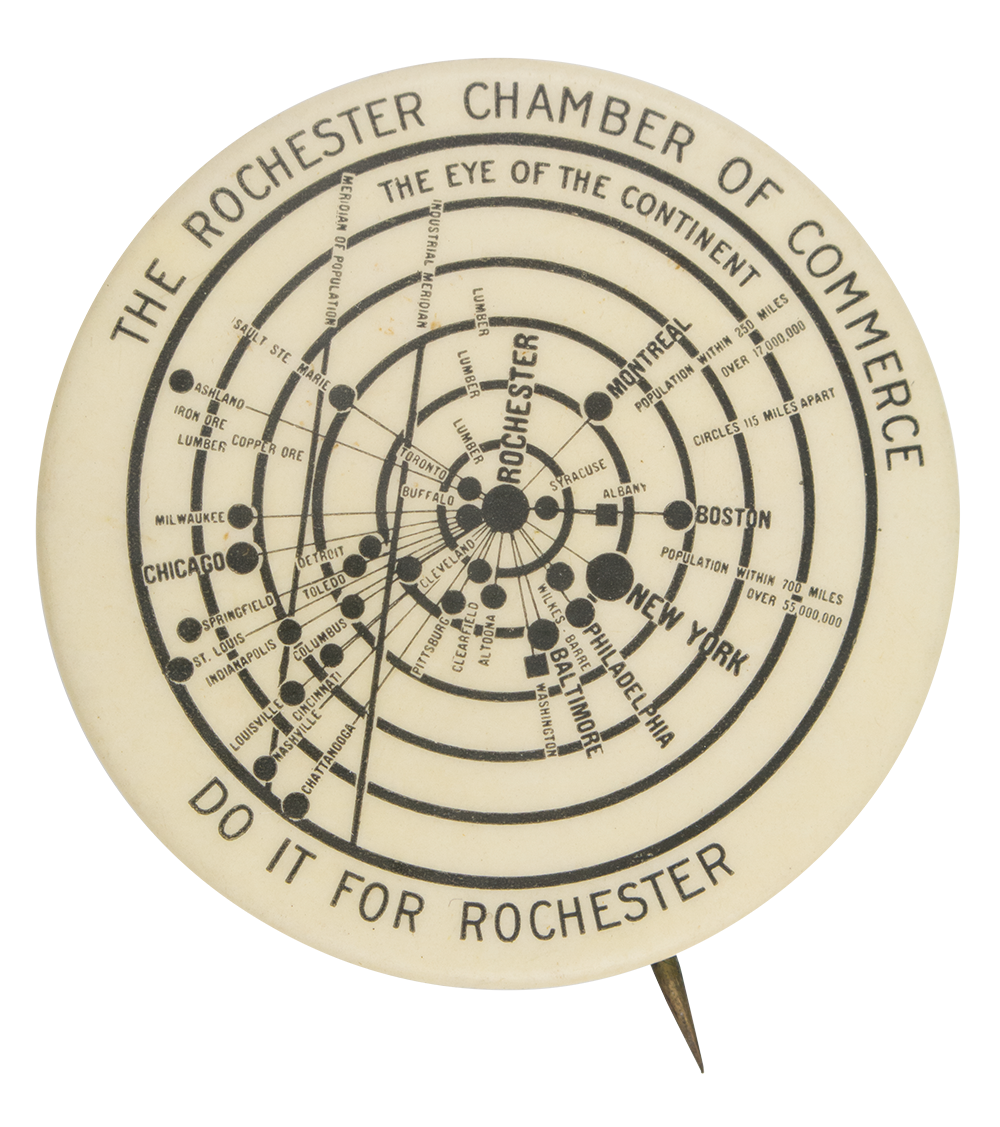
Text on Button THE ROCHESTER CHAMBER OF COMMERCE DO IT FOR ROCHESTER THE EYE OF THE CONTINENT MERIDIAN OF POPULATION INDUSTRIAL MERIDIAN POPULATION WITHIN 250 MILES OVER 17,000,000 CIRCLES 115 MILES APART POPULATION WITHIN 700 MILES OVER 55,000,000 LUMBER IRON ORE COPPE
Image Description

Stylized map consisting of concentric circles, dots and lines.  Black text on a white background.

Back Paper / Back Info

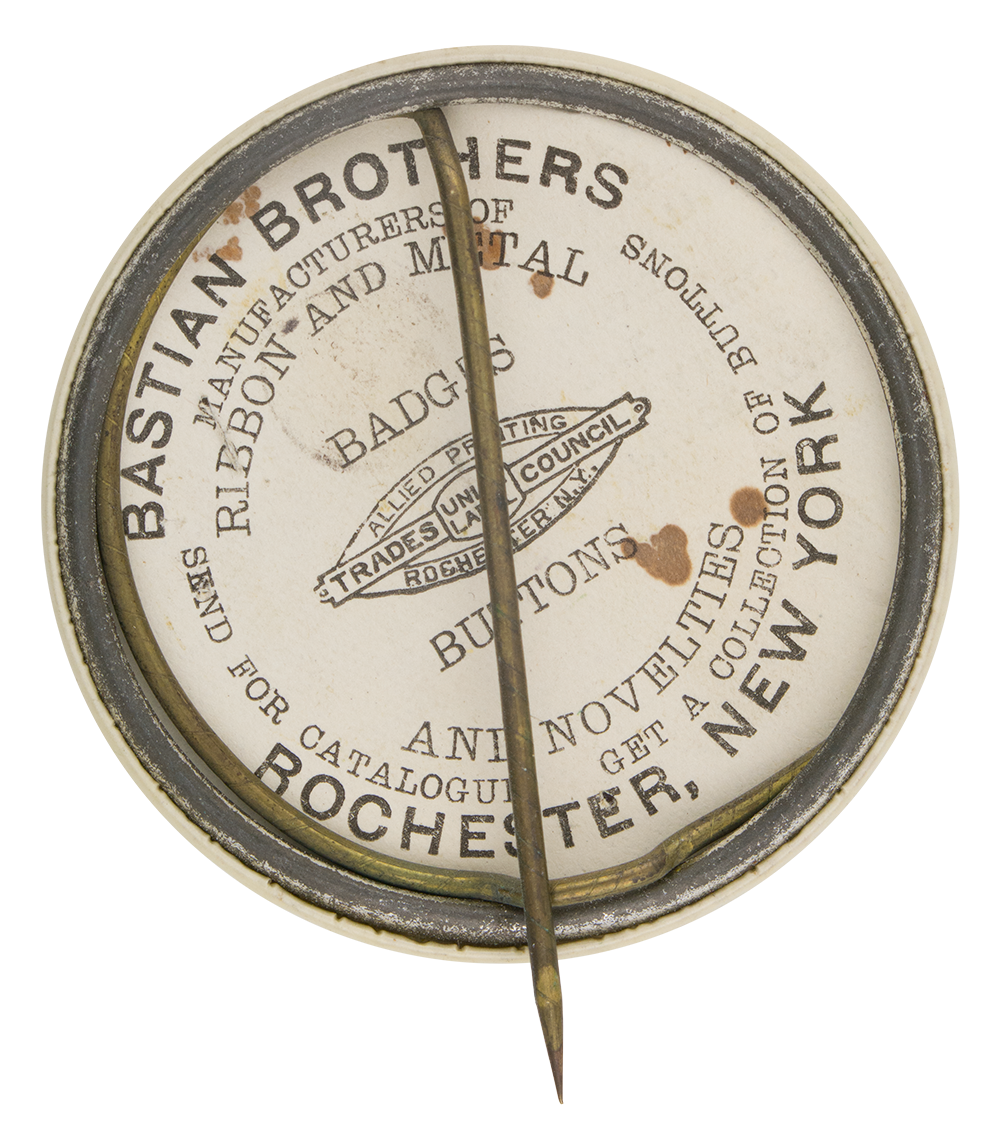
BASTIAN BROTHERS ROCHESTER, NEW YORK
MANUFACTURERS OF RIBBON AND METAL BADGES BUTTONS AND NOVELTIES
SEND FOR CATALOGUE GET A COLLECTION OF BUTTONS
(union bug)

Curl Text BASTIAN BROS CO. ROCHESTER, N.Y.
Back Style
The Shape
The Size
Year / Decade Made
The Manufacturer
Additional Information

Towns and cities across America created slogans to promote themselves as nice places to live. Sidney R. Clark created “Do it for Rochester” for the Rochester, New York, Chamber of Commerce in the early 1900s. Ray Stannard Baker wrote an article about Rochester in The American Magazine in 1910. The article described a city where “do it for Rochester” was not just boosterism. Instead, Baker depicted a city full of civic engagement with citizens eager to contribute to a common good. Rochester was known as “the eye of the continent” and favorably sited as a conduit between major urban and manufacturing centers.

Sources

McKelvey, B. (1994). Rochester on the Genesee: The birth of a city (2nd ed., pp. 130, 140). Syracuse University Press.

Ray, B. (1910, September). Do It For Rochester. The American Magazine, 70(5), 686-696. Retrieved from Google Books

Catalog ID CL0425

1920s Flapper in Blue

Category
Additional Images
Sub Categories
Image Description

Blue-colored illustration of woman with bob haircut holding a hand mirror up to her face.  Red scalloped border around edge of button on a white background. 

Back Style
The Shape
The Size
Year / Decade Made
Additional Information Through the 1940s, pocket mirrors were a popular advertising opportunity, given that the back of the mirror would be on display whenever the user pulled it out in public to check their reflection. Today, unusual and inventive mirrors can frequently be sold at auction for hundreds of dollars to collectors. This art deco illustration, taken from a popular mirror design, is part of a more risque category of pocket mirror, metamorphic, that creates a different image when held upside down. The primary view is a woman putting on makeup in a mirror, while the inverted view is a woman's legs.
Sources
Simpson, Milt. (1994) Folk Erotica. Harper Collins. p. 54. Yeagley, Suzanne. (2010, December 23). "Christen Carter Sells Saucy Buttons". McSweeney's Internet Tendencies. Retrieved from http://www.mcsweeneys.net/articles/christen-carter-sells-saucy-buttons.
Catalog ID AR0295

Chuy for Mayor Mustache

Category
Additional Images
Sub Categories
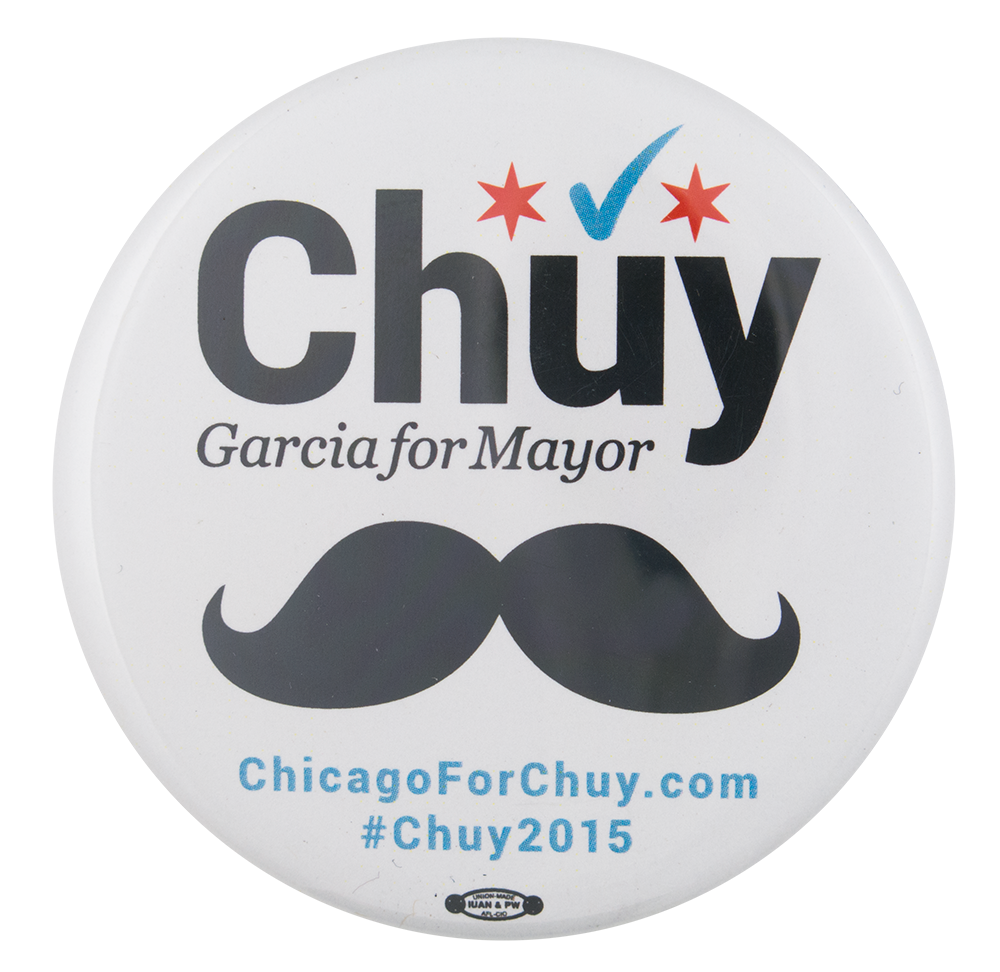
Text on Button Chuy Garcia for Mayor ChicagoForChuy.com #Chuy2015 (union bug)
Image Description

Illustration of a blue check-mark between two red six-pointed stars above a black handlebar mustache.  Black and blue text on a white background.

Back Style
The Shape
The Size
Year / Decade Made
Additional Information

Jesus “Chuy” Garcia unsuccessfully ran for mayor of Chicago in 2015. Since 2012 Garcia has been a member of  the Cook County Board of Commissioners. He was born in Durango, Mexico and immigrated in 1965. Garcia has held positions on the Chicago City Council (1986-1993) and the Illinois State Senate (1993-1999). His election to the state senate marked the first time a Mexican-American was a member of that institution. The mayoral election pitted Garcia against incumbent Mayor Rahm Emanuel. Garcia won 34% of the votes and forced a runoff election that he then lost.

Catalog ID PO0663