Crying in My Beer

Category
Additional Images
Sub Categories
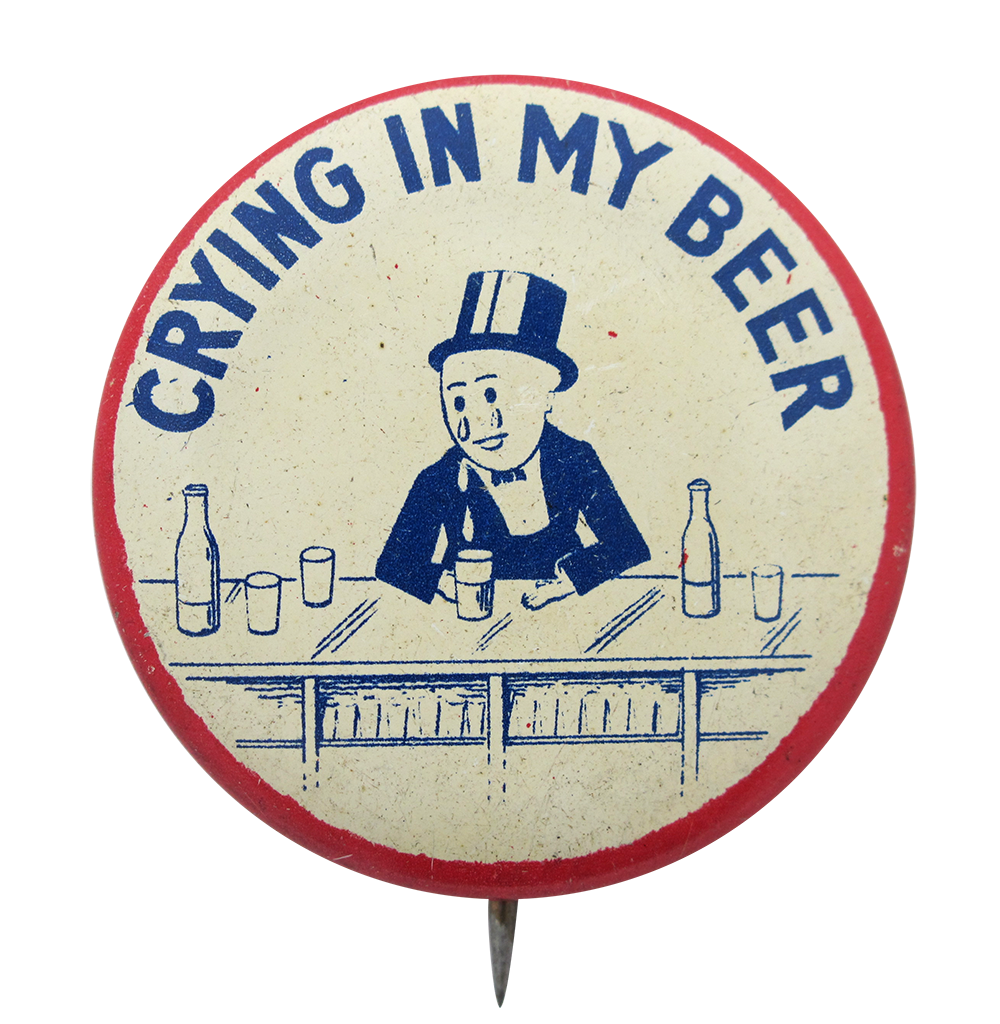
Text on Button CRYING IN MY BEER
Image Description

A blue and white illustration of a crying man in formal wear sitting and drinking at a bar below blue text and encircled by a red border on a white background. 

Back Style
The Shape
The Size
Additional Information

The origin of this button is unknown, however the saying “crying in my beer” has been used in common language and country songs for decades. The phrase means to generally feel sad or sorry for oneself, or to lament or complain in a foolish or embarrassing manner.

Catalog ID BE0093

Only A Few Of Em Left

Category
Additional Images
Sub Categories
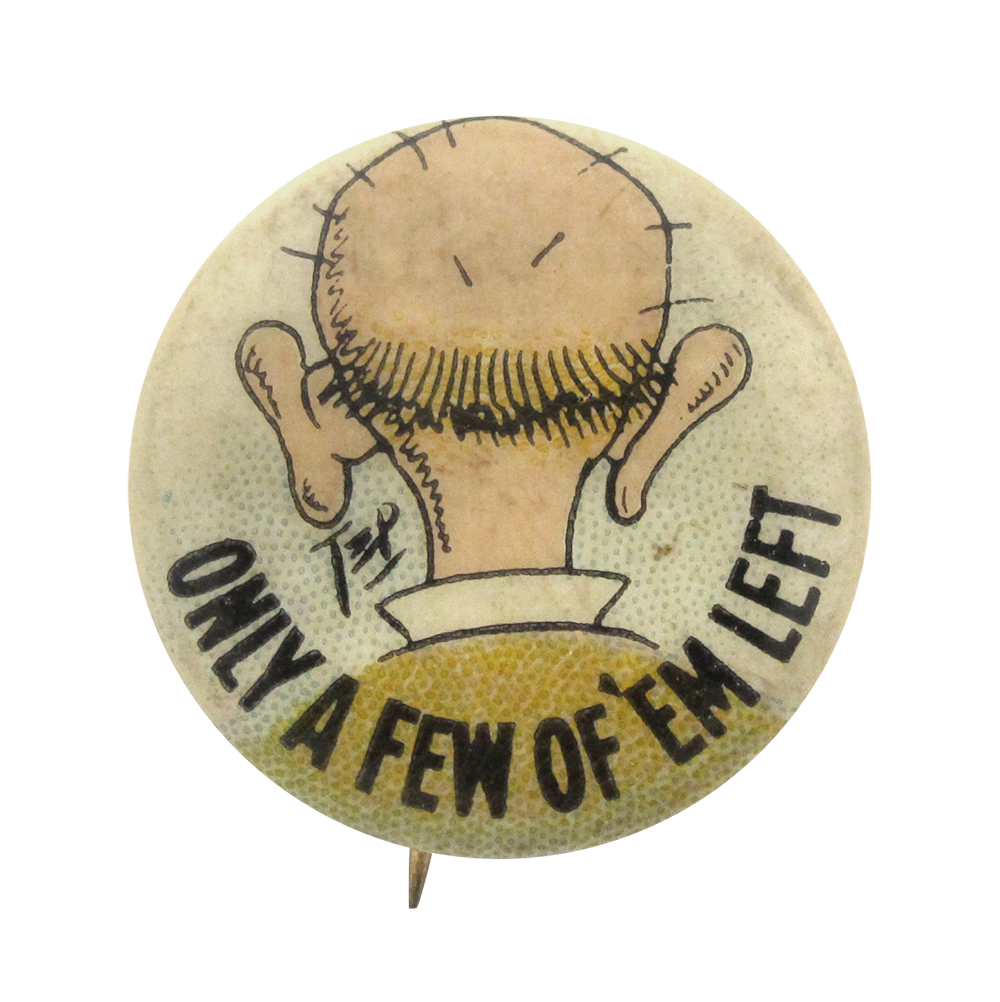
Text on Button Only A Few Of 'Em Left
Image Description

Color Illustration of the back of a balding man's head with a few black hairs on the bottom and top of his head. Black text curves on the bottom portion of the button. The illustration and text lie on a white-blue dotted background.

Back Paper / Back Info

Quality Tokio Cigarette
Factory No 649
1st Dist. NEW YORK
THE WHITEHEAD & HOAG CO.
PATENTED

Back Style
The Shape
The Size
Year / Decade Made
The Manufacturer
Additional Information

Thomas E. Powers (1870-1939) was born on the Fourth of July in Milwaukee, Wisconsin. Powers was a nationally recognized cartoonist who worked at the New York Evening World, a William Randolph Hearst (1863-1951) newspaper.  Powers's most famous comic strip was "Joy and Gloom."  The figure drawn for the button looks like it could be the back of Gloom's head.  Both Hearst and Theodore Roosevelt (1858-1919) considered Power to be their favor cartoonist.  

Sources

T. E. Powers. (2012, June 14). lambiek.net. Retrieved October 20, 2014, from http://www.lambiek.net/artists/p/powers_te.htm.

Catalog ID AD0397

Avon Books Communion

Category
Additional Images
Sub Categories
Text on Button WE ARE HERE Avon Books
Image Description

Green button with white text on top and bottom portion of button. Illustration of a beige colored alien face with large black eyes. 

Back Style
The Shape
The Size
Year / Decade Made
Additional Information

To promote the 1988 paperback release of the novel Communion: A True Story by American ufologist and author, Whitley Strieber, publisher Avon Books gave out these promotional buttons, stating above an alien’s likeness, “We are here.” The book is based on the author's personal account, who experienced "lost time" and terrifying flashbacks, which was linked to an encounter with aliens during his hypnosis sessions with a therapist. The book was later made into a film starring Christopher Walken as Strieber and Lindsay Crouse as his wife, Anne. 

Avon Books was founded in 1941 by the American News Corporation (ANC), and was established by brother and sister Joseph Meyers and Edna Meyers Williams. Originally named Avon Publications, it was an American paperback book and comic book publisher. As of 2010, it became part of HarperCollins, publishing primarily romance novels.

Catalog ID AD0345

Aunt Jemima Breakfast Club

Category
Additional Images
Sub Categories
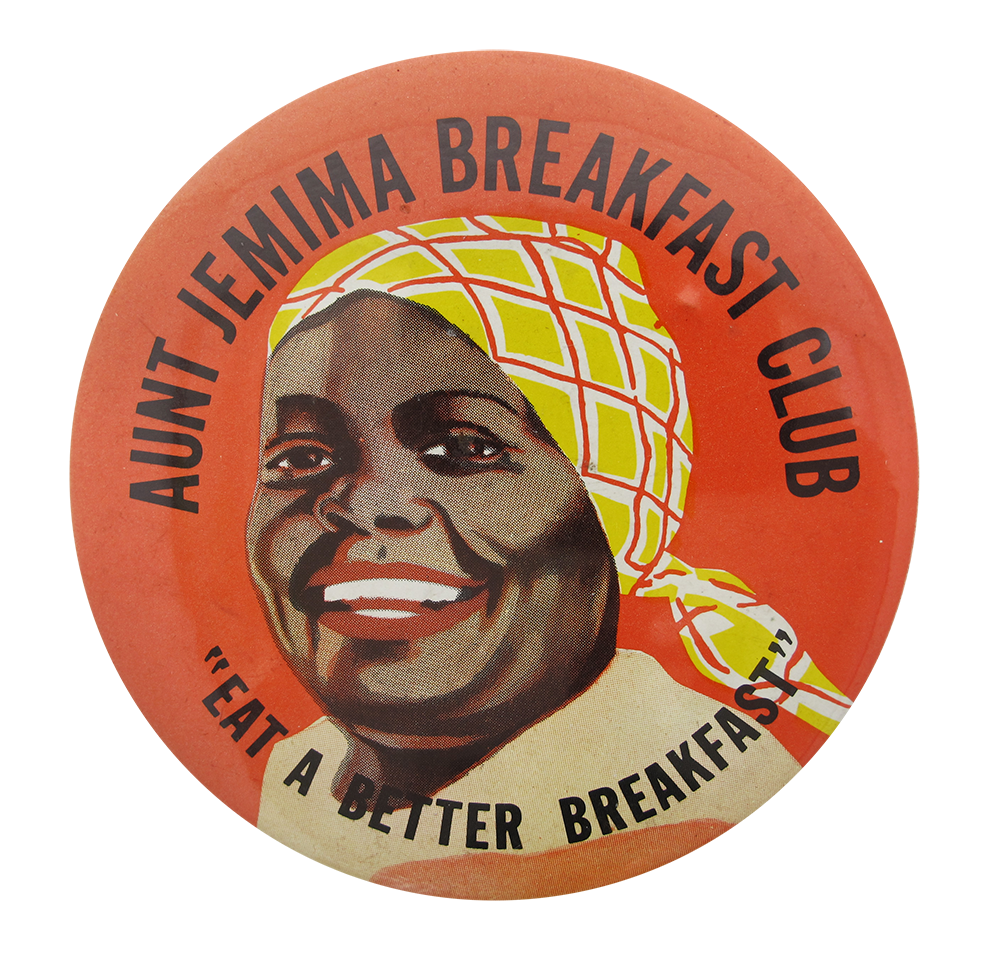
Text on Button AUNT JEMIMA BREAKFAST CLUB - "EAT A BETTER BREAKFAST"
Image Description

Color illustration of a smiling woman with a colorful scarf tied around her head on an orange background. Black text wraps around the top and bottom of the button.

Back Style
The Shape
The Size
Year / Decade Made
The Manufacturer
Additional Information

Aunt Jemima pancake flour was introduced in 1889 as an early ready-mix product, named after a minstrel-show song, “Old Aunt Jemima.” R.G. Davis acquired the recipe and mill, transforming it into a national brand by creating a persona: Nancy Green portrayed “Aunt Jemima” at the 1893 World’s Columbian Exposition, with a folksy plantation backstory that boosted sales.

Much of the memorabilia, such as “Breakfast Club” buttons and recipe pamphlets, was produced by Adcraft Mfg. Co. of Chicago. Aunt Jemima memorabilia is considered offensive because it markets a racist caricature. The brand’s mascot grew out of 19th-century minstrelsy and the “mammy” stereotype: a smiling, head-scarved Black woman portrayed as happily serving white families. Using “Aunt” (instead of “Mrs.”) echoed Jim Crow–era norms that denied Black women equal respect. Ads and premiums often leaned on plantation nostalgia and dialect, trivializing slavery and domestic servitude while turning a demeaning image into cheerful kitchen décor.

These items also exploited and erased the real Black women hired to embody the character, who were rarely credited or fairly compensated, while the company profited from their likeness. Because the imagery appeared on everyday objects—boxes, signs, club buttons—it normalized the stereotype for generations. That long, harmful history is why the brand was repeatedly criticized and why the name and logo were ultimately retired.

Sources

Alcorn, C. (2021, February 9). Aunt Jemima finally has a new name. CNN. Retrieved October 24, 2025, from https://www.cnn.com/2021/02/09/business/aunt-jemima-new-name 

Diaz, J. (2021, February 10). Aunt Jemima no more; pancake brand renamed Pearl Milling Company. NPR. Retrieved October 24, 2025, from https://www.npr.org/2021/02/10/966166648/aunt-jemima-no-more-pancake-brand-renamed-pearl-milling-company#:~:text=Origin%20of%20Pearl%20Milling%20Company,hit%20store%20shelves%20in%20June

Jim Crow Museum. (n.d.). The mammy caricature. Retrieved October 23, 2025, from https://jimcrowmuseum.ferris.edu/mammies/homepage.htm 

McNamee, G. L. (2025, January 21). Aunt Jemima (Pearl Milling Company). Encyclopaedia Britannica. Retrieved October 25, 2025, from  https://www.britannica.com/topic/Aunt-Jemima-Pearl-Milling-Company 

National Museum of African American History and Culture. (n.d.). Popular and pervasive stereotypes of African Americans. Smithsonian. Retrieved October 23, 2025, from https://nmaahc.si.edu/explore/stories/popular-and-pervasive-stereotypes-african-americans 

Old Aunt Jemima. (2025, June 16). In Wikipedia. Retrieved October 24, 2025, from https://en.wikipedia.org/wiki/Old_Aunt_Jemima

Reilly, K. (2020, June 17). Quaker Oats: Aunt Jemima brand is ‘based on racial stereotype,’ will change name and packaging. Time. Retrieved October 23, 2025, from https://time.com/5854935/aunt-jemima-syrup-racial-stereotype/ 

Catalog ID AD0384

Y.M.C.A. Hotel Chicago

Category
Additional Images
Sub Categories
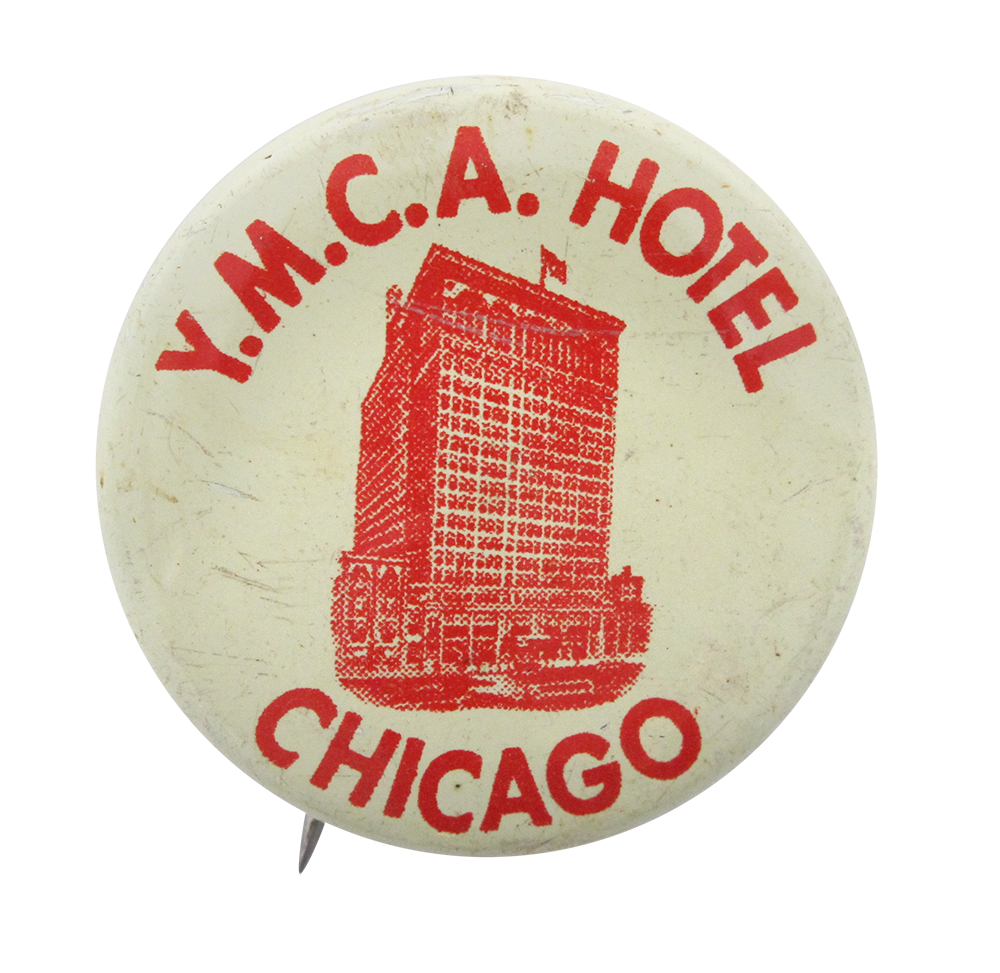
Text on Button Y.M.C.A. HOTEL CHICAGO
Image Description

An illustration of a building with red text above and below it on a white background. 

Curl Text ACORN BADGE CHICAGO 2
Back Style
The Shape
The Size
The Manufacturer
Additional Information

The Y.M.C.A. Hotel Chicago was built in 1916 and was located on Wabash Avenue. The hotel provided simple and inexpensive lodgings to young men, at daily rates, without membership fees. Starting during the 1930’s the Y.M.C.A. Hotel began to market the hotel to a broader audience that included men, women, and families. Besides offering low cost rooms the Y.M.C.A. Hotel also operated a cafeteria, restaurant and soda fountain as well as offering daily programs and entertainment.

Catalog ID CH0075

William Perry Chicago Bears

Category
Additional Images
Sub Categories
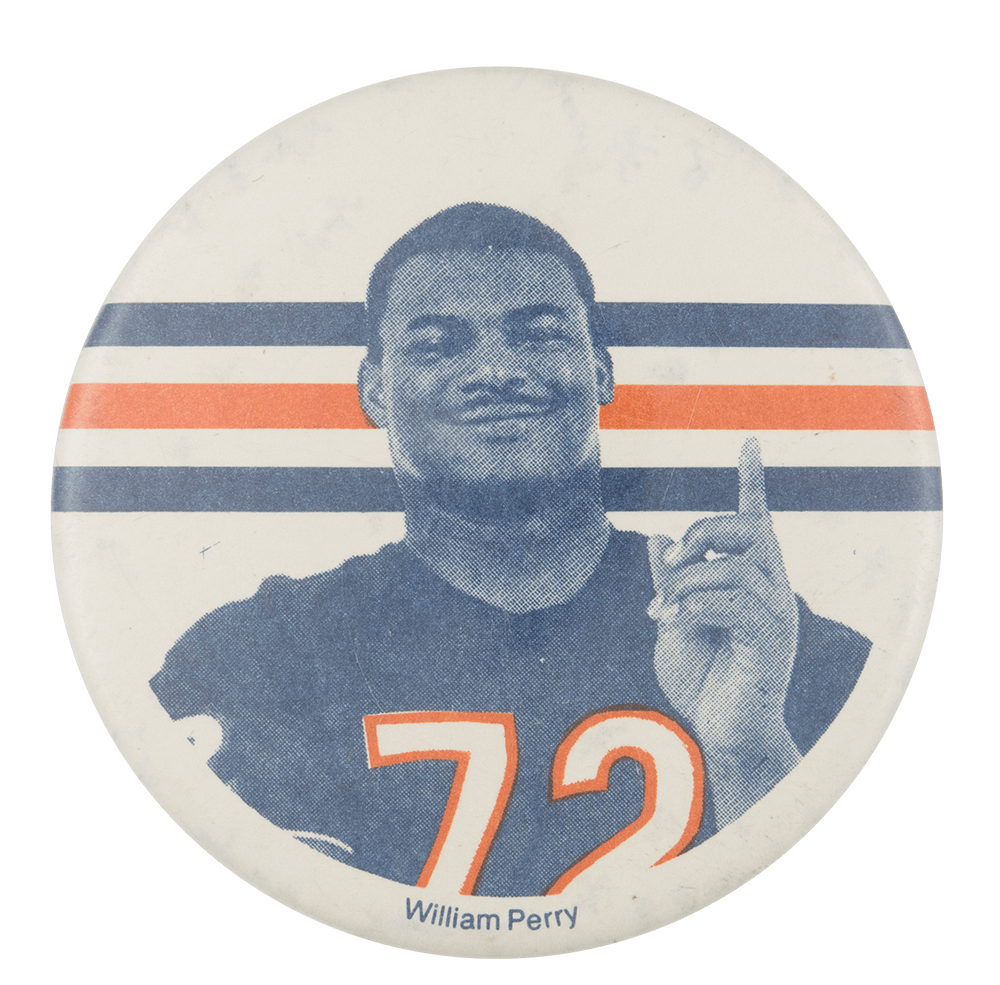
Text on Button William Perry
Image Description

A photo of football player William Perry holding his hand up on a background that is a mostly white but has three horizontal lines (blue, orange, blue)  behind Perry's head. 

Back Style
The Shape
The Size
Year / Decade Made
Additional Information

William Perry was born on December 16, 1962 and is best known for his years as a defensive lineman for the Chicago Bears. He was nicknamed "The Refrigerator" for his large, rectangular frame. He was a first round draft pick in 1985 and won the Super Bowl with the Chicago Bears his rookie year. His Super Bowl ring is sized 25, the largest ring in Super Bowl history.

Catalog ID CH0077

Chicago White Sox Nut

Category
Additional Images
Sub Categories
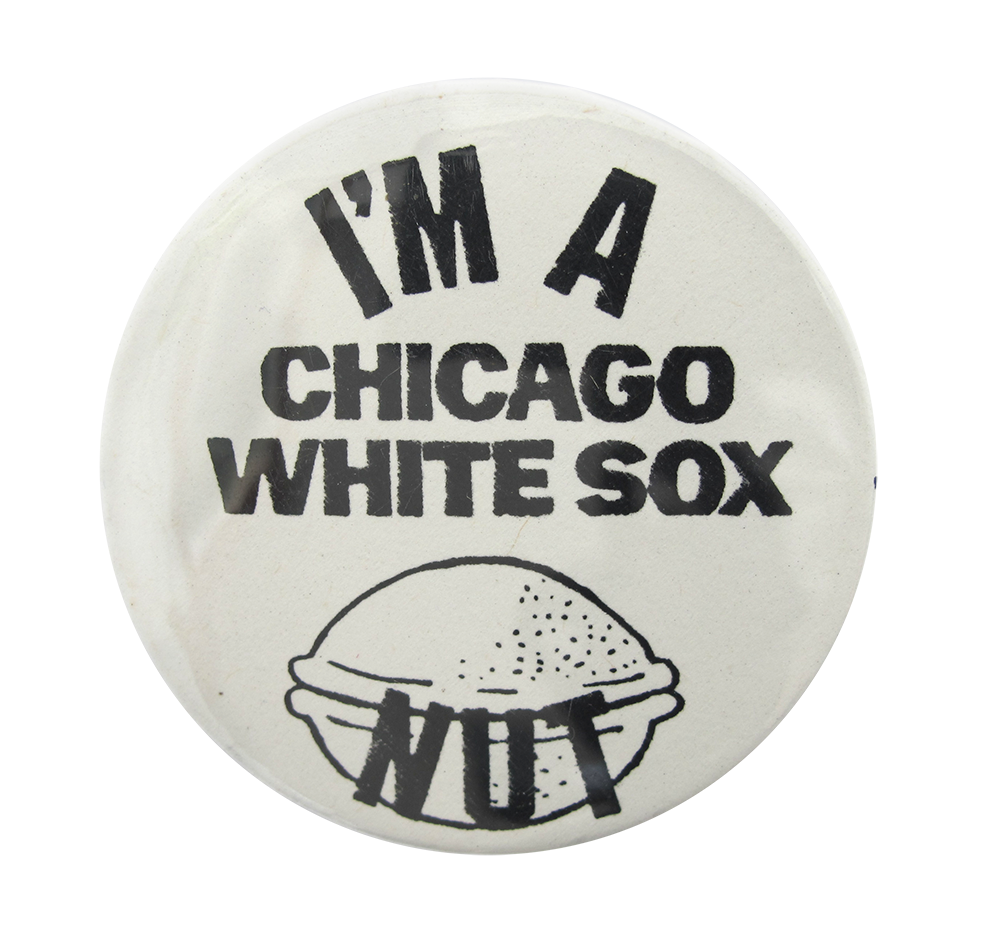
Text on Button I'M A CHICAGO WHITE SOX NUT
Image Description

Illustration of a nut with black text inside it and above it on a white background. 

Back Paper / Back Info

BADGE-A-MINIT
1-800-223-4103

Back Style
The Shape
The Size
Additional Information

The Chicago White Sox are a professional baseball team located in the south side of Chicago, Illinois. The White Sox are members of the Central Division in the Major League Baseball's American League. The White Sox are one of two major league clubs based in Chicago, the other being the Chicago Cubs of the National League. The club was established in 1900 and originally called the Chicago White Stockings, after the nickname abandoned by the Cubs, and the name was soon shortened to Chicago White Sox, believed to have been because the paper would shorten it to Sox in the headlines. The White Sox have won the World Series three times, the last time occurring in 2005.

Catalog ID CH0088

The Junior Museum

Category
Additional Images
Sub Categories
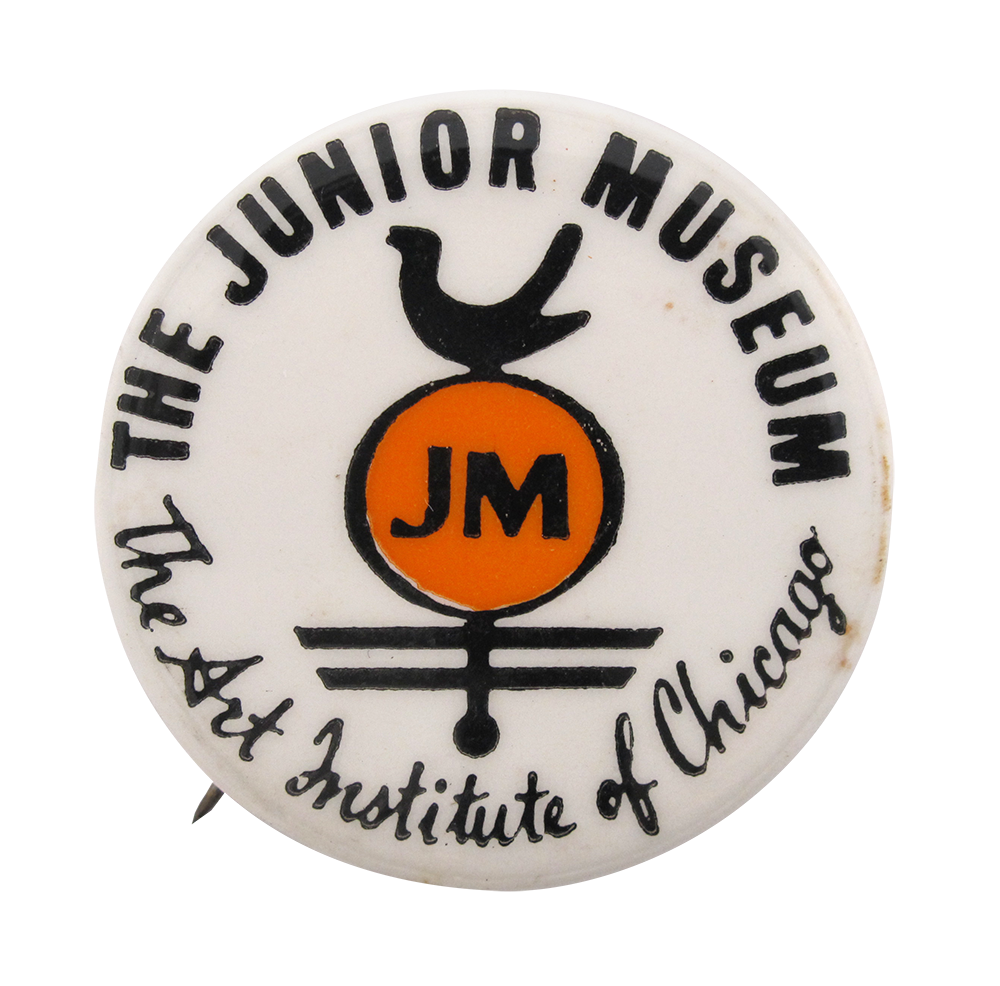
Text on Button THE JUNIOR MUSEUM JM The Art Institute of Chicago
Image Description

A illustration of a chicken topped weathervane with text below and above the illustration in a curved formation. Everything sits on a white background.  

Back Style
The Shape
The Size
Additional Information

The Junior Museum was founded in 1964 by the Art Institute’s Woman’s Board under the direction of Museum Education.  Before the Junior Museum there was the Children’s Museum in 1926 that became the Gallery of Art Interpretation in 1940.  In 1992 the space became the Kraft Education Center.  All of these foundations had the idea of displaying exhibits  and original works for school children as part of their central makeup with the primary goal to engage visitors with works of art through fantasy, imagination, and sensory engagement.

Catalog ID CH0078

Stock Show Souvenir

Category
Additional Images
Sub Categories
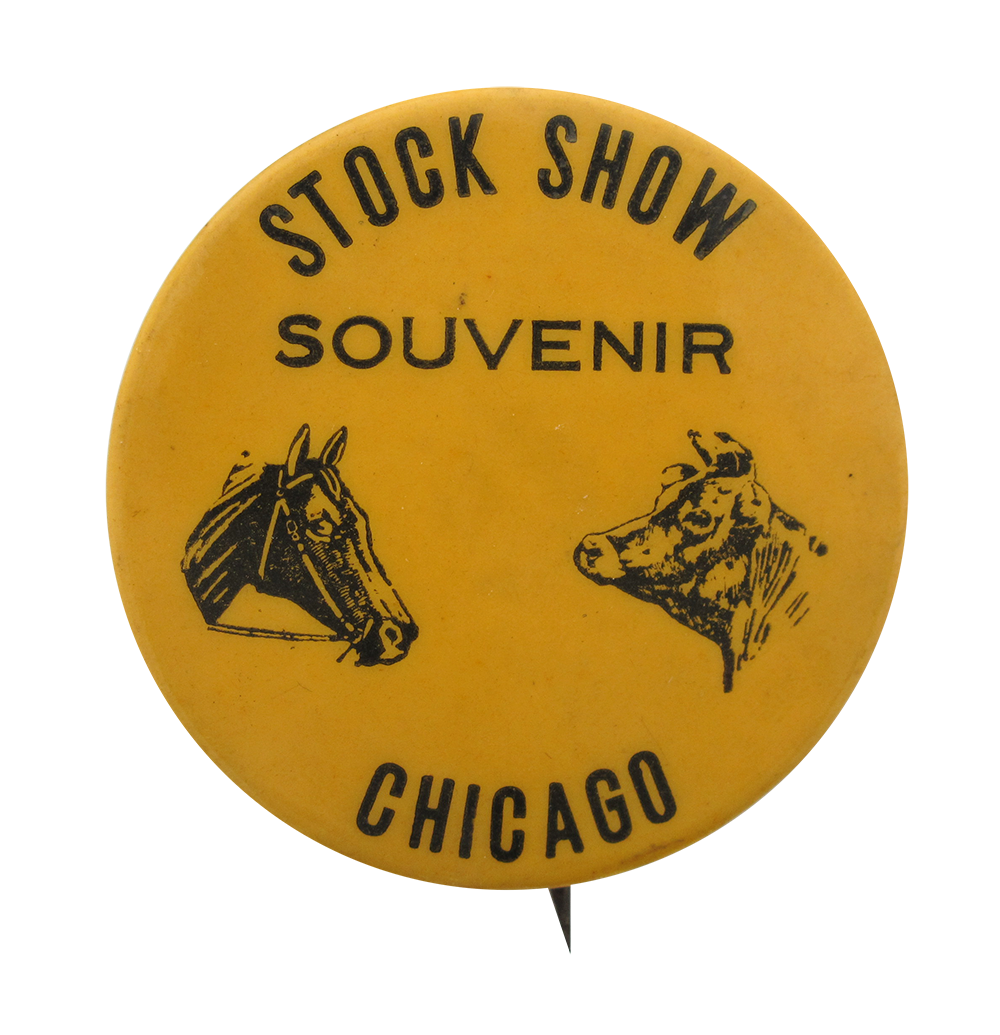
Text on Button STOCK SHOW SOUVENIR CHICAGO
Image Description

An illustration of a horse and cow facing each other with black text. Both text and illustrations are on a yellow background 

Back Style
The Shape
The Size
Additional Information

This button is a souvenir from the Chicago International Livestock Show. It is not obvious which year it is from; the show was celebrated by swine, sheep, cattle, and horse exhibitors from 1900 to 1975 at the International Amphitheater next to the Union Stockyards. The International Livestock Show was created to bring the best animals into one area to both raise market value of livestock and educate the agriculture community in how to breed and market their animals better.

Sources

Blum, Martha (2013 September, 18). Cattlemen share memories of Chicago livestock show. Agrinews.http://agrinews-pubs.com/Content/Default/Field-Editor-Blogs/Article/Cat…

Department of Animal Science (2014). A history of the beginnings of the international livestock exposition. Iowa State University. http://www.ans.iastate.edu/history/link/exposition.html

Catalog ID CH0067

Roosevelt High School Baseball

Category
Additional Images
Sub Categories
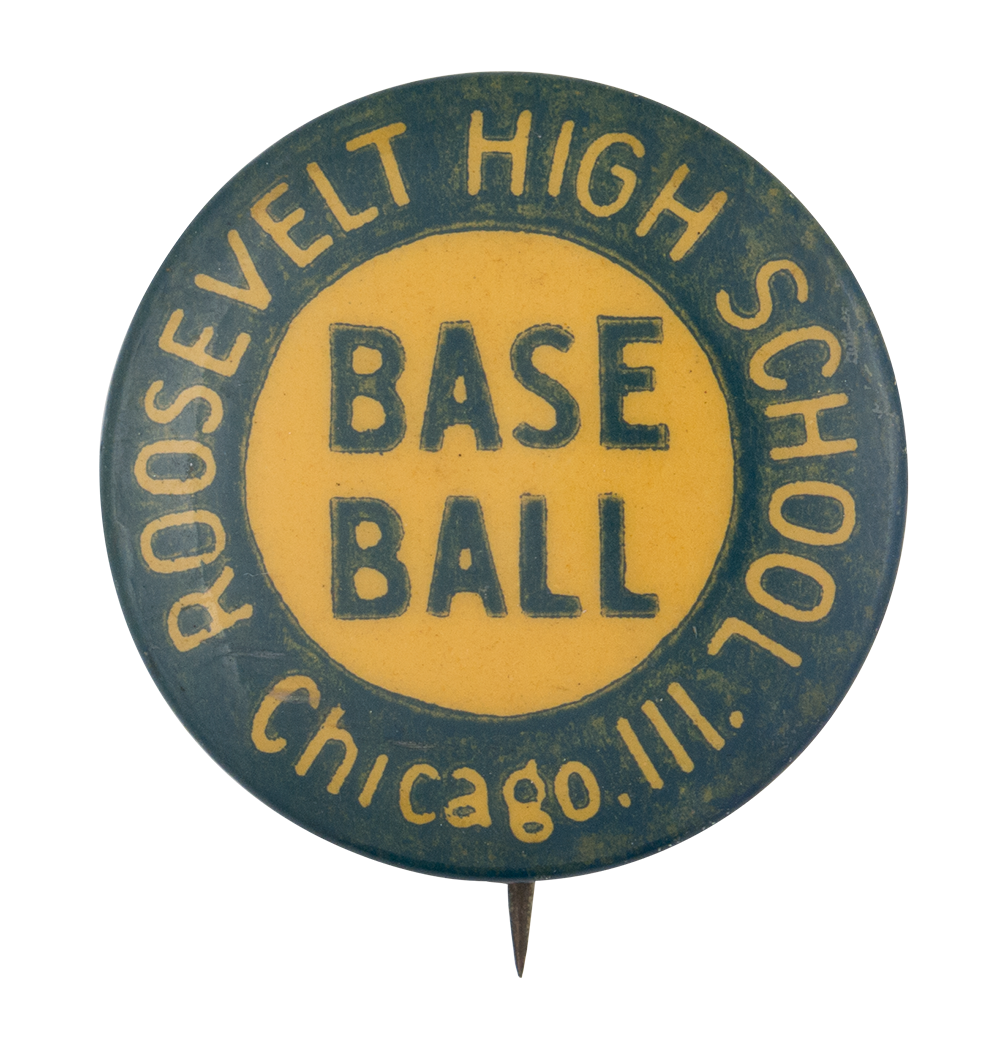
Text on Button ROOSEVELT HIGH SCHOOL BASE BALL CHICAGO, ILL.
Image Description

Blue text sits in the center of the button on a gold circle and it is surrounded by a ring of gold text on a blue background.  

Back Paper / Back Info

Made by
AMERICAN
BADGE
CO.
CHICAGO.
ILLS.

Back Style
The Shape
The Size
The Manufacturer
Additional Information

Roosevelt High School is a public 4 year high school in the Albany Park Neighborhood of Chicago, Illinois. The school is run by the Chicago Public Schools district. Though the school opened in 1922, it was originally named William G. Hubbard High School and did not occur its current name until moving to a new building in 1927.

This button is specifically advertising the school's baseball team. Roosevelt High School competes in the Chicago Public League and is a member of the Illinois High School Association (IHSA).

Catalog ID CH0063