Talk About It

Category
Additional Images
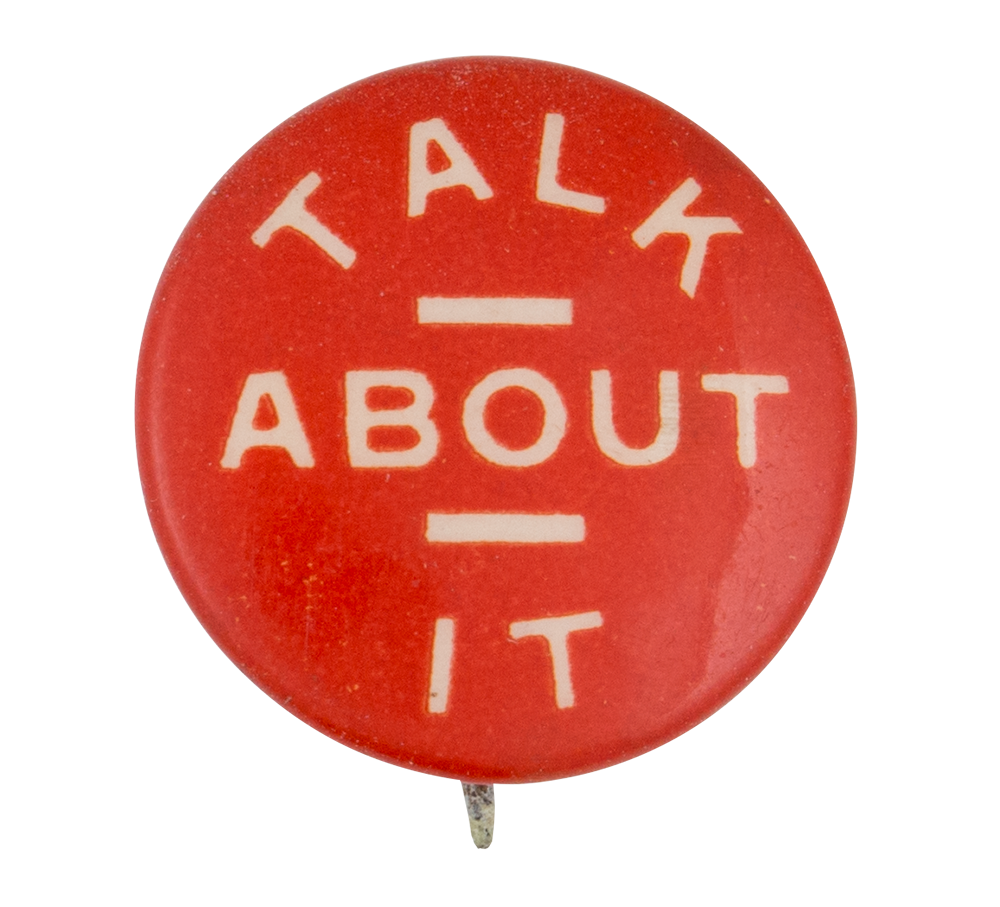
Text on Button TALK ABOUT IT
Image Description

White text on a red background.

Back Paper / Back Info

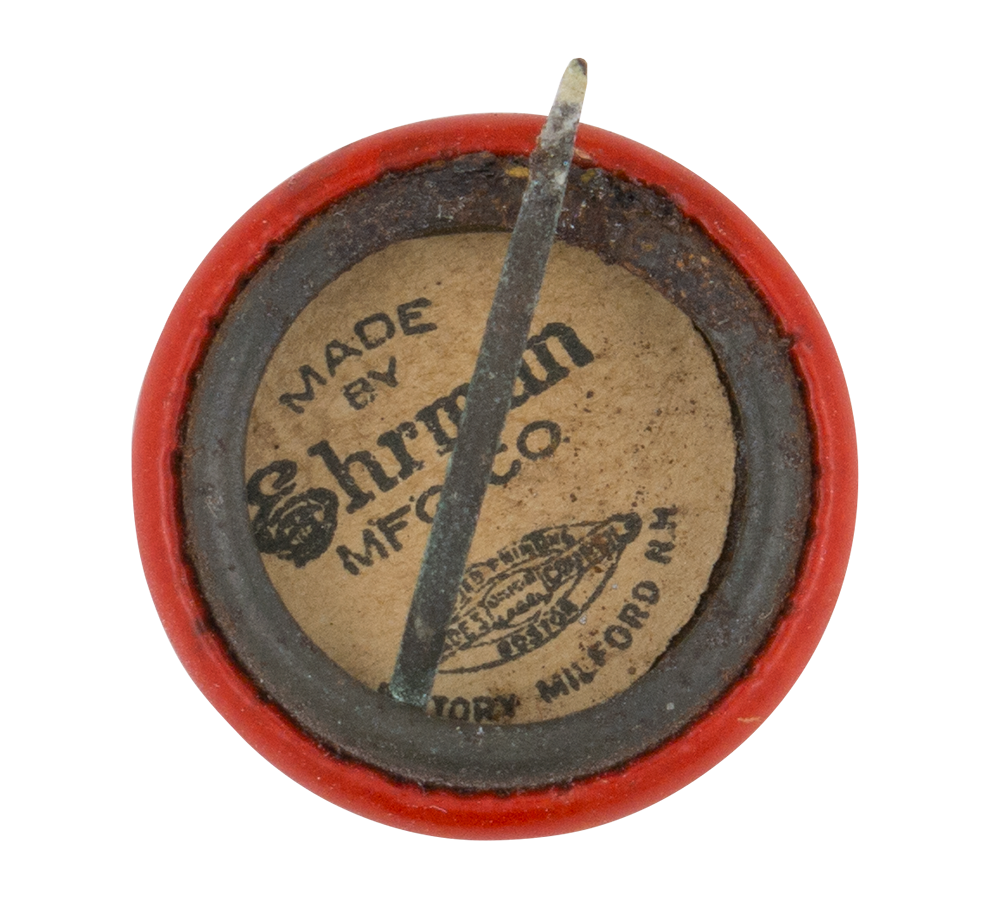
Made by Ehrman mfg co Factory Milford N.H.

Back Style
The Shape
The Size
Year / Decade Made
The Manufacturer
Additional Information

"TALK — ABOUT — IT" serves as a simple, open-ended prompt to initiate a conversation, encouraging users to break the silence around any subject, likely in this case, related to politics. Worn as a pin, the phrase can signal “I’m willing to talk or listen,” encourage others to share their thoughts, or demonstrate support for openness and destigmatization without pointing to any specific topic. 

The Ehrman Manufacturing Co. initially operated its factory in Milford, New Hampshire, during the early 1900s, manufacturing celluloid pin-back buttons and various novelty items. Labels and catalog entries marked with “Made by Ehrman M’fg Co., Boston, Mass. / Factory, Milford, N.H.” link the company to political and commemorative pieces, including a 1912 William Howard Taft campaign button and pins for New Hampshire's governor. These examples suggest that Ehrman’s Milford production primarily took place in the 1900s–1910s, which was the peak of the celluloid button industry.

Sources

Ehrman Manufacturing Company. (1908, August 6). [Letter to Bert S. Bartlow on company letterhead]. Boston, MA: Author. Unpublished company letter, private collection.

Massachusetts Historical Commission. (n.d.). Inventory form, 10 Orlando Avenue (WTH_142). https://mhc-macris.net/Documents/WTH/PDFs/WTH_142.pdf

National Museum of American History, Behring Center. (n.d.). Pin-back democracy. Retrieved October 18, 2025, from https://americanhistory.si.edu/explore/exhibitions/american-democracy/online/machinery-democracy/democratic-outfitting/pin-back-democracy

New Hampshire Historical Society. (n.d.). William Howard Taft campaign buttonhttps://www.nhhistory.org/object/226587/button-campaign 

Catalog ID IB0115

I'm A Streak Freak

Category
Additional Images
Sub Categories
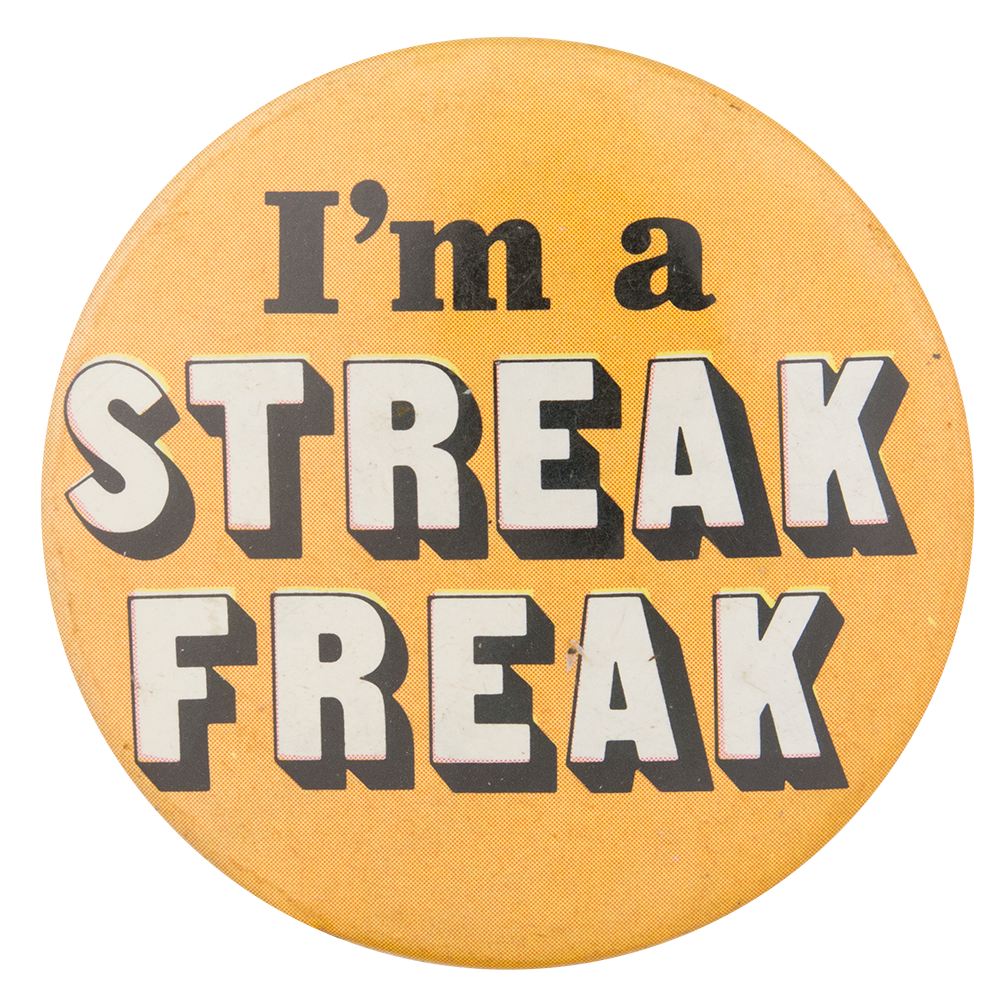
Text on Button I'm a STREAK FREAK
Image Description

Black lettering and bold white shadow lettering on orange background.

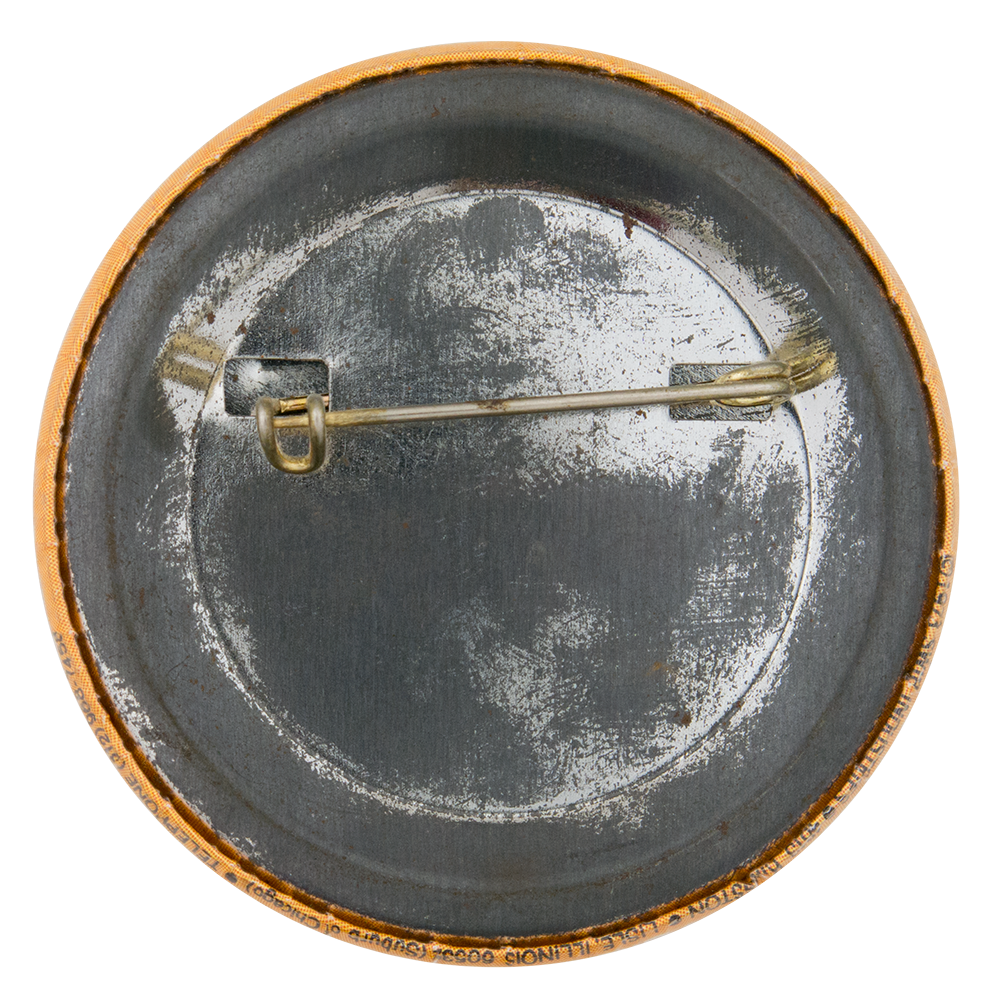
Curl Text c. 1973 Swib Industries 4813 Kingston Lisle IL 60532 (Suburb of Chicago) Telephone (312)968-7458
Back Style
The Shape
The Size
Year / Decade Made
The Manufacturer
Additional Information

Although the act of streaking has been popular since the mid-1960s, the term "streaking" was first used in 1973. The term was coined during a mass nude run at the University of Maryland. Streaking is different from nudism, because the streaker intends to be noticed by an audience. It is also different from "flashing", in that it is not intended to shock the victim. Perhaps the most widely seen streaker in history was 34-year-old Robert Opel, who streaked across the stage flashing the peace sign on national television during the 46th Annual Academy Awards in 1974. The high point of streaking's pop culture significance was in 1974, when thousands of streaks took place around the world. A wide range of novelty products were produced to cash in on the fad, including buttons, patches, and t-shirts.

Read more about the History of Streaking Buttons on the Busy Beaver blog.

Catalog ID IB0025

Stamp Out Mental Health

Category
Additional Images
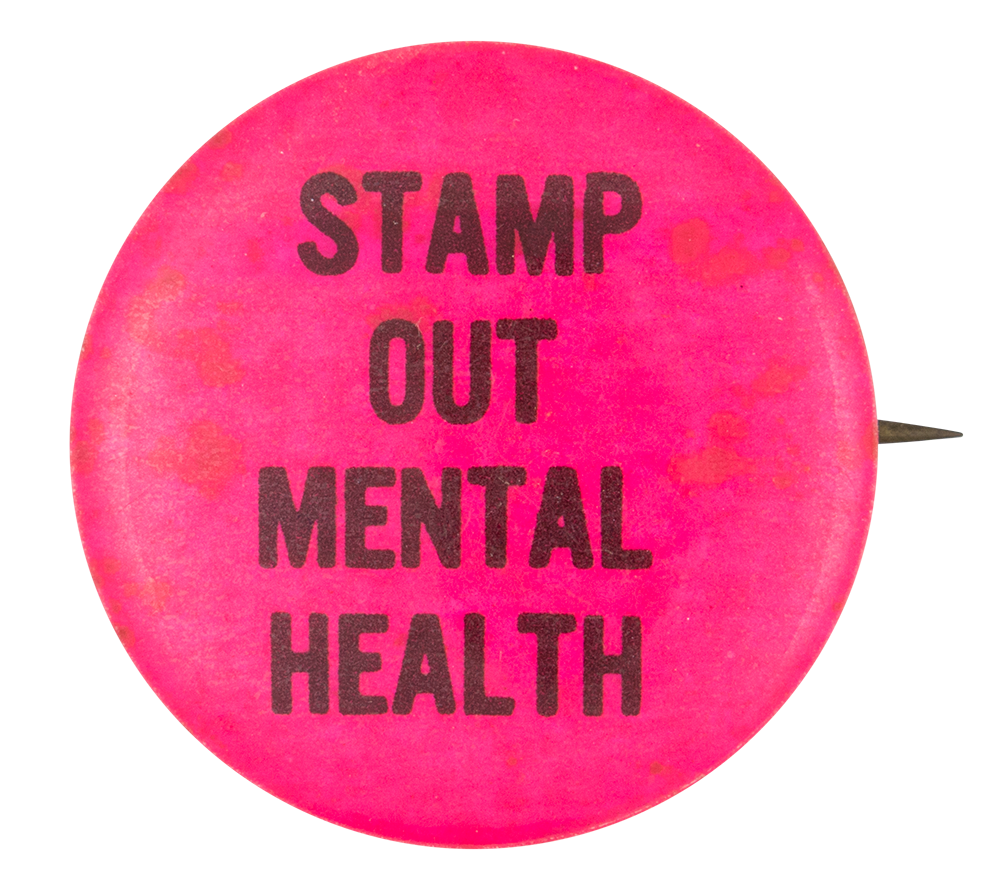
Text on Button Stamp out Mental Health
Image Description

Plain black text on hot pink background.

Back Style
The Shape
The Size
Year / Decade Made
Additional Information

The phrase “Stamp Out Mental Health” first appeared in an article published in The Canadian Medical Association Journal on July 10, 1965. The article told the story of an advertising executive who disseminated the phrase, and “flooded his native state with bumper stickers proclaiming in scarlet letters”.  The story was a satirization of the role of advertising in public health messages, which can fictionalize the real health campaigns.

Catalog ID IB0172

Snoopy Sniffs Aeroplane Glue

Category
Additional Images
Sub Categories
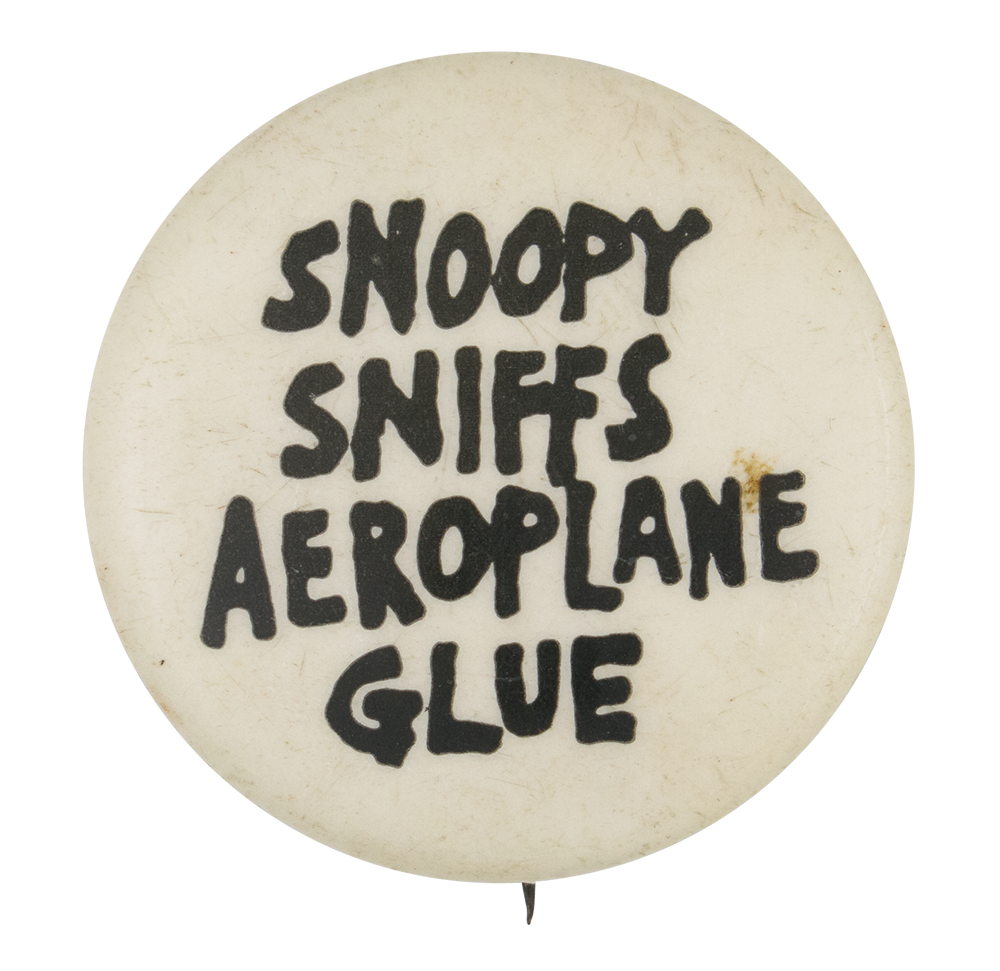
Text on Button SNOOPY SNIFFS AEROPLANE GLUE
Image Description

Black hand-drawn font style with white background.

Curl Text Not legible
Back Style
The Shape
The Size
Additional Information

The Peanuts comic strip featuring Charlie Brown and found in newspapers around the world has its own dedicated fan base. There is often contention within fan groups and one argument with Peanuts fans centers on Charlie Brown’s dog, Snoopy. Snoopy had been in the comic strips since the beginning, but eventually evolved to be more than just a simple dog, developing a personality of his own. By 1966, Snoopy was starting to develop into a central character, away from the lives of the Peanuts gang. 

For many fans, Snoopy became a fan favorite and is seen as keeping the Peanuts franchise alive, amid declining popularity. On the other side, some fans blamed Snoopy for the decline in the comic’s quality. Often large amounts of panels would be dedicated to Snoopy alone. He could take up over a third of a strip's story and took away attention from the other characters. This dislike has led to several counter-culture Snoopy jokes, one such being that the character sniffs his iconic airplane’s glue.

Sources

Boxer, S. (2015, October 9). The exemplary narcissism of Snoopy. The Atlantic. https://www.theatlantic.com/magazine/archive/2015/11/the-exemplary-narc…

Catalog ID HU0029

Smile Your with Safeco

Category
Additional Images
Sub Categories
Image Description

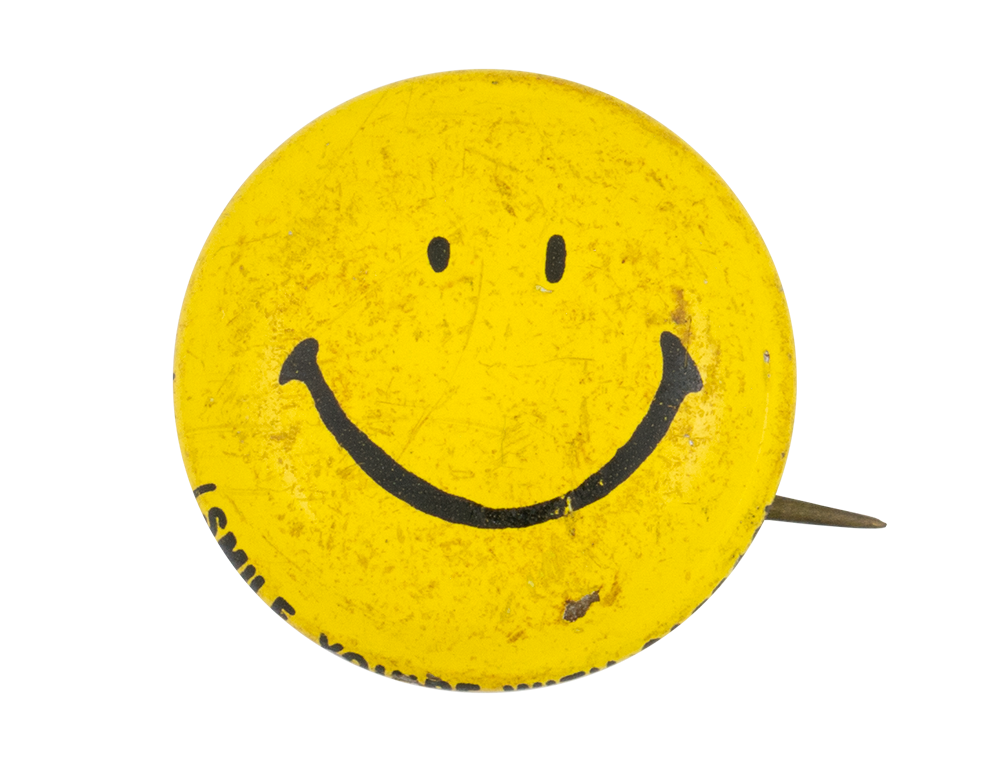
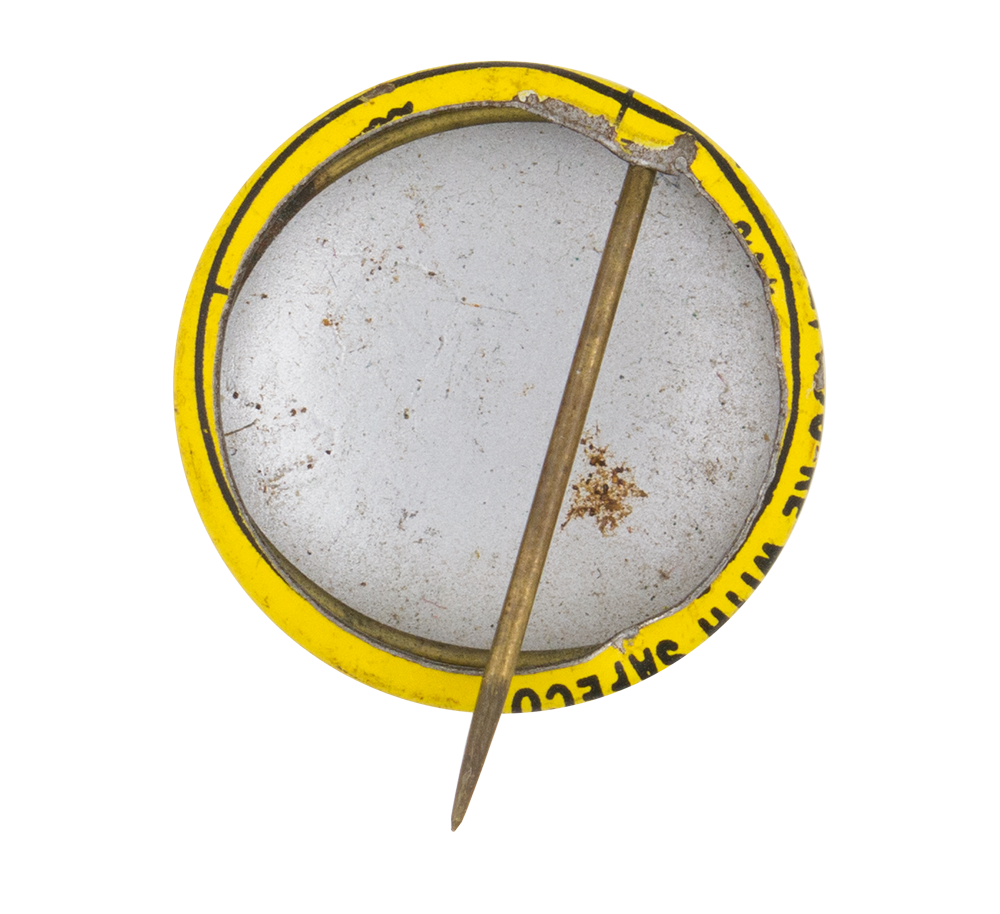
Yellow button with an illustration of a black smiley face. The right eye is slightly larger than the left eye.

Curl Text (SMILE, YOU'RE WITH SAFECO)
Back Style
The Shape
The Size
Additional Information

The classic yellow smiley face is comprised of a yellow circle, two black dots for eyes and a black arc ending in serifs for a mouth. It  was designed in 1963 by by commercial artist, Harvey Ross Ball. Ball was commissioned by The State Mutual Life Insurance Company to create a happy face to raise the morale of their employees. His version was created in 10 minutes. The design was printed onto more than 50 million buttons. Neither Ball nor the company copyrighted this smiley, so it was continually used by other businesses in their promotions.


The design and concept is quite simple and was definitely used before Ball’s 1963 version. However his has become the most iconic. Variations have been used for advertising campaigns and in popular culture ever since.

Catalog ID SM0006

Smile If You're A Streaker

Category
Additional Images
Sub Categories
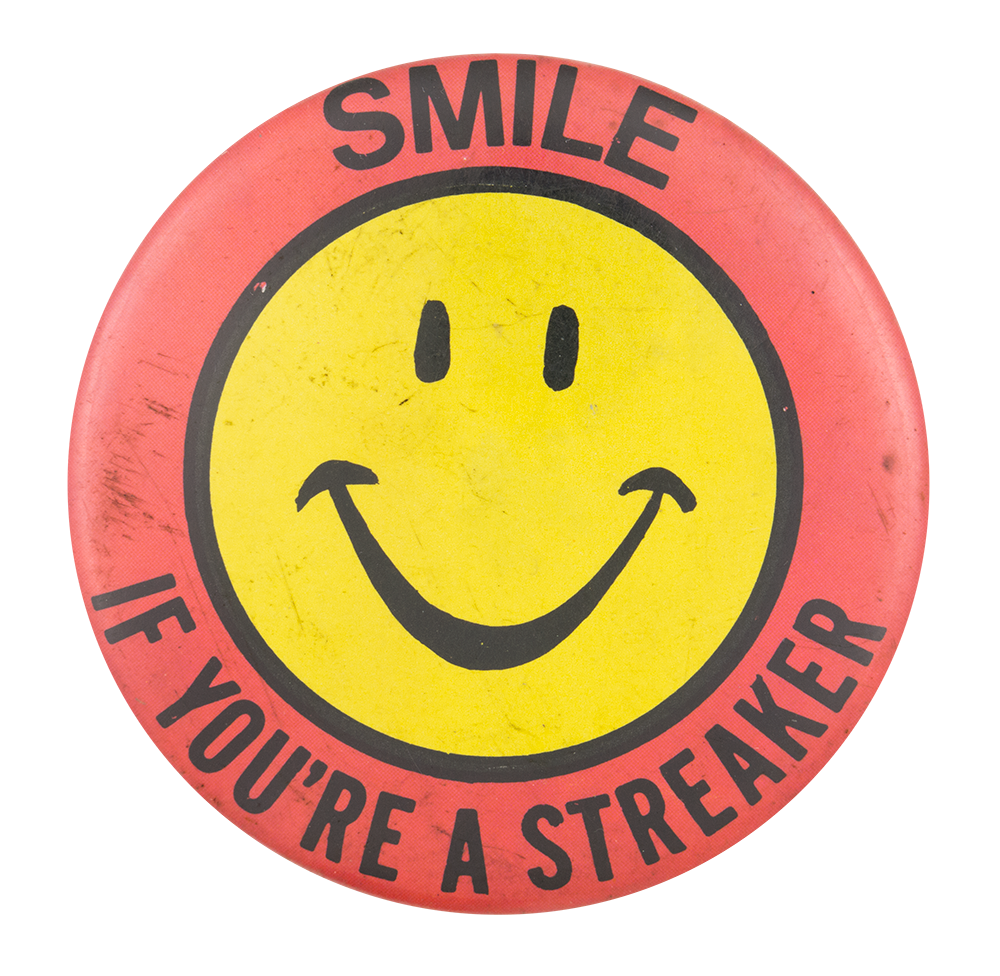
Text on Button SMILE IF YOU'RE A STREAKER
Image Description

Black and yellow smiley face with black text on a red outer ring.

Curl Text c. 1973 Swib Industries 4813 Kingston Lisle, Illinois 60532 (Suburb of Chicago) Telephone (312)968-7458
Back Style
The Shape
The Size
Year / Decade Made
The Manufacturer
Additional Information

Although the act of streaking has been popular since the mid-1960s, the term "streaking" was first used in 1973. The term was coined during a mass nude run at the University of Maryland. Streaking is different from nudism, because the streaker intends to be noticed by an audience. It is also different from "flashing", in that it is not intended to shock the victim. Perhaps the most widely seen streaker in history was 34-year-old Robert Opel, who streaked across the stage flashing the peace sign on national television during the 46th Academy Awards in 1974. The high point of streaking's pop culture significance was in 1974, when thousands of streaks took place around the world. A wide range of novelty products were produced to cash in on the fad, from buttons, patches, t-shirts, etc. Ray Stevens had a novelty hit called "The Streak" and Randy Newman even had a song about streaking called "The Naked Man".

This button features a variation of the classic yellow smiley face that is comprised of a yellow circle, two black dots for eyes and a black arc ending in serifs for a mouth. It  was designed in 1963 by by commercial artist, Harvey Ross Ball. Ball was commissioned by The State Mutual Life Insurance Company to create a happy face to raise the morale of their employees. His version was created in 10 minutes. The design was printed onto more than 50 million buttons. Neither Ball nor the company copyrighted this smiley, so it was continually used by other businesses in their promotions. 

The design and concept is quite simple and was definitely used before Ball’s 1963 version. However his has become the most iconic. Variations have been used for advertising campaigns and in popular culture ever since.

Read more about the History of Streaking Buttons on the Busy Beaver blog.

Catalog ID SM0024

I Like Everybody

Category
Additional Images
Sub Categories
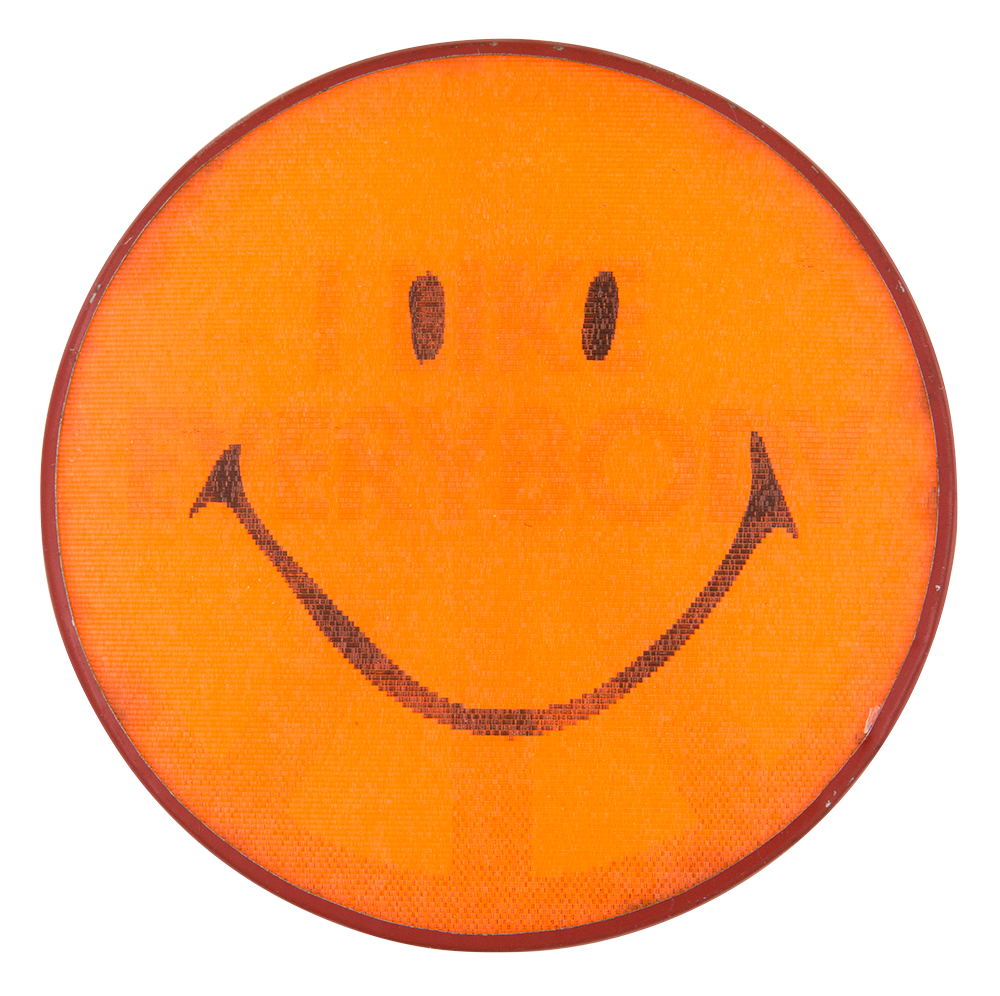
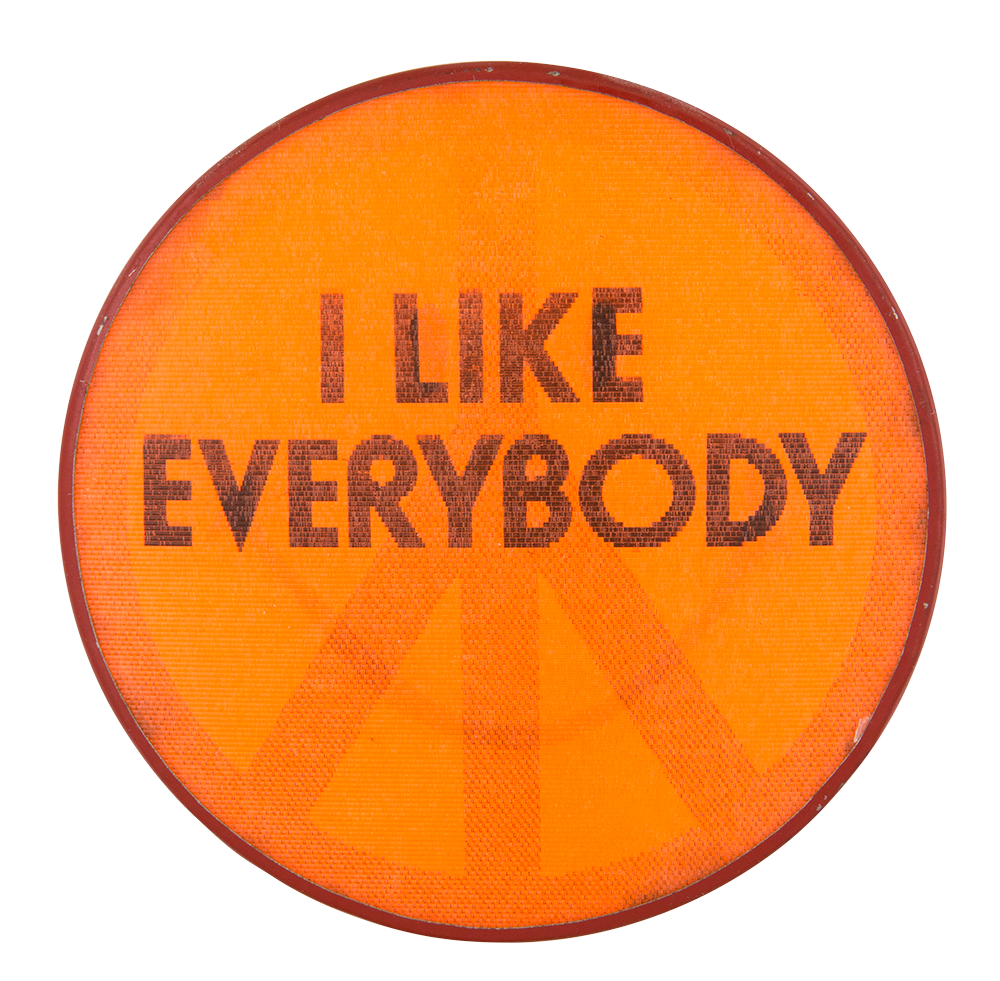
Text on Button I LIKE EVERYBODY
Image Description

Orange background that changes from black text to a black peace sign to a black smiley face ans the button.

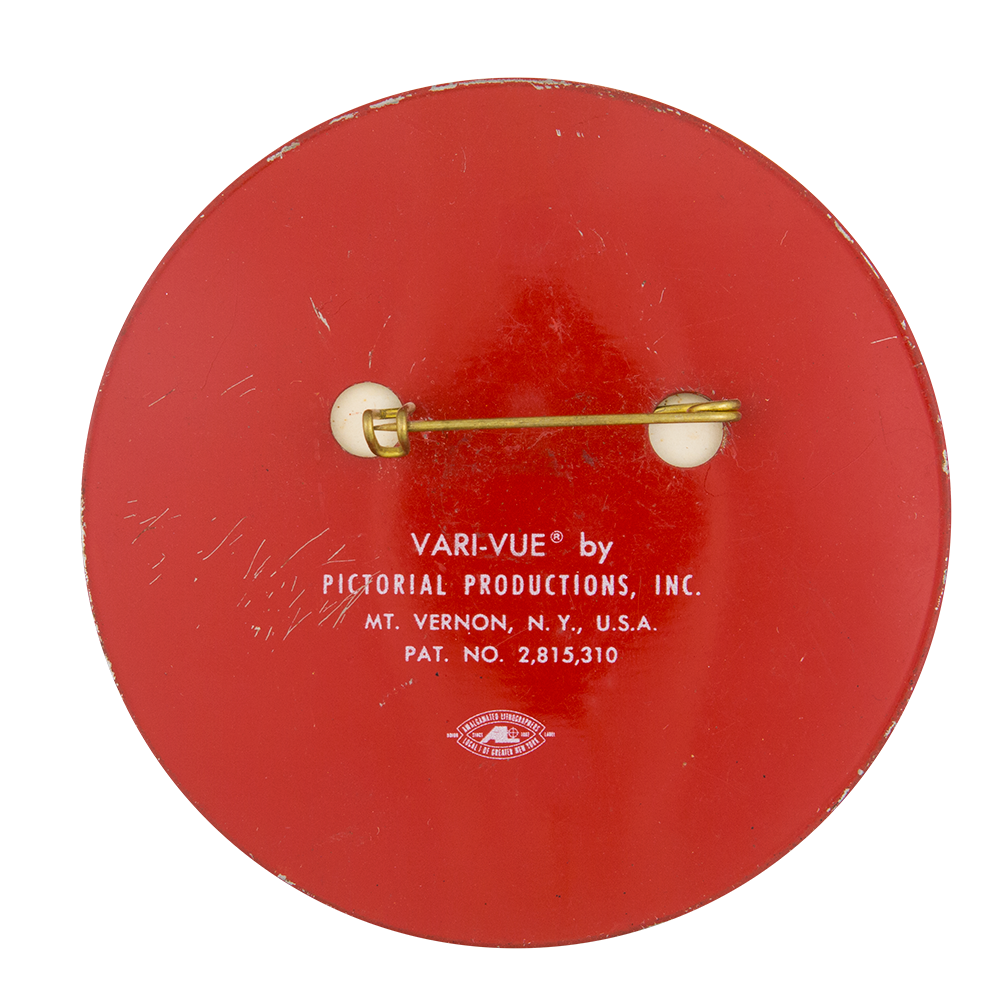
Back Paper / Back Info

Vari-VUE by PICTORIAL PRODUCTIONS INC. MT. VERNON N.Y. U.S.A PAT. NO. 2,815,310

union bug

Back Style
The Shape
The Size
Year / Decade Made
The Manufacturer
Additional Information
This lenticular button is a variation of classic yellow smiley face which is comprised of a yellow circle, two black dots for eyes and a black arc ending in serifs for a mouth. It  was designed in 1963 by by commercial artist, Harvey Ross Ball. Ball was commissioned by The State Mutual Life Insurance Company to create a happy face to raise the morale of their employees. His version was created in 10 minutes. The design was printed onto more than 50 million buttons. Neither Ball nor the company copyrighted this smiley, so it was continually used by other businesses in their promotions.

The design and concept is quite simple and was definitely used before Ball’s 1963 version. However his has become the most iconic. Variations have been used for advertising campaigns and in popular culture ever since.
Catalog ID SM0023

Just Pants

Category
Additional Images
Sub Categories
Text on Button Just Pants
Image Description

Black smiley face with text on mouth on yellow background.

Back Style
The Shape
The Size
Additional Information

Just Pants was an American franchise headquartered in Chicago, Illinois.  It sold just pants and was the US's largest jean franchise in the late 1970s. The franchise's success decreased during the 1980s and 1990s because of increasing competition. The last store closed in 1998.

This button depicts a variation of the classic yellow smiley face which is comprised of a yellow circle, two black dots for eyes and a black arc ending in serifs for a mouth. It  was designed in 1963 by by commercial artist, Harvey Ross Ball. Ball was commissioned by The State Mutual Life Insurance Company to create a happy face to raise the morale of their employees. His version was created in 10 minutes. The design was printed onto more than 50 million buttons. Neither Ball nor the company copyrighted this smiley, so it was continually used by other businesses in their promotions.

The design and concept is quite simple and was definitely used before Ball’s 1963 version. However his has become the most iconic. Variations have been used for advertising campaigns and in popular culture ever since.


Catalog ID SM0004

I'm Simply Wild About You

Category
Additional Images
Sub Categories
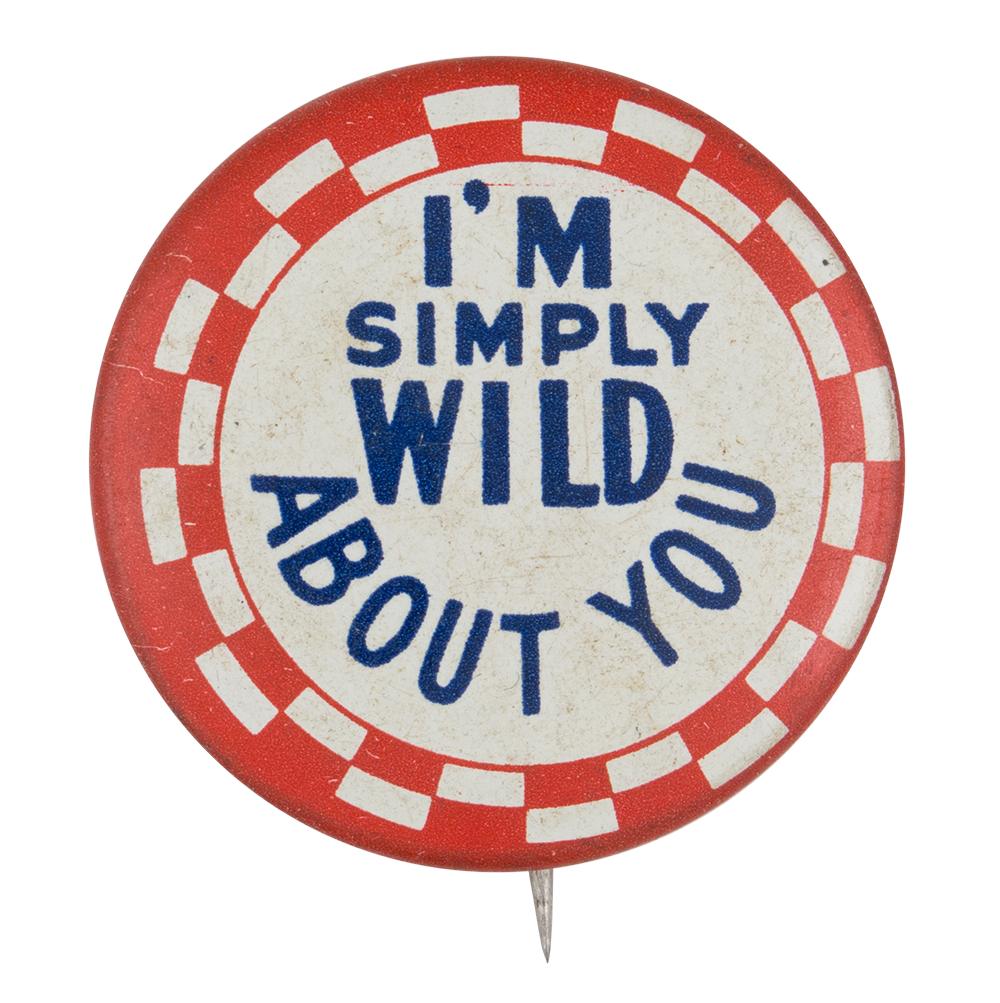
Text on Button I'M SIMPLY WILD ABOUT YOU
Image Description

Black text on white background with red and white checkered edge border.

Back Style
The Shape
The Size
Year / Decade Made
The Manufacturer
Additional Information

Comic Motto Buttons, as they became known sometime in the 1940s (previously known as Comic Celluloid Buttons), hailed from Johnson Smith & Co. catalogues and became popular in the early to mid-20th century. Recognized by their iconic checkered border, featuring salacious slogans and witty banter, the catalogue promised, “Get acquainted – wear these comic celluloid buttons. Slip one or two of these buttons on your lapel and then wait for the wisecracks to begin. The girls get lots of fun out of them. At parties, you break the ice right from the start. Just give one of these to your guest, and it gives the party a flying start.” 

Johnson Smith & Company began in Chicago, Illinois in 1914 as a mail-order novelty and gag gift supplier, settling in Racine, Wisconsin in 1926. Johnson Smith & Co. or Johnson Smith Company sold an array of toys including pinback buttons with suggestive slogans meant as ice breakers.

"I'm simply wild about you" expresses strong affection or enthusiasm, like being "crazy about" or "mad about" someone or something. The use of "wild" to express intense emotion dates back to the 16th century, though its meaning has changed over time. This informal phrase appears in various contexts, including song and book titles, children's books, romance novels, and everyday conversation, indicating its role in expressing intense fondness or passion.

Sources

Birnkrant, M. (n.d.). Small things: Remembering Johnson Smith & Company [blog post]. Mel Birnkrant.com. https://melbirnkrant.com/recollections/page49.html

Johnson Smith & Co. (1938). Johnson Smith & Company Catalog No. 148. Internet Archive. https://archive.org/details/johnson-smith-company-catalog-no.-148-1938

Johnson Smith & Co. (1951). Novelties Johnson Smith and co 1951 catalog. Internet Archive. https://ia803405.us.archive.org/5/items/novelties-johnson-smith-and-co-1951-catalog/Novelties%20Johnson%20%20Smith%20and%20Co%201951%20catalog_text.pdf

Johnson Smith Co. (2017). About Our Company. Johnson Smith Company. https://web.archive.org/web/20170929033510/http://www.johnsonsmith.com/aboutus/   

Ted Hake. (n.d.). Johnson Smith famous novelty supply house 1930s funny saying button with rebus [auction listing]. TedHake.com. https://www.tedhake.com/JOHNSON_SMITH_FAMOUS_NOVELTY_SUPPLY_HOUSE_1930s_FUNNY_SAYING_BUTTON_WITH_REBUS_-ITEM804.aspx

Ted Hake Vintage Buttons & More. (2019a). Johnson Smith famous novelty supply house 1930s suggestive slogan button [Make it hot for me] [eBay listing]. eBay. https://www.ebay.com/itm/141168405871

Ted Hake Vintage Buttons & More. (2019b). Johnson Smith famous novelty supply house 1930s suggestive slogan button [I’m a red hot mama] [eBay listing]. eBay. https://www.ebay.com/itm/141168405896

"Wild". (n.d.). In Online Etymology Dictionary. Retrieved August 4, 2025, from https://www.etymonline.com/word/wild

Catalog ID IB0017

Shit Face Red

Category
Additional Images
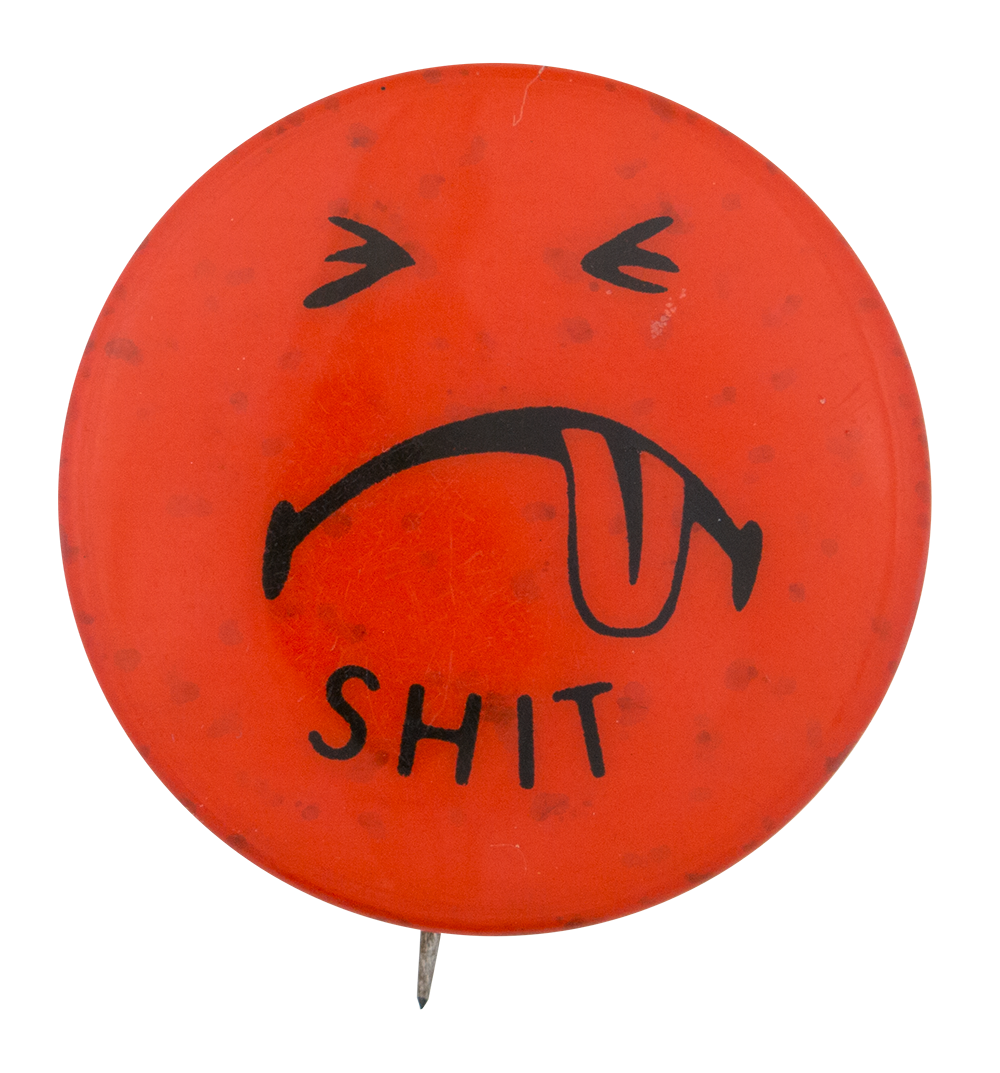
Text on Button SHIT
Image Description

Black text and frown face with closed eyes and tongue sticking out.

Back Style
The Shape
The Size
Additional Information

This is a variation of the classic yellow smiley face that is comprised of a yellow circle, two black dots for eyes and a black arc ending in serifs for a mouth. It  was designed in 1963 by by commercial artist, Harvey Ross Ball. Ball was commissioned by The State Mutual Life Insurance Company to create a happy face to raise the morale of their employees. His version was created in 10 minutes. The design was printed onto more than 50 million buttons. Neither Ball nor the company copyrighted this smiley, so it was continually used by other businesses in their promotions. 

The design and concept is quite simple and was definitely used before Ball’s 1963 version. However his has become the most iconic. Variations have been used for advertising campaigns and in popular culture ever since.

Catalog ID SM0041