
| Information |
1/2" diameter pin back Whitehead Hoag paper insert inside back.
|
|---|---|
| Button Image |
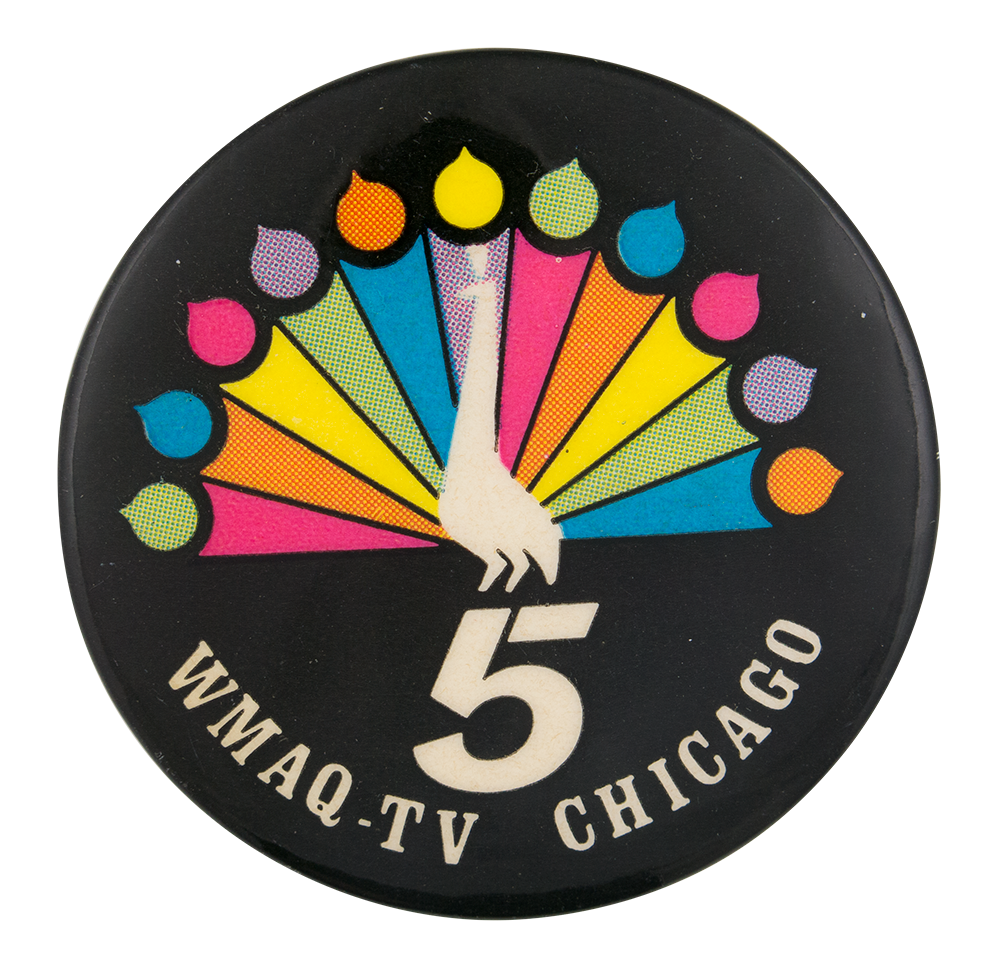
WMAQ-TV Chicago
| Category | |
|---|---|
| Additional Images |
|
| Sub Categories | |
| Text on Button | 5 WMAQ-TV Chicago |
| Image Description | Black background, with white text, and a peacock with a white body and a multi-colored tail. |
| Back Style | |
| The Shape | |
| The Size | |
| Additional Information | WMAQ-TV, Channel 5, is the Chicago affiliate of NBC. This logo was in use by the channel from 1956-1975. WMAQ-TV was founded in 1948 as WMBQ, to avoid confusion with the local radio station, and has remained the local NBC station ever since. The station is notable for being the fourth overall station to become operational in Chicago, and for being one of the five original NBC Universal owned and operated television stations nationwide. |
| Sources |
NBC Silver Jubilee. (1951, November 26). Broadcasting Magazine, 74. World History Radio. https://worldradiohistory.com/hd2/IDX-Business/Magazines/Archive-BC-IDX… |
| Catalog ID | CH0151 |
The Chipmunks and the Chipettes

| Category | |
|---|---|
| Additional Images |
|
| Sub Categories | |
| Text on Button | The Chipmunks & The Chipettes ©1983 KARMAN ROSS PRODUCTIONS ©1983 BAGDASARIAN PRODUCTIONS |
| Image Description | Color illustration of a Chipmunk and Chipette in front of balloons on a white background with an outer blue edge |
| Back Style | |
| The Shape | |
| The Size | |
| Year / Decade Made | |
| Additional Information | Alvin and the Chipmunks was a popular animated television series that aired from 1983-1990 for a total of eight seasons. It featured three singing chipmunks, Alvin, Simon, and Theodore that often got into some kind of mischief. During the show’s first season, the Chipettes were introduced. This was the female counterpart to the Chipmunks and featured the characters Jeanette, Brittany, and Eleanor. Both groups have appeared on both televisions and the big screen and have released 18 album recordings. |
| Catalog ID | EN0409 |
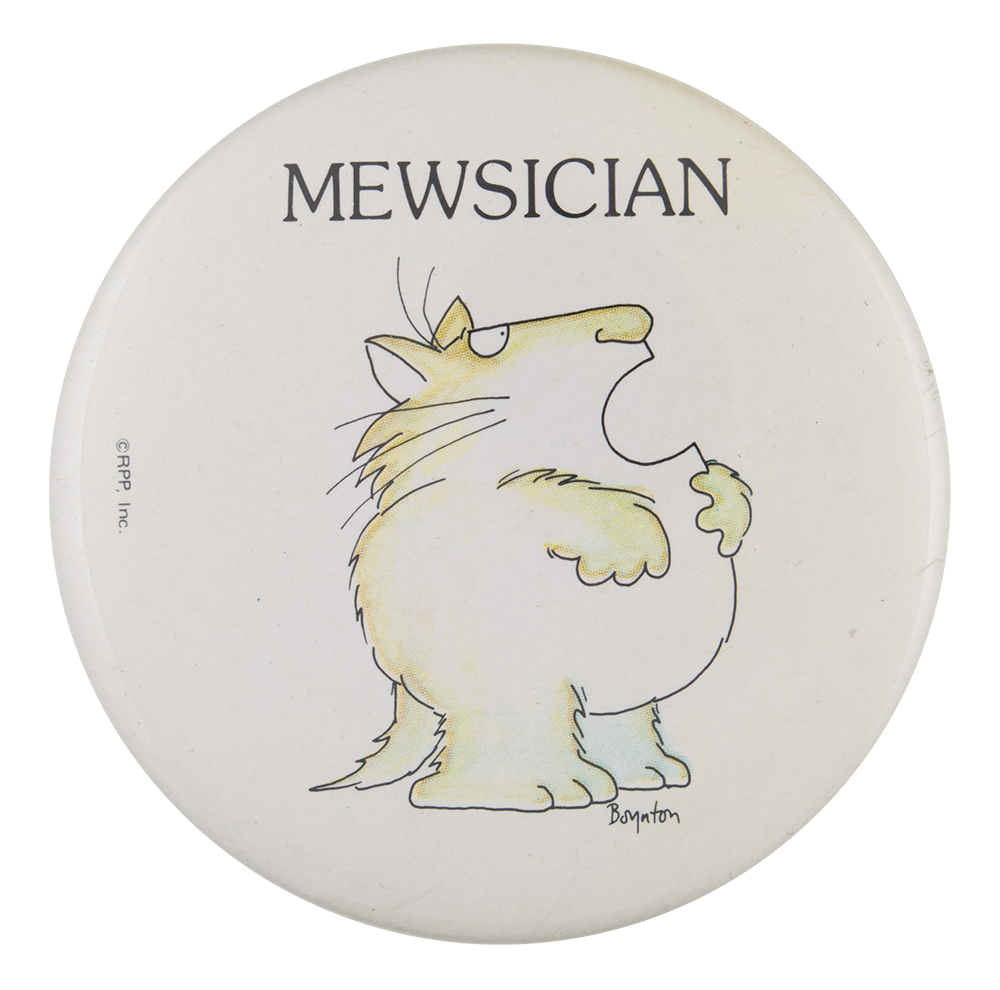
Sandra Boynton's Mewsician
| Category | |
|---|---|
| Additional Images |
|
| Sub Categories | |
| Text on Button | MEWSICIAN ©RPP, Inc. Boynton |
| Image Description | Illustration of cartoon cat standing in profile with mouth open wide and one hand on their chest with black text on a white background. |
| Back Style | |
| The Shape | |
| The Size | |
| The Manufacturer | |
| Additional Information | Sandra Boynton began her career as an illustrator designing greeting cards for Recycled Paper Greetings in the 1970s. In the 1980s, Recycled Paper was selling 50 to 80 million Boynton cards each year. Boynton wrote her first book, Hippos Go Berserk, in 1977 and has since written and illustrated more than 50 books for children and adults. Boynton also designs characters and animals for companies to use instead of licensing her illustrations to be adapted. Her creations can be found on calendars, buttons, clothing, wrapping paper, and other items. In her online autobiography Boynton wrote, “By 1995, my secret ambition of being a rock star was still unrealized due to the fact that, in all the excitement, I forgot to do that.” She began writing and producing music and has released multiple albums. The album Philadelphia Chickens was released in 2002 and was nominated for a Grammy. |
| Sources |
Boynton, S. (n.d.). Sandra Keith Boynton: The Unbelievably Fascinating Autobiography. Retrieved from http://www.sandraboynton.com/sboynton/boyntonography.html |
| Catalog ID | EN0415 |
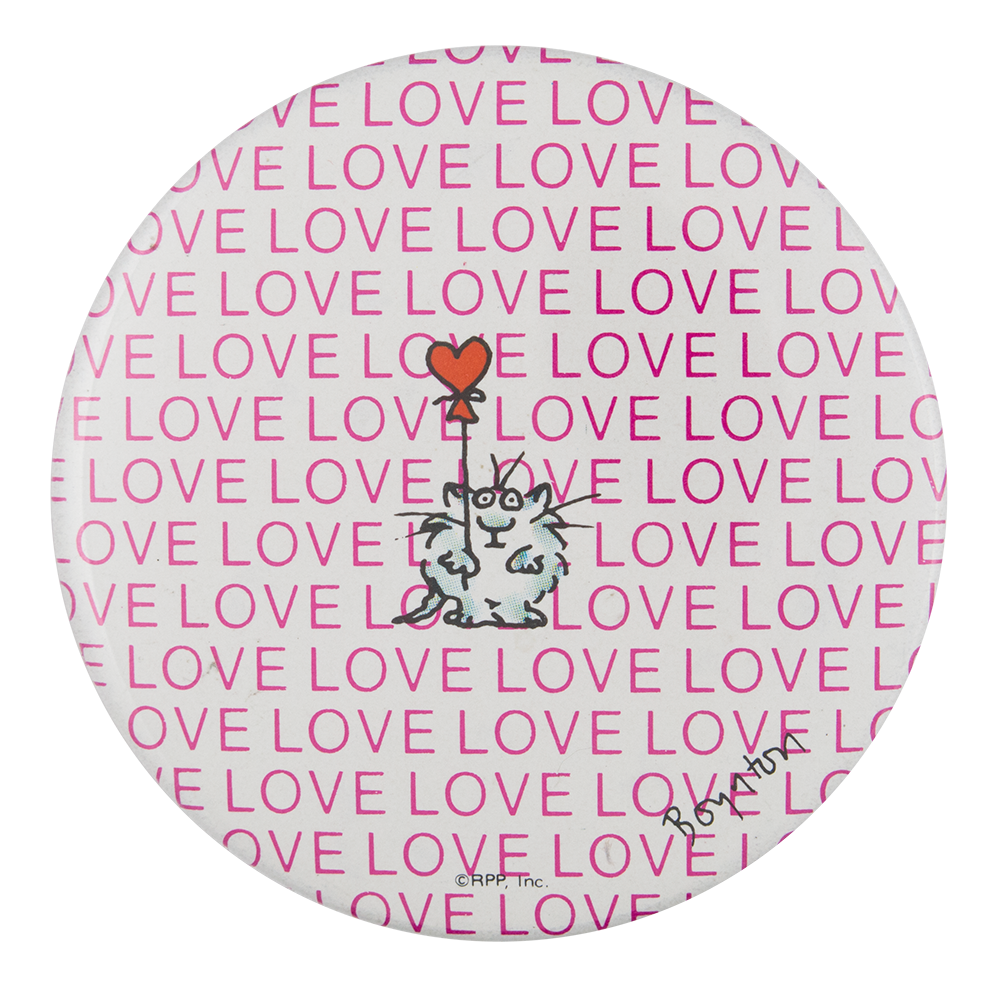
Sandra Boynton's Love
| Category | |
|---|---|
| Additional Images |
|
| Sub Categories | |
| Text on Button | LOVE ©RPP, Inc. Boynton |
| Image Description | Illustration of cat standing upright looking at viewer holding a red heart-shaped balloon. Red and black text on a white background. |
| Back Style | |
| The Shape | |
| The Size | |
| The Manufacturer | |
| Additional Information | Sandra Boynton began her career as an illustrator designing greeting cards for Recycled Paper Greetings in the 1970s. In the 1980s, Recycled Paper was selling 50 to 80 million Boynton cards each year. Boynton wrote her first book, Hippos Go Berserk, in 1977 and has since written and illustrated more than 50 books for children and adults. Boynton also designs characters and animals for companies to use instead of licensing her illustrations to be adapted. Her creations can be found on calendars, buttons, clothing, wrapping paper, and other items. In her online autobiography Boynton wrote, “By 1995, my secret ambition of being a rock star was still unrealized due to the fact that, in all the excitement, I forgot to do that.” She began writing and producing music and has released multiple albums. The album Philadelphia Chickens was released in 2002 and was nominated for a Grammy. |
| Sources |
Boynton, S. (n.d.). Sandra Keith Boynton: The Unbelievably Fascinating Autobiography. Retrieved from http://www.sandraboynton.com/sboynton/boyntonography.html |
| Catalog ID | EN0416 |
Opryland
| Category | |
|---|---|
| Additional Images |
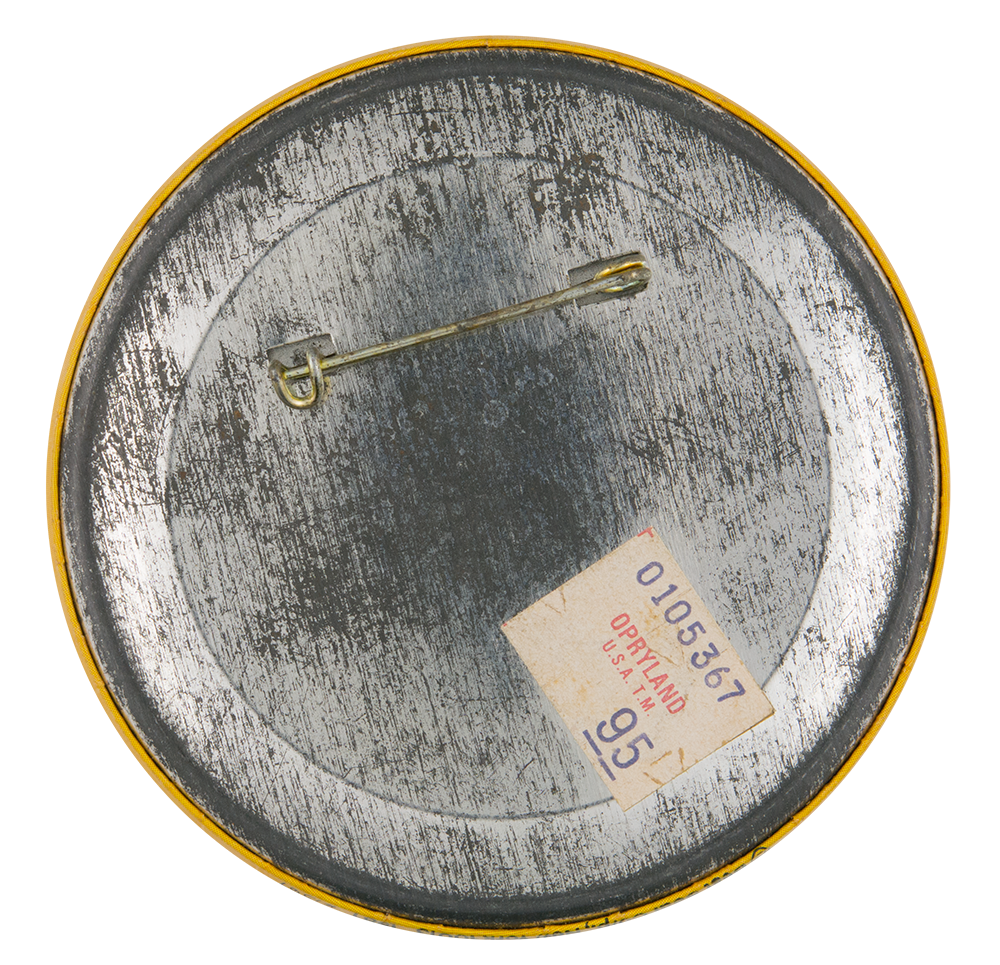
|
| Sub Categories | |
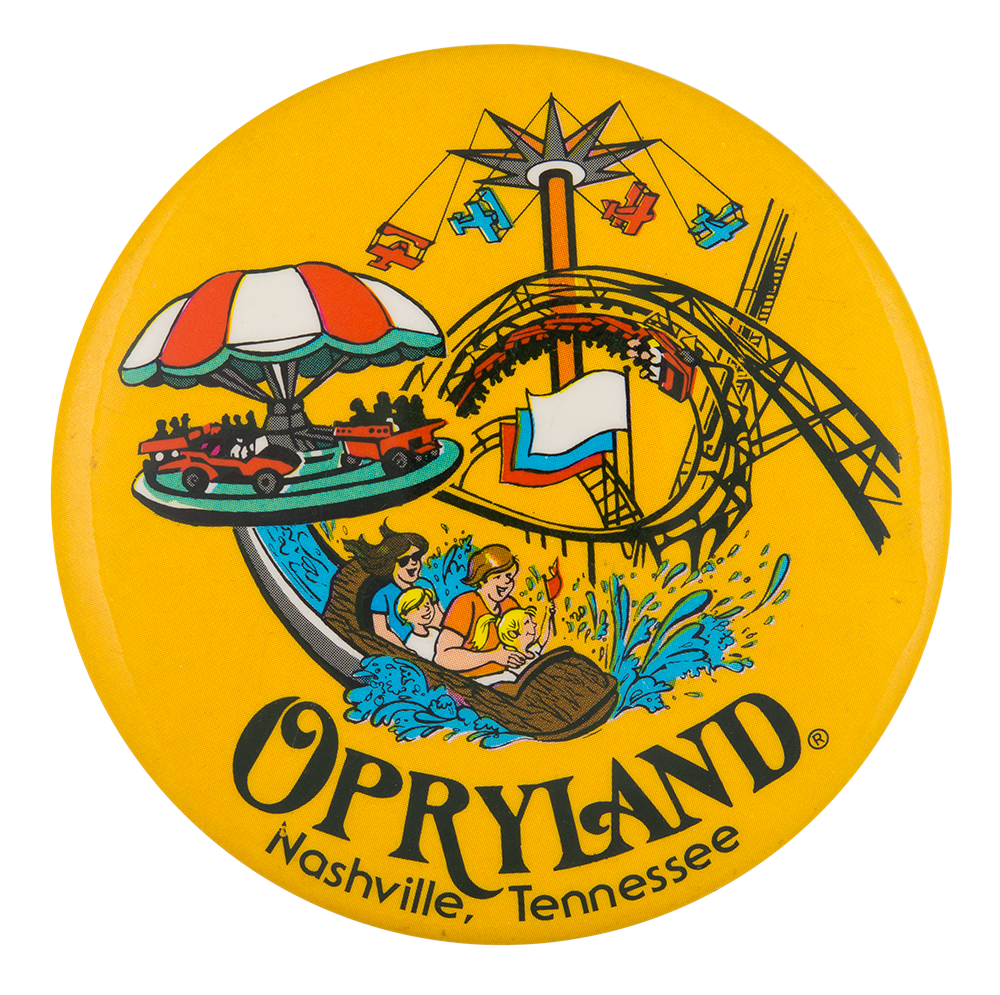
| Text on Button | OPRYLAND Nashville, Tennessee |
| Image Description | Illustrations of four amusement park rides on an orange background with black text. |
| Curl Text | ©Best Seal Corp. New York 10013 1981 #1569 |
| Back Style | |
| The Shape | |
| The Size | |
| Year / Decade Made | |
| The Manufacturer | |
| Additional Information | Opryland USA (also known simply as Opryland) was an amusement park that operated in Nashville, Tennessee from 1972 to 1997. It was created as part of the entertainment complex that was built to compliment the new Grand Ole Opry House. This design features four rides that were popular at Opryland during the 1970’s; the Wabash Cannonball (roller coaster), the Flume Zoom (log flume ride), the Barnstormer (airplane ride), and Tin Lizzies (car ride). |
| Catalog ID | EN0340 |
Lucy Witch

| Category | |
|---|---|
| Additional Images |
|
| Sub Categories | |
| Image Description | Illustration of the character Lucy dressed as in a black dress and pointy black hat and holding a yellow broom on an orange background |
| Back Style | |
| The Shape | |
| The Size | |
| Additional Information | Lucy van Pelt was the third character introduced to Charles Schultz’ comic strip Peanuts. She first appeared in the comic on March 3, 1952. The comic was sponsored by United Feature Syndicate Inc. and was seen in newspapers for the first time on October 2, 1950. The following year, 1951, Schultz began making Halloween themed strips. The most famous Peanuts Halloween motif is the Great Pumpkin which first occurs in 1959 and is the subject of the 1966 film It's the Great Pumpkin, Charlie Brown. |
| Catalog ID | EN0410 |
Indiana Jones Willie Scott and Short Round
| Category | |
|---|---|
| Additional Images |
|
| Sub Categories | |
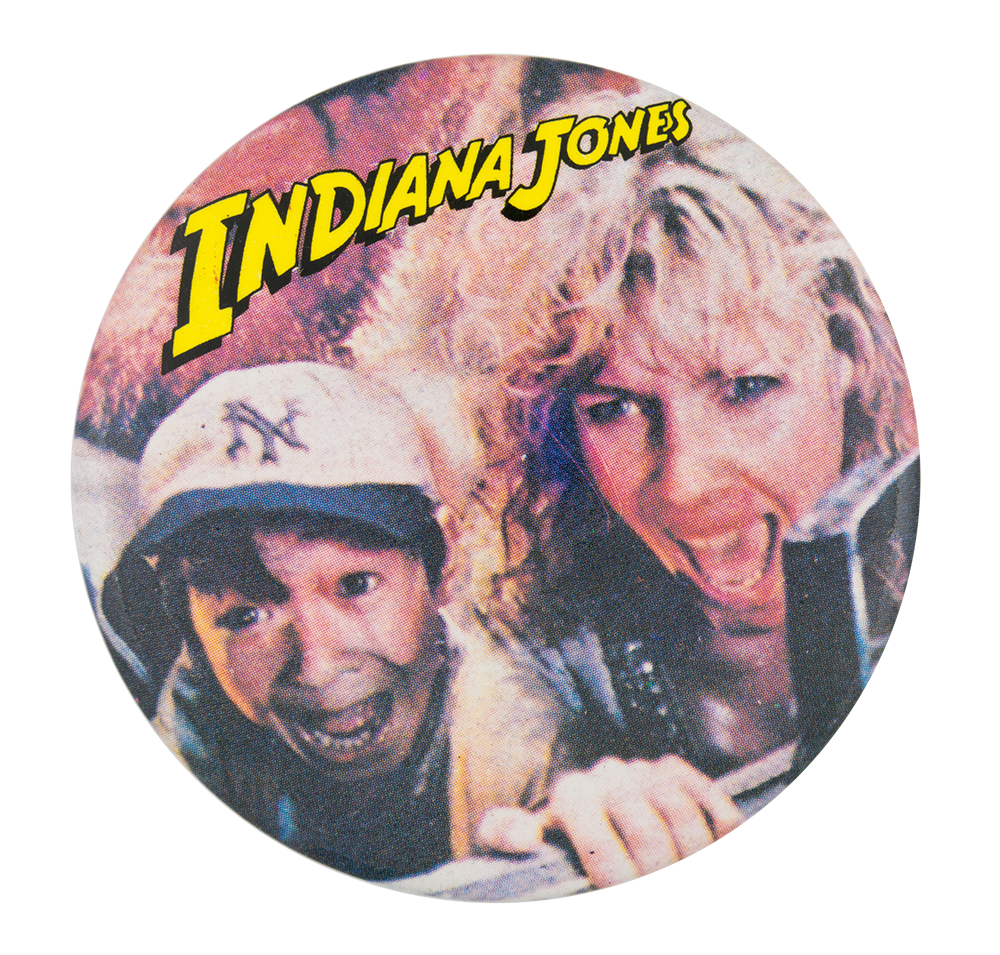
| Text on Button | INDIANA JONES |
| Image Description | Photograpgh of Willie Scott and Short Round from the movie Indiana Jones appears behind yellow text. |
| Back Style | |
| The Shape | |
| The Size | |
| Additional Information | Indiana Jones and the Temple of Doom was released in 1984 as the second installment of the Indiana Jones movie franchise. The movie featured Indiana Jones, played by Harrison Ford, and two new companions - Willie Scott and Short Round - as they attempt to take back a stolen sacred stone for a small village. Due to the violence that was featured in the film, director Steven Spielberg had to negotiate with the MPAA to create a new rating for the film that was less than R rating, but higher than PG, and so, PG-13 was created. |
| Catalog ID | EN0348 |
Harold Lloyd
| Category | |
|---|---|
| Additional Images |
|
| Sub Categories | |
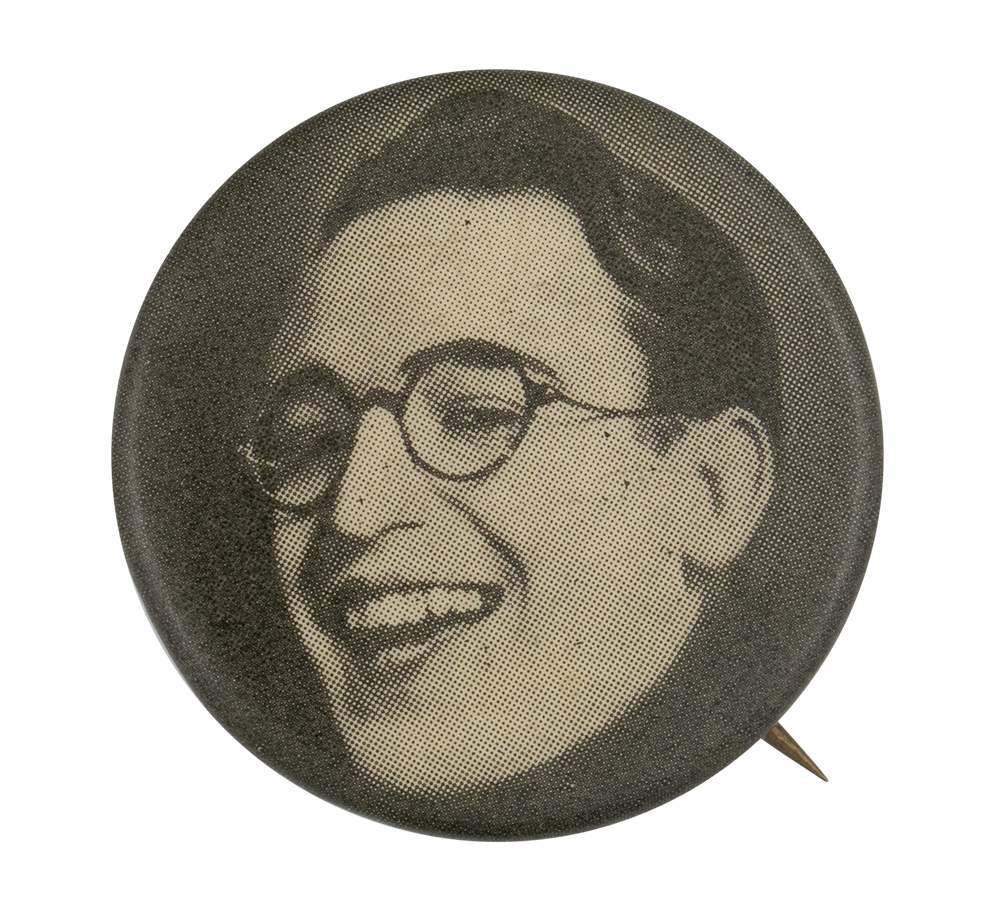
| Image Description | Black and white picture of a man's face on a dark background |
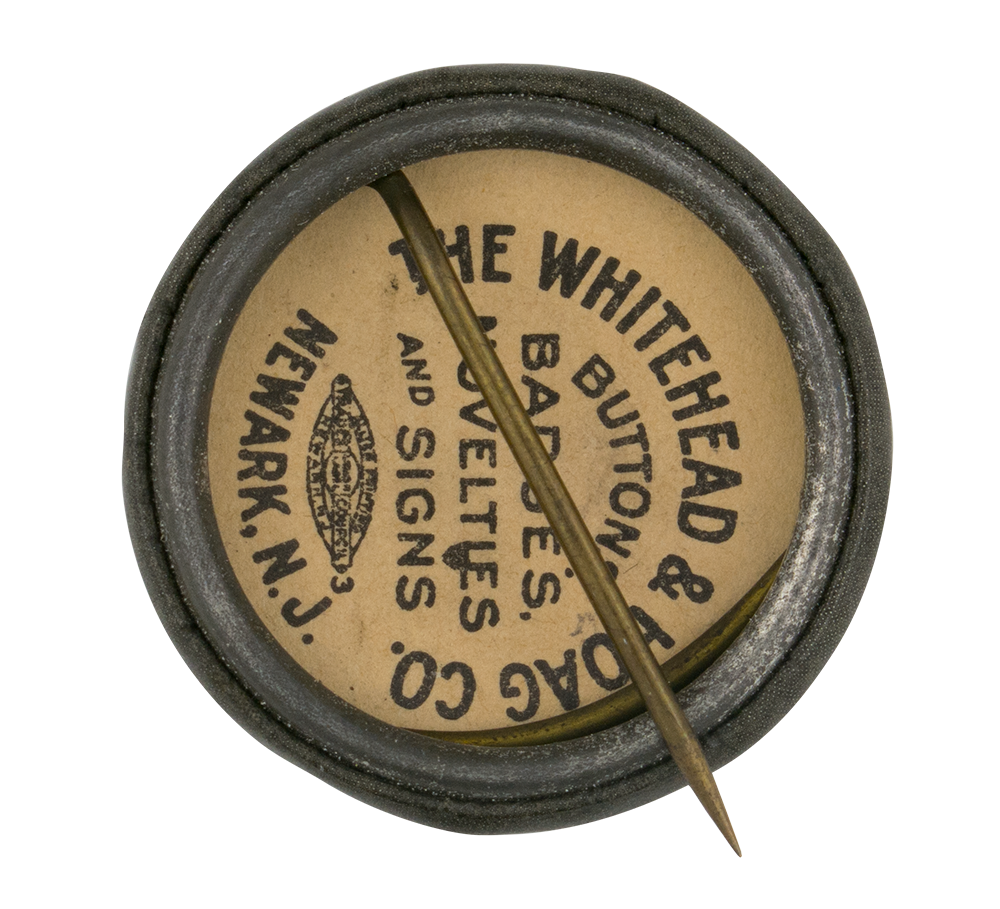
| Back Paper / Back Info |
THE WHITEHEAD & HOAG CO. |
| Back Style | |
| The Shape | |
| The Size | |
| The Manufacturer | |
| Additional Information | Harold Lloyd was a well-known director, producer, screenwriter, and actor during the silent era, alongside Charlie Chaplin and Buster Keaton. He is mainly known for the daring stunts he performed in thrill sequences for his comedic movies. While perhaps the movie he is most well-known for is "Safety Last" (in which he famously hangs from the hands of a clock on a tall city building), his most successful film was "The Freshman," which became one of the first fifty films to be selected for preservation by the Library of Congress. |
| Catalog ID | EN0394 |
Closed Eyes Pink Smiley
| Category | |
|---|---|
| Additional Images |
|
| Sub Categories | |
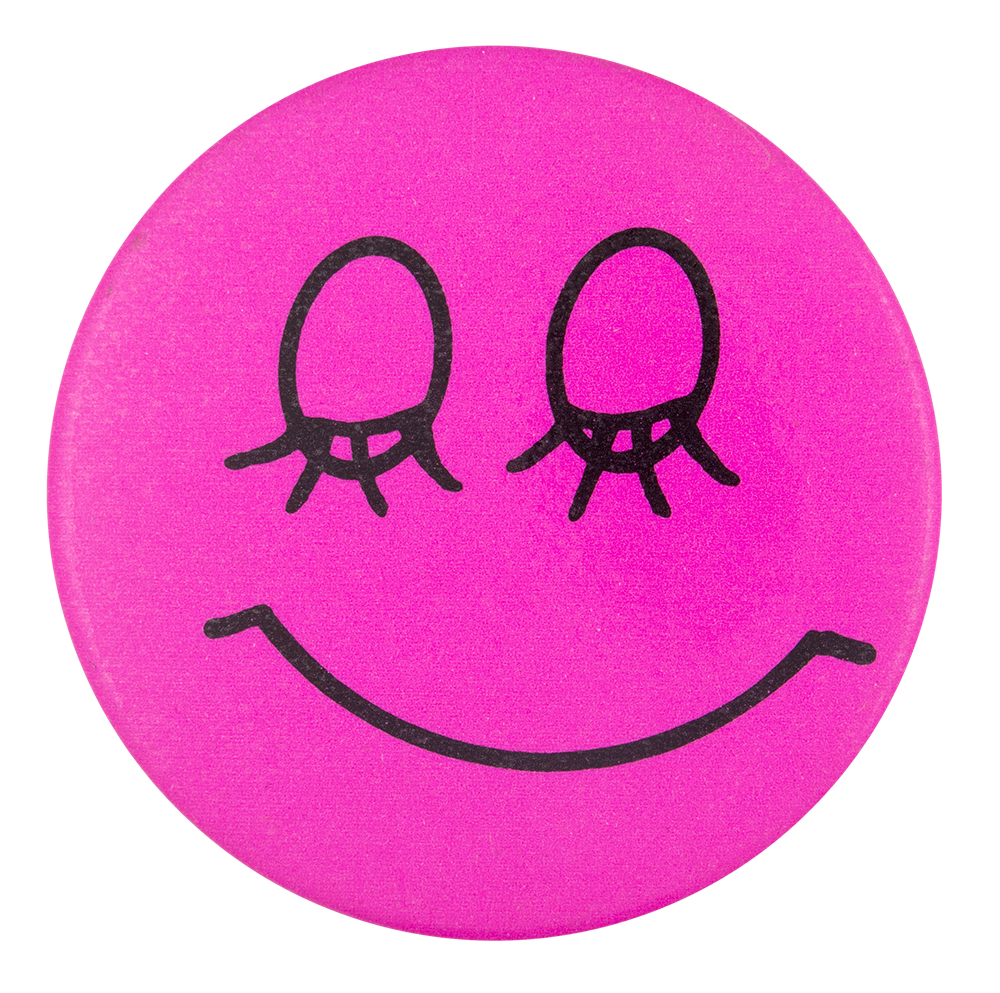
| Image Description | Illustration of a face with a smile and long eyelashes with eyes closed |
| Back Paper / Back Info |
Made in Taiwan |
| Back Style | |
| The Shape | |
| The Size | |
| Additional Information | The classic yellow smiley face is comprised of a yellow circle, two black dots for eyes, and a black arc ending in serifs for a mouth. It was designed in 1963 by commercial artist, Harvey Ross Ball. Ball was commissioned by The State Mutual Life Insurance Company to create a happy face to raise the morale of their employees. His version was created in 10 minutes. The design was printed onto more than 50 million buttons. Neither Ball nor the company copyrighted this smiley, so it was continually used by other businesses in their promotions. In the 1980s, Highlights children's magazine gave away promotional items with personified smileys, such as stickers or buttons, to their subscribers. In internet culture the smiling face represents warm and positive feelings including love and gratitude with its slight smile, closed eyes, and rosy cheeks. |
| Sources |
About Harvey Ball. (n.d.). Retrieved September 12, 2020, from https://www.worldsmileday.com/index.php/article-index/item/380-about-ha… Smiling Face Emoji. (n.d.). Retrieved September 14, 2020, from https://emojipedia.org/smiling-face/ |
| Catalog ID | SM0172 |