Tuesday is Margaritaville

Category
Additional Images
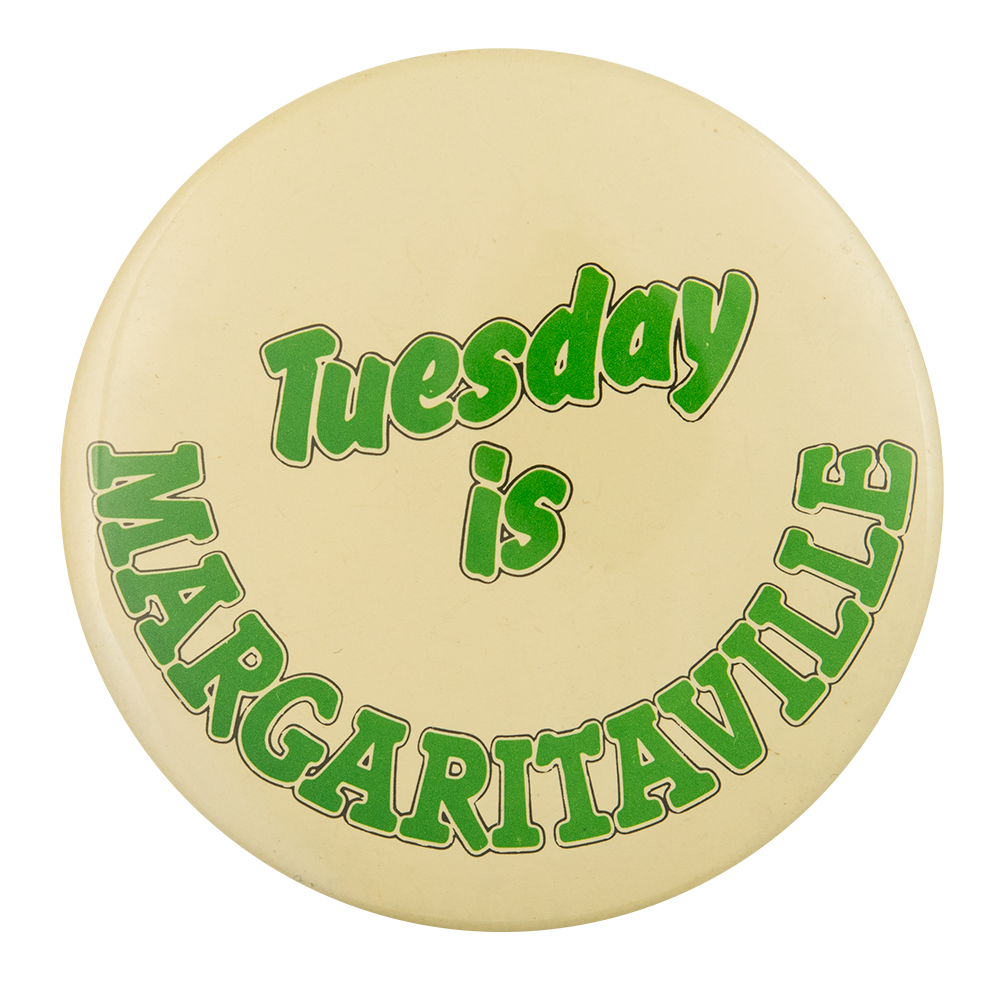
Text on Button Tuesday is MARGARITAVILLE
Image Description

White button with black and white outlined green text. 

Back Style
The Shape
The Size
Additional Information

“Tuesday is Margaritaville” was an advertising slogan used by now-defunct Mexican chain restaurant Chi-Chi’s.The chain’s lounge (or “cantina”) was referred to as “Margaritaville,” and this button is related to a two-for-one margarita special offered there on Tuesdays.


The cantina shared a name with a hit song by Jimmy Buffet’s, recorded in 1977. When Chi-Chi’s attempted to register a trademark on the “Margaritaville” in 1985, Buffet successfully opposed the registration, citing that fact that the popularity of the song meant that its title was virtually synonymous with his public persona.

Catalog ID SM0065

The Hiding Place

Category
Additional Images
Sub Categories
Text on Button THE HIDING PLACE
Image Description

White button with red text. 

Back Style
The Shape
The Size
Year / Decade Made
Additional Information

The Hiding Place is a 1975 film based on a true story about a Christian family in the Netherlands who hid a Jewish family in their home during World War II and were subsequently arrested and sent to a concentration camp. It starred Jeanette Clift as Corrie ten Boom and earned her a Golden Globe nomination for Most Promising Female Newcomer upon its release. The title of the film is inspired both by the literal hiding place in the home of the ten Booms but also by a line in Psalm 119 which reads, "Thou art my hiding place and my shield: I hope in thy word," a reference to the strong Christian themes of the film.

Sources

Brown, William F. & Jacobsen, F. (Producers), & Collier, James F. (Director). (1975). The Hiding Place. United States: World Wide Pictures.

Catalog ID AD0660

Sunshine Milk

Category
Additional Images
Sub Categories
Text on Button I LIKE SUNSHINE MILK
Image Description

Yellow button with red text. 

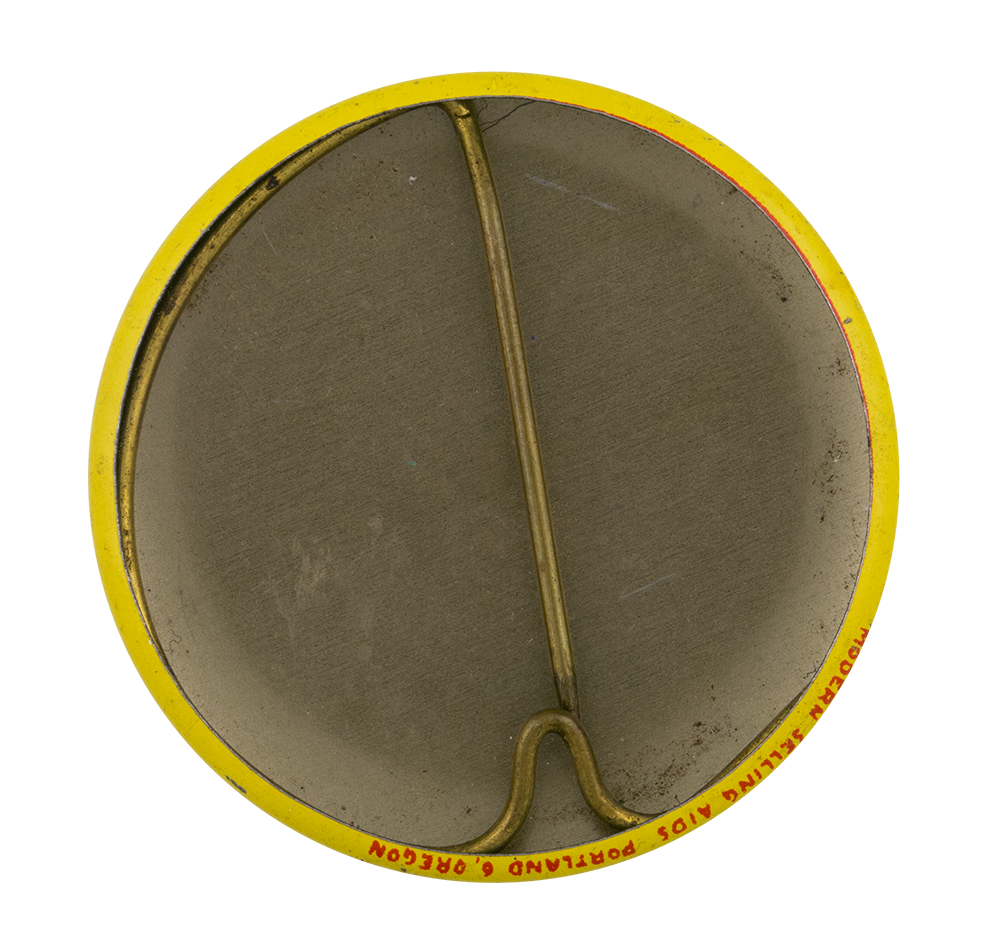
Curl Text Modern Selling Aids Portland 6 Oregon
Back Style
The Shape
The Size
The Manufacturer
Additional Information

Founded by Greek restaurateur John Karamanos, Sunshine Dairy Foods began as a daily dairy delivery service for the local food industry in Portland, Oregon, in the 1930s. Sunshine is still family-owned and has remained committed to local foodservice customers, retailers, and manufacturer partners. The company sources milk from family farmers in Oregon and Washington who have pledged not to inject their dairy cows with the artificial stimulant rBST. Sunshine products are marked with the company's logo of a bright yellow illustration of a sun. 

Catalog ID AD0664

Santa Likes Me

Category
Additional Images
Sub Categories
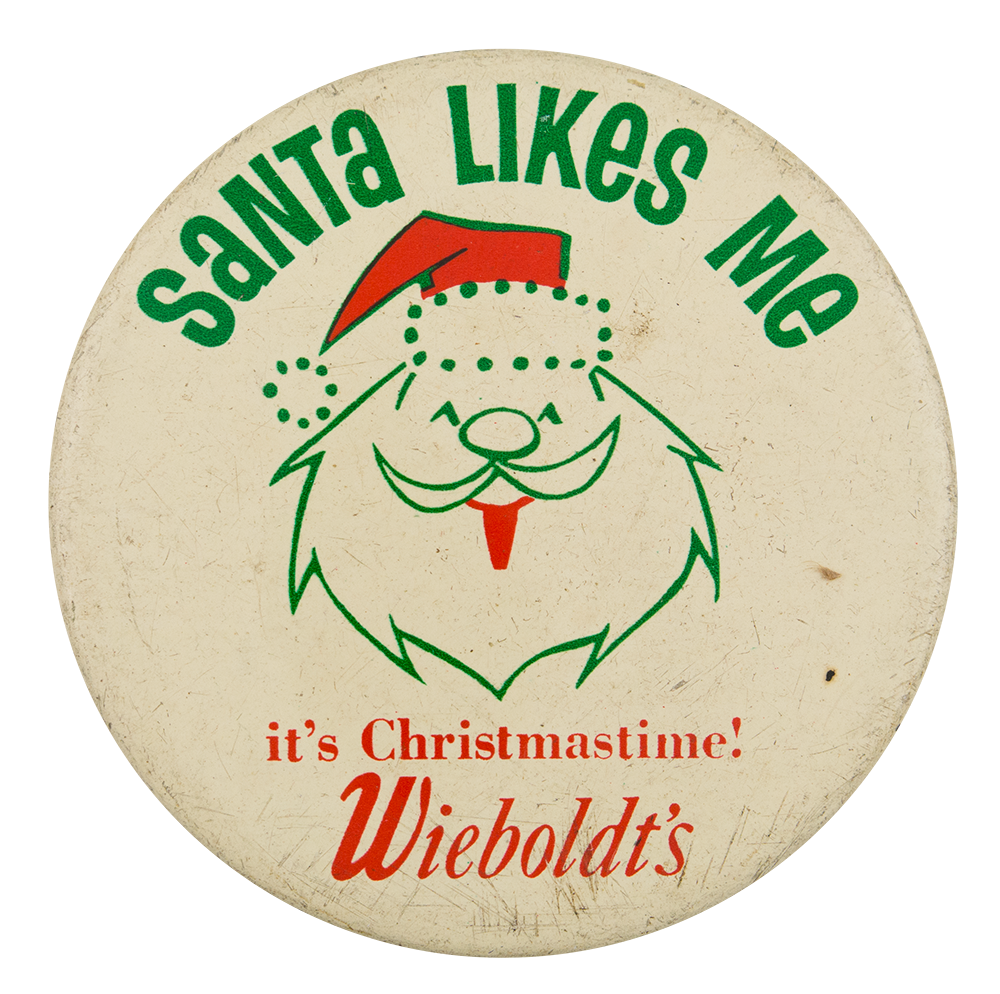
Text on Button SANTA LIKES ME it's Christmastime! Wieboldt's
Image Description

Green and red text with an illustration of Santa Claus in the middle on a white button. 

Curl Text ACORN Badge Co
Back Style
The Shape
The Size
The Manufacturer
Additional Information

Wieboldt Stores, Inc. was a Chicago general retailer that opened in 1883 and closed in 1986 after the company went bakrupt. Its flagship location was State Street in downtown Chicago with a number of other locations in Chicago and the surrounding suburbs. Wieboldt's cultivated a welcoming atmosphere, employing a multilingual sales staff. For that reason, they were popular among working-class shoppers who could not afford or felt unwelcome in the big downtown department stores.

Like most department stores during the late nineteenth and early to mid-twentieth centuries, they had elaborate Christmas decorations and displays with accompanying advertising campaigns. Wieboldt's even sponsored a seasonal radio show and then television program featuring the Cinnamon Bear, which told the story of a stuffed bear who lived in the enchanted world of Maybeland. The Cinnamon Bear aided two young children who came to Maybeland to find the lost the silver star that topped their Christmas tree. Wieboldt's sold stuffed teddy bear versions of the Cinnamon Bear during the Christmas season.

Sources

Ledermann, Robert P. (2002). Christmas on State Street: 1940s and Beyond. Chicago: Arcadia Publishing. Accessed from https://books.google.com/books?id=bgadaf-Xr3kC&dq=wieboldt%27s+christma….

Newman, Scott A. (January 12, 1997). "W.A. Wieboldt Company." Jazz Age Chicago. Retrieved from http://web.archive.org/web/20041013012256/http://chicago.urban-history….

Catalog ID EV0227

Reddy Ryder

Category
Additional Images
Sub Categories
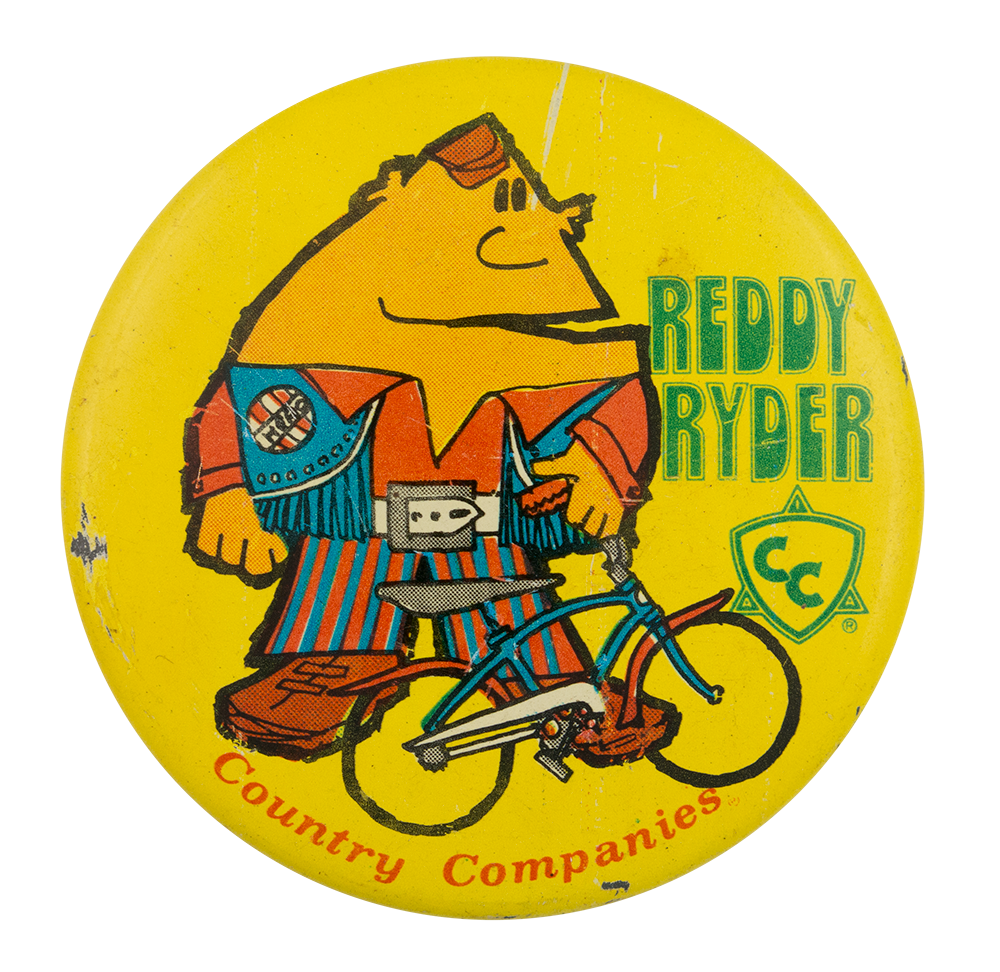
Text on Button REDDY RYDER Country Companies
Image Description

Yellow background with green and red text. An image of a tear drop shaped cartoon man in red, white, and blue attire. He has a bike next to him and the Country Companies logo. 

Back Style
The Shape
The Size
Additional Information

Reddy Ryder was the safety mascot for an insurance company called Country Companions (now known as Country Financial). Reddy Ryder was a puppet character who focused on bicycle safety and helped teach it to children in an informational but entertaining way. After every safety presentation, children received a Reddy Ryder button like the one pictured to help them remember bicycle safety rules.

Sources

Harvey Star Newspaper Archives. (1990). Retrieved from https://newspaperarchive.com/harvey-star-mar-01-1990-p-14/

Catalog ID AD0661

Leak Proof Fork Seals

Category
Additional Images
Sub Categories
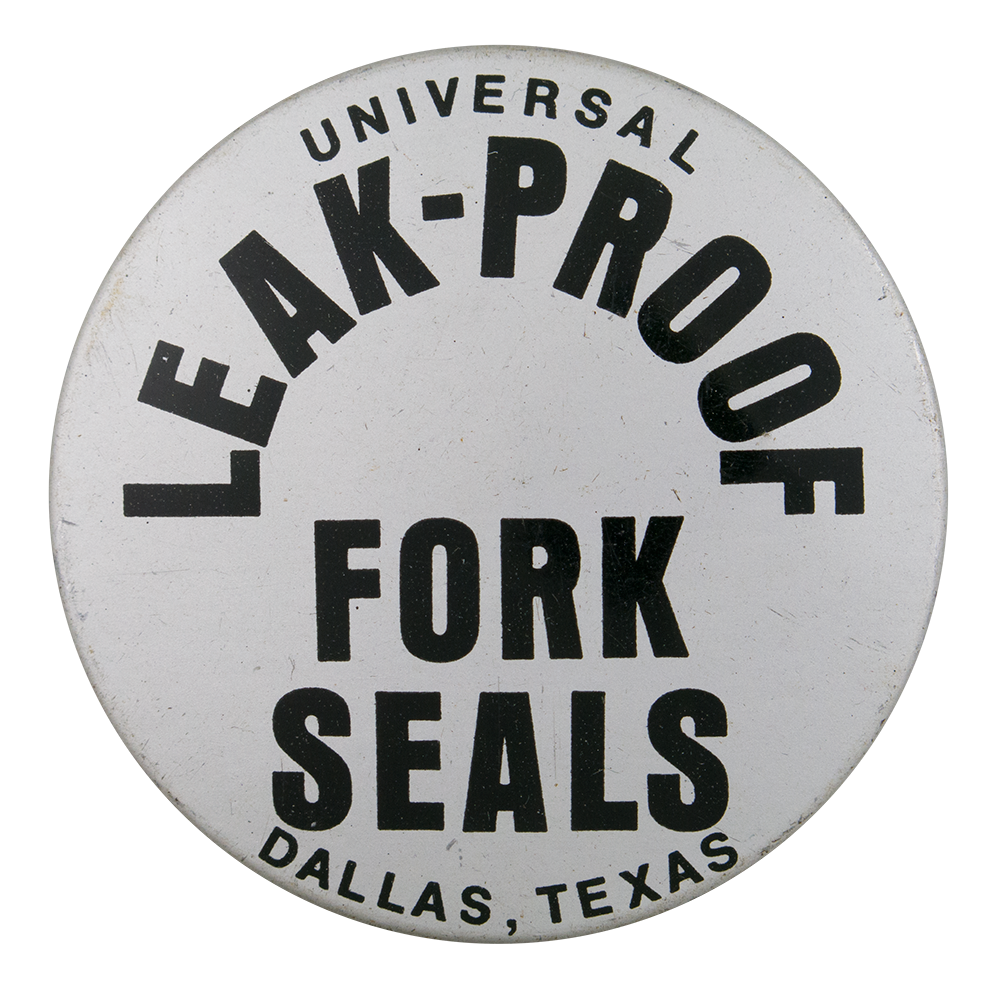
Text on Button UNIVERSAL LEAK-PROOF FORK SEALS DALLAS, TEXAS
Image Description

Silver background with black text. 

Back Style
The Shape
The Size
Year / Decade Made
Additional Information

Every motorcycle and bicycle has a front fork that holds the front wheel in place while allowing it to turn and brake. BMW developed a telescopic front fork incorporating hydraulic shock absorbers in the mid-1930s. This design isolated road bumps from the bike frame and the rider. Telescopic front forks became standard on motorcycles and are seen on some bicycles now as well. Being that the forks have oil-filled shock absorbers, good oil seals are essential to performance. Universal Accessories advertised their Leakproof™ fork and shock absorber seals as sized to fit “virtually everything.” By 1977, they had improved their seals with Teflon coating that they claimed reduced friction by 80%. Despite some advertising in 1970s motorcycle magazines, little is known about the company.

Have more info on this button? Contact us here.

Sources

Cycle World 16(9), p.22

Telescopic fork. En.wikipedia.org. (2020). Retrieved from https://en.wikipedia.org/wiki/Telescopic_fork.

Catalog ID AD0656

Le Roy Neiman

Category
Additional Images
Sub Categories
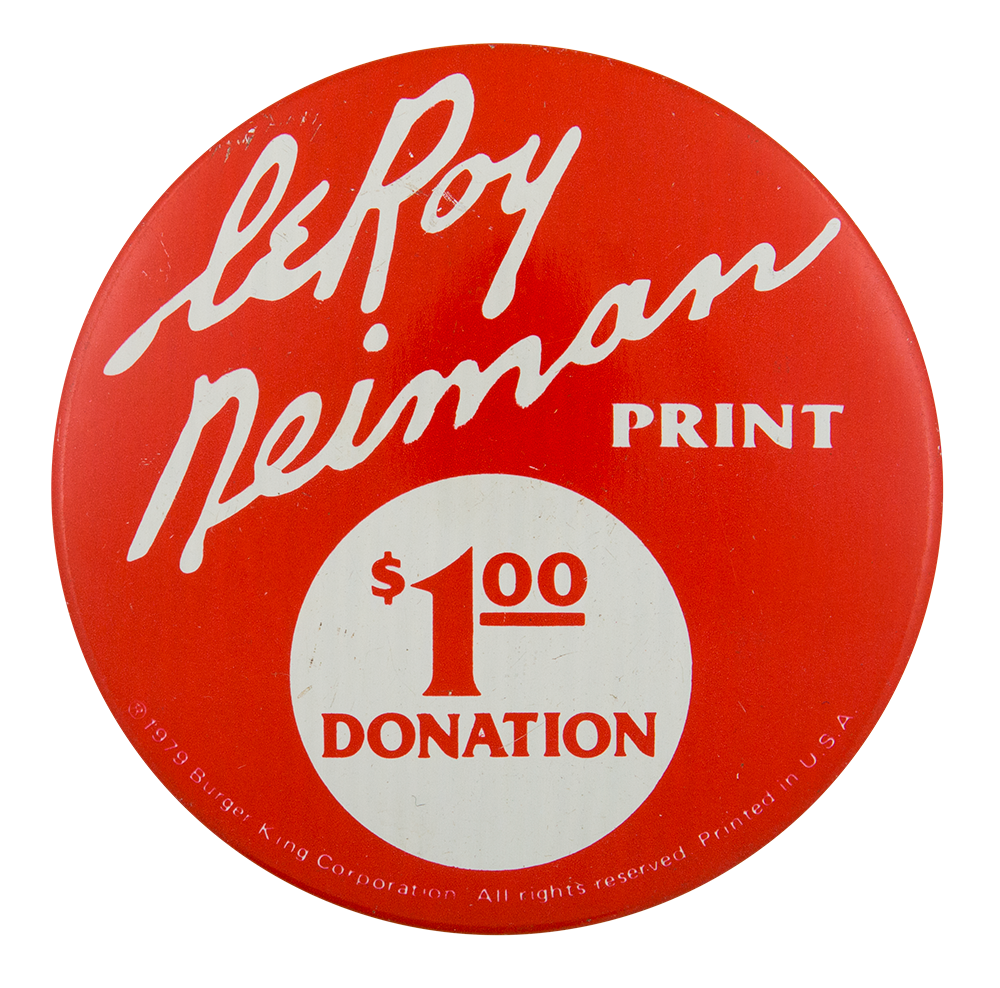
Text on Button leRoy Neiman PRINT $1.00 DONATION C1979 Burger King Corporation All rights reserved Printed in U.S.A.
Image Description

Red background with white text and a small white circle with red text. 

Back Style
The Shape
The Size
Additional Information

After meeting Hugh Hefner while working on a sketch job for a Chicago department store, LeRoy Neiman got his first big break with the newly created Playboy magazine. Neiman published sketches and wrote a regular column in the men’s magazine. In the 1960s, while living in New York City, Neiman continued his craft, drawing and painting major athletes and other famous figures. The New York Times featured some sketches made by Neiman at the first Muhammad Ali/Joe Frasier boxing match in 1971. He went on to be the official artist of five Olympic games beginning in Munich, 1972. Neiman painted for such events as the 1968 Democratic National Convention, the Bobby Fisher-Boris Spassky World Chess Championship in 1972, Broadway plays, and even the Super Bowl. For the ‘79 and ‘76 Olympic games, the fast-food restaurant Burger King sponsored a promotion with Neiman where diners would receive an Olympic print when they purchased specific menu items. Commemorative LeRoy Neiman pins were also given to diners wishing to donate.

Sources

LeRoy Neiman and Janet Byrne Neiman Foundation. (2019, February 8). About LeRoy Neiman. Retrieved from https://www.leroyneiman.com/about/

Vogan, T. (2016). LeRoy Neiman and the Art of Network Sports Television. American Art, 30(3), 54–75. https://doi-org.libaccess.sjlibrary.org/10.1086/690266

Catalog ID AD0657