Stifle Yourself

Category
Additional Images
Sub Categories
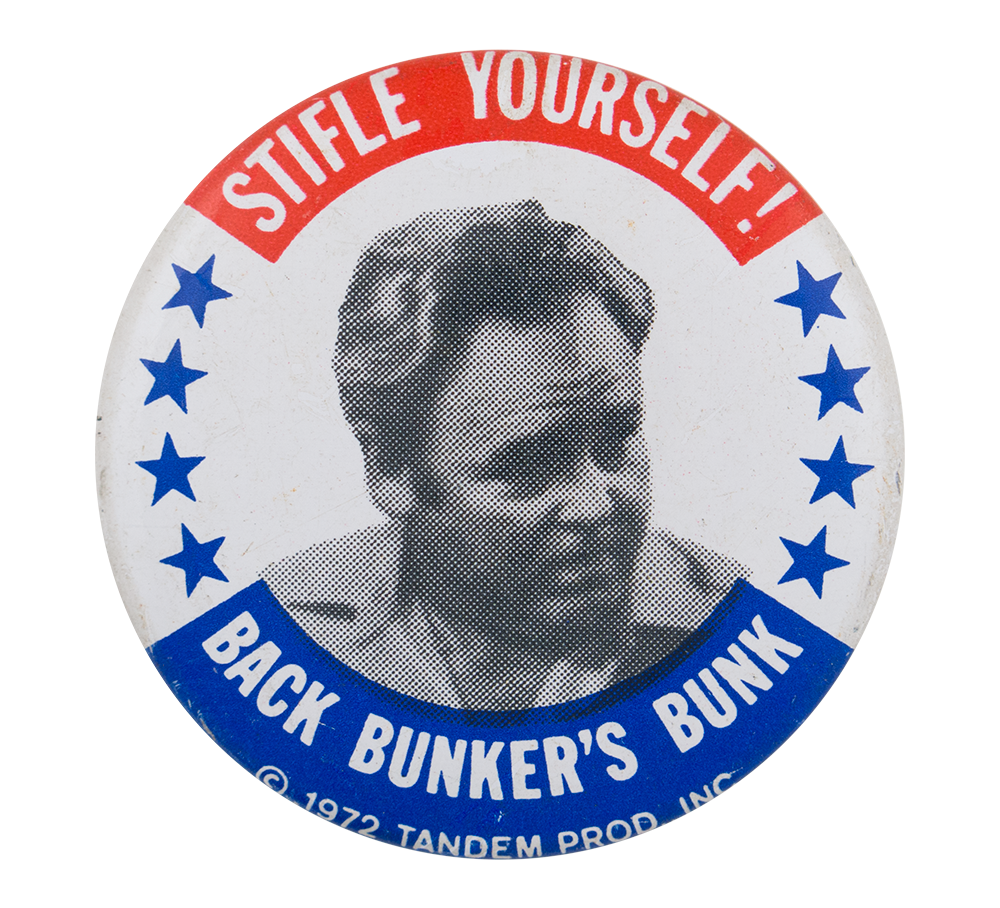
Text on Button STIFLE YOURSELF! BACK BUNKER'S BUNK
Image Description

A black and white image of Archie Bunker appears on a white button with blue stars and white lettering.  "Stifle Yourself!" is on a read background. 

Curl Text 1972 Tandem Prod., Inc
Back Style
The Shape
The Size
Additional Information

Archie Bunker, played by Carroll O’Connor, is a character from the 1970s sitcom All in the Family. Archie was a grumpy WWII veteran and a blue-collar conservative who was known for his bigoted opinions and resistance to change. He was often at odds with his liberal son-in-law, Mike (aka Meathead), played by Rob Reiner, and tolerated by his long-suffering wife, Edith who was played by Jean Stapleton. “Stifle yourself” was a phrase frequently directed by Archie to Edith when he wanted her to stop talking.

To tie into the 1972 presidential election, All in the Family was promoted with election-themed merchandise.

Catalog ID EN0280

Trommer's Malt Beer Button

Category
Additional Images
Sub Categories
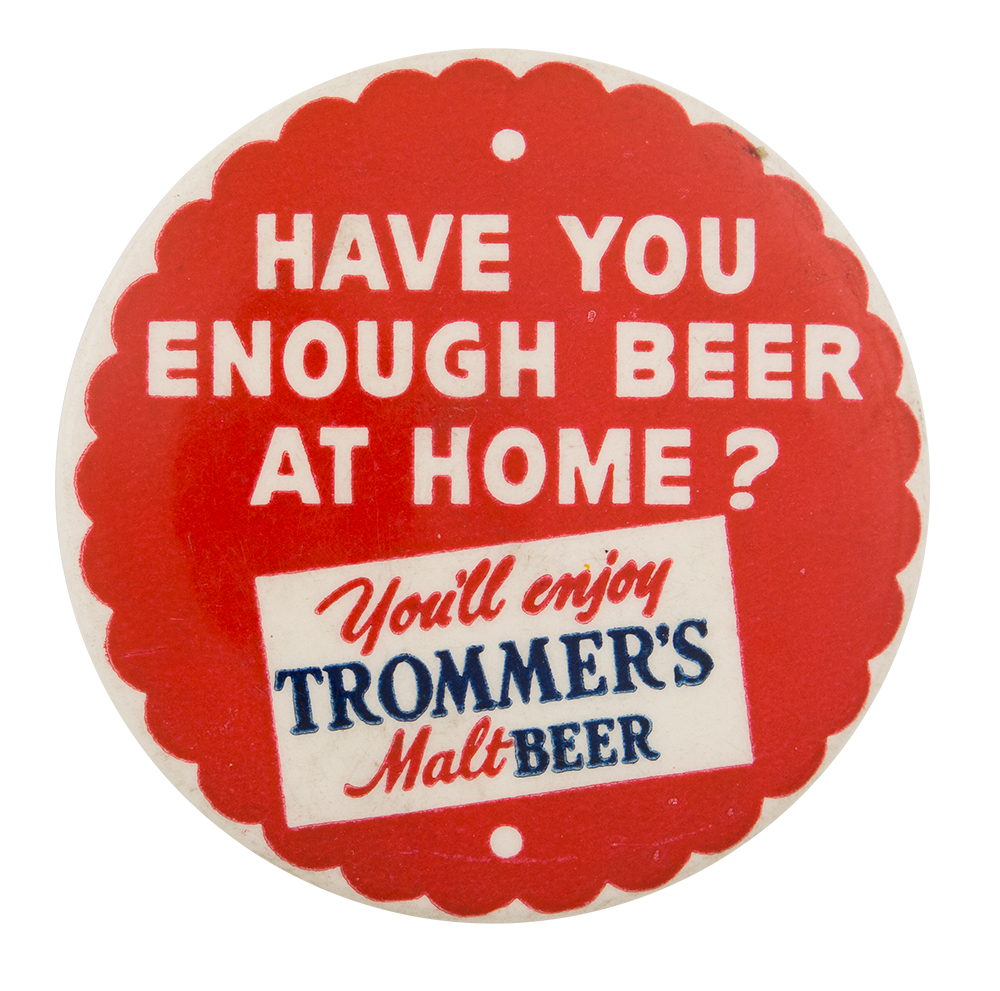
Text on Button HAVE YOU ENOUGH BEER AT HOME? You'll enjoy TROMMER'S Malt BEER
Image Description

Red button with white scalloped rim. White, red and blue text.

Back Paper / Back Info

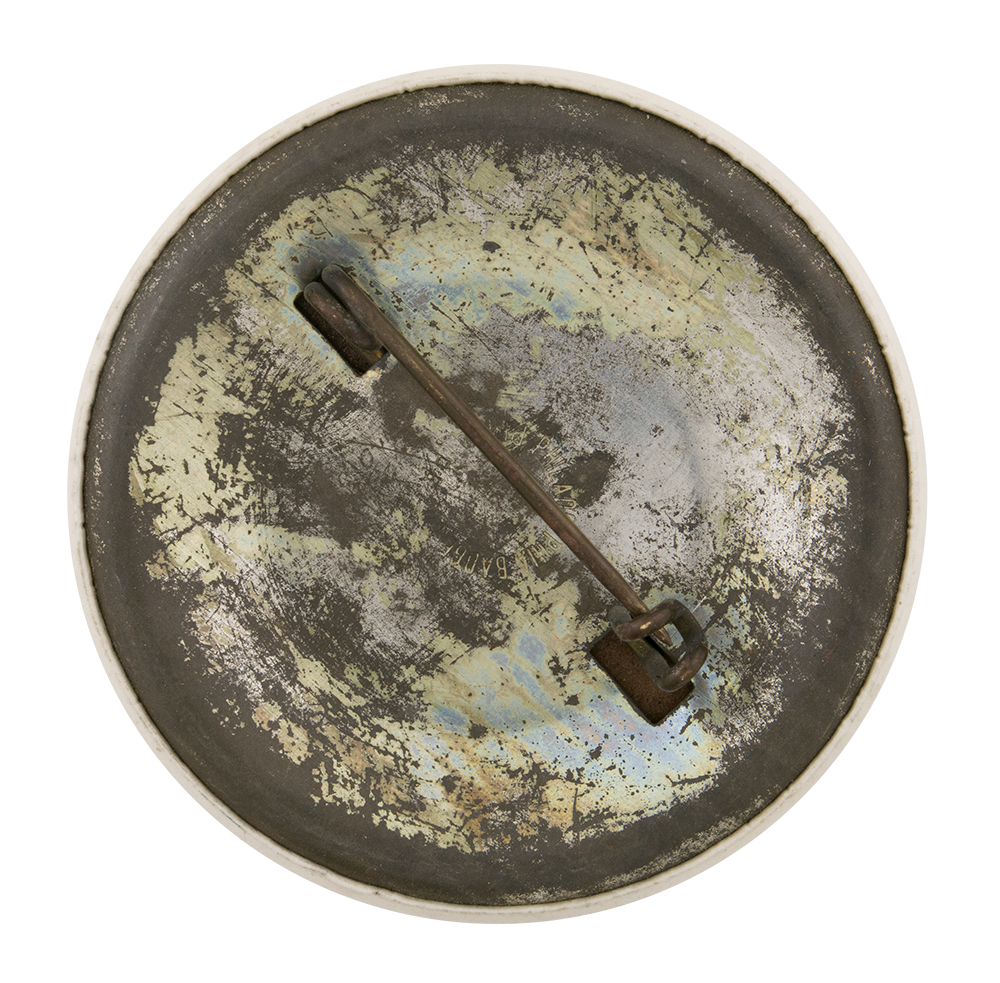
Philidelphia Badge Co. Phila. PA

Back Style
The Shape
The Size
The Manufacturer
Additional Information

Trommer’s Malt Beer, founded in 1897, was brewed with 100% malted barley and hops, even in the war years when malted barley was expensive and scarce.  Their malt extract was sold in drug and specialty stores and was used for malted milk.  Trommer's Evergreen Brewery was founded in Brooklyn, N.Y., by German immigrant John F. Trommer. Unfortunately, John Trommer died a year later.  His eldest son, George, inherited the brewery and ran it until 1951. Trommer established a hotel, restaurant and beer garden in his brewery complex called the Maple Garden. Around the turn of the century, Brooklyn could boast housing 49 breweries. At the height of Prohibition in 1929, Trommer produced 300,000 barrels annually of their “near bear” which remained legal and was widely distributed.

Several strikes by workers and drivers led to the demise of the Trommer brand. The first was in 1948 and most crippling in 1949 when for 72 days the strikers who took over the plant did not care for the yeast strains and they died. Because the unique taste of beer brands depends on their developed strand of yeast for fermentation, Trommer had to attempt to re-create their strand, but with no success. In 1950 George Trommer sold the plant to another beer manufacturer, and the brand was eventually discontinued in 1962.

Catalog ID BE0133

Shipwreck

Category
Additional Images
Sub Categories
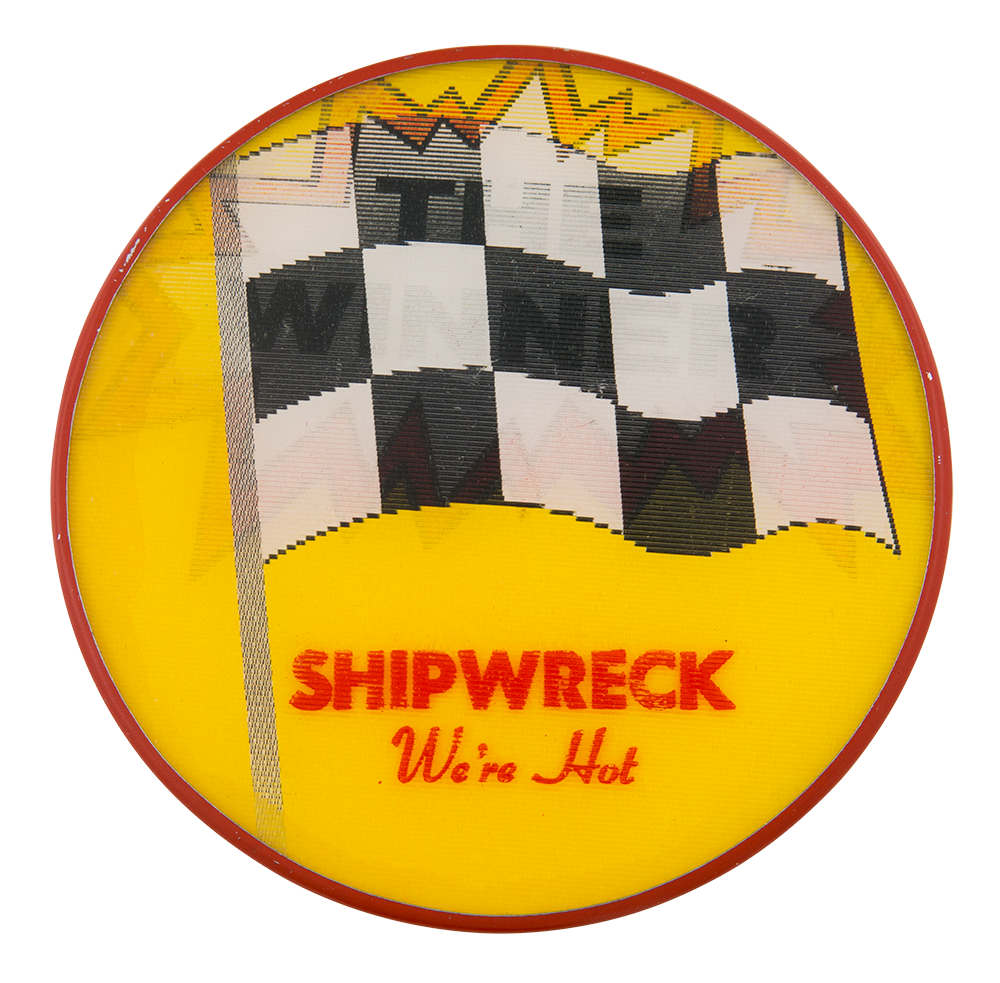
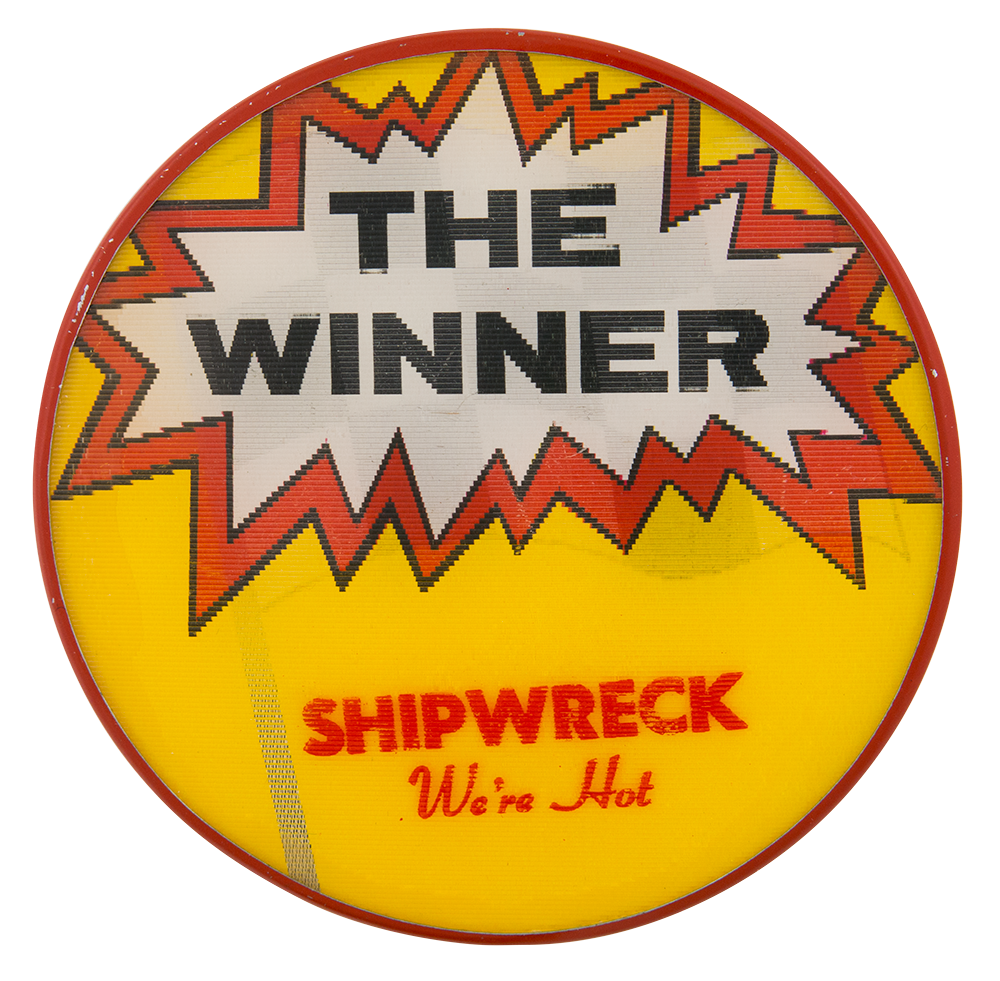
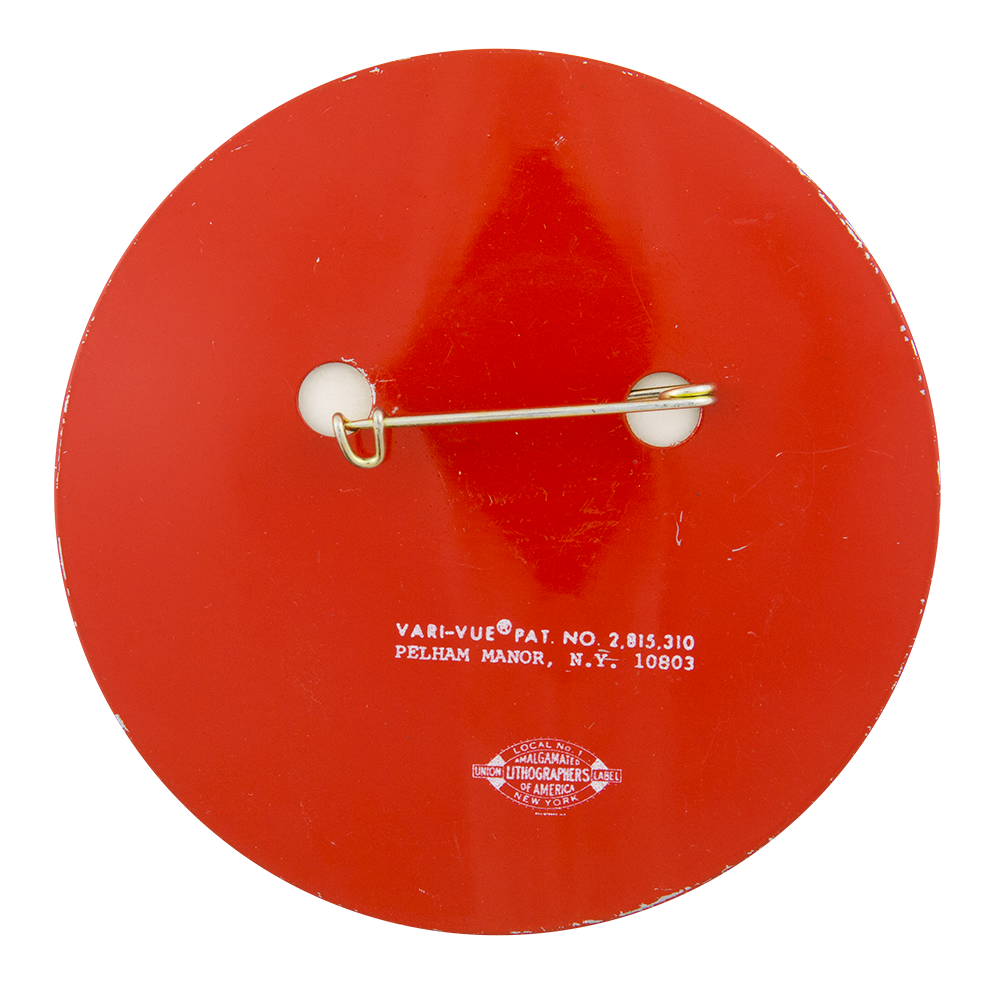
Text on Button THE WINNER SHIPWRECK We're Hot
Image Description

Red rimmed lenticular button with yellow background. One image is a checkered flag and the other is a burst that says "The Winner" over the phrase "Shipwreck We're Hot."

Back Paper / Back Info

Vari-Vue Pat. No.2.815.310 Pelham Manor, N.Y. 10803 / Local No.1 Union Label Amalgamated Lithographers of American New York

Back Style
The Shape
The Size
The Manufacturer
Additional Information

Have info on this button? Contact us here.

Catalog ID AD0627

Oh You

Category
Additional Images
Sub Categories
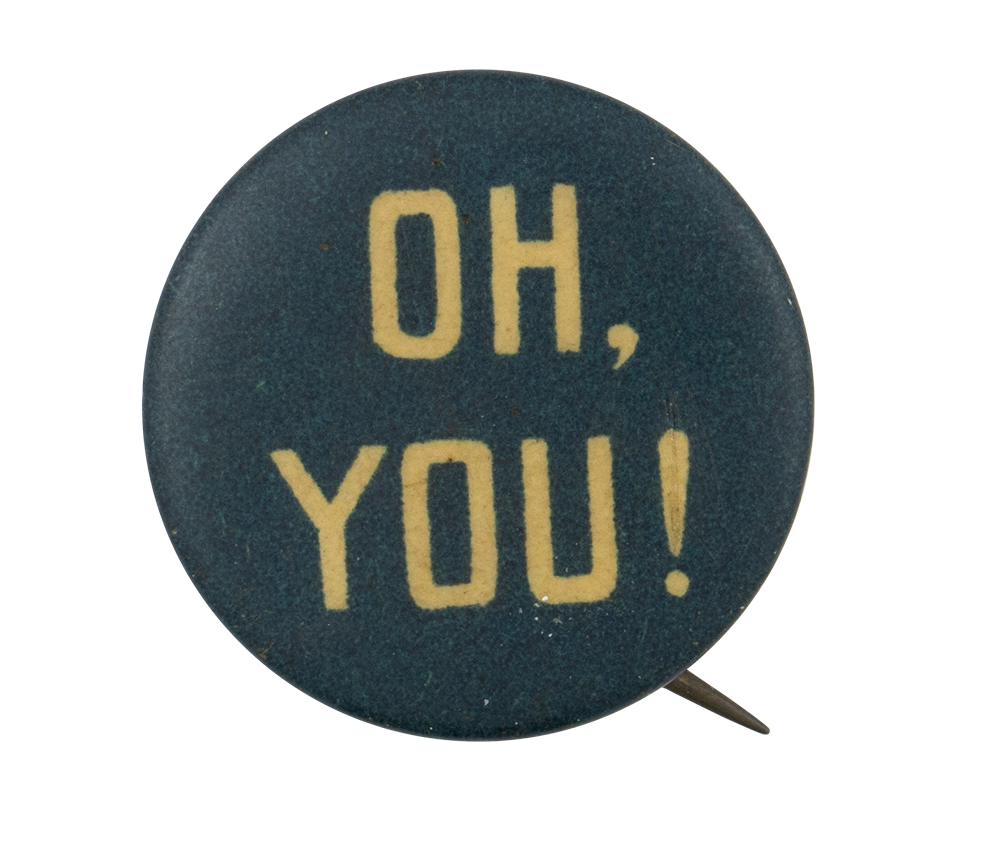
Text on Button OH YOU!
Image Description

White text on a navy blue background. 

Back Paper / Back Info

The Perfection Cigarettes / Factory No.42 4th District N.C. / Phelps & Sons MFG. Co. / Newark, N.J.

Back Style
The Shape
The Size
The Manufacturer
Additional Information

Perfection Cigarettes were a brand of the tobacco manufacturer Allen & Ginter, which began in Richmond, Virginia, in 1865. They claimed to be the purest cigarette on the market with no additives. Allen & Ginter was one of four other manufacturers to merge and form the American Tobacco Company in 1890. The Perfection brand continued through the 1910s and used pinback buttons and trading cards as incentives to purchase their products. Perfection Cigarettes exclusively issued red or blue text-only buttons with popular phrases of the time such as, “Oh, You!”

Sources

Porter, P. (1969). Origins of the American Tobacco Company. Business History Review, 43(1), 59-76. doi:10.2307/3111987

Whitaker, R. (2001). I'm The Guy. Retrieved June 26, 2020, from http://www.enolagaia.com/ImTheGuy.html

Catalog ID AD0641

US Air Philadelphia

Category
Additional Images
Sub Categories
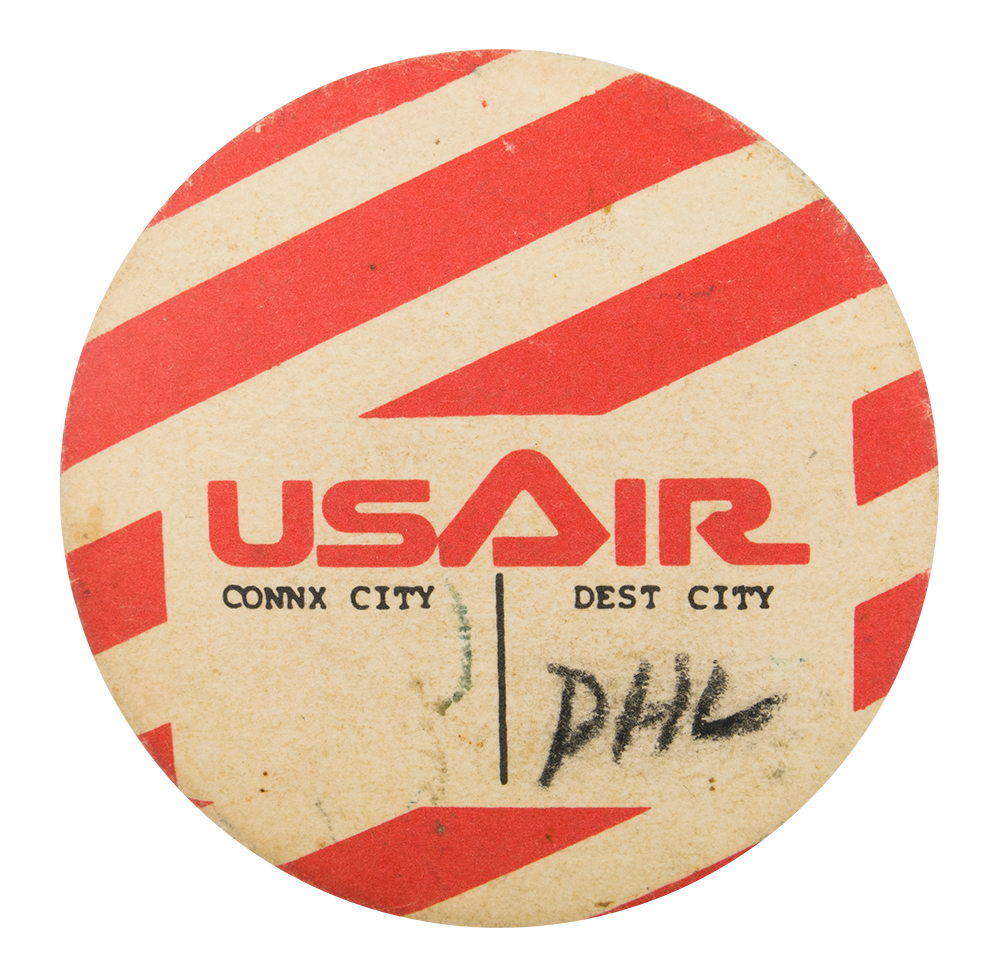
Text on Button US AIR CONNX CITY DEST CITY PHL
Image Description

White and red striped button with red and black text. In the field where it says "DEST CITY" somone has penciled in "PHL."

Back Style
The Shape
The Size
Additional Information

This is an unaccompanied minor button from US Airways. The buttons were used to identify and assist children who were traveling alone. They contained spaces to write in information about a connecting flight and the destination city. In this case, the child who wore this button was traveling to Philadelphia.

Catalog ID EV0217

Shoe Week Town and Country Shoes

Category
Additional Images
Sub Categories
Text on Button SHOE WEEK
Image Description

White button with red text and red illustration of shoe box reading "Town & Country Shoes" on the top of the box and "T8CS" on the side. 

Back Paper / Back Info

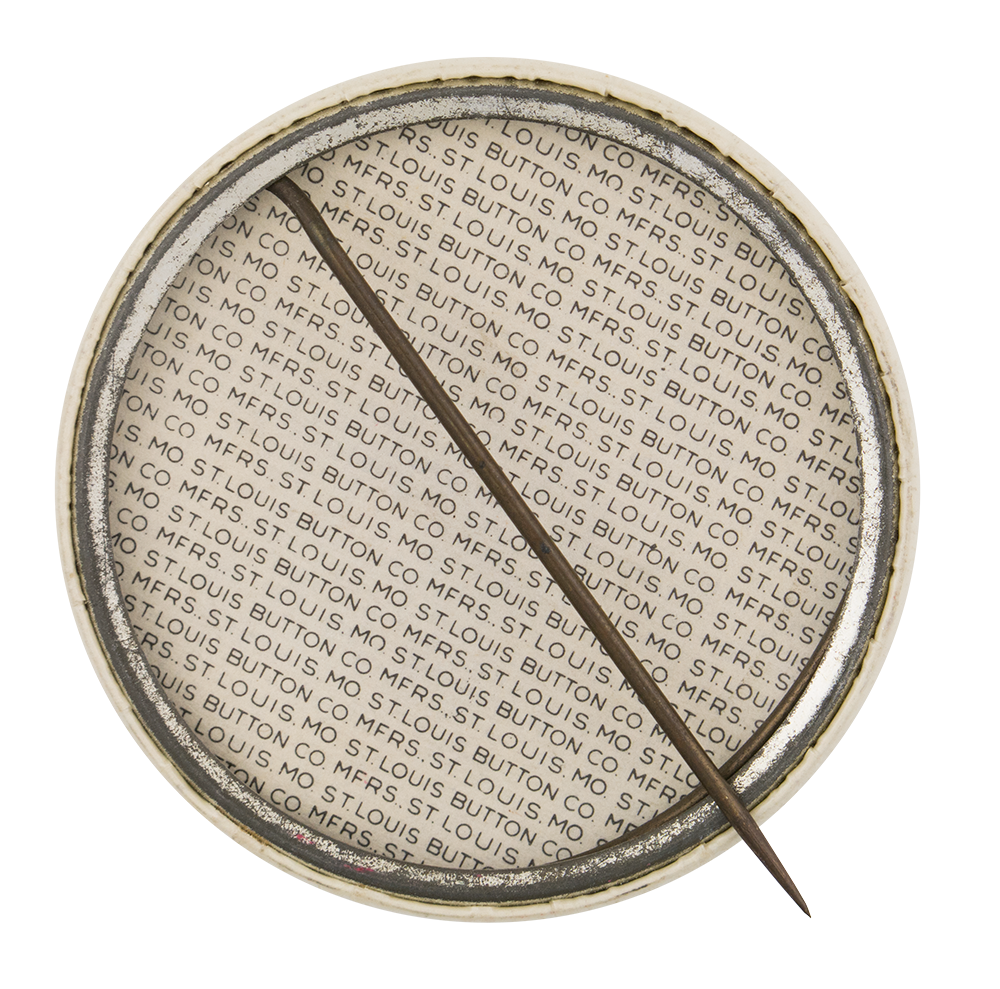
"St. Louis Button Co. MFRS." repeated across the whole back paper.

Back Style
The Shape
The Size
The Manufacturer
Additional Information

Town and Country Shoe Company was an American manufacturer with offices and factories located in Missouri. The brand was popular in the 1960s and was known for their matching shoe and handbag sets. Town and Country Shoes went out of business in the 1980s, but the products are still popular today with vintage clothing collectors.

Sources

Vintage Fashion Guild. (2013). Heard of 'Town & country shoes'? poss. 60's embroidered convertable bag. Messages posted to http://forums.vintagefashionguild.org/threads/heard-of-town-country-sho…

Catalog ID EV0214

I Collect Beanie Babies

Category
Additional Images
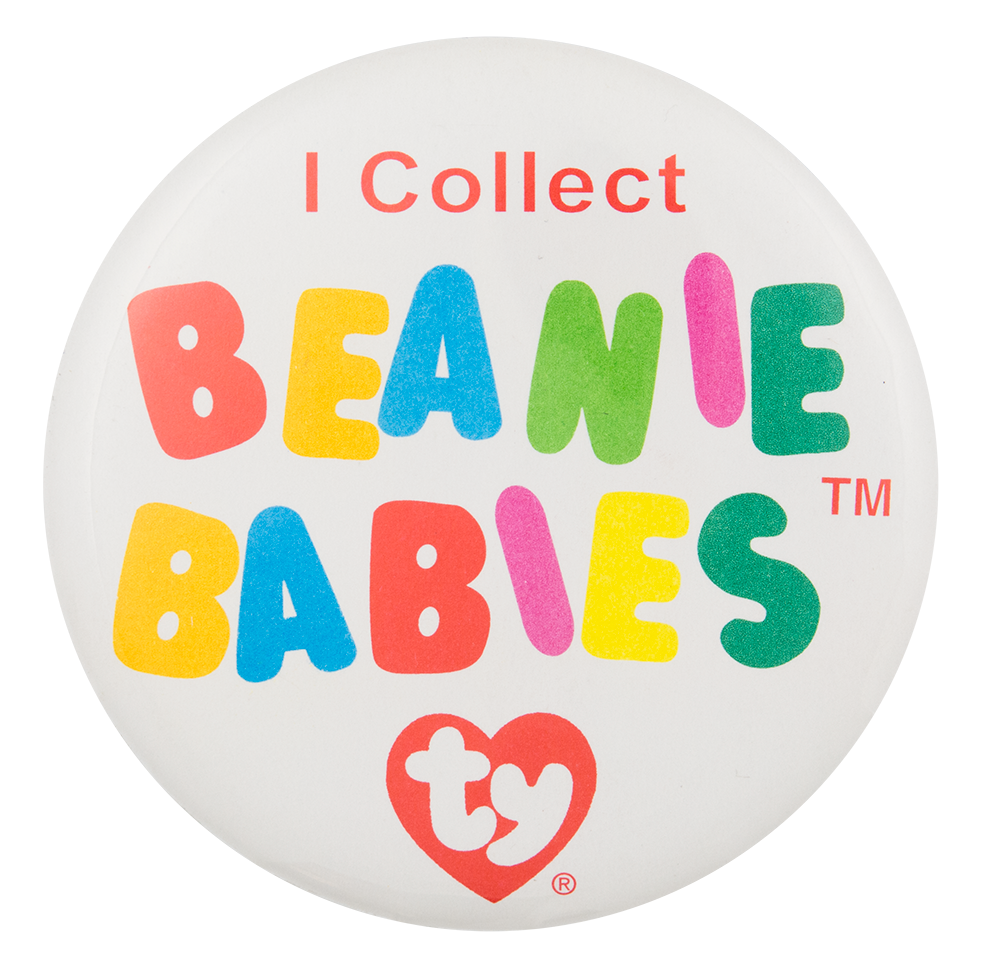
Text on Button I Collect BEANIE BABIES TM ty
Image Description

Red and rainbow text with the Ty logo on a white button. 

Back Style
The Shape
The Size
Additional Information

Beanie Babies are a line of stuffed animals made by Ty Warner Inc. in 1991. Each toy was stuffed with plastic pellets, which gave them more flexibility. In 1993, nine original Beanie Babies were launched, including a pig, a moose, and a platypus. By the mid-'90s, there was a national craze over Beanie Babies, and Ty intentionally produced limited quantities of the toys. As the toys were systematically retired, people began collecting and selling them; at the height of their popularity, some Beanies were flipped at 1000% on eBay.  Ty stopped producing the toys in 1999, but public pressure caused them to resume their production in 2000.

Catalog ID AD0616

Ford Drive

Category
Additional Images
Sub Categories
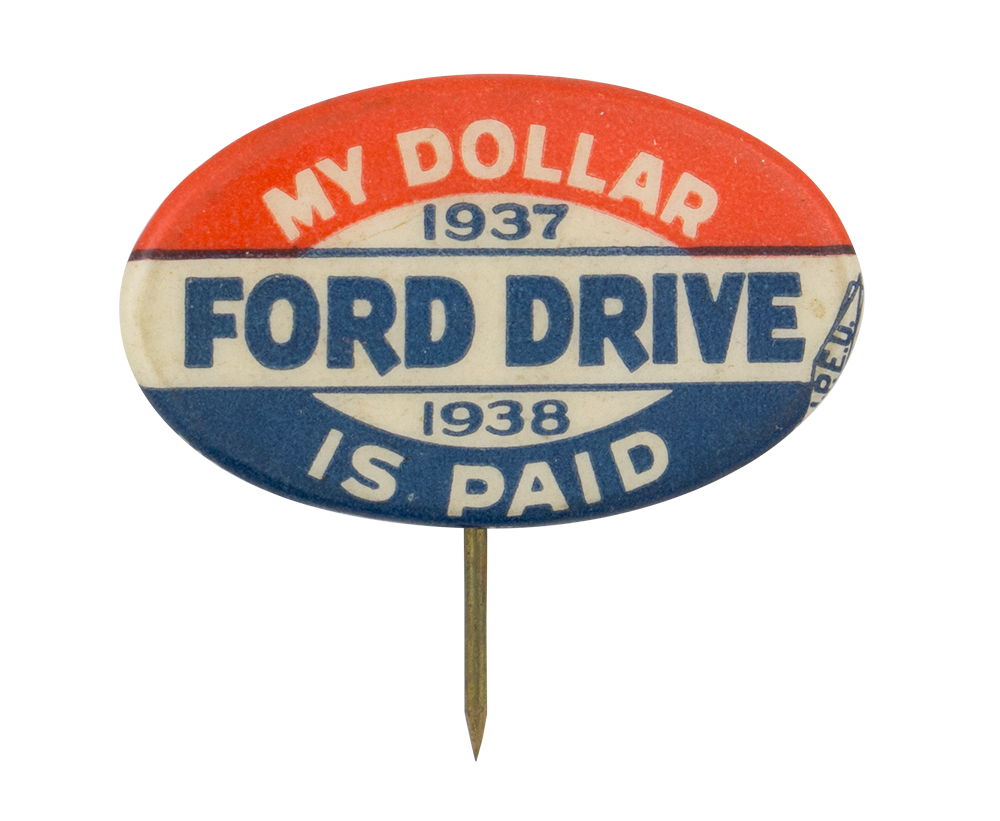
Text on Button MY DOLLAR IS PAID FORD DRIVE 1937 1938
Image Description

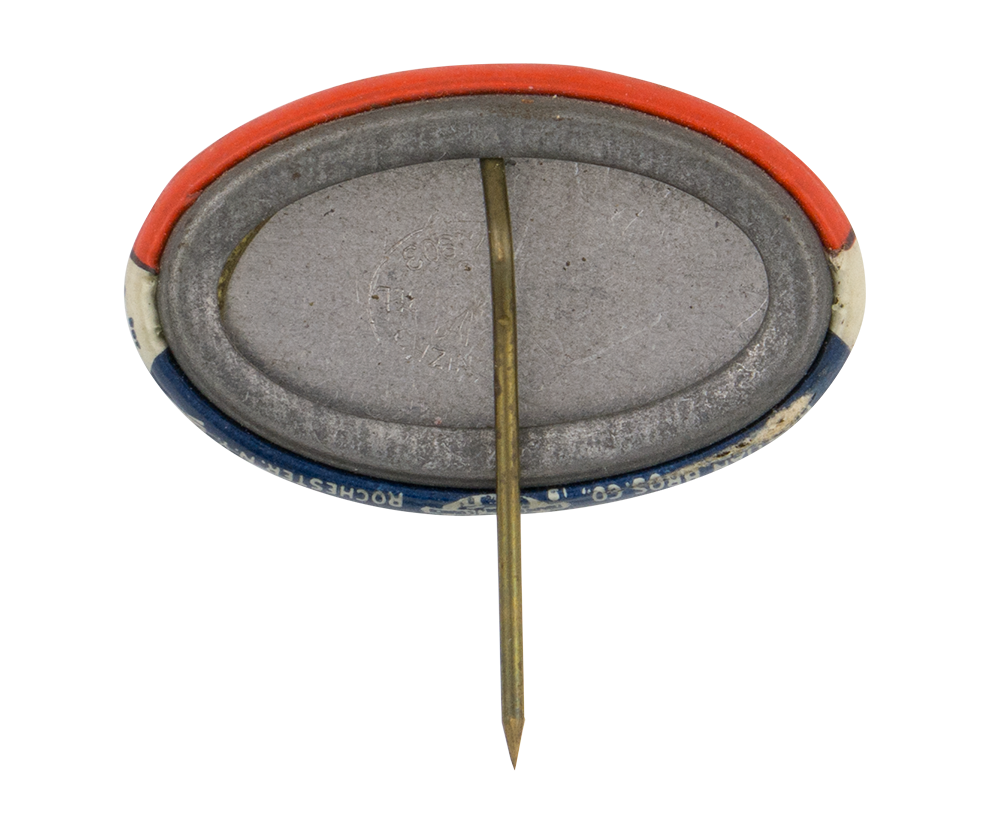
Red, white and blue button with white and blue text. 

Back Paper / Back Info

(union bug)

Curl Text Bastian Bros Co. (union bug) Rochester, N.Y.
Back Style
The Shape
The Size
Year / Decade Made
The Manufacturer
Additional Information

The Ford Drive was a campaign in 1937 and 1938 by the United Automobile Workers union (UAW) to organize workers at the Ford Motor Company.  Henry Ford, founder of Ford Motor Company in 1908 was strongly opposed to unionizing labor.  The Ford Company was the last Detroit automaker to recognize the UAW but due to a strike in 1941 that closed the River Rouge Plant, leaders at the Ford plant were forced to engage in negotiations with union leaders. 

Upset with the turn of events, Ford threatened to break up the company rather than cooperate with union leaders, but his wife Clara told him she would leave if he destroyed the family business.  Ford acquiesced, and overnight the company went from being the one holdout to UAW to agreeing to the most generous contract terms of any auto maker at the time. The Ford Motor Company is one of the largest family-controlled companies in the world, and has been in continuous family control for over 100 years.

Catalog ID CL0365

Falstaff the Thirst Slaker

Category
Additional Images
Sub Categories
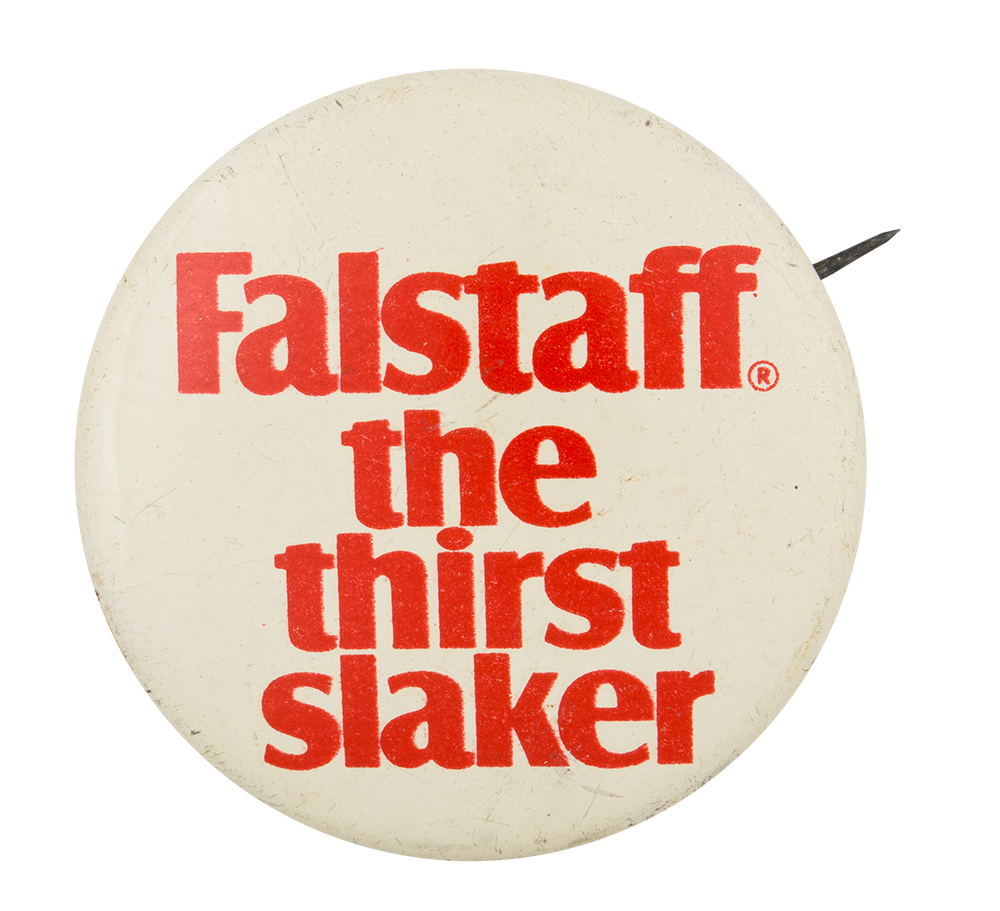
Text on Button Falstaff the thirst slaker.
Image Description

Red text on a white button. 

Curl Text "Riot" logo
Back Style
The Shape
The Size
Additional Information

Originally introduced by the Lemp Brewery, Falstaff Beer was just one of several different brands offered by the largest brewery in St. Louis prior to Prohibition. The Lemps chose the Shakespearean character for the name of their new beer due to Sir John Falstaff's reputation as a jolly, fun-loving knight. When the Lemp Brewery closed, William J. Lemp Jr. sold the Falstaff brand to his friend and fellow brewer, Joe Griesedieck in 1920; it would be one of the last business decisions Lemp would make before committing suicide in the family's mansion in 1922. Following the end of Prohibition, the Griesedieck family began to expand their new Falstaff Brewing Company aggressively, competing with Anheuser-Busch Brewery in the decades of the mid-twentieth century. The older, small breweries Falstaff purchased ultimately proved too inefficient to compete with Anheuser-Busch. The four plants in St. Louis, out a total of ten plants in the Falstaff Company, closed one by one, the last in 1977.

The “Thirst Slaker” ad campaign featured a jingle performed by the blues-rock group Cream. Audio of the jingle can be heard here: https://www.youtube.com/watch?v=5Z9tXP5IsRg

Catalog ID BE0134

Zip Mail

Category
Additional Images
Sub Categories
Text on Button FOR FASTER MAIL AT LOWER COST ZIP!
Image Description

White text with red and blue backgrounds with the illustration of a zipper across the button 

Back Paper / Back Info

Union Label Local 137

Curl Text Empress SPLTY CO. (Illegible)
Back Style
The Shape
The Size
The Manufacturer
Additional Information

Zip Mail is a mailing service that started in 1979 in order to cut the cost of postage to their small consumer base in St. Louis. Still in operation today, Zip Mail is considered to be the First Presort Service Bureau in the Midwest. Presorting mail is a way to save on postage; the service groups mail by ZIP code, bundling mail going to the same area. Presorting saves the U.S. Postal Service money on processing and results in reduced commercial postal prices. Today, Zip Mail has operations in Detroit, Chicago, and St. Louis.

Catalog ID AD0622