Bourg Collators System

Category
Additional Images
Sub Categories
Text on Button Bourg Collators System
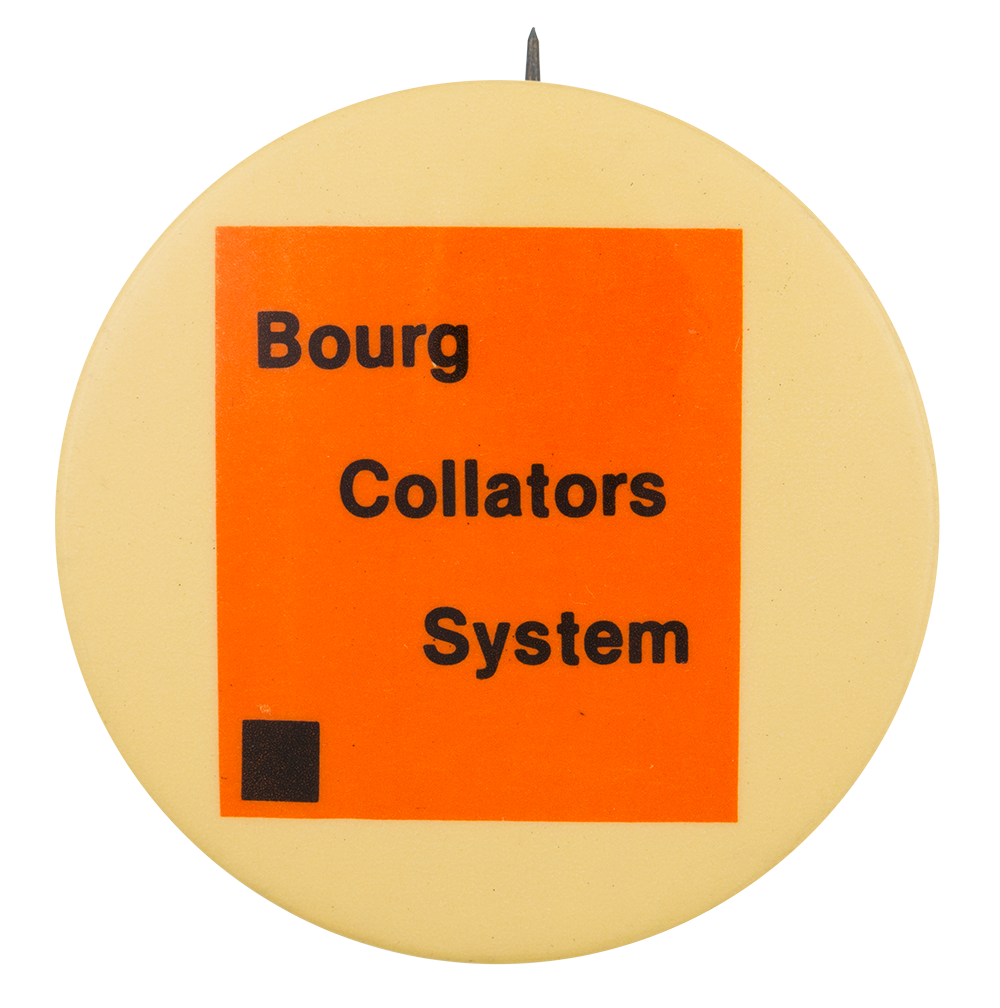
Image Description

Orange rectangle with a small black square in the bottom left-hand corner (C.P. Bourg logo) on a yellow background. "Bourg Collators System" written on top of the logo.

Back Style
The Shape
The Size
Additional Information

The C.P. Bourg company originally specialized in designing and manufacturing collating machines but went on to expand to produce print finishing equipment. Collation is the process of placing printed and stacked sheets into the order in which they will be published. The company was founded by Christian-Pierre Bourg in 1960 and is currently based out of New Bedford, MA. 

Sources

C.P. Bourg. (n.d.). Corporate History. Retrieved from https://www.cpbourg.com/us/en/about-us/history

Catalog ID AD0618

Bob's Big Boy

Category
Additional Images
Sub Categories
Image Description

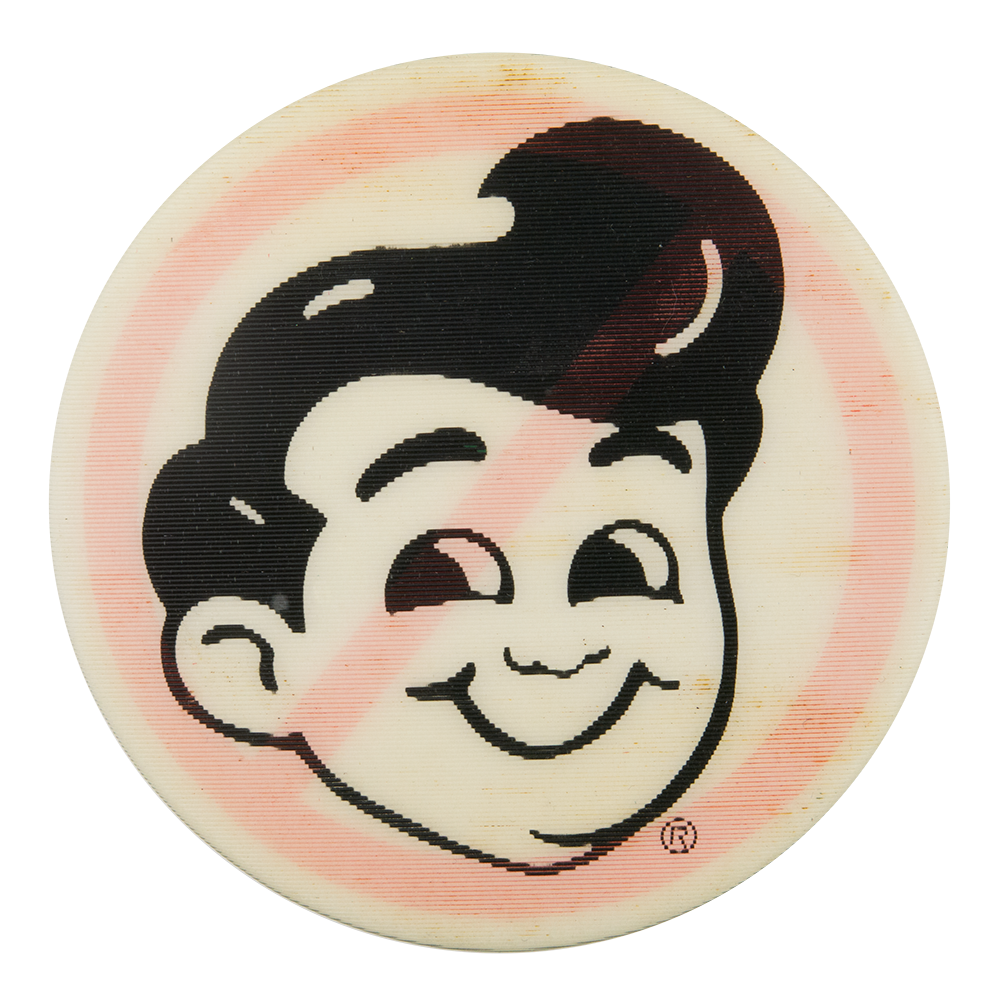
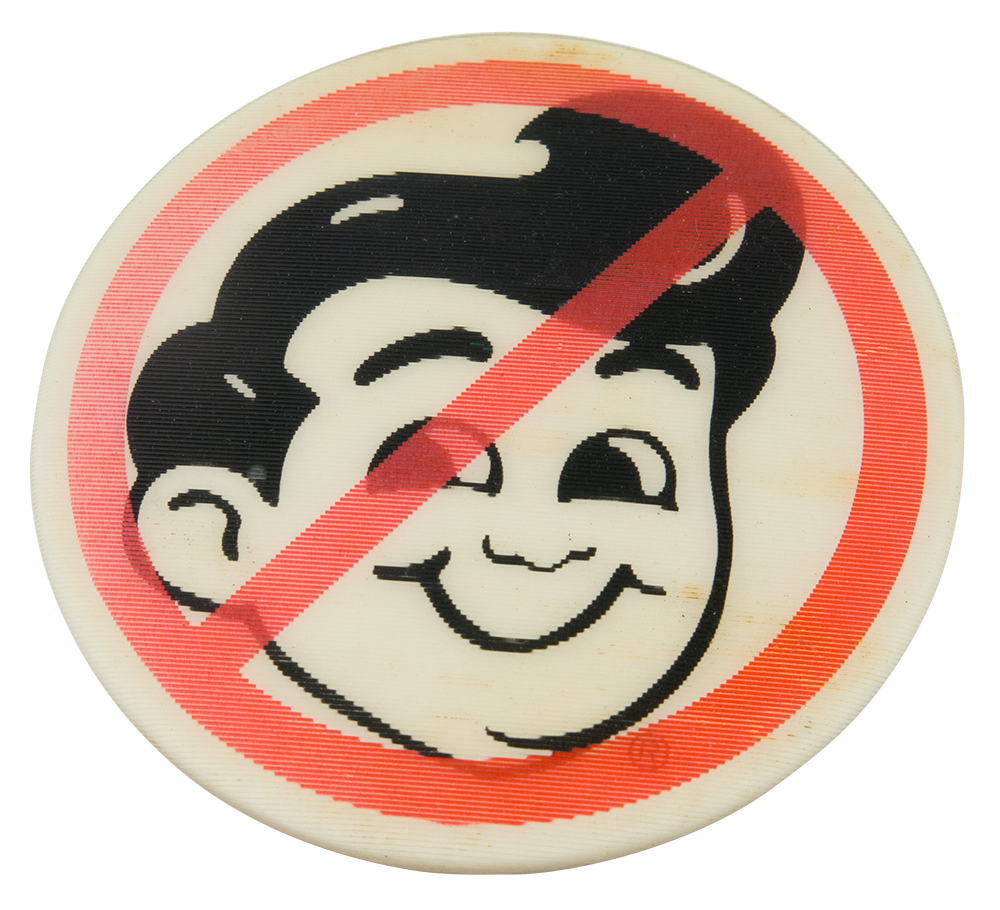
Big Boy face logo with red no circle over it on one image. 

Back Style
The Shape
The Size
Year / Decade Made
Additional Information

In the 1980s, Marriott Corporation planned to retire the Bob’s Big Boy mascot and launched the “Should Big Boy Stay or Go?” campaign. The campaign asked customers to vote on whether the Big Boy mascot should continue to be used. Customers voted for Big Boy to stay. The iconic “Big Boy” caricature is usually a statue located outside most Big Boy restaurants. The Big Boy is modeled after Richard Woodruff, a young boy who happened to walk into the original Big Boy restaurant in 1938 as owner, Bob Wian, was trying to name his signature burger. Bob’s Big Boy is a national chain of restaurants started in 1936 as Bob’s Pantry in Glendale, California. 

Catalog ID AD0630

Because I was Hungry

Category
Additional Images
Sub Categories
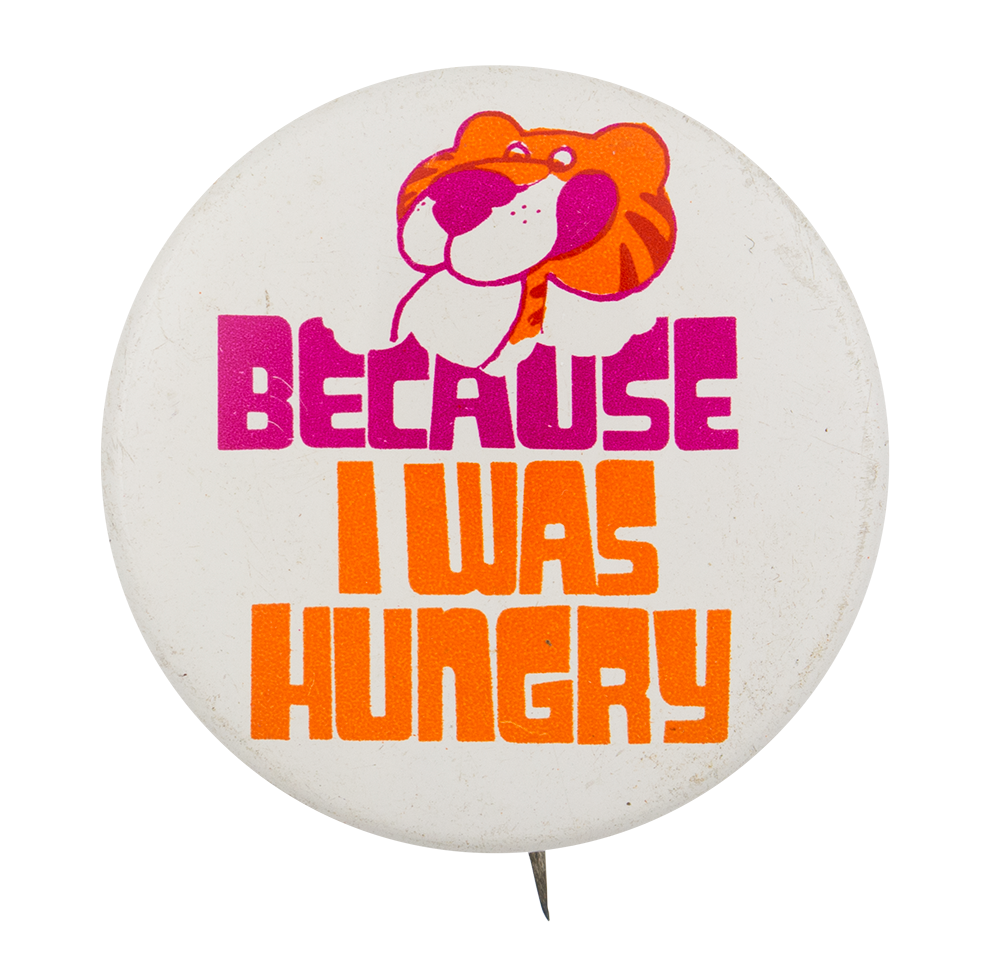
Text on Button BECAUSE I WAS HUNGRY
Image Description

Hot pink and orange text with an illustration of a tiger on a white background 

Back Style
The Shape
The Size
Additional Information

"Because I Was Hungry" was one of several taglines used by Sambo's Restaurants. This restaurant chain was created in 1957 by Sam Battistone, Sr. and Newell Bohnett. The restaurant's name was created by taking the "Sa" in Battistone's first name and "Bo" in Bohnett's last name. At the flagship restaurant in Santa Barbara, CA, the walls were decorated with artwork from the story "Little Black Sambo." The name "Sambo" has a loaded history that is filled with racism. At the height of its popularity, Sambo's had 1,117 locations in 47 states. However, due to the public outcry and the racially charged nature of the name, many locations were renamed "No Place Like Sam's" or "Jolly Tiger." By 1981, Sambo's filed for bankruptcy, and the only existing location was the flagship restaurant.

Sources

Meares, H. (2017). The Troubling History of Sambo's Pancake House. KCET. Retrieved from: https://www.kcet.org/food-living/the-troubling-history-of-sambos-pancak…

Catalog ID AD0621

Libby's Green Thumb Sale

Category
Additional Images
Sub Categories
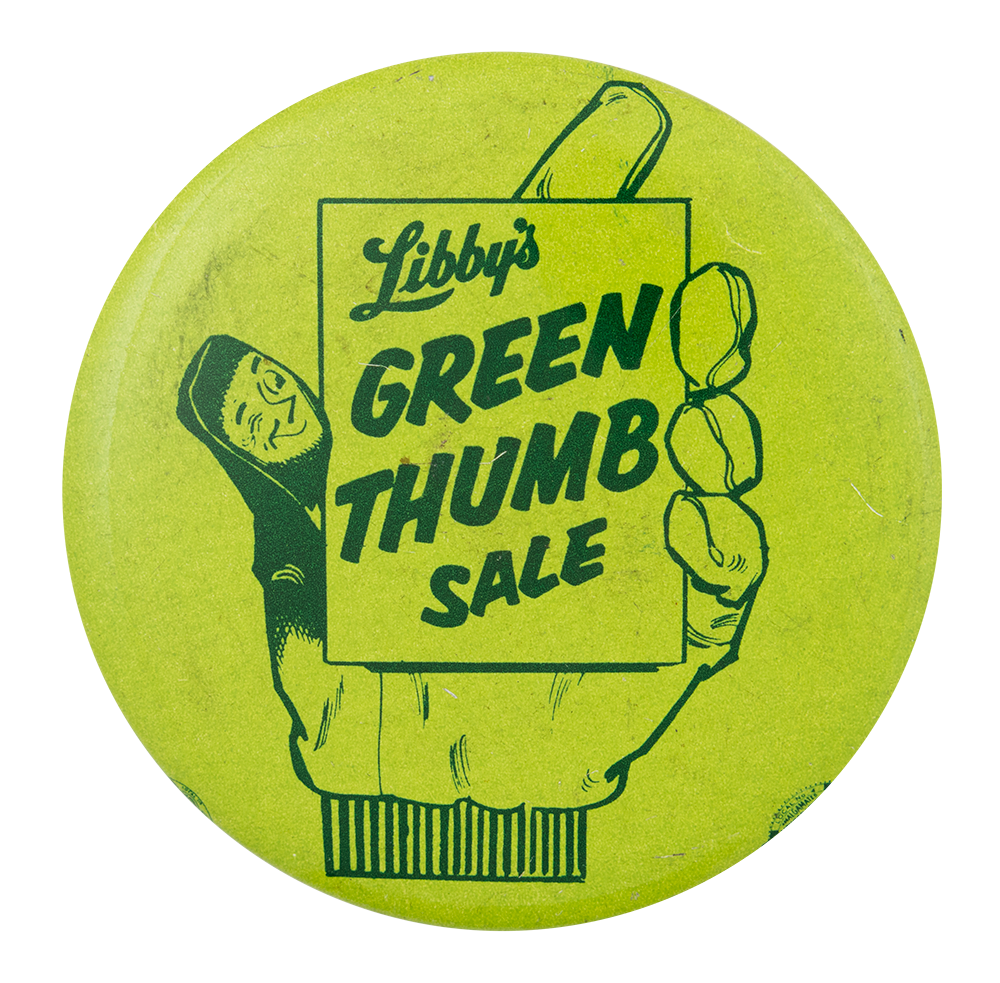
Text on Button Libby's GREEN THUMB SALE
Image Description

Lime green button with emerald green text. Text reads "Libby's Green Thumb Sale" with an image of an glove holding the text. The thumb has a little winking face. 

Curl Text Local No. 4. Union Label. Amalgamted Lithographers of America. Chicago. Union Label.
Back Style
The Shape
The Size
Additional Information

Libby's was founded in Chicago in the late 1800s. The business began by selling a canned meat product in a trapezoid shaped tin container. Around the turn of the century, the company started selling canned fruits and vegetables, as well. Although Libby's still includes canned meats in their line of products, they are known for their large selection of fruit juices, condiments, and both frozen and canned fruits and vegetables.

In the 1950s and 1960s, special sales on Libby's canned vegetables were marketed as Green Thumb Sales. This button is likely related to a special sale during this time period.

Catalog ID EV0215

We Talk Farmer

Category
Additional Images
Sub Categories
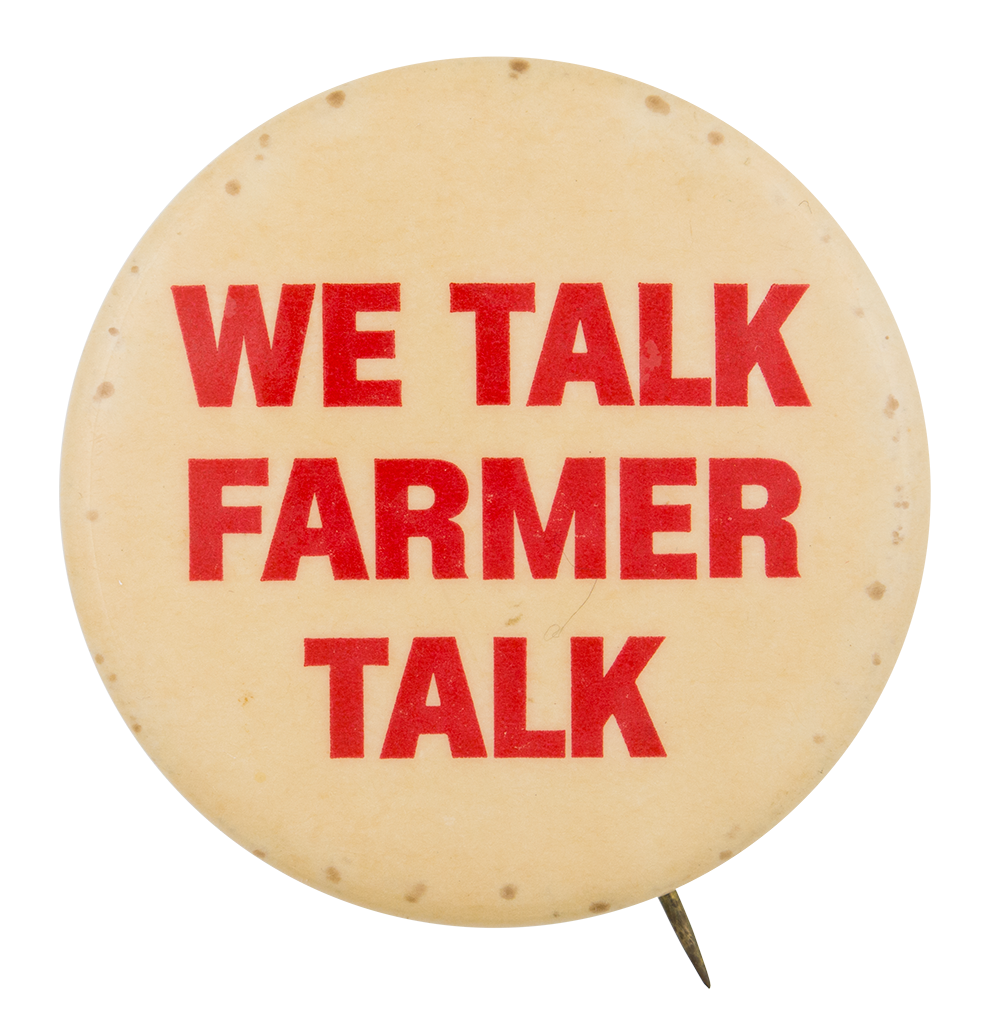
Text on Button WE TALK FARMER TALK
Image Description

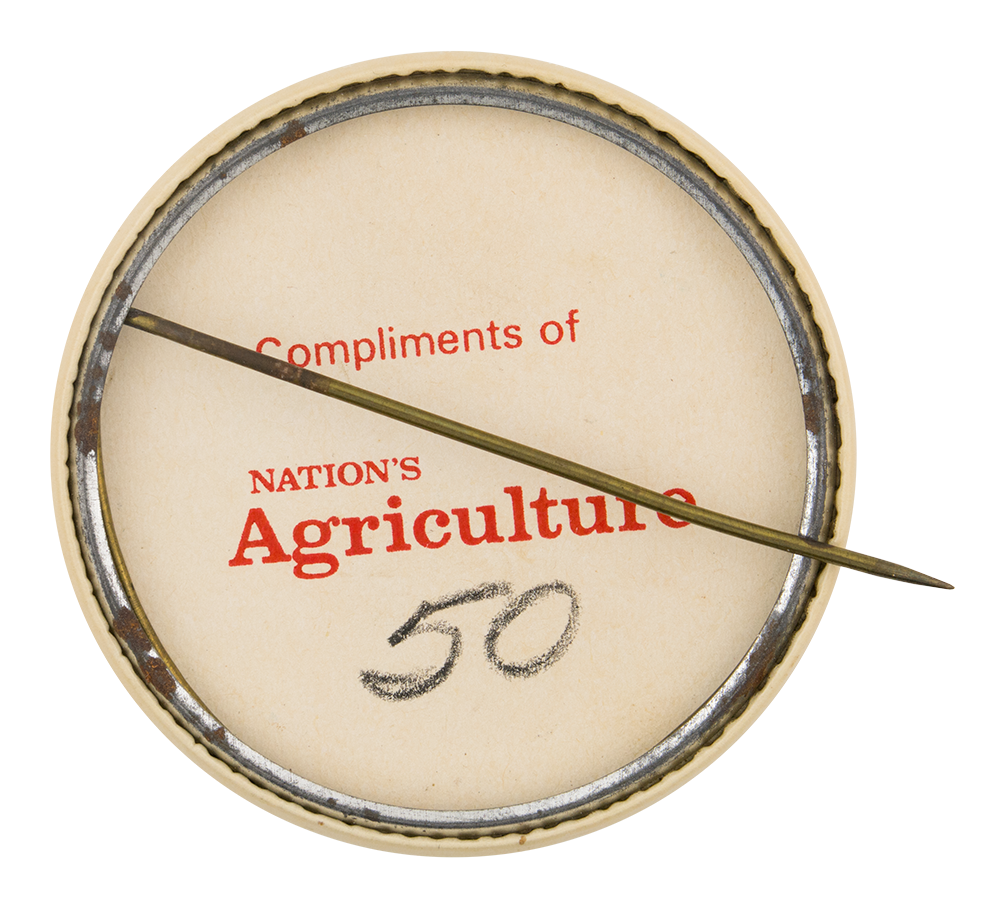
White button with red text.

Back Paper / Back Info

Compliments of Nation's Agriculture

Back Style
The Shape
The Size
Additional Information

Have info on this button? Contact us here.

Catalog ID AD0610

Un for the Road Wheel

Category
Additional Images
Sub Categories
Text on Button Un for the road
Image Description

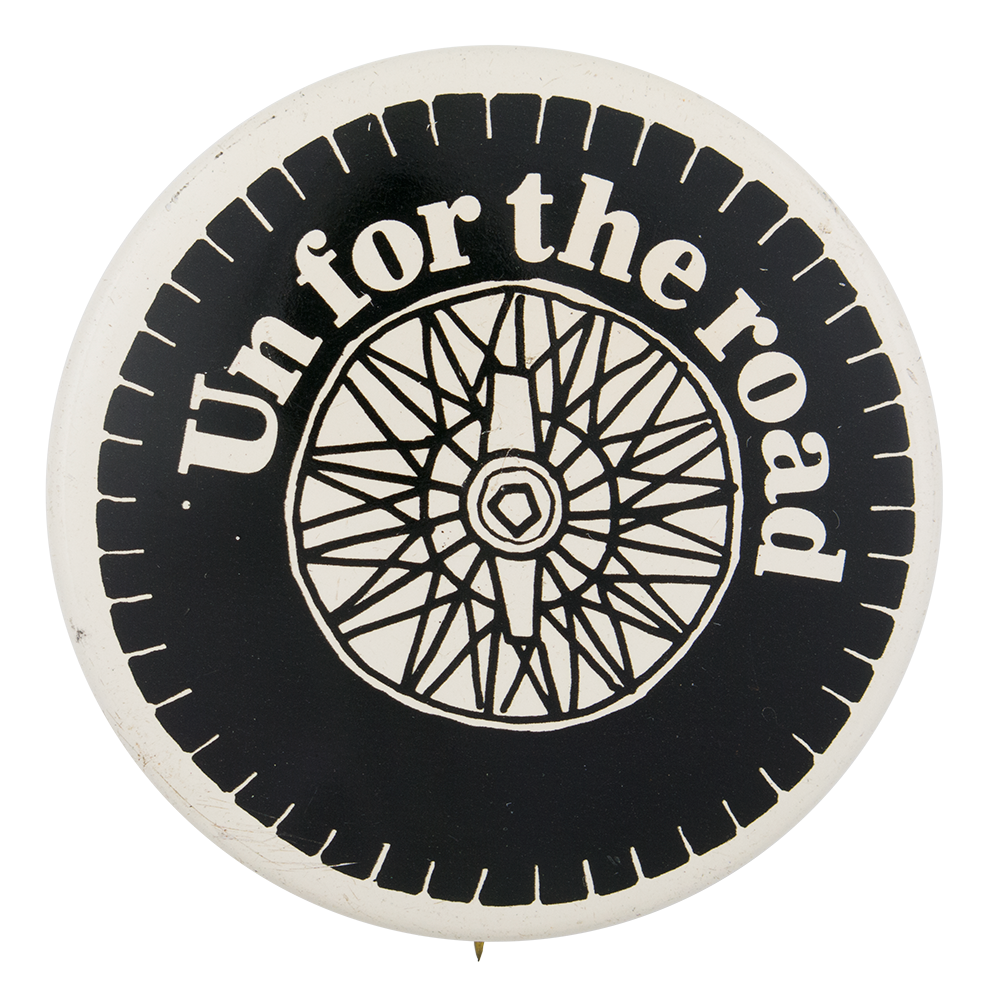
Button reads "Un for the road," which is written in white text on an illustration of a black tire. Button has a white rim. 

Curl Text The Seven-Up Co. UC 131
Back Style
The Shape
The Size
Additional Information

"Uncola" was part of the 7-UP slogan and advertising campaign from 1967 to the 1990’s. Launched in 1967, the 7-UP company's Uncola campaign was designed to appeal to a younger demographic by embracing bright colors, current day slang, and free-form art. The campaign generated billboards, posters, thermometers, patches, and various other items.

Catalog ID AD0605

The Uncola Mouth

Category
Additional Images
Sub Categories
Text on Button THE UNCOLA
Image Description

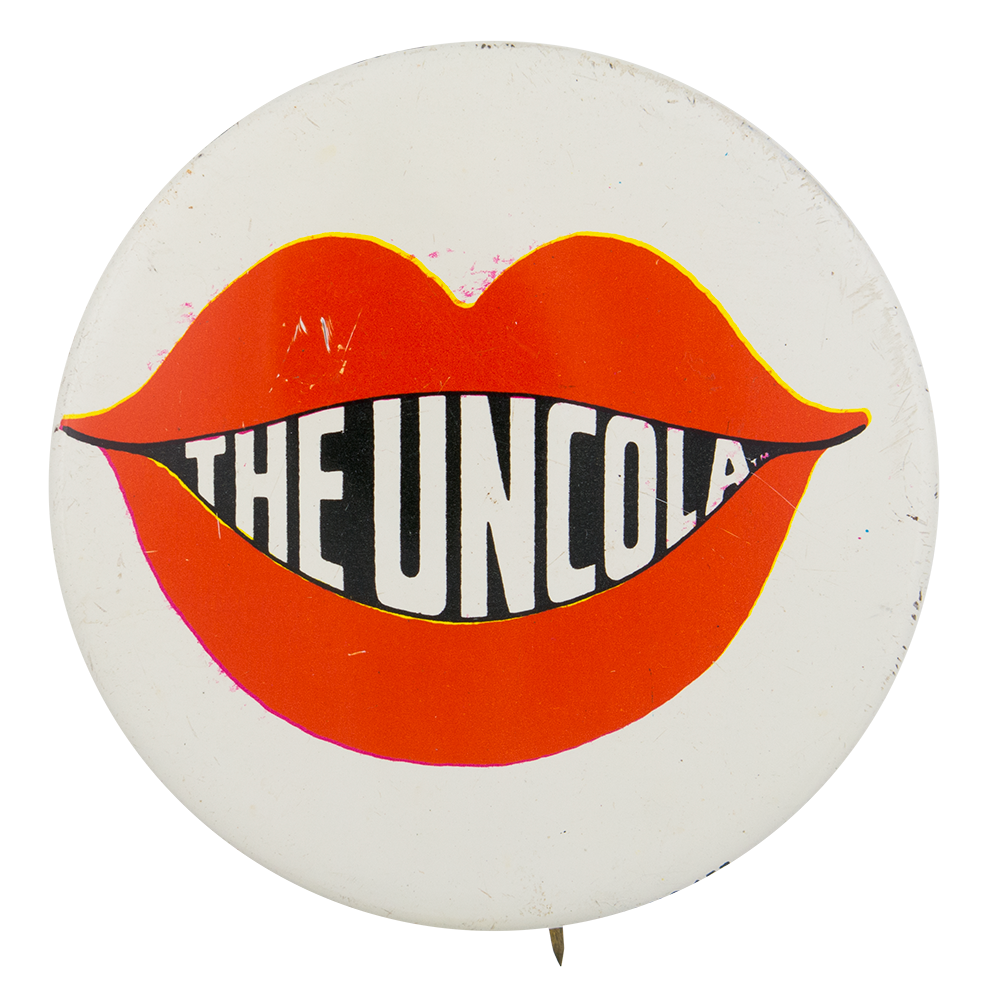
Red lips parting to show white text reading "The Uncola" on a white button.

Curl Text UC 157
Back Style
The Shape
The Size
Additional Information

"Uncola" was part of the 7-UP slogan and advertising campaign from 1967 to the 1990’s. Launched in 1967, the 7-UP company's Uncola campaign was designed to appeal to a younger demographic by embracing bright colors, current day slang, and free-form art. The campaign generated billboards, posters, thermometers, patches, and various other items.

Catalog ID AD0603

Nuraya Tea

Category
Additional Images
Sub Categories
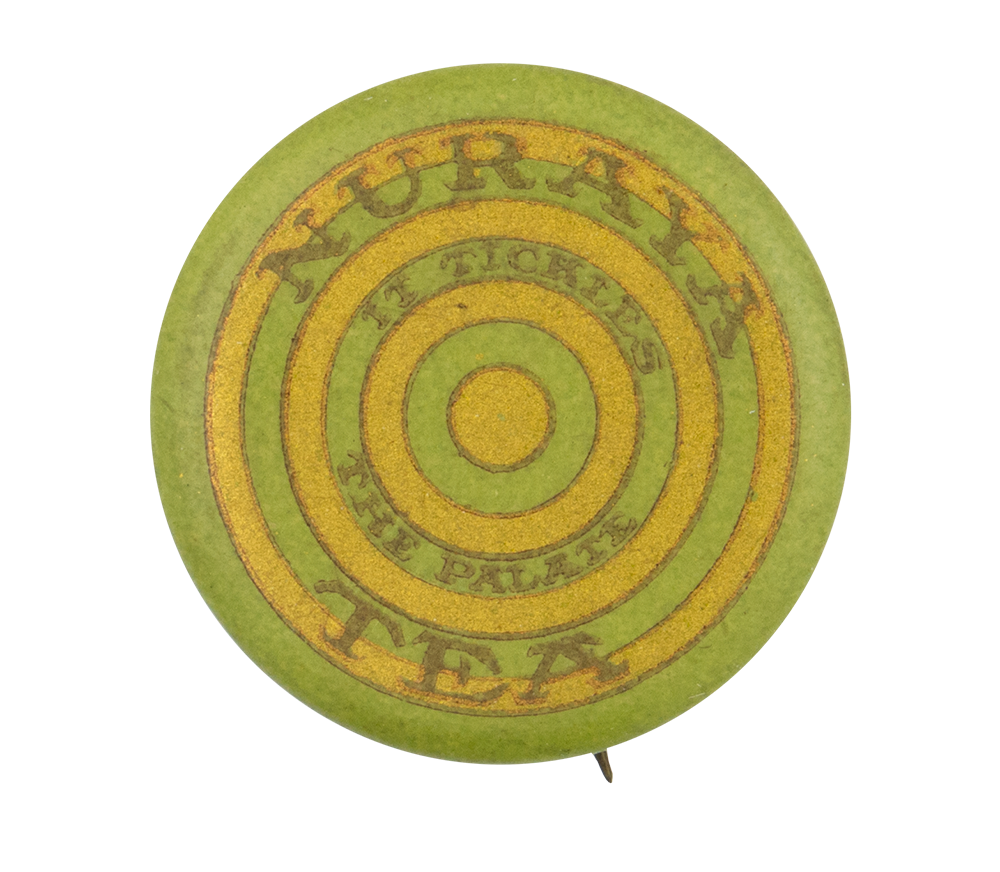
Text on Button NURAYA IT TICKLES THE PALATE TEA
Image Description

Tan text on a button with a green and gold target. 

Curl Text J.B. CARROLL CHICAGO
Back Style
The Shape
The Size
The Manufacturer
Additional Information

Nuraya Tea was a high-grade blend of Ceylon and India teas sold by Closset & Devers, a coffee, tea, and spice trade mercantile located in Portland, Oregon. Arthur H. Devers, who left his home in San Francisco to find fortune in Portland, entered into a partnership with Joseph Closset in 1883. Together, the two established a successful business that thrived for decades. By the beginning of the Great Depression, there were a number of coffee companies in Portland, and unfortunately, not all survived, including Closset & Devers.


Sources

Leaper, M. (2014). Roast city. Roast Magazine. Retrieved from http://www.roastmagazine.com/resources/Articles/Roast_NovDec14_RoastCit…

Catalog ID AD0652

Mother Macree Wears Hot Pants

Category
Additional Images
Sub Categories
Text on Button MOTHER MACREE WEARS HOT PANTS
Image Description

Black and red text on a green button. White illustration in the middle of an leprechaun over a flame.

Curl Text SAY IT WITH BUTTONS 1108 FRONT STREET LISLE, ILL. 60532 (312) 968-7458
Back Style
The Shape
The Size
The Manufacturer
Additional Information

Mother Machree was a character created by Rida Johnson Young in 1910. Machree was imagined for the play Barry from Barrymore and reappeared in her book The Story of Mother Machree in 1924. The character was the star in the silent film Mother Machree in 1928 directed by John Ford.

The movie is set around Ellen McHugh (also known as Mother Machree), an Irish immigrant, becoming a housekeeper for her son, Brian, and his daughter. Unbeknownst to Brian is that Mother Machree is his mother who gave him up for adoption when he was younger so he could have a better way of life. 

Sources

Mother Machree [Web log post]. (2008, September 20). Retrieved June 28, 2020, from http://www.silentera.com/PSFL/data/M/MotherMachree1928.html

Mother Machree. [Web log review]. (n.d.). Retrieved June 28, 2020, from https://www.imdb.com/title/tt0019182/plotsummary?ref_=tt_ov_pl

Catalog ID AD0601

Hot Pants Broomsticks Slacks

Category
Additional Images
Sub Categories
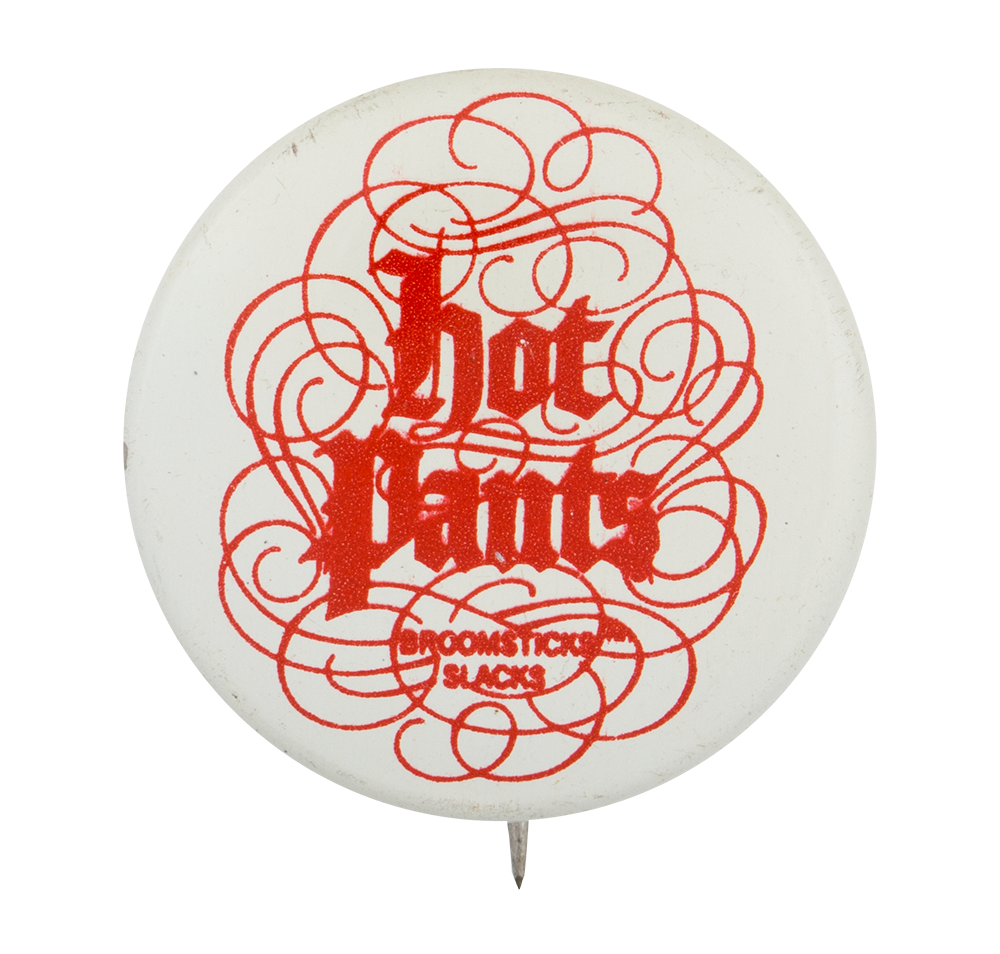
Text on Button hot pants BROOMSTICKS SLACKS
Image Description

White button with red text and red abstract illustration. 

Back Style
The Shape
The Size
Year / Decade Made
Additional Information

Broomsticks Slacks were a fashion trend for men in the late 1960s and early 1970s. They were a product of Glen Oaks Company in New York and retailed for $18-25, which was a high price at the time.  The pants had a high waist, a skinny, straight leg, and were usually made of a thick, double-knit polyester. Broomsticks Slacks were well known for their provocative advertisements. 

Catalog ID AD0623