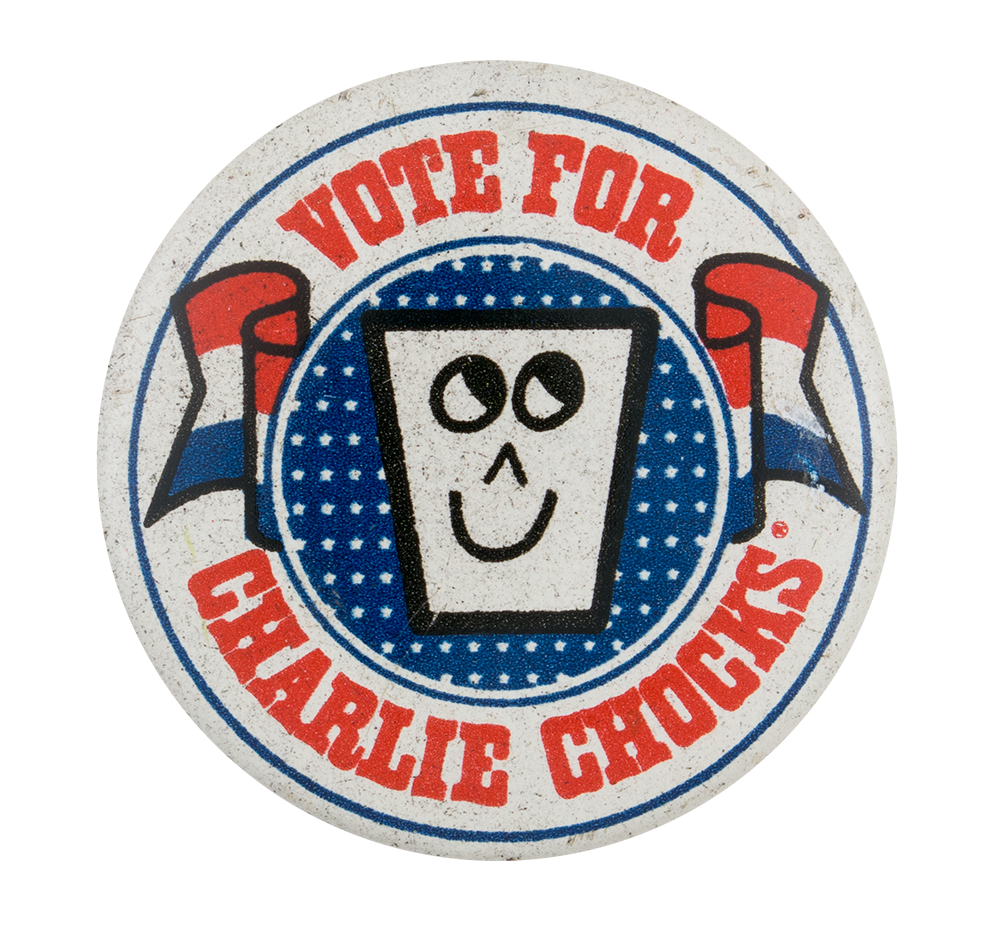
Vote for Charlie Chocks

Category
Additional Images
Sub Categories
Text on Button VOTE FOR CHARLIE CHOCKS
Image Description

Red text with the image of Charlie Chocks on a blue polka dot circle with red, white, and blue banners coming off the sides on a white background. 

Back Style
The Shape
The Size
Additional Information

Charlie Chocks was the character used to promote the Chocks line of children’s vitamins, which was the first chewable vitamin for children. The vitamins were introduced in 1960, and Charlie was used to market the product during Saturday morning programming. The character wore a flight helmet and looked somewhat like a superhero. By the early 1970s, all advertising of the product had ceased, as the company had introduced the Flintstones and Bugs Bunny vitamins, which eventually replaced the Chocks children’s line.

Sources

Brand Museum. (n.d.). Chock full of Charlie. Retrieved from https://brandmuseum.wordpress.com/2008/09/02/chock-full-of-pep/.

Catalog ID AD0674

Vitality Feeds

Category
Additional Images
Sub Categories
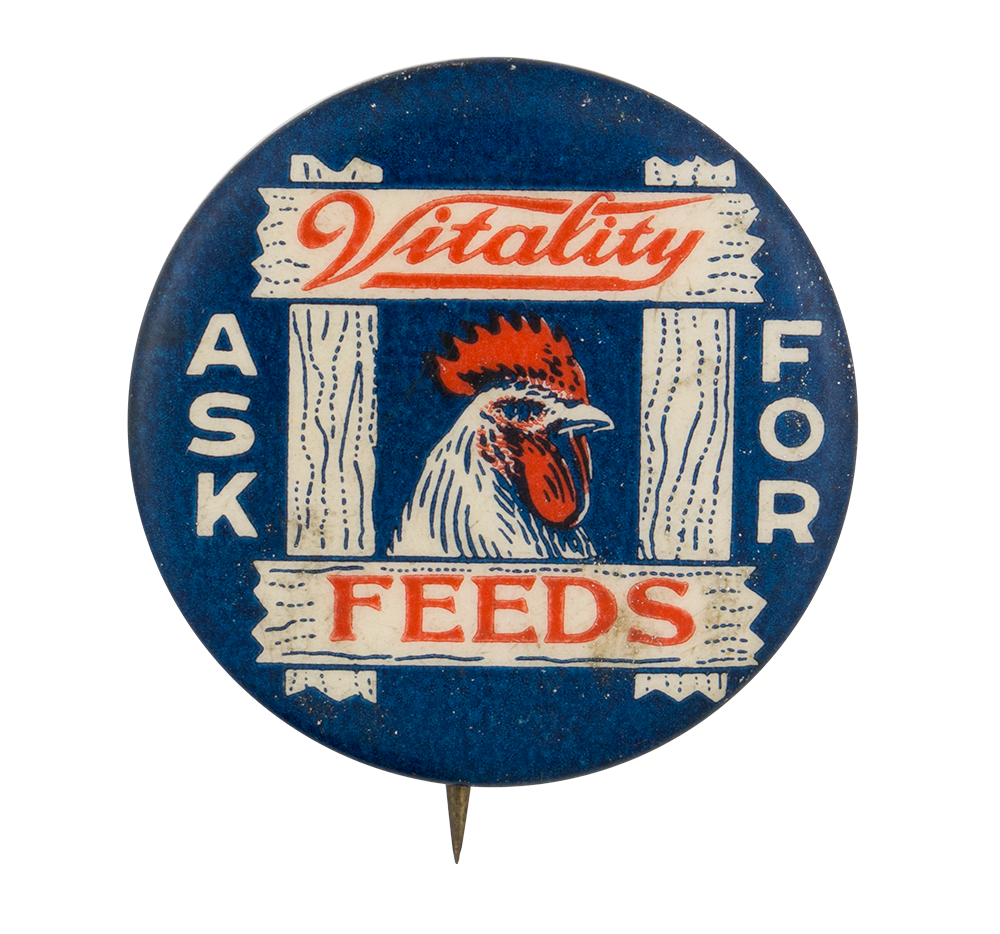
Text on Button ASK FOR Vitality FEEDS
Image Description

Illustration of a rooster with wood planks and red and white text on a blue background.

Back Paper / Back Info

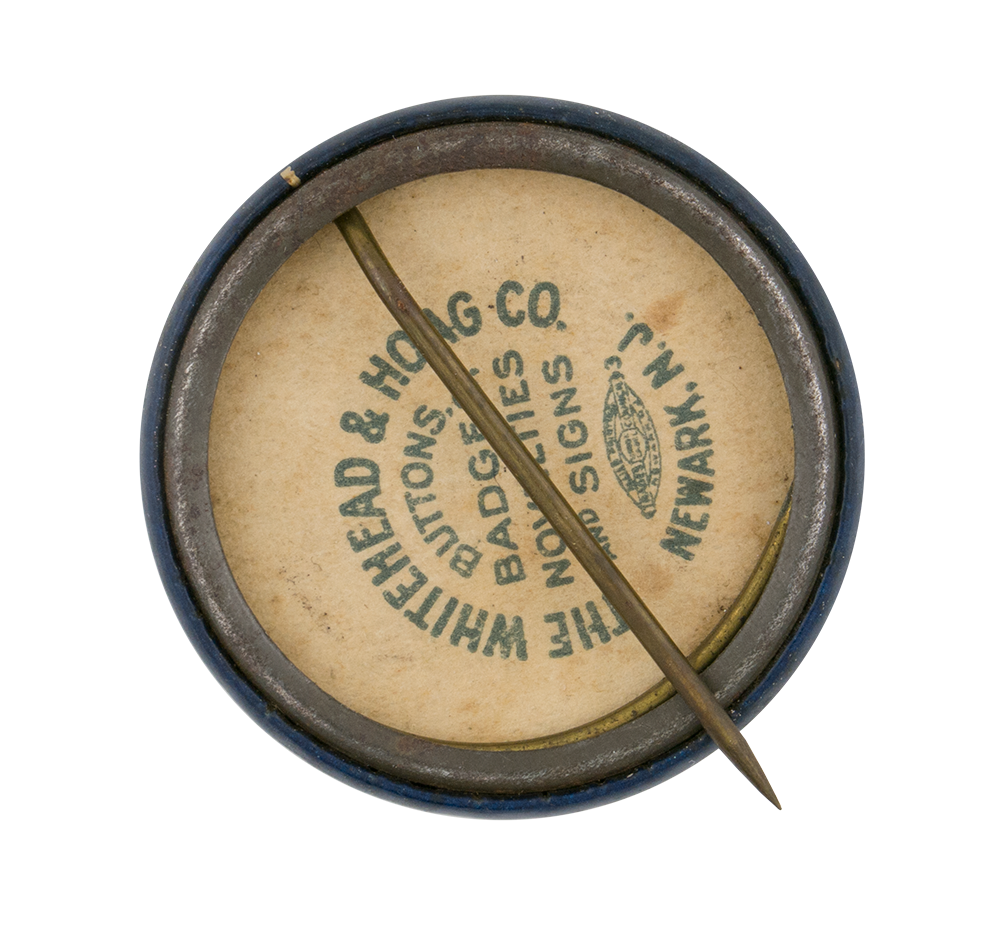
The Whitehead & Hoag Co. Buttons, Badges, Novelties and Signs (union bug) Newark, N.J.,

Back Style
The Shape
The Size
The Manufacturer
Additional Information

Vitality Feeds was a poultry food produced by the Rosenbaum Brothers in the late 1800s and early 1900s. The brothers included Joseph, Emmanuel, and Morris, who emigrated to Iowa from Germany with their family circa 1850. Joseph Rosenbaum was a veteran of the American Civil War, having fought for the Union in the 31st Iowa Volunteer Infantry. He and his brothers owned and operated several successful businesses in Iowa, such as livestock and feed enterprises and a bank. In 1874, they sold all of their assets in Iowa and moved to Chicago to set up Rosenbaum Brothers & Company. In Chicago, their company revolved around livestock and grain. A successful and important businessman, Joseph was a member of the Board of Trade of the City of Chicago. From 1908-1909, Joseph was the Illinois Department Commander of the Grand Army of the Republic and the 43rd encampment in Aurora, IL. He was presented the key to the city of Aurora as a show of esteem and goodwill.

Sources

Langlois, J. (2013, February 5). Chicago Board of Trade Members: Rosenbaum Brothers. In 1898 Revenues United States Revenue Stamps that Financed the Spanish American War. Retrieved June 17, 2020, from http://1898revenues.blogspot.com/2013/02/chicago-board-of-trade-members…

Taylor, C. H. (1917). History of the board of trade of the city of Chicago. Chicago: R.O. Law.

Catalog ID AD0686

Turbofire Hot Wheels

Category
Additional Images
Sub Categories
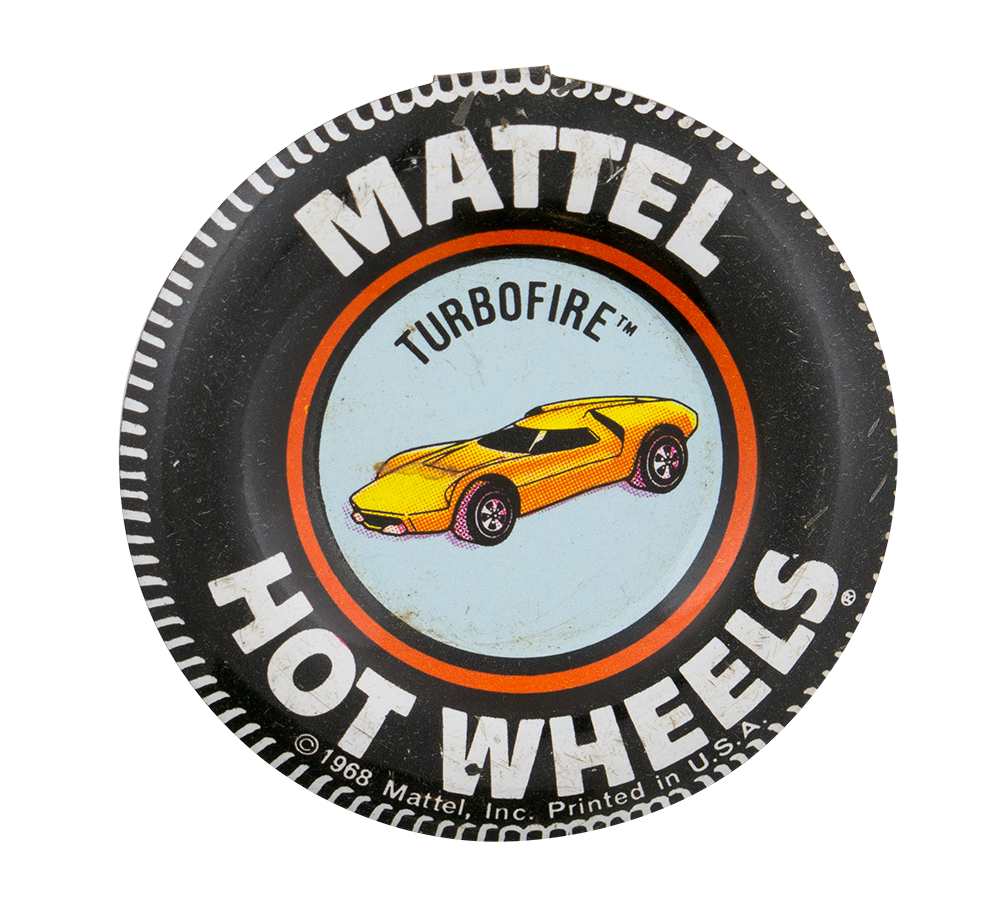
Text on Button MATTEL HOT WHEELS TURBOFIRE
Image Description

Illustration of a yellow car on a light blue background with a red ring then black outer edge with white text

Curl Text 1968 Mattel, Inc. Printed in U.S.A.
Back Style
The Shape
The Size
Year / Decade Made
Additional Information

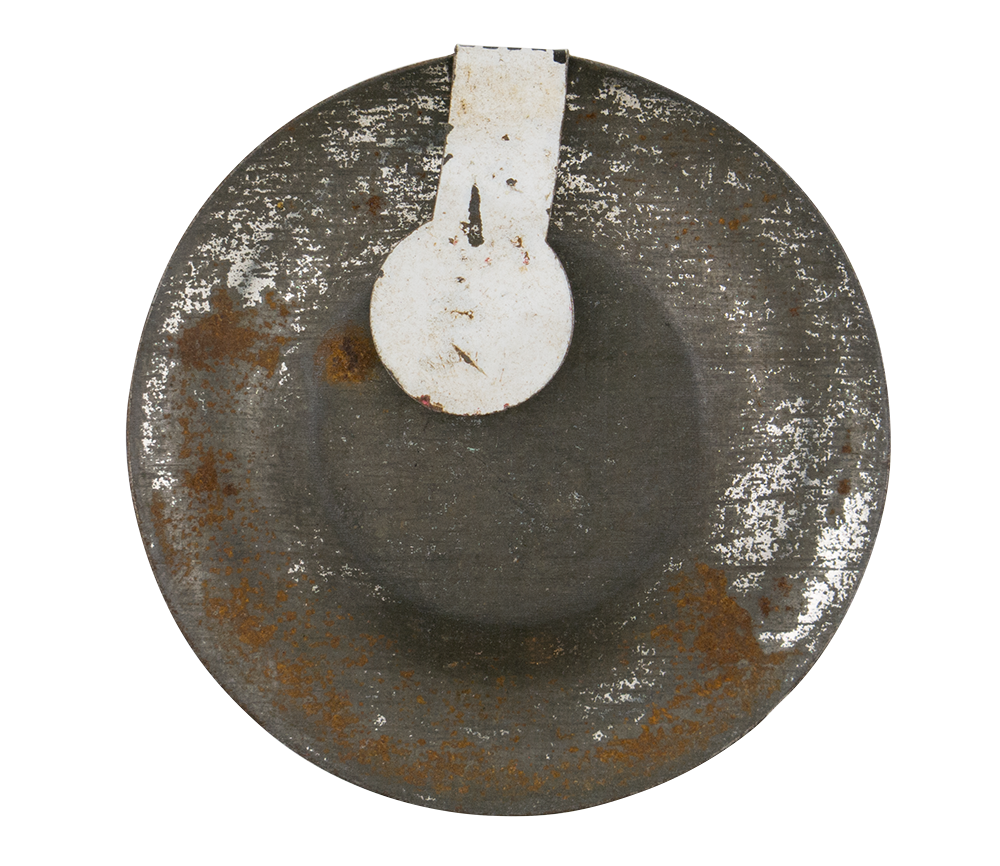
For the first three years, Mattel made Hot Wheels toy cars (1968-1971), they included collector buttons. The marketing department developed the concept to encourage child-to-child marketing. The tab was included on the button so a child could easily fold it over a pocket or belt. The button designs are credited to Otto Kuhni, who illustrated early Hot Wheels product packaging.

The Turbofire Hot Wheel model was a 1969 release, capitalizing on Hot Wheels' immense success in their first year. It was one of four Hot Wheels to be the first designed in-house (by Ira Gilford) instead of being based on existing custom cars.

Sources

Gray, Ted. (n.d.) "Turbofire (1969)." Online Redline Guide. Retrieved from: http://onlineredlineguide.com/69/69_turbofire/69_turbofire.html.

Red Line Buttons. (n.d.) "Much Ado About Buttons." Retrieved from: https://sites.google.com/site/redlinebuttons/faq.


Catalog ID AD0619

Think Big! Black and White

Category
Additional Images
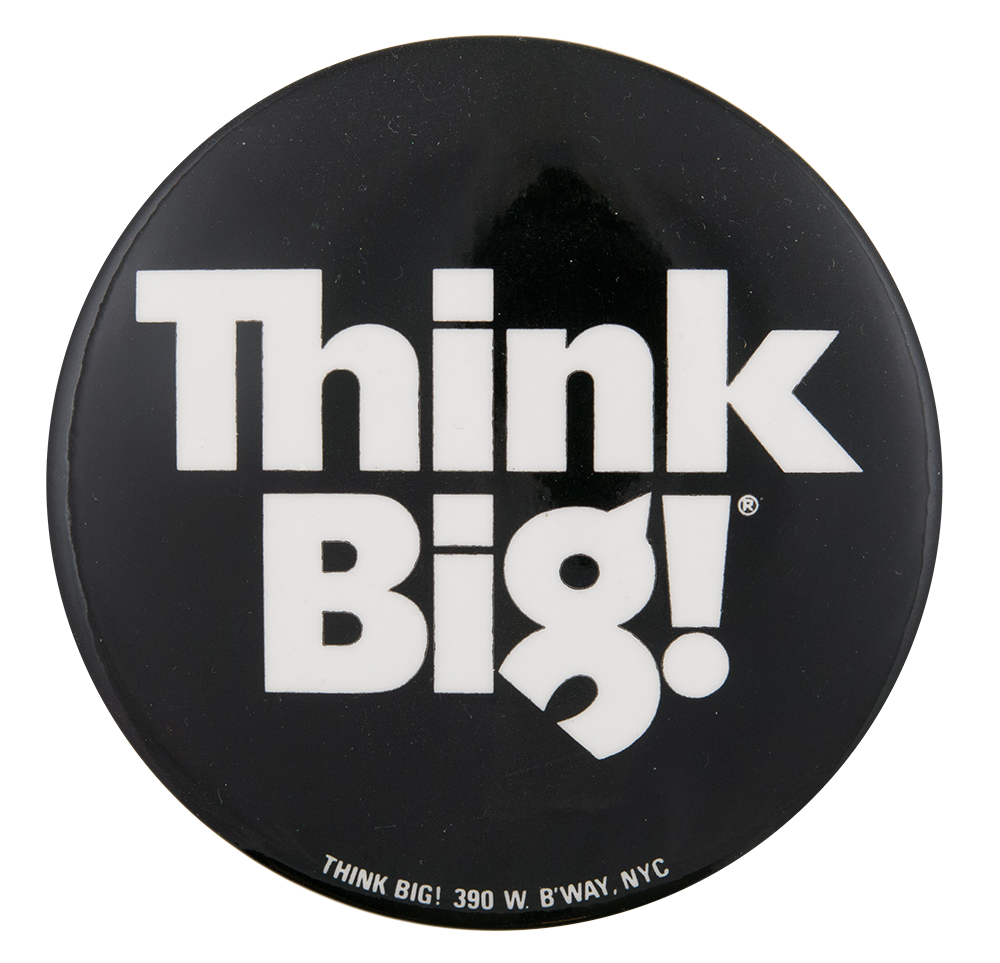
Text on Button Think Big! THINK BIG! 390 W. B'WAY, NYC
Image Description

White text on a black background.

Back Style
The Shape
The Size
Additional Information

Think Big! was a retail store established by artists Phyllis Prinz and Bob Malkin in 1979. The company was known for selling products like nonfunctioning five-foot versions of Crayola crayons and six-foot number 2 pencils. At the height of its popularity, the company sold 35 various items and grossed $1 million. Several companies like Crayola allowed Think Big! to obtain the rights to items that were trademarked to cash in on the company's publicity. Think Big! Inc. was sold to Martin Lawrence Limited Editions, Inc., an art retailer, in 1993.

Sources

Martin Lawrence Sells Subsidiary to Stockholder. (1993, June 1) Retrieved from: https://www.latimes.com/archives/la-xpm-1993-06-01-fi-42173-story.html

Marx, L. 1982. America's Love of Whimsy Made These Folks Blow Things Out of Proportion. People Magazine. Retrieved from: https://people.com/archive/americas-love-of-whimsy-made-these-folks-blo…

Catalog ID AD0668

The Ritz

Category
Additional Images
Sub Categories
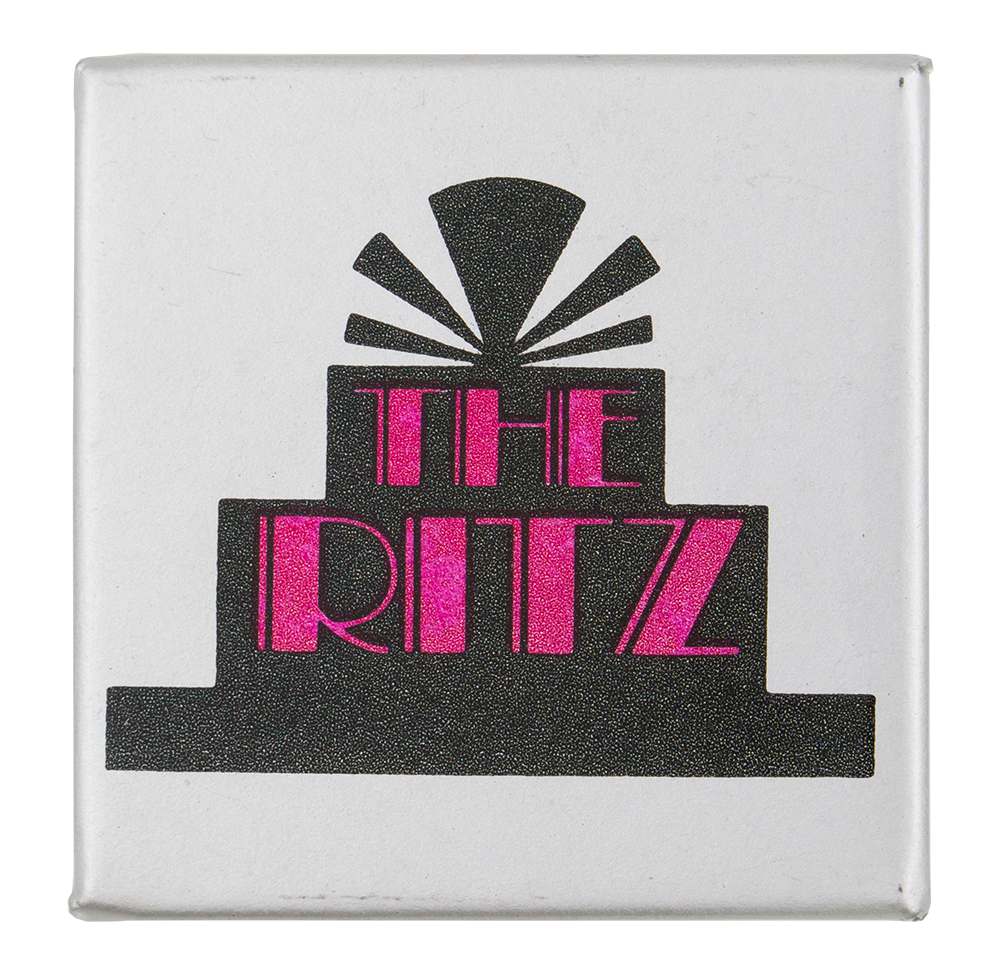
Text on Button THE RITZ
Image Description

Pink text on a black shape with a silver background.

Back Style
The Shape
The Size
Year / Decade Made
Additional Information

The Ritz Hotel is located in Paris, France, and is ranked one of the most prestigious hotels in the world. Founded in 1898, the luxury hotel has 159 rooms. Hotelier Cesar Ritz also opened a Ritz Hotel located in London in 1906, which is equally luxurious and prestigious. The Ritz Hotel is a symbol of luxury, its clients have included famous writers like Ernest Hemingway, royalty like Princess Diana, and fashion designers like Coco Channel. 

Catalog ID AD0676

The Prudential

Category
Additional Images
Sub Categories
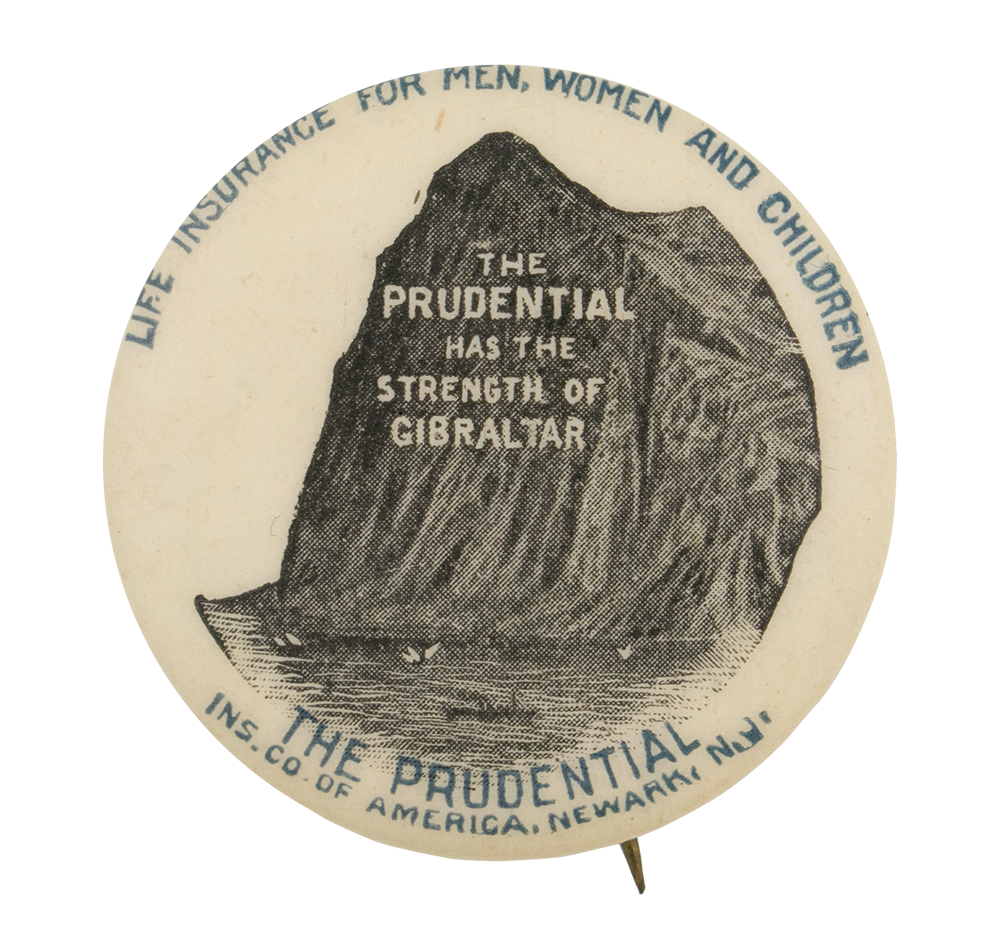
Text on Button LIFE INSURANCE FOR MEN, WOMEN AND CHILDREN THE PRUDENTIAL THE PRUDENTIAL HAS THE STRENGTH OF GIBRALTAR INS. CO OF AMERICA, NEWARK, N.J.
Image Description

Black and white illustration of a a large rock in water with white text on it and blue text on the top and bottom edge on a white background.

Back Style
The Shape
The Size
Year / Decade Made
Additional Information

The Prudential Company was started in Newark, NJ, by insurer John Fairfield Dryden. It was one of the first companies to provide insurance to the middle class. Initially, the only coverage sold was burial insurance. The company adopted the name of the Prudential Insurance Company of America in 1877. A picture of a rock with the reference that the company had the “strength of Gibraltar” began being used in the company’s advertising in the 1890s.

Catalog ID AD0678

Tess and Ted School Shoes

Category
Additional Images
Sub Categories
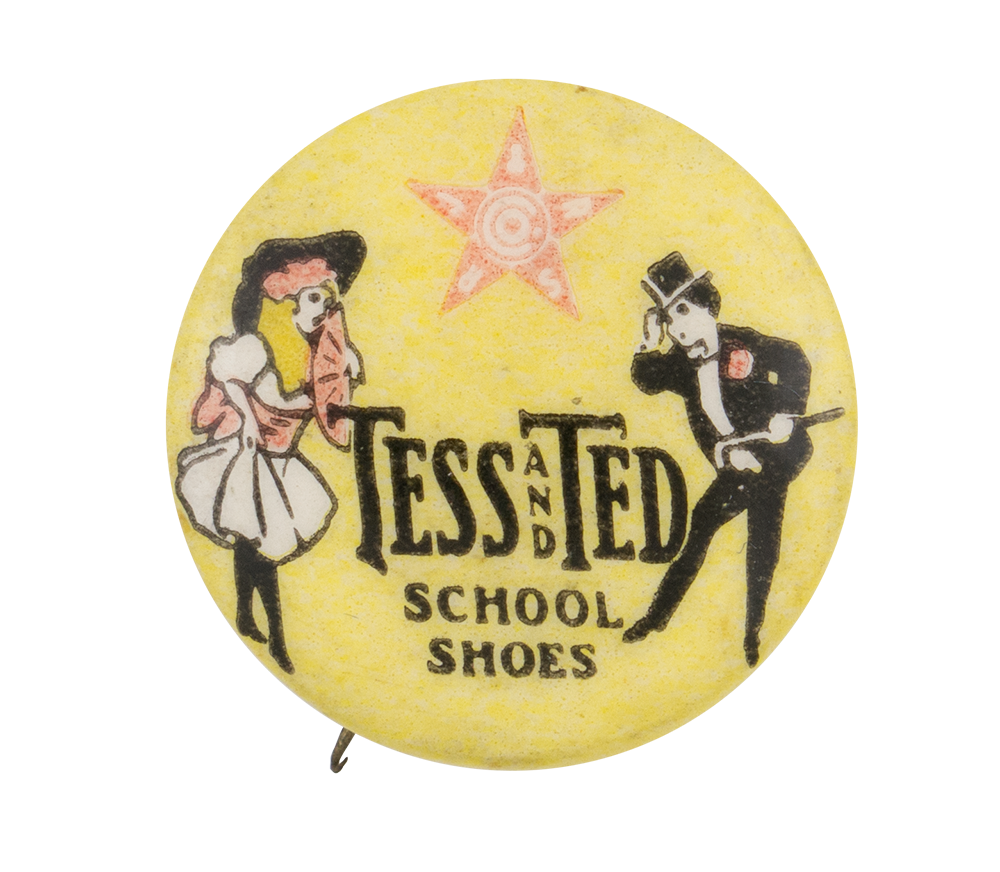
Text on Button J & R S R TESS AND TED SCHOOL SHOES
Image Description

Pink star with white letters and black text on a yellow background in the middle of an illustration of a man and woman.

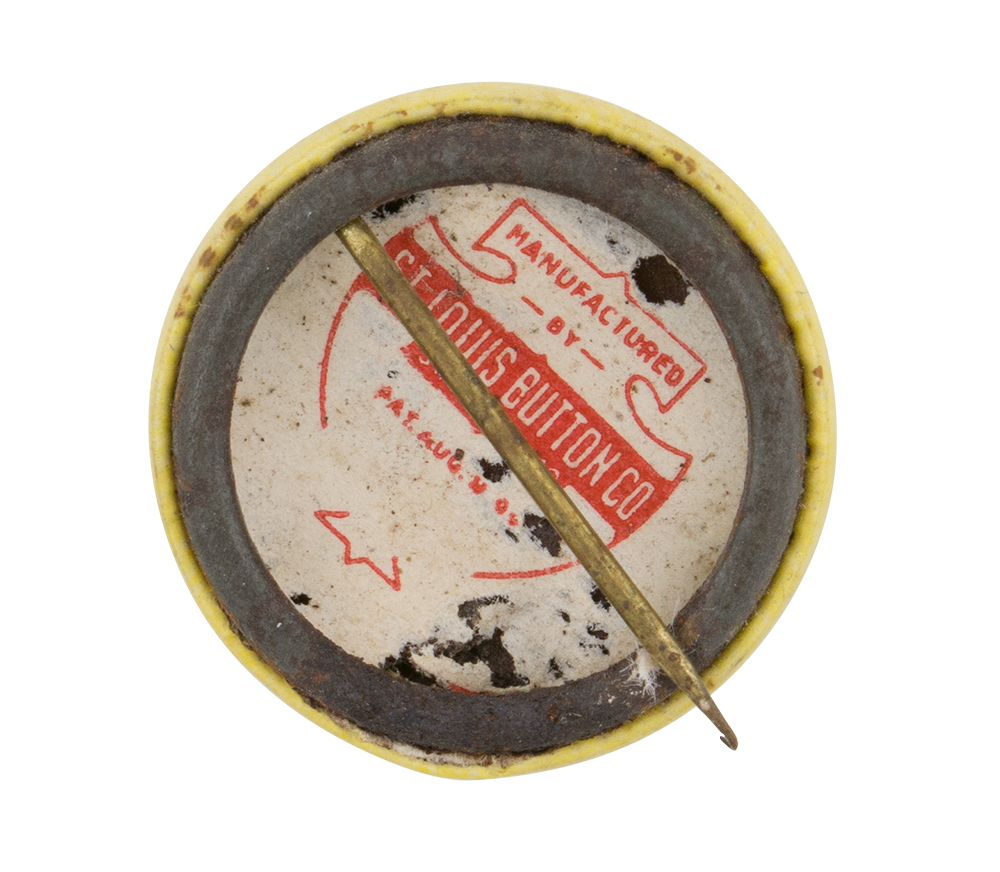
Back Paper / Back Info

Manufactured by St. Louis Button Co (illegible)

Back Style
The Shape
The Size
Year / Decade Made
The Manufacturer
Additional Information

Tess and Ted, "the Star Brand kids," were characters created in the early 1900s to be featured in advertising materials for children's shoes manufactured by the Roberts, Johnson, and Rand Shoe Company in St. Louis, Missouri. The rhyming adventures of Ted and Tess were featured in trade catalog books and became a song and dance act performed for children in St. Louis. The Roberts, Johnson, and Rand Shoe Company merged with the Peters Shoe Company, and these two largest shoe companies in St. Louis became the International Shoe Company in 1911. The Roberts, Johnson, and Rand-International Shoe Company Complex still stands on the corner of Mississippi Street and Hickory Street in St. Louis. It has been listed in the National Register of Historic Places since 1984. 

Catalog ID AD0693

Sunny Monday Bubbles

Category
Additional Images
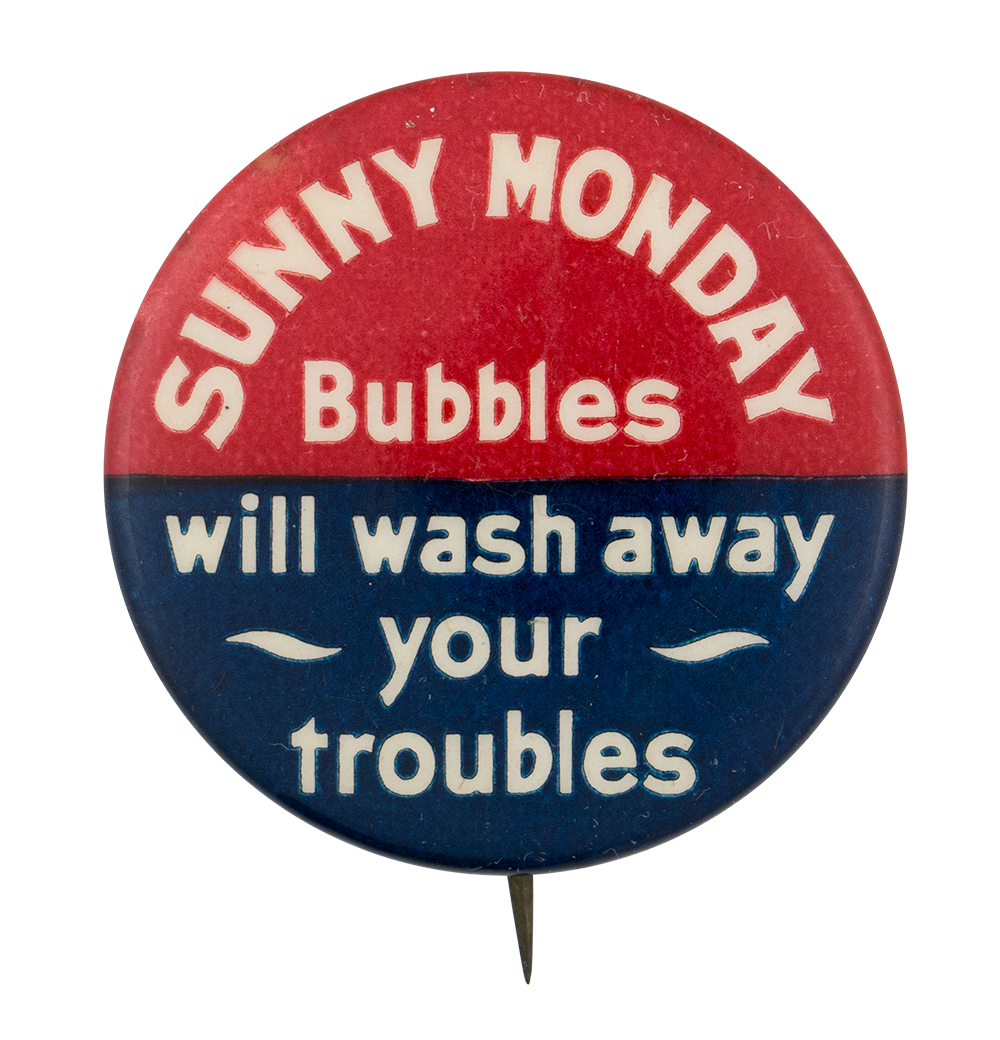
Text on Button SUNNY MONDAY Bubbles will wash away your troubles
Image Description

White text on a red and navy blue background.

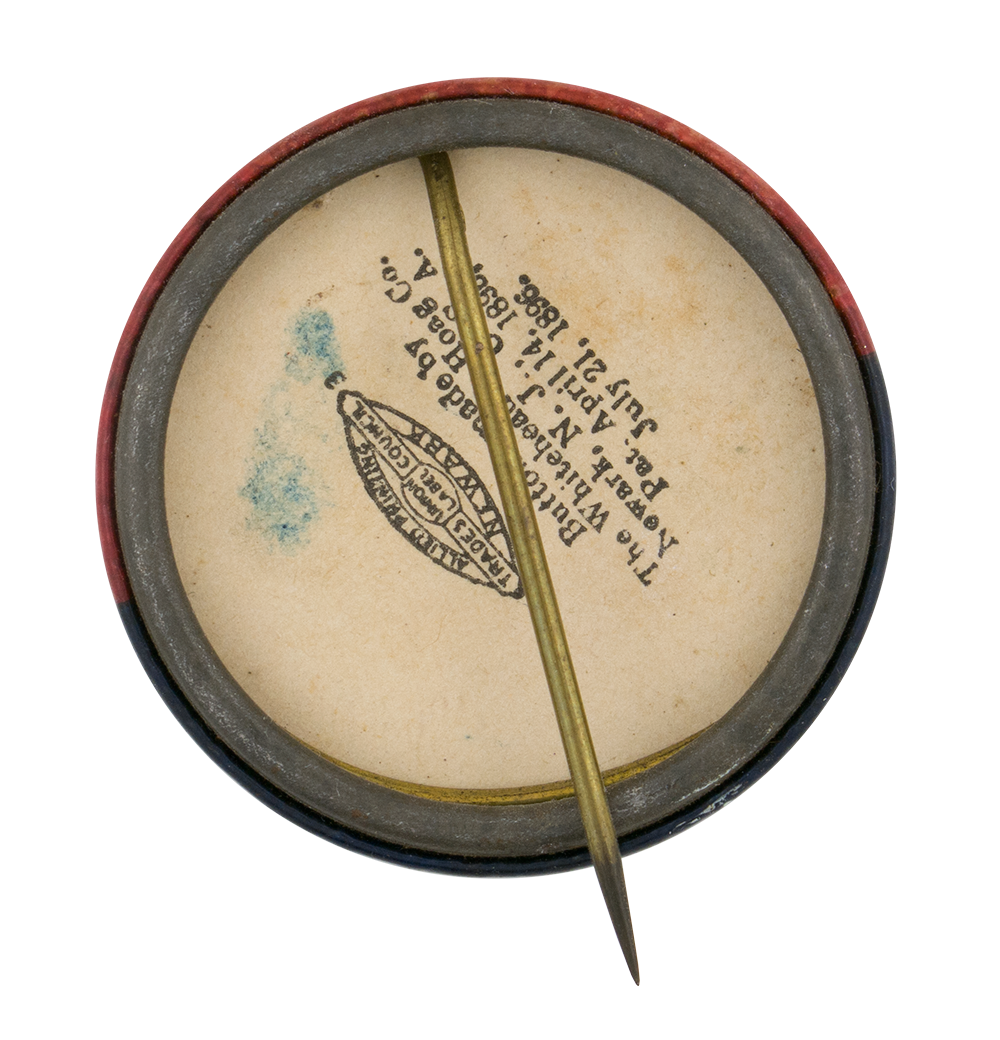
Back Paper / Back Info

(union bug) Buttons made by The Whitehead & Hoag Co., Newark, N.J., U.S.A Pat. April 14th, 1886, July 21, 1896.

Back Style
The Shape
The Size
The Manufacturer
Additional Information

Sunny Monday laundry soap was one of several soaps manufactured by N.K. Fairbank & Co. Originally established as Fairbank, Peck & Co. in 1864 by Nathaniel K. Fairbank and John Peck as the successor to Smedley, Peck & Co., a Chicago lard processor and soap maker. The company employed about 160 men, women, and children and produced about $2 million worth of lard, soap, and cottonseed oil a year by 1870. In 1875, it was purchased by American Cotton Oil and was renamed N. K. Fairbank & Co. By 1890, the company had several sales branches and had become famous for its distinctive advertising, using catchy slogans like "Sunny Monday bubbles will wash away your troubles." The company also produced Fairy soap, known for its innovative ability to float in bathwater, and Gold Dust Washing Powder, an all-purpose cleaning agent that was recognizable for its trademark, the Gold Dust Twins, and slogan "Let the Gold Dust Twins do your work." 

Catalog ID AD0683

Subway Roast Beef

Category
Additional Images
Sub Categories
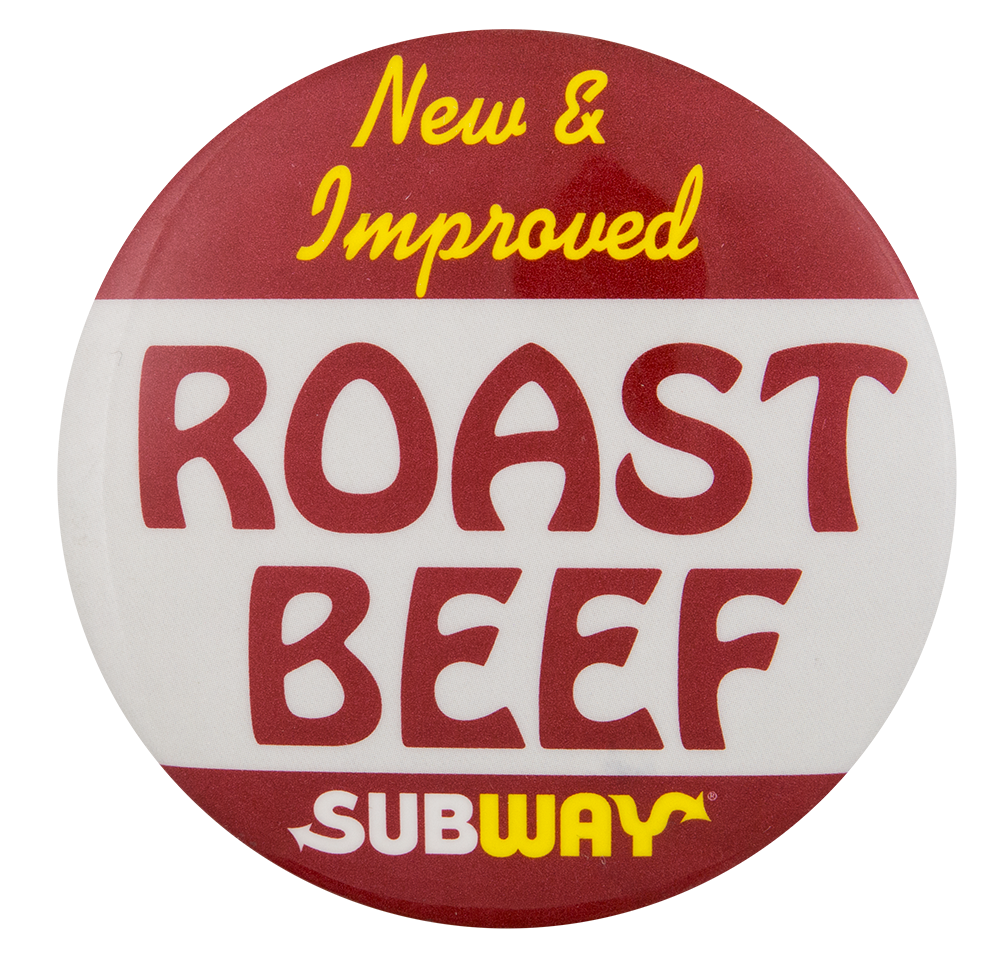
Text on Button New & Improved ROAST BEEF SUBWAY
Image Description

Maroon button with a large white stripe in the middle. Yellow and maroon text. 

Back Style
The Shape
The Size
Additional Information

Subway, a popular American sandwich fast food chain, was founded in 1965 by 17-year-old Fred DeLuca, who opened a submarine sandwich shop in Birdgeport, Connecticut to help fund his way through medical school. With a $1,000 loan from a friend, DeLuca opened Pete's Submarines. DeLuca opted to change the name because when he said it in his Brooklyn accent, people often misheard it as "Pizza Marines" (McFadden, 2015). The store was rebranded as "Subway" in 1968 when it was franchised. 

Sources

"History." (n.d.) Subway. Retrieved from http://www.subway.com/en-us/aboutus/history.

McFadden, Robert D. "Fred DeLuca, Hands-on Co-Founder of Subway Sandwich Chain, Dies at 67." (2015, Sept 15). New York Times. Retreived from http://www.nytimes.com/2015/09/16/business/fred-deluca-co-founder-of-su…

Catalog ID AD0192

Studebaker

Category
Additional Images
Sub Categories
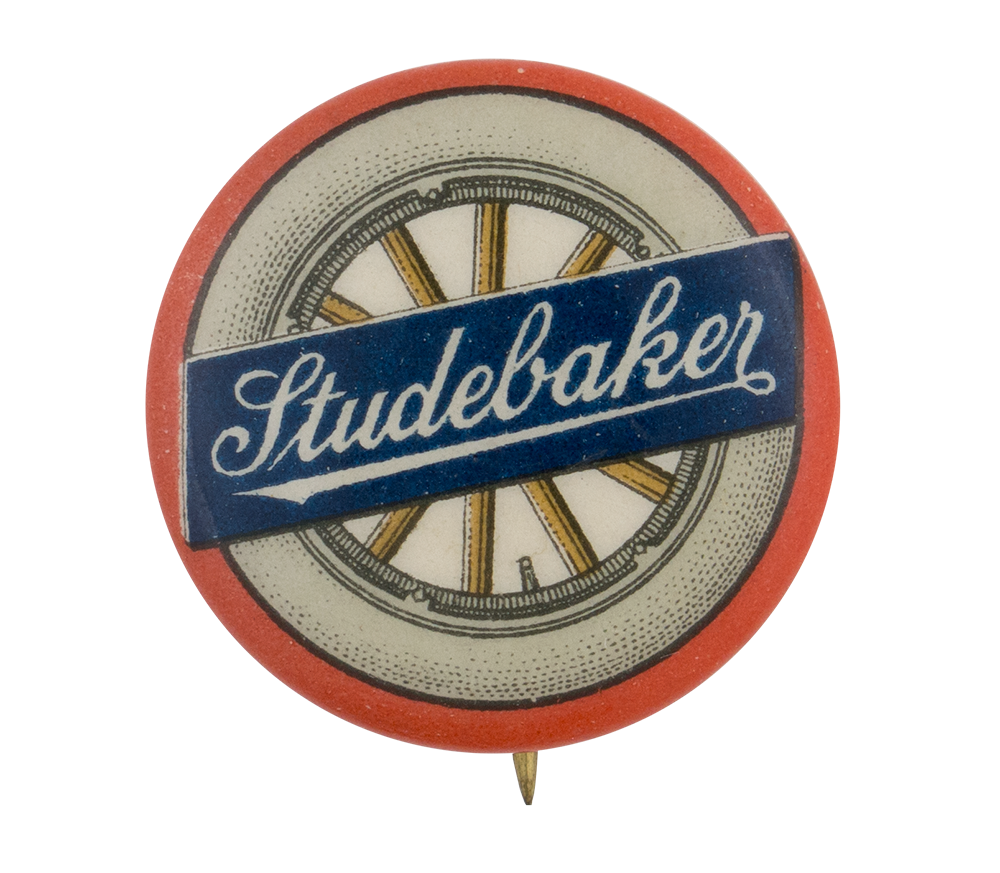
Text on Button Studebaker
Image Description

White text on a blue banner across an illustration of a wheel with an outer red edge.

Back Paper / Back Info

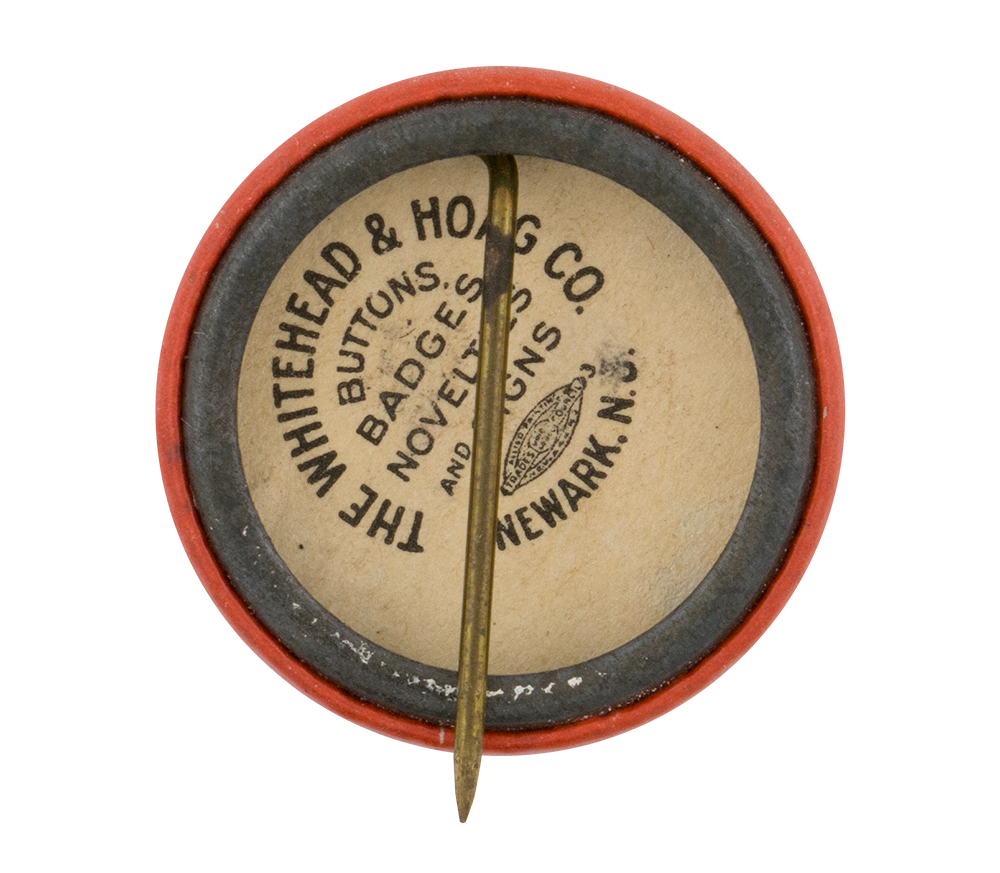
The Whitehead & Hoag Co. Buttons, Badges, Novelties and Signs (union bug) Newark, N.J.,

Back Style
The Shape
The Size
The Manufacturer
Additional Information

Founded in 1852 in Indiana, Studebaker produced wagons for farmers, miners, and the military. The company began manufacturing automobiles in 1902. The first gasoline automobile the company produced was released twelve years later. Over the next 50 years, the company became known for its quality and reliability. However, the company went defunct in 1967 because of financial problems.

Catalog ID AD0687