I Was in the Doghouse

Category
Additional Images
Sub Categories
Text on Button I WAS IN THE DOGHOUSE Mack KEITH SMYKAL ASSOCIATES
Image Description

Black text and an illustration of a doghouse and a dog on an orange background

Back Style
The Shape
The Size
Additional Information

This button promotes Mack Trucks, a large manufacturer of heavy-duty vehicles. Representing the toughness and tenacity of Mack Trucks is “Mack the Bulldog,” the company’s signature mascot.

Mack Trucks was a long-time client of Keith Smykal Co., which created promotional merchandise for corporations. Much of the merchandise included high-quality, artistic pieces such as belt buckles, porcelain figurines, key chains, and ashtrays, which are valued and considered to be collectibles today. 

Catalog ID AD0588

I Have Slurped

Category
Additional Images
Sub Categories
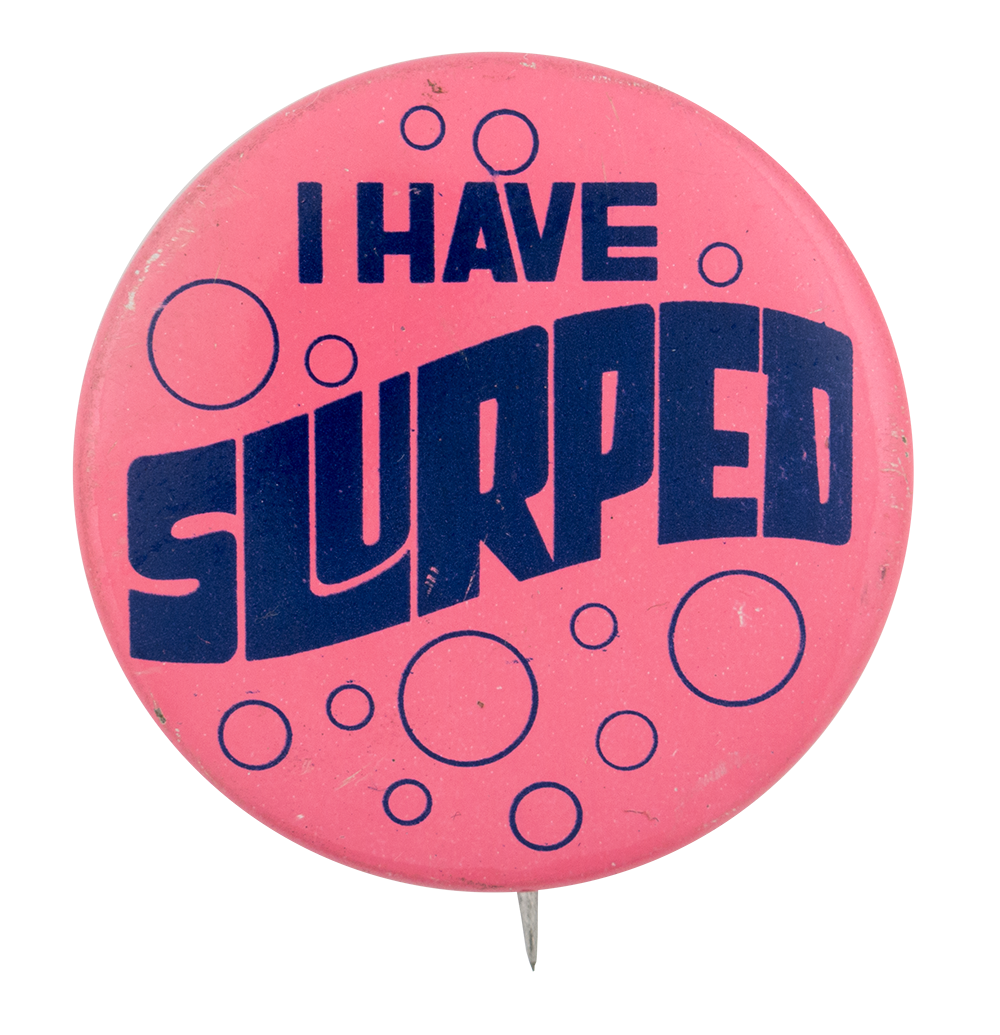
Text on Button I HAVE SLURPED
Image Description

Blue text on a pink background with blue bubbles

Back Style
The Shape
The Size
Year / Decade Made
Additional Information

Slurpee is a flavored frozen drink sold exclusively in 7-Eleven stores. It was created in 1966 as part of a licensing deal with the Icee Company to sell their product in 7-Eleven stores under different branding. This button from a 1967 advertising campaign also included individual buttons for the Sticky Icky, Redeye, Moon Shine, Pink Fink, Adults Only, Kissin Cousin, and Gully Washer flavors.

Catalog ID AD0587

I Drink Milk

Category
Additional Images
Sub Categories
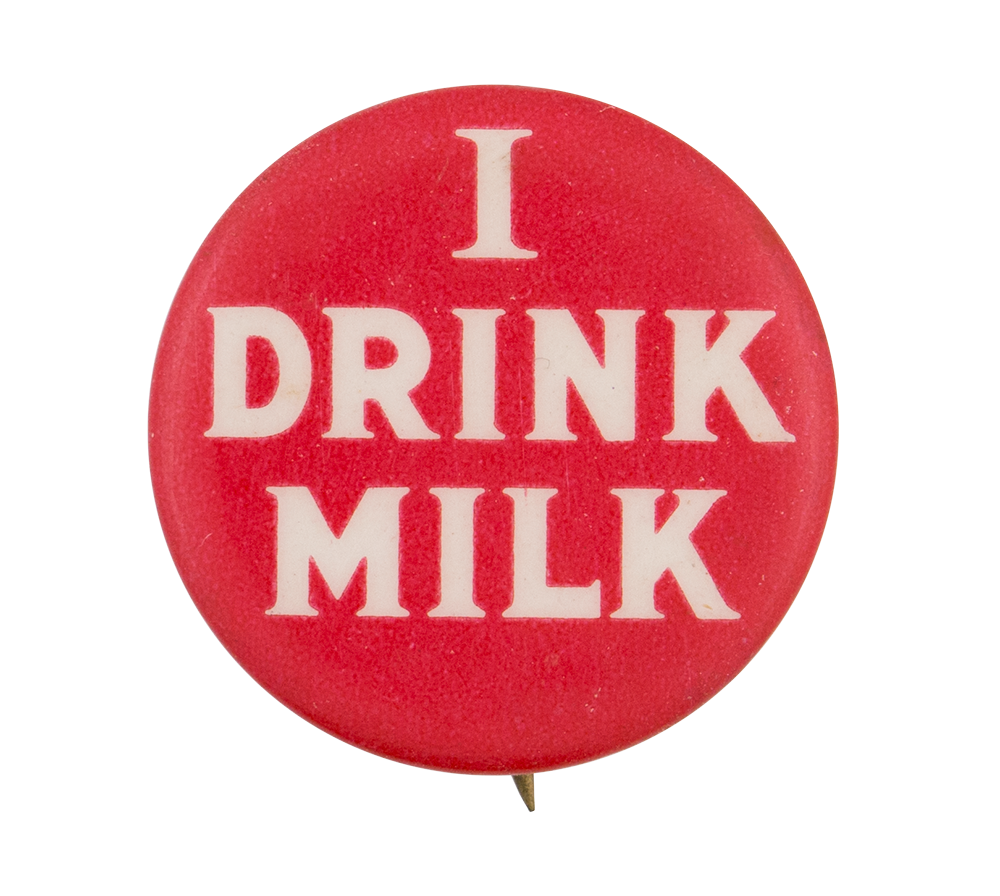
Text on Button I DRINK MILK
Image Description

White text on a red background

Back Style
The Shape
The Size
Additional Information

In the 1940s, federally subsidized milk advertising began under the Works Progress Administration (WPA), part of FDR's New Deal. The WPA commissioned artists to paint posters advertising milk, which had a dual purpose -- to employ artists and to increase the demand for milk, which, in turn, would help dairy farmers. Since then, milk campaigns have continued with catchy slogans such as "Milk Matters", "Milk Life", and "Got Milk?".

Catalog ID AD0586

Hungry Charley's

Category
Additional Images
Sub Categories
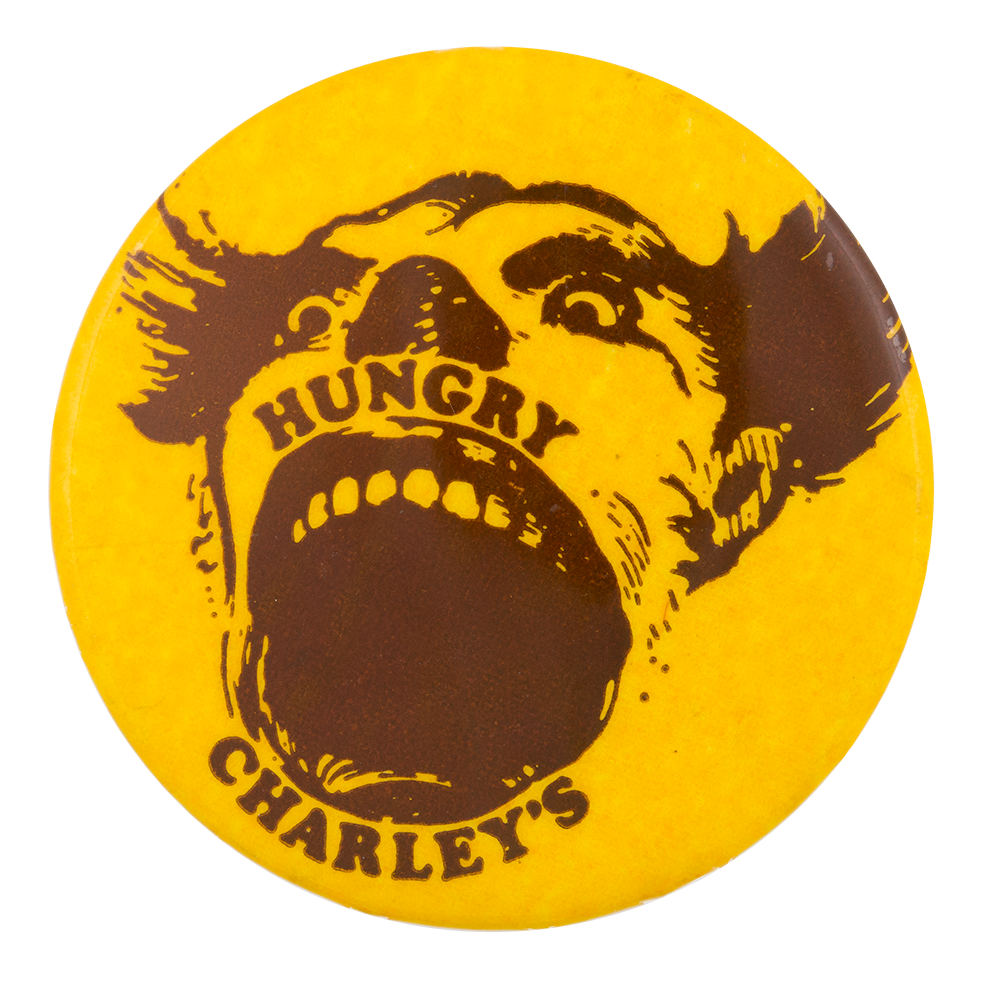
Text on Button HUNGRY CHARLEY'S
Image Description

Illustration of a face with an open mouth and text above and below the mouth on a yellow background

Back Style
The Shape
The Size
Additional Information

Hungry Charley's was a small chain of bars and restaurants serving college campuses in the Northeast in the 1970s. The franchise near the campus of Syracuse University was particularly popular, operating for over 25 years. 

Catalog ID AD0580

High Times

Category
Additional Images
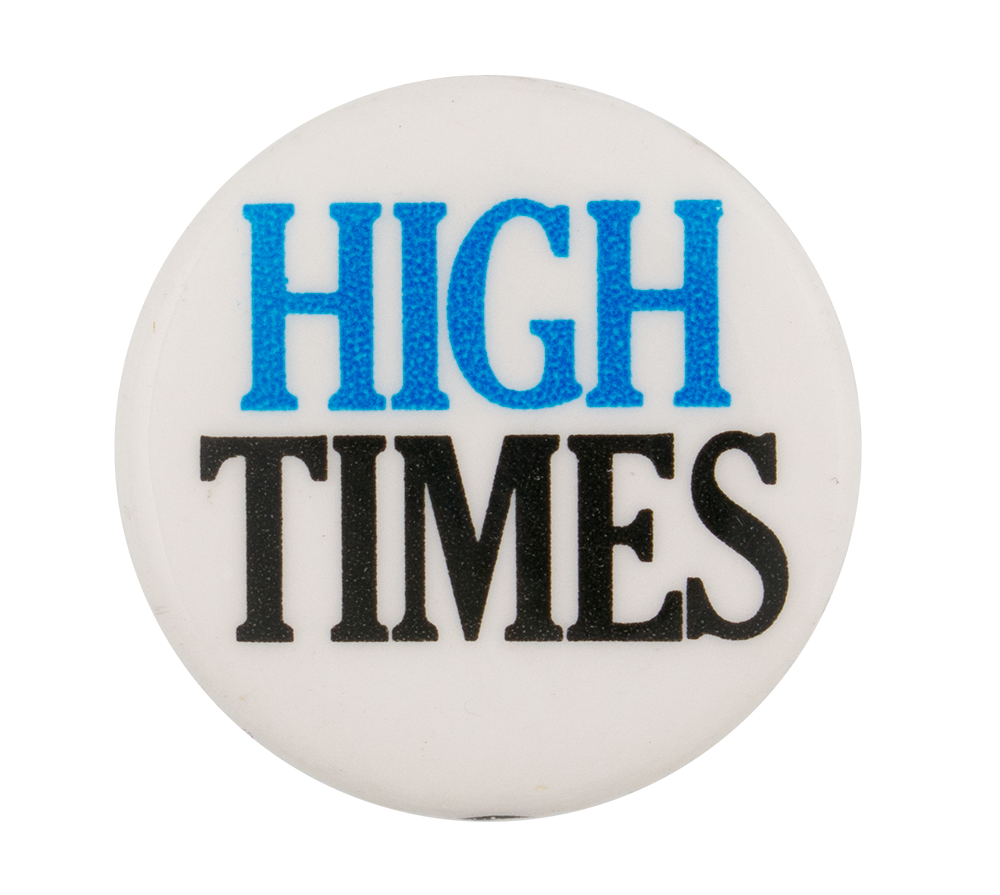
Text on Button HIGH TIMES
Image Description

Blue and black text on a white background

Curl Text union bug
Back Style
The Shape
The Size
Additional Information

High Times magazine was founded in 1974 by journalist and activist Tom Forcade. The publication was meant to be a standalone, cannabis-focused parody of Playboy magazine, but that inaugural issue was so successful that it became a monthly publication. The magazine is focused on marijuana and its associated subculture, and has featured contributions from writers such as William S. Burroughs, Truman Capote, Kinky Friedman, Debbie “Blondie” Harry, Joey Ramone, Hunter S. Thompson, Andy Warhol, Robert Anton Wilson, and Frank Zappa.

Catalog ID AD0583

Chessie

Category
Additional Images
Sub Categories
Text on Button Chessie
Image Description

Black and white illustration of a cat under a blanket with black text on a white background

Curl Text CHARLES PROD. CO. ROCKVILLE, MD 20852
Back Style
The Shape
The Size
The Manufacturer
Additional Information

The Chesapeake and Ohio Railway was built in Virginia in 1869. After expansions through other states, C&O became part of the Chessie System in 1972. Chessie is also the name of the kitten that became the railroad’s trademark in 1933 as a way to advertise the new passenger trains with the phrase “Sleep Like a Top” and eventually “Sleep Like a Kitten." 

Catalog ID AD0571

Orange Crush Here's How

Category
Additional Images
Sub Categories
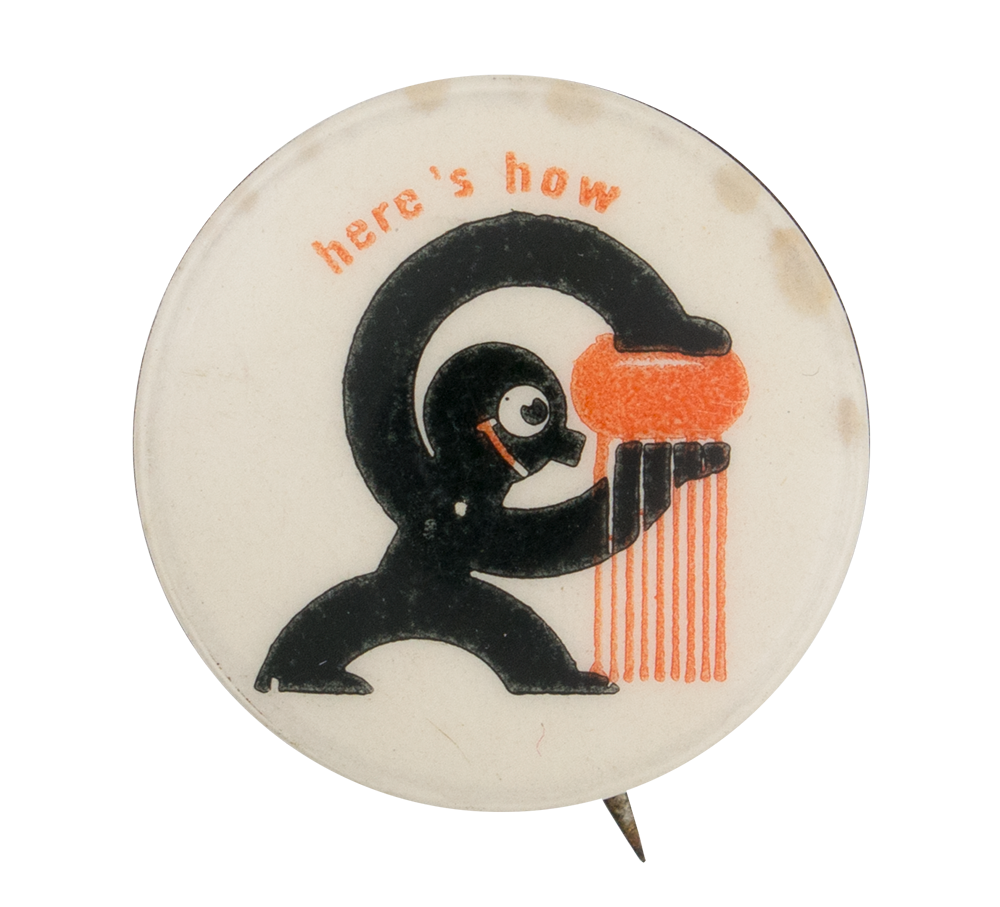
Text on Button here's how
Image Description

Illustration of a character with arms making a C shape and squeezing an orange with orange text on a white background

Back Style
The Shape
The Size
Year / Decade Made
Additional Information

Created by California chemist Neil C. Ward and known as “Ward’s Orange Crush,” Orange Crush was a beverage made with real orange pulp until 1930. Ward merged “Ward’s Orange Crush” business with Clayton J. Howell’s “Howell’s Orange Julius” business in 1911, and the beverage became known as Orange Crush. Crushy, the advertising logo, was a symbol of Orange Crush and appeared on Orange Crush bottle labels, signs in auto garages and stores, and pinback buttons. Crushy squeezing the flavor out of an orange became the symbol of the soda. Crushy’s appearance changed slightly over the years.

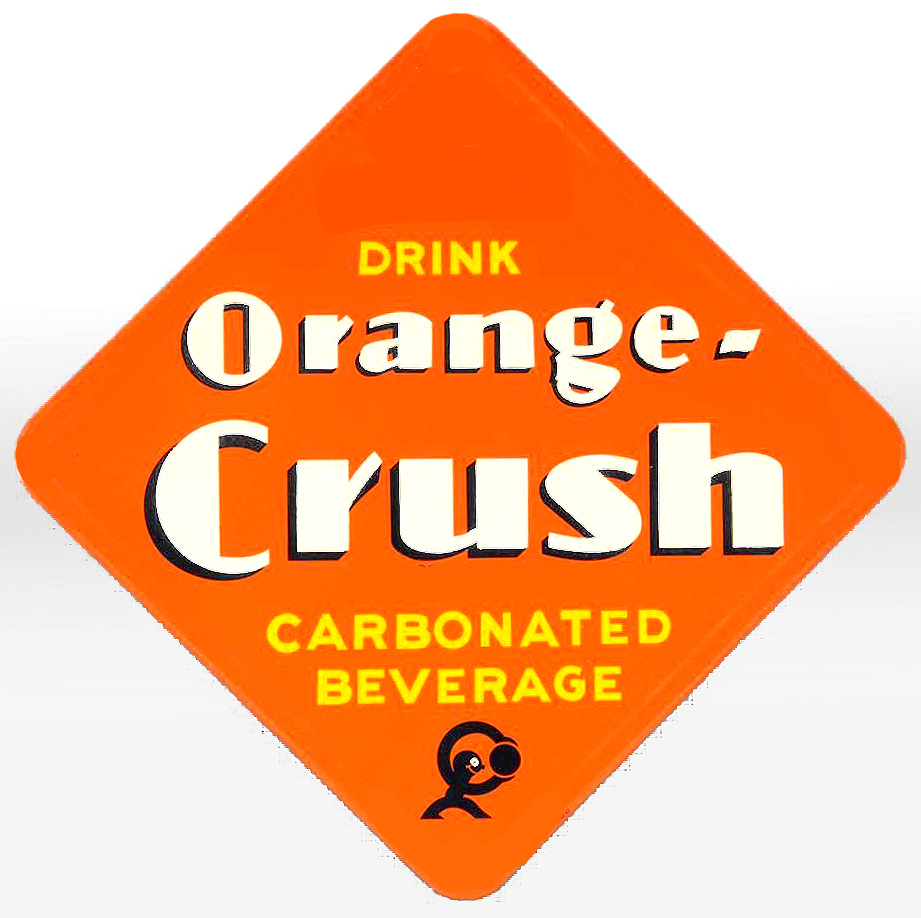
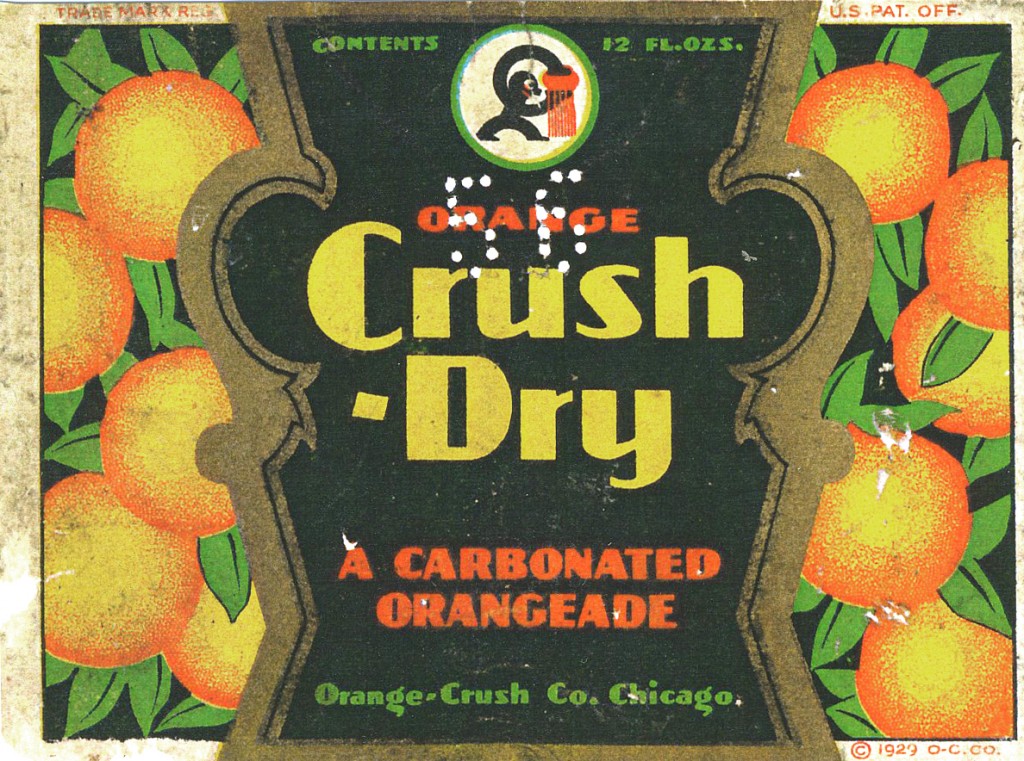
Bottle labels also featured Crushy, the rectangular label dates from 1929 bottles, while the diamond shape label is from circa 1920.

Sources

Sedelmaier, J.J. (2019, May 15). Vintage orange crush soda bottles take a ribbing. https://www.printmag.com/design-inspiration/vintage-orange-crush-soda-bottles-take-a-ribbing/

Catalog ID AD0585

Heinold Commodities

Category
Additional Images
Sub Categories
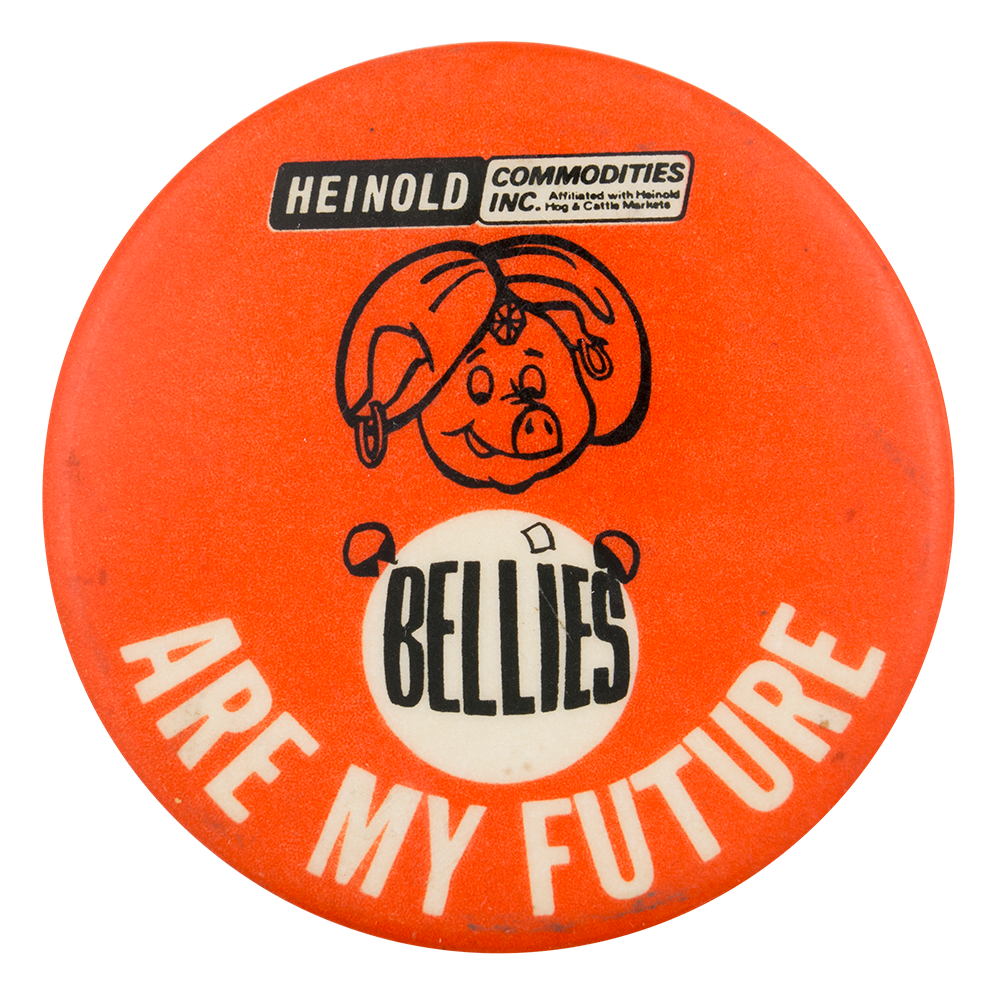
Text on Button HEINOLD COMMODITIES INC. BELLIES ARE MY FUTURE
Image Description

Illustration of a pig's head with black and white text on an orange background

Back Style
The Shape
The Size
Year / Decade Made
Additional Information

Harold Heinold from Kouts, Indiana, was the founder of Heinold Hog Market, which bought large quantities of hogs from farmers and resold them to packers. Heinold Hog Market operated first in Indiana and expanded to 13 states in 16 years. Later branching out to include cattle and becoming Heinold Hog and Cattle Markets, Harold Heinold wrote rules and specifications for the Chicago Mercantile Exchange for trading hog futures in 1966. In 1969, Heinold founded Heinold Commodities, Inc. on the Chicago Mercantile Exchange.

Sources

Heinold highlights. (1998 September 15). Retrieved from https://www.nwitimes.com/uncategorized/heinold-highlights-graphic/artic…

Catalog ID AD0584

Hatchet Brand

Category
Additional Images
Sub Categories
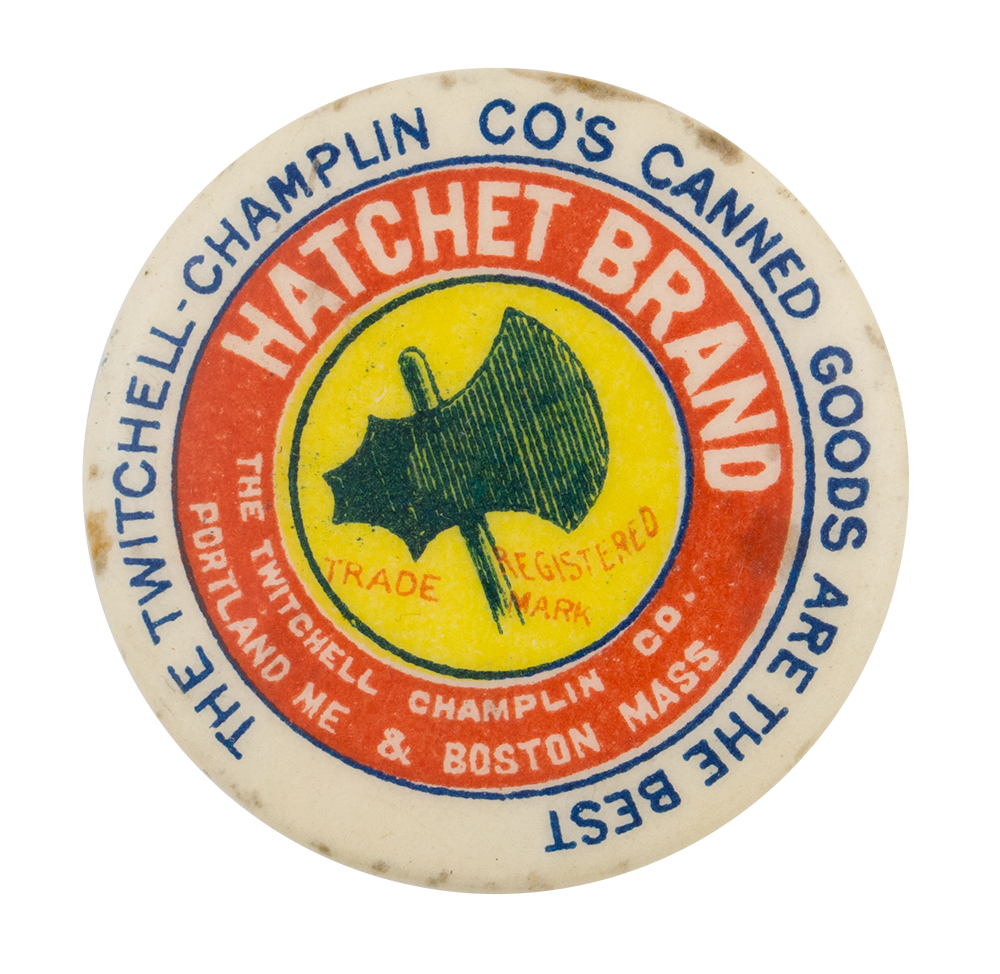
Text on Button THE TWITCHELL CHAMPLIN CO'S CANNED GOODS ARE THE BEST HATCHET BRAND TRADE MARK REGISTERED THE TWITCHELL CHAMPLIN CO. PORTLAND ME & BOSTON MASS
Image Description

Illustration of a hatchet in a yellow circle with red text, an outer red ring, then a white ring with blue text

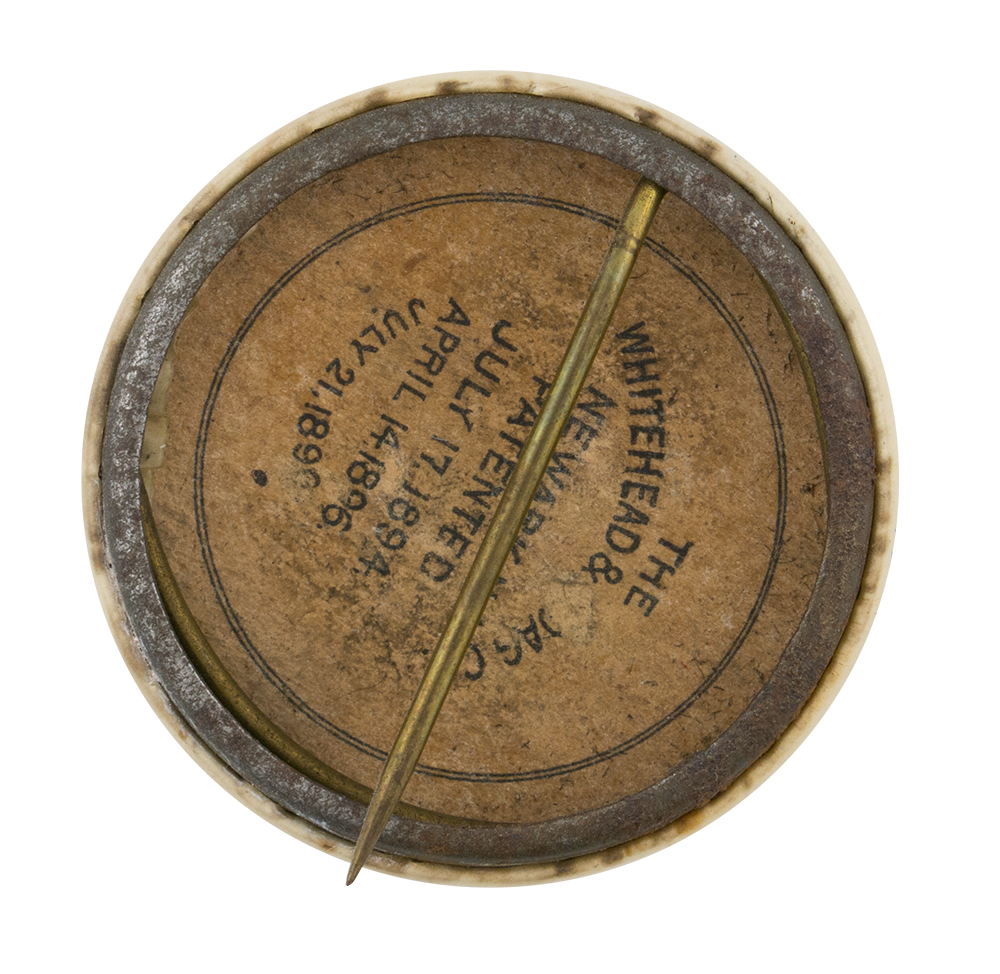
Back Paper / Back Info

THE WHITEHEAD & HOAG CO. 
NEWARK N.J.
PATENTED
JULY 17 1894
APRIL 14, 1896, JAN 21, 1896

Back Style
The Shape
The Size
The Manufacturer
Additional Information

John Q. Twitchell and James P. Champlin started Twitchell, Champlin & Co., a wholesale grocer and extract bottler, around 1880 in Portland, Maine. In 1903, they added a canning business, selling canned peas, corn, string beans, raspberries, strawberries, and fish. They later expanded to production in other parts of New England and sold their canned goods under the Hatchet brand name. 

The historic Twitchell-Champlin Company building on Merrill’s Wharf was built in stages between 1884 and 1924. In 1962, it was converted into a cold storage warehouse. The Portland Waterfront National Register Historic District boundaries were expanded to include Merrill’s Wharf, making the building eligible for historic tax credits, which were used for rehabilitation of the building in 2011. 

Catalog ID AD0582

Happy New Dodge

Category
Additional Images
Sub Categories
Text on Button HAPPY NEW DODGE
Image Description

White and black text on a red background

Back Style
The Shape
The Size
Year / Decade Made
Additional Information

In 1900, brothers John Francis and Horace Dodge established the Dodge Brothers Company, manufacturing ball-bearing bicycles in Detroit, MI. In 1903, the brothers shifted focus completely to automobile parts. Henry Ford approached Dodge Brothers and offered a 10% stake in Ford Company if their plants could manufacture Ford parts. Dodge Brothers held a major portion of the industry as they continued to profit from Ford parts and designed their own. Dodge Brothers went public on July 17, 1914. Although John Francis and Horace Dodge died in 1920, the company has experienced great success with iconic advertising campaigns such as “Join the Dodge Rebellion” in 1966-1967 and “Dodge Fever” in 1967-1969.

Sources

1972 Fargo Truck Ad. (n.d.). Retrieved July 06, 2020, from http://oldcaradvertising.com/index.html

1972 Plymouth Ad.. (n.d.). Retrieved July 06, 2020, from http://oldcaradvertising.com/index.html

Sadler, B. (2019, March 13). Home. Retrieved July 06, 2020, from https://www.motorcities.org/story-of-the-week/2019/remembering-the-famo…

Vintage lot of "DODGE" pinbacks/buttons,1 flicker pin. (2011). Retrieved July 06, 2020, from https://www.antiquesnavigator.com/d-523229/vintage-lot-of-dodge-pinback…

Catalog ID AD0581