Mr. Chip of Keiller

Category
Additional Images
Sub Categories
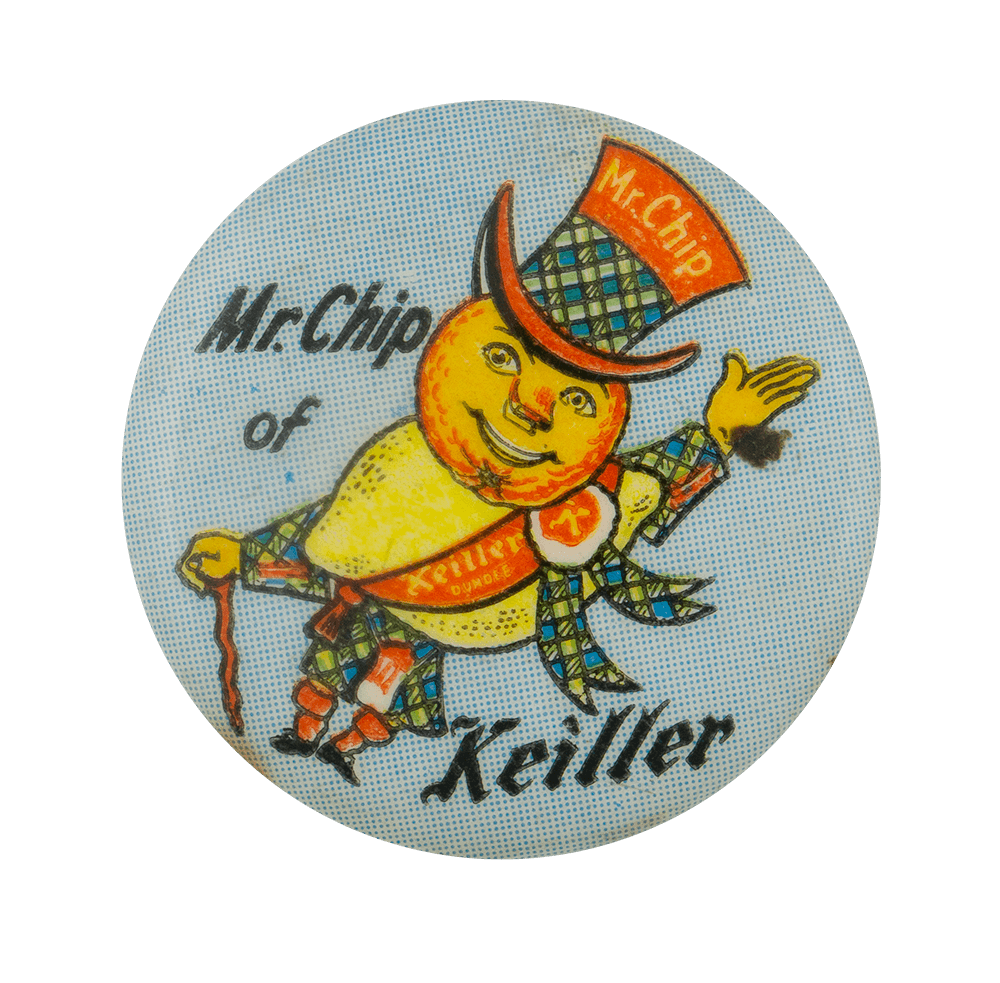
Text on Button Mr.Chip Mr. Chip of Keiller
Image Description

Illustration of a person made of fruit dressed in top hat and kilt

Back Style
The Shape
The Size
Additional Information

Keiller is a well-known brand of marmalade named after Janet Keiller (1735-1813) who, in 1797, adapted an existing recipe for marmalade by adding orange rind. The Keiller brand was bought by Crosse & Blackwell Ltd in 1920. After a number of changes of ownership, it was eventually subsumed into the Roberston’s brand in 1988.​ Keiller was a leading brand of chip-marmalade (containing the fruit rind) and a major competitor to the likes of the Roberston’s Golly and William Moorhouse Sunny-Sunglow brands. In its heyday, Keiller marmalade was exported worldwide especially to expatriates throughout the British Empire. Keiller stoneware jars are still found everywhere.

Alex Keiller opened a new factory in Guernsey (Channel Isles) to produce his Dundee (Chip) Marmalade under the same label. The new factory accounted for over a third of all Keiller’s output and was established to take advantage of the island’s exemption from the new Sugar Tax. The Guernsey factory operated there from 1857 to 1879 which also gave the company better access to the more lucrative markets of South-East England, including London.

Sources

Stuart. (2012, May 2). Mr Chip of Keiller - Dundee marmalade promotional badge (1950's or earlier). [Photograph]. Flickr. Retrieved October 14, 2019, from https://www.flickr.com/photos/23885771@N03/7135273407.


Catalog ID AD0941

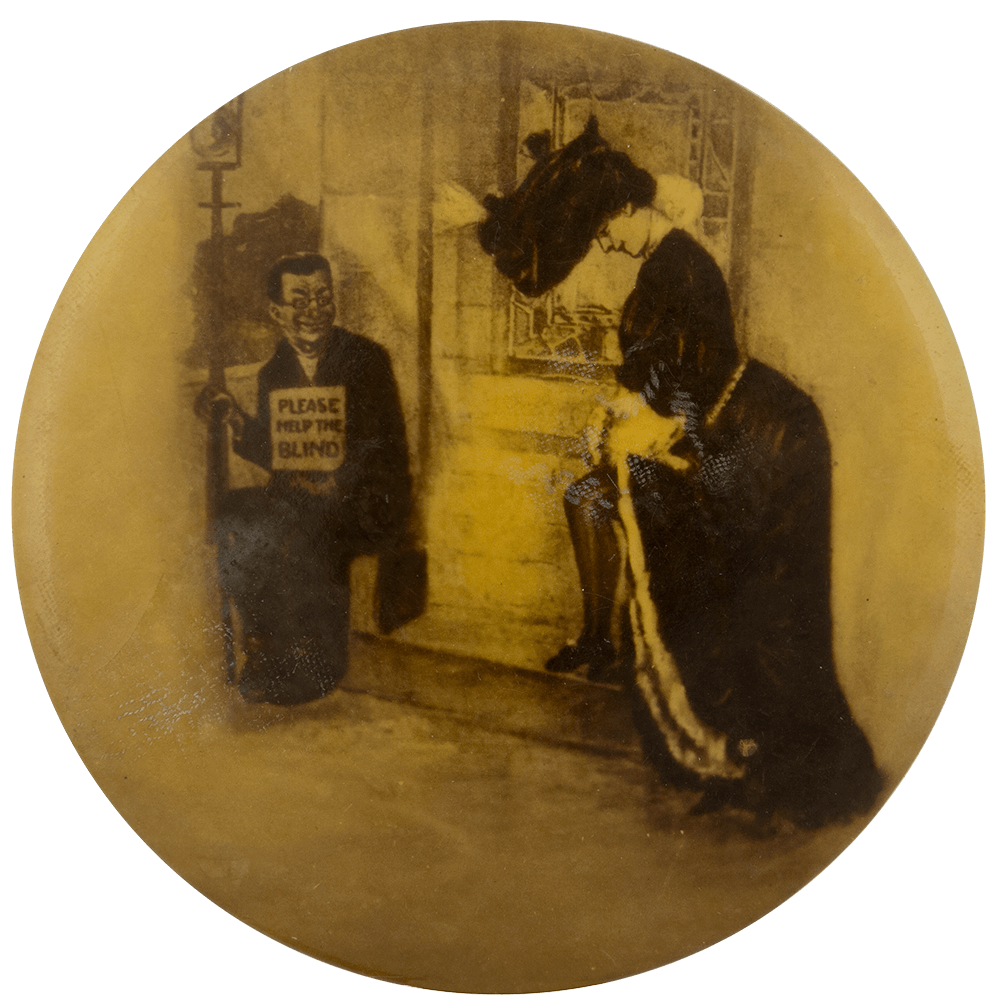
Please Help the Blind

Category
Additional Images
Sub Categories
Text on Button PLEASE HELP THE BLIND
Image Description

Illustration of a woman hiking up her dress to fix her stocking while a man stares from the lamp post holding a sign that falsely indicates he is blind.

Back Style
The Shape
The Size
Additional Information

An Edwardian naughty joke from the early 1900s, the illustration portrays a woman seeing a "blind" man, which gives her no accord as she lifts her skirt up to daringly show her leg. The joke is on the woman because the blind man isn’t blind, which can be inferred from his glasses, head tilt, and facial expression. Skirts in that era revealed no more than an ankle, as that was considered modest for the time. The woman’s fashion is very up to date and her silhouette has the fashionable S-bend, bodice shows the “pigeon-breasted” monobosom, and large hat is carefully pinned to sit forward on her head. Similar fashion can be seen in a 1903 Edison silent film, The Gay Shoe Clerk, whose plot similarly features a woman who gives an eyeful to an unfortunate shoe clerk.

Sources

03 The Gay Shoe Clerk (1903). Youtube.com. (2020). Retrieved from https://www.youtube.com/watch?v=3qW3xVv9aDE.

Catalog ID AR0445

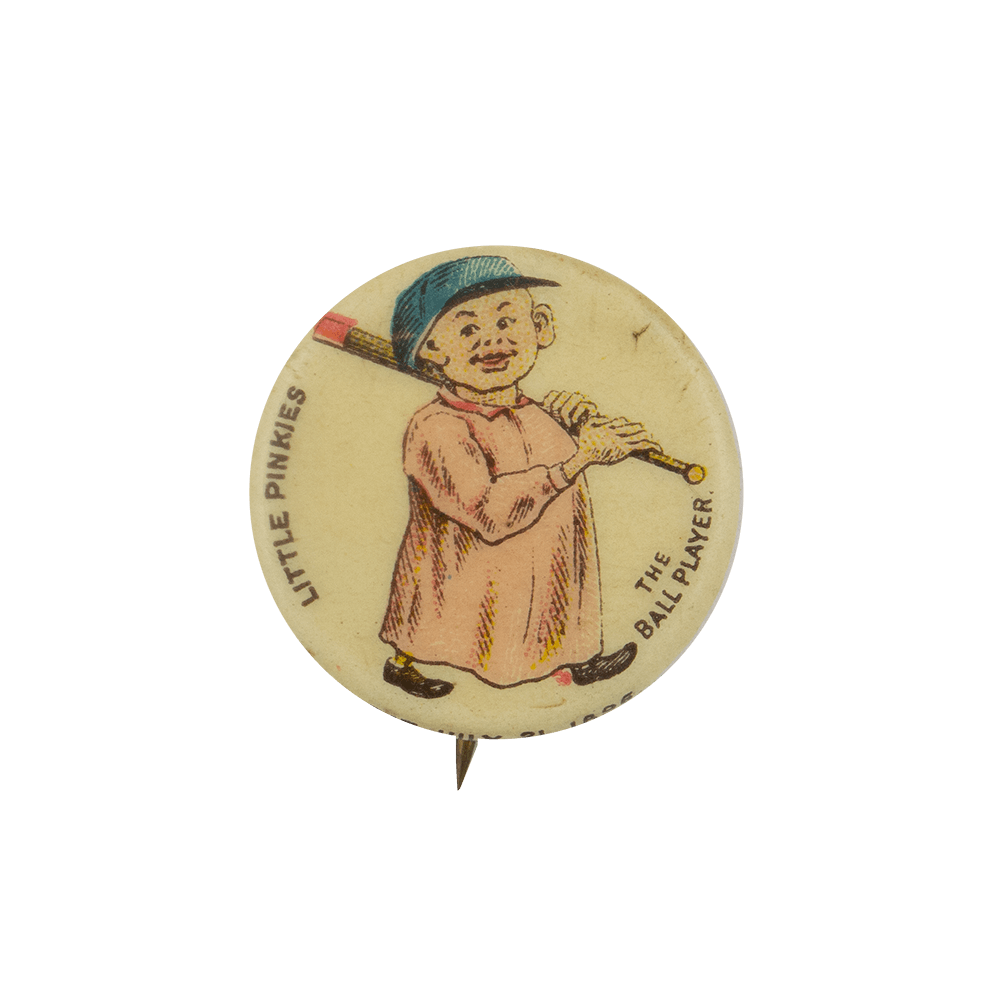
Little Pinkies Ball Player

Category
Additional Images
Sub Categories
Text on Button LITTLE PINKIES THE BALL PLAYER
Image Description

Illustration of boy in baseball hat and pink nightgown holding a baseball bat on a white background.

Back Paper / Back Info

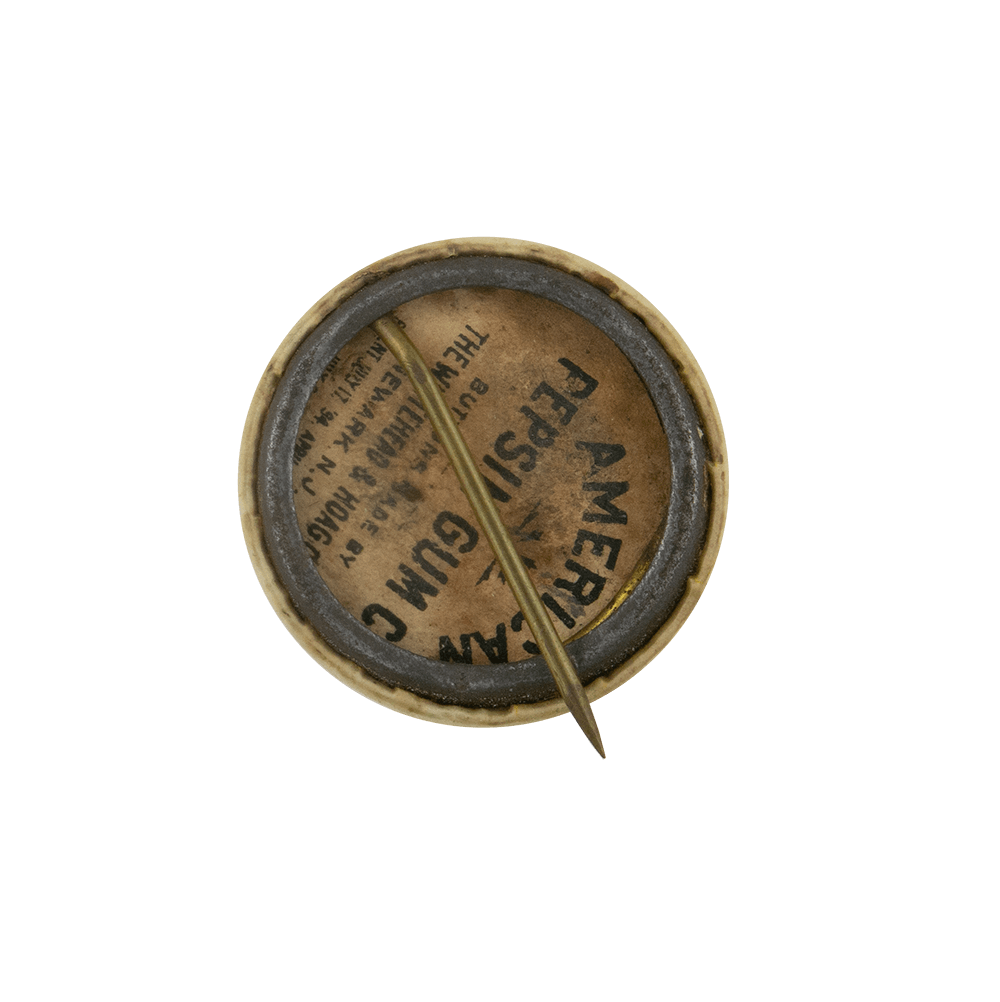
AMERICAN PEPSIN GUM CO BUTTONS MADE BY THE WHITEHEAD & HOAG CO.NEWARK, N.J. PATENT JULY 17, '94 APRIL 14, '96 JULY 21, 1896

Curl Text PAT. JULY 21, 1896.
Back Style
The Shape
The Size
Year / Decade Made
The Manufacturer
Additional Information

The Little Pinkies were a series of 20 pinback buttons made by Whitehead & Hoag Co. for American Pepsin Gum to give away in their packages of gum. The Little Pinkies appeared in 1896. Some say that they were a very early comic strip. Others suggest the characters were inspired by the popularity of Palmer Cox’s Brownies.

Pepsin powder was used in many chewing gums in the 1890s as is was thought to cure indigestion, or dyspepsia as it was called then. In fact, Pepsi-Cola was marketed as a digestion aid around the time this button was made.

For other Little Pinkies buttons in our collection, you can visit the Policeman, the Colonel, and the Boot Black.

Sources

Little Pinkies Ball Player button. (2020). Keyman Collectible. http://keymancollectibles.com/pinsbuttons/pepsingumlittlepinkiespin.htm.

Little Pinkies The Policeman. (2020). Busy Beaver Button Museum. https://buttonmuseum.org/buttons/little-pinkies-policeman


Catalog ID AD0938

Little Pinkies Boot Black Shine

Category
Additional Images
Sub Categories
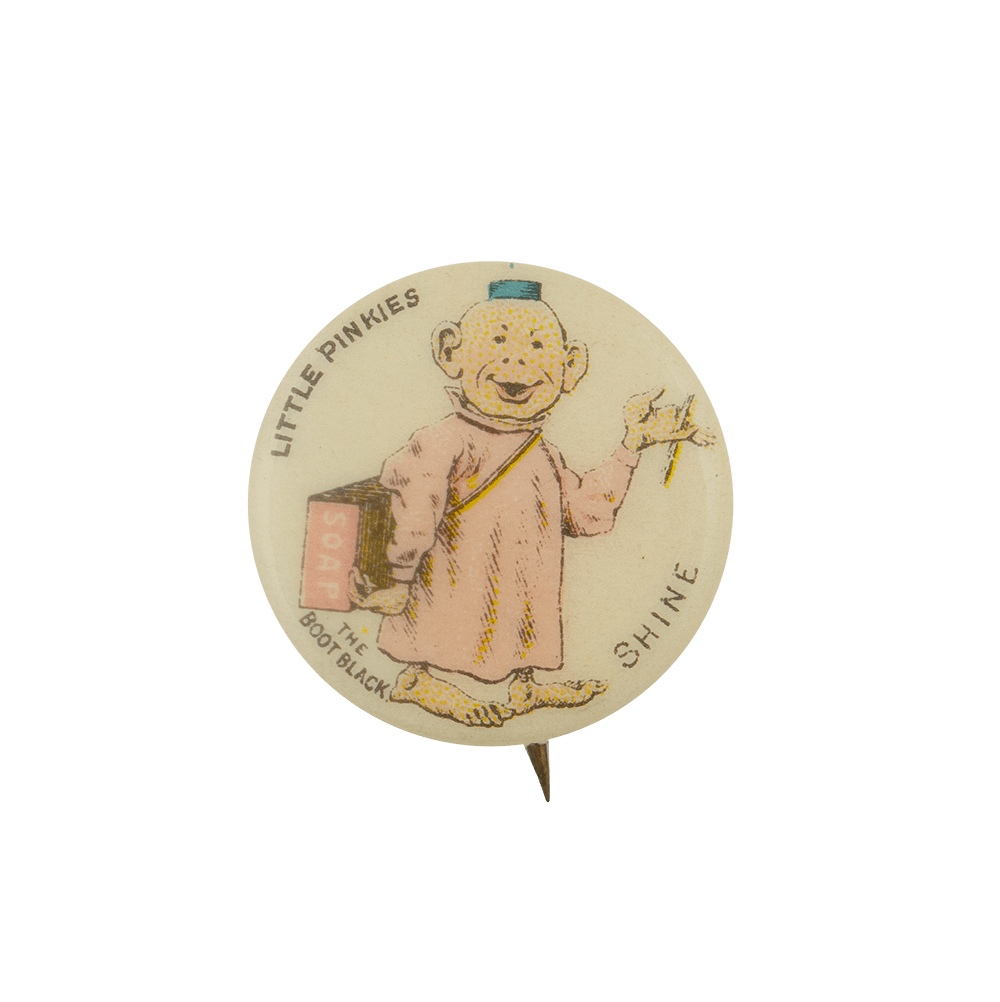
Text on Button LITTLE PINKIES THE BOOT BLACK SHINE
Image Description

Illustration of boy with blue fez in pink pajamas carrying soap box and pencil

Back Paper / Back Info

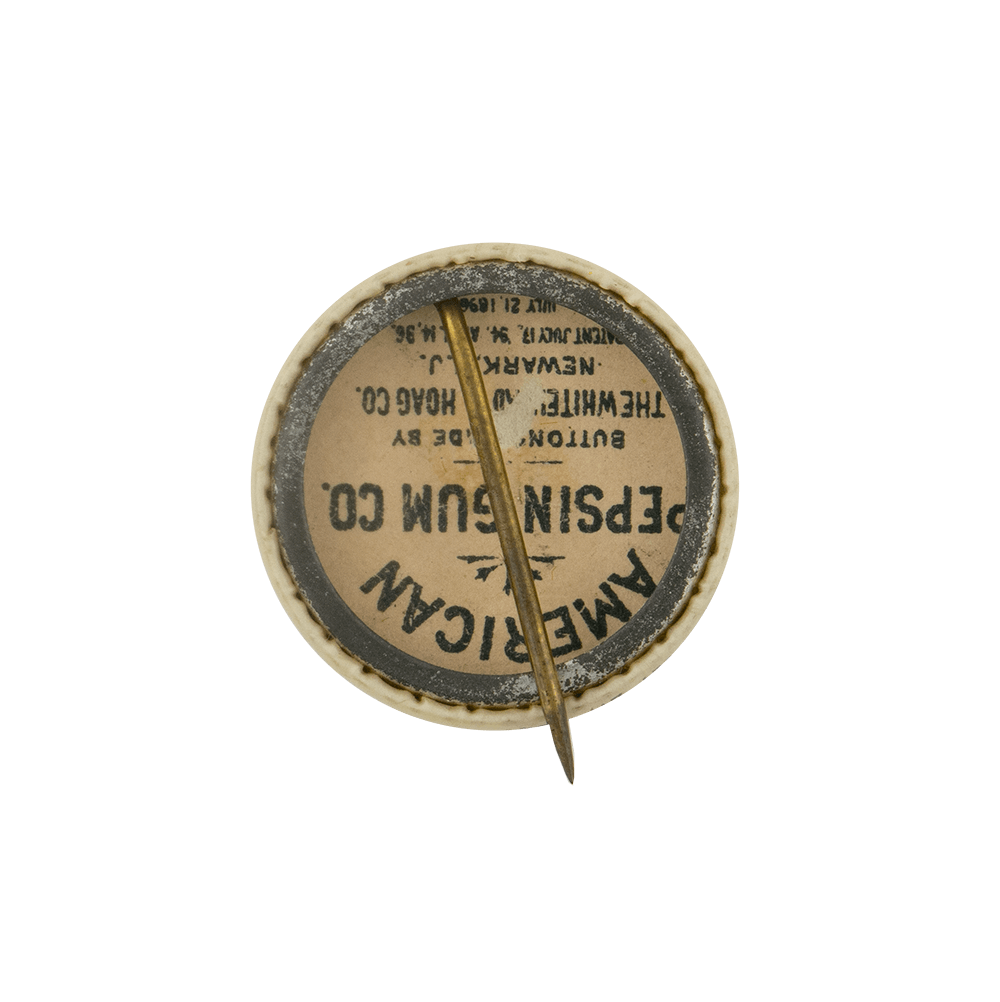
AMERICAN PEPSIN GUM CO BUTTONS MADE BY THE WHITEHEAD & HOAG CO.NEWARK, N.J. PATENT JULY 17, '94 APRIL 14, '96 JULY 21, 1896

Curl Text PAT. JULY 21, 1896.
Back Style
The Shape
The Size
Year / Decade Made
The Manufacturer
Additional Information

The Little Pinkies were a series of 20 pinback buttons made by Whitehead & Hoag Co. for American Pepsin Gum to give away in their packages of gum. The Little Pinkies are not very well documented. All sources say that they appeared in 1896. Some say that they were a very early comic strip. Others suggest the characters were inspired by the popularity of Palmer Cox’s Brownies.

Pepsin powder was used in many chewing gums in the 1890s as is was thought to cure indigestion, or dyspepsia as it was called then. In fact, Pepsi-Cola was marketed as a digestion aid around the time this button was made.

For other Little Pinkies buttons in our collection, you can visit the Policeman, the Colonel, and the Boot Black.

Sources

Little Pinkies Ball Player button. (2020). Keyman Collectibleshttp://keymancollectibles.com/pinsbuttons/pepsingumlittlepinkiespin.htm

Little Pinkies Pepsin Gum Pinbacks. (2020). Marklansdown.  http://www.marklansdown.com/pinbacks/pages/littlepinkiespepsingum.html

Little Pinkies The Policeman (2020). Busy Beaver Button Museum.  https://www.buttonmuseum.org/buttons/little-pinkies-policeman

Catalog ID AD0940

Little Pinkies Colonel

Category
Additional Images
Sub Categories
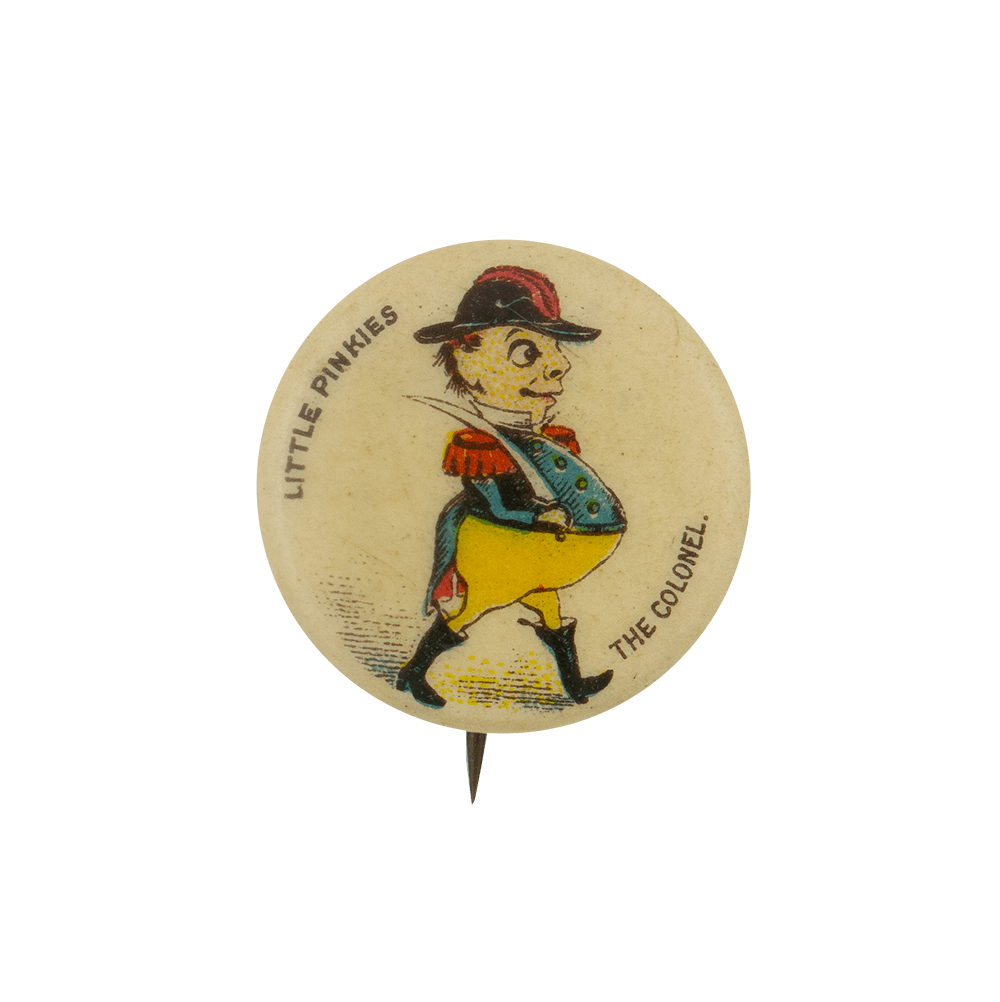
Text on Button LITTLE PINKIES THE COLONEL
Image Description

Illustration of soldier in blue coat and red hat on white background.

Back Paper / Back Info

AMERICAN PEPSIN GUM CO BUTTONS MADE BY THE WHITEHEAD & HOAG CO.NEWARK, N.J. PATENT JULY 17, '94 APRIL 14, '96 JULY 21, 1896

Curl Text PAT. JULY 21, 1896.
Back Style
The Shape
The Size
Year / Decade Made
The Manufacturer
Additional Information

The Little Pinkies were a series of 20 pinback buttons made by Whitehead & Hoag Co. for American Pepsin Gum to give away in their packages of gum. The Little Pinkies appeared in 1896. Some say that they were a very early comic strip. Others suggest the characters were inspired by the popularity of Palmer Cox’s Brownies.

Pepsin powder was used in many chewing gums in the 1890s as is was thought to cure indigestion, or dyspepsia as it was called then. In fact, Pepsi-Cola was marketed as a digestion aid around the time this button was made.

For other Little Pinkies buttons in our collection, you can visit the Policeman, the Colonel, and the Boot Black.

Sources

Little Pinkies Ball Player button. (2020). Keyman Collectible. http://keymancollectibles.com/pinsbuttons/pepsingumlittlepinkiespin.htm.

Little Pinkies The Policeman. (2020). Busy Beaver Button Museum. https://buttonmuseum.org/buttons/little-pinkies-policeman

Catalog ID AD0939

Not Always Right

Category
Additional Images
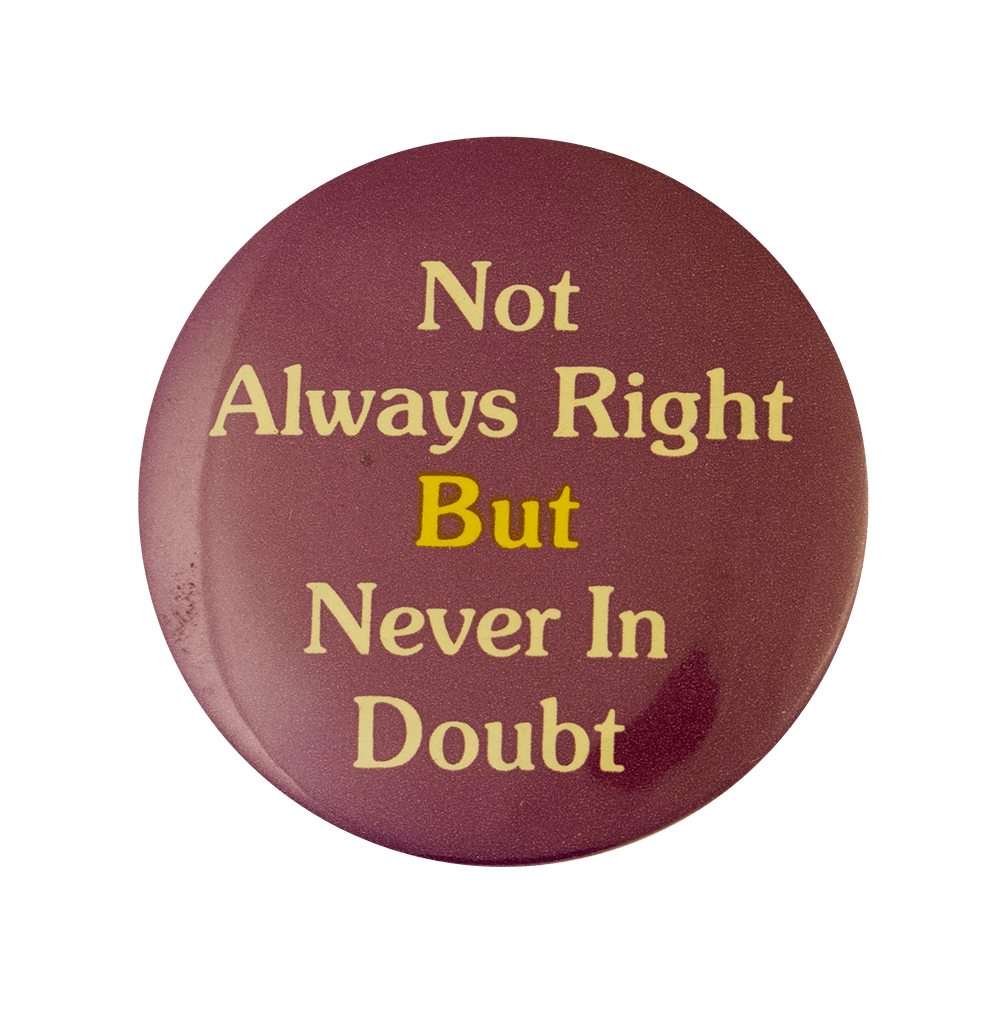
Text on Button Not Always Right But Never In Doubt
Image Description

Ivory and yellow text on purple background.

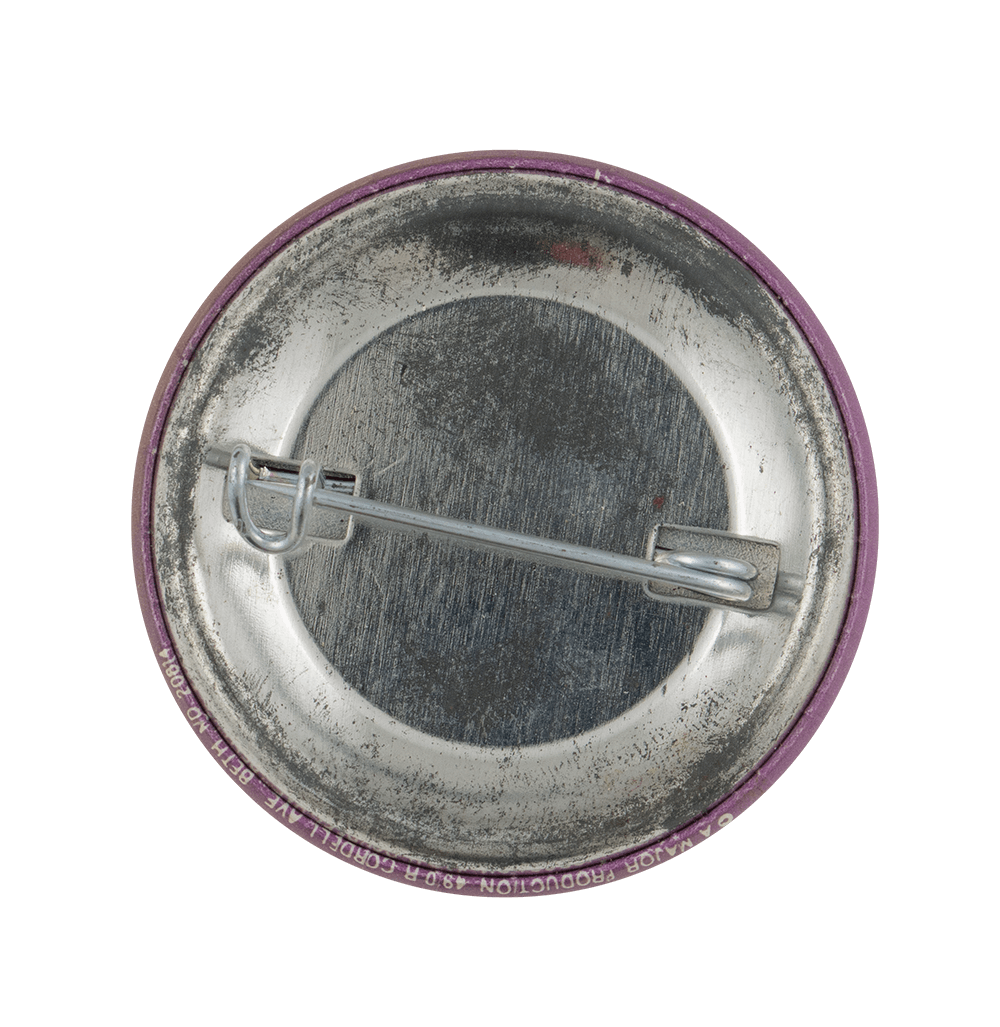
Curl Text CA MAJOR PRODUCTION 490 R CORDELL AVE BETH, ND 20814
Back Style
The Shape
The Size
Additional Information

"Not always right but never in doubt" is a phrase attributed to Davey Crockett (1786 – 1836) who was a US Congressman for the state of Tennessee. He joined in the Texas Revolution and died in the Battle of the Alamo.

Sources

Morrison, J. James Morrison | Watercress Press. Retrieved 20 September 2020, from http://watercresspress.com/?page_id=230

Catalog ID IB0692

ESP

Category
Additional Images
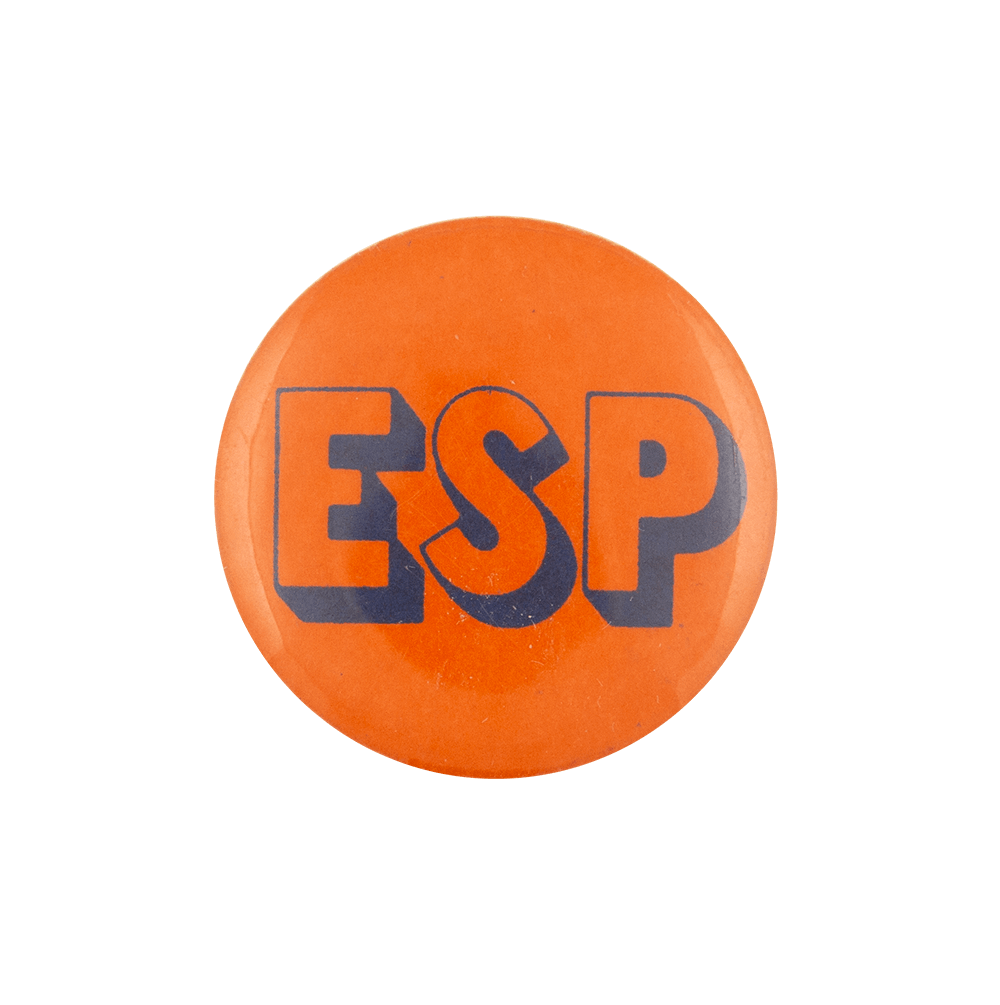
Text on Button ESP
Image Description

Blue outlined text on orange button.

Curl Text ACORN BADGE CO CHGO IL 753-7737
Back Style
The Shape
The Size
The Manufacturer
Additional Information

ESP is an acronym for Extrasensory perception. It is also called sixth sense and often relates to the idea of a "psychic sense" or a sense of the mind such as telepathy. The term was adopted by Duke University psychologist J. B.. Today, ESP is often considered pseudoscience by most, but it is still studied and believed to be true by others.

Catalog ID IB0690

No Reagan

Category
Additional Images
Sub Categories
Image Description

Image of red NO sign over black illustration of Ronald Reagan on white background

Curl Text 1981 ©EPHEMERA
Back Style
The Shape
The Size
Year / Decade Made
The Manufacturer
Additional Information

Ronald Reagan was the 40th president of the United States, serving in office from 1981-1989. He remains a divisive figure in American culture today; he is revered by political conservatives, while Democrats oppose his core tenants and policies. Reagan’s presidency embodied the “New Right,” and renewed social conservatism, a political philosophy committed to traditional values and social institutions. As president, Reagan escalated the Cold War, supporting anti-communist groups around the world with the goal of rolling back Communism. Reagan’s time in office is also defined by his economic policies. Commonly known as Reaganomics, the major economic policy objectives were to reduce the growth of government spending, reduce the federal income tax and capital gains tax, reduce government regulations, and tighten the money supply to reduce inflation.

Opposition to Reagan’s policies and values was a constant throughout his presidency, particularly in liberal circles and by left-wing activists. The most lasting opposition to Reagan comes from the music, particularly punk and hardcore music, from the 1980s. Reagan and his policies inspired a myriad of songs, leading up to the “Rock Against Reagan” concerts in 1984.

Sources

Course Hero Inc. (n.d.). 1980 Election and the Reagan Presidency. Retrieved from https://www.coursehero.com/sg/us-history/1980-election-and-the-reagan-p….

Reagan Doctrine, 1985. (2001). Retrieved from https://2001-2009.state.gov/r/pa/ho/time/rd/17741.htm.

Rettman, T. (2016, March 23). Why Ronald Reagan Was the Best Thing That Ever Happened to Punk Rock. Retrieved from https://www.vice.com/en_us/article/jmaz44/why-ronald-reagan-was-the-bes….

Catalog ID PO1072

Mondale Ferraro Blue

Category
Additional Images
Sub Categories
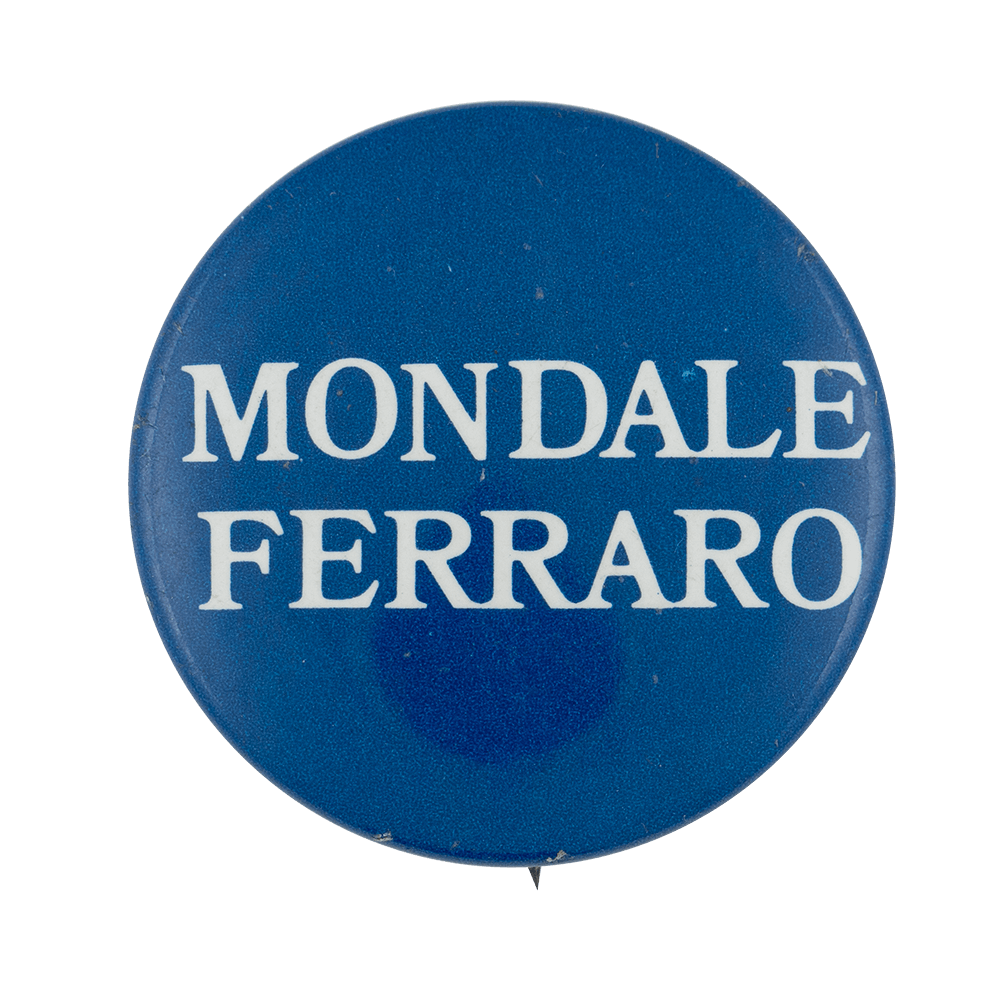
Text on Button MONDALE FERRARO
Image Description

White text on blue background

Curl Text LOCAL 772
Back Style
The Shape
The Size
Year / Decade Made
Additional Information

The American presidential election was held on November 6, 1984, in which Republican Ronald Reagan was elected to a second term, defeating Democrat Walter Mondale, a former U.S. vice president. Reagan won 49 states en route to amassing 525 electoral votes to Mondale’s 13—one of the biggest landslides in U.S. election history. The election was also notable for being the first time a major party had a woman on its ticket—Geraldine Ferraro, Mondale’s running mate.

Mondale made history by choosing as his running mate Geraldine Ferraro—the first woman selected by a major political party for its presidential ticket. At the time, Ferraro was a three-term congresswoman from New York, and it was hoped that her nomination would galvanize the campaign. It did initially, but the Democratic ticket was derailed almost immediately by a monthlong controversy over the finances of Ferraro and her husband, a New York real estate operator. The Mondale-Ferraro ticket attempted, without success, to find an issue that would resonate with voters. Reagan won virtually every demographic group except African Americans. His margin of victory over Mondale was nearly 17 million popular votes, the second largest in history; it was surpassed only by Richard Nixon’s margin over McGovern in 1972. His electoral landslide of 525–13 was second only to Franklin Roosevelt’s 523–8 margin over Alf Landon in 1936. Mondale carried only the District of Columbia (three electoral votes) by a convincing margin. He won his home state of Minnesota by a scant 3,800 votes (less than 0.2 percent).

Sources

Britannica, T. E. of E. (n.d.). United States presidential election of 1984. https://www.britannica.com/event/United-States-presidential-election-of….

Catalog ID PO1071