Destroy Corporate Rock

Category
Additional Images
Sub Categories
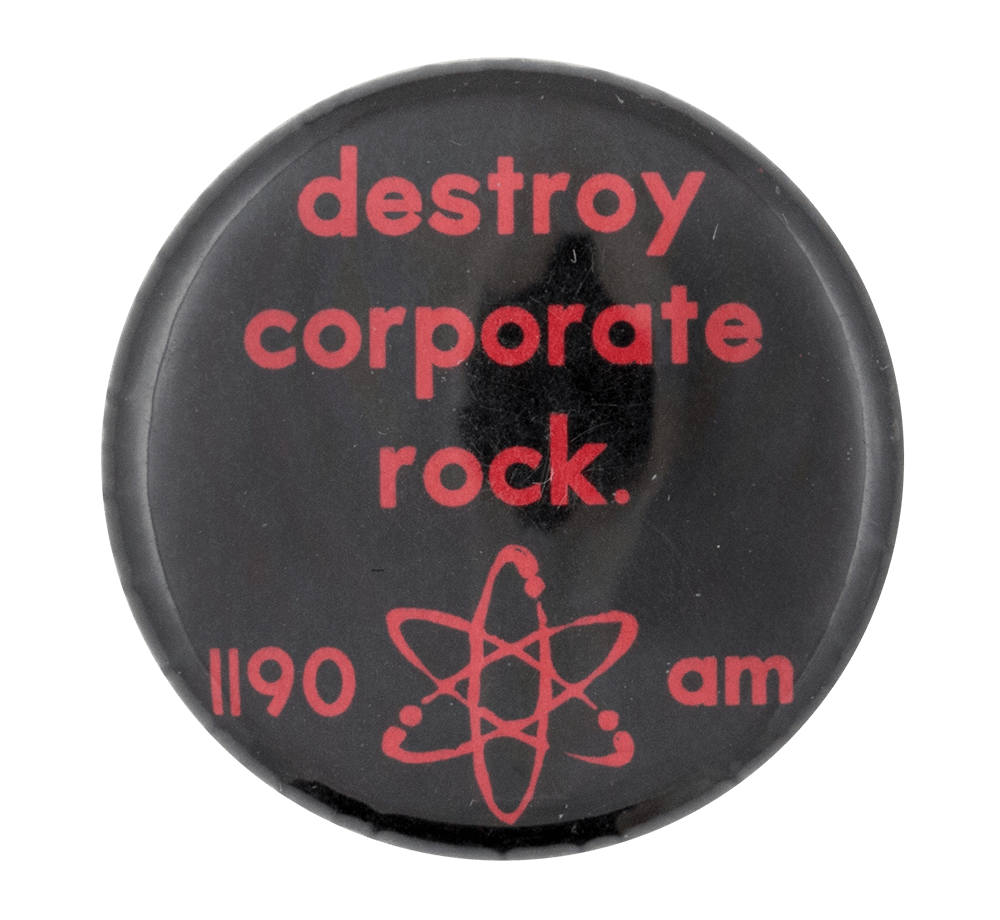
Text on Button destroy corporate rock 1190 am
Image Description

Red text and a red flower shape on a black background

Back Style
The Shape
The Size
Additional Information

KVCU AM 1190, more commonly known as Radio 1190, is an independent, non-profit college radio station based in Boulder, Colorado. Rock music dominated college radio airwaves in 1998 when Radio 1190 first began broadcasting from the basement of the University of Colorado Boulder’s student center. Many college radio stations in the 1990s were influenced by the anti-corporate ethos championed by independent rock record labels at the time. Slogans like “Destroy Corporate Rock”, which was likely created by American independent record label SST sometime in the later-half of the 1990s, were adopted by college rock radio stations to help establish their commitment to providing listeners with an alternative to the corporate rock music offered by commercial radio.

Catalog ID CA0723

Can Do

Category
Additional Images
Sub Categories
Text on Button CAN DO
Image Description

White text and an illustration of a hand with a thumb pointing up

Back Style
The Shape
The Size
Additional Information

"Can do" is a shortened term for "I can do this" or refers to a "can-do" attitude which is someone who is confident and willing to complete difficult tasks without complaining or giving up.

Jean-Léon Gérôme’s 1872 painting ‘Pollice Verso’ is thought to have introduced the concept of the thumbs-up gesture as a sign of approval and the thumbs-down gesture as a sign of disapproval.

In ancient Rome, when Gladiators competed with each other in combat for entertainment, the crowd often decided if the Gladiator was to live to fight another day by giving a thumbs-down which meant swords down. If the crowd gave a thumbs-up, swords up, then it was a fight to the finish with one Gladiator dead and the winner alive.

Have info on this button? Contact us here.

Catalog ID CA0728

Be Kind to Animals Humane Society

Category
Additional Images
Sub Categories
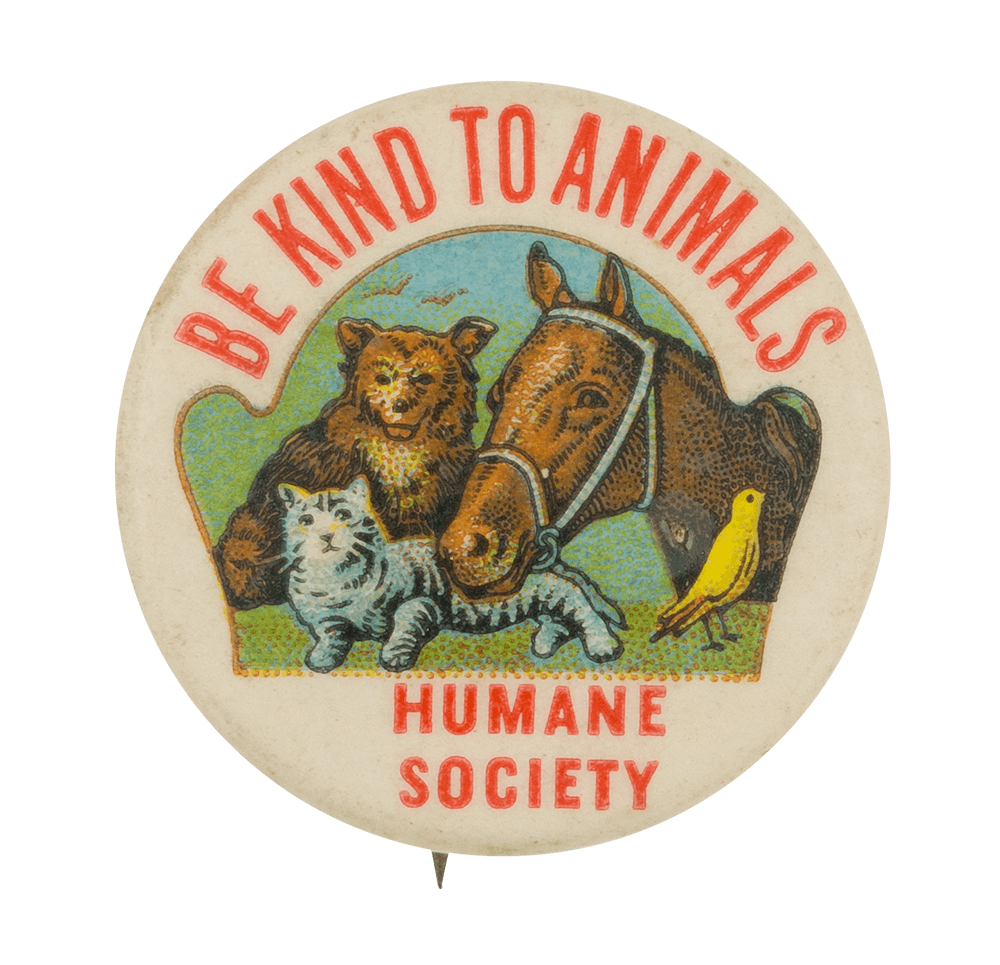
Text on Button BE KIND TO ANIMALS HUMANE SOCIETY
Image Description

White background with an image of a bird, horse, bear, and cat in a forest setting surrounded by red text.

Back Paper / Back Info

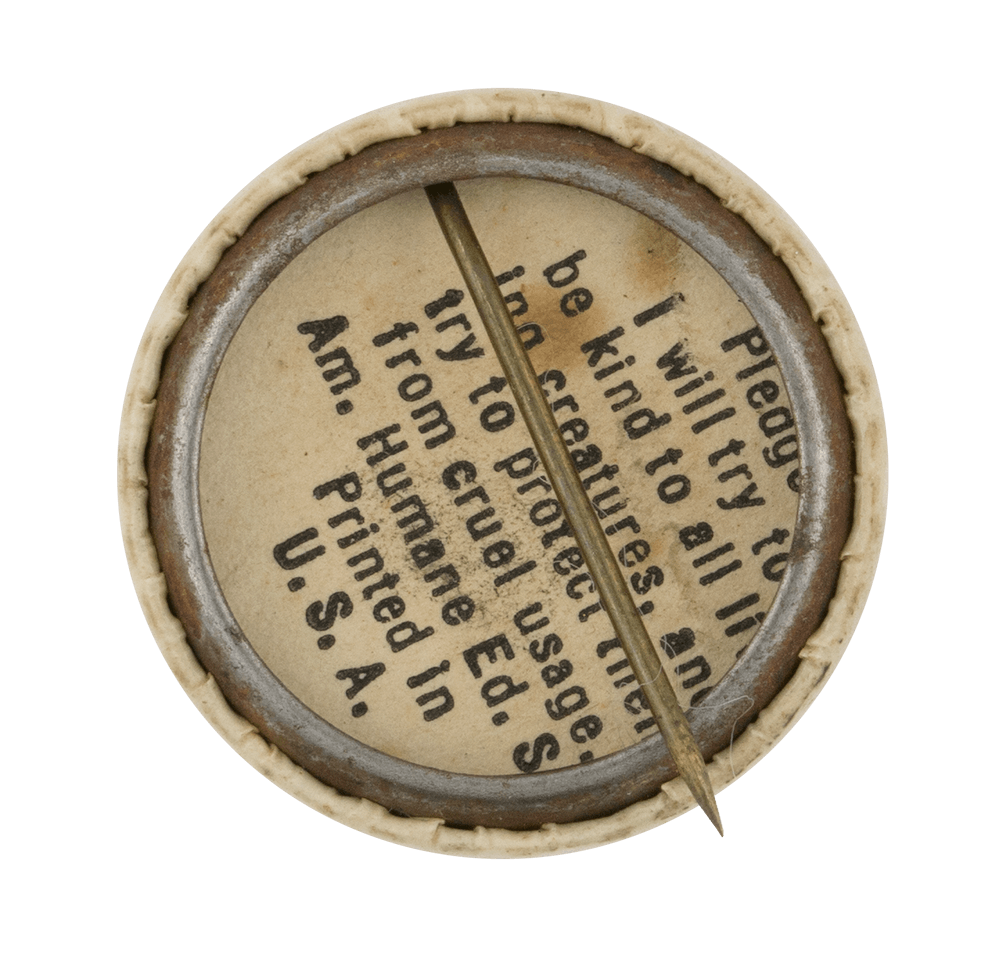
Pledge I will try to be kind all living creatures, and try to protect them from cruel usage. Am. Human Ed. Soc. Printed In U. S. A. 

Back Style
The Shape
The Size
Additional Information

The American Humane Education Society, now American Humane, began commemorating “Be Kind to Animals Week” in the Spring of 1915. It has become the United States’ longest running humane education campaign. It is part of their animal rescue initiative and encourages donations and adoption.

On the back of the button is a pledge that was required of all members of The Bands of Mercy. This organization was part of the American Humane Education Society that focused on educating youth on the importance of being kind to animals. The Bands of Mercy was founded in Europe in 1875, and in 1882, a North American chapter was founded by George T. Angell and Rev. Thomas Timmins.

Be Kind: A Visual History of Humane Education, 1880-1945. (n.d.) “Bands of Mercy.” Be Kind Exhibit. Retrieved from  https://bekindexhibit.org/exhibition/bands-of-mercy/

Rescue Initiative. (n.d.) “Be Kind to Animals Week.” American Humane. Retrieved from https://www.americanhumane.org/initiative/be-kind-to-animals-week/

Catalog ID CA0724

Banana Power

Category
Additional Images
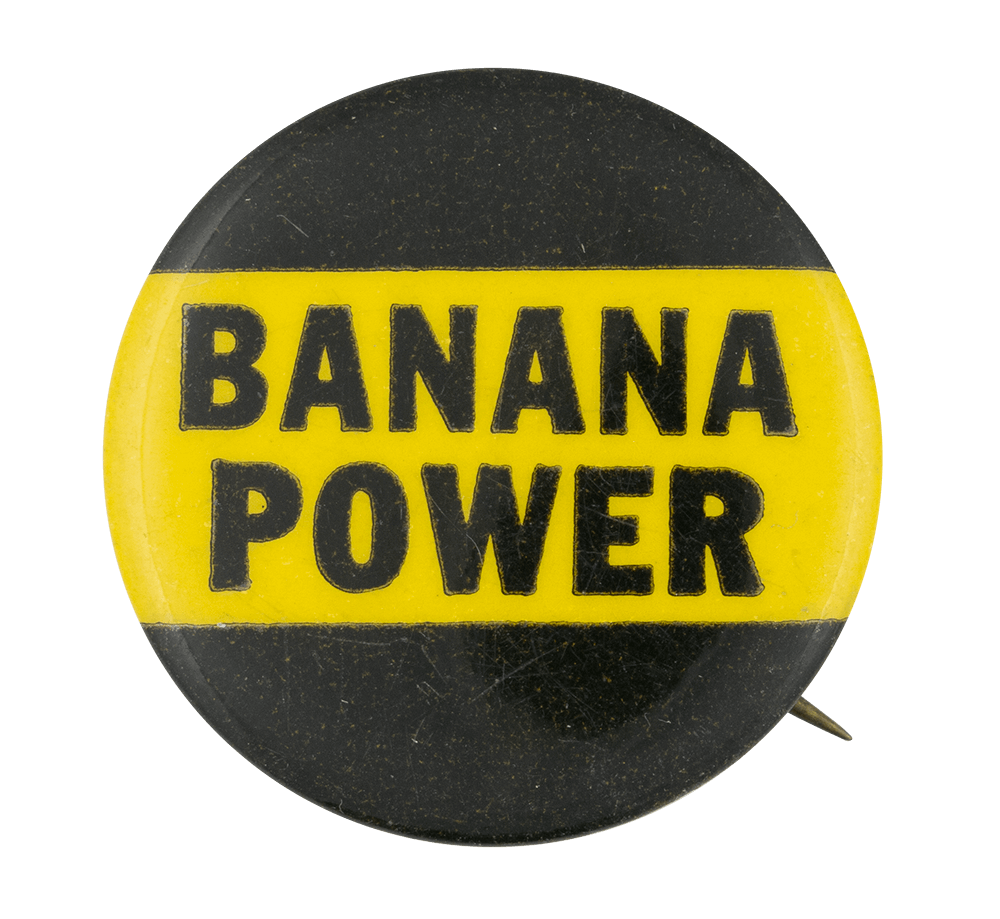
Text on Button BANANA POWER
Image Description

Black text on a yellow stripe across a black background

Back Style
The Shape
The Size
Additional Information

"Banana Power" was a slogan adopted by American counterculture during "the Great Banana Hoax of 1967." During the Spring and Summer of that year, counterculture newspapers ran advertisements touting the benefits smoking of banana peels. When properly cooked, dried, and rolled, the resulting powder—called Mellow Yellow—was alleged to produce hallucinogenic effects similar to that of psychedelic drugs. When the FDA attempted to test this allegation, they couldn't find any evidence that the banana peels had any hallucinogenic properties.

The rumor likely started as a subtle but joking protest against the government regulation of psychedelic substances. Thanks to a newly-formed network of underground news papers, the joke made it to the mainstream news and was reported on in magazines such as Time and Newsweek. In April 1967, thousands smoked "Mellow Yellow" together at the Human Be-In in New York City. The fad for smoking banana peels lasted only a few months, but was used in future campaigns advocating for the legalization of drugs like marijuana.

Sources

Guida, J. (2021, June 20). Smoking banana peels to get high was briefly a thing. JStor Daily. https://daily.jstor.org/smoking-banana-peels-to-get-high-was-briefly-a-t...

McMillian, J. (2005, June 1). Electrical bananas. Culture.org. https://culture.org/electrical-bananas/

Catalog ID CA0722

Fan Gamer Artists Pin Series

Category
Additional Images
Sub Categories
Image Description

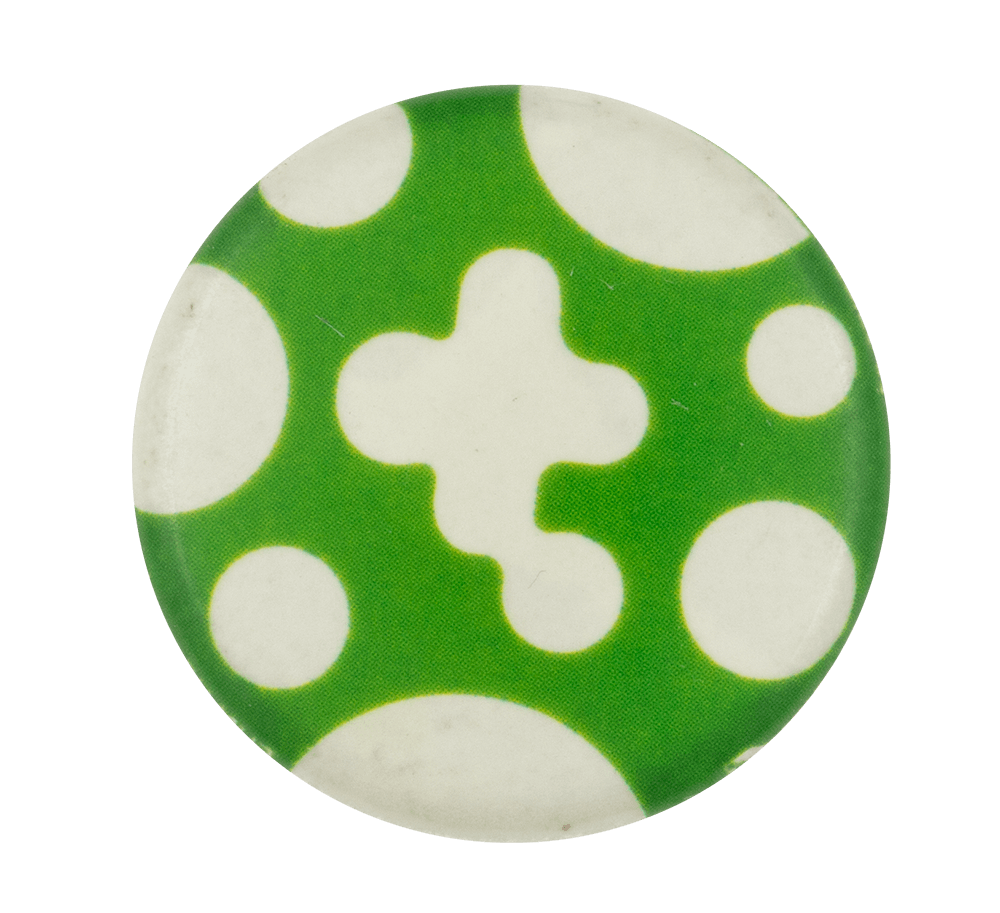
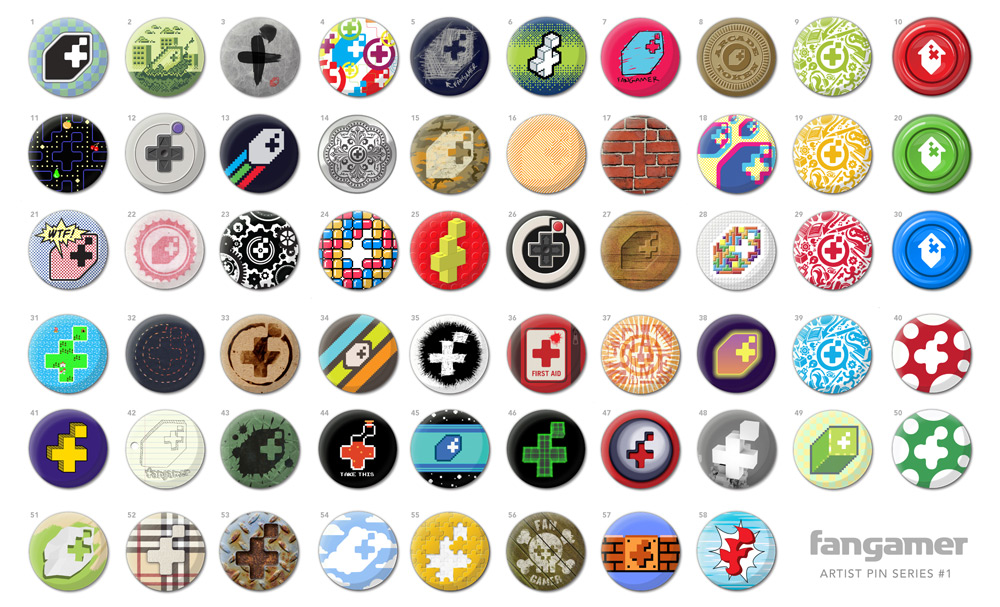
White circles and a cross shape on a green background

Curl Text FUN UP fangamer.com ARTISTS PIN SERIES #1
Back Style
The Shape
The Size
Year / Decade Made
Additional Information

Fangamer is an independent merchandise company founded in 2008 specializing in products that feature video games and entertainment. In the early 2010s, every order from the company would include different series of pin buttons or stickers, sometimes featuring the logo of the company. In late 2009, Fangamer sponsored a contest called the Artist Pin Series and went on to produce at least 14 winning designs through the Busy Beaver Button Company. These buttons were offered to the public through the Fangamer online store in early-mid 2010.

Catalog ID AR0407

Two Tone Green Square

Category
Additional Images
Sub Categories
Image Description

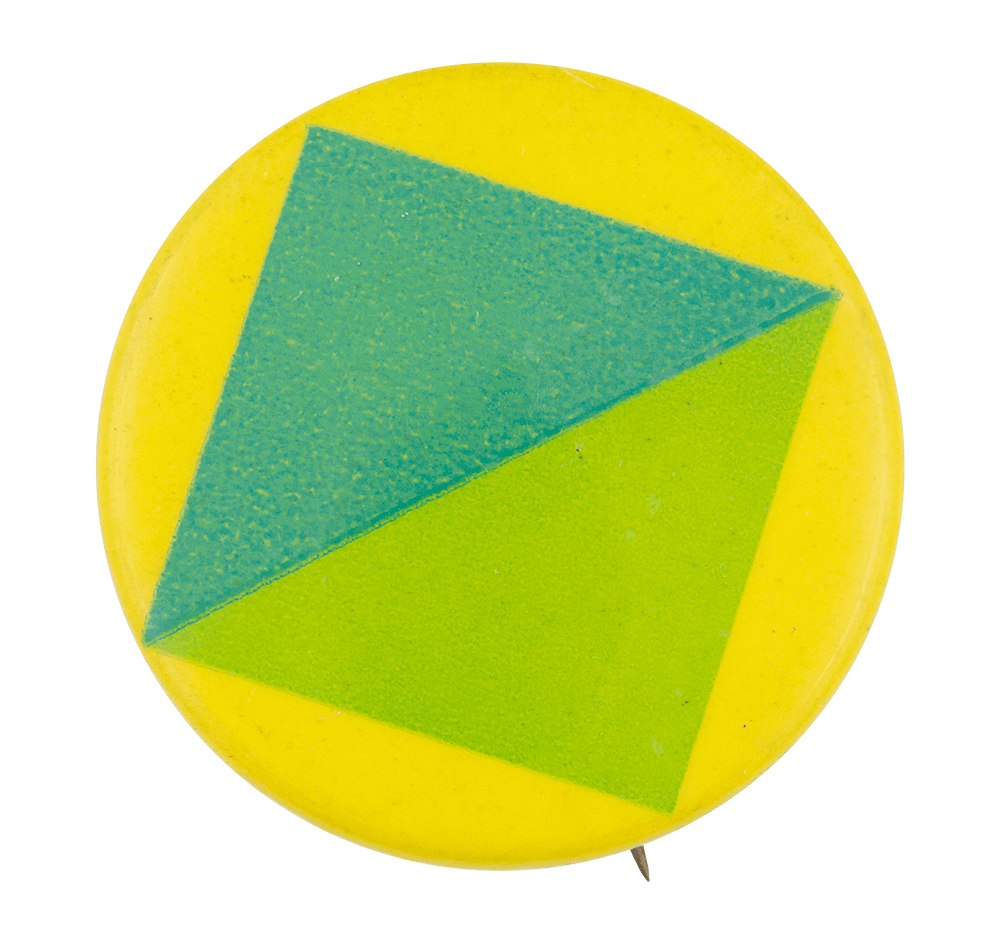
Green and blue triangles on a yellow background

Back Style
The Shape
The Size
Year / Decade Made
Additional Information

The Idaho State University's Eco-Alliance Committee sold these buttons to support the first "Environmental Teach-In" on April 22, 1970, now known as Earth Day. Yellow is for sunshine. Green is for plants, grass and trees. Blue is for clear skies and water. This teach-in was a major moment in changing American's consciousness of ecology and the deterioration of the environment.

Sources

Idaho State Journal Newspaper Archives, Mar 19, 1970, p. 2. (1970, March 19). NewspaperArchive. https://newspaperarchive.com/idaho-state-journal-mar-19-1970-p-2/ 

Catalog ID AR0404

Pope Leo XIII

Category
Additional Images
Sub Categories
Text on Button OUR BELOVED FATHER POPE LEO XIII
Image Description

Image of Pope Leo XIII with white text above and below on a brown background

Back Style
The Shape
The Size
Year / Decade Made
Additional Information

Pope Leo XIII was the head of the Catholic Church from 1878 until his death in 1903. He was born in Italy on March 2, 1810 as Vincenzo Gioacchino Raffaele Luigi Pecci. During his papacy, he re-founded the Vatican Observatory, opened the Vatican Secret Archives to researchers, and established a hospice inside the Vatican during the cholera pandemic in the 1890s. Pope Leo XIII was the first Pope to be filmed with a motion picture camera and he was also the first Pope to be heard on a sound recording, which can be found on a CD of Alessandro Moreschi singing.

Sources

Pope Leo XIII. (2018, September 17). Retrieved from https://en.wikipedia.org/wiki/Pope_Leo_XIII

Catalog ID AR0411

The Snorks

Category
Additional Images
Sub Categories
Image Description

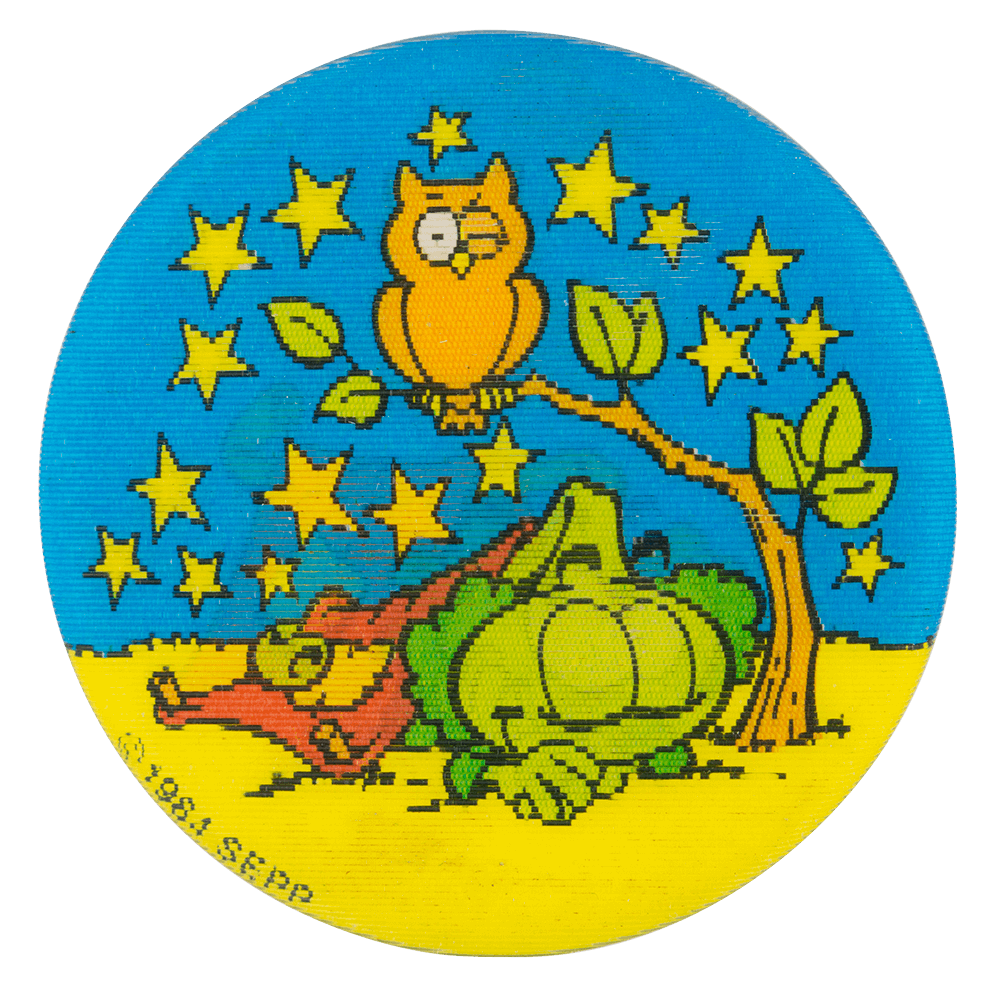
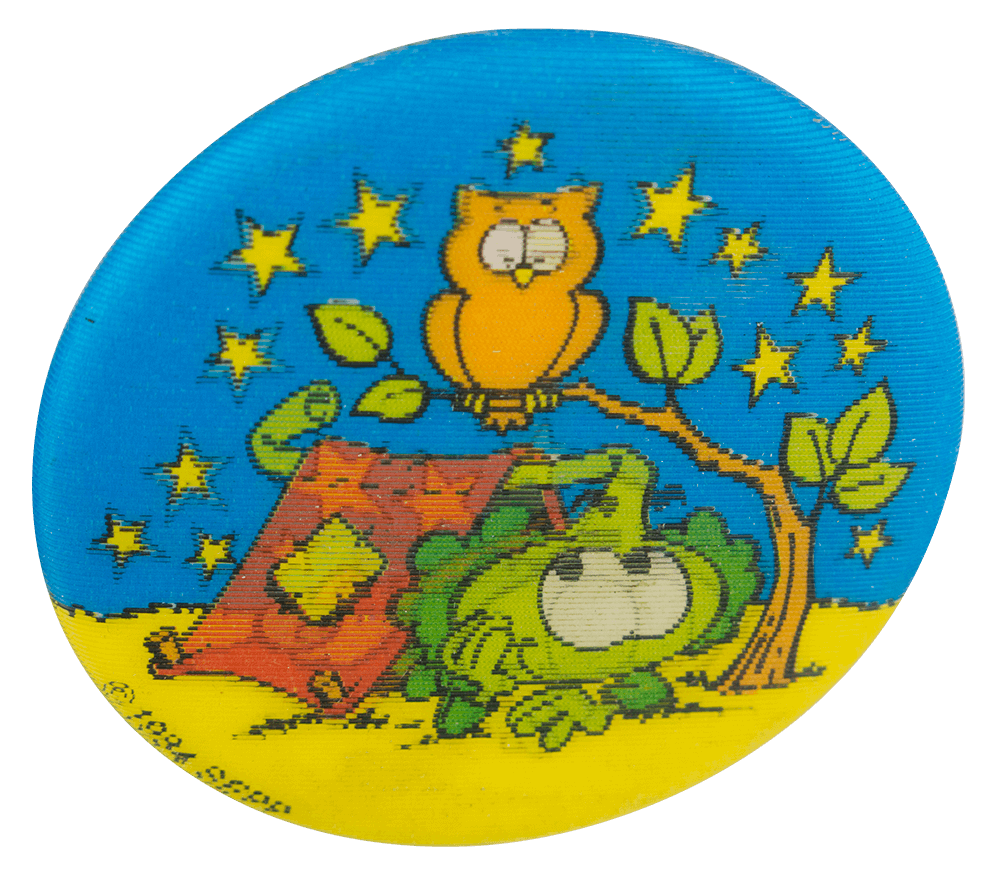
Illustraiton of a a tree with an owl in it over a green creature in a red tent on a yellow ground with blue sky

Back Style
The Shape
The Size
Year / Decade Made
Additional Information

The Snorks was an American-Belgian animated television series that aired from 1984-1989, about small, colorful creatures called “Snorks” that live in an undersea world called “Snorkland”. Unable to speak, green-skinned, good-natured Snork Tooter Shelby was known for making tooting and beeping noises with his head snorkel, a special talent that allowed him to talk with various sea creatures and communicate with his Snork friends.

Belgian businessman Freddy Monnickendam, head of SEPP, created The Snorks to compete with popular children’s television series The Smurfs. Monnickendam, an executive producer for The Smurfs cartoon, decided to develop his own animated show after a legal split with Smurfs’ creator Peyo. Although The Snorks ran for four seasons, Monnickendam was never able to recreate the success that he had had with The Smurfs.

Catalog ID EN0519