Pitch In

Category
Text on Button Pitch In!
Image Description

White text on a green square with a white figure throwing away litter in a trash can on a white background

The Shape
Additional Information

Recycling has been practiced for almost the entirety of human history. With Industrialization and the production of cheaper materials recycling became an even more important and necessary practice. The increase of the production of plastic materials from 1960-2000 fueled the necessity for additional recycling from individuals and industries. The “Pitch In” slogan acts as a recycle reminder. The slogan and the green sign is perceived as friendly and helps to remind people to dispose of waste in a responsible way. Studies have shown that individuals that have been taught these habits or who are surrounded by others who do are most likely to recycle. The “Pitch In” slogan not only reminds individuals to recycle, but suggests that others are already recycling.

Catalog ID CA0077

Solidarity Polish Trade Union Polish

Category
Additional Images
Sub Categories
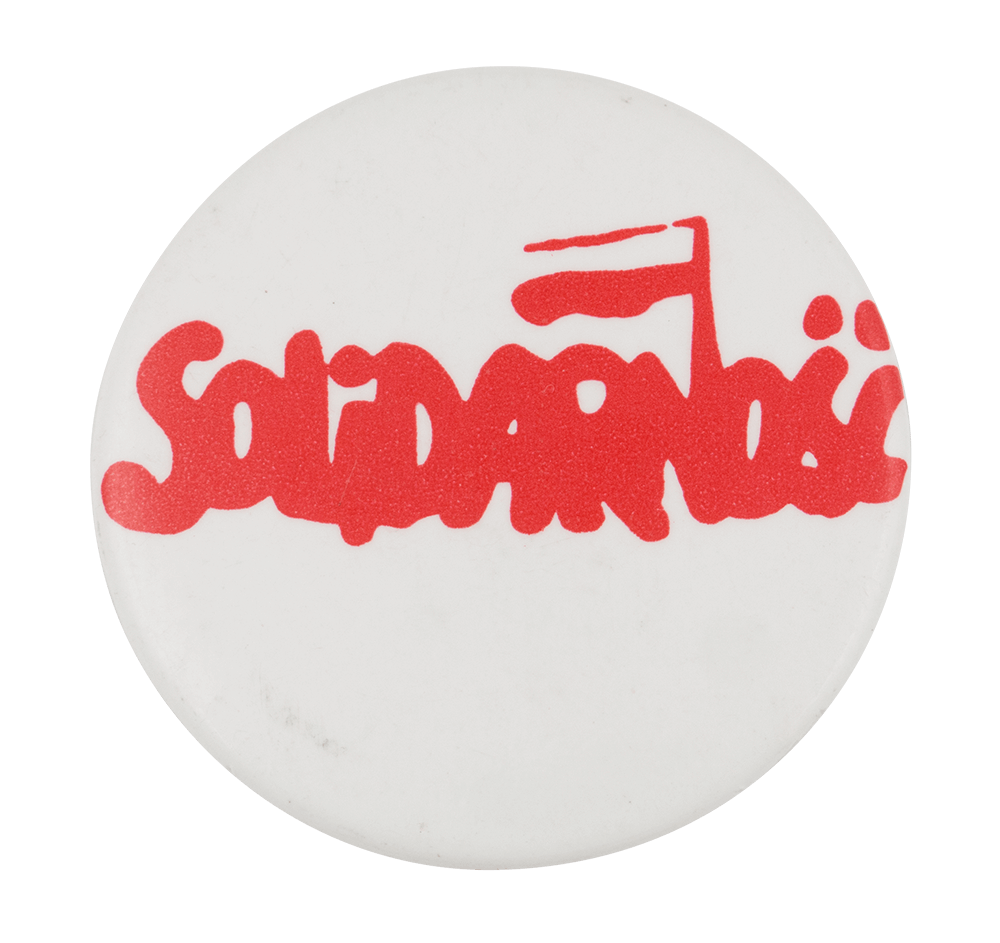
Text on Button Solidarność
Image Description

Red text on a white background

Curl Text union
Back Style
The Shape
The Size
Additional Information

Solidarity (Independent Self-Governing Trade Union “Solidarity”) began on August 31, 1980 as a Polish trade union federation. The union was created under the leadership of Lech Walęsa in the Gdańsk Shipyard. The Solidarity trade union was significant because it was the first non-communist party-controlled trade union in a Warsaw Pact country. The Warsaw Pact was signed in 1955 and basically allowed the Soviet Union to maintain military control over eight communist states in Central and Eastern Europe (Bulgaria, Czechoslovakia, East Germany, Hungary, Poland, Romania, Albania and the Soviet Union). By September 1981 Solidarity’s membership was about one third of the working population in Poland (9.5 million). Not only did Solidarity work for worker’s rights, they were also a group that used civil resistance to invoke social change. The group was initially supported financially by the United States, about 50 million dollars.

In the 1980s the Polish government attempted to destroy the union, but ultimately had to negotiate with them. Solidarity helped to lead the opposition to semi-free elections in 1989 which resulted in the election of Walęsa as the President of Poland in 1990. Solidarity had some connections with the Catholic church, as many members identified as Catholic, and Pope John Paul II publicly supported the group. The Solidarity union’s influence spread beyond Poland throughout the Eastern Bloc creating opposition to the Communist government. In the early 1990s this opposition led to the dismantling of the Eastern Bloc and dissolution of the Soviet Union. The Solidarity movement continues to influence other groups abroad to this day.

Catalog ID CL0488

Buy Union Buy American

Category
Additional Images
Sub Categories
Text on Button Buy Union Buy American Creative Photo Crafts. Toledo, Ohio; “America’s Union Button Maker” 419-691-0493; 34
Image Description

Blue on a white semi circle background and white text on a red semi circle background with a blue eagle and stars.

Back Style
The Shape
The Size
Additional Information

The Union Label and Service Trade Department was founded in 1909 to promote the purchase of American and union made products. Union labels began to show up, informally, in the late 19th century as a result of industrialization. Labels were added to inform consumers that the products they were buying were made by workers that had worked the new eight-hour day. The Union Labels were implemented more nationally after the 1909 founding of the UL & STD. Union made products were identified through the union label, store and shop cards and service buttons. This button would have served as a “service button” for a worker. In other words, this button would have served to inform customers that the employee who wore it was working for a fair and decent employer and that the products that were being sold at that establishment were union made. 

Catalog ID CA0083

I Am Proud To Be Union

Category
Additional Images
Sub Categories
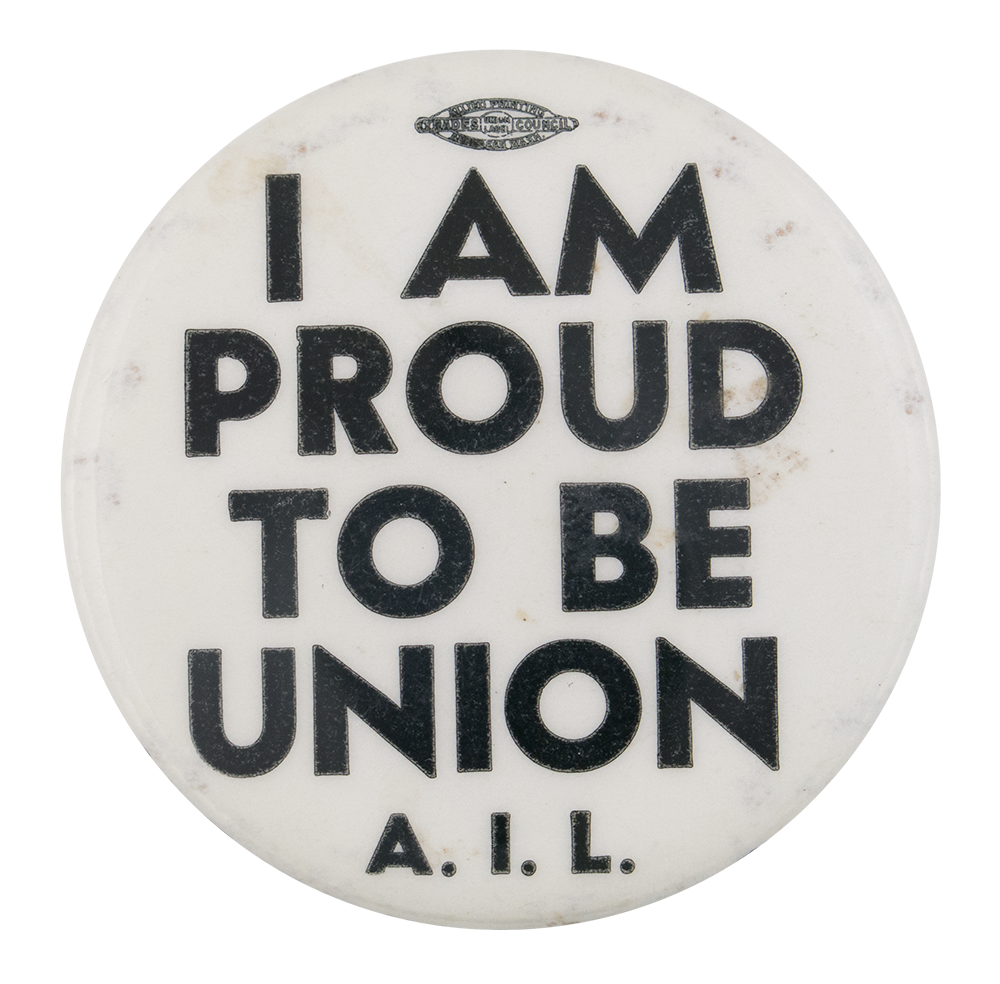
Text on Button [Union bug: Trades Council] I Am Proud to be Union A. I. L.
Image Description

Black union bug and black text on white background. 

Curl Text G. H. STAMP WORKS ABERDEEN, WASH.
Back Style
The Shape
The Size
The Manufacturer
Additional Information

American Income Life Insurance Company, or AIL, provides supplemental life insurance to labor unions, credit unions, and associations. The company was founded in 1951 and originally sold low-cost hospital insurance plans. In 1961 they began providing insurance to members of labor unions and their families, as well as contributing to strike funds, waiving payment of premiums during authorized strikes, and developing a college scholarship program for children of union members. 

In 1973, the AFL-CIO granted AIL an official designation as a Union Label company. It was one of only two insurance companies in the entire United States with the official Union Label.

Catalog ID CL0074

Solidarity Forever

Category
Additional Images
Sub Categories
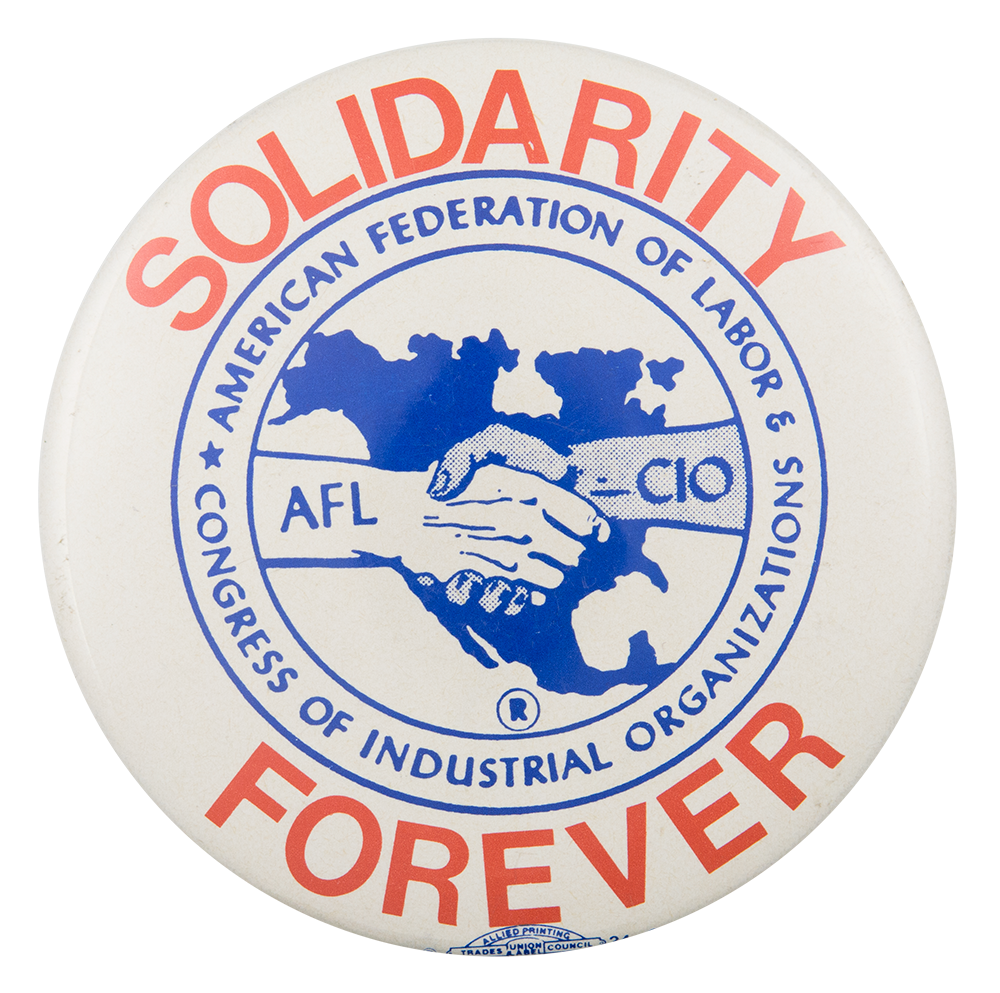
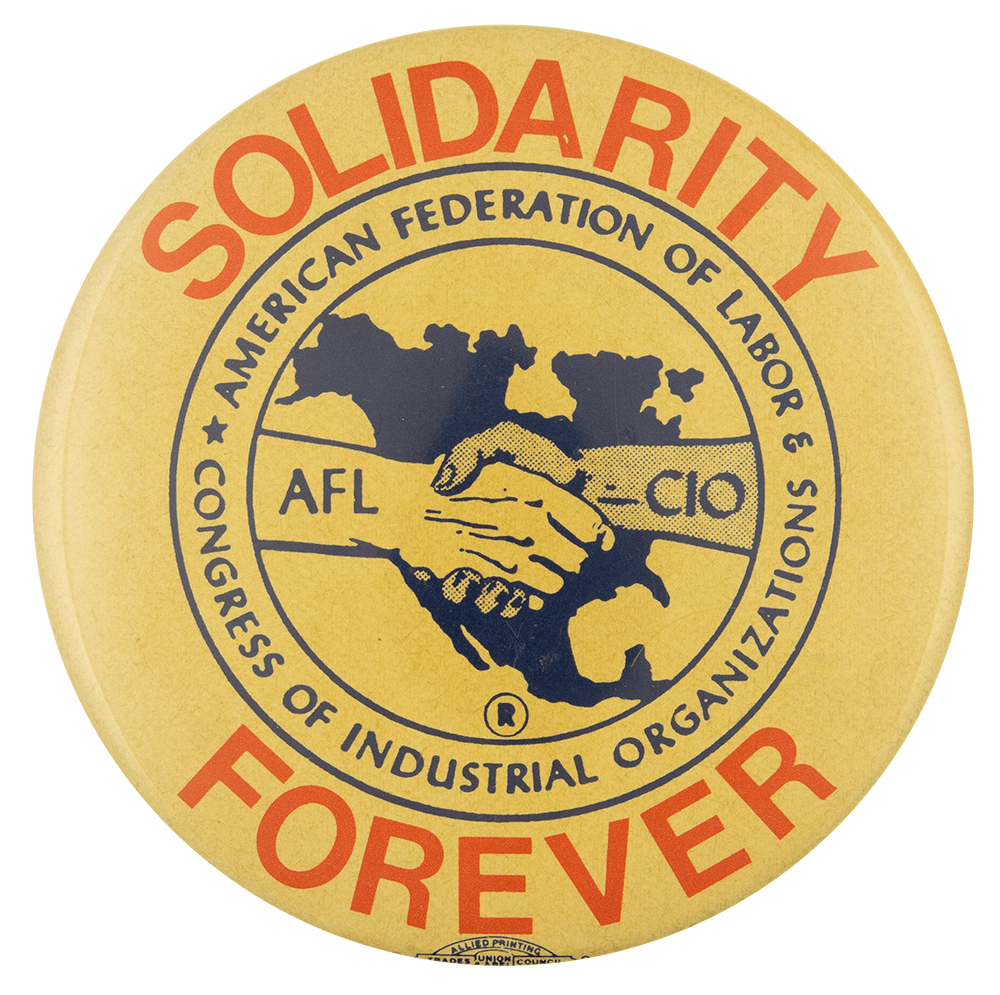
Text on Button Solidarity Forever; American Federation of Labor; Congress of Industrial Organization; AFL;CIO
Image Description

Red and blue text on a white background. Outline of a blue circle with North America continent with two hands shaking.

Back Paper / Back Info

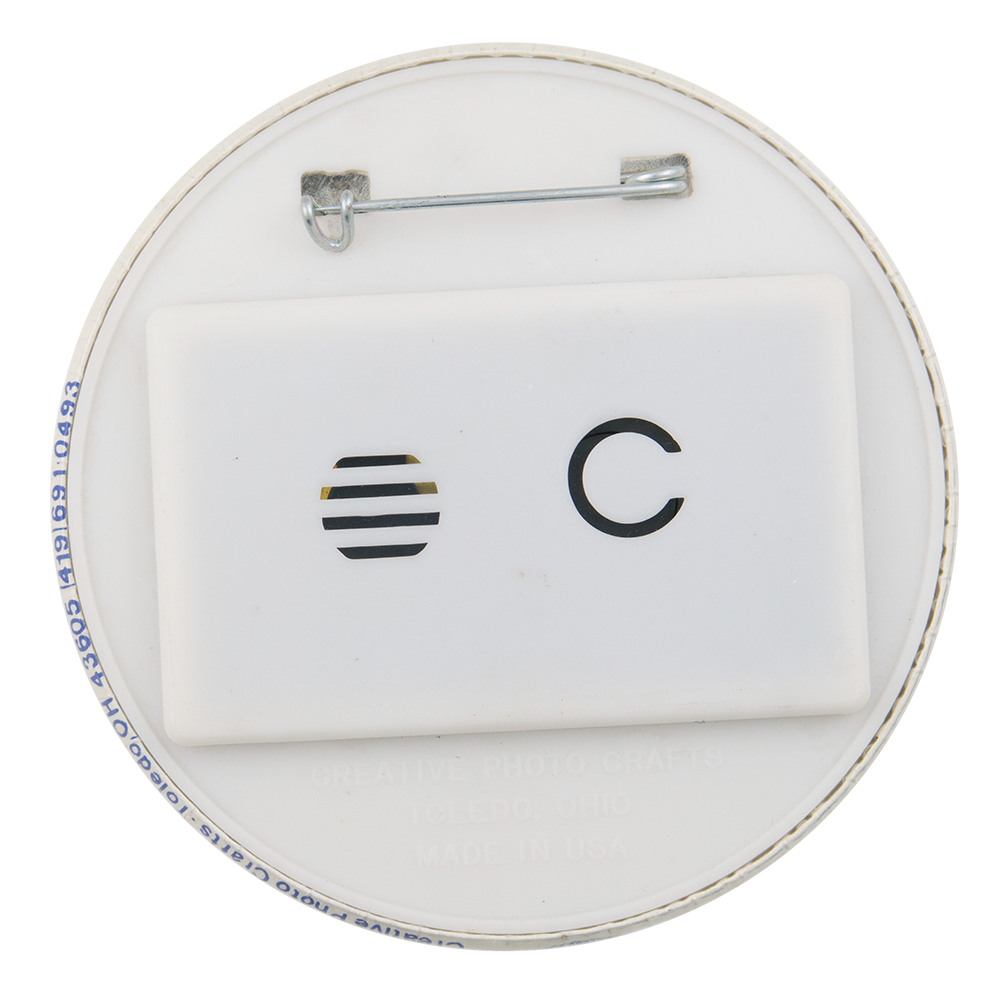
CREATIVE PHOTO CRAFTS TOLEDO, OHIO MADE IN USA

Curl Text Creative Photo Crafts - Toledo, OH 43605 (419)6910493
Back Style
The Shape
The Size
The Manufacturer
Additional Information

The American Federation of Labor and Congress of Industrial Organizations (AFL–CIO) is an umbrella federation made up of 56 unions representing 12.5 million working men and women in the US.  It was formed in 1955 when the AFL and the CIO - previously bitter rivals - merged.

"Solidarity Forever" is a union anthem written by Ralph Chaplin in 1915 and sung to the tune of "John Brown's Body". Originally written for the Industrial Workers of the World (IWW), other union movements, including the AFL-CIO, have adopted the song.


Catalog ID CA0090

Say Boo To Drugs

Category
Additional Images
Sub Categories
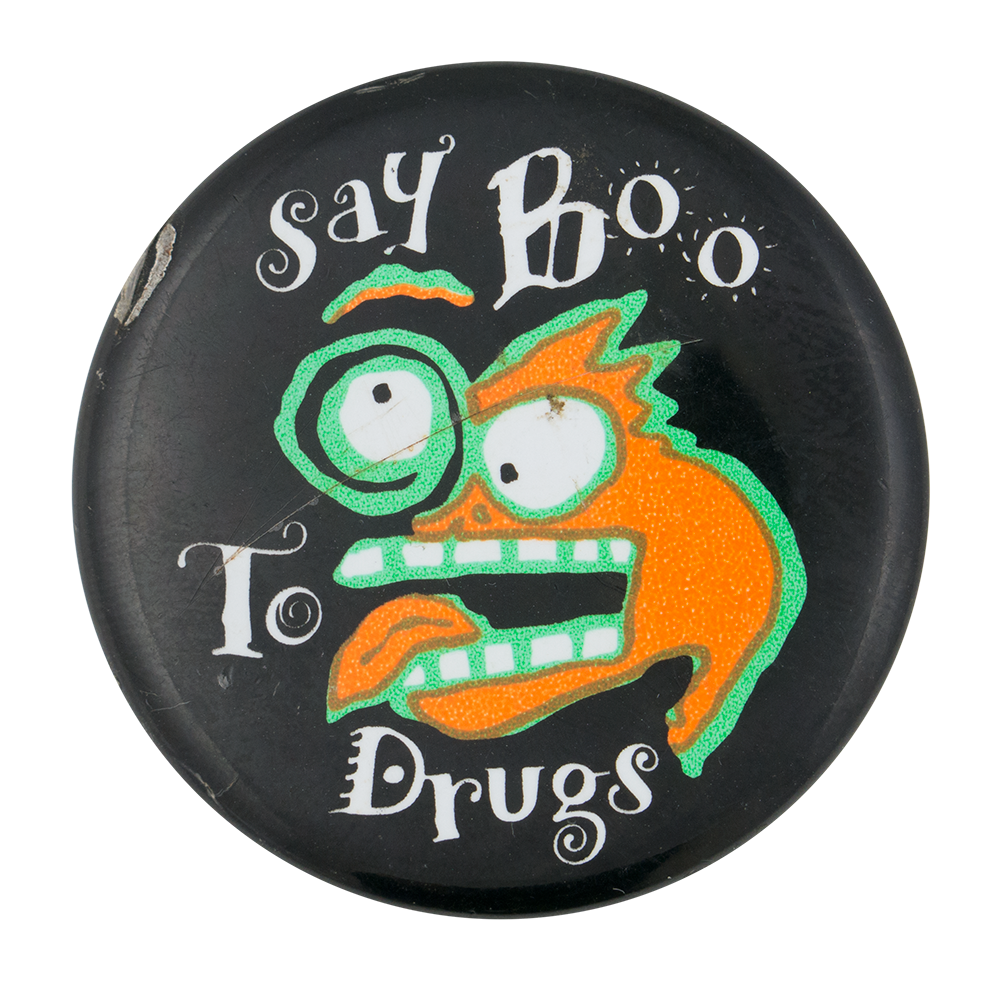
Text on Button Say Boo to Drugs
Image Description

Green, orange and white monster with white text on black background. 

Back Style
The Shape
The Size
Year / Decade Made
Additional Information

“Say Boo to Drugs” is a slogan often associated with Halloween events and Red Ribbon Week. Red Ribbon Week is a campaign that occurs every October to raise awareness for, and prevention of, the abuse of alcohol, tobacco and other drugs. Many of the “Say Boo to Drugs” events are created as an alternative for children for Halloween. “Say Boo to Drugs” provides opportunities to reduce juvenile delinquency and abuse of alcohol and drugs during the Halloween season. 

Catalog ID CA0070

Be Here For The Cure

Category
Additional Images
Sub Categories
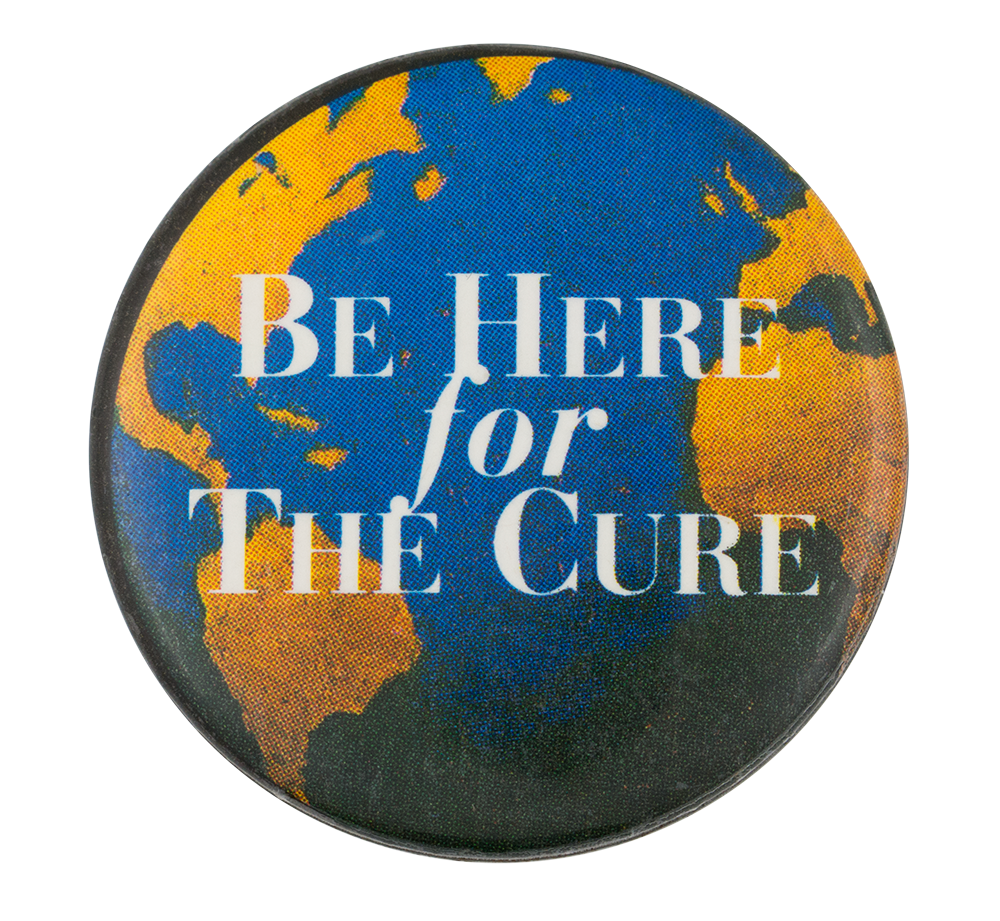
Text on Button Be Here For the Cure
Image Description

Blue background with yellow layouts of the continents with white text

Back Style
The Shape
The Size
Additional Information

Be Here for the Cure is an advertising campaign designed by the Better World Advertising company. The company is comprised of artists, activists, marketers and individuals who are passionate about improving the world and effecting change. The company hopes to effect change by working with clients who support issues that they are passionate about. The Better World Advertising company offers support through public relations in the form of advertising in various interfaces. The Be Here for the Cure campaign was created for Billy DeFrank of the LGBT Center, San Francisco AIDS Foundation. The goal of the campaign was to encourage HIV-Positive individuals to seek early treatment. Not only were buttons made, but billboards, posters and t-shirts were also used to spread awareness. 

Catalog ID CA0079

Abolish Apartheid

Category
Additional Images
Sub Categories
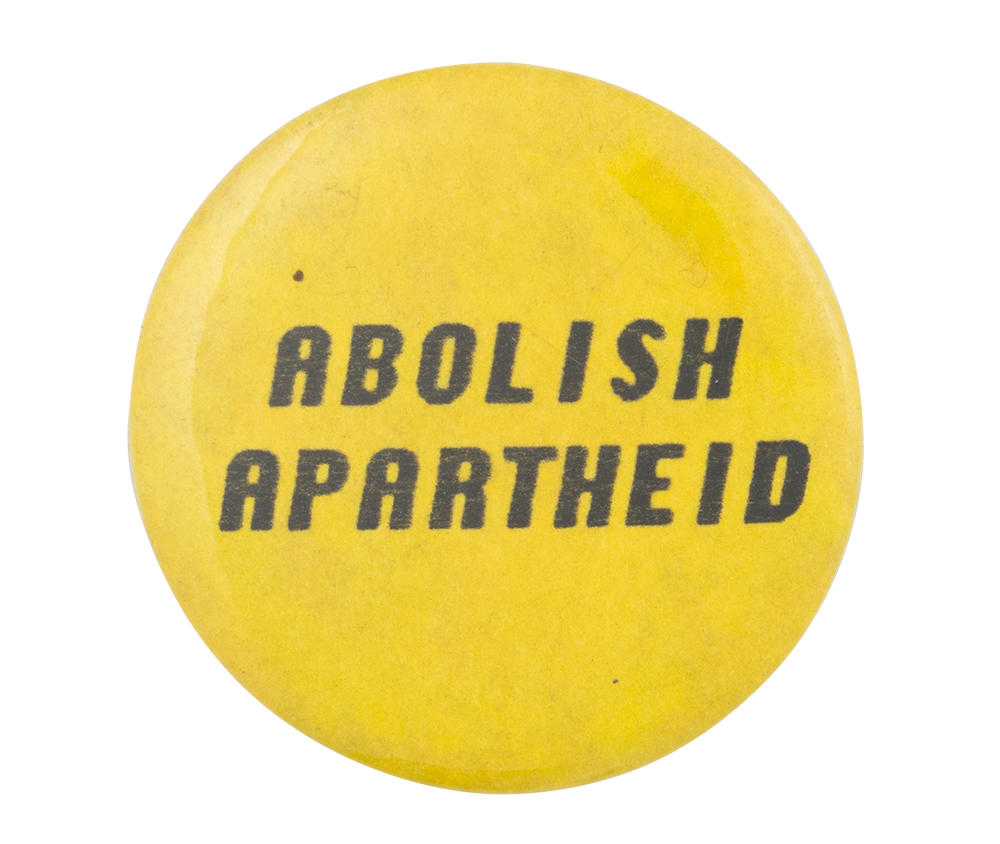
Text on Button ABOLISH APARTHEID
Image Description

Black text on yellow background. 

Back Style
The Shape
The Size
Additional Information

Apartheid was a system of racial segregation enforced by the National Party government of South Africa from 1948 to 1994, in which black South Africans were disenfranchised and deprived of many rights, while white supremacy and Afrikaner rule was maintained. Apartheid sparked internal resistance as well as a trade and arms embargo against South Africa. 

Along with several other civil rights activists, the former president of South Africa and Nobel Peace Prize winner Nelson Mandela is credited with dismantling the apartheid system by investigating human rights violations under apartheid; addressing racism, poverty, and inequality; and introducing education and economic development initiatives to the black community.

Catalog ID CA0055

Senior Power

Category
Additional Images
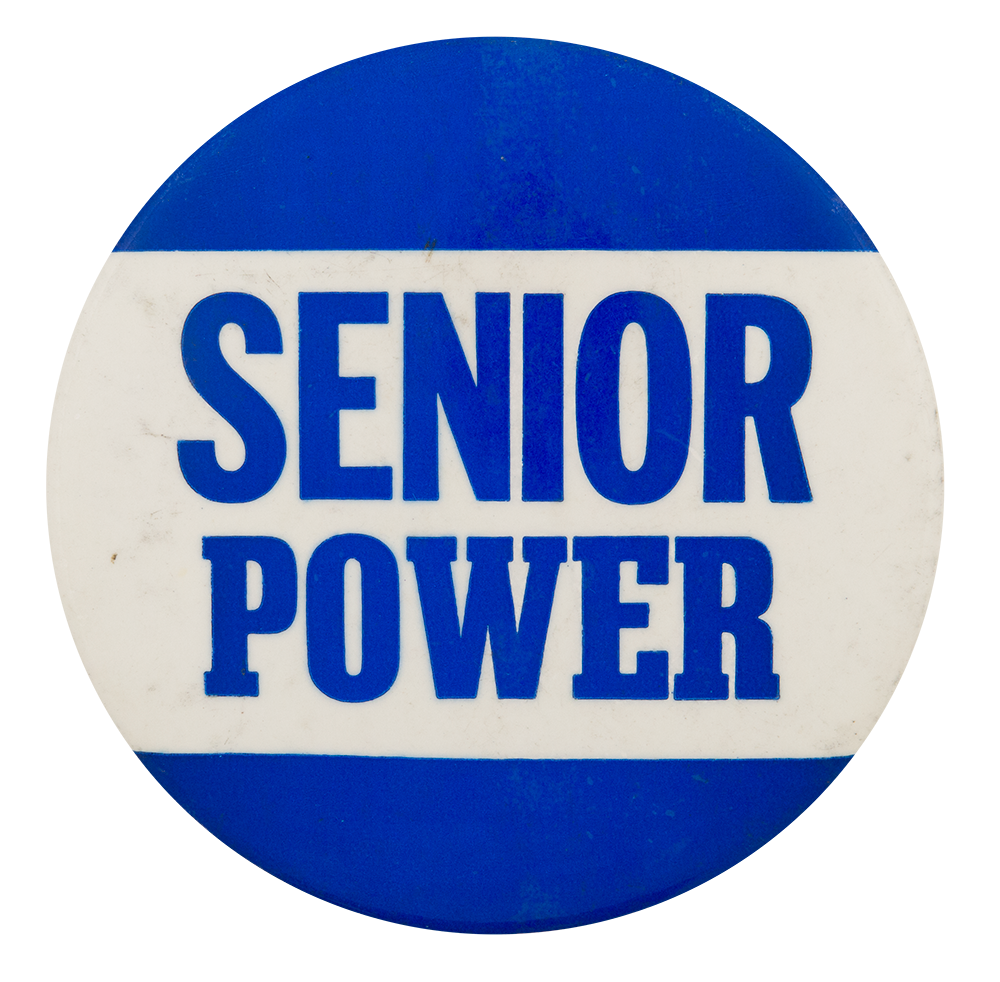
Text on Button SENIOR POWER
Image Description

Blue large, capitalized, bold text on a white background.  Upper and lower portions of button are blue.

Curl Text N.G. Slater Corp., NYC 11
Back Style
The Shape
The Size
Additional Information

The "senior power" political movement emerged in the 1960s and '70s, spurred on by the Older Americans Act of 1965. Older adults formed local and national groups to lobby for increased Social Security, lower taxes, reduced rates on public transportation, and affordable housing. Some leading groups that used the "senior power" slogan were the National Council of Senior Citizens and the American Association of Retired Persons. Group members wore their "senior power" buttons to political conventions and local conferences or to the polls while voting. Some "senior power" buttons included the name of an organization or candidate; others simply featured the slogan.

Sources

Age-friendly discussion groups. (2018, March 31). Northwest Prime Time. https://www.northwestprimetime.com/news/2018/mar/31/age-friendly-discus…

Davies, L. E. (1970, March 1). Elderly hit by inflation, turn political. The New York Times. https://www.nytimes.com/1970/03/01/archives/elderly-hit-by-inflation-tu…

Peters, B./The Denver Post. (1970, November 1). Mrs. Thelma Leopard proudly wears "senior power" button while voting [Photograph]. Getty Images. https://www.gettyimages.com/detail/news-photo/mrs-thelma-leopard-proudl…

Economics of aging: toward a full share of abundance: Hearing before the U.S. Senate Special Committee on Aging United, 91st Congress. (1969, October 29). https://www.aging.senate.gov/imo/media/doc/publications/10291969.pdf

Catalog ID CA0062

Walk America

Category
Additional Images
Sub Categories
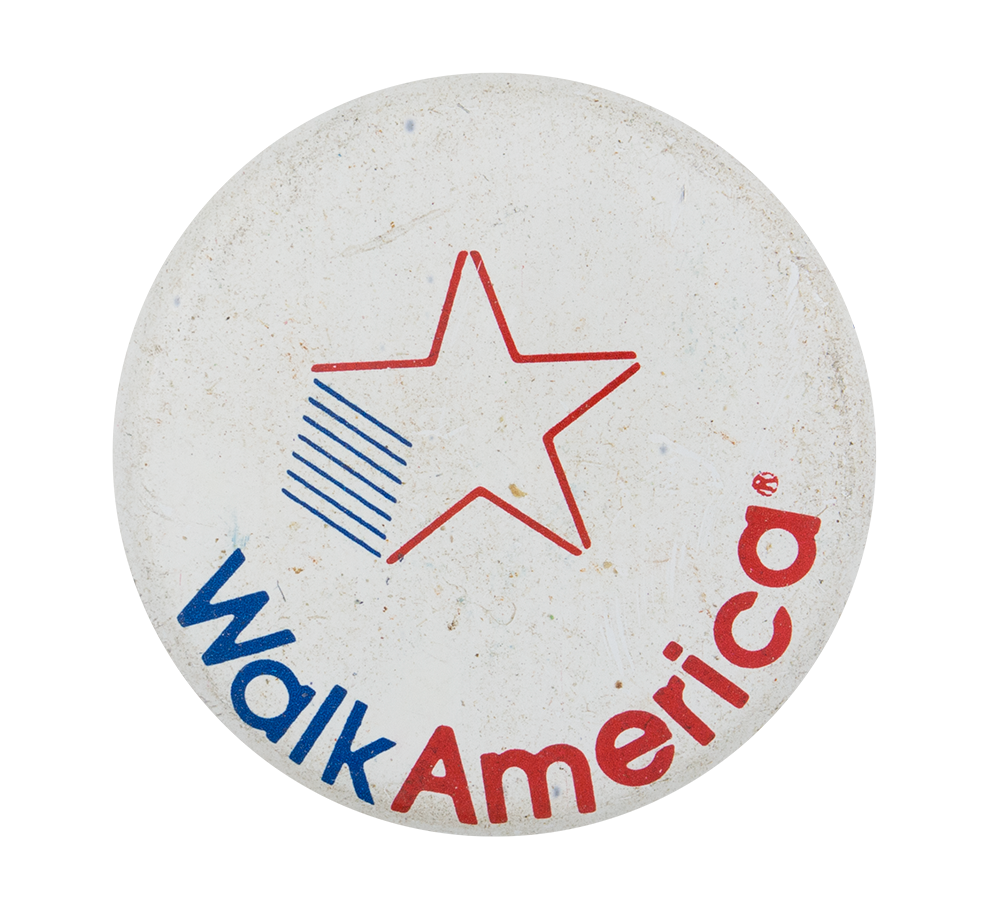
Text on Button Walk America
Image Description

Image of red-outlined star and blue streaks with blue and red text on white background. 

Back Style
The Shape
The Size
Year / Decade Made
Additional Information

These buttons were given to participants in the March of Dimes’ Walk America.  WalkAmerica began in 1970 as the first charitable walking event, and in 2007 the event was changed to March for Babies.  The March of Dimes was founded in 1938 by Franklin D. Roosevelt during his U.S. Presidency as a nonprofit organization combating polio.  Polio is an incurable disease which enters through the central nervous system and most associated as a feared childhood disease in the U.S. during the 20th century.  The March of Dimes promotes advocacy, awareness, and research for polio and vaccination against polio.  This same logo can be seen on WalkAmerica merchandise specifically dated during 1983, including a photograph from that same year of legendary golfer and longtime March of Dimes Honorary Chairman Arnold Palmer with the late Senator Ted Stevens of Alaska (viewable to the public via the Ted Stevens Paper Project).

Catalog ID CA0066