Rally 'Round

Category
Additional Images
Sub Categories
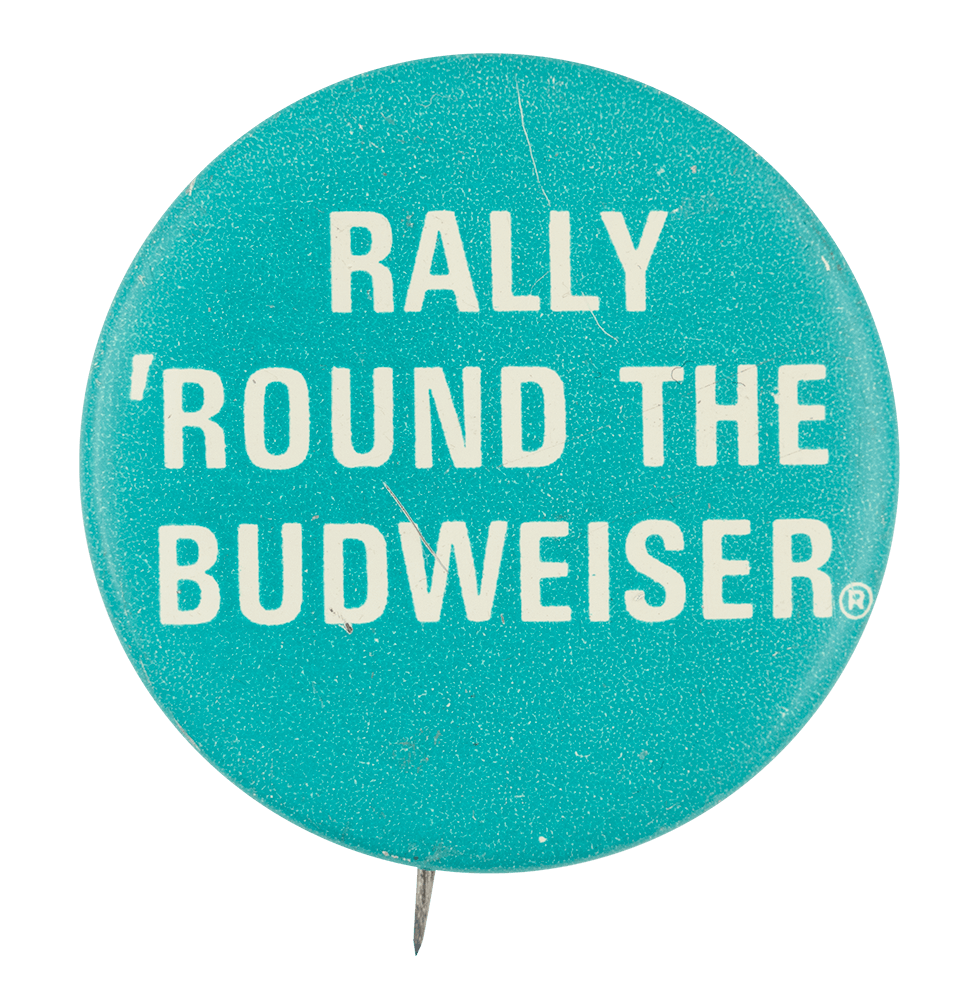
Text on Button RALLY 'ROUND THE BUDWEISER
Image Description

White text on a blue background

Curl Text union bug
Back Style
The Shape
The Size
Year / Decade Made
Additional Information

In 1968, Budweiser launched its “Start Your Own Party” campaign. This initiative saw the beer company making memorabilia, such as dozens of buttons that advertised Budweiser, as if the company were a political party campaigning. Other items that were part of the campaign included ones that read “I Like Bud,” “A Budweiser in Every Refrigerator,” and “Tip-a-Canoe and a Budweiser Too.” Many of these slogans were a play on actual ones employed by former U.S. presidents like Dwight D. Eisenhower’s “I Like Ike,” Herbert Hoover’s “A Chicken in Every Pot,” and William Henry Harrison’s “Tippecanoe and Tyler Too.” Customers could receive a dozen of these buttons if they mailed in $1.00 to the Budweiser headquarters.

Sources

Etsy. (n.d.). Budweiser party 1968 buttons "start your own party" 2 page print adhttps://www.etsy.com/ca/listing/221573431/budweiser-party-1968-buttons-…

Catalog ID BE0156

O'Doul's The Shamrockin' Brew

Category
Additional Images
Sub Categories
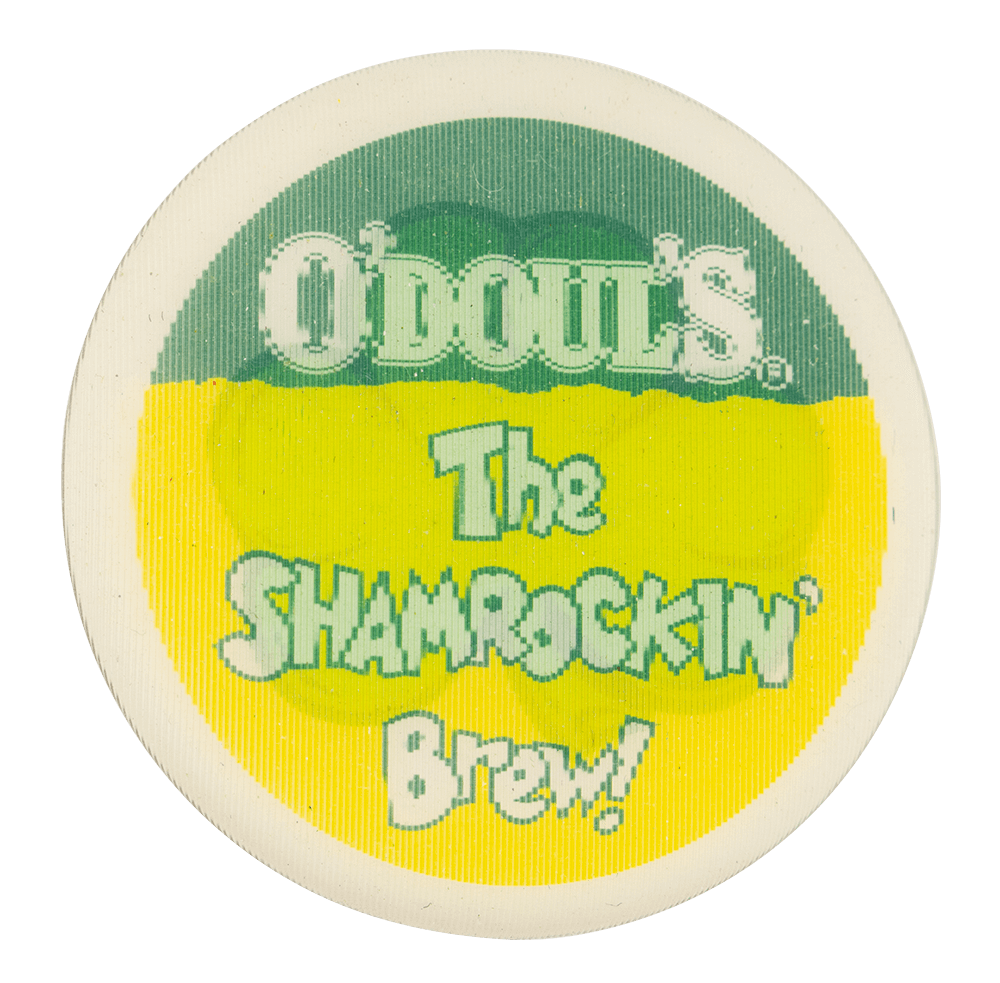
Text on Button O'DOUL'S The SHAMROCKIN' Brew!
Image Description

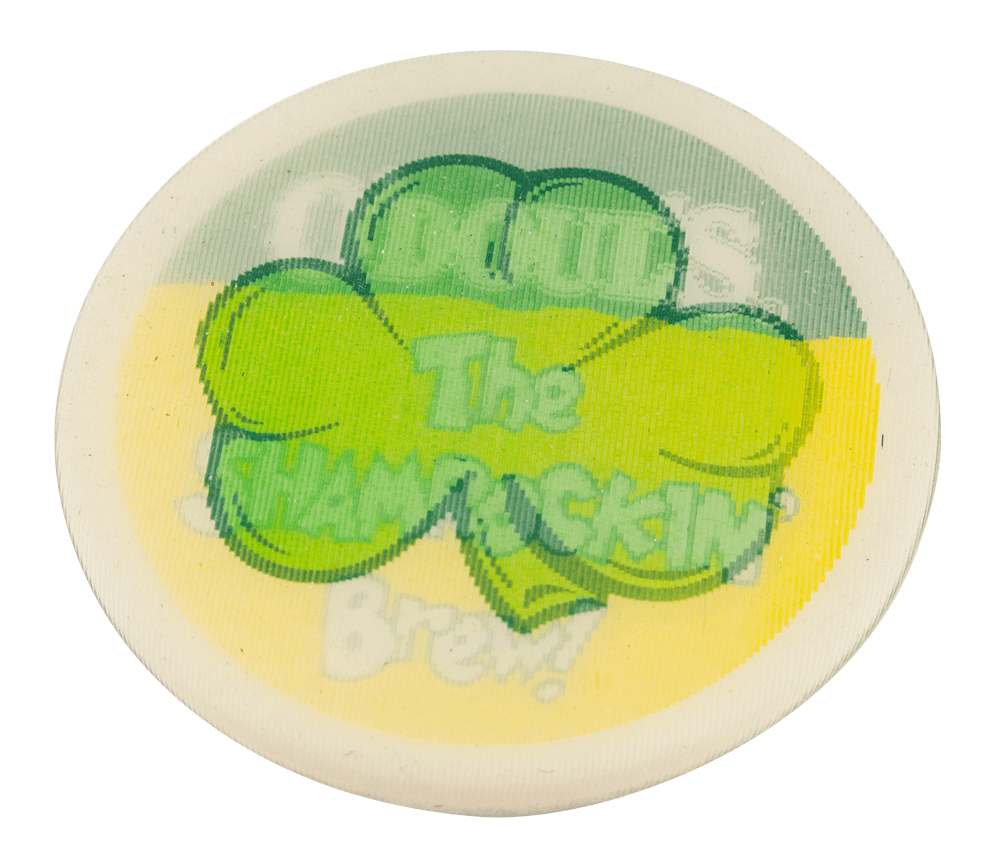
White text on a green and yellow background and an illustration of a green shamrock on a white background

Back Style
The Shape
The Size
Additional Information

O’Doul’s is a low alcohol beer produced by the Budweiser company. Released in 1990, O’Doul's contains less than 0.5 alcohol by volume(ABV). A second brew, O’Douls Amber was released in 1997.

St. Patrick’s Day is a yearly holiday and celebration of Irish culture. The shamrock is a symbol of Ireland. In the legend of St. Patrick, the patron saint of Ireland, he used the shamrock to illustrate the concept of the Holy Trinity while converting the Irish to Christianity.

Catalog ID BE0155

It Took Schlitz

Category
Additional Images
Sub Categories
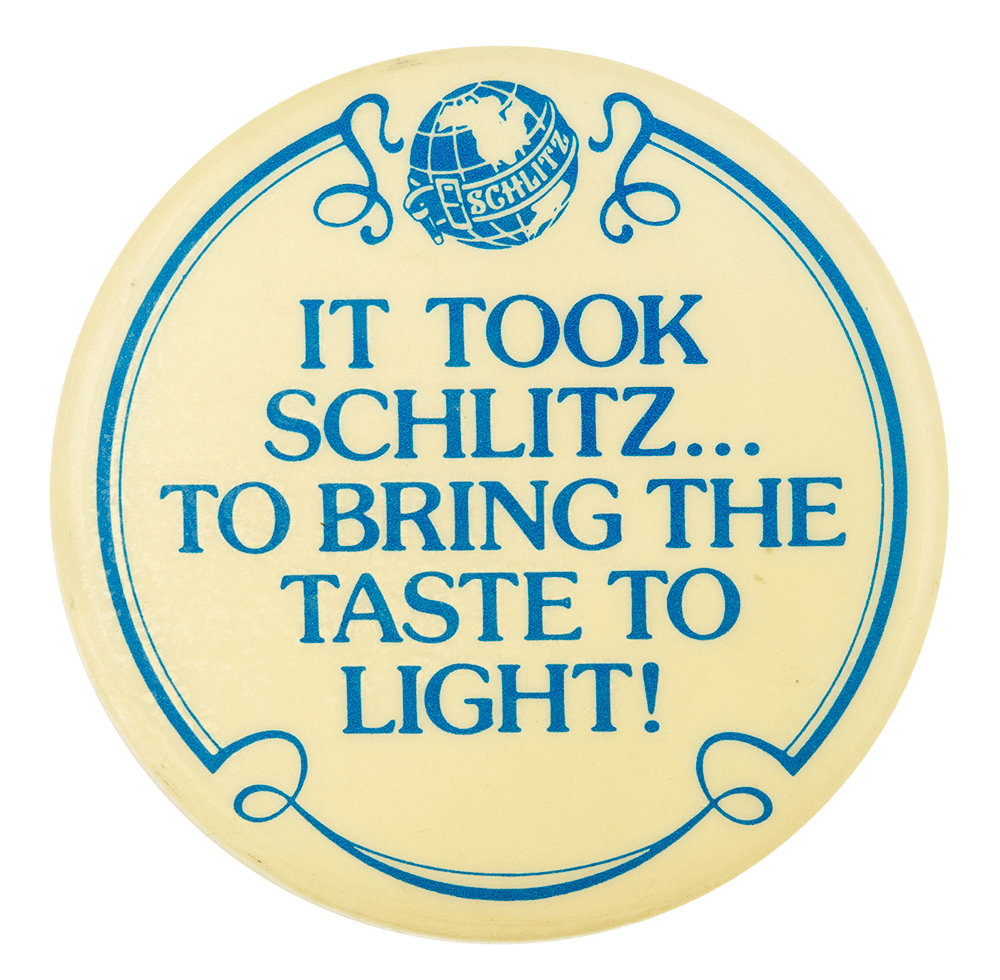
Text on Button IT TOOK SCHLITZ... TO BRING THE TASTE TO LIGHT!
Image Description

Blue text with an outer blue decorative ring and a globe with text on it at the top on an off white background

Back Style
The Shape
The Size
Year / Decade Made
Additional Information

Schlitz Brewing Company was founded in 1849 in Wisconsin by August Krug and eventually acquired by Joseph Schlitz in 1858. For a time, Schlitz was considered a leader in the industry. In 1976, the Brewing Company came out with Schlitz Light Beer. It had one third fewer calories but with the same taste. To promote their new beer, they came up with the tagline It took Schlitz to bring the taste to light.

Sources

Schlitz Beer. (n.d.). Retrieved from http://schlitzbrewing.com/

The Virgin Islands Daily News. (1976). Retrieved from https://news.google.com/newspapers?nid=757&dat=19760505&id=1oROAAAAIBAJ…

Catalog ID BE0154

Have You Hugged Your Beer

Category
Additional Images
Sub Categories
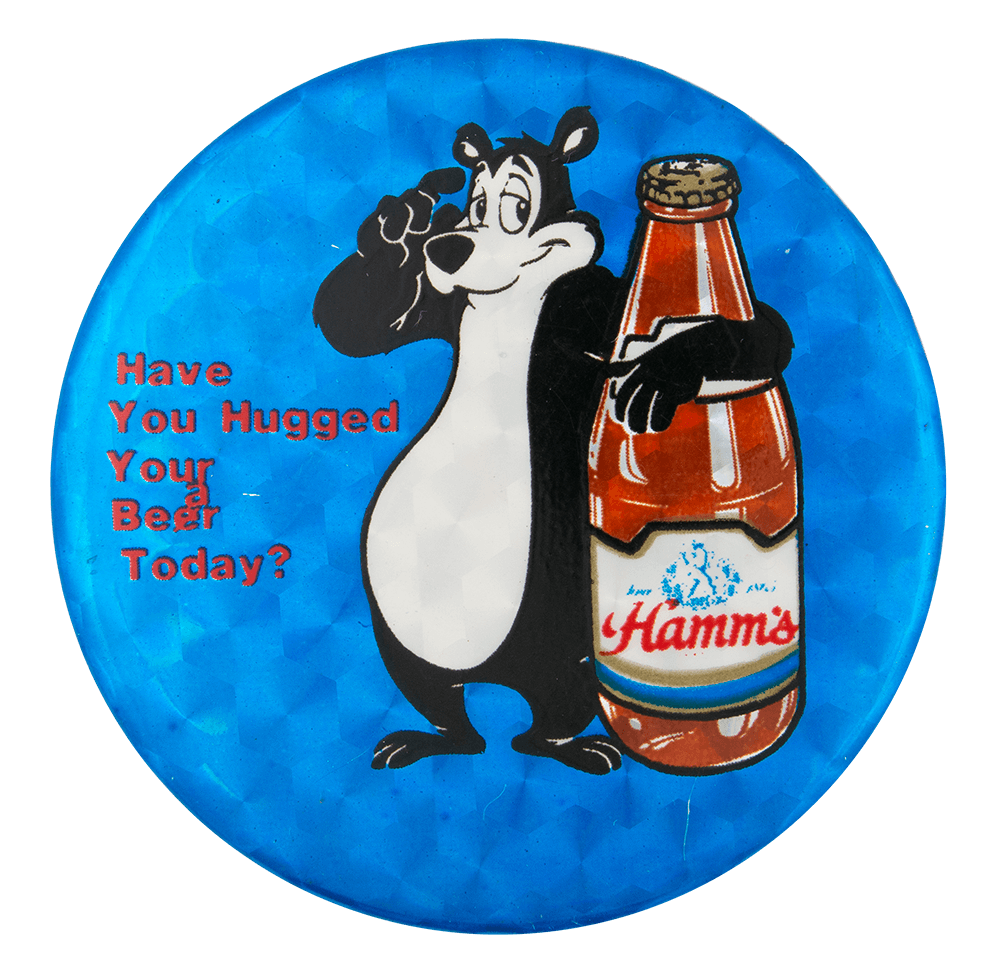
Text on Button Have You Hugged Your Beer (Bear) Today?
Image Description

Red text next to an illustration of a black and white bear hugging a brown bottle of bear on a sparkly blue background

Back Style
The Shape
The Size
Additional Information This cartoon bear was an iconic part of the Theodore H. Hamm Brewing Company’s “Land of Sky Blue Waters” advertising campaign. Beginning in the 1950s, the bear played a central role in many animated commercials and was featured on innumerable promotional products. In 1959, one of these commercials was chosen as one of the top ten advertisements by a marketing firm. In 1969, the bear was retired, only to return in the 1970s in the hopes of revitalizing the brand. In 1973, a live, trained, bear named Sasha (apparently motivated by 8 boxes of marshmallows every day of filming) began to appear in Hamm’s commercials. In 2000, the company chose to stop using the character in its campaigns due to controversy over the use of cartoons and animals, which appeal to children, to sell alcohol. Even so, that same year the bear was listed as a runner up for the St. Paul Pioneer Press list of 150 influential Minnesotans, and in 2005, a statue of the bear was erected in St. Paul, MN.
Sources
Dougherty, P. (1973, June 15). Advertising: Dyed Blond and a Bear Freshening Brewer's Image. Retrieved August 20, 2020, from https://www.nytimes.com/1973/06/15/archives/advertising-dyed-blond-and-… Laine, M. (2017, February 7). Hamm's Bear. Retrieved August 20, 2020, from https://www.mnopedia.org/thing/hamms-bear Tieberg, A. (2019, November 20). Theodore Hamm Brewing Company. Retrieved August 20, 2020, from https://www.mnopedia.org/group/theodore-hamm-brewing-company
Catalog ID BE0153

Budweiser Can

Category
Additional Images
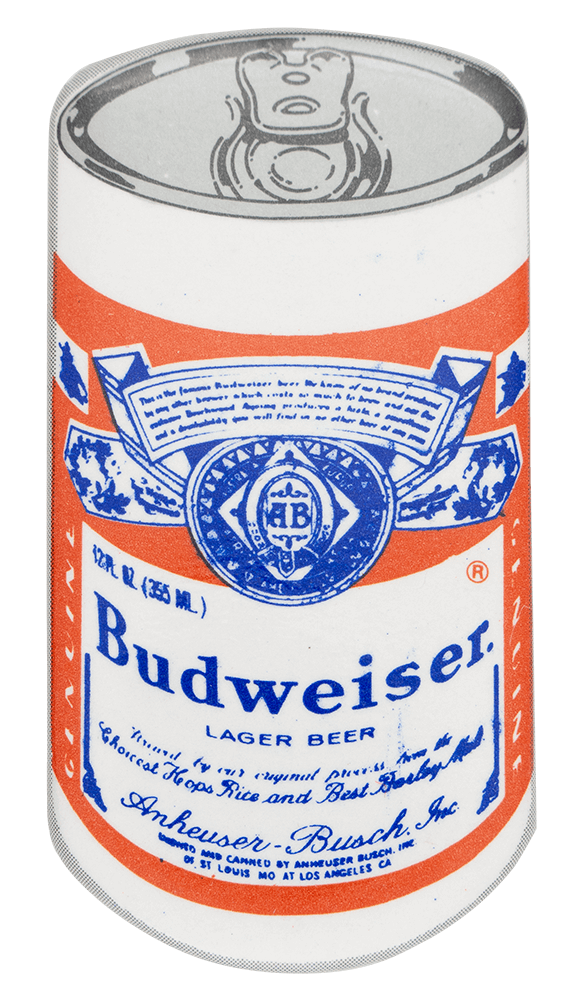
Text on Button Budweiser
Image Description

Illustration of a can of Budweiser beer

Back Style
The Shape
The Size
Additional Information

Established in St. Louis in 1876, Budweiser has grown to be one of the biggest selling beers in the United States. It is also the fourth leading brand of beer sold in China. Available on tap, in cans and bottles, it is sold in over 80 markets across the globe. A pale lager produced by Anheuser-Busch, it's made from rice, yeast, barley, and hops. Marketing has included the slogan "The King of Beers," commercials with Clydesdale horses and another with frogs, sponsorship with NASCAR and Major League Soccer, as well as the 1980s mascot, Spuds MacKenzie. There is even Beer Park by Budweiser on the Las Vegas Strip. 

Sources

Beer Park by Budweiser | Paris Las Vegas. (n.d.). Retrieved February 7, 2019, from https://www.beerpark.com/

Catalog ID BE0152

Bud By a Landslide

Category
Additional Images
Sub Categories
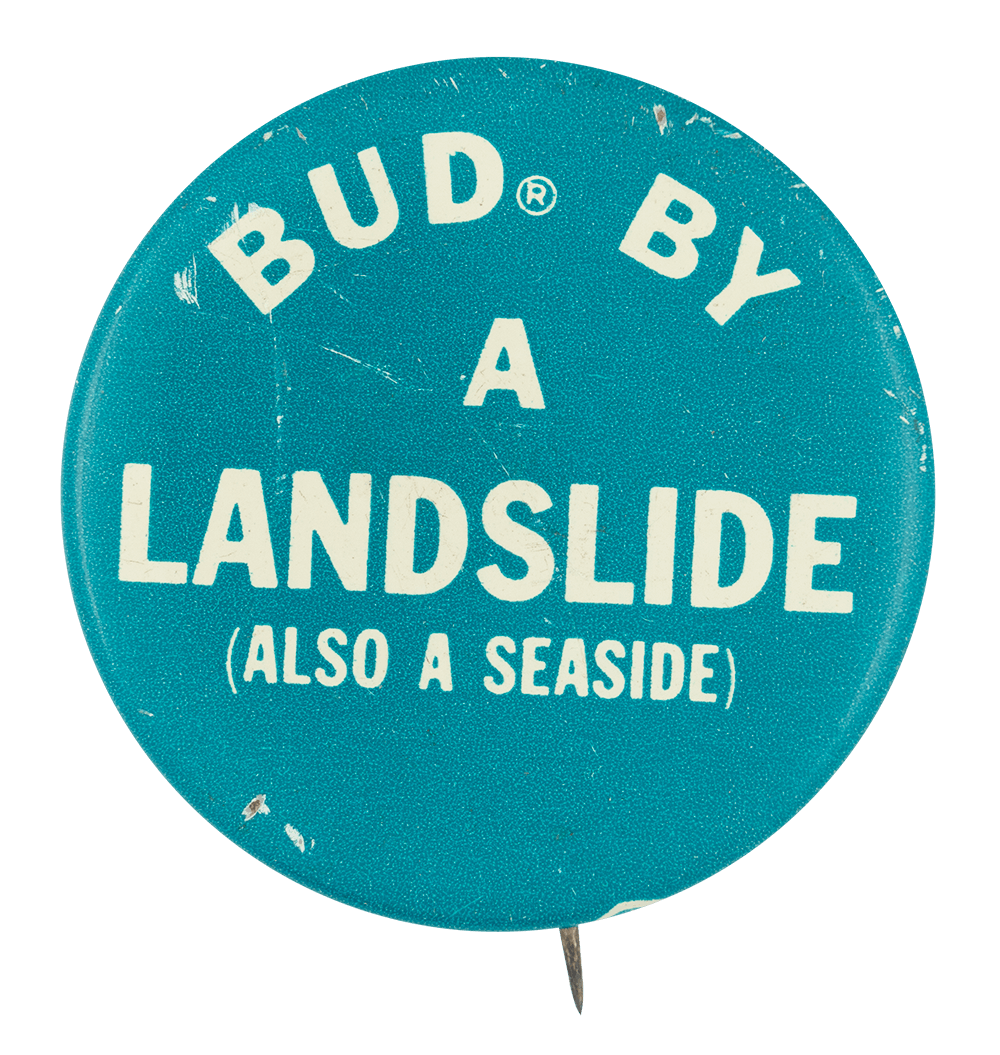
Text on Button BUD BY A LANDSLIDE (ALSO A SEASIDE)
Image Description

White text on a blue background

Curl Text union bug
Back Style
The Shape
The Size
Additional Information

The Anheuser-Busch Brewing Company created Budweiser beer in 1876 in St. Louis, Missouri. The company was founded by Adolphus Busch and his father-in-law, Eberhard Anheuser. Anheuser-Busch decided to make a light lager beer using pasteurization originating from the Czech Republic, which improved shelf life and transportability. The Budweiser pale lager was the first to use this method in the U.S. and grew to become one of the highest selling beers in the United States. It is available in over 80 markets worldwide. Budweiser is most commonly recognized by promotional Clydesdale horses, which made their first appearance in 1993 and were employed to represent the "living embodiment of America’s great industrial spirit."

The clever play on words, by a landslide, often refers to winning something by a majority, however, it has a second meaning of the physical landslide, a shift or slide of earth often caused by erosion or natural events, and alludes to enjoying the beverage at that location or a seaside location.

Catalog ID BE0151

Yachts

Category
Additional Images
Sub Categories
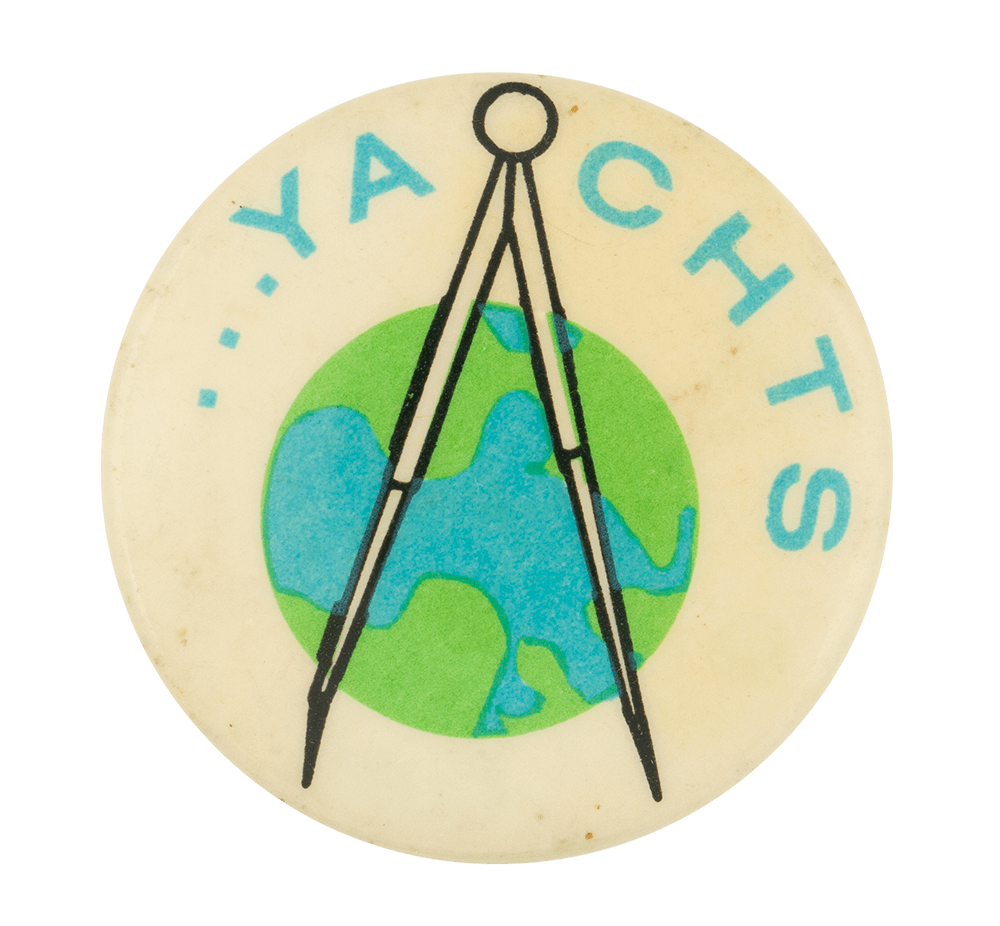
Text on Button YACHTS
Image Description

Illustration of a compass over the earth on a white background with black text

Back Style
The Shape
The Size
Additional Information

Have info on this button? Contact us here.

Catalog ID AR0438

Stars and Stripes Heart

Category
Additional Images
Sub Categories
Image Description

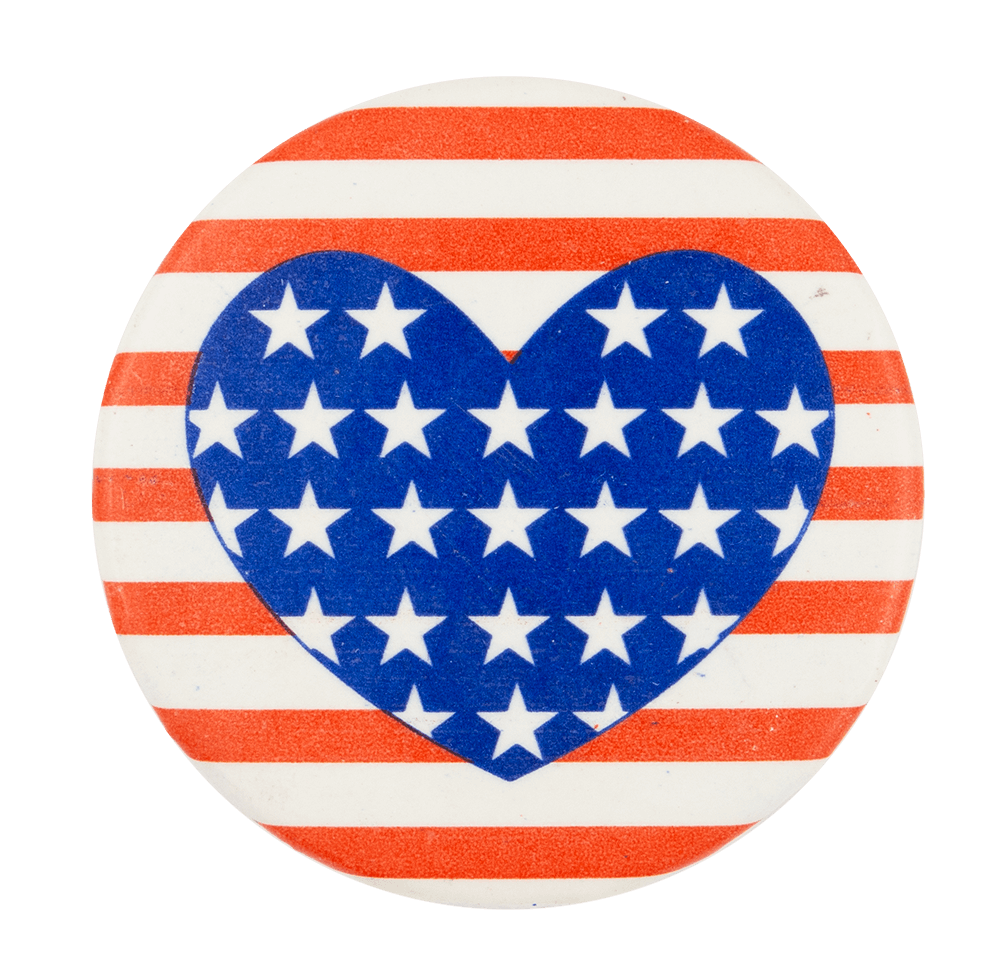
A blue heart with white stars over red and white stripes

Back Style
The Shape
The Size
Additional Information

This simple design of heart combined with the United States flag implies a love for the country and its flag. The first official flag of the United States was the Stars and Stripes, featuring thirteen alternating red and white stripes and thirteen white stars on a blue background. Sometimes referred to as the “Betsy Ross” flag, the Continental Congress approved its design on June 14, 1777.  On May 1, 1795, the second Flag Resolution mandated new stars and stripes be added when new states were admitted to the Union. The third and last Flag Resolution of 1818 declared the number of stripes would remain thirteen, but the number of stars would always match the number of states. The Resolution stated that these updates were to be made on the Fourth of July. 

Sources

Flag of the United States of America. (2021). Britannica. From https://www.britannica.com/topic/flag-of-the-United-States-of-America

Catalog ID AR0437

Basil Wolverton T.V. Fan

Category
Additional Images
Sub Categories
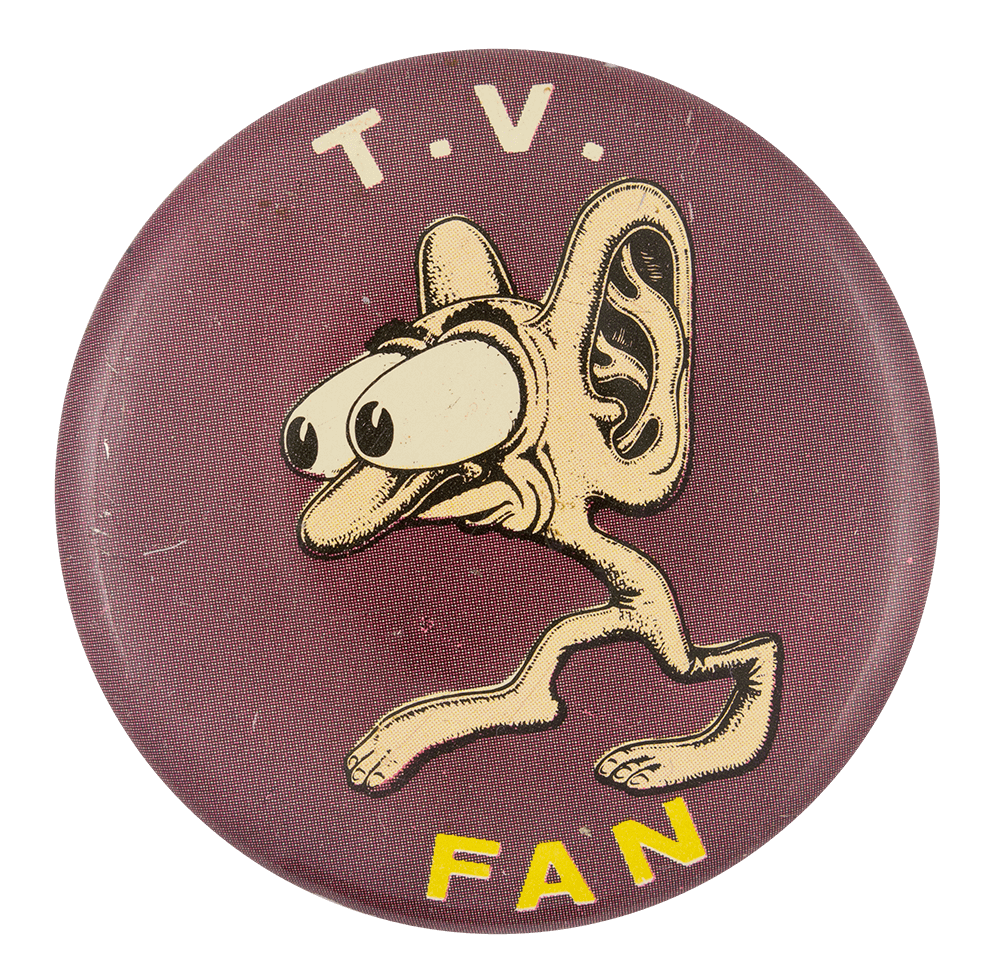
Text on Button T.V. FAN
Image Description

White and yellow text around an illustration of a face with large ears and legs on a purple background

Curl Text MADE IN JAPAN
Back Style
The Shape
The Size
Year / Decade Made
Additional Information

This image is part of a series from the 1965 LEAF "Fink Buttons" illustrated by popular Mid-Century artist Basil Wolverton. Perhaps best known for his work at MAD Magazine, Basil Wolverton (July 9, 1909 – December 31, 1978) was an American cartoonist and illustrator famous for his humorously grotesque drawings. Wolverton worked in the "Golden Age" of comic books doing features like "Powerhouse Pepper" and "Spacehawk" in the 1940s. A 2009 New York Times article states that Wolverton’s drawings embodied the “sick-and-proud humor” of MAD magazine and were considered a “virtuoso exercise in bad taste, made all the weirder for being so meticulously executed."

Sources

Cotter, H. (2009). The van Gogh of the Gross-Out. Retrieved 20 May 2021, from https://www.nytimes.com/2009/07/23/arts/design/23basil.html

Catalog ID AR0436

Basil Wolverton The Silent Type

Category
Additional Images
Sub Categories
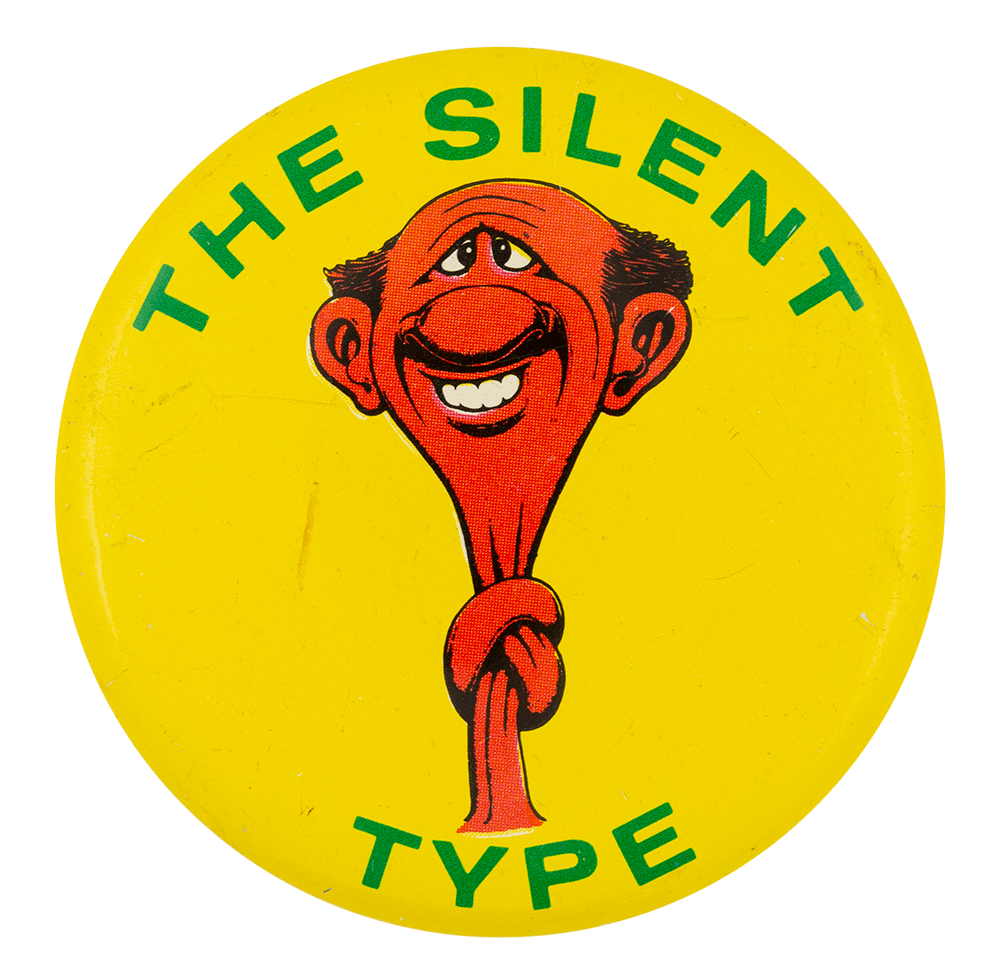
Text on Button THE SILENT TYPE
Image Description

Red-orange illustration of a head with a neck tied in a knot on a yellow background with green text

Curl Text MADE IN JAPAN
Back Style
The Shape
The Size
Year / Decade Made
Additional Information

This image is part of a series from the 1965 LEAF "Fink Buttons" illustrated by popular Mid-Century artist Basil Wolverton. Perhaps best known for his work at MAD Magazine, Basil Wolverton (July 9, 1909 – December 31, 1978) was an American cartoonist and illustrator famous for his humorously grotesque drawings. Wolverton worked in the "Golden Age" of comic books doing features like "Powerhouse Pepper" and "Spacehawk" in the 1940s. A 2009 New York Times article states that Wolverton’s drawings embodied the “sick-and-proud humor” of MAD magazine and were considered a “virtuoso exercise in bad taste, made all the weirder for being so meticulously executed."

Sources

Cotter, H. (2009). The van Gogh of the Gross-Out. Retrieved 20 May 2021, from https://www.nytimes.com/2009/07/23/arts/design/23basil.html

Catalog ID AR0435