Cap'n Jim Channel Eleven

Category
Additional Images
Sub Categories
Text on Button Cap'n Jim Channel 11
Image Description

Illustration has blue text on a white background. Button reads Cap'n Jim across the top, Channel 11 across the bottom. Image of Popeye is in the center.

Back Style
The Shape
The Size
Year / Decade Made
Additional Information

Cap'n Jim refers to Jim Sanders and later Ted Eckman (aka Ted Niemi), who ran Cap'n Jim's Popeye Club on WIIC Channel 11 in Pittsburgh, Pa. The children's show ran in the late 1950s through the mid-1960s and featured live hosts, Popeye cartoons, and other segments. A second version ran for a few years starting in 1970.

Catalog ID EN0203

Bullwinkle I'm So Confused

Category
Additional Images
Sub Categories
Text on Button I'M SO CONFUSED
Image Description

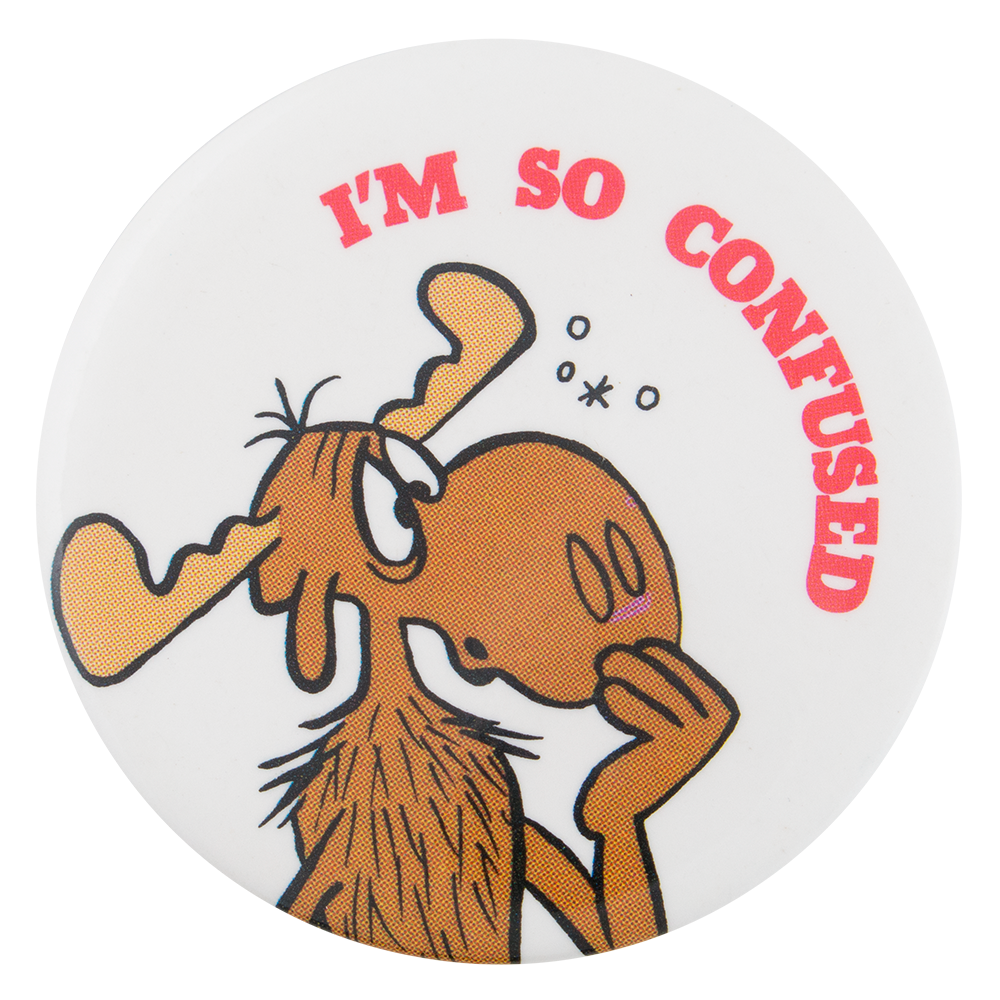
Color illustration of Bullwinkle with a confused expression. The words "I'm so confused" listed on the top of button in capital red letters. Words and illustration over white background. 

Curl Text ©1984 P.A.T.-WARD BUTTON-UP CO. 22120 RYAN, WARREN, MI 48091
Back Style
The Shape
The Size
Additional Information

Bullwinkle J. Moose is a fictional character from the animated television series Rocky and Bullwinkle (later called The Bullwinkle Show), produced by Jay Ward and Bill Scott which ran from 1959-1964. 

Bullwinkle was characterized as being kind though dim-witted. He was frequently referred to as the "moronic moose" and was juxtaposed by his intelligent friend Rocky the squirrel. The pair shared a house in a fictional town called Frostbite Falls, Minnesota, which parodied the real town of International Falls, Minnesota. There Bullwinkle attended college at Wossamotta U on a football scholarship. Rocky and Bullwinkle were featured in a half-animated half-live-action film in 2000 called The Adventures of Rocky and Bullwinkle.

Catalog ID EN0116

Buckwheats the Breakfast of Rascals

Category
Additional Images
Text on Button BUCKWHEATS THE BREAKFAST OF RASCALS
Image Description

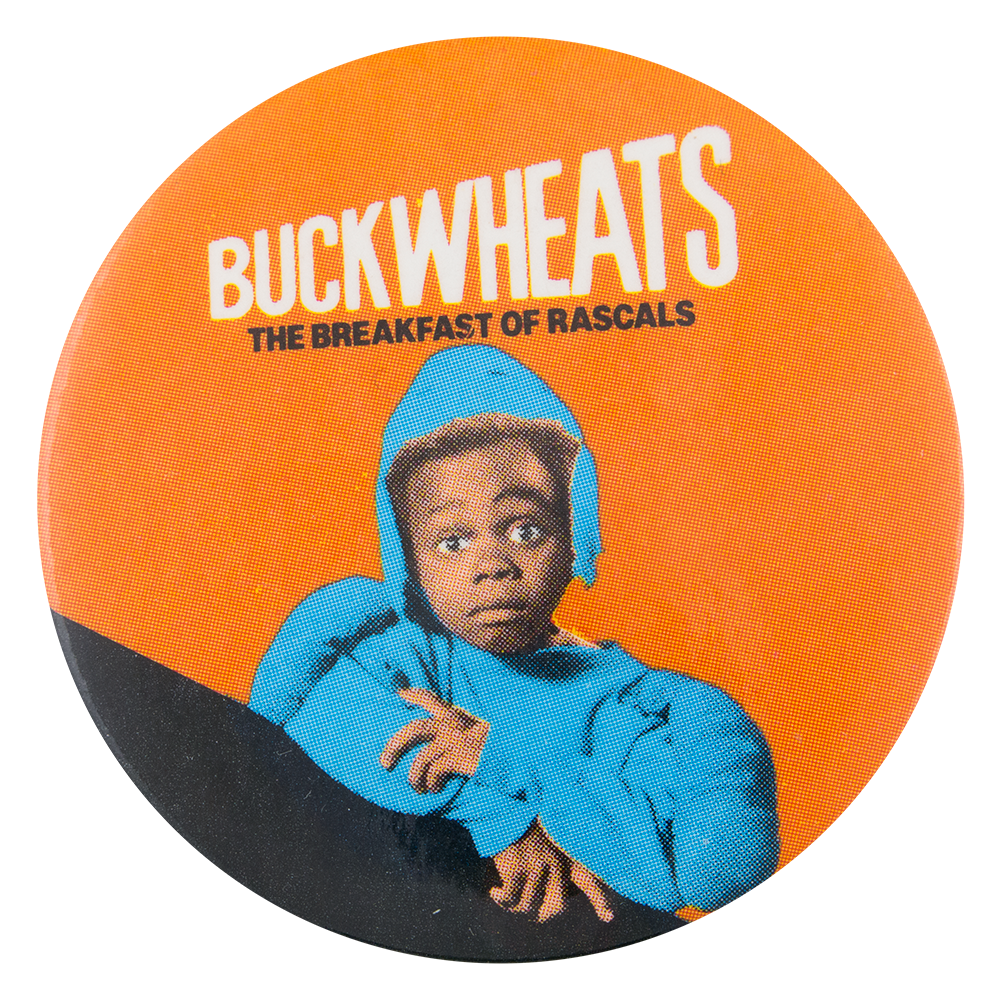
Buckwheat, the Little Rascal, is wearing a blue coat and a blue hat and is leaning on a black, slanted object; the lettering is white and black; all images and lettering are printed over an orange background.

Curl Text ©1988 KING WORLD PRODUCTIONS, INC. BUTTON-UP CO 2011 AUSTIN TROY, MI 48084
Back Style
The Shape
The Size
Year / Decade Made
The Manufacturer
Additional Information

This is a button featuring Buckwheat, a member of the Little Rascals, a gang of kids from Our Gang, a series of comedy short movies. Our Gang was produced between 1922 and 1944 by many different companies. The actor featured in the photo is Billie Thomas, the second person to act as Buckwheat; the original actor was, in fact, a girl. Thomas became Buckwheat in 1935 while the character was still considered a female. The character was referred to as "he" starting in 1936. 

Sources

Wikipedia (2015 July, 31). Our gang. Wikipedia: The Free Encyclopedia. https://en.wikipedia.org/wiki/Our_Gang#The_MGM_era

Wikipedia (2015 July, 29). Billie Thomas. Wikipedia: The Free Encyclopedia. https://en.wikipedia.org/wiki/Billie_Thomas

Catalog ID EN0182

Brave New World

Category
Additional Images
Sub Categories
Text on Button Brave New World
Image Description

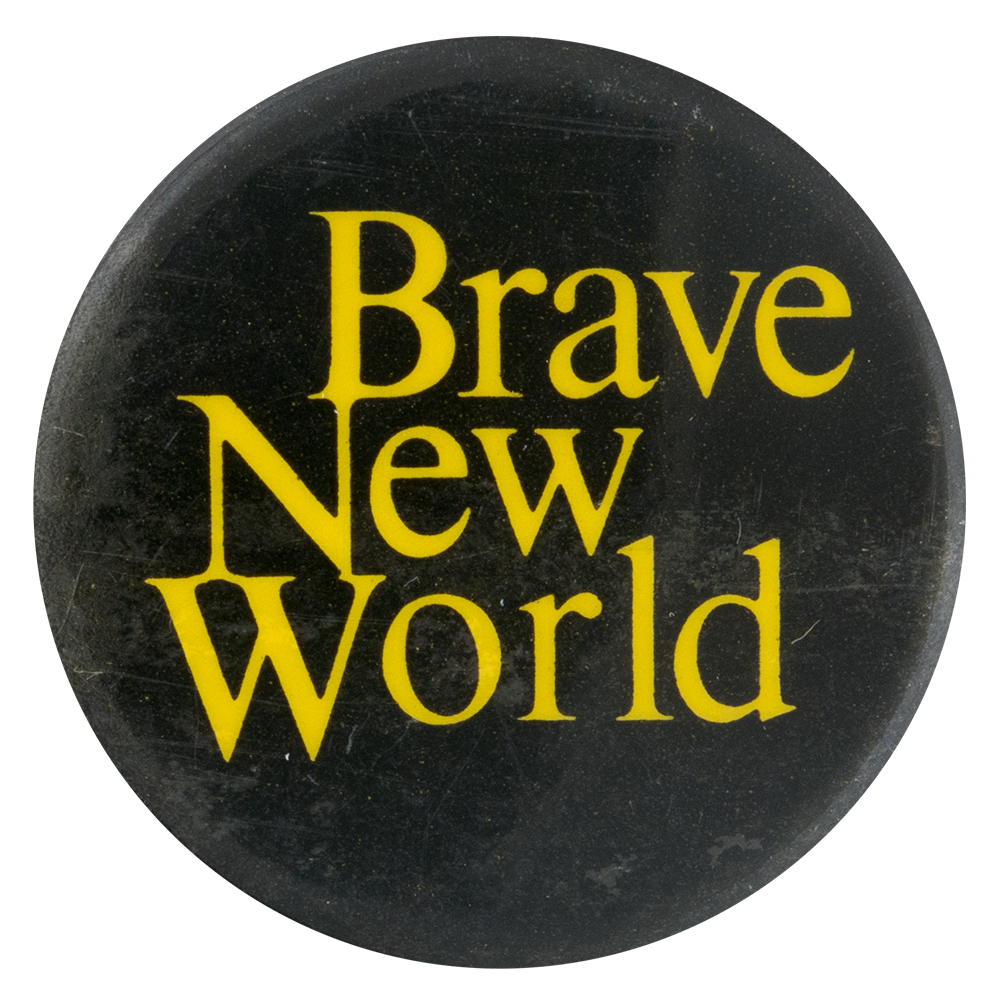
Yellow text on a black background

Back Style
The Shape
The Size
Additional Information

Brave New World is a dystopian fictional novel published in 1932 by Aldous Huxley. The novel is set in London in the year 2540. Huxley plays with ideas of futuristic developments in reproductive technology, sleep-learning, psychological manipulation, and classical conditioning. Additionally, a central theme to the novel is the division of society into five tiered castes. Each caste has a different economic role within society with lower castes being chemically manipulated to manage their levels of intelligence and physical growth.

Catalog ID EN0134

Bob and Doug McKenzie

Category
Additional Images
Sub Categories
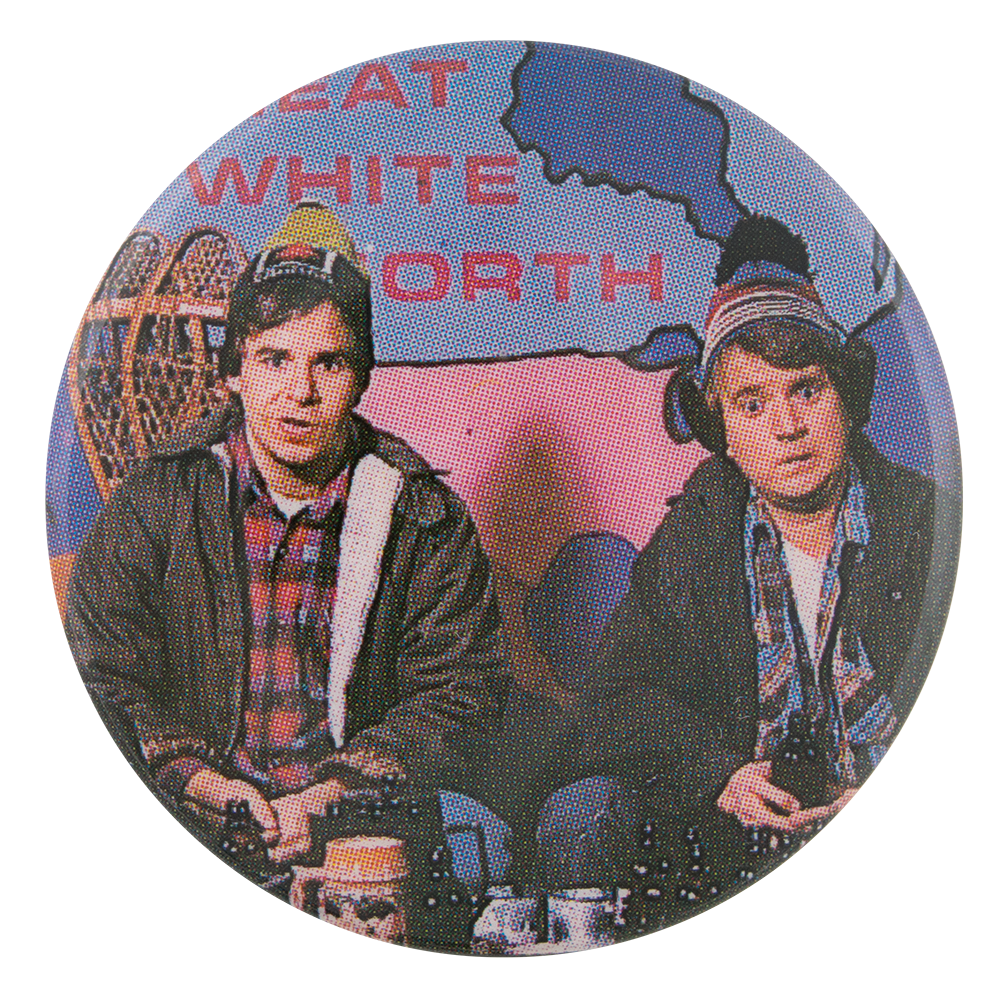
Text on Button [Gre]at White North
Image Description

Two men wearing plaid shirts, jackets, and winter caps (or "tuques" to most Canadians) sit at a coffee table littered with mugs. Behind them is a mural or poster of North America, with Canada in light blue and the United States in pink. Over the map of Canada is text in a slightly darker shade of pink. On the left, leaning against the background, is a pair of snowshoes.

Back Style
The Shape
The Size
Additional Information

Bob and Doug McKenzie are characters portrayed by the comedians Rick Moranis and Dave Thomas, respectively. The McKenzie brothers originated on the third season of SCTV, Second City's sketch comedy show, after it had moved to the Canadian Broadcasting Corporation (CBC) in 1980. Due to demands by the CBC for a quota of content relating to Canada, Moranis and Thomas created the "Kanadian Korner" sketch series (later renamed "Great White North") as a venue for their stereotypically Canadian characters. The duo became popular in both the U.S. and Canada for their antics and catchphrases such as "Eh?" and "hoser," which they called anyone they didn't like. The duo went on to record a comedy album in 1981, the film Strange Brew was released in 1983, and they have since reprised the roles in various iterations until the present. 

Catalog ID EN0156

Bite Me Fan Boy

Category
Additional Images
Sub Categories
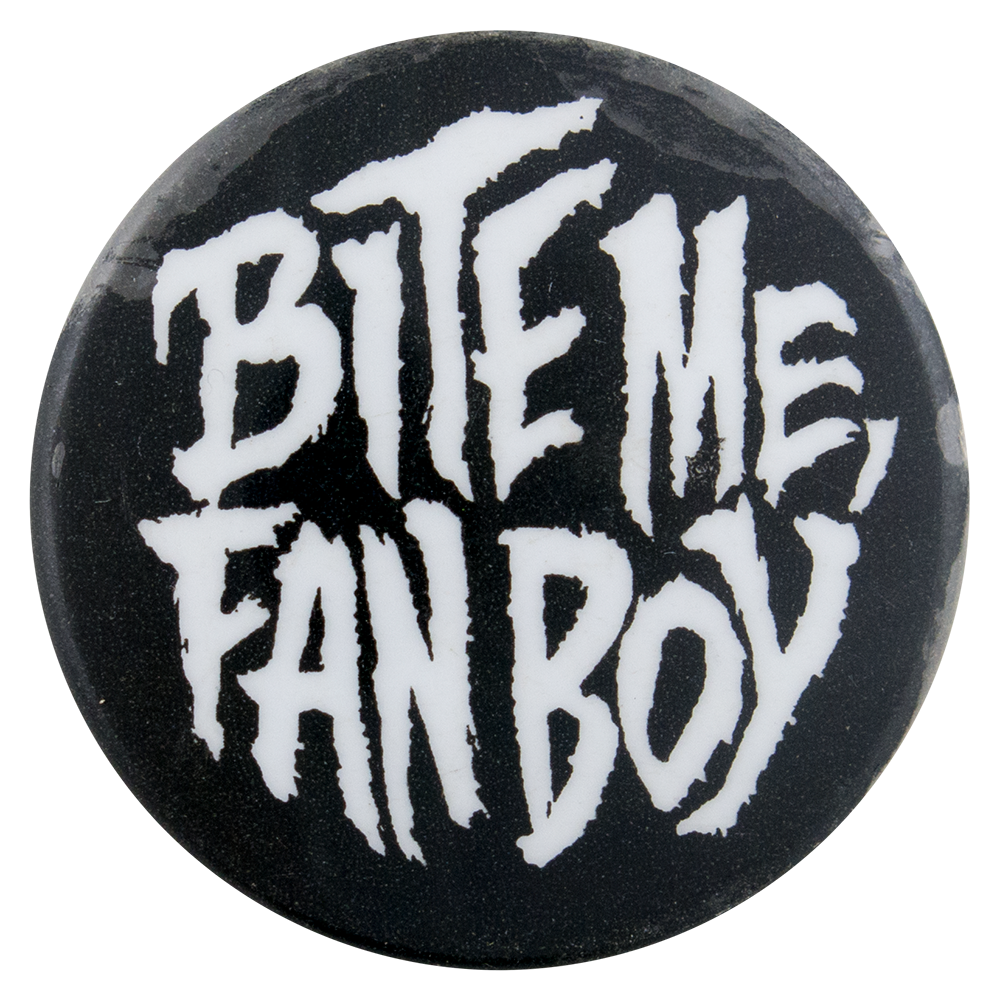
Text on Button BITE ME, FAN BOY
Image Description

White text on black background

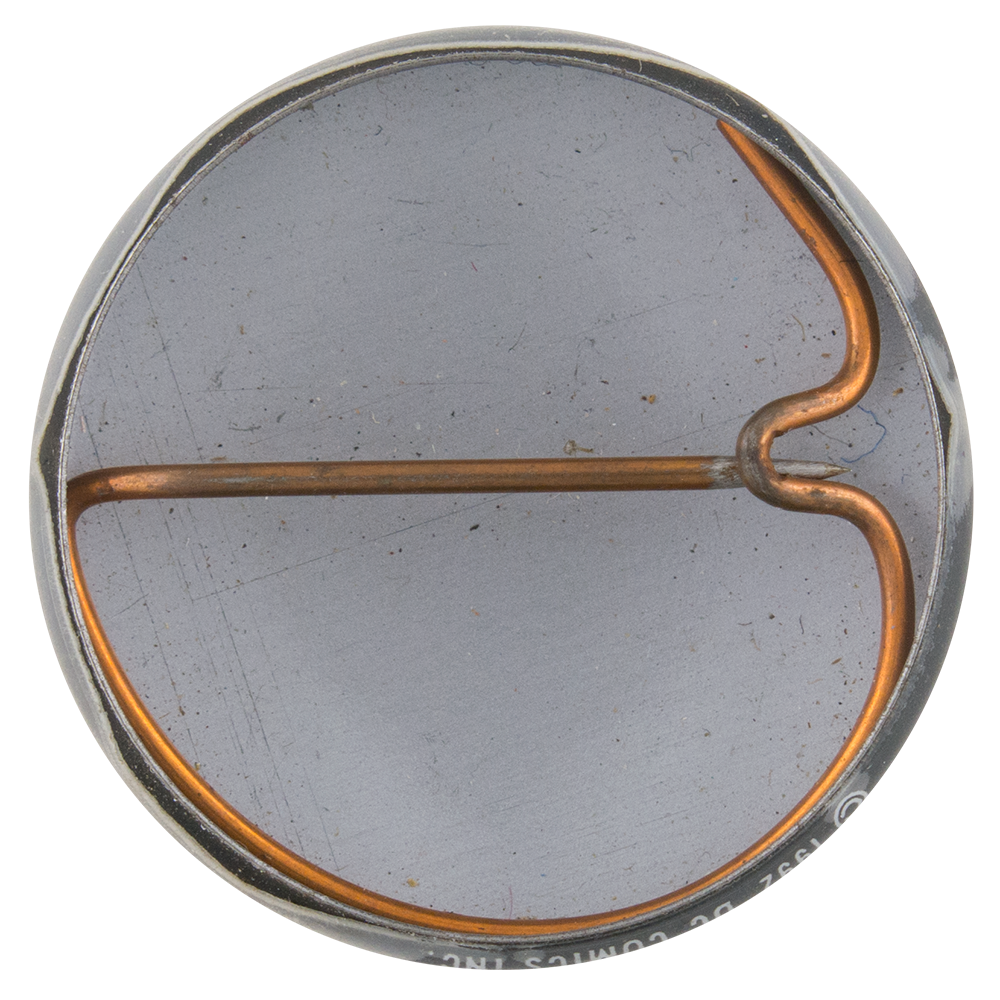
Curl Text copyright 1992 CC COMICS INC
Back Style
The Shape
The Size
Year / Decade Made
Additional Information

Promotional items were given away with the release of DC Comics' Lobo's Back #1, such as T-shirts and buttons featuring the phrase "Bite Me, Fan Boy," primarily in the 1990s. The character Lobo is an alien humanoid from the planet Czarnia with tracking powers, an analytical mind and extreme strength. Lobo first appeared in 1983's Omega Men #3. Lobo made guest appearances in other comics such as Superman and Batman, and also had his own monthly series.

Sources

Rettig, Craig H. (2009). Lobo: Frequently-Asked Fraggin’ Questions. Bastich, Inc. website.

Catalog ID EN0232

Behind Every Great Man Dingbat

Category
Additional Images
Sub Categories
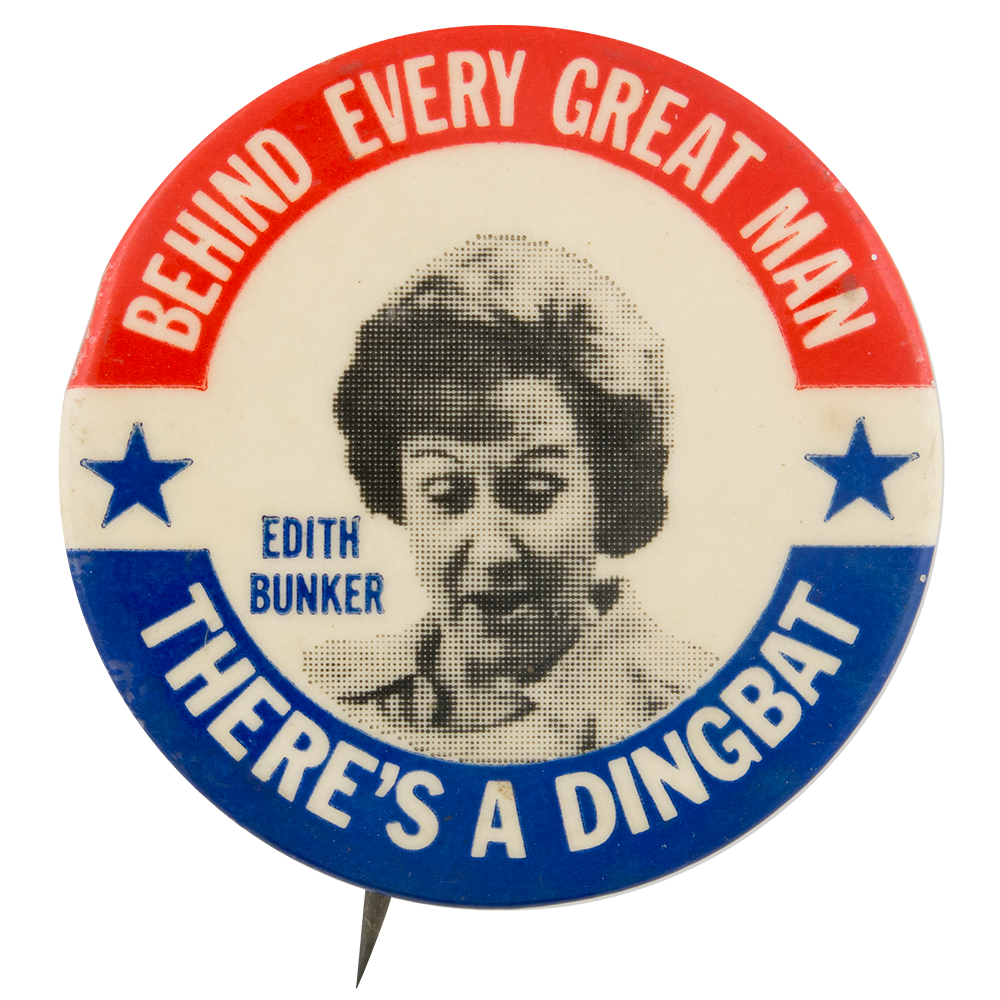
Text on Button Behind Every Great Man There's A Dingbat, Edith Bunker
Image Description

A black and white photograph of a woman appears before a white background. Above the photograph the button is rimmed with red; below it is rimmed with blue. Between the two rims there are breaks, in which appear two blue, five-pointed stars. Within each rim is white text. Smaller blue text also appears to the left of the photograph of the woman.

Curl Text copyright 1972 TANDEM PROD. INC. OFF LICENSEE - N.G. SLATER CORP. NYC 10011
Back Style
The Shape
The Size
Year / Decade Made
The Manufacturer
Additional Information

Edith Bunker was a character on the CBS sitcom All in the Family, which ran from 1971 to 1979. Portrayed by Jean Stapleton, Edith was the long-suffering but devoted wife of blue-collar curmudgeon Archie Bunker (Carroll O'Connor). Known for her high-pitched, Queens, NY-accented voice and sweetly naive demeanor, the character, along with Archie Bunker, was one of the most beloved of television and popular American culture in general in the 1970s.

In 1972, All in the Family and its cast of characters were promoted with merchandise as a tie-in with the U.S. presidential election of that year. "Dingbat" is a reference to Archie's not-so-gentle term of endearment for Edith

Catalog ID EN0147

Batman Silver

Category
Additional Images
Sub Categories
Image Description

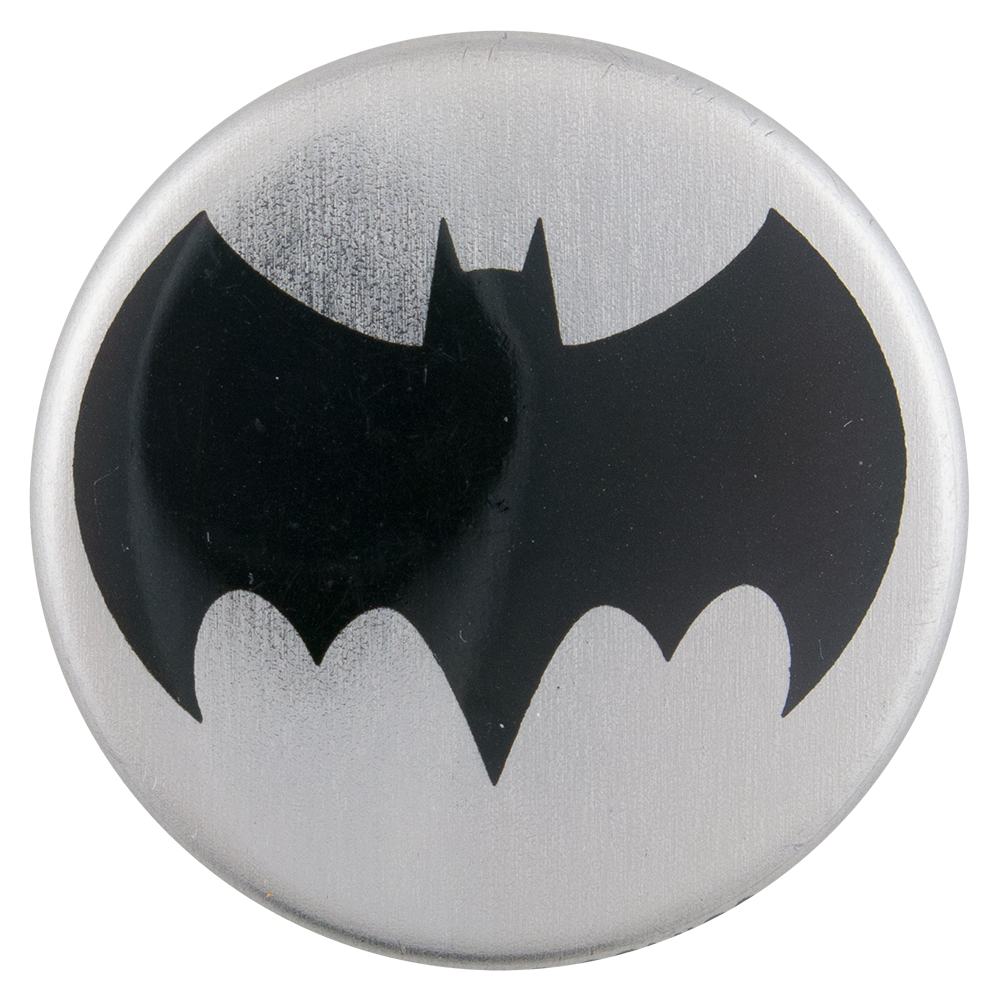
Illustration of a black bat on a silver background

Back Style
The Shape
The Size
Additional Information

Batman is a fictional superhero in the DC Comics world. He first appeared in 1939 as part of Detective Comics #27 written by Bill Finger and illustrated by Bob Kane. He gained his own comic book title, Batman, shortly after in 1940. The character is referred to by several names including "the Caped Crusader," "the Dark Knight," and "the World's Greatest Detective." 

Unlike most superheroes, Batman does not have any super powers. He is an American billionaire and philanthropist, who having witnessed the murder of his parents as a child, serves as a vigilante to the fictional town of Gotham. Rather than supernatural skill, he relies on his intellect, martial arts skills, physical prowess, detective skills, technology, and wealth to fight crime.

When Batman is needed, the Gotham City police use a searchlight with a bat-shaped insignia over the lens called the Bat-Signal, in order to alert his attention. The bat symbol has evolved since its origin in the 1940s. This insignia most closely resembles the 2004 logo.

Catalog ID EN0139

Batman Black and Gold

Category
Additional Images
Sub Categories
Image Description

Illustration of a black bat on a yellow oval on a black background

Curl Text BUTTON-UP 2011 AUSTIN TROY, MI. 48083 TM & copyright DC COMICS INC. 1964
Back Style
The Shape
The Size
The Manufacturer
Additional Information

Batman is a fictional superhero in the DC Comics world. He first appeared in 1939 as part of Detective Comics #27 written by Bill Finger and illustrated by Bob Kane. He gained his own comic book title, Batman, shortly after in 1940. The character is referred to by several names including "the Caped Crusader," "the Dark Knight," and "the World's Greatest Detective." 

Unlike most superheroes, Batman does not have any super powers. He is an American billionaire and philanthropist, who having witnessed the murder of his parents as a child, serves as a vigilante to the fictional town of Gotham. Rather than supernatural skill, he relies on his intellect, martial arts skills, physical prowess, detective skills, technology, and wealth to fight crime.

When Batman is needed, the Gotham City police use a searchlight with a bat-shaped insignia over the lens called the Bat-Signal, in order to alert his attention. The bat symbol has evolved since its origin in the 1940s. This insignia most closely resembles the 1998 logo.

Catalog ID EN0138