National Blemish Week

Category
Additional Images
Sub Categories
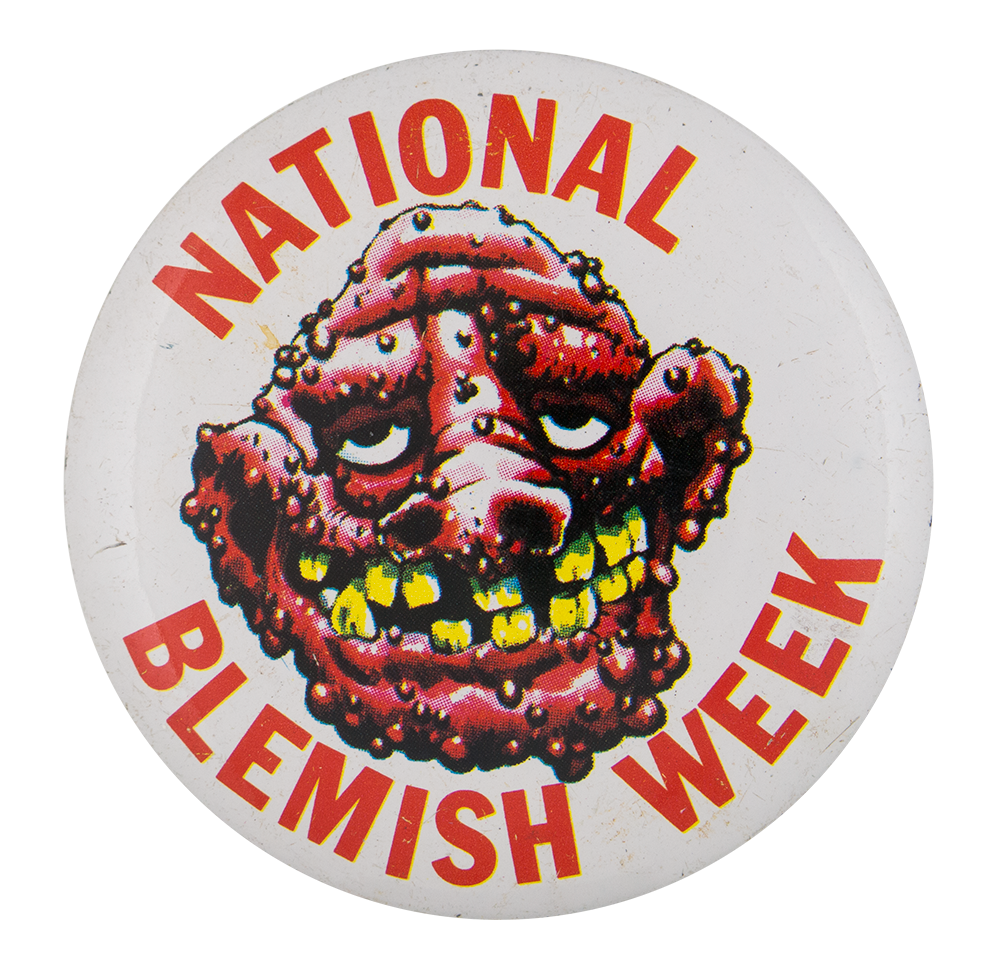
Text on Button NATIONAL BLEMISH WEEK
Image Description

A face that is covered in blemishes and smiling with back teeth  surrounded by red text on a white background.

Curl Text JAPAN
Back Style
The Shape
The Size
Year / Decade Made
The Manufacturer
Additional Information

This button was part of a collection released by Topps in 1966-67 called Ugly Buttons. Comic book artist Norman Saunders designed and painted 11 of the series of 24 buttons, while Wally Wood designed 13 (including "National Blemish Week") that were painted by an unknown artist. According to a site maintained by Saunders’s son David Saunders that documents his father’s life and work, not many of the buttons have survived, possibly due to the design of the tin back pin, which had a hair-trigger clasp that was prone to falling off.

In 1890 Morris Shorin founded tobacco distributor American Leaf Tobacco. World War I and the Great Depression caused the company to face financial difficulties, so Shorin’s four sons decided to relaunch it in 1938 as a chewing gum provider called Topps. One of the company’s earliest products was Bazooka bubble gum. In 1951 Topps released its first series of baseball cards. Over subsequent decades Topps created cards and other collectibles, such as buttons, for various sports and aspects of popular culture. Wood (1927-1981) was a comic book writer and artist who created items for Topps in the 1960s. In addition to the Ugly Buttons series, he and Saunders also designed the popular Mars Attacks science fiction trading cards.

Saunders, D. [n.d.]. Ugly buttons. Retrieved from http://www.normansaunders.com/UglyBts%2C01.html

Catalog ID HU0033

How Do You Make A Tissue Dance

Category
Additional Images
Sub Categories
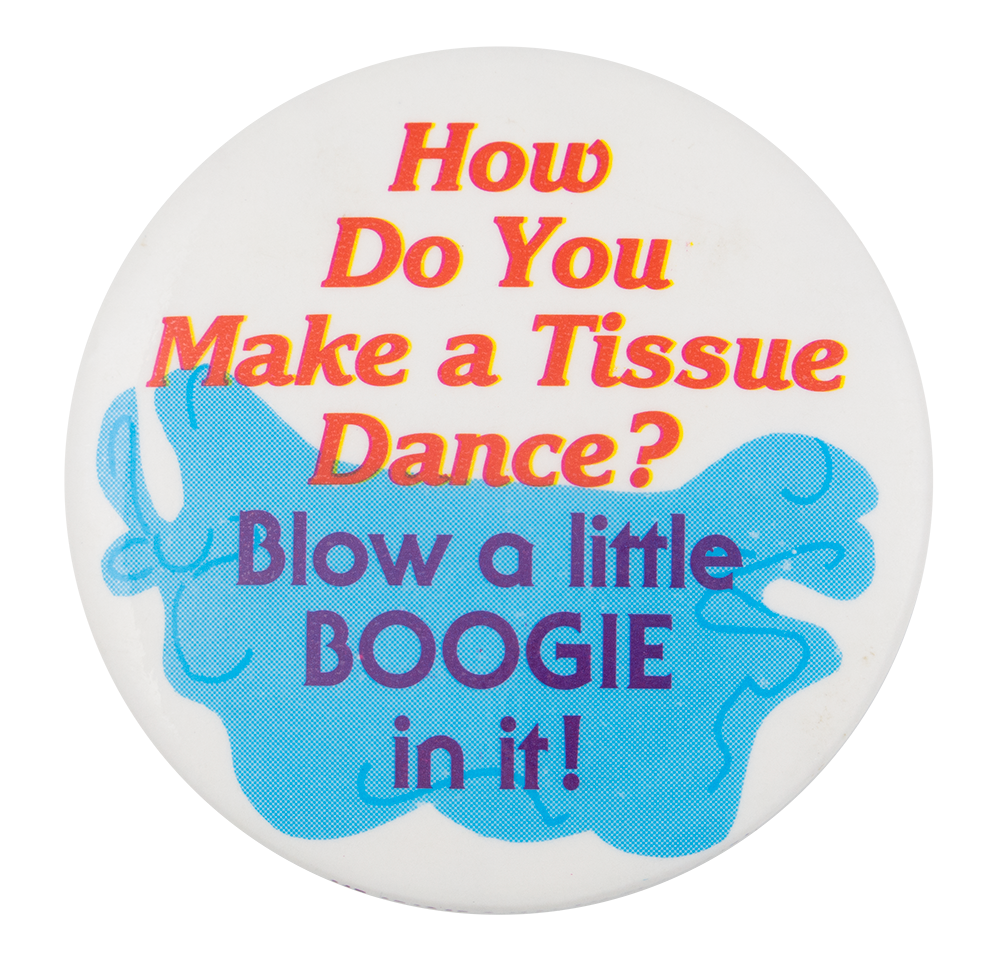
Text on Button How Do You Make a Tissue Dance? Blow a little BOOGIE in it!
Image Description

A white background with red text on the upper half of the button and purple text on the lower half, over the illustration of a blue tissue.

Curl Text 415 454645 © KALAN Phila 19151
Back Style
The Shape
The Size
Additional Information

This is an old joke that uses the word "boogie" as a pun for the punchline. "Boogie" refers to both dried nasal mucus and a type of dance.

Catalog ID HU0034

U And I Make A Good Pear

Category
Additional Images
Sub Categories
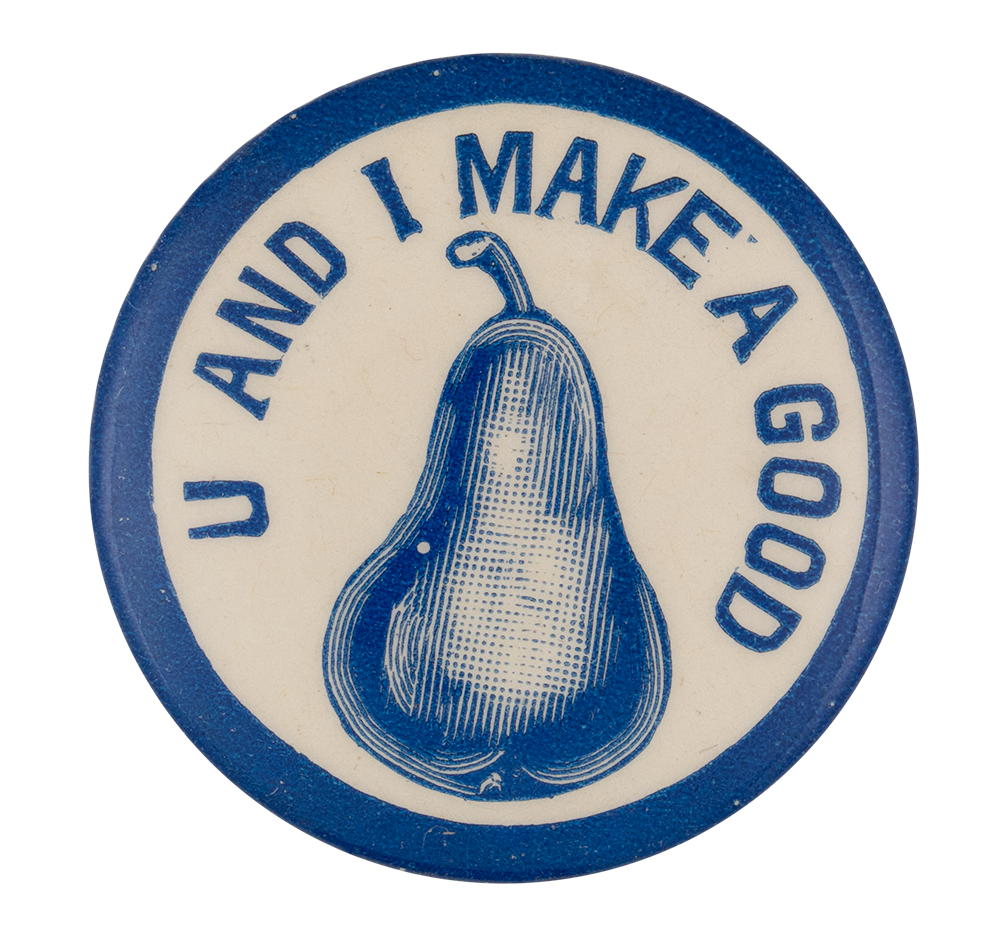
Text on Button U AND I MAKE A GOOD
Image Description

A blue, cross-hatched drawing of a pear with blue text above on ivory surrounded by a blue outline.

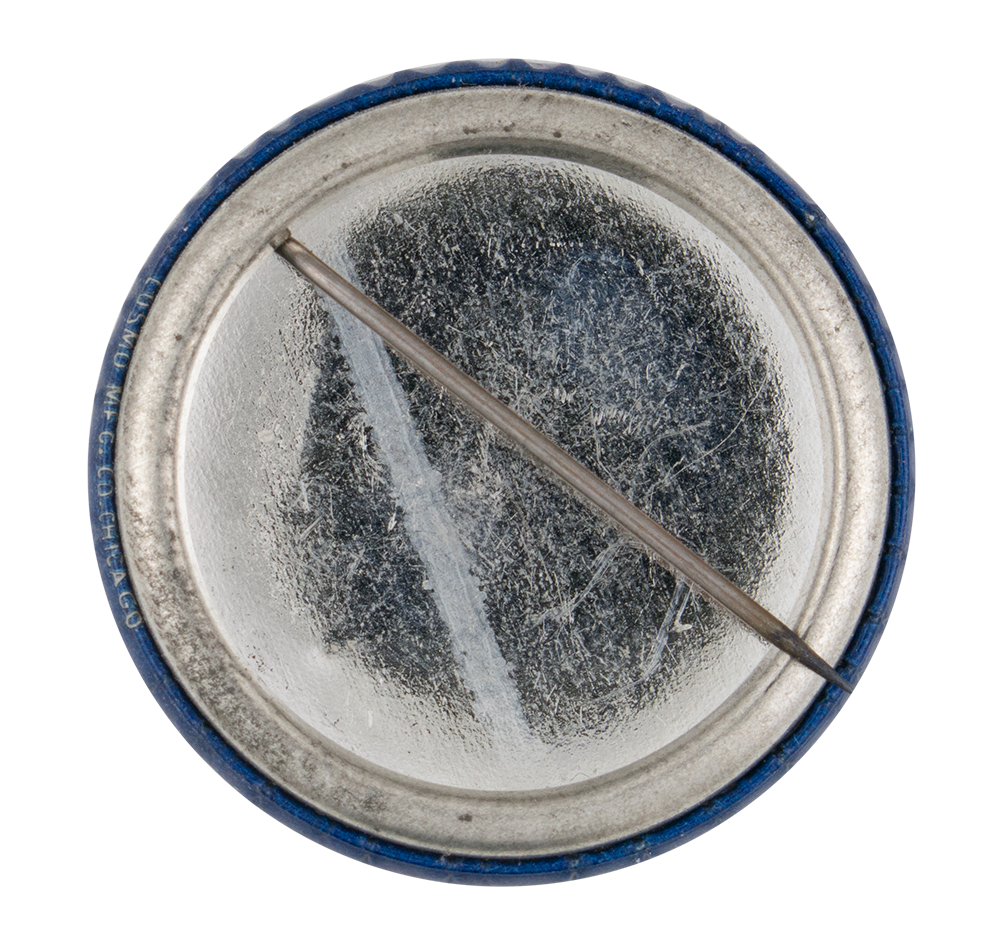
Curl Text COSMO MFG CO CHICAGO
Back Style
The Shape
The Size
Additional Information

The phrase "You and I make a good pear" is a play on the idiom "You and I make a good pair," suggesting that the individuals are a good match and/or complement each other. The imagery of the pear adds a somewhat humorous, possibly sweet or harmonious, element to the sentiment of compatibility.

Cosmo Manufacturing Company, established in 1892, gained recognition for producing the trinkets found in Cracker Jack boxes. In 1926, the company expanded its operations by acquiring Dowst Brothers Company, known for its miniature metal creations, including buttons, cufflinks, and promotional accessories.

The same design can be found from Johnson Smith & Co’s mail-order novelty catalog from 1929 amongst various similar formatted buttons. Johnson Smith & Company began in Chicago, Illinois in 1914 as a mail-order novelty and gag gift supplier, settling in Racine, Wisconsin in 1922. Johnson Smith & Co. or Johnson Smith Company sold an array of toys including pinback buttons with suggestive slogans meant as ice breakers. Their 1929 catalogue touts, “These Buttons provide subjects for pleasant jokes and amusing conversations, and thus smooth the way to a more familiar acquaintance and cordial friendship. They are very wittily worded and quite unobjectionable. Wear one and see the effect.”

Sources

Clayman, A. (2019). TootsieToy & the Dowst MFG Co., est. 1876. Made in Chicago Museum. https://www.madeinchicagomuseum.com/single-post/dowst-mfg-co-tootsietoy/

Johnson Smith & Co. (1929). Johnson Smith &. Co, Catalogue. Internet Archive. https://archive.org/details/1929johnsonsmith0000tony/page/308/mode/2up

Toth, R. (2025). (4) 1930s Cracker Jack Pop Corn Confection Pot Metal or Lead Toy Prize Baseball Sports Lapel Stud Buttons. Time Passage Nostalgia. http://www.timepassagesnostalgia.com/&page=10&pm=0&searchkeywords=Lapel+Button&sin=p283

Catalog ID IB0205

Keep Smiling

Category
Additional Images
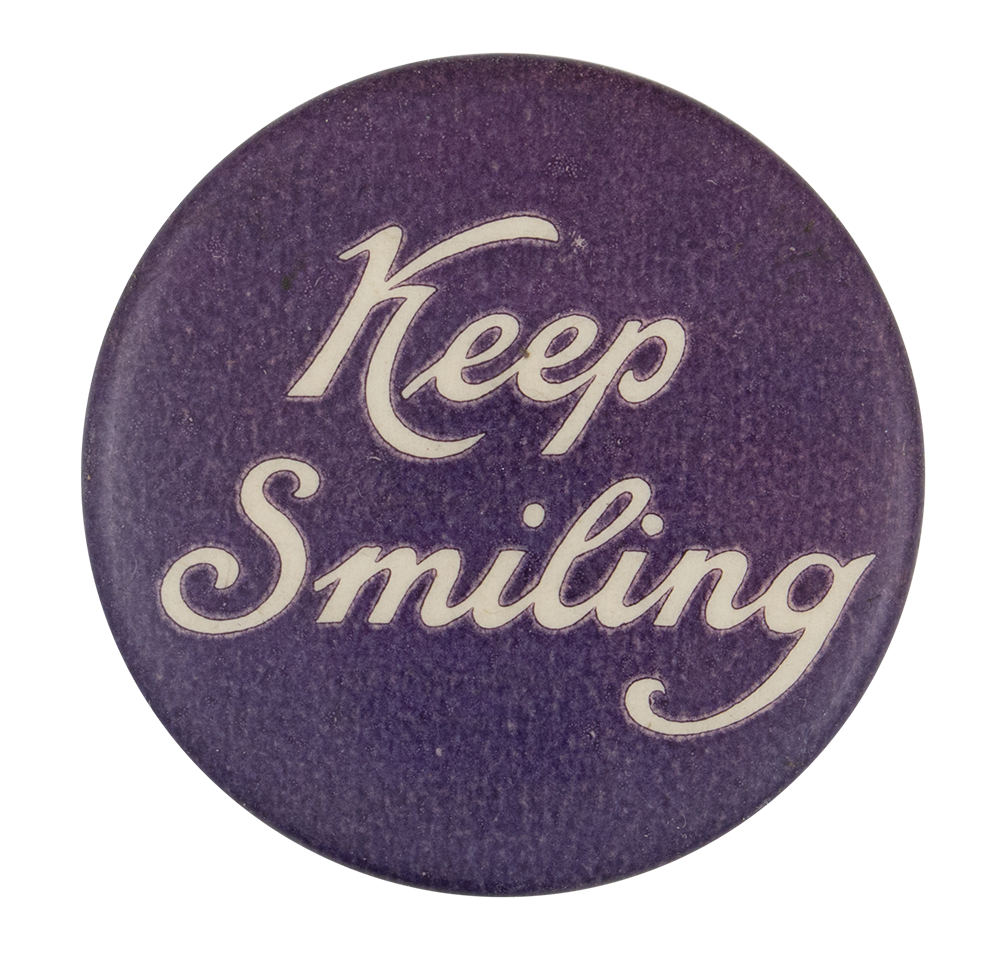
Text on Button Keep Smiling
Image Description

White text on a purple background. 

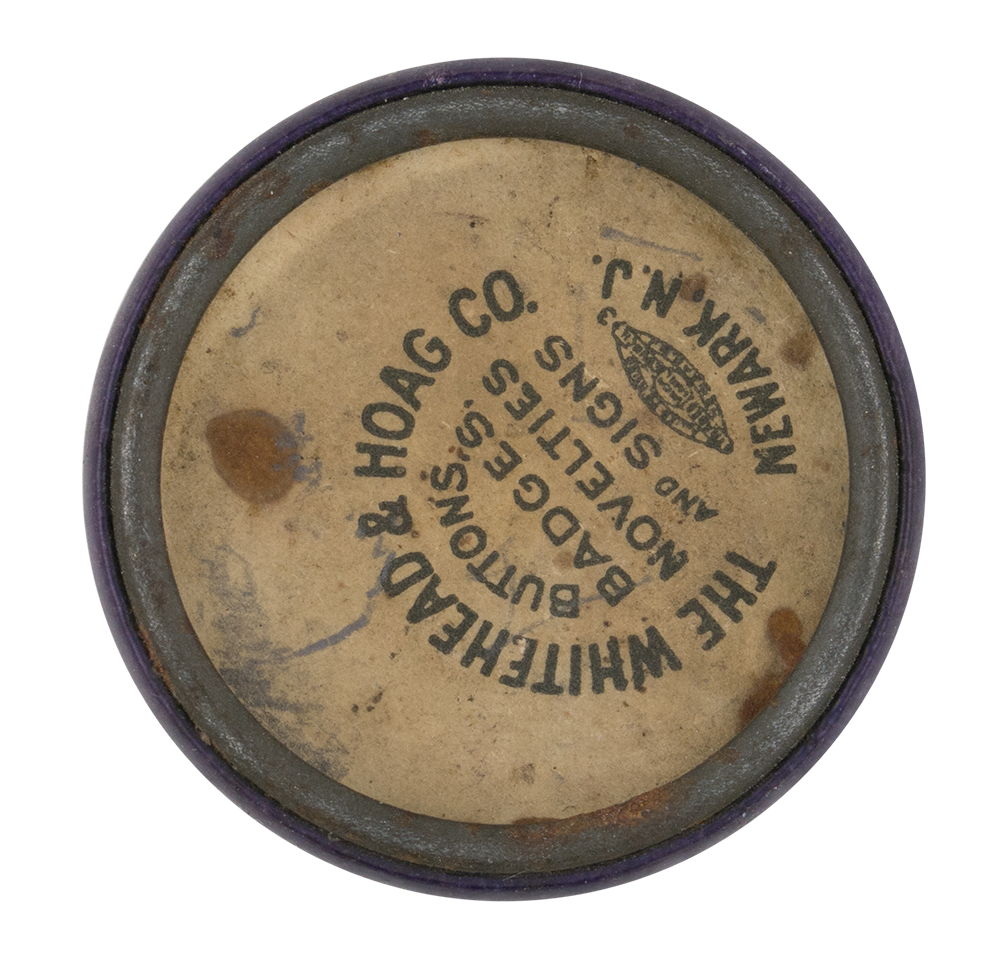
Back Paper / Back Info

THE WHITEHEAD & HOAG CO.
BUTTONS, BADGES, NOVELTIES AND SIGNS
NEWARK N.J.
Union Bug

Back Style
The Shape
The Size
The Manufacturer
Additional Information

This is a motivational button. 

Catalog ID IB0231

Just Streakin' Thru

Category
Additional Images
Sub Categories
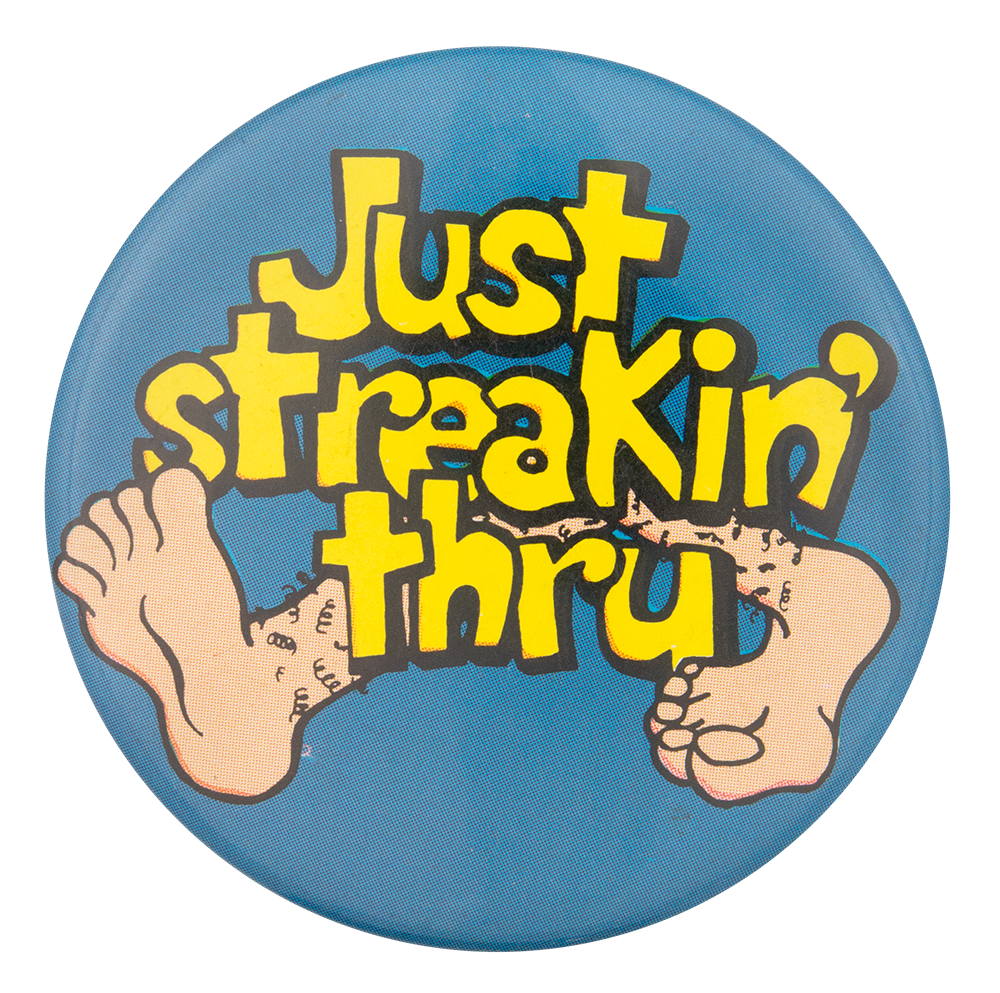
Text on Button Just streakin' thru
Image Description

Yellow text with black shadow above a pair of big footed, hairy cartoon legs on blue background.

Back Style
The Shape
The Size
Year / Decade Made
Additional Information

Although the act of streaking has been popular since the mid-1960s, the term "streaking" was first used in 1973. The term was coined during a mass nude run at the University of Maryland. Streaking is different from nudism, because the streaker intends to be noticed by an audience. It is also different from "flashing", in that it is not intended to shock the victim. Perhaps the most widely seen streaker in history was 34-year-old Robert Opel, who streaked across the stage flashing the peace sign on national television during the 46th Annual Academy Awards in 1974. The high point of streaking's pop culture significance was in 1974, when thousands of streaks took place around the world. A wide range of novelty products were produced to cash in on the fad, including buttons, patches, and t-shirts.

Read more about the History of Streaking Buttons on the Busy Beaver blog.

Catalog ID IB0203

Jesse James Was A Hippie

Category
Additional Images
Sub Categories
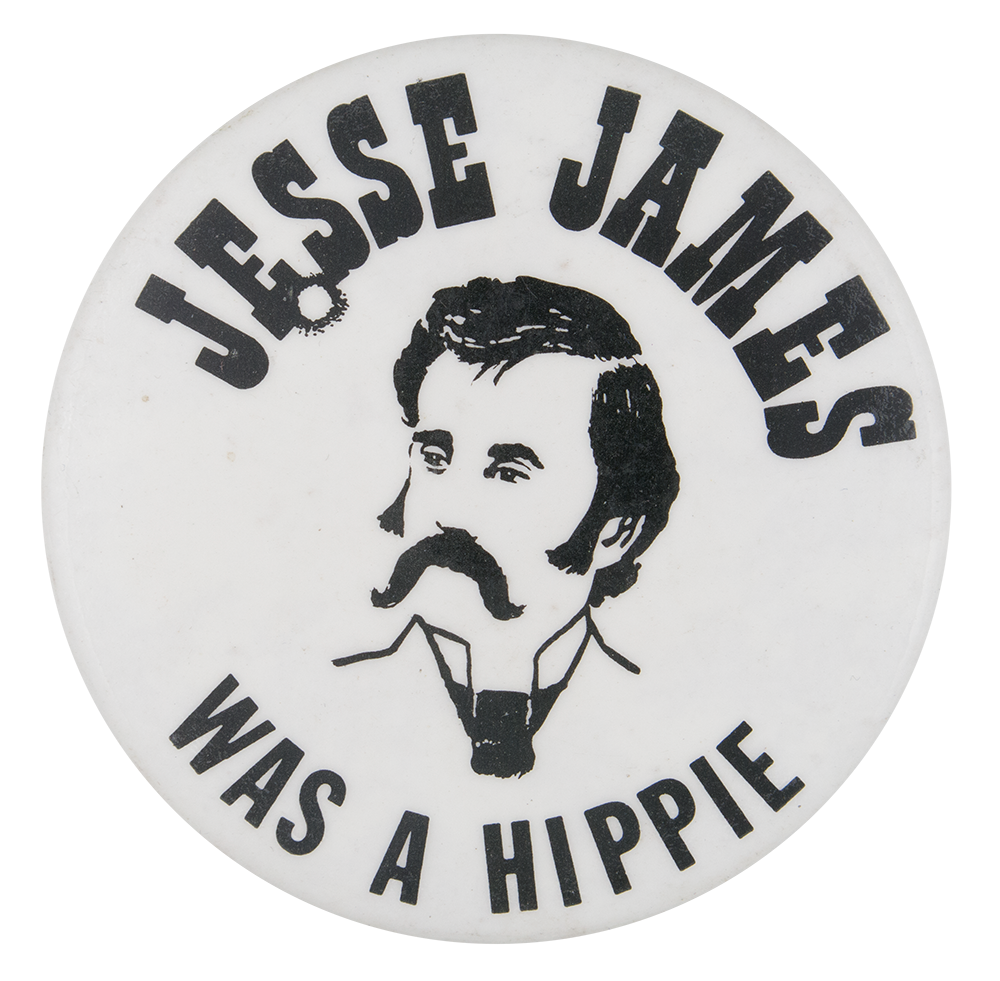
Text on Button JESSE JAMES WAS A HIPPIE
Image Description

A black and white portrait of Jesse James with black text above and below on a white background.

Back Style
The Shape
The Size
Additional Information

This button was popular among the youths during the 60s and 70s. It is a humorous representation of Jesse James (1848-1882), a famous American outlaw, gang leader, robber, and murderer from Missouri and the most famous member of the James-Younger Gang. In lieu of the common portrayal of Jesse James as the tough and lawless man, the button claims him to be a hippie, a person that was associated with a subculture involving a rejection of conventional values.

Catalog ID IB0227

Isn't That Special

Category
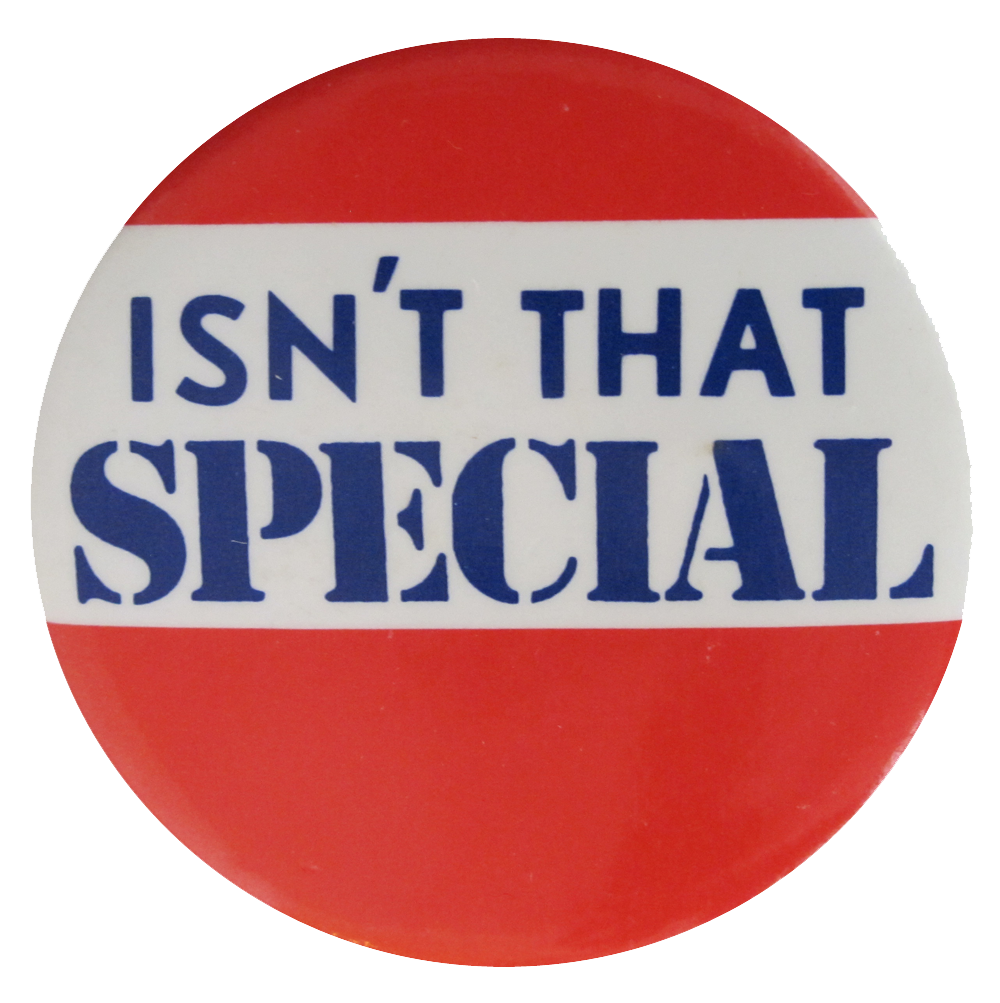
Text on Button ISN'T THAT SPECIAL
Image Description

Dark blue text in stencil style is centered in the middle on a white background between red background.

Back Paper / Back Info

55481

Curl Text 146 © KALAN Philia 19151
Back Style
The Shape
The Size
Additional Information

The phrase on this button comes from the Saturday Night Live character the Church Lady created by Dana Carvey. The Church Lady sketches appeared on the show between 1986 and 1990.

Catalog ID HU0037

I'm Poor But Good Looking Girl

Category
Additional Images
Sub Categories
Text on Button I'M POOR...BUT GOOD LOOKING
Image Description

Illustration of a freckle faced girl with blue glasses and red pigtails. Blue and red text on a white background.

Back Style
The Shape
The Size
Additional Information

This artwork has been created with both girls and and boys, and can be found on other novelty pieces, such as shirts.

Catalog ID HU0123