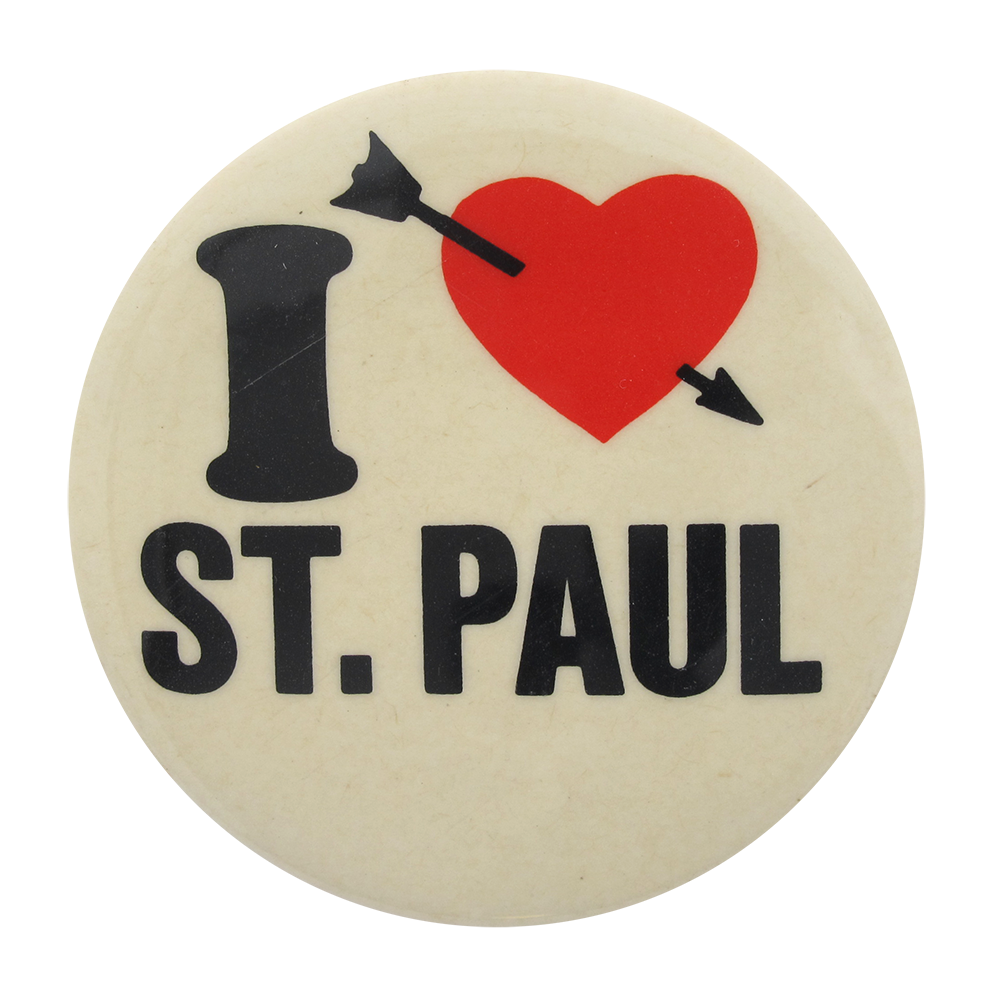
I Heart St. Paul

Category
Additional Images
Sub Categories
Text on Button I ♥ St. Paul
Image Description

Red heart with an arrow through it next to black text over yellowed background. 

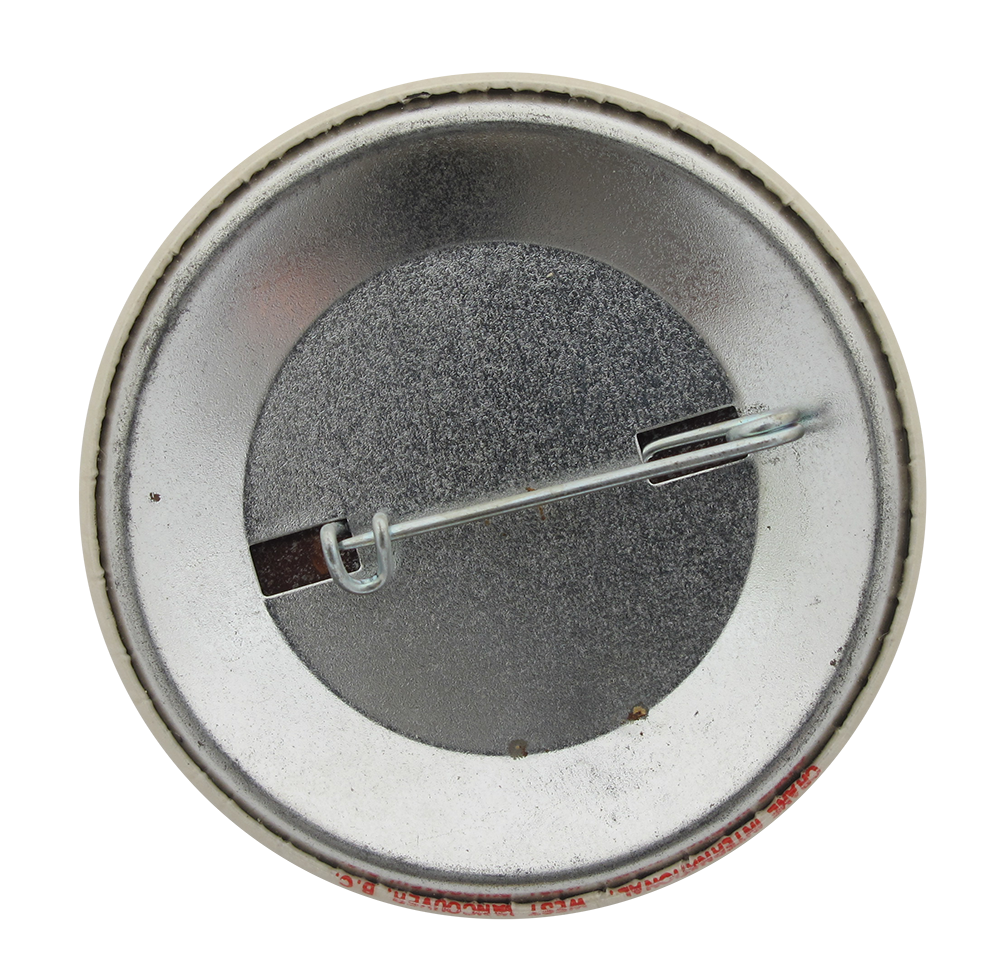
Curl Text CRANE INTERNATIONAL WEST VANCOUVER B.C.
Back Style
The Shape
The Size
Year / Decade Made
The Manufacturer
Additional Information

This is a variation of the "I heart NY" logo that was created in 1977 by Milton Glaser for an ad campaign created by advertising agency Wells Rich Greene. The marketing campaign was sought by then-Deputy Commissioner William S. Doyle to increase tourism in the state of New York. The campaign was a wild success. The original sketch of the logo is permanently on display at the MOMA. The logo has become iconic in pop-culture and has been imitated in many forms around the world.

Saint Paul, along with its twin city, Minneapolis, straddles the banks of the Mississippi River and was home to the Hopewell, Dakota, and Ojibwe AmerIndian cultures for two thousand years before the arrival of Europeans. Saint Paul is currently known as the uptight city between the twins, but this has not always been the case. In fact, it was founded in 1838 by a bootlegger named Pierre "Pig's Eye" Parrant and named Pig's Eye (L'œil de cochon, in French). In 1849, the city's name changed to Saint Paul, in remembrance of Paul the Christian Apostle, and became the Minnesota Territory capital.  

Diverse ethnic groups, such as the Czech, French, German, Hmong, Italians, Jewish, Mexicans, Polish, Scandinavians, and Vietnamese, have made Saint Paul a mid-size a cosmopolitan center, which is celebrated each year with the Festival of Nations. Industries such as the railroad, wheat mills, higher education, and the state government have helped shaped the city's culture, as well as its economy.  

Catalog ID IL0033

I Heart People Olympia

Category
Additional Images
Sub Categories
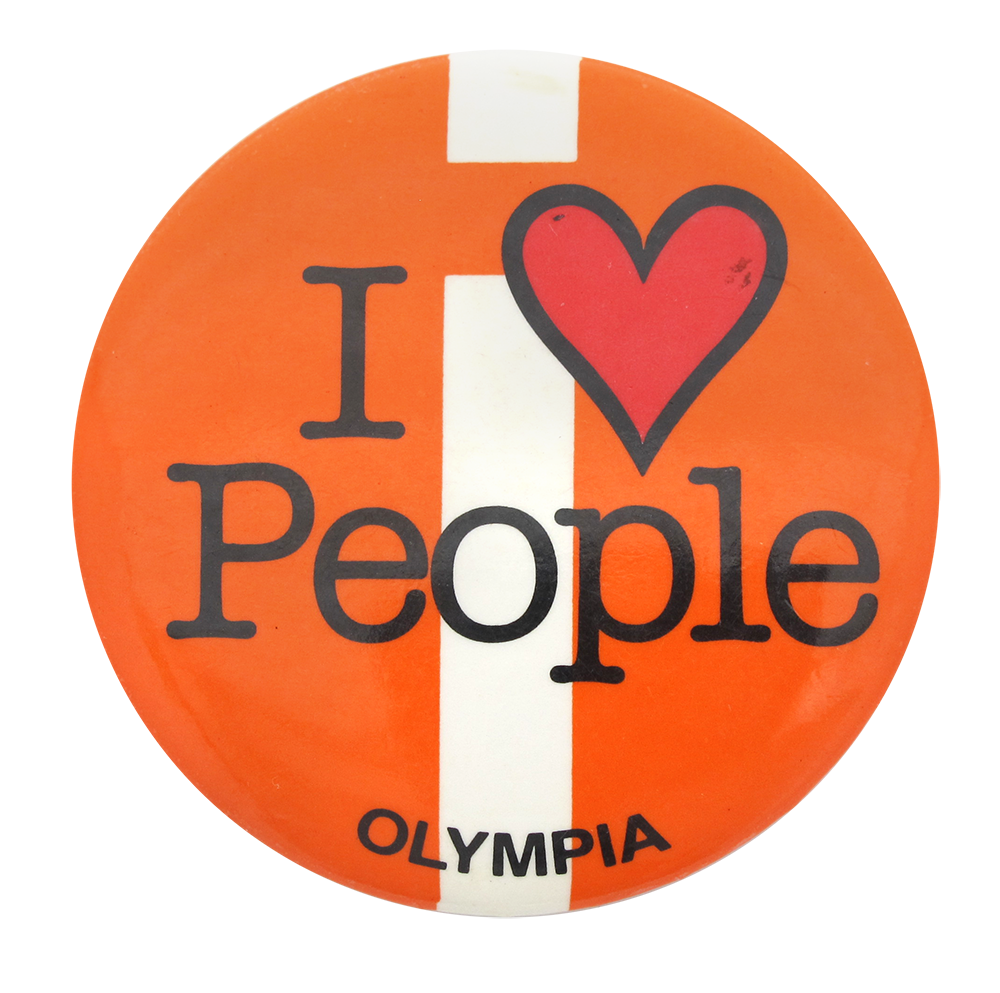
Text on Button I Heart People OLYMPIA
Image Description

Red heart next to black text over orange and white background. The white part of background spells a lower case i.

Back Style
The Shape
The Size
Additional Information

The "I love" and "I heart" logos have become iconic in pop-culture and have been imitated in many forms around the world.

The original form of the "I heart" and "I love" logos was the I heart NY logo created in 1977 by Milton Glaser for an ad campaign created by advertising agency Wells Rich Greene. The marketing campaign was sought by then-Deputy Commissioner William S. Doyle to increase tourism in the state of New York. The campaign was a wild success. The original sketch of the logo is permanently on display at the MOMA.

Have info on this button? Contact us here.

Catalog ID IL0035

I Heart New York 2

Category
Additional Images
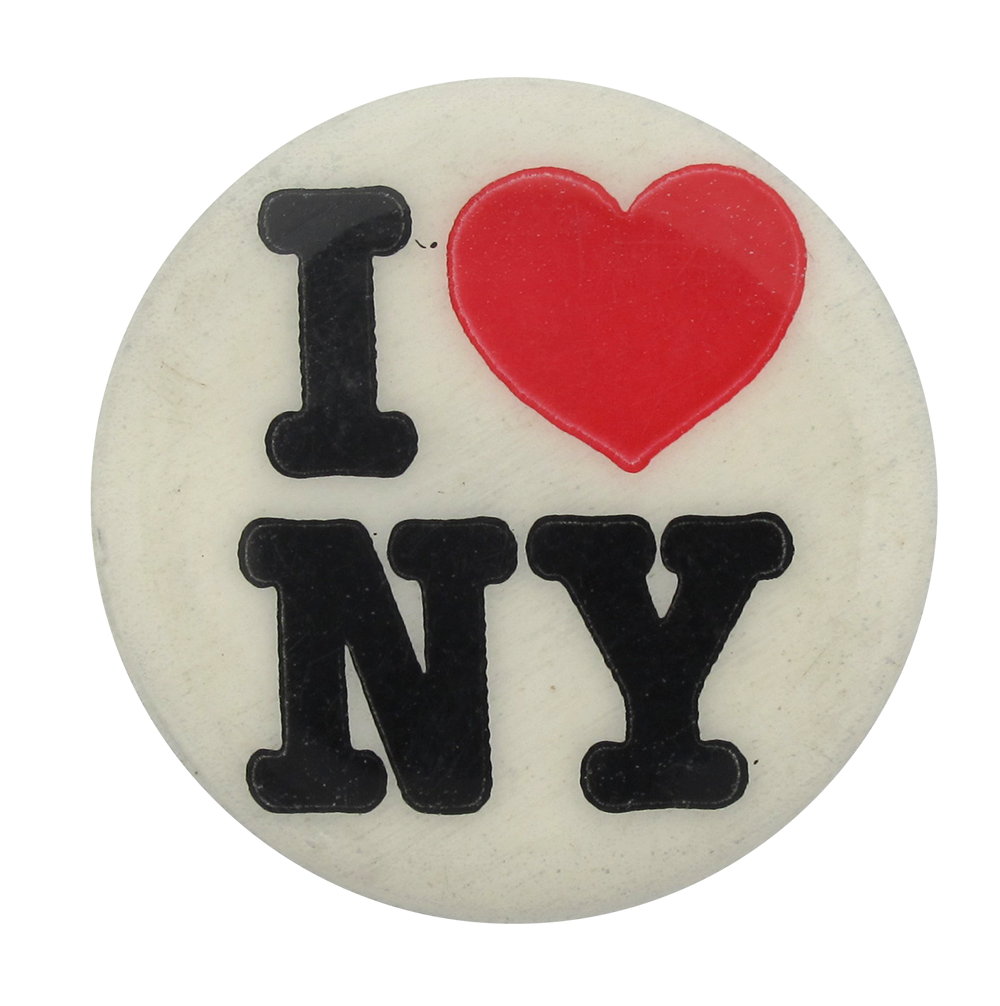
Text on Button I ♥ NY
Image Description

Red heart next to black text over white background. 

Back Style
The Shape
The Size
Additional Information

The logo was created in 1977 by Milton Glaser for an ad campaign created by advertising agency Wells Rich Greene. The marketing campaign was sought by then-Deputy Commissioner William S. Doyle to increase tourism in the state of New York. The campaign was a wild success and for decades the symbol has remained a pop icon.

The logo has been used around the world and today, generates more than $30 million per year.  The original sketch of the logo is permanently on display at MOMA.

Catalog ID IL0050

I heart Busy Beaver

Category
Additional Images
Sub Categories
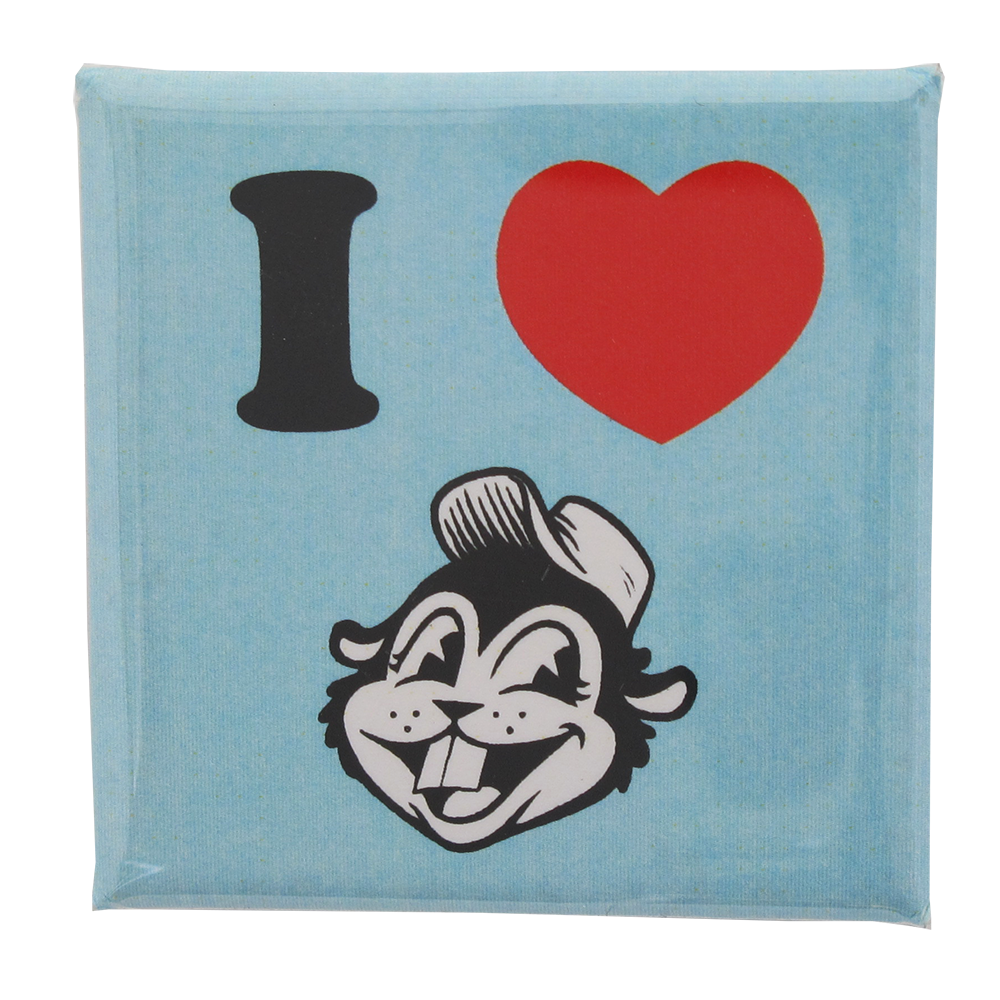
Text on Button I Heart (Beaver Face)
Image Description

A very busy beaver, a red heart, and a black "I" over blue background. 

Curl Text Buttons by Busybeaver.net
Back Style
The Shape
The Size
The Manufacturer
Additional Information

This is a Busy Beaver Button Company variation of the I heart NY logo that was created in 1977 by Milton Glaser for an ad campaign created by advertising agency Wells Rich Greene. The marketing campaign was sought by then-Deputy Commissioner William S. Doyle to increase tourism in the state of New York. The campaign was a wild success. The original sketch of the logo is permanently on display at the MOMA.

The logo has become iconic in pop-culture and has been imitated in many forms around the world.

Catalog ID IL0060

I heart Austin

Category
Additional Images
Sub Categories
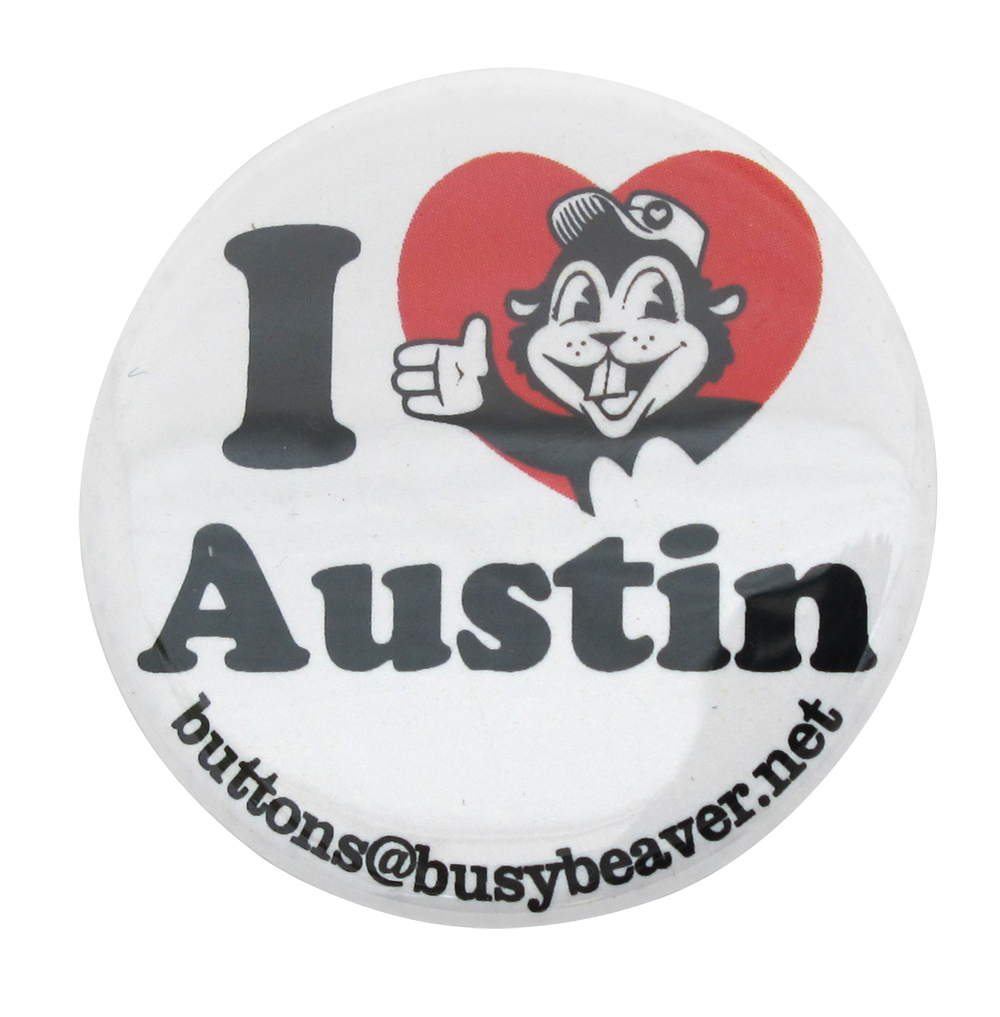
Text on Button I Heart Austin buttons@busybeaver.net
Image Description

A very busy beaver waves from a red heart next to black text over white background. 

Curl Text Buttons by www.busybeaver.net
Back Style
The Shape
The Size
The Manufacturer
Additional Information

This button was created for Busy Beaver Button Company at the South by Southwest festival in Austin, Texas.

It is a variation of the I heart NY logo that was created in 1977 by Milton Glaser for an ad campaign created by advertising agency Wells Rich Greene. The marketing campaign was sought by then-Deputy Commissioner William S. Doyle to increase tourism in the state of New York. The campaign was a wild success. The original sketch of the logo is permanently on display at the MOMA.


The logo has become iconic in pop-culture and has been imitated in many forms around the world.

Catalog ID IL0058

I Care

Category
Additional Images
Sub Categories
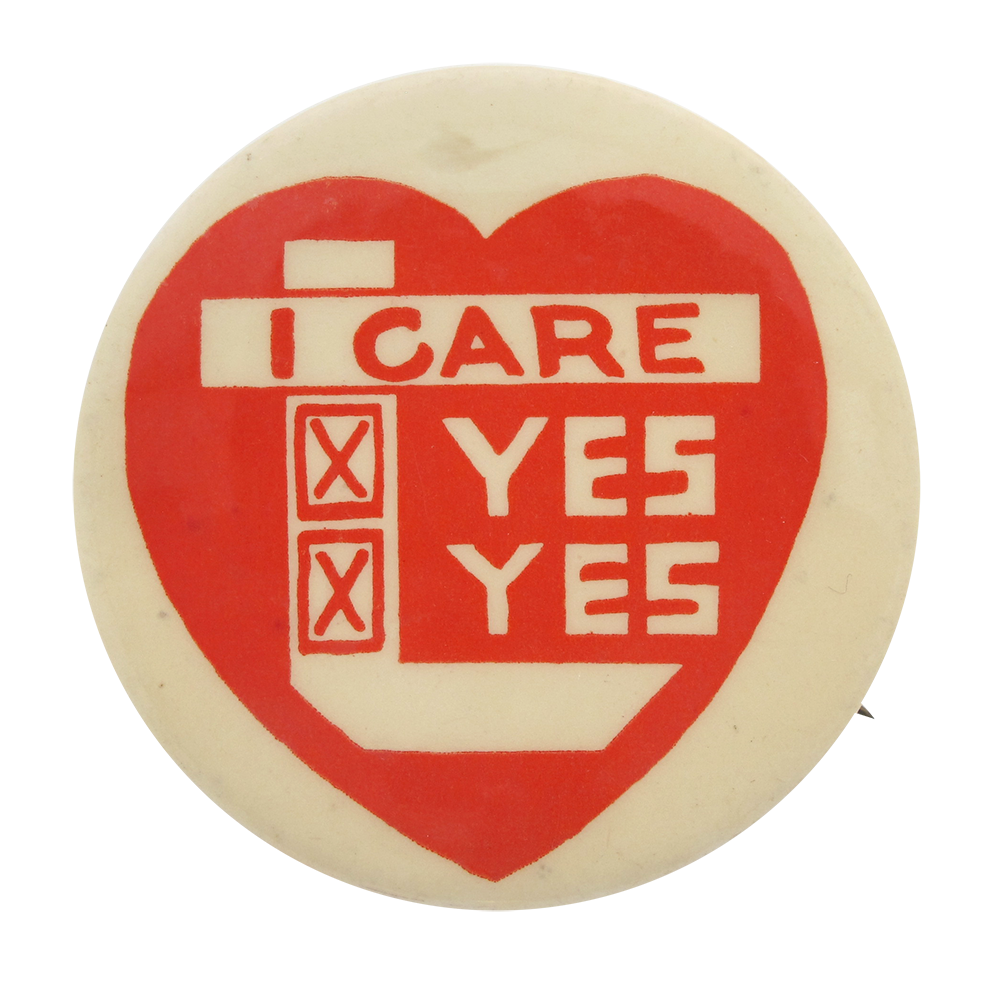
Text on Button I CARE YES YES
Image Description

Checked boxes over a red heart with red and white text over white background. 

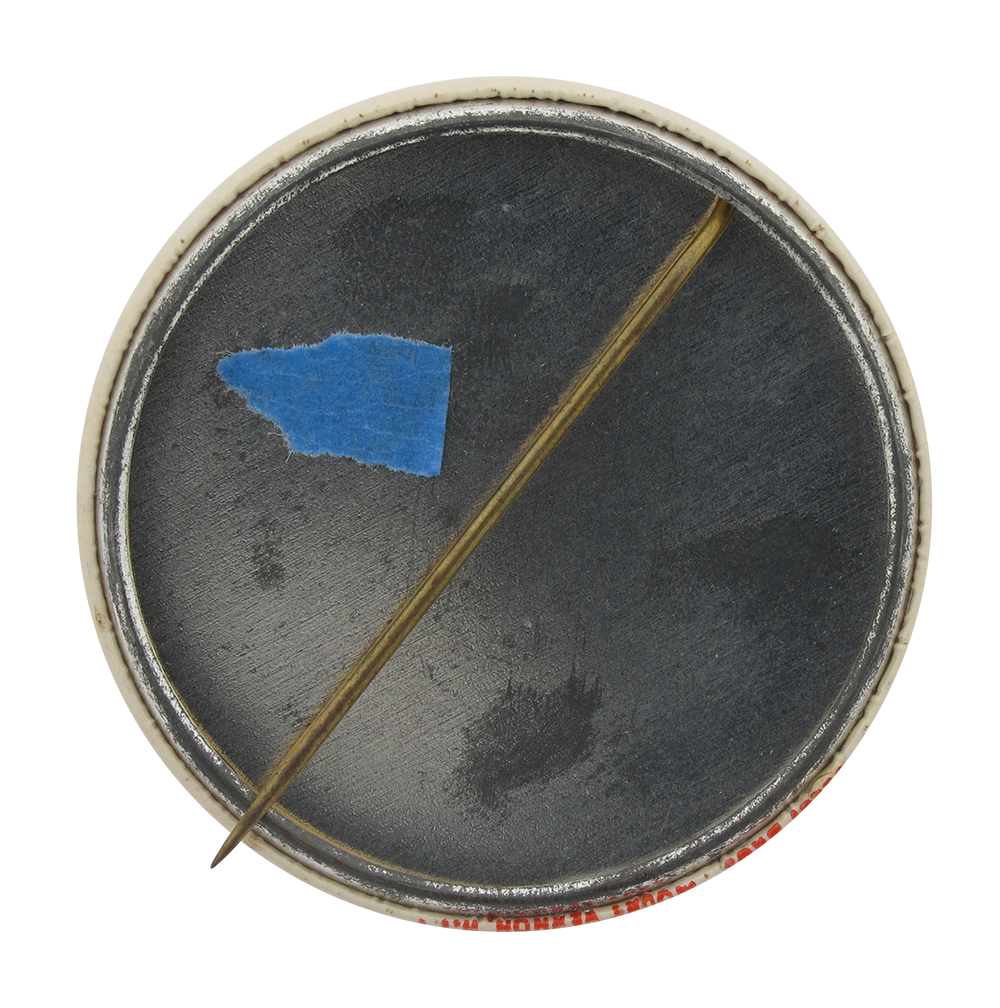
Curl Text OLECT BROS MOUNT VERNON N.T.
Back Style
The Shape
The Size
The Manufacturer
Additional Information

The Community Chest movement gained popularity in the early 20th century as a philanthropic effort, combining disparate charities and fundraising groups into a more cohesive network. The ‘Community Chest’ was originally inspired by the “Charity Organization Society,” and became prominent during the years surrounding World War I, with the first official “Community Fund,” established in Cleveland, Ohio in 1913.

Organizing community endowment funds intended for altruistic purposes, the Community Chest grew in the years between the World Wars, creating merchandise and other ephemera advocating their cause. Along with pinback buttons being created as military accolades at this time, philanthropist and philanthropic organizations began to create and wear buttons showcasing their charities and touting their efforts, “I Care!” or “I Gave!” to represent doing their part in the war effort and to highlight their participation in one’s civic duties.

As of June 2025, there continue to be local organizations that utilize the Community Chest title, but in 1963, after several name changes, the Community Chest organization became officially known as United Way. Remnants of the once popular Community Chest movement can be found in the Monopoly board game, where players draw from a stack of cards labeled “Community Chest,” with hopes that their draw will bring them good fortune. The United Way has grown exponentially in the years since its founding, now operating internationally with over 1800 local affiliates.

Sources

Editors of Ballotpedia. (n.d.). Community Chest. Ballotpedia. https://ballotpedia.org/Community_chest

Happy Hunting. (2025). Bastion Bros. Co. 1923 I Care Community Chest pin button ¾ [eBay listing]. eBay. https://www.ebay.com/itm/284940759532

My Cop Shop. (n.d.). I care community chest 1924 – antique pin back button [Etsy listing]. Etsy. https://www.etsy.com/listing/1106188260/i-care-community-chest-1924-antique-pin

National Museum of American History. (n.d.). Community Chest Button. Smithsonian. https://americanhistory.si.edu/collections/object/nmah_1317530

United Way Worldwide. (2024). About us: Our history. United Way. https://www.unitedway.org/our-history

Catalog ID CA0541

Official Hug Tester

Category
Additional Images
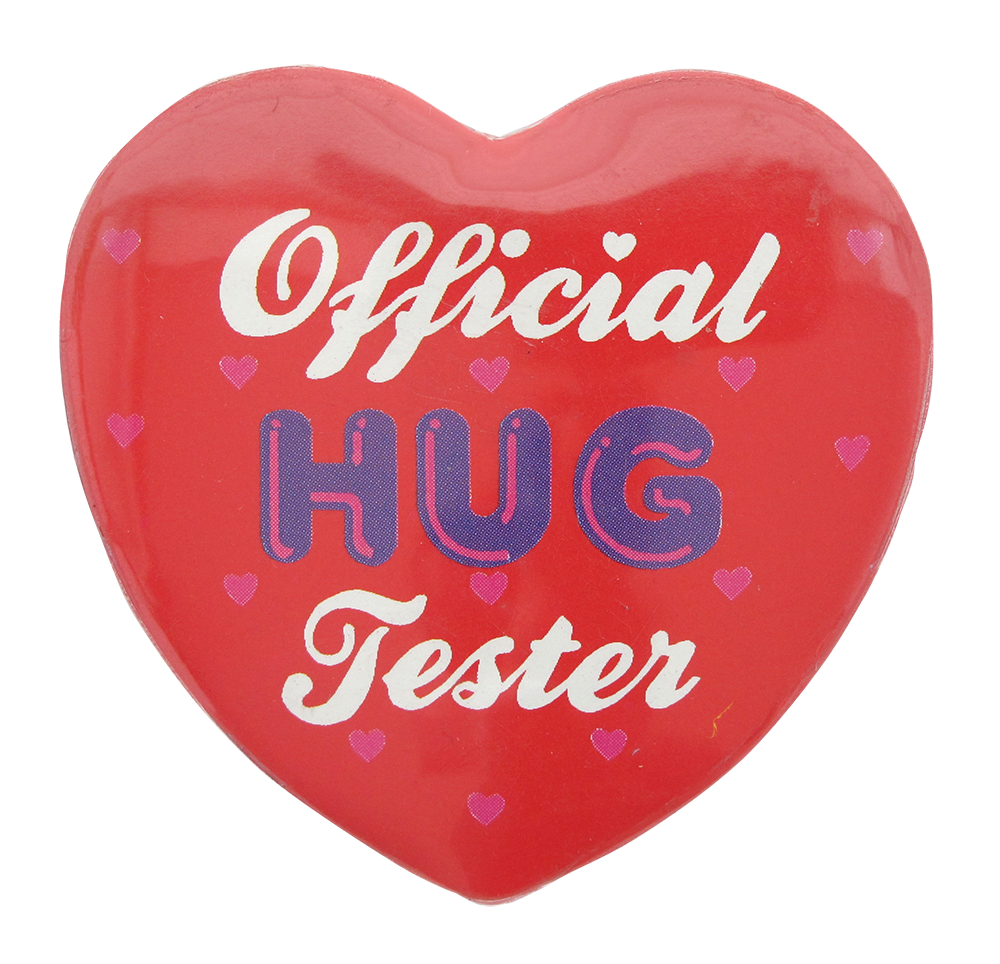
Text on Button Official HUG Tester
Image Description

White and Purple text over red background speckled with pink hearts.

Back Style
The Shape
The Size
The Manufacturer
Additional Information

A hug tester is a passive way for someone to ask to be embraced.

Gibson Greetings was a large American greeting card manufacturer based in Cincinnati. In 2000 they were purchased by American Greetings.

Sources

York, A. (2002, October 14). Old Gibson headquarters finds new life. Cincinnati Business Courier. Retrieved October 2, 2020, from https://www.bizjournals.com/cincinnati/stories/2002/10/14/story3.html.

Catalog ID IB0527

St. Elizabeth Seton Church

Category
Additional Images
Sub Categories
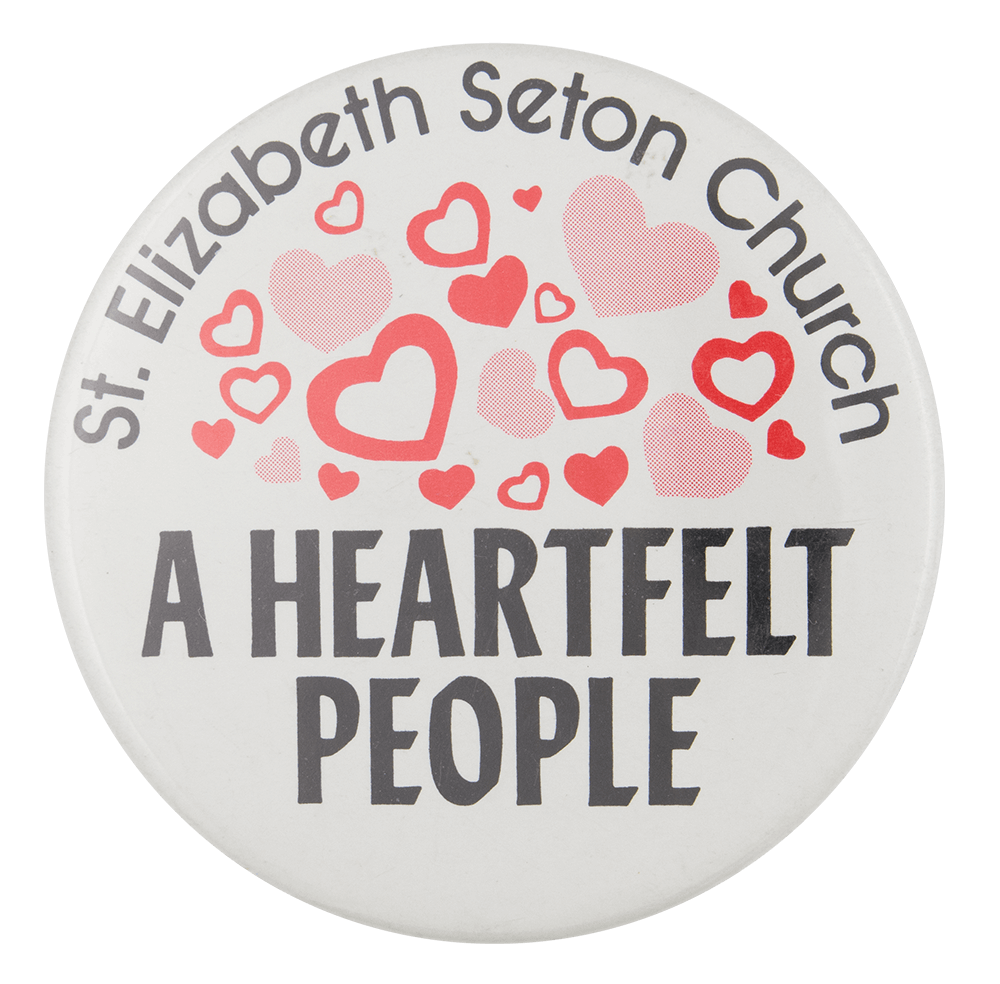
Text on Button St. Elizabeth Seton Church A HEARTFELT PEOPLE
Image Description

Pink and red hearts exploding from black text over white background. 

Back Style
The Shape
The Size
Additional Information

Saint Elizabeth Seton Church is a Catholic Church located in Orland Hills, IL. It was founded in 1986 by Father William O'Mara and the construction of the church was completed in 1990. Elizabeth Ann Seton, the patron saint for whom the church is named, was born in the United States in 1774 and died in 1821. She was canonized a saint by the church in 1975 and in doing so became the first American to be declared a saint.

Catalog ID CL0401

Heart Breaker

Category
Additional Images
Sub Categories
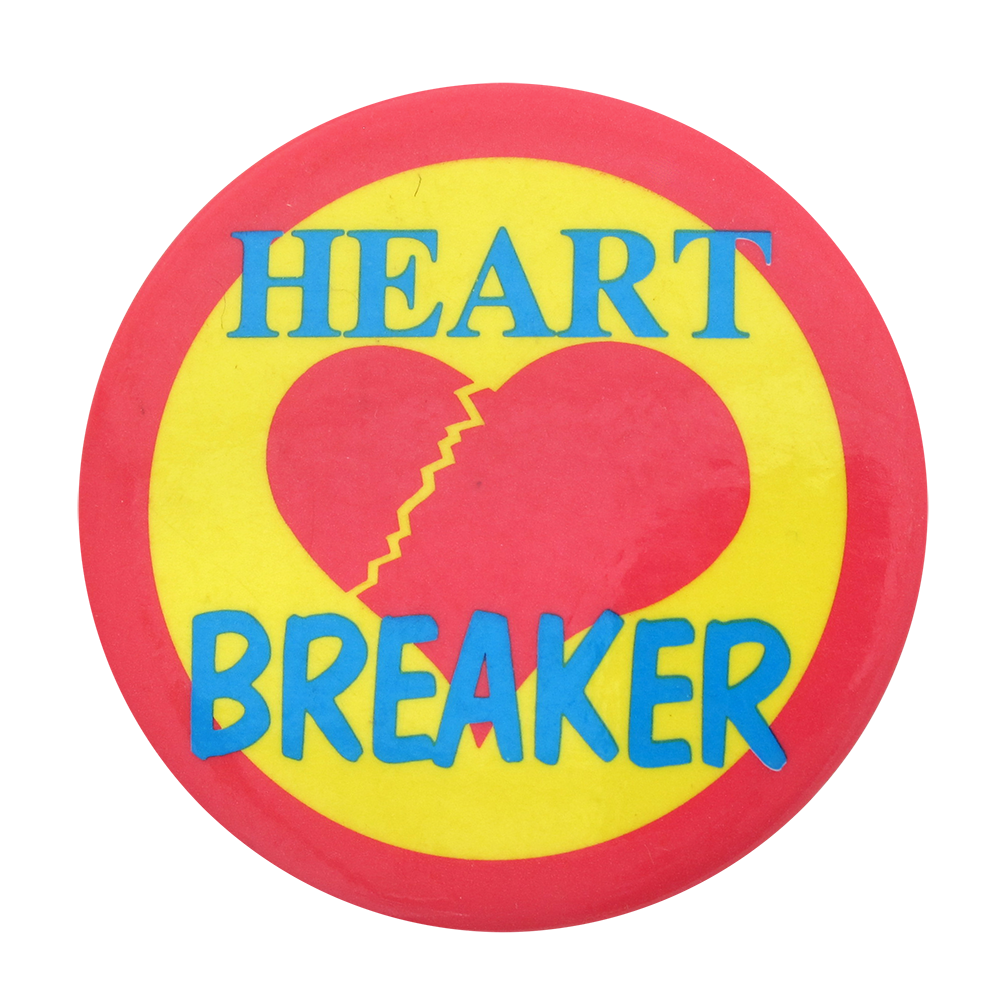
Text on Button HEART BREAKER
Image Description

A heart with a tear in it sits on a yellow background. Blue text sits above and below the heart and a pink ring surrounds everything. 

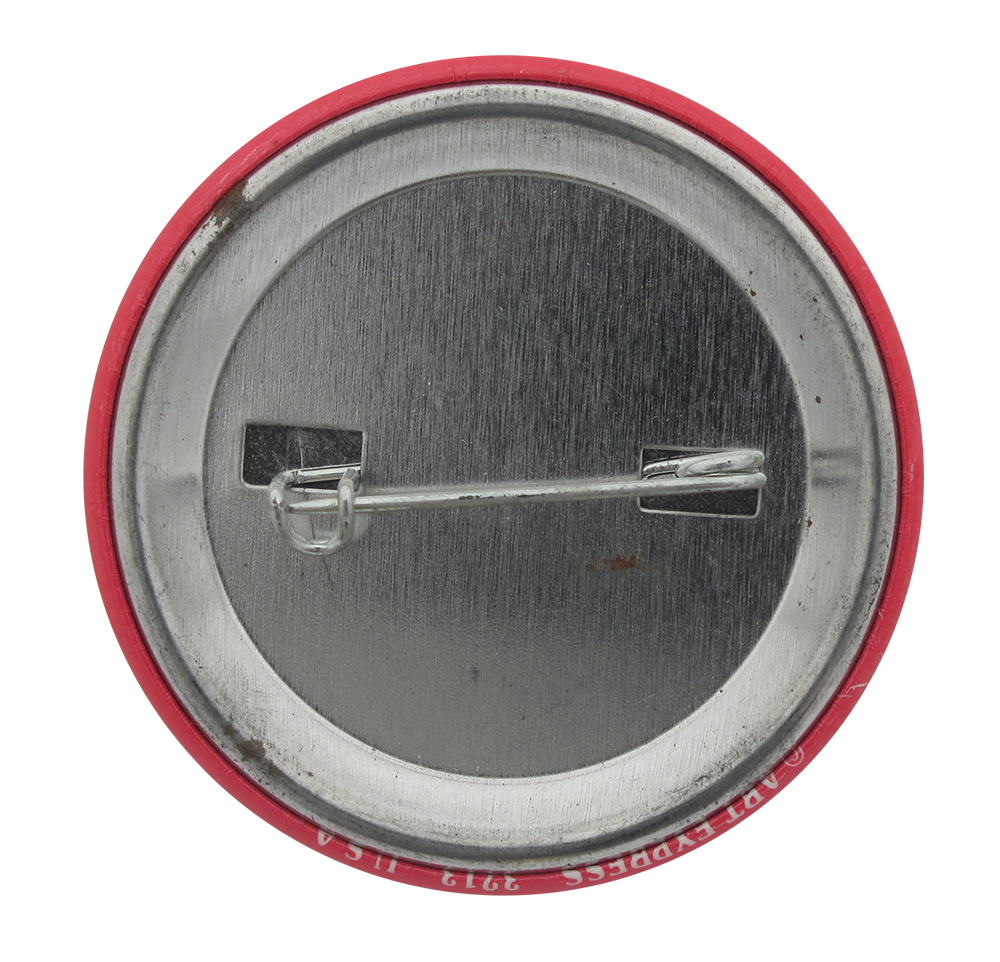
Curl Text ART EXPRESS 3213 USA
Back Style
The Shape
The Size
The Manufacturer
Additional Information

The heart shape is a graphic symbol representing an expression of love. The use of the heart shape originated in the Middle Ages, though it wasn’t used to symbolize love until the 15th century. Today, it is frequently used on romantic items or to indicate a specific love of something. 
A tear or crack in a heart symbolizes a broken heart, having felt sorrow or hurt especially in romantic love.
A heartbreaker is a person who is attractive and flirts with a person, but does not reciprocate their love.

Have info on this button? Contact us here.

Catalog ID IB0528

Goldblatts Open Your Heart

Category
Additional Images
Sub Categories
Text on Button OPEN YOUR HEART! SPREAD GOOD CHEER WITH Goldblatts LOW PRICES
Image Description

Pink heart under black text over white background. 

Back Paper / Back Info

Embosed Union Bug

Back Style
The Shape
The Size
Year / Decade Made
Additional Information

Goldblatt's was a chain of local discount stores that operated in Chicago, Illinois as well as Indiana, Michigan and Wisconsin. Founded in 1914, the chain grew to more than twenty stores at its peak, gradually closing its stores in the 1990s and selling others to Ames before finally closing completely in 2000. Goldblatt's was founded by brothers Nate and Maurice Goldblatt. Immigrants from Poland, the Goldblatt family ran a grocery store and butcher shop on Chicago's west side. Nate and Maurice opened their first store near the corner of Ashland and Chicago Avenue. During the Great Depression of the 1930s Goldblatt's did well, and the brothers were able to purchase several smaller department stores. In 1936, Goldblatt's opened their State Street flagship store at State and Van Buren. Goldblatt's moved towards more upscale products and offered small appliances, a deli, and confectionary goods.

Catalog ID AD0123